
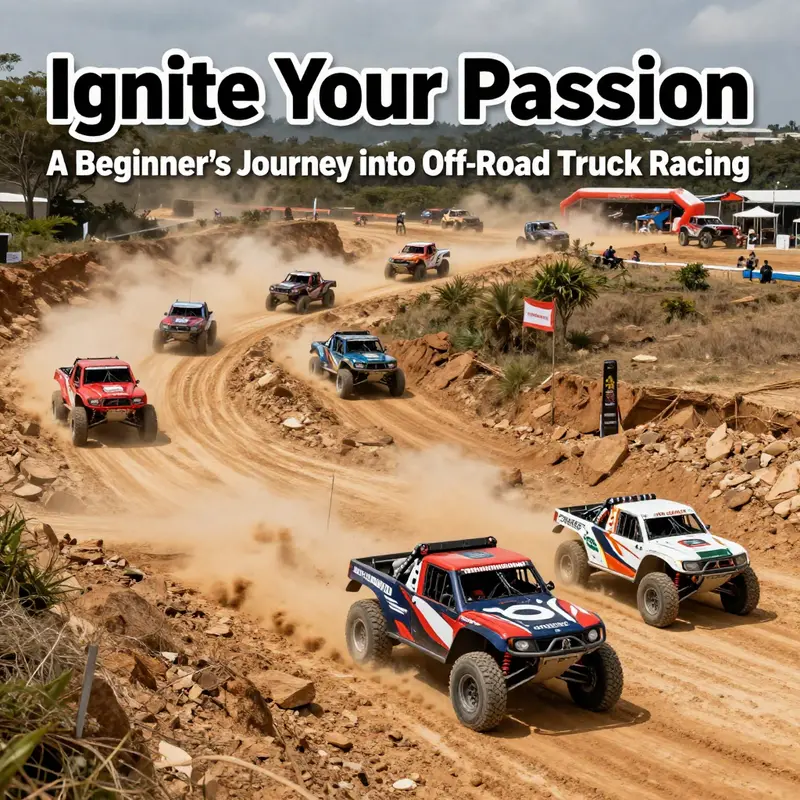
Off-road truck racing is more than just a sport; it’s an exhilarating adventure that calls to the rugged spirits of off-road enthusiasts, adventurers, and rural landowners alike. As the roar of engines harmonizes with the thrilling rush of dirt and sand, it beckons participants to overcome natural obstacles and experience freedom in its rawest form. But the journey into this adrenaline-infused world begins with understanding the foundations: the knowledge needed, the vehicles suitable for the terrain, and the driving skills that can make or break a race. This guide is structured to empower you with the essentials, starting with the vital education and firsthand experiences required, progressing to selecting the right vehicle, and finally mastering the intricacies of off-road driving techniques. Prepare to gear up and embrace the ride of your life—where exhilaration meets expertise.
Education, Experience, and the Road to Off-Road Truck Racing: Building Your Foundation
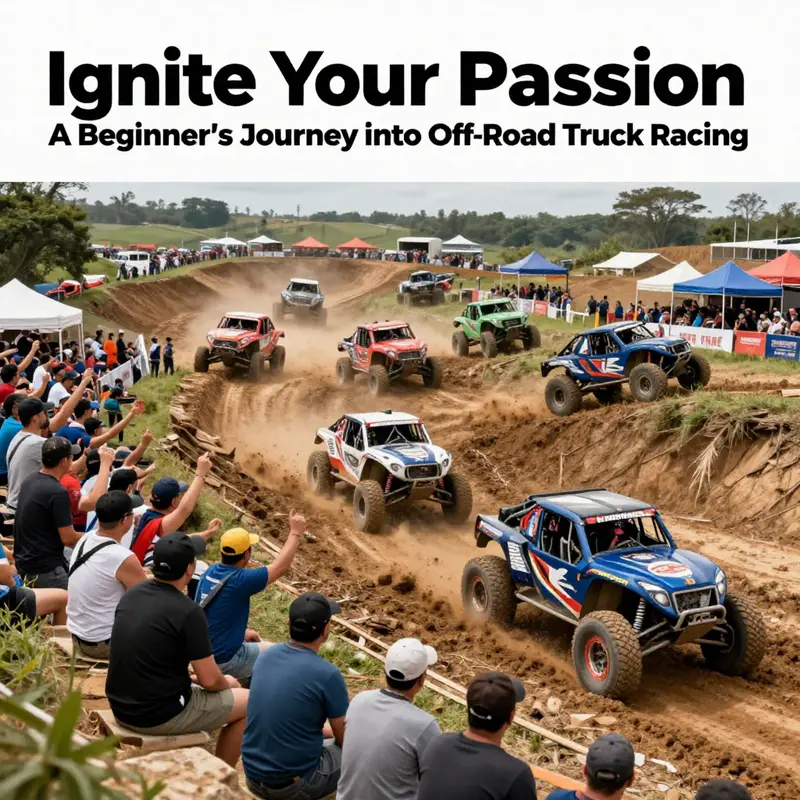
Off-road truck racing is a test of more than speed. It is a discipline that blends mechanical literacy, terrain literacy, and a practiced mindset under pressure. From the first moment you consider strapping into a truck and pointing it into a dusty course, you are stepping into a sport that rewards preparation as much as instinct. The path into this world begins with education and hands-on experience, then grows through deliberate practice, consistent safety, and a willingness to learn from every turn, bump, and observation. The journey is not a sprint; it is a sequence of informed choices that compound into real track confidence and dependable performance.
Education forms the backbone of your development. A solid grounding in truck mechanics, suspension behavior, tire dynamics, and vehicle setup is not a luxury but a prerequisite. You do not need to become a master mechanic overnight, but you should aspire to understand the major systems that make or break your race day. This starts with formal training programs offered by reputable racing schools or online courses tailored to off-road operation. Such education helps you translate theoretical ideas into practical action when you are under the stress of a rough course or a tight passing zone. It also guides you in understanding the rules, safety regulations, and competition structures that govern sanctioned events. Familiarity with these rules helps you drive within the boundaries that keep the sport fair and safe while maximizing your strategic choices during a race.
A parallel thread runs through this education: the knowledge lives in both the real world and the digital arena. Simulation platforms, including titles that model monster trucks and off-road environments, provide a low-risk sandbox where you can learn key concepts without the consequences of a mistake on a real track. In simulation, you can experiment with engine tuning, weight distribution, and control inputs across a spectrum of terrains—from loose sand to slick mud to rocky choppiness. The benefit of this kind of practice is not just muscle memory; it is spatial awareness and timing. You can rehearse line choices, throttle modulation, and braking strategies until they become second nature, which pays off when you move to the actual truck and track.
From a broader perspective, education should also include an appreciation of where this sport sits within the larger ecosystem of sanctioned off-road competition. Reading about and understanding how major organizations structure events—from entry requirements and safety protocols to vehicle eligibility and race formats—builds a framework for strategic decision making. For those who gravitate toward the mechanical side, a deeper dive into vehicle preparation and tuning can illuminate why certain setups feel fast in one terrain and cumbersome in another. A practical way to approach this is to couple your theoretical studies with hands-on sessions under the guidance of experienced technicians. The goal is to leave every session with a clearer sense of how changes in tire choice, suspension travel, and ballast affect traction, balance, and ride quality on different sections of a course.
The experiential component cannot be separated from the theoretical one. The next stage is to move from the classroom and the simulator to controlled, real-world practice. Many aspiring racers begin by joining local off-road clubs or small-scale events that emphasize safety and gradual progression. These venues often feature beginner-friendly tracks where you can measure your confidence against modest terrain challenges before graduating to more demanding courses. This progression matters, because early exposure to varied terrain—sand whoops, clay ruts, wet mud, rock gardens—helps you develop the core skills of control, pace management, and decision-making under pressure. You learn to read the terrain as it unfolds, selecting lines that maximize grip while preserving momentum. You also gain a better sense of how your vehicle responds to different inputs, which is essential when you start dialing in setups with your crew.
Hands-on experience is amplified when you work alongside a dependable team. Off-road racing is a team sport in many respects. Even a relatively simple race requires careful coordination with a mechanic, a spotter, and sometimes a mentor who can read a course with you from the vantage point of the vehicle. Mechanics become familiar with your driving style and the truck’s quirks, learning how to anticipate failures and perform rapid, field-ready diagnostics. In many cases, your best education comes from diagnosing and addressing issues during practice runs, long after the theoretical sections have been covered. This real-time problem-solving builds resilience and teaches you how to triage problems under time pressure—an invaluable skill on race day when seconds matter.
In this learning arc, safety is the non-negotiable constant. Your education is incomplete if you neglect proper protective gear, emergency procedures, and a mindset of precaution. A helmet, a properly rated harness, and fire protection are baseline requirements, but the deeper training involves understanding how to respond if something goes wrong—how to evacuate safely, how to communicate with your crew, and how to handle a tow or extraction without exacerbating a crash. Institutions and foundations dedicated to driver safety provide certification and drills that instill a calm, methodical approach to incidents. The value of this training is not just personal protection; it keeps teammates and competitors safer and helps sustain the sport as a whole.
From the educational foundation to practical experience, the journey is a continuum. You accumulate knowledge through coursework, reading, and watching seasoned racers in action. You gain confidence by testing theories on modest tracks, then by gradually facing more demanding terrains. Each step teaches you how to conserve mechanical energy—how to carry speed into a turn, how to balance weight transfer, how to preserve traction, and how to avoid the ruinous consequences of a misread surface. What makes the education path truly effective is deliberate practice: a structured approach to learning that pairs a clear objective with a method to measure progress. When you approach practice with intention—focusing on one skill at a time and analyzing outcomes—you accelerate the learning curve and reduce the risk of overreaching beyond your current comfort zone.
As you lay this foundation, you will inevitably confront the practical realities of moving from theory to execution. The process involves selecting an appropriate vehicle and planning a careful pathway into competition. For a newcomer, a stock or modestly modified monster truck can provide a durable, controllable platform for learning the ropes. The emphasis should be on reliability and predictable handling, rather than chasing extreme performance without the experience to support it. Vehicle setup, fuel strategy, and contingency planning become part of your education as you learn how to balance speed with safety across different terrains. You will likely start with shorter, beginner-friendly events and use them as stepping stones toward more challenging races as your confidence and competence grow.
To reinforce the educational thread, consider a practical touchstone: a deep dive into engine and drivetrain basics can be pursued through targeted reading. This is where the idea of a structured, step-by-step path to mastery becomes actionable. For example, a concise guide to diesel mechanics can provide a framework for how engines behave under harsh off-road conditions and how drivers can recognize early signs of wear or impending failure. Embedding such knowledge into your daily routine helps you approach practice sessions with a sharper eye and a more precise language for discussing setups with your crew. The point is not to become a mechanic in training overnight but to cultivate the literacy that makes you a safer, more capable racer. For readers who prefer a blended approach—combining reading with hands-on experimentation—the following resource offers a practical avenue to build that foundational knowledge: diesel mechanics guide.
Beyond the technical, your education should include a growing understanding of how to plan and select events. Start with shorter, beginner-friendly tracks and gradually extend to longer courses as you gain proficiency and confidence. Learn to monitor weather and terrain forecasts, as conditions can drastically alter what is feasible on a given day. You will learn to read the surface quickly, to anticipate how a track will evolve through practice laps, and to adjust your line choice in real time. Alignment with a local club or a community of enthusiasts creates a supportive environment where questions get answered and mistakes become teachable moments rather than setbacks. This is the social dimension of education—the shared knowledge that helps you avoid common pitfalls, learn from more experienced drivers, and build a network that can sustain you through the inevitable ups and downs of your racing career.
The educational journey does not exist in a vacuum. It is part of an ongoing dialogue with the sport, the vehicles, and the kind of teamwork that makes a truck perform well under demanding conditions. As you absorb rules, safety expectations, and vehicle dynamics, you will begin to notice how theory translates into practice on the track. Your ability to anticipate traction changes, to manage heat during climbs and descents, and to sustain momentum across rough sections will grow not just from a page of notes but from repeated, purposeful practice on diverse terrains. In time, your preparation will show in your decision-making under race-day stress—the moment when a well-educated driver translates learning into confident, consistent lap times and a disciplined approach to competition.
Ultimately, education and experience are not separate milestones but intertwined threads that weave together to form a durable foundation. Your progress will look like an upward spiral: you absorb core principles, apply them on sim and in practice, test and refine, then layer in more advanced concepts. The sport rewards this kind of iterative growth, where each race becomes a laboratory for learning and every training session a rehearsal for the next competition. By embracing education as an ongoing, practical discipline, you set the stage for a future in which you can handle the most challenging terrain with confidence, maintain your truck’s reliability under pressure, and contribute to a culture of safety and fair play that defines off-road racing at its best.
External resources and official competition frameworks provide additional anchors for this journey. They help you calibrate your expectations, understand how events are structured, and know where to seek certification or mentorship when you need it. As you move forward, you will likely expand your involvement—from watching races and studying line choices to participating in clubs, practicing with a team, and taking the steps necessary to enter sanctioned events. The education you acquire now is the asset you will rely on when the terrain grows tougher and the stakes rise on race day. With your knowledge grounded in theory, your hands seasoned by practice, and your mindset tuned for safety and teamwork, you will face off-road racing with clarity, purpose, and the readiness to learn from every mile of dirt and dust.
In sum, getting started in off-road truck racing is primarily a rigorous education paired with pragmatic, incremental experience. It demands curiosity, discipline, and a respect for the machines and the elements. It invites you to study, to simulate, to test, and to race—always with an eye toward safety and continuous improvement. As you walk this path, you build not just speed, but a durable capability to navigate the unknown with poise and precision. The road may be rugged, but a well-founded education makes the challenge an opportunity to grow as a driver, a team member, and a participant in a sport defined by grit, ingenuity, and a shared love of the road less traveled. Finally, the right kind of external resources and community support will help you stay grounded while you push toward higher competence, faster times, and a deeper enjoyment of the sport you are choosing to pursue.
External Resource:
For sanctioned competition structures and safety guidelines, see the official site of the sport’s major organizing body: https://www.amasupercross.com
Engineered for the Leap: Choosing Your First Off-Road Truck to Launch an Off-Road Racing Career

Picking the right first vehicle for off-road truck racing isn’t about chasing the flashiest chassis or the most horsepower alone. It’s about aligning a truck’s core strengths with the terrain you intend to conquer, while keeping your learning curve manageable and your safety uncompromised. In off-road competition, power is important, but durability and a well-tuned drivetrain are the quiet engines that keep a rookie from becoming a cautionary tale. This chapter isn’t a shopping list so much as a framework for understanding how different platforms perform when the ground tilts, dust roars, and the clock ticks down. It’s about choosing a platform that teaches you how to survive the first miles of racing and the first seasons of learning, without breaking your budget or your confidence. The decision you make here will echo through your early testing, your safety gear choices, and the way you train your reflexes for the inevitable sand wash, mud slick, or rock field that greets every new racer.
Begin with a clear picture of your goals on the track. Do you crave blazing desert speed, or do you want the precision and control required for rock crawling and technical sections? Are endurance events your target, where consistent reliability matters more than a single heroic run? Your answers will guide whether you lean toward a high-powered, long-travel platform designed for open spaces or a more compact, torque-rich platform that excels on tight, technical courses. It’s tempting to equate a vehicle’s reputation with a winner’s résumé, but the reality is subtler. A truck that dominates a Baja-style desert stage may not be the optimal tool for a multi-day, wind-driven endurance race through variable terrain. Conversely, a rock-crawling rig might feel slow in a headlining desert sprint, yet it would be a brutal mentor in late-season mud tests and slippery climbs. The aim is to pick a vehicle that amplifies your growth, rather than one that simply flatters your ego at the first sight of a remote checkered flag.
The guiding criteria stay remarkably consistent across the sport: power must be paired with durability, and a modern four-wheel-drive system must translate grip into momentum without punishing the driver with harsh reactions when the terrain changes. In practice, this means you’ll be weighing engines that deliver smooth, broad torque against frames and suspensions designed to absorb repeated impacts without metal fatigue or creeping understeer. A robust chassis is not a luxury; it’s a safety feature that keeps you from being stopped by a simple wheel strike or a soft sand pocket. The ideal first vehicle is a balance: enough horsepower to punch through challenging sections, enough torque to pull through loose terrain, and a suspension that glad-hands impact and heat so you can keep the pace without throwing your body through the cockpit.
When the current field is examined through the lens of how beginners interact with it, a few highly credible candidates consistently surface. The first is a full-size, high-performance platform with a long track record in brutal environments and a suspension architecture designed to absorb massive impacts. The second is a mid-size, more accessible model that retains serious off-road capability but prioritizes affordability and ease of modification. The third category includes newer, hybrid options that promise electric torque delivery and endurance-friendly efficiency, though their real-world race viability can hinge on support infrastructure and reliability in extreme conditions. Finally, the veteran iconic models continue to draw interest for their proven off-road DNA, their stock strengths, and the way they reward careful driving with steady, predictable behavior.
Take the first candidate, a full-size platform famed for desert mega-tracks and rock-carved routes. It offers a commanding blend of power and suspension travel, designed to sustain high-speed runs across dunes while keeping the chassis composed when the trail roughs up. Its core strength lies in a turbocharged V6 or V8-like torque profile paired with a multi-speed transmission that can hold a line through long stretches of heat and dust. What makes this class attractive to a rookie is the stability of the fat tires, the refined bushing and damper systems, and the sense of safety that comes from a vehicle engineered to handle extreme environments without requiring a full build shop to stay reliable. In practice, you’ll want to confirm that the suspension is tuned to manage the additional load that comes with carrying payloads, recovery gear, and safety equipment, since rocky sections and dune crossings aren’t gentle on springs and shocks. And you’ll want to test how the vehicle behaves with a modest two-wheel-drive bias in certain modes, so you know when to engage four-wheel drive or engage low-range transfer for traction control without surprising yourselves with sudden torque steer in tight canyons.
The second candidate—an accessible, mid-size option—represents the practical path many new entrants follow. This class balances aggressive off-road capability with a more forgiving entry price, easier access to parts and service, and a broader community of enthusiasts who can help you dial in your setup. The focus here shifts a bit toward torque delivery and control in choppy terrain and mud, with a drivetrain tuned to emphasize traction rather than outright top speed. It’s a platform that invites you to explore the basics of suspension travel, tire choice, tire pressure management, and the art of managing momentum through a series of controlled shifts rather than brute force. Among the strategic advantages of this class is the ability to experiment with simple, proven modifications—tire management, beadlock considerations, and a measured approach to weight distribution—without overhauling the core frame or compromising safety margins you’ll rely on during your first races.
Then there are the newer, hybrid-inducing contenders that promise a different flavor of race endurance. The allure is undeniable: instantaneous torque, improved regenerative attention to battery or hybrid management, and potentially lower fuel consumption over long stages. But pace and reliability in extreme environments aren’t guaranteed by a powertrain’s theoretical economy. In the hands of a rookie, a hybrid system demands a disciplined driving rhythm and careful planning around charging and pit strategies. You’ll also need to evaluate how well the vehicle stands up to heat, vibration, and the rough handling of a real race course, not just controlled test tracks. In other words, hybrids could be game-changing with the right support network and local regulations, but they also require more forecast, a reliable charging ecosystem, and a training plan that accounts for battery and motor temperatures during sustained competition.
Amid these options, the iconic, legacy-focused models remain a staple in the mind of an aspiring racer. They carry a storied off-road pedigree, an abundance of after-market support, and a familiarity that reduces the cognitive load of learning to drive high-performance, all-terrain hardware. For beginners, the upside is not just in easy access to parts and help from a broad community, but in a chassis geometry that tends to reward careful throttle modulation and precise line choice. The risk is that these vehicles may require more mechanical attention to keep pace with the latest, more specialized platforms. Yet that maintenance discipline—learning how to tune a suspension, how to verify steering and differential integrity, and how to read a terrain in real time—can pay dividends when you push into more demanding courses later in your career.
As you weigh these paths, the most important practical step is to build a strong baseline for your driving skills before you even consider a full race-ready build. Start with a stock or mildly prepared platform if possible, and use test days at local tracks to observe two things: first, how your chosen terrain responds to your vehicle’s strengths, and second, how your own reflexes adapt to the vehicle’s behavior. You will quickly learn that a vehicle with generous torque and reliable low-end grunt can help you power through loose sections, but only if the suspension can keep the wheels planted and the driver comfortable. Conversely, a lighter, more agile truck can navigate rocky sequences with precision, but you’ll need to master keeping momentum when you hit gaps or abrupt changes in texture. Both paths demand learning to read the ground—sand, mud, rock, water—and to respond with appropriate throttle, steering, and brake inputs. This learning curve is not a hurdle; it is the design of the sport itself, and choosing the vehicle that matches your appetite for risk, your willingness to stage your learning, and your planned budget will set the pace for your development.
The choice of vehicle also threads into your safety and training regimen. A high-performance platform compels you to invest in robust roll protection, high-quality harnesses, and a helmet that fits your driving style. If you opt for a more stock-based platform that you expect to modify gradually, you can allocate resources first toward control systems and driver conditioning—stamina, reaction time, and cardiorespiratory fitness—before chasing a full suspension overhaul. In both cases, you will want to carry the proper recovery gear, a spare wheel, and a reliable on-board emergency kit. The terrain remaining unforgiving is more forgiving when you pair a stable, predictable platform with disciplined driving and a safety-first mindset. The goal is to practice with a vehicle you trust and to steadily build your mechanical knowledge so you can sustain the pace without compromising your safety or the integrity of the car.
From a practical training perspective, the best approach is to simulate discipline in the shop and on the ground. If you choose a platform with strong Baja lineage or heritage in rock crawling, you’ll want to immerse yourself in the control challenges those environments offer. The principles are universal: manage weight transfer through braking and cornering, choose lines that minimize the risk of pinching wheels or burying the undercarriage, and learn when to commit to a trajectory that yields the most efficient momentum. This is where the philosophy of vehicle selection becomes a training doctrine. A platform with substantial travel and sophisticated dampers rewards smooth inputs and consistent throttle while offering ample stability to practice truck recovery, angle control when cresting a dune, and the fine art of throttle modulation on uneven rock faces. A more modest, torque-focused platform forces you to learn how to keep the wheels from spinning away on loose surfaces by carefully balancing throttle input with steering and footwork on the pedal. Both paths develop a driver’s sensitivity to terrain and edge control; they just teach it in different languages.
As you begin to narrow your options, pay close attention to the vehicle’s proven performance in extreme conditions. Expert recommendations and competition data point toward platforms that have demonstrated durability, reliability, and real-world endurance. In the current landscape, the full-size, desert-dominant platform with a robust, sophisticated suspension is celebrated for its capacity to sustain high-speed runs across uneven ground and dunes. Its pedigree in major race venues underscores a track record of long-term endurance and consistent performance when the track becomes unpredictable. On the other hand, the mid-size option has a track record of reliability, a supportive community, and a balance of power and maneuverability that makes it especially attractive to new entrants who want to learn the craft without front-loading the budget into a heavily modified machine. The hybrid options, while compelling for their torque delivery and potential efficiency, require a careful assessment of charging infrastructure, reliability under heat soak, and the logistical overhead of maintaining state-of-charge across a multi-stage race. And the iconic models remind us that the oldest, simplest recipe—sound fundamentals, robust geometry, and careful throttle control—still wins the day when you approach the sport with humility and patience.
The most important practical step is to align your vehicle selection with your education and preparation plan. Start by attending live races to observe how the pros manage speed, terrain, and risk. Take a safety and skills course to learn techniques for steep climbs, water crossings, and recovery procedures. Test a few different platforms if you can, either through rental programs or school builds, to feel how each chassis responds to your driving style. Your goal is to emerge with a clear sense of which vehicle type suits your temperament and growth path while staying within a budget that lets you practice, learn, and progressively upgrade as you gain confidence. In this sense, choosing the right vehicle becomes less about owning the most glamorous machine and more about owning a tool that teaches you to stay alive, stay fast, and stay curious about what the terrain can throw at you.
The research landscape, summarized by contemporary experts and competition data, supports this approach. It highlights that a combination of power, durability, advanced four-wheel-drive systems, and proven performance in extreme conditions will yield the best long-term outcomes for a developing racer. The Ford F-150 Raptor remains a benchmark for high-stakes desert and rock-crawling events because its powertrain, suspension, and Baja-winning pedigree create a compelling platform for a serious amateur who wants to push into professional-level competition. The Ranger Wildtrak offers a more approachable entry point with robust all-wheel-drive dynamics and strong torque, making it a practical ramp into tougher environments without overreaching financially. The hybrid Hi4-T represents the future—an attractive option for endurance planning and long journeys where electric-assisted torque and efficient fuel use become meaningful advantages—provided the race format and infrastructure support such choices. The Jeep Wrangler, with its legendary off-road separation gear, represents a different strategic choice: a vehicle that rewards careful, precise line selection and control for those who value technical mastery over raw speed. Taken together, these platform profiles give a rookie a menu rather than a mandate, enabling a thoughtful choice that aligns with one’s race goals, budget, and willingness to embrace the learning curve.
To anchor your decision in practice, it’s worth noting that starting on a platform that allows you to focus on fundamentals—control, line selection, throttle modulation, and recovery procedures—will be the fastest route toward meaningful improvement. You’ll naturally grow into more advanced modifications and higher-grade equipment as your skills mature. The most successful rookies treat the vehicle as a partner you gradually coax into performing at your peak, rather than a magic wand that will magically turn mistakes into victories. As you advance, you’ll refine your setup with a mix of precision engineering and practical, on-ground testing. You’ll learn that a well-balanced truck with predictable behavior is not merely a safety feature; it’s the best teacher because it reduces the cognitive load when the terrain demands split-second decisions.
For those who want to translate this knowledge into action, a practical language you can adopt is to assess vehicles on four pillars: power delivery, suspension capability, drivetrain reliability, and maintainability. Power delivery is about how smoothly torque arrives and how well the vehicle maintains traction through challenging sections. Suspension capability means how much travel you have and how well the system damps big hits while preserving steering feel. Drivetrain reliability focuses on how the four-wheel-drive system handles engagement, torque distribution, and heat under long, grueling runs. Maintainability looks at how easy it is to access the engine, diffs, and suspension components for inspection and repair in the field. Each pillar matters, but the order of priority shifts with your racing goals. A desert sprinter may give more weight to suspension travel and torque in loose sand, while a technical-rock racer will prize predictable handling and reliable locking diffs.
Finally, in the spirit of practical next steps, the path from choosing a vehicle to stepping onto a start line passes through a simple sequence: pick a platform, enroll in a safety and driving course, join a local club to gain seat time with mentors, and begin a disciplined practice plan focusing on fundamentals. Simulators can be a helpful bridge for early familiarization with controls and terrain scenarios, but they cannot substitute for real-world practice with a live machine on real soil. As your confidence grows, you can layer in a measured program of maintenance, post-race analysis, and controlled upgrades that improve reliability while preserving the driver’s ability to connect with the ride. The right car is the quiet partner that supports your ambition and keeps you advancing toward the next level of competition.
In sum, the right vehicle for a rookie is not about a single best choice; it’s about a choice that aligns your racing ambitions with your learning curve, your resource reality, and your growing competence as a driver. The field shows several strong pathways, each with its own advantages and trade-offs. The ideal starting point is a platform that teaches you the core disciplines of off-road racing—control, momentum, and resilience—without overwhelming you with complexity or cost. As you chase those early miles and early checkpoints, the vehicle you chose will become less a symbol of status and more a reliable instrument of growth, carrying you toward a future where your own skill and strategy define your results on the roughest stages.
External resource: The 2026 overview of top off-road trucks provides further context on how today’s platforms stack up in power, durability, and technology. See Car and Driver’s feature for an expert-oriented snapshot of the landscape: https://www.caranddriver.com/features/the-10-best-off-road-trucks-for-2026
Internal link for deeper mechanical foundations: For drivers who want to build a deeper mechanical understanding alongside their on-track learning, exploring the fundamentals of diesel mechanics can be a powerful complement to race-day preparation. See the guide on mastering diesel mechanics for a practical step-by-step path to success: mastering diesel mechanics: your step-by-step path to success. This resource helps you develop the hands-on confidence to diagnose issues, plan preventive maintenance, and keep your truck in peak condition across a grueling season.
Beyond Grip and Gravel: Mastering Driving Techniques for Off‑Road Truck Racing
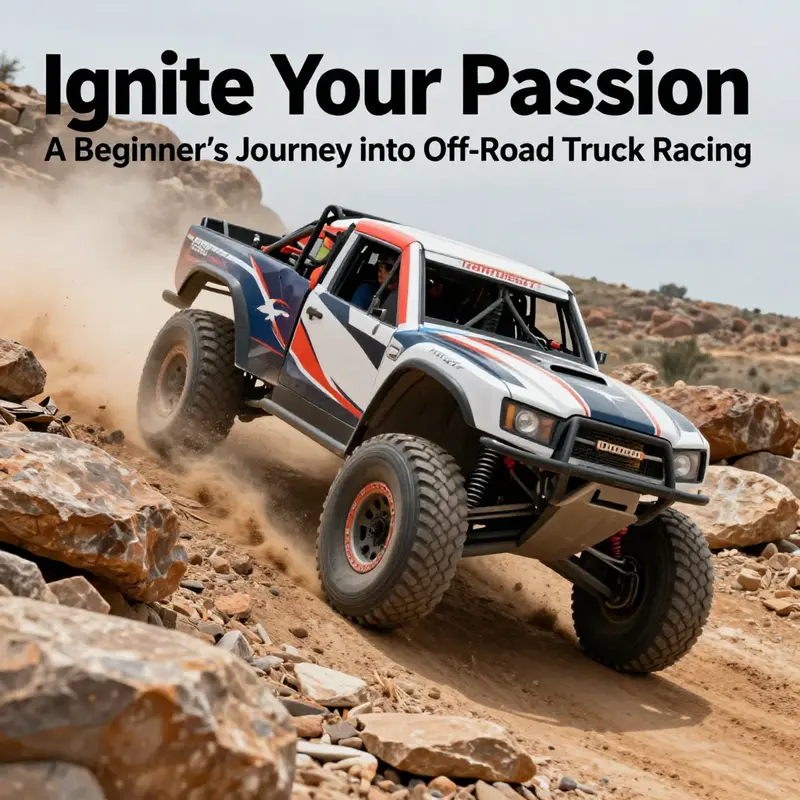
Every off‑road truck race is a conversation between the driver, the machine, and the land. The talk unfolds on dirt that can be hard as granite, mud that clings with a will of its own, sand that shifts beneath the tires, and rocks that demand quick decisions and precise control. What separates casual entrants from capable racers is not raw horsepower alone but a cultivated discipline in how to coax traction from treachery, how to read terrain before it bites, and how to translate a momentary edge into long-term consistency. Mastering driving techniques in off‑road truck racing is thus a study in balance: the balance between throttle and brake, between steering input and the chassis’s natural response, between the need for momentum and the imperative to slow when the ground suddenly buckles. It is, in short, a practice of reading risk and answering it with a calm, deliberate cadence rather than a rush to force a win. The road to that cadence begins in the cockpit—the driver’s seat becomes a classroom, the pedals a metronome, and the suspension an ally that tells you how far you can lean into a turn before the whole truck begins to protest.
To understand how to drive with finesse on the roughest stages, you must first reckon with the core challenge most drivers face: the gap between the engine’s power and the tires’ grip. On smooth asphalt, grip is predictable; a turbocharged push can throw you through a corner. In off‑road conditions, grip is a moving target. The soil itself can shed or seize, the tires can squirm under load, and a single misjudgment in weight transfer can turn a confident carve into a tire‑scorching slide or a clumsy, energy‑sapping stumble into a rock. The most effective technique, therefore, is a choreography of inputs crafted to keep the vehicle planted while preserving the momentum needed to navigate the next obstacle. This choreography rests on several interrelated pillars: throttle modulation, steering discipline, and an acute sense of weight transfer, all supported by a tuned suspension and a driver’s willingness to adapt to shifting ground realities.
The first pillar is throttle management. In off‑road racing, power delivery must be linear and predictable. Any abrupt surge can break rear tires loose, close the front end’s grip, or pitch the truck into an unplanned yaw. A smooth throttle hand is not a sign of passivity but a deliberate choice to keep the tire contact patch singing with the terrain rather than tearing at it. This is especially true when the surface isn’t uniform—think a section where packed dirt suddenly changes to loose dust, or where wet mud sits beneath a crust of dry soil. The driver learns to modulate power on the fly, feeding small, controlled bursts to keep the tires biting rather than spinning. In practice, that means developing a tactile sense for the moment when a tire begins to slip and easing back just enough to restore traction without letting the response lag into understeer or loss of line. It also means embracing engine braking as a tool, particularly on steep declines. Downshifting early, letting the engine do part of the decelerating work, cools the brakes and preserves control as gravity does the rest. Brakes still have a place, but they are reserved for emergency corrections, not as the primary method of speed control on a long, serpentine descent.
The second pillar—steering discipline—ties into how you place the truck in the terrain and how you respond to it. Steering inputs in off‑road conditions must be measured and anticipatory. The landscape is unforgiving to late corrections; a small overshoot can pull you into deep ruts, a misplaced turn can tuck a wheel into a rock or a buried root. The rule of thumb is to aim for slow, deliberate inputs that the chassis can absorb. In rocky or choppy sections, you want to keep the vehicle in low gears, maintain momentum just enough to float over obstacles without the wheel dropping into a trough, and avoid locking the wheels in a way that invites a sudden drumbeat of vibrations through the steering wheel. In sand, steering becomes a matter of micro‑adjustments—tiny corrections to counteract the vehicle’s tendency to plow or to bury the tires in shifting grains. In mud, you often hold a steadier line and let the ruts do the steering for you, using throttle and weight transfer to maintain a straight path rather than fighting the terrain with a twitchy steering wheel. Precision, not aggression, yields speed on rough ground.
Weight transfer is the third pillar, and perhaps the most nuanced. The chassis of an off‑road truck responds to how you load it front to rear, left to right, and how you use the suspension to shape that load as you encounter obstacles. The moment you crest a bump or approach a lip, your weight shifts the chassis in favor of the front tires or the rear tires. Master drivers learn to anticipate this shift and steer into it, letting the truck rotate around the contact patches rather than fighting against them. The front end can be coaxed to bite into a climb with a careful blend of throttle and steering, while the rear end can be settled and stabilized for a tight turn by holding a touch of brake pressure or applying a precise downshift. When you drop into a dip or crest out of a dry gully, you use momentum to bridge the distance, but you also read the terrain to decide whether to keep the vehicle in a lower gear to maintain control or to rise into a higher gear to stretch the road. Suspending these choices is the interplay between the truck’s weight distribution and its suspension tuning—the shock absorbers, springs, and bars that shape how the body reacts to each bump, rut, or cliff of soil. A well‑tuned suspension dampens the violent transfers that would otherwise throw the truck off line and invites the driver to ride the terrain with confidence rather than fear.
The learning curve for mastering drift techniques—a term that often appears in discussions of off‑road racing—reflects the same physics from a different angle. Drifting on loose surfaces is less about display and more about control: how long you can maintain a controlled slide while keeping the engine power and steering aligned with your intended trajectory. Without significant grip, drift requires careful weight distribution, a patient hand on the throttle, and an exact timing of steering angles that keep the truck from spinning away. The best practice is not to chase the drift for its own sake but to cultivate a precise, repeatable setup that gives you a predictable exit from a turn. In practice, this means learning to transfer weight efficiently through the hips and shoulders by optimizing your seating position and posture, tuning throttle – steering feedback into the hands, and coordinating the suspension’s rebound to preserve line through the apex. The result is not a flamboyant spin but a measured, fast return to your chosen path, ready to accelerate toward the next challenge.
Realistic practice under controlled conditions is the most reliable path to prowess. Modern simulators and physics‑based training environments have evolved to a point where driving dynamics feel meaningful enough to impart transferable instincts. These tools let you experiment with different terrains—rocky trails, sun‑baked dunes, wet clay, and icy patches—without risking injury or hardware. They also allow you to work on cargo handling, weight shifts, and the interplay between vehicle power delivery and terrain resistance. You can cycle through modes that emphasize stability, precision, or speed to build a comprehensive skill set in a structured way. While real‑world practice remains essential for feeling the real chassis, the cognitive and muscle memory developed in a safe, repeatable digital environment translates into quicker decisions and smoother control when you finally return to the actual track. You learn to anticipate terrain changes before they arrive, rehearsing in your mind the sequence of throttle, steering, and gear choices that your body will execute in real time.
That said, the most valuable takeaway from simulations is a grounded sense of what is possible with a given setup and a set of conditions. They teach you to read terrain resistance, to manage engine power delivery as the truck rolls through variable ground, and to exploit momentum to ride over obstacles rather than stall on them. The cadence for translating these lessons into real‑world performance is, in practice, a disciplined progression. Begin with lighter, shorter events that let you build confidence and muscle memory, then advance to longer routes where you must sustain accuracy under fatigue. A successful driver blends rigorous practice with a humility that keeps you apprised of evolving terrain, vehicle behavior, and personal limits. In the heartbeat of every session—whether on rough track or dry desert floor—is the awareness that mastery is less about dramatic moments than about consistent, repeatable decisions under pressure. You cultivate that consistency by embracing the terrain as a partner rather than an adversary and by turning every session into a deliberate experiment: what worked, what didn’t, and how to adjust your approach next time.
In building this foundation, safety remains a constant companion. Protective gear, a well‑maintained machine, and a pre‑run mental checklist become the scaffolding that supports risk taking while preserving longevity in the sport. The driver’s body must stay alert through long races, yet not be overwhelmed by overthinking. If you can maintain a calm, intentional approach—delayed responses, measured inputs, and a readiness to adapt—you will move more swiftly than the driver who relies on reflex alone. The difference often shows up in the most mundane moments: a slight misalignment on a corner that becomes a fast correction rather than a ruinous error, a small torque input that keeps the truck from wandering off line, or a deliberate downshift that tames a downhill grade without trading control for speed. These micro‑decisions, repeated thousands of times across a season, compound into a performance edge that cannot be bought, only earned.
Building toward that level of mastery also means integrating a practical plan for ongoing improvement. Attend live off‑road events to absorb the atmosphere—the way experienced drivers negotiate line choice, how spotters read terrain and communicate, how crews prepare and recover a truck when things go wrong. Enroll in safety and skills courses that focus on the foundational techniques—handling steep inclines, negotiating water crossings, and negotiating the unpredictable ground with discipline. Start with a truck that offers predictable behavior in stock or lightly modified form; the feedback you gain from a reliable baseline is invaluable. Equip the vehicle with robust protection and recovery gear, and craft a routine that includes routine inspection, impedance checks, and a maintenance cadence tied to your practice and race schedule. The goal is not to chase speed at every mile but to choreograph your execution so that speed becomes a natural byproduct of control, not a desperate consequence of momentum.
For those who want a deeper dive into the mechanical side that underpins these techniques, consider a practical resource focused on engine fundamentals and maintenance. It offers a step‑by‑step path to mastering diesel mechanics and can complement your on‑track practice with a solid understanding of how power delivery and drivetrain behavior influence traction and response. You can explore that topic here: mastering-diesel-mechanics-your-step-by-step-path-to-success.
As you progress, remember that the learning never truly ends. The landscape evolves with weather, season, and the ever‑changing mix of dirt, sand, mud, and rock that makes each race unique. Your growth as a driver will emerge from a willingness to decouple ego from error, to debrief after every session, and to take the long view: a single good season is built from a continuous, patient build of technique, confidence, and respect for the terrain. The best drivers carry with them not just a set of numbers on a sheet but a mental map of terrain reading, an internal checklist of inputs, and the patience to let the earth reveal its hidden lines. In that sense, mastery is a practice of listening—listening to the truck, to the ground, and to the ever‑shifting weather and surface conditions. When you approach a track with that mindset, technique ceases to be a series of rigid moves and becomes a responsive dialogue with the terrain, a conversation you win by staying in it, staying calm, and letting skill rewrite what seems possible on any given day.
To keep this chapter anchored in practical progress, remember to weave the technique into your broader preparation plan. Tie your on‑track practice to your safety routines, to the education you pursue in the club or course you attend, and to the maintenance discipline that keeps you reliable under pressure. The result is not just a set of improved lap times but a durable, transferable competence—one that shapes your line choice, your throttle discipline, and your risk assessment from the very first corner to the last rock on the horizon. The road to mastery in off‑road truck racing is a journey of incremental gains, a series of patient calibrations rather than a single flash of inspiration. When you combine careful technique with the resilience of a well‑prepared machine and the humility to learn from every run, you position yourself not merely to finish races but to measure progress in the language of terrain and time.
For readers curious about the broader ecosystem around racing simulation and authentic training tools, further exploration of realistic driving dynamics in a realistic simulation environment can deepen your understanding of the mechanics described here. External resource: https://www.playstation.com/en-us/store/games/offroad-truck-simulator-heavy-duty-challenge/ .
This chapter has woven together the essential strands of technique, practice, and safety to set a solid foundation for your off‑road truck racing journey. The goal is not to present a checklist but to cultivate an instinctive feel for traction, a disciplined approach to power, and a patient commitment to learning terrain. When you internalize these principles, every practice session becomes a laboratory, every track a classroom, and every race an opportunity to demonstrate how far a driver can coax precision and speed from a machine built for rough, unpredictable ground. And as you continue to evolve, you will discover that mastery in off‑road truck racing is less about conquering the land and more about learning to listen to it—and then responding with a measured, confident touch that keeps you ahead when the soil shifts beneath the wheels.
Final thoughts
Embarking on your off-road truck racing adventure is a thrilling prospect that combines education, the right equipment, and essential driving skills. By diving into the world of off-road racing, you not only become part of a passionate community but also equip yourself with the knowledge to navigate any challenge the rugged terrains throw your way. Your journey begins with the right education and experience, as you embark on a quest to select the best vehicle and master the techniques that will forge you into a skilled racer. So gear up and embrace the wild ride ahead—your adventure awaits!