
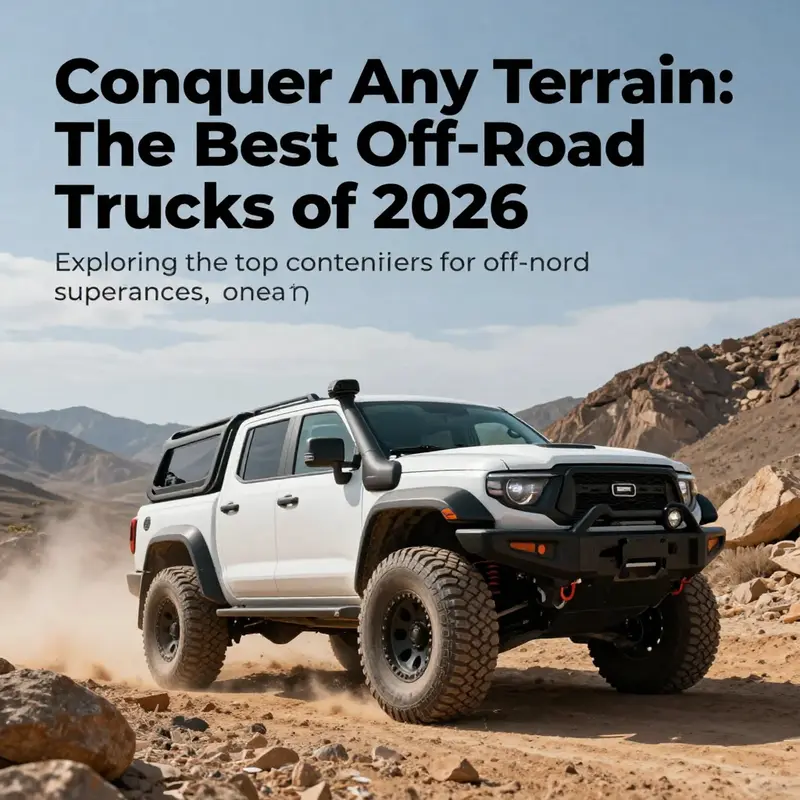
For off-road enthusiasts, adventurers, and racers, the quest for the ultimate truck is as thrilling as the journeys themselves. In 2026, several off-road trucks stand out for their unparalleled capabilities, technological advancements, and distinct characteristics. From the innovative Ford Bronco with its G.O.A.T. terrain management system to the rugged Jeep Wrangler that symbolizes off-roading culture, each model offers something unique. This comprehensive guide delves into the top models showcasing their formidable features, a comparative analysis to help you determine the best fit for your needs, an overview of technological innovations that improve off-road performance, and economic factors that play a crucial role for buyers, particularly in rural communities and agricultural settings.
Trailbound Titans: 2026’s Top Off-Road Trucks and What They Tell Us About the Year Ahead

2026 has redefined what it means to travel off the beaten path. The best off-road trucks fuse rugged heritage with modern engineering to tackle deserts, fjords, rocky passes and daily commutes with equal poise. What makes these machines compelling is the balance of power, control, protection and adaptability that comes together to form a coherent driving experience. As you scan the lineup, you can see a spectrum from hardcore trail specialists to luxury expeditioners and from modular classics to value driven challengers. Each offers a distinct philosophy of capability, yet they share a common thread: the ability to turn rough terrain into navigable ground and to keep the driver connected to both the ground and the road ahead. In this overview we describe five archetypes that typify 2026. The first is a boxy, purpose built trail vehicle with a robust full time four wheel drive and optional locking differentials, a rugged independent suspension and seven drive modes including mud and rock crawl. A long legacy of off road heritage sits under a high credit feature set such as underbody visibility. The engine is a turbo four with strong midrange torque and a smooth 10 speed automatic. The result is a vehicle that appeals to weekend rock crawlers and desert runners alike, with practical maintenance in mind and a modular ecosystem of factory and aftermarket accessories. The second model leans toward the luxury end, blending long haul reliability with a refined ride. Power comes from a high output twin turbo V6 with over 400 horsepower and ample low end torque, paired with a 10 speed transmission. Ground clearance is ample and the chassis uses high strength steel for on road stability and off road resilience. A multi mode all terrain system with dedicated rock drive helps traverse tough terrain while keeping cabin quiet and controls intuitive. The suspension balances highway comfort with substantial travel off road. The third vehicle is a modular, doorless platform that invites customization. A robust frame and a selectable transfer case allow controlled crawling at low speed and low range gearing. A heavy duty suspension emphasizes durability and articulation, with a range of engines from gasoline V6 to diesel options. Its hallmark is the ability to swap in winches, skid protection and off road electronics. It remains a beacon for hardcore off roaders who value mechanical simplicity and aftermarket support. The fourth model is a premium all terrain vehicle with aluminum intensive construction to cut weight. The drive system focuses on precise handling and includes a dedicated off road rock traversal mode and a versatile chassis from which to distribute power and dampening. Inside, a quiet cabin and high end materials pair with driver assistance features for safety on rough terrain. The fifth model is the value oriented challenger. Rugged practicality, high ground clearance and straightforward maintenance make it attractive to buyers on a budget. The powertrain is modest but torque is adequate for most off road tasks, and the silhouette remains classic and boxy, a nod to decades of capability. The point is clear: reliable, simple, and affordable off road capability can be accessible to a wide audience. Together these five archetypes illustrate the 2026 market: the trail crawler, the luxury expedition vehicle, the modular workhorse, the premium all terrain chassis, and the value oriented rugged challenger. Each speaks to a different persona but all share the belief that off road capability should be practical, predictable and exhilarating. Ultimately, the strongest arguments come from real world performance and practical ownership. A vehicle that can handle remote expeditions and canyon runs without breaking the bank is no longer a luxury but a new standard of everyday practicality. Durability, serviceability and ease of modification are central to the narrative. For readers who want to dive deeper into diesel powertrains and maintenance, there are resources available, and for safety and regulatory context, consult official safety resources.
Rugged Benchmark: How 2026’s Best Off-Road Trucks Balance Power, Purpose, and Reliability

When we ask what makes the best off-road trucks, the answer isn’t a single badge or metric. It is a careful balance of design intent, raw capability, and the reliability that keeps adventures from turning into ordeals. In 2026 the field spans from purpose-built eight-wheel platforms to high-performance trail machines that can still crawl up a rock face. Each category emphasizes different strengths but shares a common philosophy: the vehicle must conquer harsh terrain while enduring real-world use. The modern off-road truck wears many hats: rugged enough to survive, refined enough to live with, and intelligent enough to adapt to evolving needs. In this sense, the best trucks of 2026 are less about sheer bravado and more about a coherent system of capability, durability, and thoughtful engineering that translates into dependable performance when it counts.
One enduring yardstick for off-road prowess is chassis architecture. The eight-by-eight class embodies extreme strength and exceptional load-carrying capability, traits valuable for expeditionary work and heavy-rescue missions. Such platforms typically employ a robust ladder-frame or advanced composite frame that resists torsional deflection while supporting a heavy powertrain and reinforced suspension. They pair this structural backbone with sophisticated suspension geometry and high-clearance components that maximize wheel travel and articulation. In practical terms, this translates into the ability to keep all four, or even all eight, wheels planted on the ground as the terrain pitches and rolls beneath them. Yet this is not the whole story: the through-body capability must justify its size with purpose, showing that remarkable capability does not come at the expense of reliability or maintainability, even where service options are scarce. The nuances go beyond horsepower or torque; they hinge on how power is delivered, weight is distributed, and how the vehicle’s systems communicate with the operator through a clear feedback loop at the limits of grip and visibility.
By contrast, civilian high-performance off-road trucks pursue an adaptive blend of power, agility, and practitioner-friendly features. These machines favor a balanced approach: high torque and advanced traction systems that respond quickly to changing ground conditions, coupled with suspension tuning that yields stable highway manners and controlled off-road movement. A hallmark is the deployment of locking differentials at the front and rear, sometimes with a center lock as well. This trio of lockable differentials allows the driver to allocate torque precisely where needed—vital when sand, silt, or slick rock morphs the surface. The suspension tends to be long-travel and robust, with high-clearance shocks that absorb jolts from irregular surfaces while preserving control. In practice, a well-configured civilian performance truck remains a practical daily driver yet becomes a formidable partner when a trail demands careful line choice and throttle modulation.
A related thread is the enduring appeal of proven reliability. Expedition vehicles built for deserts, jungles, and remote passes share traits: a chassis that resists fatigue, drivetrain components that tolerate heat and dust, and a powertrain that sustains climbs with minimal fuel penalty. A ladder-frame design and a disciplined approach to weight distribution underpin many of these attributes, yielding a vehicle that can be repaired in less-than-ideal conditions with parts that are widely available or simple to service. In harsh environments, this translates into fewer immobilizations and a greater likelihood of returning home with the crew intact. The risk calculus changes when terrain becomes unpredictable; in those moments, even a small margin in reliability—a spare part stowed in the right place or a repair that can be done with basic tools—can redefine success.
Within the luxury-off-road niche, refinement and cabin ergonomics matter without sacrificing off-road capability. These machines feature locking front and rear differentials, and often a center differential that can be electronically controlled to optimize traction. Suspensions are sophisticated, with adaptive dampers and ride quality that mask rough surfaces while still allowing meaningful wheel travel when needed. Interiors emphasize quiet cabins, premium materials, and interfaces that make terrain management accessible. The trade-off is that comfort-focused models may sacrifice some on-road bite, but the best in this category blend comfort with genuine off-road capability, keeping driver attention on line choice rather than system faults.
The all-electric off-road frontier adds a further layer: immediate torque, controlled power delivery, and potential for multi-motor configurations that enable precise traction at each axle. Electric platforms can pair multi-motor setups with adaptive air or active suspension to maintain ground clearance while protecting the battery pack. Features such as multi-wheel steering for crab-walk maneuvers redefine what’s possible in tight spaces. Trade-offs include energy density, charging logistics, and managing thermal loads during extended operation. Still, the potential for electric off-road trucks to redefine capability and efficiency is compelling, signaling a broader rethink of how a vehicle can perform off the beaten path while fitting a modern, connected lifestyle.
Across these categories, standards-based evaluation helps compare vehicles beyond marketing hype. Safety and performance guidelines, including ISO 13849 and SAE J2970, offer shared criteria for evaluating mechanical safety and dynamic performance under demanding conditions. They remind manufacturers that durability is a function of design and process—materials selection, weld quality, corrosion resistance, and maintenance practices all contribute to a vehicle’s life in hard-use environments. Ultimately, the best off-road trucks are understood as integrated systems rather than a single spec sheet: design integrity, real-world performance, and a support infrastructure that makes long-term operation feasible.
In practice, the top-tier options in 2026 represent toolkits for different missions. If you need maximum ground clearance, an eight-by-eight platform offers it at the cost of higher operating expenses and maintenance needs. If you want a high-performance platform that doubles as a daily driver, a civilian model with robust locking differentials and tuned suspension may be the most sensible choice. If expedition reliability and off-grid living are paramount, an expedition-ready chassis with a proven drivetrain becomes indispensable. For those pushing the envelope, a modern electric platform promises instantaneous torque, precise control, and the flexibility to adapt to multiple roles—from rescue to frontier exploration—without changing core capabilities.
To translate these ideas into real-world decisions, consider use-case framing: a hunter guiding in sandy deserts will value deep traction and steady throttle response at low speeds; a remote scientist crossing slick riverbanks will prize suspension articulation and weight distribution; an emergency response crew in rugged terrain will need quick deployment and broad serviceability. In all cases, comparisons should rest on standardized testing and long-term durability evidence rather than marketing rhetoric. The best long-term choice aligns safety, maintainability, and mission fit.
For deeper mechanical longevity behind these capabilities, a dive into diesel and powertrain maintenance can help: master diesel mechanics step-by-step guidance can be found here: https://dirtantrucks.com/mastering-diesel-mechanics-your-step-by-step-path-to-success/. For authoritative research, the SAE International paper on modern off-road dynamics provides a rigorous framework for evaluating performance and safety across terrains: https://www.sae.org/publications/technical-papers/content/2023-01-0123. This mix of practical know-how and scientific framing clarifies why the best off-road trucks are valued for their engineering integrity as much as their raw ability.
In the end, the best off-road truck is the one that balances purpose-built capability with durable design, while staying adaptable to real-world changing demands. It’s less about chasing a single best and more about choosing a tool that matches the terrain, loads, and distance you plan to cover. The landscape of 2026 rewards thoughtful configuration, clear mission planning, and a balance between performance and practicality. If you keep that balance in mind, you’ll recognize that the most effective choice is the one that remains capable, reliable, and ready when the next obstacle appears.
Engineering the Edge: The Technological Frontier of the Best Off-Road Trucks
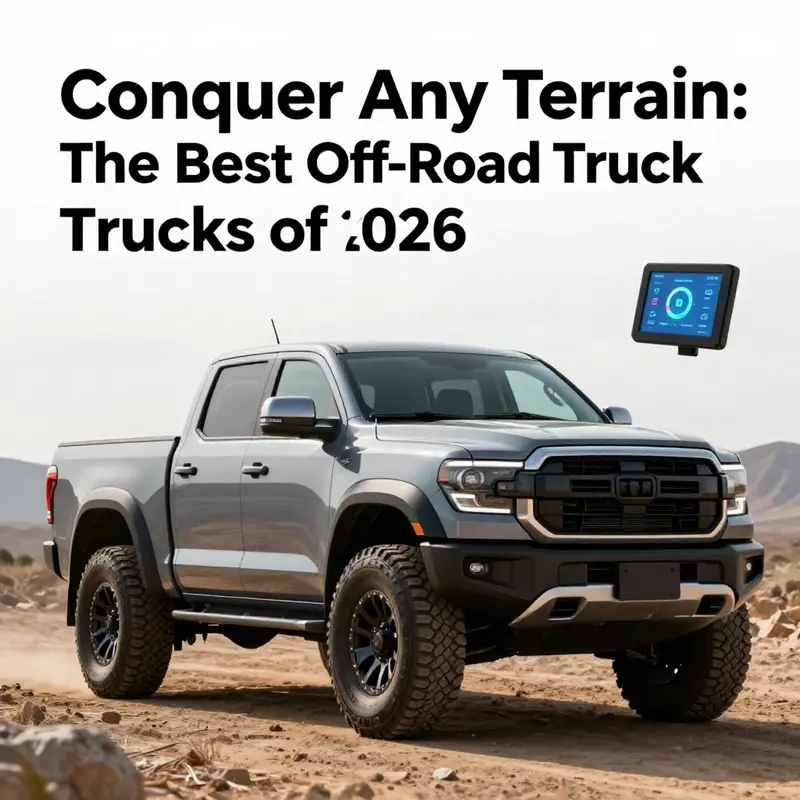
The latest wave of off road trucks signals a shift from raw horsepower alone to a sophisticated blend of engineering, software, and on trail intelligence. Far from a simple test of torque and approaches, today’s premier platforms are curated ecosystems where suspension, powertrain, traction, and driver assistance interact in real time to maintain grip, stability, and control across mud, sand, rock, and ice. In this environment, capability is no longer measured only by its peak numbers but by how gracefully a vehicle negotiates the unknown. The best off road trucks have become laboratories on wheels, where adaptive systems learn to read terrain and respond with precision. The core of this evolution rests in four interlocking domains: suspension, powertrain technology, traction management, and driver assistance. Each domain informs the others, creating a seamless chain of decisions that translate into better control, fewer surprises, and greater confidence for the driver.
Suspension technology is no longer a single component tuned for a single surface. Adaptive damping can alter ride height, stiffness, and damping characteristics on the fly, depending on what the tires are contacting and how the vehicle leans into a bend. When a truck air-springs through rough rock and ruts, it does more than absorb the impact; it reshapes its geometry to preserve approach and departure angles, maintain wheel contact, and keep the tire’s footprint in the best possible position. Modern systems couple this with electronically controlled valves and sensors that monitor road input thousands of times per second. The result is an almost anticipatory ride quality that smooths the roughest trails while preserving the necessary stiffness to climb over aggressive obstacles. If you imagine a test course of rutted dirt, exposed roots, and steep climbs, the vehicle’s suspension becomes the translator between chassis rigidity and tire adhesion, balancing compliance with the need to maintain predictable steering and braking.
Air springs continue to unlock superior ground clearance without compromising on-road manners. They allow a driver to raise or lower the chassis to optimize the approach angle for a rocky obstacle or to drop for a dune descent. The most advanced systems align the suspension with the vehicle’s center of gravity, steering angle, and throttle input so that the vehicle stays balanced even when the terrain throws a sudden shift in grip. In practice, this means a greater likelihood that the tire remains in contact with the surface rather than skipping or bouncing away from it. A sophisticated electronic control unit coordinates these adjustments with the vehicle’s stability controls, ensuring a harmonious response rather than a tug of war between competing systems.
Beyond the hardware, the software layer is equally critical. Real time data fusion from wheel speed sensors, accelerometers, and gyroscopes feeds an onboard computer that fine tunes damping, roll stiffness, and ride height. This algorithmic orchestration supports both comfort and capability, allowing a driver to concentrate on line choice rather than constantly modulating throttle and steering. The net effect is a truck that can traverse a mix of terrain with a steadier hand and more predictable weight transfer, which is essential when danger surfaces unexpectedly.
Powertrain technology has also advanced in ways that matter for off road reliability and expedition practicality. Hybrid and electric architectures bring instant torque and regenerative energy recovery into the mix, reducing the brittleness that can come with high torque figures from a traditional internal combustion engine. Instant torque is especially valuable on start ups after a pause on a steep grade or when negotiating tight switchbacks where throttle response must be immediate to prevent wheel spin. In the best systems, electric motors contribute not just peak torque but refined torque delivery through the power band, smoothing transitions and maintaining traction on loose surfaces.
Hybrid configurations offer a practical bridge between brute off road capability and daily usability. They leverage a combination of a traditional engine and electric motors to deliver power with an eye toward efficiency and reliability. In those setups, energy can be stored during less demanding segments of a trail or during downhill sections when regenerative braking becomes a valuable tool for maintaining control. The potential to reclaim energy that would otherwise be wasted translates into longer field sessions between refuels and less planning for battery endurance on remote expeditions. Even full electric platforms, once thought to be unacceptable for serious travel due to range anxiety, have matured to a point where the combination of large battery packs and optimized energy management makes them credible long distance competitors. The advantage here goes beyond raw power; it is the ability to modulate energy use with terrain demands, maintaining momentum on climbs while conserving energy for later sections of a trail.
The traction and drivetrain management layer is where these powertrain innovations meet the realities of the surface under the tires. Predictive torque vectoring is a standout capability, distributing torque precisely to individual wheels to counter slip and to stabilize yaw moments that threaten to spin the vehicle on angled stair-steps of rock or on a slick clay slope. Instead of waiting for wheel slip to trigger a response, the system anticipates traction loss and preemptively modulates power to each wheel. This creates a more confident and predictable driving experience, especially when lines change mid climb or when a sudden dab of throttle could cause a wheel to lose grip.
Integrated terrain-response systems take this one step further. They automatically adjust drive modes, suspension settings, brake blending, and throttle response to match surfaces as diverse as deep mud and loose gravel. In the best implementations, the vehicle learns from past turns and adaptively tunes its behavior within a ride, maintaining traction without requiring constant driver input. The result is a vehicle that remains tractable in conditions that would previously demand high levels of driver skill or resort to careful wheel placement and multiple attempts. In conjunction with AI-powered wheel slip detection, these trucks monitor wheel speeds and wheel-to-ground contact in real time. When they sense the slightest slip, they can quickly redirect drive torque to the wheels with the most grip, reducing the likelihood of a stall or a long, energy-wasting slide.
Driver-assistance technologies have become the safety net that prevents overconfidence from becoming a liability on challenging terrain. At the core are 360-degree camera suites that stitch multiple views into a panoramic, high-resolution map of the truck’s surroundings. These systems help a driver see rocks, logs, and ruts that might not be visible through the windshield, especially when the vehicle is perched on a ledge or negotiating a tight passage. Advanced hill descent control adds a measured, controlled cadence to speed on steep, uneven slopes, allowing drivers to focus on steering rather than brake modulation. The combination of these features with automated obstacle recognition reduces fatigue during long expeditions and helps novices negotiate tricky segments with a safer baseline.
This constellation of technologies does not exist in isolation. It exists as a holistic package that must interact with the vehicle’s chassis, electronics, and even the driver’s cognitive load. The most refined trucks present the driver with intuitive, actionable information rather than raw data dumps. They translate complex sensor inputs into a few clear options and recommended lines, while still leaving the driver in command. For example, a terrain mode might suggest a line that minimizes wheel slip and uses low-range gearing appropriate to the grade, and then the system can gently steer the vehicle’s yaw with limited input from the driver. In edge cases, the system can even hand over control temporarily to maintain momentum through a particularly tricky section, safely returning control once the driver is ready.
To ground this discussion in practical terms, consider the broad arc of what this tech enables on the trail. The latest platforms promise greater reliability under harsher conditions, a broader envelope of usable terrain, and more confidence when planning multi-day expeditions far from the nearest service lane. They also democratize capability, allowing skilled enthusiasts to push deeper into remote landscapes without risking an overtaxed vehicle. The shift toward energy conscious propulsion, coupled with smart chassis and software, makes the off road experience more sustainable and practical for a wider range of users. In this sense, the frontier is as much about endurance and resilience as it is about raw acceleration.
For readers who want to explore a related dimension of technology and maintenance, a practical primer on diesel mechanics and system literacy can be found at the following resource: mastering-diesel-mechanics-your-step-by-step-path-to-success. This link offers actionable guidance on how refinements in diesel technology intersect with hybrid and electric powertrains, underscoring how a modern off road truck compliments both field reliability and on road efficiency.
Taken together, these technological threads redefine what makes a truck the best in off road contexts. It is no longer sufficient to rely on torque curves or suspension travel alone. The most compelling machines fuse adaptive, responsive hardware with intelligent software that can interpret terrain cues and translate them into precise, confidence-building actions. They also embrace a broader ecosystem that includes charging infrastructure, maintenance practicality, and a design philosophy that prioritizes durability as much as on-road comfort. The result is a family of trucks that can deliver performance in the face of unexpected obstacles and still be ready for a weekend on pavement or a long outback crossing.
In this way, the best off road trucks embody a philosophy of preparedness. They anticipate terrain, protect the driver from fatigue, and extend the range of what is possible on the trail. These vehicles do not simply endure harsh conditions; they adapt to them with a blend of mechanical robustness and electronic finesse. The outcome is a more engaging, more capable, and more secure off road experience that invites drivers to test their limits with a trusted partner rather than a risky gamble. This is where the technology narrative connects to the broader conversation about the best off road trucks: the vehicles that emerge as leaders are the ones that combine proven ruggedness with a forward-looking, software-driven approach to terrain mastery.
External reference for a broad overview of these innovations can be found here: https://www.autoblog.com/2024/09/27/best-off-road-trucks-2025-technology
Rugged Economics: Performance, Price, and Longevity in the Best Off-Road Trucks
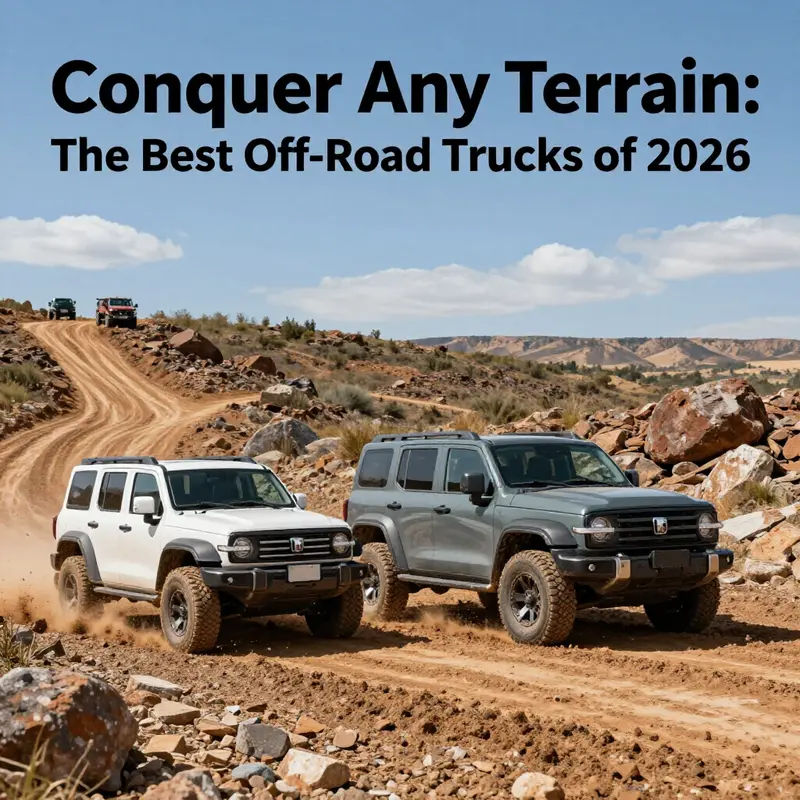
When evaluating the best off-road trucks, the conversation that matters most weaves together grit and numbers. Capability matters because rough terrain does not negotiate with you; it tests you. Price matters because durability, maintenance, and fuel use determine whether a weekend escape becomes a recurring habit or a costly detour. The search for the ideal vehicle, therefore, is not a simple tally of horsepower or torque alone. It is a careful balance of performance attributes that enable progress across mud, sand, rock, and snow, and the economic fundamentals that determine whether the experience remains affordable today and viable tomorrow. In this light, the best modern off-road trucks share a unifying trait: they couple rugged engineering with thoughtful ownership economics in a way that translates capability into practical, repeatable results over years of use. The narrative moves beyond glossy brochures and sensational numbers to ask what makes a truck consistently reliable in the worst conditions and financially prudent in the long run. It is a story told not just in pit stops and trail miles but in the quiet arithmetic of total cost of ownership, service networks, and component durability that answers the question for real-world buyers: which truck will carry you farther, for less, and with fewer surprises along the way?
At the core of the best off-road trucks is a chassis philosophy that privileges control and protection as much as raw force. A robust ladder-frame or similarly stiff, purpose-built frame supports a drivetrain designed for true off-road discipline. The suspension system that follows this frame is more than a ride; it is a negotiation with the terrain. Independent or solid-axle configurations each have their virtues, but what matters most in the field is how the suspension articulates and how the shocks manage heat, travel, and stability under load. High-clearance design keeps the underbody out of trouble, while skid protection shields vital components when the surface falls away into rocks or ruts. These elements together define how a vehicle maintains traction through uneven ground, how it preserves ride quality on rough trails, and how much confidence a driver can bring to a climb where the wheel contact points become the deciding factor between progress and stall.
Equally critical are the differential architectures and gearing strategies that grant traction where it matters most. Locking differentials, whether center, front, or rear, are not a luxury but a tool that converts wheel speed into controlled torque where grip exists. In the deepest mud or on a slick rock face, a locked axle prevents one wheel from spinning away momentum while the other hoards traction for the whole setup. The ability to engage differential locks, either manually or automatically, translates directly into the vehicle’s crawl capability—the precise rate at which power can be modulated to overcome friction and gravity on demanding terrain. Low-range gearing is another essential asset, enabling slow, controlled progress when the surface becomes steep or unyielding. The resulting crawl ratio—the figure that relates engine output to wheel speed at low gears—becomes a practical measure of how a truck will perform in extreme situations where throttle response must precede momentum more than top speed.
The layout of power delivery also plays a key role. A strong torque curve at low RPMs helps a truck push through obstacles without begging for shifts or stalling, and it matters just as much in a sandy wash as it does on a rocky incline. Engine architecture matters here, but it is not the sole determinant. Transmission tuning, drivetrain cooling, and torque management all crystallize in the field, where heat is the hidden adversary that can erode performance and reliability if not managed. In a well-rounded package, engineering teams balance peak power with endurance, ensuring that the torque available at the wheels remains accessible across long climbs and extended slow-speed maneuvers, rather than spiking briefly and dropping off. The result is a vehicle that feels predictable and controllable when the stakes are highest—where inches of clearance, not miles per hour, decide the outcome.
Beyond mechanical prowess, electronics weave through the driving experience as a practical framework for reliability. Modern off-road trucks integrate a suite of driver aids tailored to rough terrain: selectable driving modes that adjust throttle response, torque distribution, transmission shift points, and traction control to suit the surface at hand. Some models offer terrain-management systems with multiple profiles designed for mud, rocks, sand, or snow, giving the driver a straightforward way to shape the vehicle’s behavior without mastering complex tunings on the fly. Cameras, including underbody views, and robust ground clearance sensors help compensate for limited visibility when the landscape becomes featureless or shadowy. In combination, these technologies reduce the guesswork of off-road travel and allow drivers to focus on line choice, rhythm, and pace rather than micromanaging every control. The end result can feel almost intuitive: the truck reads the surface and responds with the confidence of a veteran guide.
Yet capability without sustainability is a fragile promise. The best off-road trucks acknowledge that ownership is a long conversation, not a single expedition. Initial purchase price is only part of the calculation. Long-term costs—fuel consumption, maintenance, parts availability, and the frequency of downtime—often determine whether a given capability pays dividends over years or evaporates into recurring headaches. Vehicles with time-tested, rugged components tend to justify a higher upfront price because they promise lower downtime and fewer dramatic repairs in remote settings. This is the paradox of off-road economics: higher initial investment may yield lower cost of ownership if the chosen platform reduces trips to the shop and keeps wheels turning in the field. The logic holds particularly for vehicles built with industrial-grade assurances and tested in harsh environments, where the structural integrity of the chassis, the durability of the drivetrain, and the resilience of suspension components contribute to predictable maintenance schedules and durable resale value.
From a buyer’s perspective, the math of ownership also includes fuel efficiency and the type of powertrain chosen for the journey. On longer expeditions that span deserts, mountain ranges, or vast backcountry networks, fuel economy matters as much as the ability to tow or haul gear. While some off-road trucks lean toward larger petrol engines delivering heavy midrange torque, others leverage compression-ignition efficiency or hybridization to extend range between fill-ups. The choice often reflects the intended use: a weekend rock crawler may prioritize torque and drivetrain robustness, while a long-range expedition vehicle may emphasize fuel efficiency and a larger fuel capacity. It is not a one-size-fits-all verdict; it is a spectrum where the right balance depends on the driver’s typical terrain, travel cadence, and access to service networks along the route.
A robust service ecosystem is another quiet but potent driver of ownership satisfaction. Vehicles built with widely available components and widely practiced maintenance intervals reduce the risk that a remote trail will become a stuck scenario. Factory-backed customization options—whether for suspension upgrades, protective armor, or modular storage—are valuable insofar as they align with anticipated use and do not compromise reliability. The most enduring platforms provide accessible diagnostics, abundant spare parts, and clear maintenance roadmaps so that owners can manage wear without costly downtime. In this sense, durability is not just a material property but a logistical capability: the system that links the vehicle to a trained technician, a supply chain, and a local workshop, wherever the journey happens to lead. When a truck is designed with this kind of ecosystem in mind, ownership becomes less of a gamble and more of a sustainable habit.
The discussion would be incomplete without acknowledging the evolving landscape of propulsion and its disruption of traditional cost and performance calculations. Electric powertrains bring extraordinary torque and instantaneous response, which can translate into superior traction in tricky conditions and a new set of tradeoffs for range, charging infrastructure, and weight distribution. A growing segment of off-road enthusiasts now evaluates electric options alongside combustion-powered platforms, weighing the benefits of high-end torque delivery and programmable e-differentiaLs against questions of charging speed, weight, and the need for rugged, expedition-ready power sources. The terrain itself, rather than mere distance traveled, becomes the defining constraint when deciding between different propulsion philosophies. While the specifics vary by application and geography, the trend is clear: electric and hybrid architectures will become increasingly capable in off-road contexts, expanding the toolbox available to drivers without eroding the core advantages of traditional, mechanically simple designs.
For readers who want a practical touchstone on maintenance fundamentals as they relate to reliability in harsh environments, a respected resource on diesel and mechanical systems provides hands-on insight. See Mastering Diesel Mechanics: Your Step-by-Step Path to Success for a grounded overview of how robust powertrains are built to survive the rigors of field work. The resource outlines core maintenance practices that keep engines and transmissions performing under load, including routine inspection, lubrication, cooling management, and the timely replacement of critical wear items. This kind of primer helps translate high-level performance concepts into actionable steps that owners can apply in the real world, reinforcing the idea that the best off-road trucks are the ones that stay ready when you need them most. Mastering Diesel Mechanics: Your Step-by-Step Path to Success.
All of these threads—mechanical resilience, terrain-adaptive electronics, powertrain strategy, and the economics of ownership—converge on a practical conclusion: the best off-road trucks are those that earn a reputation not only for conquering obstacles but for staying dependable in the long run. Buyers should weigh the total cost of ownership alongside the surface performance metrics and consider the vehicle as a system of interdependent parts designed to endure. When a platform demonstrates reliable chassis rigidity, intelligently managed torque, protective underbody hardware, and a serviceable ecosystem, it earns a durable, repeatable advantage. It remains essential to match the vehicle’s strengths with the user’s mission profile. A rugged, multi-purpose expedition rig that can be kept in service with routine maintenance and straightforward parts supply often serves twice as well as a highly specialized tool that cannot be repaired beyond the manufacturer’s nearest showroom.
This balancing act is why the best off-road trucks, in practice, are those built with a view toward endurance. The combination of a hardened frame, well-engineered suspension, reliable locking mechanisms, and a comprehensive maintenance framework translates into a vehicle that is both capable on the trail and economical in daily life. It is not that one equation decides the outcome; it is the sum of many small decisions—frame design, differential strategy, gearing, articulation, underbody protection, cooling, powertrain durability, and service accessibility—that determines which truck will be a faithful companion across deserts, across rocky lanes, and across the long arc of ownership. In the end, the best option is the one that aligns the driver’s terrain reality with predictable, affordable upkeep while preserving the freedom to plan new journeys rather than postpone them for unforeseen repairs. As the terrain tests the limits of machine and human alike, the vehicles that succeed are those that combine resilience with reasonable, transparent economics—vehicles that prove you can go far and keep going, mile after mile, season after season.
External reference for material considerations and industrial-grade perspectives on off-road capability and durability can be found here: https://www.army.mil/article/243678/understandingoffroadarmytruckmaterialgradesperformanceandindustrialuses
Final thoughts
The 2026 landscape of off-road trucks presents a compelling blend of capability, performance, and cutting-edge technology. From the enduring legacy of the Jeep Wrangler to the electric marvel that is the GMC Hummer EV, there are choices for every kind of adventurer or professional who demands more from their vehicle. As you ponder which model aligns best with your off-road ambitions—be it for leisure, competition, or utility—the insights gathered here will guide your decision-making process for what promises to be unforgettable journeys ahead. Remember, the right truck is not just about the adventure, but about enhancing your connection to the rugged terrains you traverse.