
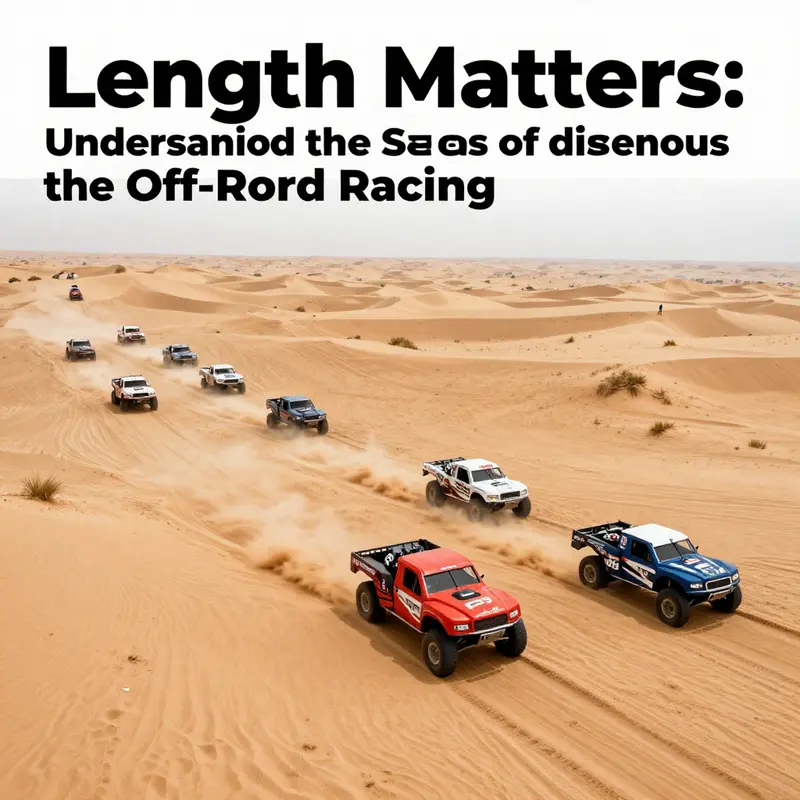
Off-road racing trucks embody the rugged spirit of adventure and endurance, blending power and agility for extreme terrains. With lengths typically ranging from 18 to 22 feet, these vehicles are tailored for specific racing classes such as desert and rock racing. Whether you’re a dedicated off-road enthusiast, a fan of the action-packed races, or an agricultural landowner keen to understand your equipment’s capabilities, grasping the dimensions of these trucks is crucial. Each chapter of this article intricately connects to our central theme, diving into the specifications, design variations, and performance influencers that determine how these titans measure up.
Length, Leverage, and Endurance: Understanding How Long Off-Road Racing Trucks Really Are
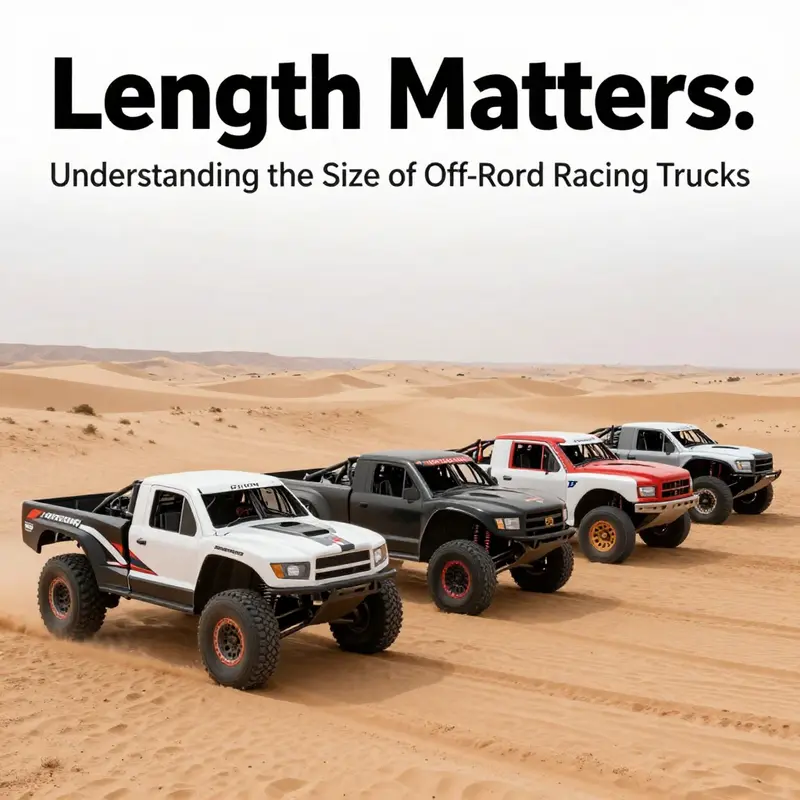
When people first glimpse an off-road racing truck tearing across a desert or climbing a rocky slope, the scale often comes down to a single measurement: length. The question, how many feet long is an off-road racing truck, sounds simple, but the answer unfolds with nuance once you consider the class, the terrain, and the mission of the vehicle. In professional desert endurance events, these machines are typically 18 to 22 feet in overall length. That range translates to roughly 5.5 to 6.7 meters, a span wide enough to house robust protection, fuel capacity for long stints, and the suspension travel needed to kiss the ground with control rather than crash through it. The length is not a decorative feature; it shapes balance, weight distribution, and the way the truck negotiates dunes, rocks, and the long, uninterrupted stretches that test a driver’s stamina as much as the vehicle’s endurance. Within this spectrum, the most advanced desert racers—the Trophy Truck designs and their close cousins in endurance classes—tend to sit around 20 to 22 feet long when fully kitted with roll cages, fuel cells, armor, and a drivetrain tuned for high-speed, all-terrain performance. The precise measurement can shift a few inches here or there based on safety equipment and the specific rules of a given racing series, but the general window remains a reliable rule of thumb. In practical terms, that means teams design around a length that optimizes stability and serviceability in the harshest environments while keeping within the constraints imposed by the course layouts and pit-stop logistics. In other words, length is a foundational design parameter, not an afterthought. For drivers who must thread tall dunes and narrow canyon halls, a truck that lands in this 18–22-foot band offers a balance between straight-line stability at speed and the nimble turning needed to avoid a sudden obstacle. This balance is essential, because endurance races demand not just speed, but the ability to maintain momentum across hundreds of miles of rough terrain. The length also influences how fuel is carried, how spare parts are stowed, and how quickly a truck can be serviced between legs of a multi-day event. Trucks toward the upper end of the length spectrum tend to carry more fuel and more protective armor, which is a natural counterweight to the demands of extreme terrain. Shorter configurations, while potentially more agile in tight sections, must compensate with lighter bodies and carefully tuned suspension to preserve stability at high speed. In the end, the length of an off-road racing truck emerges as a composite of purpose, class rules, and the engineering instinct to harness momentum rather than fight it.
A critical aspect of this discussion is the distinction between different racing formats. Desert racing, where long straightaways meet sweeping curves in the sands, often rewards length for stability and endurance. The longer wheelbase and overall length reduce pitching over soft, shifting surfaces and give a driver a steadier platform when crossing a dune crest at triple-digit speeds. Rock-crawling or trail-focused events, by contrast, may favor shorter, more compact configurations that can negotiate tight rock gardens and steep ledges. In those environments, designers push for a lower center of gravity and tighter turning radii, sometimes at the expense of the long-range stability prized in desert runs. Across these formats, the core principle remains: as length increases, so does the vehicle’s ability to maintain a straight path through rough terrain, but the cost may be a tighter turning radius and more room required for pit stops and service equipment. The interplay between length and steering geometry is a subtle craft, and teams spend countless hours testing how incremental changes in length affect handling, tire wear, and the driver’s confidence on a course that demands precise line choices at high speed.
A practical way to picture this is to imagine the chassis as a rigid backbone with a flexible, living skin. The overall length sets the span of that backbone and dictates the spread of the weight-bearing points along its length. The wheelbase, a component of the total length, is typically around 10 to 12 feet in these machines. A longer wheelbase contributes to a smoother ride over rough ground and enhances high-speed stability, especially when the truck is fully loaded with fuel and equipment. But there is a trade-off: a longer wheelbase can widen the turning circle and compress agility in tighter sections. Conversely, a shorter wheelbase improves maneuverability, yet it makes the structure more sensitive to abrupt terrain changes and increases the likelihood of pitching and bottoming out in rutted sections. Designers constantly negotiate this tension—length, weight distribution, suspension travel, and tire choices—to achieve a reliable balance across the varying demands of a race circuit.
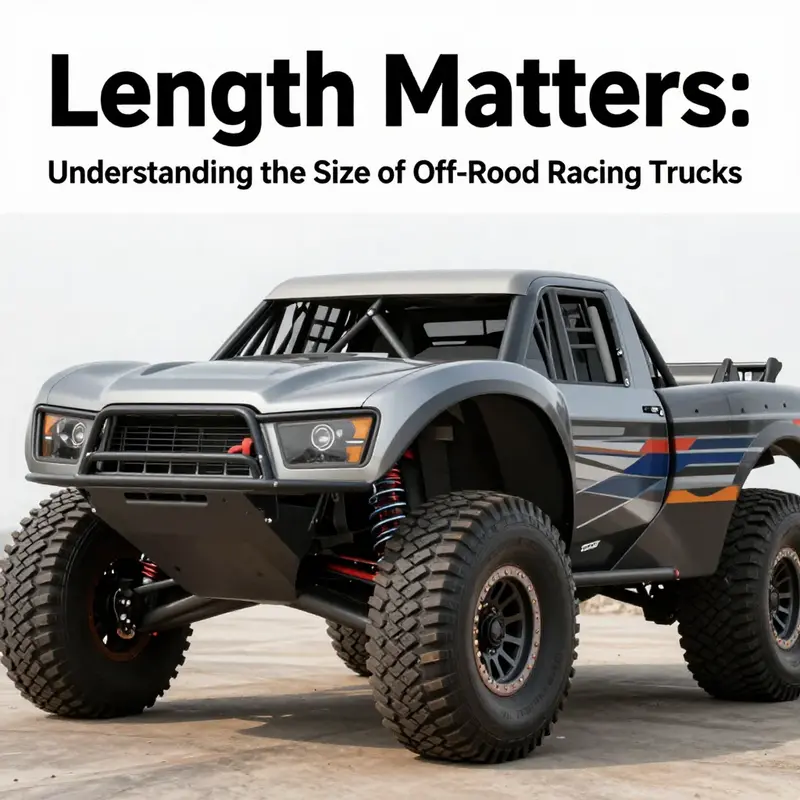
Beyond the wheelbase, total length interacts with the truck’s width and height to establish the vehicle’s footprint on the ground. Typical widths run between eight and nine feet, while the height often reaches seven to eight feet. The combination of these dimensions informs how the truck negotiates obstacles, how much air it can catch while cresting a dune, and how closely it can track a line through a canyon. The chassis itself is heavy with safety and endurance features: reinforced roll cages to protect occupants, extensive protective armor in exposed regions, and suspension systems engineered for expansive travel. The suspension travel—routinely exceeding a foot and sometimes surpassing 24 inches—works in concert with the long or short body to keep tires on the ground where traction is possible and to cushion the impact when it isn’t. In the desert, that cushion matters, because a well-placed landing can preserve momentum, while a poorly orchestrated landing can sap speed and tax the drivetrain.
Weight is another piece of the length puzzle. An unloaded, race-ready truck typically sits in the 4,000 to 5,500-pound range, depending on materials and the level of armor. Heavier trucks can carry more fuel and heavier protection, extending endurance at the cost of flexibility and response in tight spaces. The interplay of length and weight shapes the truck’s inertia. At high speeds, inertia helps the vehicle cut through air and maintain a steady rhythm across the desert floor. But it also makes drivers more susceptible to sudden gusts of wind, shifts in the sand, or a misplaced line. Engineers compensate with adjustable suspensions and adaptive dampers that respond to the terrain in real time, keeping the chassis within a controllable envelope regardless of the course’s demands. The conversation about length, therefore, isn’t merely about how long the vehicle is; it’s about how that length integrates with weight, suspension, and drive-train tuning to produce a machine that can endure hours of punishing terrain at sustained velocity.
In this light, the length of an off-road racing truck becomes a connective thread between engineering ambition and race-day discipline. Teams design within a range that accommodates practical realities—the storage of spare parts, fuel cells, and recovery gear—while aiming for a platform that can maintain competitive pace across the event’s mileage. The precise number of feet a particular truck wears on the clock is less important than the way that measurement aligns with the car’s center of gravity, its tire footprint, and its suspension geometry. Yet the 18 to 22-foot bracket remains a reliable descriptor for professional desert racing vehicles, offering a useful shorthand for spectators, engineers, and aspiring fans who crave a tangible sense of scale when watching these machines carve through dust, rock, and heat.
For readers who want to connect the mechanical specifics with practical, on-the-ground insight, a useful reminder is that the numbers you see published by organizers reflect a standardized approach to measurement. They account for structural elements that are essential for safety and endurance, and they balance the realities of racing across varied terrain. In other words, the length is not a cosmetic feature; it is a deliberately chosen parameter that influences stability, handling, serviceability, and the overall rhythm of a race. As you consider the geometry of these trucks, remember that every inch of length serves a purpose, from the fuel strategy that stretches between pit stops to the protective architecture that stands up to the rigors of a multi-day desert challenge. When you witness a truck surge across a dune crest or climb a rock face, you are watching the guided result of a carefully computed length, a chassis design refined by testing, and a driver who understands how to use that length to ride the landscape rather than fight it.
For a practical primer on the mechanical side of these builds, you can consult a resource focused on diesel fundamentals and maintenance—an essential companion to understanding how length, weight, and center-of-gravity configuration influence performance. Mastering Diesel Mechanics: Your Step-by-Step Path to Success. This reference helps connect the chassis engineering described here with the real-world work of keeping a high-performance off-road truck running reliably across miles of demanding terrain. For official, class-by-class specifications, consult SCORE International. The organization’s details offer a structured baseline that aligns with what teams pursue in the shop and what you witness on race day. You can explore the formal framework and class rules that shape how length is defined and applied in competitive settings at SCORE International’s site: https://www.score-international.com
null
null
null
null
Foot by Foot: How Length Shapes Traction, Endurance, and Control in Off-Road Racing Trucks
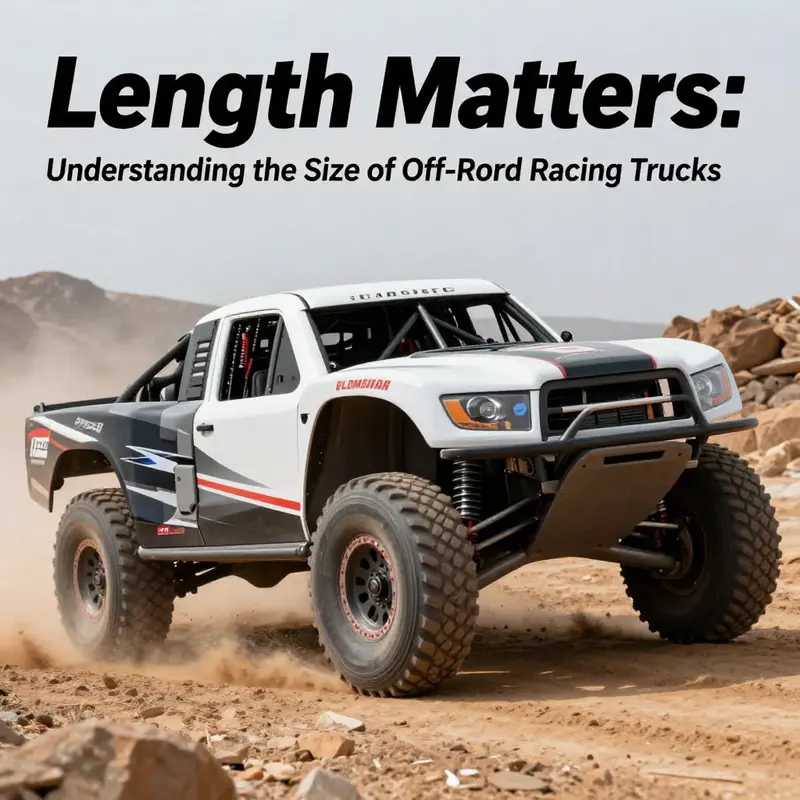
When people ask how long an off-road racing truck is, they usually expect a simple number. The truth is more nuanced. Length is a performance lever, not a cosmetic detail. In major desert challenges and endurance tests, the typical race truck sits in a fairly narrow window because length interacts with every other system on the vehicle. In the Baja 1000 environment, engineers and crews target roughly 18 to 22 feet for the overall length. That spread is not accidental. It reflects a balancing act between how a truck will handle high-speed straights, how it clears obstacles, and how it survives a grueling course that can last for hours on rough terrain. In practice, those measurements translate into real-world decisions about wheelbase, suspension travel, tire choice, and the geometry that governs traction and stability. To understand why length matters so much, it helps to look at how the truck’s length touches every aspect of its performance, from the moment the engine sends power to the wheels to the moment the truck lands after a long jump and continues the race with minimal downtime.
Ground clearance and obstacle clearance emerge as the first and perhaps most visible reasons teams care about length. A longer chassis can accommodate longer suspension travel without bottoming out when the truck smashes into rocks or faces a steep drop. More space between the chassis and the ground means the suspension can flex more freely, absorbing energy and reducing the chance that a tire loses contact with the ground at critical moments. The result is higher ride height at the same speed, a blessing when the course throws up ledges and ruts. But there is a counterpoint: as a truck grows longer, the effective lever arm changes. The longer the vehicle, the more energy is stored in each bump, and the heavier the mass that must be accelerated or recovered after a harsh impact. In other words, a longer truck can clear big obstacles more confidently, yet it also risks slower response in sudden changes of direction. This is why designers tune length in concert with the suspension layout, ensuring the travel is not wasted while preserving the ability to react to a tightening corner or a sudden rock on the trail.
Weight distribution and stability provide another layer of complexity. A well-balanced, longer chassis can place more weight toward the rear, improving traction on loose surfaces and helping wrest the power through rough sections. The increased wheelbase enhances straight-line stability at high speeds, reducing the likelihood of wobble or rollover on flat, open stretches. Yet the flip side is real: longer vehicles can feel less nimble in tight sections when the driver needs to translate a narrow line into a precise turn. The geometry of length also influences the load path through the drivetrain during aggressive maneuvers. Engineers often pair a longer wheelbase with tuned front and rear suspension geometry to maintain predictable steering feel and steady load transfer. In the end, length becomes a tool for balancing grip and control, especially when a truck must hold a line across a long, undulating desert corridor while a competing truck vaults a dune nearby.
Suspension system design is where length truly frees a team to design for the hardest miles. Longer trucks can accommodate long-travel suspensions, which are essential for absorbing the shock of big jumps and rough whoop sections. The extra room allows engineers to use more advanced configurations—long-travel coilovers or double-wishbone layouts, within the constraints of the chassis and the overall length target. With longer travel, tires maintain contact with the ground more consistently, which translates into more predictable acceleration and braking under extreme load. The ride becomes smoother, not because it is softer, but because the suspension can flex and recover in a controlled manner. That control matters in endurance races, where fatigue and micro-corrections compound over hundreds of miles. The length also accommodates protective armor and fuel capacity that must remain within the permitted envelope. The result is a vehicle that can endure the entire course without forcing compromises elsewhere in the design.
Tire size and wheelbase naturally tie into the length equation as well. Large tires are common in off-road racing because they bridge irregular surfaces and retain traction when the ground is uneven. A longer wheelbase provides space to fit bigger tires without risking drivetrain geometry or chassis clearance. For example, in many desert race setups, tires around the 33x12x20 range are used to combine ground coverage with the ability to roll over rough terrain without stalling traction. The wheelbase helps maintain a favorable weight distribution across the tires, which in turn supports more consistent grip through long miles of racing. But tires alone do not determine outcomes. The interplay between tire size, wheelbase, and the vehicle’s overall length defines how the truck negotiates corners, whoops, and off-camber sections. A truck with a well-considered length can keep both front and rear tires in contact with the surface longer, enabling steadier acceleration out of corners and through s-turn sequences where a shorter truck might struggle to steady itself.
Maneuverability and turning radius also hinge on how long the chassis is. It is a delicate compromise: a shorter truck often offers tighter turning, which can be decisive in courses with tight canyons or narrow trails. Conversely, a longer chassis tends to track straighter and resist side-to-side sway, granting superior stability on open stretches and at high speed. In practice, teams tailor the length to the expected race terrain. Baja-length trucks lean toward a longer wheelbase to maximize straight-line stability and obstacle clearance, while rocks-and-tight-trails vehicles accept a shorter footprint to improve line selection and cornering. These choices are not arbitrary; they emerge from repeated testing, track experience, and an explicit understanding of the course geometry.
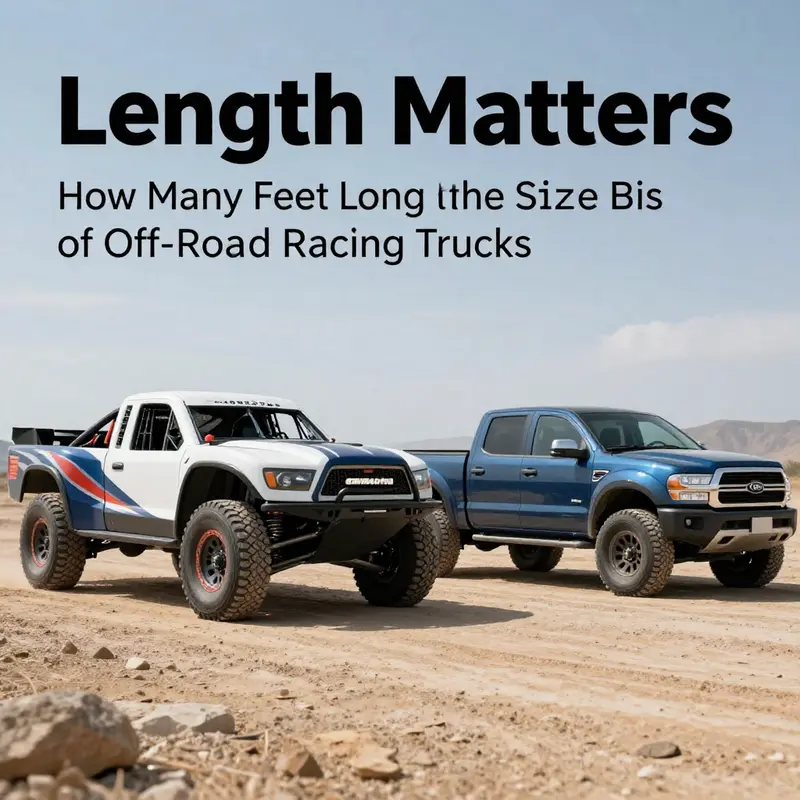
The precise measurement of length, however, deserves attention. When teams talk about a truck being 18 to 22 feet long, they refer to the overall exterior length, from bumper to bumper, including the protective roll cage and any fairings. The wheelbase—the distance between the front and rear axles—often sits within that length window but can be a distinct design target. A longer wheelbase does not guarantee longer overall length, yet it commonly accompanies longer bodies. Engineers must also consider weight distribution, CG height, and the rigidity of the frame when choosing a length that will endure the race’s demands. As the body grows longer, the mass shifts and the aerodynamics change, even if speed is more governed by the engine and the surface than by the air. The integration of a robust frame, cage, fuel cell, and armor within the available length requires careful packaging and precise tolerances so that every component has a place without compromising safety or performance.
In this context, the variability across classes and race formats becomes more apparent. Desert endurance trucks tend to favor a longer footprint to handle the long, open sections and the brutal impact of repeated landings from jumps and ruts. Rock-crawling builds may push toward tighter dimensions to negotiate narrow passages and steep climbs, accepting a bit more body lean in exchange for maneuverability. Even within the same race, teams might adjust their length through subtle changes in suspension mounts or bumper provisions to optimize the balance between gradient climbing ability and cornering precision. The argument for a universal number dissolves under the weight of real-world courses, where every mile is a negotiation between speed, contact with terrain, and the risk of mechanical failure.
For readers seeking a deeper mechanical perspective on how frame length influences performance, see Mastering Diesel Mechanics: Your Step-by-Step Path to Success. This resource sheds light on the fundamental relationships between chassis design, powertrain layout, and suspension geometry that drive the practical outcomes we observe on the trail. (Internal reference: Mastering Diesel Mechanics: Your Step-by-Step Path to Success)
Beyond the practical, the numbers matter because they shape how teams allocate precious resources. The length window of 18 to 22 feet constrains material choices, fuel capacity, and even the layout of safety devices. A longer truck demands more protective armor, heavier components, and a larger fuel tank to maintain range, which in turn pushes weight up and tests the suspension’s ability to manage it. A shorter truck, while easier to accelerate and respond to inputs, may require more aggressive suspension tuning or different tire strategies to keep traction on the same terrain. This is the essence of the design trade-off: length is not simply about how long the vehicle is; it is about how the vehicle uses its length to manage energy, control, and endurance across the entire race.
While the Baja-style benchmark of 18 to 22 feet serves as a practical guideline, teams often bend or stretch this boundary in pursuit of course-specific advantages. The official specifications from the sanctioning bodies provide the formal limits within which teams must operate, but the real-world decisions come down to the course at hand, the driver’s style, and the team’s strategy for defense against fatigue and mechanical failure. The length of the truck becomes a living parameter during the build, a parameter that teams adjust almost as eagerly as they adjust their shocks for an upcoming stage. In the end, the number is a reflection of how long and how robust a truck must be to survive the day’s obstacles while still delivering the speed demanded by the race, a speed that reveals itself not only in raw power but in the quiet, almost invisible geometry of length.
If you think of length as a single dimension, you miss the whole story. Length is the thread that connects how a truck sits on the surface, how it transfers weight during a aggressive arc, how it absorbs the energy of a crater or a cliff, and how it carries fuel and safety systems across hundreds of miles. It is the line that links chassis architecture to traction, from the moment the truck leaves the starting line to the moment it crosses the finish. The lesson is simple but profound: length is a design choice, and it is one of the most powerful tools a team has to shape performance for a given course. The number on the side of the truck—18, 19, 20, or 22 feet—embodies countless decisions about geometry, materials, and engineering philosophy. It is the physical embodiment of the race’s demands and the team’s planning, a constant reminder that in off-road racing, even a few feet can spell the difference between victory and the gnarl of the next obstacle.
External resource for deeper context on frame length and performance considerations in off-road vehicle design: An In-Depth Guide to Off Road Go Kart Frame: Standards, Grades, and Performance.
Internal link to related mechanical foundations for readers curious about the broader context of length and performance: Mastering Diesel Mechanics: Your Step-by-Step Path to Success.
Length as a Strategy: How Off-Road Racing Trucks Are Sized for Extreme Terrain
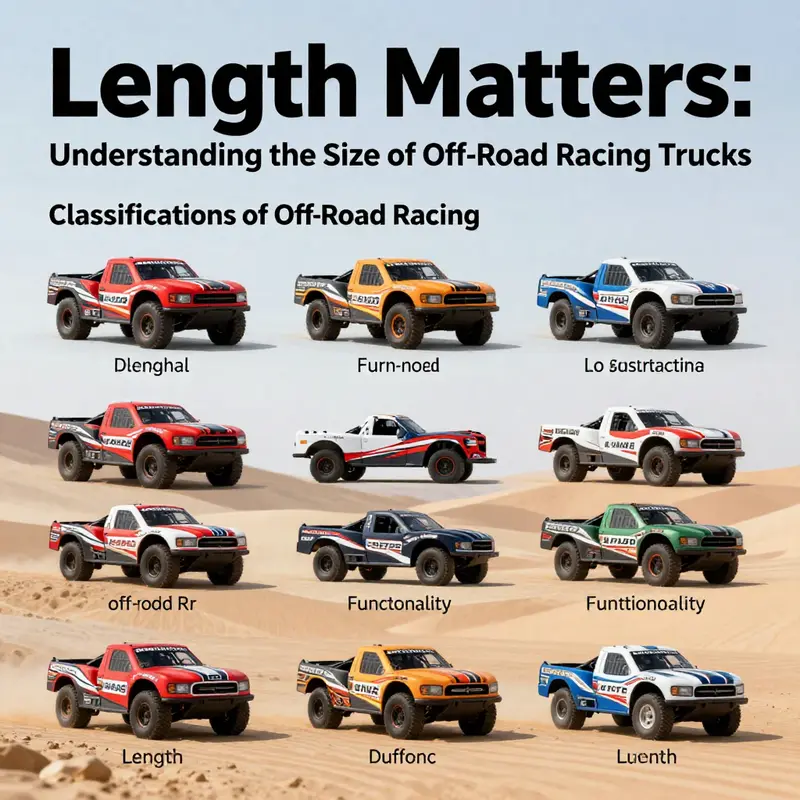
In off-road racing, length is not just a measurement; it is a strategy etched into the frame, the suspension, and the choices a team makes about weight, power, and protection. When a truck slices through a desert wash, climbs a rocky stride, or catapults over a dune at speed, the distance from bumper to bumper becomes a deciding factor in stability, handling, and endurance. Across the spectrum of off-road disciplines—from brutal desert endurance events to technical rock crawls and the spectacle of short course battles—the practical length of a race truck often lands in a practical band. In widely contested desert races and endurance formats, a fully equipped off-road race truck typically measures between 18 and 22 feet long. That range is not arbitrary; it reflects a balance between the need for a long wheelbase to resist wandering through chew and ruts and the necessity of a compact enough footprint to negotiate tight trails, tight hairpins, and variable terrain. The longer the chassis, the more stable the vehicle tends to be at high speeds on open stretches, yet the more challenging it can be to turn and to fit through narrow corridors or rock gardens. The length of the vehicle, together with its wheelbase, fundamentally shapes how a truck interacts with the ground, the air, and the obstacles that stand between it and the finish line.
Within this length framework, teams rarely chase a single dimension in isolation. The truck’s length informs everything from weight distribution to fuel capacity, from the angles of approach and departure over obstacles to the height of suspension travel. In endurance classes where resilience matters as much as raw speed, the chassis is extended or reinforced to preserve stability during long stints of rough driving, while still keeping the vehicle maneuverable enough to thread through rough sections without becoming a liability in tight spots. A common scenario is a mid-sized desert racer around 20 feet long when kinesthetic mass, roll cage, and protective armor are accounted for. The geometry of the frame is tuned to sustain dynamic loads over thousands of miles of rough terrain, and the length is part of the equation that determines how much chassis flex can be absorbed before the body starts to yield under strain. In this sense, length becomes an ally when paired with a well-tuned suspension and a cage crafted for the course.
Two broad classifications commonly frame the discussion of length in off-road racing: the high-ended, open-ended designs that prioritize speed and stability over a long wheelbase, and the more compact, maneuverable builds that prize agility in tight, rocky sections. The former falls into what enthusiasts describe as Pro Unlimited or similarly unrestricted formats. These trucks often feature one or two seats and a design ethos that prioritizes maximum stability and speed on extreme desert courses. Their length varies because the regulations do not lock in a rigid maximum; instead, designers optimize wheelbase and overhangs to exploit the terrain while maintaining durability. The lack of strict dimensional constraints in this category means teams can experiment with longer frames, extended travel suspensions, and more substantial armor as dictated by the course profile and sponsorship expectations. The longer wheelbase, in this context, is a deliberate choice to sustain line and rhythm across long sweeps of hard-packed desert, where momentum and steady feedback from the chassis translate into confidence at the wheel.
The other end of the spectrum is represented by classes that emphasize a tighter footprint. Class 1500, for example, comprises modified production trucks with restrictions on engine displacement and vehicle dimensions. In this tier, designers typically opt for a shorter, more compact chassis to improve maneuverability through narrow passages, switchbacks, and rough, rock-laden trails. The aim is to strike a balance between power and control, so that a race truck can tunnel through a canyon or square a corner on a rocky approach without becoming unwieldy. The practical effect is that these trucks tend to be lighter and shorter than their unlimited counterparts, with suspension geometry and chassis stiffness tuned to preserve control without sacrificing survivability over the course of the race. Within this framework, a prerunner or two may serve as a sturdy template for durability and habitability, yet length remains a critical variable that the team must respect when navigating the course layout. The practical consequence is that the Class 1500 truck, while compact, often carries reinforced suspensions, advanced roll cages, and substantial fuel capacity tailored to the demands of medium-length desert sections, rock formations, and the occasional long, sandy stretch that tests endurance as much as top speed.
An illustrative point in this discussion is the kind of modification a race truck undergoes to maximize its functional range without blindly extending the chassis. A typical prerunner—the archetype in desert racing—emphasizes durability, suspension travel, and aerodynamic efficiency. The vehicle’s length in this context allows for longer fenders, extended axles, and a tailored frame that increases the functional travel of the suspension while preserving a predictable center of gravity. The result is a truck that can soak up the rough with less impact on ride quality, helping the driver maintain control across whoops, ruts, and the unpredictable geometry of a harsh course. Yet the same design philosophy keeps the length close to production lineage, because the balance between weight, rigidity, and space for essential systems matters as much as outright length. The point is not to chase length for its own sake, but to use it to support stability, durability, and the capacity to cross the finish line in one piece.
The relationship between length and performance becomes even more nuanced when the discussion turns toward how teams deploy their resources. A longer chassis can improve straight-line tracking and reduce yaw under heavy loads, which is advantageous in long, fast desert legs where the risk of drift at high speeds is a constant consideration. However, longer vehicles require more careful management of weight distribution, as a misalignment between the front and rear axles can magnify the consequences of a miscalculated landing after a dune crest or a rock drop. Conversely, a shorter, more compact truck enhances agility and reduces the turning radius, making it easier to thread a line through a tight rock garden or a narrow canyon pass. But this agility does not come without trade-offs: less wheelbase can translate into reduced high-speed stability and more frequent pitch changes on uneven surfaces. The designers and crews therefore calibrate length as part of a broader strategy that also includes suspension tuning, throttle response, and protective armor that dampens the impact of inevitable contact with terrain. In this sense, the length is not a standalone feature but a central thread that weaves into every other design choice.
The practical takeaway is that the audience for these vehicles should not treat length as a mere measurement but as a configured characteristic that interacts with the vehicle’s purpose. For endurance desert races, a longer, stable platform can be worth more than a razor-thin margin gained from extra speed, especially when it buys confidence through several hundred miles of rough terrain. For tight, technical races, the ability to lean into turns and negotiate obstacles with a shorter wheelbase can be a decisive advantage. Teams evaluate these options against the course profile, the expected weather, and the level of risk they are willing to accept. In practice, the length of an off-road racing truck serves as a deliberately chosen variable in the math of endurance and mastery, where every inch of wheelbase, overhang, and chassis geometry influences the likelihood of a successful finish.
Beyond the numbers, there is a culture around length that echoes through the paddock. Engineers and crew chiefs talk about the truck as a living platform that must adapt to multiple terrains, and length is one of the most tangible ways adaptation manifests. In the discipline, even a small shift in frame geometry is tested through miles of desert testing and controlled arena laps, a process that eventually informs what the official class rules will allow and how teams will push the envelope in future seasons. For readers who want a more technical dive into the propulsion and powertrain considerations that often accompany long-travel desert builds, a focused piece on diesel powertrains and maintenance can provide useful context. mastering-diesel-mechanics-your-step-by-step-path-to-success offers practical grounding on how robust power systems sustain these long-stretch runs and the heavy demands placed on the drivetrain and cooling systems during a race.
For those who want to explore the formal boundaries that shape these design choices, consulting official class rules remains essential. While this chapter centers on length and its functional impact, the broader framework is defined by sanctioning bodies that outline allowable dimensions, safety requirements, and competition formats. In the end, the length of an off-road racing truck is a carefully chosen instrument that reflects the terrain it will conquer, the pace at which it is expected to endure, and the limits of what the team can assemble within a given budget and rule set. It is a reminder that in off-road racing, the geometry of a machine—far more than any single feature—carries the story of how these machines become capable of transforming rough ground into a stage for human skill and mechanical ingenuity.
External resource: SCORE International official website for class rules and event details can provide additional official context on how length interacts with class designations and competition expectations. https://www.scoreinternational.com
Final thoughts
Understanding the length and specifications of off-road racing trucks helps enthusiasts appreciate the engineering behind these thrilling machines. The dimensions not only impact their performance but also influence their design and functionality across various classes. Whether racing across deserts or crawling over rocky terrain, knowing how long your truck can set the stage for your next great adventure. Embrace the rugged journey, and let the length guide your choices on the tough trails ahead.