

Off-roading is not just a hobby; it’s a passion that drives enthusiasts and adventurers to conquer the wildest terrains. From rocky mountains to muddy trails, the right truck can be your best companion, ensuring you traverse these challenging environments while enjoying raw power and unmatched capability. This exploration of off-road excellence identifies four formidable models—the Chevrolet Colorado ZR2, Toyota Tacoma TRD Pro, 2026 Toyota Hilux, and Jeep Wrangler Rubicon—that stand out for their exceptional features tailored for rugged adventures. Each chapter dives into their unique attributes, showcasing how they are engineered for off-road dominance and guiding your choice for the best off-road truck.
Colorado ZR2 at the Helm: A Deep Dive into the Best Off-Road Truck Choice
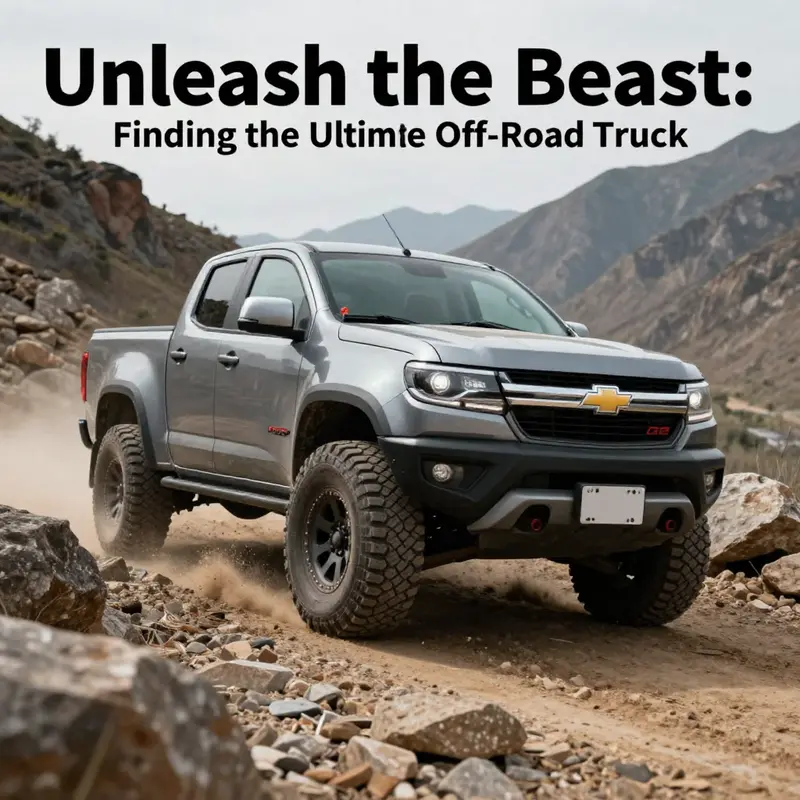
To understand what makes a truck truly capable off the pavement, you have to look beyond horsepower and tread depth and ask how the vehicle behaves when the ground drops away, when rocks rise like teeth from the earth, and when heat and dust push driver and machine to the edge. In that sense, one model consistently serves as a practical benchmark for the kind of all-terrain performance that off-road enthusiasts prize: a truck built to cross dunes, conquer slick rock, and carry gear with confidence, while keeping the driver engaged rather than exhausted. The core appeal lies in a carefully engineered balance. It pairs a high ground clearance and robust approach with a suspension tuned for both articulation and control. It fleets with locking differentials that can be engaged when traction becomes scarce, and it carries tires designed to bite into loose surfaces without sacrificing predictable steering on a highway or a long, unforgiving desert stretch. The result is not just raw capability in a vacuum, but a vehicle that remains predictable, manageable, and confidence-inspiring at the edge of grip. That combination is what makes this particular option a leading contender for anyone weighing the best truck for off roading against the demands of rugged trails, remote camps, and long expeditions where reliability matters as much as performance.
From the outset, the design philosophy centers on an ecosystem rather than a single feature. A high-ground-clearance suspension system minimizes the chance of scraping the undercarriage on jagged terrain, and it works in concert with precise tuning to keep wheels in contact with the ground during awkward transitions. In off-road terms, contact is king: traction is less about raw torque and more about the ability to translate available torque into stable, controllable motion. The suspension system here is not a one-note performer; it is a dynamic framework that adapts to the terrain. The presence of a Dynamic Suspension System Vehicle, or DSSV, underscores that intent. This advanced setup synchronizes with electronic stability control to maintain traction while preserving wheel travel. The effect is a truck that can crest a bump, dip into a wash, and then climb out, all while delivering a driver a sense that the chassis is as much partner as machine. When the trail tilts, the vehicle remains composed, helping the driver keep line of sight and momentum rather than canceling intention with fear of roll or loss of control.
The practical outcome of such an arrangement is an enhanced sense of security on the rough stuff. Off-road terrain rarely resembles the smooth, predictable surfaces of daily driving. Instead, you face loose sand, gravel, shale, and sudden changes in surface texture. In these conditions, the drivetrain’s reliability is tested at the edge, and it helps to have a system that can default to a controlled descent or a cautious crawl when the slope steepens or a corner threatens to unbalance the truck. Hill Descent Control is a feature that acknowledges the realities of descending steep grades where gravity is an uninvited co-pilot. Rather than requiring constant brake modulation, the system manages speed and throttle inputs so that the descent remains smooth and predictable. It’s not about circumventing skill; it’s about preventing fatigue so a driver can conserve focus through long, technical sections. Adaptive Cruise Control with Off-Road Capability may sound like a luxury in a rugged machine, but it’s another example of how a modern off-road truck is designed for extended adventures rather than quick stints on a back road. The adaptive system maintains safe following distances and steady pace across uneven terrain, helping the driver keep momentum without chasing a string of stuttering throttle inputs.
Where the active safety features extend the truck’s capabilities, the passive safeguards keep the chassis intact when the going gets brutal. A reinforced roll cage structure provides a backbone designed to withstand off-road impacts that happen when a wheel momentarily loses contact with the surface. It’s not merely about staying in one piece; it’s about preserving cabin integrity so occupants remain protected and can operate the vehicle with confidence after a slip or a jolt. Underbody armor plates add another layer of defense, shielding critical components from rocks, stumps, and any hidden obstacles hidden just below the surface. In rough country, such protections transform what could be a costly repair into a momentary setback, allowing the driver to press on rather than pause for a repair bay. A puncture-resistant fuel tank further reduces the risk of a fuel-related failure after a sharp impact or a particularly abrasive surface. These are not flashy features, but they translate into real-world resilience on desert crossings or rocky trails where the next obstacle could be a matter of inches.
If you measure a truck’s off-road merit by how it behaves in the moment, then the advanced technologies that govern traction and awareness deserve close attention. The Rock Crawl Mode, for instance, is not a gimmick meant to look good in a brochure. It integrates vehicle control logic with camera systems to provide extended situational awareness during slow, precise maneuvers in tight, technical environments. When the trail narrows and rocks crowd the path, Rock Crawl Mode offers a sense of scale and presence that helps the driver plot a careful line. The 360-degree panoramic monitoring system is more than a clever feature; it’s a crucial tool for avoiding obstacles in close quarters, giving the operator a clear sense of what sits just outside the direct line of sight. In rock lots or stair-step ledges, that kind of awareness can be the difference between a clean ascent and a frustrating stall. The synergy between the suspension, the stability controls, the footwear-like grip of the tires, and the driver-assist systems creates a chamber of safety where experience can shine without the need to push the vehicle into extremes to prove its mettle.
The real-world testing narrative surrounding this truck reinforces what the spec sheet promises. It has earned praise for chassis durability and resilience against impacts that would derail other platforms. The durability claims are not rhetorical; they reflect repeated exposure to the desert’s harsh demands, where heat and abrasive terrain test every component’s endurance. The design approach—protective, yet not overbuilt to the point of dulling agility—appears to strike a balance that many off-road enthusiasts seek. A vehicle that can carry a heavy load, keep pace on a long expedition, and still offer a responsive driving experience through uneven terrain is a rare blend. It’s this blend that elevates the vehicle from merely a capable instrument to a trusted partner in extreme conditions.
Of course, any discussion about the best off-road truck benefits from acknowledging the broader landscape. A handful of rivals are consistently cited in reviews and rankings for their own strengths—durability in harsh environments, long-travel suspension, or proven reliability. Yet the story this model tells is less about a single attribute and more about how a thoughtful combination of capability, protection, and driver support translates into a reliable off-road experience. The emphasis on forward-looking safety technologies—like low-speed automatic braking for unpaved surfaces and adaptive cruise with off-road capabilities—illustrates a philosophy that off-roading, at its best, remains a skillful partnership between human judgment and intelligent systems. The driver still chooses the line, still navigates the rock garden or the dune field, and still decides when to pause and reassess. The vehicle’s job is to amplify competence and reduce fatigue, not to replace human decision-making.
For readers who want to explore maintenance and reliability considerations in depth, a deeper exploration of powertrain upkeep can offer valuable context. A thorough guide such as Mastering diesel mechanics: your step-by-step path to success provides practical perspectives on keeping a high-torque, highly stressed engine in peak form under demanding conditions. That resource helps illustrate how a well-maintained powertrain remains a foundational element of off-road readiness, ensuring that a vehicle can deliver traction, torque, and dependability when the trail demands it most. Mastering diesel mechanics: your step-by-step path to success is a just-in-time reminder that the best off-road truck for a given user is as much about ongoing care as it is about factory hardware. A truck built to endure deserts and rock fields without frequent, unscheduled maintenance is more likely to be the one you reach for when the weather turns against you and the trail tests your nerve as much as your nerve test.
The broader takeaway is that capability on challenging terrain comes from a well-rounded package. It is a package that respects the terrain and respects the driver. The combination of high ground clearance, advanced suspension, locking differentials, and protective measures creates a platform that can be trusted to negotiate harsh environments without demanding constant, hands-on micromanagement. This is not about trading one kind of terrain for another; it is about maximizing the vehicle’s adaptability so that a wide range of off-road experiences—from sand washes and rocky stair-steps to muddy forest trails—become manageable rather than adversarial. When a vehicle can manage the line and adjust its approach with poise, the driver is not merely a passenger along for the ride; they become an active, confident participant in a shared journey through the wilderness.
In weighing the question of the best off-road truck for the typical enthusiast, the model discussed here represents a thoughtful convergence of capability, resilience, and driver support. It does not pretend to solve every scenario with a single feature, but rather creates a robust platform that handles the unpredictable with calm efficiency. The result is a truck that invites longer exploration, greater confidence in remote places, and a sense that the trail, in all its variability, can be met with a steady hand and a well-calibrated machine. If the goal is to traverse extreme terrain while preserving the vehicle’s integrity and the driver’s stamina, this is the kind of package that earns a place in the conversation about the best off-road truck.
For those who want to verify the official specifications and see the precise configuration details, the manufacturer’s page offers a complete rundown of the model’s capabilities and protective features. The documentation confirms the emphasis on safety, chassis rigidity, and off-road-ready hardware that has become a hallmark of this platform. Official specifications provide the exact numbers behind ground clearance, approach and departure angles, and weight distribution, which are essential for a rigorous, numbers-driven comparison with other leading contenders. The broader point remains clear: the best off-road truck is the one that aligns with your ambitions, your typical terrain, and your willingness to maintain it on long, demanding journeys. In that sense, this model stands out as a balanced, capable choice that respects both the trail and the traveler.
External resource: For the official specs and features, see the manufacturer’s page: Chevrolet Colorado ZR2 official specs.
Tacoma TRD Pro: Built Reliability for Serious Off-Roading
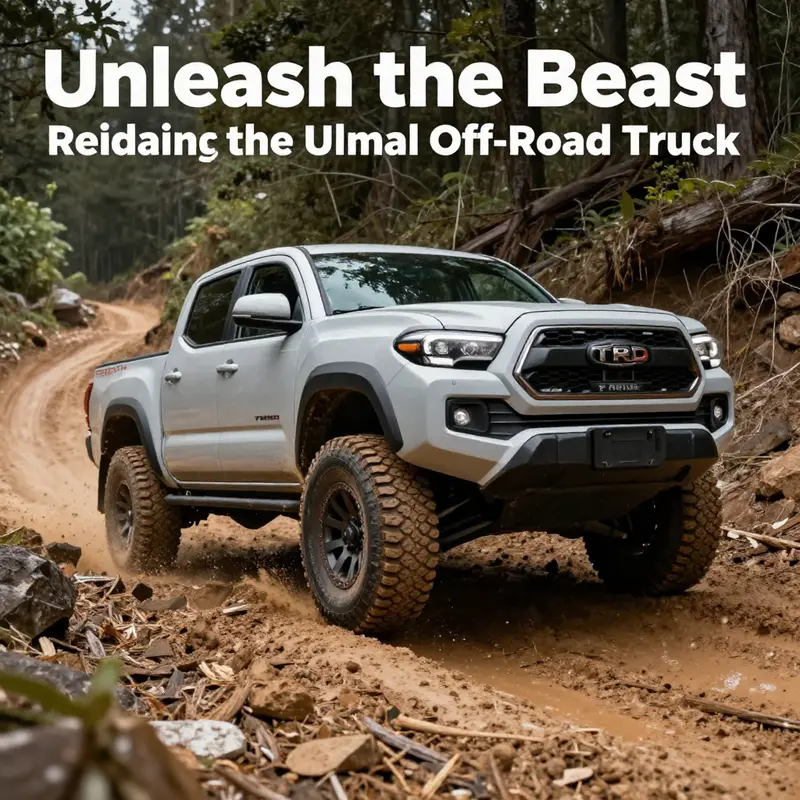
Tacoma TRD Pro: Built Reliability for Serious Off-Roading
When choosing the best truck for off-roading, durability and predictable behavior matter more than flash. The Tacoma TRD Pro stands out because it combines a fundamentally robust structure with purpose-built components. That combination delivers not only capability but confidence when trails get technical or remote. This chapter explores how the TRD Pro’s engineering choices, suspension tuning, protective measures, and drivetrain features create a package focused on long-term reliability and real-world off-road performance.
At the heart of the TRD Pro is a ladder-frame chassis paired with a modern unibody-derived platform. That steel ladder frame adds stiffness and resilience, giving the truck a foundation that withstands torsional stress from uneven terrain. A rigid chassis matters for two reasons. First, it preserves suspension geometry under heavy loads and extreme articulation. Second, it reduces stress on body mounts and fasteners, lowering the chance of rattles or failures after repeated off-road use. The result is a truck that feels composed on rough trails and remains durable over years of hard service.
Suspension design is where the TRD Pro signals its purpose. The model uses internal bypass shocks tuned specifically for the application. These Fox QS3 shocks offer progressive damping across different travel zones. They cushion small bumps without being floaty, then firm up for larger impacts. On fast desert tracks or when landing from moderate jumps, these shocks control body motion and protect the chassis from sudden, harsh loads. That controlled behavior keeps tires planted, improving traction and driver feedback. In practical terms, drivers report smoother high-speed runs and less bouncing on washboard sections, which makes for safer, less fatiguing long-distance off-road drives.
Beyond the shocks, suspension geometry and ride height are optimized to improve approach and departure angles. Increased ground clearance reduces the risk of catching the frame on rocks or logs. The TRD Pro also adds factory skid plates beneath vulnerable components. These plates shield the engine oil pan, transfer case, and other critical parts from direct hits. When you navigate a boulder field, it’s not just the ability to climb that matters; it’s the peace of mind that comes from protecting drivetrain parts. Factory-fitted protection saves field repairs and prevents trail-ending damage.
Traction systems in the TRD Pro focus on consistent performance across surfaces. A locking rear differential is standard, providing predictable torque distribution to both rear wheels when needed. That feature is essential on uneven climbs where one wheel may lift or lose contact. Combined with a selectable four-wheel-drive system, it allows the truck to crawl over technical sections without hunting for grip. Hill descent control further reduces driver workload on steep declines. The system modulates brakes automatically, helping maintain a steady, safe speed without constant brake input from the driver.
Tires and wheels are often overlooked in broad comparisons, yet they are crucial for real-world capability. The TRD Pro comes with robust 33-inch all-terrain tires mounted on 18-inch alloy wheels. These tires provide a balance of tread bite, sidewall strength, and tread life suited to mixed conditions. They resist punctures better than typical highway tires and deliver dependable traction in mud, gravel, and loose sand. Larger, tougher tires also add a small margin of ground clearance and improve approach angles, which in turn reduces reliance on aggressive driving techniques to clear obstacles.
A notable update in recent models is the adoption of a hybrid powertrain option. This change brings improved fuel efficiency while preserving or even enhancing torque delivery. For remote overland trips, better fuel economy reduces the need for frequent refueling stops. That matters when planning long stretches between fuel stations or carrying additional payload like water, gear, or recovery equipment. The hybrid system also smooths low-end torque delivery, which can aid precise throttle control on tricky climbs and descents. In short, it offers improved endurance without compromising the truck’s off-road temperament.
Ride quality is a critical, yet often ignored, metric for off-road reliability. A truck that soaks up hits and reduces shock loads to the chassis will generally last longer. The TRD Pro’s suspension and damping strategy reflect that idea. On rough roads, articulation is important, but so is the ability to damp repeated impacts. By managing both, the TRD Pro reduces stress not only on suspension components but on the vehicle as a whole. Drivers notice less driver fatigue and fewer follow-up repairs from worn bushings or fatigued fasteners.
Ergonomics and driver aids also contribute to reliability through reduced human error. Intuitive transfer case controls, clear instrumentation, and well-placed switches for electronic aids help drivers react quickly. When a driver can engage a locking differential or activate descent control without confusion, the truck is more likely to be used within its limits. That proper usage equates to fewer recoveries, less strain on components, and longer service life for the vehicle and its mechanical systems.
Maintenance considerations are part of any discussion about long-term reliability. The TRD Pro benefits from widely available parts and a broad service network. This accessibility reduces downtime after rough outings. Skid plates and protective components are bolt-on replacements, simplifying repairs in remote areas. Furthermore, Toyota’s history with rugged trucks means many common failure points are well-documented, and aftermarket solutions for reinforcement or protection are abundant. That ecosystem makes field repairs and upgrades more practical for owners who push their trucks hard.
A practical truck also anticipates the needs of overlanders and heavy users. Factory tie-down points, cargo bed utility, and power management are important for carrying recovery gear, spare fuel, and camping equipment. The TRD Pro’s configuration supports these uses with built-in anchors and a bed designed to accept modular storage solutions. For extended trips, the combination of practical cargo features and a resilient chassis reduces the temptation to overload or jury-rig solutions that could harm the vehicle.
Real-world testing reinforces the TRD Pro’s balance of toughness and refinement. Independent trials often highlight how the suspension keeps control during aggressive runs while remaining compliant on technical trails. Observers note the truck absorbs repeated impacts without transferring excessive shock to the cabin. That durability keeps components within designed stress limits, which matters more than raw capability when considering total ownership cost. A vehicle that survives repeated trials without requiring major repairs clearly aligns with the idea of reliability as a long-term attribute.
When selecting a truck for demanding off-road use, examine how each element works together. Chassis strength limits fatigue. Advanced damping protects components and keeps tires in contact with the ground. Traction systems and hill control reduce risky driver inputs. Hybrid powertrains extend range while preserving torque. Together, these features form a coherent package focused on dependable performance in remote or harsh environments. The Tacoma TRD Pro emphasizes integration over gimmicks. Its choices favor systems that reduce stress, simplify repairs, and maintain capability under repeated use.
Owners who prioritize a truck built for serious off-roading will appreciate a vehicle that behaves predictably and requires minimal unexpected maintenance. The TRD Pro’s engineering reflects that philosophy. From a ladder frame and tuned bypass shocks to protective skid plates and traction aids, it’s designed to keep going when the trail gets rough. That practicality makes it a compelling option for those who need a truck that will not only reach remote places but return from them without surprises.
External reference: For detailed specifications, see the manufacturer’s official TRD Pro specifications page: https://www.toyota.com/trucks/tacoma/trd-pro/.
Internal resource: Learn more about Toyota’s fleet and charging tools via the Toyota ChargeMinder app.
null
null
Beyond the Rubicon: Why the Wrangler Rubicon Sets the Standard for Serious Off-Road Trucks
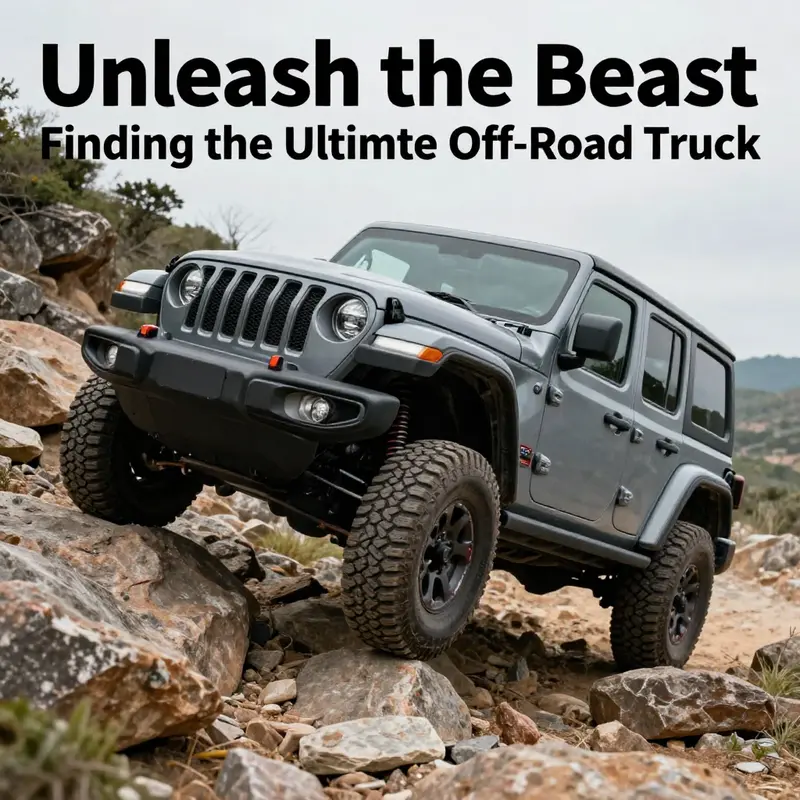
When people ask what makes a vehicle truly exceptional for off-roading, they are usually searching for a combination of purpose-built engineering, fearless capability, and a design that invites exploration rather than confining it to paved streets. In the pantheon of off-road capable pickups and trucks, the Jeep Wrangler Rubicon stands out as a cultural and mechanical landmark. It is not merely a model in a lineup; it is a symbol of a philosophy. The Rubicon is a vehicle that embodies the idea that the wild is not a place to be conquered with bravado alone, but with a precise blend of torque, traction, articulation, and control that lets a driver engage a trail with confidence. Its name references the infamous Rubicon Trail in California’s Sierra Nevada, a route that has tested the mettle of drivers and machines for decades. The Rubicon’s reputation rests on more than legend; it rests on a carefully engineered platform that translates rugged terrain into measurable capability, and a design ethos that prioritizes real-world performance over purely cosmetic bravado.
To understand why the Wrangler Rubicon persists as a benchmark, one must start with the core mechanical architecture. The Rock-Trac 4×4 system is the centerpiece, delivering a crawl ratio of 77.2:1. That figure matters more than it might at first glance. Crawl ratio describes how much torque multiplication the drivetrain can deliver to the wheels when traversing steep, uneven obstacles at very slow speeds. A high crawl ratio translates to better control on rock faces, slow ascents, and deliberate movement over obstacles that would stall gentler systems. In practical terms, the Rubicon can inch its way up a vertical move with the kind of precision that keeps the tires planted and the chassis balanced. This is not mere horsepower; it is the arithmetic of traction under extreme conditions.
The Rubicon’s axles further reinforce its rugged credibility. A Dana 44 full-floating rear axle and a heavy-duty front axle provide the strength to withstand the shocks and torsion that trail carnage can impose. While a lot of road-going trucks emphasize lightness and efficiency, the Rubicon’s solid backbone is designed to resist bending, twisting, and fatigue when the going gets brutal. The electronically controlled disconnecting front anti-roll bar is another key detail. When you need articulation—when the vehicle needs to lean into uneven surfaces and keep four tires in contact with the ground—the front bar disconnects, freeing the front wheels to move more independently. The result is better wheel travel and improved traction on rock gardens and uneven slopes. It might feel subtle on a smooth highway, but on a trail it is a decisive advantage.
Locking differentials, available on most trims, are the mechanics by which the Rubicon turns potential into performance. With both front and rear axles lockable, the Rubicon can distribute equal torque to all wheels, maximizing grip on surfaces where some tires would spin, others would slip, and the entire system would lose momentum. The ability to lock is not just about raw grip; it is about the driver having predictable, repeatable control even when the surface under each tire behaves differently. In a vehicle that is designed to tackle boulder-strewn slopes, sand channels, or slick granite, predictable behavior is a priceless asset.
Suspension tuning plays a critical supporting role. The Rubicon is equipped with high-performance shocks that manage to cushion harsh landings and jostling without dulling the feeling of the trail. Damping is the invisible engineer on a rocky grade, smoothing the ride without reducing the driver’s sense of connection to the ground. The ground itself is the Rubicon’s testing ground. With a minimum ground clearance of roughly 252 millimeters, approach and departure angles exceeding 36 degrees and 31 degrees, respectively, the Rubicon is built to cleanly clear obstacles that would halt lesser machines. Every footprint left on the earth speaks to the ride height and geometry that allow the tires to approach steep obstacles without the underbody catching, shredding, or binding.
And yet the Rubicon is not a one-trick pony. It is a full-bore, modern vehicle that marries capability with a practical, everyday usability. The body-on-frame construction is a nod to durability; the same approach that served military applications translates into long-term resilience on backcountry trails. Beyond the chassis, the Rubicon includes modern driver-assistance tech that makes the experience safer and more controlled without diluting the essence of off-road mastery. Hill Descent Control provides a measured, steady descent on steep grades, allowing the driver to keep both hands on the wheel and both feet focused on steering and throttle modulation. Selec-Speed Control adds a low-speed cruise function that can help with precise climbs or controlled descents where maintaining an exact pace matters more than raw torque. In a vehicle that is designed to negotiate gravity, every extra tool for control counts.
The Rubicon’s wading depth—an impressive 400 millimeters—signals a willingness to challenge water crossings that would give pause to more timid platforms. Crossing streams, shallow rivers, or muddy shallows can be a decisive test of a vehicle’s water sealing, air intake protection, and overall durability. A Rubicon owner knows that a trail might present a water crossing as an optional obstacle; with this depth, the risk of a stalled engine or intake-related issues becomes a calculable element of strategy rather than a sudden, unmanageable hazard. Inside, the Rubicon remains true to its rugged mission while offering modern conveniences. A large central touchscreen with contemporary connectivity, Apple CarPlay and Android Auto wireless integrations, and optional premium audio provide the comforts expected from a modern vehicle. It is that rare combination: a vehicle that can go anywhere while still feeling like a civilized daily driver when the road returns.
Power delivery in current Rubicon trims centers on a capable turbocharged engine that balances power with efficiency. The 2.0-liter inline-four produces ample horsepower and torque, and the eight-speed automatic transmission translates that power to the wheels with smoothness and responsiveness. Fuel economy, an important consideration for anyone who spends long days on difficult trails or long stretches between trailheads, is competitive for a vehicle of this class. With roughly nine liters per 100 kilometers, or about 25 miles per gallon on certain cycles, the Rubicon demonstrates that high-off-road capability does not necessarily demand sky-high fuel consumption. This is meaningful because a vehicle that drinks like a drag racer can undermine your willingness to extend your exploration into more remote, challenging country where fuel sources are scarce.
Yet the Rubicon’s appeal is not only mechanical. Its design is instantly recognizable—the familiar seven-slot grille, squared fenders, and removable doors and roof capture a sense of freedom that has drawn generations toward Jeep. This is a vehicle engineered to invite exploration, to reduce the cost of entry into challenging environments, and to create a sense of belonging among drivers who see off-roading as a sport, a vocation, and a lifelong passion. The Rubicon blends a rugged, capable chassis with modern safety and comfort features, producing a vehicle that can accompany a family on weekend escapes as reliably as it can lead a group of enthusiasts into a rocky canyon or a forested riverbed.
Viewed within the broader landscape of off-road trucks, the Wrangler Rubicon occupies a unique space. It is not the most payload-oriented pickup, nor is it a full-size behemoth designed to ferry heavy loads through mud and rock. Instead, it represents a particular kind of off-road excellence: a vehicle built around articulation, traction, durability, and driver engagement. In this sense, it is less about brute power in a straight line and more about how power is applied in a controlled, purposeful way when the ground beneath your tires demands respect. It is a vehicle that accepts its own identity—a rugged icon that prioritizes capability over showroom polish, and that thrives on the belief that nature should be seen up close, not glimpsed through the windshield from a distance.
That philosophy resonates with a broad audience, which helps explain why the Rubicon remains an enduring benchmark in a field crowded with capable contenders. Other highly regarded options in recent evaluations often highlight a balance of on-road manners, off-road prowess, and practical versatility. The Colorado ZR2 and the Toyota Tacoma TRD Pro, for instance, frequently appear in conversations about the best off-road trucks for drivers who need both rugged capability and everyday usability. Each of these vehicles brings its own strengths: specialized suspension tuning and electronic aids tuned for extreme terrain, robust powertrains, and proven reliability. Yet in that lineup, the Rubicon’s niche is clear. It is the vehicle that says, with confidence and clarity, that the trail is a conversation between tire and terrain, and the driver is the one who must listen and respond with precise throttle, steering, and a strategy built on trust in the hardware. The Rubicon does not pretend to be everything to everyone; it is unapologetically designed for those who want to push beyond the road’s edge and explore terrain where the line between adventure and risk is razor-thin.
This is not to diminish the value of other capable trucks. A well-chosen off-road truck must balance several priorities: the willingness to tackle rock gardens and riverbeds, the ability to carry gear for longer expeditions, the reliability that ensures a remote return, and a level of comfort that makes extended days behind the wheel sustainable. The Wrangler Rubicon scores exceptionally high on the first two counts, and it remains a strong choice for those who place a premium on trail capability above all else. Its enduring appeal comes from a combination of engineering decisions that collectively create a vehicle that behaves predictably when the world gets rough, and that remains approachable enough for weekend adventuring without turning a trail into a test of will. The Rubicon is not merely a tool for crossing obstacles; it is a companion for those who measure the value of a trail by the stories that follow the last rock garden and the last bend in the river.
In conversations about the best truck for off-roading, the Rubicon’s story is as instructive as its numbers. It demonstrates that the most important capabilities are not always those that look the most impressive on a spec sheet. A high crawl ratio, lockable differentials, and an articulate suspension matter most when a driver faces the treacherous balance of momentum and grip. The Rubicon provides a clear, actionable path to mastery on the roughest terrain, while still functioning as a legitimate, well-rounded vehicle for everyday life. This is a compelling reminder that the best off-road truck is not defined by a single attribute but by the way a suite of attributes work together under real-world demand.
For enthusiasts, the Rubicon offers a particular draw—the sense of being able to equal the challenge with a corresponding, reliable set of tools. It invites exploration and fosters a community where drivers share terrain-specific knowledge, trail notes, and the kind of practical wisdom that only comes from years of careful, hands-on experience. When a trail test is set against a map full of adventurous possibilities, the Rubicon’s blend of hardware and ethos stands out as a persuasive argument for why some vehicles become legends not merely for what they can do, but for how they make the journey feel. In a market full of highly capable machines, the Rubicon does not simply win on performance; it wins on narrative—the story of what it means to take the road less traveled and to come back with the memory of ground under the tires and a renewed sense of possibility as a driver.
If there is a takeaway for anyone evaluating the best truck for off-roading, it is this: capability must be credible in real-world conditions. You want a vehicle that can negotiate the line between control and risk with a margin of safety that is built into its design. The Wrangler Rubicon earns its position through tested systems that work in harmony and through a design that invites the driver to trust their wheel and throttle hand in equal measure. It speaks to a timeless idea—that the most compelling off-road experiences come not from raw horsepower alone, but from the precise alignment of chassis geometry, torque management, wheel articulation, and a driver’s intuitive sense of pace. In that sense, the Rubicon remains not only a vehicle but a standard—a standard by which other trucks are measured when the trail grows unforgiving and curiosity becomes a call to push further.
For readers seeking a direct path to more official information on the vehicle’s current specifications and features, see the official Wrangler page for further context and updates on how Jeep continues to evolve this iconic platform. official Wrangler Rubicon page
Final thoughts
Each of these trucks embodies the spirit of adventure, designed to meet the demands of off-road enthusiasts and adventurers alike. The Chevrolet Colorado ZR2 excels in trail performance, while the Toyota Tacoma TRD Pro offers reliable durability that outlasts tough conditions. The 2026 Toyota Hilux stands as a global champ with its proven reliability, and the Jeep Wrangler Rubicon continues to be the quintessential off-road warrior. Selecting the best truck for your off-road pursuits hinges on your unique needs and preferences; however, any of these vehicles will ensure you have the thrill of a lifetime as you tackle the great outdoors.