

In the rugged world of off-roading and truck performance, few topics spark as much debate as fuel selection, particularly when it comes to off-road diesel. Whether you’re an off-road enthusiast looking to conquer the wild or a serious racer pushing the limits of your truck, understanding the nuances of diesel fuel can make or break your adventures. This exploration delves into the critical specifications that govern off-road diesel, unraveling its chemical composition and potential risks to your truck when used incorrectly. Furthermore, we’ll examine the regulatory landscape shaping diesel fuel use and discuss best practices for selecting the right fuel, ensuring optimal performance and reliability for your truck. Each chapter builds on the knowledge every adventurer and racer needs to maker smarter, more informed choices for their vehicles and their futures.
Why Off‑Road Diesel Can Harm Your Truck: Specs, Emissions Systems, and Practical Risks

Understanding the real risk of off‑road diesel starts with fuel specifications. The phrase “off‑road diesel” sounds simple, but it covers several different realities: legally dyed and tax‑exempt diesel intended for non‑highway machines; older, higher‑sulfur formulations used in some work equipment; and regionally varied blends that may lack modern additives. On paper, diesel is diesel. In practice, small differences in composition, contaminants, and additives determine whether that fuel quietly powers your engine or silently damages expensive components.
The most obvious distinction is dye and tax status. Off‑road diesel is usually dyed red to mark it as tax‑exempt and not for on‑road use. That dye is part of a regulatory control, not a performance modifier. Using dyed fuel in a road truck exposes you to enforcement and fines. Beyond the dye, the underlying concern arises when the off‑road fuel does not meet the emission, sulfur, or additive standards your truck requires.
Modern heavy trucks rely on sophisticated aftertreatment systems. Diesel particulate filters (DPF), selective catalytic reduction (SCR) units, and oxidation catalysts work together to meet stringent emissions rules. These systems tolerate only a narrow range of fuel properties. High sulfur levels accelerate catalyst poisoning. Certain contaminants can clog DPFs and SCR catalysts. Poor fuel can force the ECU into limp mode or trigger regens that never complete. In short, fuel that differs from manufacturer specifications threatens both performance and compliance.
Sulfur content is a central factor. Ultra‑low sulfur diesel (ULSD) became standard because sulfur interferes with exhaust catalysts. Sulfur oxidizes to sulfur dioxide and then to sulfates, which foul catalytic surfaces. If off‑road diesel contains elevated sulfur, the SCR catalyst and DPF will suffer accelerated degradation. That decline shows up as increased backpressure, reduced fuel economy, and costly component replacement. What starts as an economy move—using cheaper fuel—can quickly become a major repair bill.
Beyond sulfur, additives and detergent packages matter. On‑road diesel often includes carefully balanced detergents and flow improvers. These additives keep injectors clean, reduce deposits, and stabilize combustion. Off‑road diesel, especially older or regionally produced blends, may lack those additives or contain incompatible chemistry. The result is injector fouling and uneven spray patterns, which cause incomplete combustion. Incomplete combustion creates soot, which the DPF must trap. More soot shortens service intervals and raises regeneration frequency. The more often regens occur, the greater the chance of incomplete regens, DPF overheating, or clogging.
Particulates and contamination present another risk. Off‑road fuel handled on farms or worksites may be more exposed to dirt, water, and microbial contamination. Water in fuel promotes microbial growth that forms sludge in tanks and filters. Solid particulates abrade injector tips and seats. Either scenario compromises fuel delivery and engine longevity. Fuel filters may plug frequently, and the engine may run rough. For high‑pressure common‑rail systems, even microscopic contaminants can cause disproportionate damage.
The SCR system is particularly vulnerable. It uses AdBlue or DEF—an aqueous urea solution—combined with a catalyst to remove NOx. SCR catalysts are expensive. They are sensitive to contaminants that transfer downstream from fuel and engine oil. If fuel introduces sulfur or metallic contaminants, the SCR catalyst may become poisoned. Poisoned catalysts lose conversion efficiency and can no longer reduce NOx effectively. The truck may then run noncompliant or reduce power to protect hardware. Repairing or replacing an SCR catalyst is one of the most expensive outcomes of using improper fuel.
How quickly will problems appear? It varies. A single tank of slightly off‑spec fuel may cause no immediate alarm. But repeated use accelerates wear. High‑sulfur diesel, repeated contamination, or regular use of poorly formulated fuel leads to measurable decline in months, not years. Symptoms include increased smoke, reduced acceleration, higher fuel consumption, frequent DPF regens, fuel filter changes, and warning lights related to emissions systems.
Legal and regulatory risks compound mechanical issues. In many jurisdictions, using dyed or tax‑exempt off‑road diesel on public roads is illegal. Enforcement can include large fines and confiscation of fuel or vehicle certification. That legal exposure is separate from the mechanical risk, but it is equally important. Regulatory systems are designed to discourage misuse by blending fiscal and environmental controls. The dye, tax status, and fuel paperwork exist to protect both public revenue and air quality.
So, what practical approach minimizes risk? First, always follow the truck manufacturer’s fuel specifications. Those specs exist to protect engine and aftertreatment life. The owner’s manual will list required sulfur limits, cetane ratings, and any mandatory additive regimes. If you cannot find the manual, the dealer or a certified technician can confirm the required fuel grade. Second, avoid any fuel you suspect of contamination. If a station looks poorly maintained or if fuel appears cloudy, dyed, or has a strange odor, skip it. Third, maintain good fuel hygiene: drain water separators, replace filters on schedule, and use reputable fuel suppliers. Good maintenance mitigates short exposures to poorer fuel.
When you encounter off‑road diesel accidentally in your tank, act quickly. Do not simply drive on. If the fuel is dyed or you suspect higher sulfur, have the tank drained and refilled with the correct diesel. If contaminants are suspected, replace filters and inspect injectors. Early intervention prevents the cascade of failures that begins with clogged injectors and ends with a failed catalyst or DPF.
For operators planning to use equipment across road and off‑road settings, fueling discipline is essential. Keep separate fuel sources for non‑road machines and on‑road trucks. Label tanks and training staff reduces accidental cross‑use. For fleets, a simple checklist at fuel bays reduces human error and avoids legal complications.
Finally, stay informed about changing standards. Emissions regulations evolve, and off‑road engine standards are catching up. Newer off‑road diesel blends are becoming cleaner to meet tighter emissions rules. However, older formulations still exist in supply chains. Being proactive means confirming that any off‑road diesel you might consider is certified to the same sulfur and additive requirements as your truck’s on‑road fuel.
Further reading on maintaining diesel equipment and mechanics practices can help fleets and owners make better choices; a practical resource is the article on Mastering Diesel Mechanics, which offers step‑by‑step guidance for technicians and owners. For legislative context and evolving standards for non‑road machinery, see the European Parliament’s materials on mobile machinery emissions: https://www.europarl.europa.eu/legislative-train/theme-green-deal/file-mobile-machinery-emissions
Using off‑road diesel in a truck is not a simple yes or no. If the fuel matches required on‑road specifications and is free of contaminants, it may not cause harm. If the fuel is dyed, higher in sulfur, poorly stabilized, or contaminated, it will harm emissions systems and engine components. The prudent path is strict adherence to manufacturer specs, careful fueling practices, and swift action if the wrong fuel is used.
What Off‑Road Diesel Is Made Of—and Why It Matters for Your Truck
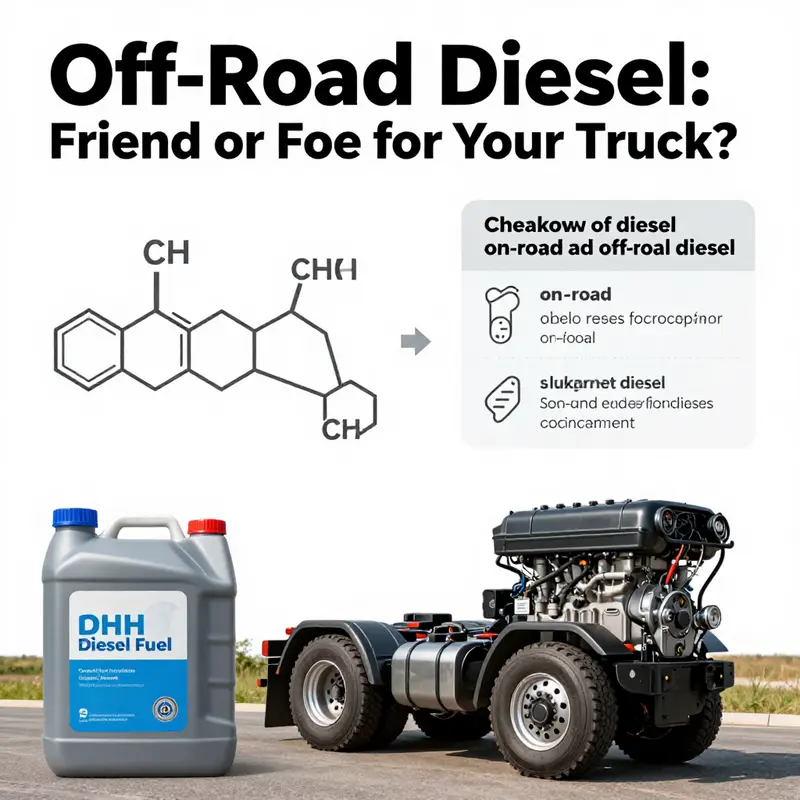
The chemical makeup of off‑road diesel isn’t just academic — it shapes performance, emissions, and the long‑term health of your truck. When people ask whether off‑road diesel will hurt their truck, the real question is which off‑road diesel and how the fuel’s composition interacts with modern engines and after‑treatment systems. Chemically, diesel is a complex blend of hydrocarbons: paraffins, naphthenes, aromatics, and small amounts of sulfur and other trace compounds. Off‑road diesel often differs from on‑road diesel primarily in two ways that matter to a truck owner: higher sulfur content and a larger share of aromatic compounds. Those differences change how the fuel combusts, what solids and gases exit the tailpipe, and how onboard emission controls respond over time.
Higher sulfur in some off‑road diesel variants acts like a hidden corrosive. Sulfur itself burns to form sulfur dioxide, and in the exhaust stream it can form acidic species that attack catalysts and sensors. Modern diesel after‑treatment systems rely on precise catalytic chemistry to reduce particulate matter and NOx. These systems are engineered to work with ultra‑low sulfur fuels. When sulfur levels are elevated, catalysts and diesel particulate filters lose efficiency quickly. The DPF (diesel particulate filter) can clog faster because sulfur combines with other combustion products to form sulfates and fine particulates that are harder to oxidize. The SCR (selective catalytic reduction) system, which reduces NOx using injected reagents, is poisoned by sulfur compounds that coat active sites on the catalyst. Replacing or repairing these components is expensive, and frequent failures translate into downtime and higher lifecycle cost for a truck.
Aromatics present a second challenge. Aromatic hydrocarbons burn differently than paraffinic molecules. They tend to produce more soot and complex organic condensates. Soot is the raw material of particulate emissions. More aromatics generally equals higher particulate matter (PM) generation, especially under load or during transient operation where combustion temperatures and mixing are less than ideal. Increased PM is not only an emissions problem; it leads to faster DPF loading, more frequent regeneration cycles, and greater mechanical stress across the exhaust system. Over time, persistent high soot production can increase maintenance intervals for fuel injectors and turbochargers as carbonaceous deposits build up in the intake and combustion chamber.
Beyond sulfur and aromatics, off‑road diesel sometimes contains different additive packages and less rigorous refining. Road diesel is typically formulated to meet strict government standards that include cetane number, cold flow properties, and additive dispersants that help keep injectors and pumps clean. Off‑road diesel sold for agricultural or construction equipment may be optimized for cost rather than the tightest cleanliness or low‑temperature performance. That can mean fewer detergents, weaker anti‑corrosion additives, and larger fractions of heavy ends. Those heavier molecules can leave varnish and carbon deposits on injector tips and piston crowns. Deposit accumulation harms spray patterns and combustion efficiency, leading to higher fuel consumption and decreased power.
Emissions are where composition differences matter beyond the truck itself. Increased PM and NOx from higher sulfur and aromatic content create health and environmental risks. Nanoparticles from diesel exhaust can penetrate deep into lung tissue. Recent studies show that surface chemistry — the polar or oxygenated groups present on emitted particles — affects how particles interact biologically. For example, biodiesel blends tend to produce particles with more polar oxygenated functionalities on their surfaces. That changes how particles aggregate, how long they remain airborne, and how reactive they are in biological systems. If you were to switch your truck to a fuel with markedly different composition, you change the emission profile and potentially the toxicity of the emitted particles. This is relevant when fleets consider alternatives like biodiesel blends or non‑road grades with different refining histories.
From an engineering perspective, compositional differences provide useful functional markers. Engineers and emissions modelers can use chemical fingerprinting to connect a fuel type to a characteristic emission profile. That linkage informs calibration strategies for engine control units, selection of after‑treatment devices, and maintenance scheduling. If you run a truck on an off‑road diesel with higher aromatics and sulfur, an informed operator can anticipate more frequent DPF regenerations and target injector cleaning at shorter intervals. Conversely, using a certified on‑road diesel aligned with engine manufacturer specifications reduces these risks and helps emission systems meet intended lifespans.
It’s also important to consider long‑term effects that are not immediately visible. High sulfur and heavy aromatics accelerate sensor drift. Oxygen sensors and NOx sensors are designed for low‑contaminant environments; coating and poisoning reduce their accuracy. When sensors read incorrectly, engine control modules can compensate with richer or leaner mixtures, which in turn changes combustion temperature and deposit formation. The result is a feedback loop that compounds wear and emissions. This cascade is why regulatory frameworks tightly couple sulfur limits with vehicle certification: the chemistry of the fuel is integral to how the vehicle behaves across its life.
Alternative fuels complicate the picture in interesting ways. Biodiesel, for instance, typically reduces particulate mass but can change particle chemistry, increasing surface oxidation. That can mean fewer total soot particles but more chemically active particles. Some renewable diesel formulations offer near‑drop‑in properties that maintain low sulfur and similar combustibility to petroleum diesel, which mitigates many after‑treatment concerns. The choice of blend and the specific renewable process matter. Fleets that experiment with higher biodiesel blends should do so with planned trials, monitoring after‑treatment health and injector condition. Operators who maintain strong maintenance protocols and follow manufacturer guidance can safely integrate certain alternative fuels while avoiding long‑term harm.
For truck owners, the practical takeaways are clear. Use fuels that meet your vehicle maker’s specifications. Avoid any off‑road diesel that is expressly labeled for agricultural or non‑road use and is outside the allowable sulfur limit for road vehicles in your jurisdiction. The immediate risk may appear minor in a single tank, but repeated use of high‑sulfur, high‑aromatic fuel accelerates wear on expensive emissions hardware and reduces overall reliability. If cost pressures tempt you toward cheaper non‑road diesel, weigh that short‑term saving against potential repairs, fines, and downtime. Regulatory penalties aside, the repair bill for a compromised after‑treatment system typically far outweighs what you saved at the pump.
Operationally, monitor DPF backpressure, watch for warning lights, and track fuel consumption closely after any fuel change. Maintain injector and fuel‑system cleaning intervals, and use quality additives only if they are approved for your engine type. Training drivers and technicians to recognize early signs of deposit formation will extend component life and keep emissions within expectations.
Understanding the chemical differences between on‑road and off‑road diesel lets you make informed choices. It clarifies why regulatory standards exist and why manufacturers specify fuel grades. The chemistry of the fuel dictates how your engine breathes, burns, and exhausts — and that chemistry determines whether a single tank is harmless or whether repeated use becomes a hidden liability. For a deeper technical review tailored to engineers, see this diesel composition guide: https://www.dieseltrucks.ca/guide/composition-structure-performance-engineers. For practical maintenance and mechanical guidance on running diesel equipment responsibly, reference a step‑by‑step diesel mechanics resource like the mastering diesel mechanics guide: mastering diesel mechanics guide.
Between Standards and the Open Road: The Real Risks of Off-Road Diesel in On-Road Trucks

When you ask whether off-road diesel will hurt your truck, you’re weighing two things at once: the letter of the law and the practical realities of modern engines. If the fuel in your tank meets the vehicle maker’s specifications and the applicable national standards, it should not damage your engine or exhaust aftertreatment. The risk comes from fuel that deviates from expectations — higher sulfur, reduced lubricity, or insufficient detergents — which can affect injectors, fuel pumps, and catalysts over time.
Off-road fuels are designed for machinery that does not travel on public roads, with different sulfur limits, lubricity additives, and detergents. But if the off-road fuel is ULSD and certified to the same standard as on-road fuel, and it matches the engine’s requirements, the immediate risk is low. Compliance and regulatory constraints, however, can have warranty and service implications.
In practice, verify the fuel’s compliance documentation, and avoid relying on price alone. If you’re uncertain, ask your dealer or service professional, and consult the vehicle owner manual. Ultimately, the best approach is to choose fuel that aligns with the engine’s design and your region’s standards; the engine, emissions system, and fuel all perform best when they speak the same language.
Regulatory Currents and Cleaner Rigs: How Off-Road Diesel Shapes Your Truck’s Emissions and Its Regulation

When people ask whether using off-road diesel will hurt their truck, the instinct is to reach for a simple yes or no. The reality is nuanced, and the tail of that nuance runs through how fuels are regulated as much as how engines are built. Diesel fuel, at its core, remains a chemical workhorse capable of powering both on-road trucks and the heavy equipment that moves earth and materials. What shifts the prognosis is not a mysterious incompatibility in chemistry but the regulatory environment that governs how fuels are produced, taxed, and used. The distinction between road use and off-road use matters because many countries impose different sulfur limits, different tax structures, and different enforcement consequences for the fuel that travels through a vehicle’s fuel system. In practical terms, if you stick to fuels that meet the standard set by your jurisdiction and your engine’s manufacturer, the risk to the engine and its exhaust system is minimal. If you stray into fuel designed for off-road applications that is not intended for highway use, especially fuels with higher sulfur content, you step into a zone where not only legality becomes questionable, but the durability of key emission control devices can be jeopardized over time. This is where the larger story of regulatory stewardship intersects with the everyday decision of filling up at the pump, and it helps explain why the question often ends with a recommendation to stay aligned with official standards and manufacturer guidance.
From the perspective of emissions and air quality, off-road diesel engines have a disproportionate impact in terms of nitrogen oxides (NOx) and particulate matter (PM). These pollutants are not just statistics in a regulatory ledger; they shape urban air quality, influence smog formation, and bear directly on respiratory health. The engines used in construction, mining, agriculture, and similar sectors have historically operated with fewer constraints on emissions, driven by mission-critical uptime and lower fuel costs. As environmental policies tightened, however, the landscape shifted. The modern regulatory story for non-road diesel engines is no longer about raw torque alone; it is about cleaner exhaust, reliable after-treatment, and predictable maintenance windows that prevent long-term damage. The U.S. Environmental Protection Agency (EPA) and other global agencies have introduced progressively stricter standards that push manufacturers and operators toward advanced emission control technologies and higher fuel quality. The underlying aim is straightforward: reduce the release of NOx and PM from off-road equipment so that communities near construction sites and mining operations experience cleaner air without sacrificing the performance and reliability of essential services.
A key point for on-road truck owners is that most of these environmental rules are designed to ensure that engines and their exhaust after-treatment systems behave as intended when fed fuels that meet defined specifications. Diesel combustion produces particulates and NOx as a byproduct of high-compression ignition. Modern trucks rely on post-combustion devices such as particulate filters and selective catalytic reduction systems to trap and transform these pollutants into less harmful substances. When the fuel itself contains higher sulfur or deviates from the standard, these systems face stress: sooner clogging of filters, accelerated catalyst aging, and a higher likelihood of costly repairs. Higher sulfur content can corrode or poison emission control components, eroding the very efficiency that the standards were created to preserve. In other words, the problem is not the fundamental chemistry of diesel, but how that chemistry is managed within a regulatory framework that requires cleaner inputs and durable exhaust technology.
The regulatory measures themselves are not a blunt instrument. They are a set of performance criteria, test procedures, and compliance pathways designed to align fuel quality with engine capability. In the United States, for instance, non-road engine and equipment emission standards have evolved to require engines to meet stringent NOx and PM limits, with manufacturers incorporating diesel particulate filters (DPFs) to trap particulates and selective catalytic reduction (SCR) systems to reduce NOx emissions using a urea-based additive. These technologies are not optional accessories; they are essential to meeting the required emissions profile. The implication for drivers and business owners is practical: if your engine and exhaust system are designed to operate within those standards, and your fuel is compliant with the same standards, your operation should not experience the kind of emissions-related damage that used to accompany older, dirtier fuels. The risk arises when non-compliant fuels—especially those with higher sulfur content—are used in ways that tax or bypass the designed after-treatment performance.
This regulatory framework also intersects with environmental health and urban planning. NOx, a precursor to ground-level ozone, and PM, which contributes to fine soot particles, have well-documented links to respiratory and cardiovascular issues. The sense in which off-road diesel contributes to these problems is not simply theoretical. Construction sites near cities, mining corridors around populated areas, and agricultural zones can be sites where emissions collect and interact with weather patterns to form local air-quality challenges. Regulators respond not just with punitive measures but with incentives and resources aimed at cleaner fuels and cleaner technologies. Biodiesel blends, for example, have shown potential to lower PM and, in some contexts, CO2 emissions, though they introduce their own set of handling and compatibility considerations for certain engines. Electric or hybrid-electric drivetrains are also being explored for heavy machinery where duty cycles and operating terrain allow. In other words, the demand for cleaner air is shaping research, development, and deployment across both road and off-road sectors.
The path to compliance is rarely a single step. Companies in the off-road space frequently pursue a blended strategy that includes fuel quality improvements, engine modifications where necessary, and investment in after-treatment technologies that can endure the rigors of rural and urban operation alike. For the truck owner, the practical consequence of these regulatory dynamics is simple: use fuels that conform to the national standard and your engine’s specification, maintain your exhaust system in accordance with the manufacturer’s maintenance schedule, and avoid fuels designed specifically for off-road use on public roads if they do not meet the applicable standards. In many jurisdictions, using off-road fuels on public highways is not just a matter of performance—it is illegal and could trigger penalties, in addition to the risk of damage to precious emission-control hardware. This is why the guidance from regulatory bodies emphasizes fuel compliance as a cornerstone of both compliance and long-term vehicle health.
From a maintenance perspective, the evolution of regulation has pushed the conversation toward proactive care. Drivers who understand that their vehicle’s emissions system functions as a coordinated whole—fuel injectors, compression system, exhaust after-treatment, and the fuel itself—are less likely to encounter surprising failures. The idea is not to micromanage every fill-up but to recognize that quality fuel is a partner in vehicle longevity. A fuel that meets the required standard does not magically erase wear, but it reduces the risk of premature buildup or catalyst deactivation that can accompany substandard fuels. If you are curious about the mechanics and maintenance fundamentals that keep diesel engines reliable under stricter emission constraints, a practical primer is available in resources focused on diesel mechanics, which you can explore through the following link: https://dirtantrucks.com/mastering-diesel-mechanics-your-step-by-step-path-to-success/. It offers foundational guidance on fuel systems, combustion efficiency, and the care required to keep after-treatment devices functioning as designed.
The trajectory of innovation is clear, even as the path remains challenging. Biodiesel blends, improved catalysts, and tighter fuel specifications are part of a broader effort to decarbonize heavy machinery without compromising uptime. At the same time, the push toward electrification and hybrid concepts for select off-road applications mirrors a wider energy transition. These technologies promise reduced tailpipe emissions and lower noise, but they also depend on supportive infrastructure and robust energy storage solutions. The challenges are not trivial: rural and remote job sites may lack reliable charging or fueling infrastructure, battery technology must withstand vibrations and temperature variations, and duty cycles often require long endurance. Yet the regulatory and research communities remain engaged in aligning incentives with practical realities, seeking pathways that deliver cleaner air without stifling the operational capabilities that trucks and their off-road counterparts provide.
For readers who want to translate this high-level regulatory discourse into everyday decision-making, the simplest guidance is this: prioritize fuel quality that aligns with your vehicle’s requirements and the local standards. If you are unsure, consult your vehicle manual or speak with a qualified dealer or service professional. The broader message is not a call to fear off-road fuels but a reminder that the boundary between on-road and off-road fuel use is defined by how the fuel is regulated and how the engine is designed to handle it. Respect for these distinctions protects the engine, preserves the emission-control system, and supports cleaner air for communities near work sites and highways alike.
In short, off-road diesel per se does not inherently damage a well-maintained road-going truck, as long as the fuel meets the appropriate standards and the engine is operated within its intended design envelope. The moment the fuel deviates from those standards, or the vehicle relies on emission control components that are not designed for that fuel quality, the risk shifts from environmental concern to tangible hardware wear and potential regulatory penalties. The practical takeaway remains straightforward: fuel up at reputable stations, verify that the diesel conforms to the manufacturer’s specification and national standards, and treat the exhaust system as a carefully engineered system that benefits from that careful stewardship. If you want to deepen your understanding of the mechanics behind diesel systems and how to keep them in peak health as emission rules tighten, the resource linked above can serve as a solid starting point for a hands-on, maintenance-focused approach. For policymakers, manufacturers, and operators alike, the story of off-road diesel and on-road use is inseparable from the shared goal of reliable transport and cleaner air.
External resources for deeper context: For a detailed regulatory framework and official standards, consult the U.S. EPA Nonroad Engine and Equipment Emission Standards.
External link: https://www.epa.gov/nonroad/nonroad-engine-and-equipment-emission-standards
Fuel Wisdom on the Road: Debunking Off-Road Diesel Fears and Protecting Your Truck

When people talk about diesel fuel for their trucks, a knot often tightens in the stomach at the word off-road. The concern is understandable: vehicles used on construction sites, farms, or other nonpublic road environments sometimes run on fuels labeled off-road or have access to lower-cost options with different tax and regulatory implications. Yet the real question in most cases is less about the label and more about the fuel’s quality, its sulfur content, and whether it matches the engine and emissions system that power the truck on the highway. The truth is simpler than the fear: fuel that meets the proper national standards and that aligns with what the manufacturer requires will not harm a modern diesel engine. What can harm a truck is using fuel that is not fit for purpose—fuel that is high in sulfur when it should be ultra low sulfur, fuel that is contaminated, or fuel that does not meet the engine’s tolerance for lubricity and contaminant levels. In other words, the risk is not the label off-road versus on road, but the actual properties of the diesel in the tank and how well the fuel matches the engine’s design and the vehicle’s emission control expectations.
To start with the basics, today’s modern diesel engines are built around clean operation and precise fuel delivery. Most engines in use on highways and job sites alike rely on high pressure common rail systems, robust fuel injectors, and exhaust aftertreatment that keeps emission levels within regulatory targets. The fuel is not just a source of energy; it is a critical lubricant for pumps and injectors, a carrier for additives that protect seals, and a variable in a complex system that includes particulate filters and selective catalytic reduction components. When you select the appropriate fuel type, you are choosing to protect those systems from unnecessary wear, clogging, and failure modes that can lead to costly repairs or degraded performance.
The key distinction that often matters most is sulfur content. Off-road diesel, in some jurisdictions, is tied to older or differently taxed products that may carry higher sulfur up to a certain limit. High sulfur diesel, if used for an extended period in a modern highway vehicle, can accelerate deterioration of emission control components such as the diesel particulate filter and the SCR catalyst. In practice, this means higher risk of soot accumulation, faster aging of sensors, and more frequent regeneration cycles. The consequence is not a dramatic instant failure but a gradual corruption of efficiency, increased maintenance costs, and, in worst cases, a failure to comply with emission standards. For a truck that lives on the road and in the yard, the right approach is simple: use fuel that is compliant with country standards and that meets the engine manufacturer’s specifications, whether labeled road or off-road. If the fuel meets ULSD or the local equivalent and is compatible with the engine, it will not injure the engine.
This is where the maintenance mindset comes into play. The best practice is proactive care that treats fuel not as a mere commodity but as a critical input to the entire propulsion and exhaust system. A modern diesel, especially one with a high-pressure fuel system, benefits from fuel that is clean and free of water and particulates. Water in diesel is a primary enemy; it promotes microbial growth and corrosion, and water in fuel can lead to corrosion in metal fuel lines and tank bottoms. The preventive routine is straightforward: store fuel in clean, sealed containers away from moisture, inspect storage for signs of water separation or microbial activity, and rotate stock so old fuel does not sit idle long enough to degrade. A small habit of regular visual checks for sediment or color changes can save a lot of trouble later. If you find water or visible contaminants, do not run the fuel through critical components without treating or replacing it.
Another cornerstone is the fuel filtration system. Filter life and performance are intimately tied to the fuel’s cleanliness. A clogged or marginally functioning filter can restrict fuel flow, degrade combustion, and even trigger misfires or power loss. The best practice is to follow the manufacturer’s maintenance schedule for filter replacement and to pay attention to signs of fuel restriction, such as reduced engine response, longer cranking times, or stuttering at load. In many engines, a dirty or saturated filter can mimic other mechanical issues, so keeping filters in good order is a simple, effective shield against a range of symptoms. When you replace filters, you also refresh the fuel system’s protection against contaminants that ride along with the fuel from the refinery, through pipelines, and into the tank.
If you want to push beyond basic care, additives offer targeted benefits. Additives can help keep injectors clean, provide lubricity for fuel pumps, and improve cold-weather performance by reducing wax formation. They can also help protect fuel lines from long storage periods by stabilizing the fuel chemistry. The key is to choose additives that address your engine’s needs and that are compatible with the fuel type you are using. Not every additive is appropriate for every engine, and some manufacturers recommend specific categories or avoid certain blends. A cautious approach is to select additives with clear descriptions of injector cleanliness, lubricity enhancement, and cold weather performance, and to use them according to the product instructions and the vehicle’s manual. That said, additives cannot replace quality fuel or proper filtration; they are a supplement that can extend protection, not a substitute for sound fuel choices.
Monitoring fuel quality goes hand in hand with these practices. Even when you buy from reputable refineries and major stations, occasional testing of stored fuel adds a safety margin. Microbial contamination, for instance, is a known risk if fuel sits in a tank for too long or if the storage setup allows moisture ingress. Simple checks—looking for unusual sediment at the bottom of containers, testing for water content, and documenting fuel purchase dates—can help you detect problems before they escalate. For fleets, periodic sampling and testing of fuel quality, especially after long storage intervals or adverse weather conditions, is a prudent step toward maintaining engine reliability and emission performance.
A practical takeaway emerges from tying all these threads together. If you are using diesel that is certified to the national standard and that matches what your vehicle’s manual requires, and if you maintain the fuel system with routine checks, it will not harm your truck. The critical caution is to avoid using off-road fuels that do not meet the standard or are not intended for highway vehicles, particularly those with higher sulfur content. Using such fuel is not just a regulatory risk but a direct threat to the durability of emission control devices. It is a mistake that can lead to expensive repairs, failed inspections, and lost uptime, which is why the best choice is clear and simple: always fill at a reputable station with fuel that aligns with the engine maker’s recommendations and the country’s environmental rules.
Beyond the specific fuel choice, there is a broader discipline to cultivate around best practices for diesel fuel selection and maintenance. This involves becoming fluent with the language of fuel properties and how they translate into performance. For instance, understanding lubricity helps explain why certain low-sulfur blends require additives to maintain the same protection that older, higher-sulfur fuels might have provided automatically. The quality of the sulfur content is not merely a regulatory footnote; it directly maps to the life of the exhaust aftertreatment system, the speed at which the engine can achieve clean burn, and the frequency of maintenance interventions needed over the truck’s lifetime. In this sense, fuel literacy becomes part of prudent fleet management—an essential skill for the truck owner who values reliability, efficiency, and compliance as much as horsepower or payload capacity.
For readers who want a practical, hands-on perspective on the mechanics behind diesel fuel and how to keep a diesel-powered vehicle in top shape, there is a wealth of knowledge available to guide you through the step-by-step routines that preserve performance. A valuable resource on this topic offers a comprehensive, practical pathway to mastering diesel mechanics, from understanding the fuel system to diagnosing common symptoms and implementing preventive measures. Exploring that resource can help you connect the dots between fuel selection, maintenance schedules, and the real-world behavior of your engine under load and over time. To dive into these mechanics and build confidence in your maintenance plan, follow the concept of steady, informed care and visit the resource on diesel mechanics for a structured, user-friendly approach, which you can access here: mastering diesel mechanics.
In sum, the question of whether off-road diesel will hurt your truck is answered by a simple principle: fuel quality and alignment with manufacturer guidance trump labels. If you stay within the standards, you stay on the right side of performance and longevity. If you slip into fuels that do not meet the standard or that are not intended for road use, you invite risk to the most sensitive components of your powertrain and exhaust system. The recommendations are straightforward and readily implementable: use fuel that meets the appropriate specifications, store and filter it properly, maintain the fuel system on schedule, consider additives only when they address a proven need, and periodically test stored fuel for contaminants and moisture. When you adopt these practices, you turn a potentially confusing decision into a clear path toward reliability and cost-effective operation. For further guidance, consider consulting the internal resource linked above and keeping a forward-looking maintenance mindset that treats fuel as a critical ally in keeping your truck on the road and performing at its best. External standards and guidelines from established bodies also provide a grounded reference point, ensuring your practices stay aligned with industry-wide expectations. For a deeper dive into diesel fuel standards, refer to the API standards page: https://www.api.org/standards/diesel-fuel-standards.
Final thoughts
Navigating the complexities of diesel fuel selection is paramount for every off-road enthusiast and racer. Off-road diesel can provide the same basic energy as on-road diesel, but its specifications and legal ramifications can lead to significant consequences for those who aren’t fully informed. By understanding the chemical differences, potential risks, and regulatory landscape, you can make choices that not only protect your truck but also ensure compliance with environmental standards. Equip yourself with the knowledge to choose the right diesel for your adventures, keeping your truck running smoothly and ensuring every off-road challenge is met with confidence.