
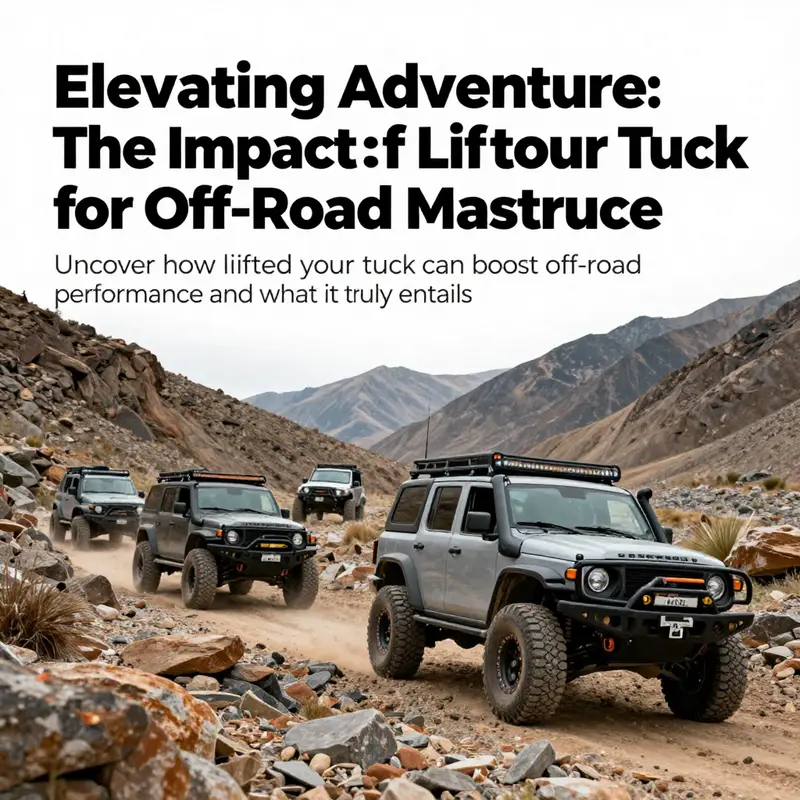
For off-road enthusiasts and adventurers, enhancing a truck’s off-road performance is often adventurous, exhilarating, and challenging. One powerful method to achieve this is by lifting the vehicle, which significantly increases ground clearance and improves off-road capabilities. As we navigate through the intricacies of lifting trucks, this article meticulously examines the core technical aspects that make lifting beneficial, the economic implications it might bring, essential safety considerations, and best practices for executing an effective lift. Each chapter builds upon the previous, guiding you from the initial understanding of technical specifics to mastering the art of safe and efficient truck modifications. Your off-road journeys can be transformed, leading to thrilling escapades on rugged terrains and beyond.
Beyond Ground Clearance: The Engineering Truths Behind Lifting a Truck for True Off-Road Mastery
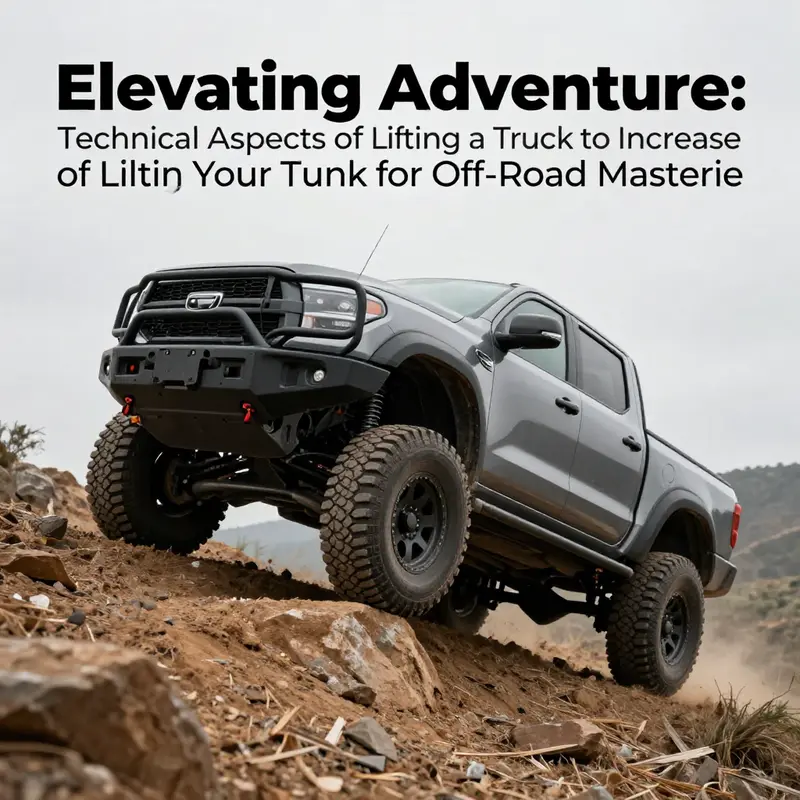
Lifting a truck is more than a cosmetic height change; it alters how the vehicle interacts with the ground. Increased clearance affects approach, departure, and ramp breakover angles, while also changing suspension geometry, driveline angles, and tire dynamics. A well-planned lift requires careful selection of tires, shocks, control arms, and alignment, as well as recalibration of electronic controls for traction and stability. Taller tires can alter gearing and rubbing clearances, so the lift, tire size, and suspension travel must be coordinated. Professional installation and precise alignment are essential to maintain predictable handling on road and the capability to traverse uneven terrain off road. When executed with a system mindset, a lift expands off road capability without sacrificing safety or daily drivability.
Raising the Bar: The Economic Realities of Lifting a Truck for Off-Road Mastery

Lifting a truck to tackle rugged terrain is a decision that sits at the crossroads of capability and cost. It is not merely a matter of adding inches to the chassis; it is a strategic choice that reshapes the vehicle’s economics over its entire lifecycle. The appeal is clear. More ground clearance, bigger tires, and a suspension tuned for rough surfaces translate into better approach angles, reduced risk of bottoming out, and a more deliberate footing on rock, rut, or sand. But the financial side of the equation deserves careful attention before the lift becomes a lifestyle upgrade rather than a mere upgrade in capability. The economic calculus starts with the upfront investment, moves through long-term operating costs, and extends to resale value and insurance implications. Below the surface, the numbers matter because the same features that improve off-road performance can also raise maintenance needs, affect fuel efficiency, and alter what buyers are willing to pay when a vehicle changes hands. In this sense, lifting a truck is as much a financial maneuver as it is a mechanical one, and readers who weigh the decision against their typical use, environment, and work demands will see why the right choice is highly context dependent rather than universally ideal.
From the outset, the most visible line item is the lift kit itself. Basic lift kits, which serve to raise the body or suspension and create additional clearance, typically carry a price range of roughly five hundred to fifteen hundred dollars. When the system is simple and installation straightforward, the total cost can remain modest. Yet the spectrum extends far wider. High-end, custom suspension systems can exceed five thousand dollars, and in some builds, especially those paired with long-travel components, reinforced axles, or electronically integrated stabilizers, the price climbs even higher. These figures reflect parts alone, not the labor required to install them properly, which in itself can be a significant and nontrivial expense. The installation journey is rarely a mere bolt-on job; it often involves precise alignment, geometry tweaks, steering and control-link adjustments, and sometimes changes to the drivetrain or differential setup. The goal is to retain safe handling, predictable steering, and reasonable tire wear—an outcome that can only be achieved when the entire system works in concert rather than as a collection of parts.
Language about cost does not exist in a vacuum. After the lift kit, many builders add a suite of supporting upgrades to preserve safety and performance. Upgraded tires are almost a given, since the stock rubber often cannot maintain traction or clearance with the altered geometry. Differential gear changes, driveshaft rework, and drivetrain adjustments commonly follow to accommodate changed angles and loads. Braking systems may need reinforcement or recalibration to manage the altered mass distribution and momentum on rugged surfaces. All told, these additional modifications frequently add two thousand to four thousand dollars to the upfront investment. The total initial outlay, therefore, becomes a function not just of the lift kit price but of the entire package required to maintain the vehicle’s reliability and safety after the upgrade. The practical takeaway is straightforward: plan for the full spectrum of modifications necessary to preserve drivability, not just the concession to ground clearance.
In many environments, the economic story of a lifted truck extends beyond the garage and the driveway. The long-term costs—especially fuel, maintenance, and potential wear—shape the total cost of ownership in meaningful ways. Aerodynamics change with a higher stance, and the extra weight from larger tires and stronger suspension components adds parasitic drag and mass that can reduce fuel economy. Over a vehicle’s life, even modest daily increases in consumption accumulate into a tangible operating expense. It is not solely about the sticker price of fuel; it is about the cumulative impact on the budget for an ordinary commuting pattern, weekend getaways, or remote-site work where fuel prices and miles traveled can become substantial factors.
Maintenance costs present a second, continuing consideration. Lifted trucks experience greater stress on who-knows-what components because the suspension, steering, and braking systems endure altered loads and angles. Regular inspections become more critical, and parts may wear more quickly than on a stock configuration. The need for periodic alignment checks, ball joints, tie rods, control arms, and possibly upgraded shock absorbers can translate into increased maintenance intervals and the accompanying labor costs. The point is not that a lifted setup is inherently unreliable; rather, it operates under different physics, demanding a proactive maintenance mindset to prevent surprises on rough trails or rural roads. Drivers who embrace the maintenance discipline—timely inspections, early part replacements, and a readiness to adjust components as they age—typically minimize the risk of expensive, preventable failures.
Beyond maintenance, there is the insurance equation to consider. Some providers regard lifted trucks as higher-risk vehicles due to altered handling characteristics and the potential for greater damage in a crash. Premiums can rise accordingly, sometimes materially, because the lift height, tire choices, and aftermarket components represent added exposure. The financial impact of higher insurance costs can ripple through a fleet or a household budget, affecting overall cost of ownership and the practicality of regular lifts or further modifications.
The resale dimension adds another layer of nuance. Economic outcomes here are mixed and highly dependent on purchaser preferences and market signals. For buyers who prize off-road capability and the aesthetic of a prepared vehicle, a lift can lift resale value by signaling enhanced capability and readiness for challenging terrain. Conversely, some buyers may view the same modifications as potential reliability risks or maintenance headaches, especially if the lifted-spec vehicle carries a complex suspension or a history of aggressive use. In practice, the resale value of a lifted truck is not guaranteed to rise in lockstep with the lift itself; it depends on how well the upgrades were executed, how thoroughly the vehicle has been maintained, and whether the market portion of buyers is actively seeking that particular configuration.
The commercial case adds another dimension. For operators who rely on access to remote work sites, a lifted truck can translate into real productivity gains. The ability to reach rough job sites without delay can cut downtime, expand service areas, and enhance job-site safety by enabling safer traversal of uneven terrain. In these contexts, the lift may justify its cost through time savings, reduced vehicle damage from terrain-related incidents, and the potential for fewer crew-hours wasted in difficult-to-navigate locations. Yet even within commercial use, the economic argument remains contingent on the nature of the work, the terrain encountered, and the frequency of engagement with off-road conditions. The lift, then, is not a universal profit center but a targeted investment that must be weighed against operational realities and the cadence of field tasks.
To navigate this complex landscape, an informed decision process is essential. Prospective buyers should translate the upgrade into a simple arithmetic exercise: estimate the total upfront cost of parts and installation, add expected annual maintenance and insurance increments, project fuel consumption changes over typical usage, and then compare that aggregate with the anticipated benefits in uptime, site access, and residual value. This framework helps distinguish between the practical gains of a well-executed upgrade and the temptations of a flashy, but arguably overextended, configuration. It also clarifies the role of professional guidance. Given the interplay of geometry, weight distribution, steering, and electronic stability, the safest path often begins with a professional assessment rather than an impulsive purchase. The aim is not only to achieve higher clearance but to preserve predictable handling and a lifecycle cost that aligns with the owner’s budget and risk tolerance.
Maintenance and safety converge on a core point: the value of disciplined upkeep. A lifted truck demands more than just a larger tire footprint and higher ride height. It requires ongoing attention to alignment, suspension wear, and drivetrain angles. In practice, this means a maintenance discipline that mirrors the complexity of the upgrade itself. The integration of modifications—including updated tires, differential changes, and steering link adjustments—must be complemented by a robust maintenance plan. As a practical touchstone, many professionals emphasize mid-life inspections of suspension arms and steering components, plus routine checks of brake systems, given the altered mass and momentum at work. These steps are not merely precautionary; they are essential to preserving safety and minimizing costly downtime on the trail or the road. For readers seeking deeper maintenance guidance, see the practical resource linked here: mastering-diesel-mechanics-your-step-by-step-path-to-success.
In the end, the decision to lift a truck for off-road capability is a balancing act. The allure of greater ground clearance, improved traction, and enhanced obstacle traversal must be weighed against the enduring costs of parts, installation, maintenance, fuel, and insurance. The most persuasive cases tend to be those anchored in real-world use: frequent trips to remote sites, regular off-road ventures, or an enthusiast’s commitment to reliably exploring difficult terrain. For commercial operators, the lift may be justified when it demonstrably expands access, reduces downtime, or enables a service footprint that would otherwise be impossible. For private owners, the calculation hinges on personal risk tolerance, financial flexibility, and the willingness to commit to a maintenance discipline that keeps the vehicle safe and dependable across a broad range of conditions.
The broader takeaway extends beyond price tags. Lifting a truck is a change in the vehicle’s operating envelope. It modifies not only the way the truck behaves on rough surfaces but also the way owners plan maintenance, manage budgets, and communicate with insurers and buyers. When approached with thorough planning, professional installation, and a clear view of the long-term implications, a lift can become a strategic asset rather than a speculative upgrade. The guidance from established automotive literature reinforces the cautious path: reduce speed when navigating turns, especially on rural or mountain roads, and consider integrating electronic stability control to preserve handling under diverse conditions. These cautions underscore a central theme—the lift is most effective when paired with a disciplined driving style and a holistic approach to vehicle reliability. The economic narrative thus begins and ends with prudent choices: selecting the right kit, ensuring proper installation, maintaining the upgraded system diligently, and aligning expectations with the realities of both daily use and off-road exploration.
For readers seeking a broader context on cost considerations and what to expect from lift-kit investments, a detailed external reference provides a wider market view and practical budgeting guidance. See Car and Driver’s comprehensive guide on truck lift kit costs and what you need to know for a grounded, numbers-based perspective. This resource complements the chapter’s focus on ownership cost, helping readers translate the theory into concrete planning and informed shopping decisions.
In sum, the economic implications of lifting a truck for off-road capabilities are substantial but not prohibitive. The upfront and ongoing costs are real, and the benefits depend heavily on how the vehicle is used and maintained. When the lift is integrated with a complete, purpose-built approach—professional installation, balanced upgrades, disciplined maintenance, and prudent driving—the enhanced off-road performance can justify the investment. Without that integration, the lift risks becoming a financial burden rather than a source of capability. The decision, therefore, rests on a clear-eyed assessment of use-case, budget, and readiness to maintain the vehicle in a state that honors both safety and performance.
Raising the Bar: Safety, Skill, and Sensible Engineering in Lifting a Truck for Off‑Road Performance
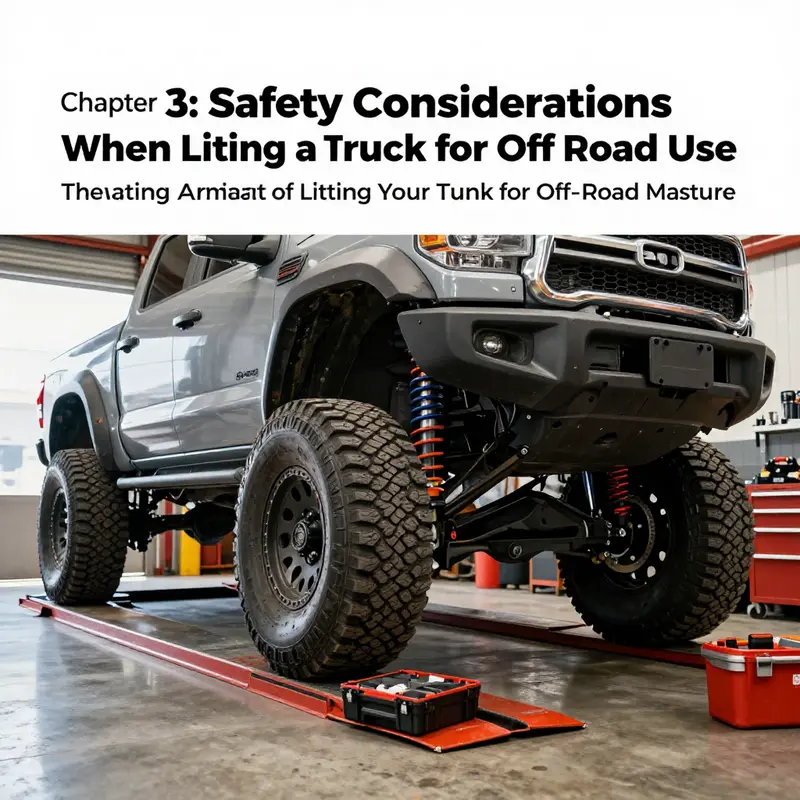
Lifting a truck for off‑road use sits at the intersection of opportunity and responsibility. On the one hand, increasing ground clearance unlocks access to rough terrain that would otherwise overwhelm a stock setup. On the other hand, that same modification alters the vehicle’s fundamental dynamics, demanding a disciplined approach to design, installation, and driving. The core idea is straightforward: raise the body high enough to clear rocks, ruts, and unpredictable obstacles, while preserving the structural integrity and predictable handling that keep drivers confident in demanding conditions. Achieving this balance is not about simply adding height; it is about integrating height with geometry, strength, and control. When that integration is done with care, lifting a truck can noticeably improve its off‑road capability without sacrificing on‑road safety. When it is done carelessly, the gains can be overshadowed by new risks that spread across suspension geometry, steering feel, and occupant protection. The decision to lift should emerge from a clear understanding of what ground clearance buys, what it costs in stability, and how to manage those tradeoffs through careful engineering and disciplined driving.
Selection begins long before tools meet metal. The foundation for any successful lift lies in choosing high‑quality lift components that are engineered to work with the vehicle’s existing architecture. Lift kits are not generic add‑ons; they are engineered packages that address suspension geometry, steering alignment, braking sensibility, and weight distribution. Compatibility matters more than raw height. A kit that does not fit the truck’s specific chassis, axle positions, and control arm geometry can introduce unpredictable handling, excessive tire scrub, or even premature component failure. Quality matters for many reasons, not least of which is durability under the repeated flex and impact of off‑road use. Components subjected to steering loads, wheel loads, and uneven terrain must withstand fatigue, corrosion, and the higher stresses generated by a higher ride height. In practice, this means prioritizing established designs subjected to real‑world testing and validated by the manufacturers who know the intricacies of a given model. The temptation to opt for cheaper, off‑the‑shelf parts is strong in some markets, but the consequences of a mismatch between kit and vehicle can be severe, ranging from intermittent steering wander to sudden loss of control. The takeaway is simple: the lift should be treated as a system, not a single part. The kit, the rest of the suspension, steering linkage, braking system, and chassis mounts all interact. Any weak link in that chain can become a dominant risk factor when the vehicle is pushed across rocks or snow.
Design considerations then guide how that system will behave on the trail and on the road. A lifted truck changes the leverage points of the vehicle. The tires, for example, become the only clothing for the wheel wells, and their contact with the ground must be managed by a suspension that can stay in proper alignment through irregular motion. Longer travel suspensions are often paired with upgraded, more robust control arms and extended‑length track bars to maintain wheel alignment through articulation. But there is more to it than length. The steering system can become stressed by altered geometry, and the steering ratio can feel imprecise if not properly adjusted for the new track. The risk is not simply a tighter turning radius; it can be a mid‑corner tug toward understeer or oversteer that feels unpredictable when a driver encounters a sudden change in surface grip. That is why a sound lift project rarely stops at the install. It continues through precise alignment, safety checks, and, crucially, a recalibration of electronic stability control and braking systems so that they respond to the changed kinetic profile with a familiar, predictable response.
This is where the installation process becomes a pivotal moment in the lifecycle of a lifted truck. Even with a professionally designed kit and a careful plan, the real work begins at the shop where technicians assemble and torque components to the correct specifications. Installation is not a cosmetic or purely aesthetic step; it is a structural integration that requires attention to torque values, proper sealing, and correct bias between front and rear suspension. Misalignment is not merely a nuisance; it is a risk factor that can magnify steering effort, tire wear, and brake imbalance. Bolts must be torqued to precise levels, and fasteners must be matched to the original material grades to resist fatigue under higher leverage. After an install, a comprehensive inspection and alignment procedure should follow. This is not about pedantry; it is about confirming that the vehicle’s geometry remains within the tolerances that ensure predictable handling and safe tire contact with the road or trail surfaces. A professional installation reduces the risk of hidden misalignments that would only reveal themselves under load, at speed, or over uneven terrain. The confidence gained from a thorough inspection translates directly into safer driving when the vehicle encounters the kinds of obstacles that justified the lift in the first place.
The moment the lifted truck leaves the bay and moves onto open ground, the handling dynamics begin to shift in earnest. A higher center of gravity changes how the vehicle responds to steering input, how it brakes, and how it recovers from disturbances such as a sudden washboard surface or a shallow ditch. Drivers must recalibrate their expectations. Cornering, once a routine matter, becomes a balancing act that weighs the risk of rollover against the thrill of exploration. Speed, too, becomes a more critical variable. Even on relatively smooth grades, abrupt transitions between different traction conditions—say, a patch of loose gravel followed by compact pavement—can produce a sudden yaw that challenged a stock rig but can be even more pronounced on a lifted platform. The core rule is simple: reduced speed when turning, especially on rural or mountain roads, as suggested by industry guidance. In practice, this translates into a disciplined drive that favors smooth steering inputs, gradual acceleration, and deliberate brake application. It also means paying attention to the electronic stability control systems that have been recalibrated for the modified suspension. These systems are designed to anticipate the same rolling behavior that a driver learns to respect in a stock vehicle, but with a lifted vehicle, their role becomes more prominent, not less.
Maintenance emerges as a continuous safety measure. Lifting a truck introduces new loads into the suspension and steering components that were not part of the original design. Regular checks become as important as the initial installation. The visual inspection should look for signs of unusual wear on shocks, control arms, bushings, and ball joints. The joints that articulate under more significant movement are particularly vulnerable to fatigue. Leaks, cracking, or excessive play are red flags that require immediate attention. Tire wear patterns can also reveal subtle misalignments that television ads rarely mention but which a cautious owner will notice on a road trip. The maintenance routine should extend beyond the obvious. A lifted vehicle benefits from a periodic sequence of checks that confirm that mounting points have not shifted, that brackets have not suffered from metal fatigue, and that protective hardware remains secure under the stress of off‑road strain. The goal is to catch progressive wear before it manifests as a dramatic fault on the trail. In practice, that means scheduled inspections after initial trail runs, followed by routine checks every few thousand miles or after particularly demanding expeditions. This approach aligns with the broader safety culture that governs vehicle modification and driver responsibility—an approach that treats the lifted truck not as a finished project but as a dynamic system that requires ongoing care.
Beyond the hardware and the mechanics lies a broader human dimension. The environment and the driver’s planning both shape safety outcomes. Off‑road terrain is inherently unpredictable, and the decisions a driver makes in the heat of a moment can determine whether a strap of rocks becomes a challenge or a hazard. The lifted configuration demands a different set of habits: slower pace, more deliberate lines through rough terrain, and a readiness to retreat before a situation escalates. A well‑equipped driver also carries safety gear suited to remote travel. A first‑aid kit, a fire extinguisher, and reliable communication devices become as essential as the vehicle’s own protection systems. The emphasis on readiness mirrors the reality that off‑road adventure often happens far from immediate help. The best safety gear cannot substitute for good judgment, yet it can significantly reduce risk when a mishap occurs. The combination of responsible driving, quality hardware, and ongoing maintenance creates a safety net that supports the lift’s off‑road potential rather than undermining it.
To connect this practical understanding with real-world safety discourse, consider how lift height interacts with other safety metrics such as rollover risk and stability performance. Crash‑test analyses, while not designed specifically for lifted trucks, highlight the crucial relationship between center of gravity, vehicle dynamics, and rollover potential. A higher vehicle can be more prone to tipping in aggressive maneuvers or on uneven ground, particularly if cornering forces exceed what the suspension geometry was designed to manage. For readers seeking a concrete reference, the IIHS crash test results provide a useful lens on how weight distribution and structural integrity influence outcomes in dynamic scenarios. See IIHS crash test results for a sense of how different vehicle configurations respond under controlled tests and how that translates to the practical risk landscape faced when a truck is lifted and driven off pavement. IIHS crash test results.
The broader takeaway is that a lift is a tool, not a cure. It enables access to terrain that would otherwise be unreachable and can improve approach and departure angles, articulation, and traction when paired with appropriate tires and a thoughtfully tuned suspension. But the same tool demands a disciplined lifecycle of choices, from kit selection to professional installation, precise alignment, recalibrated electronic controls, careful driving, and vigilant maintenance. In this light, lifting a truck is a structured engineering project as much as a lifestyle upgrade. The promise of enhanced off‑road capability rests on the quality of the engineering, the integrity of the installation, and the driver’s commitment to safety. When these elements align, the lifted truck fulfills its potential as a capable, stable, and dependable companion on rugged trails. When they do not, the very modifications intended to improve capability can become the source of new, avoidable hazards. This is why the safety conversation around lifting remains not merely a checklist but a philosophy of thoughtful engineering and careful stewardship, guiding every decision from the bench to the trail.
External resources offer additional depth for readers seeking formal guidelines and regulatory context. For established guidance on how to approach vehicle modifications, including lifts, consult the National Highway Traffic Safety Administration’s Vehicle Modifications resources. They summarize the importance of maintaining structural integrity, ensuring proper installation, and recognizing the role of driver awareness in safe operation while navigating the realities of modified vehicles on public roads and off‑road routes. NHTSA Vehicle Modifications.
Raising the Bar: How a Thoughtful Truck Lift Expands Off-Road Potential While Keeping Safety in Sight
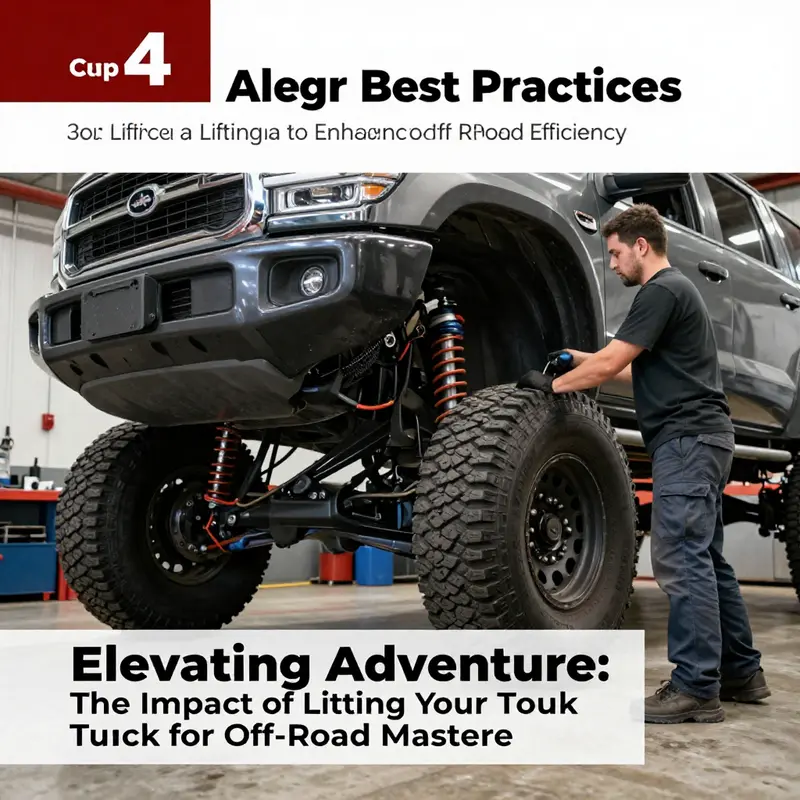
Lifting a truck is more than a cosmetic statement or a simple swap of parts. It is a strategic modification aimed at changing how a vehicle meets the challenges of off-road terrain. The core idea is straightforward: add ground clearance. But the implications ripple through the entire chassis, suspension, drivetrain, and even the way a driver engages a trail. When done with care, a lift moves the truck from merely surviving rough terrain to confidently negotiating rocks, ruts, sand, and mud. When done poorly, it can magnify stress on components, degrade handling, and raise the risk of damage or loss of control. In that sense, the lifting process is a holistic engineering problem rather than a single bolt-on upgrade. The goal is to increase the gap between the chassis and the ground while preserving or even improving ride quality, traction, and stability across a wider range of conditions.
At the heart of the lift is ground clearance. Increasing this distance reduces the likelihood that the underbody, fuel tank, exhaust, or differentials will contact obstacles. In rocky terrain, where a single misstep can put a drive shaft or a vent line at risk, the value of extra clearance becomes evident. But clearance by itself is not the end of the story. The geometry of the suspension—the way the wheels move up and down relative to the body—must be aligned with the new height. If the suspension geometry remains unchanged, the vehicle may still bottom out on mid-sized rocks because the wheels have less travel or the chassis angles have become awkward. A properly engineered lift kit extends control arms and knuckles, tightens dampers, and adjusts mounting points so that the wheel can articulate through larger arcs without colliding with the fender, the brake lines, or the hood line. In short, clearance gains must be matched with improved articulation and robust damping to translate that space into real off-road capability.
This is where tires join the conversation. Lifted trucks typically gain the most dramatic performance boost when the added clearance is paired with larger, more aggressive tires. Taller tires not only increase ground contact area for traction but also help the vehicle float over soft surfaces like mud and sand. The combination of a higher ride and bigger tires yields a noticeable shift in how easily the truck passes over obstacles. It also changes the vehicle’s approach to obstacles, enabling the front end to climb a rock face or a rut with less risk of gouging the undercarriage. Yet the tires themselves introduce new considerations. Wider tires can rub against the wheel arches if the suspension geometry isn’t tuned correctly, particularly during full turns or when the suspension compresses. This is a classic example of why a lift is not a standalone solution; it is a package that requires harmony among tires, wheels, arches, and suspension links.
Beyond space for bigger tires, the lift alters how the vehicle interacts with terrain on a dynamic level. The enhanced suspension travel that comes with a well-designed kit improves wheel articulation, allowing a wheel to stay on the ground longer when the others are lifting or dropping over obstacles. That extended contact with the terrain improves traction and control, which is crucial when drivers navigate uneven surfaces, steep climbs, or uneven sand washes. The improved damping that typically accompanies a lifted setup reduces jarring and helps maintain steering feel, even when the road under the wheels is irregular. The end result is a more confident ride over rough ground, with the driver sensing a more linear and predictable response to input—an essential factor when confidence is needed to place tires precisely where the trail demands.
Of course, lifting a truck is not just about creating more space and bigger tires. The act of raising the vehicle raises the center of gravity, and with it, potential handling challenges. A higher center of gravity makes the truck more sensitive to weight transfer during aggressive maneuvers, particularly at higher speeds or on uneven, sloped surfaces. The risk of rollover rises if the vehicle’s balance is not carefully controlled. That’s why modern lift designs emphasize maintaining an appropriate weight distribution and balancing the wheelbase with the new ride height. Engineers aim to preserve a favorable relationship between the center of gravity and the wheelbase so that stability margins remain wide enough to handle sudden steering inputs, cross-slope traverses, and transitions from dirt to rock without a dramatic loss of control.
Safety and control considerations extend to steering and driveline geometry as well. The increased angles of CV joints and driveshafts can introduce additional wear and noise if not properly managed. Steering geometry must be adjusted to preserve predictable steering effort and lock-to-lock behavior. This is not about making the steering heavier or lighter; it is about making sure the steering rack position, tie-rod length, and the steering knuckles accommodate the new geometry so that turning remains precise and proportional to the driver’s input. Without these adjustments, the vehicle can feel vague on tight trails or more prone to understeer and oversteer during dynamic maneuvers.
All of these considerations point toward a structured, systems-thinking approach to lifting. The best outcomes arise when the lift kit is designed as an integrated package rather than a random assortment of components. A holistic solution typically includes longer control arms or upgraded suspension links to restore proper axle geometry, reinforced shocks to handle larger excursions and harsher terrain, and reinforced mounts that can tolerate the extra leverage seen on rough trails. The objective is to keep wheel alignment stable across the range of travel and to prevent excessive camber or toe changes as the suspension cycles through its travel envelope. In practice, this means a combination of upgraded joints, improved mounting hardware, and careful tuning of bump stops and stabilizers so that the vehicle maintains predictable behavior even when the terrain becomes extreme.
The practical route to achieving these goals is to plan the lift in three stages: design alignment with the intended use case, careful selection of the lift components, and precise, professional installation followed by a thorough post-installation check. The design phase begins with a clear picture of where the truck will be driven most—rocky mountains, desert trails, or muddy backcountry—and what terrain will be most limiting. If the mission involves long overland trips with challenging washouts, the emphasis will lean toward greater articulation and durable dampers. If the terrain is dominated by rocks and ledges, the focus shifts to higher clearance, robust protection, and careful wheel travel management. The component selection then aligns with those goals, balancing lift height with suspension strength, steering geometry, and tire clearance. Finally, the installation step ensures that everything is aligned and torqued to specification, that the alignment is checked and corrected, and that the braking and steering systems are cycling correctly under load. A well-executed lift becomes a seamless extension of the vehicle’s core design rather than a mismatch that creates new problems.
In the broader context of the chapter’s topic, it’s worth noting that the lift is often part of a broader strategy to enhance off-road efficiency. The aim is not simply to raise the body but to improve the vehicle’s ability to traverse obstacles with reduced risk of snagging, binding, or stalling. By combining kept wheel travel, better damping, and well-fitted tires, drivers gain a chassis that can absorb irregularities, maintain traction, and keep the control inputs intuitive. This is the essence of turning a stock truck into a capable off-road tool: it is not about brute height alone but about harmonizing height with suspension, tires, steering, and stability systems so that each part supports the others under real-world conditions.
The practical implications for drivers extend beyond the garage. Even the most carefully designed lift requires changes in driving technique. A higher vehicle responds differently to cornering, braking, and steering inputs. Drivers should anticipate that the vehicle will behave differently, especially on uneven surfaces where suspension movement is more pronounced. Industry guidance emphasizes a cautious approach: reduce speed when turning, particularly on rural or mountain roads, to compensate for the increased rollover risk and altered cornering dynamics. This behavioral adjustment is not a critique of the modification but a natural adaptation to the new physics of the lifted vehicle. In parallel, incorporating electronic stability control—where available—adds a layer of active safety by detecting and mitigating oversteer, understeer, or excess yaw that can arise when the truck is perched higher than stock. The combination of responsible driving, upgraded hardware, and a properly tuned system forms the backbone of a successful lift that truly enhances off-road capability rather than merely elevating the vehicle’s silhouette.
If there is a singular takeaway from this exploration, it is this: lifting a truck to improve off-road performance is a systems engineering problem. The gains in ground clearance and tire capability are meaningful, but they are only realizable when the entire package—suspension geometry, steering, driveline angles, and weight distribution—is coherently designed and professionally installed. A lift performed with care becomes an enabler of confidence on the trail, allowing a driver to choose better lines, ride higher over obstacles, and recover from rough terrain with less fear of mechanical failure or loss of control. Conversely, a lift performed in isolation without corresponding alignment, protection, and control system considerations can undermine safety and reliability just as surely as it can improve traction. The best outcomes come from a deliberate, integrated approach that treats the lift as a doorway to broader capability rather than as a standalone modification.
For readers seeking a complementary perspective on the underlying mechanical systems and maintenance practices, deeper technical guidance can be found in certain maintenance-focused resources. See Mastering Diesel Mechanics: A Step-by-Step Path to Success for a comprehensive look at powertrain fundamentals and how they interact with chassis alterations. Mastering Diesel Mechanics: A Step-by-Step Path to Success.
As the discussion above suggests, a lift is not a universal cure for all terrain. It is, instead, a deliberate enhancement that must be matched to a vehicle’s design intent and the driver’s real-world needs. When applied with discipline, it can transform how a truck negotiates trails, offering higher ground clearance, improved traction, and better obstacle clearance without sacrificing the ride quality that makes challenging drives manageable. The ultimate measure of success is not simply how tall the truck sits but how well it communicates through the wheel, how predictably it travels over the next obstacle, and how reliably it returns to stable geometry once the obstacle is cleared. That synchronization—between height, suspension, tires, steering, and stability control—is what makes a truck lift genuinely effective for off-road efficiency, not just visually striking.
External reading for those who want to explore industry-standard lift concepts and product selection in a broader context can be found here: https://www.offroadspecialty.com/vehicle-lift-kits
Final thoughts
Lifting a truck undoubtedly offers remarkable enhancements to its off-road capabilities, provided it’s executed with a clear understanding of technical aspects, economic considerations, safety factors, and best practices. While the thrill of increased ground clearance and capability to navigate challenging terrains can be enthralling, the efficacy of truck lifting lies in a balanced approach that incorporates fine-tuning and safety enhancements. By adopting a methodical approach to lifting, off-road enthusiasts can unlock the full potential of their vehicles, paving the way for unforgettable adventures across diverse landscapes.