

For off-road enthusiasts and adventurers, the type of fuel you choose can significantly impact your performance and compliance. Off-road diesel, also known as red-dyed diesel, presents a unique opportunity for specific vehicle applications, particularly in rural and agricultural settings. However, its usage is surrounded by a complex web of regulations that vary by region. This article dissects the critical factors surrounding off-road diesel in trucks. We will explore the regulations that govern its use, delve into the legal implications of misuse, examine the cost benefits of off-road versus on-road diesel, and highlight practical scenarios where using off-road diesel might be perfectly acceptable. Understanding these elements will empower you as a truck owner to make informed decisions that enhance operational efficiency while remaining compliant.
Off-Road Fuel, On-Road Rules: Navigating the Legal Tightrope of Using Red-Dyed Diesel in a Truck

When you hear about off-road diesel, the scent of tax policy and enforcement often follows closely behind the fuel itself. Off-road diesel, commonly called red diesel or tractor fuel, is dyed to distinguish it from the diesel used to power public-road vehicles. It is designed for equipment that never shares the highway with everyday commuters—tractors, construction machines, generators, and similar non-highway machinery. The color serves a practical purpose: it marks fuel that is taxed differently because its use is presumed to be away from public roadways. That simple distinction—on one side, tax-exempt or reduced tax for off-road use; on the other, standard tax and compliance for on-road diesel—gets complicated quickly once a truck enters the picture. A truck that runs on public roads is not just a vehicle; it is a statement of where and how the vehicle will operate, and the fuel it consumes is part of that statement. In essence, the question “can I use off-road diesel in my truck?” drills down to a very specific set of conditions, a specific purpose, and a landscape of federal and state rules that vary by jurisdiction and by the way a vehicle is used. The straightforward answer is simple: in most cases, no—if your truck travels on public roads, you should not, and legally cannot, rely on off-road diesel. The consequences of defying that norm are not minor. Authorities can impose fines, seize fuel, and trigger registration and compliance headaches that ripple through a fleet’s accounting and a driver’s record. The detection mechanisms are not obscure. The red dye, if observed during inspections, immediately signals a fuel that should not be on a highway. The tax distinctions behind that dye are codified in federal and state law, and while the IRS and fuel tax agencies provide the framework, local regulators and DMV offices translate that framework into day-to-day enforcement on job sites and roadways alike. The practical picture is clear: public-road use mandates on-road diesel, acknowledged through purchase receipts, tax stamps, and a clear chain of custody for fuel if you are responsible for moving goods or people across lanes of traffic. Yet, there are moments in the lifecycle of a truck that could permit off-road diesel in a very narrow sense. If a vehicle is moved only within a non-public area, or if it is part of a non-highway operation—say, a fleet that moves equipment between job sites on a farm, a logging operation, or a construction site where the truck itself does not operate on public roads—there can be an argument for off-road diesel. Even then, it is not a free pass. Compliance becomes the operative word: you need written permission, documentation that tracks the vehicle’s movements, and explicit authorization from the relevant authorities, such as the state fuel tax agency and the department of motor vehicles, to avoid misclassification. Without that documentation, the risk shifts from a potential gray area to a full-blown violation. The law exists not to burden drivers but to ensure fair taxation and a level playing field for businesses that depend on roads and highways for commerce. Any deviation from the standard fuel path—any attempt to source red-dyed fuel for a highway vehicle—invites scrutiny. The consequences are not limited to fines. In some jurisdictions, repeated offenses can trigger license suspensions, increased insurance costs, and more onerous reporting requirements. The scale of penalties often hinges on jurisdiction, the amount of fuel involved, whether there was an intent to evade taxes, and the vehicle’s actual use. These are not hypothetical scenarios; they are real-world outcomes that trucking operators and equipment owners weigh when they consider fuel options for a truck that will, at times, share the road with other road users. The core takeaway is consistency and legality. If your truck will regularly operate on public roads, you should use on-road diesel and comply with federal and state fuel tax requirements. If your operation is truly off-road—limited to private property, dry-dock areas, or restricted zones where the vehicle does not travel on public streets—then off-road diesel is potentially permissible under strict conditions. In those circumstances, you should still verify with the local authorities who handle tax compliance and vehicle registration. A good starting point is to consult the IRS materials that govern federal excise taxes on diesel fuel and to cross-check with your state’s fuel tax agency and DMV. This is not a process to improvise. Documentation, clear use cases, and adherence to defined categories protect the business and the operator when questions arise about fuel origin, usage, and road legality. For a more practical dive into the mechanics behind diesel fuel, maintenance, and engine health, readers can explore specialized resources that explain how diesel systems operate, what to monitor, and how to maintain efficiency and longevity under heavy-use conditions. One way to deepen that understanding is through a focused guide on diesel mechanics that presents a structured path to mastery. Mastering Diesel Mechanics: Your Step-by-Step Path to Success. Such a resource can help vehicle owners appreciate how fuel choices interact with engines, fuel systems, and maintenance schedules, reinforcing the broader point that fuel legality and mechanical integrity go hand in hand. Still, even the most thorough mechanical knowledge cannot negate the legal framework surrounding fuel taxes and highway use. Those who operate trucks as part of off-road tasks should be prepared to demonstrate that use is non-highway and that proper regulatory pathways have been followed. The distinction between on-road and off-road diesel is, at its core, a distinction about public policy and accountability as much as it is about fuel chemistry. In practice, this means buyers and operators should stay aligned with the rule of law, keeping in close touch with the relevant agencies to confirm what is permissible in their specific locale and for their precise use case. If there is any doubt, the safer course is to err on the side of compliance and to source on-road diesel for vehicles that will ever share public lanes. The tax and regulatory landscape continues to evolve, and changes can cascade through pricing, enforcement, and reporting requirements. The federal government periodically updates rules related to diesel taxation, and state administrations often adjust their enforcement priorities in response to budgetary pressures or changing transportation needs. Keeping current means more than a quarterly check; it means integrating regulatory awareness into fleet operations, purchase practices, and driver training. The federal register page on changes to the federal excise tax on diesel fuel offers a formal lens into how such policies shift and what that means for fuel procurement decisions. While the practical, everyday decision remains anchored in whether a truck will operate on public roads, those who read deeply into the regulatory framework gain a more robust perspective on why the red dye exists, how the balance between taxation and usage is maintained, and why, ultimately, compliance is the most protective course of action for anyone who values legal operation and fleet integrity. As you navigate this topic, consider that the line between permitted off-road use and prohibited on-road use is not just about the fuel in the tank; it is about the vehicle’s purpose, the route it travels, and the record-keeping that supports that purpose. A thoughtful, well-documented approach reduces the risk of misclassification and helps ensure that your operations remain smooth even as regulations evolve. For readers seeking practical, actionable steps, a straightforward path is to establish a clear use-case map for each vehicle in the fleet. Identify which vehicles truly operate off-road and which regularly use public roadways. Maintain a separate procurement channel for each category, and insist on compliant documentation from suppliers and fuel vendors. When vehicles are leased or shared among departments, designate a compliance liaison who can verify that fuel purchases align with the vehicle’s designated use. Train drivers to recognize the legal distinctions between fuel types and to report any uncertainties to supervisors or compliance personnel. In short, the legality of off-road diesel in a truck is not a matter of preference but of purpose, placement, and paperwork. If the vehicle will traverse public streets, the safest, most responsible choice is to fuel with diesel that aligns with road-use regulations, supported by receipts and tax documentation that reflect the vehicle’s actual use. If a truck’s work remains wholly off-road, there can be room for red-dyed fuel within a strict regulatory framework that demands careful record-keeping, explicit authorization, and ongoing verification with the appropriate authorities. The difference between a compliant operation and a costly misstep often comes down to proactive planning, precise vocabulary about vehicle use, and a willingness to consult the regulations before filling the tank. For those who want to dive deeper into the regulatory dimension and to consult primary sources, refer to official federal and state materials that govern diesel taxation and road-use classifications. External reference: https://www.federalregister.gov/documents/2023/10/17/2023-21549/changes-to-the-federal-excise-tax-on-diesel-fuel
Fuel, Tax, and Consequences: The Real Legal Stakes When Off-Road Diesel Enters On-Road Trucks

When a fleet or a lone owner-operator contemplates saving money by slipping off-road diesel into a truck that regularly shares the highway, the math seems tempting at first glance. Off-road diesel, commonly known as red-dyed diesel, is priced lower in many markets because it is taxed differently and is intended for equipment that never travels public roads. But the cost dynamics shift dramatically once a truck becomes a road-going vehicle. The very distinction that makes off-road diesel a bargain in irrigation pivots into a legal liability the moment the wheels roll onto a public way. The legal framework around fuel classification is not a minor detail; it is a shield that protects tax systems, air quality standards, and the integrity of fuel markets. For any operator contemplating this path, the fog of potential savings evaporates quickly under the bright light of tax codes and environmental regulations, revealing penalties that far exceed any perceived short-term gain.
At the heart of the issue is a fundamental split in how fuel is defined, taxed, and regulated. On-road diesel is the product designed for vehicles that use public highways and streets. It carries higher taxes and stricter enforcement because its use supports road maintenance and funding through fuel-related revenues. Off-road diesel is intended for non-public use—construction equipment, agricultural machinery, and other machines that don’t ply the public right of way. The dye in off-road diesel is not merely cosmetic; it is a visible marker meant to distinguish fuel that should not be consumed on public roads from fuel that is part of the road-use economy. This distinction matters not only to tax authorities but also to environmental regulators who want the emissions profile of the transportation sector to reflect the actual sources of pollution and the true tax base that funds cleanup and infrastructure.
The legal terrain is vast and precise. Using off-road diesel in a truck that operates on public roads is widely treated as tax evasion. The simplest way to frame the risk is to recognize that the price difference between on-road and off-road diesel comes from taxes and compliance costs that on-road users bear by law. When a vehicle on public highways runs on fuel that should carry higher taxes but does not, the government can view the act as deliberate evasion. The penalties are designed to deter this behavior and to preserve the integrity of the fuel market. Across many jurisdictions, investigators and auditors look for dye markers, unusual consumption patterns, and discrepancies in fuel receipts to establish intent and the scale of the offense. The consequences, even for a first-time offender, can be severe and have ripple effects beyond fines.
From a tax enforcement perspective, the stakes are clear. Off-road diesel can be cheaper at the pump, but if you use it in an on-road application, you may be liable for back taxes, interest, and substantial penalties. The spectrum of possible outcomes includes the requirement to repay the taxes owed on the noncompliant fuel, plus interest that compounds over time, and fines that can escalate with the magnitude of the violation. In some cases, repeated or large-scale violations are treated as criminal offenses. The tax angles are not merely bureaucratic hurdles; they translate into real dollars that can cripple a small fleet’s cash flow and complicate future licensing and registration. The reliability of a business plan hinges on predictable costs, and tax penalties introduce a volatility that erodes any argument for cutting corners on fuel.
Environmental rules add another layer of risk. Off-road diesel historically has often carried higher sulfur content than modern on-road diesel, though ongoing reformulations have narrowed some gaps. The environmental implications are not theoretical. Higher sulfur levels can contribute to particulate matter and sulfur dioxide emissions, affecting air quality and public health. In a regulatory environment that prioritizes reductions in transportation emissions, authorities want to ensure that the fuel used in trucks on the road aligns with cleaner standards and accurate reporting. This alignment is not only about compliance with current rules but also about staying ahead of evolving restrictions that can catch operators off guard. Regulators like the EPA and state environmental agencies actively monitor and adjust rules as technology and fuel formulations change. The net effect is that the environmental risk is compounded by the tax risk, creating a two-pronged reason to avoid off-road diesel in on-road applications.
Enforcement mechanisms reflect this twofold purpose. Federal agencies and state revenue departments watch for misused fuel with both routine audits and targeted investigations. The California Air Resources Board stands as a notable example of a body that has continued to tighten controls on non-road diesel vehicles and the fuels they use. CARB’s recent moves illustrate a broader trend: even in sectors traditionally associated with off-road operations, fuel classification and usage are treated as critical compliance issues. This signals to truck operators that the enforcement net extends beyond simple labeling at the pump. Good compliance means meticulous fuel management, precise record keeping, and a clear separation of off-road and on-road fuel handling within a fleet. The penalties described in enforcement actions are not abstract figures. They represent real risks that can disrupt operations, damage financial viability, and invite additional scrutiny on future licensing and registrations.
Consider the typical consequences that accompany a violation. Fines are not merely fiscal penalties; they are signals that the system intends to correct behavior and deter recurrence. Where a single violation can trigger fines in the thousands, repeated offenses can lead to more severe outcomes, including mandatory restitution for unpaid taxes and, in extreme cases, criminal charges. The emotional and reputational costs are often overlooked but equally impactful. A fleet that is publicly flagged for fuel tax evasion or environmental noncompliance can face increased scrutiny from insurers, lenders, and business partners, even if the underlying technical infractions seem narrow. The risk premium attached to such violations grows quickly, altering the perceived value proposition of off-road diesel as a shortcut to operating costs saved in the short term.
For operators who do off-road work and never travel public roads with their equipment, the story changes. In many cases, off-road diesel is allowed for non-highway use if the operation is truly restricted to off-road environments. The crucial caveat is that this exemption is highly conditional and jurisdiction-specific. Verifying the legality with local authorities—especially the DMV, state fuel tax agencies, and environmental departments—is essential. Some fields implement strict controls, requiring separate fuel storage, documented use, and clear physical separation from on-road fuel systems. The practical implications of maintaining this separation demand discipline: dedicated tanks or fueling points, precise labeling, and careful accounting for any fuel that touches a vehicle that will ever be used on public roads. The reminder here is pragmatic: if the operation is on-road in any context, the off-road designation should not apply to the fuel. The moment the vehicle enters public traffic, the fuel’s classification must align with on-road standards, or noncompliance could ensue.
In this context the question of legality becomes inseparable from operational discipline. The cost calculus, which may appear to favor cheaper off-road diesel, collapses under the weight of compliance requirements, audit risk, and potential future costs. A fleet that commits to rigorous fuel management, clear documentation, and strict adherence to fuel-use boundaries is laying a foundation for stable, predictable operation. Conversely, a lax approach invites cascading risks: tax arrears, penalties, fuel-supply disruptions due to enforcement actions, and the corrosion of trust with regulators and financiers. The decision is not simply a price comparison; it is a determination of whether the business can sustain the regulatory and reputational burdens that follow any breach.
For readers seeking direction on how to navigate these waters, the recommended path is straightforward but exacting. If the truck is used exclusively off-road—such as in construction, mining, or farming where public road use is truly absent—there may be room to align fuel use with the local exemptions. The starting point is a conversation with the appropriate authorities: the DMV to understand vehicle classification and registration implications, and the state fuel tax agency to confirm how fuel is accounted for in that jurisdiction. In some places, operators are required to maintain detailed logbooks and fuel purchase records demonstrating that the fuel in use has not entered the on-road system. In others, a more centralized fleet approach to fuel management and tank segregation is mandated. The common thread across all these scenarios is clear: the risk of noncompliance multiplies the moment a vehicle steps onto a public road, turning a perceived savings into a potential financial and legal quagmire.
From a practical standpoint, the chapter would be incomplete without addressing how to balance necessity with compliance. If a project truly means off-road operation with no road miles, a careful analysis of whether the off-road exemption applies is essential. This involves understanding the exact scope of the exemption in the operating jurisdiction and ensuring that fuel storage, labeling, and disposal practices conform to the regulatory framework. It also means acknowledging that the price advantage of off-road diesel is rarely worth the legal hazard once the vehicle touches public pavement. Even modest penalties can outweigh any savings achieved, and the reputation risk can complicate insurance, employee hiring, and contracting opportunities over the long term.
For readers who want a practical, skills-oriented resource that complements the legal discussion, a deeper dive into diesel systems can be valuable. The following resource offers detailed guidance on diesel mechanics, which helps operators understand how fuel quality and engine health interact with legal compliance. Mastering Diesel Mechanics: Your Step-By-Step Path to Success provides a hands-on look at how fuel quality, dye markers, and fuel-system maintenance can affect performance and reliability. This connection between mechanical care and regulatory compliance underscores a broader truth: operating a truck is as much about keeping it mechanically sound as it is about staying legally sound. A well-maintained engine is less likely to exhibit fuel-use anomalies that could attract scrutiny, and precise fueling practices reduce the risk of accidental crossovers between fuel types.
In closing, the practical takeaway is tonic for any owner-operator weighing cost versus compliance. The financial lure of off-road diesel on the open market fades in the face of tax liabilities, environmental accountability, and enforcement intensity. The costs of noncompliance—not just the fines but the compliance overhead, the potential for registration complications, and the reputational seepage into future opportunities—tend to dwarf the savings from a cheaper pump. This is not a condemnation of efficiency or innovation but a sober reminder that fuel is a regulated resource with social and economic responsibilities attached to it. The most prudent path is to align fuel choices with the actual use profile of the vehicle, to maintain meticulous records, and to engage with the relevant authorities to understand exactly where a given operation stands. In practice, that means keeping off-road diesel strictly for off-road needs, or arranging for a compliant fuel path that avoids any on-road use altogether.
For those who want to anchor their understanding in a broader policy context, the external resources offer a gateway to the regulatory landscape that shapes these decisions. See the external resource on diesel fuel regulations for a wider view of how fuel taxes, emissions standards, and enforcement practices interact across jurisdictions. This broader lens helps frame the practical advice presented here as part of a bigger system designed to fund roads, reduce pollution, and maintain fair competition in the trucking industry.
The Real Cost Equation: Weighing Off-Road Diesel Economics Against On-Road Fuel for Trucks
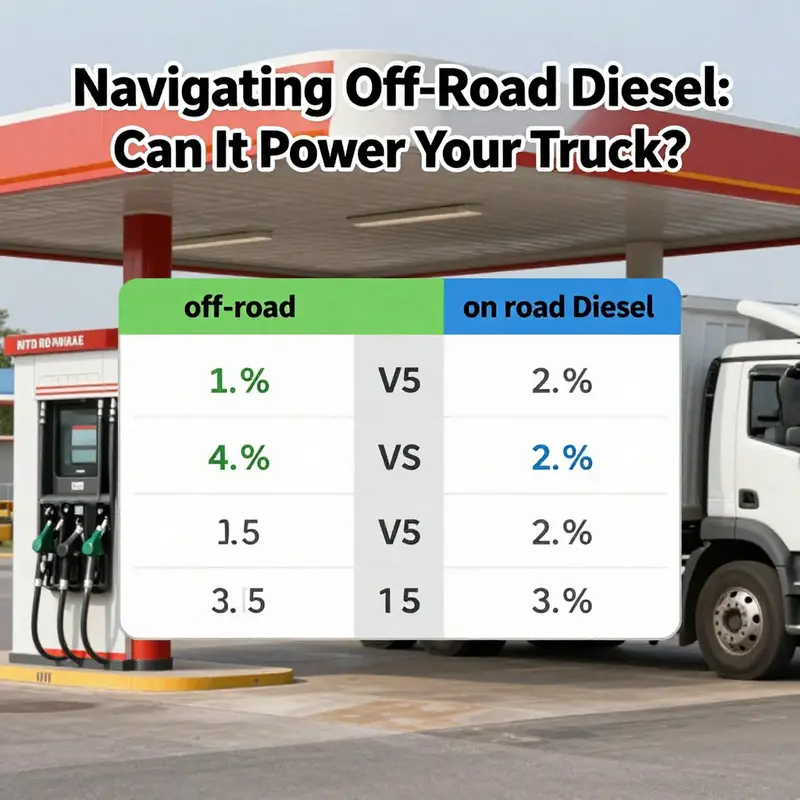
Fuel economics sit squarely at the intersection of policy, operation, and risk. People often ask whether off-road diesel can be used in a truck, but the deeper question for any fleet or individual is this: what is the true cost of choosing off-road diesel, and what are the potential consequences when road use is involved? The answer is not simply about price per gallon. It is about the bigger picture of taxation, legality, reliability, and long-term operating costs. Off-road diesel, commonly called red-dyed diesel, is designed for non-highway machinery and is taxed and regulated differently from on-road diesel. The practical upshot is a substantial price advantage in many markets, driven primarily by the tax exemptions that apply to fuels used off public roads. Yet that advantage comes with a balance of risks and responsibilities that truck owners must weigh before considering any shift in fueling practices. In the most common scenario, the economics favor off-road diesel only when the vehicle remains off the highway, and the legal framework surrounding that usage is fully understood and respected.
Understanding the economics begins with the taxation landscape. On-road diesel carries highway taxes at both federal and state levels. The federal fuel tax has historically been a per-gallon levy, designed to fund road maintenance and transportation infrastructure. State taxes compound that base, varying widely by jurisdiction. In contrast, off-road diesel escapes highway-use taxes precisely because it is intended for non-public roadway applications. The red dye is a conspicuous, regulated feature that regulators use to deter misuse. The dye’s presence is not merely cosmetic; it is a regulatory signal that the fuel is earmarked for non-highway work, not for everyday driving on public streets. For a fleet owner, the consequence of misusing off-road diesel on a truck that travels public roads can be severe and costly, including fines, penalties, and potential enrollment or registration issues when enforcement actions are taken.
The price delta between on-road and off-road diesel is one of the most tangible pieces of the economic argument. In many states, off-road diesel can trade for roughly two to four tenths of a dollar less per gallon than on-road diesel, a gap that compounds quickly for large fleets or long-haul operations. The exact spread varies with wholesale pricing, supply logistics, and local tax policy, but the pattern is consistent: the absence of highway taxes translates into a lower sticker price at the pump. While the wholesale price often reflects the tax exemption, the consumer-facing price can still be influenced by market dynamics such as refinery costs, regional demand for heavy equipment fuels, and seasonal supply constraints. For businesses that run heavy equipment—earthmoving gear, extraction fleets, or forestry apparatus—and that operate primarily off public roads, this price differential can translate into meaningful annual savings. A small fleet might save hundreds of dollars per month, while a larger fleet could see thousands—savings that compound into a notable return on investment over the life of the fuel consumption cycle and the maintenance budget.
To translate that saving into real numbers, consider a hypothetical construction program with multiple excavators, bulldozers, and loaders distributed across a site and a nearby storage facility. If those machines function primarily on-site or within a work zone and never merge onto public highways, off-road diesel can lower operating costs by reducing fuel spend. The math becomes straightforward: per-gallon savings multiplied by hundreds of gallons per day across a fleet yields a sizable annual difference. But the practical reality is more complicated. The economics depend on utilization patterns, fuel availability near the work site, and the reliability of on-site fueling operations. In some locations, the actual price gap may erode due to supply constraints or regulatory fees that creep into off-road pricing. In others, the off-road advantage remains robust. The wholesale price of off-road diesel benefits further from the absence of certain excise taxes, which can widen the margin and make daily fueling more predictable for crews who value budgeting certainty. For a company managing a fleet that reports to project timelines and cost codes, those predictable costs are as important as the nominal price tag on the pump.
But price alone does not determine a responsible fuel strategy. Compliance is the other half of the equation. The legal framework surrounding the use of off-road diesel is clear in its intent: avoid on-road use. Regulators implement dyeing and tracing mechanisms to distinguish off-road fuel from road fuel, and the penalties for misuse can be harsh. Penalties may include fines, back taxes, and, in serious cases, enforcement actions that affect vehicle registrations or business licenses. Recordkeeping is essential. If a truck ever operates on public roads, it must be fueled with compliant on-road diesel and taxes must be remitted accordingly. Even occasional use of off-road diesel in a vehicle that might traverse a highway can trigger penalties if enforcement flags a misfuel event. The responsibilities extend to fuel handling and storage as well. Workers must be trained to prevent cross-contamination and to ensure that any on-road vehicle remains fueled with the appropriate product. In practice, many operators choose to segregate fueling operations: on-site fueling for off-road equipment that never touches public roads, and a separate supply chain for on-road vehicles. This separation reduces the risk of accidental misfueling and simplifies compliance reporting.
For readers weighing the economics for a truck that sees mixed work—site movement, on-site transport to a staging area, and occasional highway trips—the decision becomes a matter of risk appetite and operational design. If the truck will be on public roads on a regular basis, the economic incentive to use off-road diesel evaporates quickly. The penalty risk, potential regulatory complications, and the cost of remediation if misfueling is detected outweigh the modest price savings per gallon. Conversely, a truck that operates entirely within a construction site, mining operation, or agricultural perimeter—without exposure to public road use—may legitimately access the off-road fuel stream, provided proper procedures, documentation, and authority are in place. In such cases, the economics align with the broader cost-tradeoffs of running complex equipment at scale: lower fuel expense, predictable supply, and a streamlined procurement process that aligns with the site’s operating rhythm.
It is also worth noting a practical mechanism to test the economics in a low-risk way. Operate a formal fuel-use policy that designates which equipment may use off-road diesel and under what conditions. Establish a simple tracking method that logs fuel purchases by vehicle, by site, and by use case. If a truck is ever expected to switch between off-road and on-road use, a policy that mandates a single refueling strategy for any road-bound leg helps avoid mixed-fuel scenarios. This approach protects the business from accidental misfueling and simplifies audits. The policy can be reinforced with training and periodic reviews of fueling records, helping managers quantify the true cost impact of any tariff changes or price fluctuations.
From an operations perspective, the broader question is whether the cost savings justify the administrative overhead. It is not enough to know that off-road diesel is cheaper; one must know that cheaper fuel translates into an overall lower total cost of ownership (TCO) for the fleet. TCO calculations should incorporate not only the price per gallon but also factors like fuel efficiency, engine wear, maintenance schedules, downtime for fueling, and the potential costs of regulatory noncompliance. In practice, the tax advantage is real, but it is conditional on strict compliance and disciplined fuel management. For many small operators, the administrative burden is minimal compared with the savings, while for larger fleets, the stakes are higher, and the cost of missteps grows with scale.
To further ground this discussion in concrete guidance, a practical resource can offer deeper insight into the mechanics of fuel systems and maintenance that support efficient diesel use. See the guide on diesel systems and maintenance for an in-depth look at how fuel quality, filtration, and engine care impact performance and longevity, which in turn influence the real-world economics of any fuel choice. mastering-diesel-mechanics-your-step-by-step-path-to-success
Ultimately, the decision to pursue off-road diesel for a truck—whether the vehicle runs exclusively off-road, or occasionally transitions to public roads—rests on a structured assessment of legal allowances, cost savings, and risk management. The economics are compelling in the right context, but they demand careful governance. If the vehicle operates on public highways, the safe, compliant path is to use on-road diesel and pay the appropriate fuel taxes. When the job layout confines the vehicle to off-road environments, the door is open for cost-efficient fuel use, provided the organization has clear policies, robust recordkeeping, and proactive engagement with local authorities to confirm the scope of permissible activity. The bottom line remains clear: the economics can be favorable, but only when the regulatory framework is respected, and fueling practices are aligned with the vehicle’s designated use and the site’s specific obligations. For anyone evaluating a switch, a disciplined, measured approach that weighs tax implications, operating routes, and compliance risk will yield a decision that serves both the wallet and the road-wisdom of the operation.
External reference for policy context: For more detailed information on fuel tax policies and compliance, see the Fuel Tax Information page on the U.S. Department of Energy site: https://www.energy.gov/eere/vehicles/fuel-tax-information.
Beyond the Red Line: Real-World Uses and Legal Limits of Off-Road Diesel in Trucks

When people ask if they can run off-road diesel in a truck, the answer is not simply yes or no. The fuel itself is the same substance that powers highway vehicles, but the dye, the tax laws, and the intended use of the vehicle create a legal boundary that isn’t always intuitive. Off-road diesel, commonly known as red-dyed diesel, is sold with the understanding that it will power equipment and vehicles that do not travel public roads. The tax structure around fuel is designed to ensure that road use contributes to road maintenance and infrastructure through fuel taxes. In many regions, particularly across the United States, using off-road diesel in vehicles that are meant to drive on public roadways is illegal because it circumvents those taxes. The penalties can be significant: fines, civil penalties, and in some cases concerns about registration and compliance that stretch beyond the pump. Yet there are practical contexts in which off-road diesel makes sense for trucks that operate away from the public highway. The key is understanding both the factual performance benefits and the regulatory boundaries, and then aligning the operating practice with local rules and official guidance.
For trucks that are truly dedicated to off-road work—think logging yards surrounded by dense terrain, construction sites where road access is limited or impractical, mining corridors carved through rugged ground, or remote field missions that never join the public street network—off-road diesel can be a practical choice. These scenarios share a common thread: they demand durability, torque, and resilience in environments that batter engines and drive trains in ways a highway run rarely does. The engines in these trucks are configured to deliver sustained low-end torque, a feature that keeps heavy loads climbing grades and negotiating uneven surfaces without repeatedly shifting through gears in search of power. In such settings, the fuel’s tint is less about a forbidden shortcut and more about drivers and operators being aligned with strict on-site fueling practices and clear separation from on-road use.
To see how this translates into real-world operations, consider the practical scenarios where off-road diesel trucks excel. In logging operations, the work often unfolds on steep, unpaved grades that demand steady pulling power more than quick acceleration. A diesel engine’s torque is the workhorse here. The ability to maintain forward momentum while negotiating tight switchbacks and slippery surfaces reduces the need for aggressive braking and throttle changes that accelerate wear. The result is fewer cycles of gear selection and less heat buildup in the drivetrain, which translates into lower fatigue for both the vehicle and the operator. In these settings, the emphasis is on reliability and sustained performance rather than peak highway efficiency. The same logic underpins construction sites, where trucks must haul equipment, materials, and supplies across muddy or rocky terrain. A high payload capacity paired with robust low-speed torque means fewer trips and less downtime waiting for ground conditions to improve. The objective is to maximize the amount of material moved per shift while minimizing the risk of getting stuck or stranding equipment on site.
Mining operations extend this theme into even more challenging environments. Ores and tools need to move through uneven ground, over rutted tracks, and across environments where weather or blasting activity can alter the terrain overnight. Off-road diesel-powered trucks designed for these conditions benefit from reinforced suspensions, heavy-duty axles, and four-wheel-drive systems that keep momentum in the worst pockets of ground. The design philosophy—where ruggedness and continuity of operation trump highway-grade efficiency—speaks to why these vehicles exist in the first place. Similarly, remote field operations, including oil and gas exploration teams or scientific expeditions, rely on trucks that can function far from pavement and water sources. Durability isn’t a luxury here; it’s a necessity. These environments demand fuel systems that tolerate dust, vibration, and extreme temperatures, along with drivetrains and chassis that can absorb the impacts of rough terrain and long hours of active use. The practical upshot is straightforward: when the field demands it, off-road diesel powers trucks built for that demand, enabling operations to proceed on schedule even under challenging conditions.
Agricultural and ranching applications also illustrate why some fleets see value in off-road diesel for trucks that do not routinely operate on public roads. Across expansive ranchlands and rural landscapes, trucks move livestock, feed, and machinery over uneven fields and undeveloped routes. The fuel’s lower tax burden in jurisdictions that permit off-road use is attractive for operators whose tasks are confined to private properties or land that never enters the public road network. The common thread through all these settings is this: off-road diesel remains a practical option when the vehicle’s duties remain off-road, the fueling infrastructure is controlled, and regulatory compliance is actively managed. In each case, the fundamental advantages—durability, torque, payload capacity, and the ability to navigate difficult terrain—align with mission requirements rather than economic shortcuts.
Yet the practical reality is more nuanced. The guidance from authorities is clear that public-road use of off-road diesel is typically prohibited or heavily regulated. The tax authorities view the use as a means to avoid fuel tax obligations associated with public road travel. The consequences for violating these rules can extend beyond a simple fine. It can affect vehicle registration statuses, insurance considerations, and the administrative burden of demonstrating compliance. This is why the decision to operate a truck on public roads with off-road diesel is almost always a non-starter for fleets or individuals whose vehicles regularly traverse public routes. Even in cases where a truck has a mixed duty—part off-road, part on-road—the safe, compliant path is to use on-road, taxed diesel for road miles and reserve off-road diesel for the off-road portions, with clear separation of fuel storage and careful record-keeping to avoid cross-contamination or misallocation.
The mechanics of the situation are instructive as well. Off-road diesel is dyed to facilitate enforcement, not to enable illicit use. The dye is a visual cue for inspectors and auditors, signaling that the fuel may not be intended for road travel. Physically, red-dyed diesel and on-road diesel can be the same chemical in many contexts, but the tax and regulatory framework remains a hard boundary. As a result, operators who rely on off-road diesel for on-road work risk not only fines but potential civil penalties and the exposure that comes with noncompliance. To avoid such outcomes, it is crucial to have a clear operating plan that respects jurisdictional rules and the spirit of the tax laws. This is where the broader context matters. In a well-run fleet, fuel management is part of discipline, not just cost control. Operators track which tanks feed which loads, maintain separation between on-road and off-road inventories, and train staff to verify fuel types before fueling any vehicle that might see road use.
In terms of maintenance and practical efficiency, off-road diesel does not demand different engine hardware by default; most engines can burn dyed or untinted fuel in similar fashion when used appropriately and legally. The differences are not in the combustion chamber or injectors, but in how fuel is sourced, stored, and documented. Fleet managers who opt for off-road diesel on legitimately off-road missions often implement strict fueling protocols: clearly labeled tanks, dedicated hoses and pumps for off-road use, and a record-keeping system that accounts for fuel dispensed to each vehicle and for what duty cycle. These measures help minimize the risk of cross-contamination and simplify auditing, while also supporting a straightforward audit trail if a regulatory inquiry arises. The practical implication for operators is simple: when the mission stays off-road, off-road diesel can offer performance reliability and cost efficiency that align with work-site realities. The moment a truck begins to travel public roads, however, the calculation changes. The tax and legal implications shift the risk-benefit balance toward on-road diesel and formal compliance programs, which may also be integrated into the broader fleet-management framework.
If you are a reader who wants a deeper, hands-on understanding of diesel fuel systems and maintenance—especially if you are considering diesel-fueled off-road trucks for tough environments—you may find value in resources that walk through engine fundamentals, fuel system diagnostics, and the step-by-step paths to reliable operation. For a practical, experience-based perspective on diesel mechanics, consider the guidance offered in the resource titled Mastering Diesel Mechanics: Your Step-by-Step Path to Success. It provides a framework for understanding how fuel systems interact with heavy-duty engines under demanding conditions, which can be especially relevant when operating trucks in off-road settings where reliability is non-negotiable. Mastering Diesel Mechanics: Your Step-by-Step Path to Success.
For readers seeking a broader, technically rigorous reference on off-road diesel performance and the regulatory backdrop, an external resource that delves into technical specifications and operational best practices for off-road diesel trucks is available. This source offers detailed guidance on engine performance, fuel efficiency, and how operators manage off-road duty cycles in practice. Visit the official guide for a comprehensive overview at the following external link: https://www.truckequipmentmag.com/off-road-diesel-trucks-technical-guide/.
Ultimately, the decision to use off-road diesel in a truck hinges on three linked considerations. First, the vehicle’s actual duty cycle: is the work strictly off-road, or does the truck routinely venture onto public lanes? Second, the regulatory context: what do the IRS, state fuel tax agencies, and the DMV require for on-site fueling, tank labeling, and record-keeping? Third, the operator’s discipline: can fueling, storage, and fuel-use documentation be implemented in a way that ensures a clean separation between on-road and off-road use and a robust audit trail?
The chapter’s core message remains consistent. Off-road diesel is not a universal license to bypass tax laws. It is a practical option for trucks whose life is spent away from public roads, where the demands of the environment justify the torque, durability, and payload advantages of heavy-duty diesel powerplants. In those cases, success relies on a careful, compliant approach: operate within the scope of off-road work; maintain strict fuel-handling protocols; keep meticulous records; and always verify local rules with the appropriate authorities before fueling a vehicle that might ever touch a public roadway. When those conditions are met, off-road diesel can support the mission with less downtime, steadier performance, and a straightforward path to reliable operation in the most challenging settings.
In the end, the question is less about the color of the dye and more about the purpose of the journey. If the journey remains firmly off the road, the journey remains legitimate—and often economically sensible. If the journey occasionally crosses into public streets, the dye should stay out of your fuel, and the fuel should stay in the appropriate tax-treated stream. The balance between performance and compliance is not a compromise; it is a disciplined approach to operating in the real world where work, safety, and law intersect on every mile of road or dirt you travel.
Final thoughts
In conclusion, while the allure of off-road diesel is strong for truck owners operating off-highway vehicles, it’s crucial to navigate the associated regulations carefully. Understanding when and where off-road diesel can be used legally is integral to maximizing its advantages, including cost savings, without falling afoul of tax laws. Each chapter in this exploration underscores the balance between opportunity and compliance in fuel choices. For enthusiasts, racers, and agricultural landowners, making informed decisions will not only enhance operational efficiency but also safeguard against potential legal repercussions.