

In the realm of rugged terrain and challenging trails, the right truck modifications can make all the difference. For off-road enthusiasts, the decision to invest in off-road packages is more than just a financial one; it’s about enhancing performance, safety, and adventure. In this article, we’ll delve into the important factors that determine if off-road packages are worth the investment: by assessing your driving habits, exploring the tangible benefits of these enhancements, and weighing the costs against their utility. Whether you’re racing across dirt roads, trudging through rural landscapes, or navigating tricky farming paths, understanding the implications of off-road packages will help you make informed decisions for your vehicle that align with your adventurous spirit.
Beyond the Pavement: Weighing Off-Road Packages for Trucks by Driving Habits
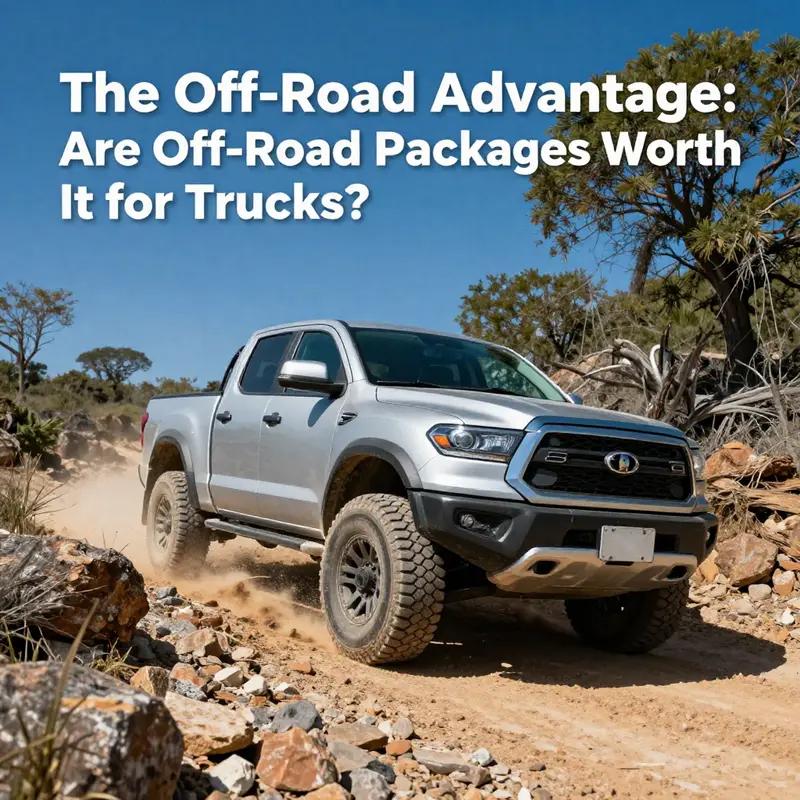
When you pick a pickup truck, the choice often feels like deciding between two roads you might travel in the same season. One is paved, smooth, and predictable. The other is less certain—ungraded lanes, mud, gravel, wet rocks, and the occasional steep grade. Off-road packages exist to tilt the scale toward that second path, offering reinforced hardware and tougher tires. But like any upgrade, the value of these packages emerges most clearly when you measure them against how you actually drive. A truck that spends most of its miles on highways and in the city will experience the added weight, stiffer ride, and higher maintenance costs more keenly than a truck that spends its days crawling through rutted fields or chasing hunting trips across backcountry tracks. The fundamental question—are off-road packages worth it for trucks?—really boils down to habits, terrain, and the purpose you expect the truck to serve. When you anchor this decision in the realities of daily use, the math becomes clearer, more practical, and less about impulse appeal or showroom bravado.
To understand the appeal and the cost, imagine what the typical off-road package brings to the table. Common components include a reinforced suspension system with uprated springs and upgraded shock absorbers, skid plates to shield vital underbody components, and tires engineered for grip in mud, snow, and loose gravel. Some setups also include higher ground clearance and cooling system enhancements to keep the engine and transmission at safe temperatures when you’re working the truck through tough terrain or towing heavy loads over long stretches. Each element is designed to contribute to one overarching goal: resilience under duress. In a scenario where a rock edge or a sand rut might otherwise gouge a rim, or where a tumble of shale could nick a fragile undercarriage, these pieces work in concert to keep you moving and minimize downtime.
The key to valuing them, though, lies in your driving habits. If you regularly navigate unpaved roads—gravel, dirt, or clay—where traction is uneven and the surface shifts with every footprint of the tire, the appeal of reinforced tires and a more robust suspension becomes practical, not merely aspirational. If you’re often off the grid on hunting, fishing, or outdoor-recreation trips, you likely face hazards a stock setup might tolerate only with slower, more cautious driving. In those contexts, the off-road package translates into more consistent control, better obstacle negotiation, and reduced risk of body panel or drivetrain damage. The payoff is tangible: fewer dents, fewer flats, less time spent off the work schedule or out of service, and a greater sense of safety when the trail grows technical.
Conversely, if your miles stay largely on interstates and urban arteries, the math shifts. The same upgrades can yield marginal benefits, especially if you never use the truck in conditions that test traction, ground clearance, or cooling limits. The trade-offs move into sharper focus. A stiffer suspension, while excellent on uneven surfaces, can translate into a harsher ride on smooth pavement. The larger or more aggressive tires might produce more road noise and reduced fuel economy, especially at highway speeds. More weight tends to alter handling, and maintenance can become a recurring cost as wear items—like tires and brakes—face different stress patterns. People who carry day-to-day cargo or commute long distances may find the performance improvements of off-road packages underutilized and the costs disproportionate to the benefits.
This is not a binary judgment but a matter of tuning a vehicle’s capabilities to its primary role. For a truck that serves as a rugged utility tool, the package can be invaluable. It can erase the line between “worksite access” and “trail access” by removing the fear of damage or getting stuck. It can enable you to recover from a misstep on a muddy track or to traverse a snow-drifted forest road without pausing to weigh every possible risk. It can also provide peace of mind, allowing you to plan longer trips into rough terrain with confidence rather than hesitation. In these cases, the intangible benefits—confidence, safety, and a wider range of usable terrain—often outweigh the concrete costs.
To frame the decision, drivers can begin with a straightforward inventory of use patterns. Ask: How often do I encounter rough surfaces? What is the typical weather where I live and work? Do I haul gear, equipment, or trailers that add weight and stress to the drivetrain? How much time do I spend off-road versus on-road? If the answers skew toward frequent off-road use or heavy-duty tasks in challenging environments, the odds favor the upgrade as a legitimate investment in capability and durability. If the opposite is true, it may be wiser to allocate budget toward other enhancements—perhaps payload or towing capacity, or fuel-efficient technologies—that deliver clearer returns on everyday use. The cost is not just the sticker price; it embraces long-term fuel consumption, tire rotation schedules, brake wear patterns, and potential maintenance complexity. After all, more specialized components require more careful maintenance and sometimes more frequent inspections, which, in turn, affects total ownership costs—and this must be included in the calculus.
A practical way to think about it is to imagine your truck as a tool in a toolkit. If your projects or adventures regularly push the tool beyond smooth pavement, the upgraded chassis, tires, and protection plates become essential accessories. If your work is structured more like a factory line of daily deliveries on predictable routes, the same tools may sit unused in the case most days, exposed to the elements but without a reason to sing on the trail or off-road jobsite. The decision then hinges on a simple, often overlooked factor: risk exposure. Off-road packages reduce the risk of damage and immobilization when risk is a frequent companion, but they may raise risk in other forms—reliability questions if components are stressed unnecessarily by constant on-road duty, or increased maintenance burden if the vehicle seldom crosses a curb but carries a heavier, more sophisticated undercarriage. The balance between risk reduction and added risk is subtle, and it shifts with the driver’s calendar, climate, and day-to-day tasks.
Another layer to this decision is the impact on vehicle dynamics and the ownership experience. The ride quality on rough terrain improves with smarter suspension tuning and protective hardware, which translates directly into rider confidence and control. Traction improvements—whether on slick winter streets or muddy backroads—translate into fewer slips, more predictable handling, and a higher degree of forgiveness when you misjudge a corner or crest a rise. Ground clearance is a practical advantage when you encounter ruts or rocky passages, not merely a safety feature. The ability to pass a potential obstacle without backing down can shorten trips, reduce the time spent scouting alternate routes, and lessen the exposure to hazards that could end a day early. In environments where Getting There on Schedule matters—whether for fieldwork, expeditions, or remote service calls—the value grows with the number of opportunities to use those enhanced capabilities.
The conversation also benefits from a practical recognition that the fully loaded off-road package is not simply a single upgrade but a bundle of changes. Reinforced suspension and upgraded shocks are the backbone, but the package’s success depends on the tires pairing with the suspension, the skid plates protecting what matters most, and even the wheel rims designed to resist impacts. A tire choice tuned for traction in mud or snow is not merely a grip preference; it interacts with suspension travel, weight transfer during braking, and steering precision. Skid plates influence ground clearance behavior at angles and over rocks; they also shape how the undercarriage responds when you’re faced with steep, uneven approaches. The cooling system enhancements, if included, function most effectively under heavy loads and slow-moving conditions where the truck might otherwise overheat. Together, these components form a system whose value is the sum of its parts, and the practical worth of that system grows with the frequency of challenging conditions you actually encounter.
This broader perspective—seeing the off-road package as a system designed to expand your truck’s envelope—helps reconcile the sometimes polarizing opinions about value. It becomes less about chasing the latest gadgetry and more about matching your needs to a capable toolset that keeps you moving and reduces downtime. If you are often on the wrong side of weather, if you work in environments where surface stability is unpredictable, or if your pursuits take you into places where a simple pothole can become a problem, the package has a stronger case. It is not merely a matter of luxury or prestige; it is about designing a vehicle that aligns with the realities of your environment and the demands you place on it.
For readers seeking a more structured overview of how these packages function and how to interpret their value in real-world terms, a comprehensive guide from a well-known automotive publication lays out the mechanics and the trade-offs in accessible terms. The guide emphasizes that the value of off-road truck packages emerges most clearly when you connect the features to the environments in which you operate and the tasks you perform. It also highlights that some destinations you reach require more than a casual interest in off-road capability; they require a consistent, reliable ability to navigate terrain that tests the limits of standard equipment. This context helps anchor the decision in practical terms, sidestepping glossy marketing and focusing on daily realities and long-term ownership implications.
Within this framework, it’s useful to consider how a driver might approach a purchase decision. Start with an honest inventory of annual miles spent on rough terrain, then quantify the proportion of trips that include off-road segments or poor road conditions. Add in the types of tasks you regularly perform—hauling, towing, loading, and off-site service—and estimate maintenance budgets for tires, suspension components, and protective plates. If the resulting picture shows frequent, demanding use of the truck’s off-road capabilities, the upfront cost can be justified by the reduced risk of damage, fewer service interruptions, and the ability to operate in environments where other vehicles retreat. If the picture shows sparse use, it’s reasonable to prioritize other upgrades that yield larger benefits on the daily pavement routine. This framework avoids the trap of chasing a feature set that sounds impressive in a brochure but doesn’t line up with your actual driving life.
In the end, the value of an off-road package is a practical alignment between need and capability. When your driving habits place you on challenging terrain with enough frequency to warrant protective and performance-minded upgrades, the package can become a cornerstone of your truck’s utility. When your miles are mostly routine and predictable, the same investment may be better allocated elsewhere, even if the truck can technically navigate a muddy lane or a rocky turn. The decision invites a candid assessment of risk, reward, and the realities of daily use—the true calculus behind whether off-road upgrades are worth it for you.
For readers who want to deepen their understanding of how these packages work in practice, the Car and Driver guide referenced in this discussion offers a thorough, accessible exploration of off-road truck packages and their practical implications. It situates the features described here within a broader landscape of capability, durability, and road manners, helping you translate technical specifications into meaningful, real-world outcomes. External reference: https://www.caranddriver.com/trucks/features/a40596732/off-road-truck-packages-explained/.
As you weigh the decision, consider also how a more maintenance-conscious approach could affect the long-term value of any upgrade. If you decide to pursue the upgrade, you may want to ensure you’re prepared for the kind of maintenance schedule that a tougher system demands. A separate resource focused on diesel mechanics and maintenance can be a useful companion to your planning. For readers interested in the mechanical upkeep implications of heavy-duty drivetrains and related components, you may explore Mastering Diesel Mechanics: Your Step-by-Step Path to Success. This internal link can serve as a practical guide to understanding how a more demanding drivetrain interacts with routine maintenance, wear patterns, and common failure points, helping you plan a sustainable ownership experience that matches the truck’s new capabilities.
Ultimately, the question of worth is personal and situational. The right answer hinges on how you use your truck, the environments you navigate, and how much risk you’re willing to tolerate in exchange for greater capability. The most useful outcome is a decision that respects the realities of your driving life, rather than a marketing pitch you heard at the showroom. When you bridge the upgrade with your actual patterns—how often you encounter rugged surfaces, how frequently you tow, and how far you travel on rough roads—the value either becomes a clear yes or a clear no. And in that clarity lies the real utility: a truck that feels purpose-built for your life, not just a vehicle that happens to look capable on a brochure.
Gripping Reality: Weighing Real-World Value of Off-Road Packages for Trucks
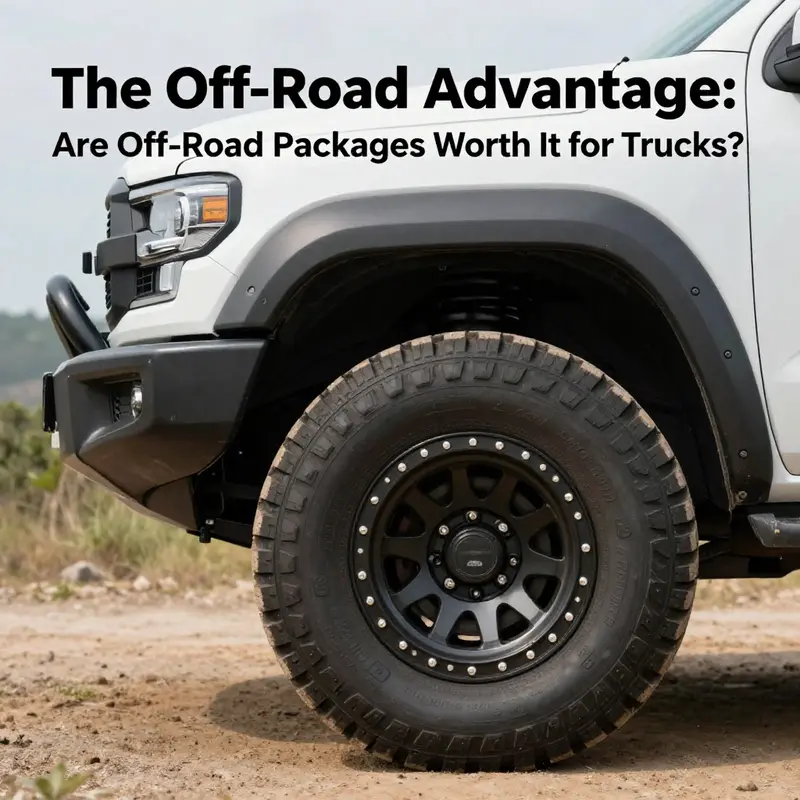
When people consider upgrading a pickup with an off-road package, they often imagine conquering rocky trails, carving through mud, and feeling the road disappear beneath the tires with a confident thud. The promise is compelling: more capability, more control, more resilience in the face of nature’s unpredictable surfaces. But the question behind the sparkle is practical: are these upgrades worth it for trucks that spend most of their time on paved highways or inside the constraints of a daily routine? The answer, as the research notes, hinges on how the truck is used, not just on what the package adds to its spec sheet. Off-road packages are not a universal retrofit that instantly makes a truck better in every scenario; they are a tailored set of tools meant to extend capability where the vehicle would otherwise stall, strip away momentum, or invite damage. In the end, value comes from an honest match between the truck’s built-in strengths and the owner’s actual driving patterns.
A central shift that off-road packages bring is a transformation in how a truck behaves on rough surfaces. This is not only about more ground clearance or a louder exhaust note. It is about a holistic upgrade to the chassis, the tires, and the drivetrain to preserve traction when the surface refuses to cooperate. The upgrade pathway typically includes upgraded suspension components, reinforced rims, heavy-duty tires, protective armor such as skid plates, and in many cases enhanced cooling or reinforced driveline parts. The intent is clear: keep the wheels under control, protect the heart of the truck, and sustain forward progress when the conditions threaten to overpower a standard setup. Yet, with every gain there is a trade-off, and recognizing those trade-offs is essential before handing over the cash.
Suspension and ground clearance are often the most visible benefits of an off-road package. A truck that has upgraded shocks, stronger springs, and reinforced linkage tends to exhibit more controlled body movement over rocks, ruts, and washboard roads. The result is not simply a higher ride; it is a better ability to keep the tires in contact with the ground. If a wheel loses contact for too long, traction collapses and momentum stalls. A stiffer, more capable suspension absorbs impacts that would otherwise reverberate through the chassis, reducing fatigue on the truck and giving the driver more predictability behind the wheel. The difference may be subtle at casual speeds, but it becomes dramatic when a trail steepens, a lull in the surface exposes a hidden rock, or the trail dips into a temporary crater created by recent rain. In those moments, the upgraded suspension acts as a steadying hand, smoothing the ride enough to allow control rather than a reactive scramble to regain it.
Ground clearance remains a critical factor, especially when negotiating off-camber sections, mud, or sand. The extra clearance can prevent the undercarriage from scraping or catching while the tires work to regain traction. It also improves approach and departure angles, which means less chance of dragging front or rear bumpers over obstacles that sit low to the surface. For drivers who frequently encounter rough, uneven terrain, that extra room between the chassis and the ground translates into more confident decision-making. Yet, higher clearance can also alter the vehicle’s center of gravity, potentially affecting handling on paved roads. The result is a trade-off: more capability off road, but a different, sometimes stiffer on-road ride. This is not a universal drawback, but a factor that must be weighed against the driver’s typical routes and comfort with a firmer ride.
Tire selection is another domain where off-road packages influence performance in both obvious and subtle ways. Tires built for off-road work typically employ aggressive tread patterns designed to bite into mud, dirt, and loose gravel. Those benefits are practical: deeper tread can grip where smooth pavement leaves you spinning, and the sidewalls are often reinforced to better resist punctures in rocky environments. The grip gained in loose surfaces is the keystone of traction, and it directly affects how easily a vehicle can accelerate, brake, and maneuver through challenging terrain. The same tires that excel off-road can influence road manners in ways drivers notice more at higher speeds or when cornering on wet pavement. They may produce more road noise, show quicker wear on asphalt, and alter steering feel due to larger contact patches. In short, you gain certainty on the trail but accept a potential toll on daily commutes. This is a classic example of the off-road package’s two-edged sword: increased capability paired with new responsibilities for maintenance and driving discipline.
A well-considered off-road package also commonly includes enhanced drivetrain components. Features such as locking differentials or more capable four-wheel-drive systems help distribute power where it’s most needed, preventing wheel spin when one or more tires lose grip. In practice, this translates to better climbing ability in mud, sand, and uneven ground, and more reliable momentum when obstacles appear as a surprise. The difference can be decisive in difficult sections where the wheel that has the most grip has to carry the load while others are spinning or sinking. The underlying physics are straightforward, but the effect is integrated: the truck becomes more than the sum of its parts, a system designed to sustain forward progress in the face of resistance from the terrain. It is a meaningful upgrade for anyone who embraces the idea of covering real ground rather than simply looking the part of an adventurer.
Protective armor and rugged exterior elements are not merely cosmetic additions; they serve as functional barriers that preserve the vehicle’s essential systems. Skid plates shield the engine, transmission, and transfer case from rocks and debris that would otherwise nick or gouge sensitive components. Rock sliders and reinforced bumpers add armor to lower sections of the body, reducing the likelihood of structural damage when the trail narrows or when a vehicle has to crawl over obstacles. This protective layer helps extend the life of critical components, which can be a compelling return on investment for those who plan long seasons of trail work. Yet, it is worth noting that the addition of protective hardware can add weight, slightly altering dynamics and, in some cases, affecting fuel efficiency and steering feel. Those changes are not catastrophic, but they are real.
The economic and practical calculus of an off-road package, therefore, rests on the match between need and reality. An owner who spends weekends climbing rocky banks, fording shallow streams, or traversing deep ruts will uncover a broad range of benefits. The ability to tackle terrain that would cripple a stock setup translates into real-world time savings, a broader range of destinations, and a stronger sense of control during the ascent or descent. In these circumstances, the investment can be justified not just for confidence, but for the avoidance of getting stranded, which carries its own costs in time, logistics, and risk. On the other hand, a truck used primarily for highway driving, commuting, or light-duty tasks may not justify the price tag or the potential on-road trade-offs. The extra mass, the stiffer ride, and the altered rolling inertia can erode fuel efficiency and raise maintenance costs, without delivering meaningful benefits in the contexts where most driving happens. In a sense, the off-road package is a specialized tool that excels in a defined set of circumstances. If those circumstances are part of a driver’s life, the package earns its keep. If they are not, the value proposition weakens, and a cautious buyer may be better served by a more traditional setup or a selective, as-needed upgrade.
To assess value with clarity, many drivers find it useful to stance their needs in concrete terms. Consider the annual calendar: how many weekends are set aside for rough road exploration, how many miles involve dirt, gravel, or mud, and how often the vehicle must navigate obstacles like ruts, loose surfaces, or steep grades. It also helps to weigh the kind of payload the truck regularly carries and whether the terrain adds additional strain on cooling systems or brake components when fully loaded. If the use case includes frequent tow work through variable terrain or if a job requires consistent access to remote or unpaved areas, the off-road package can yield not only safety benefits but also a more reliable work rhythm. Conversely, if the truck’s role is mostly service calls along urban corridors, school drop-offs, or highway commuting, the incremental improvements in off-road capability may be offset by the realities of daily life—noise, harsher ride, extra maintenance, and higher upfront costs.
It is here that the external and internal references in the broader research landscape illuminate the practical considerations. The research underscores that off-road upgrades are not cosmetic; they are integrated enhancements designed to extend a vehicle’s reach and resilience. The suspension upgrades knit together with beefier tires and protected undercarriage create a system that can adapt to unpredictable surfaces. The drivetrain enhancements are not a luxury but a functional recalibration that ensures power is delivered where it is most needed, even when traction is scarce. The rugged exterior elements—bumpers, plates, sliders—are more than a shield; they enable the truck to approach obstacles with a measured confidence rather than fear of undercarriage damage. These are real, measurable shifts in capability that matter when you actually chase trails rather than simply driving to and from work.
Yet the narrative remains nuanced. The benefits scale with use. For a weekend enthusiast who spends a handful of days a year on rough terrain, upgrading could be an efficient way to expand opportunities without compromising core duties much beyond a modest increase in wear and tear. For a true adventurer, the package becomes a foundational element of the vehicle’s persona and utility, almost a life-support system for navigating tough landscapes. For the casual driver, the calculus leans toward the opposite direction: the investment is less about daily verve and more about a dream of capability that may go untested. In this context, a more measured approach—selective upgrades, or choosing a trim that already leans toward rugged capability with less compromise on daily comfort—could deliver a better balance of value and practicality.
One practical route to clarity is to imagine the truck not as a static instrument but as a system whose parts interact with the road, the weather, and the load. Upgrading the suspension alters how the vehicle carries weight, how it absorbs impacts, and how it sits on the road. It also can influence steering feel and body control at highway speeds. Upgraded tires change the contact patch, alter moment of inertia, and shape braking behavior across surfaces. Differential enhancements change the way power is shared by the wheels when grip is scarce, affecting everything from acceleration to climb performance. The armor and protection change the risk calculus in rough terrain, which in turn influences the driver’s decisions about speed, line choice, and the moment to commit to a difficult passage. Taken together, these components create a more capable vehicle on challenging surfaces, but their benefits are maximized only when the driver’s plans and expectations align with the realities of off-road work.
For readers who want a practical handrail while they navigate this decision, a simple test can help. If your typical trips routinely include terrain that asks the tires to work hard and the drivetrain to stay calm under load, you will likely appreciate the package’s value. If your excursions are occasional at best or are weathered by a constant stream of highway miles with little time spent on unpaved surfaces, the additional cost and the possible on-road compromises may outweigh the gains. In other words, the value of an off-road package is not a universal verdict; it is a personalized assessment grounded in how the truck will actually be used.
To conclude this reflective assessment, the strongest argument in favor of an off-road package is not simply the promise of all-terrain conquest. It is the alignment of the truck’s enhanced durability, traction, and protection with a driver’s lived experience—the number of rough miles, the frequency of off-pavement adventures, and the tolerance for trade-offs in ride, noise, and maintenance. For serious off-roaders, the upgrades are not optional luxuries but critical enablers of capability that translate into reliability and safety in demanding environments. For casual users, the value unfolds more slowly, as the enhanced hardware sits in reserve and the driver must weigh the ongoing costs against the potential for future, perhaps sporadic, off-road opportunities. In the end, the off-road package is a precise instrument: powerful and valuable in the right hands, useful but not essential in others. The decision, like any good off-road plan, should begin with an honest map of where the trail leads and who will be behind the wheel when it’s time to tackle it.
For readers seeking a deeper technical context on how certain maintenance and powertrain considerations can evolve after upgrading, a useful resource is explored in the broader industry discussion. You can explore more about the maintenance and mechanics of larger powertrains at this detailed guide: mastering diesel mechanics: your step-by-step path to success.
As the chapter closes on the practical, grounded reality of off-road packages, the takeaway remains consistent: the right upgrade is not a blanket recommendation but a carefully chosen response to a driver’s landscape. This is what makes the conversation about value so personal and so essential. The goal is not to chase the most rugged badge or to satisfy a cosmetic yearning for aggression, but to secure a vehicle that proves its worth in the exact conditions where it will be used. In those terms, off-road packages deliver tangible benefits when they align with real needs, and they can be excellent investments when the alignment is precise and measured. For others, a lighter touch—perhaps an upgrade to tires or a more modest suspension improvement—can provide meaningful gains with fewer compromises. The road to value, in other words, is not a single turn but a careful, informed journey that matches capability with the road ahead.
External reference for further reading about official model-specific guidance and manufacturer perspectives on off-road capabilities can be consulted for context and depth. This external resource provides an overview of how manufacturers approach off-road packages and how those choices translate into on-trail performance and reliability: https://www.ford.com/vehicles/bronco/
null
null
Final thoughts
Ultimately, the decision on whether off-road packages are worth the investment hinges on your personal driving habits and intended use of your truck. For those who thrive on adventure, tackling rugged terrains, or pushing their vehicles to the limit, the enhancements offered by these packages can elevate your experience significantly. However, if your needs are primarily met by highway driving or light usage, the trade-offs might outweigh the benefits. Delve into your off-roading ambitions, evaluate your budget, and align your truck’s features accordingly to ensure that every ride resonates with your adventurous spirit.