

For off-road enthusiasts and adventurers, the quest for the ultimate vehicle embodies a blend of power, performance, and technological prowess. The Rivian R1T, an electric truck designed for adventure, emerges as a compelling contender in the off-roading arena. As we venture into the nuanced terrain of its capabilities, this analysis will dissect four critical areas: an overview that establishes why the Rivian R1T is a worthy choice, a deep dive into its performance metrics, an exploration of groundbreaking technologies that redefine off-roading, and a comparative analysis with traditional off-road trucks to position the Rivian as a game changer. Join us as we unearth the essence of whether the Rivian R1T rightfully claims its place among the rugged giants of the off-roading realm.
Rugged Power, Quiet Wheels: How the Rivian R1T Redefines Worth in Off-Roading
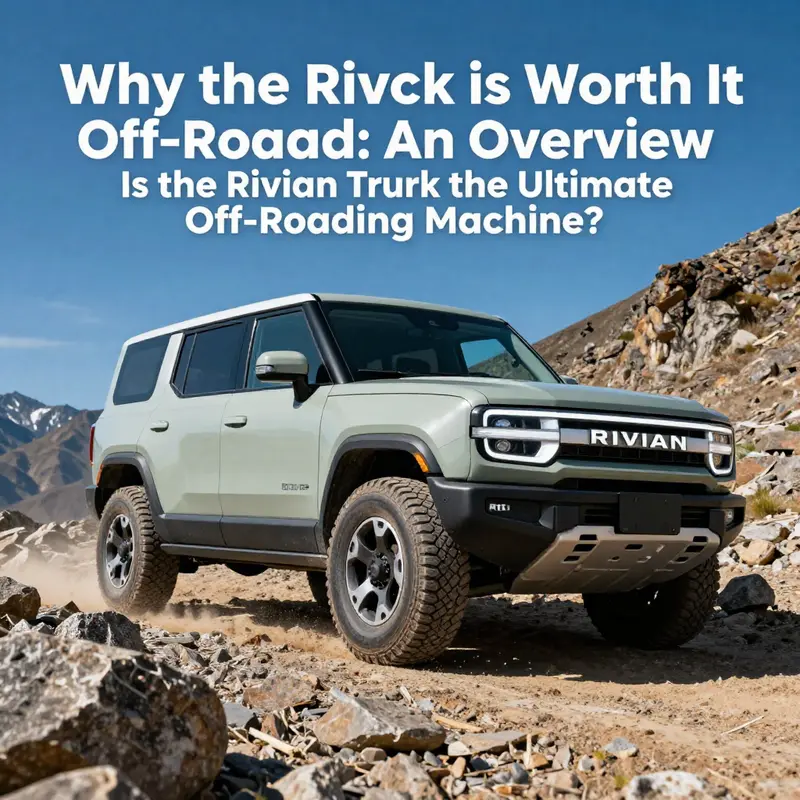
When the trail narrows to a rocky ribbon and the sky tightens overhead, the choice of vehicle can tilt the balance between a slog and a story you tell around the campfire. In that environment, an electric adventure truck designed from the ground up for off-roading doesn’t just compete with gas-powered rivals; it reframes what makes a vehicle worth taking into demanding terrain. The Rivian R1T, especially in its Tri Motor and Quad Motor configurations, stands as a case study in how electric power and rugged design can converge into a machine that excels where the road ends and the real challenge begins. What makes this combination so compelling is less a single headline feature and more a seamless integration of propulsion, chassis control, suspension, and practical expedition capability that keeps confidence high when the going gets gnarly and remote.
From the instant you press the throttle on a steep climb, the R1T delivers a different sensation than a traditional internal-combustion pickup. Torque arrives with immediate authority, a hallmark of electric propulsion that means you don’t chase momentum for traction; you generate it on contact. On technical grades, the ability to modulate torque at each wheel with surgical precision translates to traction where the difference between grip and slip can decide a winch or a walk. In practice, this means the truck can stay planted on loose gravel, mud, or uneven rock where rivals must slow and rethink their line. The Tri Motor arrangement — one motor on each axle plus a third driving the front or rear axle as needed — brings a level of independent control over each wheel that enables a more confident, intuitive feel on terrain that demands finesse as much as power. The Quad Motor setup heightens that sense of command further still, channeling as much as 1,025 horsepower through four wheels and distributing torque with an almost instant responsiveness that makes even off-camber or side-hill maneuvers feel controllable rather than precarious.
The chassis and suspension play a decisive role in that feeling of control. An adaptive air suspension system allows the ride height to rise for rough, rocky sections or lower for stability and efficiency on smoother stretches. This adjustability is crucial when the line between a clean pass and a scrape is a few inches of clearance or a subtle shift in angle. On the technical side, the ability to optimize ride height in concert with four independent motors provides what engineers call torque vectoring: the capacity to prioritize power delivery to the wheel that can most effectively pull the vehicle forward. In rough terrain, that means less wheel spin and more steadfast momentum. The result is not only better traction but also more precise throttle modulation—an essential trait when you’re negotiating a rock face, a rutted trench, or a dune spine where a sudden surge or lull in power can make the difference between a confident crawl and a stall.
If you’ve ever wished for a vehicle that can adapt its personality to the trail without requiring a separate tool set or a break from the driving seat, the R1T’s off-road modes begin to answer that wish. Rock Crawl, for instance, tunes power delivery and chassis responses to smooth out the most stepwise obstacles, letting a driver pick a line with the calm that only comes from knowing the vehicle will follow that line without overreacting. Baja mode, by contrast, disciplines throttle response and suspension damping to handle fast, open-descent situations, where high-speed control matters as much as low-speed precision. The engineering logic here is straightforward: the drivetrain, chassis, and software aren’t operating as a disparate triad; they’re a coordinated ensemble that makes the vehicle predictably capable rather than adjustable only through trial and error. That synthesis is what turns a long, technical off-road session into a sequence of controlled, repeatable decisions rather than improvisation born of uncertainty.
The R1T’s approach, breakover, and departure angles are not mere marketing numbers; they reflect a philosophy about how a vehicle should interact with geometry on real trails. Steep ledges, rock shelves, and uneven roll angles demand an approach that won’t prematurely throttle the vehicle or reduce traction. The front and rear overhangs have been balanced in a way that minimizes the risk of getting hung up on a rock or a stump while clawing toward a crest. The breakover angle, the line where the undercarriage meets a peak before descending the opposite side, is part of the same logic: the design attempts to keep the underside clear of obstacles, enabling smoother progress rather than a sudden bottoming out. In practice, drivers can focus more on choosing the best line and less on fearing a bottom-out halt at a critical moment.
But the story doesn’t end with raw capability. The Quad Motor specification adds a new dimension of control and composure when the terrain gets extreme. With up to 1,025 horsepower distributed across four wheels, you gain the ability to maintain momentum in shifting sand, wet woodland tracks, or slick slabs without chasing a single perfect gear. The increased power is paired with highly durable tire hardware — 22-inch staggered Michelin Pilot Sport S5 tires in the Quad Motor configuration — designed to deliver grip while resisting punctures and heat buildup in demanding conditions. This is not merely a case of brute force, but a more nuanced balance of traction, damping, and wheel control that remains manageable for a driver who respects the road or trail, even when the surface is deceptive or slippery.
Durability is a thread that runs through the R1T’s off-road promise. The electronics are fully sealed, which matters when you’re crossing water crossings or passing through fine dust at speed. Sealed electronics are not a marketing flourish; they’re a practical response to the reality that off-road environments aren’t tidy. When you combine that rugged electronics with a chassis designed to handle rough terrain and a drivetrain calibrated for angles and traction, you end up with a vehicle that inspires confidence rather than fear when the weather takes a turn or a trail turns tricky. This reliability matters most when you’re miles from the nearest charging point or repair shop and you want to spend your time exploring rather than worrying about the truck.
The practical needs of off-road adventure extend beyond propulsion and chassis to everyday expedition life. Rivian has designed the R1T to be a capable basecamp on wheels, with built-in gear that suits the kind of trips where you sleep under the stars or cook meals in a remote setting. Options like a rooftop tent and a portable camp stove transform the vehicle into a mobile basecamp, while a smart storage system helps organize gear so you’re not rummaging through crammed bins after a long day on the trail. The idea here is straightforward: a truck that can run deep into the backcountry should also help you live there for a while, not just drive there and back.
From a sustainability perspective, the R1T offers a zero-emission alternative that doesn’t force a trade-off with capability. Electric power in this context doesn’t cancel the thrill of off-roading; it enhances it by removing exhaust heat, reducing vibration, and delivering consistent torque across diverse surfaces. The absence of engine noise in slow-motion climbs can even alter how you experience off-road landscapes, letting you focus on line choice and terrain feedback rather than engine sound. If amenities and gear matter for extended trips, Rivian’s ecosystem — including rooftop camping options and a modular storage approach — helps the vehicle double as a seasonal or multi-day expedition platform rather than a one-trip machine.
Crucially, the R1T’s off-road appeal sits atop a broader infrastructure strategy that matters to any serious explorer. Infrastructure isn’t glamorous, but it is essential. Rivian’s commitment to a growing network of charging options in remote and scenic locations aligns with the off-roading lifestyle, where long distances and isolated pockets of terrain are routine. The idea is to minimize range anxiety by providing reliable, predictable charging options near wilderness routes and in park-adjacent areas, so drivers can plan longer trips with the assurance that a recharge won’t force a shortcut or a frustrating backtrack. That combination — a capable off-road vehicle and a credible charging network — is what makes the R1T more than a novelty in the eyes of many outdoor enthusiasts.
For readers who want to explore how infrastructure is evolving and what it means in practical terms, there is a relevant resource that examines electric charging networks and their implications for off-road travel and public safety. electric-fire-truck-charging-infrastructure offers a broader view of how charging ecosystems are developing to support diverse electric vehicle use cases beyond urban commuting, including the needs of rugged, long-range trips and emergency response contexts. This linkage underscores a larger point: the off-road experience isn’t just about what a vehicle can do in a controlled test, but how it fits into a network of support that makes long, adventurous trips feasible rather than fragile adventures.
In sum, the R1T earns its place in a category of vehicles that aren’t merely capable on a trail but confident and reliable in the demanding, unpredictable environments that define off-roading. The Tri Motor setup provides precise, adaptive control through a sophisticated torque-vectoring framework that helps a driver place power where it’s most effective. The Quad Motor configuration amplifies that capability with more power and more wheel control at the same time, delivering a degree of performance that makes challenging terrain feel approachable rather than intimidating. The adaptive suspension and robust underbody protection translate that capability into a practical certainty: a vehicle that handles rock gardens, muddy ascents, and sandy backroads with poise while offering a livable, well-thought-out interior and external equipment that suits extended wilderness trips. The end result is not merely the ability to go farther; it’s the ability to plan more ambitious routes, to pursue longer explorations with less downtime, and to do so in a way that aligns with a sustainable, modern approach to outdoor adventure. That combination — capability, reliability, and a thoughtful, expedition-ready design — is precisely what makes the Rivian R1T a compelling option for off-roading enthusiasts who want more than raw horsepower and who value a coherent, long-haul capability that matches their passion for rugged places.
External resource: https://www.rivian.com/r1t
Turning Metrics into Trail Triumphs: Decoding Rivian’s Off-Road Performance for Real-World Worth
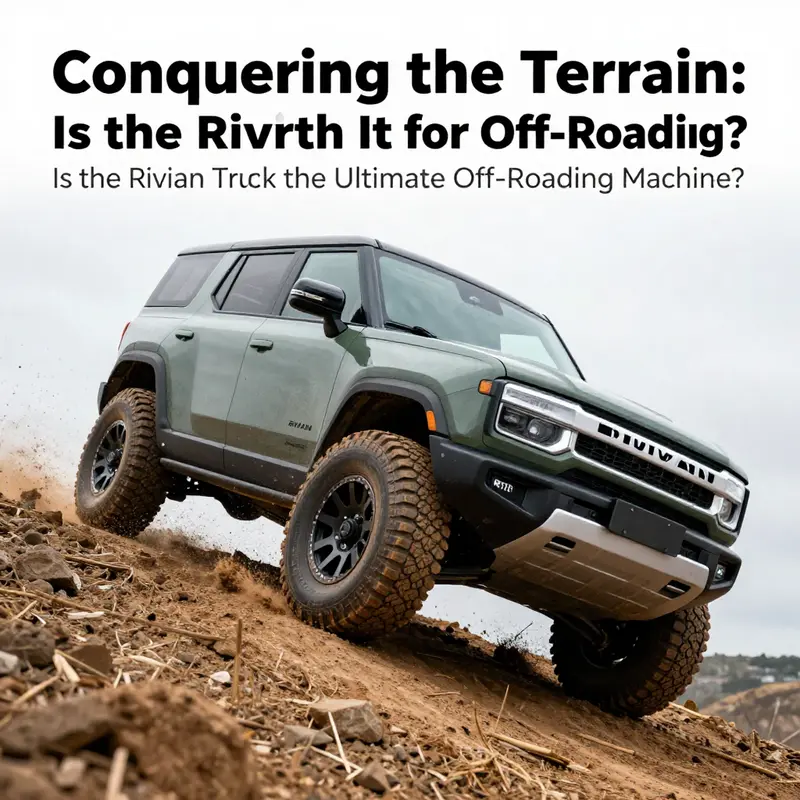
When you look at a truck engineered for adventure, the numbers matter, but they don’t tell the whole story. In off-road work and play, traction, control, and resilience often outrun sheer horsepower. The Rivian R1T embodies that idea. It doesn’t merely sprint through dunes or claw up shale; it absorbs harsh terrain with a steadiness that comes from a purpose-built electric drivetrain. In this chapter, we explore how the actual performance metrics translate into practical capability, and why those numbers matter when you’re planning big adventures off the beaten path.\n\nThe centerpiece for any off-road evaluation is torque and power, because torque is what gets a vehicle moving from a standstill and keeps it moving over obstacles. The R1T delivers a staggering 800 horsepower and 830 pound-feet of torque from its electric motors. That instant torque, available from a standstill, provides immediate traction to break free from slick rock or soft mud, where traditional internal-combustion engines often struggle to deliver usable torque at the right moment. But raw numbers are only part of the story. The electric powertrain in the R1T is meticulously distributed across the wheels, with independent motor control at each axle. This arrangement enables precise torque vectoring, allowing the truck to apportion power to the wheels that have the best grip at any moment. It’s the kind of capability that translates into smoother climbs, cleaner line choices on uneven terrain, and reduced wheel slip when the surface underfoot is uncertain.\n\nRivian built the drivetrain with two primary configurations that have become central to its off-road persona. The Tri Motor setup places a motor on each wheel of the rear axle and one on the front axle, delivering balanced traction and robust torque delivery across the entire chassis. For those who want even more, the Quad Motor variant uses four independent motors, one per wheel, with power output that can approach or exceed a thousand horsepower when conditions permit. This level of per-wheel control underpins the vehicle’s ability to keep chassis pitch, yaw, and attitude within a predictable envelope even when the surface changes abruptly beneath a tire. The upshot is a vehicle that can stay planted where you point it, even when the line you’re choosing looks like it should be a slide.\n\nGround clearance and suspension play a complementary role in how the metric-laden drivetrain performs in real life. The R1T’s ground clearance sits around 12 inches, which is generous for an all-electric pickup and opens the door to more aggressive wheel travel without the risk of underbody contact. There is also an option for lift adjustments, enabling a higher stance for rock crawls or a lower ride for highway efficiency. Beyond clearance, the adaptive air suspension works in concert with the motor layout to keep tires in contact with the ground as landscape changes—whether you’re negotiating a jagged rock field, a soft sand bed, or the edge of a muddy rut. In practice, this means the suspension can raise to clear obstacles or lower to improve aerodynamics and reduce drag on easier sections of the trail, all while preserving the ability to quickly rebound when the terrain raises a wheel in the air.\n\nOff-road modes are the bridge between raw metrics and practical capability. The R1T offers a suite of drive modes designed to tailor throttle response, brake pressure, and suspension behavior to the terrain at hand. Rock Crawl is a favorite for stepping over rough, angular obstacles with careful torque management. Mud and Sand modes tune the traction systems to minimize wheel spin and maximize the chance of cleanly crawling through viscous surfaces. Snow mode helps keep the vehicle from breaking traction on slick surfaces by modulating power and braking in a way that maintains control. And for more aggressive, open-terrain pursuits, Baja-like behavior in certain configurations encourages a more aggressive throttle and chassis response for fast, stable travel over uneven ground. The result is a system where the driver’s intent is translated into precise, predictable vehicle behavior, even when the trail refuses to stay flat.\n\nGround clearance and approach angles matter here as well. The combination of substantial ride height and well-engineered approach, breakover, and departure angles means the R1T can tackle steeper entry ramps, bigger ledges, and more abrupt transitions without the undercarriage becoming a liability. That combination matters because the moment you drop into a shallow crevice or crest a rock ledge, you’re relying on geometry and chassis attitude as much as you are on traction. When a truck can manage those angles with confidence, the driver is free to focus on line choice and throttle input rather than babysitting the chassis through each obstacle.\n\nAnother critical point is the vehicle’s weight. The R1T tips the scales at more than 7,000 pounds, a figure that might alarm a pavement-pounding enthusiast but, in the off-road arena, translates into stability and traction. The mass helps the tires stay planted on uneven surfaces, aids in carrying momentum through rough sections, and provides a sensing resistance that makes the truck feel planted rather than skittery. It’s a different relationship with weight than you’d find in a light, agile sand rail; here, the weight becomes a tool that works with the powertrain rather than against it, provided the suspension and tire setup can keep the contact patches engaged.\n\nThe tire package on the Quad Motor iteration deserves its own emphasis. The 22-inch staggered Michelin Pilot Sport S5 tires deliver not only grip but also a degree of rugged durability that lets you press into rough terrain without the fear of quickly puncturing a sidewall. While the tires are not a single magic bullet, their combination with the dual-axle torque vectoring and the wide range of off-road modes creates a system that can handle everything from fast desert traverses to slow, deliberate rock crawling with equal poise.\n\nWater fording is another practical measure of off-road readiness, and the R1T’s capability here extends the vehicle’s reach into rivers or rain-churned streams where many trucks would hesitate. A water fording depth of up to about three feet gives the driver confidence to cross shallow bodies of water without the immediate need to scout a longer detour. The confidence doesn’t end there; Rivian’s rugged exterior and waterproofed electronics reinforce the truck’s ability to survive in harsher environments where moisture and dust would challenge conventional trucks. The combination of a sturdy shell and well-sealed internals is essential when you’re spending days away from a charging station and a repair shop.\n\nBattery and endurance considerations also come into play in the off-road equation. The R1T features what Rivian framed as Adventure Mode, a mode that optimizes not only power delivery and vehicle dynamics but also battery management to extend excursion range. The practical effect is a vehicle that can be pushed harder for longer than a typical electric pickup when the driver’s priorities tilt toward exploration rather than efficiency on pavement. This is not just about a higher top speed or more brutal acceleration; it’s about maintaining a usable range while exploring remote landscapes, where every mile could be a test of stamina for both the driver and the vehicle.\n\nFrom a performance standpoint, the Rivian R1T holds its own against formidable competitors in off-road scenarios. Real-world testing has shown that the combination of independent motor control, robust torque, and advanced suspension can translate into traction advantages on challenging terrain. In some off-road tests, the Rivian outperforms even capable rivals in certain settings, underscoring that this is more than a marketing story about electric propulsion. The vehicle’s architecture is purpose-built for the terrain, and the metrics reflect that intent in a tangible way—acceleration that doesn’t abandon control, traction that doesn’t wander, and a chassis that remains predictable as the landscape disagrees with your path.\n\nFor those who want to see how these dynamics play out in a structured comparison, a widely watched test video from an independent reviewer offers a direct look at how the Rivian R1T can hold its own against a high-powered internal-combustion truck on off-road terrain. The video demonstrates how weight distribution, torque, and tire grip interact across a range of obstacles, highlighting the practical implications of the numbers discussed here. Watching such a test helps translate the raw specifications into a sense of what it feels like to drive the truck through a rocky pass or across a sand bed, rather than simply reading about the figures on a spec sheet.\n\nBeyond the numbers and the on-paper capabilities, the Rivian R1T signals a broader shift in how off-road performance is defined. The vehicle’s architecture emphasizes control, resilience, and a system-level approach to terrain mastery. It’s not just about raw horsepower; it’s about how the drivetrain, suspension, tires, and software work in harmony to deliver predictable behavior when the trail throws what it has at you. This is why many enthusiasts view the R1T not as a novelty but as a credible platform that redefines what an electric pickup can do off the road. The integration of features such as dedicated off-road modes, a robust suspension system, and a battery management strategy tailored for long outings makes the R1T a compelling option for those who demand both capability and reliability when the map ends and the wild begins.\n\nIf you’re evaluating whether the R1T is worth it for serious off-roading, consider how you plan to use the vehicle in the years ahead. The numbers—800 horsepower, 830 pound-feet of torque, independent wheel motors, and a sophisticated suspension—are not merely impressive on a dyno; they’re tools designed to keep you moving on terrain that would stall a standard truck. The ground clearance, water fording potential, and the careful tuning of off-road modes provide a practical framework for managing the unpredictable landscapes you’ll encounter. And while the weight and energy requirements of a heavy, purpose-built electric truck present a different kind of trade-off than you’d find in a lighter fossil-fuel-powered rig, the overall package is oriented toward sustained, controlled capability rather than short bursts of speed.\n\nIn the end, the question isn’t just whether the numbers are high; it’s whether those numbers, in concert with the truck’s overall engineering, deliver a real-world advantage when you’re inches from a rock, a rut, or a river. The Rivian R1T, especially in its Tri Motor and Quad Motor configurations, demonstrates that it can be more than a museum of impressive stats. It can be a living, breathing off-road platform that handles rough terrain with confidence, supports long excursions with practical energy management, and offers a driving experience that aligns with the demands of serious enthusiasts. For off-roaders who want a vehicle that combines modern electric technology with rugged capability, the R1T stands out as a credible, compelling option that’s worth considering as a serious investment in adventure.\n\nTo situate this in a broader industry context, note how the conversation around electric off-road platforms has evolved. The shift toward rugged, purpose-built electric platforms is not isolated to passenger pickups. Industry developments in heavy equipment and specialized off-road vehicles reflect a trend toward electrification that emphasizes reliability, modularity, and resilience in demanding environments. This broader arc highlights how a truck like the R1T fits into a longer storyline of electrification transforming off-road performance across vehicle classes. For readers who want to explore related industry shifts, a cross-reference to how heavy equipment manufacturers are embracing electric propulsion can offer additional perspective on the momentum behind these design choices. And for a broader sense of how the electric transition is shaping the landscape of rugged, off-road capable vehicles, consider this cross-industry perspective: Volvo electric construction equipment revolution, which illustrates how heavy-duty electrification is becoming more commonplace and accepted in rugged environments. Volvo electric construction equipment revolution.\n\nIn terms of real-world testing and verification, the Rivian R1T’s performance has been demonstrated and scrutinized through independent evaluations that push the vehicle through its paces in off-road conditions. These tests underscore the practical implications of the vehicle’s core metrics and offer a grounded view of how the truck behaves when confronted with rocks, water, and loose surfaces. While each test can present a slightly different scenario, the overarching theme remains consistent: when driven with an understanding of its strengths and limits, the R1T’s combination of power, traction, and chassis control can translate into real trail capability that feels deliberate and manageable rather than reactive or risky. This is the heart of why the R1T is often described as a credible, compelling option for off-road enthusiasts seeking both performance and a forward-looking technology platform.\n\nFor readers who want a more visual, empirical sense of how these elements come together in practice, there is a widely referenced test video that pits the Rivian R1T against a strong internal-combustion rival in an off-road challenge. The video offers a concrete demonstration of how the truck’s torque distribution, tire grip, and adaptive suspension interact in real-world terrain, providing a clear, accessible reference point for understanding the translation from specs to trail performance. Watching such a video can complement the metrics described here by giving a sense of cadence, control, and line choice that numbers alone cannot fully convey.\n\nUltimately, the question of value rests on what you want out of off-road experience. If you prize instant torque, precise traction control, and a robust, weatherproof chassis that can handle deep ruts, rocky climbs, and river crossings, the Rivian R1T’s performance package makes a strong case for itself. The Tri Motor and Quad Motor variants extend the capabilities even further, offering more power and even greater control across the most demanding landscapes. If your adventures demand long-range confidence, a battery management system tuned for extended trips, and a vehicle that can absorb terrain roughness without destabilizing, the R1T aligns closely with those priorities. The result is not just a collection of impressive specifications, but a cohesive, real-world capability that strengthens the argument: yes, for dedicated off-road use, the Rivian R1T is worth it.\n\nExternal resource: For a practical, comparative look at how the Rivian R1T handles off-road challenges in real-world testing, watch The Fast Lane Truck’s Rivian R1T vs. Ram TRX off-road challenge. https://www.youtube.com/watch?v=6jJZfS4QvYI
Trail-Wise and Power-Ready: The In-House Tech That Elevates Off-Road Worth in a Modern Electric Adventure Truck
The modern electric adventure truck redefines what it means to be capable off the pavement. It is not only about raw torque or a long battery range; it is about how a vehicle interprets a trail, responds to sudden changes in terrain, and keeps a driver confidently oriented when the world narrows to treads, dust, and unexpected ruts. The center of gravity on a platform designed for rugged travel is the integration of purpose-built hardware with an in-house software stack that treats terrain as data to be understood, predicted, and negotiated. This synergy turns off-road voyages from tense calculations into a conversation between machine and human, with the vehicle continually translating sensor input into precise, stabilizing actions. In this sense, the value of such a machine for off-roading rests less on a single flashy feature and more on a comprehensive system of processing, perception, and adaptive behavior that speaks to the needs of explorers who push beyond familiar trails.
At the heart of this transformation is a homegrown processing unit designed to be the primary brain behind driver assistance and, in time, autonomous capabilities. This in-house silicon is paired with software that moves at the pace of the trail—fast enough to interpret subtle rock edges and-shadowed washouts, slow enough to ensure stability in the face of sudden wheel lift. The result is real-time decision-making that informs throttle modulation, braking, and steering with a confidence previously reserved for simulation. Because the processing is designed from scratch for this purpose, it can optimize not only how power is distributed to each axle but how the chassis, suspension, and damping respond to changing contact with the ground. Torque vectoring, traditionally the domain of performance cars, becomes a tool for maintaining traction on uneven rock, mud, or sand, enabling the driver to steer the vehicle through trouble with a calm sense of control rather than reactive scrambling.
This intelligent platform does not operate in isolation. It relies on a streaming of sensor data that paints a live, high-definition map of the vehicle’s surroundings. A real-time video stream from multiple cameras forms a kind of digital nervous system, letting the driver see what lies just over a crest or behind a bush line with unprecedented clarity. The streaming backbone is built to deliver low latency, so the vehicle’s perception and decision-making remain in near-sync with the driver’s expectations. In practical terms, this means the driver can anticipate a hidden rut or a slippery shale patch before the front tires encounter it. The emphasis here is not on a single spectacular feature but on the continuity of awareness—an ongoing loop that blends sensing, processing, and feedback into a seamless trail experience.
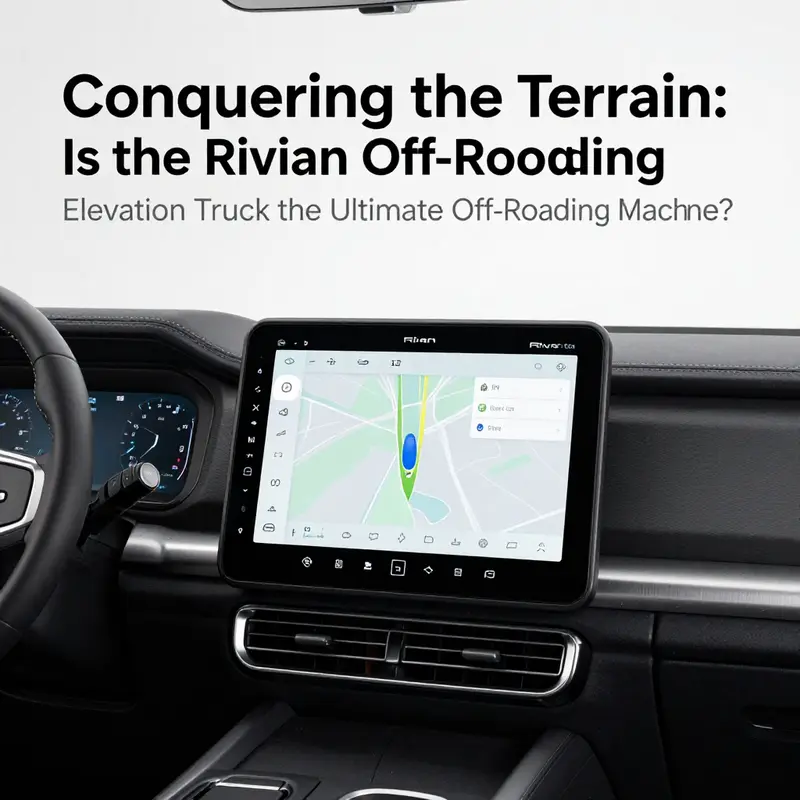
A modern off-road driver interface further reinforces this loop by providing an intuitive, immersive center of gravity for vehicle management. The evolved software architecture functions like a central nervous system, coordinating powertrain management with climate control, chassis dynamics, and the driver’s preferred interface. This cohesion matters because off-roading is as much about endurance and comfort as it is about speed and bravado. Drivers may be negotiating a long, exposed ridge or a series of rough whoops; the on-board software ensures cabin temperature, seat comfort, and instrument readability do not distract from the terrain. An advanced AI assistant supports hands-free interaction, allowing the driver to adjust vehicle settings, request route information, or select a drive profile while keeping hands and eyes on the trail. The effect is a more natural, less interruptive experience—one where technology serves as a capable co-pilot rather than a source of friction.
Beyond perception and control lies a growing emphasis on perception redundancy and environmental understanding. The next generation of sensing adds a laser-based 3D mapping capability that complements traditional camera and radar inputs. This perception enhancement creates a richer and more reliable understanding of the vehicle’s surroundings, delivering precise distance measurements and a three-dimensional representation of nearby obstacles. In practical on-trail terms, this kind of redundancy translates to better performance when the forest closes in, roots protrude from the trail, or the sun drops into a gully and shadows distort camera visibility. The goal is not to replace the driver’s intuition but to expand it with reliable, high-fidelity environmental data that remains robust under challenging lighting and weather conditions. The added redundancy is a crucial element for safety and confidence when the vehicle is far from paved infrastructure and the pace of decision-making is only as good as the data feeding it.
In tandem with sensing, the vehicle’s rugged design contributes directly to off-road resilience. Electronics are sealed against water and dust, and the system architecture is built to tolerate the shocks and vibrations of rough terrain. A full-size spare tire in the rear, a robust exterior, and a layout that preserves critical accessibility in remote settings are practical expressions of this readiness. The hardware choices converge with software to deliver a durable, dependable platform that does not demand compromises on a long expedition. When the trail demands long stretches between services or crossings of remote waterways, the assurance that the vehicle remains operable—electronics protected, powertrain responsive, and controls predictable—becomes a defining factor in whether a journey continues or ends prematurely.
All of these capabilities cohere most clearly in the vehicle’s approach to power and torque delivery. The multi-motor configurations—designed with independent motors on each axle—bring a level of torque vectoring and traction control that is hard to emulate with a traditional internal-combustion drivetrain. The logic is straightforward in concept: if a wheel finds grip in one corner of the vehicle while another wheel loses traction, the system can adjust torque to reestablish propulsion where it matters most. This capability is especially valuable on mixed surfaces—rocky ledges, fine sand, or slippery clay—where maintaining forward momentum without abrupt throttle input is essential to prevent wheel spin or a stall. The result is a more forgiving, more confident ride when the driver faces off-road challenges that would otherwise require a more conservative pace or a different vehicle.
Of course, off-road proficiency in this class of electric truck is also linked to gearing, ground clearance, and geometry. The chassis is tuned to accommodate high ground clearance and generous approach, breakover, and departure angles, enabling the vehicle to climb over obstacles without catching its undercarriage. In practice, that means a driver can choose a line that keeps weight balanced and tires in contact with solid ground rather than dancing around mid-ridge. When combined with adaptive suspension and a range of off-road profiles, the vehicle can tailor its behavior to the trail, switching from a calm, composed crawl across jagged rocks to a more aggressive, controlled charge up a dune or dry riverbed. The objective is not only to conquer obstacles but to do so with a sense of predictability that reduces the cognitive load on the driver.
The deeper value proposition here is architectural: a vehicle designed from the ground up to be more than a mode of transport. The hardware and software are inseparable parts of a single system intended to grow with the vehicle. The driver’s experience is not a static set of capabilities but a living interface that learns preferences, improves response times, and expands the range of environments in which off-road adventures feel safe and enjoyable. The emphasis on software-driven adaptability means that future updates can refine how the vehicle handles extreme traction scenarios, battery management during long expeditions, and the user’s interaction with the vehicle’s systems. Rather than being a static solution focused solely on power, this approach treats the vehicle as a dynamic partner, capable of evolving in step with the driver’s ambitions and the changing demands of the trail.
In that sense, the value proposition extends beyond the thrill of conquering a harsh trail. It includes the quiet reliability of a platform that knows when to conserve energy on a long descent, how to maintain cabin comfort during a cold, exposed canyon crossing, and when to switch into a mode that optimizes the balance between performance and efficiency. The combination of an in-house brain, advanced perception, robust connectivity for real-time situational awareness, and a software-driven cockpit that can adapt to the driver’s needs makes the vehicle compelling for serious off-road use. The result is a capability that is not merely about speed or bravado but about consistent, controlled performance across a broad range of terrains and conditions. For enthusiasts who want to push farther, explore longer, or simply enjoy a higher degree of confidence on demanding trails, this integrated approach offers a meaningful difference.
As the trail evolves, the vehicle’s technology evolves with it. The trend toward deeper integration of sensing, processing, and intelligent control points toward a future where off-roading becomes a more collaborative experience between man and machine. It is less about replacing a driver’s skill and more about extending it—providing timely information, safer margin, and a more predictable environment in which to test personal limits. That is the essence of the off-road value proposition in this class of electric adventure trucks: a practical, enduring partner on the trail that helps explorers do more with less risk, while remaining adaptable enough to meet the evolving demands of the terrain.
For readers who are curious about the broader implications of electrified, tech-forward platforms in other demanding sectors, consider how the same engineering principles are reshaping fields like heavy-duty construction equipment. The shift toward electric propulsion, integrated sensing, and holistic software ecosystems is part of a wider movement that emphasizes reliability, real-time decision-making, and resilience under stress. This cross-pollination helps explain why off-road driving feels different today: it is less about brute force and more about the disciplined, data-driven handling of uncertainty. To see a related discussion on how electric systems are transforming heavy equipment and the implications for field operations, explore Volvo electric construction equipment’s evolving approach to the job site and beyond. https://dirtantrucks.com/volvo-electric-construction-equipment-revolution/
On a practical level, what matters most to the off-road enthusiast is the steady fusion of capability and confidence. The multi-motor architecture, the in-house processing, the enhanced perception, and the intuitive software stack come together to deliver a more assured, more capable ride through rough country. It is not merely a matter of bragging rights or a checklist of numbers on a spec sheet; it is the tangible sense that the vehicle is listening to the trail as a partner would, anticipating changes in surface and load, and responding with controlled, purposeful action. That is the core value that justifies the time, effort, and resources invested in such a platform. It is a coherent experience built for real adventures, not a parade of demonstrations on a paved lot. For the reader seeking a broader perspective on how driver assistance and automation are being woven into off-road experiences—and what that implies for future choices—see the external resource on advanced driver assistance systems, which offers a concise overview of how such technologies are evolving across vehicle categories. https://nhtsa.gov/technology-innovation/advanced-driver-assistance-systems
null
null
Final thoughts
The Rivian R1T stands not only as a formidable contender in off-roading but also as a revolutionary step forward in the integration of electric technology into rugged terrain navigation. Its impressive specifications, specialized off-road features, and dedicated engineering position it as an ideal choice for adventurers and off-road enthusiasts alike. As traditional trucks begin to blend with electric innovations, the Rivian R1T exemplifies this transition with its unique blend of power, durability, and groundbreaking technology. Whether conquering rocky paths or easing through muddy trails, the Rivian R1T provides assurance—it’s a vehicle that’s not merely worth it; it redefines what an off-roading adventure can be.