
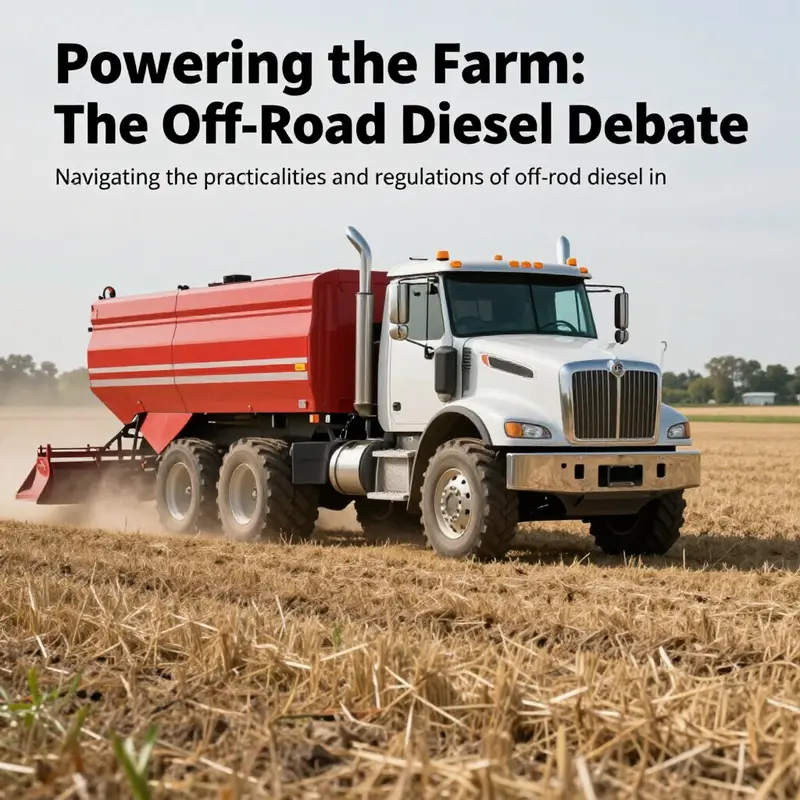
In the rugged landscapes of rural America, where the dirt meets determination, the farm truck stands as a symbol of agricultural strength and innovation. As landowners and operators, it’s crucial to harness every advantage available, including fuel choices that optimize performance and cost. Off-road diesel – a cheaper, dyed variant designed for non-road use – has emerged as a controversial yet intriguing option for farm trucks. This exploration delves into several critical dimensions: Chapter 1 investigates the legal considerations of using off-road diesel, ensuring operators remain compliant within regulations. Chapter 2 examines the environmental impact associated with this fuel type, informing responsible choices. Chapter 3 highlights the economic benefits that come with its use in agricultural operations, showcasing why many farmers might opt for this fuel. Finally, Chapter 4 offers practical applications, illustrating how off-road diesel can be effectively integrated within the daily workings of farm trucks. Together, these chapters will provide a comprehensive understanding, equipping readers with knowledge to navigate the intricacies of off-road diesel usage.
Navigating the Red Line: Legal Risks and Practical Rules for Using Off‑Road Diesel in a Farm Truck
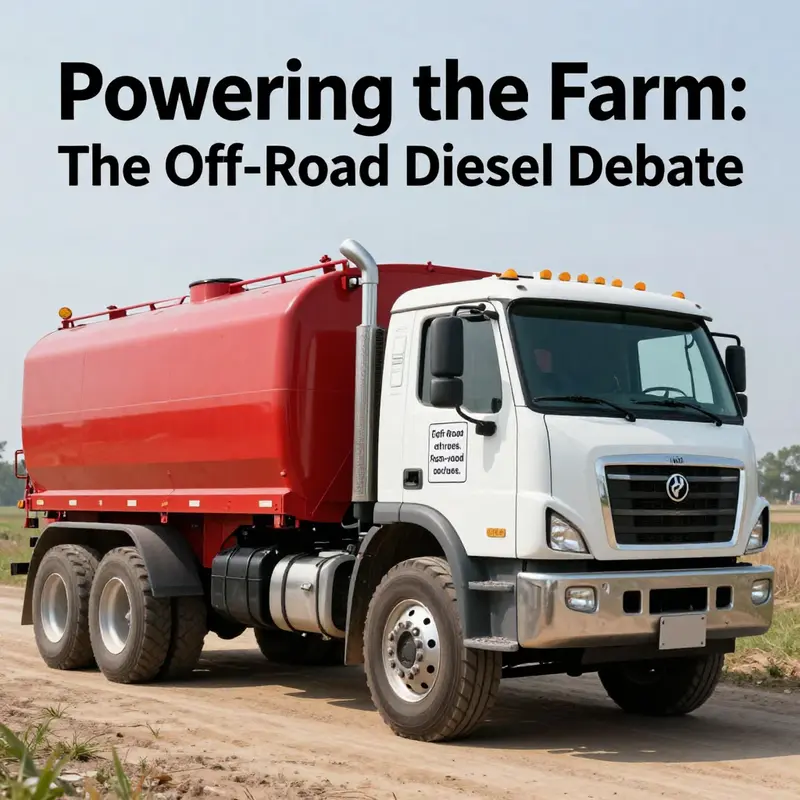
Using off‑road diesel in a farm truck is simple in practice, but legally complex. The fuel itself is chemically similar to on‑road diesel. The difference that matters is tax status, dye, and intended use. Red‑dyed diesel exists to make sure non‑road equipment gets taxed differently than highway vehicles. That distinction drives the rules you must follow. If your truck crosses public roads at any time, those differences become critical.
The core legal principle is straightforward: off‑road diesel is reserved for equipment that never operates on public highways. Agencies enforce this rule because tax revenues fund roads and related services. When a vehicle that should pay highway fuel tax runs on red diesel, authorities treat it as tax evasion. Enforcement can be aggressive. Inspections, roadside checks, and audits examine fuel samples and usage logs. The red dye gives inspectors a fast, visible signal. If red dye shows up in a vehicle observed on a highway, the legal consequences can be severe.
Fuel taxation regulations are the backbone of enforcement. In many jurisdictions, off‑road diesel is taxed at a lower rate. The reduced rate reflects that the fuel is not intended for road maintenance funding. That lower tax is not a discount for individual operators. It is a specific allocation for non‑road uses such as tractors and generators. Using red diesel on public roads bypasses the tax system. Federal and state agencies, such as revenue departments and environmental regulators, coordinate to identify misuse. Penalties can include steep fines, back taxes, and criminal charges in egregious cases. The financial risk alone justifies careful compliance.
Practical indicators matter as much as statutes. The most obvious marker is the dye itself. Red dye is applied to off‑road diesel to aid detection. A visible red hue gives law enforcement probable cause to investigate. If pulled over or inspected, a driver or owner must explain why red diesel is in a vehicle observed on a highway. A consistent, defensible operational practice helps. For example, a dedicated farm truck that stays inside a property perimeter and never crosses public roads can legitimately carry red diesel. But even short, occasional trips to a nearby scale, feed store, or market change the calculation. Regulators focus on actual use, not intent.
Vehicle registration is another hinge point. A truck registered for highway use must typically use on‑road diesel. Registration ties a vehicle to road use rules and tax obligations. If you plate and insure a truck for public roads, you accept highway regulations. Conversely, unregistered farm equipment or vehicles legally classified as off‑road may use red diesel. Some states offer special agricultural tags, limited to farm work and defined local travel. Those special registrations often come with conditions. Read them and follow them. If you convert a vehicle from farm‑use to road‑use, update its registration and fuel practice accordingly.
There are limited exceptions and administrative pathways. Some states allow agricultural vehicles limited road access under permits or farm plates. These authorizations let a vehicle cross a public roadway for specific short trips. Even then, the fuel requirement may still mandate on‑road diesel for permitted road travel. The permit paperwork, mileage restrictions, and defined routes matter. Keep copies of permits with the vehicle. When in doubt, get written clarification from the DMV or state fuel tax authority. Paperwork can prevent disputes during an inspection.
Recordkeeping is the practical shield against misunderstandings. Accurate logs of fuel purchases and vehicle movements reduce exposure. Keep invoices that show the type of diesel purchased. Maintain trip logs that document off‑road operations and any permitted road crossings. If an auditor questions your fuel use, clear records shorten the process and reduce penalty risk. Drivers should be trained to document any instances of highway travel. A simple ticket or brief deviation can escalate if it appears systemic.
Beyond taxes and dye, modern emissions systems add another legal layer. Newer trucks include advanced emissions controls tied to specific fuel types. Some additives or sulfur levels in off‑road diesel can interfere with those systems. That interference can trigger regulatory scrutiny under environmental laws. While red diesel is typically ultra‑low sulfur like on‑road diesel, subtle differences remain. For a fleet with newer engines, consult a diesel mechanic familiar with emissions systems before regular use of off‑road fuel. For practical troubleshooting and system maintenance, resources on diesel mechanics are useful; consider reading a comprehensive guide to maintenance and repair practices to keep emissions systems compliant and functioning.
Enforcement scenarios vary, but common outcomes are predictable. If an inspector finds red dye in a truck observed on a highway, expect one or more of the following: fines calculated per gallon of red diesel used on public roads; assessment of unpaid highway fuel taxes; seizure or impoundment in serious cases; and potential criminal charges for deliberate evasion. Penalties escalate with intent and scale. An honest operator who made a paperwork mistake will typically face civil enforcement. A deliberate, repeated effort to use red diesel on highways may lead to criminal prosecution. Treat red diesel like a combustible legal issue: avoid shortcuts, follow rules, and keep records.
Practical compliance boils down to three actions. First, decide how each truck will be used and document that decision. If a vehicle will ever legally travel on public roads, plan for on‑road diesel. Second, segregate fuels and label storage. Never fuel a highway‑registered truck from off‑road diesel tanks. Use physical controls like separate pumps or keyed dispensers. Third, train drivers and staff. Make sure everyone understands what red dyed diesel looks like, why it exists, and the consequences of misuse.
Fuel acquisition and supplier relationships also matter. Buy red diesel only from authorized distributors. Keep receipts that specify dyed or untaxed fuel. Suppliers can help by providing clear product labels and delivery tickets. If you operate both off‑road equipment and highway trucks, consider fuel management practices that minimize cross‑contamination. Use separate storage tanks and fill pipes. Install filtering and settling systems to avoid accidental transfer between tanks. These measures reduce both operational risk and legal exposure.
If you are stopped on a public road while carrying red diesel, respond calmly and provide documentation. Show registration, permits, and fuel purchase records. Explain the truck’s primary use and any permitted exceptions. A cooperative approach often resolves minor issues quickly. If a dispute escalates, know how to request a formal administrative review. Legal counsel experienced in fuel tax law can help when fines become substantial.
Audits are a different kind of risk. Fuel tax audits can occur years after purchases. Agencies cross‑check fuel tax claims, vehicle registrations, and commercial records. Prepare for audits by maintaining organized, accessible records. Keep invoices, delivery tickets, trip logs, and permit copies for the retention period specified by your state. Short retention invites trouble; long retention helps defend your practices.
Finally, plan for changes. If your operation grows, reassess fuel practices. A truck that once stayed inside a farm boundary may need to serve broader markets. When operational patterns change, update registration and fuel sourcing immediately. Proactively adjusting avoids penalties later. If you suspect past noncompliance, consult with state authorities to correct records. Voluntary disclosures sometimes reduce penalties compared to finding the problem during an audit.
Regulatory nuance and state variability mean a single rule rarely fits every situation. Always check with your state DMV and tax authority for precise guidance. Regulatory text can change, and enforcement priorities shift. Staying informed avoids costly surprises. For federal guidance on fuel tax rules, see the IRS fuel tax resource: https://www.irs.gov/businesses/small-businesses-self-employed/fuel-tax
Compliance is ultimately about aligning daily routines with legal reality. Treat off‑road diesel as a tool for off‑road work. Use on‑road diesel when highways are involved. Maintain clear records, segregate fuels, and train staff. When exceptions or permits apply, keep them in the cab. Those practical steps keep you well within the law and free you to focus on the farm work that matters.
Diesel on the Dirt Road: How Off‑Road Fuel Shapes Air, Soil, and Farm Health
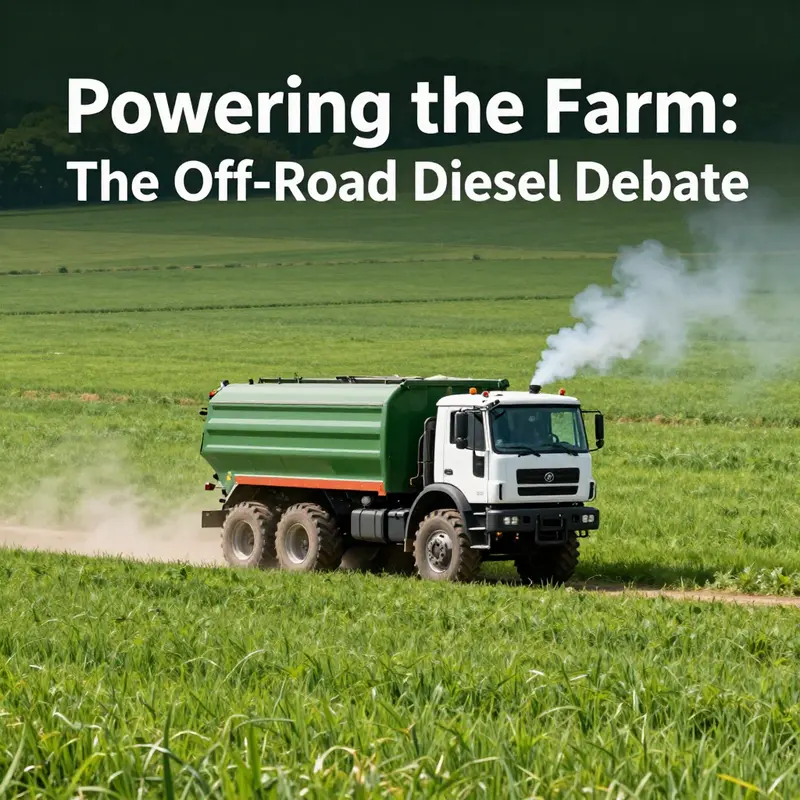
The choice to run off‑road diesel in a farm truck resonates beyond cost and compliance. It shapes the air farmers breathe, the soil crops grow in, and the health of nearby communities. Off‑road diesel is designed for machines that never use public roads. That dye in the tank signals tax differences and intended use. But the fuel’s physical chemistry and the engines that burn it determine the real environmental consequences. Understanding those consequences means looking at emissions, local impacts, and practical steps farmers can take to reduce harm while still moving equipment and produce where they need to go.
Diesel combustion releases a mix of gases and particles. The most important offenders are nitrogen oxides (NOx), fine particulate matter (PM10 and smaller), and carbon dioxide (CO2). NOx reacts in sunlight to form ground‑level ozone. Ozone irritates lungs and reduces respiratory function in people and livestock. Particulate matter includes soot and acidic compounds. The smallest particles slip deep into lungs, causing inflammation and long‑term cardiovascular disease. CO2, while not locally toxic, adds to greenhouse gas concentrations and long‑term climate change risks. Off‑road diesel engines, especially older units, can emit substantial amounts of these pollutants when compared to modern on‑road engines fitted with advanced controls.
Measured emission factors for off‑road equipment vary. Engine load, maintenance, fuel quality, and duty cycles change per‑hour and per‑mile emissions. Some studies of heavy off‑road engines show CO2 emissions can be lower than a generic standard in certain conditions. But such numbers do not erase the broader picture. On many farms, dozens of machines run across fields, in yards, and at loading points every day. The cumulative emissions from repeated short trips and idling sessions add up. Emissions hotspots form where trucks wait, load, and unload. Those hotspots matter most for exposure to people, animals, and crops.
Soil contamination is a direct local outcome of diesel combustion and handling. At loading docks, fuel bays, and parking areas, particles settle. Polycyclic aromatic hydrocarbons (PAHs) cling to soil organic matter. PAHs persist and can harm soil microbes, insects, and plant roots. Repeated deposition near barns, silos, or fuel storage creates concentration gradients of contaminants. That contamination affects soil health and long‑term productivity. It also raises questions for food safety when activities occur near produce packing or animal feed storage.
The design of a farm truck’s engine and its emissions controls matters greatly. Modern diesel engines use selective catalytic reduction (SCR) to cut NOx and diesel particulate filters (DPFs) to remove soot. These systems work best on fuels that meet tight specifications. Off‑road diesel can differ slightly in additive packages and sulfur content. That mismatch can reduce aftertreatment efficiency or even damage systems if not managed properly. Poor maintenance accelerates wear and increases emissions. A well‑tuned engine with functioning aftertreatment dramatically lowers local pollution. Conversely, an older, neglected engine spreads more NOx, particulates, and PAHs, regardless of the fuel dye in its tank.
Beyond hardware, operational choices strongly influence environmental outcomes. Idling, rapid throttle cycling, and frequent cold starts increase emissions per hour. Minimizing idle time, batching tasks to reduce starts, and using appropriate gear and engine speeds lowers pollutant release. Where practical, scheduling heavy work during times of lower human presence reduces exposure. For example, running field transfers earlier in the morning, away from school routes or community gatherings, shrinks immediate risks. Site layout also matters. Placing loading and fueling areas away from residences, play areas, and animal housing limits the chances of chronic exposure.
Fuel handling and storage are another vector for impact. Leaks, spills, and improper drainage from fueling stations introduce hydrocarbons into soil and water. Secondary containment, regular tank inspections, and immediate spill response keep contamination localized and small. Small farms can adopt simple controls: paved fueling pads, bermed containment, and absorbent materials for minor drips. These steps reduce long‑term accumulation of PAHs and other persistent compounds in farm soils.
There are broader strategies that reduce reliance on diesel altogether. Electrification of appropriate tasks eliminates tailpipe NOx and PM at the site. Electrified yard tractors, small cargo carriers, and stationary electric equipment are now viable for many farm uses. Investment in people and operations often unlocks these options. Training staff in efficient routing, vehicle scheduling, and preventative maintenance reduces fuel use. For a discussion of how investing in people changes fleet outcomes, see Invest in people: key to fleet management success. Incentives and grants that target cleaner engines and zero‑emission equipment reduce upfront costs. Over time, fleet turnover toward cleaner options shrinks cumulative emissions across a farm’s life cycle.
Regulation and standards play a role in shaping on‑farm emissions. Fuel standards that demand ultra‑low sulfur content and stricter testing lower harmful outputs. Emission regulations encourage manufacturers to include advanced controls on off‑road engines. Yet law and policy must balance practicality. Farmers need reliable power for seasonal peaks and remote locations. Policies that pair standards with funding for retrofits and replacements avoid forcing impossible choices. Monitoring programs that measure air quality near intensive farm operations can identify hotspots and drive targeted interventions. Community engagement helps ensure farms address concerns before issues escalate.
Health impacts on farmworkers deserve focused attention. People who spend long hours near idling trucks or fuel bays experience higher exposure to NOx and particulates. Chronic exposure raises risks for asthma, bronchitis, and cardiac problems. Simple administrative controls protect workers effectively. Rotating tasks, increasing ventilation in enclosed areas, and enforcing no‑idling rules where possible reduce personal exposure. Personal protective equipment helps in high‑exposure situations, though it is a last line of defense rather than a first choice. Regular health monitoring for long‑tenured workers can catch problems early.
Economic tradeoffs are real. Off‑road diesel often costs less per gallon after taxes. That saving can be meaningful for tight farm budgets. But external costs show up in other ways. Health care, soil remediation, and lost productivity from sick workers shift the balance. Investments in cleaner engines, electric options, or improved operational practices often pay back over time. Calculating total cost of ownership, not just fuel price, reveals the economics of choosing cleaner paths.
Mitigation measures fall into practical tiers. First, optimize existing diesel use. Maintain engines, replace worn filters, and adopt efficient work patterns. Second, strengthen fuel and handling practices. Use proper storage, immediate spill cleanup, and ensure compatibility between fuel and engine systems. Third, invest in technology shifts. Replace the oldest machines first and pilot electric equipment where it fits mission profiles. Fourth, adopt landscape and site adjustments. Move fueling and loading points away from sensitive receptors and create vegetation barriers to help trap particulates. Fifth, engage in policy and community programs. Apply for grants, participate in local air quality initiatives, and report emissions where required.
Finally, transparency matters. Farmers who document fuel use, maintenance, and mitigation steps build trust with neighbors and regulators. Clear records make it easier to access incentive programs or defend practices during inspections. Transparent communication about why certain fuels are used, and what steps protect the environment, reduces friction and supports collaborative problem solving.
Using off‑road diesel in a farm truck is not simply a legal or financial decision. It is an environmental one. Choices about fuel, maintenance, equipment, and operations cascade into air quality, soil health, worker well‑being, and cumulative greenhouse gas emissions. Farmers who balance short‑term needs with longer‑term stewardship can reduce harm while keeping operations productive. Where possible, combine improved maintenance, smarter operations, and targeted investments in cleaner technologies. Those moves cut NOx, particulates, and PAHs that threaten people and land. For a technical assessment of off‑road diesel engine emissions and fuel‑based factors, see the detailed study at https://www.mdpi.com/2306-5729/10/4/152.
How Off‑Road Diesel Lowers Farm Costs: Tax, Maintenance, and Fuel Management for Farm Trucks

Understanding the real economic payoff of off‑road diesel starts with the tax break, but it doesn’t end there. For farms that can legitimately use red‑dyed diesel, the savings compound across operations. Those savings show up at the pump, in maintenance budgets, and through simpler refueling logistics on the farm. Yet the financial advantage depends on how the farm truck is classified, how often it touches public roads, and how well the operation manages supply, storage, and compliance.
The clearest and most immediate benefit is the tax differential. Off‑road diesel is taxed differently than highway diesel. That difference is often measured in tens of cents per gallon. For a small producer using a few hundred gallons a month, the savings matter. For larger operations burning thousands of gallons, the annual tax savings can reach thousands or tens of thousands of dollars. Those dollars can be redirected into seed, fertilizer, or equipment upgrades. They also improve a farm’s operating margin during thin seasons, when every reduction in variable cost counts.
Tax savings become most meaningful when they are predictable. That requires accurate fuel accounting and disciplined use. Farms that mix on‑road and off‑road uses without clear controls risk audits and penalties. A practical approach is to define which vehicles and machines qualify, then restrict red‑diesel fueling to them. When a farm truck is registered for road use, it cannot legally use dyed diesel on public roads. That legal boundary shapes the economic calculus. If a truck rarely leaves private land, the tax savings are valuable and reachable. If a truck regularly travels public roads, even infrequent trips expose the farm to enforcement risks and possible fines. The economics must therefore be tempered by regulatory reality.
Beyond taxes, off‑road diesel contributes to lower maintenance and predictable equipment performance. Modern diesel engines depend on clean, ultra‑low sulfur fuel for optimal combustion and to protect emissions components. Off‑road diesel sold through established rural suppliers generally meets those quality requirements. Using clean fuel reduces injector fouling, supports fuel pump longevity, and limits deposits in combustion chambers. That means fewer unscheduled repairs and longer service intervals. Fewer breakdowns during planting and harvest translate directly to avoided income losses. Time lost in a tight weather window is rarely recoverable, so the value of reliable fuel extends beyond parts budgets into revenue preservation.
Operational efficiency also improves when fueling logistics simplify. Many farms maintain on‑site bulk tanks for dyed diesel. This eliminates trips to town during busy periods. It shortens downtime during critical jobs. Bulk storage also enables purchases in larger lots, which can secure better per‑gallon pricing. When combined with planned inventories, bulk fueling can smooth price volatility and reduce exposure when markets spike. Practical storage must pair with good practices: proper tank maintenance, filtration systems, and fuel polishing to avoid water and microbial contamination. Those measures have modest upfront costs but repay themselves by protecting fuel quality and preventing fuel system failures.
Reliable access matters. Rural fuel supply can be inconsistent during peak seasons or weather events. Farms that rely on local stations face the risk of supply interruptions. A well‑managed on‑farm supply of off‑road diesel insulates operations. It assures that tractors, combines, irrigation pumps, and qualifying trucks are ready when needed. This reliability has an economic value that is hard to quantify. It reduces the need to idle equipment while sourcing fuel, and it reduces frantic, expensive last‑minute purchases.
On the subject of equipment compatibility, not every savings story is automatic. Some modern road‑registered trucks have emissions control systems calibrated for on‑road fuels and legal compliance. While off‑road diesel often matches ULSD specifications, subtle differences in additives or certification can affect warranty or emissions performance. If a farm truck stays off public roads, these concerns are smaller. But if a vehicle toggles between private fields and public highways, the operator must weigh maintenance and warranty implications against tax savings. For maintenance staff and technicians, understanding fuel system intricacies is important. Investing in improved diagnostic skills and training yields returns. A useful resource for teams aiming to sharpen technical capability is Mastering Diesel Mechanics, which offers practical guidance on diesel system care and troubleshooting.
Recordkeeping and compliance are central to preserving the economic benefits. Regulators look for clear separation between taxed and untaxed fuel uses. Maintaining logs that show vehicle designations, mileage, fueling dates, tank inventories, and fuel transfers helps in case of an inspection. Good records also make internal audits easier. A routine internal audit catches leaks, theft, or misallocation early. Simple controls—such as labeled dispensers, locked access to dyed fuel, and a fueling authorization process—reduce loss and establish defensible practices that protect the tax advantage.
The decision to use off‑road diesel in a farm truck should include a cost‑benefit analysis. Consider fuel spend over a full season. Calculate expected gallons used exclusively off public roads. Multiply that by the tax differential to estimate gross savings. From that, subtract any incremental costs: on‑farm tank maintenance, administrative time for recordkeeping, potential emissions maintenance, and the cost of segregated fueling systems. Smaller farms may find the administrative burden large relative to their savings. Larger operations usually gain more, because the fixed costs of compliance are spread across greater fuel volumes.
Risk management must be layered into that analysis. Inspections, marker tests for dyed fuel, and penalties for misuse are real. Farms should adopt policies that address occasional exceptions. For example, if a vehicle must travel a short public route between fields, consider redesignating the vehicle or using an on‑road tank for that vehicle. Another option is to plan routes and scheduling to eliminate public‑road travel when using dyed fuel. Whatever the approach, it should be documented in a fueling policy that field staff and drivers can follow easily.
Additionally, integrating fuel strategy with broader financial planning improves outcomes. Hedging fuel costs through forward purchases or joining cooperative buying groups reduces exposure to price spikes. Bulk purchasing agreements can lock in favorable rates when markets allow. Some farms implement blanket purchase orders with rural suppliers to ensure supply and track usage. In the bookkeeping system, create a clear fuel expense category for dyed diesel and link it to crop or enterprise budgets. This lets farmers see the real contribution of fuel savings to profitability by enterprise.
Training is often an overlooked multiplier of economic benefits. Training drivers and operators to follow fueling policy prevents accidental misfueling and loss. Teach staff to recognize dyed fuel, to record tank dips, and to note unusual engine performance that might signal contamination. A short, practical checklist near the fuel dispenser makes compliance easier. Periodic refresher sessions reinforce habits. Over time, the reduced fuel waste and fewer maintenance incidents produce real savings.
Finally, consider the longer horizon. Using off‑road diesel offers immediate cost relief. But the farm should also plan for changes in regulations, fuel composition, and technology. Emissions standards evolve, and alternative fuels may become more economical or practical. An adaptable fuel policy positions the operation to capture short‑term tax benefits while staying ready for transition. Monitoring regulatory guidance and industry resources helps farms adjust quickly when rules change.
When combined, these practices turn off‑road diesel from a simple tax dodge into a controlled economic strategy. It’s not only about cheaper gallons. It’s about aligning fueling practices with vehicle classification, operational schedules, and maintenance regimes. The arithmetic of tax savings, reduced downtime, and better logistics can be compelling. But preserving that value requires disciplined storage, clear policies, and regular review. Used correctly, off‑road diesel becomes a lever that reduces operating costs and strengthens the farm’s capacity to invest in growth.
For clarity on rules and definitions, refer to the U.S. Department of Energy’s guidance on off‑road diesel use and regulations: https://www.energy.gov/eere/vehicles/off-road-diesel-use-and-regulations
Fuel in the Field: The Practical Realities of Running Off-Road Diesel in Farm Trucks
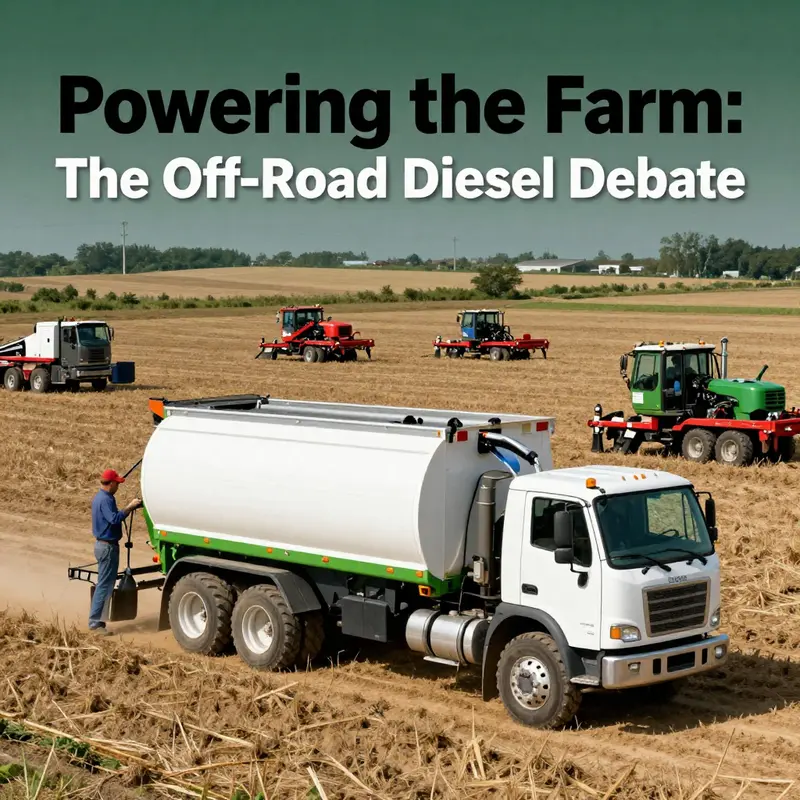
In the day-to-day rhythm of modern farming, machines shoulder a heavy burden. They push through mud, power grain augers at dawn, and haul equipment across fields that stretch farther than the eye can follow. The question of whether off-road diesel can be used in a farm truck is more than a fuel choice; it is a matter of understanding how the field, the barn, and the road intersect in farm operations. Off-road diesel, sometimes called red-dyed diesel, is designed for non-road equipment and is taxed differently from on-road fuel. The dye is a telltale signal to authorities that the fuel is intended for equipment that does not operate on public highways. This practical distinction matters because a farm truck that travels on public roads must run on-road diesel, match its registration for highway use, and comply with the same rules governing any other vehicle on the road. Yet when a truck spends its life primarily moving between fields, across rough tracks, or tending to duties that never require public-road miles, off-road diesel becomes a cost-effective and legally appropriate option. The key is clarity about how the vehicle is used and where it travels.
Within that framework, the design and purpose of farm trucks themselves matter a great deal. Heavy-duty use is the norm: these vehicles must endure dusty plow runs, muddy lanes, and long days under a sky that shifts from sun to storm with little warning. As a result, they are engineered to deliver robust torque and dependable power at low speeds, with transmissions and driveline components tuned for tough, off-road work rather than highway efficiency. Engineers focus on durability, reliability, and cooling under high load, because a farm truck is as much a field machine as it is a transport shuttle. Engine performance in this context means more than raw horsepower; it means reliable power in adverse conditions, consistent fuel delivery under heavy loads, and resilience in the face of unpaved surfaces and variable elevation. With this design philosophy, off-road diesel can align with the truck’s mission to move hay bales, haul feed, tow irrigation gear, and support the infrastructure of a working farm.
From a practical standpoint, the choice of fuel interacts with technology that helps farmers manage fleets with greater precision. Telematics and driver-assistance systems, though often associated with on-road fleets, have meaningful applications in off-road settings too. Real-time monitoring of engine load, fuel use, and maintenance alerts can be tailored to agricultural operations, where downtime costs more than a simple delay in a delivery. Farmers can track how many hours the engine runs at high load during a planting season, or how fuel efficiency shifts as equipment moves from dry lanes to slick furrows. Route optimization, while conceptually similar to urban dispatch, becomes field route optimization: planning paths that minimize repeated trips across rough terrain, reduce unnecessary idling, and ensure that tasks like watering, fertilizer spreading, or seed distribution happen within the most efficient time window. The fusion of rugged hardware and advanced telematics turns a heavy-duty workhorse into a smart partner on the farm, capable of adapting to shifting field conditions without sacrificing reliability.
Fuel utilization in farming extends well beyond simple transport. Off-road diesel powers the broader ecosystem of farm operations: plows and tillers that loosen soil before planting, seeders and harvesters that must perform in imperfect light or damp soil, and the vehicles that move between paddocks with hay, feed, or equipment. Even more critically, diesel fuels the infrastructure that keeps a farm running when the grid is unreliable or absent. Diesel-powered generators provide a dependable energy backbone for irrigation pumps, grain dryers, and climate-controlled storage facilities during harvest seasons or drought. In this sense, off-road diesel is not merely a fuel for moving goods; it is a practical energy strategy that supports consistency, resilience, and productivity across an agricultural operation.
The technology inside modern farm trucks has kept pace with these demands. Advancements in engine design, including features aimed at reducing pumping losses and improving exhaust management, help keep fuel consumption manageable under demanding workloads. Cylinder deactivation, for example, allows the engine to operate more efficiently when full power is not required, which can be common in long hauling or light-duty field work. Such innovations are not about chasing peak horsepower alone; they are about aligning fuel use with actual work cycles, which yields tangible savings over the course of a busy season. The goal is to extract usable work from every drop of fuel while maintaining emission standards that protect soil and air quality. This balance—between strong field performance and responsible emissions—reflects how agricultural operations increasingly value efficiency without compromising reliability.
For farm managers and operators, the decision to use off-road diesel hinges on a careful assessment of the work profile, vehicle classification, and compliance obligations. On one hand, a truck that never travels on public roads can legally use off-road diesel in many jurisdictions, provided the vehicle remains within the boundaries of off-road duties. On the other hand, a vehicle that routinely crosses a public roadway must be treated as a road vehicle, with on-road diesel and proper registration. The ruling is straightforward, yet its implications ripple across the fleet: insurance coverage, licensing, and potential penalties during audits all depend on how the vehicle is used in practice. The red dye is a practical reminder that the fuel is for non-road use, and that law enforcement and tax authorities monitor these distinctions. As a farm grows or changes its operations, it is essential to revisit fuel use policies, confirm the classification of each vehicle, and ensure that every truck aligns with current regulations.
Amid these considerations, a practical farmer will also weigh environmental and maintenance factors. Off-road diesel may have slightly different sulfur content or additives compared with on-road diesel, which can affect emissions-control systems in modern engines. That difference matters most when upgrading or retrofitting older trucks, where the interaction between fuel chemistry and exhaust aftertreatment can influence PM emissions and catalytic efficiency. The farmer who plans to upgrade a fleet or to repurpose a vehicle for more field duty will benefit from a forward-looking maintenance plan that anticipates how fuel choice interacts with fuel system components, injectors, and sensors over time. Regular maintenance—fuel filters, injector cleanings, coolant and air-filter checks—becomes even more critical when a vehicle is asked to work in challenging off-road environments, where dust and moisture place additional demands on the engine and fuel system.
Even with these front-line considerations, the practical rhythm of farm life often dictates fuel strategy. A farmer may operate a truck across rough fields, tow heavy implements, and run between distant sheds to service irrigation lines. In such contexts, choosing off-road diesel can bring predictable cost savings and operational clarity, especially when road miles are incidental or non-existent. Yet this must be balanced with the realities of audits and enforcement. If a truck enters a public road network even occasionally, it must be fueled with on-road diesel and comply with the relevant vehicle regulations. The mud between the tires and the lane lines of a county road can create a subtle but consequential boundary; crossing it triggers a shift in all the rules that follow.
For readers seeking a deeper technical grounding, there are practical resources that lay out diesel fundamentals and maintenance paths. A comprehensive, step-by-step guide to diesel mechanics can be a valuable companion for farmers who want to understand how their fuel choice interacts with engine behavior, fuel delivery, and troubleshooting. This kind of resource supports a more proactive approach to fleet management, encouraging farmers to diagnose performance quirks early, schedule preventive maintenance, and avoid costly downtime. Mastering Diesel Mechanics: A Step-by-Step Path to Success offers a structured pathway for practitioners who want to build hands-on confidence with diesel technology while keeping a farm fleet running smoothly.
As this chapter draws to a close, the practical takeaway is clear. Off-road diesel serves a legitimate and often advantageous role in farm truck operations when those vehicles stay within off-road duties and do not participate in public-road traffic. In that context, the fuel supports a broader agricultural workflow—from field-to-storage to irrigation and beyond—without compromising compliance or safety. The farm truck, in its role as a field and infrastructure workhorse, embodies the marriage of rugged capability and disciplined management. When implemented thoughtfully, with attention to fuel type, vehicle classification, and maintenance, off-road diesel can help farms meet the twin goals of productivity and sustainability. In regions where regulations permit, a farm fleet can leverage this fuel strategy to optimize costs, streamline operations, and reduce downtime, all while preserving the integrity of the broader agricultural system that depends on reliable, field-ready equipment.
External resource for broader context on diesel-powered agricultural applications and engine technology can be found here: https://www.nissan-global.com/EN/PRODUCT/VEHICLES/ATLAS/ .
Final thoughts
The conversation surrounding off-road diesel usage in farm trucks is as multifaceted as the terrains these vehicles traverse. From understanding the legal guidelines surrounding its use to assessing its environmental and economic impacts, it is clear that this fuel option presents both opportunities and challenges. As we have explored through the chapters, the decision to use off-road diesel fundamentally boils down to the specific operations of your farm truck—whether it remains confined to private land or traverses public roads. For those driven by efficiency and cost-effectiveness in agricultural practices, an informed choice on diesel fuel can pave the way for both compliance and sustainability. By adhering to legal standards while maximizing economic benefits, farm owners can navigate the landscape of off-road diesel usage with assurance and purpose.