
In the high-octane world of off-road truck racing, securing sponsorship is crucial for teams striving for success and sustainability. Enthusiasts, adventurers, and competitors alike can find a wealth of opportunities by establishing a robust sponsorship strategy. This guide delves into key strategies, spanning from enhancing media exposure to fostering a powerful brand identity, developing a professional sales team, and organizing events that capture the attention of potential sponsors. By weaving these elements together, your off-road team can create tangible value for brands and transform your racing ambitions into a thriving partnership landscape.
Revving Visibility: Harnessing Media Momentum to Secure Sponsors in Off-Road Truck Racing
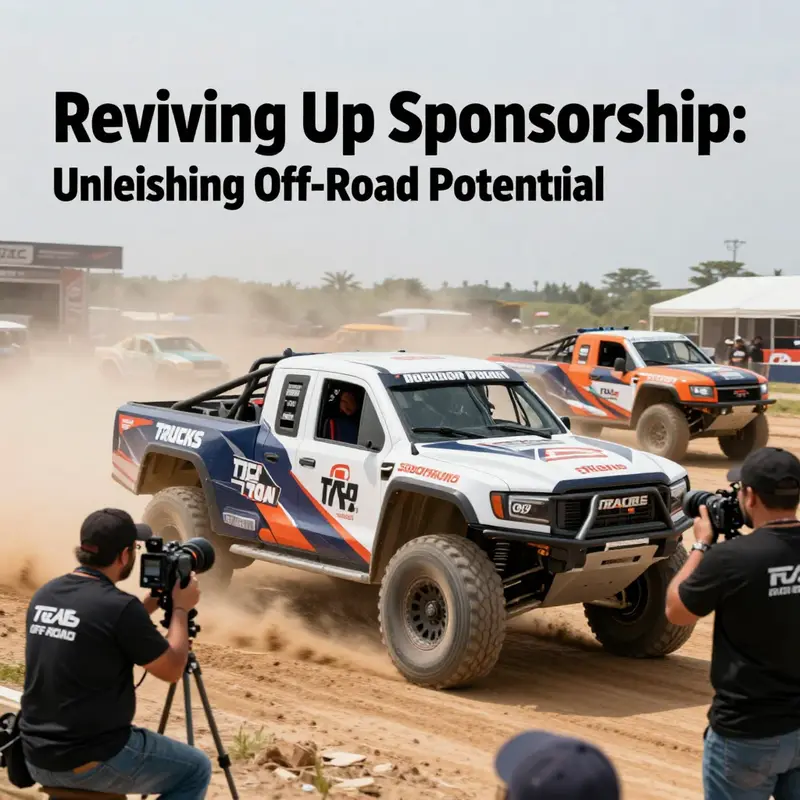
Media exposure is essential for sponsorship in off-road racing. Brands seek reach, association, and measurable value from visibility. A media-forward plan links competition moments to live coverage, produced content, and on-site brand experience. This chapter outlines a practical three-channel framework, a cadence for pre-, during-, and post-event content, and how to align sponsor goals with assets that drive recall and business impact. It also discusses building a professional sponsorship team, crafting authentic storytelling, and using data to prove ROI. The aim is to help teams convert attention into enduring partnerships that fund growth, equipment upgrades, and performance, while maintaining fan trust.
null
null
The Sponsorship Engine: Building a Professional Sales Team to Power Off-Road Truck Partnerships
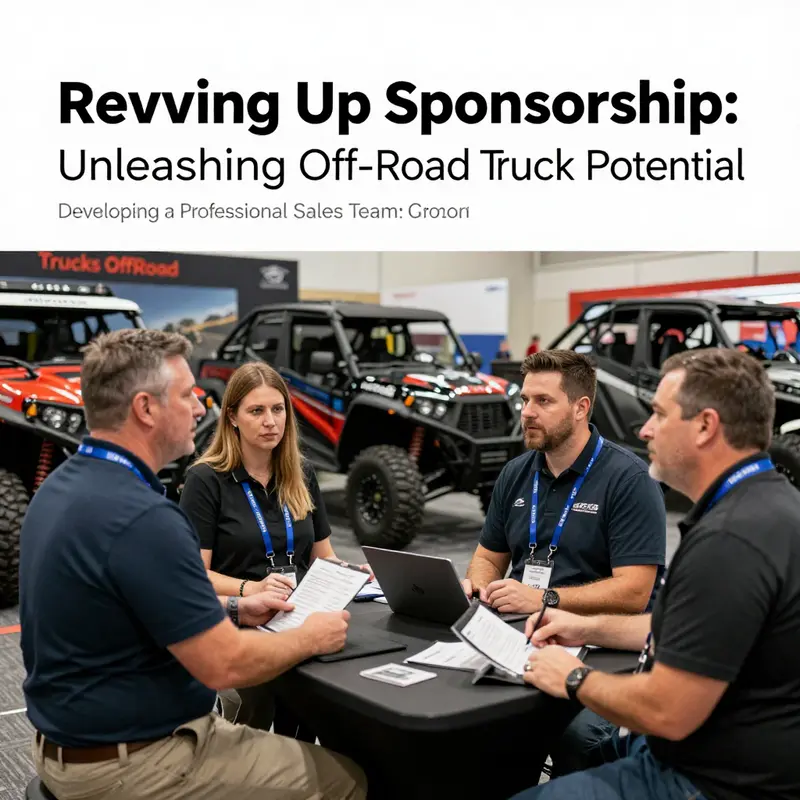
In the rough-and-tumble world of off-road trucking, sponsorships aren’t just a financial windfall. They are the lifeblood that sustains a team through long seasons, harsh terrains, and the costs of maintaining highly capable machines. The path from a hopeful contender to a sponsor-approved program is not paved with luck. It is forged through a disciplined, professional sales engine that blends genuine passion for the lifestyle with a sharp, business-minded discipline. When the ground shakes under a desert rally or a rocky hill climb, sponsors aren’t looking for a single chance to hand over cash. They seek a sustained relationship with a visible, credible partner who can deliver measurable value, authentic storytelling, and reliable execution. That is the core premise behind developing a professional sales team for off-road sponsorships: turning a team’s grit and identity into a compelling commercial proposition that resonates with brands craving real connection with a dedicated audience.
First, the value proposition must emerge from a precise understanding of the niche. Off-road sponsorships are not a mass-market sale. They target a passionate, committed community that ranges from weekend trail riders to professional desert racers and overlanding enthusiasts. This audience is not a homogenous bloc; it is a spectrum defined by adventure values such as resilience, reliability, and a sense of belonging. A professional sales team begins by mapping this ecosystem in granular terms. They learn which events pull the largest crowds, which media channels yield the strongest engagement, and which storytelling angles land best with different sponsor archetypes. They recognize that a sponsor might not be drawn simply to a logo on a truck but to the opportunity to participate in exclusive access, to co-create content with an authentic voice, and to leverage a real, trackable community that extends beyond race day. In practice, that means not pitching sponsorship slots in isolation but presenting a narrative where a partner becomes part of the lifestyle—supporting training days, rider meet-and-greets, exclusive behind-the-scenes footage, and targeted regional campaigns.
To operationalize that vision, teams must hire for passion and expertise. The right people are not merely skilled negotiators; they are genuine off-road enthusiasts who understand the rituals, the terrain, and the culture. Their credibility is instant leverage when they speak with potential sponsors. The ideal candidates bring a blend of B2B or B2C sales success and firsthand experience with vehicles and trails. They know the language—knobby tires, payload, ground clearance, heat management, and the logistics of long-distance off-road events—without needing to read from a brochure. This credibility accelerates trust, and trust is the currency of early conversations in sponsorship. The sales talent should also be capable of translating their passion into professional, measurable outcomes. They must be comfortable engaging with risk managers, marketing directors, and executives who are accustomed to long sales cycles and rigorous ROI analyses.
Once a team is in place, comprehensive training becomes the backbone of lasting effectiveness. Training should go beyond product specs and event dates. It must cultivate a shared understanding of what sponsors actually gain from partnerships and how those gains translate into real-world marketing assets. Prospects care about visibility—brand presence at events, logos on trucks, and featured content—but they also care about control, exclusivity, and audience access. The sales force should be fluent in the logistics of off-road events, the safety and compliance frameworks that govern large gatherings, and the cadence of sponsor deliverables throughout a season. Training should also cover asset creation: how to shepherd high-quality photos and videos from races, how to stage compelling on-site demonstrations, and how to package a sponsor’s benefits into an integrated campaign rather than a set of isolated placements.
A professional sales operation must lean on data as a guiding compass. The most successful sponsorship programs rely on a disciplined relationship-management system. A modern CRM becomes a repository for every touchpoint—previous sponsorships, conversations, draft proposals, event calendars, and feedback from partners. The team uses data to identify high-potential prospects, tailor outreach to align with a sponsor’s strategic priorities, and forecast revenue with confidence. For instance, if a prospective brand has invested heavily in safety gear and outdoor apparel, the pitch can center on audience reach at rugged terrain events, exclusive content opportunities with athletes, and the ability to quantify engagement across regional markets. Data also supports post-cacto learning: measurement of media impressions, social resonance, and attendee engagement. This enables the team to refine the value proposition, optimize pricing structures for different asset bundles, and scale the sponsorship program over multiple seasons.
But data alone does not close deals. The team must master the art of storytelling. Rather than selling a vague “sponsorship slot,” they craft a narrative about partnership, performance, and shared identity. The sponsor’s brand becomes part of the story—the story of endurance, mastery of difficult terrain, and a community that lives for the push beyond limits. The storytelling approach emphasizes exclusivity, community access, and bespoke marketing assets such as behind-the-scenes footage, live race coverage, and consumer-generated content that resonates with real fans. The team should position sponsors as essential collaborators in the off-road experience, not as distant donors; this distinction matters because it shapes negotiations around deliverables, rights, and the cadence of campaigns. A sponsor who feels they are co-authors of the story is far more likely to invest for multiple seasons and to extend collaboration across events and markets.
Within this framework, collaboration across the organization is critical. The sales team does not operate in a vacuum. It must partner with marketing, events, and media teams to ensure a consistent, high-quality experience for sponsors and fans alike. Regular cross-functional reviews help align messaging, creative execution, and event logistics. The aim is to deliver a seamless sponsor experience that begins with a persuasive pitch and ends with on-site activation, post-event reporting, and ongoing relationship management. Such coordination reduces friction, increases sponsor satisfaction, and creates a virtuous cycle of renewals and referrals. The sales team should also foster a culture of knowledge sharing within the group. When a team member develops a winning pitch or a successful case study, it should be captured and disseminated. That collective intelligence becomes a competitive advantage, enabling the group to adjust strategies to changing sponsorship landscapes and evolving brand priorities.
Goals and incentives anchor this engine in reality. Clear, measurable objectives are essential for maintaining focus and momentum. Targets might include the number of new sponsorship agreements, the total value of sponsorship packages secured, renewal rates, and the range of sponsor deliverables achieved in a season. The compensation structure should reflect the long sales cycle typical of sponsorship deals, rewarding both the acquisition of new partners and the successful stewardship of existing relationships. An incentive program that recognizes top performers and fosters collaboration helps sustain motivation and reduces the risk of episodic wins. It is important that the team’s ambitions align with the broader goals of the organization, ensuring that sponsorship activities support broader business objectives such as brand-building, media exposure, and community growth.
Building a strong brand identity for the team itself is another crucial layer. A well-defined visual identity, mission statement, and professional collateral convey credibility from the first contact. The branding should be consistent across all touchpoints—pitch decks, media kits, on-site signage, and digital channels. The sales team is, in effect, an ambassador for the brand, and their professionalism reinforces the perception of reliability and seriousness. When a sponsor meets the team—whether in a boardroom or at a paddock—this consistency matters. It signals that the organization is not a hobby but a well-structured business with a sustainable plan. The identity should also reflect the off-road lifestyle’s core values: adventure, resilience, and community. A strong brand acts as both a magnet for sponsorship and a unifying force for the team, helping to attract sponsors who share those values.
Media exposure is the currency that magnifies the sponsor’s reach and enhances the team’s attractiveness. A professional sales operation proactively articulates how media coverage, on-site activations, and social content will translate into measurable brand lift for sponsors. The team should outline potential media assets—race-day footage, participant interviews, behind-the-scenes series, and real-world demonstrations of product attributes in rugged conditions—mapped to the sponsor’s goals. The goal is to demonstrate that sponsorship is not a one-off placement but a dynamic, multi-asset partnership that leverages events, video, and social distribution to maximize reach and resonance. In markets where off-road racing has limited broadcast quality, the ability to craft compelling content for streaming platforms and local channels can compensate for gaps in traditional TV exposure. At the same time, teams should pursue partnerships with regional outlets and streaming services to ensure broad visibility and consistent coverage. By aligning media strategy with sponsorship outcomes, the team can offer sponsors a clear pathway to audience engagement, traffic, and brand association, which in turn fuels sponsorship pipeline development.
The ultimate goal of this integrated approach is to transform the team into a marketable lifestyle brand with tangible commercial value. A well-run sponsorship program offers more than sponsor logos on a truck; it provides access to a dedicated community, collaborative marketing opportunities, and a suite of assets that deliver audience engagement across channels. This is where revenue diversification comes into play. Beyond direct sponsorships, clubs and teams can generate income through training programs, vehicle rental for enthusiasts, merchandising, and membership models that offer exclusive benefits. Each of these streams reinforces the sponsor proposition by expanding the audience touchpoints, deepening engagement, and building a sense of ongoing partnership between the brand and the community. When supporters become participants—attendees in training seminars, purchasers of branded apparel, or members of a team community—sponsors see a broader, more durable return on investment.
A practical illustration of integrating these practices can be found in the mindset explained in the corporate training and team-building literature on investing in people as a gateway to success. A simple, powerful step is to embed the principle of people-first leadership into the sponsorship program. As a concrete reference for teams aiming to strengthen internal capabilities, consider the guiding ideas from the resource on investing in people; it emphasizes cultivating talent, aligning incentives, and supporting professional growth as the backbone of fleet and sponsorship success. This alignment ensures the sales team remains energized, capable, and equipped to navigate the complexities of partner negotiations and multi-event campaigns. For readers seeking a deeper dive into related concepts, see the discussion at Invest in People: Key to Fleet Management Success.
The journey from uncertain beginnings to a robust sponsorship program is iterative. It requires patience, discipline, and a willingness to revise approaches as the market evolves. The off-road sponsorship landscape shifts with media trends, event calendars, and sponsor marketing priorities. A professional sales team maintains agility by continuously evaluating the effectiveness of outreach, refining the value proposition, and reinforcing the brand’s identity so that it remains appealing across different sponsor segments. The team also anchors its activities in the broader mission of the sport and the community that surrounds it. When the sponsorship program is tethered to the lived experience of drivers, crews, and fans, it becomes more than a business arrangement. It becomes a shared commitment to telling a powerful story in which brands align with endurance, skill, and the thrill of exploration.
In closing, building a professional sponsorship engine for off-road trucks is not a single leap but a carefully choreographed sequence of moves. Start with a precise niche understanding and authentic audience empathy. Hire people who live the culture, and train them to translate passion into measurable value. Implement a data-driven relationship-management approach that supports tailored outreach and continuous learning. Elevate the partnership through compelling storytelling that makes sponsors feel like co-authors of the adventure. Foster cross-functional collaboration to deliver seamless activation, and set clear, incentives-aligned goals that reward both acquisition and stewardship. Construct a brand identity that conveys credibility and passion, and leverage media exposure as a multiplier for sponsor value. Finally, diversify revenue streams to reinforce the program’s resilience and long-term viability. When execution is disciplined and authentic, sponsorship opportunities multiply, enabling off-road trucks to thrive as both sport and lifestyle brands—and giving sponsors a meaningful, lasting return on their investment.
External resources for further reading provide complementary perspectives on building sponsorship capabilities. For a broader view of how to structure and manage sports and event sponsorship teams, see https://www.sportscast.com/blog/creating-a-successful-sports-and-event-sponsorship-sales-team. This resource can offer practical templates, case studies, and strategies that complement the hands-on, field-tested approaches described above.
Rallying Sponsors: Organizing Off-Road Truck Events That Attract Partners
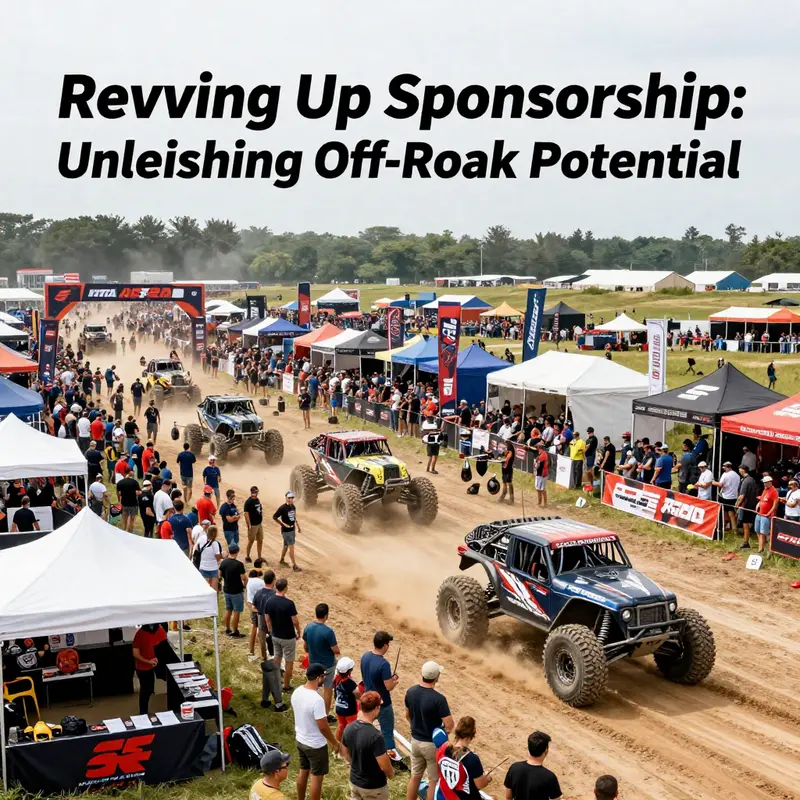
Events hold a unique power in the sponsorship playbook for off-road truck ventures. They are not merely competitions or showcases; they are living platforms where brands see a tangible intersection of enthusiasm, lifestyle, and commerce. When a team plans an event with a clear vision and a precise audience, the sponsorship conversation shifts from a hopeful ask to a collaborative opportunity. The chapter you are about to read treats an off-road event as a strategic asset, a way to elevate visibility, demonstrate value in real time, and create a lasting relationship footprint that extends far beyond trophy presentations or race day banners. The path to sponsorship begins with a clean sense of purpose and a deep understanding of who will be in the stands, on the trail, or watching the livestream long after the dust settles.
A well defined event vision is the anchor that keeps outreach focused and credible. The vision should do more than describe a date and a course. It should articulate why the event matters, who benefits, and how the sponsor fits into that story. If the aim is to promote adventure tourism, the event reads as a gateway to experiences that align with a brand that cares about exploration, resilience, and the outdoors. If the aim is to support a local cause, the narrative is framed around impact and community pride. Whatever the motive, sponsors want to connect with a purpose. They also want to know the audience you expect to attract. This is where research becomes practical: understand the demographics, income bands, and interests of the attendees. Are they young professionals who value outdoor recreation, or families seeking rugged, safe, and memorable experiences? Are they weekend warriors with a penchant for gear and upgrades, or aspirants hoping to learn from seasoned drivers? The more precise the audience profile, the sharper the value proposition for a sponsor. It is not enough to claim a large crowd; sponsors need to know who is in that crowd and how their brand will appear in that context. A robust outreach plan will map the audience to sponsor categories such as outdoor apparel and equipment, automotive accessories, safety and maintenance products, hospitality and tourism services, and even regional food and beverage experiences. The goal is to present a coherent ecosystem in which the event becomes a living showroom for brands that aspire to be associated with the adventure lifestyle and the trust that comes with it.
From vision and audience, the next stride is to craft a sponsorship proposal that is as specific as the event itself. A compelling pitch is not a template it is a tailored narrative that demonstrates a clear match between sponsor goals and event deliverables. Start with a concise executive summary that states the event’s purpose, audience, and projected reach. Present the value proposition in concrete terms. Sponsors want to know what they are buying and how it translates into real-world benefits. The proposal should define sponsorship tiers with distinct benefits, from a title sponsor with prominent naming rights and top tier visibility, to official partners who gain significant but more targeted exposures, and in kind sponsors who contribute goods or services in exchange for branded presence and experiential opportunities. The tiers should be transparent and proportional; higher levels must offer visible, exclusive opportunities, while lower levels still deliver meaningful touchpoints such as booth space, logo placement on signage, and inclusion in press materials. Metrics play a crucial role. Include data on expected attendance, media exposure, livestream viewers, and social media impressions. Even if numbers are estimates, frame them with credible methodology and a track record of past events if available. If the event has not yet occurred, provide a range based on comparable gatherings and outline how you will measure success post event. This is where sponsors feel they are getting a tested, reliable engine for their investment rather than a gamble.
Identifying the right sponsors is as important as the event itself. Local businesses with aligned customer bases often bring the most immediacy and impact. Think of dealers in the region, tire and parts providers, outdoor apparel brands, camping gear companies, and hospitality partners that benefit from sports tourism. The approach should blend persistence with personalization. A quick email can be the starting point, but the real conversion often comes from a phone call or face to face meeting where you can demonstrate your knowledge of the sponsor’s business goals and your event’s potential to help achieve them. The aim is to frame sponsorship as a strategic alliance rather than a donation. Emphasize how the sponsorship will raise brand visibility, catalyze sales during and after the event, and strengthen community ties. In practice, this means presenting case studies or hypothetical scenarios that connect the sponsor’s offerings with event touchpoints: pre event promotions, on-site activations, race day endorsements, and post event engagement. A sponsor should walk away with a clear sense of their sponsorship footprint and the kind of ROI they can expect, whether that ROI is measured through direct sales, lead generation, media reach, or social sentiment.
Execution is where plans become reality and credibility is built. The event must deliver a smooth experience that reflects the professional standards sponsors expect. The venue should support a clean branding narrative with cohesive signage, branded zones, and a schedule that minimizes confusion for attendees. On the ground, sponsor activations should feel organic rather than forced. A well designed activation space allows attendees to interact with products or services in meaningful ways, whether through demonstrations, trials, or informative clinics. A dedicated stage for demonstrations and speaking opportunities gives sponsors a direct line to the audience and a sense of influence within the event narrative. The event should also offer compelling content beyond the spectacle of speed and ruggedness: interviews with drivers, behind the scenes looks at team preparation, and community storytelling that highlights the local context. These elements create a richer media story that sponsors can share through their channels. Recognition should be consistent and explicit. Sponsor logos must appear on all event materials, but more than that, sponsors deserve acknowledgement in opening remarks and during key moments in the program. A post event report is not optional; it is a sign of respect and a practical tool for measuring the sponsorship’s impact. The report should assemble attendance data, media reach, engagement metrics from digital channels, and any direct outcomes like booth leads or partner pledges. It is the groundwork for the ongoing relationship and the basis for a continuation in future events.
The value of events does not end with the last lap. The most effective event programs create a context in which sponsors continue to derive value after the checkered flag. This is where the concept of long term engagement matters. A sponsor might be kept engaged through follow up content, exclusive post event previews, or even involvement in future events as an ongoing partner. The post event phase is about storytelling and continuity. Share high quality photos and videos that capture the energy of the event and the tangible moments of sponsor activations. A well curated media package gives sponsors a lasting reason to associate with the event and to advocate for continuing support. All of this contributes to establishing a pattern in which the event becomes a reliable platform for brands that want to be seen not just when the tires scream on race day, but in the minds of enthusiasts as a constant signal of the adventure lifestyle. Sponsors will perceive the event as an integrated marketing channel rather than a one off expenditure.
A crucial practical thread in this narrative is the link between the event and the broader strategy of the team. Sponsorship is strongest when the event is not viewed in isolation but as part of a broader ecosystem that includes training programs, fleet demonstrations, and consumer experiences that extend brand engagement. This is where the idea of diversification—training offerings, vehicle demonstrations, merchandise, and membership experiences—begins to feed sponsorship value. When an off road team can show that the event is a node in a larger network of activities, sponsors recognize that their support fuels a sustainable engine that produces content, community engagement, and revenue across multiple channels. In practice, this means mapping sponsorship opportunities to the other streams the team maintains, so a sponsor can see a coherent pipeline of partnership from event activation to ongoing community programs and brand experiences. The upshot is a sponsorship strategy that feels holistic and scalable rather than episodic. It becomes possible to secure not only the initial funding for an event but the confidence of sponsors who want to invest in a growing, visible, and commercially meaningful brand.
Within this system, the choice to embed an internal resource is a deliberate step toward practical learning. For teams exploring electrification or hybrid support in off road contexts, a deeper look at charging infrastructure can be informative and inspiring. For context on charging infrastructure for electric off road support vehicles, see electric-fire-truck-charging-infrastructure. This resource helps tie together the future oriented aspects of the sport with the realities of audience expectations and sponsor interest in sustainable technology. It is not a promise of a product, but a window into how the evolving landscape can create new sponsorship avenues and new forms of brand engagement that align with the event narrative.
The circle of strategy closes with a simple, decisive mindset: treat every event as a partnership, every sponsor as a stakeholder, and every activation as a story about who you are as a team. When you approach events with clarity, audience insight, a credible value proposition, and a disciplined execution plan, sponsorship conversations move from negotiation to collaboration. The event becomes a catalyst for media exposure, for once frictionless brand integration, and for community-building that resonates long after the dust has settled on the track. The deeper you integrate the event into the life of the team and its fan base, the more sponsors perceive it as a durable channel for growth, not just a one time expense. In that light, the event is not merely a stage for competition but a living platform for a brand narrative that clients, partners, and fans alike can see themselves in. It is this coherence and potential for continuity that turns sponsorship from a transaction into a lasting, mutually beneficial relationship.
As you advance from concept to execution, keep the thread of value at the center of every interaction. When you present a sponsor with a package, connect it to a measurable outcome. When you design activations, ensure they align with the sponsor’s business goals and the audience’s desires. When you speak with potential partners, listen as much as you present, and remember that your credibility on event day will echo in every post event conversation. The result is an event that not only showcases off road prowess and rugged engineering but also demonstrates a mature, disciplined approach to partnership. It becomes a blueprint for future ventures, a model that other teams can emulate, and a practical route toward sustainable sponsorship that empowers teams to grow, entertain, and inspire without sacrificing the integrity of the sport. The road to sponsorship is paved with vision, value, and a relentless commitment to delivering on promises. When those ingredients come together in an off road truck event, sponsors see the road back to partnership as clear as the lines on the track, and the journey toward shared success can begin in earnest.
Final thoughts
Securing sponsorship in the off-road truck racing world demands more than mere speed and grit. By harnessing the power of media, cultivating a compelling brand identity, investing in professional sales expertise, and hosting engaging events, your team can attract vital partnerships that fuel your passion for racing. Turning your trucks into icons and your events into unforgettable experiences, you will pave a path for long-lasting success and growth. Embrace these strategies to shift from competition to collaboration, igniting a future where sponsorship becomes a powerful ally in your off-road journey.