
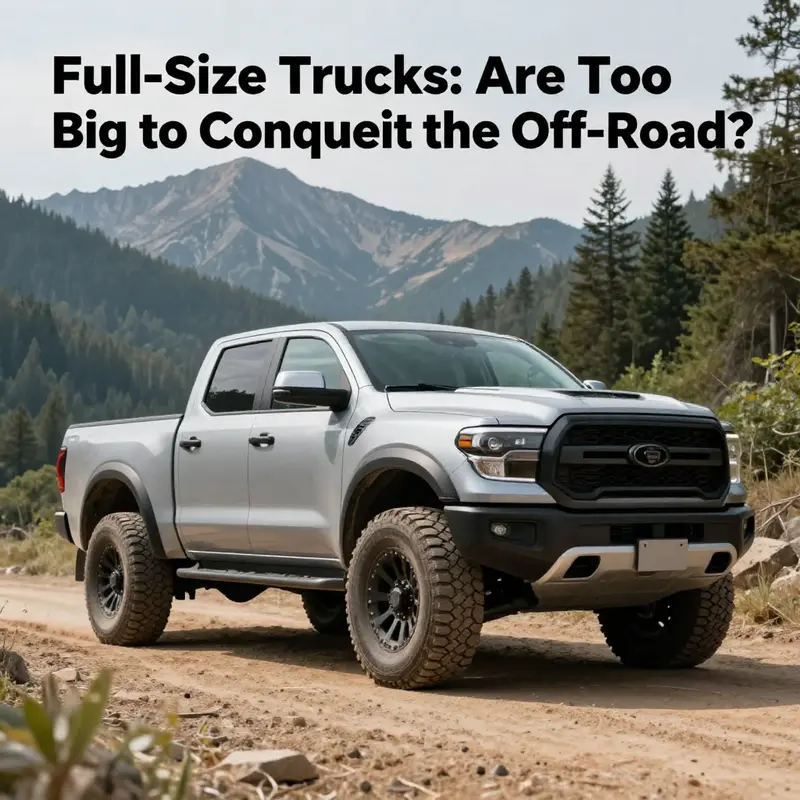
The rugged allure of off-roading has long captured the hearts of adventurers, racers, and rural landowners. However, a common debate centers around full-size trucks: Are they too big to take on challenging terrains? As we journey through the ins and outs of this topic, we will delve into the robust capabilities of modern full-size trucks, compare them to their smaller counterparts, investigate engineering innovations that enhance their performance, and navigate the real-world challenges they face. Each chapter will show how these powerful vehicles can not only tackle off-road challenges but excel in them, shedding light on why they remain a favorite among off-road enthusiasts.
Beyond Size: Unpacking the Off-Road Prowess of Full-Size Trucks
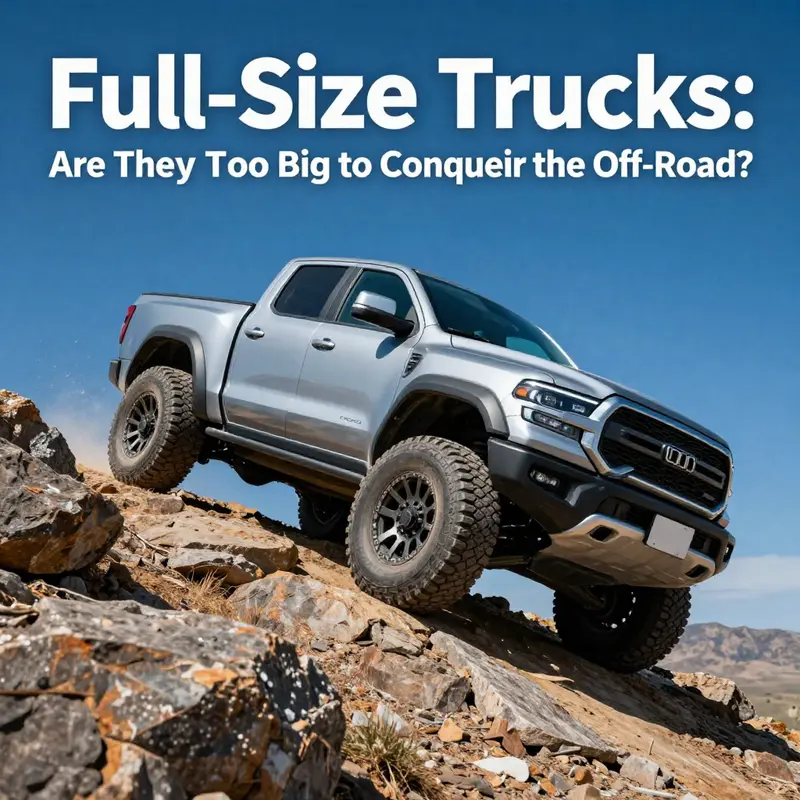
The question of whether full-size trucks are simply too bulky for off-road terrain has become a false dichotomy. Size is a factor, yes, but it is not the sole determinant of capability. Modern full-size pickups sit on a foundation of engineering that prioritizes control, durability, and a measured balance between on-road practicality and off-road grit. When the pavement ends, these trucks reveal a combination of power, protection, and traction systems that can handle demanding environments. The argument, when framed correctly, shifts from size versus terrain to how engineers design for grip, clearance, and stability across a spectrum of obstacles. In this sense, a full-size pickup is not a stubborn giant stumbling through rough landscapes but a well-calibrated platform built to translate horsepower into controlled progress over varied surfaces. \n\nPower and torque form the lifeblood of off-road performance, and full-size trucks deliver in this regard without forcing the driver to sacrifice everyday usability. They typically offer high-output engines that produce substantial torque, a critical ingredient for negotiating uneven ground, negotiating steep grades, or easing through rutted trails where wheel spin threatens momentum. The weight behind a full-size truck, when paired with the right gearing and torque curve, becomes an asset rather than a liability. Torque at low RPM helps the vehicle crawl up a rock face or accelerate out of a rut without thrashing the drivetrain. The result is a vehicle that remains confident and composed when the going gets rough, rather than one that relies on brute speed alone to conquer terrain. This balance between power and control is a hallmark of the segment’s off-road strategy, enabling drivers to choose a line that preserves momentum and traction rather than sacrificing speed to clear an obstacle. \n\nFrom the moment a driver selects a terrain mode or engages four-wheel drive, the truck begins translating that power into usable traction. Full-size pickups are equipped with robust four-wheel-drive systems that allow a straightforward switch between 2WD and 4WD modes. The presence of low-range gearing on many configurations means the vehicle can favor torque multiplication over top-end speed, a critical feature when crawling over granite slabs or negotiating loose sand. Electronic aids further refine this process. Traction control systems monitor wheel slip and apply brakes to individual wheels or modulate engine output to protect grip. In tandem with hill descent control, these systems help the vehicle maintain a steady pace on steep descents, reducing the driver’s need for constant throttle input. While the truck’s bulk can make delicate placement feel different than that of smaller vehicles, the suite of controls provides a pathway to deliberate, controlled progress rather than raw, unpredictable effort. \n\nSuspension and chassis architecture lie at the heart of how a full-size truck manages impact, articulation, and level grounding on rough ground. Heavy-duty suspensions are designed to soak up sharp impacts from rough trails, whooping washes, and rock-strewn paths, preserving tire contact with the surface. Long-travel shocks and reinforced linkages contribute to stability as the wheels travel through uneven terrain, maintaining grip and reducing the chance of a tiresome bounce throwing the vehicle off line. Some trucks offer adaptive or adjustable suspension systems that raise or lower ground clearance as conditions demand, allowing more clearance for rock crawling and more stability at highway speed when the terrain smooths out. The chassis itself — a robust frame and reinforced mounting points — plays a critical role when the truck is pressed into heavy-duty work or forced to carry gear across challenging routes. A strong frame resists flex and twisting, so the drivetrain and suspension can keep the wheels aligned with the selected line while absorbing the shock of abrupt obstacles. \n\nGround clearance is often cited as a practical barometer of off-road readiness, and in this arena full-size trucks advance thoughtfully. High ground clearance helps prevent the undercarriage from meeting rocks, stumps, or submerged debris. But clearance alone does not guarantee success; approach and departure angles matter, too, as does the protection offered by skid plates that shield the most vulnerable components from harm. The combination of height and protection allows the driver to pick lines that might overwhelm a sleeker pickup or a midsize machine. It’s not about hanging the suspension on the limit of travel, but about enabling the truck to traverse rough terrain with the confidence that the mechanicals are shielded from unnecessary damage. In practical terms, a truck that can clear a late-season washout without scraping the underbody has access to a much wider variety of routes and campsites than a lower-rated vehicle. \n\nTraction is where these trucks demonstrate their real off-road DNA. Locking differentials are a familiar feature in this segment, providing a straightforward means to equalize torque across axles when a wheel loses traction. In slippery conditions—mud, wet rock, or soft sand—power to all four corners is essential to prevent one wheel from simply spinning away while the others stand by. Electronic traction aids complement mechanical lockers by modulating wheel speed and distributing torque more intelligently as grip changes. This synergy between hardware and software helps the vehicle maintain forward progress without requiring heroic throttle inputs. Even with locking diffs, the best outcome occurs when the driver reads the terrain and uses the truck’s capability to meet it, rather than forcing the machine to conquer terrain with raw speed alone. \n\nThe driver’s toolkit is as critical as the vehicle’s hardware. No off-road machine, regardless of size, can substitute for skill, planning, and restraint. A competent driver reads the ground, anticipates obstacles, and chooses lines that minimize the risk of getting stuck or damaging critical equipment. In this light, the weight and momentum of a full-size truck can become assets that, if wielded with care, help push through rutted sections, deep ruts, or slick outcroppings. But it also demands respect for momentum management, weight transfer, and careful throttle control on inclined or uneven terrain. The driver’s role extends beyond raw strength; it encompasses the art of line choice, speed modulation, and a measured approach to negotiation. Even when the hardware is capable, the terrain can still win if the driver does not use technique to leverage the vehicle’s strengths. \n\nThe engineering philosophy behind full-size trucks emphasizes durability and practical capability. A robust frame and reinforced construction are designed to carry payloads and tow heavy gear while remaining confident in rugged environments. This durability translates into a reliability dividend when the going gets rough: the vehicle resists fatigue under load, maintains alignment, and preserves steering feel after a series of shocks that would rattle a lighter platform. The result is a vehicle that feels like it has something left in the tank after traversing challenging terrain rather than one that collapses into a limp, exhausted state. The combination of power, traction, and suspension resilience creates a platform capable of long days in the backcountry, where the ability to cover mileage between camps or job sites matters as much as the vehicle’s capacity to climb the next obstacle. \n\nOf course, there are real trade-offs. The sheer size and mass of a full-size pickup can limit nimbleness in the tightest forests or narrow, technical trails where a smaller vehicle’s turning radius and lighter weight might offer a decisive advantage. In such environments, a driver might appreciate a smaller footprint, exceptional steering feel, and a lower center of gravity. Yet even in those situations, experienced drivers often rely on the same fundamental tools: appropriate tire selection, careful throttle modulation, and a judicious use of low-range gearing to maintain traction without spinning out. The takeaway isn’t that full-size trucks are universally superior in every off-road scenario; it is that their design equips them to excel in the terrains where size is less about restraint and more about controlled power, protective engineering, and the capability to carry gear and people through demanding conditions. \n\nThe practical implications extend beyond the trail. A full-size pickup’s payload capacity and towing ability offer tangible benefits to outdoor enthusiasts and professionals who must carry recovery gear, spare parts, or supplies to remote work sites. When combined with a sturdy frame and a proven drivetrain, the vehicle becomes not just a transport device but a mobile platform capable of supporting a day spent navigating rough ground. This blend of rugged capability and everyday usefulness is central to why many drivers choose full-size trucks for serious off-roading: they want a vehicle that can perform when the road ends and also serve as a reliable daily driver or workhorse when the trail is absent. \n\nFor those who seek deeper mechanical insight into how these platforms handle the challenges of off-road use, there is value in looking under the hood and behind the wheel. A resource that delves into the mechanics of diesel and high-torque propulsion can illuminate how torque, gearing, and cooling work together to sustain performance on long or steep climbs. For readers curious about the mechanical backbone of these platforms, Mastering Diesel Mechanics offers a deeper dive. The practical knowledge there can translate into better understanding of how the vehicle’s systems interact on rough terrain and how to optimize driving technique to maximize capability without compromising reliability. \n\nIn the end, the question of whether full-size trucks are too big for off-roading dissolves when you acknowledge the full spectrum of engineering that makes these vehicles capable in a broad set of environments. They are not merely large; they’re purpose-built platforms designed to tackle rough ground, carry necessary gear, and maintain control when the terrain fights back. They can traverse desert washes with assurance, navigate rock-strewn trails with cadence, and recover from a misstep with a steady, practiced hand at the wheel. They can be, in other words, surprisingly adaptable. The key lies in matching the vehicle’s strengths to the demands of the terrain and embracing the driver’s role as the multiplier of the truck’s capabilities rather than a spectator to the challenge. For many enthusiasts, this is precisely why full-size pickups remain among the most capable options for serious off-road adventures, provided the environment aligns with their design strengths and the operator applies thoughtful technique. \n\nExternal reference: For a broader external perspective on how full-size trucks perform off-road across diverse conditions, see Car and Driver’s overview of the topic: https://www.caranddriver.com/trucks/features/a49261378/full-size-truck-off-roading-capabilities/
Size, Strength, and Sand: Debunking the Myth That Full-Size Trucks Are Too Big for Off-Road

The debate about whether full-size trucks can off-road remains nuanced. They offer high ground clearance, strong frames, durable suspensions, and torque-rich engines that help traverse sand, mud, and rocky terrain. The larger footprint provides stability and recovery leverage, but can challenge tight, technical trails. Success depends on terrain, driver technique, and proper equipment like skid plates and tires suited to the expected conditions. On open trails they excel; on narrow, brush-filled routes they demand careful line choice and teamwork. Regular maintenance and ready parts visibility are central to reliability on remote trips. Data-backed comparisons can help set expectations alongside personal experience.
How Modern Engineering Lets Full-Size Trucks Conquer Off-Road Limits
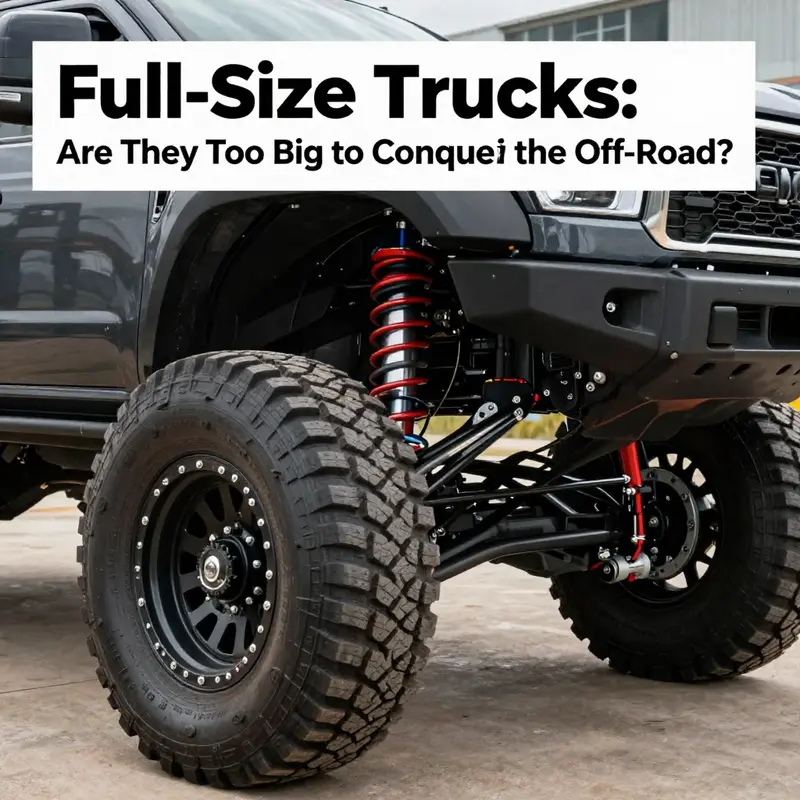
Full-size trucks carry an expectation: mass and presence that suggest they belong on highways and construction sites, not narrow trails. That perception misses how modern engineering changes the equation. Manufacturers design full-size trucks around three core objectives for off-road performance: durability to survive impacts, traction to maintain momentum, and control to let drivers place the vehicle where they need it. Those objectives drive an array of integrated systems. Together they allow large trucks to tackle terrain once thought the sole domain of smaller vehicles.
At the heart of off-road capability is the structure. Engineers use reinforced frames and strategic bracing to resist torsional forces that occur when wheels find uneven footing. High-strength steels and selective use of lighter alloys keep weight where it benefits strength and stiffness. A stiff platform preserves suspension geometry when the chassis twists over rocks or ruts. That stability maintains predictable steering and suspension articulation. Underbody mounts and reinforced subframes route impact loads away from vulnerable components. The result is a truck that stays intact and controllable after harsh impacts.
Suspension design transforms the ride from rigid to resilient. Long-travel suspensions let wheels maintain contact with the ground over large obstacles. Coilover assemblies and tuned dampers absorb rapid impacts while progressive-rate springs support heavy loads. Adaptive or variable-rate systems change damping in milliseconds to match conditions. In practical terms, these systems reduce the jarring impacts that unsettle drivers and damage components. They also improve tire contact patches, which boosts traction and reduces the risk of getting high-centered on uneven ground.
Ground clearance and geometry matter as much as raw suspension travel. Engineers shape the undercarriage to maximize approach, breakover, and departure angles. Skid plates and full-length belly protection shield oil pans, fuel tanks, and transfer cases from sharp impacts. Modular skid plate designs let owners replace damageable panels quickly without tearing into the frame. Raising control arms and rethinking steering knuckle placement prevents tires from rubbing at full articulation. That combination reduces the number of places where size itself would otherwise become a liability.
Traction systems that once were simple mechanical lockers now blend electronics and hardware. Locking differentials force equal torque to both wheels on an axle, and electronic limited-slip systems emulate that behavior when needed. Modern trucks add terrain-optimized traction controls and crawl-control features to manage low-speed traction automatically. These systems modulate throttle, brake, and transmission inputs to maintain steady forward motion over rocks or through mud. A well-tuned traction system compensates for momentary wheel slip and keeps a heavy truck moving where less sophisticated setups would stall.
Powertrain tuning complements traction hardware. Engines deliver broad torque curves with usable power at low revs. That low-end torque matters more off-road than peak horsepower. Transmissions paired with low-range transfer cases multiply torque for crawling over steep obstacles. Electronic shift controls and adaptive shift maps smooth gear changes during challenging maneuvers. Some powertrain packages include recalibrated throttle response and transmission lockup strategies to prevent abrupt surges that can upset vehicle balance. That synergy between engine, transmission, and driveline keeps the truck predictable and controllable.
Steering and braking receive special attention for off-road reliability. Heavy-duty steering components minimize deflection under load. Electric power steering systems include tuneable feedback that balances on-road feel with off-road precision. Brakes are often upgraded with larger rotors, durable calipers, and pads formulated to resist fade from repeated use in steep descents. Hill descent control systems automate braking at a wheel-by-wheel level. That lets drivers focus on steering while the vehicle maintains a safe, steady descent speed.
Tire technology ties nearly every innovation together. Larger diameter tires increase ground clearance and improve the ability to roll over obstacles. Wider footprints spread loads and boost flotation in sand or mud. Off-road tire compounds resist cuts and punctures while maintaining sidewall flexibility for better traction. Beadlock-capable wheels let drivers lower tire pressures without losing a secure rim seal, improving traction on rocks and sand. The right tire amplifies the benefits of suspension and traction systems, making a big truck feel more composed and capable.
Electronic vehicle modes let systems speak to each other. Selecting a specific terrain mode tells the engine, transmission, traction control, and even the stability control system to adopt settings tailored to the surface. In practice, a rock mode will favor conservative throttle response, lock differentials sooner, and allow greater wheel spin before stability control intervenes. Sand or snow modes will adjust torque distribution and transmission shift logic to maintain momentum. Those coordinated changes let drivers tackle diverse terrain without manually recalibrating each subsystem.
Protection and serviceability are as important as capability. Engineers place skid plates to guard critical components while maintaining access for routine maintenance. Underbody drainage and protected wiring harnesses prevent electrics from shorting during river crossings. Recovery points are integrated into reinforced frame sections so towing and winching can occur without tearing attachment points free. These design choices reduce the risk that a recovery will cause additional damage and simplify field repairs.
Weight remains a realistic constraint, and engineers address it pragmatically. Strategic use of aluminum and composite materials trims unsprung mass at the wheels and suspension. Lighter control arms and knuckles improve suspension response. At the same time, key components like the frame and mounting points retain heavier, proven materials. The net result balances durability with the need to limit rotational and unsprung weight penalties. Designers accept some compromises, but modern choices minimize performance losses while preserving toughness.
Accessibility for aftermarket upgrades shapes platform design. Many trucks now include factory provisions for accessories such as winches, auxiliary lighting, and enhanced bumpers. Built-in electrical circuits and reinforced mounting points reduce installation complexity. Manufacturers also offer performance packages that include aggressive tires, tuned suspensions, and underbody protection. Those packages reflect engineering decisions aimed at buyers who plan to use these trucks off-road frequently. They create a stronger starting point for serious modification without compromising factory warranties when correctly installed.
Real-world engineering accounts for human factors as well. Visibility improvements, including raised seating and strategically placed camera systems, help drivers place a long vehicle where short ones might fit. Steering calibrations and electronic aids reduce the need for corrective steering inputs. Ergonomic controls for drive modes and winch operation let drivers maintain focus on the trail rather than struggling with complex switches. All of these features reduce the cognitive load on drivers, making it easier to manage a larger vehicle in unknown terrain.
That said, size still imposes limits in dense forests and ultra-technical rock gardens. Narrow passages, tight switchbacks, and low overhangs can favor smaller, more nimble rigs. Engineers cannot erase physics, but they can mitigate many disadvantages through the integrated systems described above. The best full-size off-road trucks do not try to be compact vehicles. Instead, they use mass, strength, and advanced systems to tackle rough conditions where stability and momentum outweigh nimbleness.
Maintenance and durability planning are part of the equation. Heavy use off-road increases service intervals for fluids, seals, and suspension components. Engineers design for easy inspection and replacement of wear items. That approach reduces downtime and helps ensure a truck remains reliable even after repeated hard use. Owners who follow maintenance guidelines preserve performance and longevity, which is crucial for vehicles that experience frequent off-road stress.
In sum, modern engineering transforms the perceived liabilities of full-size trucks into strengths for many off-road scenarios. Reinforced structures protect against damage. Sophisticated suspensions provide wheel articulation and comfort. Advanced traction systems and powertrain calibration deliver controlled torque where it matters. Tires and protective components tie the whole system together. While tight technical trails still present challenges, the integrated engineering solutions make full-size trucks capable, durable, and controllable off-road platforms.
For deeper technical details and manufacturer-specific trim overviews referenced in this discussion, consult the published trim information provided by vehicle makers, for example here: https://www.nissanusa.com/vehicles/trucks/2025-nissan-pickup/pro-4x-trim.html. For guidance on mechanical upgrades and diesel powertrain work, a practical resource on maintaining and modifying diesel trucks can help owners plan maintenance and enhancements: https://dirtantrucks.com/mastering-diesel-mechanics-your-step-by-step-path-to-success/.
When Size Meets Trail: Balancing the Strengths and Limits of Full‑Size Trucks Off‑Road
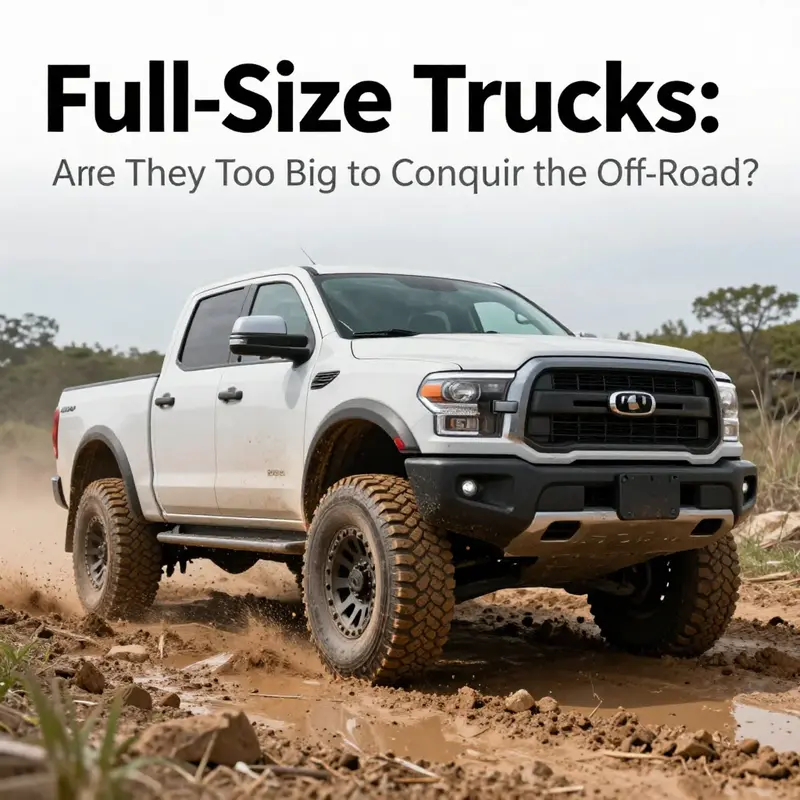
Full‑size trucks arrive at off‑road trails with a distinct promise: brute strength, generous ground clearance, and equipment designed to take abuse. That promise has real value when you need to haul gear, tow a trailer, or tackle long stretches of rough terrain. Yet the same attributes that make these trucks powerful also introduce tangible trade‑offs. This chapter walks through those strengths and limits in a single, continuous discussion, and it shows how thoughtful choices and techniques let drivers exploit the benefits while minimizing the drawbacks.
Start with the upside. Full‑size trucks are built around a philosophy of durability and capability. Their frames and drivetrains are engineered to carry heavy loads. Engines deliver high torque at low rpm, which is essential for crawling over obstacles, pulling out of deep mud, and climbing steep grades. Higher ride height and larger wheel travel mean the underbody clears rocks and ruts that would pin a lower car. Robust suspension components soak up repeated impacts, and many trucks include selectable drive modes and differential controls to tailor traction to the terrain. In short, when the obstacles are large and the route demands power, full‑size trucks generally have the tools to get you through.
Those same tools, however, come with consequences. The larger mass of a full‑size truck increases momentum in ways that can be both beneficial and harmful. Momentum helps when crossing soft sand or deep mud; a heavier vehicle is less likely to wash out or float. But mass also translates to greater forces on the ground. On fragile trails, that pressure compacts soil, damages vegetation, and accelerates erosion. Tire and suspension wear occurs faster, and recovery after a stuck event can be more difficult due to sheer weight.
Maneuverability is another clear trade‑off. Narrow switchbacks, tight singletrack, and heavily wooded sections favor shorter, lighter vehicles. The longer wheelbase of a full‑size truck increases the required turning radius and makes precise line choices harder. It also raises the likelihood that approach, breakover, or departure angles will be exceeded on tight obstacles. Drivers must often plan more deliberately, back up and re‑set lines, or avoid certain sections entirely. In confined terrain, a nimble mid‑size vehicle will usually outperform a full‑size truck.
Ownership costs and logistical concerns matter too. Larger engines and heavier curb weights generally reduce fuel economy. Heavy‑duty tires and suspension components cost more when they need replacing. Insurance and routine maintenance bills trend higher, particularly for trucks outfitted with aftermarket modifications. If you frequently tow or tow large loads, the lifetime value can justify these costs. If your excursions are occasional and strictly recreational, the economics change.
Still, size alone does not determine suitability. How a truck is specced and how the driver approaches the trail create the real difference between a capable daily driver and an off‑road workhorse. A modest set of targeted upgrades often yields massive returns. Proper tires matched to the terrain improve traction and reduce the chance of punctures. Reinforcing the underbody with skid plates protects vulnerable components. Upgrading to stronger recovery points and equipping the truck with a winch and soft shackles makes self‑rescue much safer. Suspension tuning can improve both comfort and control, helping the truck track better across uneven ground and reducing the risk of bottoming out.
Technique is equally important. Full‑size trucks perform best when drivers respect their geometry and weight. Line selection should emphasize minimizing lateral tilt and preventing high‑center situations. Enter obstacles slowly and use low range gearing; that maximizes torque and keeps wheelspin controlled. Use momentum wisely on soft surfaces, but avoid overreliance, which can lead to deeper bogging. When descending steep slopes, engine braking reduces wear on the service brakes and improves control. In narrow sections, step out and scout the line on foot. Small course corrections taken early are far easier than aggressive steering at the last moment.
Trail selection and planning can make or break an outing. Choose routes that match the truck’s strengths: wide tracks, open forest roads, desert washes, and rocky access roads. Avoid tight, technical singletrack unless you have experience and the truck has been modified for clearance and agility. Consider carrying a compact folding shovel, traction boards, a high‑quality jack, and a rated recovery strap. Communication tools, a first‑aid kit, and redundancy in crucial supplies are always prudent. When traveling in remote areas, plan escape routes and identify safe turnaround points. The heavier a vehicle is, the harder an extract becomes. Prevention beats recovery.
Maintenance ties directly to off‑road reliability. Full‑size trucks benefit from proactive service. Regularly inspect and service suspension mounts, control arms, and shock absorbers. Check fasteners for loosening after rough runs. Monitor fluid levels and change oils according to a schedule that assumes heavy use. Brake systems take extra punishment off‑road, so pad and rotor checks should be frequent. Tires need rotation and inspection for cuts or bulges. For owners who run heavier payloads or tow frequently, investing in mechanical knowledge pays off. A good primer on diesel mechanics and heavy‑vehicle maintenance is invaluable for operators who want to prolong component life and reduce downtime. For those interested in deeper mechanical guidance, a practical resource is available here: Mastering Diesel Mechanics: your step‑by‑step path to success.
Environmental stewardship must guide off‑road activity. Larger trucks have a higher potential to harm sensitive lands. That makes compliance, mindfulness, and restraint essential. Stick to designated trails and roads. Avoid wet, saturated soils that are easily deformed. If you encounter conditions that will clearly scar the land, turn around. Carrying recovery gear and knowing how to use it reduces the chance of leaving a vehicle in place for days, which can intensify environmental damage. Leave‑no‑trace principles apply equally to motorized recreation: minimize noise, avoid stream crossings where banks will be degraded, and pack out any trash.
There are also social and regulatory dimensions to consider. Land managers may restrict vehicle size on certain routes. Local clubs and trail stewards often favor vehicles that cause the least damage. Operating a large truck on fragile trails can lead to fines or loss of access for all users. Engage with trail organizations and support volunteer work days. When trail access is a shared resource, responsible ownership becomes a civic duty.
Finally, think about the mission. If your off‑road goals center on heavy towing, remote worksite access, or crossing long stretches of rough country, a full‑size truck is often the right tool. If your primary interest is technical rock crawling or tight forest singletrack, a smaller, more maneuverable vehicle is usually better. Many owners find the best middle ground by tailoring a full‑size truck to specific needs. That can mean conservative lift and tire packages, protective underbody armor, and tuned suspension rather than extreme modifications. The objective is to increase capability without rendering the truck impractical for daily use.
Adaptability is the key takeaway. Size amplifies both benefits and costs. With correct equipment, careful driving, and sound planning, full‑size trucks can be formidable off‑road companions. They shine where durability, towing, and load capacity matter most. They are less ideal where agility and minimal ground impact are priorities. Understanding these trade‑offs, and choosing the right balance, ensures that size becomes an asset rather than an obstacle.
For readers seeking technical comparisons and deeper specifications to inform purchase decisions, detailed review resources offer systematic evaluations and real‑world testing data. These resources can help match a truck’s off‑road features to your intended use-case and budget. For one such source of expert testing and long‑term review material, see: https://www.caranddriver.com
Final thoughts
The perception that full-size trucks are too big for off-road adventures is a misconception rooted more in their size than their capability. With exceptional engineering tailored for performance in diverse terrains, these trucks are equipped to tackle challenges where many vehicles falter. Understanding the balance of power, handling, and off-road optimization reaffirms their place as a robust choice for off-road enthusiasts and adventurers alike. Embrace the freedom and strength that full-size trucks offer; they are more than equipped to conquer the wild.