
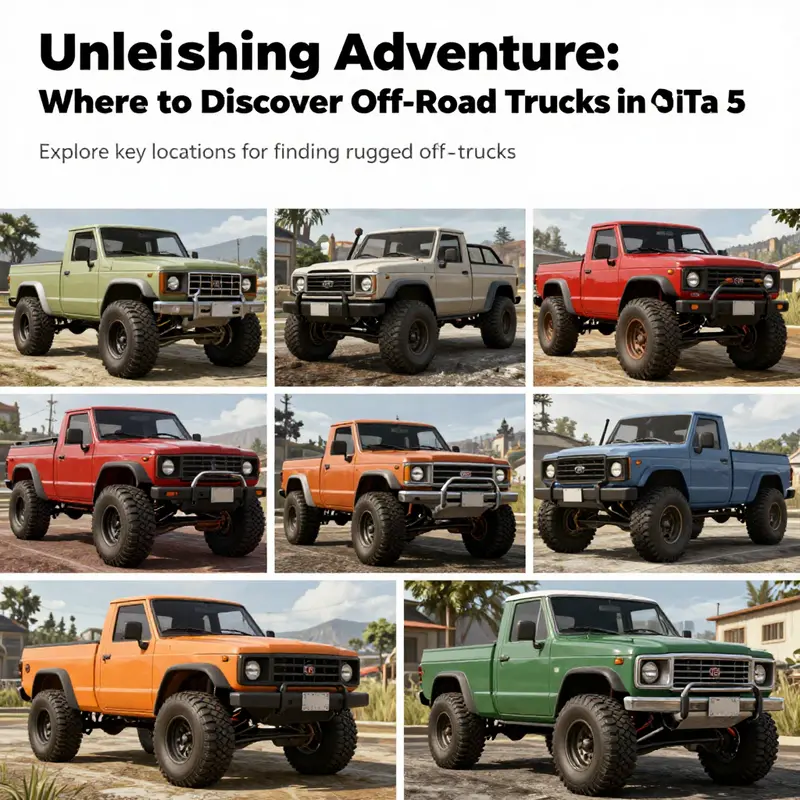
In the expansive universe of GTA 5, where the thrill of the chase meets the serenity of scenic drives, off-road trucks are the rugged companions every adventurer seeks. From the dusty back roads of Sandy Shores to the mountainous trails of Great Chaparral, the game offers ample opportunities for off-road enthusiasts and racing fans alike to locate these robust vehicles. Each chapter of this guide dives deeper into the best spots within Los Santos and Blaine County to uncover these off-road gems. Whether you’re an adrenaline junkie looking to race through rugged terrains or a rancher in search of utility, this exploration will equip you with all the details needed to track down the off-road trucks that await discovery.
Hunting the Sandking: Finding Off-Road Trucks in Sandy Shores Desert

Sandy Shores is where the map stops trying to be gentle. Dry washes, cracked earth, and a scattering of low buildings create an environment built for heavy tires and raised suspensions. If you want an off-road truck that feels planted on loose gravel and climbs washed-out embankments with authority, this is the area to patrol. The Sandking XL is the marquee vehicle players look for here. It spawns often, it handles the terrain well, and it responds to a few predictable patterns that you can exploit to find one faster.
Start by thinking like the game. Vehicle spawns follow rules more than randomness. In Sandy Shores, a handful of nodes and roads account for most off-road truck appearances. The mod shop near the town center is a primary hotspot. Between late morning and early evening, the shop and its immediate streets commonly host Sandking XLs. If you cruise slowly along the nearby side roads, keep your eyes on parking areas, dirt cutoffs, and driveways. Sandkings will often pull up or idle as part of routine traffic patterns, making a slow sweep far more effective than furious laps.
Another reliable route follows the main thoroughfare that cuts through the desert. The Great Ocean Highway that bisects the region is not only the quickest way across the landscape, it also acts as a spawn line. Driving that route between junctions increases your chance of encountering an off-road truck in motion. Pay attention to midday traffic; daytime spawns are more likely to include the Sandking in open stretches of the highway than at night.
Time matters. In the Sandy Shores area, Sandking XLs appear most frequently between ten in the morning and seven in the evening. That window is large enough to be practical but small enough to be worth planning around. If you arrive before 10 AM, consider doing a quick loop elsewhere on the map or running a brief mission until the hour advances. If you patrol the area during that active window, your spawn rate will improve noticeably.
Spawning also favors areas that logically would host heavy vehicles. Gas stations, crude parking lots, and the dirt tracks that lead away from town are all fertile ground. Concrete clues help: look for tire tracks leading away from the road, faded gravel paths, and clusters of utility buildings. Sandkings tend to show up where trucks would gather in a realistic world: near supply points and along routes that bypass smoother main roads.
How you search makes a difference. Slow, deliberate sweeps with a focus on visual cues beat speedrunning loops. Pull into side streets and let traffic pass. Stop at junctions and scan the hillsides. If you spot a Sandking parked, approach calmly. In single-player, you can hop in and drive off immediately. In online sessions, remember that other players can see and steal vehicles, so be discreet if you want to keep it long enough to take to a mod shop.
Speaking of modifications, the mod shop in Sandy Shores is not only a spawn magnet; it’s your one-stop upgrade point. If you aim to customize a Sandking, plan to find one close by. Off-road trucks benefit most from reinforced suspension, all-terrain tires, and engine tuning. Visual upgrades are optional, but practical changes transform the Sandking into a dependable explorer. If you prefer to save time, find one already near the shop and pull it in for immediate work.
If you fail to find a Sandking on your first pass, use reset techniques. Leaving the area on foot and fast traveling to a distant location triggers a respawn when you return. Alternatively, switching sessions in online mode or switching characters in single-player will often refresh the map. Patience and persistence pay. Clear a block of nearby traffic by moving ten to fifteen game minutes away, then come back and sweep the same roads again. Spawns will cycle and new opportunities will appear.
Some players try to engineer spawns by manipulating time and traffic. Loitering at spawn points until the hour turns over can coax a Sandking to appear, but that method wastes time. A better plan is to stagger your search: arrive, do a quick circuit, move to a different junction, then wait out a short activity or two before returning. This rotating presence mimics natural traffic behavior and helps trigger new vehicle population cycles.
For those who play online, keep in mind that vehicles left unattended may be taken by others. If you want to keep a Sandking you find, drive it to the mod shop and add a tracker or equivalent protection. That preserves the vehicle and allows retrieval when you log back in. When a freshly spawned Sandking is in the open, consider driving it to a hidden spot first, then to the mod shop. Concealment reduces the chance that another player will spot and take the vehicle before you can protect it.
Using the Sandking in the desert reveals its strengths. It tackles rutted climbs and gaps with composure. Its high clearance reduces the chance of grounding on rocks, and its torque helps when you need to power up a slope. Even so, treat it like a tool: keep momentum through loose sections and choose approach lines that avoid steep, abrupt drops. The truck is forgiving, but reckless driving brings rollovers and damage that slow you down.
If your goal is to collect and store multiple Sandkings, create a route that links the mod shop, the main highway, and the small parking pockets off side roads. Run the loop slowly during the midday spawn window and make note of repeat hotspots. Over time, you’ll map the micro-patterns that dictate where Sandkings pause and where they keep moving. That mapping becomes your shortcut to a reliable farm.
Troubleshooting common issues helps too. If the truck refuses to spawn, check the time in-game and confirm it’s within the active window. If the area is crowded with other vehicles, make room by driving a short distance away. If the truck spawned but was taken by another player in an online session, try switching to a private session or inviting a friend to help you secure it. These small adjustments reduce wasted loops and speed up the process.
Finally, broaden your expectations. While Sandy Shores is the top desert spot for the Sandking XL, occasional spawns appear on connecting routes and in nearby towns. If you expand your search to include the highway and rural connectors, you’ll occasionally intercept a Sandking in transit. That gives you the chance to snatch one without entering the busy mod shop area.
If you want to deepen your mechanical understanding of off-road vehicles and how upgrades affect performance, a helpful guide lies in a practical resource on mastering diesel mechanics. That guide explains fundamental principles that translate to in-game upgrades and real-world intuition: Mastering diesel mechanics for trucks. Use that knowledge to prioritize modifications that matter most for off-road performance.
Patience, observation, and a deliberate patrol strategy turn Sandy Shores from a frustrating grind into a predictable source for the Sandking XL. Keep your search slow, focus on the mod shop and the main desert highway, and use timing to your advantage. With a few circuit patterns and some spawn-reset tricks, you’ll have a rugged off-road truck ready for any backcountry challenge.
Source: https://www.carinterior.net/gta-5-pickup-truck-spawn/
Rugged Trails and Rich Finds: Unearthing GTA 5’s Off-Road Trucks in the Great Chaparral
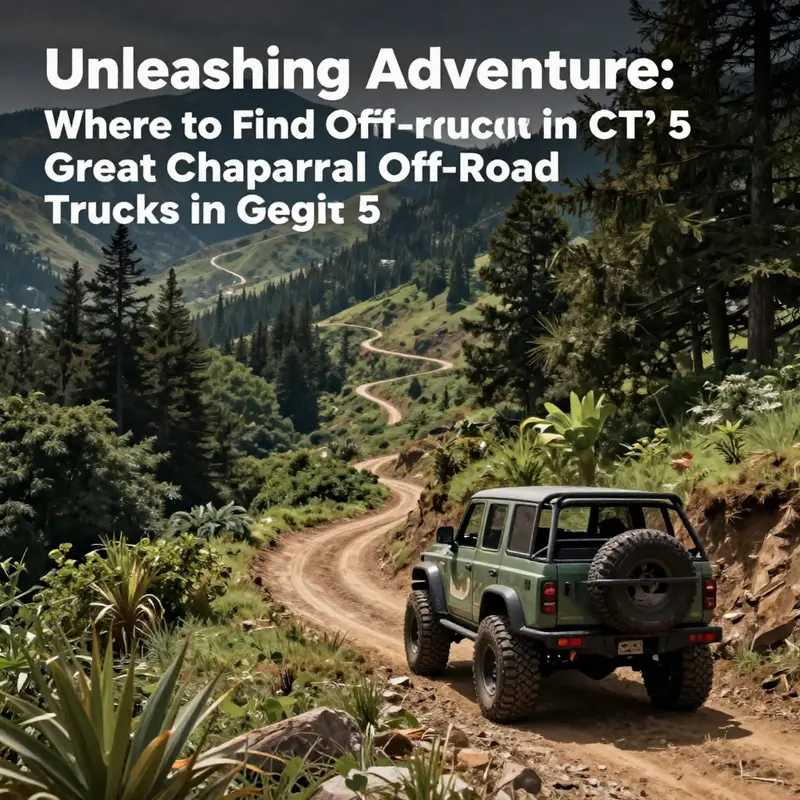
The Great Chaparral crowns the northern edge of Los Santos with a rough, wind-scarred horizon and a network of trails that vanish into pine and rock. It is here, where the land tests a vehicle’s grip and a driver’s nerve, that off-road trucks reveal their true character. If you want to learn where to find the big, capable machines in GTA 5 and how to push them to their limits, start with the Chaparral. Its steep grades, uneven ledges, and narrow switchbacks create a living proving ground, inviting players to test not just speed but balance, momentum, and line selection. In this chapter, we explore how the terrain shapes where trucks spawn, what models you are most likely to encounter, and how to approach the landscape so you can bring the most capable machine back to the road in one piece, ready for the next descent or jump over a rocky ravine.
The terrain in the Great Chaparral is a mosaic of exposure and concealment. There are open rock faces where a powerful engine can roar and the suspension can stretch over a crest, and there are dense stretches of scrub where trees lean in and brush scrapes your doors if you lean too close to the edge. This contrast makes it ideal for testing different off-road platforms, especially the models that have become synonymous with rugged performance in the GTA world. When you start exploring, keep your eyes peeled for a trio of go-to vehicles that appear with a mix of reliability and bragging rights: the Sandking, the Bagger, and the Dune Buggy. Each brings a distinct flavor to the Chaparral’s trails. The Sandking trades speed for torque and ground clearance, letting you haul up the steepest grades with a grin. The Bagger focuses a blend of power and agility, designed to handle tight corners with a steady rhythm. The Dune Buggy, lighter and more nimble, carves through sandy pockets and scrambles over stony outcrops with a playful bounce that suits quick lines and daring s-curves.
What makes the Great Chaparral so compelling is not just the presence of these models, but how the land itself changes the way you approach driving. A switchback on a sun-drenched ridge will demand careful throttle control and precise braking while you test the limits of traction on loose gravel. A descent into a ravine requires a blend of speed management and line selection to avoid a jarring bottom-out or an unintended drift into the boulders. The vegetation—dense enough in some pockets to reduce visibility—adds a sense of immersion and risk, reminding you that this environment is not a straight line from A to B but a living course where the vehicle, the driver, and the terrain interact in real time. In practice, this means you’ll often be rewarded for patience. Rushing across a ridge can leave you with a nose-dive into a rut, while a slow, deliberate approach tends to reveal lines you would otherwise miss. The Chaparral does not punish careful planning so much as it rewards it.
Of course, the point of any expedition into this region is not merely to see what you can climb but to test how well your chosen truck handles the terrain on the high-energy moments—the moments that demand a crisp gear change or a timely throttle lift to keep the wheels spinning rather than losing purchase on the rock. The Sandking excels here because its body can absorb a rough landing from a crest and keep moving forward without derailing your momentum. The Bagger offers a balance between traction and maneuverability that is especially useful on switchbacks where choosing the right line means the difference between a clean exit and a stubborn stall. The Dune Buggy shines on the softer soil and compact dirt where its light frame can take you from one roosting rock to another with minimal drag. For players seeking the most authentic off-road experience in this portion of Los Santos, the Chaparral becomes a teacher, showing how to read terrain, anticipate the ground under the tires, and adjust speed and steering to the texture of the path ahead.
It helps that the Chaparral is more than a single trail; it is a network of routes that intersects with hidden dirt paths, abandoned camps, and overlook points that beg for exploration. Hidden paths often lead to secluded clearings where a rare variation of off-road truck might briefly spawn, or where a particular route presents a new obstacle that you will learn to conquer through repetition. The key to finding variety, and not simply the same three models, is to vary your route and time your runs. Daylight reveals ruts and rock gaps you might miss at night, while a dry season makes dust devils swirl along the road, offering a sense of speed that can be as thrilling as any straightaway. The Campbell ridges and pine-belt pockets are not just scenery, but playfields that test your awareness and your vehicle’s grammar of movement.
For players who want a deeper dive into how off-road performance translates to practical play, there is a shared body of knowledge about vehicle handling in GTA Online’s more competitive settings. The Great Chaparral provides a laboratory where you can practice the basics—wheel spin control on loose surfaces, throttle modulation on steep grades, and the art of exiting a corner with enough momentum to ride a crest—before you apply those skills in a time-trial or race against others along the park’s rugged edges. In addition to practicing, many players pursue practical routes that maximize their odds of encountering the most capable trucks. The Chaparral’s geography deliberately rewards those who scout ahead, map the lay of the land, and then commit to a route that balances the thrill of a fast descent with the safety of a controlled, deliberate climb.
If your goal is not just to locate a truck but to understand why certain builds perform better in this terrain, a few guiding principles help. First, suspension tuning matters more than raw speed. A stiffer setup with longer travel can help you float over rocks rather than slam into them, but it also makes the vehicle less forgiving on narrower trails. Second, tire choice matters. Off-road tires that bite into dirt and extract grip from loose gravel reduce the chance of a slide that could end in a tip or a spin. Third, weight distribution is crucial. A heavier front end can help the front tires dig into the dirt on climbs, but it may hinder the car’s ability to pivot quickly on tight corners. The Chaparral rewards customization and experimentation, letting you tailor your truck to your preferred style and the route you plan to conquer.
As you navigate, you will notice the spawn patterns—the way certain trucks silhouette into the open world, how some appear near old logging roads, and how others might emerge from behind a rock formation after you circle back with a different line. The Great Chaparral’s variety means you can test a model’s endurance on a long, grinding ascent as well as a rapid, technical descent. The experience is not merely about acquiring a vehicle; it’s about building a mental map of the land and how a given machine interacts with it. For those chasing a more competitive edge, Chaparral runs offer a chance to stage speed trials or obstacle courses that use natural features as barriers and ramps. You can set a course, observe how your truck handles each obstacle, and then adjust your approach to shave precious seconds off your time. This process—trial, error, adjustment—is where the Chaparral earns its reputation as a proving ground for off-road mastery.
In addition to single-player exploration, the online ecosystem expands the possibilities. GTA Online rewards can include exclusive off-road trucks altered by delivery missions or special events, providing an incentive to pursue routes like the Great Chaparral with a broader mission in mind. The mix of seasonal events and cooperative play adds a social dimension to what would otherwise be a solitary quest for the ultimate mountain route. If you plan to branch into online play, expect to run into other players sharing the same trails, trading tips on line choices, and testing new builds in the same rugged environment.
For readers who want a broader reference point beyond the in-game sandbox, official guidance from the creators offers a detailed overview of off-road models, their performance stats, and recommended locations where they tend to appear. It’s a resource that can help you compare the truck you’ve found in the Chaparral with the broader roster of off-road vehicles across GTA Online, and it’s worth checking to align your in-game discoveries with what the developers suggest as practical choices for different terrains. For a deeper dive into vehicle performance and maintenance concepts that complement your in-game explorations, see Mastering diesel mechanics. Mastering diesel mechanics.
In sum, the Great Chaparral stands as a premier testing ground for GTA 5’s off-road trucks. It is a landscape that respects the craft of driving and invites you to pursue a more thoughtful approach to exploration. The presence of capable platforms like the Sandking, the Bagger, and the Dune Buggy—each optimized for different rhythms of ascent and descent—turns this region into a living workshop where you can learn by doing. Whether you are chasing a stubborn climb, planning a tight corner, or staging a stunt that demands a clean exit from a rocky ledge, the Chaparral offers the terrain that makes it possible. And as you refine your routes and calibrate your builds, you’ll come to see the land not merely as a backdrop but as an active partner in your off-road journey. In the world of GTA 5, where the map is a playground and the terrains are teachers, the Great Chaparral is the chapter that invites you to live out the car-craft story with power, precision, and the satisfying grit of a truck that truly earns its keep on the rocks.
Paleto Bay Unveiled: Finding Off-Road Trucks Along the Coastal Backroads of GTA 5
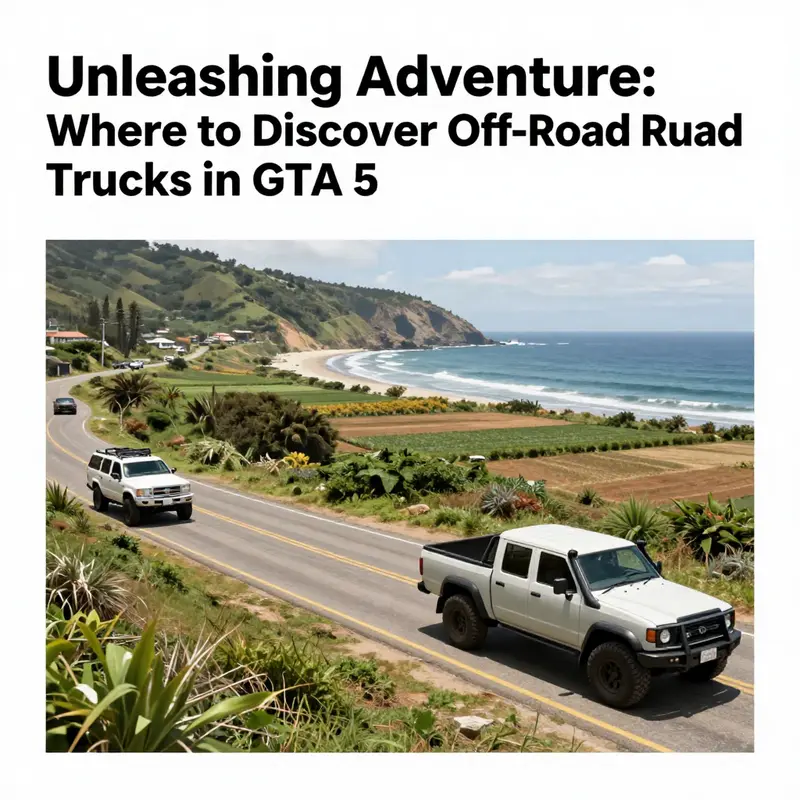
Paleto Bay sits at the edge of Los Santos’ map, a quiet coastal town that hides one of the game’s richest pockets of off-road opportunity. The shoreline gives way to steep hills, pine and scrub, and dirt trails that snake into the surrounding hills like veins in rock. It’s a place where the sea’s gray spray mingles with the dust kicked up by tires, and where the wind seems to push any curious driver toward rougher ground. In this setting, the quest for a sturdy off-road truck becomes less a scavenger hunt in a crowded city and more a deliberate patience test on gravel and coastal dirt. The terrain around Paleto Bay is made for vehicles that can breathe through rutted earth and cling to uneven grades. It rewards those who move slowly, listen to the engine, and read the land—because spawns here are less predictable than in the inland suburbs and more tied to the land’s natural topography.
To begin, imagine the town as a hinge between sea and mountain. Just inland, a mosaic of backroads crosses through wetlands, light forests, and rocky inclines. These routes are more than scenery; they are lifelines for any off-road truck hunter. The trucks you find here tend to appear in places where equipment meets dirt, where industrial bustle inches away from nature, and where the map’s edge becomes a ramp of dirt and dust. The Paleto Bay landscape invites a careful approach: you’ll want to take your time surveying narrow lanes, unpaved spur roads, and the shoulders that disappear into forest. A steady hand and a willingness to follow winding paths will yield more steady results than a high-speed dash along the main coastal road.
Industrial zones near Paleto Bay act as the primary magnets for off-road finds. These are the zones where warehouses and loading yards leave telltale signs of logistical work: rusted rails, abandoned pallets, and the stubborn imprint of vehicles that have used the same routes for years. In those lots, you’ll often spot the hulking silhouettes of heavy-duty trucks that diverge from the city’s glossy fleet. The trucks parked here are not flashy showpieces; they are the practical, workhorse machines built to endure mud, salt, and long shifts along fuel-ribboned corridors. The chance of a nocturnal appearance is higher when the lot lights flicker, and the quiet after a shift ends makes the trucks feel almost ready to roll again, as if they’ve just paused to consider their next job. While you move through these zones, keep your eyes on the perimeters: the edge of a fence line, the gap between a container stack, or the shadow of a crane can conceal a tucked-away truck waiting for a quick moment of use.
If you drift toward Paleto Bay’s coastline, the beaches and shoreline give a different kind of payoff. Secluded stretchs of sand, trestle-like jetties, and the scattered presence of parked vehicles along dirt paths offer pockets where off-road trucks might linger out of sight from the town’s core. The approach here is almost archaeologic: walk the line where land meets sea and scan the crests of dunes for signs of windshields catching the sun or tires pressed into soft ground. Some trucks may be tucked behind low dunes or tucked along the back edges of beach parking areas—places where a quick exit is more important than a polished appearance. The payoff comes to those who pause by a quiet curve in the coast road, listen for a faint engine note in the wind, and then explore the parcel of land that the sound seems to originate from.
Another fruitful corridor runs along Paleto Bay’s outer ring roads, especially where dirt trails peel off toward Mount Chiliad’s foothills. The road that angles toward the mountain is a magnet for enthusiasts and for vehicles built to handle steep grades and rocky approaches. Here, you’ll find trucks that have learned to climb with a stubborn resilience, rigs that look like they were made to bear the weight of a long haul into rugged country. It’s not unusual to find a second or even a third truck parked along a single dirt spur, each one a potential candidate if you’re patient enough to search the shade and the gather of trees that line the trail. The sightlines from these edges—where the map’s paved world dissolves into unpaved ambition—often reveal a truck’s silhouette before you see the entire vehicle.
The outskirts near Mount Chiliad form a particularly fertile ground for high-performance off-road rigs. This is where the terrain changes abruptly—from coastal scrub to steeper, rockier paths that demand a more capable chassis and better traction. If you follow the road that turns toward the mountain from Paleto Bay, you’ll pass through stretches that test suspension and torque. In those zones, you’re more likely to encounter trucks that look ready for a tough climb or a muddy descent, their frames caked with dust and rain grime. The thrill here isn’t just in spotting a truck; it’s in the moment you realize the vehicle has earned its place along the edge of civilization, a sign that the driver values control, reliability, and the confidence to push into the unknown.
For players who enjoy a more urban texture, the abandoned warehouse area near Paleto Bay remains a reliable magnet. This locale is characterful because it carries the memory of industry and the possibility of human traces left behind after long shifts. In the warehouse vicinity, trucks may appear in dim light or under the glow of a broken sign. They sit under awnings or between dumpsters, their presence a quiet testament to the work that used to fill the yard. The combination of open space and tight corners here creates a practical hunting ground: you can watch the main lane from a distance, then edge closer to where a vehicle might be stowed behind a stack of pallets or tucked near a loading dock that has seen its last delivery. The dancer in this scene is timing: a moving cloud of dust, the flicker of a tail lamp, a fraction of engine roar—all cues that a heavy, off-road machine could be resting up for its next job.
In practice, locating a sturdy off-road truck in Paleto Bay is less about chasing a single spawn point and more about reading landscapes. You want to approach with a plan and the patience to swing through the town’s varied micro-geographies—the industrial yards, the secluded coastal pockets, and the mountain-edge routes. As you move, keep an eye on the signs of recent activity: fresh tire tracks in mud near a dirt trail, a recently disturbed patch of gravel, or a vehicle that seems to have been moved recently for a haul. The more you invest in a slow, scrupulous recon, the more likely you are to encounter a truck you can claim and drive. It’s a practice of listening to the land as much as listening to the map, because Paleto Bay rewards the patient explorer who respects the way the terrain dictates the flow of traffic.
If you expand your search beyond Paleto Bay while keeping the same approach, you’ll notice the same principles apply, though the geography may differ. The desert-adjacent sprawl of nearby areas gives you more open spaces to survey, while the forested edges behind Mount Chiliad offer steeper sections where trucks with robust suspensions shine. The underlying pattern remains consistent: seek out the edges of development, read the land’s texture, and observe where trucks would need to park, wait, or be left temporarily in a safe, accessible place. When a candidate truck is finally identified, give it a careful once-over to confirm it’s a workable find—checking for damage, fuel, and the overall condition that suggests it can be driven away and used without immediate repair work requiring a trip back to town.
For readers who want to widen their knowledge without losing the Paleto Bay focus, there are practical references to consult. In the spirit of practical maintenance and dependable engineering, you can explore broader insights into diesel systems and truck upkeep through dedicated sources that discuss the fundamentals of diesel mechanics, tire care, and brake performance. This additional context helps you approach a find with confidence, enabling you to assess how far a truck can travel before needing service. As you refine your hunting technique, remember that the most rewarding finds are those that combine a sturdy build with the right moment to strike—when the light and terrain align, and a truck sits waiting along the edge of Paleto Bay’s rugged map.
Underscoring the practical nature of this pursuit, a targeted resource on vehicle maintenance can complement the in-game hunt. For more on diesel mechanics and how to keep a truck running smoothly in demanding conditions, see the resource linked here: mastering-diesel-mechanics-your-step-by-step-path-to-success. This external perspective lends a grounded approach to a game world that already prizes practical know-how and steady, methodical exploration.
As you continue your Paleto Bay expedition, remember that your success hinges on balance: patience, terrain reading, and a willingness to slow down and listen to the land before you make a move. The coastal wind, the shift in light, and the land’s stubborn, unyielding texture conspire to test your timing. If you remain attentive, you’ll find a robust off-road truck tucked in a corner where the world loosens its grip on paved certainty and gives the driver room to maneuver through mud and rock. And when you finally turn the key, you’ll not only celebrate a successful find but also the sense of mastery that comes from reading Paleto Bay’s complex map—the coast, the hills, and the industrial pulse that makes this coastal town a uniquely rich ground for off-road adventures.
External resource: https://support.rockstargames.com
Heavy-Duty Trails: Finding Off-Road Trucks in the Game’s Industrial and Construction Zones
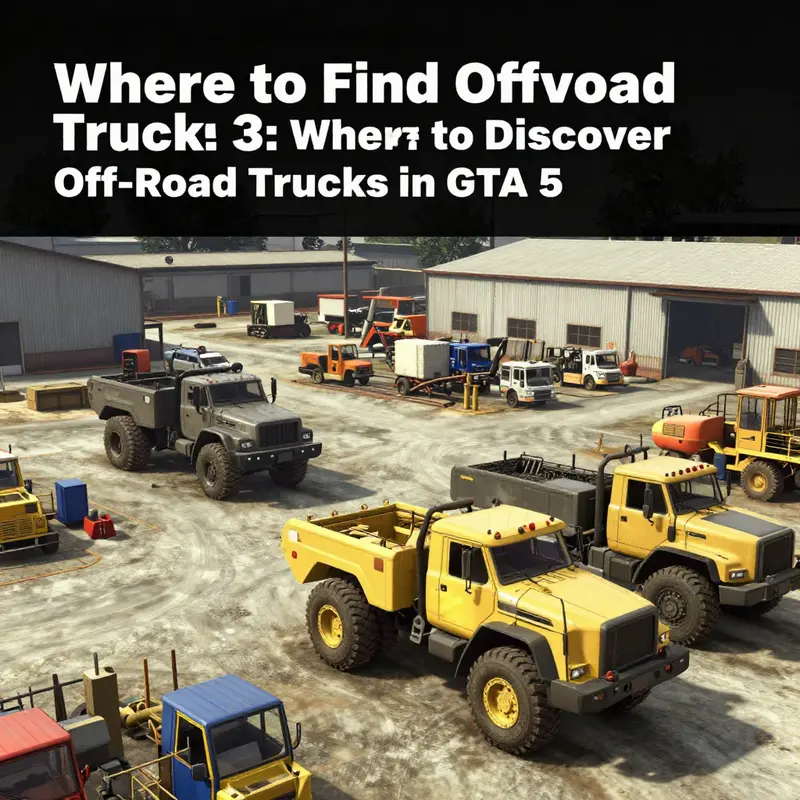
Across the map, the most capable off-road trucks rarely linger in the neon glare of the city. They live instead in the hard-edged spaces where work never stops: the industrial blocks and the construction sites that cling to hillsides, coastlines, and the inland rims. Those zones host the heavy lifters of the terrain, vehicles built to claw through mud, scale rugged grades, and haul oversized loads along roads that creak under their weight. If you want to find one of these beasts, you learn to move with the rhythm of the industrial engine that defines this part of the map. It isn’t a matter of gliding from one tourist hotspot to the next; it’s a matter of letting the map reveal its working heart, a cadence of diesel, steel, and dust that marks the edges where hard labor meets hard terrain. When you move through these areas with patience, the path to the truck you want begins to present itself not as a single beacon but as a sequence of small, telltale signs—the glow of a loading yard at dawn, the glare from a refiner’s fence, a dirt trail that threads between cranes and warehouses, and the quiet, persistent rumble of a vehicle that knows the pace of the job better than you do.
Within the industrial zones that hug the outskirts of Los Santos and spill into Blaine County, the spawn pattern centers on the workday. The windows are not arbitrary; they align with shifts and the flow of heavy equipment moving along the perimeter of refineries and manufacturing plants. The typical heavy off-road chassis you are after—the 6×6 Off Road Truck Chassis—appears with a presence that betrays its purpose. It looks built to carry timber, ore, or steel along tracks shredded by rain and by the wheels of countless other sites. The trucks show up on back roads where the pavement ends and the map grows rough, often parked near service lanes where fuel trucks and cargo carriers pulse through the same corridor. If you pause at the edge of a yard and listen to the distant chatter of cranes, you might catch the moment when a truck rolls into the light of a maintenance shed, its body bearing the dust of a long haul and its tires caked with the soil of a working day.
The timing matters, too. In practice, you’ll find the best chances for industrial spawns between 04:00 and 12:00 in-game, a window that coincides with morning shifts when crews prepare for the day’s heavy transport. This doesn’t guarantee a sighting, but it does set your odds in a favorable arc. The industrial belt around the oil refineries and the surrounding manufacturing plants becomes a corridor where the big rigs line up behind gates, waiting for the crew to open the doors and let the machines breathe again after another night of maintenance. In daylight, the light catches the chrome and the rugged textures of the chassis, and the trucks seem to exhale the memory of a hard night’s work. These moments feel less like random spawns and more like cues from a map that knows you’re looking for a particular kind of vehicle—one that still carries the scars and the story of the job it’s built to perform.
In practice, factory yards, dock edge spaces, and the rough slabs behind industrial complexes all become potential stages for the off-road truck to appear. Near the outskirts, the spawns cluster around refineries where the air carries the tang of fuel and metal. The truck’s chassis, demandingly capable in mud and on steep grades, is often found tucked behind a row of temporary fencing or parked along a dirt ramp that leads to a loading crane. The environment there feels almost ceremonial: a silent acknowledgement that these zones are designed to keep moving no matter the weather, no matter the hour. When you spot a truck in this environment, you notice the telltale features—the big tires that bite into rutted soil, the raised suspension that clears the roughest approach, and the heavy-duty bed that hints at the cargo it is meant to bear. You sense a vehicle designed for durability rather than speed, a machine that works long hours with a purpose you can imagine as you pass by—hauling pipes, steel beams, and heavy crates from one industrial corner to another.
Another layer of complexity comes with the map’s dynamic spawn system. Anomalies can appear in certain docks where the spawn window overlaps with other game activities. In those moments, a tugboat can appear where an industrial truck would typically be. This isn’t a fallacy of the spawn logic but a reminder that the online world is alive and adaptive, a living pipeline of assets that shifts with the server’s rhythm and the players’ presence. The tugboat’s appearance is a quirky, almost comical reminder that the physical geography of the port and the timing of the day can rearrange the expected lineup of vehicles. It’s not that the off-road truck is gone; it simply has wandered into a different corner of the same industrial map. The key takeaway is to keep your eyes open to the narrow windows and the subtle signals—dust kicked up on a dirt track, the faint glow at the gate of a loading yard, the telltale silhouette behind a chain-link fence—that indicate a truck is near, waiting for its next assignment.
For players who crave rarer variants, the route to exclusivity lies beyond routine spawns. Completing special missions that involve contractors or logistics characters can unlock higher-performance off-road trucks, variants tuned less for street agility and more for endurance, with upgrades that prioritize traction and load capacity over speed on smooth pavement. These machines feel less like a tool for a casual cruise and more like a workhorse that belongs in a story about big infrastructure projects, underground transport, or a shifting power dynamic on the map. The construction sites themselves become little laboratories where you learn to read the map’s language: a heavy chassis here, a reinforced deck there, a subtle paint job that marks a job well done in the field. The more you explore the industrial corridors, the more you learn to distinguish between the routine presence of a common spawn and a variant that carries a hint of a different assignment—perhaps a mission that involves a network of contractors, or a special delivery that marks a change in the way the map allocates its upper-tier vehicles.
This search is not simply about waiting for a truck to roll into view. It’s about walking the line between the map’s practical geography and its shifting, often unpredictable, timing. The best approach is patient exploration: traverse the edges of a refinery yard at dawn, circle the back roads behind a manufacturing plant, and follow quiet access routes that run inland from the coast where the hills rise and the dirt becomes a real highway for work vehicles. Listen for the chorus of engine idle, the clang of a crane’s hook, the distant rumble of a truck leaving a loading dock, and you will notice how the industrial belt breathes in a way that city streets never mimic. The truck will reveal itself not in a single, perfect moment but in a sequence of cues—signs of life in a place designed to endure, to deliver, and to keep moving when the road ends and the map begins to rise into rock and pine.
To keep this knowledge practical and workable, many players turn to community-driven references that track spawn timing and location trends. Real-time discussions on forums, combined with updated charts, help confirm whether a given industrial corner is currently favorable for a sighting. The spawn ecosystem in online play remains fluid, shifting with day-night cycles and server conditions. The core insight is clear: treat the industrial belt as a living ecosystem rather than a static checklist. If you stay attuned to the terrain—the gates, the yards, the dirt lanes—you’ll encounter a truck that fits your needs. And when you finally pull up beside one of these beasts, you’ll feel the weight of its history, not just the heft of its chassis. The map stops being a mere playground and becomes a working landscape, a place where machines and roads converse in dust, exhaust, and the stubborn, patient language of industry.
For a deeper dive into spawn timings and anomalies, see the GTA Online Vehicle Spawn Guide: https://www.gta5-mods.com/guides/gta-online-vehicle-spawn-timings
Roadside Rewards: Hunting the Vapid Caracara 4×4 on GTA V Highways and Rest Stops
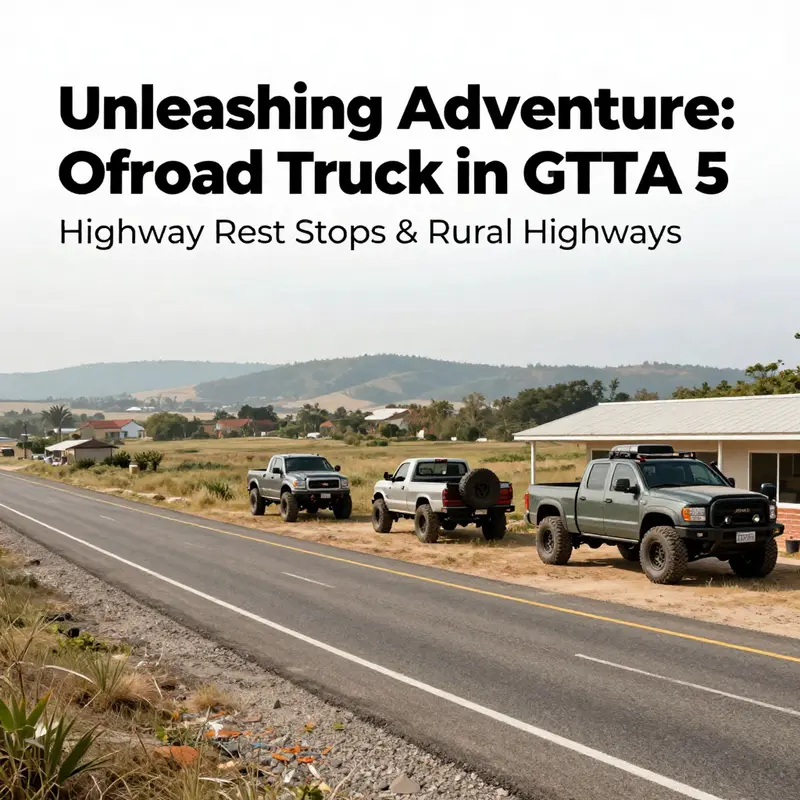
Highway hunting in GTA V is a different rhythm from city cruising. Open roads, sparse traffic, and scattered rest stops create pockets where off-road trucks spawn more reliably. If you want a durable, dirt-ready truck like the Vapid Caracara 4×4, the best strategy is patient, methodical searching along rural highways and service areas. This chapter walks you through precise locations, spawn behavior, and practical steps to secure and keep an off-road truck without wasting playtime.
Start by thinking regionally. The map’s northern and eastern corridors funnel traffic away from Los Santos and into Blaine County. Route 68 and the stretches that lead toward Sandy Shores hold some of the most consistent spawns. These roads pass small service areas, roadside parking, and picnic zones. Each of those little pockets acts like a magnet for utility vehicles. Drive the routes slowly and use pullouts as observation points. A single pass through a rest stop is often enough to trigger local spawns.
Rest stops are especially productive between mid-morning and early evening in-game. Spawns favor daylight hours and periods of moderate traffic. Look near gas pumps, the maintenance buildings, and adjacent dirt paths. Off-road trucks often appear parked there, or idling near the parking strip. If you spot a truck parked against a backdrop of scrubland and desert, it likely fits the off-road profile. The Caracara 4×4, when present, will stand out for its lifted stance and rugged tires.
How you search matters. Drive at a steady, moderate speed and avoid plowing through every gravel turnout. Rapid, noisy passes will cause NPC drivers to react oddly and sometimes clear the area. Instead, cruise slowly and circle rest stops when necessary. If a truck drives by, mirror its direction until it reaches a larger pullout. Off-road trucks frequently move between rest stops and nearby job sites. Intercepting one on the highway often works better than chasing it through back roads.
Use the map as a tracking tool. Highways that feed into Sandy Shores and the northern reaches are most reliable. If you start at a central Los Santos location, head north on the main interstates and take the first service exit that appears. If nothing spawns, continue north to the next rest area. Vehicles tend to rotate as you travel, so a repeated sweep along the same highway often produces different results. The more ground you cover, the higher your chance to find an off-road truck.
There are subtle spawn cues to learn. Construction zones near highways often generate heavy-duty trucks and utility vehicles. Areas around bridges and industrial offramps sometimes produce larger off-road models. Watch for dust trails off the shoulder; they often indicate an unpaved access road where trucks park. Small side roads that dive into scrubland are prime locations. These are the kinds of places NPC drivers use to stash work vehicles while they scout or rest.
Special events and timed activities can alter spawn tables. During seasonal in-game events, themed displays sometimes populate rest stops with unique or rare vehicles. Keep an eye on announcements and event calendars if you play online. A roadside festival or convoy event may introduce off-road models not typically seen in story mode. Attending these events in a low-population session increases your chance to snag a unique find without interference.
When you do find a Caracara 4×4 or comparable truck, the challenge shifts to securing it. Make a calm exit plan. Park so you block the truck’s path without damaging it. If an NPC driver is present, allow them a moment to exit. A rushed theft increases NPC aggression and complicates escape. Once you have the truck, test its handling briefly before committing to a longer journey. Confirm it accelerates and climbs as you expect on dirt. Off-road trucks shine on rough ground, but they can be heavy and slow in tight turns.
Transporting a newly acquired off-road truck back to a safe storage location requires thought. Plan a route that favors open roads and minimal police presence. If you play online, choose a quieter session or a solo instance when possible. Crowded sessions increase the risk of other players intercepting your haul. Use larger clearings and service roads to avoid tight urban choke points. If you need to cross town, consider moving during lower traffic windows in-game to reduce interruptions.
Ownership choices matter. Once secured, add the truck to your garage if you can. Owning the vehicle prevents it from despawning and lets you customize the truck. Modifying tire types, suspension, and armor improves off-road performance and survivability. If you prefer to keep a small fleet of specialty vehicles, treat your garages like staging yards. Properly storing and rotating vehicles increases availability when you want to drive off-road without searching again.
For players who enjoy managing multiple vehicles, a brief note about organization can help. Treat your collection like a mini fleet. Assign a primary off-road truck for desert runs. Keep a backup for utility tasks. If you frequently run supply or delivery missions, organize your vehicles so you can dispatch the most suitable one quickly. For tips on vehicle organization and dispatching strategies, explore this write-up on the advantages of fleet dispatching software: https://dirtantrucks.com/advantages-of-fleet-dispatching-software/. Thinking about vehicle logistics in these terms pays off, especially in multiplayer.
In GTA Online, mission rewards and special activities can also grant off-road trucks. Cargo runs, supply missions, and some vehicle-based jobs sometimes spawn or award rugged trucks. Participate in these activities if you want a guaranteed path to a specific model. The online environment also allows for customization and transfer between sessions, giving you more persistence than a single-player haul.
A few practical reminders close the loop. First, rest stops vary in spawn frequency between sessions. If a spot is empty, move on and return later. Second, night spawns drop for many off-road models, so save long searches for daytime. Third, keep an eye on player-created guides and community discoveries. The game’s vehicle economy shifts subtly with updates and patches, and community tipsters often spot new spawn hotspots faster than formal guides do.
Highway rest stops and rural highways are quieter, but they are reliable. With patience, a planned route, and calm execution, you can find and keep a Caracara 4×4 or similar off-road truck. The search rewards more than a vehicle. It teaches map-reading, spawn behavior, and clever routing. Those skills make future hunts faster and more satisfying. For official vehicle specs and additional vehicle guidance, consult the game’s official vehicle hub: https://www.rockstargames.com/gta5
Final thoughts
Locating off-road trucks in GTA 5 is more than just a quest for the right vehicle; it’s about embracing the spirit of adventure in every corner of the game’s immersive world. From the sun-baked deserts of Sandy Shores to the lush greenery of Great Chaparral and the industrious backdrop of construction sites, players have countless opportunities to uncover the perfect rugged companion. Whether you’re racing down rural highways or exploring coastal backroads, the thrill of off-road exploration remains ever-present in Los Santos. Equip yourself with the knowledge from this guide and dive into the exhilarating journey that awaits.