

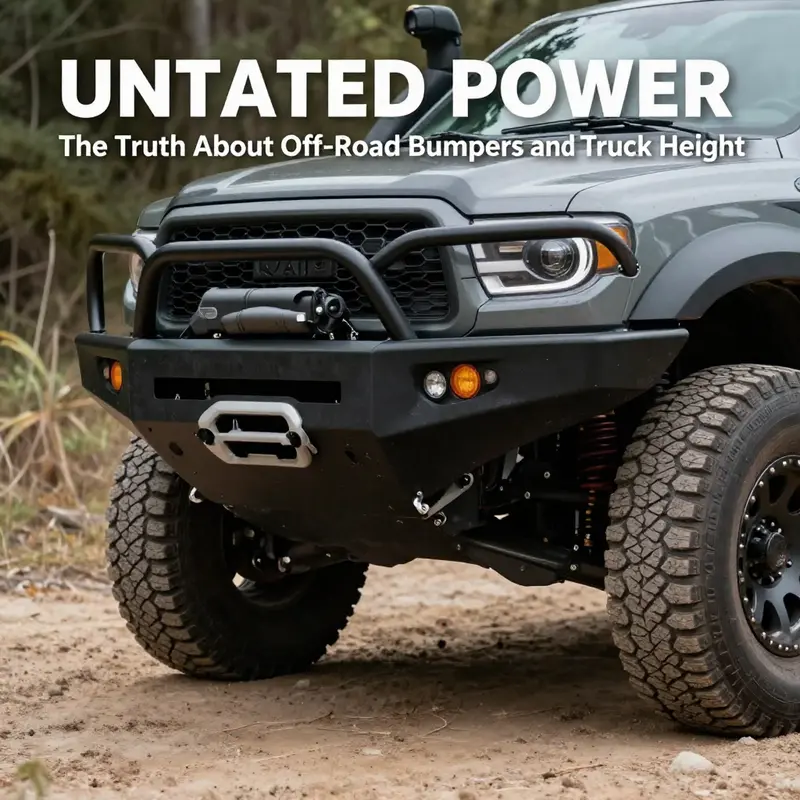
For off-road enthusiasts, the quest for the perfect rig is a blend of functionality and aesthetics. One of the most significant components influencing your truck’s performance and visual stance is the bumper. Off-road bumpers, rugged and built to withstand nature’s assaults, promise enhanced protection and versatility. However, questions frequently arise: Can an off-road bumper actually lower your truck? Understanding the intricacies of bumper design and its impact on ride height is essential for adventurers, off-road racers, and rural landowners alike. Each chapter of this exploration will delve into critical facets, starting from the basic influence of off-road bumpers on truck height to the specific ways these variations can affect suspension dynamics.
null
null
Between Protection and Stance: How Off-Road Bumper Design Variations Can Subtly Change a Truck’s Height
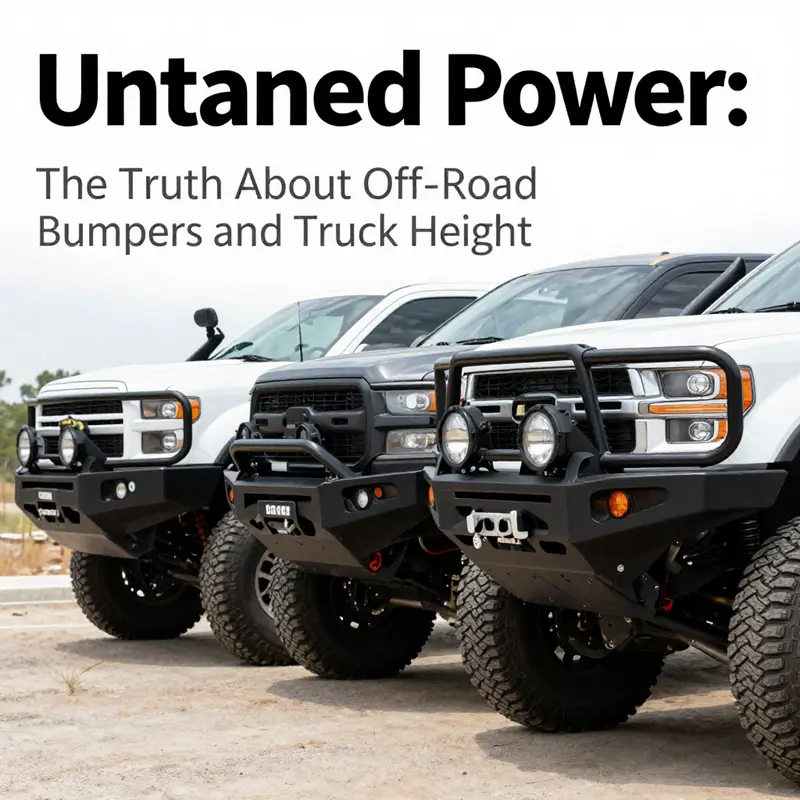
When people ask how much an off-road bumper will lower a truck, the instinctive answer is usually simple: it won’t. In practice, a bumper swap is rarely a reliable path to a lower ride height. Those are suspension questions, not bumper questions. Yet the truth is more nuanced. The front end of a pickup is a complex geometry, a cradle of angles, weights, and mounting points. The bumper—an attachment that sits in front of that cradle—can influence ground clearance in subtle but measurable ways, especially when its design pushes components lower than stock, or if the mounting system anchors the bumper below the original bumper plane. To understand the potential impact, you must move beyond the surface assumption that any bumper swap will lift, lower, or otherwise alter height in a straightforward one-to-one fashion. You need to read the bumper as a piece of a larger system: a protective shield, a payload port for winches and tow hooks, and a structural extension that can interact with frame rails, skid plates, and the crossmembers that determine the vehicle’s front geometry.
The baseline fact remains clear: most off-road bumpers are designed to protect, to improve approach and departure angles, and to provide mounting points for accessories. They are not designed as a lowering kit. In that sense, a stock bumper replacement does not inherently lower ride height. If anything, many off-road bumpers, with their added reinforcement, heavier construction, and integrated components, can maintain or even increase ground clearance in certain configurations. The surface you see at the very front is likely to appear level with or slightly higher than the factory line, because the design often extends outward and downward in ways that preserve, or modestly improve, the geometry of the front end. But appearances can be deceiving. A bumper’s visible plane is only part of the story; the real story is how the bumper attaches to the frame, how heavy it is, and how its features sit relative to the frame rails and undercarriage.
To tease apart the layers of this question, it helps to examine the specific design variations that can, in theory, lower a truck. These variations aren’t gimmicks; they are functional choices that trade protection or utility against a small, sometimes barely perceptible change in height. The first factor is integrated hardware. Some bumpers are built with substantial tow hooks or winch mounts. The reinforcement required to carry a winch, to accommodate heavy-duty recovery gear, and to house protective hooks can extend below the frame rail level. When that happens, the bumper’s lower edges may sit closer to the ground than a stock bumper would. The lower edges, in turn, reduce the distance from the bumper to the pavement, and the vehicle’s overall front-end stance can appear to be lower. This is not a lowering by design, but a consequence of how the extra structure is threaded into the frame.
Second comes the bash plate or skid plate profile. Many off-road bumpers feature pronounced protection plates that shield the radiator and other critical components. If those plates hang notably below the front axle, they can shave a few inches off the known ground clearance. The intention here is protection first; the side effect is a more aggressively sculpted undercarriage that sits just a touch lower. It’s a practical trade-off: more robust protection at the risk of a slighter reduction in clearance. The result can feel consistent with a lowered stance in some driving scenarios, yet it is not the same mechanism as a lowering kit. It’s a protection or durability enhancement that coincidentally alters geometry.
Material and thickness carry their own weight. Heavier bumpers demand sturdier mounting brackets and more robust hardware to resist torque, impact, and vibration. The heavier the bumper and the more substantial the mounting system, the more often those brackets are sized and positioned to keep the assembly rigid. In some installations, the mounting hardware itself can be configured in a way that sits the bumper lower than the factory unit. It’s a subtle engineering quirk: metal mass and bracket geometry can pull the bumper plane downward, especially if the frame rails must accommodate deeper anchoring points to maintain rigidity.
The mounting system is, perhaps, the most decisive factor. There are multiple routes to attach a bumper to a truck: some bolt to the frame rails from above, others require brackets that extend beneath the rails, and a few designs use a combination of both. When brackets reach down toward or past the lower portions of the frame, the bumper’s effective plane can sit lower than stock. Again, the objective of this design choice is not to lower the vehicle, but to supplement strength, vibration damping, and alignment for off-road abuse. The practical upshot is that you could, depending on the exact configuration, end up with a front end that reads slightly lower at the bumper line than the stock setup.
All of this sounds like a potential recipe for a lowered truck. It isn’t a recipe for a dramatic drop, and the operative word remains “slightly.” The broader automotive engineering literature and empirical testing—whether in lab studies or in field evaluations—consistently show that an off-road bumper’s primary function is to increase, or at least preserve, the vehicle’s ground clearance, thanks to the exploitation of robust protection and improved approach/departure angles. The more aggressive the bumper is toward the ground, the greater the chance that the edge or a bash plate could reduce clearance ever so slightly. In practice, the observed reductions tend to be a matter of a few tenths to a couple of inches, and only under certain mounting geometries and component configurations. For vehicles already on the razor’s edge of ground clearance, that small change can be noticeable. For most trucks, the change will be minor and often offset by protective gains and improved approach angles that help the vehicle clear obstacles more confidently.
The juxtaposition between “lowering” and “enhanced clearance” becomes clearer when you look at the broader design philosophy of off-road bumpers. A bumper that aims to maximize approach angles—the angle at which the vehicle can approach an obstacle without the bumper striking first—will typically emphasize geometry that keeps the bumper higher or level with the stock line, to avoid subtracting ground clearance. Yet in practical builds, enthusiasts occasionally embrace bumpers with lower-lower profiles when the surrounding frame and skid systems are integrated in a way that pushes components downward. It is precisely this balancing act—between protection, weight distribution, and ground clearance—that creates the inconsistent picture many owners experience when comparing different installations.
So, what does this mean for anyone who is considering a bumper swap with the goal of decreasing ride height for a particular aesthetic or performance aim? The answer is nuanced. If lowering is the explicit goal, a bumper is not the right instrument. A lowering kit, lowering springs, coilovers, or even a controlled set of drop spindles are the proven avenues to reduce front-end height in a predictable, tunable way. A bumper swap, even with a design that features substantial bash plates or heavy mounting hardware, will not yield an exact or guaranteed lowering effect. It can, in the worst case, cause a slight drop in ground clearance, but that is a side effect rather than a feature. If you value the protective attributes of an off-road bumper, the trade-off may be acceptable, but you should not expect a bumper to deliver a clean, measured reduction in ride height comparable to a dedicated lowering modification.
To truly understand where a specific installation lands, careful, vehicle-specific assessment is essential. Differences in frame design, aftermarket bracket geometry, vehicle weight distribution, and suspension sag all influence the final outcome. A bumper that sits perfectly level on one truck can look and feel different on another, even if the bumper model is the same. It’s not only about how low the bumper sits; it’s about how that positioning interacts with the rest of the front suspension and with the underside’s protection. In some scenarios, the bumper’s mass alone can cause a measurable, though modest, sag when the vehicle is at rest. If you drive off-road with a loaded winch or heavy accessories mounted, the additional static weight can cause the springs to compress slightly, further reducing the perceived ground clearance at the front. These are dynamic considerations that compound the static geometry discussed above and remind us that every build is a unique equation.
This nuanced reality invites a practical approach. If your objective is a visibly lower stance for styling, the industry-standard practice is to pursue a suspension modification that’s designed for lowering rather than relying on bumper geometry. If, however, your objective is improved protection with a monetary or functional tolerance for a slight height shift, you can choose a bumper with a design that emphasizes a strong bash plate and a tight under-axle profile, then evaluate the effect with precise measurements after installation. A simple field check can be informative. Place a measuring tape from the ground to the bottom of the front bumper at several points, done with the vehicle on level ground and with the wheels loaded as they would be during normal driving. Compare these measurements with the factory bumper’s equivalent numbers. The difference, typically a fraction to a couple of inches, will give you a concrete sense of whether the change aligns with the goal and how it translates to real-world performance.
The broader takeaway is that you should separate the goals clearly: bumper protection and approach/departure optimization versus ride-height modification. When you keep these goals distinct, you can avoid disappointment and make a more informed choice about any aftermarket addition. You may be tempted by the idea that you can “kill two birds with one stone” by finding a bumper that lowers the front end while delivering practical protection. In most cases, you will be better served by a suspension path that directly targets height. The bumper can be chosen to match the suspension changes, and you can design a harmonious balance between protection, weight, and geometry rather than chasing a lower stance through an accessory that was not designed for that purpose. If you want a deeper dive into the mechanical nuances and you are also wrestling with maintenance and performance implications, consider a broader exploration of the vehicle’s drive system. For instance, a comprehensive guide to diesel mechanics and step-by-step maintenance paths can provide practical context for how weight, aerodynamics, and mounting points interact under load. Mastering Diesel Mechanics: A Step-by-Step Path to Success offers a framework for thinking about how engine and drivetrain components integrate with chassis geometry during upgrades and how meticulous maintenance supports predictable performance when adding heavy front-end hardware.
In the end, the functional takeaway remains consistent with the expert consensus in the field: an off-road bumper is not a lowering device. Its primary value lies in protection and utility, while the occasional lower-than-stock appearance arises from design choices intended to reinforce protective plates, carry heavier gear, or accommodate mounting hardware that sits lower than the stock bumper. Those choices can contribute to a small reduction in ground clearance, but they are not designed as a controlled lowering mechanism. If lowering is the objective, pursue targeted suspension modifications, not a bumper swap. If you pursue a bumper for its protective advantages, approach the installation with a clear understanding of how weight, brackets, and plates interact with the frame and suspension, and you will be better prepared to evaluate how that combination affects ride height, clearance, and off-road capability in real-world driving. The conversation about height is not a standalone judgment; it sits at the intersection of geometry, protection, weight distribution, and the intended use of the vehicle.
For readers seeking a richer theoretical foundation that ties into vehicle dynamics and clearance, the field contains detailed analyses that examine how specific bumper designs influence vehicle dynamics and clearance under varying loads and terrains. See the external study linked in the later part of this chapter for a rigorous treatment of these design variations and their consequences. https://www.sciencedirect.com/science/article/pii/S235278902300114X
In sum, the path to a lower ride height is not paved by installing an off-road bumper. The bumpers shield, stiffen, and extend the vehicle’s front geometry in ways that often preserve or slightly increase clearance. Only through deliberate suspension modification—carefully selected springs, dampers, and alignment adjustments—does a true and predictable lowering become possible. The decision to pursue a bumper upgrade, then, should hinge on the broader goals of protection, recovery capability, and obstacle clearance, not on the expectation of a uniform, measurable lowering of the chassis. The nuanced reality is that while design variations can produce a perceptible decrease in ground clearance, their primary intent and their most consistent outcome is protection and improved off-road performance, not a lower stance. And with that understanding, you can make a more informed choice about how to optimize your truck for the kind of terrain you actually tackle, rather than chasing a height target that a bumper is not designed to deliver.
Beyond the Shield: How Off-Road Bumpers Shape Suspension, Front-End Balance, and Ride Height
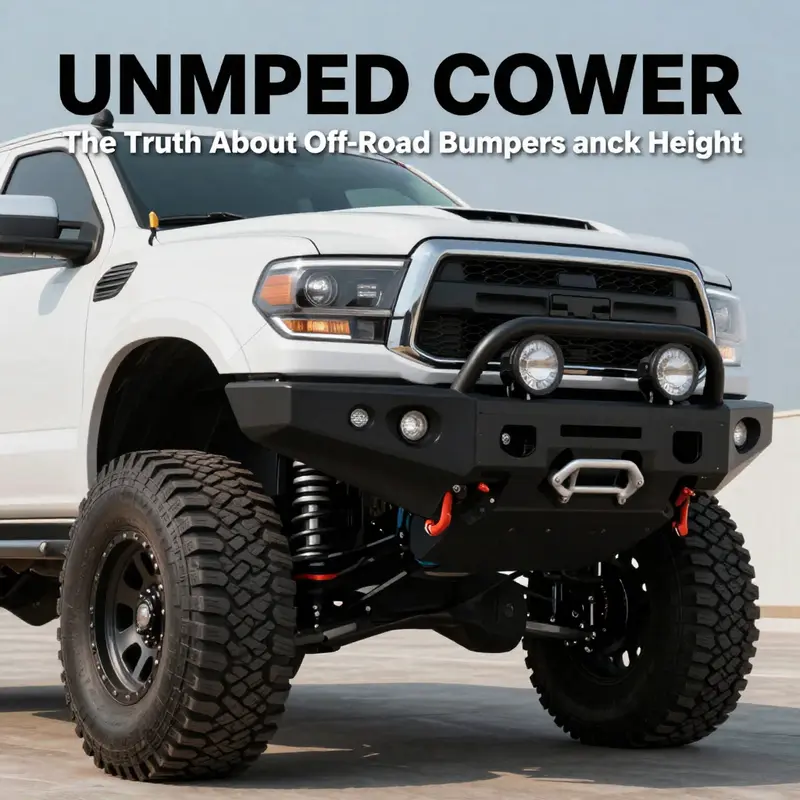
Across the rugged edge where protection meets performance, off-road bumpers occupy a curious position. They are not primarily designed to lower a truck. In fact, the practical rule of thumb is simple: a bumper swap rarely, if ever, reduces ride height in any meaningful way. Yet the way a bumper is built, where it mounts, and what it carries can subtly tilt the balance of front-end dynamics. In careful terms, the choice of bumper—steel, aluminum, or composite—drives weight distribution, which in turn influences how the suspension behaves under load, how the front end settles when the truck sits still, and how it reacts when tires meet uneven terrain. The narrative around bumper selection, therefore, threads together protection, geometry, and the delicate physics of how a heavy object on the nose of a vehicle interacts with springs, dampers, and the leverage points that guide steering and stability on and off pavement.
Material choice matters more than most drivers expect. Steel bumpers, known for their formidable strength and durability, bring a noticeable weight penalty. That added mass sits in the vehicle’s mass budget and, when the front end carries more weight, the springs compress a bit more under static load. The consequence is a slightly lower stance at rest and a different riding feel as the suspension settles into its idle geometry. But the effect is nuanced. Because the bumper is attached to the frame, its weight generally shifts mass that the springs must support rather than acting as a purely unsprung load. Consequently, the ride can grow stiffer with steel, and the tire’s contact patch can be influenced by how the front suspension responds to bumps rather than simply by the bumper’s height at rest. Heavier front-end mass tends to resist compression waves a bit more, yet once the tires are in contact with the ground, the same springs and dampers prove their mettle in maintaining surface contact and maintaining predictable handling.
Aluminum bumpers, by contrast, shed weight without sacrificing too much rigidity. The reduction in mass helps keep the front end more responsive, preserving tire contact and reducing the tendency for the suspension to miss a beat when a wheel encounters a rock or a rut. The smaller mass can contribute to more accurate steering feel and quicker recovery after a bump, which translates to better control on rutted trails or rocky approaches where precision matters more than sheer brute strength. Yet even lighter does not mean weightless. If the bumper extends beyond the stock frame and carries additional components—like a winch or a protective skid plate—the part of the load that the suspension must manage remains a balancing act between protection and geometry. The net effect on ride height is rarely dramatic, but it is not zero. On installations where the bumper brackets are slim and well-integrated with the frame, the front height tends to stay level with, or only marginally above, stock. If the design is large or distinctive in its outer contour, there can be a subtle rise in ground clearance, as the bumper tucks under the line of the frame and provides an extended yaw or approach angle without a substantial drop in the nose.
Composite bumpers push the weight envelope even further toward efficiency. They can be dramatically lighter than steel, and they resist corrosion in coastal zones or humid environments with grace. The lighter mass preserves suspension travel and reduces the probability of unwanted stiffening of the front end. The caveat here is a different kind of risk: composite materials may offer less sheer resistance in extreme impacts, and their mounting hardware must be tuned to ensure the system still feels solid when a winch drum starts to pull, or when a heavy recovery is needed. The ride height effect with composites tends to mirror the lighter aluminum approach, with potentially more predictable steering response and less drag on the springs. But as with any bumper, the final alignment of the bumper’s lower edge relative to the ground is not dictated by the material alone. It is shaped by how the bumper is mounted, how far the brackets extend, and whether any accessory components push the nose lower or, conversely, tuck in higher. When a bumper is engineered to sit flush with the frame rails and its protective plates ride close to the original sills, the change in ride height becomes a matter of a millimeter or two—enough to matter to a wheel alignment but not enough to define a new driving character on daily roads.
The structural design of the bumper also has a direct line to how the front end behaves under load. A bumper with an integrated winch mount, reinforced cross-bracing, or an extended skid plate will often contribute to a forward shift in the truck’s weight distribution. If the mounting system is architected with robust brackets and proper load paths, that forward mass may be absorbed by stronger structural members, helping preserve the front-end geometry as the suspension works to negotiate obstacles. When engineers miscalculate or when brackets are not adequately braced, the front suspension can experience unusual wear over time. The shocks and springs may see unusual compression cycles, steering may feel more vague at low speeds, and even the camber and toe angles can drift as the vehicle cruises through uneven terrain.
To connect these design choices to ride height in a meaningful way, it is essential to recognize how suspension geometry and ride height are measured and what that measurement represents. Ride height at rest describes a static relationship between the sprung mass (the part of the vehicle supported by springs) and the suspension system’s equilibrium. It does not capture dynamic changes when the vehicle is rolling, braking, or accelerating through obstacles. A bumper that is heavier or mounted with more forward load can subtly shift that equilibrium, making the nose sit a hair lower while resting or, in some designs, keeping it level or even adding a slight lift due to the weight distribution and the geometry of the mounting points. The key here is to understand that a bumper is not a lowering device. It can, however, interact with the suspension in ways that alter how the front end carries weight and how it responds to terrain.
The question of lowering versus lifting is where the chapter meets the practical world of a truck owner who loves off-road trails. If lowering is the goal, the bumper is not the tool. Lowering a truck reliably requires dedicated suspension modifications—lowering springs, an adjustable coilover system, or even drop spindles that re-aim the wheel hub relative to the frame. A body lift is sometimes conflated with lowering because it gives a lower-looking stance on some builds; however, a body lift raises the body away from the frame and, paradoxically, can increase ground clearance while maintaining or increasing the ride height of the suspension itself. A bumper swap, even a lighter composite one, does not accomplish the same objective; it matters what sits above the suspension, and how that sitting mass interacts with the shocks and springs when the truck is thumping over a rock or landing from a rebound.
Despite these realities, the bumper’s role in how a truck handles, steers, and balances on rough ground cannot be overstated. An optimized bumper can preserve a predictable front-end feel by maintaining proper weight distribution and providing a solid contact point for recovery gear without intruding on the engine bay, steering, or suspension components. When a bumper design emphasizes integration—mounts that sit close to the frame, proper load paths, and protective elements that do not protrude excessively—the front end remains stable. In this sense, a well-chosen bumper can contribute to better approach angles and obstacle clearance without compromising the suspension’s ability to travel and absorb impact.
From a driving perspective, the most tangible effect a bumper has on ride quality is the way it alters the frequency and amplitude of the suspension’s motion as it encounters terrain. A higher mass that demands more spring compression will typically feel stiffer. A lighter system with a small amount of extra shield near the ground may preserve a softer ride while offering the same protective footprint. The added stiffness, when it occurs, is a result of the entire load path: bumper weight, frame rigidity, and how the brackets transfer load to the chassis when the wheel drops into a trench or hits a rock. The dynamic side of this equation matters on trails where the suspension must adapt quickly to changing ground heights. If the mounting system allows for proper articulation and does not bind the spring or disturb the control arms, the difference in ride height during a steep climb or a rapid descent can be minimal. Yet the promise of reliable recovery and robust protection grows if weight distribution is carefully considered during installation and if the geometry is tuned for the vehicle’s intended use.
The practical upshot for owners who want to understand how much a bumper will lower—or raise—their truck is simple and often overlooked. The answer depends on who designed the bumper, how it mounts, and whether any additional components push the lower edge down or tuck it up high for better approach performance. In most common configurations, a standard off-road bumper will be level with the stock bumper or sit slightly above it. In some setups, the bumper’s lower edge can be a touch higher due to the mass and the interference of extra equipment. In others, built-in skid plates or protective elements may extend below the frame, providing additional ground clearance while not lowering the vehicle. The net effect on ride height is an interplay of weight, mount geometry, and the precise plan for how the bumper interacts with the suspension system.
For readers who want to go deeper into the mechanics and validate the intuition with data, a practical reference worth consulting is a comprehensive article that compares bumper types by weight, strength, and how they influence vehicle dynamics. That resource provides a data-driven lens on the topic and helps translate the qualitative observations above into numbers that you can apply to your own build. When considering a bumper, the choice should be guided by intended use first: daily driving, light trail use, or extreme overlanding. The right bumper for a daily driver that occasionally sees rocky terrain might prioritize integration with the factory geometry and minimal impact on ride height, while the one built for serious crawling may embrace heavier protection and more robust mounts that affect weight distribution in a controlled, predictable manner.
To connect this practical thread to a broader mechanical understanding, consider a deeper dive into diesel-powered platforms and the way weight distribution and suspension interact in heavy-duty applications. A thorough guide on diesel mechanics offers foundational insights into how weights, loads, and spring rates translate into ride characteristics. It is not only about engines but also about the entire chassis ecosystem that supports the vehicle on the trail. The link provides a pathway to strengthen your understanding of how weight, leverage, and suspension respond under load, which is essential when you’re weighing the tradeoffs of a heavy bumper versus a lighter, more feature-rich option. Mastering Diesel Mechanics: A Step-by-Step Path to Success.
For the curious mind who wants a broader, external perspective on how bumpers alter vehicle dynamics in off-road contexts, a reputable technical guide from a recognized off-road publication offers data-backed comparisons across bumper types, weight, and performance outcomes. This external resource, which explores how bumpers impact weight distribution, mounting, and handling, can help translate the theoretical discussion above into practical takeaways for your next build. It’s a valuable companion to the considerations laid out in this chapter, especially as you plan a swap that preserves suspension travel, keeps ride quality tolerable on daily commutes, and still delivers the protection you need on the trail. https://www.off-road.com/technical-guide-off-road-bumpers/
Choosing the right bumper is a balancing act between protection, weight, and how the bumper integral geometry interacts with your truck’s suspension. If you want to lower your truck in a meaningful, controllable way, you should look first to the suspension—lowering springs, coilovers with appropriate damping, or drop spindles. A bumper alone does not deliver the lowering effect you might seek. In practice, most builders find that a bumper swap, done with attention to bracket design and mounting points, preserves or slightly increases ground clearance and keeps the front-end geometry aligned with or just above stock. The result is a vehicle that maintains its ability to clear obstacles while offering the added protection of a robust front end and the convenience of integrated recovery accessories.
As you plan, visualize how the bumper’s mass sits in the car’s overall weight distribution. It’s not just about how tall the nose sits in the driveway; it’s about how the weight shifts during dynamic driving, how the front springs respond to load during a steep descent, and how the tires maintain contact as the terrain changes beneath them. A thoughtful bumper choice pays dividends in handling, control, and reliability when you’re navigating rock gardens, deep ruts, or steep off-camber grades. It can help you balance approach angles, maintain momentum, and avoid apron-like stalls where a heavy bumper would have settled the truck into a sagging front end.
In short, the bumper is a structural and aesthetic addition that, when chosen with intention, supports the mission of off-road capability without compromising essential dynamics. It is not a lever to push ride height down, and in most scenarios it will maintain or lift the front end slightly, particularly when it adds protective plates, winch gear, and reinforcement. The right design, matched to your suspension and driving style, will keep your truck poised, predictable, and capable where it matters most: in the rough, where protection and performance must coexist.
Final thoughts
Understanding the interplay between off-road bumpers and truck height is vital for anyone looking to enhance their vehicle’s off-road capabilities. While these bumpers effectively offer protection and improved approach angles, they typically do not contribute to lowering a truck’s ride height. In many cases, they can maintain or even elevate the vehicle’s stance due to their robust design. For those looking to modify their ride height, dedicated suspension modifications are essential. This journey through the world of off-road bumpers demonstrates the importance of making informed decisions tailored to your specific needs and terrain challenges.