

For the adventurers, the thrill-seekers, and the rugged landowners among us, the term ‘off-road’ carries profound significance. It isn’t merely a buzzword; it encapsulates the spirit of exploration and conquering untamed terrains that most vehicles dare not tread. Understanding what off-road means for trucks is essential for anyone involved in off-road racing, weekend excursions, or agricultural management on rugged landscapes. This journey will dive deep into the capabilities of off-road trucks, dissect their specialized design features, and unveil their applications across diverse industries. Each chapter will bolster your knowledge, whether you are enhancing your vehicle’s performance, planning exhilarating rallies, or understanding how these machines dominate challenging environments.
How Trucks Become Off-Road Ready: The Mechanics, Geometry, and Systems Behind True Off-Road Capability

What makes a truck genuinely “off-road”? The phrase is often used casually, but true off-road capability is a deliberate combination of design choices, mechanical systems, and integrated technology working together. Off-road means more than clearance or rugged looks. It refers to a vehicle engineered to leave paved surfaces and continue moving reliably across rough, uneven, or unstable ground. That capability lives in the engine and drivetrain, in the frame and suspension, and in the tires and electronics. It also shows up in angles and geometry that let the truck climb, descend, and clear obstacles without getting stuck or damaged.
A truck intended for off-road work or recreation starts with motive force. Engines that generate strong torque at low engine speeds give a truck the steady pulling power needed to crawl over rocks, power through deep mud, or pull itself out of sand. Torque is the practical number off-road drivers feel. It allows a truck to move slowly with great force and avoid stalling on steep grades. In addition to torque, transmission gearing matters. Lower gear ratios and gearboxes with a wide range let the truck maintain controlled power delivery. A robust engine and a transmission geared for low-speed control translate into better ability on technical terrain.
Power alone, however, is wasted without a drivetrain that sends it to the wheels that can use it. Four-wheel drive systems are the foundation of off-road traction. There are several approaches, each with trade-offs. Part-time systems let a driver choose when to lock the front and rear axles together. This often offers the best traction in extreme conditions and avoids drivetrain stress during normal driving. Full-time systems distribute power continuously, offering smoother operation and better handling on mixed surfaces. Then there are adaptive systems that sense slip and engage additional drive automatically. The best off-road setups often include the ability to lock differentials, a feature too important to ignore. Differential locks prevent a spinning wheel from bleeding off torque. When engaged, they force wheels on the same axle to turn together so power goes where there is traction. Multiple locks—center, front, and rear—provide the flexibility to handle nearly any scenario, from a deep rut on one side to a loose, sandy slope.
The chassis and structural design set the stage for durability. Many serious off-road trucks use a body-on-frame layout. This separates the load-bearing frame from the cab and bed. The arrangement resists twisting forces from uneven terrain and isolates passenger space from shock loads. It also simplifies repair and modification, which are common for trucks used in remote or industrial environments. Structural strength matters when a truck takes hits from rocks or when it must carry heavy recovery gear. Reinforced skid plates, rock sliders, and strong mounting points for winches and recovery devices are practical extensions of a rugged frame.
Geometry defines whether the truck can approach a steep rock, crest a hump without scraping its belly, or descend without digging its rear bumper into the ground. Ground clearance is the first visible number; higher clearance reduces the chance of the undercarriage contacting obstacles. But clearance alone does not guarantee off-road performance. Approach angle, departure angle, and break-over angle are equally important. A high approach angle allows a truck to tackle a steep obstacle without the front bumper or air dam striking first. A favorable departure angle prevents rear-end damage when descending. The break-over or through-angle tells how easily the vehicle can pass over a center obstacle without the chassis getting hung up.
Suspension architecture ties directly into both comfort and capability. Long-travel suspension keeps tires in contact with the ground on rough runs. That contact is traction. Travel also smooths impacts, protecting components and improving driver control. Coil springs, leaf springs, and air systems each have strengths. Air suspensions offer the ability to raise the vehicle for extra clearance or lower it for highway stability, giving useful flexibility. Solid axles often offer simpler articulation and durability. Independent setups can provide better ride quality and handling at higher speeds. The best off-road designs consider the predictable stresses of uneven terrain and allow for component travel and damping that match intended use.
Tires are where the truck meets the terrain. An aggressive tread pattern digs into mud and sand and sheds debris to maintain grip. Thicker sidewalls resist cuts and punctures from rocks. Larger diameter tires increase ground clearance and can smooth out small obstacles. But tires are always a compromise. Aggressive, tall tires often reduce ride comfort and highway fuel economy. They increase rotating mass and may require revised gearing. Still, the right tire for the environment makes the largest single difference in a truck’s off-road performance.
Electronics and driver aids have become integral to modern off-road trucks. Traction control systems and stability control intervene when wheels slip, modulating brake pressure or engine output to retain control. These systems can be tuned for off-road conditions, allowing controlled slipping when necessary. Terrain-adaptive systems go further. They change throttle response, transmission shift points, and differential behavior based on the selected terrain type. When set to rock, mud, or sand, the truck can respond in ways that better match the physics of those surfaces. These systems can make an inexperienced driver safer and a skilled driver more effective by handling minute adjustments in milliseconds.
The true measure of off-road capability emerges when all these systems work together. Consider a steep, rocky climb. Low-range gearing and strong low-end torque let the truck maintain forward motion. Differential locks prevent any single wheel from spinning uselessly. Long-travel suspension keeps tires planted on uneven rock faces. Generous approach and departure angles prevent the bumpers from snagging. Off-road tires provide the contact patch to convert torque into forward movement. Electronic systems keep slip in check without suddenly cutting power. In that coordinated state, the truck can ascend steep, loose, or broken surfaces that would immobilize a vehicle configured only for paved roads.
There are trade-offs and choices owners must accept. Trucks optimized for the most extreme terrain are often less efficient on pavement. Heavy-duty axles and protective skid plates add weight. Big tires and low gearing reduce top speed and fuel economy. Full-time four-wheel drive can create extra wear on driveline components if used on dry pavement without a proper center differential. That is why manufacturers and builders tune trucks to their intended roles. A work truck that must carry heavy loads and travel on rough construction sites favors certain compromises. A recreational machine built for weekend trails may take different ones.
Modifications are common in the off-road world. Lift kits increase ground clearance and accept larger tires. Upgraded differentials and lockers add traction options. Heavy-duty suspension components and upgraded brakes improve reliability under severe conditions. When modifying, engineers and owners must consider the entire system. Increasing tire size without adjusting gear ratios erodes low-speed pulling power. Raising the center of gravity without compensating suspension changes stability. Any change to one component often demands changes elsewhere to preserve balance and reliability.
Maintenance and preparedness are as central to off-road capability as the original build. Off-road environments are punishing. Mud, sand, and salt accelerate wear. Rock impacts can bend or break components. Regular inspection of the drivetrain, suspension, and tire condition reduces the risk of on-trail failures. Protecting vulnerable elements with skid plates and sealing electronics against water ingress extends service life. Owners should also carry recovery gear designed for their truck’s weight and common terrain. Recovery straps, hi-lift jacks, and winches are essential tools in many remote areas.
Driving technique complements truck capability. Momentum management helps a vehicle cross soft sand or deep mud. Keeping a steady pace can prevent a truck from bogging down. Choosing line and tire placement matters on rocky trails to avoid pinch points or high-centered positions. Using engine braking on steep descents can prevent excessive heat build-up in service brakes. Smooth, deliberate inputs preserve momentum and reduce the chance of damage or getting stuck.
Finally, there are contexts where the phrase “off-road” takes on additional operational meaning. In industrial settings, such as construction or mining sites, trucks designed for off-road use might simply mean they can carry heavy loads across unpaved surfaces without damage. In recreational settings, off-road trucks emphasize maneuverability, traction, and protective features. The differences show in suspension tuning, protective hardware, and accessory fitment. Understanding how the truck will be used clarifies which traits are essential and which are optional.
Appreciating the full definition of off-road capability helps owners and buyers set realistic expectations. It explains why two trucks with similar visual cues can behave very differently on a trail. One may have beefy bumpers and tires but lack low-range gearing or differential locks. The other might lack showy accessories but bring a stout frame, advanced locking differentials, and suspension travel that keep its tires connected to the ground. True capability is rarely skin deep.
For readers curious about technical standards and more detailed engineering principles behind vehicle dynamics and off-road performance, professional organizations publish in-depth material. Those resources dive into topics like traction mechanics, frame stress, and suspension tuning in a way that complements hands-on experience. You can explore standards and technical papers for a more rigorous understanding at SAE International: https://www.sae.org.
If you want to see how these principles translate to heavy equipment and study how electrification is changing worksite vehicles, the discussion around the electric construction equipment revolution provides useful context. That article follows trends in equipment design and the adaptation of off-road traits to new powertrains: https://dirtantrucks.com/volvo-electric-construction-equipment-revolution/.
Understanding off-road on a truck means seeing capability as a system. Power and torque start the conversation. The drivetrain decides where that power goes. The frame and suspension determine whether the truck survives the terrain. Geometry decides what obstacles the truck can clear. Tires translate power into motion and electronics tune responses to the ground. When those parts are designed or selected with intent, the truck stops being a compromise and starts being an off-road tool. When they are not, the label is only cosmetic.
This view helps guide smart choices. Buy or build with the intended terrain in mind. Balance weight, protection, and mobility. Invest in the driveline and differential features that match the challenges you expect. Choose tires appropriate for the surfaces you’ll face. Maintain the truck and practice recovery and driving techniques. In doing so, you ensure that “off-road” is not just a badge, but a predictable and repeatable capability that keeps you moving where the pavement ends.
Rugged by Design: The Architectural Language of Off-Road Trucks and What It Means for Rough Terrain
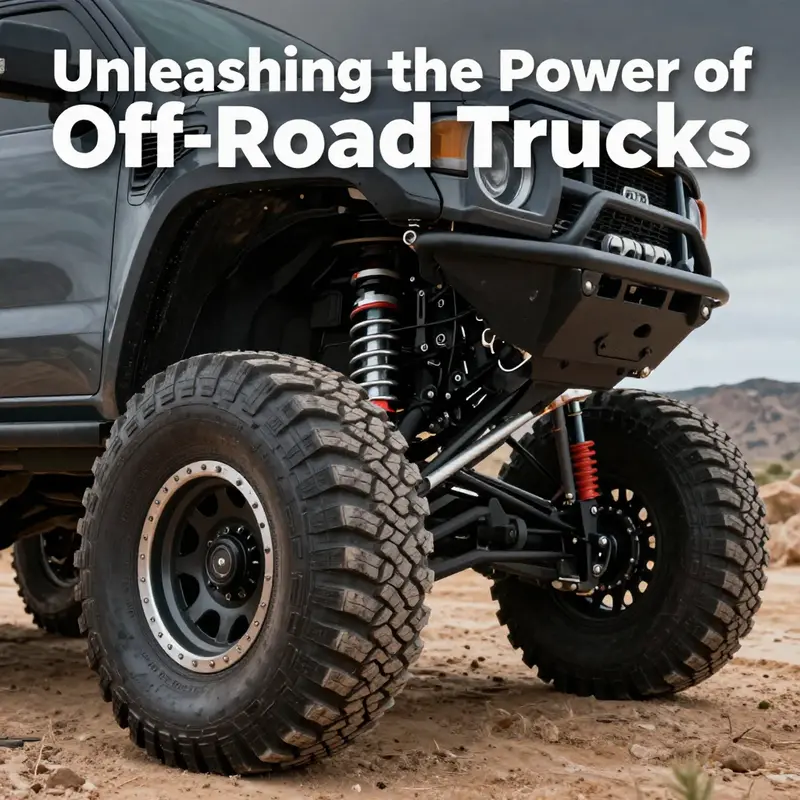
When people talk about an off-road truck, they are not merely describing a vehicle with bigger tires or a louder exhaust. They are pointing to a specific architectural language that governs how the truck is built to move, grip, endure, and survive in environments that test the limits of conventional street-going machines. The phrase off-road, in this sense, rises from the need to travel reliably over mud, sand, snow, rocks, forest trails, and even beaches where the surface changes from moment to moment. Understanding what off-road means on a truck requires looking at a coordinated set of design choices rather than a single feature. It is a holistic approach to engineering where each element supports traction, control, durability, and endurance in the most unpredictable conditions a driver might encounter on a long journey or a demanding assignment.
The core of off-road capability begins with the drivetrain, the system that transforms engine power into motion across four broad realities: traction, control, reliability, and efficiency under load. A robust four-wheel-drive (4WD) configuration acts as the backbone of this capability. Unlike two-wheel-drive setups that compromise traction on loose or uneven surfaces, a properly engineered 4WD system delivers power to all four wheels, enabling the vehicle to maintain momentum when one wheel encounters a slick or hollow spot. In off-road use, the distribution of torque is not a static matter but a dynamic negotiation among wheels, tires, and terrain. This is where a center differential or a transfer case, paired with locking mechanisms, comes into play. Locking differentials, when engaged, synchronize wheel rotation so that both wheels on an axle rotate at the same speed. This feature is invaluable on a steep grade, on deep snow, or when crossing a rock-strewn path where one wheel might lose grip entirely. With the differential locked, the system prevents a single wheel from spinning away power and pulling the vehicle into a rut or a stall. The practical upshot is a deliberate, predictable delivery of torque that can prevent a loss of momentum that would otherwise require careful throttle modulation and potentially risky wheel spin on delicate terrain.
Yet, locking differentials carry trade-offs. They simplify traction in extreme conditions but introduce complexity in the vehicle’s behavior on paved roads. The wheels locked together reduce the vehicle’s ability to rotate at different speeds, which increases tire scrub and can make steering feel heavy on high-traction pavement. For this reason, many off-road designs position locking in the realm of selectable modes or electronically controlled systems. In practical terms, this means a driver can switch to a locked state when the surface demands it and return to unlocked operation when transitioning to a road section. The overall benefit remains clear: better grip, especially when one tire encounters a camber or a slick patch that would otherwise cause a single tire to spin and waste power.
In addition to a 4WD drivetrain with locking differential options, off-road trucks rely on a suspension system engineered for harsh terrain. A heavy-duty suspension is not merely about absorbing bumps; it is about allowing the axle and its wheels to articulate, to maintain contact with irregular surfaces, and to manage energy transfer from the ground up to the chassis without destabilizing the vehicle. Long-travel suspensions, reinforced control arms, and rugged springs work together to deliver smoother wheel travel, greater articulation, and a broader range for the suspension to adjust to the terrain beneath. Higher ground clearance is another signature attribute, granting the vehicle the capacity to clear rocks, roots, rut edges, and uneven rock gardens that would otherwise threaten the underbody. The geometry of the suspension—how much the axle can move vertically and how its draw links interact with the chassis—plays a crucial role in maintaining traction while minimizing body roll during climbs or traverses. A well-tuned suspension system couples with the chassis to create a stable platform that can flex and adapt without becoming toppled by a sudden change in slope or a jolt from a buried obstacle.
Beads of tread on tires, and the low-pressure philosophy behind some off-road tires, bring another layer of traction management into play. The choice of tires reflects the terrain the truck is expected to navigate. Deep-lug patterns and wider footprints improve grip in mud and soft sand, while more tightly spaced lugs and reinforced sidewalls help resist punctures from sharp rocks. Low-pressure operating with care can increase the tire’s contact patch with the ground, smoothing impact and enhancing traction on irregular surfaces. Different terrain also demands different approach angles—the angle at which a vehicle can approach a hill or obstacle before the front bumper or undercarriage makes contact with the surface. A higher approach angle reduces the risk of nose damage and enables a smoother ascent, while a longer wheelbase or a carefully tuned chassis helps maintain stability on steep declines. In combination, these tire and geometry choices enable a truck to balance weight, traction, and clearance so that multiple lines of the route can be kept open, even when the terrain is capricious or unforgiving.
Protection and durability complete the practical package. Skid plates beneath the engine and transfer components provide a shield against rocks, stumps, and hidden obstacles that might puncture the undercarriage in a rough trail. A reinforced chassis or frame, along with rocker guards or rock sliders, helps the truck survive the inevitable contact with hard surfaces during tight sections or when negotiating rutted corridors. The chassis-to-axle connections, fasteners, and mounting points must tolerate repeated flexing and the vibrations that accompany long days on rough ground. These are not cosmetic features; they are the lines of defense that allow a truck to function after traversing terrain that would immobilize a conventional road vehicle. In industrial applications, durability is not a luxury but a prerequisite. Tasks such as mining access, timber extraction routes, and remote-site freight require machines that can operate in remote locations for extended periods, sometimes with limited maintenance windows. In those contexts, the design choices emphasize endurance, serviceability, and ease of field maintenance as much as raw speed or a plush interior.
Another dimension worth noting is the way electronics and engine cooling adapt to harsh environments. Rugged electronics are encased and shielded to withstand dust, moisture, and vibration. The electrical system relies on durable harnesses, weatherproof connectors, and protective seals that guard sensitive components in dusty, muddy, or corrosive environments. Powertrain cooling becomes a critical consideration, especially in hot climates or during tasks that demand sustained throttle under load. An enhanced cooling system helps prevent overheating during digging, climbing, or towing heavy payloads over long stretches. The ability to shed heat efficiently matters as much as the ability to deliver torque, because a hot engine or transmission is a less predictable and potentially less reliable one. In some newer electric configurations, designers emphasize not only high torque at zero to low speeds but also the management of thermal loads in a way that preserves the life of battery packs and power electronics while delivering consistent performance over long duty cycles. While the interior may not be the primary concern for heavy industrial users, modern off-road platforms increasingly recognize the importance of a functional, comfortable environment for operators who spend hours behind the wheel in challenging conditions. Improved seating, better cabin insulation, and thoughtful climate control contribute to endurance by reducing fatigue, improving concentration, and enabling longer, safer operation of the vehicle on demanding assignments.
The simple, often overlooked truth is that off-road capability is not a single trick but a chain of purposeful design decisions that reinforce one another. The four-wheel drive system provides drive to all wheels, the locking differential offers controlled torque distribution under severe grip loss, the suspension and chassis grant articulation and clearance, and the tires translate ground texture into traction. Protecting the drivetrain and electronics through skid plates and rugged casings ensures the vehicle can sustain the work without breaking. Cooling and reliability considerations keep the entire drivetrain healthy even when the terrain imposes continuous, dynamic stresses. Together, these elements create a vehicle that does not merely survive off-road conditions but can adapt to them with a degree of predictability that is essential for both professional operations and serious recreational exploration.
This integrated philosophy helps explain why off-road trucks are designed with distinct priorities compared to urban or highway-oriented pickups. In industrial contexts—such as mining, construction, and logging—the emphasis lies on durability, payload capacity, and fuel efficiency under heavy loads. The chassis must withstand rough handling, and the suspension must endure frequent impacts and heavy loads without sacrificing control. Cabins may prioritize ergonomic seats and insulation to reduce operator fatigue, while the drivetrain favors torque delivery and reliability over quietness or nimbleness on pavement. In recreational or long-haul overland scenarios, the same core principles apply, but the balance shifts toward improved ride quality, sophisticated traction aids, and more refined interior accommodations. The modern off-road truck, therefore, is a platform that can be tuned toward rugged utility or toward comfort-driven expedition, depending on the mission profile. Yet the unifying trait remains the same: a capacity to move through rough terrain with a deliberate, sustained, and controllable degree of confidence.
For readers seeking a practical touchstone on the mechanics that undergird these capabilities, a deeper dive into diesel fundamentals can illuminate how a driver translates engine torque into consistent off-road performance. A thorough exploration of diesel mechanics offers insights into how fuel delivery, compression, and combustion dynamics interact with the drivetrain to deliver predictable torque curves under varying loads and terrains. This is not merely an academic exercise; it is a real-world bridge between theory and practice that helps explain why certain setups enable a truck to lug a heavy load up a muddy incline while maintaining control of the vehicle in adverse conditions. Mastering Diesel Mechanics: Your Step-by-Step Path to Success provides a compact, practical pathway to understanding how these systems function, and how operators can optimize performance through informed maintenance and careful driving technique. As readers consider the broader landscape of off-road capability, it becomes clear that the art and science of off-road truck design hinge on a disciplined integration of physics, materials science, and human factors, all tuned to the task of moving through terrain that would stop an ordinary vehicle in its tracks.
In contemplating the evolution of off-road trucks, it is also worth recognizing the shifting boundaries between traditional diesel platforms and emerging electric variants. While heavy-duty diesel powertrains have long underpinned reliability and torque, the newest generations of off-road platforms explore electric propulsion as a path to improved cabin comfort, safer emissions profiles in remote sites, and potentially better low-speed torque delivery with fewer moving parts in the powertrain. These developments do not erase the core principles described above; they reinterpret them. With electric architectures, ruggedized power electronics and advanced thermal management become central to sustaining performance. Cabin insulation and ergonomic seating are heightened because quiet, controlled power delivery now stands alongside the mechanical bravery of the vehicle. In the end, the fundamental question remains the same: how do you design a machine that can meet the rough, uncertain demands of real terrain while delivering predictable, safe, and efficient performance day after day? The answer lies in the careful orchestration of drivetrain, suspension, chassis, tires, protection, and intelligent systems that together form a durable, versatile instrument for navigating the world beyond paved roads.
For readers who want to connect the practical design insights with a broader technical context, a basic but powerful reference point is the material composition and feature analysis of eight-wheel configurations and their industrial benefits. The resource highlights how durability and configuration choices translate into real-world resilience and efficiency across demanding environments. This external perspective complements the detailed engineering discussion here by offering a macro view of how different architectures suit different jobs—whether in remote mining corridors, timber access routes, or long-haul overland expeditions. It is a reminder that off-road capability is not a niche pursuit but an engineering philosophy that informs how trucks are imagined, built, and deployed across diverse terrains and demanding workloads.
In the end, the off-road truck stands as a textbook case of systems thinking in vehicle design. It is a vehicle whose parts are chosen not for their appearance on a showroom floor but for how well they survive, adapt, and cooperate on terrain that refuses to stay still. The 4WD drivetrain, the option to lock or unlock differentials, the long-travel suspension, the disciplined approach to ground clearance, and the protective underbody all become one coherent language. The language is spoken in the context of environment: mud and rock, hills and gullies, dunes and riverbeds. It is spoken in the context of work: the weight of a heavy payload, the demands of continuous operation, the necessity of reliability when help is hours away. It is spoken in the context of human factors: the driver’s need for control, visibility, and comfort in a vehicle that might be pushed to its limits in the heat of day or the cold of night. And it is spoken in the context of future possibilities, where electrification and smarter control systems promise to extend the reach of off-road capability further into remote operations and exploration than ever before. The result is not simply a vehicle that can cross a rough surface but a platform that can be asked to perform a consistent, demanding job under a wide range of conditions and over a long span of time.
External reference for further reading on material composition and industrial benefits: Inside 8×8 Off Road Trucks: Material Composition, Key Features, and Industrial Benefits.
Stepping Off the Pavement: Reading Off-Road Trucks as Terrain-Driven Tools Across Industries
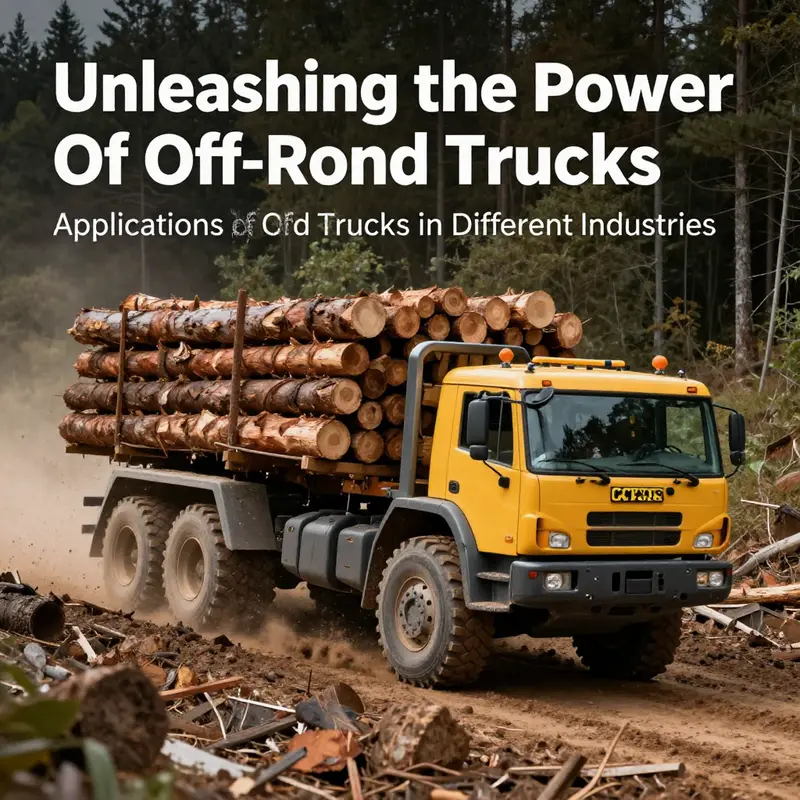
When people hear the phrase off road, they often picture mud-splattered tires and a vehicle that seems to defy the laws of smooth pavement. In the world of trucks, off road is not a gimmick or a setting you switch on for a weekend adventure. It is a language spoken in the geometry of terrain, the materials of the ground under the wheels, and the engineering decisions that translate rough ground into reliable performance. To understand what off road means on a truck is to recognize a system where every component speaks to the next about traction, clearance, durability, and control. On paved streets, a truck is optimized for efficiency, predictable handling, and steady speed. Off road, those same instincts must bend toward adaptability. The chassis must endure. The suspension must articulate. The tires must float or bite through surfaces that change with each mile. The drive system must distribute power where it is most needed, even when the ground underneath offers little in the way of traction. In this light, off road is not an accessory but a core capability, a design philosophy that redefines what counts as a successful haul or a successful mission in environments that tests normal assumptions about weight, torque, and speed.
In practical terms, off road means a truck is engineered to travel over rough, unpaved, or uneven terrain that regular vehicles would find difficult or impossible to traverse. It covers dirt trails and mud, yes, but also sand, rocky surfaces, forests, and sometimes beaches where sand compresses in unpredictable ways. It is a spectrum rather than a single feature. A truck can be off road in different degrees, depending on the task, the terrain, and the tolerance for risk. At the core of this spectrum is a set of engineering choices that together create a predictable, repeatable performance when roads vanish and the ground rises in rugged, irregular waves beneath the chassis. The simplest way to frame it is to say that off road is a package of durability, traction, and clearance that makes a vehicle capable of functioning where a standard truck would falter and stall.
Consider ground clearance, for example. On rough surfaces, the distance between bumper and obstacle is not a static number but a dynamic concern. A higher ride height reduces the risk of parts scraping on protrusions, but it can also alter approach angles, center of gravity, and aerodynamics. Off road trucks manage this tension by combining greater clearance with sophisticated geometry that preserves control at the edges of the vehicle’s envelope. Suspension plays a pivotal role here. It is not merely about absorbing bumps; it is about carrying heavy loads across irregular substrates without letting the tires lose contact with the ground. Long-travel suspensions, robust shock absorbers, and reinforced linkages work in concert to keep wheels engaged with the terrain while the rest of the truck rides the oscillations. In the field, such systems translate to steadier steering, reduced risk of rollover on uneven grades, and preserved payload integrity through long shifts in harsh conditions.
Tires are another defining factor. Off road tires prioritize tread depth, sidewall resilience, and the ability to distribute weight across a larger footprint when surfaces become soft or loose. Aggressive treads bite into mud and ruts, while wider footprints help alleviate ground pressure on sensitive soils. But tread alone does not guarantee performance. Tire compounds, bead durability, and the tire’s overall construction determine how well a wheel can endure cuts, punctures, and rapid temperature changes that accompany strenuous work. A well-chosen tire setup reduces the energy lost to slippage, limits heat buildup, and provides a more predictable grip profile across a range of challenges—from slick clay in a winter pit to sandy dunes on a desert floor.
The drive system is the throttle against uncertainty. In off road applications, four-wheel drive is more than a label; it is a regime for redirecting torque where it is needed most. Some trucks employ fixed driveline configurations that favor traction on slippery surfaces, while others use more complex systems with multiple differentials and locking options that help the vehicle crawls over obstacles and maintain momentum through uneven terrain. In the most demanding environments, more than four wheels may be engaged, with specialized drive layouts designed to balance torque, weight distribution, and braking control. The ability to modulate power across axles, to engage or disengage traction devices, and to utilize low-range gearing allows operators to convert power into controlled movement even when the ground offers little resistance or, conversely, an unexpected bite that could upset balance.
Beyond these core mechanical attributes, off road capability is also about resilience. The chassis must hold together when subjected to impacts and vibrations that would rattle a road-going truck to pieces. Structural reinforcements, stiffening ribs, rugged fasteners, and protective skid plates are all part of the toolkit that keeps critical systems safe from damage when encountering rocks, debris, or sudden ground irregularities. The payload, too, is part of the equation. A heavy load compresses the suspension and reduces the available articulation, so the design must anticipate the trade-offs between maximum load and maximum wheel travel. The result is a versatile package that can haul sizeable tonnages through unforgiving terrain, while keeping the operator and the cargo secure enough to survive a long shift or a demanding task.
These physical principles are not abstract. They translate into concrete outcomes in real work, across distinct sectors that rely on rugged mobility and continuous operation. In mining, off road trucks are the backbone of open-pit operations where the terrain is too rough for standard heavy haulers. In such settings, load capacities can span a broad range, with vehicles designed to move hundreds of tons of ore, rock, or overburden with efficiency and reliability. The powertrain and transmission must sustain high torque over long durations, and the vehicle must perform consistently, day after day, in environments that demand continuous uptime. The vehicles that operate here are built to endure. Their reinforced frames and heavy-duty axles resist the fatigue that comes from constant overland travel across uneven surfaces, while the driveline systems are tuned to deliver traction with minimal slip even when the ground offers little to hold on to.
In construction and infrastructure development, off road trucks extend the reach of crews into remote or rugged areas. In urban projects, on-highway trucks are the norm, but in the countryside, where roads may disappear under rain, heat, or heavy traffic, off road variants remain essential. They can move aggregates, concrete, or other building materials over unimproved paths, across steep grades, and through soft ground that would swallow ordinary trucks. Their ground clearance and suspension allow them to negotiate ditches, ruts, and debris without becoming immobilized. The design philosophy remains the same, but the emphasis shifts toward speed and maneuverability over extended linear ranges while preserving load stability and crew safety. The result is a vehicle that not only carries weight but also extends the practical horizon of a project, enabling teams to reach sites that otherwise would require costly detours or added equipment.
Agriculture and forestry present a different manifest of off road capability. Here the terrain is dynamic and often governed by moisture, soil structure, and seasonal conditions. Off road trucks in these fields must combine lightness in some components with formidable strength in others, balancing traction and payload with the need to avoid soil compaction and environmental disruption. Four-wheel drive and low ground pressure tires help the vehicle traverse soft fields or muddy trails without sinking, while modular cargo beds and adaptable attachments enable the transport of tools, seasonally harvested crops, or timber. This versatility is not about speed but about consistent access and careful stewardship of the land. In forestry, the terrain can be steep, uneven, and brutal on machinery, so the chassis and frame take on a greater role in preserving the integrity of the truck and reducing downtime. In agriculture, the same logic translates into more frequent trips along narrow forest paths, through orchards, or across rough pasture, where the vehicle must stay balanced, repairable, and predictable enough for operators who may be working alone in remote areas.
Emergency response and military applications push off road capability toward mission-critical reliability. In disaster zones or contested environments, roads can vanish or become dangerous. Off road trucks serve as lifelines, ferrying supplies, evacuating people, or supporting field operations over ground that changes with every weather event or shifting landscape. Their resilience to environmental hazards—dust, mud, heat, and cold—must be second nature to both vehicle and operator. In these contexts, the design ethos emphasizes redundancy and ease of maintenance so that a breakdown does not become a bottleneck in a larger operation. The ability to sustain a high cadence of trips, to haul heavy loads, and to maintain control through unpredictable terrain is what differentiates a capable off road truck from a merely rugged one. The results matter: faster relief, safer evacuation, and more effective on-scene support when every minute carries weight.
If one looks closely at these applications, a common thread emerges. Off road capability is less about conquering terrain in a single heroic climb and more about sustaining performance across repeated cycles of movement, load, and environmental change. The truck becomes a working partner, capable of absorbing the irregularities of the ground without turning a routine task into a high-risk challenge. This reliability is achieved through an integrated approach: a chassis that resists fatigue, a suspension system that maintains contact with uneven surfaces, tires that distribute weight and bite into varied substrates, and a driveline that channels torque where it will do the most good. Operators learn to read terrain as if it were a live map, anticipating changes in grip and ground state, and adjusting throttle, braking, and steering to stay in command. The most effective off road operations do not depend on luck; they hinge on anticipation, preparation, and the seamless coordination of hardware and human judgment.
In practical terms, the field reality confirms the numbers and the diagrams. The capacity to move massive loads on tough ground is not a mere curiosity but a necessity in mining or construction where time equals money and every delay can cascade into safety risks or budget overruns. A truck capable of carrying a hundred tons or more on a rough approach, with reliable traction across loose soil or fractured rock, delivers a predictable daily rhythm. The same principle applies in forestry or agriculture where ground conditions can swing with weather and season. The vehicle’s ability to adapt to changing topography while preserving the integrity of the load is what makes off road capability a defining feature rather than a footnote in the engineering brief.
To sustain this advantage, operators and maintenance crews invest in understanding the terrain first, the machine second. Routine inspections become a ritual of listening to the suspension as it articulates over irregular ground, feeling for changes in steering feel or braking response that might signal a developing fault. Maintenance planning shifts from a calendar schedule to a terrain-aware routine, where components exposed to harsher conditions—such as underbody protections, seals, and hydraulic lines—receive heightened attention. The goal is not to prevent every eventuality but to recognize the likely points of stress and treat them with proactive interventions. In such a system, a heavy-duty truck is less a solitary marvel of steel and more a networked set of tolerances and redundancies that work in harmony to keep operations moving.
Looking ahead, there is a continuous dialogue between what off road means today and what it will mean tomorrow. Advances in materials, adaptive suspensions, and intelligent control systems promise to shift the balance further toward resilience, efficiency, and ease of use. Yet the core idea remains unchanged: a truck that can translate the irregular, uncertain language of ground into consistent, controllable movement is a tool that expands what teams can accomplish when roads end and terrain begins. In practice, that translation is the essence of off road capability. It is the sum of geometry and grit, of torque and terrain, of a vehicle designed not just to survive rough ground but to make rough ground productive ground for work of the heaviest consequence.
For readers who want to dive deeper into the mechanical backbone of off road learnings, a resource such as Mastering diesel mechanics: your step-by-step path to success provides a hands-on framework for understanding how powertrains, lubrication, and failure modes interact under demanding conditions. The link draws a line from theory to practice, guiding an operator or engineer through the steps needed to sustain performance where the ground is less forgiving than a highway shoulder. Mastering diesel mechanics: your step-by-step path to success
Ultimately, the meaning of off road on a truck is inseparable from the context in which the vehicle operates. A mining pit, a remote construction site, a forest road, a disaster zone, or a military logistics route—all of these environments demand a certain stubborn competence. The truck must not only endure; it must endure with a purpose: to move weight, to protect integrity, to keep teams safe, and to keep projects progressing even when the surface itself seems to conspire against momentum. This is the essence of off road capability: a crafted convergence of durability, traction, control, and reliability that turns rough ground into reliable workflow. It is a capability that grows in value the more the terrain refuses to cooperate, and it is in those moments that the real utility of an off road truck becomes visible. The road ends, and the work begins; through thoughtful design and disciplined operation, that transition becomes not a risk but a reliable routine.
External resource: https://en.wikipedia.org/wiki/Off-road_vehicle
Final thoughts
Embracing the essence of off-road capabilities means understanding not just the technical specifications but also the adventurous spirit they inspire. Off-road trucks symbolize the quest for freedom and endurance, built to conquer the harshest environments where others fear to roam. From positioning them as essential tools in various industries to enhancing personal adventures, their role is as diverse as the terrains they navigate. By grasping the significance behind these machines, off-road enthusiasts can fully appreciate their rugged resilience, purpose-driven engineering, and the thrill they bring to both personal and professional endeavors.