
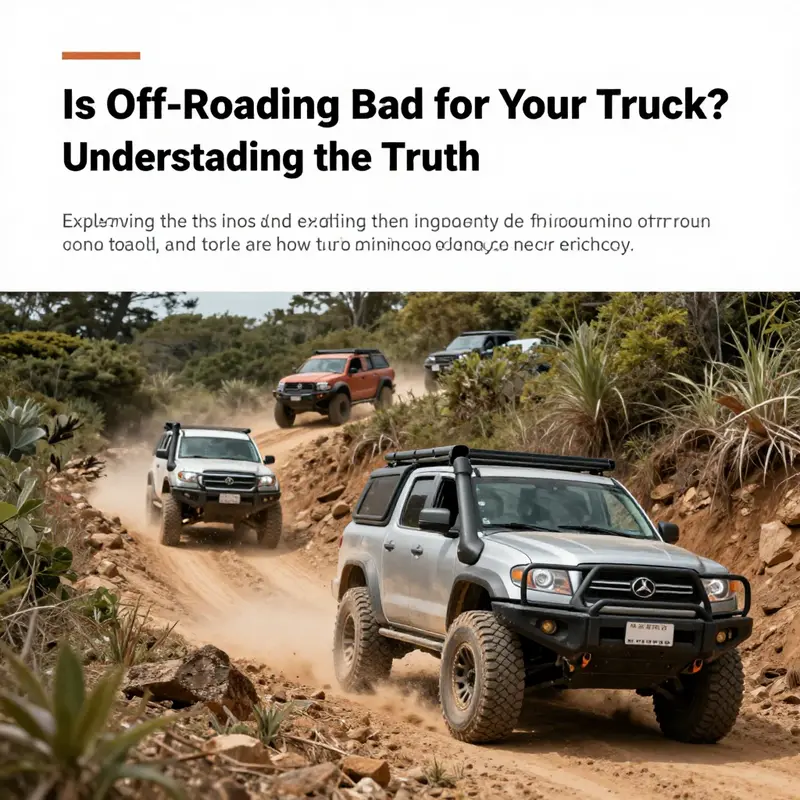
Off-roading is an exhilarating venture that connects drivers with nature and tests the limits of their vehicles. However, it raises the question: is off-roading bad for your truck? This inquiry is essential for off-road enthusiasts, adventure seekers, and even agricultural landowners who utilize their trucks in rugged conditions. Off-roading itself isn’t inherently damaging, but various factors can affect your truck’s longevity and performance. In this comprehensive guide, we will dive into key areas of concern starting with the suspension system, then exploring tires, undercarriage safety, drivetrain impacts, and cooling challenges. Each chapter will provide insights that highlight both the risks involved and strategies for effective vehicle care to ensure your off-roading experiences remain memorable and safe.
Rough Trails, Real Strain: How Off-Roading Tests Your Truck’s Suspension—and What It Takes to Keep It Strong
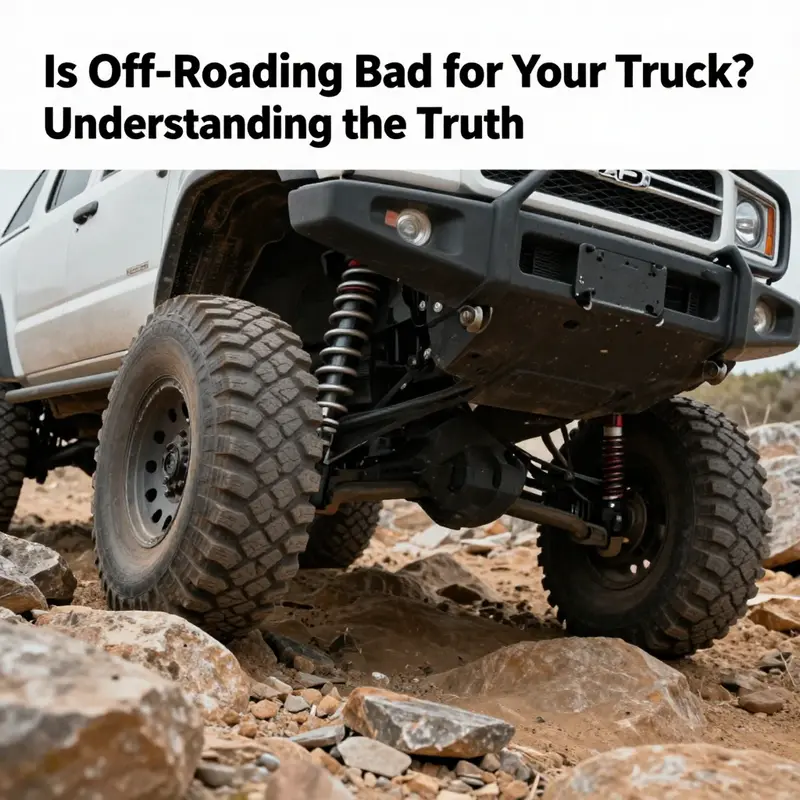
Off-roading subjects a truck’s suspension to conditions far removed from smooth pavement. Every time a wheel drops into a rut, climbs over a rock, or descends a dune, the suspension team—comprising shocks, springs, control arms, and bushings—absorbs the impact and then must return the wheel to the correct position as the terrain changes again. This constant cycle of compression, rebound, and articulation imposes stresses that are predictable in concept but demanding in practice. Over time, the cumulative effect can manifest as premature wear, subtle shifts in geometry, or, in worst cases, a component failure that compromises safety. The severity of these outcomes hinges on how aggressively the vehicle is used, the terrain itself, and how well the truck is prepared for it. A stock chassis on a challenging trail might endure a few outings, but repeated abuse—especially with heavy loads or aggressive driving styles—will tire suspensions that were never meant to stay perfectly aligned under such duress.
A central thread in the suspension story is the camber angle—the tilt of the wheels relative to the vertical axis. On paved roads, manufacturers design camber to optimize tire contact and stability under typical loads. Off-road, however, the longer and more frequent periods of side-to-side articulation, vertical shocks, and uneven ground can drive camber away from its ideal range. When camber shifts excessively, tire contact patches grow inconsistent, grip wanes at critical moments, and the wearer’s steering response becomes less predictable. Tires may wear unevenly, further diminishing traction and increasing the frequency with which you must replace tires long before their tread life would have otherwise expired. In this sense, camber isn’t just a geometry detail; it’s a live indicator of how well a suspension system adapts to real-world off-road demands. Optimized systems designed for rough terrain shrink those camber excursions, promoting steadier handling and more consistent tire wear, even when the surface throws a curveball.
The particular components most exposed to off-road abuse tell a clear story. Shock absorbers and struts bear the brunt of repeated jolts. On rough surfaces, their seals face higher pressure, their damping fluid sees more rapid temperature fluctuations, and internal components can begin to leak or lose responsiveness. When damping fades, the wheel can bounce excessively after a bump, temporarily breaking tire contact and inviting instability. Leaf springs, still common on heavy-duty trucks and platforms designed to carry payloads, endure repeated flex cycles that can lead to metal fatigue. Hairline cracks or outright cracks in leaves reduce load-bearing capacity and can alter ride height in ways that cascade into alignment problems. Torsion bar suspensions, praised for articulation, bring their own maintenance quirks. While their sealed design helps keep dirt out, the complexity of adjusting or repairing them means the consequences of damage can be more serious and less forgiving than on simpler systems.
Beyond the components themselves, off-road use tests the entire suspension system’s coordination. The suspension doesn’t operate in isolation; it interacts with steering, axle geometry, and the drivetrain’s torque delivery. On uneven terrain, the vehicle may endure torsional loads that twist the frame or misalign axles, especially when the undercarriage encounters obstacles with the vehicle still in motion. The result is not only harsh ride quality but a real risk of sudden changes in steering response or power transfer that could surprise even experienced drivers. Recognizing these dynamics, advanced suspension technologies have emerged to counteract the worst effects. Active suspension systems, which rely on sensors and real-time electronics to modulate damping force, ride height, and stiffness, aim to maintain tire contact and stability as conditions shift. By continuously reacting to surface irregularities and driver inputs, these systems can keep the vehicle flatter and more controllable, reducing long-term wear on the structural components and enabling more confident handling on gnarly terrain. Yet they are not a panacea; their benefits come with added complexity, cost, and a need for specialized maintenance.
For many enthusiasts and operators who prefer a more straightforward approach, alternative suspensions still deliver durability without the layer of sophistication that active systems require. Torsion bar suspensions are celebrated for their robustness and sealed design, which makes them relatively resistant to dirt and moisture. They also tend to offer predictable articulation that can be tuned for rugged, repeatable performance on rough trails. Upgraded leaf springs, when properly designed and installed, can handle heavier loads and harsher duty cycles while maintaining a dependable ride. These choices illustrate a practical truth: off-roading rewards preparation. A well-matched suspension strategy depends on the vehicle’s intended role—whether it’s a weekend trail rig, a commercial off-road platform, or a work truck that must haul and survive extreme terrain—paired with a plan for regular maintenance and inspection.
Regular maintenance is the steady antidote to the harsh realities of off-road use. After a trip, a careful check of shocks and struts for leaks, signs of fluid loss, or diminished damping is essential. Inspecting springs for cracks or fatigue, looking for bent control arms, and scanning bushings for excessive play can catch problems before they escalate. Cleaning mud and debris from undercarriage components is not just about aesthetics; it prevents corrosion and helps preserve moving parts in their designed position. Fluids—diff fluids, transfer case lubrication, and gear oils—should be checked for contamination and replaced per the vehicle’s maintenance schedule. The driving technique matters as much as the hardware. Slow, deliberate throttle inputs over uneven surfaces, selecting the appropriate gear for the terrain, and avoiding sudden impacts can dramatically reduce stress on the suspension. A driver who respects the limits of the vehicle’s design—recognizing when a line is too rough or when a descent is too steep—extends the life of all suspension-related components and lowers the odds of a catastrophic failure.
As this chapter threads through the broader topic of whether off-roading is inherently bad for a truck, it becomes clear that the risk lies less in the act itself than in how the act is executed. The right preparation—an appropriate chassis, upgraded or well-tuned suspension, protective underbody shields, and tires suited to the terrain—paired with disciplined driving and proactive maintenance, can transform rough trails from a test of endurance into a disciplined sport or a reliable duty. For readers who want to deepen their practical understanding of mechanical fundamentals related to this topic, resources that emphasize the fundamentals of diesel mechanics and general maintenance can be surprisingly useful. A well-structured guide on diesel mechanics offers actionable steps to diagnose and address suspension-related concerns before they become expensive problems. Mastering Diesel Mechanics: Your Step-by-Step Path to Success illustrates how attention to core systems—engine, transmission, and supporting subsystems—supports the overall health of a truck that regularly navigates rough terrain. The deeper, more technical discussions in the referenced material support a practical stance: know what to look for, perform the right checks, and apply disciplined maintenance.
For readers seeking an external scholarly perspective on optimizing suspension for off-road handling, the field offers rigorous analyses that complement these practical insights. External research such as the study titled Optimization of suspension system of offroad vehicle for improved handling provides data-driven approaches to reducing camber fluctuations, improving damping strategies, and enhancing articulation while preserving load capacity. This kind of work helps translate everyday driving experience into design considerations that can guide both hobbyists and professionals toward safer, more capable, and more durable off-road performance.
External resource: Optimization of suspension system of offroad vehicle for improved handling. https://www.researchgate.net/publication/398765420Optimizationofsuspensionsystemofoffroadvehicleforimprovedhandling
Tire Trials on Rough Trails: Decoding the Real Impact of Off-Roading on Your Truck’s Tires
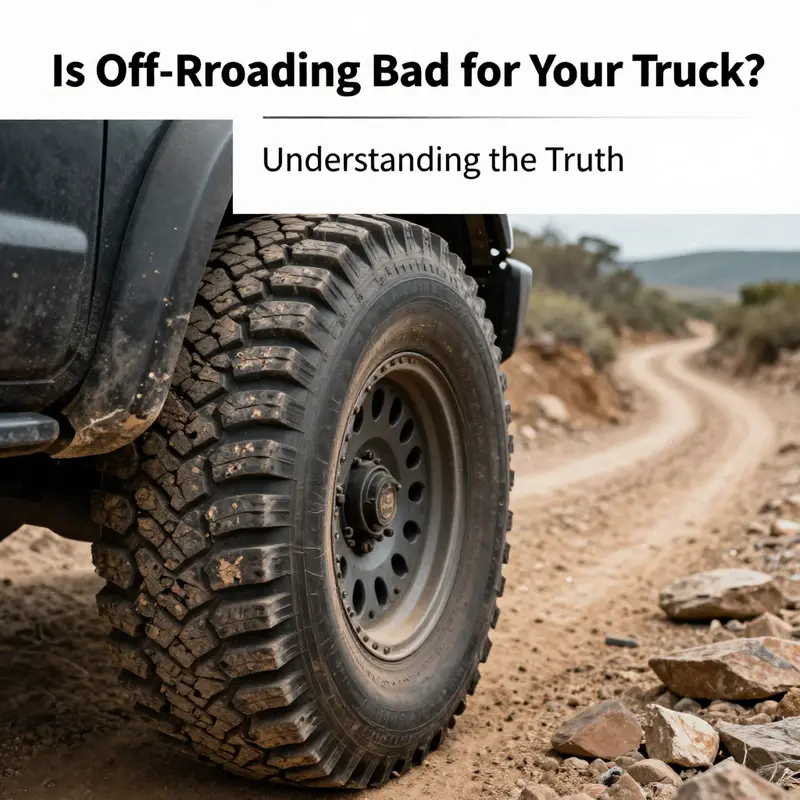
The thrill of off-roading often lands with a rumble and a spray of dust, but as the smile fades back into focus, the tires tell a true story about the terrain, the pace, and the way a truck handles it all. Off-roading places tires under a set of demands their highway counterparts rarely meet. The same features that make mud terrain or all terrain tires adept at digging through rock, mud, and hollowed ruts also invite a different kind of wear when the landscape turns harsh. The question at the heart of this chapter is simple in form, but nuanced in practice: is off-roading bad for your truck tires? The answer rests on understanding the stress profile these tires endure, the ways debris and heat interact with rubber and belts, and, crucially, how you prepare and drive for the trail ahead.
The core challenge begins with the terrain itself. Off-road surfaces are not uniform; they are a mosaic of sharp stones, loose gravel, and jagged edges that bite into tread blocks and tug at sidewalls. The very design of off-road tires—large tread blocks, reinforced sidewalls, and rugged compounds—targets traction, durability, and resistance to punctures in rough conditions. But those advantages carry a price. Large tread blocks, while great for self-cleaning and grip, leave expansive margins where sharp rocks can pry skins and cuts. Exposed sidewall lugs, though distant cousins to highway tires in terms of protection, become vulnerable when the vehicle is perched on uneven surfaces or slid over rocky edges. It is a delicate balance between traction and vulnerability, a trade that becomes clear the moment a tire meets a hidden shard of mineral or a pointed rut on a drop-off.
Heat is another silent adversary. The real world of off-road driving is a constant cycle of flex, contact, and energy transfer. Each rotation over a rough patch forces the tire to bend and straighten as the tread lugs grip uneven ground. That bending, repeated hundreds or thousands of times, turns into heat. On a long, slow crawl over a rocky slope or a backcountry plunge into a mud pit, temperatures inside the tire can rise well beyond highway-running norms. Temperatures climb not just because the tire is under load, but because the rubber compounds and the steel belts inside the tire are working against higher friction and more rapid deformation. Excessive heat degrades rubber more quickly, softens internal plies, and can accelerate belt separation in extreme conditions. This is not a warning born of fear but a reminder of the physics that govern how tires age under stress.
The risk from debris is equally pragmatic. Off-road trails collect foes from every angle: nails and thorns that plant themselves in the tread, glass that hides in dust, and the occasional buried rock that launches a micro-missile into the tread. The sharpness, the placement, and the vehicle speed determine how damage progresses. A puncture from a thorn may be repairable, but a deep cut through a tread block can create a weak point where heat concentrates and wear accelerates. Sidewall damage is a different kind of menace. A puncture or gouge in the sidewall can lead to slow leaks, but a severe impact can compromise the internal structure and even cause a bead failure if the wheel seat is stressed by a heavy impact. In the worst cases, the belt or fabric plies can become stressed enough to fail, compromising performance in a way that is not visible to the untrained eye.
For many drivers, the most tangible effect of tire stress on off-road adventures is tread wear. Aggressive tread pattings are designed to bite into rock, soil, and mud, but they also wear faster on pavement. This is a practical reality: your tires wear in two very different theaters at once when you commute back from a trail with a road surface. The same tread design that helps you climb a gravel incline can prematurely wear down if you roll onto asphalt at highway speeds for long stretches. The result is a paradox. Tires that optimize off-road capability can demand more regular attention to tread depth, even if the vehicle remains mechanically sound elsewhere. The long view is that the trade-off between off-road capability and tire life is not a binary yes or no; it is a measurement of how often you expose tires to rough terrain, how well you protect them in between trips, and how judicious you are about when you decide to push beyond the vehicle and tire limits.
Mitigating tire damage is not about avoiding adventure; it is about thoughtful preparation and disciplined practice. First, tire choice matters. Off-road tires are not created equal, and the decision between mud terrain and all terrain tires hinges on how you intend to use the truck. Mud terrain tires offer exceptional traction in mud and rock but can be louder, more aggressive on pavement, and more prone to damage from highway debris. All terrain tires strike a middle ground, providing solid grip with more even wear characteristics under mixed-use conditions. The selection should reflect the most frequent terrain you encounter, with an understanding that the more you push into extreme trail conditions, the more you should expect the tire to endure.
Second, maintaining proper inflation is essential. Lower pressures can increase grip on soft ground but raise the risk of bead leaks and sidewall damage if you breach a rock edge. Higher pressures reduce flex and heat buildup but can reduce traction and increase the chance of a sharp object causing a puncture. The rule is to tailor inflation to the terrain you expect and to adjust as needed based on load and driving style. After each off-road trip, a careful inspection should be part of the routine. Look for cuts, bulges, embedded rocks, or unusual wear patterns. Address any leak promptly and track tire temperature if you notice hot spots after a run—these are warning signs that a tire has endured more stress than it should.
A practical layer of protection exists beyond the wheel and tire assembly itself. Tire liners and protective shields can add a margin of safety against punctures from sharp debris and stone shards. These measures do not create invulnerability, but they expand the window of safe operation and reduce the likelihood of a dramatic, unplanned tire failure on the trail. Of course, the maintenance habit must extend beyond the tire. The broader path involves checking alignment, suspension components, and brake systems to ensure that the load and vibration from rough terrain do not amplify tire wear in one corner of the vehicle. A wheel alignment that is out of spec can cause uneven tire wear, which reduces life and performance and makes future trips more challenging.
The human factor remains central to how tires fare on rough trails. Driving style can dramatically alter outcomes. Slow, deliberate line choice over obstacles minimizes impact forces and heat buildup. A careful scout of the most challenging sections, rather than a rush to conquer them, reduces the chance of a sudden impact that can compromise a tire. The instinct to gain progress should be balanced with a respect for the tire investment that powers every mile of the journey. In this sense, off-roading is not an unmitigated hazard to tires but a test of judgment, preparation, and ongoing care.
To delve deeper into the broader mechanics of maintaining a truck in demanding conditions, even beyond tires, consider the guidance on diesel mechanics and step by step upkeep. mastering-diesel-mechanics-your-step-by-step-path-to-success. This resource, while not tire specific, underscores the principle that a well-timed maintenance rhythm supports all vulnerable systems, including tires, when a truck is pushed to perform on tricky terrain.
Ultimately, off-roading does not have to be a reckless assault on tires. The truth lies in preparation, informed tire choice, disciplined driving, and attentive maintenance. Tires will wear and can be damaged in the harshest environments, but with prudent practices, you can pursue rugged trails without turning your tire life into a constant race against failure. A truck built to handle off-road conditions, paired with tires chosen for the typical terrain and a careful maintenance habit, can offer years of reliable service and satisfying adventures. The chapter above reframes risk as a manageable aspect of off-road exploration, shifting the narrative from fear to informed stewardship. It is possible to chase the thrill of rough trails and still safeguard your tire investment, provided you respect the limits of your tires and your own skills, and you stay vigilant about the signs of excessive heat, cuts, or unusual wear that demand attention.
External resource for tire durability and performance standards: https://www.tireandrim.com/
Shielding the Frame: How Off-Roading Affects Your Truck’s Undercarriage and What to Do About It
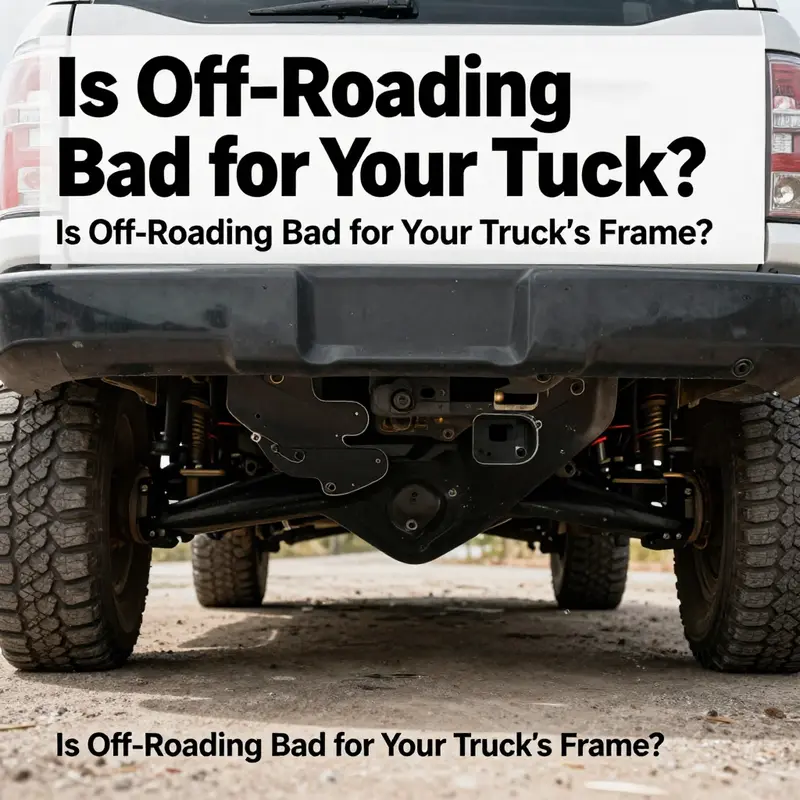
Protecting the Undercarriage: Why the Frame Matters on Off-Road Trips
Off-roading tests more than traction and driver skill; it tests the very backbone of your truck. The frame and undercarriage take repeated impacts, bending loads, and abrasive forces that work quietly over time to shorten service life. That doesn’t mean the activity is inherently harmful, but it does mean that off-roading changes what you should expect from maintenance, inspection, and vehicle setup. Understanding how and why these stresses accumulate makes the difference between occasional cosmetic repairs and serious structural problems.
Rough surfaces and large obstacles create concentrated loads at specific frame points. Hitting a rock with the oil pan, getting high-centered on a ledge, or repeatedly flexing the chassis over ruts and washouts all concentrate force into welds, brackets, and crossmembers. Repeated dynamic loading can cause metal fatigue. Cracks tend to form where stiffness changes abruptly—at mounting points, where the cab or bed mates to the frame, and around holes or cutouts. Left unchecked, small stress cracks grow and can compromise alignment, steering geometry, and towing capacity.
Frame stiffness plays a pivotal role in how a truck responds. A stiff frame distributes loads more uniformly, reducing localized deformation and the chance of fatigue. A more flexible frame may feel compliant and comfortable on pavement, but off-road it can flex enough to shift loads awkwardly. That flexing increases the number of stress cycles for structural members and accelerates wear at attachment points. When planning off-road use, consider whether your truck’s chassis was designed for such duty. Trucks built with heavier gauge rails, reinforced crossmembers, or dedicated off-road packages handle dynamic loading far better than general-purpose frames.
Protection starts with prevention. Skid plates are the first line of defense. Properly sized plates shield oil pans, transfer cases, fuel tanks, and control arms from direct rock strikes. They should be mounted to strong points and allow for proper airflow and drainage. Reinforced bumpers and rock sliders protect body mounts and door sills from direct impacts and help preserve structural integrity during side impacts or when sliding over obstacles. These add-ons aren’t cosmetic; they absorb and redirect forces away from vulnerable frame areas.
Suspension choices matter equally. Heavier-duty springs, upgraded control arms, and beefier shocks reduce the amplitude of impacts transmitted to the frame. A suspension tuned for off-road use will control wheel movement better, keeping tires in contact with the ground while limiting sudden jolts to the chassis. Proper articulation and shock damping prevent abrupt load transfers that otherwise concentrate force at a few points. At the same time, avoid extreme lift modifications that introduce new leverage and increase bending moments on frame rails and steering components.
Tire selection and pressure management also reduce undercarriage risk. Larger, tougher tires allow higher clearance and absorb energy before it reaches the frame. Lower tire pressures on soft terrain increase the contact patch and help the vehicle roll over obstacles rather than banging into them. But softer tires can expose rims to impacts and increase strain on suspension components, so balance is key.
Driving technique is a low-cost but powerful defense. Approach obstacles at controlled speeds and with proper lines. Aim to distribute weight and avoid sudden stops or wheelspin that spike loads. Use low-range gearing when crawling to maintain smooth momentum. Avoid dragging the belly across ledges; instead, find a line that allows one wheel to climb at a time. When unsure, walk the obstacle first to identify hidden hazards under the surface.
Inspection and maintenance close the loop. After a hard day on the trail, clean the undercarriage to remove mud and grit that hold moisture and encourage corrosion. Inspect welds, frame rails, and mounting points for hairline cracks, rust flaking, or deformation. Check fasteners for looseness; repeated jarring can back bolts out. Examine the exhaust, fuel lines, brake lines, and wiring for signs of impact or abrasion. Address small issues quickly; a minor fatigue crack that gets welded early is far easier to fix than a fractured rail that requires major reconstruction.
If you detect frame damage, assess whether repair is structural or cosmetic. Surface dents can often be pulled and reinforced. Cracks at welds or across load paths demand careful repair, ideally by someone experienced with frame welding and alignment. Poor repairs can hide problems or create weak points. Accurate alignment checks after major impacts help catch unseen frame twist that alters handling and accelerates wear on driveline components.
For trucks that see frequent off-road use, consider reinforcing known weak points proactively. Gussets at suspension mounts, boxed rails, and additional crossmembers increase stiffness where it matters. Keep in mind that adding stiffness can move stress elsewhere, so reinforcements should be applied thoughtfully. Regularly scheduled preventive inspections and a documented maintenance log help you spot trends in wear and fatigue before they become critical.
Operational planning matters too. Avoid the most punishing trails when you’re alone or far from help. Carry basic repair tools, spare bolts, and a first-aid kit for quick field fixes. When towing or carrying heavy loads, remember that added weight multiplies stress; reduce payload when you expect severe terrain. Finally, educate anyone who uses your truck on proper technique and limits—human error often causes the worst damage.
Off-roading can shorten a truck’s frame lifespan, but it doesn’t have to. With the right combination of protection, suspension tuning, sensible driving, and diligent inspection, you can enjoy trails while keeping structural damage to a minimum. For those who want to dive deeper into how chassis setup influences frame life under repeated dynamic loads, the research on off-highway truck setups provides useful technical context: https://www.sciencedirect.com/science/article/pii/S235217162400089X
If you want hands-on repair and maintenance guidance beyond basic inspections, consider resources focused on mechanical skills and diagnostics, such as the practical approach in [Mastering Diesel Mechanics].
How Off-Roading Stresses Your Drivetrain and Transfer Case — Risks, Symptoms, and Protections
How Off-Roading Stresses Your Drivetrain and Transfer Case — Risks, Symptoms, and Protections
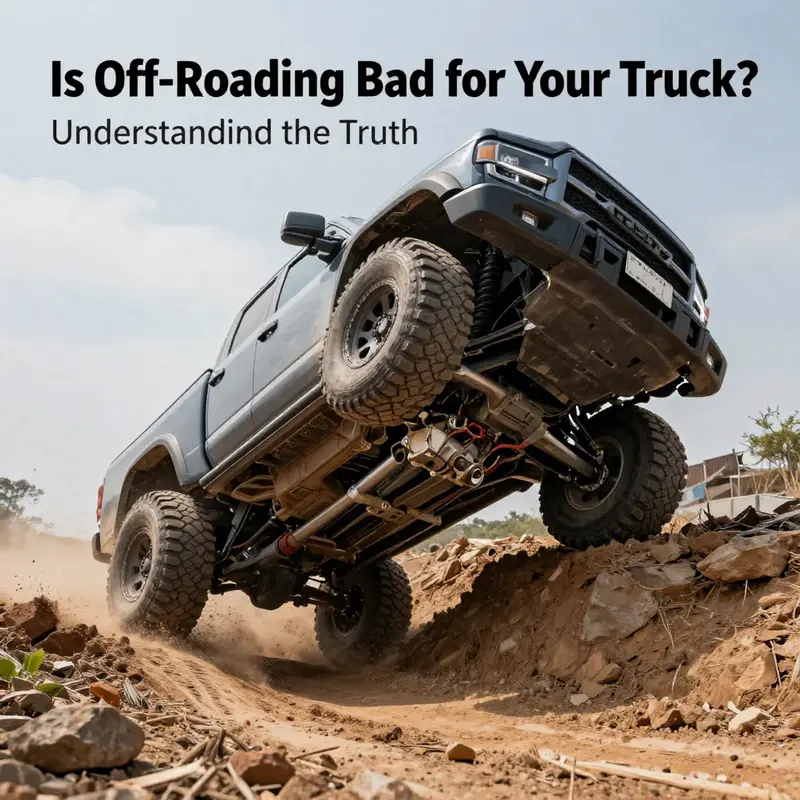
Off-roading shifts a truck from predictable pavement into unpredictable physics. When tires meet rocks, ruts, and mud, the load path through the vehicle changes. Power no longer travels in smooth pulses; it encounters sudden spikes, long sustained loads, and lateral shocks. The drivetrain and transfer case sit directly in that path. They must deliver torque while absorbing impacts, misalignment, and contamination. Understanding what gets stressed, how it fails, and what to do about it keeps a truck reliable for years of trail work.
The drivetrain includes transmission, driveshafts, differentials, and axles. Each part has its role and its vulnerabilities. Transmissions endure frequent gear changes and prolonged low-speed work. Driveshafts see sudden shifts in rotational inertia and can experience rapid torque reversals. Differentials and axles transfer torque to wheels under variable traction. Off-road conditions amplify these forces. Crawling over rocks, dragging through deep ruts, or powering out of a bog multiplies torque through each link. Small design margins on a stock drivetrain can quickly be eaten away by repeated exposure to these stresses.
The transfer case is a central node in four-wheel-drive trucks. It divides engine output between front and rear axles and changes the ratio when low range is selected. During technical driving, the transfer case is often engaged in low range. That multiplies torque to the wheels but also multiplies internal loads. Low-speed crawling puts the transfer case in a near-constant state of high torque and low RPM. Gears, bearings, and seals run hot and face elevated mechanical stress. If the transfer case design, gearing, or lubrication is mismatched to the application, losses rise and reliability falls.
Three common factors accelerate wear: prolonged low-speed, frequent gear shifting, and environmental contamination. Low-speed crawling holds heavy torque in the drivetrain for long periods, generating heat inside the transfer case and differentials. Frequent shifts between ranges or into and out of gear increase shock loading on gear teeth and synchros. Mud, sand, and water find ways into seals and breathers. Abrasive particles mixed with lubricants grind surfaces and accelerate bearing wear. Together, these stresses lead to overheating, fluid breakdown, and eventual mechanical failure if ignored.
Symptoms of drivetrain or transfer case distress usually appear before catastrophic failure. Listen for whining or grinding noises that change with vehicle speed. A transfer-case or differential whine that grows under load often indicates worn gears or bearings. Sluggish engagement of four-wheel-drive, delayed or clunky range shifts, or slipping under load point to internal wear or fluid issues. Vibration down the driveline at certain speeds suggests misalignment or failing universal joints. Heat is another clue; transfer cases that run hot after a short session require inspection. Catching these symptoms early prevents larger repairs.
Mitigation begins with matching capability to use. Trucks destined for regular off-road work should have drivetrains and transfer cases rated for that duty. Engineers select gear ratios and locking mechanisms to balance tractive efficiency against durability. For owners, practical steps reduce stress. Use the correct range and gear for the situation. Low range is for slow technical moves, not high-speed trails. Maintain steady, controlled throttle inputs to avoid abrupt torque spikes. When possible, use momentum to clear obstacles rather than holding max torque and spinning wheels.
Regular maintenance is the single most effective defense. Check fluids frequently and follow drain intervals appropriate for severe-service use. Off-road conditions demand high-quality lubricants designed for elevated temperatures and contamination resistance. Change transfer case and differential fluids sooner than factory schedules if you expose the truck to heavy use. Inspect seals, breathers, and fasteners after trips. Clean caked mud and debris from around the transfer case and axle housings to prevent trapped heat and corrosion. If you want to build deeper competence, consider learning mechanical fundamentals; resources on diesel mechanics can make maintenance more effective and more economical.
Modifications can raise a drivetrain’s tolerance for off-road abuse. Upgraded gearsets and heavy-duty bearings increase margin. Transfer cases with selectable locking features and robust housings resist deformation and distribute loads better. A dedicated transfer-case cooler or larger-capacity oil can reduce operating temperatures during long crawls. Reinforced driveshafts and stronger universal joints resist shock loading. Install extended breathers on differentials and the transfer case to keep water out during deep water crossings. Use skid plates to shield vulnerable components from rock strikes.
However, upgrades require careful matching. A high-ratio transfer case may improve low-speed torque but increase rotational speeds in other components. That can raise heat and wear unless the entire drivetrain is considered. Poorly chosen modifications introduce new failure modes. For example, locking systems that force perfect front-rear speed matching can create binding and rapid wear on driveline joints during tight turns. Work with experienced technicians or study drivetrain dynamics before committing to major changes.
After any challenging trip, perform a focused inspection. Look for oil leaks, damaged seals, and loose or ruptured vent hoses. Rotate wheels by hand to check for binding or roughness in hubs and differentials. Feel the transfer case housing for unusual heat. Smell for burned oil; it signals overheating and fluid breakdown. Record mileage and operating conditions so you can correlate symptoms to specific terrain or techniques.
When problems are found, act promptly. Preventive repairs cost less than major overhauls. Replace degraded fluids with high-quality lubricants formulated for the expected temperatures and contamination. Renew seals and breathers to keep contaminants out. If noises or vibrations persist, schedule a professional inspection. Rebuilding or upgrading critical components at the first sign of wear avoids failures at inopportune places on the trail.
Off-roading does stress drivetrains and transfer cases, but it need not ruin a truck. Thoughtful driving, appropriate equipment, proactive maintenance, and targeted upgrades keep the stresses manageable. For those wanting deeper technical context on transfer-case design and tractive efficiency, see this research study: https://www.sciencedirect.com/science/article/pii/S014236572300298X. For practical maintenance guidance and hands-on repair steps, consider learning the fundamentals of diesel mechanics to strengthen your ability to service heavy-duty systems: https://dirtantrucks.com/mastering-diesel-mechanics-your-step-by-step-path-to-success/.
null
null
Final thoughts
As we’ve explored, off-roading is not inherently bad for your truck, yet it does demand awareness and proper care. Each chapter has shed light on critical components that can suffer under the pressures of rugged terrain but also highlighted how proactive vehicle maintenance can mitigate these issues. Regular inspections, appropriate modifications tailored for off-roading, and sensible driving techniques can transform your adventurous outings into safe expeditions, allowing you to enjoy every ride without sacrificing your truck’s longevity. Remember, with the right approach, your truck can handle thrilling off-road adventures and remain a reliable companion for years to come.