

For off-road enthusiasts, the thrill of navigating rugged terrains with a powerful truck is unmatched. Whether you’re tackling muddy trails, steep hills, or rocky paths, the key to successful off-road driving lies in understanding your vehicle and the landscape. If you’re ready to take your off-road adventures to the next level, this comprehensive guide will equip you with vital preparation techniques, gear selection, driving methods for various terrains, safe driving practices, and solutions for when the unexpected happens. Embrace the wild terrain and enhance your skills to drive with confidence wherever the path leads.
Quiet Groundwork: Preparation That Lets a Truck Meet Off-Road Terrain with Confidence
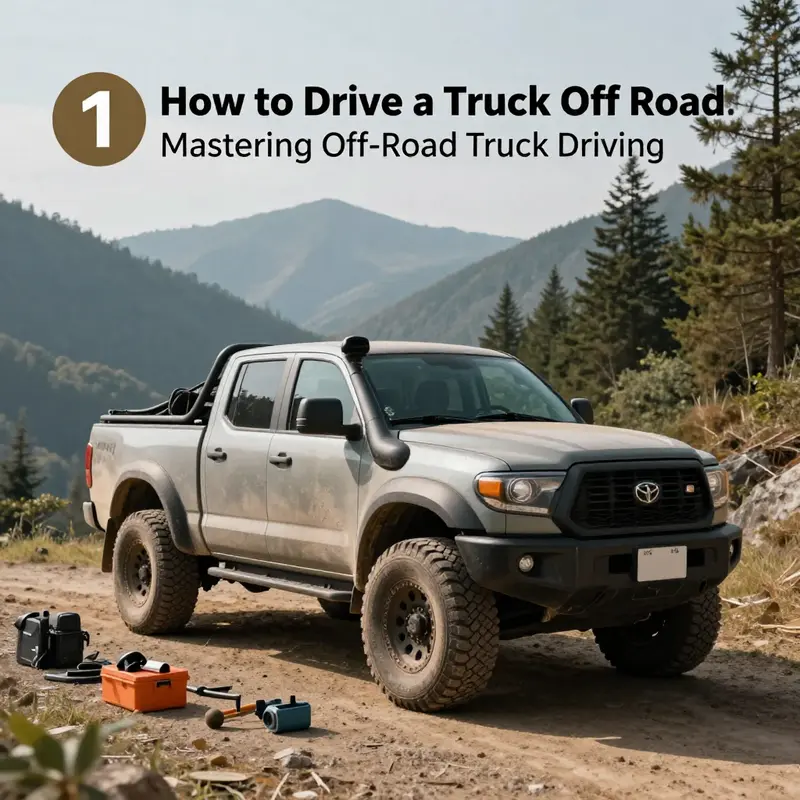
Preparation begins well before the ignition turns over and the first rocks appear on the approach. The truck must be in peak mechanical condition to handle the strain of rough terrain. A thorough vehicle inspection becomes a ritual: tires checked for proper inflation and tread integrity, brakes responsive, suspension unbinding itself from every rut and contour, and the four-wheel-drive system verified for engagement in both high and low ranges. Fluid levels demand attention too—engine oil, coolant, transmission fluid, and perhaps even a quick look at the transfer case if the system is equipped with it. A secure battery and clean, dry connections matter just as much as a full fuel tank, because a stalled climb or a sudden downhill can be unkind to an underpowered alternator or a thirsty engine. In all, the vehicle feels like an instrument—its sensitivity and reliability hinge on the small, often overlooked details that become decisive when the road disappears beneath the tires. To that end, a well-prepared driver treats these checks as routine, not as a last-minute afterthought, recognizing that a few minutes spent verifying the fundamentals can save hours of difficulty on the trail.
Beyond the engine bay lies the practical repertoire of gear that keeps the trip sane. An off-road kit isn’t a luxury; it is a lifeline. A spare tire, a sturdy jack, and a lug wrench are essential, but more than that, one needs a capable air compressor or a reliable inflator so tire pressure can be adjusted on the fly. Traction aids—boards or mats—travel light but promise a big return when the tread meets slick soil or a stubborn rut. A winch or tow strap remains a point of debate for some crews, yet for others it is the line that keeps a descent from turning into a fast, desperate dig. Recovery gear should be accessible, not buried under gear, and it should be tested in advance to ensure it will deploy when needed. As a rule of thumb, pack according to the environment: cold, remote, or desert-like conditions demand extra layers, spare batteries, food, and water. In the most desolate corners, a shovel, traction boards, and a compact camp stove may feel unnecessary until a real need arises, turning a minor delay into a major ordeal if not anticipated. The emphasis on supplies is not about excess; it’s about resilience. A prudent plan anticipates the basics—hydration, warmth, light—so the crew can make measured, rational decisions even when the weather turns and the terrain tightens.
Route planning and terrain knowledge complete the foundation. The driver who moves with confidence through rough ground is the driver who has learned the lay of the land before the engine is started. Detailed planning starts with study of topographic features and known hazards. Mapping tools, whether traditional maps or GPS apps designed for off-road navigation, become a compass that points toward safer passage and away from traps such as unstable ground, deep rivers, or sudden washouts. Local knowledge is a powerful multiplier—talking with other drivers who have ridden the same route can illuminate unmarked perils, such as creeks that swell after rain or hidden ledges that strain a long wheelbase. The planning process also invites a sober evaluation of energy and momentum. Understanding what the vehicle can climb without aid, where wheelspin will devour precious torque, and how long a path might demand first-gear persistence makes it possible to pace the journey and avoid getting stuck in situations that force risky improvisation. In this light, route planning isn’t bureaucratic; it is the map before the engine, the guardrail you set for the ride you intend to take.
Mentally, preparation governs readiness as much as the mechanical checks. Adequate rest before departure is not a luxury but a necessity. Fatigue dulls perception, slows reaction times, and blunts the driver’s capacity to interpret shifting terrain. The driver must know the truck’s capabilities—the true ground clearance, the approach and departure angles, and the behavior of the 4WD system when confronted with slick rock or loose dirt. Defensive driving becomes a mindset rather than a technique to deploy just on the hard parts. It is about scanning ahead, anticipating hidden obstacles, and being prepared to adapt speed to the grade and the turn radius rather than hoping momentum will carry the day. With this mindset, the driver learns the value of slow, deliberate inputs: smooth steering, gradual acceleration, and measured braking. The goal is to preserve tire contact and momentum while avoiding abrupt maneuvers that might destabilize the chassis or shift weight into a corner, increasing the risk of a rollover on steeper terrains. A calm, observant approach reduces surprises and makes the difference between a difficult path navigated with confidence and a moment that triggers a sudden, high-stress decision.
The preparation phase also invites a practical curiosity about the truck’s larger ecosystem. The decision to study maintenance more deeply might lead a driver to consult specialized resources that broaden understanding of how a diesel or gasoline engine responds to off-road demands, how cooling behaves under load on long ascents, and how to maintain charging and electrical systems where vibration and dust are constant companions. For readers who want a deeper dive into aftermarket knowledge or mechanic-level mastery, resources exist that illuminate the steps and checks that keep a vehicle healthy in rough environments. This is where the idea of continuous learning comes into play: the best off-road drivers aren’t merely fast; they are the ones who stay ahead of trouble by knowing how their powerplant and drivetrain behave under stress. A practical starting point is to engage with accessible, reputable guidance that translates theory into hands-on practice. In this spirit, one helpful approach is to explore materials that break down diesel systems, fuel delivery, and power management in a way that remains focused on real-world off-road conditions. Mastering Diesel Mechanics: A Step-by-Step Path to Success offers a structured stance on how to grow from basic competence to systematic, reliable upkeep. By treating maintenance as a continuous, repeatable discipline rather than a one-off checklist, the driver builds a sturdy, resilient platform for every expedition.
Finally, preparation is not a static phase but a dynamic ritual. The truck is checked, stocked, and studied, yet the terrain remains unpredictable. The driver’s role is to blend humility with readiness: to accept the possibility of getting stuck, but to approach that possibility with the tools, knowledge, and mindset to solve it without panic. Preparation breeds adaptability. It enables you to shift from a dependency on momentum to a discipline of controlled progress, where every decision is measured, deliberate, and safe. This attitude recognizes that the thrill of off-road exploration comes not from conquering every obstacle but from negotiating the landscape with respect for its power and constraints. In the end, the most trustworthy off-road experience comes from a partnership among vehicle, crew, and terrain—a partnership rooted in thorough preparation, meticulous gear, clear planning, and a steady, capable hand on the wheel. For readers aiming to translate this preparation into practical, repeatable results on the trail, remember that the road you save may be your own. If you want to extend your practical knowledge beyond what’s covered here, the path to deeper mechanical understanding can be a valuable companion on months of road and trail alike, guiding decisions that keep you moving forward rather than standing still.
External reference for broader safety and technique guidance: https://www.4x4world.com/off-road-truck-driving-tips/.
Mastering Torque and Terrain: Choosing the Right Gear and Drive Modes for Off-Road Trucks
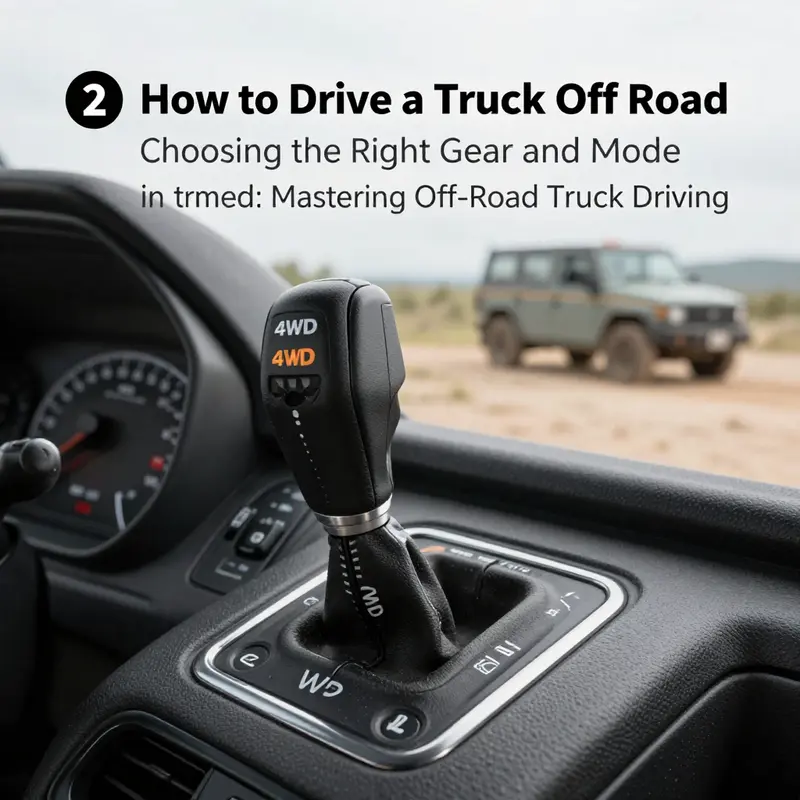
When you head off road, the terrain will test more than your speed. It will test your truck’s ability to deliver power precisely where it’s needed while guarding against stalling, spinning, and sudden jolts that can lift wheels off the ground. The gear you choose and the drive mode you select are the core tools you have to meet those demands. They determine how much torque is available at low speeds, how quickly power can be shifted to different wheels, and how the vehicle’s stability systems respond to uneven surfaces. Getting this right starts with understanding the terrain you expect to encounter and recognizing that your truck is not a car built for pavement but a platform designed to manage traction, weight transfer, and friction through controlled, calculated inputs. The decisions you make about gears and modes should emerge from a calm assessment of the path ahead, not from a rush to conquer the trail. A well chosen gear and mode setup acts as an invisible hand guiding the truck through a landscape of rocks, ruts, sand, and shear mud, keeping momentum steady while letting the engine, transmission, and driveline do their jobs without being overwhelmed. In this sense, the art of gear selection is less about chasing speed and more about maintaining contact between tire treads and the surface, allowing the tires to bite without spinning away valuable energy. It is a discipline that blends mechanical understanding with feel and restraint, a balance of anticipated momentum and respect for the limits of the vehicle and the terrain you face. For beginners, the instinct to stay in higher gears to save fuel can be tempting, but off-road demand calls for repeated downshifts to deliver torque at the wheels when resistance climbs. The goal is to keep the tires squeezing the ground rather than letting the engine breathe through a lack of traction. In practical terms, this means that gear selection must reflect where you are and what your tires are doing at that moment. When the surface is soft or uneven, the engine needs to push more directly into the ground, and that happens in lower gears with steady throttle and deliberate, smooth control inputs. It also means acknowledging that automatic and manual transmissions operate with different rhythms; a modern automatic offers intelligent modes that optimize traction and stability, while a manual’s instinctive control can be tuned to the terrain with the driver’s hands and feet guiding every shift. The first and most enduring principle is torque delivery. On challenging surfaces such as steep grades, deep mud, loose sand, or rocky trails, you want the engine to produce strong torque at low revs to prevent stalling and to keep wheels turning against resistance. Lower gears inherently provide this torque advantage. In manual transmissions, that means staying in first or second gear when the surface demands it and shifting down before you confront an obstacle that will demand extra power to push through without losing momentum. The timing of those shifts matters as much as the gears themselves. If you hesitate at the wrong moment, you can find yourself fighting an uphill grade or a sudden ditch with insufficient power available to recover immediately. In practice, this means scanning the trail ahead and choosing a gear that maintains engine speed just enough to prevent bogging down while staying within a safe RPM range. For a typical manual setup, steep hills invite first gear, where the engine can deliver the peak torque it needs without revving out. On rough but relatively flat terrain with moderate bumps, second or third gear may be appropriate, letting you balance traction with smoother power delivery. Avoid the temptation to stay in high gears as you cross rough surfaces; higher gears reduce engine braking and torque, often making it harder to manage the vehicle’s pace when you encounter obstacles that demand quick, controlled responses. Shifting timing in manual transmissions is the unsung hinge of off-road technique. Before you meet a rock, a ditch, or a steep incline, shift down to ensure you’re ready to meet resistance with immediate torque. This practice reduces the risk of stalling or losing momentum at a critical moment and gives you a reserve that you can tap if you need to maneuver around a hazard. The vehicle behaves differently on each surface, and in each case the difference between a smooth pass and a stalled drift can be a few teeth of gear and a fraction of a second in timing. Automatic transmissions, by contrast, are built to manage many of those decisions, applying the most suitable gear and power delivery pattern for the terrain. Modern off-road automatic systems are paired with dedicated driving modes that tune throttle response, traction control, stability systems, and sometimes differential behavior to the environment. Among the most common modes are settings designed for Sand, Mud or Snow, Rock, and Gravel or Loose Surface. Each mode has a distinct objective: to optimize traction, prevent wheel spin, and maintain forward momentum while respecting the vehicle’s limits. Sand mode typically blunts throttle response and delays upshifts to avoid digging into soft sand, helping the truck maintain forward motion even when the surface yields under load. Mud or Snow mode shifts torque and stability control to suit a high-traction, low-grip surface. It tends to favor smoother throttle inputs and can engage differential locks that keep wheels turning together when one wheel begins to spin. Rock mode is the most specialized, often delivering aggressive traction control and a bias toward crawling speed. With Rock mode, the vehicle frequently locks differentials and limits gear changes to keep engine RPMs in an optimal window for slow, deliberate movements over obstacles. Gravel or Loose Surface mode seeks a balance, maintaining grip on uneven ground while preserving the ability to accelerate without losing steering feel. In each case, the transmission locks into lower gears more readily and resists shifting up if the surface keeps demanding torque. The design expectation behind these modes is simple: the vehicle should honor the driver’s intent to move forward with controlled confidence and predictable behavior, even when the surface fights back. The core caution with automatic off-road modes is the same discipline that governs manual gear use—do not switch between two and four wheel drive or between modes while sliding on a slippery surface or cresting a muddy slope. When traction is uncertain, come to a complete stop, reassess the line, and then engage the desired setting. This is not a failure of the vehicle; it is a practice in preserving momentum and maintaining control. In rough terrain the temptation to push through a tricky section can lead to a breakdown in traction if the drivetrain is asked to reconcile conflicting demands of power and grip. Selecting the right mode and the appropriate gear is the best way to establish a predictable curve of acceleration, braking, and steering input that your tires can follow with confidence. The mechanics behind these choices are not mystic; they are a careful choreography of torque, wheel speed, and weight transfer. Lower gears give you more engine braking and more torque at the wheels, which helps you maintain control on descents and climbs. Lower gear choices in manual transmissions reduce the tendency to surge forward or stall as you meet resistance. In an automatic, the mode you select serves as a guardrail. When you set Sand, Mud or Snow, Rock, or Gravel, you’re asking the drivetrain to maintain traction in a way that aligns with the surface rather than forcing the tires to fight against the given conditions. It is still the driver who must read the trail, anticipate the changes in surface, and make deliberate inputs. Quick, jerky moves or abrupt throttle changes disrupt the balance that your chosen gear and mode are working to sustain. Smoothness becomes a durable ally, as does consistent throttle application. A steady pace is often more effective than a burst of speed that can spin the tires. In some situations the best move is to pause and reassess rather than pushing forward into a hazard. This is a mark of experience: knowing when to advance and when to retreat or reposition for a safer line. When you do reach the point where a vehicle must crawl over a rock or a deep rut, the combined power of a low gear and a rock-mode setting can keep the engine and drivetrain under steady load. The result is a controlled climb that preserves traction and protects the undercarriage. It is a reminder that the goal of gear and mode selection is not speed but stability, momentum control, and the protection of drivetrain components as you negotiate the unknown. For those who take maintenance seriously, the gains from proper gear use are not limited to performance on trail. Keeping the drivetrain within its designed operating envelope reduces wear on bearings, driveshafts, and differentials, extending the life of the vehicle and reducing the need for emergency repairs on remote sections of the trail. It is also worth noting that real-time guidance from the vehicle manual or manufacturer resources remains a vital companion. Detailed instructions and caveats for your particular truck can affect when and how you should engage 4L or switch to a dedicated off-road mode. While the general principles described here apply broadly, the specifics matter because every drivetrain has its limits and its own sweet spots for torque, speed, and traction. If you are learning this craft, practice in a controlled, low-risk environment before you attempt the more demanding features of a trail. Build your sense of timing by starting on gentle slopes and progressively testing steeper grades, longer ruts, and tighter turns. As you gain confidence, your choices about gear and mode will become intuitive, allowing you to focus on line selection and vehicle position rather than the mechanics of shifting and mode changes. For a deeper dive into the maintenance and mechanical considerations that support reliable off-road performance, you can consult resources that explore diesel mechanics and drivetrain resilience. This is a practical step for drivers who want to understand how their gear choices interact with engine output and torque management, and who wish to optimize their vehicle’s readiness for demanding terrain. See this more technical guide for a structured path to mastering diesel systems and the related maintenance skills. mastering-diesel-mechanics-your-step-by-step-path-to-success The journey through off-road gear and mode selection is ongoing, with terrain and vehicle parameters always evolving. The best operators stay curious, calm, and precise, letting the surface dictate the pace while their hands and feet deliver the measured inputs that turn challenging ground into a navigable path. For those who want to expand their understanding beyond the basics, the broader field of off-road techniques offers a continuum of practice, from basic grip management to advanced line choice and vehicle recovery strategies. The aim is to move with intention, to keep the vehicle stable, and to keep a reserve of momentum for when the path suddenly shifts or a hidden obstacle demands a cautious approach. In the end, the right gear and the right mode are not a single decision but a disciplined habit—one that grows with experience, terrain literacy, and careful listening to how the truck communicates with the ground beneath its tires. External resources are valuable for reinforcing these ideas, and they should be consulted in a thoughtful manner that respects safety and the integrity of the vehicle. External reference for further guidance on off-road driving practices is provided as a practical companion to this narrative, offering broader perspectives and regimented techniques that complement the driver’s growing competence on the trail.
null
null
Steady, Safe, and In Control: Core Habits for Driving a Truck Off Road
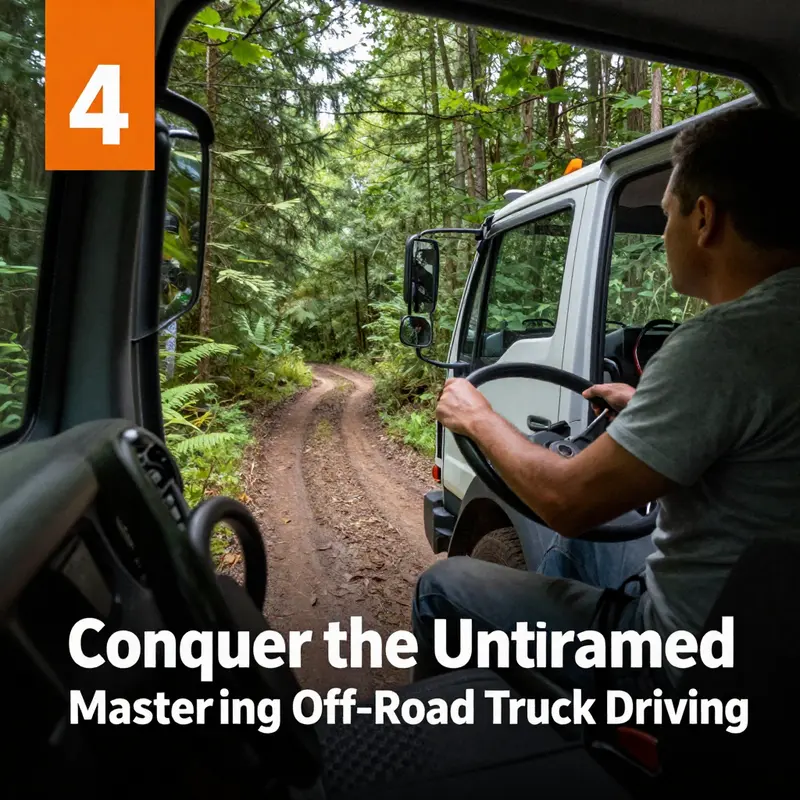
Off-road trucking begins long before any wheel meets the dirt. It starts with a mindset built on preparation, a quiet respect for the terrain, and a habit of steady, deliberate action. In many ways, safe off-road driving is less about heroic maneuvers and more about the consistent application of basics: correct tire pressures for the surface, a thorough check of the truck’s condition, and a plan that keeps momentum balanced with traction and gravity. When you approach a trail, you are not deciding how to conquer the obstacle; you are choosing how to arrive at the obstacle with the least risk and maximum control. This chapter stitches together practical checks and instinctive habits that separate the casual off-roader from the driver who can negotiate a rocky washout or a sandy crest without trading speed for safety. The emphasis is not on making the truck do something dramatic, but on ensuring your choices do not invite a slip, a stall, or a rollover. The groundwork is simple but precise: calm assessment, deliberate gearing, measured throttle, and a respect for the land you traverse.
Terrain awareness is the compass by which you navigate any approach. You scan the surface as you would a path in bad weather, noting soft spots that swallow tires, narrow ridges that betray a misstep, and hidden roots that could snag a wheel. You look for water crossings whose depth you can’t judge from a glance and for ground that could collapse under load. Your goal is to identify hazards before you commit to a line, and more than that, to identify an exit path in advance. A good line in is not enough if the way out is blocked by a fallen log, a slick embankment, or a stretch of mud that could stall you. This habit of forward visibility protects you and the ground alike, because off-road driving remains a trust relationship with the land. You become a careful observer who translates surface features into decisions about speed, steering, and the line you choose to follow.
Preparation and vehicle condition are inseparable from safe practice. Before you roll onto a challenging stretch, confirm that tires are inflated for the surface—lower pressures for sand or soft mud when you need to increase contact area, but not so low that rims become vulnerable. Brakes must be responsive, lights intact, and fluids at proper levels. If your truck offers selectable drive modes, use them with intention: 4H for lighter off-road scenarios to balance power and grip, and 4L for steep climbs, deep ruts, or loose surfaces where torque and control at crawl speed matter most. Lockers, if installed, should be engaged only when a wheel is slipping and needs extra bite. Weight distribution matters too; keep heavier items near the center of the bed to reduce the risk of a sudden shift that could unsettle the chassis on uneven ground. These checks and settings are not a ritual; they are the first act in a safety-focused performance where your body, your vehicle, and the terrain align to support one another rather than fight one another.
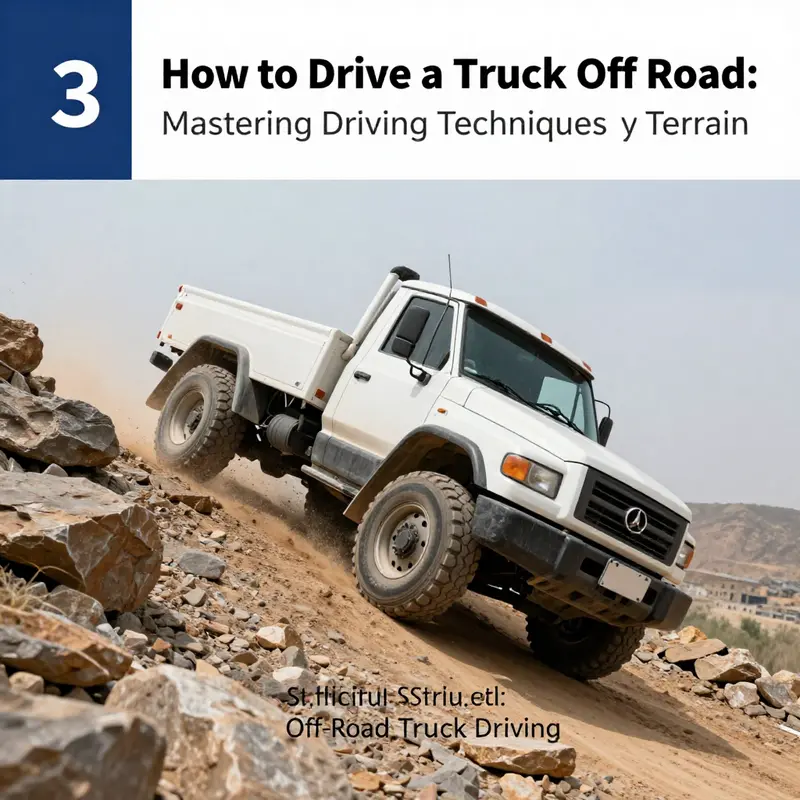
As you begin to move, the cadence of your inputs becomes the second layer of safety. Driving through rough or rocky terrain demands a blend of slow pace and precise steering. The goal is velocity that honors the terrain rather than overwhelms it. You plan lines with your eyes as much as with your hands, lifting the throttle slightly to allow the suspension to absorb a protruding rock and then easing back to sustain momentum without abrupt power changes. First gear in low range is your ally, offering maximum control and torque at low speeds while you negotiate obstacles that could trap a wheel or puncture a tire. In a rough wash, you stay straight and tight to the centerline, avoiding aggressive side slips that could pivot the truck toward instability. If momentum is lost, the prudent move is a controlled retreat rather than a reckless push through. A deliberate reverse with slow, steady braking helps you regain footing and re-approach the obstacle with a clearer plan. Small lifts of a wheel to clear a rock, or a subtle reshaping of the approach angle, are strategies that save tires and undercarriage more often than a heroic burst of power.
The mud and sand that often define off-road routes demand the same discipline translated into different physical realities. In soft, deep surfaces, the tires float and grip can shift with tiny changes in momentum. A steady, moderate throttle helps you ride the surface instead of digging in, while abrupt accelerations or sudden braking can spin tires or bury you deeper. If you find yourself bogging down, stop and reassess rather than forcing the vehicle forward. Recovery tools become a lifeline in these moments: boards or mats to create a solid base, a winch or traction aids, and a plan for building traction when the ground beneath you refuses to cooperate. When water crossings appear, approach is deliberate rather than reckless. Assess depth, watch for floating debris, and avoid crossings that threaten the air intake or exhaust. Enter slowly with a consistent engine note, then drive away smoothly and let the brakes dry gradually rather than slamming them, which can lead to brake fade or uneven stopping as you depart the water. In all soft terrains, the rule remains the same: smoothness beats aggression. A calm throttle, a patient steering hand, and a restored focus after every minor challenge keep everything under control.
Narrow or winding trails amplify the need for disciplined perception and precise control. Visibility can be limited, so using wide mirrors or camera feeds helps you understand space to the sides and behind. Your hands should rest at a stable 9 and 3 o’clock position to allow you quick, balanced responses to unexpected turns or corrective inputs. You should avoid the temptation to hurry through these sections; a slight misjudgment can cascade into a sidelined vehicle. In such contexts, deliberate, moderate steering inputs prevent side-slip and help you maintain traction when the ground offers uneven grip. The strategy is not merely to survive the trail, but to steward your vehicle and your surroundings with respect for the surface you traverse. The habit of measuring risk, of conserving momentum, and of planning the next step is what distinguishes a careful operator from a reckless one.
Safety habits extend beyond driving technique to the way you prepare and travel with others. A solid pre-trip mindset is a habit that carries you through difficult terrain. Before departure, run a mental checklist similar to a cockpit procedure: tires appropriately inflated, brakes functional, lights and winches ready, and communications equipment in working order. The list is not a burden but a guardrail—an anchor to your competence when conditions tighten. If you travel with companions, the rule becomes simple: never go off-road alone. Group travel not only enhances safety but also reduces environmental impact by enabling thoughtful decision-making and shared recovery responsibility. In practice, the group dynamic tends to keep everyone focused on minimum disruption—avoiding do-or-die approaches that would harm the land or the vehicle. Every mile on a remote trail is a reminder that restraint, not bravado, is the prudent partner to certified equipment and well-practiced skills.
The thread that ties preparation, technique, and safety habits together is continuous learning. You grow by applying the lessons of each trip, by integrating feedback about how your tires responded on a particular surface, how your braking performed on a descent, or how a small steering input altered the outcome on a narrow bend. For deeper, authoritative guidance on technique and risk management, you can consult trusted resources that lay out steps, cautions, and contingencies in concise form: one good reference details how to adjust drive modes, maintain momentum, and plan recovery operations. And because practical safety intersects with vehicle maintenance, approaching content that ties mechanical know-how to real-world driving can be empowering. For instance, if you want a detailed look at diesel systems and how to keep them reliable under rugged use, you can explore the linked guide on diesel mechanics. In addition to relying on your own checks and the instincts you develop on the trail, connecting with formal guidance helps you refine your craft and avoid common mistakes. To reinforce this link, you can explore Mastering Diesel Mechanics: Your Step-by-Step Path to Success.
Finally, safety literature, training, and real-world practice all point to a simple but essential principle: when you drive off road, you are not competing with the landscape. You are striving to harmonize with it, to read the ground honestly, and to respond with patient, deliberate control. If you ever feel the soil give way beneath a tire, or sense the vehicle begin to crest and lean, the best impulse is to pause, re-evaluate, and re-enter with a plan that preserves your momentum and position. This is how you transform off-road driving from a moment of risk into a sequence of controlled moves that protect you, your truck, and the terrain. For additional safety guidance and a broad view of best practices, consult external sources that compile field-tested tips, including directions and cautions in concise form: Off-Road Driving Tips.
Getting Unstuck: A Calm, Systematic Approach to Free an Off-Road Truck
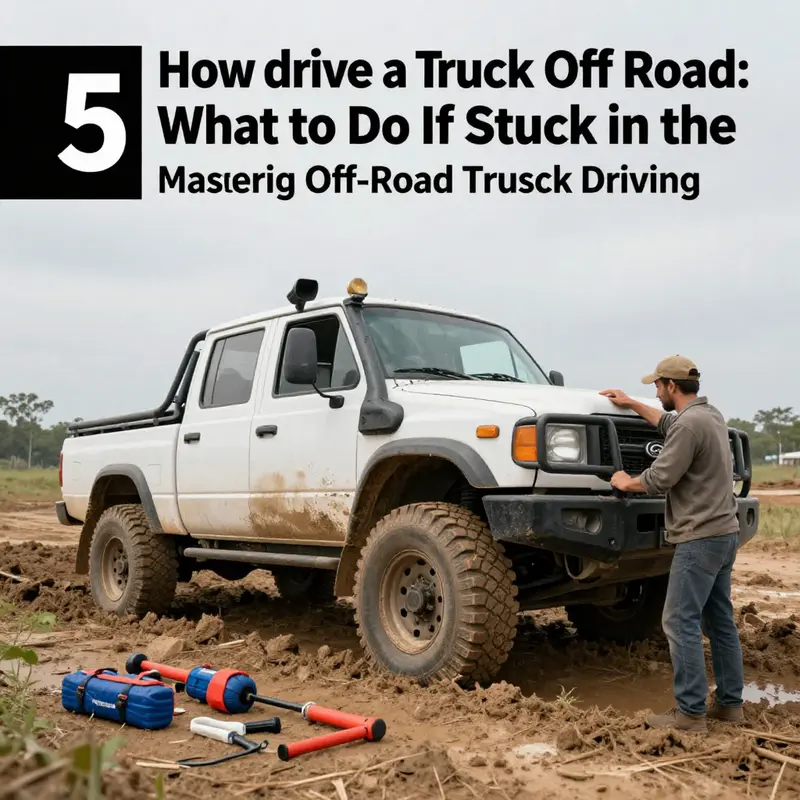
The trail had been kind for miles, then the ground shifted from solid, crusty dirt to a mixture of soft mud that clung to every tread. The truck groaned, tires humming into the nothingness, and a thin plume of dust curled up from the wheel wells. In such moments, the instinct is to yank the wheel and mash the accelerator, but real recovery starts with restraint. When your off-road machine sinks into ground that won’t yield, the first move is not power—it’s calm. Turn off the engine, set the parking brake, and reassess. The quiet that follows is more than a courtesy to the vehicle; it’s a shield for your own judgment. In that stillness you notice the slope of the ground, the way the wheels bite and slip, the wind direction, even the sun’s angle against the hood. You inventory the hazards: exposed rocks that could snag a lower control arm, a camber-dented hillside that could shift under weight, or a hidden rut that might grab the chassis if you lurch forward. Calm is the first recovery tool, and it is always available, even when you feel most exposed to the elements of the trail.
Assessing the Situation is a deliberate, not decorative, step. Once you’ve parked, step back from the tires and visually map the terrain. Is the vehicle perched on a soft cushion of sand or mud, or has a stubborn rock or root caught a wheel and blocked momentum? The cause of the stall matters because it dictates the method. Mud and sand tend to swallow traction fast, while rocks can wedge a drivetrain into a corner where spin becomes self-defeating. If mud is the culprit and the tires look buried, it’s time to shift from engine brute force to traction engineering. If a rock or root is the obstruction, you’ll want to reframe the approach so that the wheels don’t slide into the obstacle. This isn’t a chess game about clever moves; it’s a practical, physical problem where tiny adjustments can prevent a bigger problem—damaging a tire bead, tearing a suspension component, or digging deeper and sinking the truck into a trench that even stout recovery gear will struggle to escape.
To know how to free the truck, you must stage a plan that respects the vehicle’s layout and your own limits. The second piece of the puzzle is to evaluate whether traction aids are available and feasible. Traction boards, mats, or boards made from sturdy, flat materials act as artificial grip under the drive wheels. If you carry them, place these aids on solid ground ahead of the tires as you back up and clear some of the surrounding debris. If you do not have boards, improvise with materials that won’t crumble or crush under load—sections of sturdy carpet, a flat wooden plank, or even fabric-bound mats can be pressed into service to give the tires a firm surface to cling to as you steer out. The key is to lay these aids in a way that maximizes contact patch with the wheel while avoiding sharp edges that could slice a tire sidewall or pull a bead. In soft terrain such as powdery sand or fresh mud, a wide, low-Angle approach can help the wheel’s footprint push against the ground rather than digging straight down. In the mud, you want to flatten the suction effect the ground creates by giving the tire a break in the uniform gripping surface. In snow, the goal may be to clear a small trench around the tire and place traction aids within reach so the wheel can bite into something solid rather than mush.
If you’ve managed to align a few inches of clearance and traction, the next move is the patient rocking of the vehicle. The technique—low gears, gentle throttle, and steady clutch work if you’re driving a manual or a vehicle with a clutch-modulated transmission—avoids the all-too-common mistake of spinning the wheels and digging deeper. Begin in a low gear, usually first, and let the vehicle inch forward with light, consistent throttle. Then ease back just enough to roll the truck backward a bit, repeating the forward and reverse cycle. The goal isn’t dramatic movement; it’s to break the suction that soft ground creates and to alternately load and unload the tires so that the ground can release the grip. Let the engine’s torque do the work, not the accelerator’s rage. If your transmission has a locking differential, engage it only when you’re sure one or more wheels have a solid grip and you need to equalize torque to the wheels that can bite. If one wheel remains on a high spot while the others spin, a careful application of power to the gripping wheel can pull you out without tearing the undercarriage across a rock or root. The warning here is simple: don’t rev aggressively. A sudden burst of torque can tear into the drivetrain, snap a driveshaft, or fling the truck into an unstable position that makes recovery even more dangerous. Patient, controlled movement is a better teacher than brute force.
As you methodically apply traction aids and rock the truck, you’ll want to keep a keen eye on wheel-spin, soil compaction, and the horizon ahead. Wheelspin is not your friend when you’re deeply mired; it is the signal to back off and re-strategize. If one wheel continues to spin, you may be losing the battle unless you re-center the vehicle’s load and consider alternative paths. The ground around the tires will often reveal the true cause of the stall: a trench formed by repeated wheel spins, a thin crust over a soft core, or a downward slope that invites the truck to slide deeper rather than climb out. In situations where you cannot find a stable anchor or the traction aids cannot reach, it is prudent to pause and re-evaluate. Sometimes the best move is to switch to a different approach, such as reorienting the truck to a wider line that improves the angle of assault on the terrain, rather than trying to power straight out of trouble where the ground is most vulnerable to collapse.
This is the moment to acknowledge limits and, if necessary, seek assistance. If you’re alone in a remote area, you may still have options. A robust recovery plan hinges on three pillars: the right tools, the right methods, and, critically, the right support. If the ground is slick with glaze or deep mud, or if the truck has sunk beyond the point where simple boards and a slow rocking can help, it’s time to call for help. Roadside assistance or a local recovery service with off-road experience can bring in a winch, a snatch strap, or a vehicle with a traction vehicle to carefully pull you free without causing further damage. Do not attempt to pull the truck out with a mooring line or a tug from another vehicle unless you have a proper winch, rated tow strap, or equivalent recovery gear and the skills to apply it safely. The instinct to “just pull” can turn a minor stuck into a major failure in a heartbeat. If you are part of a larger expedition, designate a recovery leader who knows the terrain, the terrain’s hazards, and the equipment limits. That person should coordinate the sequence of actions—when to lay boards, when to engage four-wheel-drive modes, and when to call for assistance—so the rescue feels like a careful, choreographed operation rather than a last-ditch scramble.
Even as you free the truck, you should stay mindful of the long view: what caused the stall and how to prevent a repeat. Weather feasibility is a practical concern, as rain can suddenly transform a reachable trail into a swamp of mud. If you’ve learned anything from the experience, it’s that preparation remains the backbone of successful off-road travel. Carrying the right recovery tools—traction boards, a shovel, cold-weather gloves, a robust winch line or strap rated for the vehicle’s weight, and a portable air compressor to reset tire pressures after you’re free—makes a difference. You’ll find that a small investment in recovery gear pays off in serious safety when you’re miles from the nearest paved surface. And there’s a mental discipline to be developed, too: treat each obstacle as a solvable problem rather than a threat to your day. The calm you bring to a stuck situation shapes the way you think, the decisions you make, and the rate at which you can return to the trail or the take-home destination.
A final reflection on the mechanics behind all this is worth dwelling on. When you recover from a stall, you are testing not only the tires but the drivetrain. The torque path through the transmission, the torque split to the front and rear axles, the engagement of any limited-slip or locking differentials, and the response of the suspension all interact with the ground in a feedback loop of forces. If you’ve encountered repeated stalls, consider a deeper dive into vehicle dynamics and basic mechanical literacy. For readers seeking a more technical grounding on how recovery gear and driveline stress interact with the vehicle’s powertrain, see Mastering diesel mechanics: your step-by-step path to success. This resource offers a broader mechanical context that can sharpen your intuition about when to apply traction aids, how to manage torque during recovery, and what signs indicate it’s time to seek professional help rather than press on. The goal is not to replace hands-on practice but to augment it with a richer understanding of how your truck behaves under load and how recovery gear interfaces with the moving parts that keep you rolling on uneven ground.
As you recheck tire pressures, you might notice the difference a successful extraction makes. After the truck is free, take a slow drive to dry out the brakes and inspect the undercarriage for hidden damage. A careful walk around the vehicle can reveal bent steering components, scraped differential covers, or punctured skid plates that could compromise stability on the next leg of the journey. Reinflate tires to your normal operating pressure, taking into account how the terrain will differ from the moment you got stuck. If you’ve reduced tire pressure to gain traction, bring the pressures back up gradually to avoid overheating the tires or compromising handling. In short, recovery is not a one-off event; it’s a process that includes preparation, careful application of technique, and post-recovery checks to ensure you’re ready for what lies ahead on the same trail or the next.
This chapter, while focused on the moment of being stuck, sits within a larger strategy of safe off-road practice. It reinforces a core principle: movement should be controlled and deliberate, especially when the ground offers little traction. The aim is to minimize damage to the truck and to you, maximize grip through smart use of the terrain, and preserve the possibility of continuing the journey with confidence. By embracing a calm mindset, applying the right tools, and knowing when to call for help, you turn a potentially disheartening setback into a practical, learnable challenge that advances your off-road competence. The trail is a teacher, and every stuck moment is a chance to refine your approach for the next stretch of uncharted ground.
External resource: Official NHTSA Guide on Off-Road Driving Safety at https://www.nhtsa.gov/offroad-driving-safety
Final thoughts
Becoming an adept off-road driver requires more than just a robust truck; it demands knowledge, preparation, and practice. By investing time in understanding your vehicle’s capabilities and tailoring your driving strategies to the terrain you encounter, you can turn any off-road challenge into an adventure. Equip yourself with the right techniques, maintain safe driving habits, and prepare for every scenario to enhance your experience. The great outdoors is calling—answer it with confidence and skill.