
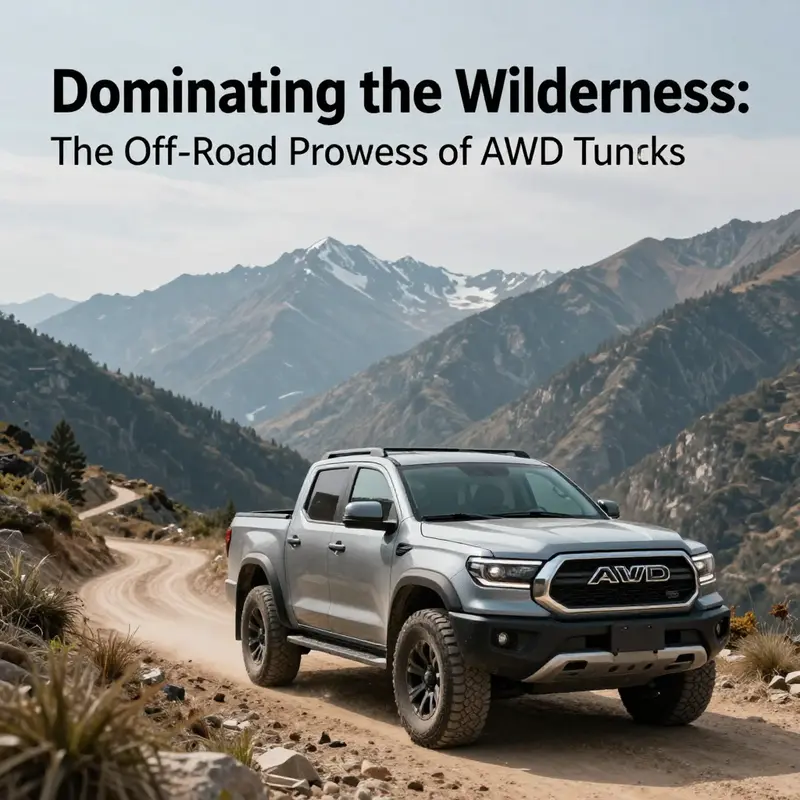
Navigating the uncharted and rugged terrains has always drawn adventurers and off-road enthusiasts alike. Understanding the functionality and performance of All-Wheel Drive (AWD) trucks in off-road environments is essential for maximizing their potential. AWD trucks, unlike their two-wheel drive counterparts, distribute power to all four wheels, enhancing traction and control on slippery, rocky, or uneven surfaces. Through the following chapters, we will delve into how AWD trucks perform off-road, their advantages, a comparative analysis with 4WD alternatives, requisite maintenance considerations, and real-world applications. By the end, off-road racing fans, rural landowners, and modification shop professionals will gain a comprehensive insight into how AWD trucks can elevate their adventurous journeys.
Gripping the Unseen: How AWD Trucks Master Off-Road Terrain Without Sacrificing Everyday Use
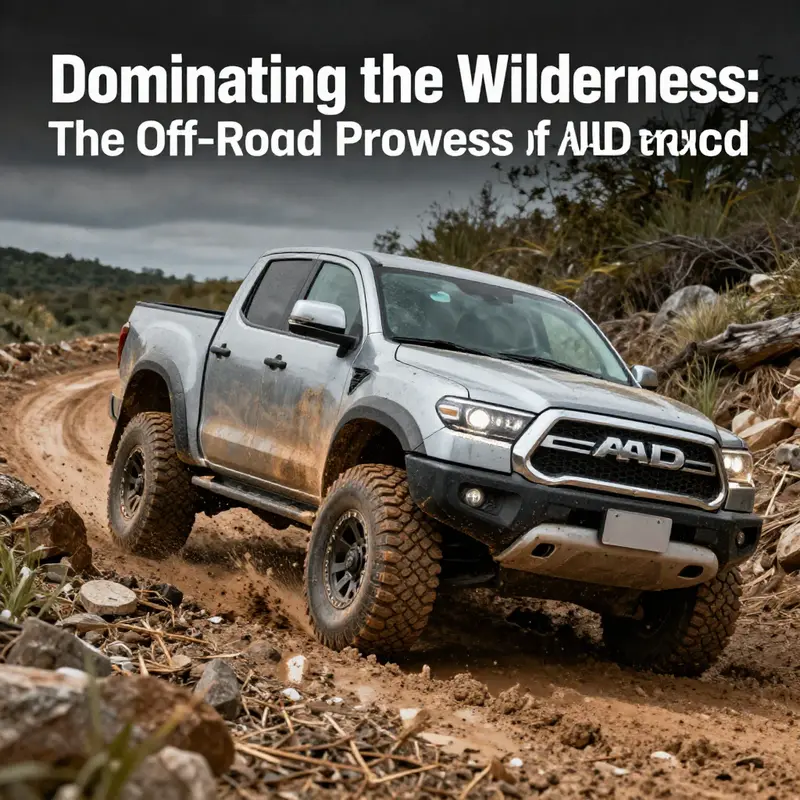
All-Wheel Drive is often imagined as a cure for every traction problem, and in many off-road scenarios it delivers on that promise. But the real story of AWD trucks on rugged terrain is not simply about four wheels turning at once; it is about how power is allocated, how grip shifts as ground changes, and how a vehicle’s chassis and tires work together to support both exploration and daily driving.
In off-road environments, traction is never constant. It ebbs and flows with mud that sticks, rock faces that demand precise wheel placement, sand that swallows momentum, and snow that hides fall lines. AWD systems monitor grip at each wheel and adjust torque between the front and rear axles. When one corner finds grip and another does not, the system biases torque toward the gripping wheels. This dynamic balancing is valuable in mixed terrains where you might move from dry pavement to slick patches, then to loose gravel and bare rock within a short distance.
The appeal is not raw brute force but a nuanced balance between control, caution, and capability. This balance is most effective when paired with tires designed for off-road surfaces and when drivers understand how the system behaves in different modes, speeds, and elevations. It is not a magic switch, but a sophisticated tool that widens the envelope of where a truck can go with confidence.
Locking differentials are another key feature. They mechanically couple the axles so wheels rotate together, maintaining traction when some wheels would otherwise spin. In AWD trucks, locking diffs supplement broad traction with a stubborn, ground-hugging grip when conditions demand it. Practically, you feel more assurance on steep climbs with loose debris, in deep mud, or when sections require steady forward motion.
Terrain type matters. Mud, snow, sand, and rocks each demand different approaches: grip, momentum, and tire pressure. AWD helps by moving power to the wheels with the most grip, but it cannot create grip from nothing. A well designed system is paired with higher ground clearance, protective skid plates, and a suspension tuned for rough surfaces. Tires set the tone, with aggressive tread, strong sidewalls, and appropriate inflation for off-road contexts.
Despite its strengths, AWD is not a cure for all terrains or all drivers. The added complexity brings potential maintenance and higher running costs. Heat management becomes important on long, technical sections. Fuel economy can be higher when all four wheels are engaged. For some extreme scenarios, a rugged four-wheel-drive setup with a low range and lockers may be more appropriate.
In practice, the most effective AWD configurations emphasize higher ground clearance, reinforced skid plates, robust control arms, and tuned shocks that maintain wheel contact with irregular ground. The driver remains decisive, guiding throttle, choosing appropriate descent speeds, and deciding when to engage different driveline modes. AWD becomes a collaborative tool rather than a silver bullet.
For readers weighing AWD trucks, start with how you plan to use the vehicle. Frequent muddy trails, snow-covered byways, or sand dunes can benefit from AWD, while extreme rock crawling or rapid cross-country travel often benefits from a dedicated four-wheel-drive setup. The design philosophy matters as much as the powertrain: locking mechanisms, chassis protection, and a tuned suspension can open off-road doors while preserving comfort and efficiency for everyday use. That balance – traction when you need it, restraint when you do not – defines AWD’s practical value for trucks on rough trails.
This broader perspective on off-road drivetrains helps frame what AWD can and cannot do, and how to choose a setup that suits your most common adventures.
Trail-Grip in Action: AWD Trucks and Off-Road Confidence
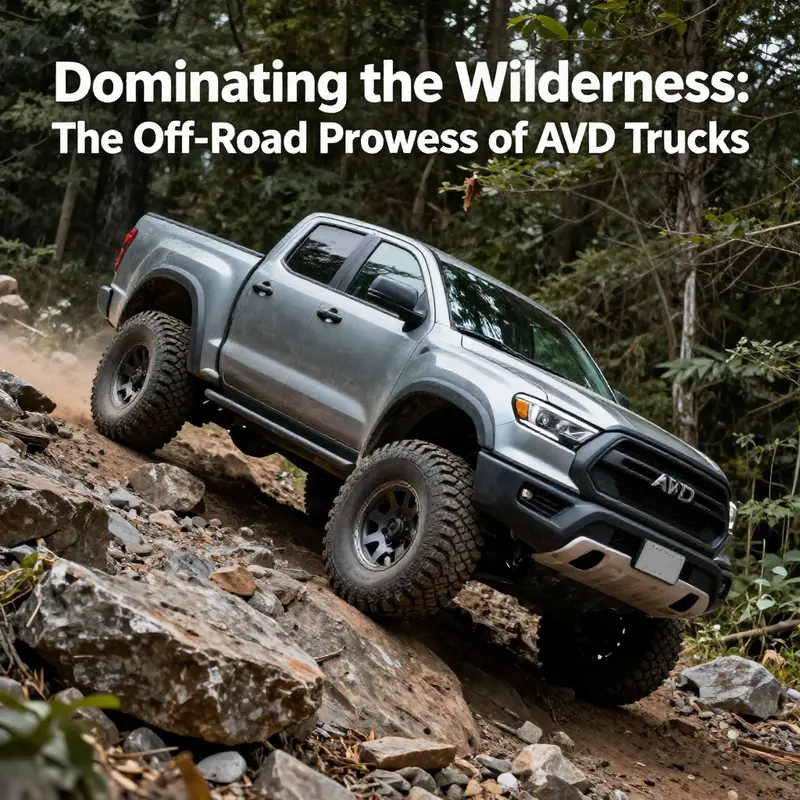
AWD trucks spread motive power to all four wheels to maximize traction across mud, snow, sand, and uneven terrain. Instead of driving a single axle, an AWD system continuously or on demand distributes torque to wheels that grip, helping the vehicle stay oriented when grip is uncertain. When well designed, a center differential or electronic coupling can balance front and rear torque to prevent one wheel from spinning while the other is stuck. In practice, this translates to smoother climbs, steadier momentum, and more confident navigation through irregular ground.
Beyond pure grip, AWD supports stability by sharing power during throttle input, reducing abrupt wheel slip and helping the driver maintain steering control on loose surfaces. The result is a more forgiving feel and the ability to pick a confident line even when the ground underfoot changes abruptly.
Of course, AWD is not free. It adds weight, complexity, and potential maintenance considerations, and its effectiveness depends on the rest of the package: tires, suspension travel, ground clearance, and protection for driveline components. For mixed-use trucks, a well-integrated AWD system paired with appropriate tires and a robust chassis can dramatically improve off-road capability without converting the vehicle into a full-time rock crawler. The real payoff comes when the system works with the driver to maintain forward momentum rather than letting a wheel lose grip.
In field use and testing, owners note that AWD broadens the envelope of what’s doable on challenging terrain, making difficult sections approachable and reducing the risk of getting stuck. The takeaway is simple: AWD is a powerful baseline for off-road capability, best realized when combined with skillful driving, suitable tires, and protective hardware.
Torque, Gears, and Terrain: Rethinking AWD and 4WD for Serious Off-Roading
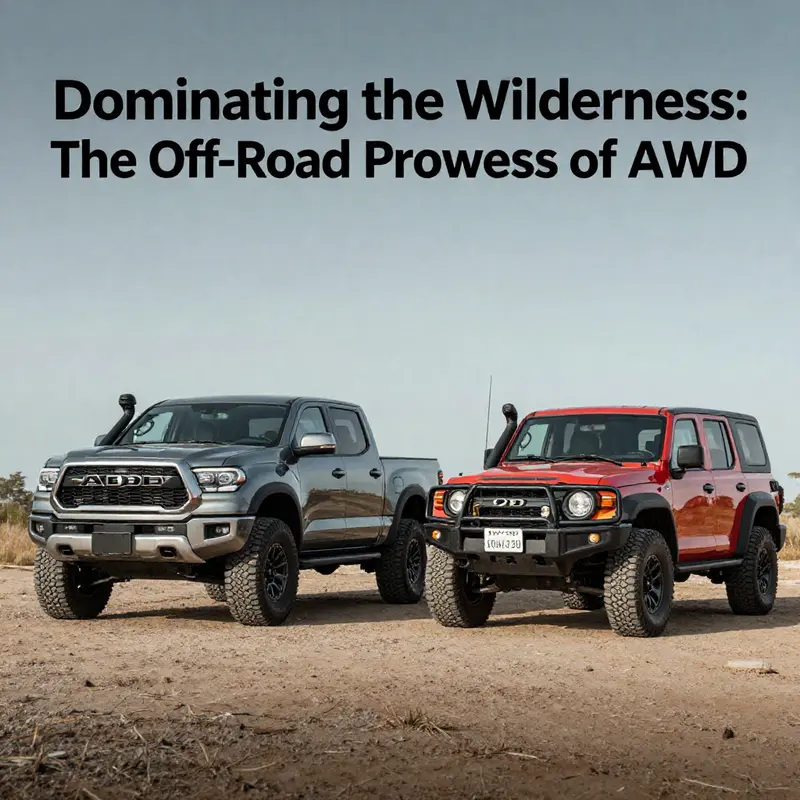
When evaluating all-wheel drive and four-wheel drive for off-road adventures, the most important truth is built into the design philosophy of each system. AWD is typically crafted to shuttle torque across the four corners to optimize grip on variable surfaces, especially in drizzle, mud, or slick pavement. 4WD, by contrast, is engineered to deliver deliberate, rugged traction in truly demanding environments where speed matters little and strength matters a great deal more. The distinction is not merely academic. It translates into torque delivery, gearing, reliability under stress, and the kind of terrain you can confidently tackle. In practical terms, the conversation about AWD versus 4WD centers on how torque is managed, where power is multiplied, and how the drivetrain holds up under the harsh demands of off-road terrain.
At the heart of 4WD is a mechanical transfer path that can be engaged to route power to both axles, often with a low-range setting that multiplies engine torque. This low-range gear is a feature that makes a huge difference when you face slow, deliberate maneuvers on rock, deep mud, or steep, stubborn climbs. The multipliers can be substantial—engine torque is effectively amplified as you crawl up a rock face or shed traction on a slick, uneven surface. The mechanical durability of a 4WD system matters here as well. Heavy-duty gears, robust housings, and a dedicated low-range mechanism are designed to withstand repeated, high-load demands without relying on electronic control to a fault. In other words, 4WD systems are built to stay functional when the going gets brutal, and they deliver power with a predictability that is crucial for a driver negotiating tricky obstacles in low-speed regimes.
AWD, meanwhile, is usually tuned for a very different kind of footing. The central differential in an AWD setup, often electronically controlled, can shuttle torque between the front and rear axles dynamically. This means a vehicle can adjust power split in real time to keep grip on variable traction conditions, which is a major edge when you’re negotiating wet pavement, snow-covered roads, or uneven but less extreme off-road trails. AWD systems shine on terrain where traction is fleeting and where the driver needs confident, lane-keeping behavior without excessive wheelspin. They excel in maintaining straight-line stability while cornering on slick surfaces, and they can still manage light to moderate off-road tasks when the conditions are not brutally severe. The electronics play a decisive role here: sensors and control units constantly monitor wheel speed, slip, and vehicle attitude to decide how to apportion torque.
Yet the same electronics that enable AWD’s finesse can also become a liability in harsh off-road environments. Mud, water, dust, and jostling can disrupt sensor data or overwhelm electronic systems that try to optimize torque distribution. In extreme conditions, AWD’s lack of a true low-range gear becomes a limitation rather than a feature. Without a dedicated low gear, you lose a meaningful way to multiply torque at very slow speeds, a critical capacity when you’re inching over a boulder garden or through a dense bog. Moreover, the complexity of AWD’s electronic control makes maintenance more intricate and potentially more costly. The system’s strength—dynamic torque distribution—can also be a weakness if the terrain invites calibration ambiguity. In such cases, the vehicle may oscillate between traction preferences rather than settling into a consistent, assured grip.
The practical takeaway for an off-roader is simple: 4WD is the better tool when the trail is truly punishing. It offers a combination of torque multiplication, mechanical resilience, and a straightforward drive mode that yields predictable results under duress. The low-range setting can be engaged to crawl, hold, or steady a line through a gnarly obstacle, with the driver maintaining control through a narrow window of precise throttle, brake, and steering inputs. This is the kind of performance you need when rock crawling, deep ruts, or very steep ascents demand maximum traction at very low speeds. The downside to such systems is their cost, weight, and fuel efficiency penalties when cruising on pavement or driving in everyday conditions. They are not optimized for highway comfort or urban driving, where a lighter, simpler drivetrain tends to shine.
AWD vehicles, by comparison, offer a compelling mix of on-road confidence and off-road capability that is more than adequate for many recreational tasks. When conditions are variable but not extreme—soft gravel, wet forest trails, light mud, or snow-packed forest roads—AWD can deliver the traction you need with a smooth, seamless power curve. Drivers benefit from the ability to accelerate out of a corner with reduced risk of wheel spin, and the system’s adaptive devices can bias torque toward the axle with preserved stability. The trade-off becomes clear in more demanding terrain: beyond a certain point, the absence of a true low-range, the potential electronic dependency, and the structural demands of rugged use can keep AWD from delivering the same level of control as a purpose-built 4WD setup.
Viewed through the lens of risk management, AWD’s best use is as a capable companion for mixed-terrain travel where the vehicle spends significant time on roads but must respond to changing conditions off the pavement. Its strength lies in grip and stability when traction is fragile but not utterly inaccessible. For those who routinely venture into landscapes where the track is irregular, where rocks lie in wait, and where you need to balance torque with careful speed control, 4WD remains the instrument of choice. It is the tool designed to deliver steadfast performance when the terrain demands a deliberate, methodical approach rather than a fluid, electronically managed response. The difference is not about one system being better than the other in absolute terms; it is about aligning the vehicle’s drivetrain with the user’s typical terrain and mission profile. A driver who spends weekends chasing remote backcountry routes will benefit from a robust 4WD with locking differentials and a true low-range gear, while a daily driver who encounters occasional mud or snow will gain more from a well-tuned AWD that preserves on-road manners while offering real-time traction assistance off-road.
For readers seeking a concise synthesis, the essential guidance is this: if your off-road plans revolve around extreme obstacles, deep traction challenges, and slow, controlled maneuvers through rugged terrain, a 4WD setup with a low-range offers the most reliable path to success. If you expect to navigate a blend of paved roads and light-to-moderate off-road trails, or if you value seamless on-road behavior and dynamic traction adaptations, AWD provides meaningful advantages without the commitment to a heavy, purpose-built off-road drivetrain. It is not a denial of capability, but a different balance of capability and convenience. The right choice hinges on realistic assessment of the terrain you expect to face and your willingness to tolerate compromise in return for greater everyday practicality.
For readers who want to explore broader considerations about how these drivetrains perform in real-world contexts and how manufacturers balance complexity and capability, this topic sits within a broader body of automotive off-road engineering. To see how similar debates play out across the industry, you can review our discussion on the trade-offs between different traction systems in demanding conditions. Additionally, if you want a practical reference that highlights the contrast between AWD and 4WD behavior in off-road scenarios, you can consult external coverage such as Car and Driver’s exploration of AWD versus 4WD differences.
Internal link: for deeper context on how broader initiatives integrate rugged efficiency with off-road capability, see the piece on trucks for change and the habitat-for-humanity initiative trucks-for-change-supporting-habitat-for-humanity. This exploration broadens the discussion beyond pure mechanical performance to consider the social and environmental dimensions of modern trucking.
External resource: a comprehensive overview of the AWD vs 4WD distinction and its practical implications can be found in industry analysis, including Car and Driver’s accessible comparison of AWD and 4WD. This resource helps place the technical distinctions into a broader performance framework and reinforces the idea that the choice is highly dependent on terrain, conditions, and use case. See the external link for a broader perspective on torque distribution, gearing, and real-world outcomes in off-road situations.
Traction, Tolerance, and the True Cost of Going Off-Road: Maintenance Realities for AWD Trucks
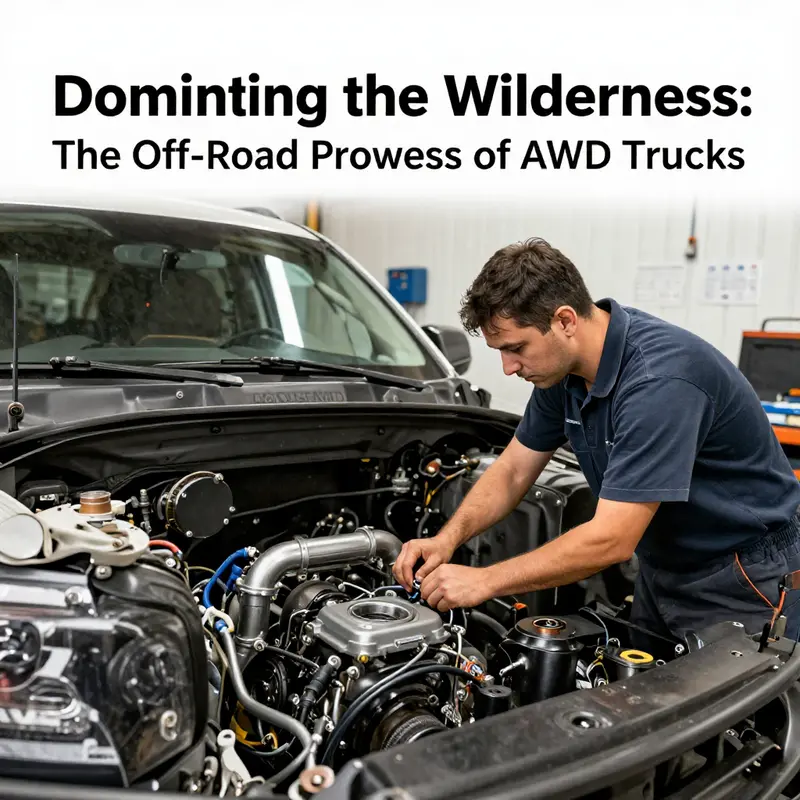
When evaluating whether an all-wheel-drive (AWD) truck is a good fit for off-road use, the picture often centers on grip and control. Yet a deeper, more practical chorus runs through the right-to-repair conversations: maintenance discipline and long-term costs are not afterthoughts, but the true limits of capability. AWD systems can transform a challenging, muddy slope or a slick, loose rock field into a solvable obstacle, yet they operate with a complexity that amplifies both the need for vigilance and the consequences of neglect. On real trails, where surfaces shift from wet clay to jagged gravel and back again, AWD’s promise of torque to every wheel is earned through robust components that endure constant strain. The core advantage is straightforward: by spreading drive to all four wheels, the system helps each contact patch find grip, reducing wheel spin and sudden loss of traction. But this same distributed load places more components under load, and that inevitability shapes every practical decision about ownership, maintenance, and expense.
The mechanics behind AWD in trucks rely on a network of interfaces that share the burden of traction. There is a center transfer mechanism that negotiates when power should travel to the front, the rear, or both, and there are multiple points where friction, heat, and moisture conspire to degrade performance over time. In off-road conditions—mud that clings to undercarriage parts, water crossings that challenge seals, rocks that abrade skid plates—these interfaces bear the brunt of heavy use. The presence of a differential at each axle, coupled with a central differential or a transfer case, creates a cascade of lubricated chambers that must stay clean and properly filled. It is not a system you can neglect without paying the cost later. The most telling truism here is that AWD buys traction, not invincibility. It buys confidence on soft ground, but it also invites a more demanding maintenance routine to keep that confidence reliable.
From a maintenance perspective, the most routine yet essential inspections focus on fluids and seals. Differential fluid changes, CV joints, driveshafts, and the transfer case require periodic scrutiny because their lubricants degrade, their seals wear, and their clearances change with miles and terrain exposure. Off-road work accelerates these wear patterns; it introduces water, mud, and sometimes chemical contaminants that shorten fluid life. Skid plates, undercarriage shields, and the belly pan are not cosmetic extras but first-line protections. When they are damaged or misaligned, debris and moisture can reach sensitive surfaces, accelerating corrosion or wear. Regular washing after deep mud or salt exposure helps, but washing should be followed by thorough inspection—looking for dents in the underbody, loose fasteners, or cracked brackets that could loosen dangerously on a remote trail.
The cost calculus extends beyond the obvious price tag of the vehicle and the add-on drivetrain. Because AWD involves additional moving parts, maintenance costs run higher than those for two-wheel-drive counterparts. Fluid changes for multiple lubrication circuits, more complex diagnostics, and potential seal replacements add up. Then there are the daily costs that creep into ownership: fuel economy generally suffers when power is continually split to all four wheels, especially on paved roads where AWD isn’t necessary. The extra weight of the drivetrain and the mechanical resistance of running more wheels contribute to a measurable drag on efficiency. Across longer trips or repeated weekend expeditions, this can translate into a noticeable uptick in fuel spend.
Tire wear is another practical consideration. Off-road tires are heavier and more robust, and their aggressive tread patterns wear differently than highway tires. In AWD systems, mismatched tire wear between axles can throw the torque biasing out of balance and force the system to work harder to maintain grip. That means more frequent tire replacements or rotations to preserve predictable behavior. Brakes also take a hit in rough terrains, especially on steep descents or rocky trails where repeated braking compounds wear on pads and rotors. The cumulative effect is clear: ongoing operating costs rise with the frequency and severity of off-road excursions, and the margin for error narrows for owners who skip routine maintenance.
Given these realities, it is worth asking whether full-time AWD is necessary for the kind of off-road experience a vehicle owner intends. Some trucks offer on-demand or part-time AWD that engages all wheels only when the system detects slipping. In normal driving, the vehicle behaves more like a two-wheel-drive machine, conserving fuel and reducing wear. For many owners who rarely venture into extreme conditions, this option provides a meaningful balance between capability and cost. For those who pursue serious, technical off-roading with deep mud, boulder fields, or snow-packed grades, a more robust arrangement—typically paired with a higher ground clearance, reinforced shielding, and carefully tuned suspension—might be worth the added complexity and cost. The choice hinges on how often and how intensely the vehicle will encounter truly challenging terrain, as well as how much downtime from maintenance the owner can tolerate.
Practical maintenance practices matter as much as the choice of drivetrain. A disciplined preventive schedule tailored to off-road conditions can extend the life of the AWD system and reduce unexpected breakdowns in remote locations. Simple routines such as flushing cooling systems after water crossings, inspecting shielding for cracks or dents, and checking for leaks around seals can save expensive repairs later on. Regularly inspecting suspension components for worn bushings, damaged links, or bent control arms helps maintain predictable handling on rough trails. It is equally important to monitor wheel alignment and tire pressures, because imbalanced wear or improper inflation can magnify the steering effort needed and reduce traction when it matters most.
This is where the practical tradeoffs speak most clearly. AWD increases the vehicle’s versatility and road-to-trail readiness, but it also compounds the cost of ownership. Prospective buyers and current owners should weigh the value of a full set of robust, off-road–ready tires, the likelihood of increased fuel costs, and the potential need for more frequent service against the thrill and reliability of improved traction on loose surfaces. It is not enough to be captivated by the idea of four driven wheels; the real commitment is in keeping those wheels healthy, aligned, and well-cared for through the miles and the mud. For the curious reader seeking deeper technical grounding on maintenance strategies, there is a comprehensive guide focusing on diesel mechanics that offers a step-by-step path to staying ahead of wear and tear: mastering diesel mechanics: your step-by-step path to success.
In the end, the AWD decision is a balance between capability and durability, between the rush of a well-gripped ascent and the quiet discipline of routine service. If the trails you chase demand consistent traction, and you are prepared to invest in regular maintenance and mindful tire and brake management, AWD trucks can be a reliable workhorse for off-road adventures. If, however, your ambitions tilt toward extreme, high-mileage, rock-crawling expeditions with minimal chance of roadside assistance, you may find that a more specialized system—one designed specifically for rough terrain with robust transfer capabilities—better suits your needs. Either path benefits from a clear maintenance plan and a realistic budget that accounts for the slow but steady cost of keeping a high-traction drivetrain healthy over many seasons of mud, rain, and snow.
External resource for broader context: for a comparative look at AWD versus 4WD in off-road scenarios, see the discussion hosted by an external site at https://www.safarimotors.com/blog/awd-vs-4wd-off-road-trucks.
Traction at Work: Real-World Realities of AWD Trucks in Off-Road Environments
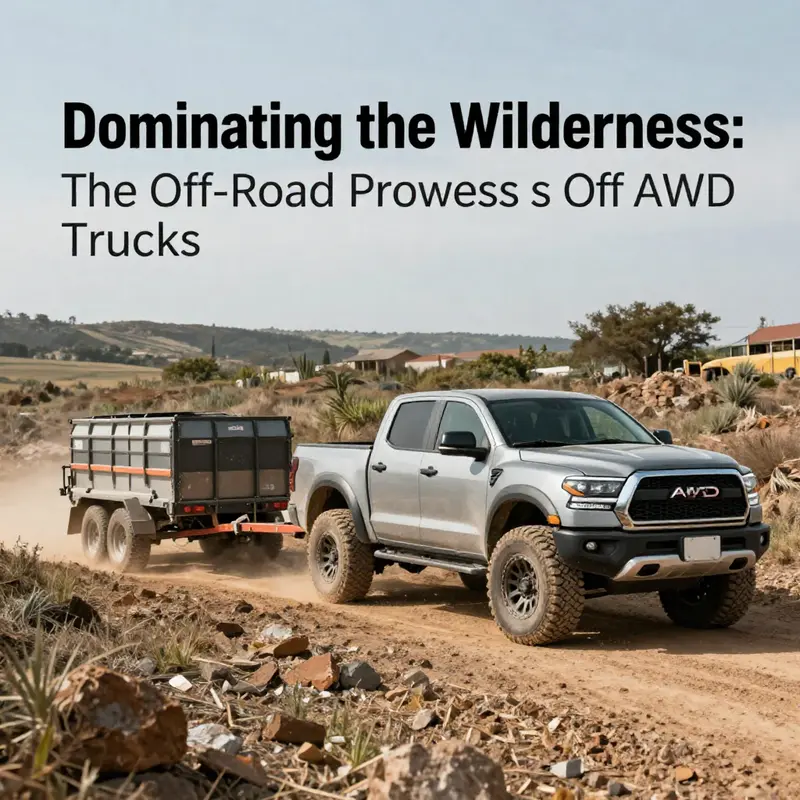
In the rough and unpredictable world beyond paved streets, AWD trucks reveal a practical truth: traction is what keeps momentum alive when surface grip changes faster than a driver can react. On muddy quagmires, snow, or rocky tracks, an all-wheel-drive system shares power to all four wheels, smoothing loss of grip that can stall progress for a two-wheeled vehicle. This is about staying in control while the terrain talks. In many off-road tasks, where a trailer or a heavy load must be moved across uneven ground, AWD offers a stable baseline. It allows drivers to anticipate where grip exists and where it does not, translating feel through the steering wheel and pedals so decisions are made with confidence rather than luck. The real-world benefit is that the vehicle remains predictable, which matters more in work settings than showroom sizzle. The result is a truck that can perform where a lighter, two-wheel-drive vehicle would spin or slip, and where a four-wheel-drive chassis with the right gears and locks can maintain momentum when gravity and moisture conspire against traction.
The engineering logic behind AWD in off-road contexts goes beyond simply spinning all four wheels. The system is designed to deliver torque to the wheels with the most grip, with electronic aids and mechanical components working in concert. In tough environments, drivers rely on traction control, brake-based torque modulation, and where available, mechanical locking differentials that guarantee power is not wasted when one wheel sits on mud or rock. The literature on off-road performance emphasizes that success hinges on several interacting capabilities: overcoming motion resistance, developing drawbar pull, negotiating grades, and accelerating in straight-line motion. In work terms, these translate to the truck’s ability to pull a heavy load up a slippery ramp, carry equipment across a muddy site, or maintain forward movement on a slope that would defy a conventional vehicle. In practice, AWD drivers learn to read terrain and to use the vehicle’s grip distribution, throttle response, and wheel-speed sensors to keep the drive wheels loaded with traction rather than spinning.
Beyond the drivetrain, the chassis and suspension play a critical role. Off-road-ready AWD trucks often feature reinforced frames, heavier-duty springs, and taller ride heights to preserve ground clearance when the surface dips or rises. Skid plates protect vital components from rocks and obstacles, while damping tuned for uneven terrain helps tires maintain contact with the ground as the truck negotiates ruts and bumps. The moment a wheel loses contact, control deteriorates rapidly. The driver’s job becomes micro-judgments: selecting a line that minimizes rock-catching, modulating throttle for continuous traction, and relying on stability systems to keep the chassis from oscillating into a dangerous input. It is a dance of balance between weight, grip, and momentum, with the AWD system serving as a reliable partner.
In industrial and construction settings, AWD trucks prove their worth by moving through sites that are rarely smooth. The reinforced suspensions and high payload capacities enable these vehicles to shuttle heavy equipment, materials, and personnel across rough surfaces. They can descend a muddy bank, climb a loose gravel ramp, or traverse a rocky approach without losing forward motion. The ability to maintain traction across changing surfaces reduces risk of stuck equipment and the need for recovery operations, increasing efficiency and safety on the job site.
Agricultural and land-management operations also benefit from AWD’s versatility. In farming contexts, these trucks carry tools, feed, fencing supplies, and personnel across fields, orchards, or uneven pasture land. The capacity to maintain traction on wet furrows, soft loam, or uncompacted soil means fewer delays during tasks such as moving crews to livestock, delivering supplies, or applying treatments. The rugged build—often paired with toolboxes and mounting hardware—extends the truck’s function beyond transport. It becomes a mobile workbench and a platform for maintenance tasks in the field, where terrain is rarely forgiving.
Emergency response and search-and-rescue missions demonstrate AWD’s value. Remote roads, snow-clogged lanes, and forested trails demand access where others hesitate. A stable, traction-rich platform enables responders to reach victims faster, carry gear, and operate in environments that would stall a lesser vehicle. The reliability of all-wheel traction reduces the need for risky recoveries and can affect outcomes. The broader implication is that AWD trucks extend the reach of essential services into places where access is a practical challenge and time is critical.
Recreational off-roading and adventure travel reveal another truth: AWD is versatile, but its strengths vary with the trail. On steep ascents with loose rock, AWD smooths power delivery and maintains controllable speed. On long muddy climbs, traction control and driver input determine whether the vehicle can keep a steady cadence. Some off-road builds feature upgraded suspensions and deliberate gear ratios designed for low-speed control. Yet even in less extreme settings, the AWD architecture contributes to confidence. The driver can select a line, adjust to surface changes, and rely on the drivetrain’s redundancy to preserve momentum as tires search for grip.
Maintenance and lifecycle considerations deserve candid attention. The sophistication of AWD systems means higher complexity and potentially higher upkeep. Components such as differentials, transfer clutches, and electronic controls require regular inspection and service. The added robustness of the chassis and suspension comes with weight and wear that influence maintenance cycles and total cost of ownership. For many operators, the calculus is straightforward: the additional capability gained in traction and stability justifies the maintenance investment on sites where grip is a daily concern. For others, costs and downtime may steer decisions toward alternative drivetrain configurations, especially when roads dominate and terrain challenges are episodic.
In sum, AWD trucks excel where surfaces demand continuous grip and where terrain variability tests momentum and control. They are not a one-size-fits-all answer for every extreme scenario, but in many field and work applications, AWD offers a dependable, adaptable platform. For readers weighing the trade-offs, the lesson is simple: understand the terrain, match it to the vehicle’s drivetrain capabilities, and approach demanding environments with planning, maintenance, and safety practices. As technology evolves, the line between on-road convenience and off-road capability becomes clearer, and AWD trucks stand at that intersection as robust tools for real-world work and exploration. For further context on autonomous off-road operation, see external research exploring autonomous driving of trucks in off-road environments: https://arxiv.org/pdf/2312.07382.pdf
Final thoughts
As the journey through understanding the capabilities of AWD trucks reveals, their design and functionality uniquely position them to excel in off-road environments. From superior traction and stability to innovative engineering, these vehicles are an indispensable tool for adventurers and professional users alike. While a comparative analysis with 4WD systems highlights their distinctions, dedicated maintenance regimes ensure these trucks remain paramount for outdoor excursions. Ultimately, for off-road enthusiasts, racing fans, and landowners, AWD trucks represent not just a vehicle choice, but an invitation to explore the wild and embrace the rugged beauty of the terrain around us.