
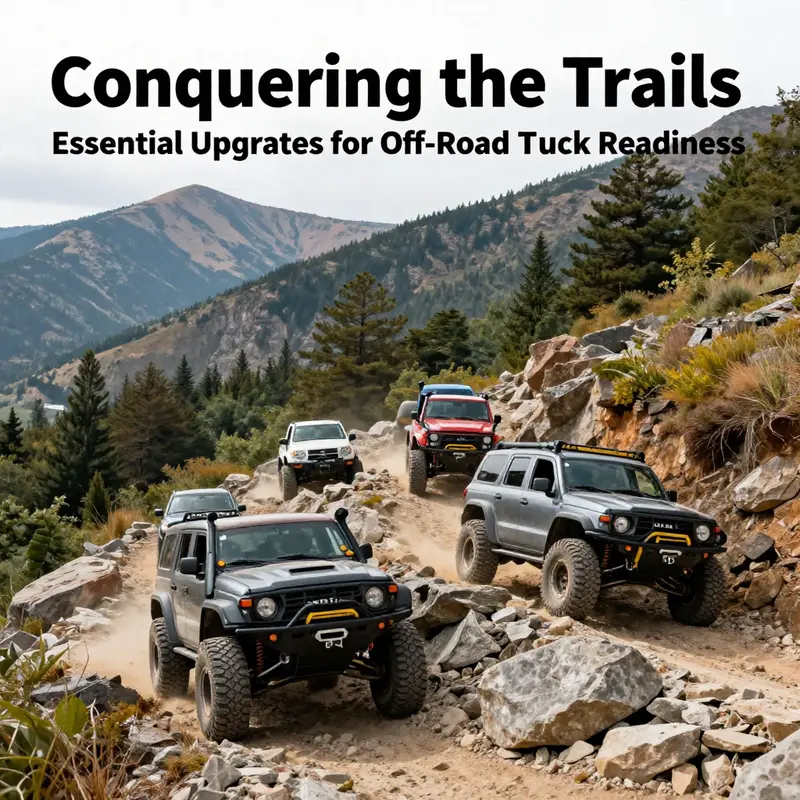
The call of the wild beckons truck owners like a siren song, inviting them to embrace adventure beyond paved roads. Whether you’re a seasoned off-road racer, a rural landowner seeking practicality, or simply passionate about exploring uncharted terrains, getting your truck off-road ready is paramount. Each element contributes to a harmonious synergy that ensures not just adventure, but safety and reliability on rugged trails. This guide delves into critical modifications, beginning with the heartbeat of your truck—its tires and wheels, followed by suspension enhancements, durability upgrades, and illuminated visibility, setting the stage for thrilling off-road experiences.
Tires, Wheels, and Traction: Building the Ground-Rloor of Off-Road Readiness
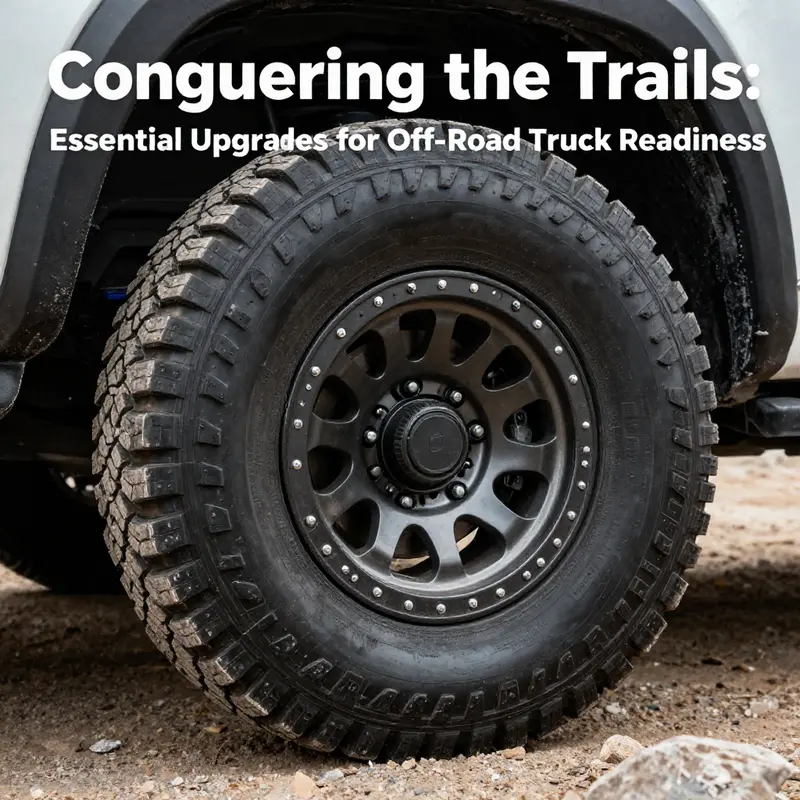
In any off-road build, the tires and wheels are more than just contact patches with the ground. They are the first and most influential interface between your truck and every obstacle you encounter, from rutted mud to jagged limestone, from sand reservoirs to slick, leaf-strewn trails. A thoughtful setup here establishes the baseline traction, stability, and durability that your entire build will rely on. When you begin with the right combination of size, tread, and construction, you create a platform that not only grips better but also respects the rest of the drivetrain. The durability of the tires limits how far you can push the suspension, the lift, and the weight you carry, while the wheel selection determines how cleanly you can mount, balance, and protect the bead under abuse. In practice, upgrading tires and wheels is a story of balance: you want more ground clearance and grip, but you also want to preserve speedometer accuracy, gearing behavior, and predictable steering dynamics on both asphalt and off-road. Within that balance, the sizing rule of thumb matters. Keeping overall tire diameter changes within plus or minus three percent of the original equipment size helps preserve the vehicle’s geometry, speed readings, and carrier load distribution. This is not a strict law, but it is a prudent guardrail. A modest jump from a 265/75R16 to a 285/75R16, for example, increases diameter by roughly 1.9 percent—typically acceptable if the rest of the system can accommodate it. When a more aggressive increase is desired to gain extra ground clearance, the changes must be planned with compensatory measures such as a lift kit or carefully chosen spacers. Each increment in diameter often requires a corresponding adjustment in wheel width and backspacing to preserve the tire’s bead integrity and protect the sidewall from curb and rock strikes. The conversation about wheels, then, quickly moves from “what looks good” to “what the tire can safely and reliably do under load.” The tire’s contact patch—the portion that actually touches the ground—is influenced by the wheel width and the tire’s internal construction. A wider tire on a too-narrow wheel can cause the sidewall to balloon outward, compromising bead retention in rough conditions and increasing risk of pinch flats. Conversely, a too-narrow wheel can pinch the bead at low pressures, especially when driving on rocks or through deep ruts. The width must fall within the tire’s recommended range for the chosen size. This is one of those design constraints that seems granular until you are halfway into a rock garden and realize the tire is rubbing where you did not expect it to. The goal is to achieve a healthy bead seal at low pressures for soft terrains, while maintaining a robust, sealed setup on pavement and rock alike. The drivability question is not only about size but about tread philosophy. Aggressive block-style or mud-terrain (MT) tires are designed to bite into soft ground, offering excellent traction in mud, sand, and loose gravel. They feature large, widely spaced lugs that self-clean as you move, a critical trait when you are keeping momentum through shifting surfaces. However, this off-road prowess comes with trade-offs: noise on pavement, quicker wear when driven primarily on asphalt, and often reduced life in high-mileage highway use. If your calendar includes a mix of daily driving and weekend exploration, this is where your priorities show. An all-terrain (AT) tire with an aggressive tread can be a compromise, delivering better on-road manners than a pure MT while still offering credible off-road performance. The choice rests on how you intend to use the truck most of the time. Material quality and construction are the quiet workhorse behind those tread patterns. Off-road tires must endure puncture risks from sharp rocks and sidewall cuts from hidden debris. This means reinforced sidewalls, durable rubber compounds, and robust internal belts are not optional extras but core requirements. In practical terms, look for tires with higher load and speed ratings, which often coincide with tougher constructions able to sustain heavy payloads and higher surge speeds on rough terrain. The extra wall thickness and stronger belts in these tires help resist pinch flats, cuts, and rock strikes that would otherwise compromise traction later in your trip. It is also sensible to consider the tire’s load index and its compatibility with your truck’s axle ratings and suspension geometry. In many cases, the added mass of a larger tire is easier to absorb with a properly designed suspension and a set of dampers chosen for off-road duty. Here you must think beyond the tire itself to the support systems that keep the tire performing when things get rough. A lift kit is often a practical companion to larger tires. It increases ground clearance and gives the suspension more room to articulate without binding. When you stack up bigger tires, the overall stance changes, and you may need to adjust bump stops, steering geometry, and axle geometry to avoid rubbing and to preserve proper steering feel. The suspension system itself needs to be capable of carrying the added wheel and tire mass while maintaining control. For this reason many builders pair heavy-duty shocks—designed for rough terrain and long travel—with strengthened springs or coils that can handle the added load. The interplay between tires and suspension is where the chapter truly clicks into place: the tires provide grip and flotation, but the suspension translates that grip into controlled motion across rocks, roots, and ruts. If the ride is soft and uncontrolled, you will not enjoy that traction; if it is stiff without control, you will experience fatigue and potentially dangerous steering responses. To realize this balance, many off-road setups incorporate additional components such as adjustable control arms and reinforced sway bars. These ensure that alignment remains stable under extreme lift and load, and that the tires stay in contact with the ground as you traverse uneven sections. The tire’s contact with the ground is only part of the picture; it must be paired with an effective tire management strategy. This includes a Tire Pressure Monitoring System (TPMS) and an onboard air compressor so you can tailor tire pressure to terrain. Lowering tire pressure on sand or mud can dramatically increase the contact patch and improve traction, but you must re-inflate for highway use to maintain handling and tire integrity. The science of pressure adjustment is less glamorous than the moment you crawl over a boulder, yet it determines whether you float above a dune or sink into it. Integration with the rest of the truck’s system is not merely practical; it is essential. Bigger tires impact gearing and acceleration, and they alter the effective final drive ratio. This can change throttle response and fuel economy. It is not uncommon for owners to re-gear or adjust the torque delivery through engine and drivetrain tuning as part of the broader off-road upgrade. When you consider drivetrain tuning, you should think of it as a complement to the tire and wheel upgrade—not a substitute. The goal is to maintain a predictable driving feel and to ensure that the engine’s torque is delivered smoothly to the larger contact patch without overwhelming the suspension. If you are curious about how engine and drivetrain fundamentals interact with traction, there is a broader discussion on diesel and powertrain optimization that some builders find helpful in making sense of these dynamics. For a deeper dive, you can explore this resource on diesel mechanics and step-by-step tuning guidance: mastering diesel mechanics: a step-by-step path to success. While the focus here is not to overwhelm with technical minutiae, the connection between tire choice, wheel fitment, and power delivery is a practical reminder that upgrades should be coherent and staged rather than ad hoc. Finally, a practical approach to selecting tires and wheels includes a mindful eye toward compatibility and legality. Before you pull the trigger on a new wheel and tire package, verify that the overall diameter change will not undermine your speedometer accuracy or engine control systems. Confirm the wheel’s backspacing and offset align with the vehicle’s factory geometry, and factor in any spacer usage with caution. Some jurisdictions regulate bump-stump modifications and suspension changes, and certain lift heights may require additional lighting or safety features to comply with local regulations. The goal is not to chase the loudest or the brightest modification, but to create a resilient, predictable platform that can meet your off-road ambitions without compromising daily usability, resale value, or safety. If your plan is to maximize the potential of your tires and wheels while maintaining a balanced, road-legal setup, you will likely find yourself looking at a phased approach. Start with a tire and wheel combination that respects the OE diameter range, then add a measured lift or spacer kit if needed, and finally introduce supportive components like upgraded shocks, reinforced control arms, and an efficient TPMS system. The best path is the one that keeps the truck stable under load, the tires protected from stone and rust, and the driver confident in every mile of both highway and backcountry. External resource for further tire technology and off-road performance can be found here: https://www.bfgoodrich.com/tires/off-road
The Quiet Backbone: Elevating Your Truck’s Suspension for True Off-Road Readiness
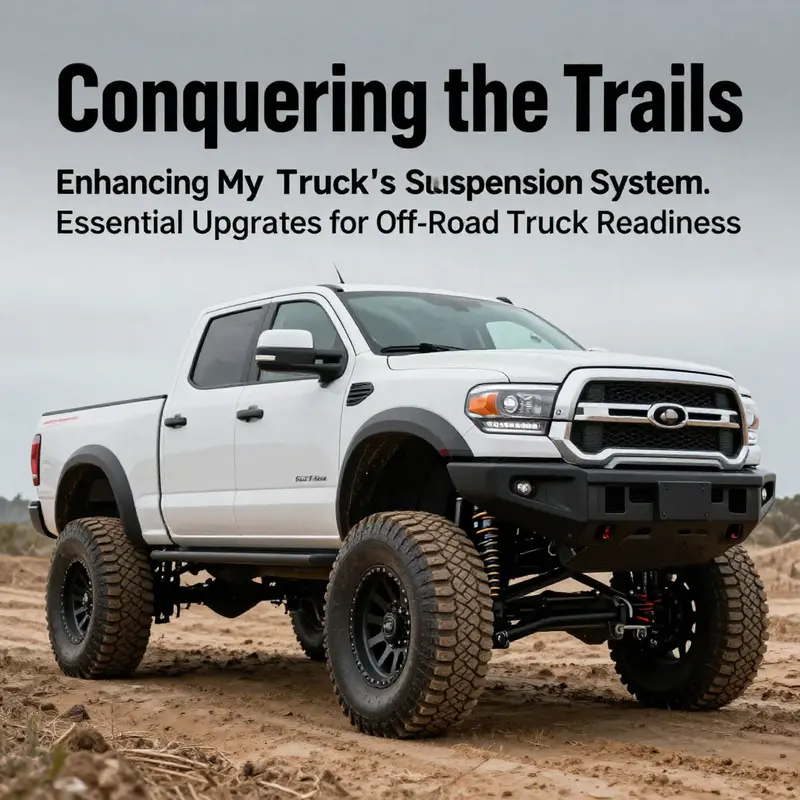
The suspension is more than a system that just soaks up bumps; it is the quiet backbone of off-road capability. It translates intention into traction, ground clearance, and control, even when the trail seems determined to throw every obstacle at you. When you think about making a truck truly off-road ready, the suspension should be the first thing you design around. It is the part of the vehicle that determines how much of the terrain you can conquer with confidence, how gently the ride can protect what you carry, and how predictable the handling remains as the landscape changes beneath you. The path to a robust suspension is not a single bolt-on moment but a careful, cohesive plan that respects the truck’s original geometry while inviting a measured degree of alteration to suit the kind of terrain you intend to tackle most often. The aim is to increase ground clearance where it matters, improve wheel articulation so that contact with the ground remains consistent, and maintain the feeling of safety and control that you expect when you push beyond the pavement’s edge.
Begin with the dampers, the workhorses of the suspension. In off-road work, the shock absorbers are not merely devices to stop springs from bouncing; they are active controls that manage how the vehicle settles after every impact. High-performance dampers, whether hydraulic or gas-charged, deliver superior damping control compared with stock units. They reduce body roll on side-slopes, stabilize the truck when you chop through washboards, and prevent the chassis from bucking uncontrollably as you tackle a rock garden or a steep ledge. Crucially, the best off-road dampers are adjustable. The ability to tailor the rebound and compression forces to match terrain makes a real difference. A soft setting can smooth a sandy whoop section for comfort, while a stiffer setting can lock in stability on a jagged rock face where precision steering matters more than ride comfort. For those seeking the ultimate in adaptability, an air-suspension option becomes attractive. Air suspensions offer dynamic ride height adjustment: you can drop the truck for highway efficiency and raise it for maximum ground clearance when the trail tilts upward or downward. The caveat is that with such sophistication comes complexity and cost, and the installation demands careful integration with the vehicle’s suspension geometry and steering. Yet when you need to move between highway drag-link precision and trail-side articulation in the same day, air-assisted systems are a clear path forward.
In parallel with the dampers, ground clearance must be deliberately increased in a way that respects the truck’s braking, steering geometry, and driveline. A lift kit is the most direct method to gain extra clearance. The common range—roughly two to four inches for many builds—often suits a broad spectrum of trail work, while higher lifts from two to six inches or more are available for more extreme expeditions. When you lift significantly, you must plan for the rest of the drivetrain: longer brake lines, driveshaft modifications, and, in some cases, altered steering geometry. The last point is not to be taken lightly. The wrong combination can introduce bump-steer, reduce steering feel, or create binding through suspension travel. The best approach is to couple the lift with compatible shocks, longer control arms if required, and a professional alignment after any substantial change. The alignment is not merely a toe-in or camber adjustment; it is a careful setting of caster to preserve steering feel and the tire’s contact patch as the suspension cycles through its travel.
Reinforcing the suspension structure itself is a practical step that pays dividends on rough terrain. Off-road use imposes harsh loading: rocks, ruts, and heavy, forward-mounted loads threaten to overwhelm stock structures. Strengthening components with auxiliary springs or additional spring rate, along with reinforcement kits for the arms and braces, gives the system resilience. The goal here is not to create a stiffer ride but to maintain reliable spring rate under demanding loads while preventing sag during climbs or when carrying heavy gear. Skid plates, braces, and reinforced control arms act as a protective shell. They keep vital components aligned and protected from impact, which translates to more predictable handling on a rock-strewn pass and less downtime for repairs.
Tires and wheels are the final, and arguably most decisive, link in the suspension chain. They determine how the tire meets the ground, how much grip you have in mud or sand, and how much energy the suspension must absorb with each revolution. Upgrading to all-terrain or mud-terrain tires with aggressive tread patterns can dramatically increase traction on loose surfaces and rubble, while maintaining a tread design capable of decent wear on pavement. Lighter, strong alloys can reduce unsprung weight, which improves ride quality, steering response, and braking efficiency. However, tire choice must be harmonized with the suspension geometry. A taller tire, for instance, alters the overall diameter and can affect the wheel rate and the calibration of the dampers. It also changes the contact patch dynamics during cornering and on uneven surfaces. A well-matched setup ensures the tire’s grip is predictable, allowing the dampers to perform their job without fighting against a misaligned suspension or an oversized wheel.
The configuration must extend into suspension geometry itself. Fine-tuning camber and caster angles—adjustments that affect how the tire contacts the ground and how the steering returns to center—can yield noticeable improvements in handling and tire wear. After any suspension modification, a professional wheel alignment is essential. Alignment is not a cosmetic consideration; it is a functional requirement that preserves steering responsiveness, tire life, and stability as the tires negotiate varied terrain. The most effective suspension systems in off-road settings maintain consistent tire contact through articulation, while controlling toe changes that might otherwise induce wandering or unsteady steering. The trick is to balance the geometry so that the tires stay firmly planted as axle angles change with each bump and twist. This balance, in turn, allows the driver to keep a steady line through a rock chute, a rutted wash, or a muddy corner where the truck’s momentum is as important as its traction.
A well-thought-out suspension plan also considers the whole lifecycle of the vehicle. Regular inspection of shock mounts, control arms, and reinforcement brackets ensures the system remains strong against fatigue. Off-road environments can accelerate wear, so technicians look for signs of bending, hairline cracks, or loosened fasteners. The maintenance routine should include a check of all linkages and bushings, particularly where the arms connect to the frame and axles. Proactive maintenance reduces unwelcome surprises on the trail, such as a torn bushing that causes wandering or a loose mount that amplifies vibration. It also extends the life of tires and wheels by preserving the intended alignment and travel range.
The decision-making process for suspension upgrades is iterative and practical. You begin by identifying the kind of terrain you expect most often and the load you will carry. If you frequently encounter rocky routes with steep drop-offs, a suspension that emphasizes articulation, protected undercarriage, and consistent ground clearance becomes a priority. If you regularly drive on mixed terrain, you may favor an adjustable dampers setup that can morph from highway comfort to hill-climbing rigidity. In any case, the plan should include a thoughtful lift that does not inadvertently alter steering geometry beyond what the rest of the components can handle. The best outcomes arise when the lift, the dampers, the reinforcement pieces, and the tires all move in a coordinated fashion, each contributing to a predictable, controllable ride. You should also budget for a professional tune after the full package is installed. A certified off-road facility can verify that the suspension geometry functions harmoniously with the truck’s drivetrain, steering, and braking system. They can run the truck through a variety of terrains in controlled settings to observe how the suspension responds to different loads, angles, and terrains. This real-world evaluation often reveals subtle adjustments that can dramatically improve performance and safety before you head into the wild.
As you weave this system together, consider the driver’s role and capability. The most sophisticated suspension cannot compensate for lack of experience in handling a vehicle on uneven surfaces. Practicing how weight transfers under throttle, braking, and steering inputs, learning where the tires grip and where they slip, and understanding how to read the trail all contribute just as much as the hardware. The driver’s choices—when to point the wheel, how to manage momentum through a rough section, and when to back off to prevent a rollover—complement the suspension’s capabilities. The better you understand the vehicle’s new limits, the more you can use the suspension’s capacity to its fullest, turning marginal grip into predictable performance rather than risk.
The overarching strategy is not to chase the most aggressive spec at every corner but to build a harmonized system that suits your typical trips while leaving room to adapt to new challenges. The trailer next to the campsite, the river crossing you plan to scout, the hill climb you want to conquer, and the deeper snow you expect to encounter all demand a suspension that can meet multiple demands without compromising your control. A well-balanced approach preserves ride comfort for the daily drive, protects essential components during rockier stretches, and maintains the chain of control that the driver relies on when the trail turns tricky. It is about converting the truck from a machine that merely moves over terrain to a vehicle that can read terrain, anticipate obstacles, and respond with confidence.
Finally, remember the broader legal and safety context. Modifications to the suspension and the ride height can trigger local restrictions. It is wise to verify that your setup complies with regulations, and to avoid over-modifying in ways that could degrade sway stability or tire compatibility. Safety remains the top priority; the aim is to be prepared without compromising on roadworthiness or legal compliance. The end result should be a truck that feels integrated with its environment—yet not amplified beyond what you can safely manage on public roads. If you keep the suspension’s role grounded in reliability, articulation, and controlled handling, you will have created a vehicle that can confidently face a wide range of off-road scenarios while still performing well when the pavement returns.
For readers who want a reference point on the technical underpinnings of suspension design in off-road contexts, a detailed analysis of independent versus non-independent suspensions can provide further insight into how different configurations behave under load. This broader technical background supports the practical steps outlined here and helps explain why certain choices matter more in some vehicle platforms than in others. As you move from concept to reality, the most important steps are to plan with your terrain in mind, to select compatible components that can work in harmony, and to engage qualified technicians who can translate your intentions into durable, road-legal, and trail-ready performance. The result is a vehicle whose quiet backbone is as capable as its hearty appetite for exploration, delivering predictable control through rough corners, steep climbs, and sudden changes in surface.
External reference for further technical context: https://www.pcbuyer.com/zh/news/18702.html
Armor Up and Drive On: Building a Robust, Off-Road Ready Truck from Ground Up
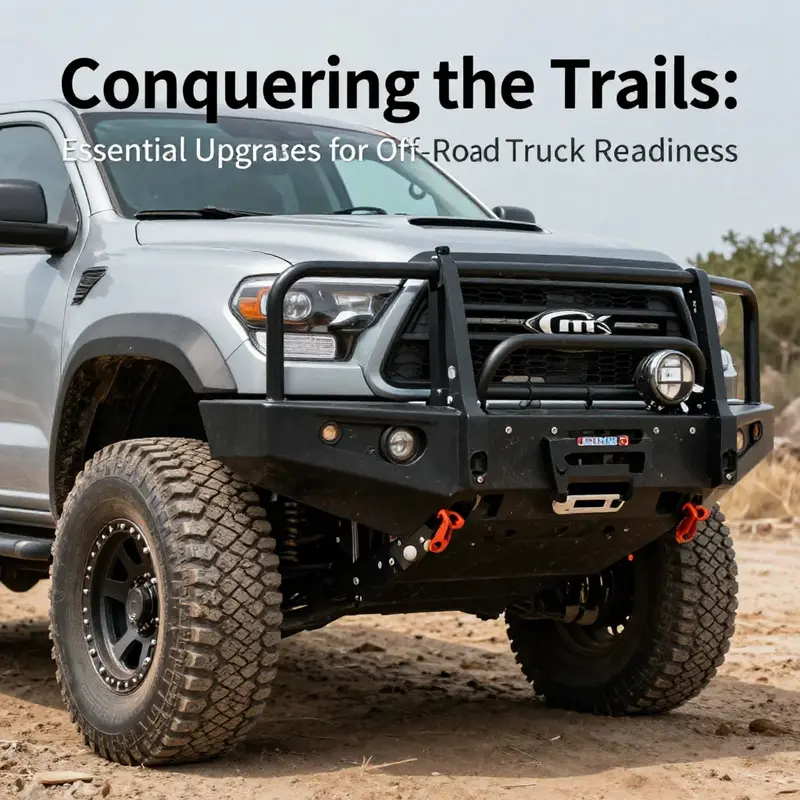
Every trail leaves a story on the undercarriage of a vehicle, and every off-road adventure begins with more than just tires. It begins with a philosophy: protect what matters, optimize what you can measure, and engineer resilience into every pound of metal and every inch of ground clearance. This chapter threads the core idea of off-road readiness into a single, coherent narrative, where protection is not a luxury but a foundation. The approach is practical, rooted in proven strategies that balance rugged capability with dependable daily usability. At the heart of that balance lies the notion of underbody protection as the bedrock of capability. The engine, transmission, differential, and fuel system are the lifebloods of a truck. When you tackle rocky sections, rutted shelves of earth, or slick, water-washed grades, the risk to those vital components becomes tangible. Skid plates, engine armor, and a thoughtful coating strategy form a shield that enables you to push further with confidence rather than retreat from fear of damage. The value of protecting the undercarriage is not merely about surviving a single climb; it’s about sustaining a longer, more capable life for your truck through the roughest terrain. The suggestion to start here feels almost intuitive, yet it’s often overlooked in favor of flashier upgrades. A robust underbody shield makes room for more ambitious choices later, including aggressive tires and a fortified suspension, without inviting chronic mechanical downtime brought on by unnecessary strikes to fragile areas.
From protection, the narrative moves to traction and capability, the twin pillars that keep an off-road build effective. Tires and wheels are the launch point. High-performance off-road tires with deep, aggressive tread patterns grip mud, sand, rock, and snow with a assurance that street tires cannot match. The choice of a forged alloy wheel, sturdy enough to resist impacts yet light enough to preserve steering feel and suspension travel, matters just as much as the tire itself. The combination of rugged wheels and grippy tires creates the essential interface between truck and ground, the interface through which all other improvements translate into real-world capability. The guidance here mirrors long-tested practice: select tires that match your most common terrains, then tune the tire pressure to exploit the ground’s best grip. Lower pressures can increase contact patch on soft surfaces but must be managed to avoid bead unseating or excessive sidewall flex on hard surfaces. This is where a practical on-board air compressor and a tire-pressure monitoring system (TPMS) come into play. With the ability to adjust pressures on the fly, you can adapt to sand traps, muddy slogs, or rocky ramps without excessive downtime or guesswork. A reference point for the mechanical mindset of this path is the discipline of diesel mechanics, where a methodical step-by-step approach yields durable results. For readers seeking a deeper, more systematic understanding, a practical companion is mastering-diesel-mechanics-your-step-by-step-path-to-success. This resource anchors the idea that every modification should be approached with a diagnostic mindset, ensuring you can sustain performance without chasing elusive symptoms.
As tires and wheels settle into their role, the suspension system becomes the second layer of adaptive capability. A lift kit, typically in the 2–6 inch range, increases ground clearance and allows bigger tires to clear fender arches without rubbing. The choice between coil-spring and leaf-spring setups depends on the truck’s original architecture and intended use. What matters more is the accompanying damping and geometry. Upgraded shocks—whether from trusted, purpose-built providers or race-tarmacked variants—deliver improved control, reduce body roll, and help maintain tire contact over undulating terrain. But suspension isn’t a one-piece solution. To preserve alignment and stability under the heavy loads you’ll encounter off-road, you’ll likely want adjustable control arms, reinforced sway bars, and robust track bars. These components keep your wheels pointing in the same direction, even when the axle is articulating through a rock garden or wading through a water-filled rut. The effect is immediate: improved driveability, more predictable handling, and a platform that invites you to push a little deeper into the unknown instead of retreating at the sight of the first stone.
Protection is not merely about deflection; it’s about broader strategic armor. Skid plates shield critical components from direct hits, and proper bumpers couple protection with practical recovery capability. A hardened front bumper with a winch mount becomes a keystone of self-reliance, not just a luxury. The rear bumper, equally robust, supports recovery points and a more forgiving approach angle when you’re steeply climbing out of a rut. In practice, these bumpers function as a deterministic upgrade: they don’t create traction where none exists, but they ensure that when ground contact is inevitable, it is contained and survivable. Side protection, through rocker panels or rock sliders, protects the vulnerable sides of the truck from brush and rock contact while offering a firm stepping point for entry and exit—an often overlooked convenience that compounds safety on long expeditions. The application of protective undercoating or armor spray to the chassis and frame extends the life of the protection strategy. Corrosion resistance, water intrusion resistance, and minor-impact resilience all contribute to a more reliable platform over time. When paired with body armor kits, these measures become a layered defense: you’re not asking one component to bear the brunt, but distributing risk across a suite of tailored armor. In practical terms, this approach reduces the probability of a single misstep turning into a costly repair bill. Nor is this approach purely pragmatic; it helps protect your investment so your truck remains ready when the next trail call comes in.
Lighting plays a pivotal, practical role in any serious off-road build. The night trail is unforgiving, and a well-lit path is a safer path. Upgraded front lighting, with high-lumen LED or HID options, improves visibility far down the trail and reduces the risk of misjudging a line or a rock face. Auxiliary lights—spotlights or floodlights mounted on the roof or bumper—extend the visible horizon, revealing obstacles in the blind minutes before you reach them. A full-width LED light bar can illuminate the entire forward orbit of the vehicle, which matters when you’re negotiating fast washouts or high-speed crossings where a split-second misread can be expensive. The practical idea here is simple: you don’t want to be caught between a rock and a hard place without enough light to decide your safest course. Yet lighting should be balanced with safety regulations and neighbor considerations, a reminder that high output is not an unconditional license to push every boundary. The practical energy of lighting is most effective when integrated with a robust winch system and a solid protection package, because clear visibility and a means of recovery are the two sides of a single safety coin.
Powertrain and engine performance complete the core package, stretching beyond bolts and bracketry toward meaningful, usable torque and steady, reliable operation. The intake and exhaust systems are the primary levers here. A high-flow air filter or a cold-air intake can improve breathing for the engine, translating to a more efficient combustion process and a small but meaningful uptick in performance. A freer-flowing exhaust system helps reduce backpressure, which can free up horsepower and enhance torque—particularly valuable when you’re pulling up steep grades or working through soft ground. For diesel-powered rigs, a turbocharger upgrade or tuning module can provide an important bump in low-end torque. The idea isn’t to chase headline numbers but to deliver a more usable torque curve in the crucial off-road ranges. When you couple this with differential locks—available on many modern trucks in either front, rear, or both locations—you gain a decisive advantage when one wheel loses grip. Locking differentials effectively force the wheels on each axle to rotate at the same speed, maximizing traction on uneven surfaces. The result is a more confident climb and a greater likelihood of self-recovery without resorting to external assistance. Integrating these powertrain upgrades with the protective and traction-focused elements creates a cohesive, resilient platform, designed to tackle a wide range of challenges with predictable outcomes.
Beyond protection and performance, an off-road truck benefits greatly from a handful of practical features that emphasize readiness and self-sufficiency. Tire pressure management and on-board air systems enable rapid adaptation to changing terrain, while a reliable winch remains a cornerstone of self-recovery in the event of getting stuck. A roof rack or roof tent adds valuable storage and living space for longer trips, expanding the scope of where you can go and how long you can stay. Small touches, like front and rear recovery gear, a high-quality jack, and a set of heavy-duty fender guards, translate into fewer delays and more time on the trail. Interior upgrades—such as heated seats for comfort in cold environments, durable mats to handle mud and grit, and a capable audio or weather radio—make long days behind the wheel more bearable, helping you stay focused and alert. The safety toolkit should never be skimped: fire extinguisher, first aid kit, emergency tools, spare fuses, jumper cables, and a portable air pump are not extras but essential elements of preparedness. A backup camera and parking sensors add a layer of safety for tight trail maneuvers or when negotiating obstacles near the crew and the vehicle, and they can be crucial in crowded trailheads or campsite setups where navigation space is limited.
The sequence of upgrades naturally leads to a disciplined testing and calibration phase. After you assemble the components, it’s critical to bring the truck to a certified off-road facility for professional tuning and testing. The evaluation should simulate real off-road terrains, focusing on climbing ability, water crossings, turning radius, suspension response, and ride quality. This is where you refine and tailor settings to your specific truck and your typical terrain. Tire pressure, shock preload, and differential lock timing all respond to feedback from controlled trials and field experience. Calibration is not a one-time event but an ongoing process, a recognition that your vehicle’s setup must evolve with changes in terrain, load, and climate. A thoughtful, iterative approach helps ensure you remain prepared for the next challenge rather than guessing your way through it.
Incorporating the guidance above does more than assemble a capable machine; it establishes a disciplined mindset about vehicle readiness. You want a truck that can handle harsh environments while maintaining reliability and resale value. This means not over-modifying in ways that complicate maintenance or violate local regulations. The final tip embedded in this strategy is practical and cautious: stay compliant with local rules about lights, lifts, and noise, and avoid over-modifying to the point where everyday use becomes burdensome or unsafe. The path to off-road readiness is not about turning your truck into a dedicated race vehicle; it’s about building a balanced platform that can handle the roughest trails while remaining dependable on weekday commutes and family trips.
For readers seeking concrete, model-specific guidance, do consider exploring additional installation guidance and product recommendations tailored to your truck model. Practical maintenance and upgrade strategies are often best understood in the context of a concrete chassis and drivetrain layout. If you want a deeper dive into engine and drivetrain diagnostics that complements this protection-and-performance framework, you can consult resources focused on diesel mechanics and step-by-step paths to success, such as the link mentioned earlier: mastering-diesel-mechanics-your-step-by-step-path-to-success.
As the trail begins to call again, you’ll notice that the sense of readiness is less about a single upgrade and more about a synergistic suite of protections, traction, and power, all tuned to your typical terrain. The concept of an off-road-ready truck is a living project. It grows with your experience behind the wheel, with the weathered miles that teach you where to add protection, where to trim weight, and where to push the limits safely. The modifications you choose to implement should serve your goals—whether that means negotiating loamy trails, conquering rocky sections, or crossing water with confidence—while preserving daily drivability and long-term reliability. The resulting vehicle becomes not only a tool for exploration but a partner on the road to experience and expertise. For deeper installation guidance beyond this narrative, trusted sources on off-road vehicle modifications can offer model-specific insight, including how to integrate heavy-duty bumpers, skids, and lighting in a way that maintains proper approach and departure angles and weight distribution. When you combine protection with precise traction, disciplined power enhancements, and practical living features, you create a truck that doesn’t merely survive the backcountry but thrives there—and invites the next expedition with confidence.
External resource for broader context: https://www.4x4wire.com
Seeing Beyond the Trail: Elevating Lighting and Visibility for Off-Road Readiness
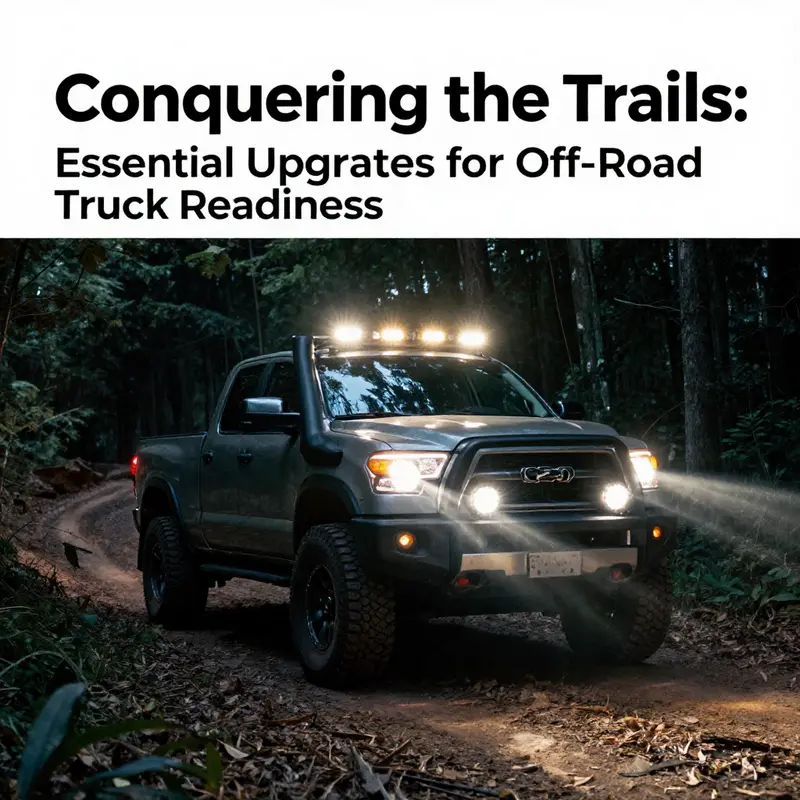
Lighting is more than a convenience on rough terrain; it is a critical safety feature that defines how well you can anticipate and respond to the unknown. On the trail, where the path twists, rocks jut, and ruts appear without warning, your eyes must be the first line of defense. The journey to off-road readiness begins with seeing clearly in the dark and in low-contrast environments, and that clarity comes from a thoughtful combination of better light sources, smarter placement, meticulous maintenance, and disciplined electrical health. When you upgrade lighting with intention, you do more than brighten the path. You extend your decision-making window, reduce the risk of surprises, and give yourself confidence to tackle obstacles that would otherwise demand slower, less decisive actions. This is the thread that ties lighting directly to the broader goal of making a truck truly off-road capable: it amplifies awareness, preserves vehicle control, and complements the mechanical upgrades you’ve already considered, like tires, suspension, and protection.
The most fundamental shift in lighting begins with the source of the light itself. Replacing standard halogen bulbs with modern high-performance options—most commonly light-emitting diode (LED) or xenon HID alternatives—transforms the night into a navigable landscape. LED headlights offer bright, crisp, and penetrating illumination with quick response times and lower power draw. They create a whiter light that emphasizes edge and texture, helping you discern ruts, rocks, and vegetation silhouettes earlier than traditional halogen would. HID systems, with their characteristic daylight-like color temperature and strong long-range punch, can be appealing for certain driving styles, but they can take longer to reach full brightness and may require more intricate ballast and wiring considerations. In practical terms, the choice often boils down to reliability and efficiency: high-lumen LED configurations deliver reliable performance while keeping electrical stress manageable on long expeditions. The immediate payoff is not just visibility, but contrast. You begin to notice subtle surface changes—mud depth, sand softness, or gravel texture—that would have remained invisible or confusing with dim or yellowish light. This heightened perception translates into smoother throttle control, more precise steering inputs, and a greater willingness to push into challenging terrain rather than retreat before it.
But lighting cannot fulfill its promise in isolation. The trail demands both a broad view and focus at a distance, which is where auxiliary lighting comes into play. A modern off-road setup benefits from a layered approach: forward-facing headlights for baseline illumination, combined with a carefully chosen mix of spot and flood lighting. Spotlights deliver a narrow, long-range beam that helps you spot distant obstacles far enough ahead to plan a safe line; floods fill in the near field, improving your ability to read the immediate ground texture, the edge of a cliff, or a slick patch that could catch a wheel. The best outcomes come from a balance of these elements, ensuring you have enough angular coverage to avoid blind spots while maintaining depth perception over the trail’s changing surface. In practice, this means selecting lights that are ruggedly built to withstand off-road exposure—vibration, dust, water ingress—and that carry strong IP ratings to ensure performance in mud, rain, and spray. The goal is to create a coordinated lighting system that fills the scene with usable light without creating glare that blinds or distracts other road users or true-forged nighttime wildlife from distant vantage points.
A crucial, often overlooked part of this upgrade is the condition and alignment of all lenses. Dirt, road grime, and UV oxidation can gradually dull the transparency of headlight covers, turning a bright beam into a diffuse glow that barely cuts through the night. Regular lens cleaning and restoration should be part of your routine. A dedicated headlight cleaning kit can help restore clarity and maintain maximum light output. Equally important is beam alignment. Misaligned lights can blind oncoming drivers, while lighting that points skyward or low to the ground leaves large swaths of the road dark and unlit. The alignment process is not a one-and-done task; it’s an ongoing procedure that should be revisited whenever you change headlight height, add mounted auxiliary lights, or alter vehicle ride height with a suspension tweak. A simple reference point, such as a wall at a fixed distance, can be used to ensure beams are aimed at the correct height and angle. If you want a professional touch, a shop with proper equipment can verify alignment across multiple angles and distances, ensuring the pattern illuminates the trail without creating unwanted glare for others. The result is a coherent, continuous field of view that allows you to scan ahead for potential hazards while still maintaining situational awareness of your immediate surroundings.
The electrical backbone supporting this upgraded visibility must be robust and thoughtfully designed. A weak electrical system can negate the benefits of brighter lights by causing voltage drops, flickering, or inconsistent output as engine RPM varies. Start with the basics: ensure the battery is in solid health and the alternator delivers steady current across the anticipated load. Loose connections, corroded terminals, and frayed wiring can erode performance and create unpredictable light levels on the trail. A common and prudent upgrade for lighting reliability is a relay harness. By routing the high-current demand of auxiliary lights through a relay, the system protects the vehicle’s original wiring and reduces the risk of voltage drop that could dim the lights when you need them most, such as during steep climbs or water crossings. Additionally, separate fusing and proper gauge wiring tailored to the lighting load help maintain stable performance across the entire setup. While these changes add complexity, they are straightforward and reward you with dependable illumination that doesn’t falter as you push the truck’s limits.
The pursuit of better lighting also invites contemplation of the legal and safety framework that governs aftermarket installations. The drive to maximize visibility must be tempered by adherence to local regulations regarding headlight height, brightness, and beam pattern. Lights that are too bright or misaligned can violate laws and create hazardous glare for other drivers. A disciplined approach means selecting lighting that complies with recognized safety standards, such as those endorsed by standardization bodies, and avoiding modifications that generate glare or obstruct existing safety features. It also means recognizing that more light is not always better if it arrives in the wrong pattern. The objective is a beam that illuminates the trail effectively while preserving the ability of others to see and react. This balance is not just a legal issue but a foundational safety practice. When you plan lighting upgrades, consider how the system integrates with your overall driving behavior. On a rugged trail, good lights allow you to maintain a steady pace and make precise movements around rocks or narrow passages. They give you the confidence to select cleaner lines, rather than guessing through darkness. This is where lighting becomes part of the core strategy for off-road readiness, aligning with how tires grip, how suspension soaks up jumps, and how recovery gear sits ready for use.
In thinking through the practical steps, you should also consider how lighting upgrades influence the broader ecosystem of the vehicle. A well-lit truck is easier to maneuver with precision, which reduces the need for sudden, abrupt corrections that can unsettle the vehicle on uneven surfaces. It also enhances your ability to observe terrain changes well before you reach them, allowing you to adjust tire pressure, steering input, and throttle in a controlled manner. The synergy between lighting, traction, and suspension is not accidental; it is a deliberate design choice that completes the circle of off-road capability. In turn, this makes your drive safer for you, your passengers, and the people you may encounter on remote tracks. If you’re integrating lighting with other upgrades, it’s worth revisiting how you manage power. You might discover that a dedicated electrical plan, including a separate fuse box for lighting circuits and a portable power source for air compressors and pump tools, pays dividends in reliability and ease of maintenance.
A practical, narrative example helps illustrate the point. Imagine an evening ascent of a forested trail where the path is intermittently shaded by overhanging branches. Your main headlights illuminate the trail ahead, but you require that extra pair of front-facing spots to reveal the soon-to-be-tracked ruts and the sudden drop between logs and soil. The floodlights illuminate the immediate area, letting you place each wheel with surgical care as you inch over exposed roots. The combination creates a panoramic glow that reads the terrain in three dimensions: the surface texture, the depth of ruts, and the height of obstacles. With robust lens optics and properly aligned beams, you notice a patch of damp soil ahead and adjust your line before you hit it. You can feel the vehicle respond with calm, measured steering rather than reactive corrections. This is the essence of improved visibility: a more intuitive, less stressful driving experience that translates into safer progress, even when the trail refuses to stay within the headlights’ comfort zone. And as you progress, you appreciate that lighting is not an isolated upgrade; it is a living part of your off-road philosophy, interacting with drivetrain dynamics, tire contact, and chassis control to create a cohesive, capable package.
As you reflect on the learning curve involved in lighting upgrades, you may want to explore broader mechanical knowledge and how it intersects with electrical systems and light output. A deeper dive into diesel and engine fundamentals can illuminate why certain electrical upgrades are especially effective on specific platforms. For example, you can explore a resource that breaks down diesel mechanics step by step, offering a practical pathway to understanding how power delivery and engine performance relate to electrical loads and sensor feedback. Mastering Diesel Mechanics: Your Step-by-Step Path to Success provides a framework for thinking about how electrical work and mechanical performance intersect, which can inform your decisions about lighting upgrades and their impact on overall truck behavior. This integrated perspective ensures you’re not chasing brightness in a vacuum but shaping a coherent system where light, traction, and control reinforce one another.
To close the loop, remember that lighting upgrades should be approached with a measured, iterative mindset. Start with a thoughtful assessment of your current setup, including beam pattern, focal distance, and any wear on lenses. Move to a staged upgrade: source a reliable, high-efficiency light system, install a proper wiring solution with a relay and fused protection, and then invest in alignment and calibration. Watch the results on a safe, controlled night drive or a familiar trail at dusk and progressively extend your testing to more demanding routes. In every step, maintain the discipline of verifying legality and safety. Keep maintenance on a regular schedule, wipe lenses clean, inspect wiring for heat or wear, and re-check alignment after any suspension changes or changes in ride height. Over time, your truck becomes not just a vehicle adapted to darkness but a trusted partner in any condition you choose to face. The trail rewards clarity, foresight, and deliberate action, and lighting is the quiet system that makes all of that possible.
External resource: https://www.sae.org/
Final thoughts
Equipping your truck for off-road adventures transcends mere modifications; it’s about crafting a reliable companion for exhilarating journeys. Your truck’s tires, suspension, protective gear, and lighting systems determine how well you can navigate uncharted territories, conquer challenges, and turn potential obstacles into mere stepping stones on your path to exploration. As you embark on your off-road journey, remember to stay true to local regulations and prioritize safety. A well-prepared truck not only amplifies your experience but also fosters a connection to the wild that is both thrilling and respectful.