
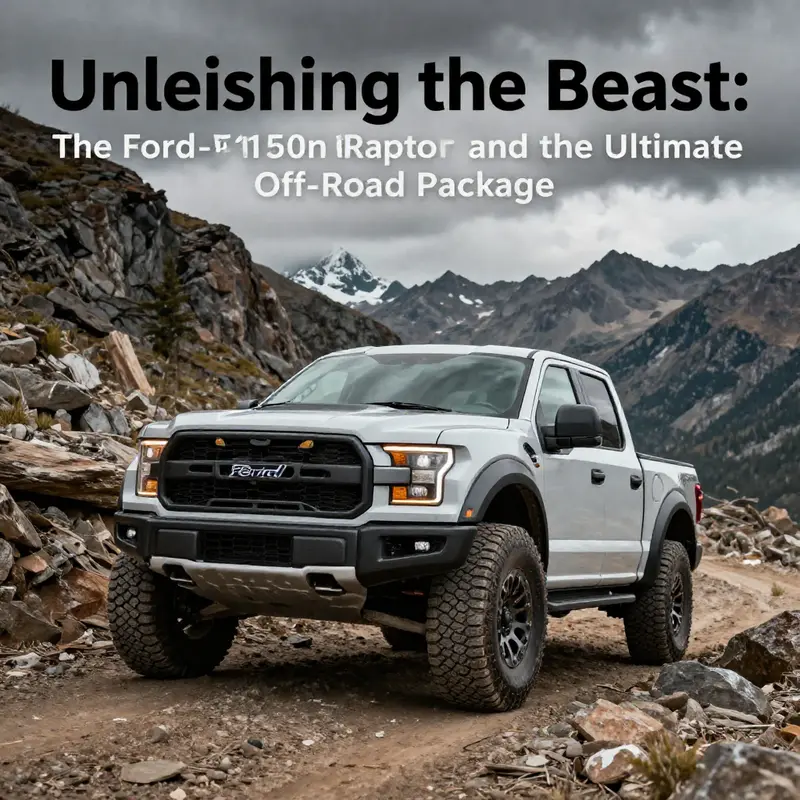
For those who thrive on adventure, the quest for the best off-road package in a truck is a journey that demands both power and precision. Off-road enthusiasts, adventurers, and landowners require a vehicle that transcends mere transportation, providing unparalleled capability in rugged terrains. In this exploration, we delve into the Ford F-150 Raptor, a powerhouse that redefines off-road performance. Through comparative analysis with competitors like the Toyota Tundra TRD Pro, we outline the features that elevate a truck to greatness and the criteria that truly define the best off-road package. Each chapter meticulously connects to the overarching inquiry, offering insights essential for anyone ready to conquer the wild.
Raptor Ascendant: Crafting the Definitive Off-Road Package in a Full-Size Pickup
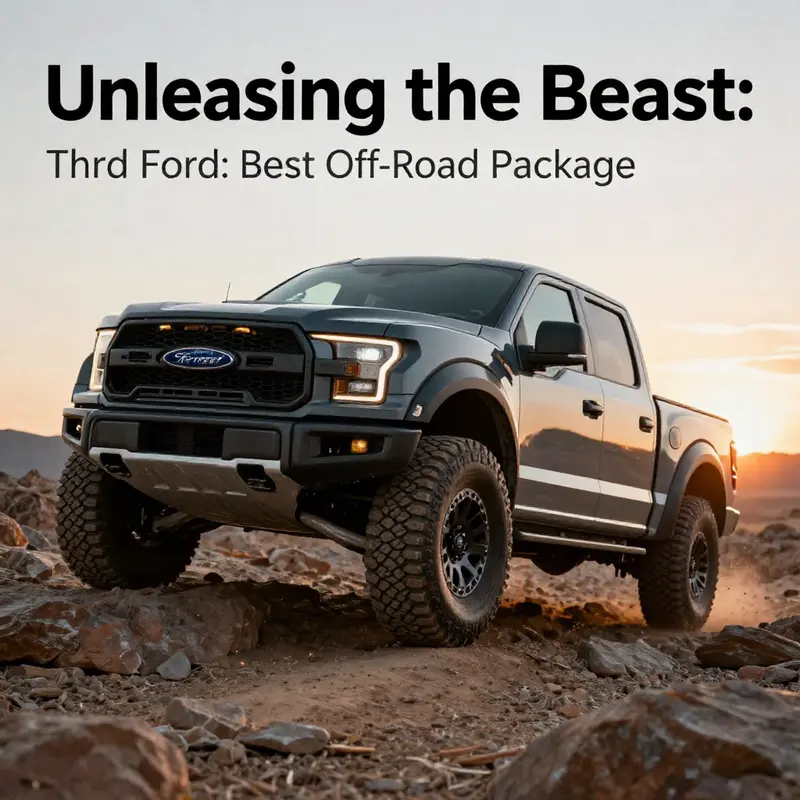
The question of which truck carries the best off-road package is not answered by raw horsepower alone. It hinges on how a package blends power, suspension, protection, and everyday practicality. In that weighing of strengths, the Ford F-150 Raptor earns a seat at the head of the table. It represents a philosophy as much as a specification sheet: a factory built desert racer repurposed for routine duty on pavement, with a design that anticipates the unexpected and delivers confidence when the terrain refuses to cooperate. What makes the Raptor stand out is not a single magical feature, but the way a complete, purpose built system functions as a coherent whole. The result is a vehicle that can hustle across dunes at high speed and still feel composed on a long highway, a paradox that speaks to the careful engineering behind the package as a whole.
The engine is the starting point for that balance. The 3.5 liter EcoBoost V6, a twin turbo configuration, produces a formidable amount of torque and horsepower without sacrificing tractability. In the Raptor, that power is paired with a 10 speed SelectShift automatic, a transmission tuned for rapid, seamless shifts when the rocks get rough, and for soft, uninterrupted acceleration when cruising back toward civilization after a long off road session. The result is not merely about acceleration in open air; it is about maintaining momentum across the variable surfaces that define serious off roading. The engine’s degree of responsiveness is crucial when momentum translates into control—when a driver must decide between maintaining speed to clear a rise, or dialing back and letting the system settle into a more deliberate cadence on a steep, uneven grade.
Equally central to the Raptor’s capability is its suspension system, the heart of any off-road package. Ford’s SVT team designed a setup that reads terrain in real time, transforming how the vehicle floats over irregularities rather than how it crashes into them. The Fox Live Valve shock absorbers are the centerpiece here, dynamically adjusting damping based on live feedback from the road ahead and the truck’s own behavior. This real-time damping translates into a ride that is surprisingly calm on a highway but becomes a capable, controlled platform when the road terrain deteriorates into ruts, whoops, and moguls. The benefit is subtle at first glance; it’s the feeling of consistency. A driver can push into a trail with a confidence born of predictable personality—one that doesn’t surprise or punish with erratic suspension behavior. That steadiness is what allows a high speed desert sprint or a careful crawl over a rocky passage to feel like a single, fluid motion rather than a sequence of jarring adjustments.
Ground clearance and tire geometry complete the package’s backbone. The Raptor sits tall, with generous ground clearance to clear rocks and ridges that would otherwise threaten a standard pickup. The factory 35 inch tires are more than a dramatic silhouette; they provide essential grip and flotation across sand, mud, and loose gravel. The combination of real ground clearance and substantial tire contact patch means the truck can approach obstacles at angles and speeds that would overwhelm a less capable machine. It is the difference between a momentary pause and a deliberate, measured approach that preserves tires and suspension. The chassis itself is reinforced to resist the impacts and abrasions associated with off-road expeditions, and the front end includes features that anticipate damage and reduce the likelihood of a roadside setback. The engineering philosophy is clear: build a platform that can endure both long, rugged days and the precision work of high speed desert running without demanding constant external modifications.
A distinct advantage of the Raptor lies in its complete, built for purpose design. This is not a chassis with a few aftermarket accoutrements slapped on top; it is a factory designed, purpose built off-road machine. Features like a front mounted winch and heavy duty skid plates are not add ons but integral parts of the package. They reflect a mindset that off roading is not a hobby but a discipline, one that benefits from a vehicle that anticipates the need for protection and self reliance in remote terrain. The reinforced frame reinforces this thinking, ensuring that the vehicle remains a stable platform under stress rather than a fragile one that can crack or bend under pressure. The integration of these elements yields a vehicle that has a proven capability in demanding environments, where other trucks may struggle to keep pace or hold together. In desert racing and rocky trails alike, the Raptor’s engineering choices translate into a tangible edge—the difference between getting through a rough section and being forced to retreat.
The interior of the Raptor speaks to the broader question of balance: how to reconcile the demands of hardware with the demands of daily life. The cabin is purpose built for the operator, with a driver focused layout that emphasizes ergonomic controls and visibility. A large touchscreen, integrated smartphone connectivity, and a suite of safety features deliver a civilized experience even after hours of rough work or extended highway travel. The inclusion of options like ventilated and heated seats and high end trims offers a measure of comfort without compromising the truck’s no nonsense character. It is easy to assume that off road prowess requires a Spartan interior, but the Raptor dispels that myth by delivering a cockpit that supports long days behind the wheel with the same sense of purpose as its suspension or armor plating. This is not luxury for luxury’s sake; it is a functional environment designed to keep a driver sharp, alert, and comfortable when conditions demand sustained attention and rapid decision making.
The question of how the Raptor stacks up against rivals is best answered by looking at the underlying design intent. Other high profile offerings in the same conversation bring notable strengths to the table—unique terrain management logic, specialized traction control architectures, or advanced on trail technologies that tailor the vehicle’s behavior to particular surfaces. Yet the Raptor’s strength lies in its all encompassing approach. It does not rely solely on brute power or clever traction systems; it integrates a high output powertrain with an adaptive suspension, reinforced structure, and purpose driven equipment into a single, cohesive package. This integration matters in practice because off roading rarely presents a single challenge. Rocks, sand, mud, water crossings, and gravel each demand a different combination of throttle, steering input, and suspension behavior. The Raptor’s drivetrain and chassis respond with a level of coherence that makes complex maneuvers feel almost reflexive. The result is a vehicle that accelerates hard on a desert floor, rides smoothly over a washboard corridor, and remains controllable when a line of deep ruts threatens to interrupt progress. It is a kind of performance that feels less like a collection of performance tricks and more like a discipline patiently practiced inside a factory.
The narrative of the Raptor’s superiority is reinforced by its proven track record in extreme conditions. Desert running, rocky trails, and high speed traverses place extreme demands on tires, suspension, and chassis. In those arenas, the Raptor demonstrates that a truck can be simultaneously aggressive and predictable, capable of high speed desert sprints while maintaining control through tight turns and sudden changes in elevation. The experience is not mere bravado; it is a demonstration of how a well integrated package can translate raw specifications into reliable, repeatable on trail performance. The design language that Ford’s engineers applied to the Raptor—prioritizing balance, durability, and real world capability—offers a blueprint for what a truly capable off road package should look like: a vehicle that can perform at the highest ends of the spectrum without sacrificing the predictable, comfortable operation required for daily driving.
The conversation about best off road packages is essential for readers who want to make an informed choice that aligns with their terrain, budget, and driving preferences. A best label in this context is not a perpetual verdict but a snapshot of what the market can offer when a manufacturer invests in a complete, experiential system. The Raptor embodies that snapshot more fully than many of its peers, not as a flashy exception but as a thoughtful culmination of engineering choices that anticipate what off road enthusiasts actually need: stability under duress, predictable handling across a wide set of surfaces, and the confidence to explore beyond familiar trails. Its all in one design power, suspension, protection, and purpose serves as a template for how a modern off road package can be structured to maximize both capability and daily livability.
For readers who are curious about broader safety and performance conversation, there is a useful point of reference in the broader testing landscape. A specific examination of crash test data across brands underlines how important predictable, controlled handling is not only for on road performance but also for the kinds of off road excursions that eventually meet public roads again. This context helps explain why the Raptor’s combination of power and control matters beyond the trail and into everyday reliability. The relationship between crash test outcomes and on trail stability is not direct, but it illuminates a shared engineering ethos: design for measured responses under stress so drivers can focus on strategy rather than fear. See the linked discussion on iihs crash test results for Tesla vs Ford to explore how independent testing frameworks evaluate vehicle behavior in extreme circumstances. You can find the reference here: iihs-crash-test-results-tesla-vs-ford.
The conclusion, then, is not simply that the F-150 Raptor is the best off-road package in a vacuum. It is that the Raptor represents a philosophy of excellence: build a vehicle that can perform under the grimmest conditions and still feel controlled, confident, and approachable in normal settings. The Raptor’s powertrain, its live-damping suspension, its protective infrastructure, and its driver centric interior collectively form a package that respects both the extremes of off road competition and the practical realities of daily use. This duality matters because most enthusiasts do not live on the trail; they commute, tow, and navigate city streets with the same vehicle that can unleash its desert racer character when the terrain changes. The Raptor makes that duality a seamless experience rather than a compromise. It invites a driver to push further, to test limits, and to savor the moment when the road ends and the ride begins.
As readers consider their own off road ambitions, it is worth acknowledging that other elite packages offer compelling approaches tailored to different priorities. Some trucks emphasize terrain aware systems that optimize traction for specific surfaces, while others lean into rugged storage, payload, or approach angles that improve practical utility in a workaday context. The beauty of the Raptor’s design is that it does not require a trade off between performance and comfort; it demonstrates that a single, integrated approach can deliver both. It is a statement about what a high performance, off road ready pickup can be when engineering teams commit to a coherent, front to back design philosophy rather than piecing together disparate features in a way that may look impressive on a spec sheet but feels disjointed on the trail.
In the end, the question of which truck has the best off road package is best answered by considering what a package promises to deliver across the spectrum of real world use. The Ford F-150 Raptor promises immediate, tangible benefits: an engine that responds with confident vigor, a suspension that soaks up the roughest terrain while staying planted, and a chassis that holds together when the going gets brutal. It promises a sense of control that comes from being able to adjust to the terrain with a dozen small but meaningful choices rather than a handful of binary settings. And it promises reliability that comes from a factory backed, carefully engineered platform designed to keep you moving rather than sidelined. Those promises collectively justify the Raptor’s status as a benchmark in off road capability a benchmark that continues to influence how enthusiasts and engineers think about what a modern off road package can and should be.
For readers who want to deepen their understanding and compare notes with broader testing and analysis, the external reference to contemporary testing and reviews provides additional color on how these capabilities translate from the showroom floor to the trail. See Car and Driver’s coverage of the F-150 Raptor for a broader, independent appraisal of the truck’s performance envelope in realistic conditions: https://www.caranddriver.com/ford-f-150-raptor. This external resource complements the internal perspective by anchoring the discussion in independent testing and real world observations, helping readers form a holistic view of what makes the Raptor’s off-road package formidable and why it has become a touchstone in the conversation about high performance pickups.
Paths to Off-Road Mastery: Power, Precision, and Practicality in Modern Truck Packages

Two archetypes shape modern off-road packages: a speed-focused, desert-racing mindset and an all-around, durability-driven approach. The former prioritizes high-output powertrains, advanced damping, and a reinforced chassis to keep traction and stability at elevated speeds over rough terrain. It emphasizes real-time damping, tire contact, and a cockpit designed for performance feedback. The latter emphasizes broad usability: linear torque delivery, reliable four-wheel drive with a low range, protective underbody elements, and a comfortable interior that resists wear. Electronics in both are critical but tuned to different goals: top-end speed and precision versus predictable traction and ease of use. Ultimately the best package is a spectrum aligned with the driver’s intended terrain and usage, not a single figure. For desert running, the speed package can be compelling; for weekend explorers and daily drivers, the all-around package offers dependable performance across varied landscapes. When evaluating options, look for how power, suspension, chassis protection, and control interfaces work together across the terrains you actually encounter.
Dissecting the Off-Road Package: What Engineering Actually Delivers the Best All-Terrain Reliability
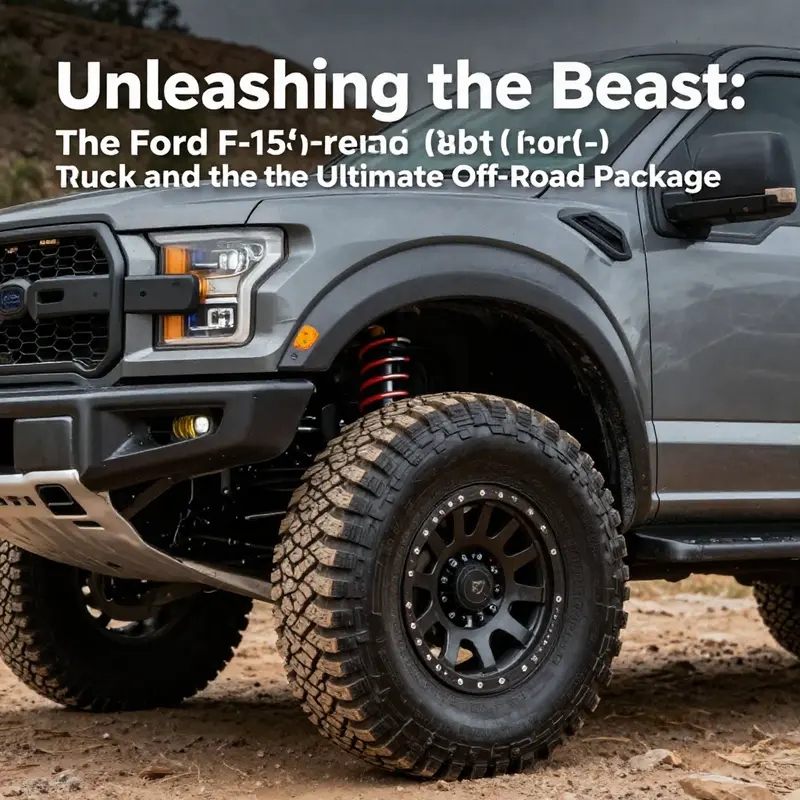
When readers ask what truck has the best off-road package, they are really asking a broader question: which engineering package rises above the rest when the going gets stubborn and the road turns to dust, mud, or rock? The answer, as echoed by authoritative reviews and real-world testing, is not a single badge or a clever marketing slogan. It is a carefully integrated set of systems designed to work in concert. The best off-road package is defined by a deliberate balance: raw capability that can be trusted, chassis and suspension that survive harsh environments, and a package that remains usable and predictable when the daily drive returns. In evaluating this, reviewers from major outlets emphasize the same core idea: capability must be paired with reliability, protection, and a coherent design philosophy. The chapters that truly stand out don’t rely on a single trick; they deliver a complete, factory-built solution that begins with a solid framework and ends with a driver feeling confident even before the engine roars to life.
To understand what makes a package truly capable, imagine the off-road scenario as a test of endurance rather than a straight-line sprint. Terrain varies from desert flats where heat and sand demand sustained grip to rocky trails where ground clearance and skidding protection are tested to their limit. In both cases, the best packages provide a stable, controlled platform. The engineering here is clear but not simplistic: it hinges on a few decisive elements that work in harmony. Heavy-duty axles are not just about strength; they’re about predictable torque delivery and durability under sustained abuse. Locking differentials are not merely a mode; they’re a fundamental tool that ensures propulsion sticks to the ground with maximum efficiency when traction is uneven. High ground clearance is more than a number in the spec sheet; it is a practical threshold that determines whether a vehicle can clear an obstacle without sacrificing the undercarriage. Skid plates are more than metal shields; they are the last line of defense that keeps critical controls and powertrain components operating after a rock or a stump has tested the chassis. And the engine, while not the sole determinant of capability, must deliver torque in a smooth, trustworthy way, so the wheels maintain grip through the variable resistance of off-road terrain.
A key part of the best-off-road DNA is the suspension system, which today often blends traditional travel with modern, adaptive damping. Real-time adjustment of damping characteristics can turn a rough washboard into a controlled highway, and a rock-strewn section into a tractable, predictable path. This is where the concept of a factory-proven package starts to separate itself from a mere add-on. It is one thing to bolt on a set of upgraded shocks; it is another to engineer an active system that senses terrain cues and modulates compression and rebound accordingly. When a suspension system can respond to the transition from loose sand to abrupt drop-offs without the driver having to second-guess the vehicle, confidence follows. The effect is subtle but profound: the truck remains planted, the steering feels direct, and the operator is less likely to lose traction or rudder off course.
Ground clearance, too, should be viewed not as a single measurement but as a composite outcome of chassis design, suspension travel, and tire size. In the most capable packages, clearance is supported by protective geometry and a well-tuned approach and departure angle. The result is a vehicle that can place its wheels where needed without sacrificing control or risking contact with the underbody. Tire choice matters as well, because the character of the tread and the sidewall’s suppleness translate the suspension’s intent into actual grip on diverse surfaces. The best packages often ship with tires capable of serving in multiple roles—sand, mud, and rock—without forcing the driver into an uncomfortable compromise between on-road manners and off-road bite.
What often goes unnoticed in casual reviews is the extent to which off-road packages embed protection into the heart of the vehicle. Heavy-duty skid plates, reinforced frames, and robust mounting points aren’t luxury add-ons; they’re essential for longevity when a truck repeatedly encounters rough surfaces. Front-mounted winches, while not ubiquitous, signal a design philosophy: the vehicle is meant to be self-sufficient in challenging environments. A factory-installed winch isn’t a vanity feature; it changes the calculus of recovery, rescue, and mission capability on remote trails. In the best builds, the winch line is protected from the elements, the mounting system is rated for the loads it will encounter, and the electrical system is wired to support sustained use without overheating. The same thinking goes into protection under the rock rails, the heavy-duty transfer cases, and the reinforced frames that resist flex and fatigue. This is the backbone of a package designed to endure long expeditions, not just a few weekend outings.
Beyond hardware, the best off-road packages convey a philosophy of reliability. In off-roading, reliability means more than starting the engine on a cold morning; it means the vehicle can be depended upon to perform, day after day, under conditions that would test any other platform. The notion of reliability in off-roading is well encapsulated by experts who stress that a vehicle must start every time, perform predictably under load, and return you home even if the trail becomes unexpectedly unforgiving. This sentiment echoes through field notes from overland expeditions and from mechanical engineers who analyze the interaction between chassis, driveline, and suspension. It’s a practical reminder that a top-tier package isn’t merely about raw numbers; it’s about how those numbers translate into a lasting, repeatable experience when the weather shifts, or a trail pushes back.
If you scan performance evaluations and field tests, a certain benchmark entry emerges as the most consistently top-ranked option for sheer off-road prowess. It is not merely powerful; it is the result of a factory-backed design that integrates chassis rigidity, suspension sophistication, and protective engineering into a cohesive system. The package blends capability with a level of on-road composure that many competitors struggle to match. The goal is to deliver both the thrill of exploration and the comfort of predictable behavior, so the driver isn’t forced to choose between capability and daily practicality. This is a hallmark of a truly modern off-road package: it respects the daily ride while not diluting the willingness to venture into harsh environments when called upon.
Of course, there are credible rivals that deserve recognition in their own right. In the broader market, other segments offer robust off-road packages that emphasize different strengths. Some emphasize engine torque and low-end grunt to tackle dune crossings or steep ascents. Others lean into electronics—terrain-select systems, traction-management logic, and advanced stability controls—to optimize performance across mixed surfaces. Even so, the core elements I’ve described remain consistent across categories: durable axles, locking or selectable differentials, generous ground clearance, robust underbody protection, and a drivetrain that can sustain controlled, confident performance under stress. The result is a spectrum of choices, each with its own personality, but a common thread that binds them: a well-engineered, factory-integrated approach to off-road capability that works when the stakes are high and the terrain unforgiving.
In this landscape of capability, the vehicle’s intended use often dictates the ideal balance. For desert runners chasing sustained speed and heat endurance, suspension and tire choice take center stage. For rocky, technical trails, protection, torsional stiffness, and precise throttle response become paramount. For those who intend to combine off-road adventures with frequent towing or heavy payloads, the reliability of the driveline and the robustness of the chassis win the day. The best package is the one that aligns with the owner’s mission without forcing sacrifices in areas that matter. The best off-road package is not a one-size-fits-all crown; it is a carefully selected set of features that compliments the terrain and the driver’s style, while maintaining a steady, dependable character on everyday roads.
In considering everything, a practical step for readers is to focus on the package as a whole, not just the most glamorous component. A high-output engine is impressive, but if it is not matched with a stable chassis and durable suspension, the acceleration advantage can be wasted on rough surfaces. A robust set of skid plates is valuable, but without aggressive tires and a well-tuned damping system, protection alone cannot make the vehicle confident in challenging environments. The best off-road packages, in essence, read like an orchestra score: every instrument supports the others, and the conductor is the driver who interprets the terrain with competence and calm.
For readers who want to widen their mechanical understanding and better evaluate what they’re considering, there are well-regarded resources that delve into the maintenance and optimization specifics behind these complex systems. For those curious about the hands-on side of diesel and powertrain maintenance, a resource like Mastering Diesel Mechanics: Your Step-by-Step Path to Success offers practical guidance on keeping high-stress engines in peak condition, which can be invaluable when the off-road miles start to accumulate. You can explore this topic here: Mastering Diesel Mechanics: Your Step-by-Step Path to Success.
As the discussion moves from the science of engineering to the practitioner’s point of view, it becomes clear that the question of the “best” off-road package is not a static verdict. It is a dynamic judgment that depends on terrain, the driver’s preferences, and the willingness to invest in a system designed to endure. Reviewers consistently praise the leading factory-built, purpose-designed configurations for how they deliver stability, protection, and momentum when the trail tests a vehicle’s limits. Yet even among the best, different buyers will value different facets: some will prize raw torque and high-speed desert capability; others will prioritize the assurance of rock-crawling geometry, a robust recovery toolkit, and interior durability for long expeditions. The most compelling answer, then, is not a single model or a single feature, but a framework for evaluating packages that harmonize power, protection, and practicality into a coherent whole.
For readers seeking broader context on how top off-road contenders stack up in real-world comparisons, a widely cited resource offers detailed assessments of multiple options and their respective strengths. This guide presents a thoughtful, field-tested look at the top trucks built for off-road adventures and can be a helpful companion as you consider the practical realities of a purchase decision: https://www.transwest.com/blog/top-5-trucks-built-for-off-road-adventures
In the end, the best off-road package is a blend of engineering discipline and user-centered design. It is a package that does not merely promise capability in a brochure but delivers it on the trail. It respects the driver’s need for predictable performance, the vehicle’s requirement to endure, and the terrain’s demand for resilience. It balances raw power with deliberate protection, and it translates sophisticated suspension and drivetrain dynamics into a driver experience that remains engaging, not overwhelming. That is how an off-road package earns its reputation: by performing consistently under pressure and by supporting the driver through every obstacle with confidence and control. While price, availability, and personal preferences will tilt the decision toward one configuration or another, the core principles described here remain the common thread tying together the best in off-road engineering. The result is a vehicle ready to conquer the longest trail, the dustiest desert, or the roughest country road—and to do so with maturity, reliability, and a sense of purpose that makes every expedition feel within reach.
Final thoughts
As we traverse the rugged terrains and explore the expansive landscape of off-road performance, the Ford F-150 Raptor emerges as a frontrunner, blending raw power with sophisticated engineering. Its capabilities are not just mere specifications; they embody the spirit of adventure that off-road enthusiasts crave. While other models like the Toyota Tundra TRD Pro offer formidable alternatives, the Raptor’s relentless performance and purpose-driven design solidify its status at the pinnacle of off-road packages. For those ready to face the wild and seek out thrilling challenges, the Raptor is a formidable ally, ready to tackle anything that the untamed outdoors can throw your way.