
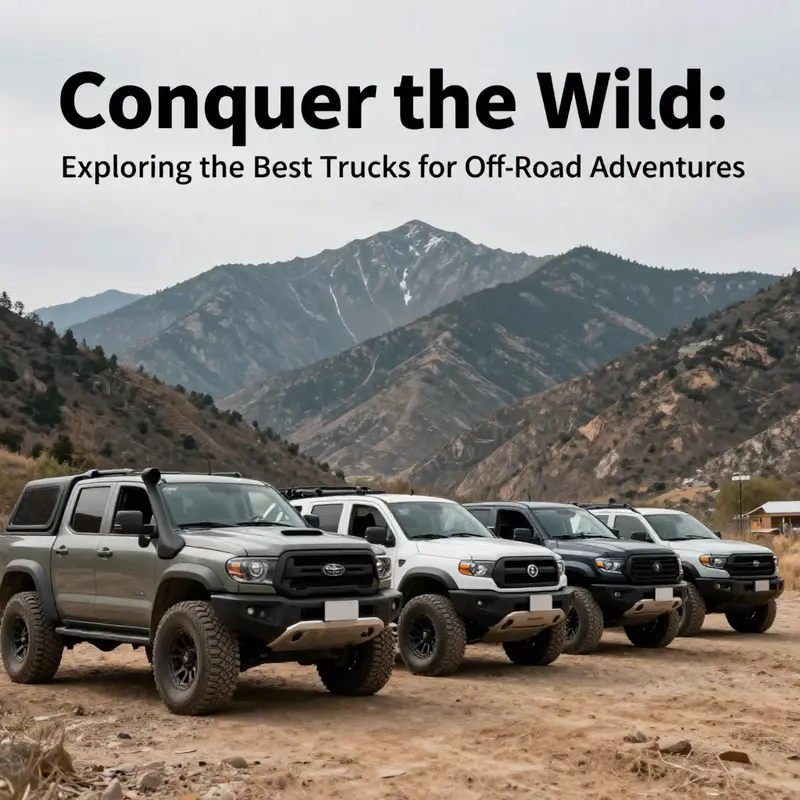
When it comes to off-roading, choosing the right truck is essential for embracing the wild. Off-road enthusiasts, adventurers, and rural landowners all need vehicles that can withstand rugged terrains while providing reliability and comfort. As we delve into the world of off-road trucks, we’ll explore two giants: the Toyota Land Cruiser 300, known for its durability and advanced technology, and the Jeep Wrangler Rubicon 392, celebrated for its unmatched capability. Alongside these in-depth assessments, we’ll conduct a comparative analysis to highlight their performance metrics and features. Finally, we’ll scrutinize current market trends to understand the shifts in consumer preferences and technological advancements in the off-road truck sector. Get ready to gear up for your next adventure as we uncover what truly defines the best truck for off-roading.
Trail-Worthy Benchmark: How a Legendary 4×4 Sets the Standard for Off-Roading Mastery
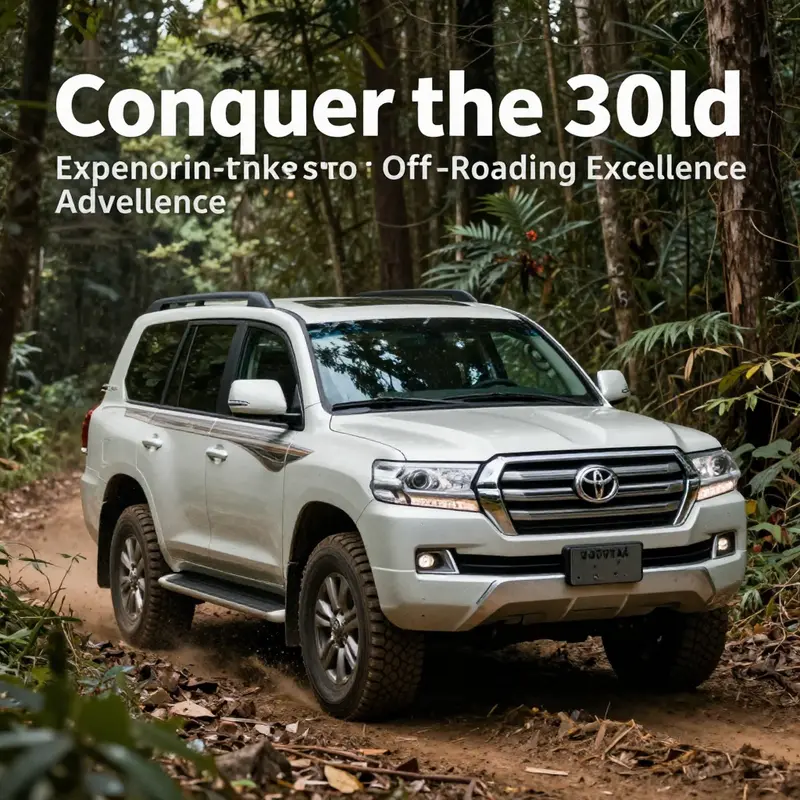
In the world of off-road trucks, there is a standard that emerges not from the loudest exhaust note or the flashiest badge, but from a disciplined balance of power, traction, and enduring reliability. The flagship in a long-trusted lineup of hard-working four-wheeldrive vehicles has continually raised that bar. Its rugged silhouette speaks of capability, yet its real strength lies in the way its mechanicals, electronics, and ergonomics work together to conquer the most unforgiving terrain without demanding constant sacrifice on daily roads. The story of this vehicle isn’t about a single triumph on a single trail; it is about a coherent philosophy of engineering that prioritizes controllable, confident progress, mile after mile, obstacle after obstacle. That philosophy shows up in the way the truck channels power to all four corners, how it manages grip when the surface suddenly turns treacherous, and how it keeps occupants comfortable when the going gets punishingly rough. It is this synthesis that makes the model a yardstick for off-road capability, a benchmark that other trucks measure themselves against, and a reference point for anyone who really intends to go places where roads end and the wild begins.
Power is the loudest language many buyers hear when they first consider a serious off-road truck. Yet power alone does not guarantee victory in the kind of terrain these machines are designed to tackle. The latest flagship 4×4 in the genre offers a choice between a robust, turbocharged V6 and a higher-output hybrid setup. The turbocharged V6 is tuned to deliver strong, linear torque across the rev range, which makes crawling over boulders, pulling through mud, and surmounting rocky ledges feel less like a test of grit and more like a calculated ascent. The hybrid option adds electric assist to the mix, boosting peak output and enabling a cleaner, more controlled delivery of torque at low speeds. In practice, the hybrid powertrain can feel like having an extra pair of capable legs when the trail becomes steep or uneven, and the blended energy can improve thermal and fuel efficiency over longer expeditions. These engines do not just deliver raw numbers; they translate those numbers into the confidence a driver needs when the line between success and frustration is measured in inches of ground clearance and fractions of a second of throttle response.
Yet power without traction is just a noise maker. The off-road advantage here begins with a full-time four-wheel-drive system paired with a low-range transfer case. This combination provides continuous, aggressive torque delivery to all wheels, which is critical for negotiating mud, sand, snow, and the jagged edges of rocky trails. The system is complemented by a locking center differential, and both front and rear differentials can be locked to keep wheels rotating together when grip is scarce. In practical terms, that means when a wheel starts to spin on a slick patch or a loose rock, the others can still grab hold of traction and pull the vehicle forward. For the driver, it translates into a reassuring sense that the machine will behave predictably under stress, rather than dithering or suddenly losing traction at a critical moment. This is where the vehicle earns its reputation for reliability, because the hardware is not just capable on glossy brochures; it is reliable when the weather turns foul, the trail narrows, and the vehicle needs to be counted on to get the team to camp or out of a bind.
The mechanical edge is further sharpened by a set of suspension and articulation strategies designed specifically for off-road work. A comprehensive approach to suspension tuning allows for meaningful wheel travel, which is essential when the path drops away or the surface becomes irregular. An electronically controlled suspension system actively adjusts damping and ride height to optimize ground clearance while maintaining onboard comfort. A standout feature works with the anti-roll structure to maximize wheel articulation without compromising on-body control. In the most challenging segments, the suspension system can dynamically disconnect the stabilizer bar to increase wheel travel by several millimeters, preserving grip on uneven rock faces and through undulating terrain. The net effect is a vehicle that negotiates obstacles with a sense of calm authority rather than abrupt, jarring movement. The difference is not just about making it over a boulder; it is about sustaining momentum and steering finesse when a trail insists on testing every corner of the truck’s limit.
The numbers behind the capability tell a similar story. The vehicle sits with a generous ground clearance that clears many common obstacles with ample room to spare. Its approach and departure angles are tuned to give it the ability to approach a steep obstacle and depart without the chassis meeting rock or soil first. The rider’s sense of confidence grows as the vehicle keeps a stable center of gravity on uneven surfaces, and the suspension geometry is designed to keep each wheel as in contact with the ground as possible. In conjunction with a robust chassis, this architecture translates into real-world advantage: it can approach a step in the trail with the confidence to choose a line that preserves chassis integrity and minimizes the risk of getting stuck. The result is a vehicle that can tackle long, remote expeditions with less need for re-engineering or mid-trip adjustments, a quality that matters whether the trip is a weekend loop or a month-long overland journey.
Inside, the balance between rugged capability and everyday practicality is equally evident. The interior presents a modern, highly legible information ecosystem that supports the driver’s need to monitor wheel slip, traction control modes, and differential locks without taking attention away from the trail. A large central display provides essential information and intuitive access to drive modes that adapt the vehicle’s behavior to the terrain, while the instrument cluster presents critical readouts in a way that can be interpreted at a glance. Yet Toyota’s design philosophy—which prioritizes tactile, physical controls for essential functions such as climate, drivetrain settings, and differential locks—remains clear. This matters in muddy, dusty, or gloved conditions when touchscreens can be difficult to operate. The cabin also leans toward long-haul comfort, with climate comfort, supportive seating, and thoughtful storage options that let a crew carry gear, food, and recovery equipment for days on the trail without feeling cramped or compromised.
The practical, long-term value of such a package is perhaps the most convincing argument for its place in a serious off-roader’s fleet. A heritage of reliability and durability has translated into a track record of continued, predictable performance across varied markets and climates. In a world where maintenance cycles and spare parts availability can make or break an adventure, the ability to count on a vehicle to perform without frequent intervention is worth more than any single feature. The vehicle’s resume speaks to a capacity to endure long distances, harsh climates, and demanding use without surrendering comfort or performance. It is not a flash-in-the-pan solution but a systematic, repeatable capability that rewards careful ownership, routine maintenance, and a thoughtful approach to off-road exploration. In other words, its appeal lies in dependable, repeatable competence rather than a momentary thrill.
For buyers who crave a more specialized, hardcore off-road experience, a second track of the market offers a vehicle designed with singular intent. This alternative presents a more purpose-built package, emphasizing rugged robustness and extreme capability for deep-rut trails, rock crawling, and desert flushes. It features locking differentials, skid plates, and a high-output V8-like power delivery, which together deliver astonishing low-speed torque and rock-solid resilience. This configuration excels where the terrain punishes more generalized designs and rewards the driver with direct, unambiguous feedback through the pedals and steering wheel. The trade-off, naturally, is a more uncompromising ride quality on paved roads, higher maintenance demands in some situations, and a narrower practical envelope for everyday use. It represents the mindset that some expeditions—driven by ambition and the lure of extreme terrain—require a different instrument, one tuned for precision and deliberate pace rather than broad-spectrum versatility.
Against that backdrop, the flagship model’s strongest argument remains its all-round versatility. It offers a blend of power, traction, and sophistication that suits a wide range of scenarios—from overland expeditions and worksite trips to weekend escapes and family travel. The hybrid option further sweetens the balance by reducing emissions and fuel consumption while enhancing low-speed torque delivery. The combination of a capable internal-combustion engine with electric assist translates into smoother throttle response and, in many conditions, a softer energy profile that can reduce the total cost of ownership over the vehicle’s lifetime. For many enthusiasts and professionals alike, this comes close to perfection: a vehicle that can be driven daily, endured on the road, and trusted to perform in the worst of conditions when the map ends and the trail begins.
To truly appreciate why this model has become a benchmark, it helps to consider the broader landscape of off-road trucks. There are rivals that focus intensely on one domain—designed for extreme rock work or for high-speed desert crossing. These options often exceed the capabilities of a generalist on certain terrains but require compromises elsewhere, such as street comfort, payload flexibility, or long-distance efficiency. The flagship 4×4 in question resists that simplification by offering a comprehensive package that remains usable, comfortable, and reliable across broad conditions. It is not merely a set of impressive numbers; it is a coordinated system in which engine, drivetrain, suspension, electronics, and interior design converge to deliver predictable, confidence-inspiring performance. The result is a vehicle that owners learn to trust not because it never gets stuck but because, when stuck, it is easy to recover and easy to press forward again once the obstacle is addressed.
Given the breadth of capabilities and the clarity of its design philosophy, this model remains the standard against which others are measured. It embodies a principle that resonates with enthusiasts who seek adventure without surrendering everyday practicality. It is possible to imagine a future where hybrid powertrains and smart suspension technologies become ever more integrated, further enhancing off-road efficiency and control. Yet the essential message endures: a well-rounded, thoroughly engineered machine that delivers traction, power, and reliability in a balanced package will outlast flashier, more specialized role players in most real-world scenarios. For those who want one vehicle that can hike into the backcountry, pull a trailer, carry a full crew, and still provide warm seats and usable creature comforts on the highway, the benchmark remains a compelling, durable choice that many will be happy to own for years to come.
External reference: https://www.caranddriver.com/4×4/trucks/a57153/best-off-road-trucks-2026
V8-Powered Trail Beast: The High-Output Off-Roader That Redefines Trail Dominance

V8-Powered Trail Beast: The High-Output Off-Roader That Redefines Trail Dominance
This chapter examines a top-tier, factory-built off-road vehicle that pairs a big-displacement V8 with serious trail hardware. It represents a deliberate shift away from light, economy-minded off-roaders toward a pure, visceral approach: raw torque, robust hardware, and unapologetic capability. Built for drivers who want the sound, the shove, and the confidence to tackle the roughest routes, this machine illustrates how brute power and focused engineering combine to expand what a truck can do off the beaten path.
At the heart is a naturally aspirated 6.4-liter V8 that produces 470 horsepower and 470 lb-ft of torque. Those figures are important, but the way the power is delivered matters more. Torque comes on early and broadly, giving easy control at low speeds for rock crawling and steep climbs. The engine is paired with an eight-speed automatic transmission tuned to keep the motor in its sweet spot. The result is an unusual duality: explosive acceleration on loose surfaces and precise, usable power for technical maneuvers. The vehicle can sprint from 0 to 60 mph in about 4.5 seconds, a figure almost unheard of for a dedicated off-roader. That acceleration is not an affectation; it translates into confident exits from ruts, instant throttle to pull through deep sand, and the ability to get out of trouble quickly when conditions turn.
Power alone does not make an off-road champion. This machine backs up the V8 with scaled-up hardware across the drivetrain and chassis. It features a full-time four-wheel-drive system with a true low-range gear ratio of 4:1. That low-range gear multiplies torque at the wheels and gives the driver fine control when inching over obstacles. Front and rear locking differentials provide traction when wheelspin would otherwise stall progress. Heavy-duty solid axles at both ends increase strength and durability for repeated hard use in rocky terrain. Protective skid plates and rugged underbody reinforcement shield the drivetrain and fuel tank where impacts are most likely.
Suspension design is another area where this vehicle departs from mild-duty setups. It uses purpose-built, high-performance shocks with robust damping and heat management, often in aluminum bodies for reduced unsprung weight. Combined with long suspension travel and carefully tuned spring rates, the system soaks impacts while keeping tires in contact with uneven ground. That contact is essential for traction and driver confidence. With factory-fit 35-inch all-terrain tires as a baseline, ground clearance reaches approximately 33.7 inches at its highest point. Combined with aggressive approach, breakover, and departure angles, the package allows negotiation of boulders, ledges, and deep washouts with minimal body contact.
The chassis and suspension are set up to handle both low-speed technical trails and faster off-road runs. The large tires and beefy axles resist punctures and twisting loads. Brake cooling and oversized rotors help maintain stopping power after repeated descents or long sections of heavy braking. The vehicle’s thermal management systems are likewise upgraded to cope with high loads; transmission and differential coolers help preserve component life during extended off-road use and towing.
Electronics and driver aids are calibrated to support rather than replace the driver’s decisions. The system includes selectable drive modes that alter throttle mapping, traction control intervention, and stability systems. In rock mode, traction control thresholds increase and torque vectoring reduces wheelspin to maintain momentum without sudden cuts in power. For high-speed sand or dirt runs, a different mode allows more wheelspin and softer damping responses for a plush, controlled ride. The presence of a full complement of sensors—front and rear—enables features like hill-descent control and electronic sway mitigation, which are invaluable on exposed descents.
Sound and sensory feedback are part of the package. A four-exit active exhaust is tuned to give a muscular growl at higher RPMs while remaining reasonably unobtrusive around town. For many buyers, that auditory character is part of the appeal. It signals intent and adds to the driving experience in ways digital extracts cannot replicate.
Not surprisingly, there are trade-offs. Fuel economy is low, averaging roughly 13 mpg city and 16 mpg highway in real-world testing. That is expected for a large, naturally aspirated V8 in a heavy, aerodynamically blunt body. Weight is high, which can affect maneuverability in narrow trails and increase wear on consumables like brakes and tires. Pricing reflects the specialized nature: base configurations start near the six-figure mark and options quickly push the total higher. For buyers focused on extremes of capability, these costs are often acceptable. For those seeking budget-friendly versatility, a smaller-engine or lighter-weight contender may make more sense.
Maintenance considerations are practical and real. Heavy-duty axles, oversized tires, and upgraded cooling systems tend to increase service intervals for certain items, and repairs after serious off-road abuse will cost more than routine street usage. However, the design emphasizes serviceability: common wear parts are accessible, and the underbody protection can be removed for servicing shock mounts and differentials. For owners who want to learn more about maintaining heavy-duty powertrains and rugged hardware, automotive training resources can be invaluable. A recommended primer is a detailed guide on diesel and heavy-duty mechanics, which covers fundamentals that apply across powertrains and chassis types. For those interested in practical maintenance skills, see Mastering diesel mechanics.
Customization potential is another appeal. The platform is friendly to aftermarket upgrades. Owners can increase tire size, fit beadlock-style wheels, install higher-capacity recovery points, or add modular armor. Performance tuners offer revisions to the engine mapping and exhaust that can shave tenths off acceleration and change throttle response for more off-pavement finesse. Suspension shops supply longer-travel kits for drivers who prioritize high-speed desert performance, while axle builders can increase gross capabilities for larger tires and heavier loads.
Who benefits most from this vehicle? Serious recreational enthusiasts who value raw power and straightforward mechanical capability will find it rewarding. It suits drivers who frequently tackle steep technical trails, drive in loose sand dunes, or require strong towing and recovery margins. The sound and performance envelope also appeal to owners who want a weekend warrior that doubles as a capable everyday vehicle. Conversely, those who desire the lightest, most fuel-efficient, or most affordable off-road solution should consider other options.
On modern trails, electronics often obscure the true nature of capability. This vehicle strikes a balance by using smart systems to support driver input rather than replace it. Locking differentials and a low-range gear let the driver decide when to force an axle to turn. Adjustable drive profiles let the driver tailor the vehicle to conditions without losing mechanical simplicity. In practice, that means more confidence and less intervention, with the driver still firmly in control.
Off-road safety is also built in. Structural reinforcements, integrated roll protection, and improved cooling reduce the risk of mechanical failures in remote areas. Recovery points are beefy and well-placed, ensuring winches and straps can be attached without improvisation. Visibility aids and camera systems help in tight lines or when positioning the vehicle under precarious conditions. For long expeditions, the platform’s towing capacity and payload speak to its toolbox utility; it can haul trailers, campers, and essential gear without compromising trail manners.
Used examples retain value well, reflecting a strong enthusiast demand and durable construction. Depreciation is present, but the right owner can find a slightly used model that offers much of the capability at a lower purchase price. For those considering ownership, budget for tires, brakes, and routine service. Plan for added fuel costs and possibly upgraded cooling or filtration if operating in extreme heat, dust, or sustained high-speed off-road environments.
In the broader field of off-road trucks and SUVs, this V8-powered machine occupies a unique niche. It is not merely a towing vehicle, nor purely a technical crawler; it blends straight-line performance with serious off-road hardware. For drivers who want their vehicle to sing, to claw, and to shrug off harsh terrain while delivering near-supercar acceleration, this package delivers. It is a reminder that off-road capability can coexist with visceral power when engineering focuses on durability and control.
Finally, consider how it fits within a fleet or collection. For dedicated adventure operators or enthusiasts who run guided trips, the vehicle’s capability and reliability make it a strong candidate. Its specialized nature means it is best deployed where its strengths match the terrain and mission. For everyday use, owners should accept the compromises: higher running costs, sizeable weight, and the need for responsible trail stewardship. When matched to purpose, this high-output off-roader is a compelling choice for those who measure capability in horsepower and confidence.
External source: https://www.jeep.com/vehicles/wrangler/rubicon-392.html
How Off‑Road Performance Is Measured—and What Those Metrics Mean for Choosing the Best Truck
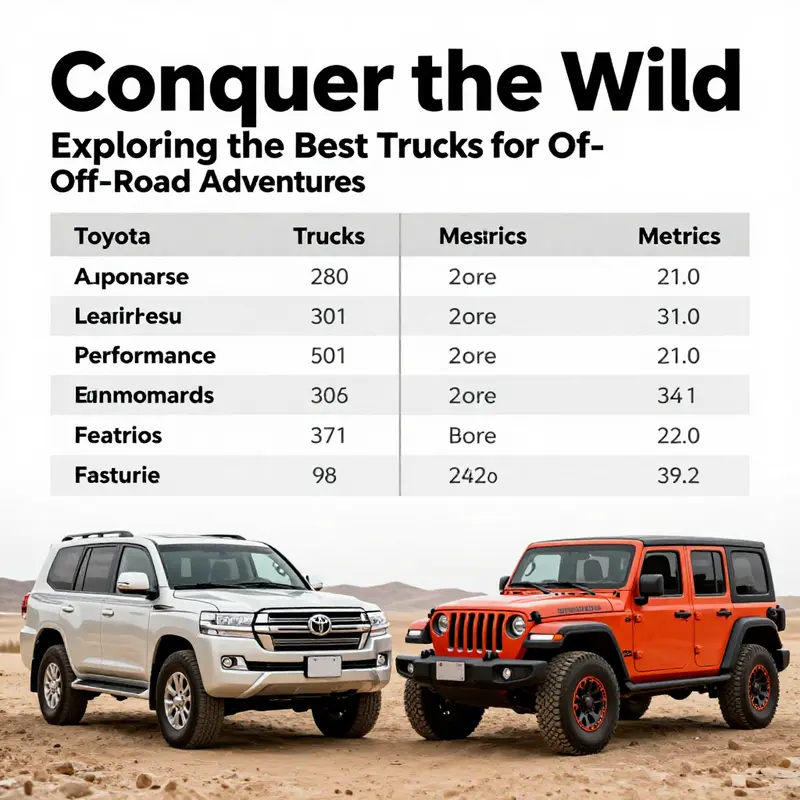
Understanding the performance picture
Choosing the best truck for off roading starts with metrics, not marketing. Tests and spec sheets hide the real story unless you know what to read. Off‑road capability flows from a handful of measurable factors: the vehicle’s ability to overcome motion resistance, the drawbar pull it can develop, how it negotiates steep grades, and its low‑speed control during obstacle negotiation. Each of these influences real-world outcomes like whether a truck will climb a loose slope, crawl over boulders, or haul gear through deep sand.
Motion resistance is the first concept to master. In rough terrain, motion resistance includes obstacle resistance, internal running‑gear losses, and terrain interaction losses. Obstacle resistance is the force needed to lift or push the vehicle over or through physical barriers such as rocks, ditches, or logs. Internal losses come from drivetrain friction, bearings, and inefficient gearsets. Terrain interaction losses include slipping, rutting, and plowing into soft ground. Together, these determine the thrust required from the running gear—wheels or tracks—to keep moving.
The thrust available at the wheels is limited by two primary factors: the powertrain’s torque delivery and the traction available at the tire‑ground interface. If the engine and transmission can supply ample torque, but tires lose grip, the vehicle spends energy spinning rather than moving. Conversely, a perfect traction surface with weak powertrain torque still leaves you stuck on steep grades or unable to tow loads.
Drawbar pull is a simple, practical metric. It describes the force a vehicle can exert at the hitch. For off‑road trucks, high drawbar pull indicates strong low‑speed torque and useful gear ratios. It matters when pulling another vehicle from a rut or dragging heavy equipment. But drawbar pull alone doesn’t tell the full story; it must be considered alongside traction control systems and gearing. A truck with locking differentials and a low crawl ratio can translate a modest engine torque into a very high wheel torque, boosting drawbar pull at low speeds.
Grade negotiation is a related but distinct performance area. Climbing steep, loose slopes demands consistent traction, adequate approach and departure angles, and the right gearing to keep the engine in an effective power band. Effective hill‑climb performance combines mechanical advantage from low gearing, torque availability at low RPM, and traction systems that prevent wheel slip. Vehicles intended for serious incline work typically favor lower gearing and systems that can vary torque distribution quickly across axles.
Low‑speed acceleration and controlled motion are essential for rock crawling and technical trails. In these settings, brute horsepower is less important than usable torque, fine throttle control, and suspension articulation. Crawl control systems and brake‑based traction aids excel here by modulating wheel speed without driver micromanagement. Protective features such as skid plates and rock rails protect vulnerable components during aggressive wheel travel.
Electric powertrains change some of the tradeoffs. Electric motors deliver full torque from zero RPM, which dramatically improves initial pull and hill climbing. That instant torque makes low‑speed control and traction management easier, especially when paired with electronic torque vectoring. However, electric trucks face battery weight penalties and charging logistics. Large packs increase mass and may change suspension tuning and ground pressure, which can alter traction behavior in soft surfaces. For industrial off‑road use, electric drivetrains show promise where charging infrastructure exists and duty cycles suit predictable routes.
Diesel and gasoline powertrains remain advantageous for long‑range adventures because of refueling speed and range. They also generally have lighter total vehicle mass compared to heavy battery packs, which can benefit flotation on sand or mud. Diesel engines often deliver strong low‑end torque, which is valuable in slow, technical maneuvers. However, modern turbocharged gasoline engines can match torque output and do so with lower weight and reduced NVH, making them attractive where emissions and serviceability are priorities.
Traction technology and underbody defense are non‑negotiable for serious off‑road work. Locking differentials, limited‑slip units, and torque vectoring all improve usable traction by ensuring that available torque is sent to the wheels that can use it. Electronic traction systems add finesse but depend on reliable sensors and software calibration. Underbody protection—from skid plates under the oil pan to armored control arms—prevents mission‑ending damage when galloping over rocks.
Suspension design determines how much of the vehicle’s mass stays on the tires and how well wheels follow uneven terrain. Long‑travel suspensions help maintain contact over bumpy terrain, but they must be balanced with articulation needs for rock crawling and stiffness for towing or carrying loads. Adjustable damping, electronic ride control, and air suspensions add versatility. They let the driver switch between a comfortable road setup and a compliant, high‑articulation off‑road mode. But complexity brings potential failure points and service costs.
Ground clearance and geometry remain simple, high‑value metrics. Approach, departure, and breakover angles indicate whether a truck can avoid hitting nose and tail sections on steep obstacles. True clearance at the axle center is more useful than listed body clearance. Larger tires increase clearance but can reduce effective gearing and accelerate drivetrain wear if not accounted for in gear ratios.
Tires are the primary point of contact with the terrain and deserve focused attention. Tire compound, sidewall construction, tread pattern, and bead design determine traction, puncture resistance, and ride quality. Beadlock wheels or reinforced bead retention systems keep tires on the rim at low pressures, improving footprint and grip. Rolling resistance from tires influences fuel or energy consumption, which affects range on both combustion and electric trucks.
Payload and towing capacity matter beyond carrying gear. A truck that handles extreme trail obstacles but cannot carry essential recovery equipment or a roof tent may not be the best fit for longer expeditions. Likewise, towing capacity informs how much trailer weight a vehicle can manage in rough conditions. Robust frame construction, strong axles, and appropriate cooling are required to maintain performance under load.
Long‑term reliability and maintainability are often as decisive as raw capability. Simplicity can be an advantage: mechanical lockers, straightforward transfer cases, and proven engine architectures reduce the likelihood of failures far from service centers. Serviceability includes the availability of parts and the relative ease of field repairs. For many off‑roaders, the ability to fix something with basic tools is more valuable than an advanced feature set.
Matching capability to mission avoids common mistakes. For technical rock crawling, prioritize low crawl ratios, high articulation, locking differentials, and durable underbody protection. For desert or high‑speed sand running, favor suspension travel, cooling capacity, and aerodynamic considerations to manage stability. Overlanding benefits from a balance: comfortable highway manners, sufficient payload and storage, and off‑pavement capability for remote access.
Electric trucks push the industry to rethink these priorities. When duty cycles rely on predictable daily routes, the benefits of instant torque, reduced operating cost, and lower vibration outweigh the cons. For heavy industrial applications, electric off‑road platforms are already competing with traditional trucks by prioritizing durability and simplicity over luxury features. Where charging infrastructure is being deployed, operators gain from lower maintenance and reduced local emissions. Learn more about how electrification is reshaping heavy‑duty off‑road equipment in discussions about the electric construction equipment revolution.
Spec reading tips: focus on gear ratios, torque at the crank and torque at the wheels, low‑range ratio, and final drive numbers. Compare approach, departure, and breakover angles. Check unsprung weight and axle ratings. Look for tested drawbar pull figures or independent test results. Finally, read ownership and repair reports—real‑world durability often trumps paper horsepower.
Future improvements will emphasize smarter traction systems, improved energy management for electrified models, and advanced materials that strengthen structure while reducing weight. Adaptive control software will link suspension, traction, and powertrain into coherent systems that anticipate terrain and adjust proactively. For buyers, this means more capability delivered with less driver strain, but it also raises questions about repair complexity and long‑term software support.
Ultimately, the best truck for off roading is the one whose measured capabilities match your terrain, load, and logistics. Evaluate motion resistance, drawbar pull, grade performance, and low‑speed control. Prioritize traction systems, suspension design, protection, and serviceability. Choose a powertrain that fits your range and infrastructure needs. With this metrics‑driven approach, you move beyond marketing claims to select a truck that performs reliably where it counts.
For a deeper dive into the engineering principles that underpin these performance metrics, see this technical overview on off‑road vehicle performance: https://www.sciencedirect.com/topics/engineering/off-road-vehicle
Rugged by Design, Smart by Tech: Market Trends Redefining the Best Off-Road Trucks for 2026
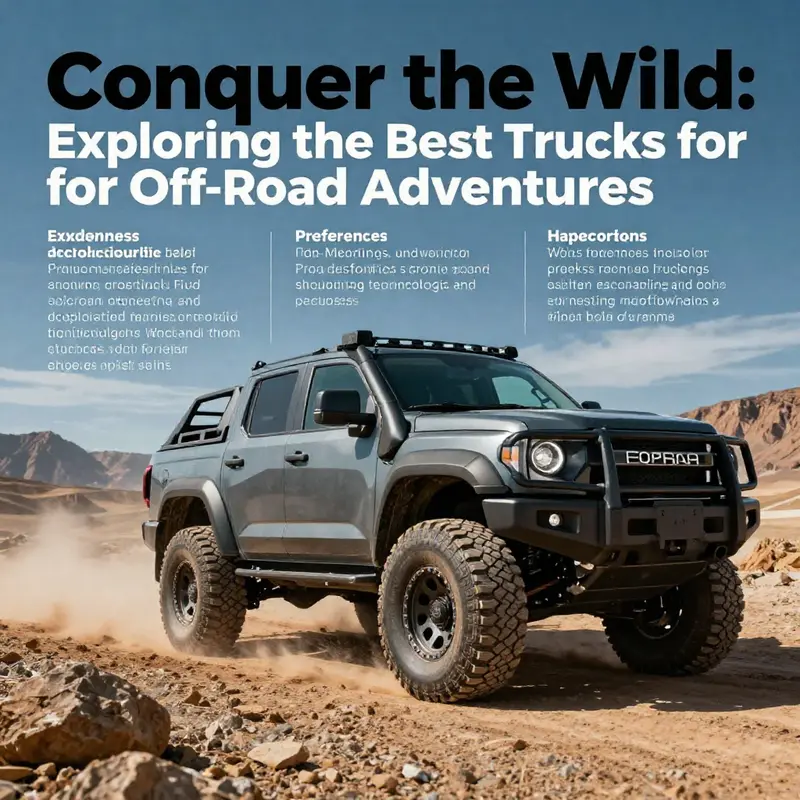
The market for off-road trucks in 2026 reads as much like a technology brief as a terrain guide. Buyers arrive at showrooms not only with tales of mud and rock but with expectations shaped by data streams, app ecosystems, and a culture that prizes efficiency as much as endurance. The idea of the “best off-road truck” has evolved from a single measure of capability to a holistic equation. It balances legendary toughness with modern convenience, long-range reliability with digital integration, and the ability to conquer remote trails with the comfort and safety features that today’s connected lifestyle requires. In many ways, the current landscape mirrors the broader shift in how people value outdoors-oriented vehicles: they want trucks that can handle the roughest conditions while still serving as dependable daily drivers, with the option to customize and upgrade as needs change over time. That shift is not just about horsepower or ground clearance; it is about the entire bundle—the drivetrain architecture, the way traction systems learn and adapt, the feedback from onboard sensors, and the ways a cabin can feel like a refuge even when the terrain outside is unpredictable.
At the heart of this transformation is a growing appetite for electric off-road capability. Electric propulsion has already redefined efficiency in urban and highway driving, but its appeal in rugged environments is increasingly clear. The torque curve delivered by electric motors is particularly valuable when creeping over boulders, negotiating deep ruts, or crawling through sandy sections where momentum can be a liability as easily as a benefit. Battery technology has progressed to the point where ranges are no longer a showroom curiosity but a practical concern for expedition planning. The most forward-looking buyers are weighing how far they can travel between charges, how quickly they can replenish energy at a campsite or a remote base, and how charging networks will evolve to support longer, more ambitious journeys. This is not merely about replacing a gasoline tank with a battery pack; it is about rethinking weight distribution, cooling requirements, and the delicate balance between payload and propulsion as the vehicle shoulders heavy gear for days on end. The conversation around e-off-road is not solely about performance metrics in controlled testing; it is about real-world confidence, the ease of access to power, and the ability to explore without sacrificing the ability to return to civilization when the sun starts to dip below the horizon.
That shift toward electrified capability sits alongside sustained demand for rugged reliability and smarter ergonomics. Buyers want connectivity that can survive off the grid, not just on it. They expect dashboards that anticipate navigators’ needs, displays that render trail data in an intuitive, actionable format, and interfaces that work with gloves. The inclusion of robust infotainment and enterprise-grade connectivity features is not a luxury; it is a safety and efficiency tool. Modern off-road trucks now routinely offer integrated trail maps, terrain data, and real-time vehicle telemetry that can assist in planning recovery operations, optimizing fuel or energy use on the fly, and coordinating with support teams from a remote location. The emphasis on ADAS—adaptive cruise for rough surfaces, lane-keeping cues that stay reliable on rutted forest roads, and automatic braking that activates more cautiously on loose rock—speaks to a broader objective: reduce risk without dulling the sense of adventure. This is a plateau of engineering where safety and capability merge rather than compete, making the best truck for off-roading in 2026 a partner that can reduce the unpredictability of nature while expanding the range of what the driver can attempt.
The conversation about the best off-road truck also bears the imprint of customization. The market is increasingly saturated with premium aftermarket upgrades that allow buyers to tailor a vehicle to their unique expedition style. Heavy-duty suspensions that improve wheel control without sacrificing ride comfort, reinforced chassis rails that can resist impacts on rocky trails, and high-capacity winches with improved thermal management underscore a cultural shift toward expedition-grade specialization. This is not a simple add-on economy; it is a modular ecosystem that invites owners to tune the vehicle for specific soils, climates, and objectives. A key implication of this trend is that the “best” truck becomes less of a one-size-fits-all conclusion and more of a moving target that evolves through ownership. People are choosing configurations that maximize traction in mud or sand, optimize towing for a remote campsite, or favor a lighter setup for long-distance overland travel. The challenge, then, for manufacturers and dealers is to provide a platform that remains robust across a range of configurations, while also making the upgrade path clear, affordable, and reliable. The result is a market where durability and adaptability coexist with high-tech interior features and sophisticated powertrains, allowing customers to switch seamlessly between rugged expeditions and daily commutes without compromise.
Another foundational trend shaping the landscape is the increasing integration of advanced traction control systems and adaptive suspension technologies. Traction management has moved beyond belt-and-brace stability into a nuanced language of terrain understanding. Modern systems monitor wheel slip, chassis pitch, and even suspension articulation to decide how to distribute torque and adjust damping in real time. The outcome is a vehicle that can maintain forward momentum through slippery rock slabs or soft, shifting sand while preserving steering feel and brake response. Adaptive suspensions, meanwhile, deliver the kind of ride quality that makes a rough trail feel manageable rather than punishing. The computer-aided finesse of these systems often hides in plain sight, presenting the driver with a calm, confident impression even as the wheels pursue a path that would have unraveled a few generations ago. What this means for the market is clear: the best off-road truck is increasingly defined by its subtle, continuous optimization—how well it negotiates the line between control and exposure, how quietly it manages heat, and how reliably it returns to a smooth daily drive after a weekend in the backcountry.
In this evolving ecosystem, the classic benchmark for off-road capability remains a durable, capable platform that can withstand years of rugged use with minimal drama. It is the combination of steadfast mechanical reliability and the new-age toolkit of electronics, sensors, and software that elevates the modern pickup beyond a mere workhorse. Consumers are not throwing away the virtues of proven engineering; they are augmenting those virtues with data-driven technology and practical energy strategies. The best truck for off-roading is thus not simply the one with the most aggressive approach angle or the largest tires; it is the vehicle that can deliver enduring value while integrating new capabilities in a way that feels natural and dependable. This is why the conversation often circles back to the idea of longevity, ease of maintenance, and a broad ecosystem of support. A vehicle that can traverse a desert pass yet be cared for with predictable service intervals and widely available parts will remain relevant longer, even as new powertrains and digital features become the norm.
From a consumer’s perspective, the evolving market also means that the best choice depends on how a person plans to use the truck. For the weekend explorer who tracks trail maps and seeks a sense of security in variable weather, a model with robust protection, predictable performance, and a well-tuned suspension may outperform a vehicle that emphasizes unrelenting maximum power. For the professional who needs to operate in remote areas, the priority shifts toward reliability, ease of maintenance, and the availability of service networks that can keep a vehicle on the trail rather than in a shop. Those who chase extreme challenges often value a purpose-built design that prioritizes locking differentials, heavy-duty protection, and high-output propulsion for line-of-sight navigation over obstacles—yet even this path benefits from a modern electronics core that helps manage energy, towing, and recovery operations. In short, 2026’s best-off-road conversation is less about choosing a single product and more about selecting a platform that aligns with the user’s values, environment, and maintenance philosophy, then backing that choice with a network of support, upgrade options, and predictable long-term value.
Within this framework, the broader research landscape provides complementary guidance for readers seeking depth. A comprehensive industry review situates the market at the intersection of durability and innovation, emphasizing how this balance is driving both product design and consumer expectations. The report highlights the shift toward electrified off-road vehicles as a major growth vector and notes how advancements in battery technology, charging infrastructure, and thermal management are enabling more ambitious trail plans without sacrificing daily practicality. It also points to how modern buyers increasingly expect a connected experience that remains robust under rough conditions, a trend that resonates with the growing demand for durable digital features and guided, data-rich off-road experiences. For readers who want to explore these market dynamics in greater depth, the market analysis provides a clear overview of the growth potential, competitive landscape, and strategic implications for equipment manufacturers and end users alike. In parallel, industry voices continue to stress the importance of reliability and long-term value, underscoring why a platform’s history of dependable service matters as much as its latest gadgetry.
For readers who appreciate a practical, maintenance-minded perspective alongside high-level market trends, there is a useful path to explore. A dedicated resource on diesel mechanics offers a structured approach to keeping rugged drivetrains performing under harsh conditions. It presents step-by-step guidance that can help owners maximize uptime, diagnose issues early, and reduce downtime in the field. This kind of knowledge is essential when a truck is a lifeline on remote trails or work assignments. To access this practical guide, you can visit the resource linked here: Mastering diesel mechanics. This link serves as a bridge between the broader trends discussed here and the hands-on discipline that keeps any off-road truck ready for action. The ability to couple sophisticated engineering with a solid, repeatable maintenance routine is what ultimately sustains reliability in even the most challenging environments.
As the market progresses, another pervasive reality emerges: buyers are seeking vehicles that are not only capable but also customizable to their particular off-road philosophy. The aftermarket ecosystem continues to expand, offering options that address specific terrains, climates, and expedition styles. Whether a trail runs through tundra, desert, or high-altitude scrub, there are upgrades tailored to optimize traction, protection, and payload. This customization culture fosters a sense of ownership and personal expression while delivering tangible benefits in performance and resilience. Yet customization is not merely about adding shiny upgrades; it is about selecting components that harmonize with the vehicle’s core architecture. The most successful configurations maintain a balance between added capability and the fundamental strengths of the platform—sturdy frame, proven drive system, and reliable cooling and power management. When done thoughtfully, customization elevates the ownership experience, turning a capable truck into a specialized tool designed for a precise set of adventures.
In tying these threads together, the current chapter suggests that the best off-road truck in 2026 is less about chasing the highest peak of horsepower and more about navigating the entire landscape of capability, safety, and longevity with a deft integration of technology and tradition. The most compelling machines are those that can pair rugged, dependable mechanics with a forward-looking digital core. They can traverse the world’s roughest stretches while still functioning as dependable daily transport and as adaptable canvases for the owner’s evolving off-road identity. The trajectory is clear: the market will continue rewarding platforms that can learn from the trail, adapt to changing conditions, and support their owners through long-term ownership. This is a landscape where green technology and steel grit work in concert, where connectivity is a lifeline rather than a distraction, and where the best truck for off-roading emerges not from a singular formula but from a well-calibrated blend of heritage, innovation, and user-centric design.
For readers who want a concise takeaway, think of the 2026 market as a map of possibilities rather than a single destination. It highlights a spectrum of priorities—range and torque, real-time traction management, resilient suspensions, and smart cabins—that together determine what is “best” for a given journey. The frontier moves with battery breakthroughs, software updates, and new approaches to chassis and suspension control. It moves with consumer expectations for safety and convenience, even on the most challenging paths. It moves with an expanding ecosystem of parts and services that make rugged capability easier to own and maintain over the long haul. And it moves with the quiet confidence that a well-supported, customizable platform can offer, enabling outdoor enthusiasts to push farther with less stress, knowing that the vehicle can handle both the trail and the commute.
External market context can be found in detailed industry analyses that synthesize these developments, giving readers a grounded sense of where the off-road truck segment is headed and how quickly new technologies might become mainstream. For an external reference that captures the broad market trajectory, consult this analysis: https://www.marketsandmarkets.com/Market-Reports/off-road-vehicles-market-246358174.html
Final thoughts
In the ever-evolving landscape of off-roading, both the Toyota Land Cruiser 300 and Jeep Wrangler Rubicon 392 present thrilling possibilities for adventurers. While the Land Cruiser reigns undefeated in terms of durability and dependability, the Wrangler dazzles with its agility and raw off-road capability. Ultimately, the choice between these titans lies in your unique needs and style of adventure. As technology continues to advance, one thing remains clear: the best truck for off-roading will always be synonymous with your next great escape into the wild. Choose wisely and equip yourself for a journey that promises not just satisfaction but the thrill of unparalleled exploration.