

For off-road enthusiasts and adventurers, the right tires for a lifted truck are paramount to ensure confidence and performance on rugged terrains. Selecting tires isn’t merely a matter of picking a brand or size; it’s a complex process that takes into consideration your vehicle’s capabilities, the environments you navigate, and the specific challenges you face off the beaten path. This guide dives into the essentials, starting with understanding the varied terrains you might tackle, followed by choosing the right type of tire based on your intended use case. From there, we’ll cover crucial matters such as matching tire sizes to your lift kit, focusing on durability for those rugged trails, and finally, showcasing recommended brands and models that have proven their mettle in the wild. With these insights, you’ll be equipped to make an informed decision that enhances your off-road experience and keeps your adventures safe and exhilarating.
Sizing Up the Trail: How to Choose Tires for a Lifted Truck Off-Road
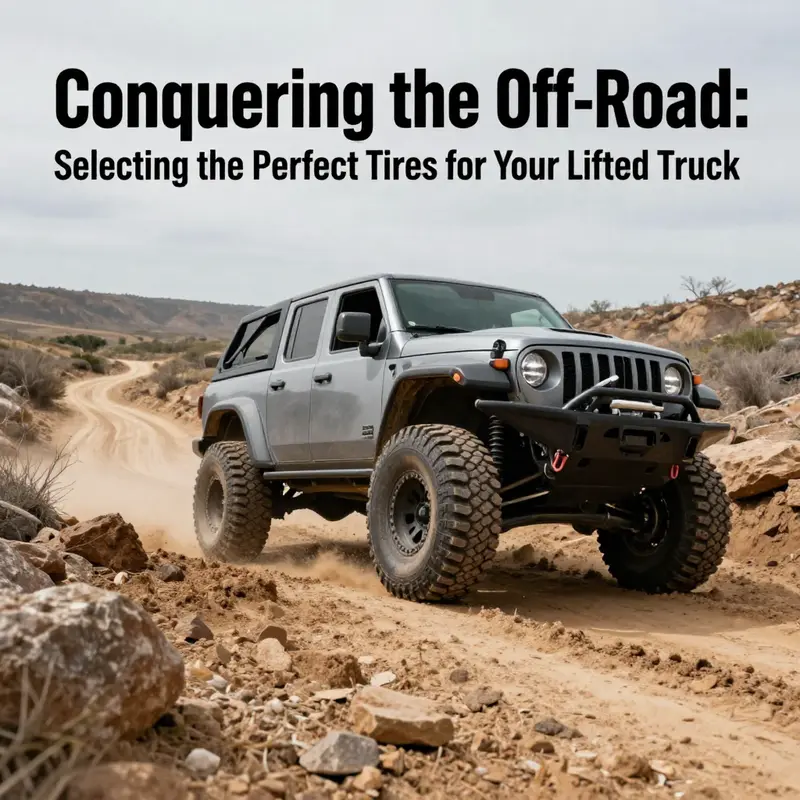
When a pickup wears a taller stance, the tires become more than a simple rolling surface. They shape the truck’s capability, its response to rocks and ruts, and even the way you read the road ahead. In lifted setups, tire choice is not just about grip; it is about balance—between ground clearance, steering feel, and the risk of rubbing on suspension components or fenders. The search begins with understanding your dominant terrain and how you intend to use the vehicle. If you spend most weekends in mud or sand, a mud-terrain tire with aggressive, widely spaced tread blocks can shed material and maintain traction when the going gets soft. For mixed-use machines that see both rough trails and highway miles, an all-terrain tire offers the most sensible compromise after you factor in noise, ride quality, and fuel economy. And for those who chase high-speed desert runs or steep, loose rock, purpose-built high-performance AT or MT tires can deliver the needed grip while still offering some level of everyday practicality. The practical takeaway is that a lifted truck benefits from a tire choice that acknowledges the lift, the typical load, and the expected surface. The decision is not a single moment of flair but a careful assessment that threads together use case, durability, and street manners.
Tire size and the dynamic of a lifted suspension are inseparable from how your truck behaves on the road and off it. A common approach is to increase diameter to gain ground clearance, but size is a double-edged sword. Increasing tire diameter by 2–3 inches is common, yet it is essential to respect limits. Going beyond roughly a 3% increase from stock can negatively affect fuel efficiency, braking distance, and speedometer accuracy, while changing suspension dynamics can alter steering geometry and ride quality. If you aim for a larger diameter, plan around gear ratios, braking budgets, and how accurate your speed readings will remain at highway speeds. The goal is to achieve more ground clearance without sacrificing control or safety. In practice, many lifted trucks settle on one of a few widely used options—sizes that provide enough room for articulation while staying within the envelope of reasonable steering effort and tire wear. When you install new rubber, you should take a measured approach and prepare for minor recalibrations in the drivetrain or speedometer if needed.
Once you map out the terrain and size considerations, the tire type begins to tell the rest of the story. Mud-terrain tires are built for aggressive off-road use in wet clay, deep mud, or steep, loose rock. They feature deep, blocky tread patterns and wide voids that promote self-cleaning, reducing the chance of mud and debris packing into the tread. The trade-off is a ride that is louder and less efficient on pavement, with higher rolling resistance. All-terrain tires, by contrast, are designed to strike a more even balance. They offer robust on-road manners—lower noise and better fuel economy—while still delivering respectable traction on dirt, gravel, and light mud. For desert or dune environments, you’ll look for tires designed to perform at higher speeds with a tougher construction, albeit still within the AT or MT families. The practical message is simple: pick AT for daily driving plus regular trail use; reserve MT for heavy or specialized off-road conditions. This approach keeps your lifted truck versatile without becoming an inconsistency between highway comfort and trail performance.
Durability and sidewall protection sit high on the priority list for off-road tires. The terrains you encounter—sharp rocks, thorns, and stubble—mean you want reinforced sidewalls, multi-ply constructions, and tread compounds that resist cuts and heat buildup. A high-strength sidewall can absorb impacts that would otherwise crack a more fragile tire, while a durable tread compound improves wear life under tough conditions. Pay close attention to load index and speed rating; your lifted truck, especially when laden with gear for overland trips, demands tires that can handle the payload safely at the speeds you intend to sustain. A tire with an appropriate load rating helps prevent overheating and failure under heavy loads. The message here is not to chase the maximum footprint or the softest compound, but to balance rugged construction with predictable handling on pavement and reliability off-road.
The construction story carries into the materials themselves. Modern off-road tires benefit from advanced compounds and design features that reduce heat buildup, improve grip on slippery surfaces, and resist chipping on rocky trails. Reinforced sidewalls, deeper tread blocks, and fabrics designed to resist punctures contribute to a tire that can survive the unexpected hit from a rock ledge or a snagged branch. The emphasis is on durability without excessive weight or compromise of on-road stability. The tires you choose should also align with your vehicle’s model and its suspension geometry. Lifted trucks can experience altered steering geometry and altered steering effort, so confirm that the selected tire size will not introduce unintended interference or steering pull. After installation, a four-wheel alignment is prudent to correct any changes in toe, camber, or caster caused by the new size and to ensure even wear across all four tires. This step is more than a maintenance formality; it is a crucial safeguard for predictable handling and tire longevity.
An often overlooked but essential topic is tire pressure management. Off-road performance hinges on adjusting pressure to suit terrain. On pavement, you typically maintain factory pressures to preserve stability and braking response. In mud or soft sand, you reduce pressure to increase the contact patch and flotation. On rocky surfaces, you drop pressure further to cushion impacts and enhance grip on irregularities. The practical approach is to carry a portable inflator and have a plan for on-the-fly adjustments. A tire pressure management system can provide quick, safe changes without the need to leave the vehicle, which is especially valuable when traversing remote or rugged routes. The overarching principle is that pressure control, more than any single tire choice, determines how your lift translates into traction, stability, and confidence on the trail.
To knit these considerations into a coherent buying strategy, it helps to translate them into real-world questions. What terrain dominates your driving, and how often will you cross rough rock, soft soil, or sandy flats? Will you carry gear that pushes payload limits, and how critical is speedometer accuracy for your trips? How much value do you place on on-road comfort versus off-road dominance? These questions guide a purchase that does not merely chase performance in one area but preserves predictable handling across the spectrum of trail and highway. For further reading on maintenance and systems integration during upgrades, see Mastering Diesel Mechanics: Your Step-by-Step Path to Success. This resource can provide deeper insight into how changed components interact with one another during a lift and tire upgrade.
In the end, selecting tires for a lifted truck heading off-road is a connected puzzle of size, type, construction, and fitment. It requires considering how the vehicle will be used, where it will travel, and how to preserve safety and reliability across dynamic conditions. Factor in the lift’s impact on suspension geometry, the road wheels’ backspacing, and the alignment you’ll need after installation. Treat tire choice as an investment in control: better grip on the trail, steadier brakes on the descent, and steadier steering through rock gardens and tight switchbacks. With a careful approach, your lifted truck can meet the trail with confidence rather than compromise. For those who want a broader, up-to-date view on off-road tire testing and performance, a respected industry overview provides additional context to match the tire you choose with your ambitions on the trail.
External resource: https://www.motortrend.com/cars/best-off-road-tires-for-lifted-trucks-2026/
Mastering Tire Type for Lifted Trucks: A Cohesive Guide to Off-Road Use-Case Alignment
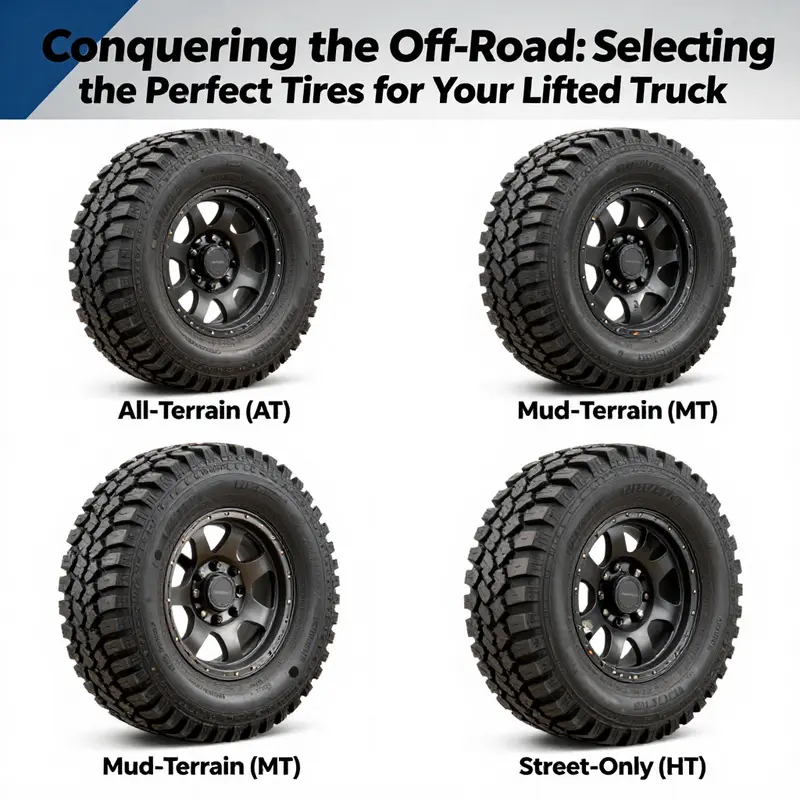
When a pickup or SUV sits higher than stock, the tires become far more than round patches of rubber. They are the primary link between chassis and terrain, shaping traction, flotation, resistance to damage, and even the safety margins that keep a heavy vehicle on its wheels through knotty obstacles. In lifted setups, tire type is not a marginal choice; it is foundational. The choice should begin with a clear picture of the terrain most often faced and the conditions you expect to encounter on the trail. Mud, soft sand, gravel, sharp rocks, and desert dunes each push a different tire philosophy. For muddy, clay-rich ground and soft sand, a tire with aggressive, widely spaced tread blocks tends to self-clean and shed material efficiently, preventing clogging and maintaining grip as the vehicle pushes forward. On rocky or gravel paths, a tougher all-terrain design with reinforced sidewalls and a robust tread rubber helps resist punctures while still delivering reasonable on-road manners. In truly sandy deserts, high-speed stability and load-carrying capacity become important, and the best options tend to be high-performance variants that blend durability with flotation. This terrain-centered mindset is the compass for any lifted truck owner who wants predictable performance rather than a bag of compromises on the trail. For mixed-use vehicles, a balanced all-terrain tire often provides the best overall blend of off-road capability, on-road comfort, and fuel efficiency, while still offering meaningful traction in the majority of off-road situations. The terrain-first approach also means recognizing when a more specialized tire is warranted. If your trips edge toward deep mud or extreme rock crawling on a regular basis, a more aggressive tire family can deliver the self-cleaning, extreme grip you need, at the cost of on-road noise, ride harshness, and fuel economy. If, however, your lifted truck sees a good amount of highway driving between outings, the more versatile all-terrain tire becomes an especially practical choice because it protects you from the most common off-road penalties while preserving daily usability. The right use-case orientation comes from honesty about your typical trips, the climate and seasons you run in, and how aggressively you plan to push the vehicle when the trail turns technical. The decision becomes a story the tires tell about your readiness and the vehicle’s capacity to translate power into controlled movement across uncertain ground. In practice, that means evaluating performance in four core dimensions: flotation, traction, protection, and durability under load. Flotation is the ability to stay on the ground rather than sink when momentum is limited and the surface is loose. Traction relates to bite and grip across surface variations, including mud, clay, dust, and rock. Protection emphasizes sidewall resilience and tread integrity in the face of rocks, stumps, and abrasive surfaces. Durability under load concerns the tire’s ability to maintain structural integrity while carrying gear in lifted configurations and under the heat and flex that come with off-road speed and terrain change. The glass is half full when you recognize that a well-matched tire type can deliver excellent results in many scenarios if the sizing, construction, and pressure management are aligned with the use-case. But misalignment—especially with a lift—can magnify rubbing, heat buildup, and marginal performance, turning what should be a reliable tool into a liability on rough trails. The lift adds another axis to consider: more ground clearance, altered weight distribution, and changed suspension geometry. With greater leverage, the tire’s footprint becomes the driver of how the vehicle negotiates obstacles, corners, and ruts. That means sizing decisions deserve a careful, methodical approach. Diameter matters for clearance and approach angles. Increasing diameter by a couple of inches can translate into meaningful gains in ground clearance, if the suspension geometry and bump-stop contact are compatible. Common targets are roughly 2–3 inches of extra diameter beyond stock, with corresponding considerations for width. Wider tires improve bite and flotation on soft ground but can rub more readily against fenders, inner wheel wells, and suspension components if the wheel offset and backspacing aren’t tuned to the new footprint. Backspacing and offset control how far the wheel tads outward from the hub, and the correct combination helps prevent interference with suspension arms, brake components, and frame rails. A practical rule is to perform a tire fitment check after installation: roll the vehicle at a slow pace, turn fully in both directions, and listen for rubbing while the vehicle is operating through the suspension’s full range. If rubbing occurs, adjust by selecting a narrower width, a different wheel with altered backspace, or a modest change in tire diameter. The goal is to maintain adequate steering lock, stable suspension travel, and predictable tire contact with the ground across the steering arc. Within this framework, tire type choices must be matched to lift parameters. All-terrain tires present an attractive middle ground for many lifted trucks, combining robust off-road traction with a quieter on-road experience and moderate fuel use. They handle dirt roads, gravel paths, and light to moderate trails with confidence, while staying comfortable on long highway drives. If your plan emphasizes extreme mud, heavy-duty rock crawling, or deep desert running, a more aggressive tire family can be a strong ally—though it comes with tradeoffs such as increased road noise, stiffer ride quality, and higher rolling resistance. It’s essential to quantify whether those tradeoffs align with your real-world needs. The final decision often follows a synthesis of weight, payload, and the vehicle’s intended speed envelope. A tire’s load index and speed rating must be compatible with the vehicle’s maximum payload and the speeds you routinely reach, especially when carrying tools, gear, or recovery equipment. A mis rated tire under heavy load can overheat and fail, compromising safety. In lifted configurations, the extra leverage and potential for weight concentration in the front axle area make this consideration even more critical. Durability is the other pillar. Off-road conditions can be punishing, with sharp rocks, ruts, and abrasive surfaces pushing sidewalls to their limits. Reinforced sidewalls, multi-ply constructions, and tread compounds engineered for heat resistance are all valuable features. Silica-rich compound formulations tend to maintain flexibility in cold and heat, aiding grip, while specialized reinforcement layers can improve resistance to cuts and chips. The balance among durability, tread design, and compound type determines how long a tire will perform before significant wear occurs, especially when the vehicle is frequently carrying gear or traversing rough terrain at varying speeds. A lifted vehicle also benefits from a conscious approach to air pressure management. Tire pressure is the most dynamic variable available to an off-road driver. On pavement, running near factory pressures maintains predictable steering and braking, while on mud or soft sand, dropping pressure broadens the footprint to improve flotation. For rock crawling and hard, abrasive surfaces, a leaner approach—lower pressures that the tire could safely tolerate—helps absorb impacts and reduce the risk of pinch flats. An on-board inflation system or portable air compressor makes these adjustments practical in the field, enabling rapid changes between surface conditions. In the end, the tire type decision for a lifted truck is an exercise in aligning the use-case with the terrain, the lift geometry, and the expected payload. The most capable setups are those where the tire choice is treated as a system decision rather than a standalone component. A robust, versatile all-terrain configuration often serves as a reliable baseline for mixed-use vehicles, ensuring that the truck remains capable on a wide spectrum of surfaces while preserving road manners. For more specialized adventures, a more aggressive or purpose-built tire family can be considered, but only after confirming there is space in the wheel wells, compatible backspacing, and a safe margin for heat buildup at the higher speeds that lifted trucks may encounter on longer trips. It is a careful balancing act where terrain realities, vehicle geometry, and the realities of road use must all speak with one voice. As you proceed, document your planned trips, reflect on the terrain you actually encounter, and test fitments with a conservative mindset before committing to long journeys. With thoughtful selection, a lifted truck can deliver the confidence and control needed to conquer wide-ranging trails, while remaining predictable and safe on everyday roads. External resource: https://www.offroadtireexperts.com/technical-guide-ural-tires
Sizing Up Strength: How to Match Tire Size to Your Lifted Truck for Real-World Off-Road Compatibility
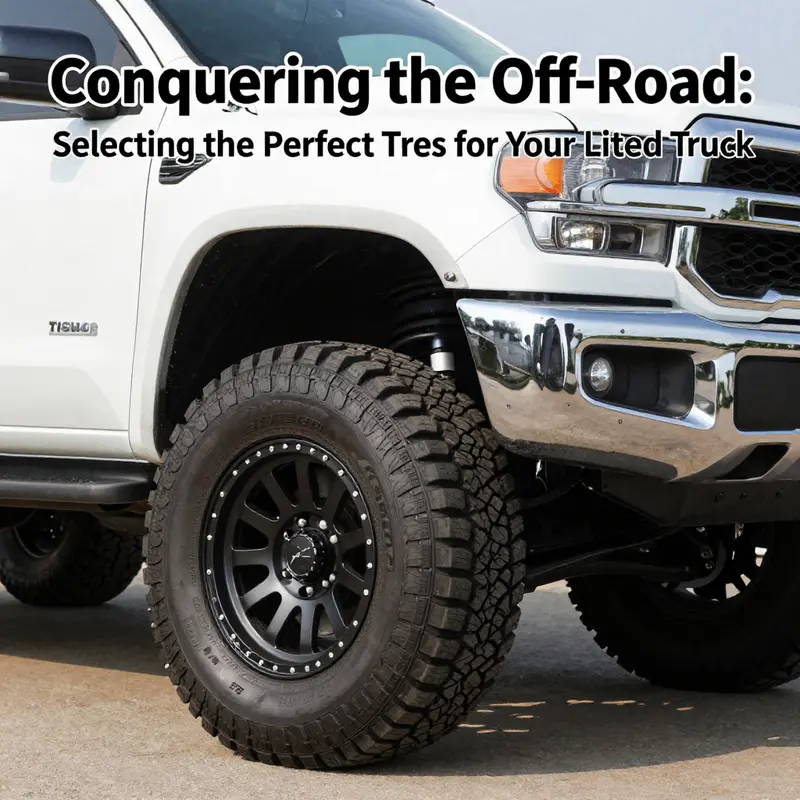
When you lift a truck, you’re trading a factory harmony for expanded capability. The tires you fit are the loudest proof of that shift. Bigger ain’t always better, and the real win comes from sizing up with a purpose. The size you choose affects ground clearance, contact patch, steering response, drivetrain angles, and even fuel economy. The goal is to pair the lift height with a tire diameter and width that play well with the suspension geometry, not fight it. At the core, tire size becomes a dialogue between clearance and control, flotation and steering precision, off-road traction and on-road efficiency.
Lift height sets the ceiling. A moderate lift—think in the 2.5- to 3-inch range for many popular mid-size platforms—opens the door to larger tires without instantly compromising highway manners. You don’t want to push the system so far that the steering angles go out of whack, or CV joints start carrying more load than they were designed to handle. With a 2.5- to 3-inch lift, a common approach is to consider tire diameters that step up from stock by roughly 2 to 3 inches. That usually translates to tiers of tires around the 31-inch, 33-inch, and 35-inch range, depending on the exact lift, wheel backspacing, and fender geometry. The existing wheel and suspension layout will determine how far you can push each dimension before you start to rub the fenders, hit the frame rails, or compromise steering lock.
Tire diameter is only one side of the equation. Width matters too, because a wider footprint increases traction on soft terrain and improves stability on side slopes, but it also raises the risk of rubbing at full turn and during suspension travel if the offsets aren’t matched to the new diameter. A cautious approach is to start with a modest width increase and evaluate clearance with a careful fitment check. This is where the practical, “drive-slow-and-test” method pays off. After you mount the tires, roll slowly through a parking lot and perform a few full-lock turns, both left and right, to observe any contact with inner fenders, control arms, or brake calipers. If the tire barely misses the fender edge but tucks under during full articulation, you’re in a safe zone. If you hear or feel rubbing, you’ll need to reconsider either the diameter, the width, or the backspacing.
Backspacing and offset govern how the wheel sits in relation to the suspension and body. When you increase diameter, you often increase the tire’s outward protrusion unless you compensate with the correct backspacing. The rule of thumb is simple: more aggressive backspacing (less inward clearance) can bring a wider tire into alignment with the fender line, but too little clearance invites rubbing at full suspension travel and during steering. If your lifted setup uses wheels with unusual offsets, you may need spacer adapters or fender flares to maintain proper clearance. The key is to map the new tire profile against the exact wheel geometry you’re running and to verify that the wheel doesn’t intrude on critical components during full-range articulation.
Underpinning all fitment decisions is a balance between preserving steering accuracy and maintaining driveline integrity. A larger diameter changes the overall gearing sensation, alters the speedometer reading, and can shift the effective final drive ratio enough to noticeably impact highway performance and fuel economy. In some cases, you’ll find the gearing feels more “rev-happy” at highway speeds, and in others, the engine works harder to maintain cruising speed in top gear. The practical takeaway is clear: when you opt for a bigger tire, you should also be prepared for recalibrations—whether that means changing tire pressures, performing a precise alignment, or using a gear-tasting procedure to keep the speedometer and odometer honest.
Tire width interacts with lift height in a way that demands careful planning. If you push both diameter and width aggressively, you risk increased rolling resistance, more turbulence from the wheel wells, and greater stress on the suspension links and steering knuckles at full lock. A measured approach is to widen incrementally, paired with a corresponding evaluation of fender clearance and outer-body clearance. Where possible, select a tire size that aligns with the existing wheel well geometry, then consider functional adjustments only as needed—such as modest fender trimming or the addition of flare accessories—to maintain a clean, controlled stance that still respects the vehicle’s aerodynamics and curb appeal.
The process is not just mechanical; it’s a matter of intent. If your goal is a rugged, capable off-road truck that still behaves predictably on pavement, the path to tire fitment should be conservative yet purposeful. A typical, safe route starts with a 2.5- to 3-inch lift on a mid-size platform and a tire diameter in the 31–33 inch range for daily driving with moderate trail use. If you anticipate sand dunes or heavy mud where flotation is a priority, you may push toward the 33–35 inch range, but you should then evaluate other supporting upgrades—such as improved suspension articulation, a robust steering setup, and reinforced protection for drivetrain components. It’s not just about how big the tire looks; it’s about how well that footprint integrates with the vehicle’s mechanical throat and chassis geometry.
In this balancing act, a practical fitment check is essential. After installation, perform a cautious, slow test drive to feel for any rubbing during aggressive steering and over varying suspension travel. If rubbing is detected, you’ll often resolve it by trimming a small portion of the fender lip, adjusting wheel backspacing, or selecting a slightly narrower tire width while keeping the same diameter. If you’re pushing the envelope toward larger diameters, consider the feasibility of aftermarket flares or minor fender modifications to preserve body integrity and maintain legal clearance around the wheel wells. The aim is not to erase the lift’s benefits but to harmonize them with the tire’s footprint so that the vehicle remains predictable under high-angle climbs, steep descents, and tight-turn maneuvers.
Maintenance and reliability deserve attention as well. The more aggressive the tire, the more critical it becomes to monitor wear, heat buildup, and the potential for accelerated drivetrain strain when the tires are not optimally matched to the suspension geometry. To keep your lifted system reliable, treat fitment as an ongoing conversation between the lift, the tire, and the road. For maintenance-focused guidance that complements the mechanical fitment, consider the insights in Mastering Diesel Mechanics: A Step-by-Step Guide. This resource offers a disciplined approach to maintaining higher-load setups and understanding how adjustments in one subsystem ripple through the others. You can read more at this internal resource: Mastering Diesel Mechanics: A Step-by-Step Guide.
For those who want to explore deeper, model-specific considerations and a broader map of lift kit compatibility, the Lift Kit Guide from a well-known off-road resource provides a thorough framework. It outlines how different lift heights translate into optimal tire choices, steering geometry, and suspension travel. This external reference helps translate general principles into practical, vehicle-specific actions and ensures you’re not guessing when you select your final tire package. You can review the guide here: https://www.4x4wire.com/4runner-lift-kit-guide.
As you finalize size choices, remember the ultimate aim: ensure the tire’s footprint, the lifted geometry, and the vehicle’s steering and driveline all stay in alignment. The right combination improves traction and flotation on rough terrain while preserving predictable handling on pavement. And while the numbers—diameter, width, backspacing, and offset—are essential, the safer, more meaningful North Star remains control: confidence in cornering grip, predictable steering response, and the assurance that the truck will behave consistently no matter how far from the pavement you roam.
Endurance Without Compromise: How Durability Shapes Tire Choices for a Lifted Off-Road Truck
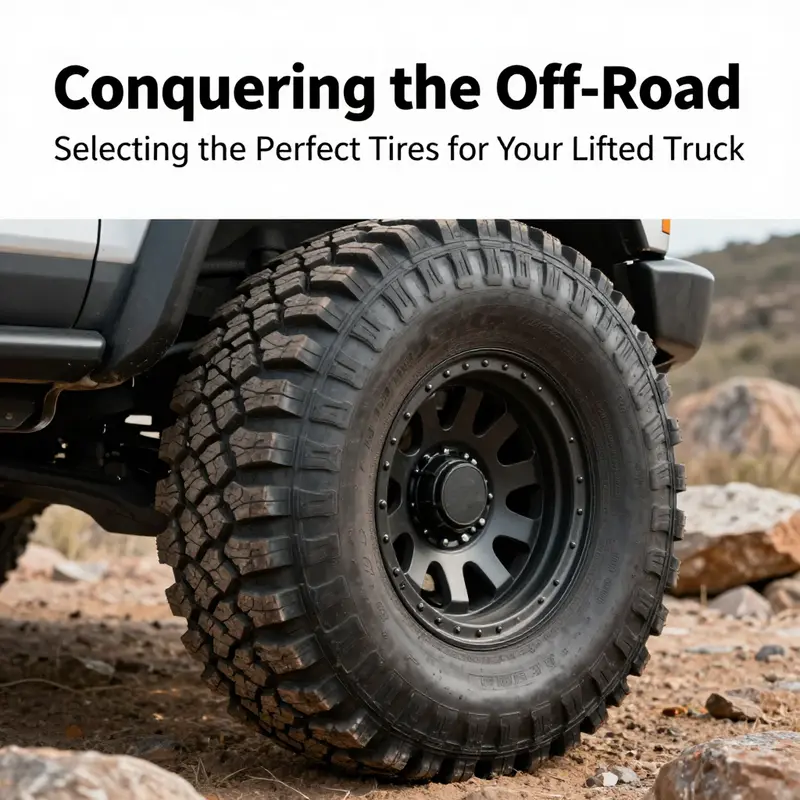
Durability is not a luxury when you lift a truck for off-road duty. It is the quiet backbone that keeps you moving when the trail throws rock, thorn, and treacherous ruts at every turn. In the context of a lifted vehicle, where ground clearance is already increased and the tire sidewall stands taller and more exposed to punishment, choosing an tire with bite and resilience becomes not just a matter of performance but of safety and long-term reliability. The most durable tire is the one that preserves your momentum through the unpredictable, whether you are crawling over jagged shale, punching through wet clay, or punching dunes where heat and spin can test a tire’s limits. The logic rests on a triad: tread design and compound, construction with reinforced protection, and the right balance of load and speed ratings that suit the truck’s heft and its occasional highway use. Each factor compounds upon the others, creating a tire that can shrug off rocks, shed mud, and resist the cuts and punctures that a lifted, off-road rig is uniquely prone to facing. The conversation about durability must start with the tread itself, because tread design is the tire’s first line of defense against the kinds of terrain most commonly encountered when you’re off the pavement. An aggressive tread pattern—deep, widely spaced lugs with large voids—shines here. The lugs provide the grip needed in loose surfaces such as mud, sand, and gravel, while the voids prevent mud and debris from packing the footprint, which would otherwise choke traction. Self-cleaning behavior matters as much as sheer depth; a tire that cannot shed material efficiently will quickly lose bite when you dip into sticky mud or soft sand. A durable compound complements this design. The goal is a rubber that resists cuts, chips, and heat buildup after long stints of off-road operation. In practice, this means a high-strength rubber formulation that remains pliable enough to grip irregular surfaces yet resistant to chunking under impact from rocks and branches. It is here that the construction story becomes critical. Sidewall protection is not a cosmetic feature; it is central to survivability when you have more travel and more exposure to flanks. Tires designed with reinforced sidewalls—thick, puncture-resistant layers and robust casings—offer a shield against punctures and scrapes that would otherwise leave a lift-equipped truck stranded. Multi-ply or belted constructions add another layer of safety, distributing loads and absorbing impacts that could pinch or crack a sidewall. You do not need to own a rugged desert or rock-crawling beast to appreciate this benefit. Even in moderately rough environments, the added leverage created by a higher ride height changes how a tire behaves at the edge of its grip, making sturdy sidewalls a practical necessity rather than a luxury. Beyond tread and sidewall, durability is a matter of the tire’s overall readiness to carry weight and tolerate speed without overheating. The load index must align with the vehicle’s weight, payload capacity, and any gear you routinely carry. A tire with a higher load index is not only a safety margin for heavy conditions but a buffer against rapid heat buildup that can precipitate tire failures on long, demanding climbs. The speed rating, while often conservative in off-road use, still plays a role. When a lifted truck ventures onto uneven highways or straightaways that demand occasional bursts of speed, a margin in the speed rating helps the tire tolerate those moments without deforming or overheating. In practice, the most durable tires strike a careful balance: they offer rugged sidewall protection and robust plies, paired with an aggressive yet controllable tread that remains workable on pavement. That balance is crucial for trucks used not just on trails but also on daily commutes or long overland trips. The durability conversation cannot ignore the realities of a lifted chassis. Increased ground clearance changes leverage, so the tire’s contact patch and its resistance to sidewall damage gain in importance. A tire that might be adequate on a stock setup can behave very differently when it has to absorb the same rock through a higher wheel well, where every sharp edge has a longer reach to the casing. In this light, manufacturers emphasize three durability pillars: tread blocks and geometry designed for self-cleaning and grip on rugged surfaces; reinforced compounds and sidewall construction that resist cuts and punctures; and load-bearing, multi-ply or belt-reinforced structures that distribute pressure and resist bead failures under heavy loads. These features reduce the risk of catastrophic tire failure during a day’s play on rock gardens or a long desert cruzewith gear in tow. The practical implications extend to maintenance routines and the mindset of the driver. Durability is not solely about buying a tougher tire; it is about using the tire in ways that preserve its integrity. Proper inflation strategy, especially under a lift, matters. On pavement, keeping factory pressures helps maintain contact and handling. In mud or soft sand, lowering pressure improves flotation but demands careful monitoring to avoid bead or sidewall damage. When rock crawling or traversing sharp stones, a conservative pressure that allows the sidewall to flex without bottoming out can save the tire from punctures. In a lifted truck, where the suspension can magnify impacts and the sidewalls meet obstacles sooner, this discipline becomes a prerequisite. It is easy to underestimate the cumulative effect of heat and stress on a durable tire when the surface is tough but the driving is intermittent. Heat buildup, even in a well-constructed tire, can accelerate compound fatigue and reduce tread life. The most resilient tires mitigate this by using compounds designed to resist heat buildup and by maintaining an efficient footprint under load. Manufacturers often incorporate such resilience through silica-rich compounds or aramid-reinforced layers in the tread belt, though specific formulations vary. Durability also plays into the economics of ownership. A tire that resists cuts and bead impacts tends to show longer tread life and fewer blowouts in rough country. That resilience translates into lower maintenance frequency, fewer emergency trips, and greater confidence on unknown trails. Yet durability is not free. Heavier, more rugged tires carry a premium in initial cost, rolling resistance, and sometimes reduced on-road comfort. The best path is a balanced approach: select a tire that offers proven sidewall protection and robust construction for off-road engagements, while still delivering predictable behavior on highways, reasonable wear, and acceptable fuel economy for mixed-use applications. When you couple this approach with thoughtful fitment and careful inflation strategy, your lifted rig gains a durable foundation that supports ambitious plans without compromising safety or reliability. For a broader view of how durability considerations align with testing and real-world performance, see the referenced deep-dive on off-road tire testing and reviews. master the mechanics of vehicle maintenance and tire interaction by exploring the topic at master-diesel mechanics’ step-by-step path to success. Additionally, a practical acknowledgement of the broader landscape of tire testing can be found in the external resource linked here, which compiles contemporary evaluations and field results from a range of vehicles and terrains. External resource: https://www.motortrend.com/cars/best-off-road-tires-for-lifted-trucks-2026/
Internal link: To understand how drivetrain and suspension dynamics interact with tire durability on lifted platforms, you can consult the broader mechanical fundamentals discussed in mastering-diesel-mechanics-your-step-by-step-path-to-success.
Rugged Traction and Lifted Confidence: A Cohesive Guide to Tires for Off-Road-Ready Trucks
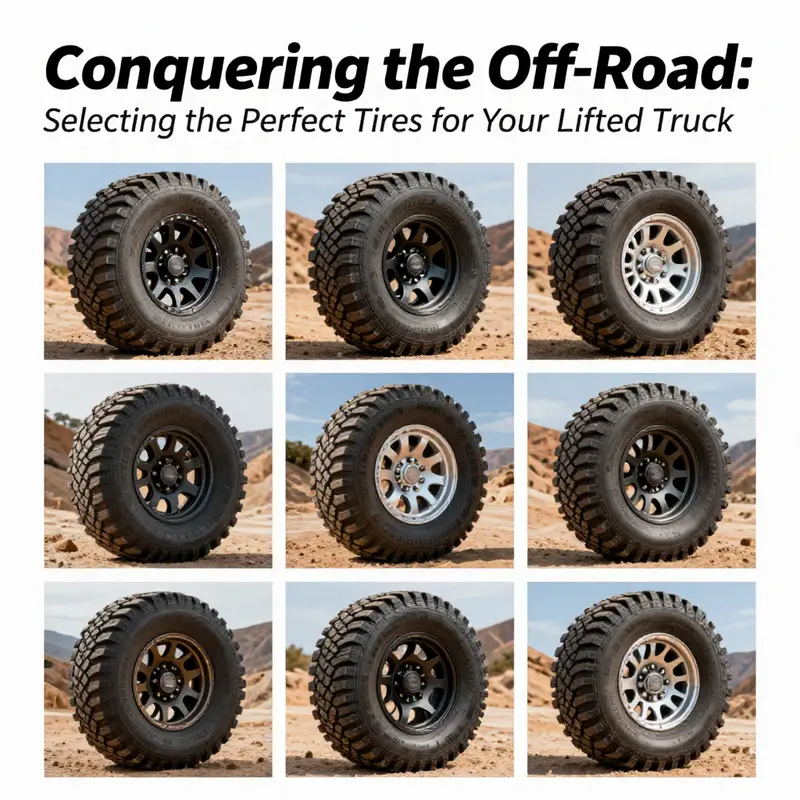
The tire is the single most important link between a lifted off-road truck and the terrain it confronts. In a world where suspension is lifted to clear rocks, sand, and rutted trails, the tire becomes the engine of traction, protection, and control. A well-chosen tire can unlock ground clearance without sacrificing stability, while a poorly matched one can magnify heat, noise, and uncertainty at the very moment you need reliability most. This chapter threads together the core ideas you must understand to select tires that harmonize with a lifted truck’s capabilities, the realities of off-road terrain, and the practical demands of daily driving.
First, the terrain is king. Off-road landscapes do not present a uniform challenge; they swing between mud, loose sand, rocky drifts, and hard-packed desert trails. Different tires are engineered for these extremes. Mud-terrain tires emphasize aggressive, self-cleaning tread patterns with large voids to shed mud and sand rapidly. They bite into soft, sticky surfaces and stay clean enough to maintain traction, but their on-pavement behavior is a trade-off—more noise, stiffer ride, and higher rolling resistance. All-terrain tires, the middle ground, deliver respectable off-road grip with more predictable behavior on pavement. They balance durability and comfort, which is why many lift-equipped vehicles—intended for both occasional trail duty and highway travel—lean toward AT tires. For those who tackle rock, extreme mud, or dune environments with regular, spirited effort, it is hard to ignore MT designs that maximize traction at the expense of ride comfort and fuel economy. The key is to align tire choice with how you use the truck most often. If your trips are mixed, AT tires typically offer the best overall balance for a lifted daily driver that still goes where the gravel road ends.
Size and compatibility are not afterthoughts; they are the backbone of performance when a truck sits higher than stock. Lift changes the geometry of the wheel wells, steering, and suspension, making fitment a careful calculation rather than a casual choice. A common approach among enthusiasts is to step up in diameter by a few inches to improve ground clearance and obstacle clearance—think roughly 2 to 3 inches more than stock in diameter, with 33, a 34, or even 35-inch diameters appearing in several lifted builds. Width matters too. Wider tires can enhance traction and side stability in loose material, but they demand attention to wheel offset and backspacing. Improper backspacing can push tires into control arms, fenders, or frame rails, creating rubbing that undermines steering feel and tire life. With lifted rigs, a tire fitment check becomes almost as important as the initial bolt-on. A slow drive through a parking lot, accompanied by sharp full-lock turns, will reveal rubs that can otherwise appear only after a long highway drive or a harsh trail impact. This simple test helps prevent misalignment between lift, wheel, and tire that can create heat, wear, or worse, a sudden failure on the trail.
The choice of tire and the selected size must harmonize with a truck’s load demands and its anticipated speeds. Lifted trucks used in harsh off-road environments often carry variable loads—from spare parts and recovery gear to fuel and water for extended expeditions. The load index and speed rating, while sometimes overlooked, are critical safety checks. A tire that cannot sustain the vehicle’s payload at the speeds you intend to travel risks overheating, tread separations, and compromised handling in demanding conditions. You should look for a construction that offers robust sidewalls and a tread compound capable of resisting cuts, chips, and heat buildup. In practice, this means seeking tires with reinforced sidewalls and durable rubber compounds designed for the heat cycles of off-road work. A tire with low load capacity for the weight it carries is not a bargain; it is a risk in rough terrain and high-speed desert runs alike.
Durability, particularly sidewall protection, is a priority for lifted trucks facing rough trails. Sidewalls take the brunt of sharp rocks, callousing debris, and quick wheel crashes. The most protective designs employ multi-ply carcasses and thicker sidewalls that resist punctures and preserve the bead seal. The tread compounds used in these tires should resist tearing and heat buildup, which are common in desert stretches and rocky sections. In addition, pay attention to traction patterns and siping, which influence bite on loose surfaces and wear resistance under heavy loads. The realities of off-road use—heat, flex, and impact—mean durability is not just a feature; it is a necessity for long-term reliability and confidence when the trail angles upward and the sun sets behind jagged ridges.
Beyond the basics of terrain, fitment, and durability lies the practical nuance of ride quality and fuel efficiency. Lifted trucks often endure a stiffer ride due to larger wheels and heavier tires, and this is a normal trade-off for necessary ground clearance. However, the goal is not to chase the softest ride at the expense of traction or safety. A tire with a well-graded tread pattern and an efficient profile can minimize noise and rolling resistance, delivering a more comfortable highway experience without surrendering off-road capability. Controlling noise and fuel use matters because many lifted trucks serve as daily drivers or long-haul adventurers, not exclusively trail machines. In the broader calculus, prioritizing a tire that can perform well on wet pavement or damp gravel, while still providing the rugged capability off-road, often yields the most satisfying ownership experience. When you step up to a 33×12 or 33×13, for example, you will likely notice a sweet spot—stable handling, predictable cornering, and a level of confidence that makes both expeditions and commutes feel more certain.
Insurance against the surprises of off-road travel also comes down to preventative strategies. A tire pressure management approach is essential to unlock terrain-specific performance. On paved roads, keep the factory or recommended pressure to maintain stability and predictable handling. In mud or soft sand, reducing tire pressure increases the contact patch and flotation, helping the tire ride above the surface rather than digging in. On rocky surfaces, lower pressures can absorb impacts and reduce the chance of punctures, provided you maintain control and awareness of the reduced tire footprint. The practical upshot is that a simple, portable inflation system can deliver consistent, safe adjustments on trailheads and remote campsites. This system becomes a companion to your recovery kit, ensuring that changes in conditions do not translate into compromised traction or overheating. The ability to switch pressures quickly without leaving the vehicle adds a vital layer of safety, especially when navigating mixed terrain during a single outing.
Any discussion of tires for lifted off-road trucks should also acknowledge the broader reality: there is no one-size-fits-all answer. The best tire for your build is a function of your terrain, your load, your speed expectations, and your tolerance for road noise and fuel costs. For many, a balanced AT approach is an excellent default for a vehicle that roams from highway to dirt roads, from forest trails to light-logged rock segments. If your emphasis is maximum mud performance or rock crawling, a dedicated MT or a carefully selected, rugged AT with a tougher sidewall will serve you better, provided you accept the trade-offs in ride quality and economy. As you mature in your choices, you will find that the most satisfying tire setup emerges from a deliberate assessment of how you drive, what you expect from your lifted rig, and how you plan to care for the tires between adventures.
For a deeper, data-driven exploration of tire performance across lifted-truck contexts, see comprehensive testing and reviews that synthesize field trials, on-road behavior, and durability across the most relevant terrain types. These resources help translate the nuance of tread design, compound selection, and surcharge stability into actionable guidance for your build. While specific models and brands will continue to evolve with technology and market offerings, the core principles—terrain alignment, proper fitment, fortified sidewalls, and adaptive tire pressure management—remain the keystones of tire selection for a lifted off-road vehicle. As you finalize choices, remember that the ultimate objective is safety, control, and the confidence to push deeper into the trail with a truck you trust.
External resource for further reference: https://www.motortrend.com/cars/best-off-road-tires-for-lifted-trucks-2026/
Final thoughts
Selecting tires for your lifted truck is not just about enhancing performance; it’s about ensuring longevity, safety, and the ability to tackle any landscape you choose to explore. Understanding the types of terrains you will face helps to inform your choice of tire type, while the specifics of your vehicle’s modifications and intended use guide you to select the right size and durability features. With the information presented in this guide, you are now equipped to choose tires that enhance your adventures, allowing you to conquer challenges and enjoy the freedom of the open road or rugged trails without hesitation. Remember, the right tires can make all the difference in your off-road journeys, offering the traction, stability, and confidence necessary for exploration.