
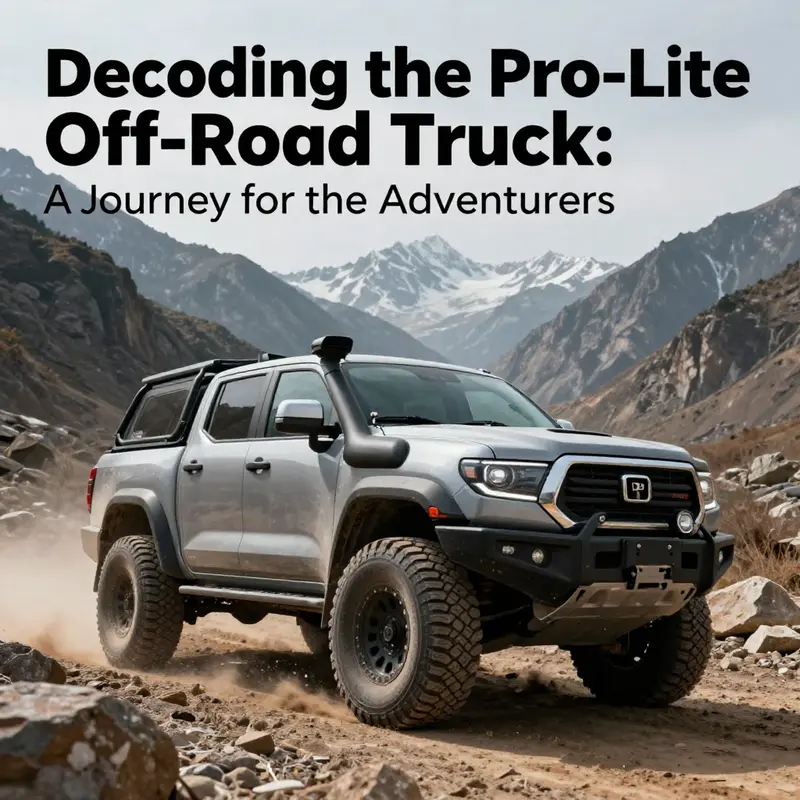
In the world of off-road trucks, the term ‘Pro-Lite’ may ring a bell for some, but it remains enshrouded in mystery for many. This article dives into the depths of this elusive label, exploring its absence and what it means for enthusiasts and racers alike. As we traverse through the rugged terrains of specifications and designations, we’ll compare it to light-duty off-road trucks and shine a light on alternative models that endure in the landscape of off-roading. We’ll also uncover the market trends shaping these robust vehicles, providing a comprehensive insight into off-road culture and engineering that continues to drive innovation in a demanding segment. Buckle up as we gear up to dissect the essence of off-road prowess without the Pro-Lite title.
Why Off-Road Trucks Don’t Carry the Pro-Lite Name: Design Priorities and Real-World Constraints
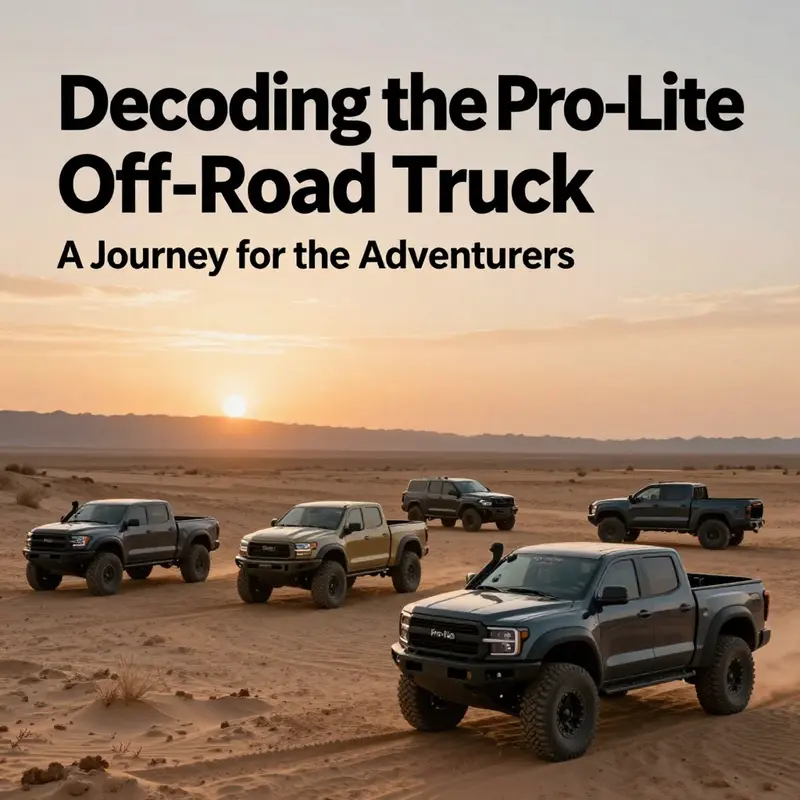
The absence of a Pro-Lite designation in off-road trucks is about engineering priorities rather than branding. These vehicles are built to withstand harsh terrain, carry heavy loads, and endure long service lives. Weight is traded for durability, traction, and protection. A lighter truck may be quicker on smooth pavement, but on rocks, mud, and steep grades, strength and reliability matter most.
Off-road trucks rely on reinforced frames, heavy-duty axles, long-travel suspensions, underbody protection, and robust drivetrains. They gain mass from these features, and while new materials offer small improvements, substantial weight savings risk compromising safety and capability.
Marketing labels like Pro-Lite could mislead buyers about capability. The market values payload, towing, and obstacle negotiation. A light-weight bias would run counter to the purpose of these trucks, which is to deliver consistent performance under demanding conditions.
There are segments where weight reduction matters, such as certain racing or urban fleets, but off-road trucks operate in a different regime. Design decisions aim to maximize traction, durability, and protection rather than pure lightness. As a result, the Pro-Lite concept does not align with typical off-road truck design goals.
If future materials and engineering breakthroughs allow significant weight reductions without sacrificing strength, brands may explore new labels. For now, the absence of Pro-Lite reflects a deliberate design philosophy: durability and capability come first for off-road trucks.
From City Streets to Mountain Trails: How Light-Duty Off-Road Trucks Stack Up Against Their On-Road Counterparts
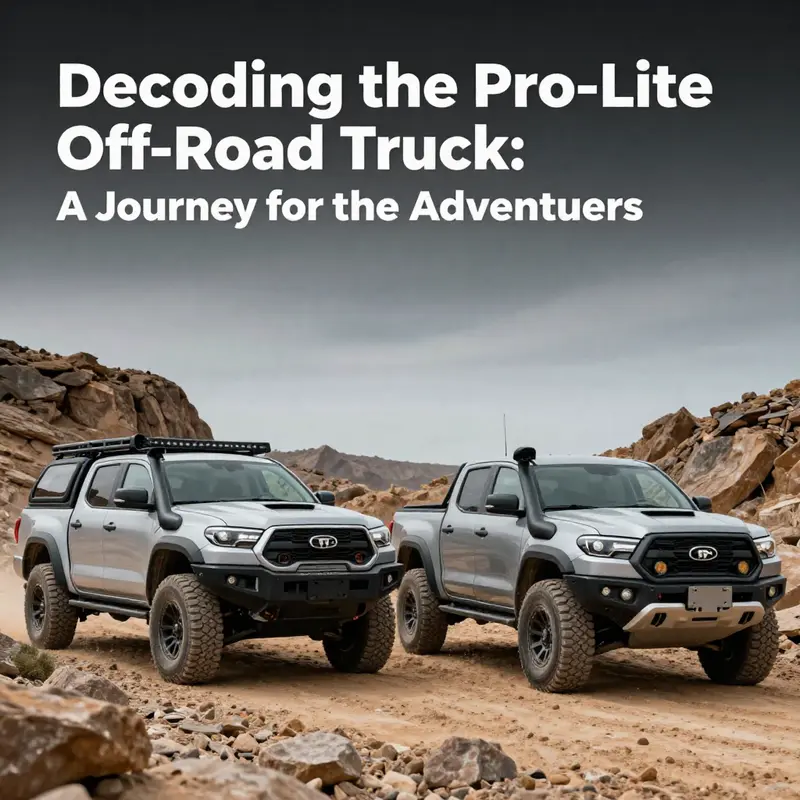
Light-duty off-road trucks occupy a distinctive niche in the vehicle landscape. They are designed from the ground up to handle rugged environments while still offering a manageable size and operational flexibility. In understanding what makes them unique—especially in contrast with more conventional light-duty trucks—it becomes clear why these vehicles are favored in industries and regions that demand mobility beyond the smooth predictability of paved roads.
A defining aspect of a light-duty off-road truck is its drivetrain configuration. Many conventional light-duty pickups may come in 4×4 and 4×2 variants, but the off-road segment includes specialized arrangements, such as 6×6 all-wheel drive. The difference is not simply in the number of driven wheels; it shapes load distribution, tire contact with uneven surfaces, and the ability to maintain momentum through mud, gravel, or steep inclines. The 6×6 configuration—seen in models built for heavy-duty access into remote locations—offers a level of stability that cannot be replicated in smaller drive configurations. Each wheel contributes traction, ensuring that even when one or two lose grip, the vehicle maintains forward motion. This architecture is invaluable in mining sites, mountainous construction zones, and rural agricultural operations where terrain is unpredictable.
The contrast becomes apparent when measured against standard 4×4 light-duty trucks. A 4×4 setup is no doubt capable: it delivers power to both front and rear axles, allowing for confident movement over dirt tracks, snow, or sand. However, when faced with extreme inclines or deep ruts, a 4×4 may begin to struggle. It distributes its load over fewer driven wheels, which can limit stability and decrease carrying capacity in challenging environments. For many logistics or utility services in mixed terrain, a 4×4 is more than adequate—but it may not be the first choice where resilience under heavy loads and constant off-road travel is paramount.
By comparison, the 4×2 variant focuses almost entirely on efficiency in predictable conditions. This type keeps two wheels powered—usually at the rear—while the front steering axle guides direction. The reduced complexity in drivetrain means lower maintenance expenses, lighter vehicle weight, and better fuel economy. They excel in urban delivery and highway driving, where maximum traction isn’t required and operational costs are a top priority. While this comes at the expense of off-road capability, it makes them ideal for businesses that rarely venture beyond asphalt or compact gravel surfaces.
Fuel efficiency is another lens through which comparisons sharpen. Off-road trucks are heavier, with reinforced suspensions and durable chassis designed to absorb impacts and resist wear from rocks, debris, and uneven surfaces. This robustness naturally increases weight and can diminish mileage compared to lighter on-road designs. For industries working in wilderness areas, fuel consumption is the trade-off for reliable access. On the other hand, 4×2 trucks minimize weight and rolling resistance, so they generally outperform in fuel economy—making them better suited for routes where consistent fuel savings can significantly impact operational budgets.
Emerging electric light-duty trucks complicate the picture further. They bring agile handling, quiet operation, and zero-tailpipe emissions—perfect for city logistics or suburban commercial use. Yet they are still largely limited in off-road capability due to range restrictions, battery sensitivity to extreme temperatures, and the overall balance between ground clearance and energy efficiency. Innovations like regenerative braking and modular battery systems improve their versatility, but they remain best suited to predictable terrain. In sectors prioritizing sustainability, these vehicles can replace diesel or petrol trucks in shorter routes without sacrificing purpose. A growing number of municipal fleets have adopted electric models for deliveries, maintenance, and even specialized services. These advancements are expanding possibilities for light-duty transportation, though in rough rural conditions where traction and load-bearing are the priority, traditional off-road drivetrains still reign.
Durability is a decisive factor. Light-duty off-road trucks are often built around high-strength steel frames, reinforced axles, and suspension systems that accommodate significant articulation. Such features allow for consistent performance in areas where surfaces shift, washouts occur, and conditions vary daily. Protective elements like skid plates guard key components from impact while raised air intakes prevent engine flooding in water crossings. In contrast, urban-focused 4×2 trucks may prioritize ergonomics and ride comfort, featuring lighter suspension setups and more aerodynamic designs for fuel savings.
Operational costs paint another layer of distinction. Off-road models incur higher initial purchase prices due to their specialized engineering, plus increased ongoing fuel and maintenance costs tied to their complex drivetrain. However, when these trucks are deployed where access is otherwise impossible, their capacity to haul materials and crews safely justifies the expense. For companies working across both urban and rural domains, an off-road fleet segment ensures continuity even when routes shift due to seasonal changes or project locations.
One subtle yet significant difference lies in operator training and safety requirements. Maneuvering a 6×6 truck over jagged terrain is a different skill from driving a 4×2 delivery truck on city streets. Operators must understand weight distribution, braking on loose surfaces, and how to anticipate terrain changes. The wrong approach to obstacles can lead to rollovers or drivetrain damage. This makes safety training and driver experience critical components in deciding which type of truck to deploy in a given operation.
The growing influence of electric technology prompts interesting questions about future integration with off-road designs. While there are prototypes exploring electric drivetrains in rugged configurations, the challenge remains in balancing battery capacity with terrain demands. Until infrastructure supports rapid charging in remote areas, hybrids or traditional combustion designs may dominate the off-road space. Urban fleets, however, can already leverage electric trucks to reduce emissions while streamlining maintenance needs, as illustrated in developments surrounding electric fire truck charging infrastructure.
Terrain capability might be the single biggest differentiator. Light-duty off-road trucks are capable of conquering surfaces that are outright impassable for their urban-focused peers. Mud, sand dunes, rocky inclines—all of these are navigable when the vehicle is equipped for high-traction operation. This capability is supported by tire design, locking differentials, and torque management systems. Each element ensures that power delivery is adjusted to maximize grip, even when conditions change mid-route. Urban trucks instead emphasize predictable surface handling, where braking efficiency and cornering stability take precedence.
For industry sectors weighing their options, the critical takeaway is that light-duty off-road trucks are purpose-built tools. They bridge gaps where infrastructure does not exist. Remote construction crews, emergency services in isolated regions, agricultural operations on uneven farmland—all benefit from their reliability and endurance. Conventional configurations like 4×4 and 4×2 fill important roles, but they simply cannot match the performance envelope of a true off-road design.
Ultimately, comparing light-duty off-road trucks with on-road variants is not just about mechanical differences—it is about matching capability with need. Fuel efficiency, maintenance savings, and comfort matter in urban and suburban operations. Traction, stability, and resilience matter in remote, uneven, and harsh environments. The line between them will become increasingly dynamic as electric and hybrid technologies evolve the design philosophy for both segments. Yet, for heavy-duty off-road use, a configuration like the Dongfeng 6X6 All Wheel Drive remains emblematic of what this class does best: deliver consistent mobility where other light-duty trucks would falter (source).
Between Brawn and Balance: Mapping the Pro-Lite Off-Road Truck Through Heavy-Duty, Electric, and Utility Models

The idea of a pro-lite off-road truck sits at a curious crossroads. It implies a vehicle that can endure rough terrain and demanding conditions without the sheer weight, fuel burn, and rigidity of the heaviest industrial or military-spec rigs. Yet the phrase also invites questions: what exactly constitutes “pro-lite” in off-road propulsion, chassis design, and work-focused practicality? The body of available information does not pin down a single, universal definition. What is clear is that the off-road truck landscape already tessellates into distinct niches, each built to meet specific tasks on remote sites, challenging trails, or constrained yards. Analyzing these existing models — not as competing products but as a spectrum of engineering responses — helps illuminate what a pro-lite concept might optimize for, and where such a vehicle could fit in a real-world fleet. In this light, the chapter that follows sketches a cohesive picture by integrating three core strands of off-road design: the heavy-duty heritage that prizes durability and payload, the electric future that foregrounds efficiency and resilience, and the utility-focused configurations that emphasize rugged practicality and work-readiness. Taken together, they form a framework for understanding how a pro-lite truck could balance capability with nimbleness, cost with reliability, and maintenance with uptime.
Heavy-duty off-road trucks lay the baseline for what a pro-lite would need to surpass or avoid. These vehicles are built to endure and to haul, often deployed in environments where terrain is a constant adversary and terrain conditions can shift in an instant. In practice, that translates into robust drivetrains and driveline architecture, large ground-clearance margins, and frames engineered for long life under heavy loads. A representative class of these trucks operates with a four-wheel-drive or six-wheel-drive layout, a design emphasis on traction, articulation, and resilience. Engineering features tend toward redundancy and protection: reinforced axles and suspensions, rugged transfer cases, heavy-duty radiators and cooling paths, and chassis designs that tolerate repeated jolts, climbs, and mud bogs without compromising structural integrity. Capacity and durability become reputational anchors of this family. The philosophy here is clear: if a machine must serve in the harshest environments, it should not hesitate when the going gets rough. It is the proof of concept that some tasks simply require mass, traction, and a confidence-inspiring risk tolerance built into the metal itself. In a fleet context, these are the trucks you call when the mission requires space for gear and confidence for the long haul, even if fuel costs or maintenance cycles are higher.
A contrasting but equally important segment is the growing class of electric off-road trucks. This branch reframes efficiency from a mere byproduct to a central driver of design and operation. Battery-powered platforms remove tailpipe emissions, reduce noise in sensitive sites, and can lower lifecycle costs if managed correctly. Yet the electric path imposes its own discipline. Large battery packs often mean longer charging times and heavier front-end mass, which can affect handling and steering feel. The absence of luxury features is common in early-stage electric-off-road configurations focused on function: the priority is reliability, maintenance simplicity, and predictable energy use under demanding loads. In practice, these machines find homes on construction sites, mining operations, and long-haul off-road tasks where the benefits of zero emissions and reduced ambient disruption matter more than creature comforts. The energy economics hinge on battery chemistry, thermal management, and regenerative strategies, but the overarching trend is unmistakable: electric platforms push the bar higher on mechanical efficiency and uptime, while demanding new routines for charging, storage, and quick-swap or rapid-top-up capabilities on the move.
The utility-focused end of the spectrum centers on practicality and daily operability. Think four-by-four double-cab configurations with about a ton of payload, designed to ferry crews, tools, and supplies through variable weather and rugged backroads. This lineage emphasizes reinforced suspensions, rugged frames, and work-ready interiors with factory-installed gear mounts, toolboxes, and cargo rails. It is a design language that speaks to fleet operators who value consistent performance, predictable maintenance, and the ability to perform repetitive tasks across diverse terrains. The utility models bridge the gap between the heavy-haul machines and lighter, more urban-oriented pickups, offering a steady middle ground where reliability, ergonomics, and serviceability are central. They also illustrate a critical point for anyone imagining a pro-lite solution: the most useful truck in a harsh environment is not necessarily the one with the highest gross vehicle weight rating, but the one that carries the right balance of payload, traction, protection, and ease of service for a given mission profile.
Placed side by side, these three strands reveal what a pro-lite off-road truck could be seeking to achieve. It would need to translate the core strengths of each category into a single, versatile platform. The goal would be to deliver sufficient payload and traction for demanding work, while staying within a weight bracket that preserves agility, reduces energy consumption, and minimizes transport and operating costs. The body of knowledge existing in the field suggests several architectural decisions that would support such a balance. A pro-lite solution would, for example, favor a chassis that can handle both rugged utility and occasional high-duty tasks without the excessive mass that characterizes the heaviest deployments. It would adopt a suspension system tuned for a broad spectrum of uses, not just the extremes of rock crawling or industrial hauling. And it would integrate powertrains with energy management that supports longer operating windows between charges or fill-ups, even if the vehicle does not prioritize the luxury or premium interiors common on some urban-safe variants. In practice, this means using modular components, standardized drivetrains, and a design philosophy that anticipates maintenance needs and field repairability. A pro-lite truck would be a tool first, and a status symbol second, with the ability to adapt as tasks evolve and sites change.
To understand how a pro-lite concept could be realized in the real world, it helps to consider a few concrete design priorities that emerge from the cross-section of the heavy-duty, electric, and utility lines. First, weight management becomes a central discipline. Reducing unsprung mass improves ride comfort, improves traction, and enhances handling in off-road scenarios. This can be achieved through selective use of lighter alloy components, optimized frame geometries, and, in electric layouts, careful placement of heavy battery packs to preserve weight distribution and front-back balance. Second, protection and durability remain essential, but not at the cost of maneuverability. Strategic use of protective skids, abrasion-resistant panels, and easily replaceable subassemblies can help a pro-lite truck weather harsh sites while staying serviceable in the field. Third, power and efficiency must be coherent with mission time. An efficient powertrain that can deliver consistent torque without excessive parasitic losses ensures extended uptime. This is especially critical for fleets operating in remote regions where refueling or charging opportunities are staggered or limited. Fourth, modularity matters. A truck designed for quick swaps of tool racks, shelving, or payload-configurable cargo beds can adapt to changing roles without requiring a full retooling of the drive line or the chassis. Operators value flexibility almost as much as raw force, because the needs of a site can shift with weather, project phase, or crew composition. Fifth, reliability and maintainability should guide component choices. A pro-lite concept should favor widely available parts, straightforward diagnostics, and a service footprint that can reach remote locations without excessive downtime. The best designs in this line avoid exotic solutions that require scarce technicians or proprietary repair workflows. In short, a pro-lite off-road truck would be a pragmatic blend of toughness, efficiency, and adaptability, engineered to deliver dependable performance without paying the premium for the most extreme configurations.
The narrative above points to a practical approach for fleets considering a pro-lite strategy. It is not a prescription for a single vehicle, but a template built from three proven strands of off-road engineering. When a fleet contemplates a new platform or a redesign, it can weigh use-case scenarios against the core attributes of payload, range, ground clearance, and serviceability. If tasks demand steady work in remote areas with occasional heavy loads, a heavier utility profile with reinforced suspensions and modular cargo solutions could fit the bill, while staying closer to a mid-weight footprint. If the priority is minimizing environmental impact and reducing operating costs on long, repetitive runs, a lighter, more efficient electric platform with robust thermal and charging management might be preferable. Finally, if the job is to operate across mixed terrains with dynamic load profiles and crew transport needs, a versatile, all-terrain configuration with a balanced weight distribution and resilient components would be most practical. The beauty of a pro-lite concept is its potential to combine these strengths into a single, adaptable chassis, rather than forcing a choice between extremes. This is how an off-road truck can serve as a reliable workhorse without becoming an energy hog or a maintenance headache.
The contemporary industry conversation around electrification and modular, work-ready designs offers important context for thinking about pro-lite ideas. The broader shift toward electrified platforms in off-road applications underscores a willingness to recalibrate how power, weight, and efficiency interact on rugged terrain. Electrification imposes new constraints, yet it also unlocks new operational models. For instance, the greater control over torque delivery and regenerative capabilities can translate into smoother power management on slippery descents or steep ascents, reducing wheel slip and preserving fuel or battery life. At the same time, it prompts questions about charging infrastructure, site access, and the geometry of work cycles. A pro-lite interpretation would incorporate these realities by designing for predictable energy use, straightforward on-site charging options, and the capacity to perform essential tasks even when the power system faces limits. The same logic applies to the blend of utility features that fleets routinely demand: durable tool mounts, weatherproof interiors, protective cab enclosures, and practical storage that keeps equipment organized and ready for use at a moment’s notice.
The balance point here is fleet strategy. A pro-lite off-road truck should not be pursued as a vanity upgrade; it should be pursued as a deliberate alignment of capability with operating cost and uptime. Fleet managers can apply a simple decision framework: identify the core tasks in a site, evaluate the maximum payload and range needed, and then design a platform that can accommodate those requirements without excessive overdesign. In practice, that means focusing on three core metrics: payload efficiency, energy efficiency, and maintenance uptime. Payload efficiency measures how much useful work the vehicle can perform per kilogram of weight; energy efficiency tracks the energy cost per ton-mile or per hour of operation; maintenance uptime looks at the time a truck spends out of service due to routine service or repairs. A pro-lite approach targets improvements in all three metrics by deploying modular components, optimizing weight distribution, and prioritizing diagnostics and serviceability. It also implies a disciplined selection of ancillary equipment, avoiding add-ons that inflame curb weight or complicate maintenance. The result is a platform that can tackle a broad range of tasks with a single, reliable baseline, yet remains affordable to own and straightforward to repair in the field.
For readers seeking further context on electrified and modern mobility in heavy equipment, the broader industry conversation offers valuable perspective. The contemporary shift toward electrified construction equipment demonstrates the feasibility and appeal of removing or reducing emissions while maintaining performance on site. In practice, many operations have found that electric platforms can deliver predictable torque and quiet operation, with the added benefit of lower long-term operating costs when charging is managed well. This trend aligns with the pro-lite philosophy: prioritize reliability, modularity, and efficiency to support longer mission windows and more predictable logistics on remote sites. The same logic informs decisions about cabin ergonomics, controls, and visibility, which matter just as much in field conditions as raw horsepower. A pro-lite framework would therefore embrace not only the mechanical and structural aspects of the truck but also the overall ecosystem in which it operates, including the charging infrastructure, maintenance routines, and the training required to keep it running at peak performance across diverse environments.
Ultimately, the concept of a pro-lite off-road truck is less about a single, codified model and more about a design philosophy. The philosophy centers on delivering essential off-road performance without the inertia of heavyweight, luxuriously equipped platforms. It is about achieving a reliable balance that supports uptime, reduces operating costs, and remains adaptable to changing field demands. This means embracing modularity, prioritizing serviceability, and recognizing that the most capable vehicle for a given site is not always the one with the highest payload or the most advanced electronics. It is the one that consistently completes its tasks with the least friction and the greatest versatility. As fleets continue to evaluate opportunities to streamline operations and reduce environmental impact, the pro-lite concept offers a guiding principle: build around the work that needs doing, not around the gear that sounds impressive in a showroom. In this way, the off-road truck of the near future can be both a steadfast work partner and a smarter, more efficient tool for daily tasks in the most challenging places.
For readers who want to explore related themes in depth, consider the ongoing discussion around evolving powertrains and off-road applications in industry literature. You can read about the broader momentum toward electrified construction equipment here, which offers a complementary perspective on how power, weight, and duty cycles are being reimagined in practical terms. The topic of electric construction equipment revolution can be explored through related articles that examine how fleets are adapting to new powertrains, the implications for maintenance workflows, and how telematics and fleet management strategies are evolving in response to these shifts. This broader context helps frame pro-lite as a design and operational philosophy rather than a strict product category.
External resource: https://www.alibaba.com/product-detail/EQ5100-off-Road-4X4-6X6-All-Terrain_1600722983229.html
Internal resource: For broader discussions on the electrification of off-road platforms and the move toward smarter, more modular work trucks, see the article on electric construction equipment revolution. electric construction equipment revolution
Defining a Moving Target: Market Trends Shaping the Emerging Pro-Lite Off-Road Truck Category
The question of what constitutes a pro-lite off-road truck sits at the intersection of evolving consumer appetite and rapid engineering. In the absence of a formal, widely accepted definition in the source materials, the market itself begins to sketch the shape of a category that is both practical and aspirational: a vehicle that blends rugged capability with efficiency, lightness with durability, and off-road versatility with urban accessibility. This chapter traces the currents that press the ground beneath such a concept, showing how trends in demand, technology, policy, and regional development co-create a landscape in which a pro-lite off-road truck could emerge as a distinct, or at least recognizable, segment within a broader family of off-road work and adventure vehicles. The narrative that follows is not a chronology of models or brands, but a synthesis of forces that push the category toward greater refinement, greener operation, and more sophisticated integration with fleet systems and outdoor lifestyles.
First, consider the demand side. The off-road truck market is buoyed by a growing appetite for adventure-oriented mobility. Outdoor and off-grid activities are no longer niche pursuits; they have become mainstream leisure and utility options. In regions with deep recreational cultures—most notably North America and parts of Europe—consumers want vehicles that can venture into remote terrain while still serving as daily transportation. This dual expectation nudges manufacturers to prioritize capabilities that were once reserved for heavy-duty work trucks, but with a lighter footprint and improved daily usability. The market is increasingly populated by all-terrain and multi-purpose platforms that can transition from a worksite to a trailhead with minimal compromise. The same logic applies to the commercial off-road segment, where light cargo trucks are finding new relevance in mining, agriculture, and construction as infrastructure development accelerates in emerging economies. The line between work tool and personal vehicle widens, and buyers begin to value a balance of resilience, efficiency, and versatility.
Technology acts as an accelerator in this shift. Manufacturers are layering advanced systems onto lighter, more agile platforms. Adaptive suspension keeps contact with uneven surfaces while preserving ride quality for everyday use. Enhanced traction control helps vehicles maintain grip across mud, rocks, and sand without excessive wheel spin. Powertrains are trending toward combination—strong output with improved efficiency—so that a truck can crawl over rough terrain when needed and cruise efficiently on paved roads otherwise. In the most discussed horsepower brackets for new mini trucks, 351–450 horsepower models illustrate a sweet spot where torque and torque-controlled delivery can keep wheels planted on challenging grades or loose surfaces while not sacrificing daily usability. The underlying message is clear: capability can be achieved without necessarily sacrificing efficiency or daily comfort if the powertrain and chassis are thoughtfully engineered.
The emphasis on durability and fuel efficiency reflects a broader regulatory and ecological awareness. Emissions standards, particularly Euro 6 and beyond in many markets, are guiding buyers away from older, high-polluting platforms toward newer, compliant solutions. In addition, government incentives in places like China are nudging the market toward cleaner transport options, including electric and low-emission trucks. The consequence is a market where a pro-lite off-road truck—if formally defined—would be expected to deliver not only rugged performance but also a path toward greener operation. This regulatory environment also stimulates innovation in hybrid and battery-electric variants for off-road work, a development that resonates with the broader transformation of work trucks toward sustainable powertrains.
Geography matters as much as technology. In North America and Europe, the blend of consumer culture and high-performance expectations supports a demand for vehicles that can handle rugged terrain yet carry out daily duties efficiently. In many emerging economies, the growth of infrastructure projects and expanding logistics networks increases demand for light off-road cargo solutions. These regional dynamics shape not only which features are prioritized but also how quickly electrification and lightweight, efficient drives are adopted. Government policy, fuel prices, and access to charging or service networks influence the calculus buyers use when comparing a rugged, capable platform against more traditional, heavier, fuel-hungry options. It is not a single trajectory but a constellation of national and regional trajectories that collectively mold the shape of an emerging pro-lite category.
If one looks closely at the product direction, several overlapping design priorities begin to emerge. The first is a tension between weight and strength. Lightweight materials, optimized chassis geometry, and modular components can deliver the robustness required for off-road work without imposing the fuel penalties of heavier vehicles. The second priority is system integration. The latest off-road platforms lean on integrated dashboards, telematics, and driver-assistance features that were once the province of on-highway SUVs or premium utilities. These systems extend beyond comfort; they enable safer traversal over unpredictable terrain, improve maintenance planning, and support fleet managers who need to allocate limited resources efficiently. A third priority is powertrain flexibility. The horsepower band around 351–450hp in mini trucks hints at a common need: enough muscle to negotiate steep grades, loose substrates, and rocky passages, coupled with tiered gearing and effective torque delivery that preserves traction on slippery surfaces. When combined with modern suspensions and traction systems, such power output becomes a tool for stability rather than a liability in fuel consumption.
There is also a strategic dimension to how this category could evolve. A pro-lite off-road truck will likely need to balance two competing imperatives: on-road practicality and off-road capability. Buyers demand comfort, predictable handling, and low maintenance costs for daily use, yet they expect dependable performance when the road ends and the trail begins. The market’s response has been to create multi-functional, adaptable platforms rather than single-purpose machines. Vehicles in this space might emphasize modular bed configurations, transformer-like chassis components, and plug-and-play accessory ecosystems that let owners tailor the truck to specific tasks—whether carrying tools on a mining site, transporting produce through rural fields, or ferrying gear to a backcountry campsite. In this sense, the pro-lite label could reflect more than a horsepower figure or a payload rating; it could symbolize a package of adaptability, efficiency, and reliability that suits both work and leisure needs.
From the perspective of fleet owners and operators, the trend toward smarter, more connected off-road trucks is equally compelling. Fleet management in rugged environments benefits from telemetry, predictive maintenance, and remote diagnostics that reduce downtime. This is where the broader suite of off-road vehicle technologies intersects with business realities. A truck that can self-monitor its suspension wear, track tire health, and report terrain-related wear contributes to lower total cost of ownership. In markets where environmental and safety regulations are tightening, the ability to document emissions, fuel efficiency, and maintenance diligence becomes a competitive advantage. This is not just about raw performance; it is about sustainable operation over many years and across many miles of challenging terrain.
Within the spectrum of off-road categories, all-terrain vehicles (ATVs) and multi-purpose vehicles (MPVs) continue to grow in breadth and capability. These platforms offer versatility as both workhorses and recreational partners. Their expanding role supports a broader ecosystem of attachments and technologies that can amplify a vehicle’s utility. The commercial off-road segment—light cargo trucks used in mining, agriculture, and construction—also experiences increasing adoption, driven by infrastructure development and logistics needs in emerging economies. When you assemble these strands—consumer demand for adventure, robust but efficient engineering, regulatory pressure toward cleaner powertrains, and the expansion of versatile work platforms—you see the contours of a category that could be understood as pro-lite off-road trucks: not a single model, but a class defined by a specific balance of capability, efficiency, and adaptability.
Yet it is important to acknowledge what the sources do not provide: a formal, standardized definition of pro-lite off-road trucks. The absence of a canonical specification means that any attempt to pin down the category must rely on converging signals from multiple domains—engineering, user needs, and market dynamics. This is precisely what makes the discussion interesting. If future product plans converge on a consistent set of goals—lightweight yet durable frames, drivetrain options that favor efficiency, advanced drive systems for varying terrains, and a modular approach to outfitting—then the category could crystallize around a perceived promise: a vehicle that can perform reliably on rough trails while remaining practical for everyday life and economical to operate over time. In the meantime, the market narrative continues to unfold, shaped by the same forces that drive broader off-road vehicle innovation, even as it remains an evolving concept rather than a fixed label.
The convergence of these factors also highlights how the meaning of the pro-lite off-road truck may morph as technologies mature. Electrification, for example, introduces trade-offs and opportunities. Battery-powered platforms could reduce tailpipe emissions and lower fuel costs, but they demand careful consideration of payload, range, and charging infrastructure in remote work sites. Hybrid or plug-in hybrid configurations might offer a compromise that satisfies both work-site duty cycles and urban commuting. In all cases, the critical question becomes how to preserve off-road resilience while delivering a lighter, more efficient footprint. It is a balancing act that demands not only strong engineering but also thoughtful product planning, field testing, and feedback from operators who actually push these vehicles to their limits.
As the industry contemplates this balance, designers and engineers increasingly view the vehicle as a system rather than a standalone machine. The chassis, suspension, powertrain, tires, and electronics must communicate as a cohesive unit to enable predictable performance in unpredictable environments. This systems approach aligns with broader trends in the automotive world, where integrated software and hardware ecosystems enhance safety, reliability, and user experience. The potential for over-the-air updates, remote diagnostics, and modular attachments adds value beyond the core vehicle. In practical terms, a pro-lite off-road truck, whatever its formal definition eventually becomes, will likely be judged not only by its off-road prowess but also by how well it integrates with the owner’s workflow, maintenance routines, and lifestyle needs.
To illustrate how these trends translate into real-world design considerations, consider the role of a modern suspension system. An adaptive setup can adapt to payload variations, terrain irregularities, and ride preferences, delivering a smoother on-road experience without sacrificing the articulation needed for technical off-road sections. Traction systems that intelligently modulate torque distribution across wheels help maintain grip on uneven substrates while reducing the risk of wheel slip. A chassis engineered with modularity in mind supports a wide range of bed configurations, tool racks, or cargo solutions, enabling customers to tune the truck for specific tasks without compromising core capabilities.
On the powertrain front, the horsepower range highlighted in contemporary mini trucks—up to about 450hp—reflects a demand for robust performance in a compact package. This potency, when paired with efficient torque delivery and sophisticated drivetrain control, can yield a vehicle that is both capable in rough terrain and economical when cruising on highways. The implication for the pro-lite concept is not simply “more power equals better off-road ability.” It is, rather, the realization that performance must be deliverable without compromising weight, handling, reliability, or fuel economy. And when you factor in the potential for electrified options, the spectrum of capabilities broadens further. A battery-electric or hybrid system can offer smooth, controllable torque with exceptional modulation, a boon for technical trails, while also aligning with policy incentives and consumer demand for greener transportation.
The market signals are reinforced by industry forecasts that anticipate continued growth in off-road truck categories through the next decade. The drivers—outdoor recreation, infrastructure investment, and the ongoing push for more efficient, lower-emission fleets—combine to create a fertile environment for new entrants and existing manufacturers alike. Observers point to a future where a pro-lite off-road truck is defined not only by a single specification but by a coherent package of capabilities and traits that meet the evolving expectations of workers, enthusiasts, and fleet operators. The category, in other words, may be less a fixed set of numbers and more a moving target shaped by what customers value when they venture beyond paved roads and into remote, demanding spaces.
To connect this broader discussion with practical considerations, it is useful to reflect on the lifecycle implications of adopting such a vehicle in a real-world context. From procurement through operation to maintenance, the decision pathway for buyers will weigh capital costs, ongoing operating expenses, reliability, and service availability. The emphasis on durability and fuel efficiency signals a preference for platforms that can deliver longer service intervals and lower total cost of ownership, even if the upfront investment is slightly higher. The trend toward regional incentives for cleaner technology further tilts the economics in favor of modern platforms, particularly for fleets that must comply with stringent emissions regulations or demonstrate environmental stewardship as part of their corporate identity.
In summary, the market trends shaping the off-road truck landscape point toward a category that could be described as pro-lite—an emblem of capable, efficient, and adaptable machines designed for both rugged tasks and everyday use. The existing literature does not lock the term into a precise specification, but it does reveal a clear trajectory: one where lighter, smarter, and more versatile platforms gain prominence, supported by advanced suspensions, traction control, and powertrains that balance performance with economy. The interplay of demand, technology, and policy will continue to refine what this category means in practice. As engineers test and operators experience these vehicles in varied environments, a more concrete understanding will emerge—one that aligns the aspirations of adventure-seekers with the realities of work sites and the imperatives of sustainability.
For readers seeking a concrete touchstone on how electrification and advanced machinery are reshaping rugged platforms, a deeper look at the broader industry shifts can be found in the discussion of electrification trends in construction and heavy equipment. This broader context helps illuminate the pace and direction of change in off-road trucks, including those that might eventually be labeled pro-lite. The conversation is ongoing, and the definitions will sharpen as more market data, field feedback, and policy developments accumulate. In the meantime, the emerging pro-lite off-road truck category stands as a valuable concept: a signal of where design, engineering, and consumer expectations are headed in the dynamic world of rugged, capable, and efficient transport.
To explore a related perspective on how electrification is reshaping rugged machinery, see the discussion on Volvo’s electric construction equipment revolution. Volvo-electric-construction-equipment-revolution. And for a broader market forecast and trend synthesis, consider the external industry analysis linked here: https://www.linkedin.com/pulse/off-road-truck-market-size-application-trends-2026-2033-johnson-mlqkx/.
Final thoughts
As we traverse the off-road landscape, we find that the absence of the ‘Pro-Lite’ designation does not imply a lack of excellence or capability in off-road trucks. Instead, it serves as a testament to the diversity and evolving engineering behind these robust companions that adventurers crave. Off-road enthusiasts and racing fans alike will discover that understanding the nuances of various models, including light-duty trucks, enriches their knowledge and experience. As the market trends continue to evolve and alternative models emerge, the spirit of adventure remains at the forefront. Dive deep, explore thoroughly, and always seek the ride that resonates with your spirit of adventure. Whether navigating rocky trails or racing through the wild, your perfect off-road partner is waiting.