
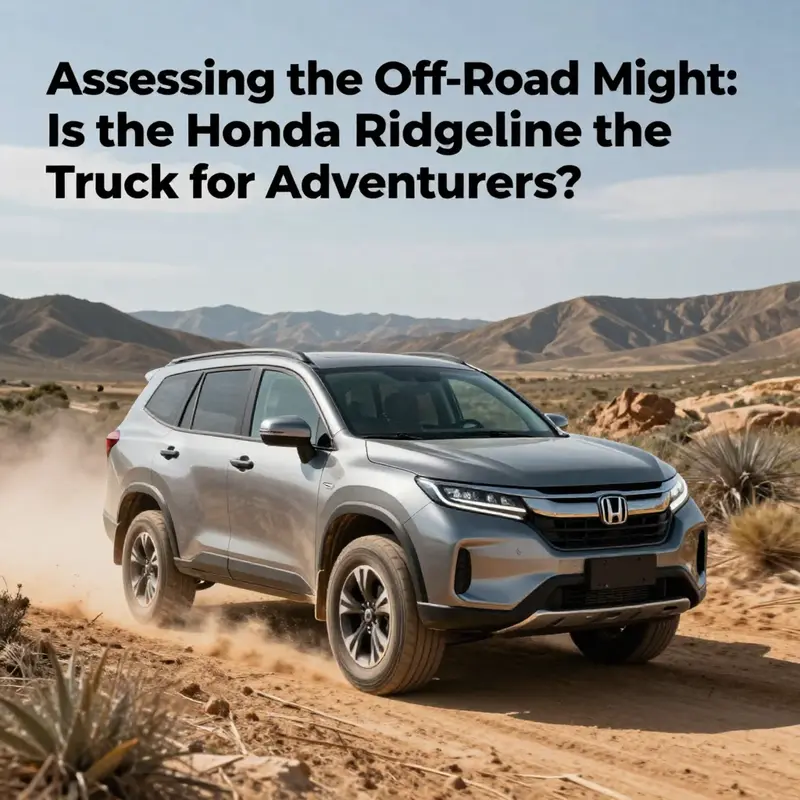
When it comes to off-roading, enthusiasts often gravitate towards vehicles that can truly tackle the wild with unrelenting power and agility. The Honda Ridgeline, while known for its family-friendly features and comfortable ride, has sparked debates regarding its off-road capabilities. With its enhancements for 2026, including a robust V6 engine and an intelligent all-wheel-drive system, it presents itself as a versatile choice for urban adventurers and weekend warriors alike. However, can it hold its own against truly rough terrains? Each chapter will meticulously explore the Ridgeline’s performance, design, and user experiences to determine whether this modern all-terrain truck is fit for rugged exploration or whether it falls short for the hardcore off-road community.
Trail-Ready, Not Trail-Breaking: Decoding the Honda Ridgeline’s Off-Road Prowess
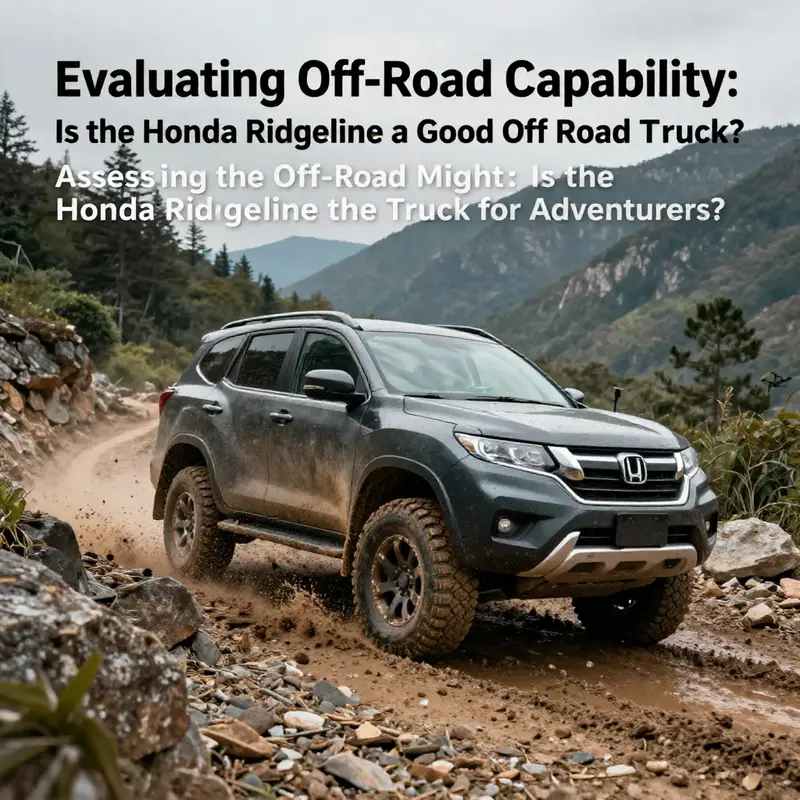
When people ask whether the Honda Ridgeline is a good off-road truck, the answer isn’t a simple yes or no. It sits in a middle ground that suits a particular kind of outdoor lifestyle—the kind that values comfort, everyday usability, and the occasional dirt road or muddy path more than extreme rock crawling or high-speed desert crossings. The 2026 Ridgeline keeps pushing the envelope of what a midsize pickup can be, showing clear improvements in off-road capability while reinforcing its primary identity as a highly capable daily driver with family-friendly practicality. In practical terms, it plays as an all-terrain explorer rather than a dedicated off-road weapon. That distinction matters, because it frames how you should evaluate whether it fits your adventures, your towing and payload needs, and how you might approach modifications if you want to push its boundaries a little further without losing the everyday benefits it offers.
What makes the Ridgeline more trail-capable than most crossovers is not magic; it’s a combination of intelligent engineering choices that lean into comfort and confidence on a wide variety of surfaces. At the heart of its capability is a 3.5-liter V6 that, in the latest version, delivers around 285 horsepower. That power feels ample for a vehicle of its weight class, especially when matched with an upgraded intelligent all-wheel-drive system. The AWD setup is not merely a front-to-rear torque split; it is a dynamic, responsive system that can shuttle torque around to where it’s needed. In mud mode, for instance, the system can deliver up to 100 percent of torque to a single wheel. This single-wheel torque capability can be a lifeline when you’re trying to break free from a rut or when you need a precise, controlled bite into loose terrain. It’s the kind of feature that translates into real-world confidence on unpaved surfaces where grip is unpredictable and momentum is hard to maintain.
The Ridgeline’s suspension deserves a longer look because it underpins both ride quality on pavement and performance off-road. Unlike traditional body-on-frame trucks that rely on rigid axles, the Ridgeline uses a unibody construction with a fully independent suspension. This pairing yields a ride that feels surprisingly refined for a pickup and provides better wheel articulation over uneven terrain. On trails that would have a jarring effect on a more traditional pickup, the Ridgeline tends to maintain composure, smoothness, and control. The feel is more akin to a well-tuned SUV that happens to ride on a truck chassis, which makes it appealing for drivers who want to enjoy a weekend of trail riding without paying a steep penalty in road comfort.
Trail modes, including a dedicated Mud/Sand option, further tailor the experience. These modes adjust engine response, transmission shift points, and AWD dynamics to optimize grip and throttle control on specific surfaces. It’s not just a badge; it’s a practical guide for drivers who encounter mixed surfaces on a day trip or a weekend camping escape. When you pair those modes with the Ridgeline’s practical design details, such as a high ground clearance of about 8.7 inches and a well-tlocked aerodynamic profile, you get a vehicle that can clear typical obstacles and negotiate soft ground without dramatic compromises to ride quality or vehicle balance. These attributes, collectively, help the Ridgeline feel confident on a broader range of terrains than many would expect from a mid-size pickup.
But the strengths come with tangible trade-offs. The Ridgeline’s unibody construction and its focus on comfort can limit its appeal to hardcore off-road enthusiasts. In the roughest conditions—steep inclines with loose rock, aggressive cross-axle maneuvers, or sustained high-speed rock crawling—the rigidity and durability of a body-on-frame truck with reinforced underbody protection typically offer more reliability. The Ridgeline lacks some of the specialized off-road hardware that enthusiasts often seek, such as locking differentials, dedicated skid plates, and a reinforced frame designed specifically for extreme articulation. That does not erase the capability it has; it simply sets the boundaries for where it shines and where it starts to feel overstretched.
Another practical consideration is payload and towing. The Ridgeline can tow around 5,000 pounds, which is competitive in its segment but trails some rivals that offer higher maximum tow ratings. For heavy-duty hauling through rugged terrain, that gap matters. It’s not merely about weight; it’s about how confidently you can haul a trailer over uneven ground, worry about sway, and keep the combination stable on rough access roads. When you add the idea of no full-size spare tire—replacing it with a space-saver spare—you’re reminded that the Ridgeline prioritizes space and weight efficiency for urban practicality and everyday reliability. A space-saver spare is fine for some trips but can add a level of risk if a field repair becomes necessary far from shop support.
The unibody design isn’t a one-note limitation, though. It’s part of why the Ridgeline handles so well on pavement and why it feels more planted on moderate trails than many traditional trucks. The chassis design contributes to predictable steering, refined NVH (noise, vibration, and harshness) characteristics, and a comfortable seating environment. The cargo area, too, is tailored for real-world use. A dual-action tailgate simplifies loading and unloading, and hidden storage compartments provide practical space for gear, tools, or camping essentials. These features matter for weekend getaways where the vehicle is as much a home base as it is a vehicle of transport. The overall package—balanced ride, flexible cargo, and a refined interior—appeals to families and outdoor enthusiasts who prize practicality as much as capability.
That balance is not accidental. Honda’s approach with the Ridgeline appears designed to meet buyers who want to combine daily driving comfort with a capable, versatile platform for light to moderate off-road use. For those who see the Trail as a playground for exploration rather than a proving ground for extreme performance, the Ridgeline delivers on the promise. It makes dirt roads feel manageable, muddy parking lots feel navigable, and forest roads feel safe enough to explore without feeling like you’ve traded everything for a rough ride. The attention to quiet, steady performance means you won’t dread a long drive in wind and rain, even with gear stored in the back. That quality, in itself, broadens the Ridgeline’s appeal to weekend warriors who need a reliable, all-terrain companion that doubles as a practical family vehicle.
Yet the trade-offs still shape the decision. The lack of independent reinforcement for extreme articulation means you’ll encounter limits sooner than you would with a purpose-built, body-on-frame off-roader. If your dream of off-roading involves high-speed rock gardens, steep climbs over jagged outcrops, or sustained crawling over massive boulders, other trucks with reinforced frames and locked differentials are typically more confident choices. The Ridgeline’s approach and departure angles, though respectable for its class, don’t match the numbers you’ll see on dedicated off-road machines. It’s easy to overestimate how much you can push a capable crossover pickup, especially when the terrain calls for more aggressive torque distribution and chassis rigidity to prevent body flex or component stress.
In terms of practical use cases, the Ridgeline’s strengths align with a lifestyle that blends urban errands, family time, and occasional outdoor adventures. It’s a vehicle that can tow a small boat, haul camping gear, and carry bicycles or kayaks with the tailgate open, all while delivering a refined interior experience that makes longer road trips more comfortable. For those who view weekends as a retreat rather than a test, the Ridgeline’s blend of comfort, cargo versatility, and traction control makes sense. It is, in many scenarios, the kind of vehicle you can take on a family camping trip with confidence, then rely on for a quiet commute back home on Monday morning. It’s not that it can’t handle challenging terrain; it’s just that it won’t pretend to be something it isn’t—a rugged, hardcore off-road vehicle built to conquer the most demanding trails in every season.
If you’re invested in unlocking a bit more capability without sacrificing daily usability, there are legitimate, careful routes to enhance the Ridgeline’s off-road potential. Aftermarket or dealer-installed strut extensions or dedicated lift kits can increase ground clearance, which in turn improves approach and departure angles and makes room for larger tires. Any modification path, however, should be weighed against ride quality, drive dynamics, warranty implications, and the potential need for tire and wheel packages that won’t compromise on-road comfort. The goal of these enhancements is not to transform the Ridgeline into a dedicated off-roader but to widen the envelope just enough to enjoy a more challenging trail or a longer rough road section while preserving the winter hatchbacks-and-highway manners that make it a compelling daily driver.
In evaluating whether the Ridgeline is the right pick for you, it’s worth reflecting on your typical trips. If your adventures are anchored in weekend camping, light-to-moderate off-road exploration, and the everyday realities of school runs and grocery runs, the Ridgeline stands out as a well-rounded choice. If your schedule routinely includes serious, keep-trying challenges on remote, rocky, or highly technical trails, you may find yourself drawn to a body-on-frame competitor that offers more deliberate off-road hardware and higher rated capabilities out of the box. The Ridgeline’s value proposition lies in its ability to pair a refined daily experience with a credible, not-exactly-extreme, off-road capability. It excels when you want a capable traveler that can fold into your regular life, then whisper a little more adventure into your weekends without demanding a trade-off in comfort.
For readers seeking further context on how this balance plays out in real-world testing and how it stacks up against dedicated off-road trucks, consult established automotive reviews that delve into the nuances of ride, articulation, and durability under load. A well-regarded evaluation from a respected publication highlights the Ridgeline’s off-road capability as solid but not top-tier within its class. The takeaway from those tests reinforces the notion that the Ridgeline is best described as an all-terrain explorer—capable, confident, and comfortable on a broad spectrum of surfaces, yet not designed to supersede purpose-built off-road vehicles on the most demanding trails.
External resource for deeper testing and comparison: https://www.caranddriver.com/honda/ridgeline/review/a40359135/2026-honda-ridgeline-off-road-capability-review/
Internal perspective and broader discussion on how trucks can balance work with community impact can be explored here: Trucks for Change: Supporting Habitat for Humanity.
Rugged Yet Refined: The Honda Ridgeline’s Off-Road Potential and Its Real-World Limits
The Honda Ridgeline has long carried a reputation for blending the everyday practicality of a midsize pickup with the softer edge of capability. For the 2026 model year, that balance remains the core appeal, but the way it translates to off-road performance has become clearer. Rather than presenting itself as a traverse-ready brute, the Ridgeline positions itself as an all-terrain explorer—capable enough for gravel paths, dirt roads, and forest campsites, yet not built to chase the most extreme trails that demand specialized hardware and a rigid, purpose-built chassis. This is not a shortcoming so much as a design philosophy that prioritizes on-road refinement, efficiency, and family-friendly practicality without surrendering the occasional adventure into rough terrain. In that sense, the Ridgeline’s performance profile sits squarely in the intersection of comfort and capability, where the line between daily driver and weekend conqueror is thoughtfully blurred rather than aggressively crossed.
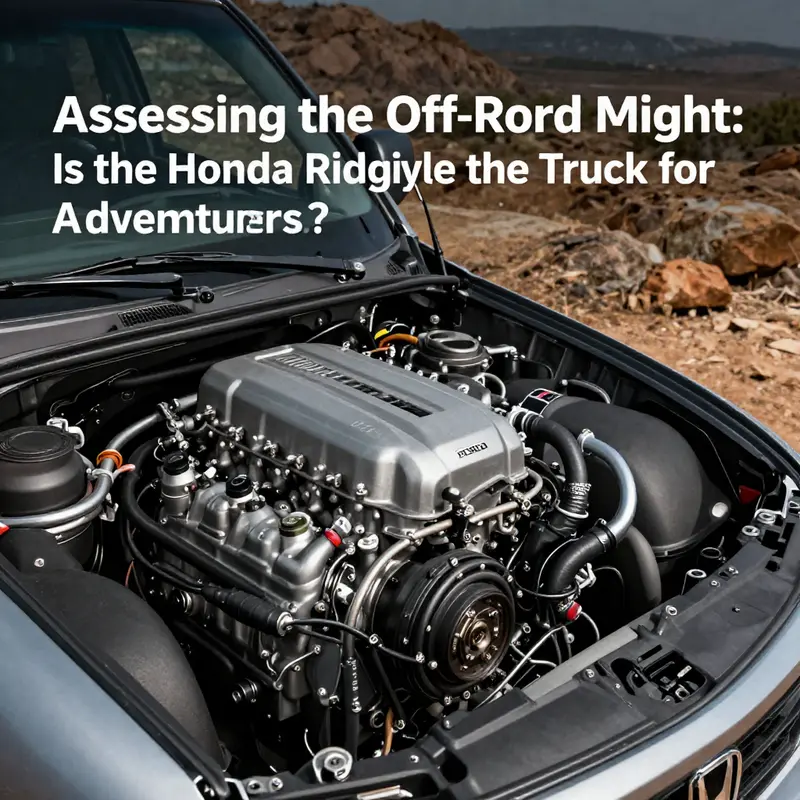
Under the hood, the Ridgeline relies on a robust 3.5-liter i-VTEC V6 that delivers a robust 280 horsepower and 262 pound-feet of torque. Coupled with a smooth-shifting six-speed automatic, this powertrain is more than adequate for highway merging, overtaking, and confident passing on long trips. The engine’s tractable power output, paired with the vehicle’s well-tuned throttle response, gives the Ridgeline a presence on the road that feels competent and reassuring. Towing is another practical pillar of its performance story, with a rating around 5,000 pounds. That capacity opens up possibilities for trailers, boats, or campers, making it a practical option for weekend excursions or family outings where efficiency and predictability matter as much as sheer torque and speed. The drivetrain—standard Honda Intelligent All-Wheel Drive across all trims—plays a crucial role in real-world performance. On loose surfaces, it can distribute torque where it’s needed most, enhancing grip and stability. On dynamic surfaces—slippery gravel, damp earth, or wet grass—the system’s ability to modulate power to the wheels helps maintain forward momentum without dramatic wheel spin.
In the off-road context, the Ridgeline walks a nuanced line. The Trailsport trim, with its rugged appearance and more purposeful stance, signals that Honda wants to broaden the truck’s appeal to light-trail enthusiasts. It gains ground clearance that is adequate for modest dirt roads and gentle hills, and it wears an aesthetic that communicates capability. Yet the chassis and hardware are not built around extreme traction: there are no locking differentials, no high-output, heavy-duty suspension, and no heavy-duty skid plates with the same depth of protection found on dedicated off-road trucks. Those elements matter in the most demanding environments, where rocks, steep ledges, and deep mud exert more than a casual challenge. The Ridgeline’s unibody construction, while a boon for on-road composure, introduces limits in how the frame can flex and articulate under severe axle articulation. In the most demanding scenarios, body rigidity becomes a factor that can blunt the truck’s ability to maintain tire contact across rough terrain. It’s a subtle but meaningful distinction: the Ridgeline remains confident on true dirt but peels away from the hardcore gates where body geometry and suspension travel become the decisive variables.
Even so, the Ridgeline offers a notable advantage in off-road practicality: it is unusually adaptable for a family-oriented midsize truck. The 2026 model includes refinements that boost on-road manners without sacrificing light off-road capability. The powertrain’s torque curve, the AWD system’s real-time torque distribution, and the overall vehicle packaging combine to deliver a satisfying experience when venturing beyond pavement. It’s a configuration that appeals to owners who prize predictable performance, a calm ride, and the confidence to explore rural byways, forest service roads, or campground access routes without feeling stretched to the limit. For drivers who spend most of their time commuting, carting kids to activities, or towing a boat to the lake, this is a compelling balance.
To understand the Ridgeline’s off-road capacity more concretely, one can look at the practical constraints that shape its performance envelope. The truck’s ground clearance, while adequate for light trails, does not chase the generous rise in ride height found on purpose-built rock crawlers or heavy off-road platforms. Approach and departure angles, important when encountering steep ruts or rocky exits, are inherently constrained by the unibody design and the truck’s suspension geometry. When combined with the absence of locking differentials, this translates into a limit: the Ridgeline can often find a workable grip on loose surfaces, yet it will not command the same confidence in traction as a vehicle purpose-built for extreme terrain. The Trailsport’s appearance notwithstanding, those missing pieces are not cosmetic gaps but functional design decisions that prioritize everyday usability and low-speed comfort over extreme ground clearance or maximum approach angles.
Wind noise is another, more subtle factor that comes into play at higher speeds or when carrying cargo in the rear. At speeds above 120 km/h, some occupants report wind intrusion into the cargo area, a reminder that even with well-insulated interiors and refined aerodynamics, any truck with a tailgate-laden cargo bay and a relatively upright tail roof will experience tuneful wind interactions at highway speeds. This is not a barrier to long-distance travel, but it is a point of consideration for buyers who plan frequent highway cruising with gear stacked in the bed or with passengers riding in the back. It’s the sort of practical sleeper concern that reflects the Ridgeline’s broader design objective: deliver a tranquil, controlled ride for daily life and family trips, with a capability profile that answers the call of lighter, more approachable off-road tasks.
When it comes to the practicalities of modifying the Ridgeline for more aggressive use, there is a path forward that many owners follow. The vehicle’s architecture can support certain modifications, such as strut extensions or a dedicated lift kit, to increase ground clearance and improve approach and departure angles. Larger tires can also be fitted within reason, provided the suspension and geometry are considered, to gain a bit more off-road clearance and improve traction on uneven ground. Such upgrades shift the dynamic of the truck, making it more confident on rougher surfaces and more capable on trails that require body-ground clearance transitions. However, these changes must be weighed against the loss of some ride quality and potential warranty considerations, as they alter the original chassis tuning and may affect fuel economy and noise characteristics. Even with modifications, the Ridgeline will retain its core identity—an all-terrain explorer that emphasizes comfort, packaging, and everyday practicality rather than a dedicated, extreme off-roader.
In real-world usage, the Ridgeline shines in ways that reinforce its broader purpose. It achieves commendable fuel efficiency for a midsize pickup, delivering a balance that many buyers prize when they spend weekends at a campsite or traveling with a family. The interior remains among the most spacious in the segment, with thoughtful rear-seat and cargo management options that maximize versatility. The bidirectional tailgate—paired with under-bed storage solutions—demonstrates Honda’s focus on packaging efficiency and clever storage, which translates into real convenience for camping trips, gear-hauling, and everyday errands alike. The combination of a comfortable ride, solid highway manners, and practical storage solutions creates a vehicle that starts each journey with confidence and ends each trip with less fatigue. These attributes, in turn, widen the Ridgeline’s appeal beyond the dull-but-necessary chores of daily driving and into the realm of family-oriented adventure.
Comparing the Ridgeline to rivals on the more rugged edge of the class helps frame its place in the market. In the landscape of compact and midsize off-road-capable pickups, the Ridgeline’s strengths lie in its predictable behavior, well-rounded packaging, and the trust of a brand known for durability and longevity. The more hardcore models—engineered with locking diffs, heavy skid plates, and specialized suspensions—offer raw off-road capability that can surpass the Ridgeline in extreme conditions. Yet for many buyers who want a capable platform that can handle dirt roads, gravel, and rough campground approaches without demanding constant maintenance or specialized knowledge, the Ridgeline stands out as a balanced choice. This aligns with a broader consumer trend: most weekend explorers do not require a vehicle built for rock crawling, but they do need one that can manage back-road challenges with a quiet cabin, solid ergonomics, and practical features that ease the outdoor experience.
In the end, the Honda Ridgeline represents a refined compromise. It is not a tool of conquest or a chassis-geometry exercise in rock-crawling, but a dependable, efficient, and adaptable truck that can carry families and gear toward a multitude of destinations. It excels at the everyday and the semi-regular off-road forays that include dirt paths, light trails, and forest roads. It handles long drives with poise, returns competitive fuel economy for its class, and offers clever storage solutions that enhance its practicality for camping and packing. For buyers whose primary aim is to blend daily usability with occasional off-road gains, the Ridgeline offers compelling value. For those chasing pure off-road ferocity, it is reasonable to look toward purpose-built contenders or to plan a thoughtful set of modifications that address its intrinsic limitations.
Ultimately, the chapter on performance, off-road potential, and limitations indicates that the Ridgeline functions best as a well-rounded all-terrain vehicle whose strengths lie in comfort, efficiency, and smart packaging. Its off-road capability remains notably capable for light to moderate adventure and is complemented by a drivetrain and chassis that reward predictable, confident operation on mixed surfaces. While it may not satisfy the needs of a hardcore off-roading enthusiast seeking the most extreme trail conquests, it delivers a holistic ownership experience that aligns with modern family life, weekend getaways, and everyday commuting. That is the core of its appeal: a truck that can take you farther—with less drama—without asking you to surrender comfort, practicality, or peace of mind.
For those seeking further official context on the Ridgeline’s performance and feature enhancements in 2026, the official press materials offer detailed specifications and narrative framing of Honda’s approach to this model: Honda’s 2026 Ridgeline press release.
Design Features That Shape Off-Road Versatility in a Practical Midsize Pickup
In a segment where off-road bravado often equates to bigger tires, heavier suspensions, and higher ground clearance, a thoughtfully engineered midsize pickup offers a different recipe. The aim is not to conquer every quagmire with raw torque alone, but to blend on-road composure with credible trail capability. This balance matters because many buyers value daily practicality as much as weekend escape potential.
The design philosophy behind this model centers on delivering predictable handling, confident traction on a variety of surfaces, and a ride that remains comfortable when the road turns imperfect. The result is a vehicle that invites exploration without forcing drivers to accept compromise on comfort, noise levels, or cargo practicality.
Suspension is a focal point in shaping this off-road versatility. Rather than relying on a dramatic lift to gain capability, the suspension system has been tuned to improve wheel travel and grip without sacrificing on-road manners. The damping characteristics are adjusted to provide a more responsive feel when a wheel encounters a rock, a rut, or a shallow patch of mud, helping the tire maintain contact with the surface. This translates into steadier steering feel and more confident throttle response through uneven terrain. Because ground clearance remains constant, the emphasis is on how the suspension can manage irregularities and keep the vehicle riding smoothly.
Tire and wheel design further refine the model’s off-road envelope. The standard tire package for capable configurations is aimed at delivering a balance between on-road comfort and off-road grip. The tread pattern is engineered to bite into gravel, dampen the bite of mud, and maintain stability on loose dirt. The profile and sidewall stiffness help the tire behave consistently when negotiating uneven surfaces, minimizing the tendency for abrupt wander or excessive compliance under load. This tire strategy works in concert with the suspension to keep the vehicle planted through turns and when braking over a mixed surface.
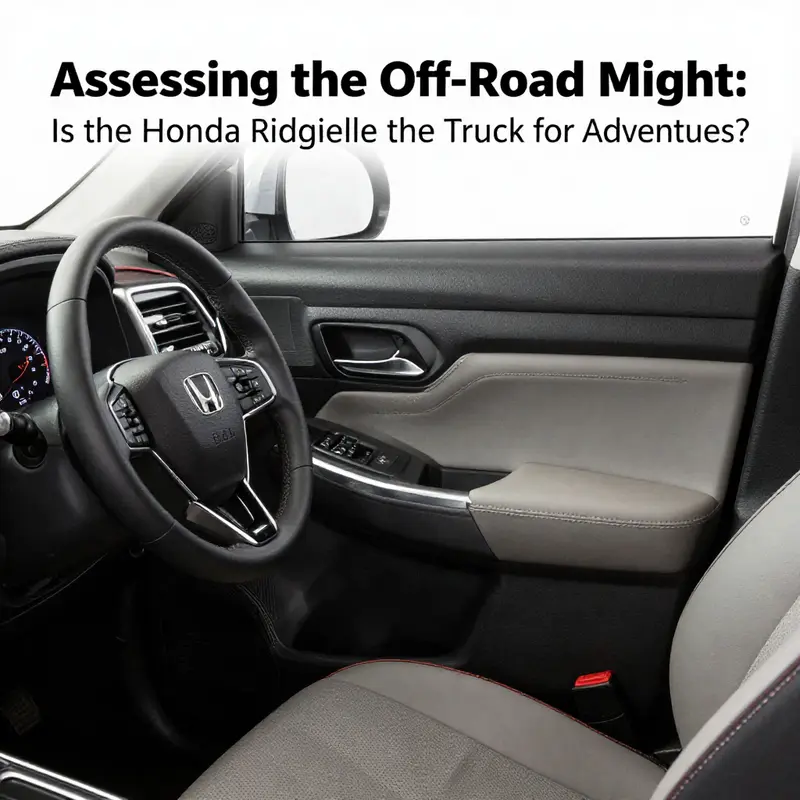
Aesthetics and functional design cues reinforce the off-road orientation without compromising polish. Exterior styling leans into rugged cues through a more assertive front end and a rear treatment that suggests added protection and improved airflow management. Inside, the cabin carries distinctive details—contrast stitching and purposeful badges—that signal outdoor intent while preserving a refined ambience suitable for family duty. These design cues matter because perception often shapes how drivers approach rougher surfaces. When a vehicle presents itself as capable, the driver’s willingness to engage a dirt road or a gravel track tends to rise. Yet the goal remains to avoid the all-or-nothing look that can imply a rough ride or spartan interior. The balance—rugged intent with everyday usability—helps broaden the appeal to buyers who value capability but don’t want to live in a specialized, single-purpose machine.
Structural design underpins this balance. The unibody construction contributes to on-road precision and a ride that cushions pavement irregularities, which is especially noticeable during highway cruising or urban commuting. Independent suspension augments this by offering better wheel control when one wheel meets an obstacle while the others continue forward. The practical upshot is a composed ride that still preserves enough wheel travel to absorb rough patches without inducing excessive body roll or abrupt changes in direction. The flip side is that, when pushed toward extreme articulation or prolonged, aggressive off-road articulation, the unibody platform may reveal its limits compared with traditional body-on-frame designs. The chassis flex and twist tendencies under intense loads can be more noticeable on truly rugged trails. This is not a demerit but a realistic appraisal of where the design excels and where it remains more modest. For most trail scenarios—muddy dirt roads, rocky but not extreme obstacles, or loose gravel—the vehicle performs with composure and confidence, a sweet spot for many buyers who seek both practicality and adventure.
Drivetrain dynamics play a decisive role in how well the truck manages diverse terrain. The intelligent torque distribution system continuously monitors slip and efficiency, routing torque to the wheels that can best use it at any given moment. In low-traction situations, this capability helps prevent runaway wheel spin and preserves forward momentum. It is especially helpful when traversing wet clay, uneven rock faces, or a surface that alternates between slick and firm. The design aims for seamless integration, so the driver rarely has to second-guess the power delivery. The emphasis is on maintaining a sense of control and translating instantaneous grip conditions into steady progress rather than producing a raw, dramatic surge in torque that might unsettled the chassis. This approach aligns with the model’s role as a versatile family-friendly pickup that can handle weekend explorations and occasional off-pavement duties without demanding specialized driving techniques.
Taken together, these features form a coherent off-road identity that sits somewhere between a traditional on-road pickup and a purpose-built off-road machine. The vehicle’s capability is sufficient to handle dirt access roads, graded trails, and modest obstacles with assurance. It is precisely the kind of versatility that many drivers want: the ability to venture off the beaten path for a day, a weekend, or a brief camping trip, without sacrificing comfort, cargo practicality, or daily drivability. In practice, this means you can load the family gear, pack a cooler, and hit a dirt road with the confidence that you won’t be fighting a vehicle designed primarily for rock-crawling. The steering, throttle response, and brake feel remain familiar, so there is less cognitive load when switching between pavement and light trails. This is a design language built on the premise that capability should feel accessible, not exotic, and that exploration should be a choice rather than a challenge.
For readers seeking deeper official specifications and certified figures, the manufacturer’s overview provides the formal data behind these capabilities. See the official product overview here: https://www.honda.com/ridgeline
Beyond the Paved Path: The Ridgeline’s Real-World Off-Road Experience and Practical Limits

When people talk about off-road capability, they imagine a purpose-built rock crawler. The Ridgeline sits in between practical SUV and mid-size pickup, blending comfort with versatility. It markets itself as an all-terrain explorer rather than a hardcore off-road specialist. Under the hood, a 3.5-liter V6 produces about 285 horsepower, with an intelligent all-wheel-drive setup that can vary torque to the needed wheel. The unibody design contributes to a quiet on-road ride, strong interior space, and practical features like a dual-action tailgate and hidden storage. These help with camping trips, family use, and weekend projects. However, the absence of a locking differential and the lack of a low-range gearing limit deeper off-road traction. The suspension emphasizes comfort over extreme articulation; on rough rock, wheel travel is limited, and grip can suffer when angles are severe. Wind noise can be noticeable at highway speeds, especially with cargo in the bed, but it remains a comfortable daily driver. Upgrades such as lift kits exist to increase ground clearance and tire size, but they preserve the core design and do not transform the Ridgeline into a dedicated off-roader. Real-world use shines on gravel, dirt, and light mud, with confident handling and practical cargo capability for camping, towing a small trailer, and daily driving. For drivers who want more capability, planned upgrades should balance ride quality, steering, and safety. External resources such as a Car and Driver lift-kit review and Mastering Diesel Mechanics offer deeper guidance. In short, the Ridgeline is an all-terrain explorer built for everyday life with occasional forays off pavement, not a rock-crawling specialist.
Final thoughts
The Honda Ridgeline, with its blend of style, comfort, and enhanced performance, has much to offer for families and casual adventurers seeking an all-terrain vehicle. While it may face limitations in extreme off-roading scenarios, its practicality shines in family camping trips and light adventure tasks. By understanding the Ridgeline’s strengths and recognizing its constraints, users can confidently gauge its suitability for their off-road aspirations. Thus, it upholds its reputation as an excellent choice for those who balance comfort with the rugged spirit of exploration.