
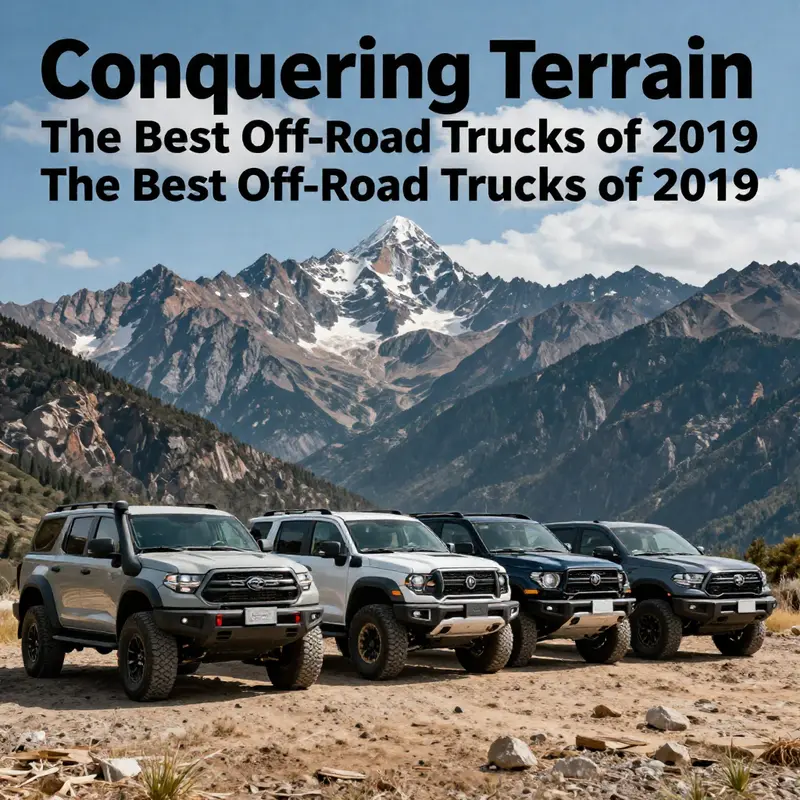
For off-road enthusiasts and adventurers, choosing the best off-road truck in 2019 is not merely a matter of brand loyalty—it’s an exploration of capability, comfort, reliability, and cutting-edge features. As each truck venerates its unique attributes, from the relentless performance of the Land Cruiser 79 to the opulent refinement of the Mercedes-Benz G-Class, the decision hinges on what inspires the adventurer within. This article will meticulously unravel the distinctions of 2019’s formidable contenders, examining their performance and capability, luxury and comfort, value and reliability, and the technological advancements alongside the features that can make your journeys more exhilarating and your excursions more fruitful.
Trail Tested in 2019: Performance, Capability, and the Year’s Best Off-Road Trucks
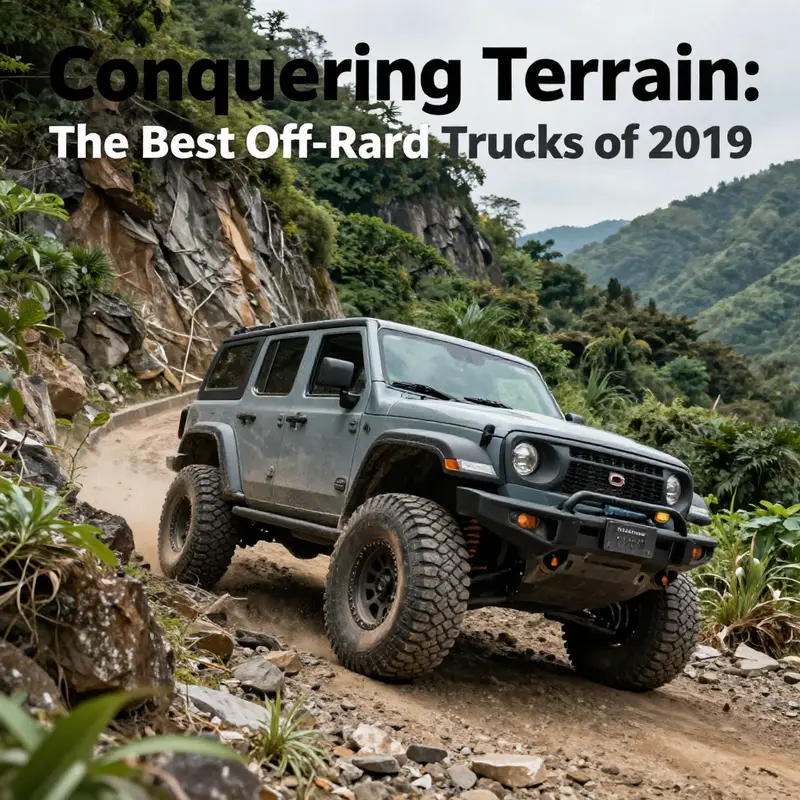
In 2019, the off-road truck segment was defined by a spectrum of priorities rather than a single formula. Manufacturers offered rigs that crawled over rocks with quiet confidence and others that could sprint across dunes with a race-car pace. The best truck of 2019 was not a simple ranking, but a thoughtful appraisal of what a driver needs from trail to street. Three archetypes dominated: a compact, agile performer built for tight, technical trails; a mid-size option tuned for maximum versatility; and a full-size luxury model whose capability was paired with a refined interior. When you weigh performance against capability, luxury against reliability, and value against exclusivity, 2019 reads like a field guide with multiple right answers depending on the map you carry.
The compact mid-size earned fans by sticking to its core mission: a practical rhythm of suspension travel, tire geometry, and drivetrain tuned to keep the tires planted on varied terrain. It rewarded technique as much as hardware, with a balance of lift, protection, and a short wheelbase that encouraged confidence on steep climbs and tight switchbacks.
The more aggressive mid-size variant broadened the surface range, using advanced dampers and a more capable drivetrain to conquer fast desert sections while still performing through rock sections. Power rose to meet the demand and onboard systems helped manage throttle response and traction control for high-speed traversal as well as rock crawling.
Finally, the full-size luxury model delivered comfort with purpose: a sturdy chassis, multiple locking differentials, a refined interior, and the ability to glide over rough terrain. It proved that luxury and capability need not be mutually exclusive, offering premium materials, technology, and stability on the trail and on the highway.
The 2019 landscape rewarded specialization as much as versatility. The best truck depended on where you planned to go and how you wanted to travel. If you wanted a nimble partner for tight trails, the compact option was ideal. If you sought long days across varied terrain with high-speed desert sections, the other mid-size option offered broader capabilities. If daily life and remote detours mattered most, the luxury model provided the strongest balance of comfort and capability.
Readers looking to understand the deeper mechanics of power, torque, suspension tuning, and drivetrain reinforcement can explore standard concepts in related automotive literature. The broader takeaway is that the best off-road truck for 2019 was a spectrum of winners aligned with different adventures; the map mattered more than the destination, and the best choice depended on your intended journey.
Luxury on the Trail: How 2019’s Off-Road Giants Reimagined Comfort and Refinement
When the discussions turn to off-road trucks in 2019, most minds first jump to the ability to conquer rock-strewn passes, mud-slick trails, and water crossings. Yet a different, no less important conversation sits nearby: which of these rugged machines also delivers a sanctuary for the people inside? The era around 2019 was ripe with models that refused to trade comfort for capability. Among them, a handful stood out not merely for their performance on the trail, but for how they made the journey itself a pleasure. This is the chapter where luxury and off-road prowess intersect, where the question of which truck is best shifts from a single metric—torque, approach angle, or suspension travel—toward a broader measure: can a vehicle be both a capable expedition tool and a comfortable, refined daily driver? In this context, three names frequently surface in discussions of luxury and comfort: the Mercedes-Benz GLE and G-Class, and the Land Rover Range Rover Sport. Each arrives with a distinct philosophy, and each demonstrates that 2019’s off-road market could offer a rare blend of adventure and serenity without forcing a surrender to one or the other.
To begin with the GLE, it represents a case study in how comfort-oriented engineering can coexist with formidable on- and off-road capability. The 2019 GLE is not merely a taller sedan with four-wheel drive; it is an SUV crafted to deliver a sense of control and ease no matter the surface beneath. Its adaptive suspension is tuned to smooth the roughest surfaces while preserving a composure that makes highway cruising feel almost hydraulic in its ease. The four-wheel-drive architecture behind the GLE is intelligent enough to manage power delivery across diverse terrains, translating traction into confidence rather than chaos. In the cabin, the experience is equally deliberate. Premium materials, meticulous fit and finish, and superior sound insulation combine to hush the outside world—an attribute that matters just as much on a long dirt road as it does on a toll-free freeway.
Inside the GLE, technology does not shout to be noticed; it serves the aim of comfort. An intuitive infotainment setup keeps controls within easy reach, and the system’s responsiveness reduces cognitive load on drivers who juggle maps, climate zones, and drive modes while negotiating a rocky switchback. For many buyers in 2019 who chased both adventure and everyday usability, the GLE’s interior offered a serene environment where the cabin could feel like a retreat after a day’s work or a weekend escape. The car’s capability is apparent when the road narrows or the surface loosens, yet the driving experience remains remarkably forgiving. It is in these moments that luxury and off-road performance converge: the vehicle remains stable, the ride stays composed, and the occupant experiences a sense of quiet confidence rather than a jarring push-and-pull between chassis and terrain.
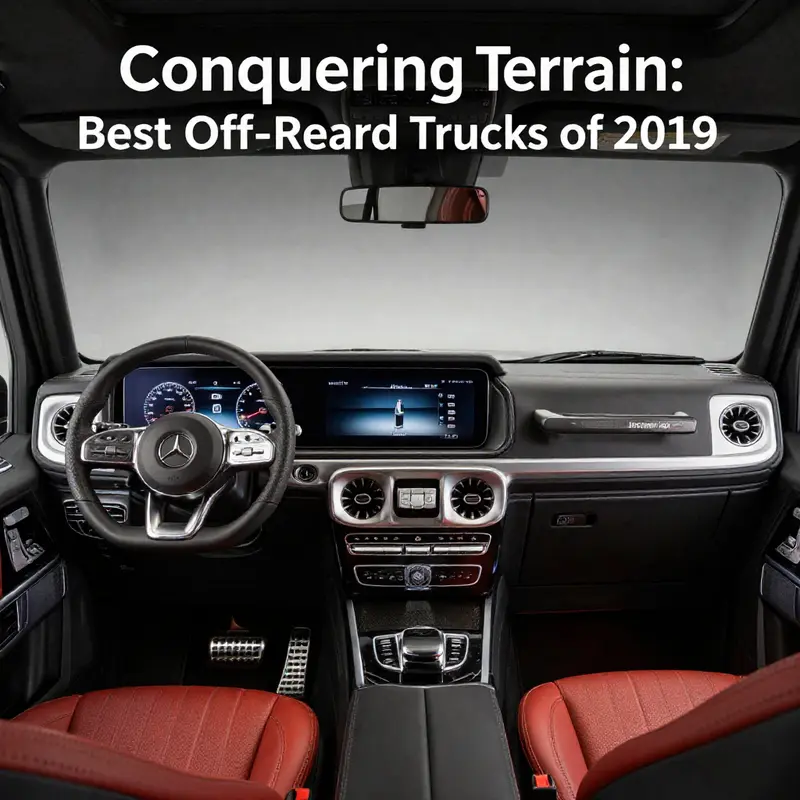
Then there is the iconic G-Class, the stalwart box that has defined a separate standard for rugged prestige since the late 1970s. The G-Class embodies a paradox that few vehicles truly master: it preserves a spiritual connection to the trail while offering a level of interior grandeur that rivals many premium sedans. The 2019 refreshes to the G-Class did not erase its utilitarian soul; they refined it. Inside, the cabin exudes a tactile sense of luxury—high-quality leathers, real metal accents, and thoughtful detailing that communicates durability as a feature, not merely a look. Yet the ride remains a surprising paradox: a plushness that makes the G-Class feel as comfortable over a gravel track as it does on a smooth highway. The key to this is the balance of a robust body-on-frame architecture with a modern suspension strategy and drivetrain tuning that translate confident off-road performance into a composed, almost serene on-road demeanor. In practice, occupants notice the difference in how the truck isolates them from surface irregularities; a rough road becomes a background texture rather than a sequence of jolts. The G-Class does not pretend that rough terrain is comfortable; it engineers comfort into the journey as a matter of course, so that the thrill of the trail remains accessible without becoming an endurance test for the passengers.
Another jewel in this luxury-off-road triad is the Range Rover Sport. Range Rover’s tradition of marrying craft with capability is on open display in the Sport’s 2019 iteration. The interior is a masterclass in craftsmanship, with materials that feel both indulgent and resilient. The driving environment is soundly designed to minimize fatigue, featuring a well-calibrated ride quality, a second-to-none seat design, and climate control that seems to understand not just temperature, but the subtle comfort needs of occupants in different seats and at different times of day. Under the hood, a potent V6 engine delivers robust performance that makes the Sport feel eager on paved roads and assured off the beaten path. The eight-speed automatic transmission shifts with a quiet efficiency that underlines the model’s dual personality: it can shuttle you through traffic with the same poise and composure that it uses to navigate rough terrain. The interior’s central control hub—its large touchscreen, its voice recognition capabilities, its navigation system—demonstrates how 2019s premium SUVs integrated technology to reduce cognitive load and increase the sense of control, rather than merely decorating the cabin with gadgets. The three-zone climate control, a feature that might seem luxurious in any car, becomes essential in long expeditions where comfort depends on personal microclimates as much as on seat cushioning or cabin quiet. In short, the Range Rover Sport in 2019 offered a propulsion and a cabin that could satisfy a driver who demands both an excitement-filled drive on a winding pass and a retreat from the world inside a sanctuary of premium materials and quiet ambiance.
To hold these three vehicles in perspective, it is useful to recall what the other prominent off-road contenders of the era offered when luxury and reliability were weighed against rugged reliability. The Land Cruiser 79, for instance, earned its reputation as the real off-road pickup—a platform that prized mechanical simplicity, durability, and rock-solid reliability over interior refinement. The Pajero V97, with its Super Select 4WD II system, offered a well-considered blend of part-time and full-time four-wheel drive, providing precise control across a spectrum of surfaces while maintaining rugged build quality. Both these machines embody a philosophy where the off-road experience is foregrounded, and comfort is a secondary benefit, if present at all. In the context of a chapter on luxury and comfort, they serve as useful counterpoints: they remind us that the off-road core—the ability to traverse the harshest terrain—remains indispensable, but it does not have to come at the cost of everyday usability. They also underscore a broader truth about 2019’s market: there existed a spectrum of choices, from vehicles that sacrificially balance comfort for capability, to those that pursued luxury without surrendering the off-road core.
What differentiates the luxury-focused trio is not merely the presence of plush leather or a panoramic sunroof, though those things certainly matter. It is the degree to which engineering decisions—suspension tuning, noise isolation, seating ergonomics, and the orchestration of power, traction, and stability systems—are harmonized to create an artful journey. The adaptive suspension in the GLE, the refined, composed ride quality in the G-Class, and the Range Rover Sport’s mastery of space and light within the cabin all demonstrate an approach that prioritizes the vehicle as a living space—an environment in which the driver is not a passenger to the road but an occupant who can choose to savor every mile, whether in the shadow of jagged peaks or on a quiet stretch of highway. It is not unusual for drivers to measure success in these vehicles by the ratio of time spent on trails to time spent in traffic, and in 2019 these ratios began to tilt toward a more balanced middle ground. The very essence of luxury in an off-road vehicle had shifted from simply being able to go places to being able to arrive there without fatigue, and to arrive with one’s senses intact and one’s mood preserved.
From a design language perspective, these models also speak to how luxury integrates with capability. The G-Class, with its enduring silhouette, makes a statement that capability and prestige can share one closed-off, instantly recognizable image. The GLE, more modern in its form, conveys that refinement can scale up to the roughest environments without dulling the senses or compromising safety systems that today feel almost second nature. The Range Rover Sport embodies a British interpretation of interior drama—bold lines, carefully chosen materials, and a layout that invites touch, sight, and ease of use into a single, cohesive experience. In a practical sense, these features translate into real-world value for buyers who must wrestle with both weekend explorers and weekday commutes. A vehicle that can seat a family securely, absorb long drives with little fatigue, and still deliver a confident grip when the trail turns rough is more than a luxury. It is a tool for living with intention across a broad set of landscapes.
Yet the 2019 market’s luxury-off-road proposition was not simply about feature lists. It was about how those features felt in the real world—the way the ride settles on a dirt road, how the engine’s torque translates into progress on a steep grade, how quickly the cabin can quiet down when you close the door after the day’s adventure. In this sense, the three models discussed here each achieve a different emphasis: the GLE tends toward a modern, versatile comfort that still respects the brand’s performance heritage; the G-Class leans into a more iconic luxury that remains genuinely capable off the beaten path; and the Range Rover Sport balances papable luxury with dynamic on-road and off-road performance that feels almost surgical in its precision. The choice among them rests on the priorities of the buyer: the GLE for a balance of daily usability and rugged capability; the G-Class for an unrivaled blend of prestige and go-anywhere prowess; and the Range Rover Sport for a refined, driver-centric experience that does not force compromise when the road turns or the trail deepens.
There is also a narrative about how buyers in 2019 approached these vehicles. For many, luxury was no longer about a few upscale features tucked away in a storage bin or a heated seat that activated with a glance. It was about an entire ecosystem of comfort: seats designed for long-haul comfort with multi-point adjustability, climate zones that sense and adapt to occupant preferences, soundscapes that reduce fatigue, and a cockpit that keeps distractions to a minimum. In the off-road context, these dynamics become even more critical. The noise of a diesel or petrol engine can be constant on a long expedition; the ability to tune in or tune out without losing situational awareness is a form of luxury in its own right. It is the difference between a trip that drains you and one that leaves you refreshed, ready to tackle the next obstacle instead of dreading it.
For readers weighing the trade-offs in 2019, the takeaway in this luxury-focused chapter is clear: if your off-road ambitions come bundled with a desire for refined interiors, quiet cabins, and sophisticated technology, the Mercedes-Benz GLE, the Mercedes-Benz G-Class, and the Range Rover Sport present compelling, distinctly different but equally credible paths to that goal. Each vehicle demonstrates that off-road capability and interior luxury can not only coexist but complement one another, offering a journey that is as enjoyable on the highway as it is challenging on loam and rock. This convergence is what makes the 2019 luxury-off-road segment feel particularly rich. Practically, it also means buyers could choose a vehicle that aligned more with daily life—a car that has the comfort and tech of a high-end sedan but brings the confidence and resilience of a true expedition vehicle—without feeling as if they had to mortgage the future to own it.
In closing, the 2019 landscape reveals a simple truth about luxury and off-road capability: the best trucks in this space are not merely the ones that could conquer the hardest terrain, but the ones that made the act of going places into a more pleasurable, less stressful experience. The trio of Mercedes-Benz models and the Range Rover Sport did not just promise adventure. They delivered a narrative of refinement meeting rugged endurance, a narrative that invited drivers to redefine what a truck could be. They suggested that the best off-road vehicle in 2019 was not a single champion but a spectrum of choices—each a different answer to the same question: how do you combine luxury and capability in a way that makes every mile matter? For those who crave both exhilaration and ease, those answers were not just satisfactory; they were remarkably persuasive.
External resource: For a deeper dive into the G-Class’s blend of ruggedness and luxury, see the detailed review on Car and Driver: https://www.caranddriver.com/mercedes-benz/g-class/reviews/a29224558/2019-mercedes-benz-g-class-review/
Beyond Glamour: Why Reliability and Value Define the Best Off-Road Truck of 2019
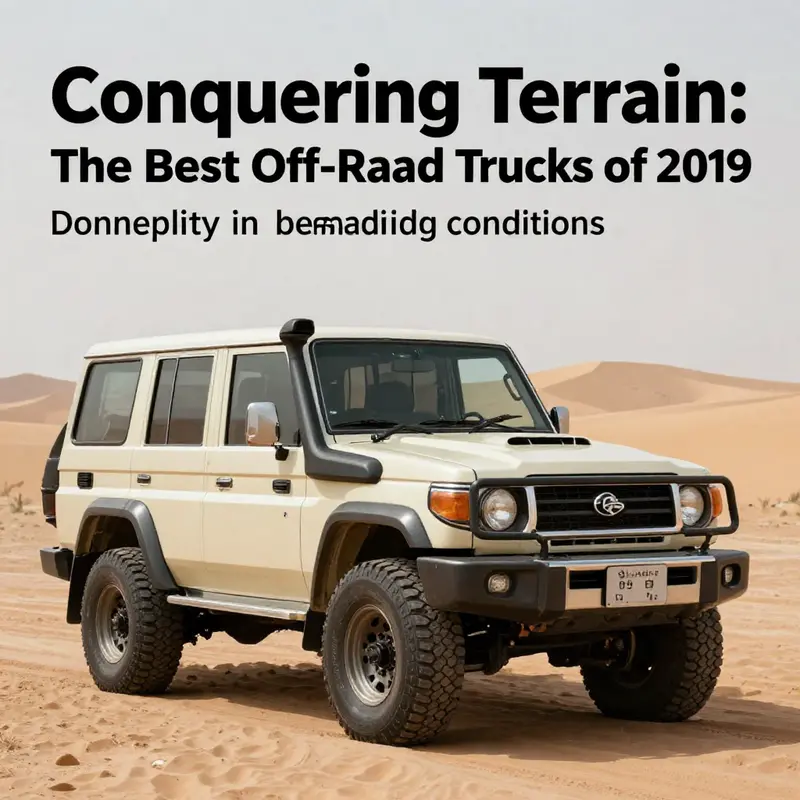
When readers ask which off-road truck was the best in 2019, the instinct is often to point to the most capable machine or the one with the flashiest badge. Yet a deeper, more practical question governs true excellence in that year: which truck delivers the strongest blend of reliability, long-term value, and off-road capability when the rubber meets the rough. In this sense, 2019’s field reads like a study in contrasts. Some contenders wore their luxury as armor, some boasted legendary reputations without sacrificing modern refinement, and others offered spare parts and service networks that could outlast a dozen trips to the backcountry. Across that landscape, the 2019 Toyota Land Cruiser 5700—often referenced in discussions as the LC200—emerges not as a single best-in-class in every metric, but as a workhorse whose combination of proven durability, measured value, and uncompromising off-road talent makes it the most compelling overall choice for demanding environments. The argument rests not on a single digit of performance but on a sustained, long-haul capability that proves itself again and again in the rough, whether you’re crossing Tibetan plateaus or traversing Xinjiang’s remote byways.
What sets the LC200 apart begins with reliability. This is a vehicle that has earned its reputation over decades, a lineage that many drivers treat as a trust built piece by piece through years of use in harsh climates and rugged terrains. In the marketplace, reliability often translates into a simple, stubborn fact: fewer trips to the shop mean more miles covered between services, and fewer scrapes against the wallet over the vehicle’s lifetime. The LC200’s reputation is not a brand halo; it is a cumulative record of durability, serviceability, and a design philosophy that prizes robust construction over rapid novelty. Its frame, a non-load-bearing architecture in many configurations, is tuned to survive the kind of punishment that would bend or break a lighter, more agile machine. This is not a vehicle that hides its fatigue behind a smoother ride; it is a machine that endures, and in endurance, it becomes a dependable constant in the lives of those who depend on it for work, not just for weekend escape.
In discussing value, the conversation shifts from sticker price to total cost of ownership. The LC200’s purchase cost may sit higher than some competitors, but the long view often narrows the gap and can even widen the lead in favor of the Toyota. A true workhorse earns its keep by offering lower maintenance costs over time, fewer unplanned trips to the dealer, and steady resale value that cushions the purchase as the miles accumulate. This is where the LC200 earns a different kind of respect: a vehicle that remains useful and relevant far longer than its more expensive, luxury-oriented rivals whose maintenance becomes a discretionary expense as their age grows. When you total the costs—parts, labor, fuel efficiency in demanding schedules, and the value of a vehicle that remains trusted by fleets and serious adventurers alike—the Land Cruiser 5700 often outperforms its price tag and demonstrates why its owners plan on years of use rather than merely seasons of novelty.
Performance in the off-road sense goes beyond raw horsepower or cornering grip. It means how a machine handles the worst surfaces, the slow crawl, the steep climb, and the moment when the engine must haul a heavy load over rock, sand, or mud with minimal fuss. In this regard, the LC200’s 5.7-liter V8 was chosen more for its enduring torque and steady, predictable response than for sport-car-like acceleration. The engine’s grunt is paired with a robust, proven four-wheel-drive system that distributes power with a quiet confidence, allowing the driver to concentrate on line choice and throttle control rather than wrestling with stability all the way up a daunting grade. The vehicle’s geometry—ground clearance, approach and departure angles, and effective underbody protection—are tuned to plow through wilderness with a sense of inevitability rather than hesitation. While other vehicles in the field offered compelling credentials—one might point to a boxy, go-anywhere icon known for its spartan interior and extremely capable transfer case, or to a rugged, purpose-built pickup with legendary toughness—none combine the same level of long-range resilience with a comfortable cabin and a broad service footprint.
The narrative around 2019’s top contenders also includes a trio of other well-regarded names that frequently appear in conversations about off-road prowess. There is the iconic, capable vehicle whose design language signals luxury as much as capability, offering a blend of performance and premium interior that turns heads even when the terrain is boring. Then there is the stalwart, long-proven workhorse that has earned a reputation as a genuine “real off-road pickup” in markets where the road ends and the trail begins. And there is a technologically sophisticated SUV that has long been seen as a benchmark for control on many surfaces, balancing sophisticated drive systems with a rugged, traditional essence. Taken together, these choices underscore a core truth about off-road trucks in 2019: the landscape rewards those who balance capability with dependability and who guard against the temptation to replace reliability with luxury’s transient shine.
Still, the argument for the LC200 rests on more than a collection of favorable anecdotes. It rests on a history of performance under conditions that would leave other vehicles straining or retreating. In the most demanding environments—where supply lines are thin, where temperatures swing between the coldest nights and the hottest days, and where service bays are a distant horizon—the ability to rely on a vehicle when the going gets rough becomes the most valuable currency. The LC200 is that currency, a machine whose longevity is intimately tied to the trust its owners place in it. Its reputation as a dependable partner for long expeditions and demanding commercial work is the culmination of countless miles accumulated by drivers who have learned to count on it under the most punishing circumstances. This reliability does not exist in a vacuum; it is the product of thoughtful engineering, robust fixtures, and a network of parts and service that makes repair less a crisis and more a routine matter of maintenance.
The argument for value is leveraged further by the LC200’s ability to absorb wear without losing its core competencies. If you have ever watched a vehicle’s interior deteriorate after a single season of frequent use in harsh landscapes, you know that comfort and control are not guaranteed by rugged exterior lines alone. The LC200’s cabin, while not a showroom exhibit, offers a practical blend of durability and usability. It uses materials comfortable enough for long journeys yet resilient enough to resist the grind of daily work, with controls laid out for intuitive operation even when the hands are cold or numb from a long night of travel. In a market where many trucks tilt toward either luxury or brute force, the LC200 finds a middle ground that is not about pleasing aesthetics but about staying functional and dependable when time, miles, and weather press in from every direction.
The case for reliability and value becomes even more persuasive when we consider the ownership journey. The LC200’s support ecosystem—parts availability, a broad network of skilled technicians, and a track record of durable components—translates into fewer clogged calendars and fewer anxious hours spent diagnosing issues on lonely roads. It is this combination of robust engineering and practical accessibility that makes it not merely a vehicle but a partner in work and exploration. The Land Cruiser 5700’s reputation isn’t about a single triumph; it’s about a lifecycle that aligns with people who trust their machines to carry them through repeated trials, all while preserving the vehicle’s core capabilities and resale attractiveness.
To readers who want a more technical, mechanic-focused exploration of the backbone that powers such machines, a practical reference is available here: Mastering diesel mechanics: a step-by-step path to success. This resource dives into the fundamentals that keep high-mileage engines performing, the maintenance rhythms that prevent breakdowns, and the diagnostic approaches that help crews stay ahead of trouble on long treks. It is the kind of guide that complements the narrative of value and reliability by offering concrete steps to preserve the heart of any rugged off-road platform.
The broader takeaway from the 2019 landscape is not a single winner in every category, but a clear emphasis on how a vehicle earns its keep over time. The LC200’s blend of proven durability, reasonable long-term costs, and off-road capability provides a model for what it means to be genuinely well-rounded in a field where many vehicles excel in only one dimension. In this sense, those who need a truck that can perform at a high level in extreme environments—without demanding constant attention or forcing a choice between luxury and rugged capability—find in the LC200 a prototype for success. It is the kind of vehicle that, when the trail grows difficult and the day stretches into nights of mud or dust, remains a steadfast companion rather than a fickle accessory. The other contenders—whether celebrated for their iconic status, their advanced four-wheel-drive technology, or their proven track records—helped shape the debate and raised the bar for what “best” can mean in 2019. But the workhorse that stands out in the long arc of ownership, including reliability, durability, and value, is the one that keeps moving when others falter, and that is the essence of true, enduring capability on the road less traveled.
Benchmarking 2019’s Off-Road Giants: How Technology and Terrain Redefined the Best
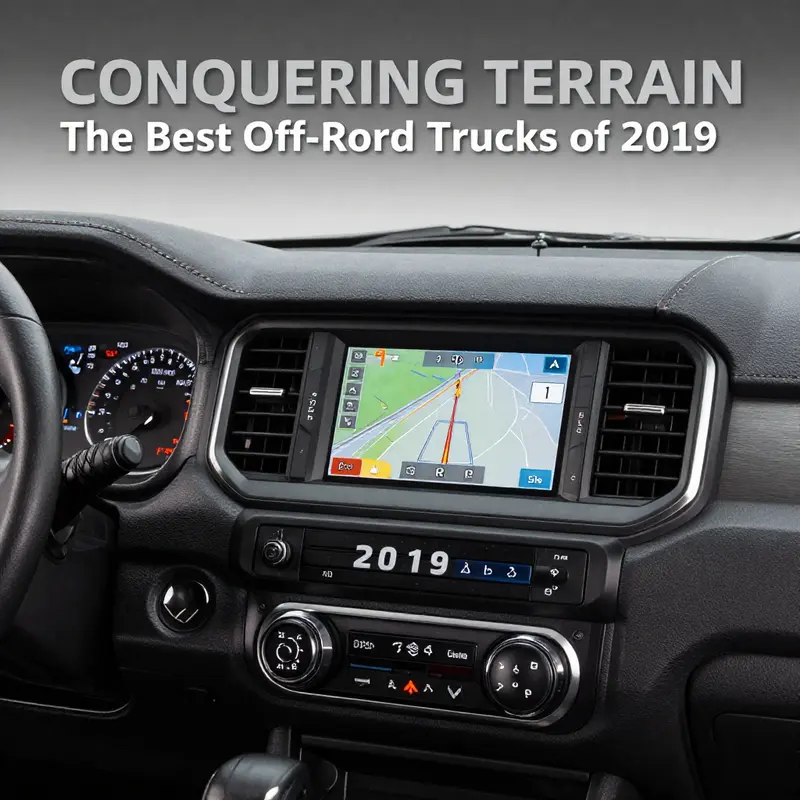
Evaluating the best off-road truck in 2019 demanded more than a glance at top-line specs. It required an appraisal of what the vehicle was built to do, and how modern engineering translated rugged capability into controllable performance in the real world. The year signaled a pivotal moment: raw power still mattered, but electronic aids, adaptive suspensions, and nuanced drivetrain strategies increasingly determined how effectively that power could be deployed across mud, rock, sand, and water. In this sense, the 2019 field resembled a family of specialized tools rather than a single, monolithic benchmark. Each contender offered a distinct answer to the same central question: what is the best off-road truck when you weigh terrain, purpose, and practicality against price and comfort?
One enduring archetype in 2019 was the iconic, full-size machine whose silhouette is as recognizable as its capability. Beyond its striking exterior lay a carefully tuned four-wheel-drive system and a robust chassis that could shuttle a driver from steep, uneven slabs to smooth highway with a confidence that felt almost built in. The engineering story here is as much about control as it is about brute force. The low-range gearing and electronic traction aids stitched together an experience that pairs luxury cabin serenity with a willingness to rumble through challenging surfaces. The interior, often described as a surprising contrast to the rugged exterior, doubles as a kind of sanctuary after a long day of navigation through rough weather and worse roads. In practice, this class of vehicle excels when the mission favors long-range expeditions, comfort on extended trips, and the ability to absorb uneven terrain without letting the ride degrade into discomfort. It’s the benchmark for people who want legend, luxury, and capability bundled into one towering, road-legal package.
Another thread in the 2019 tapestry is the legendary workhorse—an enduring, durability-first choice that many off-road purists regard as the ultimate living proof of rugged engineering. This category leans into fundamentals: a time-tested ladder frame, solid axles, and a drivetrain that thrives on simplicity and reliability under extreme conditions. It’s the kind of platform that rewards drivers who spend real days on back roads, deserts, or bush trails, where predictability matters more than bling. The appeal here is not a sprint but a marathon: an ability to shrug off neglect, shrug off punishing terrain, and keep moving when lighter, more urban-focused machines falter. The strength of this archetype lies in its reputation for enduring parts, straightforward maintenance, and a philosophy of operation that emphasizes overland endurance over showroom polish. It remains a touchstone for serious enthusiasts who value long-term resilience and proven capability, even when that means trading some modern conveniences for a purer, more mechanical driving experience.
A third pathway highlighted in 2019 was the mid-size, all-terrain specialist that balances modern electronics with proven mechanical underpinnings. This class prioritizes adaptability: a drivetrain that can switch from part-time to full-time four-wheel drive in a way that optimizes traction across a spectrum of conditions. The emphasis here is on control—how a vehicle can seamlessly move between slippery rock, clay, and gravel, while the chassis and suspension maintain composure. The ride quality often leans toward everyday practicality, which makes this option appealing to those who want true capability without the extreme size or price of the luxury-class machines. It is a reminder that the best off-road truck does not always need to shout its prowess; sometimes it proves itself through quiet, repeatable performance that translates into confidence in the driver’s choices, even in the most trying spots.
Lurking in the rearview mirror of the 2019 debate, but increasingly in view, was the high-performance, all-weather, high-technology SUV that blurred lines between supercar and off-road chassis. This was the most audacious and tech-forward branch of the family: a vehicle that could travel at highway speeds with the poise of a GT yet deploy suspension and torque vectoring systems that allow it to challenge dunes, washboards, and rocky grades with a poise that felt almost surgical. The appeal here isn’t just power; it’s precision control—adaptive air suspension, torque distribution systems, and a suite of drive modes that tailor throttle response, dampening, and traction to the surface beneath. It’s a demonstration that what once happened only on dedicated rally routes or desert runs could now be achieved, within reason, on a public road and under the constraints of street legality. For drivers who crave extreme capability in a package that can still pass as a daily transport, this path offered a compelling synthesis of speed, comfort, and terrain mastery.
Taken together, these archetypes describe a spectrum rather than a single best. The luxury-laden icon offers a formidable blend of comfort and capability, turning off-road into a sanctuary tour of rugged elegance. The legendary workhorse answers the call of endurance and reliability, the quiet stalwart on which many expeditions rely. The mid-size, adaptable performer stands at the intersection of practicality and prowess, delivering credible off-road competence with manageable dimensions and costs. The tech-forward, high-performance SUV pushes the boundaries of what an on-road vehicle can do off the pavement, prioritizing control, precision, and a modern, instrumented approach to navigation across rough surfaces. Each path serves a different mission, and that diversity is precisely what defined 2019 as a year of broad advancement rather than a singular pinnacle.
Core to this discussion is the way technology translated into tangible advantages. In the luxury tier, electronic traction control, low-range gearing, and carefully tuned stability systems offered a level of confidence that could be relied upon even when the terrain demanded more than muscle. The ride quality remained a standout feature, with cabin acoustics and seats designed for long, demanding journeys through the elements, making comfort part of the off-road equation rather than a compromise to rough conditions. In the durable pickup category, the conversation shifted toward chassis rigidity, drivetrain simplicity, and the prospect of long service life under strenuous use. The ability to endure abuse without escalating maintenance costs or frequent repairs gave this path a practical, almost philosophical appeal: off-road success measured by reliability and return on effort rather than outright pace.
The balanced, mid-size contender embodies a pragmatic philosophy. It is engineered to adapt quickly, to manage traction across diverse surfaces, and to offer a versatile package that does not force a single mission. The emphasis on a blend of part-time and full-time four-wheel-drive concepts—without needing to reconfigure the system from the outside—demonstrates how engineers imagine driving as a spectrum of conditions rather than a single scenario. The result is a platform that feels like a capable partner on a broad range of adventures, whether the driver’s day is spent on a sandy beach, a muddy forest track, or a steep, rocky ascent. This is where the value proposition becomes clear: the best all-rounder might not always be the most specialized tool, but it can be the one that consistently fulfills a wide set of needs with grace and predictability.
Even as these threads diverged, the common denominator across all top contenders in 2019 was a shared commitment to integrating technology with terrain-ready engineering. The best off-road experiences in that year did not hinge on raw numbers alone. They hinged on how well the vehicle translated those numbers into usable control when the going got tough. Ground clearance, approach and departure angles, and wading depth were no longer the only metrics; the ability to modulate throttle, torque, and suspension in a way that preserves line, stability, and driver confidence became equally decisive. The apparatus that once relied on brute force alone now relied on data: sensors, adaptive control algorithms, and drive-mode logic that could read the surface and tailor the drivetrain output in real time. In plain terms, 2019 was a year when off-road capability became a product of smart design as much as raw strength.
From a buyer’s perspective, this landscape presented a set of practical considerations that helped translate the abstract idea of “the best” into a personal decision. For long-haul expeditions where comfort matters as much as capability, the luxury-class option offered a balanced equation: plush interior, confident highway manners, and a formidable off-road package that could handle remote stretches without turning the journey into a mechanical audition. For firefighters of the trail and serious overlanders who spend weeks away from paved roads, the durability-forward choice promised a simpler, more resilient path, with parts and service often easier to source in remote regions. For the weekend warrior who wants a ready-to-go machine with broad competence, the mid-size, adaptable model provided a compelling blend of agility and capability at a more approachable price point. And for those who chase the thrill of extreme conditions and the cadence of high-performance engineering, the tech-forward SUV delivered an intoxicating mix of speed, grip, and precision that redefined what could be attempted off-road, provided the surface allowed it.
The broader takeaway is that the “best” in 2019 was less about a single winner and more about a portfolio of solutions, each tuned to a distinctive mission. In other words, there wasn’t a universal holy grail; there were several plausible answers, each backed by thoughtful engineering and an intimate understanding of what off-road means to different drivers. The takeaway for enthusiasts, collectors, and practical buyers alike is that 2019 reinforced a simple truth: off-road capability is a multi-faceted conversation. It involves chassis robustness, drivetrain versatility, and a philosophy about how and where people actually use their machines. When viewed through that lens, the year’s best trucks were those that could deliver durable performance while aligning with the driver’s real-world needs—whether that need was daily comfort, remote reliability, flexible traction management, or the adrenaline of high-speed desert running.
For readers who want to connect these ideas to a deeper historical and technical context, an external overview of one of the iconic benchmark vehicles can provide a tangible reference point. It offers a sense of how the blend of luxury, capability, and engineering ethos coalesced in a vehicle that, even decades on, remains a reference in the segment. [External reference: https://www.mercedes-benz.com/en/vehicles/passenger-cars/g-class/]
Final thoughts
In the ever-evolving landscape of off-road vehicles, the choice of the best truck in 2019 is steeped in personal preference, but firmly rooted in performance, comfort, reliability, and technological innovation. For those seeking a relentless companion on rugged trails, the Land Cruiser 79 reliably elevates the experience. Meanwhile, if luxury is a priority, the Mercedes-Benz G-Class provides an unmatched blend of elegance and capability. Should you cherish a balance of tech-savvy features and proven performance, the Mitsubishi Pajero V97 stands ready to deliver adventure without compromise. Each of these formidable trucks offers distinct merits that make them worthy contenders in the off-road segment for enthusiasts, adventurers, and anyone who values superior capability.