
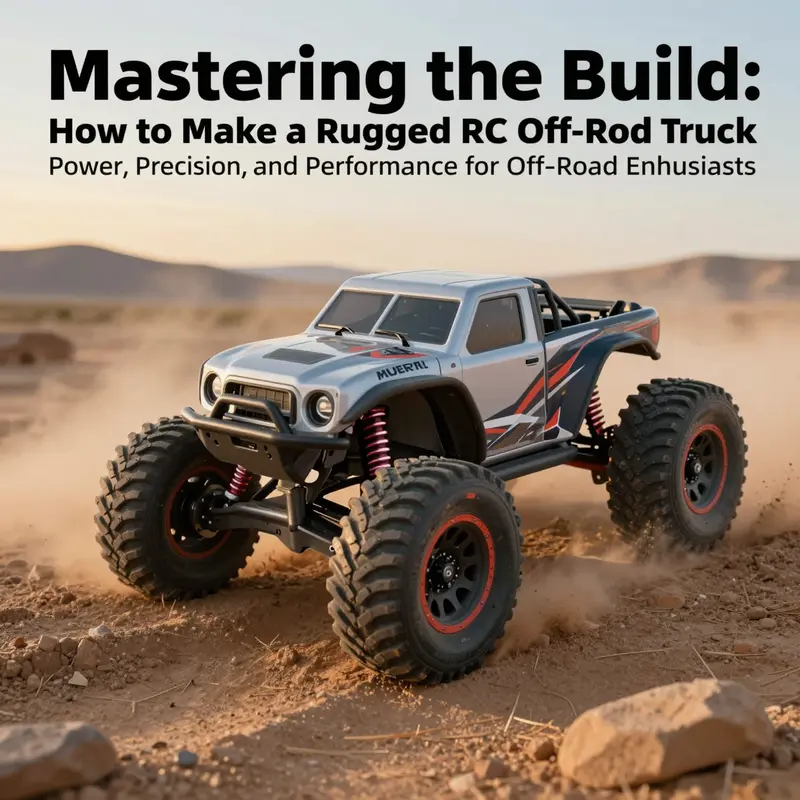
The thrill of off-road maneuvers inspires a passion that transcends terrain, whether you’re tearing through rugged trails or blazing paths where no asphalt exists. Building your own RC off-road truck channels this spirit into a hands-on project, blending engineering savvy with practical grit. This guide cuts through the noise, delivering a step-by-step expedition from blueprint to battlefield-ready machine. Beginning with astute planning and intelligent design choices, you’ll learn how to blueprint the perfect chassis and drivetrain tailored for aggressive terrain and ultimate control. Next, gather essential materials and tools that balance durability and performance—perfect for off-road racers, rural landowners, and modification shops aiming for peak reliability. Assembly transforms theory into muscle and motion, stitching every component into a cohesive, rugged powerhouse. Finally, rigorous testing and precision calibration ensure your creation conquers bumps, climbs, and jumps with unmatched confidence. Each chapter equips you with the expertise and drive to craft an RC off-road beast that defies the elements and outperforms expectations.
From Vision to chassis: Designing a resilient foundation for an off‑road RC truck
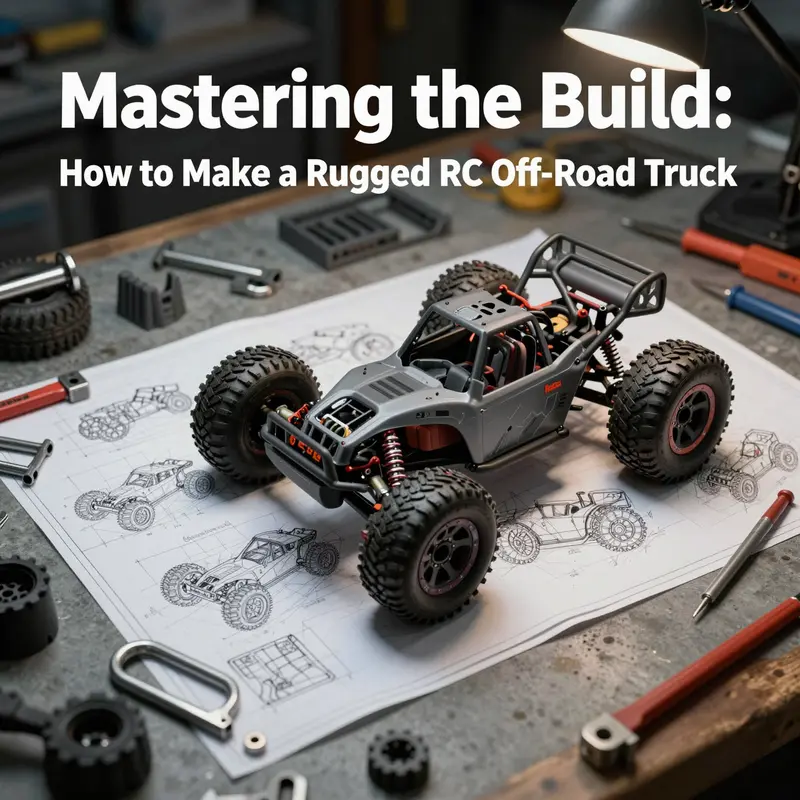
Designing an RC off‑road truck begins long before the first screw is turned. It starts with a clear purpose, a well‑considered plan, and a willingness to tune ideas into mechanics that can survive the rough reality of dirt, rocks, and jumps. The planning phase is not a ceremonial preface; it is the engine room where constraints become opportunities. Think about what the truck is meant to do: is it built for speed across loose desert dust, for crawling over boulders and ruts, or for robust, site‑simulation tasks that demand endurance and predictable handling? The answer to that question dictates the backbone of the project—its chassis geometry, drivetrain layout, suspension travel, and even body sizing. If you are a beginner, the simplest way to gain momentum is to start with a blueprint or a kit. A guided starting point reduces the risk of misalignment and ensures joints are sturdy enough to withstand aggressive terrain. More advanced builders can push toward a custom chassis, knowing the constraints and capabilities of 3D printing and lightweight, strong materials. Either path demands an upfront commitment to balance, durability, and maintainability. The design ethos should lean toward robustness without excessive weight, because every gram you add can demand more power and more heat management when you push the truck through rough terrain.
The scale of the vehicle matters as well. For off‑road work, larger scales offer a broader, more forgiving field of view and better stability through tight turns on uneven surfaces. They also allow for bigger tires and more forgiving suspension components, which is a practical advantage when negotiating rocks or logs. At the same time, larger scale demands more power, more precise weight distribution, and more substantial cooling for the motors and electronics. The decision about scale ties directly into the choice of drivetrain architecture. All‑wheel drive systems, where power is distributed across all four wheels, are highly valued for their traction on loose or slippery ground. In some hobby circles, enthusiasts explore multi‑motor configurations, such as a central drive with distributed power to multiple axles, to optimize grip in different terrains. The key is to match the drivetrain to the typical playing field and to ensure that the chassis, suspension, and electronics can cope with the stress. A well‑designed AWD or multi‑motor layout is only as good as its integration with a chassis that won’t twist or flex uncontrollably under load.
Material choice becomes a consequential design decision once the basic geometry is sketched. A common approach uses a hybrid of lightweight, impact‑resistant plastics for the body and a frame built from aluminum or composite materials. The aim is to create rigidity where it counts—around mounting points, suspension pivots, and the drivetrain—without burying the truck in weight. When you anticipate heavy off‑road use, consider incorporating metal components at key stress points, such as hub carriers, shock towers, and the main chassis rails. This reduces the risk of fatigue failures that could strand the truck on a rock or during a jump. The governing reality is straightforward: the stronger the truck’s skeleton, the more predictable its behavior under demanding conditions. You may also encounter the idea of recycled or repurposed materials used creatively for weight savings and cost efficiency. In some builds, builders experiment with PVC or other easily accessible materials to craft custom tires or simple drivetrain housings, highlighting a do‑it‑yourself ethos that still respects the mechanical realities of torque, traction, and camber.
Power and control are the other half of the design conversation. Brushless motors are the standard bearers for high performance in today’s RC trucks, delivering significant torque and efficiency at low weight. The motor must be matched to a suitable electronic speed controller (ESC) and a battery that can tolerate repeated cycles of high discharge without overheating. Lithium‑polymer (LiPo) batteries are favored for their energy density and punch, but they demand careful handling and an appropriate charging and storage strategy. NiMH packs offer more rugged reliability and ease of use for beginners, albeit at the cost of weight and lower energy density. The battery placement inside the chassis is not cosmetic. It influences the truck’s center of gravity, battery protection during impacts, and overall balance when climbing a slope or landing from a jump. A low, centered battery position can improve stability, while a forward bias might help with steering response on loose surfaces. The electronics layout must protect against vibration and dust ingress. A combination of mounting brackets, zip ties, and simple gaskets can be enough to keep the receiver, ESC, and battery secure and quiet during operation. Cables should be kept tidy and secured to minimize the chance of snagging on moving parts during suspension travel or steering input. The transmission of power—the couple of gears and shafts that connect the motor to the wheels—must be chosen with regard to heat, torque, and efficiency. In a straightforward setup, gearing is a matter of matching motor RPM to wheel speed to achieve the desired top speed while ensuring the drivetrain remains within safe temperature ranges. In more ambitious designs, builders may explore multiple gear trains or differential arrangements to accommodate different axles and wheels, balancing thrust and turning smoothness.
A thoughtful approach to drivetrain and suspension also addresses how the vehicle handles rough ground. Independent suspension often yields smoother ride quality on varied terrain, with each wheel reacting to its own obstacle. A solid axle, by contrast, can deliver rugged durability and predictable geometry in rockier environments. The choice is not solely about comfort; it shapes steering behavior, grip in flattening trails, and even the ease with which you can tune the truck for different tracks. For larger builds intended to test stunts and jumps, robust shocks and a wider stance can dramatically improve control. If you are building for indoor tracks or compact outdoor spaces, you might prioritize tighter turning radii and a suspension setup that resists bottoming out on small bumps. The beauty of this planning stage is that it invites experimentation while keeping the core goals in sight: reliability, predictability, and the capacity to push the truck to its limits without collapsing under pressure.
The role of body design should not be overlooked. A streamlined body helps reduce aerodynamic drag at speed and can shield sensitive components from debris. Equally important is the body’s practicality in terms of access to the internals for maintenance and upgrades. A well‑designed body does not merely look the part; it provides a protective shell that can absorb impact while preserving the alignment and integrity of the underlying chassis. The scale again plays a pivotal role here. A larger shell provides space for larger components, easier wiring routes, and better heat dissipation, but it also adds weight and may raise the center of gravity if not balanced properly. When planning your body styling, think about the terrain you intend to conquer. A body that looks rugged and substantial often signals a design that embraces a robust undercarriage and reinforced mounting points. In this sense, aesthetics and engineering become allies in the same narrative rather than competing priorities.
As ideas crystallize, the decision to pursue a kit or a custom build becomes a function of time, budget, and curiosity. Kits offer reliability and a clear instruction path that minimizes the risk of misalignment or failure. Beginners often benefit from the disciplined approach of a kit because it demystifies the process of aligning drivetrains, suspensions, and electronics. A custom build, by contrast, is a chance to tailor the truck to your local terrain and your exact preferences. It demands a higher tolerance for iteration, testing, and troubleshooting. The more you push toward customization, the more you will benefit from a modular mindset: design with swappable parts, standardized mounting points, and a chassis that can absorb upgrades without a complete rebuild. In practice, that translates into planning for future enhancements—bigger tires, stronger shocks, a different motor, or a new sensor package for autonomous capabilities—so that each upgrade feels like a natural evolution rather than a radical overhaul.
A robust design process also embraces learning resources and community knowledge. Even when you work from a kit, you benefit from studying the underlying principles that apply across all RC off‑road platforms. The discipline of planning translates into repeatable success: you define a goal, map the required components, sketch a layout, test a prototype, and refine based on feedback. To the extent you want to deepen the mechanical literacy that underpins this hobby, consider exploring practical mechanical knowledge beyond the RC bench. For example, a guided path on automotive mechanics can deepen your understanding of how weight distribution, torque stewardship, and heat management interact in real‑world machines. Mastering Diesel Mechanics: Your Step‑by‑Step Path to Success offers a disciplined approach to troubleshooting, tuning, and incremental improvement that transfers well to RC projects, even though the domain differs. This kind of cross‑pollination helps you think like an engineer rather than just a builder, and it pays off in smoother field performance and longer‑lasting hardware.
The broader context of RC truck design benefits from looking at how the hobby has evolved and how the design choices discussed above fit into a larger ecosystem. Off‑road RC trucks are, at their core, engineering challenges dressed in scale aesthetics. They test your ability to translate a real‑world set of driving constraints into a compact, repeatable mechanical system. They reward you with a sense of mastery when your vehicle can negotiate a rough trail with confidence, return from a jump without parts loosening, and respond to throttle and steering inputs with predictable, intuitive behavior. The planning and design stage is where you inoculate the project against common failure modes: loose screws that shake free under vibration, misaligned gear meshes that create excessive play or noise, electrical connections that loosen after a few hours of rough terrain, or a battery that shifts and disrupts balance. Thoughtful design includes preventative measures: secure mounting points, vibration isolation for sensitive components, proper strain relief for wiring, and protective enclosures or guard rails around the most vulnerable sections. It is this attention to detail that differentiates a hobby project from a dependable field tool.
The design phase should also reflect a view toward future needs and evolving capabilities. A well‑documented plan makes it easier to revisit and revise the truck as you accumulate experience. If you find that your traction on loose gravel is too aggressive or too slippery on wet surfaces, you should be able to re‑tune the suspension, adjust the camber, swap shocks for longer travel, or alter the gearing without a full teardown. If you decide to explore autonomous features someday, the chassis you designed—flat mounting surfaces for sensors, accessible power rails, and clean cable management—will save you a lot of headaches. The goal remains consistent: create a platform that is not brittle, not fragile, and not so overspecialized that routine maintenance becomes a treasure hunt. You want a chassis that remains a solid base even as you add new capabilities, a base that makes your next upgrade feel like a natural upgrade rather than a costly restart.
As this chapter curves toward its practical edge, it is worth recalling that the very act of designing an RC off‑road truck is a valuable exercise in systems thinking. The vehicle becomes a compact laboratory where you iterate through tolerances, simulate real‑world conditions, and measure the impact of every choice on steering, traction, and stability. The wonder of the process is that even modest, well‑considered decisions—like placing the battery lower and toward the center or choosing a longer wheelbase for increased stability—can transform how the truck behaves on a rough track. The best plans underwrite what follows: a methodical assembly, careful testing, and a readiness to adjust. The result is not merely a toy on wheels but a functioning, adaptable machine that embodies a blend of creativity and engineering. And when you finally stand back to admire a truck that responds to input with confidence and resilience, you will sense that the planning and design phase wasn’t a hurdle, but the critical ignition of a gratifying, continuous craft.
To bridge the gap from theory to hands-on practice, keep your notes with you as you work. Sketch the chassis before you cut or print. Mark the locations where you intend to mount the ESC, the receiver, and the battery. Plan the cable routes and consider how you will secure moving components during full suspension travel. Document your decisions and rationales so that future upgrades can be planned with the same clarity you used for the initial design. A disciplined approach to planning and design creates a chassis that is not only capable but also enduring, a platform that grows with you as your skills expand and your experimental ambitions rise. The journey from a concept to a working RC off‑road truck is a story of anticipation, testing, and adaptation—and it begins with a design that respects both physics and practicality, the two anchors of any successful off‑road vehicle.
External resource for broader context on RC trucks and their design considerations can be found here: https://www.rcuniverse.com/news/2026/02/14/rc-toys-trucks-overview-composition-grades-and-how-it-supports-industry/
Gathering the Arsenal: Materials, Tools, and the Quiet Confidence Before You Build an Unstoppable RC Off-Road Truck
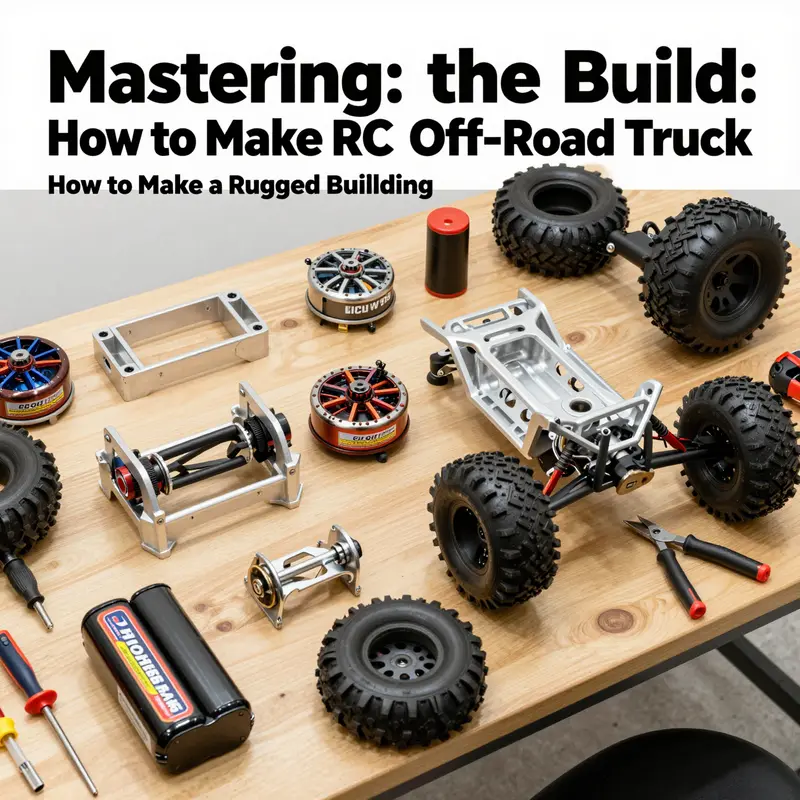
The moment you commit to building an RC off-road truck, the real engineering begins long before you snap the first screw into place. It begins with gathering, selecting, and envisioning a practical arsenal of materials and tools that will shape every turn, every jump, and every muddy recovery. The goal is not just to assemble parts but to create a cohesive machine whose components work in harmony under demanding conditions. This chapter threads planning, core components, and the essential tools into a single, steady narrative. It moves from design considerations to the tactile reality of assembling a chassis, mounting a drivetrain, and choosing tires that bite into rock, gravel, mud, and spray from a spray-patter of off-road spray. The approach remains flexible: you can start with a kit that nudges you toward success, or you can craft a bespoke chassis through 3D printing, rethinking the geometry for a six-wheel drive or a more minimal four-wheel setup. Either path demands a clear sense of the parts that matter and a method for testing them under real-world stress before you take the truck to the trail.
Begin with the chassis as the living backbone of the project. A robust, well-designed frame is not merely a skeleton; it is the buffer that absorbs impacts and the platform that holds every other component in precise alignment. If you’re new to the hobby, a kit-based approach offers a clear blueprint and a set of well-matched components. If you’re more adventurous, you can sketch your own chassis and print it in durable materials. The chassis has to support a drivetrain that can endure torque swings without binding, a suspension that can swallow rocks and rises, and a mounting system that keeps electronics safe from dust, water spray, and vibration. The chassis choice also informs material decisions: plastics mounted with aluminum braces for lightness, or a reinforced alloy frame that tolerates harsher terrain and heavier components. In any case, the chassis is the first practical investment you make because it anchors the entire build.
From there, the heart of the truck—its drivetrain—takes shape. For off-road performance, the choice between a 4WD, 6WD, or a more exotic drive layout determines how traction will be distributed when you point the throttle toward a slick slope or a loose rock garden. A six-wheel-drive configuration spreads power across more contact patches, improving grip on uneven surfaces but demanding a more sophisticated differential strategy and a sturdier suspension. In practice you may encounter a simple, robust approach where three motor drives or a central drive with a bespoke differential system handles wheel speed differentials through turns. The idea is to pair a robust motor system with an electronic speed controller (ESC) capable of handling sustained bursts of current, particularly if you opt for brushless motors known for high torque and efficiency. When you run larger tires and a heavy chassis, the ESC’s current rating and thermal protection become a critical safety margin. The motor itself depends on your intended balance of top speed versus punch; brushless motors typically dominate high-performance builds because they deliver smooth power with fewer maintenance requirements than brushed systems. In this step you also plan the battery, because the performance envelope is powered by energy density and chemical stability in the pack.
Battery selection deserves careful attention. LiPo batteries are the standard for electric RC trucks because they deliver high energy density with relatively light weight. The chemistry rewards those who balance capacity with discharge rate. Capacity, measured in milliamp-hours (mAh), translates to playtime, while the discharge rate (C rating) determines how quickly the pack can deliver energy to the ESC without overheating. A smarter approach is to pair a capable high-drain LiPo with a smart charger that performs balancing and cell-health checks automatically. Keeping a couple of spare packs on hand is a practical necessity for longer sessions; charging times can otherwise stall a day of testing. Alongside the battery, the charger becomes an essential companion. A smart charger that supports proper balance charging and storage charges, and perhaps even a quick-disconnect for on-the-go field sessions, keeps your packs in good health and ready for action.
The electronics layer is where your control becomes precise. The receiver and the remote control system, ideally a 2.4GHz setup with enough channels to separate throttle, steering, and any auxiliary functions, ensure predictable and repeatable responses. Proportional controls are essential for fine-tuning throttle and steering sensitivity, particularly on rough terrain where gentle inputs prevent wheel spin from turning a crawl into a stumble. The ESC sits in the middle of this network, acting as the bridge between motor and battery while providing protection against overheating, over-current events, and short circuits. It is worth investing in a unit with robust thermal management, programmable profiles, and an integrated governor if you anticipate racing or long, demanding runs in hot conditions. The real trick is to secure all electronics firmly inside the chassis, using mounting brackets or zip ties to dampen vibration, protect wiring from sharp edges, and avoid loose cables that could snag on suspension components as you traverse obstacles.
Suspension and wheels are the dynamic interface with the ground, and they deserve thoughtful selection. Off-road tires must match the terrain: aggressive tread for mud and loose soil, tougher compounds that resist chunking on rocky surfaces, and the option of foam-filled or solid tires for consistent shape under load. Wheel choice matters, too: sturdy alloy rims with reinforced tires can absorb impacts that would otherwise crack a softer wheel. The material choice of the tires, too, often drives other decisions in the build, such as wheel hub strength and the gearing ratio of the drivetrain. A clever, budget-conscious approach can echo a “rural boy” ethos where inventive, low-cost materials meet performance: PVC can be used to fashion rugged tires with foam inserts, if you’re comfortable experimenting with unconventional methods and if you maintain an eye on durability and safety. The key is to approach tires and wheels as a system rather than a single component—grip, puncture resistance, roll resistance, and the ability to run at the right tire pressure all work together to determine how your truck handles terrain and leaps.
The body shell is more than a cosmetic shell; it shapes aerodynamics, weight distribution, and the attitude of the truck on the trail. A scale-appropriate body that mirrors the terrain you intend to conquer helps you visualize the truck’s role in real life. Polycarbonate bodies offer impact resistance and can be trimmed and painted with good results, while ABS shells bring stiffness and a glossy finish. The body also influences how you route electronics and route cables. A tight, well-routed layout reduces the chance of wire damage when you hit bumps, and a clean battery hatch makes field adjustments painless. Aesthetics matter because a well-assembled, looks-right shell enhances your confidence and the perceived durability of the entire build. In this context, the body becomes a partner in your truck’s performance—the look is a reflection of careful engineering, not merely a fashion statement.
As you assemble, the tools you carry define how smoothly the build proceeds. You’ll need a basic yet versatile toolkit: a set of screwdrivers (Phillips and flathead) for Phillips-head and slotted screws, a comprehensive Allen wrench set for hex bolts found throughout the chassis and suspension, and pliers and wire cutters for handling small connectors and trimming zip ties. A torque wrench adds precision, ensuring symmetric tightening on critical joints, which helps prevent premature wear. A heat gun or a hair dryer can be invaluable for softening plastic during body mounting or repair. Zip ties and electrical tape keep cables neat and secure, a small investment in reliability that pays off during field testing. Grease and lubricants—especially for the suspension pivots, drive gears, and bearings—keep wear down and motion smooth. In practice, you’ll accumulate a wrench-worn familiarity with your own assembly heuristics; the better you prepare, the less you chase loose screws or unresponsive controls mid-session. The aim is a neat, secure, repeatable installation where every component is accessible for future maintenance yet tucked away enough to survive the worst off-road abuse.
The real work begins with system integration and testing. You perform an initial power-up to confirm that the electronics respond correctly to the transmitter, then you move to an in-field test in a safe, open area. Observe how the truck lands after jumps, how it tracks over uneven terrain, and how the steering responds when the tires meet a sharp edge. Collect notes on suspension behavior—are there bottom-outs, are the springs too soft or too stiff, does the chassis seem to flex in a way that could crack joints? All these observations guide fine-tuning: adjusting dampers, recalibrating throttle curves, and tweaking steering endpoints. If something feels off, grievances about binding axles, misaligned wheels, or loose mounts reveal where you need to re-check connections, re-glue joints, or add protective shielding around sensitive electronics. The goal is a balanced, predictable machine whose behavior you can anticipate and control, not a parts collection that happens to fit together in a rough, improvised way.
Beyond the immediate build, consider the broader approach you want to take. A kit offers a gentle ramp into the world of RC off-road engineering, while a fully custom chassis calls for deeper design work and more hands-on experimentation with materials. The decision influences your workflow: a kit accelerates the path to a working vehicle, while a custom build extends the horizon with more opportunities to optimize weight distribution, tire choice, and drivetrain topology. If you pursue customization, be prepared for iterations. Each adjustment in wheelbase, weight placement, or motor position can ripple through the suspension geometry and drivetrain efficiency, and you will learn to adjust with a lightweight mindset and a willingness to test, fail, and then retest. The learning curve is part of the process, but it’s also what makes the build so gratifying once you finally coax the truck into a confident, smooth rhythm over the terrain you adore.
To lend cohesion to this process, many builders keep a simple log. Note the chassis materials, motor and ESC pairing, battery capacity and rating, and the specific tires used for particular terrain. Record weights at different stages, measured torque values for crucial joints, and the exact mounting positions for the battery and ESC. These records become a practical playbook for future builds or upgrades. They help you compare performance across different configurations without reinventing the wheel each time. In this spirit, a well-curated reference collection supports a practical, repeatable approach to RC off-road engineering.
As you move from materials selection to the functional assembly, the role of documentation becomes clear. A seamless blend of planning notes, clear wiring diagrams, and a precise bill of materials keeps the project on track and makes future modifications less trial and error. If you’re curious about the comparative advantages of different build philosophies, you can explore discussions about kit-based builds versus fully custom projects at rc-truck-build-guide. This internal reference, framed by practical experience, can help you decide how to allocate time and budget as you upgrade your vehicle or start a new build from scratch. rc-truck-build-guide
The journey from gathering parts to driving the first robust test run holds its own excitement. The materials you select, the tools you master, and the tests you conduct together create the foundation for a truck that isn’t merely durable but genuinely enjoyable to pilot. The best builds emerge when you balance practicality with a willingness to try inventive approaches, like repurposing low-cost components without compromising on safety or performance. The end result is not just a vehicle; it is a hands-on education in mechanics, physics, and the art of incremental improvement—an object you can repeatedly push to the limit and still trust when the terrain grows brutal. When you finally hear the tires bite into a challenging surface and feel the truck respond with controlled confidence, you’ll know the preparation paid off.
For deeper exploration into the broader hardware landscape of scale RC vehicles beyond the immediate off-road context, consider the external resource on 1/6-scale RC trucks, which offers a detailed overview of dimensioning, materials, and integration practices applicable to serious builders who want to push performance while maintaining reliability. 1/6-Scale RC Trucks Overview
From Blueprint to Battering Ram: Crafting an RC Off-Road Truck That Conquers Terrain
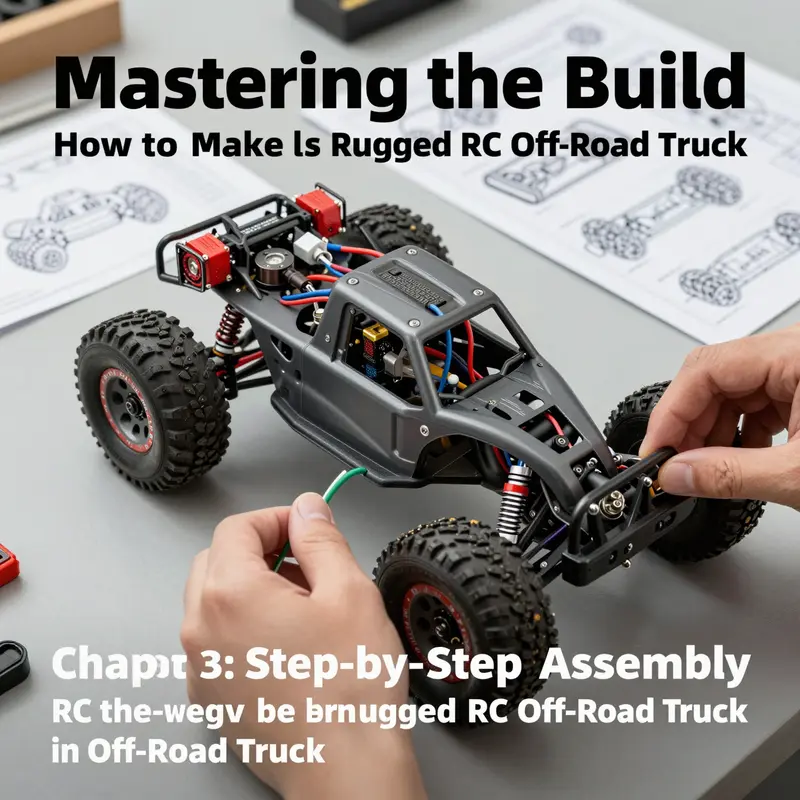
When you set out to build an RC off-road truck, you embark on a hands-on experiment in force, balance, and control. It is as much an exercise in problem solving as it is in making something that actually moves under its own power. The project demands careful planning, sturdy construction, and a willingness to iterate. You start with a vision of how the truck will perform on rough surfaces–rocky trails, damp mud, loose gravel, perhaps even small jumps. Then you translate that vision into a chassis that wont flex under load, a drivetrain that can deliver power to all four or more wheels without causing wheel spin, and a suspension that cushions impacts yet keeps the wheels planted. The journey from concept to crawl to roar is a continuous loop of design, assembly, testing, and refinement. It rewards patience as much as it does clever engineering, and it teaches you to respect the physics of traction, weight distribution, and torque under load.
The planning phase is not glamorous, but it is foundational. Beginners often find a ready-made kit the most reliable doorway into the hobby. A kit provides a proven layout, quality-matched parts, and a schematic that reduces the guesswork. It also sets a baseline for reliability; you know the chassis tolerances, mounting points, and gear meshes work together. If you have a taste for true customization, you can design your own chassis from scratch or adapt a 3D-printed frame to your preferred dimensions. Either path, the key is to map the vehicle’s intended use before you buy tools or parts. Think about power, propulsion, and traction. For off-road duty, a drivetrain that spreads torque across multiple wheels keeps the truck moving when one wheel encounters a slick patch or a crumbly patch of terrain. A suspension system that offers generous travel and robust damping will smooth out the hits from rocks and jumps. When you weigh material choices, think about stiffness, weight, and heat management. Lightweight plastics can be easy to work with, but they must be thick enough to survive the occasional rock strike. Aluminum delivers strength with weight, while steel provides rugged durability in harsh environments. The chassis structure should resist flex under load and keep vital electronics shielded from mud, dust, and spray.
The heart of the build is the drivetrain, and here the decisions are consequential. You will likely choose brushless motors for performance and efficiency, controlled by an electronic speed controller (ESC) that can modulate power smoothly and protect the system from overheating. The battery selection matters just as much as the motor. LiPo packs deliver high energy density and excellent throttle response, but they require careful handling, proper storage, and a capable battery-management plan. The power system is the kind of thing that pays back a builder who invests in proper connectors, secure mounting, and balanced placement within the chassis to minimize center-of-gravity shifts. The control system—the receiver and transmitter—needs to be reliable and responsive. A 2.4 GHz radio link has become the norm for RC vehicles, offering reduced interference and a smoother user experience. You will also want a robust remote system that provides clean feedback from the steering servo and throttle signal to the ESC, so there are no surprising lags when you hit a long stretch of rough terrain.
The physical construction follows a logic that mirrors the thinking in the planning stage. Start with a chassis that remains rigid under load. Flex in the chassis translates into unstable handling, which is the enemy of a reliable off-road ride. Secure the motor mount and install the transmission so that the drivetrain aligns precisely with the differential. If you decide on a high-traction setup, you may lean toward a full-time four-wheel-drive configuration with locking differentials. The point of such a setup is to distribute power evenly across wheels, preventing a single wheel from spinning away in mud or loose gravel and robbing you of momentum. This is where real-world driving skills come into play as well. You learn to throttle and steer in a coordinated fashion, letting the truck settle into a groove instead of fighting the surface with abrupt inputs. A well-built 4WD system with locking differentials gives you the confidence that the truck will maintain forward motion even when one tire loses traction.
Suspension is the other anchor of performance. Long-travel suspension – with adjustable shocks and sturdy control arms – lets the truck gobble up rocks and whoop-filled trails while preserving tire contact with the ground. The choice of tires matters greatly on off-road surfaces. Lugged rubber compounds or foam-filled tires mounted on solid hubs deliver the bite you need on loose dirt, but you can also experiment with creative tire constructions for cost effectiveness. One clever, low-cost approach used by a home builder involved mounting foam around PVC cores to fashion a rugged, grippy tire substitute. While it may not win a race in a stadium, it demonstrates how a hands-on hobbyist can push the envelope with accessible materials. The goal with wheels is balance: be sure the wheels are tightly fastened and properly aligned so that tracking remains true and steering remains predictable, even when the surface yawns and the ground becomes uneven.
The electronics compartment is a realm of careful arrangement and protection. The receiver, a robust servo, and the ESC must be securely mounted and shielded from vibration. A well-organized layout, with common ground rules for cable routing and strain relief, pays dividends in mileage and reliability. Batteries belong in secure bays that are cushioned against impact and heat. Sealed motor housings and waterproof connectors are not mere luxuries but practical necessities for operation in damp conditions. You want to avoid the mud-saturated horror of open connections corroding and failing mid-run. It is also wise to ensure that the power system is designed for easy upgrades: make room for a higher-capacity pack, or for a different motor in the future, without requiring a redesign of the entire chassis. As you wire things up, check that all servo sizes and battery connectors remain within standard ranges, so upgrading parts down the road does not demand a complete rebuild.
When it comes to the body, you want something that does not merely look the part but contributes to performance. A snug, well-fitted shell protects electronics and aids aerodynamics, but the air inside the body should be managed so that cooling remains effective under heavy use. After the shell is mounted, you perform a functional test to see that there is no interference between the body and moving parts, and that there is enough clearance for the suspension to articulate without rubbing. The first power-up in a controlled space becomes a ritual moment: you watch for unexpected behavior, listen for grinding noises, and verify that steering and throttle respond as expected to your remote’s inputs. If everything is quiet and predictable, you take the truck to a safe, open area for field testing. Here you observe the way the suspension handles bumps, jumps, and turns. You pay attention to how the suspension reacts to landings and whether the tires maintain grip as you edge into the throttle on a slip surface.
The calibration phase is about patience and small adjustments. Suspension settings can alter the feel of the truck more than you might expect. You experiment with spring rates, damping, and toe-in settings to find a combination that keeps the vehicle stable during high-speed traverses and responsive during slower, technical sections. Throttle response and steering sensitivity often require fine-tuning in tandem; you want precise input without twitchiness that makes it too easy to overshoot a line or lose traction. It helps to track heat buildup during longer sessions. If the motors or ESC begin to run noticeably hot, you pause for cooling or consider a gearing change that retains torque while reducing stress. It is a continuous cycle: test, observe, adjust, and test again. The reward for perseverance is a resilient platform that can take rough landings, respond smoothly to steering inputs, and deliver steady power across varied surfaces.
In the realm of advanced customization, builders frequently push beyond the obvious upgrades. A microcontroller-based layer opens doors to autonomous features or obstacle avoidance, opening the prospect of programmable behaviors that respond to terrain and speed. You might add additional sensors, simple logging, or timed routines that allow the truck to perform a short autonomous test on a controlled course. The idea is to enhance capability without sacrificing the simplicity and reliability that make RC off-road driving enjoyable. Adding lighting and cosmetic accents can also improve night handling and situational awareness, but these additions should not interfere with cooling or balance. The goal remains clear: maintain a robust, modular system that is easy to repair, upgrade, and adapt to changing terrains or personal preferences.
Throughout the build, there is a constant tension between ambition and practicality. It is tempting to chase performance with ever-bigger motors, ever-faster ESCs, or ever-cooler bodies. Yet the law of diminishing returns applies here as surely as it does in any engineering discipline. A well-executed kit or a carefully designed chassis with a modest power setup will give you more consistent results over time than a flashy but fragile build. A well-executed build, a measured power envelope, protective housings, and a drivetrain that can handle the occasional abuse from rough terrain are the hallmarks of a project you can enjoy over the long haul. You learn to appreciate the basics: solid joints, precise alignment, and a methodical testing routine. You discover that the most critical moments often occur away from the trail—the moments when you disassemble the truck for maintenance, replace worn seals in the shocks, or re-lubricate gears to keep steering crisp and predictable.
As you weave these strands into a finished machine, you realize that the build is more than the sum of its parts. The chassis holds everything together, the drivetrain propels, the suspension soaks the abuse, and the electronics maintain control and reliability. The process teaches you to anticipate maintenance needs and to approach each new excursion with a plan. You go into a field test with the confidence that the weight distribution is balanced, the tires grip where they should, and the electronics are sealed and shielded against the mud. The end result is a vehicle that feels alive in your hands, a platform you can trust to meet the demands of rough terrain and a project that sparked your curiosity about engineering, materials, and tuning. It becomes a touchstone for the practical, hands-on approach that characterizes the craft of RC off-road driving.
For those who want a broader visual reference as they navigate the more intricate corners of assembly, there are comprehensive visual guides that map the sequence of tasks from chassis assembly to final testing. While this chapter keeps the narrative focused on practical, real-world assembly, it is helpful to consider external diagrams and step-by-step walkthroughs that illustrate how a complex RC build unfolds in detail. One particularly helpful resource follows a methodical approach to a half-track RC build, providing precise diagrams and sequential steps that can be adapted to other chassis styles. If you are curious to explore that kind of detailed mapping, you can consult the Lasercut RC Halftrack Assembly Guide for a deeper dive into complex geometry and assembly sequencing. [External resource: https://www.scribd.com/document/521760889/Lasercut-RC-Halftrack-Assembly-Guide-PDF]
Within the practical ecosystem of RC building, the journey never ends with the first successful drive. It is the nature of the hobby to iterate—to refine a chassis, experiment with tire compounds, upgrade to stronger shocks, or introduce more sophisticated power management and sensor suites. The joy is found not merely in building but in tuning, testing, and gradually expanding the envelope of what the truck can conquer. And while this chapter provides a cohesive narrative of how to bring an RC off-road truck to life, it is worth remembering the broader context in which this hobby sits. The underlying skills—material selection, mechanical fit, electrical safety, and systematic testing—translate into real-world engineering practices. The principles learned here—rigidity, traction, balance, and controlled power delivery—resonate beyond the hobby, echoing in the way you approach any project that demands both hands-on craft and disciplined thinking. To explore that line of thought, see Electric fire truck charging infrastructure. The practical takeaway is that good design shines through when you plan for the long haul, test under realistic conditions, and stay curious about how small, deliberate improvements compound into a reliable, high-performing machine.
Dialing In for Dirt: Mastering Testing and Calibration of the RC Off-Road Truck
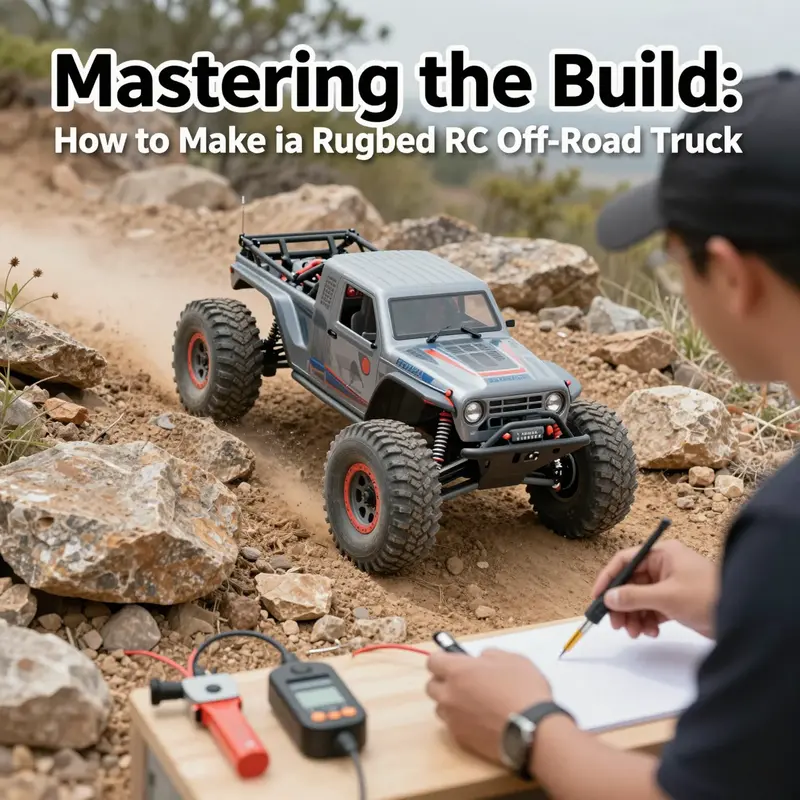
Testing is not an afterthought; it is the bridge between a gleaming chassis and a living, responsive machine. In the journey from design sketches and bill of materials to a truck that truly digs into rough terrain, the phase of testing and calibration sits at the center. This is where theory meets practice, where tolerances become tangible, and where a subtle twist of a throttle can turn a hopeful project into a dependable off-road tool. The value of this phase rests not only in confirming that every component works, but in shaping a vehicle that behaves predictably in the unpredictable world outside the workshop. The process requires patience, disciplined observation, and a willingness to adjust. It is less a single race and more a continuous dialogue between the driver, the chassis, and the environment. As you proceed, remember that testing is as much about safety and reliability as it is about performance. Correct calibration prevents wheel spin from turning into uncontrolled slides and ensures a truck that climbs, crawls, and handles corners with confidence rather than chaos.
Functional verification marks the opening act of testing. Before the truck ever leaves the driveway or the dirt, every electrical connection, sensor, and moving part must prove itself reliable in a controlled setting. Start with the basics: confirm that the motors respond to throttle, the steering servo centers properly, the electronic speed controller (ESC) can regulate power smoothly, and the receiver communicates faithfully with the transmitter. For electric builds that rely on LiPo or NiMH packs, verification extends beyond turning on. Check voltage output with a multimeter, confirm that each cell group reads within safe balance levels, and inspect the charging setup for consistency and thermal safety. A careful pre-check can save you from a sudden mid-flight burst or a stalled motor under load later in the day. Even the simplest rigs benefit from a quick shake-down run in a bare pad of concrete or a cleared slab, so you can observe unusual sounds, loose hardware, or binding that would otherwise go unnoticed on a trail.
With functional verification complete, dynamic testing takes center stage. This is where the physics of motion reveal themselves, and where your choices in drivetrain, suspension, and chassis stiffness finally meet the terrain you intend to conquer. A six-wheel-drive configuration, for example, promises traction on loose surfaces, but it also raises the complexity of power distribution and differential behavior in turns. Listen for uneven wheel speeds during cornering, signs of drivetrain binding, or any rubbing that could indicate misaligned components. A crawler-oriented setup, tuned for slow, deliberate navigation over rocks and ledges, thrives on ultra-articulated suspension and locking differentials, while a high-speed buggy mindset rewards chassis stability and precise tire grip on abrasive tracks. The testing surface you choose should mimic the challenges you expect in real use: a rocky section with exposed roots, a loose dirt bank, a sandy patch with shifting grains, and a smooth, hard-packed straightaway for speed checks. During these runs, observe how the suspension responds to compression and rebound, how quickly the tires recover after a dip, and whether steering remains proportional or begins to feel twitchy at the limits of grip. Recording these observations helps distinguish between improvements that offer genuine traction and those that merely mask a marginal issue with a temporary gloss of feel.
Calibration becomes the engineering language of this phase. The goal is not to maximize raw numbers but to harmonize the vehicle’s behavior with the driver’s intent. Proportional steering and throttle response lie at the heart of this harmony. If the steering feels over-responsive, the truck may exhibit abrupt lane changes when coming off a rock or trough; if throttle response is too aggressive, the vehicle can break traction during climbs or jumps. Fine-tuning often involves adjusting the steering expo, endpoint adjustments, and throttle curves within the transmitter’s menus, as well as the ESC’s programmable parameters. The result is gradual, predictable steering that allows the driver to place tires exactly where they want them, even when the terrain is uneven or dust is thick. Gyroscopic stabilization, when present, adds another layer of control. A well-tuned gyro can help maintain a straight path at higher speeds and dampen wind-up under hard braking, but it must be dialed in with care; too much stabilization can dull steering feel and reduce the truck’s responsiveness on tight trails. Suspension calibration is another critical lever. Dampers, spring rates, and ride height should be tuned to balance wheel travel with chassis stability. A soft setup might absorb small bumps gracefully but could lead to excessive body roll on a cresting hill. A stiff setup improves cornering on hard surfaces but risks bottoming out on larger obstacles. The art lies in matching spring rates to anticipated obstacles, adjusting damping for predictable rebound, and setting ride height to maintain clearance without sacrificing traction.
Environmental factors loom large in the calibration process. Temperature swings influence battery voltage and motor efficiency, while dust and moisture can erode seals and contaminate sensors. A well-prepared RC off-road truck carries seals that resist water spray and dust intrusion, but no seal is perfect. During testing, note how voltage sags occur as the battery warms, or how motors slow under continuous load in hotter conditions. In arid, dusty environments, you’ll want to inspect air intake paths, filter housings, and any open electronics bays for signs of grit buildup. Moisture presents another challenge; water ingress can short a circuit or corrode connectors. Protective coatings, careful routing of wires, and secure mounting become essential components of the test plan. The goal is not to create a fragile, weather-averse toy, but to understand the vehicle’s resilience so you can plan for field use with confidence. The testing routine evolves with the environment you expect to encounter, and that evolution is a sign of a mature, capable build rather than a failure of the original design.
An often underappreciated facet of testing is data logging. In serious builds, telemetry—speed, battery current and voltage, servo positions, motor temperatures, even individual wheel RPM—becomes a storytelling language. The data you collect during a field session lets you trace performance back to specific components or settings. If a run ends with unusually high motor temperatures, the log will reveal the time window where heat buildup peaked, guiding you toward cooling strategies or altered gearing. If a turn feels lazy or imprecise, the historical steering input versus wheel response can pinpoint a need to adjust servo centering or alignment. For many enthusiasts, data logging is not a chore but a resource that informs iterative improvements. You can approach it as a routine: capture a few representative runs, annotate any notable events, and compare the results across test sessions. Over time, you’ll see patterns emerge—trends that point to durable changes that improve efficiency, response, and reliability. In STEM settings, these logs become a tactile demonstration of physics in action, showing how friction, inertia, and elasticity interact as the truck negotiates rocks and ruts.
The discipline of iterative refinement sets apart a good RC off-road truck from a great one. After each test, review what happened, make measured adjustments, and test again in the same or a similar environment. Start with small, reversible changes—like a half-clip tweak to a spring retainer, a minor adjustment to a damping screw, or a slight offset on the steering link—to observe the incremental impact. When a change yields the expected improvement under controlled conditions, you can extend the test to a broader range of obstacles. If a tweak fails to deliver the anticipated result, revert and re-evaluate. The aim is to converge on a setup that feels natural to the driver and remains reliable across the terrains you care about. Beware of chasing a single metric, such as top speed, at the expense of navigating reliability or control. A truck that blasts down a straightaway but loses grip on a rock face is not serving its intended role. Real-world testing also means testing in stages: begin with gentle terrain, progress to moderately challenging sections, and finally push toward high-complexity trials that stress both the drive system and the chassis integrity. Each stage should end with a quick inspection for loose parts, heat buildup, or degraded performance. Developed habits—tightening screws after a session, inspecting wiring harnesses for wear, and cleaning components to remove dust—reward you with longer service life and more consistent feelings behind the wheel.
Safety, once again, anchors every testing decision. While the thrill of testing can be contagious, you must maintain a sane safety margin. Always wear eye protection when performing wiring work or test runs, and establish a clear area around the truck to avoid unintended contact with people or fragile objects. Make sure all fasteners are tightened to the recommended torque ranges for your chassis and components, and carry a basic tool kit for on-site adjustments. Battery safety cannot be overstressed; LiPo packs demand careful handling, proper charging, and timely storage. Use a smart charger with balance capabilities, monitor cell voltages, and avoid leaving a charging battery unattended. During testing, keep spare parts on hand for critical components such as tires, rods, and bearings, and check for heat-related wear after long runs. A well-documented test plan, combined with a strict safety protocol, turns testing from a risky, impulsive activity into a reliable, repeatable process that yields meaningful insights and long-term enjoyment.
As you move through testing and calibration, let the vehicle’s behavior guide you rather than chasing a number on a dashboard. Your goal is a machine that is predictable, controllable, and ready to perform on the terrains you care about. The conversation between chassis, drive system, and driver should feel almost musical—the inputs from the transmitter should translate into measured, knowing responses from the tires contacting the ground. When that harmony emerges, you will know you have earned a vehicle capable of tackling rough trails, scaling obstacles, and performing tasks with a precision that mirrors the real-world machines this hobby often emulates. This is the moment when your RC off-road truck earns its place in the field, not merely as a model, but as a tangible testament to careful planning, disciplined testing, and thoughtful calibration. For readers seeking deeper, structured testing protocols and community-tested tips, an external resource offers a practical, experience-based perspective on the art and science of RC truck testing and calibration. https://www.rctech.net/forums/rc-truck-testing-and-calibration-tips-123456
Final thoughts
Crafting a rugged RC off-road truck demands not only technical skill but an unwavering commitment to quality and detail. From meticulous planning to sourcing the right materials, each step shapes your vehicle’s resilience and ability to dominate challenging terrains. The precision in assembly binds these elements into a unified powerhouse, while thorough testing and tuning unlock its full potential, making it a true extension of your adventurous spirit. Whether for racing, exploration, or work on rugged rural grounds, your DIY RC truck stands as a testament to your craft and passion. Mastery of this process lays a foundation for innovation and modification, encouraging endless upgrades and performance breakthroughs. When you build with purpose and precision, your RC off-road truck isn’t just a model—it’s a rugged companion ready to conquer any dirt, rock, or mud in its path.