
Adventuring off the beaten path with your truck opens up a world of untamed beauty and rugged exploration. Whether you’re an off-road aficionado seeking adrenaline-pumping trails, a rural landowner looking for remote retreats, or an adventurous spirit ready to conquer new terrains, knowing where to take your truck camping can enhance your experience. This guide dives deep into the best locations for off-road truck camping, useful tips for finding ideal dispersed camping areas, essential planning strategies for a memorable trip, and the necessary safety precautions to ensure your adventures remain thrilling yet secure. With the right knowledge in hand, the great outdoors awaits you and your truck beneath the wide, starry skies.
Trail-Worthy Camps: Charting Your Truck’s Path to Off-Road Camping Across the World
The lure of off road camping with a sturdy truck is more than a ride through rough terrain. It is a conversation between soil and steel, a chance to press pause on the map and press play on the horizon. When you set out with a vehicle built to handle mud, sand, and rock, you inherit not just a means of transport but a mobile home that can adapt to whatever the day or the night throws at you. The truck becomes your shelter, your workshop, and your link to places that often stay hidden behind gate hours and glassy park entrances. The real magic lies in the sense that you can wake up with a sunlit canyon on one side of the wind and drift into a pine scented morning on another, all while keeping your gear organized, safe, and ready for the next detour. In such moments the question of where to camp ceases to be a question of comfort alone and becomes a question of stewardship and imagination. You want places that reward effort but also respect the land that hosts you, places that stretch your horizon without stretching your conscience too far.\n\nFrom the wide expanse of dispersed camping under Bureau of Land Management lands and national forests to the more organized, vehicle friendly campgrounds that now dot state parks, the options form a spectrum. The United States, with its federal lands, invites a kind of exploratory camping where you trade the gridded campground for a map and a plan. You can pull into a dispersed area, lay down a sleeping pad in the bed of your truck or under the canopy of a pop top, and wake to a view that has not been curated by someone else’s ideas of what a campsite should be. The fascination is not simply the scenery but the process: choosing a route, scouting a reach of backcountry, and preparing your rig to handle a night that may be warm and still or windy and cold. It is a practice in self sufficiency and in trust — trust that you have prepared for the land and that the land will meet you with honesty when you pull back the tarp at dawn.\n\nYet no journey through off road camping is limited to a single country or a single kind of terrain. The appeal grows as you cross borders and climates, discovering how each region exercises its own rules, hazards, and rewards. In many parts of the world, designated campsites sit alongside sweeping wilderness corridors. In others, you camp where dispersed use is allowed, where your footprint matters and your choices matter even more. A careful traveler recognizes the balance between freedom and responsibility. Always verify whether permits are required, whether seasonal closures are in effect, or if certain vehicle classes are restricted. Weather can be a decisive factor: a forest road that is passable in late spring can become a slippery obstacle in early autumn; desert tracks can be impassable after a summer thunderstorm; coastal byways may reveal a surge of tide that turns a shortcut into a river crossing. The risk is not merely getting stuck; it is arriving where you cannot legally stay or where the terrain demands more recovery gear than your rig carries. This is why planning is not a chore but a core part of the adventure, a way to extend your window of exploration without sacrificing safety.\n\nAcross the globe, the world’s most compelling off road camping experiences come by listening to land and learning from its patterns. In the southern hemisphere, places like Cook Mountains in New Zealand offer landscapes that feel almost cinematic in their scale. The mountains shape the weather, and the valleys gather quiet streams that invite a long evening outside. While some zones within this region may prohibit camping in certain corridors, there are designated campsites within Cook Mountains National Park that provide a balance of immersive wilderness and the security of established facilities. The overall sense is less of a fixed plan and more of a flexible itinerary, where you let the land guide your pace and your pace guide your rest. Traveling here means embracing the idea that the journey itself is the destination, and your truck becomes the vessel that carries you deeper into pristine wilderness without forcing you to surrender your comfort entirely.\n\nTo the south, Patagonia spans the Andes and offers a different rhythm for off road campers. The range here is not simply a geography but a geography of weather, glacier fed streams, and winds that sculpt the terrain. Eco campsites and even luxury glamping options exist side by side, enabling a wide range of experiences from rugged overlanding to refined retreat. You may find yourself crawling over rough passes during the day and sinking into a warm bed after a day of spectacular glacial views. Patagonia invites a patient, prepared approach since the terrain shifts with altitude and latitude. It rewards careful planning and a willingness to adapt to what nature presents rather than what a map promises. In such settings, the line between campsite and expedition blurs, and your truck carries not just your gear but your mood for the journey ahead.\n\nHeading north and west, within the United States, Zion National Park in Utah stands out for dramatic desert canyons and red rock canyons that seem carved by a colossal hand. The park’s scenery inspires awe and prompts long, rewarding exploration on foot after a day’s drive over gravel and switchbacks. The ritual remains the same: arrive with a plan, secure a spot that allows your truck to stay in a safe, permitted area, keep the camp tidy, and follow established guidelines that protect fragile desert ecosystems. The experience is less about improvisation as a form of rebellion and more about harmony — letting the landscape reverberate with your presence while you ensure it will be as inviting for future travelers as it was for you.\n\nAcross the Pacific, Tasmania offers a counterpoint to the mainland’s dry, sunlit horizons. Half the island protected as national parks and reserves creates a sanctuary for both rugged coastlines and ancient forests. Tent sites and RV-friendly locations let you decide whether your truck shifts from travel companion to temporary home with the flexibility you want. The island rewards slow travel and careful attention to wind and rain, especially in the forested highlands where fog can swallow landmarks and make a compass feel provisional. This is not a test of speed but of patience, of letting the land reveal its quiet corners and your vehicle adapt to keep you comfortable without intruding on the place’s sense of solitude.\n\nDartmoor in England and the Scottish Highlands in Scotland bring a different flavor to off road camping. Dartmoor’s remote moorlands unfold with wild beauty, where rolling hills, ancient ruins, and dramatic coastal silhouettes meet a horizon that shifts with the sea breeze. In the Highlands, vast moorland and glacial lakes create a stage for contemplative camping, where you might wake to a lake’s glassy surface and the distant call of birds over heather. The rules here reflect a tradition of respectful use, with private and public lands offering opportunities to place a tent or a small caravan while leaving the landscape’s essence intact for others to admire. The sense of remoteness becomes a teacher, reminding you that distance is not just measured in miles but in the quietness that fills your camp once the sun goes down.\n\nOn the other side of the globe, Hokkaido in Japan presents a different ecology again, where camping near active volcanic landscapes and hot springs offers a front row seat to geologic theatre. The island’s ecosystems range from alpine meadows to boreal forests, and wildlife is abundant, inviting a practiced respect for distance and noise levels, especially at night. You might find yourself negotiating cold nights and short summer windows, but the rewards are a mornings breath of fresh air that seems rarer in crowded cities. And beyond the wilds, there are well equipped camping zones where you can connect to facilities that make the longer stays easier without diminishing the sense of discovery that drew you to the place in the first instance.\n\nFurther east, private camping fosters and mountain rivers in Australia’s Barramundi region near the Gold Coast. Here a clever blend of rugged terrain and comfortable amenities supports experienced off roaders who want to stretch their legs without surrendering the comforts of a well appointed camp. The terrain is varied, the days bright, and the nights peaceful. In the same spirit of variety, you can also find campsites that accommodate both tents and RVs, giving you the option to switch bases with a simple drive between riverbanks and mountain trails. The key is to know what you want from a given trip and to prepare accordingly, prioritizing safety, weather awareness, and clean living in the shared spaces you pass through.\n\nEven closer to urban centers, new forms of auto camping have emerged in China’s Chongqing region, where a five star auto camping ground sits within a national wetland park. The setting provides a blend of modern comfort and natural proximity, a reminder that off road camping need not be a solitary or austere pursuit. You can combine a night under the stars with access to dining, sport facilities, and other conveniences, depending on the site, while still enjoying the thrill of a short drive from a bustling city. In other corners of China, Huangshan, or Mount Huang, has its own well equipped camping ground with a substantial number of RV spots divided into multiple zones. The facilities here can include self drive sites, starlight RVs, kitchens, barbecue areas, and a host of outdoor activities that push the day into a rhythm of exploration, movement, and rest. The point is not to fetishize any particular setup but to recognize that your vehicle’s role changes with the landscapes you visit, sometimes serving as a storage unit for gear, other times as a shelter on wheels, and at others as a base from which you can venture out on foot for a day of discovery.\n\nOf course, you do not have to rely on far flung destinations to experience authentic off road camping with a truck. The Rubicon Trail in California has long been a proving ground for overlanders, attracting minimalist campers who sleep on flat rocks with a sleeping bag or string together a hammock between sturdy trees. These are stories of simple tools and a willingness to adapt. They illustrate a broader truth: there is no single right way to camp out of a truck. What matters is the pursuit of places that resonate with your own sense of adventure and the discipline to leave no trace when you leave. A rig that is ready for the road without being a burden to the landscape is a sign of respect for the places that host you, and it is also a sign that you value the experience more than the convenience of a perfect camp site.\n\nWith that perspective, you can approach planning as a balancing act rather than a fixed itinerary. Start by defining the terrain you prefer and the kind of experience you want — solitude, challenge, scenery, or a blend. If you crave wide open spaces and the discipline of self reliance, dispersed camping on BLM or national forest lands can feed that hunger while giving you the chance to test your truck against long straights and washouts. If you prefer a touch more structure, a forest service campground or a private park with mapped trails nearby offers the security of pliable margins while still putting you at the edge of wilderness. The key is to gauge your vehicle’s capability and your own skill level, and then to choose a route that scales in difficulty with you rather than insisting you conquer the hardest path first. In between are the places that feel almost like a conversation with the land itself, where you can listen to the ground under tires, hear the wind through the trees, and let the night sky tell you when to pause and rest.\n\nAs you prepare for those conversations, you will want to keep your truck ready for anything the route may demand. Recovery gear, spare tires, robust tools, and a reliable means of communication are not luxuries but a practical language you speak to the land. For those who want to keep their powertrain in peak condition on long overland trips, consider this resource on mastering diesel mechanics your step by step path to success. It can make the difference between a successful push through a rough section and a long walk back. The approach should be methodical: know how to diagnose a slipping belt before it fails, understand how to inspect a careful underbody shield, and keep a spare belt, a small selection of hoses, and the right fluids. The aim is not to eliminate risk but to minimize it through knowledge and preparation. And while the details vary from one locale to the next, the ethos remains consistent: go with curiosity, travel with respect, and camp with care.\n\nFinally, in the spirit of shared landscapes and common sense, use tools that help you plan and connect with others who share the same passion. Track conditions, seasonal access, and any permit requirements before you head out. When you do arrive, leave perimeters clean and quiet, keep noise to a respectful minimum, and make sure your campsite supports wildlife and other travelers. If you want practical inspiration and up to date campground listings that help you plot your route, see external resources such as The Dyrt for real time options and user reviews. The adventure of off road camping is not a single destination but a continuing dialogue between you, your truck, and the world you traverse.\n\nWhether you are chasing the dramatic canyons of Zion, the remote highlands of Scotland, or the austere beauty of a New Zealand alpine slope, the path you choose to campsite is really a path you choose to your own awakening. Your truck is not only a vehicle; it is a platform for learning, a workshop on wheels, and a shelter that travels with you. The more carefully you select your spots, the more you extend not just your travels but the life of your gear and the integrity of the land you cherish. The places described here are examples of the range you can expect and the kind of experiences that keep people returning to the road year after year. And while the landscapes may change, the essential rewards of off road camping — the quiet, the challenge, the camaraderie with other travelers, and the simple joy of sleeping under the stars after a long day of moving across the planet — remain the same. Your truck, your plan, and your respect for the road ahead are the strongest compass you will ever need.
null
null
Trailbound Tranquility: Charting an Off-Road Truck Camping Adventure Without Losing Your Way
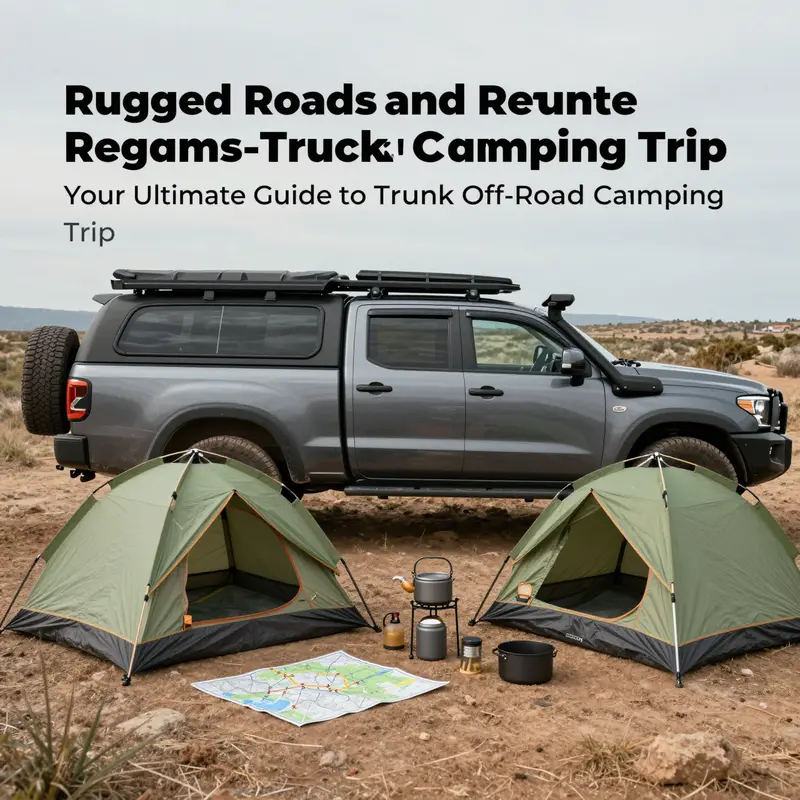
Trailbound camping rewards preparation that respects both safety and adventure. When planning an off-road truck trip, aim for a balance between rugged exploration and practical comfort. Start with your vehicle as a mobile base, then choose terrain and season, and finally tailor your setup to your crew and the climate. This approach treats planning as a living map that evolves with knowledge about roads, weather, and personal limits. The emphasis is on steady preparation rather than a rigid checklist, letting you adapt when the road changes.
Vehicle setup matters: a sturdy truck with capable tires and sufficient ground clearance, a safe storage plan, and a lightweight power source can keep you comfortable without inviting clutter. Research terrain ahead of time, note river crossings and washouts, and know the camping rules for public lands or dispersed sites. Pack smart, leave no trace, and keep a low impact footprint so future travelers can enjoy the same places.
In the campsite, plan for warmth, cooking, and safety: a bed platform or foam mat, a compact stove, a reliable light, and a basic first aid kit. A satellite messenger or GPS beacon can add peace of mind when you are miles from help. The goal is not to remove risk but to reduce it enough to focus on the experience: the stars, the scent of pine or desert air, and the quiet pace of a day lived on wheels.
If you want to go deeper, seek practical resources on vehicle care and off-road technique, but let your own trip shape the details and the memories you carry home.
Trailbound Campsites: Safely Planning and Executing Truck Off-Road Camping
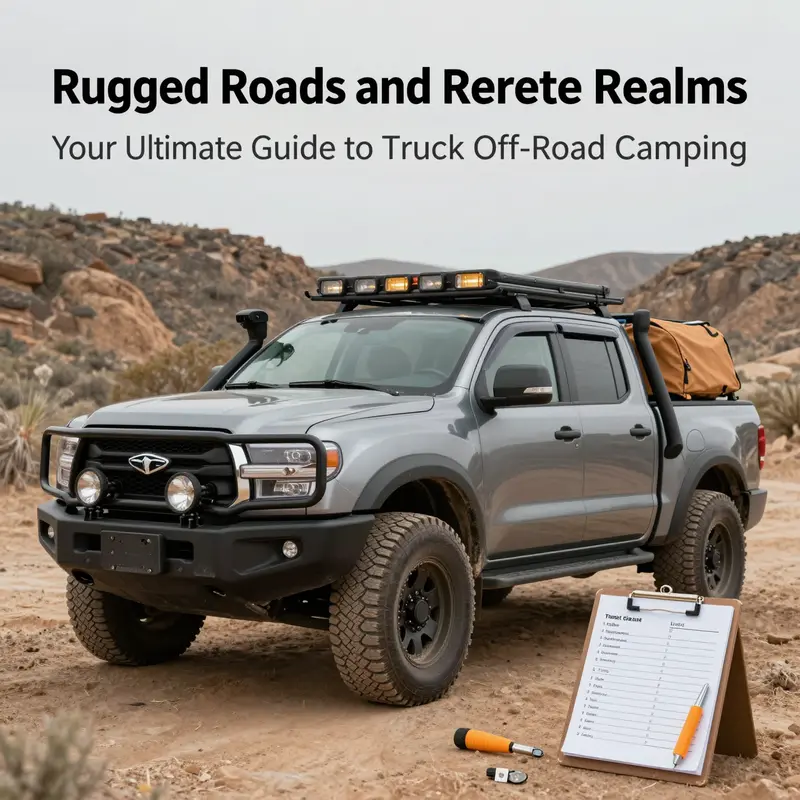
The lure of a truck rattling along a faded track toward a quiet, starlit campsite is cartoons in motion for many outdoor lovers. But the romance of the open road does not exist in a vacuum. It rides on preparation, respect for the land, and a practical, steady approach to safety. When you set out to take your truck off road for camping, you are trading a neighborhood grid for a map that folds out to vast possibilities and real risks. The aim is not to conquer the wild but to move with it—to read the terrain, check the weather, and equip yourself so that you can enjoy the moment without compromising your safety or the ecosystem you’re driving through. The journey from city pavement to remote campsites is as much mental as mechanical. It asks you to imagine what could happen and to shape your choices around that imagination. In practice, this means building a routine that begins long before you point the tires toward the trail and continues long after you roll back onto the highway the next morning, especially when you are choosing a place to park a vehicle, drop a tent, and prepare a campfire for warmth and cooking.\n\nThe core of any responsible truck-off-road camping plan rests on the vehicle, the campsite, and the contingency mind-set that threads through both. A road-tested truck becomes more than transportation; it becomes a shelter, a workbench, and, at times, a lifeline. The most reliable way to ensure that relationship remains whole is to treat vehicle readiness as a first principle. Start with the engine’s health, the integrity of the braking system, and the suspension’s ability to absorb rocks and ruts without transferring every jolt to you or your passengers. Tires deserve a careful measure of attention, not just for grip but for sidewall integrity and tread depth, which matter when you are several hours from the nearest air hose or spare part. A battery in solid shape matters too, especially when nights dip near or below freezing and you need a starter or a reliable power reserve for a small heater or overnight electronics.\n\nWithin the broader frame of off-road camping, the truck’s undercarriage deserves as much respect as the cabin. Skid plates, when properly installed, guard the oil pan and critical components from jagged rocks and hidden ledges. If you run with a rooftop tent, evaluate the roof rack’s capability to carry the tent along with occupants. It is not just about weight; it is about weight distribution and how it affects handling on uneven ground or when you step off a slope to a soft shoulder. A well-stocked toolkit becomes a partner in every expedition. Think in terms of a spare tire ready to swap, a jack capable of lifting a tire from rugged ground, a winch or tow rope for recovery in soft soil or when a vehicle sinks slightly into the earth, and a compact air compressor to re-inflate after a descent or to maintain proper tire pressure on variable terrain.\n\nEven the best truck and tool kit march with you only if the crew knows how to use them, which brings the human side of preparation into focus. For decades, backcountry travelers have learned that preparedness multiplies safety and reduces stress. In practice, this means rehearsing simple but essential tasks before you head out. Practice changing a tire on rough ground, practice winching on a flat, stable surface, and practice using a jack and a leveling board to stabilize the vehicle on uneven ground. This is not about showing off mechanical prowess; it is about reliability when the clock is ticking and the campsite is in a patch of wind-swept ground where a small misstep could lead to a longer, more uncomfortable night.\n\nEqually important is the approach to campsite selection. The decision is as much about safety as comfort and ethics. The Forest Service and land-management agencies repeatedly caution against camping in areas that are prone to flash floods, rockfalls, or sudden shifts in weather. The landscape can change quickly, especially in mountainous or desert settings where wind and temperature swings alter everything from soil stability to air quality. Aim for elevated, flat, well-drained sites. Carry a map—preferably an offline option that does not depend on cellular service—and mark pre-planned stop points along your route so you are not wandering blindly into unfamiliar territory after sunset. The idea is to maintain a thread of situational awareness from the moment you leave the trailhead until you light a safe campfire or close the hatch for the night. The Leave No Trace ethic becomes not a rule to memorize but a daily practice you weave into your decisions. Do you build a fire in a designated ring or a cleared area far from dry grasses? Do you keep trash and cooking gear tucked away so wildlife doesn’t become curious at the wrong time? Each choice you make preserves the land’s health and your own safety.\n\nThe weather in remote areas remains the wild card that can tighten or loosen plans in a heartbeat. Mountainous regions are well known for their volatile shifts, but desert nights can also surprise travelers with sudden cold snaps or wind-driven sand that erodes visibility. The most reliable precaution is to consult credible weather resources well before departure and to monitor forecasts for the next several days. Pack accordingly: a sleeping bag rated for temperatures well below expected lows, an insulating pad, and layers that you can add or shed as the night air shifts. Ventilation becomes not a luxury but a necessity when you are using any gas appliance in a rooftop tent or enclosed cabin, to prevent the buildup of dangerous gases. A satellite communicator or another form of emergency contact remains essential for remote zones where cell coverage vanishes. A well-stocked first-aid kit, extra water, and a flashlight with fresh batteries are the quiet guardians of night hours, when the camp’s rhythm depends on your ability to respond calmly to a developing situation.\n\nWildlife awareness, too, becomes a hygiene of the campsite rather than a spectacle. Bear encounters, in particular, hinge on food storage and scent control. The basic rule is simple and often overlooked: never leave food, cooking gear, toiletries, or scented items in the tent or unboxed inside the vehicle where curious animals can smell and investigate. Use bear-resistant containers or lock the vehicle and close windows and doors at night. In bear-prone regions, consider having bear spray accessible and know how to use it, and avoid anything that could magnetize wildlife by scent to your campsite. The discipline of food security extends beyond the night’s rest to the way you prepare meals and dispose of waste. A small, dedicated cooking area away from the sleeping quarters and a plan to minimize waste and odors can keep wildlife at bay while you enjoy your time in the backcountry.\n\nWith the potential for danger comes the wisdom of a clear safety protocol for overnight hours. If you hear unfamiliar sounds around the truck, resist the impulse to bolt the door and peek outside. Instead, check from a secure vantage with any external cameras if you have them, or a trusted light source that keeps you inside the vehicle. If a threat—animal or human—seems real, your safest option is to stay closed in and call local authorities or a trusted emergency contact. For vehicles that have interior access limitations, plan escape routes that you can execute from inside the cabin. Group safety holds practical value as well; camping in clusters or with other vehicles can amplify mutual support in emergencies. The practical wisdom here is simple: preparation helps you avoid improvisation at the moment you need to act most decisively.\n\nAll of this—vehicle readiness, campsite selection, weather preparedness, wildlife awareness, and a calm, rehearsed response to emergencies—coheres into a single habit: practice with intention. The more you test your plan under safer, controlled conditions, the more confident you become in the field. Even if you never encounter a dramatic incident, your confidence improves because the steps you take are familiar, repeatable, and clear in your mind. The act of practicing is itself a form of respect: respect for the land you are entering, respect for the people who share those spaces, and respect for the land’s unpredictable generosity and fierceness alike.\n\nAs you refine your approach, consider how your equipment and knowledge fit together. A robust truck, a capable set of recovery tools, and careful thought about where you camp form a triad of readiness that reduces risk and expands your enjoyment. If you want a deeper dive into the mechanical side of sustained reliability, you can explore a practical, hands-on guide to engine and drivetrain care that walks you through the fundamentals and more advanced maintenance tasks. For a detailed resource you can return to when the next service interval looms, check out this dedicated guide titled Mastering Diesel Mechanics: Your Step-by-Step Path to Success, which offers practical steps for keeping a diesel-powered rig roadworthy and ready for the next long haul into the backcountry. Mastering Diesel Mechanics: Your Step-by-Step Path to Success\n\nWhen you are ready to plan your next expedition, you can anchor your decisions in regionally relevant guidance that aligns with current regulations and best practices. This is where the practical world of permissions and land management comes into focus. Many popular destinations sit within national forests, BLM lands, or state parks, each with its own rules about dispersed camping, vehicle access, and seasonal restrictions. In the United States, for instance, large tracts of BLM land in western states offer expansive areas for off-road travel and camp setups that minimize impact. In addition, state parks and private campgrounds have increasingly tailored offerings for overlanding and off-road enthusiasts, including fire rings, water access, and sometimes nearby trails that can be navigated with a prepared four-wheel-drive setup. The key is to verify permit requirements, seasonal closures, and vehicle restrictions before leaving home. Your preparedness will be rewarded with smoother sign-ins and fewer surprises along the way.\n\nThe final piece of the planning puzzle is a concrete pathway to knowledge—knowing where to look for up-to-date, real-world information on specific sites and current conditions. A robust way to approach this is to consult a trusted resource that aggregates maps, user reviews, and on-the-ground intel about camping with a truck. The Dyrt is one such platform, offering detailed campsite information and practical reviews that can help you tailor your route to your truck’s capabilities and your camping style. It’s not a substitute for official guidelines, but it is a valuable layer of situational awareness as you map your route and select your stop for the night. By combining conservative site choices, careful vehicle checks, and reliable weather and wildlife planning, you can create a sustainable rhythm that makes each off-road camping trip both safer and more enjoyable.\n\nUltimately, the question of where you can take your truck off road camping becomes less about a single location and more about a process. The process invites you to examine the terrain, the rules, and your own limits with honesty, to equip your truck and yourself to handle the unexpected, and to treat every campsite as a temporary home you leave in better shape than you found it. By approaching every excursion with a blend of caution and curiosity, you transform what could be a risky venture into a set of predictable, controllable decisions that still leave room for wonder and exploration. It is in that balance—the readiness of a well-kept vehicle, the mindfulness of responsible camping, and the humility to adapt to what nature hands you—that off-road truck camping becomes a durable, repeatable craft rather than a one-off gamble.\n\nExternal Resource: For region-specific guidance and safety procedures tailored to backcountry travel, refer to the official guidance of the U.S. Forest Service: U.S. Forest Service official guidance.
Final thoughts
Embarking on an off-road nature escapade with your truck isn’t merely a journey; it’s a chance to immerse yourself in the wild and rejuvenate your spirit. From the endless trails offered by national forests to the rugged terrain of BLM lands, each destination presents unique opportunities for exploration and unforgettable memories. Adequate preparation and safety measures will not only protect you but will also enhance your overall adventure experience. So gear up, select your preferred route, and hit the trails with confidence. The great outdoors awaits you!