
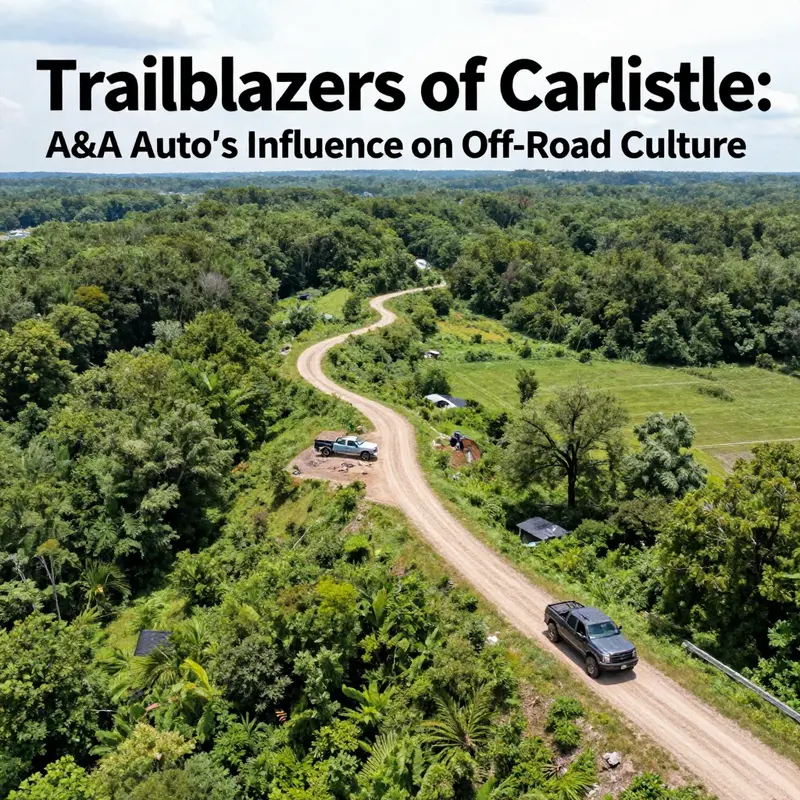
In the rugged terrain of Carlisle, Pennsylvania, legends are made and trails are conquered. Off-road enthusiasts and adventurers alike know that their vehicles are more than mere machines; they are gateways to exploration and adrenaline-fueled escapades. A&A Auto stands at the forefront of this culture, serving as a beacon for truck and off-road aficionados. This article delves into the dynamic role the shop plays in enhancing truck and off-road services, its economic impact on the local community, and its contribution to the vibrant off-road culture nestled in the heart of Carlisle. Each chapter builds the narrative, showcasing how A&A Auto weaves itself into the fabric of this passionate community.
Torque, Trail, and Carlisle: Unraveling A&A Auto’s Truck and Off‑Road Focus in Carlisle, PA
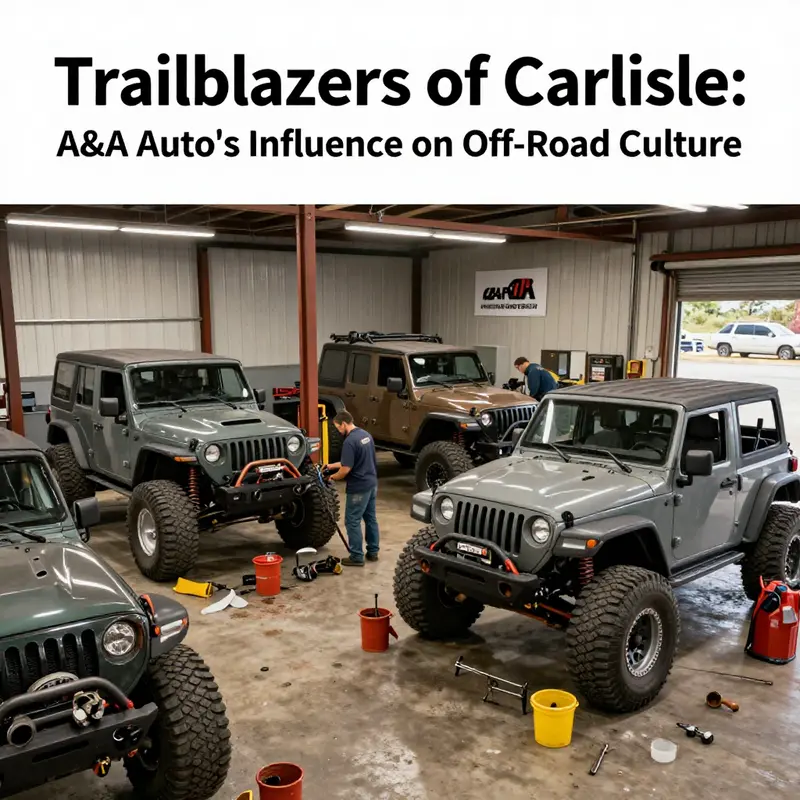
On Harrisburg Pike the town’s ordinary cadence gives way to the steady rhythm of work trucks, muddy boots, and the quiet certainty that a vehicle in need will be met with practical care. In Carlisle, Pennsylvania, a place where rural lanes meet a bustling automotive culture, a shop quietly earns its keep by listening first and turning wrenches second. This is not a showroom with glossy gloss and borrowed bravado, but a workshop where the language spoken is gauge clusters, smoke from metal on a cold morning, and the patient, methodical path from diagnosis to repair. The address you’ll find on the door is a reminder of years spent serving a community that treats its trucks as partners in daily labor and weekend adventures. The business operates at 1053 Harrisburg Pike, a fact that becomes meaningful not as a marketing line but as a signal of accessibility and presence in a city whose heart still beats to the cadence of road miles and engine ticks. In Carlisle, a place that often hosts events tied to the long memory of truck culture and off‑road curiosity, the shop has built its reputation not by claiming feats but by delivering them in real time: dependable engine health, sturdy front-end integrity, and the durable resolve that comes from keeping heavy vehicles mission‑ready for long hauls and rough terrain.
What sets this shop apart, in a town where the landscape changes with the seasons as surely as weather patterns shift, is a clear focus on trucks and off‑road readiness. The work is framed not as a narrow service line but as a philosophy of durability. Engine repair here is treated not as a single task but as a system-wide check that considers how components interact under stress, how vibration translates into wear, and how a small improvement in one area can translate into safer, more predictable performance when a vehicle is pressed into challenging conditions. Diagnostics are approached with patience and curiosity, a method that values process over quick fixes. It isn’t about replacing parts in a vacuum or chasing the cheapest solution; it’s about restoring a calibrated balance—the kind that keeps a vehicle dependable on long trips through rural backroads or on muddy trails after a weekend rain. The technicians’ expertise doesn’t merely rest in firing up a scanner and interpreting results. It extends to an intimate understanding of how a truck’s frame and front-end behave in the real world—the way a suspension carries load, how steering geometry translates into control, and how cumulative wear can silently erode performance before a dashboard light even flickers.
The shop’s offerings reflect the demands of truck ownership and off‑road exploration without turning each visit into a shopping list for specialized gear. They maintain a practical roster: engine health through comprehensive diagnostics, a thoughtfully curated inventory of parts and accessories that cover a spectrum of vehicle types, and frame and front‑end repair services designed to extend the life of heavy-duty builds. In this context, a typical service interaction flows as a conversation about reality rather than a sales pitch. The technician asks about recent trips, the kinds of loads carried, and any noticeable changes in performance. The customer, in turn, receives a candid assessment of what is feasible, what is necessary, and what might be delayed until the next service window. This approach matters deeply in a community where trucks do real work, and off‑road enthusiasm is sustained not by novelty but by reliability and trust built over time.
A key facet of the shop’s identity lies in its alignment with the off‑road and truck enthusiast community that thrives in Carlisle. The region’s annual truck events are more than social gatherings; they are annual barometers of the city’s shared passion for heavy machines and the culture that grows around them. The shop has embraced that dynamic by stepping into a role beyond repair bay; it has become a hub—a point of connection for people who tune engines, upgrade suspensions, and swap stories about overnight trail runs. Through sponsorship of events, the shop casts a wider net of engagement, inviting local owners to bring questions, demonstrate builds, and celebrate the craft that makes off‑roading possible in a place where landscapes vary from forested hills to open farmland. This involvement is not mere marketing; it is a reciprocal relationship that reinforces safety, community knowledge, and the sense that a well‑maintained vehicle is a shared responsibility between the owner and the technician.
In the realm of specialized maintenance, the shop’s emphasis on trucks and off‑road vehicles translates into a practice built on durability rather than disposable fixes. Off‑road readiness demands attention to details that might escape routine roadies: how a vehicle tolerates rough terrain, how components tolerate heat and vibration, how traction is preserved through turns and climbs, and how a chassis remains aligned when a frame endures twists and impacts. The work reflects a careful calibration. It’s not about chasing performance feverishly but about ensuring that every repair contributes to predictable, repeatable capability. This is a place that understands that a broken component is not merely a singular problem; it is a signpost that a vehicle’s entire system is being pressed beyond its ordinary limits. Diagnostic steps prioritize granularity—checking compression quality, listening for abnormal rhythmic sounds, verifying alignment with precise measurements—without losing sight of the broader picture: a truck that can survive miles of highway and miles more off the pavement.
The community dimension of the shop also reveals a broader truth about Carlisle’s automotive ecosystem. In towns like this, repair shops function as informal libraries of experience. Veterans share tips about common wear patterns and tell stories about stubborn issues that once challenged even the most seasoned technicians. In response, the shop’s team cultivates an atmosphere of transparency. When a decision about a repair emerges, the explanation is as much about education as it is about options. The goal is not to persuade a customer to accept the most expensive fix but to build an understanding of how the vehicle’s running condition can be stabilized over time. This approach often translates into confidence; the owner who understands the tradeoffs of a repair is more likely to participate in a plan that prioritizes long‑term reliability over short‑term savings. It’s a subtle but meaningful distinction that resonates in a community where vehicles are trusted to carry families, tow gear, haul supplies for small businesses, and venture beyond paved routes into the slower, more deliberate pace of outdoor exploration.
The narrative around this Carlisle shop would be incomplete without acknowledging a shared memory that threads through the town’s truck culture: the quiet resilience of vehicles and drivers who rely on them. In many ways, the shop’s work is about safeguarding routines—the weekly haul to the farm, the weekend trips to the mountains, the daily commutes that stitch together work and play. When a truck performs reliably, it becomes not just a tool but a partner in daily life, enabling people to meet obligations, pursue passions, and return home without the anxiety that a sudden breakdown might bring. This is the quiet testament to a shop that has learned to listen longer than it speaks, to measure twice, and to fix once, and in so doing, to earn a reputation for dependable service that travels with the trucks long after the engine has cooled.
For readers who want to explore the mechanics behind the kinds of work that shape this Carlisle chapter, there is a natural invitation to dive deeper into diesel systems and the broader crafts of engine work. One resource that frames the fundamentals in a practical, step‑by‑step way can be a useful companion: Mastering Diesel Mechanics: Your Step-by-Step Path to Success. This link offers a structured look at the core practices that support reliable, durable performance under demanding conditions—precisely the lens through which a shop dedicated to trucks and off‑road durability views its daily tasks.
The community, the work, and the vehicles all converge in Carlisle to create a living example of how a single automotive service point can become a locus of trust. The shop’s connection to the local ecosystem—its genuine dealer‑level curiosity about how a vehicle performs under stress, its openness in sharing options with its customers, and its ongoing involvement with the Carlisle Truck Nationals—speaks to a larger story about maintenance done with care and collaboration. In a world where many repairs are perceived as transactional, this Carlisle chapter emphasizes a relationship that endures through seasons of use, the rough edges of off‑road adventures, and the quiet confidence that comes from knowing a vehicle’s health is in capable hands. The road from diagnosis to repair is, in this view, more than a sequence of procedures; it is a narrative of accountability, skill, and community that gives meaning to the miles traveled on and off the pavement.
As the story of this shop continues to unfold, it serves as a reminder that the health of a truck is a reflection of the care it receives between the times it leaves the driveway and the moments it returns with stories from the road. The Carlisle landscape—the quiet river of traffic, the farms, the trailheads, and the weekly rituals surrounding repair and maintenance—offers a living backdrop to a business that thrives on the edge where reliability meets adventure. When a customer asks for reassurance about a long trip or a challenging obstacle, the shop’s answer is not just a repair code or a list of parts. It is a commitment: to keep the vehicle robust, the driver informed, and the journey ahead safer. In that sense, the Carlisle shop becomes more than a place to get work done; it becomes a partner in the ongoing pursuit of capability, endurance, and shared stories built on the wheel’s turn and the engine’s steady heartbeat. The chapter of Carlisle’s truck culture, sharpened by the hands that keep the machines honest, continues to roll forward, one trusted repair at a time, inviting more drivers to bring their questions, their vehicles, and their curiosity to a place where off‑road dreams and everyday responsibilities meet under one sturdy roof.
External reference: https://www.mapquest.com/business/aa-auto-carlisle-pa-17013
Economic Footprint and Service Lifeblood: How A&A Auto Shapes Carlisle’s Truck and Off-Road Market
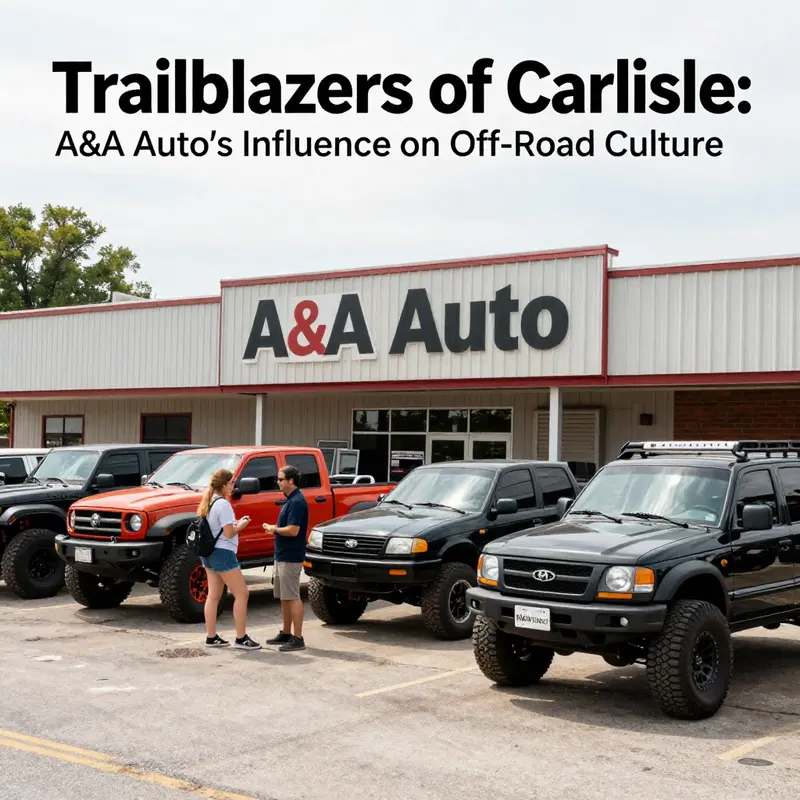
Carlisle sits at a quiet hinge between farmland and regional commerce, a town where the rhythm of everyday work—delivery routes, construction projects, farm logistics, and municipal maintenance—depends on a network of small, capable repair shops that keep machines running when the weather turns and deadlines loom. In such a landscape, the presence of a local auto repair shop is more than a convenience; it is a stable spine of economic activity. The trucks that traverse county roads, the off-road quads that farmers and contractors rely on to manage land and equipment, and the service fleets that keep local businesses moving all lean on quick, trustworthy maintenance to avoid costly downtime. In Carlisle, the story of how vehicle repair translates into regional resilience unfolds through the daily decisions of a shop known locally as A&A Auto, a business that appears in the public record as a practical, enduring presence at 1053 Harrisburg Pike and serves as a proxy for the broader demand in the truck and off-road sectors that define the local economy.
A&A Auto does not operate in isolation. Its reach extends from family sedans and work trucks to the specialized needs of larger fleets that underpin the surrounding rural economy. The shop’s clientele includes independent contractors who rely on sturdy, road-ready trucks every day, construction crews that depend on reliable pickups and service vehicles, and agricultural operators who need off-road equipment that can handle seasonal peaks. The sum of these activities goes beyond repair work; it creates a pipeline of demand for parts, tools, and ancillary services that ripple through Carlisle’s business ecosystem. When a fleet manager places a service order for a truck that carries equipment to a job site or a fertilizer delivery to a cooperative, financial activity follows. Parts purchases ripple through local distributors, fueling accounts at nearby gas stations, spurring tire and accessory sales, and expanding the footprint of nearby service businesses that cycle through the same customers. These patterns matter, because in smaller economies, the health of one repair shop can become a bellwether for the entire local truck and off-road market.
The economic contribution of such a shop centers on job creation and the maintenance of capital, two elements that keep the Carlisle area competitive for small and mid-sized employers. A&A Auto hires technicians, service writers, and support staff whose wages circulate back into the community as spending in restaurants, retail stores, and local services. The employment effect is not large in a single year, but it is steady and multiplicative. Skilled technicians enable higher uptime for fleets, which in turn reduces downtime costs for local businesses and, by extension, increases the reliability of regional supply chains. When a contractor calls for a same-day repair on a hydraulic system, or a stubborn transmission issue on a diesel-powered work truck, the repair shop’s capability translates directly into the contractor’s ability to meet project timelines. That reliability feeds confidence in Carlisle’s labor pool and signals to nearby companies that the area can support ongoing maintenance-heavy operations that many rural regions struggle to sustain.
In this setting, the market focus that a shop like A&A Auto cultivates becomes a lens into the broader local demand. The Carlisle area features a blend of standard passenger vehicles and a pronounced need for trucks and off-road equipment used in agriculture, landscaping, municipal maintenance, and light industrial work. The market for more durable, high-performance powertrains—diesel engines, four-wheel drive systems, and off-road suspensions—persists because there is real, recurring need for robust functionality across varied terrains and weather. The shop’s service menu, therefore, tends to be heavier on preventative maintenance, pre-season inspections, and critical path diagnostics. It is not unusual to see fleets scheduling multi-vehicle tune-ups before peak seasons or before harvests when downtime could jeopardize a delivery schedule or a planting window. In those moments, the repair shop becomes not just a place to fix a break, but a partner in planning, a local hub that helps ensure that the region’s trucks and off-road machines stay productive when demand rises.
The indirect economic activity sparked by a local repair shop echoes through related industries. Once a routine repair turns into a parts order, the supply chain extends to wholesale suppliers, aftermarket parts specialists, and even the smaller vendors who provide maintenance tooling and shop equipment. A&A Auto’s interactions with these networks contribute to a regional ecosystem where businesses rely on steady, predictable demand. This interconnectedness can bolster the resilience of Carlisle’s economy, particularly when broader markets experience shifts in vehicle ownership patterns or fuel costs. The story of Carlisle’s truck and off-road market, then, is as much about the maintenance ecosystem as it is about the vehicles themselves. A reliable repair shop keeps fleets productive and costs predictable, and that stability invites investment, whether in a new local business, a larger construction project, or a modest expansion of a fleet’s capacity.
Trust is a critical currency in this narrative. In communities where technicians become familiar faces and invoices reflect shared history, customers extend a degree of loyalty that underpins long-term business stability. A&A Auto gains referrals not just through competitive pricing, but through a reputation earned by consistent performance—accurate diagnostics, transparent communication, and the ability to complete work on time. For local fleets, that trust translates into a lower perceived risk when bringing a vehicle in for off-road modifications, diesel engine servicing, or heavy-duty transmission work. The security of knowing a repair partner will stand behind the work reduces the intangible costs of doing business—risk, anxiety, and the cognitive load of coordinating multiple service providers across a patchwork of rural service needs. This reputational capital matters in a regional economy where every service interaction can influence a business’s willingness to maintain or expand its local footprint rather than to seek solutions in distant markets.
As the U.S. automobile industry continues to evolve—shaped by advances in diesel efficiency, alternative powertrains, and more sophisticated diagnostic technologies—the value of a locally anchored repair shop persists. The Carlisle market demonstrates how skilled, adaptable maintenance capacity can anchor a community’s relationship with transportation and, by extension, with the broader economic system that depends on it. Local shops like A&A Auto become the experiential reference point through which residents, contractors, and fleets measure the practical viability of owning and operating trucks and off-road equipment in a rural setting. They anchor expectations: that a vehicle in need of service will be treated with competence, that repairs will be done with an understanding of the specific demands placed on trucks and off-road machines, and that the business environment will support continued maintenance as a strategic advantage rather than a mere cost center. In that sense, the shop’s influence is both immediate and enduring, shaping decisions about equipment ownership, maintenance planning, and even the geographic distribution of work within Carlisle’s service economy.
The chapter’s focus on the local footprint mirrors a larger pattern in the truck and off-road markets where community-based repair services serve as the practical glue that keeps rural commerce connected to regional demand. The Carlisle context reveals how a single shop can become a catalyst for broader market performance: by keeping fleets available for dispatch, by enabling contractors to meet tight deadlines, and by fostering a culture of careful maintenance and proactive care. That culture reduces the risk of major breakdowns that would otherwise ripple through suppliers, logistics networks, and construction schedules. It also encourages a more sustainable pattern of equipment usage, where preventive maintenance avoids wasteful downtime and extends the usable life of vehicles that are essential to agriculture and industry alike. In this sense, A&A Auto’s economic footprint goes beyond the repair orders written in a shop ledger. It informs the cadence of local business life, the way contractors plan their days, and the confidence with which residents invest in the trucks and off-road gear that keep Carlisle’s economic heart beating.
The story, ultimately, is one of interconnectedness. A small-town auto shop operates at the intersection of personal service and regional need. It is where a resident’s vehicle, a contractor’s fleet, and a farmer’s harvest equipment converge in a shared space of expertise, equipment, and trust. In Carlisle, this convergence is not merely about wheels turning; it is about the steady accumulation of small, reliable acts—an alignment of workforce capability, supply-chain access, and community reputation—that, over time, shapes how the local truck and off-road market grows, adapts, and remains resilient through cycles of demand and disruption. A&A Auto provides a vivid lens on how, in a place where roads, fields, and neighborhoods intersect, the health of the transportation economy is sustained by the steady work of skilled technicians, the reliability of spare parts, and the everyday decisions that keep vehicles in service longer and at a lower total cost of ownership. For readers charting the intimate ways in which a single repair shop influences a place like Carlisle, the takeaway is simple and powerful: durable, trusted maintenance is not a back-office function. It is a vital component of regional competitiveness and community well-being, quietly driving both the local market for trucks and off-road equipment and the broader story of economic vitality in small-town America.
For those seeking broader technical context that supports these observations, the field offers a wealth of practical knowledge on diesel mechanics and its role in sustaining heavy-use fleets. A resource that distills best practices, diagnostics, and the critical thinking required to keep diesel-powered vehicles on the road can be a valuable companion to local shop staff and fleet managers alike. Mastering Diesel Mechanics provides a structured pathway to deepen the expertise needed when a Carlisle-based shop tackles a stubborn diesel concern, optimizes a transmission overhaul, or tunes a four-wheel-drive system that must survive harsh rural conditions. Mastering Diesel Mechanics serves as a useful touchstone for practitioners who must translate broader industry developments into practical, on-site solutions that fit the Carlisle climate and road network.
As this chapter has argued, the presence of a capable, trusted, locally embedded repair shop matters not only for the day-to-day viability of individual vehicles but for the long-run health of the truck and off-road market in the Carlisle region. The business model, workforce, and community ties of A&A Auto illustrate how a modest enterprise can catalyze a broader economic dynamic—one that sustains local fleets, supports a network of allied services, and reinforces the confidence necessary for ongoing investment in equipment, infrastructure, and talent. This is the lived experience of a rural-urban interface where transportation meets local resilience, and where the quiet work of maintenance quietly underpins the prosperity of a community.
External reference: For a practical reference on how local vehicle listings shape repair businesses and consumer expectations, see MapQuest’s listing for A&A Auto in Carlisle, PA: https://www.mapquest.com/business/aa-auto-carlisle-pa
Trailbound in Carlisle: Sustaining Off-Road Adventure Through a Local Auto Shop’s Quiet Craft and Community
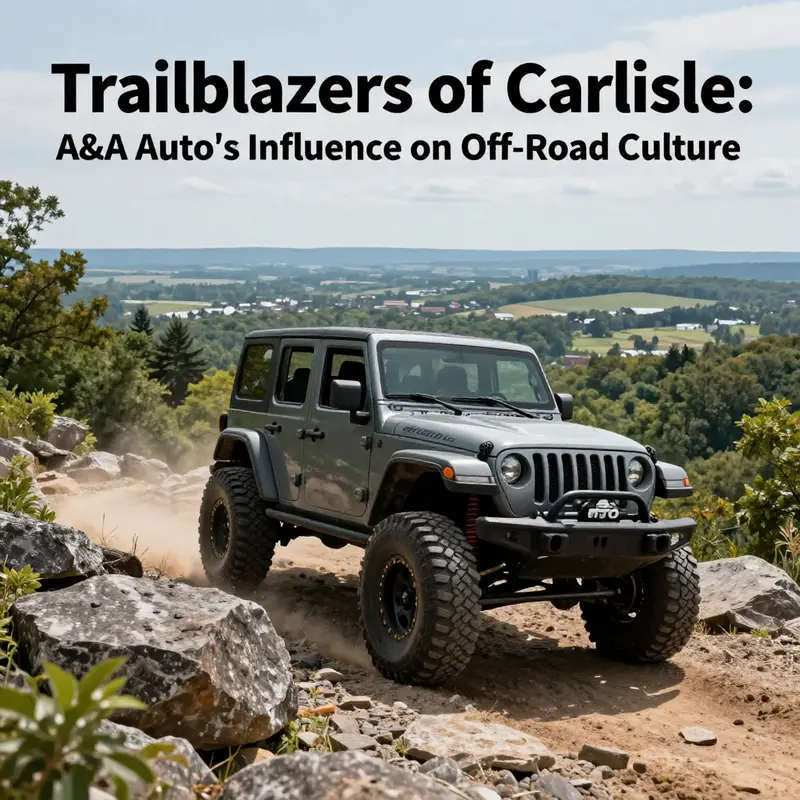
Carlisle, Pennsylvania sits at a crossroads of history, landscape, and the kind of outdoor opportunity that rewards patience, preparation, and a little stubborn grit. The hills rise and fall in quiet, accessible ways here, the forests hold their own weather, and the open spaces invite wanderers to test the limits of a vehicle and a crew who know how to push just far enough without tipping into reckless risk. In this place, the off-road lifestyle isn’t a weekend hobby so much as a cultural rhythm—an ongoing conversation about capability, resilience, and the trust that one’s equipment will perform when the trail narrows and the terrain grows unpredictable. What anchors that rhythm is not a flashy showroom or a sweeping myth, but the steady, practical work of a local auto shop that keeps the conversation between vehicle and driver honest. The work performed in tucked-away shop bays, the conversations held at the counter, and the patient, disciplined approach to maintenance become as essential to Carlisle’s off-road identity as the trails themselves. The story is less about destinations and more about the conditions that allow people to pursue the search for rugged adventure with confidence and safety. It’s about preparation rather than bravado, about reliability as a shared value, and about the way a community learns to care for the machines that carry them into rough places and back again.
To understand why Carlisle’s off-road culture feels so rooted and enduring, one must feel the landscape in both its quiet beauty and its demanding moments. The region’s trails trace the edge between open pine stands and rocky pocketed passes, where a careful approach matters more than sheer power. A vehicle that can handle uneven soil, sudden ruts, and the temptation to press a little farther than recommended is rarely the result of a single upgrade. It grows from regular service, thoughtful upgrades to the suspension and drivetrain, and a willingness to listen to the vehicle’s telltale signs—the way a front axle settles after a wheel dips into a rut, or the slight resistance in the steering when the terrain grows slick and uneven. In Carlisle, that knowledge is passed along in small ways: a technician who recognizes a familiar problem from experience on nearby trails, a customer who knows to expect a quick check before a long weekend excursion, and a pair of hands that understands that the vehicle’s health is a community’s safety net. The local auto shop functions as more than a service provider; it is a steward of capability, a place where maintenance becomes ongoing education, and a place where trust is built through consistent outcomes.
The practical core of Carlisle’s off-road culture rests on the condition and readiness of the machines that carry people into the forest and back out again. Off-road driving—by its nature—places demands on mechanical systems that are rarely tested on paved streets. The suspension is pushed to extremes by uneven rock faces, by sudden switchbacks where traction can snap from perfect to poor in an instant, and by jolts that propagate through the chassis in a way that unsettles both driver and cargo. A shop that understands this language speaks in the language of geometry and force: it checks alignment with a careful eye, calibrates suspension components so they can absorb the energy of a rough descent, and tunes ride height to maintain control while preserving the vehicle’s approach and departure angles. The four-wheel-drive system, often a central feature of an enthusiast’s kit, becomes a topic of precise conversation: the friction and engagement behavior of the transfer case, the durability of the driveshafts, the integrity of the transfer gears, and the ability of differentials to handle the extra torque that comes when the road ends and the trail begins. These are not abstract concerns; they are the practical matters that keep a day’s outing from becoming an unplanned disruption or, worse, a safety incident on a remote track.
Within this ecosystem, the auto shop becomes a quiet epicenter of knowledge transfer. It’s where owners learn to read the subtle signs of wear: a squeak from a corner of the undercarriage that hints at a worn bushing, a slight lag in steering responsiveness that flags a tie rod or steering rack issue, and the creeping noise that occurs when a CV joint begins to fail under load. The shop’s approach to maintenance reflects a philosophy that emphasizes prevention, a contrast to the pattern of chasing problems only after they appear. Regular oil changes and filter checks are not merely routine tasks; they are a preparation ritual that preserves the engine’s narrative of reliability on rocky trails and long forest roads. Tire selection becomes a strategic decision, balancing tread pattern against the terrain’s expectations and the driver’s appetite for quiet on the highway versus grip on the trail. The careful choice of tires—seasoned for mud, rock, or mixed surfaces—transforms from a cosmetic upgrade into a functional tool, one that shapes how a vehicle behaves when the road ends. The shop’s staff speaks with owners about tire inflation, tread depth, and the impact of different compounds on traction in damp or sandy conditions. It is a collaborative practice, a process by which a driver’s voice and a technician’s experience converge to create a more capable, more predictable machine.
The story of Carlisle’s off-road enthusiasm is a story of the human element as much as the mechanical one. Beyond the mechanical services, the shop functions as a hub for a community bound by curiosity and shared risk. Enthusiasts exchange war stories about stubborn cold starts on winter mornings or the delicate dance of choosing a line through a rocky passage. They compare notes on gear placement, recovery techniques, and the best lines through a tricky obstacle. In that space, the mode of conversation shifts from jargon to empathy: someone who has learned to climb a steep slope or negotiate a washout explains the decision to engage four-wheel drive at a particular moment; another who has faced a more serious failure recounts what to check first when parts go out of tolerance. The shop’s role in fostering this camaraderie is not incidental. It provides a neutral space where experience is shared, questions are answered with respect, and practical wisdom is codified through repeated, real-world demonstrations. It’s where the sense of identity around the off-road lifestyle in central Pennsylvania is reinforced, through service that is timely, accurate, and tailored to the unique demands of local terrain.
This is not a solitary hobby. It sits at the heart of a larger social pattern that includes weekend meetups, trail days, and informal runs that begin in the outskirts of town and stretch into the surrounding counties. For many, the trail becomes a stage where a vehicle’s capability is not simply a matter of speed or bravado but a measure of preparedness and moral responsibility. Those who participate in these activities learn early on that their enjoyment depends as much on the condition of the machine as on the driver’s judgment. The auto shop, with its steady cadence of inspections and repairs, helps ensure that drivers bring back more than stories; they return with a machine that can handle the next adventure and a seat-of-the-pants confidence that their equipment will not abandon them when the going gets narrow. In that sense, maintenance ceases to be a chore and becomes a form of hospitality—an invitation to push gently, to test limits, while knowing there will always be a trusted partner ready to tune, repair, and counsel.
The practical guidance that emerges from this relationship between shop and driver is often understated but highly influential. Owners are encouraged to develop a routine that anticipates wear rather than chasing it. A quiet morning check after a night’s rain, a quick inspection of the undercarriage after a muddy trek, and a proactive schedule for brake, steering, and suspension components are all routines that extend the life of the vehicle and, by extension, the lifespan of the adventures that draw people together here. It is a philosophy of care that respects both the machine’s fragility and its capability. When a driver learns to anticipate how a suspension lift will alter steering geometry, or how a larger tire will affect braking responsiveness, they begin to navigate both the physical landscape and the practical landscape of ownership with greater clarity. The shop’s advice often extends beyond the bay doors. It becomes part of how a community thinks about risk, how it negotiates the balance between exploration and safety, and how it preserves the environment in which off-road enthusiasts operate. Thoughtful maintenance reduces the chance of stranded excursions and helps keep trails open by preserving vehicle integrity and reducing the likelihood of avoidable damage to the surrounding ecosystems.
To weave together the technical, the social, and the environmental dimensions of Carlisle’s off-road culture, it helps to imagine each vehicle as a portable bridge between town and trail. The bridge does not stand apart; it is anchored in conversations with the people who keep it stable. The auto shop is the anchor of this bridge. It translates drivers’ ambition into actionable maintenance steps, it interprets the demands of rugged terrain into service plans, and it honors the tacit agreements that make outdoor recreation possible. For those who come to the shop seeking a better way to enjoy the outdoors, the thread of trust is already woven: a driver trusts the shop to keep the vehicle honest; the shop trusts the driver to ask the right questions and to return for the ongoing care that sustains the engine, the drivetrain, and the suspension that separate a near-miss from a successful climb. In a place like Carlisle, where the landscape invites exploration and the weather guards its own schedule, that mutual trust is not a luxury but a practical necessity. It allows weekend warriors and weekend caretakers alike to approach each new trail with a sense of preparation and a readiness that is not flashy but dependable.
The broader arc of this narrative is not to glorify one shop or one trail, but to illuminate how the practical acts of maintenance and the social fabric around them sustain a way of life. It’s about the quiet confidence that comes when a crew knows the machine will perform as needed, when the vehicle’s integrity is assured, and when trust has grown into a cooperative habit. In Carlisle, that habit is built in little moments—an informed question asked at the counter, a checklist shared between driver and technician, a long winter’s night spent mapping a season’s trail calendar. It is in these moments that the off-road culture becomes more than a pastime; it becomes a way of reading the landscape, of preserving the trails that invite people to explore, and of honoring the people who keep the journey possible. The local shop, through its steady, nuanced practice, helps ensure that the trail’s call remains clear and compelling, that the machine remains a faithful ally, and that the shared pursuit of adventure continues to thrive—one maintenance appointment, one story, and one careful ascent at a time.
Final thoughts
A&A Auto’s commitment to servicing the off-road aspirations of drivers in Carlisle, PA, extends beyond just performance upgrades and repairs. The shop represents a sanctuary for enthusiasts, fostering a community united by shared passions and experiences. Its economic contributions enrich the local landscape, cementing it as a pivotal player in cultivating the car culture in the region. Through its relentless dedication to enhancing truck and off-road capabilities, A&A Auto leaves an indelible mark—ensuring that the spirit of exploration thrives among adventurers in the rugged trails of Carlisle.