
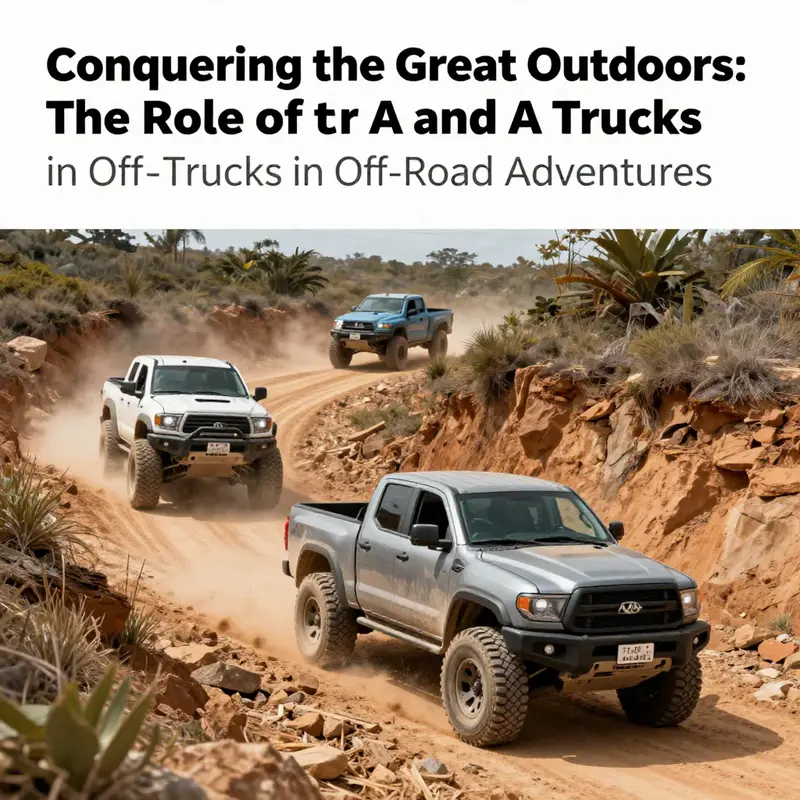
A and A trucks have emerged as an essential player in the world of off-road vehicles, appreciated for their enduring strength and capability in even the most challenging terrains. This article delves into the multifaceted relevance of these robust trucks, covering essential topics such as technological advancements that enhance off-road performance, economic implications shaping the industry, and the geopolitical factors at play in global markets. Additionally, we will explore the societal impacts of these trucks on communities and enthusiasts, establishing a comprehensive understanding of their influence. From rural landowners embracing their rugged utility to racing fans dreaming of adrenaline-fueled adventures, A and A trucks resonate deeply with a passionate audience. Join us as we unpack the integral role these vehicles play in the ever-evolving off-road landscape.
Rugged Lines, Roaring Engines: A Deep Dive into A and A-Inspired Off-Road Trucks
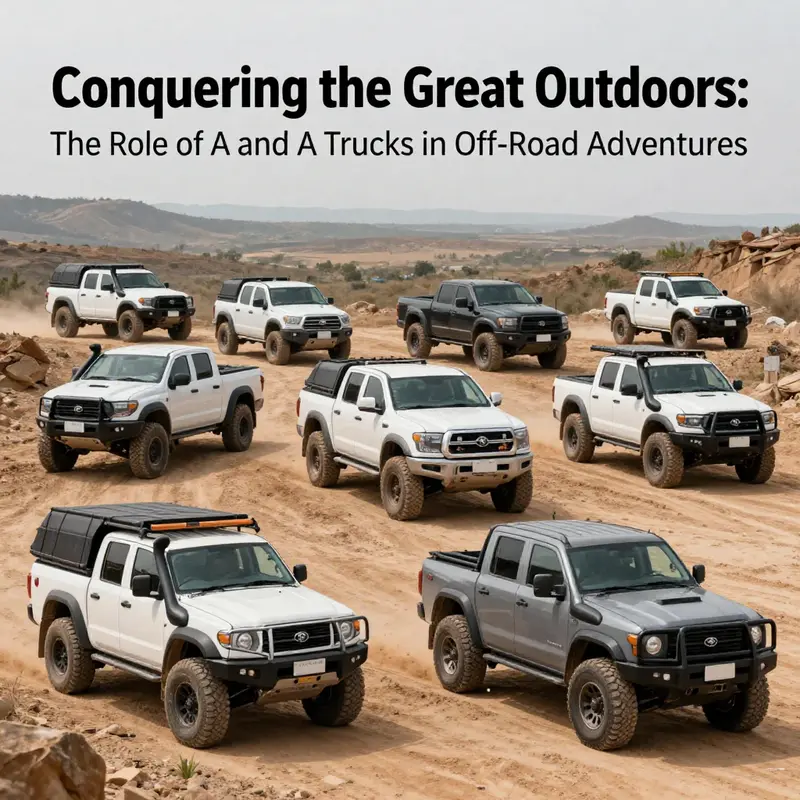
Off-road trucks occupy a distinct niche in the world of vehicles. They are built not merely to move from point A to point B, but to ferry people and payload across surfaces that test grip, traction, and durability. When the terrain turns hostile—mud that clings, sand that sifts, rocks that bite, or a slope that demands precise balance—these machines become a study in resilience. The core idea behind them is simple in principle and complex in execution: maximize stability, control, and propulsion while preserving the ability to endure long hours in harsh environments. The result is a vehicle family that blends power with measured restraint, so drivers can push limits without sacrificing reliability. Within this broad category, trucks occupy a special place because they pair substantial capability with practical utility. They carry heavy loads, negotiate uneven routes to carry work forward, and still offer the kind of controllable handling that matters when the line between success and getting stuck is measured in inches rather than miles.
What makes a truck truly capable off road goes beyond horsepower on a dyno or a glossy paint job. It starts with a chassis designed to absorb punishment without transferring it uncomfortably to the driver or the cargo. A reinforced frame, sometimes integrated with a heavy-duty ladder or dual-frame construction, helps the vehicle resist twisting under load and stress. The suspension is a careful compromise between travel and stiffness; too soft, and a vehicle wallows over rocks, too stiff, and the ride becomes punishing on long hauls. Modern off-road trucks usually feature high ground clearance to clear obstacles and protect the underbody, but the geometry of that clearance matters as well. The approach and departure angles—the steepness of the front and rear ends as they meet the ground—play a crucial role in negotiating ridges and craters without bottoming out. Good off-road tires complete the package, with robust sidewalls and tread patterns designed to grip a range of surfaces, from slick mud to loose gravel. Plants of mud, sand, or shale will demand different tread profiles and air pressures, and a skilled driver learns to adapt on the fly, using tire choice and pressure as a lever to maintain grip.
Another essential element is the drivetrain. A four-wheel-drive or all-wheel-drive system, often paired with a low-range transfer case, gives the vehicle traction where power alone would spin wheels in place. When traction is scarce on one axle, locking differentials help by ensuring that torque is distributed to the wheels with grip. This mechanical dance becomes critical in rock crawling, steep climbs, or swampy passages where one wheel might be perched and the others spinning. Reinforced differentials, stronger drive shafts, and upgraded axles are common upgrades for those who take the concept seriously, because durability in these conditions translates directly into safety and mission success. In addition to mechanical robustness, protective systems matter: skid plates to shield the undercarriage from jagged obstacles, rock sliders to guard the sides from impacts, and a sturdy recovery point that can attach a winch line or rescue rope without compromising the chassis.
Inside the framework of these machines, versatility is the name of the game. A practical off-road truck must balance cargo capacity with access to control. Seats may be rugged but comfortable enough for long days, while cabin layouts favor visibility, durable materials, and straightforward maintenance access. Controls are designed for gloves-first use: easy to reach, resistant to mud, and designed to communicate torque, traction, and suspension status with clear feedback. This feed of information—how much torque is being delivered to each axle, how high the exhaust temperature is, or how the suspension is compressing over a rock shelf—helps drivers decide when to pause, re-route, or throttle with purpose. Engineering teams focus on the reliability of critical systems, from the cooling circuit to the brake lines, because a failure in the field is not simply inconvenient; it can be dangerous. For this reason, manufacturers emphasize durability, with components sized to endure repeated cycles of impact, vibration, and exposure to elements like dust, rain, and altitude dust that can degrade performance over time.
To those who use off-road trucks for work, the themes shift from pure performance to a balancing act between capability and endurance. In construction and mining, the demand is for machines that can haul, tow, or carry heavy gear while navigating rough access roads, temporary tracks, or improvised lanes. In agriculture, the terrain itself becomes a variable: fields can morph into rutted trails after heavy rain, and the vehicle must adapt to softer soils without becoming mired. In emergency and military contexts, reliability and predictability under stress become not only desirable but essential. The same fundamental traits—ground clearance, traction control, robust protection, and durable drivetrains—are stretched to meet the specialized needs of these fields. The result is a spectrum of configurations, each tuned to a world where the road is never truly flat and the destination is often off the beaten path.
As the conversation around off-road trucks evolves, so too does the technology surrounding them. Electrification enters the conversation in two complementary ways: electric propulsion and hybrid systems can offer instant torque that helps with rock-sliding starts and soft-sturface grip, while electrical architecture can simplify weight distribution and energy management for repeated climbs. Battery placement and thermal management become crucial when a vehicle must perform in hot sun or cold shadows for long durations. A well-designed electric or hybrid system can reduce noise, lower emissions, and improve efficiency during slow, careful maneuvers through challenging terrain. At the same time, engineers are mindful of the rugged realities of field use, ensuring that charging, cooling, and protection of electrical components mirror the practicality demanded by real-world work and adventure.
Beyond hardware, the way people plan and practice off-road trips matters. Simulation and training environments give drivers the opportunity to rehearse in controlled settings before heading into real terrain. In these digital spaces, users encounter the same terrain challenges—slopes, ruts, mud, and sand—and can learn to read the ground, select the right gear, and coordinate recoveries without risking people or equipment. This blend of physical design and digital preparation helps explain why off-road trucks remain appealing across diverse communities: engineers prize the machines for their durability and capability, while operators and enthusiasts value the confidence that comes from knowing a vehicle can handle whatever the landscape throws at it. For those who want to understand the practical craft of keeping such machines alive and performing, there is a direct line to the hands-on skills that underlie any successful expedition. Mastering diesel mechanics, for example, offers a step-by-step path to reliability in tough conditions, and readers can explore that topic here: Mastering diesel mechanics — your step-by-step path to success.
As this field continues to mature, there remains a broad, unglamorous core: the relentless pursuit of balance. People want enough power to conquer rough ground, but not so much that control becomes reactive rather than deliberate. They want enough suspension travel to absorb a boulder’s kiss without compromising steering, enough protection to resist the hazard zone beneath the chassis, and enough reliability to see safety and productivity cohere in one daily practice. The story of off-road trucks, in essence, is the story of engineers listening to terrain and drivers listening to the vehicle, learning to interpret vibrations, sounds, and feedback into measured actions. It is a relationship that rewards patience, foresight, and a willingness to adapt. In that sense, the exploration of A and A-inspired concepts—whether viewed as an actual brand, a design philosophy, or a theoretical framework—provides a lens through which to examine these vehicles not as mere machines, but as tools for turning unpredictable landscapes into navigable routes.
The larger arc of off-road trucks also intersects with the communities that rely on them. They enable teams to reach remote sites, carry heavy loads over rough access routes, and operate in environments where infrastructure is sparse or absent. They support exploration, rescue, and industry in ways that remind us why reliable machines matter. In the end, the appeal lies not just in raw capability, but in the confidence a driver gains when a vehicle remains composed during the most trying moments. This confidence has a social edge too: it fosters safer, more efficient work practices and expands possibilities for remote teams to perform critical tasks with less risk. It is a reminder that the best off-road trucks are not only about raw speed or show-stopping torque; they are about the quiet reliability that lets people do demanding jobs, chase meaningful adventures, and return home intact.
External resources can broaden this understanding, offering deeper technical context for those drawn to the engineering side of the topic. For researchers and practitioners seeking a scholarly overview, a respected resource on off-road vehicle design and technology provides a rigorous starting point for further study: https://www.sciencedirect.com/topics/engineering/off-road-vehicles.
A and A Truck on Rough Terrain: The Tech-Driven Transformation of Off-Road Performance
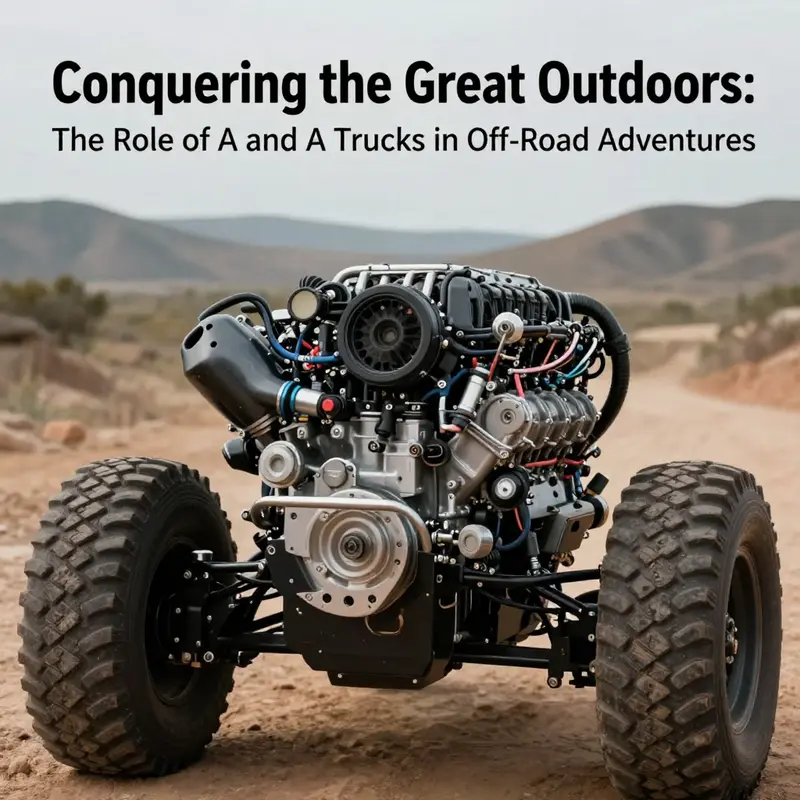
The landscape that off-road trucks inhabit is defined not by the paved line but by the margin where earth meets rock, mud clings to tires, and the trail angles upward toward the uncertain. In that boundary space, a truck designed for off-road duty must do more than endure; it must adapt in real time, anticipate obstacles, and deliver controlled power where grip is scarce. This is where technology has shifted the balance decisively. The once simple proposition of “more ground clearance equals more capability” has evolved into a layered system of intelligence, materials science, and energy management that keeps the driver focused on the line ahead rather than the hazards beneath. In this chapter, we trace how the integration of advanced suspension, powertrains, drivetrains, and driver-assistance technologies has redefined what a capable vehicle can do on uneven, unforgiving terrain—and how this transformation aligns with the broader theme of A and A Truck negotiating the off-road world with confidence and precision.
Suspension is often the quiet hero of off-road performance. Modern adaptive air suspension systems rise and lower the chassis in response to terrain. They sense obstacles and adjust damping in real time, offering a balance between comfort on long dirt roads and stiffness when rock crawls demand tighter control. The effect is not merely smoother rides; it is more consistent traction. When the suspension stiffens to traverse a boulder field, damping remains tuned to minimize bounce, allowing the tires to maintain contact with the surface. Conversely, when the trail opens into deep ruts or sand, the system can soften, increasing wheel articulation and preventing the chassis from slamming into unpredictable surfaces. This dynamic ability to modulate ride height and suspension force translates into steadier acceleration, sharper climbs, and safer descent control.
Powertrains have moved from brute horsepower toward an orchestra of torque, efficiency, and instantaneous response. Turbocharging, precise engine management software, and, increasingly, hybridization, enable higher torque output at low speeds without dropping fuel economy in the upper ranges. In the harsh environments where off-road work and exploration occur, the emphasis on low-end torque is critical; it keeps momentum through stalled sections and climb angles where momentum matters more than peak speed. Hybrid and electric propulsion bring another layer of capability: electric motors can deliver maximum torque instantly, which makes crawling over slick rocks or through sticky mud possible with gentler throttle modulation. In practical terms, this means a driver can rely on a steady, controllable pull even when the engine is lugging at the edge of stall, rather than waiting for a turbo to spool and a gas engine to catch up. The integration of these systems is not a race for peak power but a careful balance of traction, control, and endurance across hours of demanding driving.
Drivetrain reliability remains an essential pillar when the route demands endurance. New materials and precision engineering are pushing axles, differentials, and transfer cases beyond the limits of prior generations. A key advancement is the adoption of electronic locking differentials that can be engaged with a touch or an automated signal from onboard sensors. These electronic mechanisms synchronize with traction control and stability programs to optimize wheel grip whenever surfaces become slippery or uneven. The transfer case, once a blunt instrument for selecting a two- or four-wheel drive mode, has evolved into a smart component that can modulate torque distribution between axles, adjust gear ratios for crawl speed, and protect driveline components from stress through predictive engagement. Engineers design these parts to withstand high torsional loads, impact forces from rocky undercarriages, and temperature swings that accompany long, grueling expeditions. The net effect is a drivetrain that remains reliable under load, enabling the driver to push the envelope with less concern for component failure.
Within the broader field of driver-assistance technologies, terrain-specific driving modes, 360-degree camera systems, underbody sensing, and autonomous obstacle detection have become practical tools, not just marketing promises. Terrain modes tailor power delivery, throttle response, and braking characteristics to the conditions—gravel, mud, sand, or rock—so that the vehicle behaves predictably even when the surface suddenly shifts. The 360-degree cameras provide situational awareness that extends beyond what a single windshield view can offer. This visibility helps a driver assess potential pinches, holes, or protruding rocks without repeatedly stopping to scout the line. Underbody sensors scan for debris or contact with hard surfaces, which might cause hidden damage on a canyon trail or a forested track. Autonomous obstacle detection, driven by sensor fusion and advanced algorithms, can alert the driver to nearby hazards or, in some configurations, assist with automatic stopping in precarious moments. While a human remains the decision-maker, the system reduces reaction time and elevates safety margins on unfamiliar routes.
All of these elements—suspension, powertrain, drivetrain, and driver assistance—work in concert to convert a challenging off-road environment into a series of manageable steps. They do not replace the craft of driving but instead expand its toolkit. A driver no longer must chase traction with brute force alone; instead, the vehicle senses, adapts, and communicates the state of the terrain, while the operator focuses on the strategic line and pace. This integrated approach is particularly significant on long expeditions or work assignments where terrain changes quickly—from a rocky approach to a muddy bench to a sandy saddle—demanding constant recalibration of technique. The vehicle becomes a partner in the journey, translating a broad range of terrain data into a coherent rhythm that keeps momentum without sacrificing control.
The implications of these technological evolutions extend beyond capability to include durability, efficiency, and even ecological considerations. Efficiency gains emerge from better engine training across varied loads and smoother, more controlled throttle application, enabling longer trips between refuels or recharges. Quiet operation—an often overlooked benefit—becomes practical as electric and hybrid powertrains deliver low-speed torque with minimal noise, reducing fatigue for drivers who spend days at a time on rough trails. And durability follows from smarter design decisions: refined materials and targeted reinforcement areas in axles and transfer cases minimize wear and tear while preserving strength where it matters most. The result is a class of off-road trucks that can reliably tackle high-stress tasks in mining outposts, agricultural fields, remote construction sites, or defense operations, all while extending service life and reducing maintenance downtime.
The social and cultural dimension of this technological shift should not be overlooked. A and A Truck typifies a philosophy in which rugged capability is augmented by intelligent features that empower people to work and explore with fewer limitations. This ethos shows up in community initiatives and industry collaborations that emphasize durable, purpose-built mobility as a foundation for progress. Consider, for example, a program that mobilizes trucks for humanitarian work in underserved areas; the combination of rugged performance and reliability makes a tangible difference in getting supplies to communities in need. Trucks for Change: Supporting Habitat for Humanity illustrates how dependable vehicles underpin on-the-ground efforts, linking mechanical resilience to social impact. The linkage between hardware and human purpose reinforces the idea that off-road technology is not merely about conquering trails but about expanding the reach of help and opportunity.
Looking ahead, the trajectory of off-road technology points toward even tighter integration of software, sensing, and power management. The next wave will likely feature further electrification of low-speed drive components, more sophisticated predictive maintenance that anticipates component wear before failure, and tighter cybersecurity to protect critical control systems in harsh environments. As these systems mature, the role of the driver will evolve from merely commanding power to orchestrating a suite of intelligent tools that keep pace with the terrain and the mission. The result may be a future where a single vehicle can sustain extended expeditions in the most remote regions, offering reliability, safety, and efficiency that were once the province of fiction.
For readers seeking a broader sense of how manufacturers package off-road capability in the modern era, the official site of a major automaker’s truck division offers a comprehensive view of current performance packages and engineering priorities. This resource contextualizes the technical themes described here within real-world product development and field testing, providing a useful counterpoint to the more general discussion in this chapter. For a deeper look at how a major automaker structures off-road performance, see https://www.ford.com/trucks/.
null
null
Rugged Frontiers: Geopolitics Shaping A and A Trucks in Off-Road Markets

Rough terrain has always tested the mettle of machinery, but the markets that build and deploy A and A trucks in off-road contexts are steered as much by geopolitics as by geology. The chapter that follows does not simply describe the rugged technologies these trucks embody; it traces how global political currents ripple through every link in their chain, from raw material sourcing to final assembly, from regulation to renewal, and from military or infrastructure contracts to the joyful, if stubborn, amusement of trailing a line through mud and rock. In such a landscape, the performance of an off-road behemoth depends not only on suspension travel and tire tread but also on the resilience of a supply network and the predictability of the rules that govern international trade. When a nation’s policies tilt toward protectionism or when regional stability wavers, the path from concept to customer becomes a longer, more expensive expedition, even for a vehicle built for the most demanding conditions.
Trade policies and sanctions quietly but decisively shape the A and A truck market. Tariffs on critical components—engineered cores, heavy-duty axles, transmission units, or advanced electronics—can nudge up production costs and stretch manufacturing timelines. Even modest levies accumulate when a vehicle depends on dozens of specialized parts sourced worldwide. In the rough economy of off-road work, where uptime is king and lead times can determine a project’s viability, modest policy shifts translate into missed maintenance windows, delayed fleet deployments, and budget overruns that cascade into longer payback periods for operators. The dynamic is not purely financial: it alters competitive positioning among regional assemblers and distributors who must decide whether to localize more components or accept higher import costs for the sake of proven performance.
Beyond direct tariffs, supply chain disruptions tied to geopolitical instability reverberate through every layer of the industry. Regions rich in materials essential for modern trucks—rare earths for electronics, specialty steels for frames and axles, and high-quality rubber compounds for rugged tires—become chokepoints when political risk spikes. The resulting price volatility creates a moving target for procurement, planning, and warranty forecasting. In practice, manufacturers must anticipate price shocks, cultivate multiple sourcing avenues, and maintain strategic inventories to dampen the volatility that could otherwise erode margins or delay field-ready fleets. This strategic prudence is not a luxury; it is a competitive necessity when markets rely on heavy, highly engineered components with long product life cycles.
The United States plays a pivotal, often decisive, role in shaping the operating environment for high-performance off-road vehicles, including the A and A line. Trade agreements, defense policies, and technology transfer norms can accelerate or throttle access to cutting-edge systems used in rugged trucks. Shifts in foreign policy or the reconfiguration of alliances influence market access, the availability of specialized capabilities, and even the perceived security of investing in heavy manufacturing abroad. As governments reframe their priorities toward resilience, infrastructure, and national security, demand for rugged, dependable platforms rises in contexts that range from disaster response and border mobility to mining and construction in challenging regions. In such settings, a vehicle’s ability to perform under extreme conditions becomes inseparable from the political calculus that governs where and how those vehicles are built, sold, and maintained.
Regulatory changes and broader political risks add further layers of complexity. Global political volatility—civil unrest, border frictions, and evolving export controls—can deter investment, prompt late-stage design changes, or constrain distribution networks. The Russia-Ukraine dynamic, for example, has underscored how regional conflicts can ripple through supply chains, alter commodity prices, and compel firms to revisit risk assessments for market entry and expansion. For manufacturers and fleet operators, this means integrating more robust risk analytics into every stage of product development and deployment: scenario planning that contemplates sanctions, currency swings, and regulatory divergence; contingency budgeting for non-tariff barriers; and governance practices that allow rapid reconfiguration of supplier bases should a country’s stance shift unexpectedly. In effect, geopolitics becomes part of the vehicle’s maintenance schedule, not just a backdrop to its engineering.
Yet geopolitics also creates opportunities that savvy players can seize. When a country increases defense or infrastructure spending, it lifts the demand for rugged, reliable platforms capable of operating in austere environments. In such cases, the market rewards those who can balance the dual imperatives of high performance and operational resilience. Localized assembly helps mitigate import risk while building technical talent and supplier ecosystems that can weather political storms. Companies may elevate dual-sourcing strategies, invest in modular designs that simplify reconfiguration for different markets, and invest in training programs that reduce downtime caused by supply disruption. This approach does not just protect margins; it also expands the addressable market by making the vehicles adaptable to a wider range of conditions and regulations without compromising core reliability.
The regional tapestry adds even more texture to the picture. In markets with prolonged instability, operators demand fleets that can be maintained in place, with spare parts availability and field-service capability close to the work site. In more stable regions with strong rule of law and predictable procurement, the emphasis may shift toward performance, total cost of ownership, and lifecycle support. The off-road sector already tests these tensions between reliability and performance, with operators balancing expediency against the longer arcs of maintenance and repair. The A and A trucks must be designed not only to conquer the most unforgiving terrain but to survive the political and economic weather that dictates when and where they are purchased, deployed, and serviced. In this sense, the chapters of geopolitics read like an instruction manual for durability itself, guiding engineers and operators toward configurations that minimize vulnerability to external shocks while maximizing mission readiness across diverse geographies.
For fleets and manufacturers alike, the path forward is paved with adaptive planning. Diversifying the supplier base, localizing critical components where feasible, and presuming a longer runway for project timelines can turn geopolitical risk into a controllable variable rather than an uncontrollable force. The push toward nearshoring, common in many industrial sectors, makes a practical difference in off-road markets when the terrain demands rapid field adaptation and quick on-site repairs. In practice, this means more modular frames, standardized fasteners, and electronics that tolerate a wider band of operating temperatures and power conditions. It also means better aftersales networks, with technicians trained to handle specialized off-road challenges in remote locations. And it means a more explicit alignment between engineering, compliance, and strategic procurement so that design choices reflect not only utility and capability but also the geopolitical contours that define a given corridor of trade and travel.
As the narrative of off-road capability intersects with the map of global politics, a simple truth emerges: the most capable A and A trucks will be those that recognize the terrain both literally and politically. The design ethos shifts from sheer ruggedness to a nuanced balance of resilience, adaptability, and foresight. Operators learn to read not only the mud lines and rock faces but also the policy lines that could restrict access to markets, alter cost structures, or redefine risk. In this light, the chapter of geopolitics becomes inseparable from the chapter of engineering and procurement—an integrated story about moving through rough places while staying steadfast in a world of shifting alliances and rules. For those navigating this terrain, the future belongs to those who can turn instability into capability and uncertainty into a disciplined, durable strategy.
This perspective is echoed in related discussions of infrastructure, mobility, and fleet resilience across the broader landscape of vehicle technology. For a closer look at how charging and infrastructure pressures intersect with fleet deployment, see electric-fire-truck-charging-infrastructure. This thread of thought helps connect the challenges of geopolitics with the practical realities of keeping off-road fleets ready, from the most remote construction site to the edge of a desert pass. External sources offer a wider lens on geopolitical risk, such as the scholarly synthesis of geopolitical risk dynamics, which puts the market pressures described here into a broader strategic framework. External reference: https://www.sciencedirect.com/topics/business-management/geopolitical-risks
Rugged Wheels, Shared Trails: The Social Footprint of A and A Trucks on Off-Road Enthusiasts and Communities
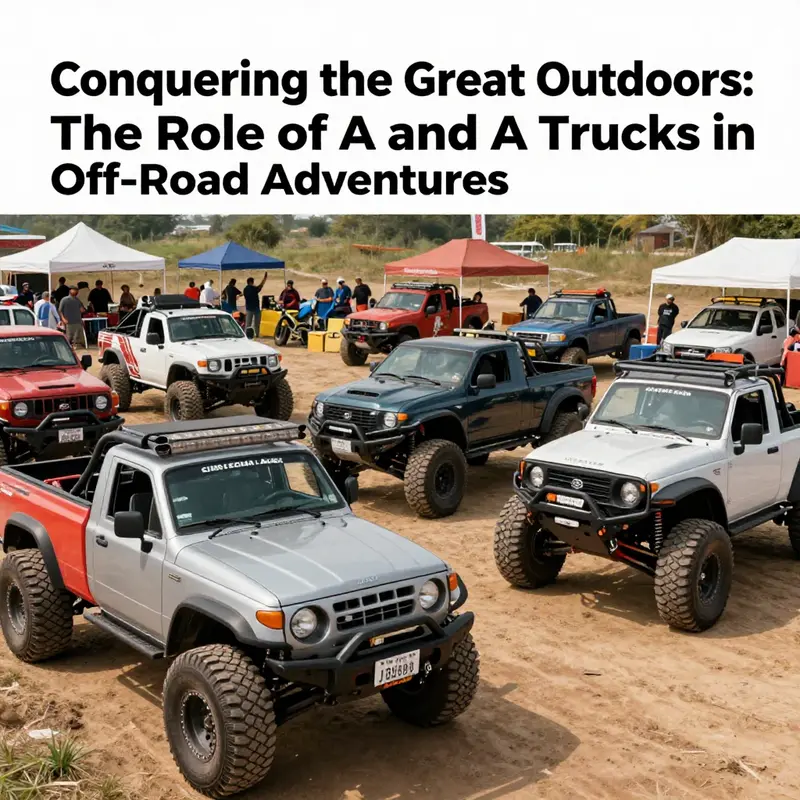
The story of A and A trucks on backcountry trails is more than a catalog of capabilities; it is a window into how technology, culture, and place intersect to shape communities. As these machines move from private driveways to shared landscapes, they redraw the map of who can access remote places, what kinds of adventures are possible, and how people relate to the land that sustains them. Off-road travel has long been both a solitary act of endurance and a social ritual—a way to test one’s limits while listening to the quiet of a canyon at dawn. When the same vehicles become more widely available, the social fabric around them tightens and then expands, forging new bonds among seasoned enthusiasts, newcomers, local land stewards, and nearby residents who experience them as both opportunity and pressure. In this evolving dynamic, the A and A truck is not simply a machine; it is a catalyst for shared experience and collective responsibility.
For many in the off-road community, capability is about more than crossing rocks or wading streams. It is a gateway to accessible adventure, a way to turn distant maps into a tapestry of familiar trails one can explore with confidence. High ground clearance, traction in challenging soils, and robust suspension translate into a mental shift: what once felt prohibitively risky becomes a feasible expedition, a personal journey that can be planned, shared, and re-created with friends and family. That shift has a social upside. It broadens the circle of participants in backcountry travel, inviting beginners to learn from veterans, and it encourages a culture of mentorship that extends beyond the trailhead. Workshops on trail etiquette, vehicle recovery, and eco-friendly camping practices blend practical know-how with the social glue of shared experience, turning weekend outings into ongoing conversations about safety, responsibility, and conservation. In this way, the most visible impact of these trucks lies not only in their mechanical prowess but in their power to knit communities together around a common set of values—curiosity, preparedness, and respect for the landscapes that enable adventure.
The rise of overlanding and backcountry travel, as enabled by capable trucks, also reshapes how communities imagine access and inclusion. Trails that were once the domain of a few experienced travelers begin to see a broader mix of participants: families looking to introduce children to remote landscapes, elders seeking a slower pace and safer routes, and enthusiasts who place environmental stewardship at the heart of their journeys. This broadened participation brings fresh energy to local economies—gas stops, small cafés, gear rental shops, and guide services that specialize in remote locations. It also creates pressure to balance open access with the realities of fragile ecosystems and rural infrastructure. In some places, conversations around routing, seasonal closures, and noise management have become routine. The dialogue is ongoing, and it asks communities to weigh the thrill of exploration against the long arc of ecological health and neighborly peace. This is not a simple trade-off but a negotiation that reflects a broader social shift: more people want to experience the outdoors, and they expect those experiences to be sustainable and equitable.
Research into the practical consequences of this shift reveals a complex spectrum of impacts. On one side, the presence of well-equipped trucks can enable critical work and recreation that previously required more resource-intensive transport or specialized access. In rural or ecologically sensitive zones, however, increased traffic, soil disturbance, and localized emissions require careful planning. Studies that examine heavy-vehicle routing through residential or sensitive areas highlight the importance of minimizing noise and diesel exposure for nearby communities. The concern is not merely about the machines themselves, but about the patterns they create—the way routes, stopovers, and campgrounds concentrate human activity in certain landscapes. When traffic volume rises, infrastructure such as narrow bridges, road shoulders, and culverts can come under greater stress, prompting defensive maintenance decisions that shape how locals move through their own neighborhoods and seasonal shifts in visitation patterns. This is the social cost of expanded access, a price tag that communities must consider alongside the joy of discovery.
Beyond the practicalities, the social footprint of A and A trucks touches broad industrial and policy conversations. The demand for durable, high-performance platforms is a mirror of broader production trends, where ruggedness and reliability are prized not only in work settings but also in the hands of recreational users. This convergence nudges manufacturers and policymakers toward decisions about durability standards, emissions considerations, and the design of support ecosystems—like maintenance networks and parts supply—that keep backcountry travel safe and resilient over time. When vehicle design emphasizes reliability, users feel empowered to engage more deeply with their surroundings, do more with less risk, and share those experiences publicly—on forums, in clubs, and through social channels that chronicle trail conditions, weather, and navigation tips. The social dimension becomes a kind of communal knowledge base, a living archive of best practices that helps people prepare, travel, and return with lessons learned and stories to tell.
Sustainability emerges as a central thread in this tapestry. The community responds to the ecological footprint of recreation with a mix of prudence and innovation. Trail maintenance crews, land managers, and responsible drivers collaborate to minimize disturbance, protect wildlife corridors, and preserve soil integrity. Practices such as staying on established trails, using portable trash systems, and adopting low-impact camping techniques illustrate a shift from novelty to stewardship. The industry likewise adapts, promoting durability and repairability, which reduces waste and extends the life of vehicles and components in harsh environments. Even seemingly small design choices—protective underbody coatings, reinforced exterior finishes, and reliable lighting—reflect a broader ethic of resilience that benefits both professional operators and recreational users. The effect is a calmer, more mature culture that can still celebrate the rush of a challenging crossing but does so with an eye toward long-term health of the places it loves.
In this evolving landscape, one practical channel for shared responsibility is the way the off-road community aligns itself with local and national aims for conservation and community welfare. Initiatives that channel some of the community’s energy toward charitable or public-interest projects demonstrate a rare convergence of thrill and good works. For example, the movement toward organized community outreach through vehicle-related volunteer programs offers a template for civic engagement that feels natural to enthusiasts. The idea is simple: the skills and resources cultivated on the trail can be redirected to help communities that host the trails, whether through habitat restoration, trail building, or disaster response readiness. These efforts remind participants that access to the backcountry is a privilege that comes with duties—duties to preserve the places that enable exploration and to ensure that future generations can enjoy similar journeys.
As the social footprint of A and A trucks grows, so too does the need for clear, compassionate communication among enthusiasts, communities, and authorities. The best outcomes arise when dialogue is ongoing, respectful, and grounded in practical knowledge. Trail etiquette, noise management, and responsible camping standards are not abstract ideals but concrete actions that people can practice together. The end game is not a quiet retreat from the world but a sustainable, thriving ecosystem where people and places interact with generosity and care. The off-road community has learned that capabilities alone do not guarantee harmony; it is the combination of preparedness, empathy for local residents, and a commitment to minimize environmental impact that turns adventure into a shared cultural asset.
For readers who want to explore how the broader truck and off-road ecosystem translates into social action, consider a program that channels the energy of this community into community-building efforts. Trucks for Change: Supporting Habitat for Humanity exemplifies how organized, values-driven participation can extend the language of adventure into tangible improvements on the ground. By connecting enthusiasts with local housing and conservation projects, the movement reaffirms that the thrill of exploration can coexist with concrete benefits for neighbors and habitats alike. This convergence—between exploration, care for landscapes, and care for people—embodies the social promise of A and A trucks. It suggests a future where every journey through a terrain also carries with it a pledge to protect and uplift the communities that welcome us.
As the chapter closes on this strand of the story, the lessons are clear. Innovation in off-road mobility has the power to broaden access, deepen community ties, and catalyze civic initiatives. It also imposes obligations: to tread lightly, to respect local rules, and to invest in the long-term health of the trails we travel. The social footprint, then, is not simply the footprint left on the soil but the network of relationships formed, the knowledge shared, and the sense of shared purpose that travels with every trip. In the end, the journey is not just about moving through difficult terrain; it is about learning how to move together, with caution, curiosity, and care for the places that make the adventure possible. This is the social arc of A and A trucks—a story of wheels that connect, not just roads that separate.
External reference: For a broader perspective on real-world off-road capability and adventure readiness, see a leading industry overview at https://www.landrover.com/defender-110.html.
Final thoughts
The narrative woven around A and A trucks in the off-road segment reveals a deep wedged passion among enthusiasts, landowners, and communities alike. The advances in technology, understanding of economic dynamics, and awareness of geopolitical influences converge to paint a rich picture of an industry in perpetual growth. With their robust features suited for extreme conditions, A and A trucks not only thrive in their designated environments but also unite communities, empowering a spirited journey through uncharted terrains. As these vehicles continue to evolve, they will undoubtedly inspire further adventures and foster connections across diverse landscapes. A and A trucks are more than mere machines; they are the lifeblood of off-road culture.