
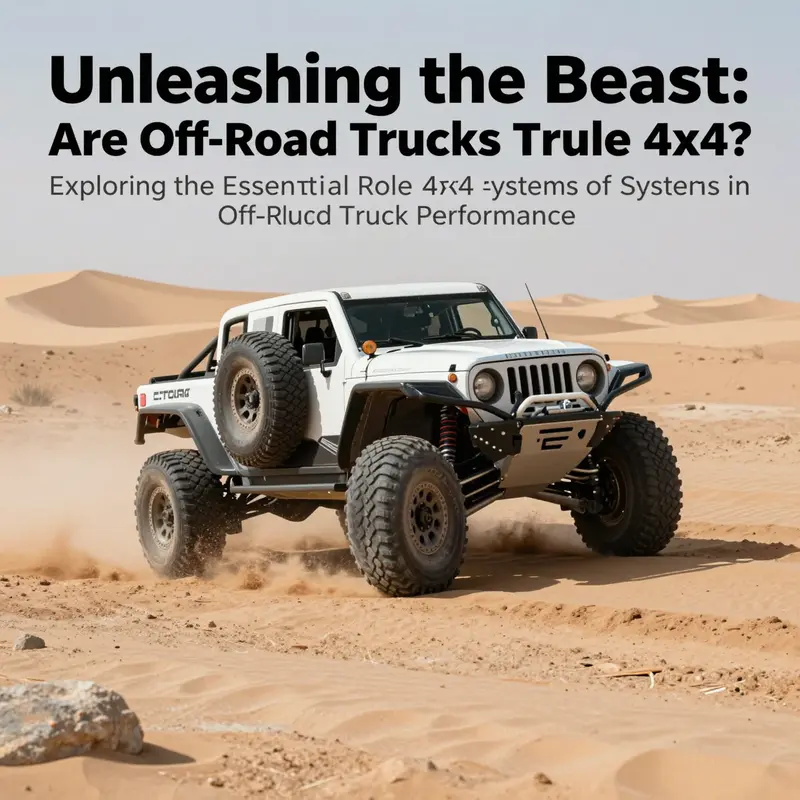
In the rugged terrain where adventure meets the wilderness, off-road trucks dominate the landscape, showcasing their unparalleled strength and resilience. But at the heart of these powerful machines lies a question: are all off-road trucks truly 4×4? This article delves deep into the significance of the 4×4 system in off-road trucking, dissecting its advantages and technological advancements. We will explore not only the necessity but also the comparative terrain capabilities of various off-road trucks. Moreover, we will investigate the cutting-edge innovations driving these vehicles forward, ensuring that adventurers and competitors alike stay ahead of the pack. Join us as we embark on this thrilling exploration, equipping you with the insights needed to understand the paramount role of 4×4 systems in the thrilling world of off-road trucks.
Four-Wheel Fortitude: Why 4×4 Power Defines Off-Road Trucks
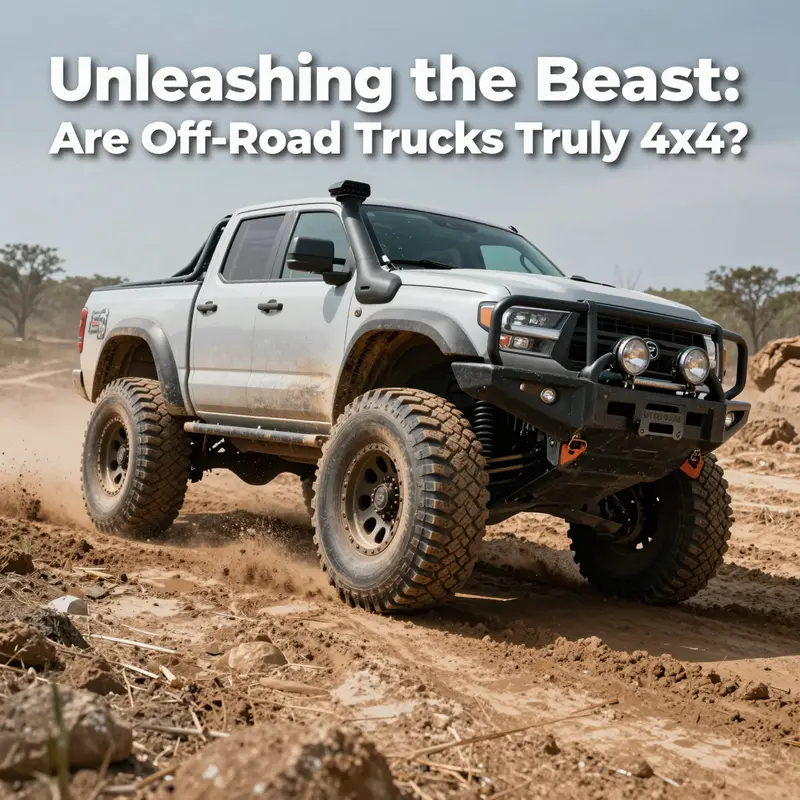
Traction is not a luxury on unpaved trails; it is the measure of a vehicle being able to move where others falter. In the world of off road trucks, four wheel drive is not just a feature. It is the backbone that turns rugged terrain into a navigable stage. When the surface turns to mud, sand, snow, loose gravel, or uneven rock, the ability to send power to all four wheels becomes the difference between forward momentum and getting stuck. This is the essence of 4×4 power: a drivetrain architecture that actively distributes torque to every contact patch on the ground, maintaining grip and steering control even when one wheel encounters a hiding place like a pocket of mud or a hollow rock. The drama of off road driving often centers on traction, and 4×4 systems are designed specifically to choreograph that traction so the truck can progress rather than spin its wheels in frustration. In the broader landscape of trucks and work vehicles, four wheel drive remains a defining trait for those who expect capability to travel with purpose, not merely appearance.
To understand why four wheel drive matters so much, it helps to picture the path power follows from the engine to the tires. A 4×4 drivetrain converts rotational energy into usable torque at all four wheels through a transfer case that splits drive between the front and rear axles. In simple terms, the system ensures that when the driver requests power, it does not just reach the rear axle or the front axle, but reaches both. The effect is a network of grip that responds to the challenge presented by the surface. On flat pavement, a 4×4 may feel redundant or even less efficient than two-wheel drive, because the vehicle can coast with quiet confidence on the tires already gripping. But as soon as the surface becomes slippery or uneven, the 4×4 system locks in and multiplies the contact points with the ground, turning potential wheel spin into predictable motion. The result is a vehicle that remains controllable while negotiating rutted trails, crossing shallow streams, or weathering the unpredictable conditions of a remote work site.
A key enhancement in modern off road trucks is the presence of low-range gearing inside the transfer case. Low range multiplies engine torque while reducing speed, allowing the truck to crawl over obstacles, climb steep grades, and pull heavy loads with a level of control that would be impossible at higher speeds. Think of low range as a manual override on the truck’s natural tendency to accelerate. At slow, precise speeds, the engine’s torque is available in abundance to overcome resistance from the ground, whether that resistance comes from a rock, a root, or a stubborn patch of sticky mud. This capability is essential when the terrain is more about torque than speed, and it is the difference between steady progress and stalling out in a tight corner or a narrow pass.
Beyond low range, another feature that often earns 4×4 elite status is the mechanical locking differential. A differential is the component inside each axle that allows the two wheels on the same axle to rotate at different speeds. In normal circumstances, a wheel on a slick surface or a wheel perched on a rock can lose traction while the other wheel hogs power. A locking differential forces both wheels on an axle to share the engine torque equally, even if one wheel has zero grip. The practical effect is simple: if one wheel is off the ground or stuck, the other wheel on the same axle can still push the vehicle forward. When both axles can lock, the truck gains a steadier grip across the entire platform. The presence of locking differentials means that a truck is less likely to become immobilized by a single obstacle. It also means that drivers have a higher degree of forward momentum when negotiating a trail where traction is tricky and variables are constantly shifting.
The synergy between the drivetrain and the chassis is not incidental. Off road trucks are typically built with frames and suspensions designed to absorb impact while maintaining tire contact with the terrain. A robust chassis supports the torque generated by the engine while giving the suspension enough travel to keep wheels on the ground when the ground beneath changes abruptly. Ground clearance matters because it prevents the underbody from scraping on rocks or uneven ground, and it reduces the risk of damage to vital components when crossing rough surfaces. The suspension system, whether it uses solid axles or independent layouts, determines how well the truck can absorb bumps and maintain tire contact, which in turn influences traction. In combination, these elements create a vehicle that can endure the physical toll of rough terrain without losing the ability to move.
What sets serious off road trucks apart is not only their 4×4 power but the thoughtful integration of the system with the vehicle as a whole. The most capable machines often feature drive modes that tailor how torque is distributed, what the differentials do, and how the transmission behaves in response to wheel slip or rising inclines. Some drivers will switch to a low-range setting when they anticipate a steep, slow ascent or a section that requires precise control. Others will engage a center differential lock to maximize traction when both ends of the truck encounter a uniform slippery surface, such as a long mud bank or wet sand. In practice, the driver becomes part of the traction equation, interpreting how the surface is changing and selecting the mode that keeps the truck stable and moving. The goal is not constant speed but constant grip, a state in which momentum is preserved and the vehicle remains steerable even under challenging conditions.
This is where the misconceptions about off road trucks often surface. A common misbelief is that high horsepower alone guarantees off road prowess. Horsepower helps with velocity and the ability to accelerate out of sticky spots, but it does not substitute for traction and control. Without four wheel drive, power can translate into wheel spin and rapid loss of momentum with little to show for it. With 4×4, the transmission, transfer case, and differentials act like a coordinated team, ensuring that torque arrives where it is most needed and that the wheels maintain contact with the ground. That is why four wheel drive remains a defining characteristic of the vehicles that routinely meet the demands of remote work sites, trailheads, and rugged construction zones where standard two-wheel drive would shutter under pressure.
The story of 4×4 is also evolving with the broader trends in vehicle engineering. Modern off road trucks frequently blend mechanical reliability with electronic precision. Traction control systems, stability programs, and hill descent features work in concert with mechanical 4×4 components to sharpen control on slippery surfaces. The electronics do not replace the hard hardware; they augment it, helping managers and drivers maintain momentum without sacrificing safety. The driver thus benefits from a layered approach to grip: the hardware provides raw torque and fixed distribution options, while the software, sensors, and actuators fine-tune how those options are applied in real time. The result is a system that feels confident and predictable, even when the terrain is unpredictable.
Maintenance considerations are an important part of appreciating why 4×4 matters so much. The addition of a transfer case, multiple differentials, and a more complex drivetrain introduces additional fluid, seals, and wear items that require attention. Regular checks of fluid levels and quality, careful inspection of drive shafts and CV joints, and timely replacement of worn components help keep the system reliable in remote settings. When a truck ventures far from a repair shop, the value of dependable lubrication, durable seals, and robust cooling becomes clear. The extra weight and complexity of a 4×4 system can slightly reduce fuel efficiency on pavement, but on rough terrain, the ability to advance with confidence justifies the trade-off. In rugged work or rescue operations, the gods of maintenance are the difference between a mission accomplished and a stall on a hillside.
The layers of capability extend into the realm of professional and utilitarian use. Ranches, mines, firefighting support units, search and rescue teams operating in uneven terrains all rely on off road trucks for tasks that would be impossible or dangerous in a non-4×4 platform. In such contexts, the reliability of the 4×4 drivetrain is more than a technical feature; it is a grant of mobility that enables critical work. It allows crews to reach remote fuel depots, carry essential tools, and respond to emergencies with greater assurance. When hours matter and the terrain is unforgiving, four wheel drive becomes not merely a matter of convenience but a core element of operational capability.
For readers who want to deepen their understanding of the mechanical anchor that keeps these systems trustworthy, there is value in examining the broader topic of engine and drivetrain maintenance. Mastering the fundamentals of diesel mechanics, including fuel systems, lubrication, and the specifics of how power is transferred through gears and shafts in demanding environments, can be a practical aid for anyone maintaining or utilizing off road trucks. Mastering Diesel Mechanics offers a structured path for those who want to build a foundation that complements the 4×4 philosophy described here. The idea is not to replace hands-on experience but to provide a framework that makes that experience more reliable and efficient.
The importance of 4×4 on off road trucks, then, is not merely a matter of traction on slippery surfaces. It is about an integrated approach to mobility in the face of terrain diversity. It is the recognition that power, when distributed across all four wheels, becomes control; that torque, when multiplied at the right moment, becomes forward progression; and that a well- engineered chassis and suspension allow the truck to stay grounded as the earth itself presents new challenges with every turn. The 4×4 drivetrain is more than a mechanism; it is a philosophy of capability that defines what an off road truck is capable of in the real world. It shapes decisions about what to drive, how to drive, and where to push the vehicle to reveal its true potential. In every remote work project or exploratory journey, the four-wheel drive system stands as a dependable ally, turning rough ground into passage and making the impossible a little more accessible.
As off road enthusiasts and professionals alike know, the true test of 4×4 capability comes not from glossy brochures but from actual trail experience. The confidence that comes with knowing you can choose a gear, lock a differential, and maintain momentum through a tough spot is a particular kind of reassurance. It is the perception that, should the trail turn steep or treacherous, the truck is ready to work with you rather than fight you. The environment may be unforgiving, but the right drivetrain design, reinforced by a sturdy chassis and a responsive suspension, keeps the vehicle from surrendering to the elements. This is the practical essence of four wheel drive in off road trucks: a reliable, adaptable, and deliberate approach to moving through ground that refuses to yield easily.
For readers curious about further reading on the capabilities and explanations of 4×4 off road systems, a widely cited overview from an established automotive publication provides a concise framework for understanding how these features translate into real-world performance. This external resource offers additional context about the capabilities and limitations of 4×4 configurations, helping readers form a balanced view of what to expect from different drivetrain setups in tough environments: https://www.motortrend.com/cars/4×4-trucks-off-road-capabilities-explained/)
null
null
Trail-Ready Brains: How Technological Advances in 4×4 Off-Road Trucks Redefine Reach, Grip, and Reliability
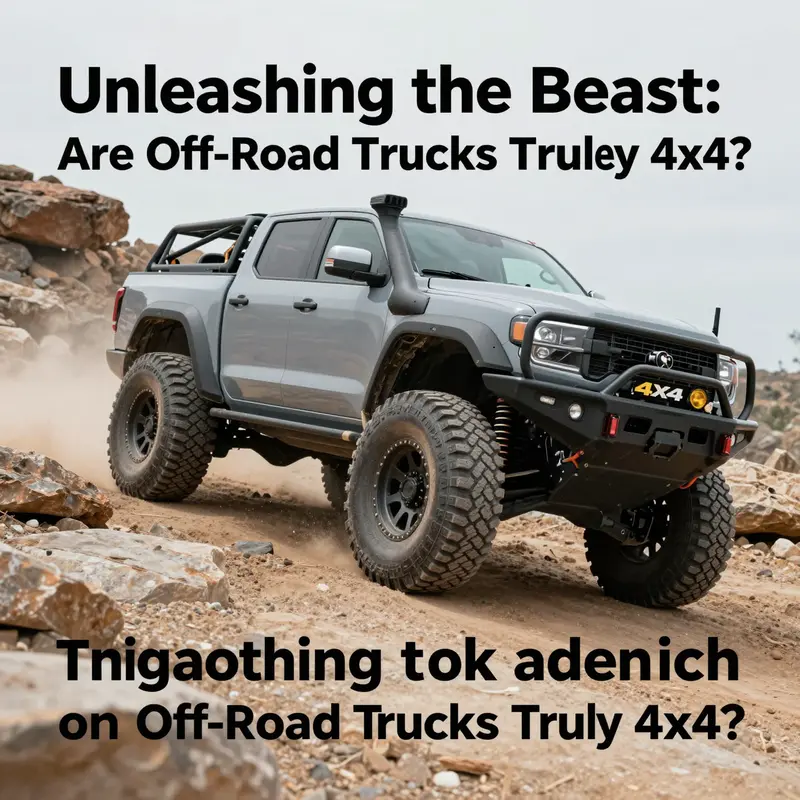
If you look closely at what makes an off-road truck capable, you find more than a big engine and chunky tires. You discover a quiet orchestra of systems designed to turn driver intent into confident traction across mud, sand, rock, and steep grades. The core question—are off-road trucks 4×4?—has evolved. The answer is not merely yes or no, but yes, with a sophisticated set of technologies that extend reach while lowering the effort required to stay in control. Modern 4×4 off-road trucks are built around a drivetrain that sends power to all four wheels, but the real story lies in how this power is managed, modulated, and coordinated with chassis dynamics, suspension, and on-board sensing. In the arena of rough terrain, the 4×4 designation has become a platform for intelligent distribution of torque, adaptive damping, and software-guided stability that keeps the tires in contact with the surface when the path ahead tilts, sinks, or rocks up beneath the vehicle. The result is not only capability but a more forgiving, more predictable driving experience that scales with terrain and driver confidence alike.
At the heart of this capability is a transfer case that enables low-range gearing. Low-range gear makes torque multiply at low speeds, a critical feature when the road ahead is a slick clay track, a loose sand wash, or a jagged rock field. It is not a flashy gadget; it is the foundation that lets the engine deliver usable torque when wheel spin would otherwise doom momentum. Couple that with differential controls—some systems lock differingials to force all wheels to spin at the same rate when necessary, others monitor slip and intervene with selective braking to favor traction—and you begin to sense the engineered logic behind a vehicle that can move where two-wheel drive would stall. Together, these elements form a robust platform for more advanced technologies that actively assist rather than merely react to the surface beneath.
Beyond the mechanical basics, the cockpit and its software layer have grown into a true driving ally. Crawl Control, a feature once reserved for highly specialized vehicles, has become a common fixture in capable off-road setups. It manages throttle and braking at ultra-low speeds, allowing the driver to keep hands on the wheel and eyes on the horizon while the system sorts traction on the surface. Multi-Terrain Select takes this a step further. It analyzes surface characteristics—whether sand, mud, rocks, or snow—and automatically tunes torque distribution, throttle response, and suspension behavior to suit the terrain. The effect is less fatigue for the driver and more consistent traction for the tires. This is not about removing skill; it is about translating perceptual cues—slippage, wheel speed, and the terrain itself—into precise mechanical responses that keep the vehicle moving forward when human inputs alone might falter.
These advancements also shine in how they harmonize with the vehicle’s structural framework. Body-on-frame trucks, favored for demanding work and rough conditions, deliver a resilient platform that tolerates heavy loads and rough handling. The suspensions in these vehicles are not simple add-ons; they are reinforced components designed to withstand torque, dive, and climb without compromising ride quality. The payload and tow capabilities benefit directly from this architecture. When a truck is designed with rugged frames and reinforced mounts, the 4×4 system is not fighting a weak foundation but working in concert with it—optimizing leverage and maintaining control as the chassis flexes over uneven ground. This built-in durability is complemented by factory-installed work accessories like toolboxes and cargo rails that embed practical utility into the core design. Rather than retrofit afterthoughts, these features become integral parts of the vehicle’s identity as a workhorse and an explorer.
A driver’s sense of security often follows a subtle but powerful trail of data. Modern off-road trucks rely on a network of sensors that deliver real-time feedback to the driver while also steering the vehicle, when necessary, to preserve stability. Terrain feedback loops, adaptive suspension damping, and electronic stability control are tuned to the off-road environment rather than to smooth pavement. This tuning is critical because off-road surfaces demand different responses from brake systems, throttle inputs, and tire contact patches. The result is a vehicle that feels more like an extension of the driver’s intent than a machine executing raw commands. It is not magic; it is deliberate engineering that recognizes the difference between a slippery slope and a firm rock face and responds accordingly by modulating terrain contact and momentum.
Yet with all these capabilities, there is a practical caveat that guides design philosophy. A modern 4×4 off-road truck excels in moderate to challenging off-road scenarios, but it is not a platform built for extreme, technical challenges that demand dedicated modifications. The intention is to provide traction, control, and a comfortable ride across a broad range of unpaved conditions, not to turn a showroom vehicle into a specialized rock crawler. The emphasis remains on reliability, visibility, and ease of use, so that weekend adventurers can venture farther without sacrificing the quality of everyday driving. In turn, this philosophy broadens the appeal of off-road capability. The same features that let a truck nudge over a rutted trail also smooth the ride when the pavement returns, creating a versatile vehicle that performs well both in the backcountry and in daily use.
Technical clarity about these systems invites a deeper appreciation for the maintenance and reliability story behind them. The integration of reinforced suspensions and strong frames means higher service loads and more demanding maintenance routines, but they also translate into a longer life under tough conditions. A durable chassis paired with a well-designed drivetrain reduces the likelihood of unplanned downtime, which matters when work demands consistency and when exploration calls on a schedule that cannot be easily interrupted. Regular inspection of transfer cases, drive shafts, and differentials, along with attention to lubrication and protective underbody shielding, becomes not a chore but a habit that preserves performance. The design language here favors long-term dependability: components sized for heavy use, connections protected from the elements, and electronics housed to withstand heat, dust, and vibration without compromising responsiveness.
In the realm of practical workflow and fleet readiness, these capabilities spill over into how vehicles support workdays and weekend expeditions alike. The integration of cargo rails and storage solutions reflects a broader shift toward purpose-built utility. Where once a truck’s usefulness in rough terrain was judged by raw power alone, today’s 4x4s are judged by how seamlessly they can carry tools, secure gear, and bring a level of predictability to a potentially unpredictable environment. The vehicles now often arrive ready for a range of tasks—whether it is hauling equipment to a remote site or carrying camping gear for a multi-day excursion—without the need for intrusive after-market fittings. This alignment of capability and practicality makes the modern 4×4 off-road truck a symbol of both rugged reliability and thoughtful engineering.
The chorus of advances—low-range gearing, differential control, crawl and terrain-select technologies, reinforced chassis, and integrated utility features—does more than expand the envelope of what a 4×4 can do. It reshapes how drivers interpret risk on unpredictable trails and how fleets plan around maintenance windows and duty cycles. The driver benefits from a more intuitive experience in which the vehicle’s intelligent replies reduce cognitive load, leaving the operator freer to observe surface conditions, plan a line, and respond with confidence. In this sense, the technology does not just improve traction; it improves situational awareness and decision-making under pressure. It is a subtle, cumulative shift in how 4×4 off-road capability translates into everyday use, making the idea of off-road travel less about brute force and more about controlled, purposeful navigation through diverse landscapes.
For readers who crave a more technical walkthrough of how these systems interlock, a practical exploration of diesel engine systems and maintenance offers deeper insights. This resource delves into the mechanical underpinnings that power the propulsion and how routine service sustains performance in demanding environments. diesel mechanics guide
No discussion of modern off-road capability would be complete without acknowledging the broader body of work that tracks performance trends and technological innovations. In a comprehensive analysis of contemporary 4×4 off-road trucks, readers can find a synthesis of capability, safety, and efficiency improvements that reflect how far the category has evolved. The emphasis is on how real-world conditions—mud, sand, ice, rock, and steep grades—elicit intelligent responses from traction-control systems, adaptive suspensions, and powertrain logic, creating a vehicle that navigates without the drama of the past. Realistic expectations emerge: these trucks push the boundaries of what is possible without demanding specialized builds, yet they still require respect for terrain and thoughtful vehicle management. For a detailed, accessible overview of current capabilities and performance insights, see the external reference that consolidates these trends: Madison Hill’s Best 4×4 For Off Roading Explained.
In sum, the current generation of 4×4 off-road trucks represents a synthesis of mechanical strength and computational finesse. The drivetrain’s four-wheel drive is not a mere badge but a versatile platform that blends torque management with surface-aware control. The chassis, suspension, and payload design work in concert to deliver traction, stability, and durability under conditions that would challenge lesser vehicles. The result is a vehicle that can be guided through uncertainty with greater confidence, translating the driver’s intent into a measured, controlled response rather than a reaction to abrupt wheel slip. This evolution makes off-road travel more accessible, more predictable, and more integrated with everyday life, turning trails into navigable routes rather than impassable barriers. As technology continues to mature, the line between street comfort and backcountry capability will only blur further, inviting a broader audience to experience what 4x4off-road capability can mean in practice.
Final thoughts
The evolution of off-road trucks has undeniably accentuated the importance of the 4×4 system within these vehicles. As we have explored, the capabilities provided by a 4×4 drivetrain are fundamental to overcoming the challenges posed by off-road environments. Yet, it is also essential to recognize the diversity among off-road trucks—while most are 4×4, some exceptions exist, particularly in the realm of urban crossover vehicles. Furthermore, the innovations in 4×4 technology continue to push the boundaries of what these trucks can achieve. As off-road enthusiasts, racers, and landowners, understanding these nuances can significantly enhance your experience, whether tackling rugged terrains or modifying trucks for optimized performance. The road ahead is extensive and exhilarating.