
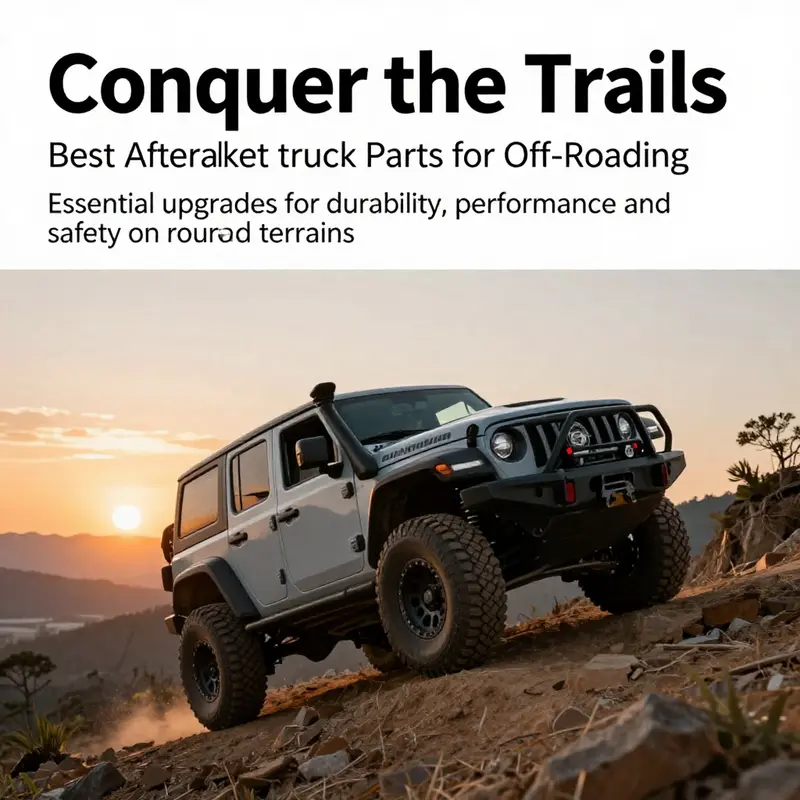
For off-road enthusiasts, navigating challenging terrains requires more than just a powerful truck; it requires optimal aftermarket parts that enhance capability and safety. From lift kits that elevate ground clearance to heavy-duty tires designed for traction in mud and snow, each component plays a crucial role in ensuring performance under extreme conditions. This exploration will delve into the must-have parts for off-roading: lift kits and suspension upgrades, tire and wheel selection, and recovery gear that every adventurer should have on hand. By understanding the unique advantages of these upgrades, you’ll be better equipped to enhance your truck’s performance and outlast the toughest trails.
Lifting for Leverage: How Lift Kits and Suspension Upgrades Redefine Off-Road Capability
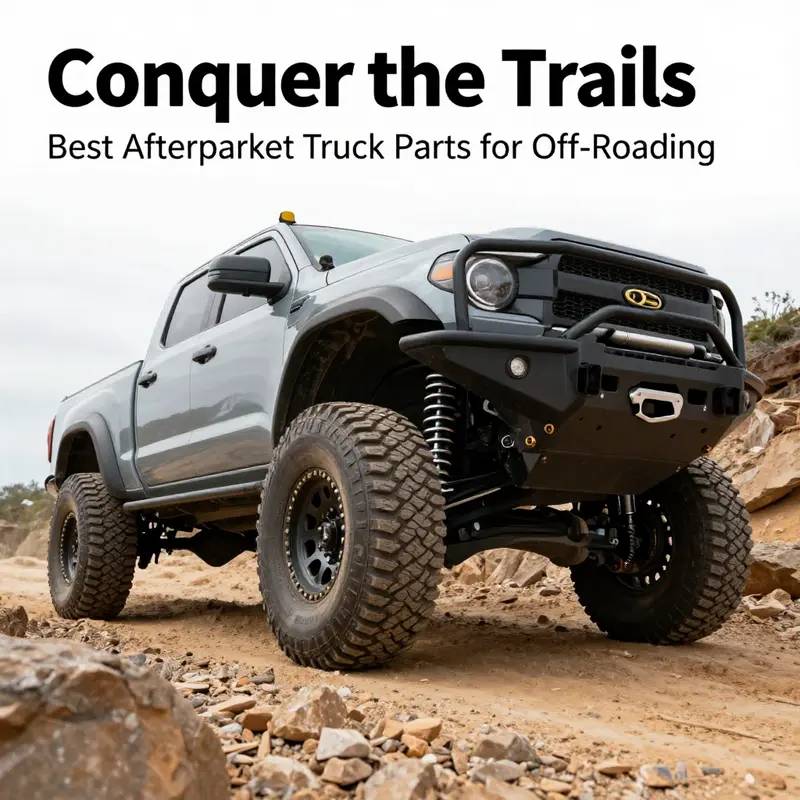
Every off-road adventure starts with a vehicle that can meet the terrain on its own terms. In the world of rugged trails, lift kits and suspension upgrades are not mere refinements; they set the foundation for traction, clearance, and control. When executed thoughtfully, they translate intent into capability, turning tight switchbacks, jagged rock gardens, and deep ruts into navigable challenges rather than roadblocks. The essence of these upgrades lies in how they alter geometry and weight transfer: raising the body to clear obstacles, tuning the suspension to articulate over irregular surfaces, and preserving predictable handling amid dramatic changes in load and terrain. The conversation around a capable off-road rig often returns to a simple question: how much lift is necessary, and what kind of suspension work will sustain it without compromising safety or reliability? The answer, like the terrain itself, is nuanced and situational, shaped by the driver’s goals, the vehicle’s base design, and the conditions most likely to be encountered on the trail. Still, certain core principles emerge with clarity when the topic is examined without distraction from glossy brochures or speed-centric marketing. Lift kits and suspension upgrades work best when they are treated as a system rather than as isolated add-ons. They must harmonize with tires, protection gear, steering geometry, and drivetrain angles. This chapter unspools that harmony, moving from the lift itself to the broader suspension architecture and finally to the practical implications of choosing, installing, and living with these changes on real-world trails. It is a story of leverage—how a deliberate increase in ride height and a tuned suspension can unlock greater obstacle clearance, better traction on diverse surfaces, and a more stable feel when venturing into rough country—without losing sight of control, safety, and long-term durability.
Lift kits sit at the heart of this transformation. Their primary function is straightforward: increase ride height. But the consequences of that height increase ripple through every facet of the vehicle’s performance. With more ground clearance, the approach, breakover, and departure angles improve. Obstacles that once seemed insurmountable—cracked ledges, steep rolls, or rutted channels—become conquerable if the tires can stay in contact with the ground long enough to transfer torque smoothly and predictably. Taller ride height also paves the way for larger, more aggressive tires that can better displace loose surfaces like sand, mud, and gravel. The decision tree for lift kits, however, is nuanced. A coil-spring lift, which replaces the factory springs with taller versions, preserves much of the original suspension’s geometry while increasing travel. It often keeps ride quality more intact and supports heavier loads, benefits that are especially valuable for overlanders who carry gear, water, and recovery equipment. A body lift, by contrast, raises the body relative to the frame without changing the suspension. This approach is lighter on cost and complexity, and it maintains factory ride characteristics, but it offers a modest lift and can alter pinion angles and exhaust clearance if not planned carefully. Add-a-leaf or spacer-based approaches provide incremental increases and can be appealing for budget-conscious builds, yet they can compromise wheel travel and progressive feel if overused or poorly matched to the vehicle’s overall geometry. In the real world, the best path often begins with a thoughtful assessment of how much elevation is truly needed to achieve the desired tire width and ground clearance for the intended terrain, balanced against the potential downsides in on-road comfort and driveline angles.
Suspension upgrades, meanwhile, are the counterpart that makes lift meaningful rather than merely cosmetic. A robust suspension system enhances articulation—the ability of each wheel to move independently and stay in contact with the ground as the chassis remains relatively stable. This is critical on uneven surfaces where a single rigid wheel could lose traction while others encounter high-pressure dips or protrusions. High-performance shocks, reinforced control arms, uprated knuckles, and upgraded sway bars all contribute to better wheel control, improved ride quality after lifting, and more accurate steering feedback. The challenge is to tune these components so that the suspension not only keeps wheels planted on irregular terrain but also returns to a predictable center of gravity during cornering and recovery maneuvers. In practice, this means selecting dampers and springs that match the vehicle’s weight, the expected payload, and the tire profile. It also means considering the suspension’s geometry in transitions—how the camber, caster, and toe shift through the travel arc as the wheels cycle over rocks and ruts. When these elements are aligned with the lift, larger tires can be accommodated without triggering excessive bumpsteer or drivetrain binding. The goal is a synergy where the tire footprint remains workable across the range of motion, and steering remains direct and consistent under load. This harmony is especially important for trail rigs designed for long days of off-road exploration, where fatigue and unpredictability can compound risk. The most durable, capable builds strike a balance: enough lift to clear the trail’s worst features, sufficiently robust shocks and arms to maintain control over rough substrates, and enough precision in geometry to keep handling coherent both off road and, to a practical degree, on road.
The practical benefits of this pairing extend beyond mere obstacle clearance. Tires that fit under a higher silhouette benefit from increased flotation on soft surfaces, reducing the likelihood of sinking into sand or mud. At the same time, the suspension’s ability to articulate smoothly across rocks and roots translates into steadier line choices. Where a stock setup might bounce over a ledge, a properly tuned kit can smooth the mood of the descent, guiding the vehicle with a more deliberate and predictable motion. Yet every benefit comes with trade-offs. Lift and suspension upgrades typically introduce higher initial costs and more complex installation. They may demand reengineering of steering components, alignment procedures, and even the drivetrain’s angles. The broader ecosystem—the bumper, protective plates, and recovery gear—should be considered as part of a complete package. A higher ride height can alter approach angle in a way that makes certain maneuvers easier while complicating others, such as low-speed, high-steering-angle maneuvers that require delicate throttle modulation. Noise, vibration, and harshness can also creep in as suspensions become stiffer or more reactive to surface irregularities. The weight distribution might shift with taller springs, affecting brake bias and roll dynamics during emergency maneuvers. Thus, decisive planning and a clear understanding of how each component shifts the vehicle’s behavior are essential before committing to a lift and a set of upgraded shocks.
One practical way to navigate this terrain is to envision a mission profile for the vehicle. If the truck is intended for long overland trips across varied terrains, the emphasis naturally tilts toward durability, load capacity, and steady articulation. If the vehicle will see aggressive rock crawling on weekends, the priority shifts toward maximum tire clearance and enhanced wheel travel. A balance must be found for daily driving, where comfort and fuel economy matter. In all cases, it helps to think of the lifting and suspension system as a continuum rather than discrete modules. The lift sets the stage by increasing the stage height and enabling more capable tires, while the suspension upgrades choreograph how those tires meet the ground. The more these systems are tuned to work together, the less chance there is of compromising steering feel, braking performance, or reliability on the trail. As with any sophisticated alteration, the installation deserves careful attention. A professional alignment after lifting underlines the pursuit of precision. The geometry of the front and rear suspension must be checked to ensure toe, camber, and caster are within acceptable ranges across the travel envelope. Driveshaft angles, yoke clearances, and CV joints should be inspected or upgraded as needed to accommodate the new geometry. The goal is not to chase the tallest height but to achieve a stable, confident, and repeatable performance on the kinds of surfaces most likely to be encountered. This is particularly important for vehicles that will encounter rock gardens or steep, slippery ascents, where even small misalignments can compound under load and travel speed. In that sense, lift and suspension upgrades are as much about predictability as they are about capability. They demand a patient, methodical approach and a willingness to learn how each change influences the next. The best off-road rigs emerge when the builder resists the urge to push toward maximum lift for its own sake and instead focuses on coherent geometry, durable components, and a consistent driving philosophy. The journey from a factory baseline to a trail-ready configuration is a sequence of measured steps—assessing terrain expectations, selecting compatible lift options, integrating suspension enhancements, and then validating the system through controlled testing and cautiously progressive real-world use.
Choosing the right path also involves acknowledging the cost of admission. Lift kits and suspension upgrades are not guaranteed return-on-investment propositions; they are bets on capability. The more elaborate the build—the higher the lift, the more aggressive the tires, the more stout the shocks—the more the on-road compromises can accumulate. That does not imply a doomed equation, but it does necessitate clear expectations. If daily driving is part of the routine, one might favor a lift and suspension pairing that preserves comfortable highway manners and modest fuel penalties, with the understanding that true rock-crawling prowess comes at a performance price in other contexts. For trail-oriented rigs, the priorities tilt toward robust durability, predictable articulation, and reliability over long, demanding expeditions, recognizing that on-road manners may be less forgiving. Maintenance becomes a recurring theme in this dialogue. Upgraded suspension systems demand regular inspection of mounting points, bushings, and fasteners to prevent play that could translate into vague steering. Tires must be matched to the terrain and inspected for even wear across the contact patch. Protectors and skid plates, while not part of the suspension, reinforce the system by preserving the underbody from punctures and deformation that could alter the suspension’s dynamics. The aim is not to chase perfection in a vacuum but to sustain a practical, repeatable performance on the trails that matter most to the owner.
In search of reliable guidelines, many builders turn to field-tested resources that summarize best practices and field notes from real-world use. For readers seeking a grounded, do-this-not-that framework on lift kits and suspension systems, a well-regarded reference provides a comprehensive primer and a tested pathway to selecting components that fit the vehicle and the terrain. For those who want the science of the setup distilled into actionable steps, delve into practical guides that discuss how different lift types interact with wheel travel and alignment, and how upgrades affect steering behavior and tire wear. As you broaden your understanding, a deeper dive into diesel mechanics and engine-drivetrain fundamentals can supply additional context for how heavier suspensions and bigger tires influence performance and reliability in off-road conditions. This exploration can be especially helpful when considering how added weight and altered geometry interact with braking, cooling, and drivetrain stress on long expeditions. You can explore related guidance here: mastering diesel mechanics: a step-by-step path to success.
Ultimately, the chapter on lift kits and suspension upgrades anchors the broader conversation about what makes an off-road truck truly capable. It emphasizes that capability is not just about clearing obstacles but about maintaining control, predictability, and durability across a spectrum of surfaces and demands. When lift and suspension are chosen with a clear purpose and implemented with care, the truck becomes a platform that empowers the driver to pick lines with confidence, sustain momentum through challenging sections, and recover efficiently if things take a turn. The best configurations are those that align the truck’s geometry with the terrain, support your chosen tire strategy, and preserve the vehicle’s core safety characteristics. In that light, lift kits and suspension upgrades stand as a foundational pair—more than accessories, they are the engineering decisions that translate ambition into performance on the most demanding backcountry corridors. As you map out your own build, keep the questions close: What terrain will define the mission? How much lift is truly needed to fit the tire and ground clearance required? Which suspension upgrades will preserve or improve articulation and steering feel? And how will all these choices interact with weight, payload, and driveline angles over the long haul? Answering these questions with deliberate, data-informed choices will lead to a truck that is not only capable on paper but dependable and rewarding to drive on trail after trail.
External resource for further reference on lift-kits-guided configurations and industry-tested practices can be found here: https://www.offroad.com/2026-truck-lift-kits-guide
Rugged Rubber and Rock-Solid Rims: Mastering Tires and Wheels for Off-Road Confidence

Tires and wheels are the critical handshake between a truck and the terrain, the first and often decisive factor that determines whether a trail becomes a challenge or a ride. In off-road settings, where ground conditions shift from slick mud to jagged rock and from loose sand to riverbed gravel, a thoughtful pairing of tires and wheels can transform a vehicle’s capability. This chapter stays with you through the details that truly matter: traction, durability, ground clearance, and how these elements interact with the rest of the truck’s setup. The goal is not to chase the flashiest numbers but to curate a combination that behaves predictably, safely, and efficiently under the demands of rugged terrain while still performing acceptably on pavement when the trail ends and the daily drive resumes.
Tires sit at the heart of off-road performance. They are not a single, simple choice but a spectrum of options tailored to how you drive, where you drive, and what you want your truck to endure on long expeditions. The most common decision is between all-terrain tires and deeper, more aggressive mud-terrain varieties. All-terrain tires provide a balanced compromise: they grip decently on rocks and mud and still offer manageable on-road manners, lower road noise, and longer tread life than their more aggressive cousins. Mud-terrain tires, with their pronounced lugs and higher void ratios, excel where the ground becomes a soup of wet clay or a field of slick, rounded rocks. They grip when mud clings to tread blocks and bite into uneven surfaces where smoother tires would slip. But there is a trade-off: on-road ride quality can be louder, steering response sometimes firmer, and tread life can be shorter in everyday conditions. The right answer hinges on how often you actually encounter the rough stuff, and how far you are willing to trade comfort and fuel economy for trail confidence.
Beyond the basic all-terrain versus mud-terrain dichotomy, the construction and design details of the tire determine how well it will endure the abuse of off-road travel. The tread pattern matters, but the truth runs deeper: block stiffness, siping density, and the way the sidewalls are reinforced all shape how a tire responds to uneven terrain and sharp rocks. A tire built with robust rip-proof shoulders and reinforced sidewalls makes a big difference when you brush against a months-old wheel-rut filled with sharp edges. The sidewall isn’t merely there to resist a puncture in a desert wash; it must flex under load without cracking when a rock catches an interior flare and the tire climbs over a protrusion. The performance profile includes not only traction on demand but also the tire’s ability to dissipate heat during climbs, maintain grip as tread wear gradually increases, and resist cuts from concealed rock shards that lurk just beneath the surface.
Tire sizing is another axis of performance that should be considered in light of the rest of the truck’s setup. Increasing the diameter of a tire raises ground clearance and improves approach, departure, and breakover angles, which sounds like a straightforward win—until you factor in gearing, speedometer accuracy, and suspension travel. A larger tire will demand more engine torque to maintain the same acceleration and may alter the effective axle ratio, which in turn affects fuel economy and daily drivability. Wider tires can provide more contact with the ground, which helps traction in loose sand and mud, but they also require more careful alignment of suspension geometry and often more aggressive wheel offsets to avoid rubbing at full steering lock. In practice, the sweet spot is often a careful compromise: a modest increase in diameter paired with a measured increase in width that preserves gearing and steering integrity while still delivering noticeable clearance and traction gains on rough terrain.
The interaction between tire size and the vehicle’s wheel fitment is not a one-way street. Tires must be paired with a wheel that complements their profile and provides a safe, robust mounting platform. A wheel that is too narrow for a given tire can fold under sidewall stress and lead to bead failure, while a wheel that is too wide can invite clearance issues with fenders, brake components, and suspension lobes. A strong emphasis should be placed on the wheel’s construction and its ability to hold air reliably under off-road pressures. Beadlock-compatible rims, when used within the vehicle’s intended setup, can offer extra security for very low tire pressures that some drivers employ to maximize traction on soft surfaces. However, beadlocks add weight and can require additional maintenance to ensure proper sealing and torque stability. The choice of wheel material matters as well. Steel wheels tend to be tougher and more forgiving in harsh off-road environments with sharp rocks and trail debris, which reduces the risk of cosmetic or structural damage. Aluminum wheels save weight and improve acceleration and braking feel but can be more susceptible to bending in extreme conditions if not well engineered. The best approach is to select wheels that balance strength, weight, and ease of service, while ensuring they are compatible with the truck’s braking system and hub dimensions.
Compatibility starts with a precise fitment assessment. The wheel’s bolt pattern must match the hub, the center bore must accommodate the vehicle hub precisely to avoid vibrations and run-out, and the offset must be chosen to maintain the correct track width and alignment with fenders and suspension travel. The offset knowledge is essential to avoid rubbing when the suspension compresses during descent or during a full lock turn. For a mid-size pickup that sees both daily use and occasional trail duties, a common strategy is to lean toward a modest positive offset that keeps the tire tucked inside the wheel wells but still affords enough clearance for larger tires when the suspension articulates. Backspacing, the distance from the wheel’s mounting surface to the inner rim edge, also plays a critical role in how much clearance exists between the tire and the suspension or control arms. In practical terms, this means that upgrading tires and wheels is not about chasing a singular number; it is about ensuring the whole geometry of wheel, tire, and suspension works in harmony to deliver predictable steering, reliable traction, and safe handling across a wide range of terrain.
The vehicle you use as the reference point—whether it is a rugged mid-size truck, a compact variant, or a traditional overland platform—shapes the exact approach to tire and wheel selection. A recent example in the enthusiast community highlights the need for careful fitment planning: lifting or altering suspension configuration often requires adjusting wheel offset and sometimes even trimming or fender reshaping to maintain adequate clearance. If your plan includes larger tires, consider how suspension travel and bump-stopping behavior will respond to the combined effect of taller tires and stiffer shocks. In this light, the wheel choice becomes almost as strategic as the tire choice. A heavy-duty wheel with a reinforced bead seat and a robust mounting face reduces the risk of a bead setback or wheel damage when the tire is aired down for grip and then re-inflated for highway driving. The objective remains constant: maximize traction and durability while preserving control and predictability on every segment of the journey, from the driveway to the most challenging trail.
Maintenance and care must accompany the selection process. Off-road tires demand careful inflation management because air pressure directly affects the contact patch and the tire’s ability to conform to irregular surfaces. A lower pressure increases grip in soft substrates but risks bead failure and heat buildup if the tire spins on a solid surface. A higher pressure enhances stability on smooth pavement but can dramatically reduce off-road traction, making it necessary to re-seat the tire and arrest slip when you re-enter a rocky stretch. Wheel maintenance follows suit: regular inspection for corrosion, balanced rotation to even out wear patterns, and meticulous torque on lug nuts to the manufacturer’s specification. For those who operate in extremely rugged environments, a beadlock system can offer peace of mind when running very low pressures, though it introduces additional steps for maintenance and service.
The practical application of all these considerations shows up when you select a setup for a specific vehicle profile. Take, for instance, a versatile, all-terrain-focused truck used for weekend trips and longer expeditions. The goal is to acquire a tire that can provide predictable grip across a spectrum of off-road surfaces while returning reasonable wear life when driven on highways. The wheels must be robust enough to withstand trail impacts, yet light enough to preserve handling responsiveness. The overall package should respect the vehicle’s existing suspension geometry and brake availability. It should also avoid compromising safety in high-speed highway driving or during sudden evasive maneuvers. This approach translates into a system that favors a balanced compromise: modestly larger diameter tires for improved clearance and traction, paired with a wheel that offers the necessary strength and correct offset to maintain steering geometry and contact surface integrity.
For many drivers, the most significant gains come from tuning the synergy between tires and wheels and recognizing how this pairing interacts with the rest of the truck’s upgrades. A well-chosen tire and wheel combination complements a lift kit by providing the additional clearance needed for larger tires, while avoiding excessive rubbing and steering instability. It complements skid plates, bumpers, and suspension dampers by reducing the likelihood of damage from sharp rocks or aggressive terrain. It reinforces the reliability of recovery gear by ensuring that the vehicle maintains stable contact with the ground, even when aired down for maximal grip. All of these factors converge into one practical outcome: confidence. When the tires and wheels are selected with a clear sense of the terrain you expect to encounter, your truck becomes more capable and more predictable, a crucial blend of traits for any off-road enthusiast.
In shaping a thoughtful, durable, and responsive tire-and-wheel package, the decision flow should begin with the kinds of ground you intend to conquer and the typical load you carry on long trips. Then, it should move through the nuances of tire construction, tread design, sidewall protection, and the realities of wheel geometry. Finally, it should circle back to the vehicle’s overall setup—the lift height, the suspension travel, and the fender clearance—so that the tires can perform without compromising ride quality or safety. When done with care, the result is a system that makes the road ahead feel less like an obstacle course and more like a series of controlled opportunities to explore off the beaten path.
For readers looking for detailed, practical context that bridges theory and field experience, it’s valuable to consult the broader body of off-road literature and testing that real-world drivers rely on. A comprehensive resource in this regard is a well-regarded off-road outlet that compiles tire and wheel comparisons, installation guides, and field-tested recommendations. While brand names and specific models are numerous, the underlying principles—traction across terrain, durable construction, correct fitment, and thoughtful integration with suspension—remain constant. To deepen your understanding of tire and wheel performance in off-road settings, you can visit this external resource: https://www.4wheeldrive.com.
Trust, Traction, and Tangibles: Building a Safer Off-Road Rig with Recovery Gear and Safety Essentials
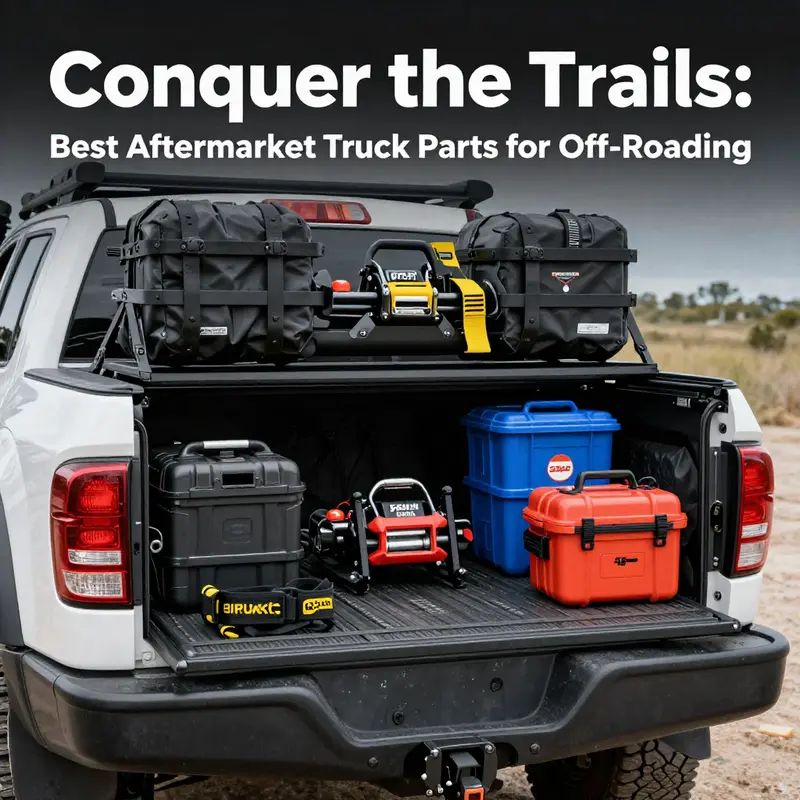
Every trail presents a different challenge, and for off-road enthusiasts the difference between a great day and a risky one often hinges on what you carry in the recovery and safety toolkit. This chapter unfolds not as a catalog of gadgets but as a narrative about readiness. It traces how thoughtful selection and disciplined use of recovery gear and safety equipment turn uncertain terrain into navigable ground, how a well-prepared rig can self-solve problems, and how companions on the trail can stay out of harm’s way when everyone understands the rules of engagement. In the rugged world of off-roading, the right gear is not merely about getting unstuck; it is about preserving momentum, protecting occupants, and making every mile a safer, more confident pursuit. Consider the heart of any recovery setup: the winch. A heavy-duty winch is less a toy and more a lifeline when a vehicle sinks into mud, bogs in soft sand, or finds itself perched on a stubborn rock. The practical value of a winch rests on two pillars: power and control. Power ensures that a stuck vehicle can be coaxed back onto the trail, while control ensures the operation doesn’t introduce new hazards. The winch must be matched to the vehicle’s gross weight and the typical recovery scenario, and it must be mounted on a properly reinforced bumper or a structure designed to bear load. The rope or steel cable should be inspected regularly for fraying, kinks, or heat wear, and the electrical or hydraulic supply must be sized to deliver steady performance without overheating. Beyond the unit itself, the accessories—mounting hardware, a safe winching line, dampers to reduce rope oscillation, and a remote control—are what translate raw capability into reliable results. The winch is a tool for controlled extraction, not a reckless pull; its responsible use rests on clear communication with anyone present, a safe perimeter, and a plan that anticipates what happens if the terrain shifts during a recovery. Equally essential are recovery straps and the rigging that ties a vehicle to a fixed point or another vehicle. These straps provide a fast, low-risk option for a gentle or moderate pull, particularly in soft ground where a winch might be slower to deploy or more cumbersome to set up. The guiding rule here is simple: synthetic recovery straps, when in good condition, offer a safer alternative to metal chains because they stretch and absorb some of the energy of a sudden yank, reducing the risk of shock loads that can injure bystanders or damage mechanical components. Inspect straps for cuts, abrasions, or loose stitching before every trip, and never use damaged straps. The length and width of the strap should suit the vehicle weight, the nature of the terrain, and the required leverage. When straps are used, the anchor points must be solid and properly rated for the load. Shackles or other connector hardware should be kept in good condition, with locking mechanisms that prevent accidental detachment. In practice, the day-to-day discipline of checking strap health, selecting the correct strap for the job, and establishing a clear line of communication about pulls is where theory meets real-world reliability. These considerations matter not just for the person being recovered but for anyone in the line of sight of the moving equipment. Safety-focused accessories further reinforce the backbone of risk management on the trail. A roof rack, while often associated with carrying extra gear, also represents a deliberate approach to load organization. By enabling a secure mounting system for payloads like recovery gear, spare parts, and emergency supplies, roof racks help keep the vehicle balanced and reduce the likelihood of loose items becoming projectiles during a recovery or a sudden maneuver. On the same axis of preparation lie first-aid kits designed for off-road use. These kits are not cosmetic extras; they are a portable, functional medical resource that reflects a practical, no-frills approach to emergencies in remote locations. A well-stocked kit should cover bleeding control, basic wound management, and common off-road injuries, with content updated for the trip duration and the terrain type. The presence of a fire extinguisher rated for vehicle fires is another non-negotiable safety measure. In off-road conditions, fuel leaks, overheated exhaust components, or electrical faults can ignite, and rapid, effective action can prevent a small incident from becoming a catastrophe. The extinguishing medium should be appropriate for vehicle fires, and the operator should know how and when to deploy it under safe conditions. Protection of the vehicle’s underbelly and body plays a complementary role to lifesaving gear. Skid plates shield critical components such as the engine, transmission, transfer case, and fuel system from rock strikes and debris. A well-chosen skid plate system maintains ground clearance while providing a sacrificial layer that reduces the chance of a catastrophic failure in the most punishing terrain. The bumper, too, lifts the level of protection and brings additional capabilities such as mounting points for winches and lights. Heavy-duty bumpers—designed with integrated recovery points and robust attachment schemes—extend the reach of both protection and recoverability. They create a reliable interface between the vehicle and the terrain, allowing safer approach angles and minimizing the risk of body damage when lines are pulled taut or when a vehicle shifts during a recovery. This is not a matter of aesthetics; it is a deliberate integration of form and function that supports confidence on the trail. The practical, day-to-day reality of off-roading sits at the intersection of capability and discipline. For many trails, a single tool cannot suffice. A well-rounded recovery and safety kit combines multiple elements: the winch as the anchor of a self-recovery plan, straps and connectors as the quick-release options for varied situations, and safety gear as the buffer that absorbs risk in the moment. The value of having a plan is evident in the way it shifts the dynamic of a stuck moment from panic to procedure. This is a sequence: assess the situation, size up the load, choose the appropriate method, set up a controlled environment, communicate clearly with any bystanders, and execute with measured, deliberate actions. Such an approach reduces the chance of injury and damage and keeps the momentum of the adventure intact. It also fosters trust among trail companions, which is a crucial social dimension of off-roading. When everyone understands the plan and knows their role, the scene shifts from a potential hazard to a coordinated operation. A broader ecosystem of recovery tools also merits attention. Recovery tracks can provide an immediate non-mechanical option for gaining traction on loose surfaces, while gloves protect hands during rigging and handling. A basic toolkit that includes a blade for cutting trap points or freeing a jammed line, cable cutters or bolt cutters for maintenance, and a compact air compressor for restoring tire pressure after a winching session, extends the utility of the main gear. These items should be compact, durable, and tailored to the vehicle’s weight class and typical terrain. They are the kind of practical redundancy that elevates a routine off-road day into a well-rounded expedition. The overarching theme is not to accumulate gear for its own sake, but to curate a compact, interoperable system where each piece complements the others, forming a coherent whole that can respond to the unpredictable nature of the trail. The navigation of gear choice is also a mental discipline. Beginners often overestimate the need for heavy, high-powered equipment and underappreciate the importance of simplicity and reliability. A lean, well-maintained recovery kit that a driver can deploy confidently without third-party assistance is often more valuable than a heavier assortment that sits unused for long periods. Regular practice on stable ground with a buddy teaches the correct hand signals, line tensions, and escape routes for each possible recovery scenario. It is a form of practical education that cannot be bought off the shelf; it is earned through time spent on the trail and reflection after each trip about what worked and what did not. As the terrain grows more daunting, this experiential knowledge becomes the true leverage that makes the difference between a postponed adventure and a successful, safe return home. In mapping out the path to an optimal setup, one moves beyond the catalog of components. The process involves calibrating risk tolerance, evaluating typical terrain, and interpreting vehicle limitations without romanticizing the thrill of extreme conditions. It is prudent to stage gear for accessibility and to verify that every piece is designed to withstand the environmental harshness of off-road travel. Moisture, dust, rocks, and temperature fluctuations all take tolls on equipment, so protective storage, regular lubrication, and thoughtful placement become routine practices. The best setups are not the ones that look formidable in a brochure; they are the ones that perform reliably when the trail becomes a narrative of problem-solving rather than a spectacle of power. And the most important principle to carry forward is humility: no recovery plan is worth risking life or limb, and the most effective safety gear is the one you actually understand and can deploy when it matters most. To connect this discussion with the broader arc of aftermarket upgrades for off-roading, recovery gear and safety equipment anchor the more ambitious modifications in a responsible frame. Lift kits, suspension upgrades, and protective armor open up possibilities on difficult trails, but without the safety net of reliable recoverability, those possibilities are wasted or dangerous. A truck built for extreme terrain benefits from both refined capability and disciplined safety culture. The most capable builds are those that acknowledge the realities of the trail—how easily traction can vanish, how quickly a vehicle can become immobilized, and how critical it is to have a clearly defined response plan. The recovery and safety ecosystem, therefore, is not a separate accessory package but a foundational layer that underpins every other upgrade. It is the glue that holds performance and safety together, ensuring that the thrill of the trail remains sustainable, repeatable, and respectful of the natural landscape and the people who share it. As a practical takeaway, imagine stepping onto the trail with a plan that begins with a compact, modular recovery kit, supported by a robust safety kit, and reinforced by undercarriage protection and sturdy bumpers. This configuration not only increases the likelihood of a successful self-recovery but also frames the trail as a space where responsible exploration thrives. In the end, the best aftermarket parts for off-roading are not simply the strongest or flashiest; they are the parts that integrate with how you drive, how you assess risk, and how you respond when the terrain reminds you that nothing on a map is guaranteed. The goal is not to avoid getting stuck but to ensure that, when you do, you can get back on track as quickly and safely as possible. For those who want to deepen their understanding of mechanical readiness and practical maintenance, a related resource on diesel mechanics provides a structured approach to the skills that support all forms of field repair and recovery. Mastering diesel mechanics: your step-by-step path to success. For readers seeking broader context and evidence beyond the hands-on guidance in this chapter, the external resource below offers a comprehensive perspective on aftermarket parts for off-roading, including recovery gear and safety equipment. It complements the practical, in-vehicle focus with industry-wide insights that help frame gear choices within a larger safety-first ethos: https://www.caranddriver.com/trucks/feature/a45678901/best-aftermarket-truck-parts-for-off-roading-recovery-gear-and-safety-equipment
Final thoughts
Upgrading your truck with the right aftermarket parts is crucial for maximizing its off-road capabilities. Lift kits and suspension upgrades provide the vital ground clearance and handling needed for rugged terrains, while specialized tires and wheels enhance traction and performance. Don’t overlook recovery gear; it not only prepares you for unexpected challenges on the trail but also embodies the spirit of adventure. Equip your truck wisely, and you’ll be ready to tackle whatever nature throws your way.