
For off-road enthusiasts and adventurers, the thrill of the trail is matched only by the need for reliable gear. When it comes to off-road truck tires, having the right air compressor is essential for tackling rough terrains and unexpected flat tires. This guide explores the best air compressors tailored for the rugged conditions of off-road driving. We start with the top recommendation, the AstroAI T4 Heavy-Duty Air Compressor, which stands out for its durability and performance. Then, we’ll delve into the YF6378 Off-Road Air Compressor, a strong alternative that impresses with its versatility. Finally, we’ll discuss key considerations to help you choose the best air compressor for your specific off-road needs.
Be Prepared on the Backroads: The Heavy-Duty 12V Inflator That Powers Off‑Road Truck Tires
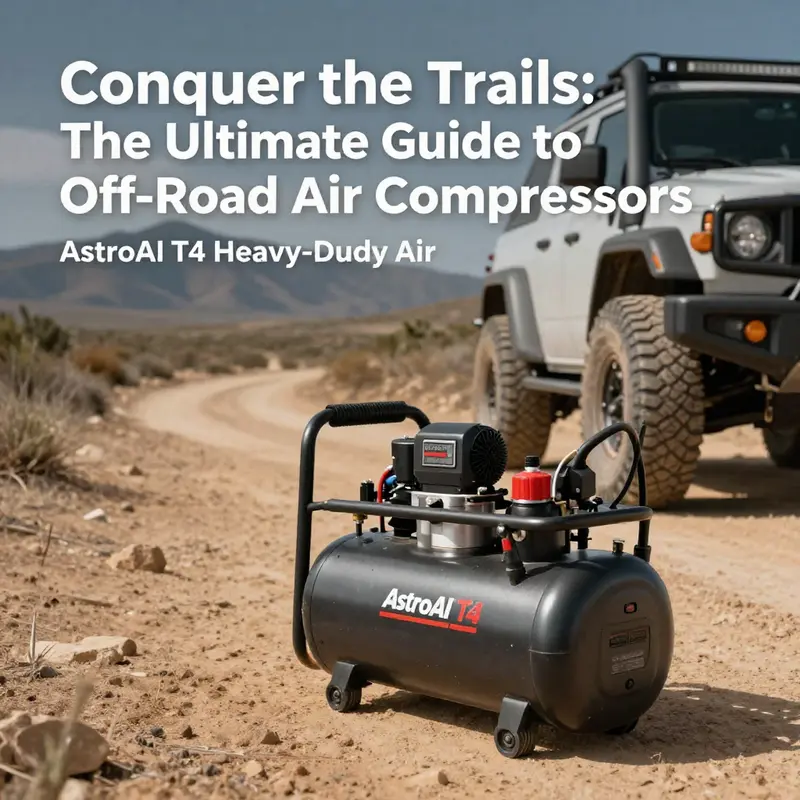
Tire pressure is more than a number on a gauge when you’re navigating rocky ledges, sand washes, and mud-slick ruts. On remote trails, the difference between rolling and getting stranded often comes down to one factor you can control: how quickly you can restore proper tire pressure. The right air compressor for off-road truck tires isn’t just a luxury; it’s a tool of resilience, a compact station that sits in your rig ready to push you back onto the trail when the going gets tough. The best solution in this category is a heavy‑duty, 12‑volt inflator built for rugged use. It combines power, safety, and portability in a way that makes it an essential partner for any serious driver who spends time off pavement. The appeal of this kind of device lies not only in its headline specifications but in how those specs translate to real-world reliability in demanding environments.
First, consider the power profile that makes sense for off-road tires. Large, aggressive tires found on full-size pickups, SUVs, and adventure rigs demand more air per minute than a compact pump can deliver. A unit that offers robust airflow, measured in CFM, ensures that even a large tire—think up to 33 inches in diameter and higher in some setups—can be pressurized quickly away from the nearest air station. A practical target is a design capable of delivering close to two cubic feet per minute under load, which translates to faster fills and less time spent tethered to the electrical system or squinting at the gauge while the tire heats up and pressure climbs. Yet raw power on its own is not enough. In the rough and tumble of the trail, you want a device that won’t keep you waiting when the trail tries to beat you back.
That is where the automatic shut-off feature earns its keep. Off-road conditions are not just about speed; they’re about control and safety. Over‑inflating a tire can lead to unsafe handling, bead damage, or a tire blowout when you next encounter a sharp rock or a sudden drop in air pressure in a corner. An inflator with automatic shut-off is a guardrail, ensuring you reach the exact target pressure chosen for your tires, the kind of precise control that reduces risk and adds a layer of predictability to a trip that’s already full of variables. When you’re inching your way through a ravine or negotiating a steep grade, knowing the tire pressure will stop exactly at the set point gives you confidence to focus on line choice and driving technique rather than second-guessing the gauge.
Portability is another non-negotiable. The best inflator for off-road tires is compact enough to tuck into a side storage bin or the back of the cab, yet sturdy enough to survive a bouncing ride on a rough track. Rugged housing and protected wiring mean the device can endure shock, vibration, dust, and temperature swings that accompany late-season expeditions or spring mud runs. A 12V design is particularly friendly to trail use because it can draw power directly from the vehicle’s battery or accessories circuit without needing a bulky power supply, a feature that reduces weight and clutter while simplifying emergency readiness. If you carry one device that earns its keep in both daily driving and weekend expeditions, durability becomes more than a nice-to-have—it is the baseline.
The tire size ceiling also matters. The best inflator for off-road tires is one that clearly states compatibility with larger tires—often up to 33 inches in diameter—and maintains reliable performance as the load and thermal conditions change. When tires grow to substantial sizes, their internal volume swells, and the time to reach target pressure can stretch. A well‑designed unit keeps the strain low on the motor and air hose, and maintains a steady flow without bogging down as the needle climbs. In practice, this means the unit can deliver consistent performance across a wide range of tires—because off-road vehicles aren’t one-size-fits-all. They range from compact trail rigs to heavy-duty pickups with aggressive tire packages. A device that can span this spectrum reduces the number of tools you need in your glove box and makes it easier to share the inflator across multiple vehicles without reconfiguring adapters or resets.
Another feature that practitioners often overlook until it matters is illumination. Low light is part of the off-road routine—the dawn patrol, the post-sunset maintenance, the late-night tire checks in camp. An integrated LED light that activates with operation is more than convenience; it’s a practical safeguard. It helps you locate the valve stem, verify the gauge reading in dim surroundings, and keep your hands free to operate the nozzle, pressure gauge, and power switch. This simple addition can prevent mistakes and speed up the process after a long day on the trail.
Durability, of course, remains central. The off-road environment is unforgiving: rocks, sand, grit, and temperature swings can test any tool. A heavy‑duty build—rigorous construction with protective casings and reinforced connections—resists wear in the same way a reinforced tire resists puncture. The more rugged the device, the less it needs coddling. When you’re wiring it into a vehicle that has the power to pull a trailer, tow a boat, or haul a trailer across remote terrain, the last thing you want is a fragile pump that requires delicate handling. A robust unit isn’t just a convenience; it’s a reliability stance. It says you’re prepared and that you have trimmed away uncertainty from your excursions.
Some readers will wonder how these units perform in practice and what that means for the daily routine of an off-road enthusiast. The practical workflow is straightforward and repeatable, and it mirrors the way you approach any high-stakes vehicle maintenance task. You begin with a quick assessment of tire condition and current pressure. You fill shoulders, check for leaks around the valve stem, and then decide on a target pressure based on the terrain and load. If you carry a set of specialized pressures for different conditions—sand, rock, mud, road—your inflator becomes a tool that helps you shift quickly between setups without the guesswork that used to accompany tire changes on the trail.
Connecting the inflator to the tire is a simple ritual. You attach the hose and nozzle to the valve stem, set the target pressure, and switch on the unit. The device begins to push air with a firmness that lets you monitor the gauge as the pressure climbs. If the unit includes an auto shut-off, you are spared the moment of anxiety when the tire reaches the set point and you’re left watching the gauge inch past the mark in the windup of a long fill. In practice, this means you can be underway again in a matter of minutes, rather than lingering beside a hot wheel while the tire temperature adjusts and the pressure stabilizes. This is particularly valuable when you’re camped in a remote area and you’re balancing the need to get back on the trail with the need to minimize electrical draw and heat buildup in the compressor.
The narrative of the best inflator also includes the ability to handle a variety of vehicles and tire configurations. Off-road socked trucks aren’t limited to one wheel size or one type of tire. A truly versatile inflator can accommodate the range from standard passenger tires to the larger, more aggressive setups used on expedition trucks and overlanders. It should maintain performance with different pressure targets, because on the trail you might run lower pressure for traction and stability in loose terrain and then up to higher values for highway runs or on-road transitions. The device’s ability to meet this range without sacrificing speed or safety is what sets it apart from less capable options.
A few practical considerations can help you verify that you’re selecting the right tool for your needs. First, confirm the maximum pressure. A tire that needs up to 120 PSI is not unusual for upgraded off-road applications. The inflator should offer a clear indication of its upper limit and a reliable gauge that remains accurate as the pressure approaches the target. Second, check the power draw and the duty cycle. The ideal unit can sustain repeated inflations without overheating or draining the vehicle’s battery. Longer trips and multi-vehicle uses require a device that can operate for extended periods without cooldown breaks. Third, assess the nozzle options and adaptors. A wide range of valve stems and situations—regular car valves, presta adapters, or heavy-duty truck stems—often requires a flexible nozzle kit. The best inflator ships with or accepts adapters that stay secure under vibration and don’t leak or detach during use. Fourth, consider the storage and packaging. A compact bag or integrated cable management helps keep the unit clean, accessible, and free from dust. When you’re packing for a weekend in the backcountry, every extra ounce matters, but so does the confidence that comes with having the right gear ready to go.
The top pick in this category does not stand alone. It is part of a spectrum of solutions designed to keep you moving. Another capable option exists in the same family of compact, high-pressure inflators, one that emphasizes portability and high-pressure capability as a balance against its own compactness. It’s designed to deliver a maximum pressure around 120 PSI and to function as a reliable on-the-go tool for a variety of vehicles, from trucks with large tires to RVs with more demanding inflation needs. The strength of any such unit lies in its ability to deliver consistent performance while remaining easy to carry and quick to deploy. This balance is crucial because the off-road lifestyle prizes efficiency and resilience as much as raw power. If you’re trying to decide between two strong contenders, you should weigh the weight of your tire load versus the time saved in inflating them; the right choice should offer a net gain in time and safety, not just bragging rights over metric specifications.
As you reflect on the capabilities of the leading heavy‑duty inflator, it’s useful to acknowledge the broader maintenance ecosystem that supports safe and reliable tire performance. The tire is a critical contact point with the road; its inflation status interacts with load, speed, and terrain to influence traction, handling, and heat buildup. Regular checks of tire pressure—especially after a change in load or temperature—are part of responsible off-road practice. When your vehicle relies on large tires, frequent verification becomes even more important because small changes in pressure can have outsized effects on grip and steering response. An inflator with a reliable gauge and automatic shut-off reduces the cognitive load of these checks. It allows you to keep the focus on the trail rather than the dial, helping you maintain a steady rhythm of inspection and adjustment.
The integration of a top-tier inflator into your maintenance routine also aligns with broader mechanical principles that apply to any heavy‑duty vehicle. In the domain of diesel-powered trucks and rugged workhorses, careful attention to tires, brakes, and suspension translates into smoother operation and longer component life. The link between tire pressure and fuel economy is subtle but real; running at the proper pressure reduces rolling resistance and wear, which in turn can influence performance and efficiency on long, demanding trips. For a deeper dive into how routine maintenance can extend the life of heavy vehicles, consider the practical insights found in Mastering Diesel Mechanics. This resource offers a consolidated view of how hardware maintenance and smart tooling, like a dependable inflator, contribute to the overall health of a vehicle when it faces the challenges of off‑road work and heavy use.
In the end, the best air compressor for off-road truck tires is defined by how well it integrates into your daily carry, your trail protocol, and your safety standards. It is a tool that respects the realities of the road less traveled: variable terrain, unpredictable weather, and limited access to facilities. It respects your time by delivering a quick, accurate fill and a shut-off that ends the fill as soon as the target is reached. And it respects your vehicle by being durable enough to withstand the jolts and vibrations of a rough ride, while still being light enough to live in the cab or bed without becoming a nuisance. The result is a reliable partner that turns a potential setback into a manageable pause, a moment that ends with you back on the move rather than stranded at the side of the trail. For many off-roaders, that is exactly what they want from a tire inflator: a calm, dependable, and fast way to reset the tires so they can focus on the path ahead rather than the tire they left behind.
As trails change and tire designs evolve, the core requirements for a best-in-class inflator remain consistent: robust airflow to quickly pressurize large tires, a maximum pressure that covers the widest range of setups, an automatic shut-off to protect against over‑inflation, a durable build to survive the trail, and portability that makes it easy to carry without sacrificing reliability. In this light, the leading heavy‑duty 12V inflator embodies the balance of power, practicality, and resilience that off-roaders rely on when they head into the wild. It’s not merely a gadget; it is a companion that helps you retain momentum, preserve tire life, and stay prepared for the unexpected. And when you consider the added advantage of LED illumination and a design that’s tuned for heavy use, it becomes clear why such an inflator sits at the top of the field for off-road tire readiness.
External resource: https://www.ebay.com/itm/AstroAI-T4-Heavy-Duty-Air-Compressor-Truck-Tire-Inflator-with-LED-Light-120PSI-Portable/
The Dual-Cylinder Champion: A High-Pressure, Portable Solution for Off-Road Tire Readiness
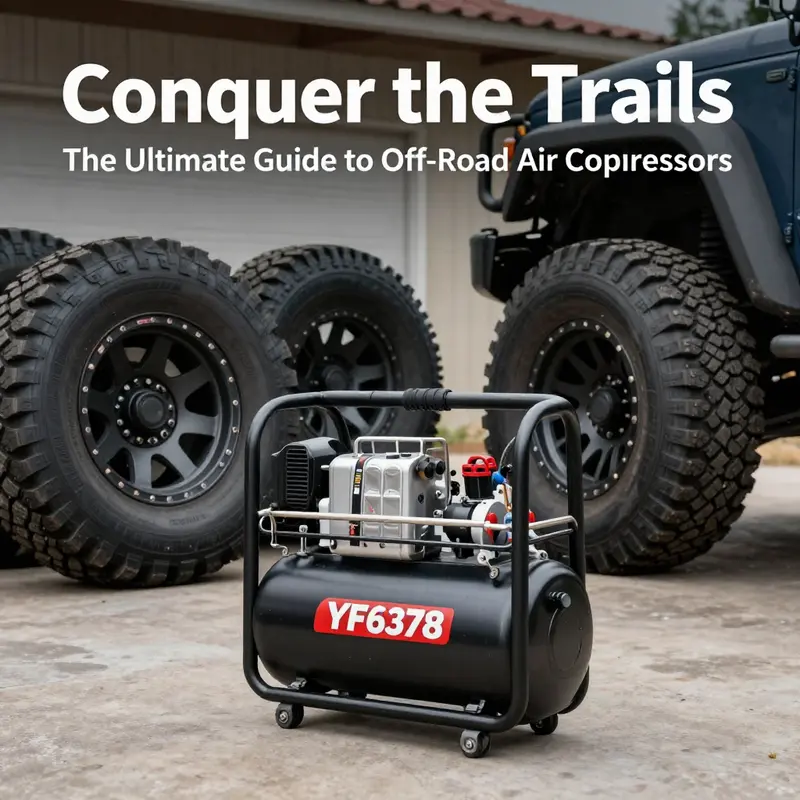
On the rough edges of adventure, tire readiness can mean the difference between a difficult stretch and a smooth, confident ride. Off-road trucks demand more than a simple, compact inflator that merely tops off air. They require a compact, portable powerhouse that can deliver steady, high-pressure inflations when the trail throws out uneven terrain, heat, and the stress of long climbs. The best inflator for this purpose isn’t defined by flashy numbers alone. It’s defined by a careful balance of capability, reliability, and the way the unit behaves under real-world pressure. In this context, a strong alternative to the best-in-class inflator emerges not from a single feature, but from a coherent combination of design decisions. A dual-cylinder, aluminum-structure inflator—powered by a vehicle’s 12-volt system, built for heat management, and designed with an integrated, modular approach—offers a compelling answer to the off-road tire readiness question. This chapter explores what that combination means in practice, why it matters, and how it fits into a broader strategy for keeping tires at the right pressure when every mile brings a new challenge.
The first point to acknowledge is the real workhorse role of high-pressure capability in off-road tires. Large tires, especially those found on trucks and sport-utility vehicles prepared for trail work, require sustained inflow to reach the higher operating pressures needed after soft sand, rocky paths, or steep, uneven ascents. A high-pressure output—typically upwards of 100 psi and often in the 120 psi range for aggressive setups—matters as much as raw quick-fill speed. This isn’t just about inflating to a number; it’s about getting there efficiently while maintaining tire safety and rim integrity. A dual-cylinder design contributes directly to this goal. Two cylinders can share the workload, distribute heat more effectively, and shorten the time the device spends on extended bursts of duty. In practical terms, the inflation process becomes less punishing on the equipment and more predictable for the operator. The net result is fewer rest periods between fills and a consistent pressure target that’s easier to hit with a margin of safety built in.
Aluminum construction is another critical thread in the story. Dual-cylinder aluminum structures don’t merely shave weight; they excel at heat dissipation and corrosion resistance. Off-road environments are notorious for dust, humidity, mud, and exposure to rapid temperature swings. An aluminum frame, paired with thoughtful heat management in the cylinders, helps the unit maintain performance across repeated inflations during a trail day. When you’re chasing a goal like inflating a large tire from near-flat to the high-end target, heat becomes a practical limiter. The design choices that promote rapid cooling—the use of aluminum, careful venting, and a layout that avoids heat-trapping bottlenecks—translate into more consistent performance. In the field, where you might have to perform several inflations back-to-back, those design choices aren’t cosmetic; they’re essential to reliability.
Powering such a device from the vehicle’s own 12-volt system introduces both convenience and a set of practical caveats. The advantage is clear: you’re not hunting for an external power source or lugging around heavy, bulky electrical gear. The 12-volt interface is familiar to drivers, and it makes the inflator accessible in remote locations where a generator or extra battery would be impractical. Yet, the reality is that a vehicle’s electrical system has its limits, especially when the alternator is not performing at peak efficiency or when you’re running other electrical loads. A well-conceived inflator acknowledges this and incorporates safeguards to protect both the unit and the vehicle. Expect to see smart protection mechanisms that monitor current draw and temperature, and will automatically shut the device down when preset pressure is reached or when heat levels threaten to compromise components. This automatic shut-off is not just a convenience; it’s a critical safety feature when inflating tires to higher pressures on rugged terrain. Over-inflation is a real risk, and a precise auto-stop control creates a buffer against both tire and wheel damage.
In the broader context of modular integration, a design that anticipates compatibility with air suspension systems and pneumatic tools expands the practical value of the inflator. Off-road builds increasingly rely on air systems to adjust ride height, compensate for load, or raise parts of the chassis for clearance. An inflator whose ports and interfaces can be configured to work with different hoses, fittings, and control modules reduces the amount of scatter and clutter in a temporary on-trail repair kit. It also opens the door to a broader set of on-vehicle tools that can draw air from the same source. The modular approach culminates in a compact, portable unit that remains flexible as a user’s needs evolve—from tire inflation to quick-height adjustments and even powering a few light pneumatic tools during roadside maintenance.
Underpinning these operational strengths is a set of practical, on-trail realities. Small travel spans can become long days if decisions aren’t well matched to conditions. A dual-cylinder inflator with aluminum construction and a 12-volt power source addresses the core concerns: capacity, durability, heat management, and easy, safe operation. The high-pressure capability is especially critical for “deflate-to-inflate” cycles on remote trails where tire pressure may need to be adjusted multiple times as you navigate different surfaces. The reliability of the auto-shut-off reduces the cognitive load on the operator. You do not need to continuously watch a gauge and guess when to stop; the device does the heavy lifting of precision by design. This is not a mere convenience; it is a meaningful reduction in the risk of tire misconfiguration and the potential for pinch flats or bead seating errors that can occur if pressures spike unexpectedly.
From the maintenance standpoint, the emphasis on heat dissipation and corrosion resistance translates into fewer service calls in the field. The aluminum alloy’s natural resistance to humidity and its light weight make it less prone to degradation in dusty or corrosive environments. The dual cylinders, if designed with balanced piston dynamics and adequate lubrication points, will tend to wear evenly and predictably. A long day on the trail can expose a unit to temperature swings and dusty air that would degrade other constructions more quickly. In that sense, the chosen architecture aligns with the practical rhythms of off-road travel—short bursts of intense use followed by cooldown periods, with a portable design that respects limited space in the vehicle.
Yet it is essential to acknowledge the trade-offs. A dual-cylinder design tends to favor high-pressure generation and sustained inflow at higher pressures, but the exact inflation rate, or CFM, depends on the specific hardware and its control logic. In some cases, a unit that excels at rapid high-volume inflations might not sustain peak pressure with the same efficiency as a counterpart tuned for high-pressure operation. Conversely, a system optimized for high pressure can deliver precise target pressures quickly but may require longer to achieve those pressures if the initial air flow is modest. The practical takeaway is to choose a setup whose strengths align with your typical tire size, desired operating pressures, and the typical surfaces you encounter. For most large truck tires used off-road, a solution that emphasizes high pressure, robust heat management, and a dependable auto-stop mechanism tends to deliver the most consistent, repeatable results on the trail.
In considering the broader field, the strong alternative described here is positioned as a practical complement to the best-in-class inflator. The top pick in many reviews delivers a blend of power, speed, and rugged reliability, yet some scenarios benefit from the specialized dual-cylinder approach that emphasizes high-pressure stability and modular versatility. Think of the strong alternative as the tool you keep at the ready when your expedition demands disciplined tire pressure management in variable environments. It is not merely about moving air; it is about moving air in a controlled, predictable way that preserves tire and wheel health while giving you the flexibility to adapt to a range of off-road conditions. This is precisely the mindset behind a modern, purpose-built inflator designed for off-road trucks: a compact, portable unit that feels almost like an extension of the vehicle’s own robustness and resilience.
From a cautious field perspective, users who have invested in such an inflator often report how the device remains stable after repeated use, how the heat-management features keep the body cool enough to handle without gloves, and how the automatic shut-off provides a clear sense of boundary—ensuring tires reach the target pressure without inadvertently crossing it. For those who drive in groups or on longer expeditions, the reliability of a single, well-designed unit reduces the risk of a single piece of gear turning a challenging stretch into a protracted delay. In this sense, the dual-cylinder, aluminum-structured inflator stands not only as a tool for tire care but as a safeguard against the unexpected, an ally in the unpredictable dance of off-road travel.
The discussion would be incomplete without acknowledging the kind of documentation and community feedback that often guides buyers in this space. While the exact model details might appear in an array of product pages and field reports, the underlying principles are consistent across reputable off-road inflators. A dual-cylinder approach paired with intelligent control logic, combined with heat-dissipating materials and a portable, vehicle-powered design, consistently demonstrates value. Operators who frequently navigate dunes, rocky climbs, or mud bogs begin to recognize the signs of a well-chosen inflator: a unit that inflates with calm confidence, whose gauges feel trustworthy, and whose safety features behave predictably when the pressure goal is achieved or when the device overheats. In such contexts, the inflator becomes less of a gadget and more of a reliable partner on the trail. The satisfaction comes not from a flashy display of numbers but from the quiet assurance that tires will be ready when the next obstacle presents itself, and that the gear will endure the journey alongside the driver and the crew.
For readers who want to connect maintenance concepts with broader mechanical wisdom, a deeper look into on-vehicle reliability and routine maintenance can be illuminating. There is a well-regarded resource that walks through the fundamentals of diesel mechanics and the step-by-step routines that keep heavy vehicles performing under demanding conditions. It offers practical perspectives on how seemingly small components—such as an inflator connected to a vehicle’s electrical system—fit into a larger system of maintenance discipline. Mastering Diesel Mechanics: Your Step-by-Step Path to Success provides a broader lens for readers who want to extend the mindset of resilience learned on the trail into the workshop. Keeping a high-quality inflator in service at peak condition mirrors the general maintenance philosophy described in that resource: plan for heat, plan for wear, and plan for safety. The synergy between portable field tool design and long-term vehicle reliability becomes a shared objective—a goal that aligns with the broader ethos of off-road preparedness.
In sum, the dual-cylinder, high-pressure off-road inflator represents a thoughtful convergence of capability, durability, and field practicality. It embodies an approach to tire readiness that respects the realities of remote travel while providing a confident, repeatable means to achieve precise tire pressures. In the grand arc of choosing the right air compressor for off-road truck tires, this design philosophy offers a robust path forward. It invites the off-roadist to consider not only what a device can do in a moment but how it behaves when put through the hardest test: hours of continuous use in demanding environments, under the weight of a vehicle, with the dial set to a target that is critical for performance and safety. The result is a tool that not only inflates but also reinforces the driver’s confidence in the tire setup, keeping the vehicle’s handling predictable and the expedition’s momentum intact.
Externally, the landscape of options continues to evolve, but the core insights remain stable. If you value a construction that resigns the fear of heat buildup to the background, a unit that can withstand persistent, on-trail duty, and a porting system that integrates smoothly with other pneumatic needs, the dual-cylinder approach deserves serious consideration. It is not merely a niche preference but a practical philosophy for anyone who treats tire pressure management as a dynamic part of off-road strategy. The trail rewards those who plan for performance, anticipate the moment when air is needed, and choose gear that remains steady when the pressure rises and the road gets tougher. In that light, the dual-cylinder, high-pressure inflator stands out as a compelling option for those who demand more from their on-vehicle tools, even as they pursue the freedom that only off-road travel can provide.
Internal link: For readers who want to connect maintenance concepts with broader mechanical wisdom, see Mastering Diesel Mechanics: Your Step-by-Step Path to Success.
External reference: A broad catalog of off-road inflator options and technical parameters can be found at Alibaba in the category of 12V car accessories for 4×4 off-road vehicles, which offers a landscape of potential configurations and international sourcing considerations. https://www.alibaba.com/product-detail/12V-car-accessory-air-compressor-for-4×41600529596369.html?spm=a2700.galleryofferlist.pproductDetailFromSearch&productId=1600529596369&productTitle=12V+car+accessory+air+compressor+for+4×4+off-road+vehicles
Power, Pressure, and Portability: A Practical Guide to Choosing the Right Air Compressor for Off-Road Truck Tires
Choosing the right air compressor for off-road truck tires is about balancing power, precision, and practicality. On remote trails, you air down for traction and quickly re-inflate for highway speeds, so the tool you carry is a lifeline. The decision hinges on core factors that align with your tires, vehicle, and planned power sources. This guide focuses on real-world needs rather than marketing claims and emphasizes five core criteria: airflow (CFM), pressure capability, portability, power compatibility, and durability.
Airflow matters because larger tires inflated to 80-120 PSI require sustained volume. Aim for a minimum 4-6 CFM at around 90 PSI to keep inflation times reasonable. Higher CFM improves speed and reduces heat buildup, even if you are not using CTIS-level duty cycles.
Pressure capacity matters too: many off-road tires benefit from reaching 120 PSI or more. If you use CTIS, ensure the unit can handle continuous duty at higher pressures. Plan your pressure pathway from outlet to tire and ensure the unit maintains stability under load without overheating or drooping.
Portability is essential when power sources are far away. A compact 12-V DC unit that runs off the vehicle battery is convenient, but you should prioritize rugged construction, reliable seals, and a hose and gauge layout that’s easy to use in dust and cold.
Power source compatibility matters: most units run on 12-V, but some setups need 24-V or dual-battery arrangements. Check current draw, startup surge, and whether the unit includes built-in protection and thermal cutoffs so it won’t tax the electrical system or blow fuses.
Durability rounds out the package. Look for aluminum or reinforced housings, oil-free operation, robust fittings, and a design that can withstand dust, vibration, and temperature swings. A well-engineered mounting solution helps you secure the unit out of the way and ready for quick use.
In short, the best compressor for off-road tires delivers adequate CFM at the expected PSI, reaches and sustains high pressure without overheating, and fits your electrical system and mounting preferences. The right choice is the one that matches your cadence of inflations, tire sizes, and adventures, not merely the brightest spec sheet. When planning, consider how often you air down and up, how many tires you carry, and how much spare time you can allocate at trailheads. Finally, for broader context, routine vehicle maintenance and tire care improve overall readiness and safety on the trail.
Final thoughts
The right air compressor is an indispensable tool for any off-road enthusiast. The AstroAI T4 Heavy-Duty Air Compressor and the YF6378 Off-Road Air Compressor both excel in their fields, offering reliability, performance, and ease of use. Consider your specific needs, such as portability, airflow rate, and tire pressure requirements, when making your choice. Properly inflating your truck tires not only ensures the safety of your off-road adventures but also enhances your vehicle’s performance on varying terrains. Embrace the wild with confidence knowing you have the right gear by your side.