
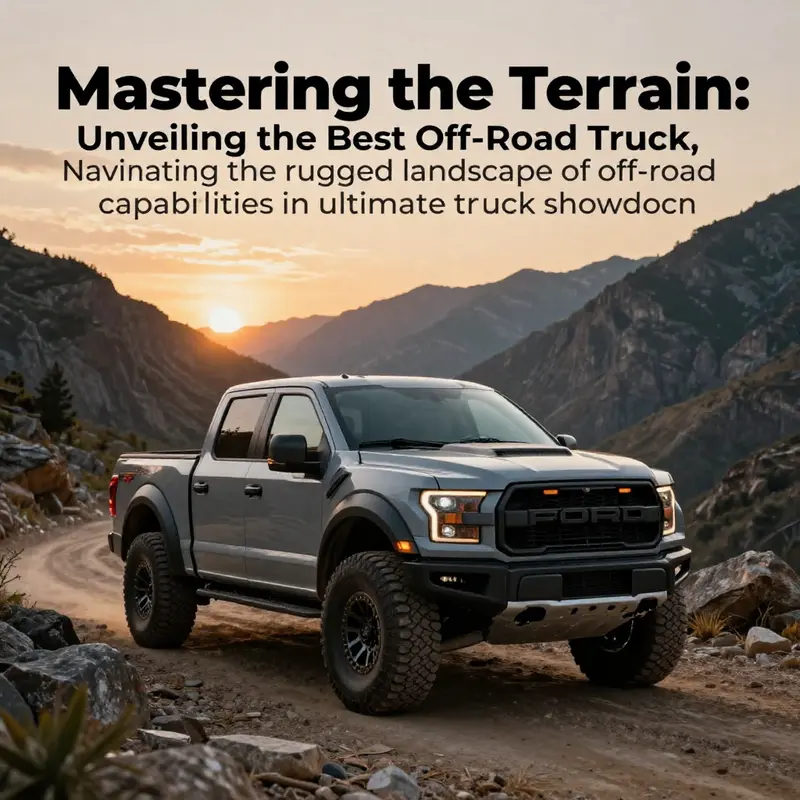
When it comes to off-road adventure, the truck you drive can make all the difference. For enthusiasts who push the limits of terrain, the quest for the best off-road capabilities culminates in a fiery rivalry among the top contenders. The Ford F-150 Raptor R, with its overwhelming 720-horsepower V8 engine and advanced suspension, stands proudly as a formidable champion in this arena. However, the competition is stiff, with challengers like the Ram 1500 RHO and Chevrolet Silverado 1500 ZR2 AEV Bison pushing the boundaries in their own right. This article will delve into the unparalleled attributes of the Raptor R, conduct a comparative analysis against its competitors, and explore the technological innovations that define the best off-road vehicles. Strap in, as we journey through the defining features that set the finest off-road trucks apart.
Beyond the Dust: Reimagining Off-Road Leadership with the Ford F-150 Raptor R
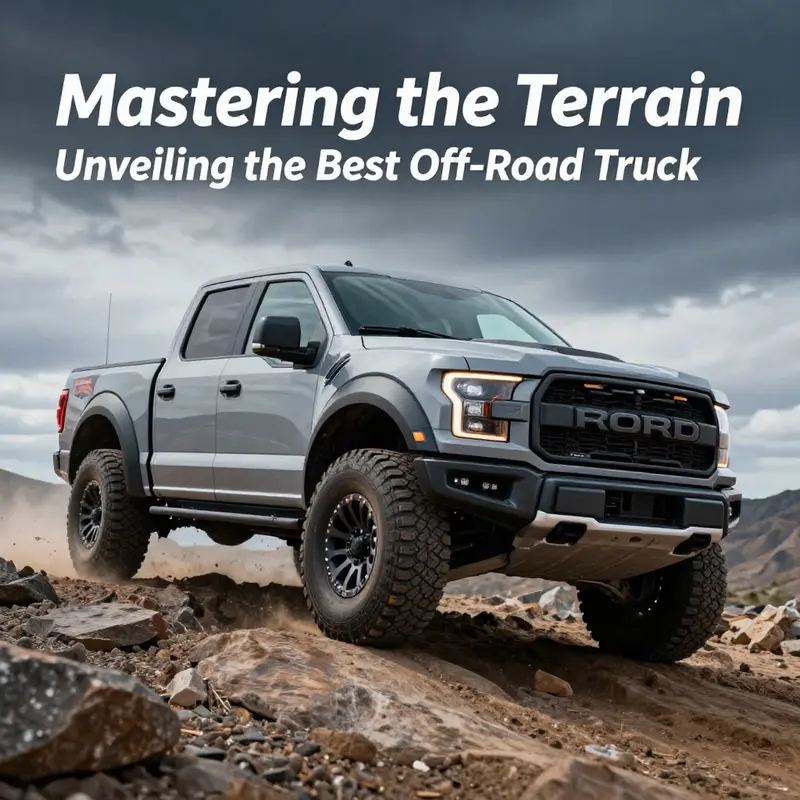
In the realm of off-road trucks, capability is a system, not a single feature. The Ford F-150 Raptor R exemplifies a package that blends power, cooling, suspension, and electronics into a coherent platform. At its core sits a 5.2‑liter V8 with twin-turbocharging that pushes high-end figures and a broad torque curve, delivering confident desert crossings and precise rock traversal alike. The engine’s reliability comes from reinforced internes, a robust oiling regime, and cooling that includes a dedicated oil cooler and heat management to prevent fatigue at speed. The result is a power delivery that stays linear and predictable under load, not a surge that overplays its hand.
The suspension and chassis engineering keep wheel contact with the ground through rough terrain: a modern multi‑link rear, long-travel front, and tuned dampers that balance a supple ride with stability at speed. A heavy‑duty transfer case and transmission deliver confident shifts, while drive modes adjust throttle response and traction control to match terrain from desert washboard to rocky ledges. The effect is leadership not as a trophy, but as repeatable capability that feels accessible to the driver who respects the terrain.
Durability is the quiet backbone of this leadership. The architecture is built to endure dust, heat, and long climbs, with protective underbody components and proven materials chosen for longevity. In practice, that means drivers can push the vehicle into demanding expeditions with confidence that the machine will return for the next session.
In context, the Raptor R’s leadership rests on the harmony of engine, cooling, suspension, and control systems. It is not simply about raw power; it is about predictable, controllable performance that translates driver intent into confident action on the trail. Maintenance and regular service are essential to sustaining this capability, ensuring the vehicle remains ready for the next horizon.
Relentless Torque, Unyielding Terrain: The F-150 Raptor R and the Architecture of Off-Road Supremacy
There is a certain arithmetic to off-road dominance that goes beyond horsepower alone. It is a calculation that weighs torque against weight, suspension travel against wheel travel, tire grip against terrain, and driver feedback against the pace of the landscape. In this equation, the Ford F-150 Raptor R sits at or near the apex of production-truck capability, not merely because it boasts a fearsome engine, but because its engineering pedagogy treats power as a tool for advancing into the unknown rather than as a badge worn on the hood. The Raptor R’s 720-horsepower supercharged V8 produces a number that looks almost mythic in isolation, yet the real story unfolds when that power is managed by a chassis and set of systems designed for the most demanding off-road tasks. Its 868 Nm of torque, a figure that translates into legions of immediate urge at the touch of the accelerator, is not simply about raw acceleration in a straight line; it is about how that force is delivered to the wheels through a controlled, responsive drivetrain that can adapt as quickly as the terrain beneath the tires changes its mind.
To understand why the Raptor R is considered a benchmark, one must look into the intimate details of its suspension and its approach to chassis geometry. Ford has equipped this model with a sophisticated adaptive suspension that uses dual-valve Fox Racing dampers, a choice that signals the priority given to stability, articulation, and controlled feedback over mere stiffness. These dampers are tuned to suppress harsh impacts while maintaining the ability to soak up deep wheel travel when the trail throws a sudden dip or rock garden in front of the driver. The result is a vehicle that can maintain traction on uneven ground at speeds that would unsettle a lesser truck. The suspension isn’t just about smoothing the ride; it is about creating a predictable, repeatable link between the driver’s intent and the machine’s response on terrain that would challenge a conventional pickup. Add to this the structural rigidity and the deliberate tuning of the rear-axle system, and you have a platform that behaves with surprising composure when the ground is anything but forgiving.
Ground clearance remains a perpetual ally in off-road work, and the Raptor R leverages this attribute with a unique philosophy. It is not simply the gap between the underbody and the soil but the way the chassis negotiates steep inclines, rutted trails, and whooped-out desert sections that defines its character. The approach and departure angles are shaped by the truck’s geometry, tire selection, and bump-stop calibration, all of which contribute to a vehicle that can lean into a corner of a rocky pass with confidence rather than fear. The tires themselves, while not the be-all and end-all, are a critical piece of the puzzle. A robust, high-traction tire compound paired with the right tread pattern works in concert with the suspension to maximize grip where grip has a habit of vanishing at the moment you need it most. In practice, this means the Raptor R can maintain forward momentum over terrain that would slow a less purpose-built machine to a crawl, while still offering enough on-road manners to keep daily driving within comfortable bounds.
Yet power and suspension are only part of the equation. The Raptor R also relies on electronic governance that supports the driver rather than obstructing the driving experience. Traction control, stability programs, and mode selections tailor the vehicle’s responses to the terrain while preserving a sense of connection with the ground. In off-road settings, where a line through a turn can become a scramble for grip, this calibration matters as much as the ability to accelerate. The vehicle’s software interprets wheel slip, yaw rate, and roll angles to determine how to modulate torque distribution and braking to preserve momentum without sacrificing control. The result is an experience that feels both brutal and precise: a truck that finds itself in demanding terrain and refuses to surrender until the driver, and the vehicle, have earned every meter of progress.
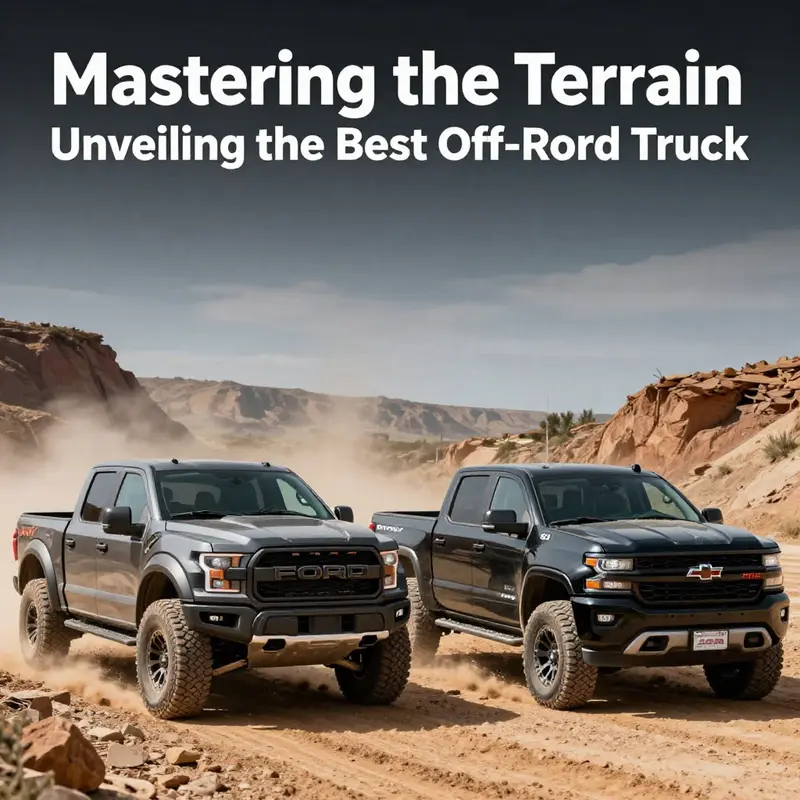
In this landscape of capability, other high-performance players emerge with different philosophies. The Mercedes-AMG G 63, for example, adopts a very different approach to the same terrain problem. It brings a luxury chassis, a hand-assembled 4.0-liter twin-turbo V8, and a hybrid assist system that complements its all-wheel-drive architecture. Its power figure sits a touch below the Raptor R at 585 horsepower, but its torque figure—850 Nm—meets the same demand for tractable, usable output across a broad operating window. The G 63’s weight, around 2,650 kilograms, might seem like a liability in a sprint, but it translates into impressive stability at speed and in high-load situations where the extra mass dampens a sudden gust or a violent terrain feature. The G 63 isn’t chasing deserts with the same hunger for speed as the Raptor R; it seeks a different equilibrium—one that blends performance with on-road refinement and the kind of composure that makes it feel comfortable anywhere on the map.
That contrast becomes especially instructive when real-world testing enters the conversation. In independent evaluations, the straight-line advantage of the Raptor R is evident at launch. The power on tap is transformative, giving the truck an edge in initial acceleration that can feel almost otherworldly when you’re climbing out of a wash or blasting up a dune. However, as the test cycle extends, the Mercedes proves its worth by leveraging its traction control and chassis tuning to sustain performance. The Carwow test results show the G 63 achieving a quarter-mile elapsed time of about 12.4 seconds, while the Raptor R posts a 12.8-second mark in the same session. The gap is not simply about horsepower; it reflects the deeper dynamic tuning that favors controlled acceleration and consistent performance when the road becomes a more relevant part of the test than the dirt. Braking dynamics reinforce this lesson. From 161 km/h (100 mph), the Mercedes stops with a stronger reserve of braking power, placing it nearly three car lengths ahead of the Raptor R. The G 63’s brakes and its stability control work in concert, shaping a deceleration profile that remains linear and predictable at high speed. The Raptor R, with its own high-performance brakes and adaptive suspension, delivers fierce stopping power as well, but the German SUV’s combination of mass, balance, and electronic governance gives it a clear advantage in sustained braking scenarios. These data points illuminate a central truth: off-road supremacy is not a single metric. It is a trait that emerges from a lattice of systems—engine performance, torque delivery, suspension travel, tire performance, weight distribution, braking stability, and driver feedback—that must all work together in real time across a spectrum of terrains and speeds.
The Ram 1500 TRX sits as a formidable adversary in this arena. Its 702-horsepower 6.2-liter HEMI V8 delivers extraordinary torque and a performance-oriented suspension package tailored for rough terrain. It shares with the Raptor R a focus on desert-running dynamics and a rugged, go-anywhere attitude. Yet the TRX’s tuning often reflects a balance tilted toward immediate impact and mid-range responsiveness rather than the end-to-end tuning of a platform designed explicitly for high-speed off-road endurance. In practice, that translates into a different kind of efficacy: it can launch out of a rough patch with bravado, but it may not hold a desert-racing line as steadily as the Raptor R when the miles stack up. The Defender family, including the Defender SV, subscribes to yet another philosophy: it blends luxury and capability with a willingness to deliver high-level off-road performance without the same kind of brute-force acceleration. It’s not a second-rate off-roader; it is a philosophy that prioritizes driver comfort, refinement, and capability in a way that makes it accessible and livable in a daily-driver sense, even when the roads disappear.
The Silverado 1500 ZR2 AEV Bison adds its own flavor to the conversation. Reinforced bumpers, upgraded suspension, and specialized tires create a package designed to withstand more extreme abuse and maintain reliability in rugged environments. It isn’t a direct acceleration competitor to the Raptor R or the G63, but it stands as a building block in the broader architecture of off-road capability: a reminder that a modern truck’s value proposition rests not only on sprint tempo but on resilience, confidence, and a predictable platform through long, demanding runs.
What ties these narratives together is a deeper principle about off-road performance that often gets lost in the spotlight of horsepower charts. True supremacy emerges when the vehicle remains capable and controllable under varying load, terrain, and temperature conditions. A mass-produced desert racer can deliver heart-stopping pace in ideal conditions, but a production truck that can maintain speed with poise across rocks, sand, mud, and water requires an integrated approach. Power is essential, but power must be paired with intelligent torque management, robust drive systems, and an suspension geometry that can translate energy into forward motion without the driver having to micro-manage the vehicle at every turn. The Raptor R exemplifies this synthesis: a powerhouse that doesn’t abandon the subtlety required to ride through rough terrain with a steady hand.
The question of which truck has the best off-road capabilities is not answered by a single metric. It is answered by a layered narrative in which power, grip, stability, and driver feedback form a dynamic conversation with terrain and speed. The Raptor R answers with raw, eventful aggression, a machine tuned to move quickly in the immediate moment, to conquer dunes and rock fields with a roar and a precise, rear-biased torque delivery that keeps the tires hooked. The G 63 answers with a different chorus—weighty, balanced, and deliberate—delivering high-speed steady-state performance that is equally compelling in long runs and high-speed traverses. The TRX, Defender SV, and ZR2 AEV Bison contribute their lines to the chorus in their own distinct ways, representing the spectrum of values that makes the modern off-road truck landscape so rich: capability not as a single peak, but as a range of very different, highly capable paths to the same destination—get over whatever the trail throws at you, with a sense that you are in control and fully able to pick your line and your pace.
For readers who want to see how this blending of power and purpose translates on a more practical level, consider how powertrain fundamentals filter into every facet of off-road performance. A superb V8 may roar with authority, but it must be matched to a drivetrain that can deliver that torque to the wheels in a controlled manner, especially when the surface shifts from gravel to shale or from packed soil to a loose desert dune. Likewise, a high-performance suspension is only as good as the tires and the chassis’s ability to maintain a stable center of gravity under load. The dynamics become a choreography, where every minor adjustment—the stiffness of a damper, the angle of a wheel, the wiring of a traction control algorithm—contributes to the player’s ability to keep moving forward without interruption. In this sense, off-road capability is a test of engineering philosophy as much as a test of speed.
As enthusiasts compare these machines, there is value in looking beyond the peak numbers and toward the lived experience. The Raptor R offers a thrilling, top-tier impression of what a truck can achieve when all of its systems are oriented toward desert and rock exploration. The Mercedes G 63 provides a different, perhaps more contemplative impression: a vehicle that can transport its occupants with luxury while still venturing into the wild with a sense of assured competence. The others add texture and resilience, proving that off-road performance is a spectrum rather than a single standard. Each buyer will gravitate toward a point on that spectrum depending on how they intend to use the vehicle, how comfortable they want to be, and how much daily practicality, reliability, and refinement matter in their life on and off the road.
For readers who want to dive deeper into the mechanical roots of performance and maintenance, a deeper exploration into engine and powertrain tuning can be enlightening. See Mastering Diesel Mechanics: Your Step-by-Step Path to Success for a detailed discussion of how diesel performance principles translate into real-world durability and speed on rough terrain. Mastering Diesel Mechanics
In closing this segment of the landscape, the message is not that one truck is the indisputable king of off-road. The message is that the best off-road truck for a given driver depends on how the vehicle’s architecture and tuning align with the terrain, the speed, and the driver’s intent. The Raptor R is the pinnacle of aggressive, desert-capable performance; the G 63 offers a formidable blend of stability, luxury, and track-ready power that translates into confidence across long stretches and evolving surfaces. The other players in this field remain strong, each shaping the narrative with their distinct strengths and philosophies. The off-road arena is becoming less about finding a single champion and more about understanding how multiple machines can perform exceptionally well under different conditions, offering enthusiasts a richer toolbox with which to meet any trail, dune, or mud pit that awaits.
External reference: https://www.carwow.co.uk/cars/ford-f-150-raptor-r-vs-mercedes-amg-g-63/
Engineered for Extremes: The Tech That Defines Off-Road Mastery in Modern Trucks
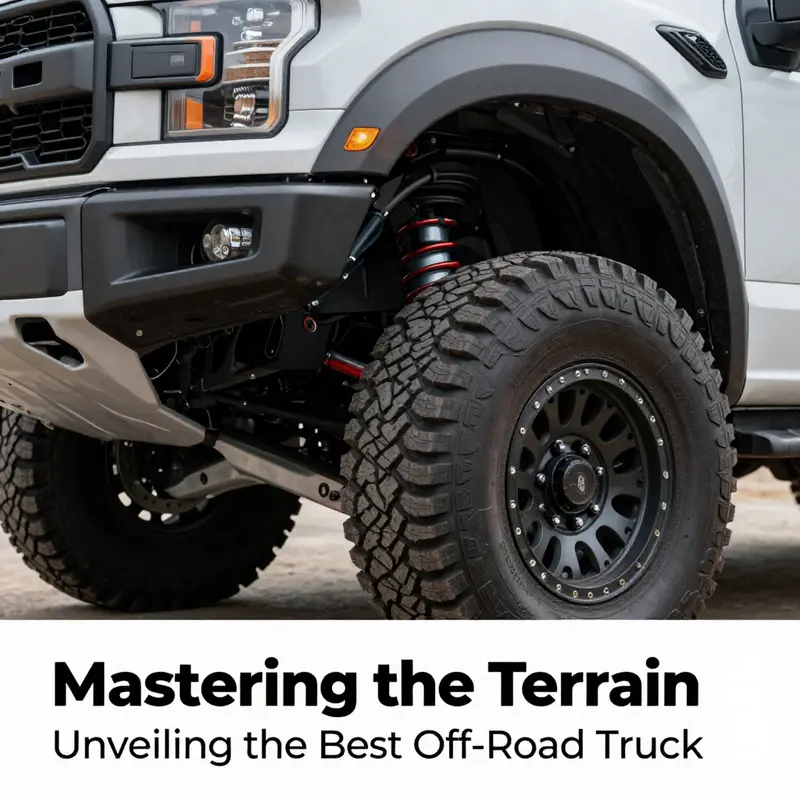
The core of off-road prowess in the modern pickup rests in a deliberate harmony between chassis, propulsion, suspension, and driver-assist systems. In terrain that shifts from jagged rock to soft sand, a top truck senses, adapts, and responds faster than the surface can surprise it. The focus is reliability, traction, and controlled aggression rather than flash. When a vehicle can read the road, modulate torque to the wheels, and keep the operator oriented in harsh conditions, it earns true capability. This is the baseline of off-road performance, where systems work together and no single feature carries the burden alone.
Adaptive suspension sits at the heart of coordinated performance. Modern platforms use sensors and actuators to interpret surface conditions and adjust damping, ride height, and roll stiffness in real time. The goal is tire contact and grip, not a cushy ride on pavement. On rocky ledges, the system moderates stiffness to maintain wheel trajectory; in rutted mud, it smooths out disturbances; in soft sand, it resists wheel hop to preserve momentum. This terrain-aware control links ride quality directly to traction and forward motion.
The powertrain has evolved into a torque-rich, highly controllable system designed for long climbs and heavy workloads. High-torque engines paired with robust transmissions deliver predictable torque across temperature and load, ensuring the vehicle maintains momentum on steep grades and through heat and dust. For diesel-powered platforms, durability, heat management, and simple cooling paths translate into fewer field surprises and steadier maintenance planning.
Torque vectoring and electronically controlled locking differentials redefine how traction is allocated. Torque vectoring distributes power not just across axles but to individual wheels, helping the outside wheel gain bite on a loose switchback. Locking diffs, when engaged, synchronize wheel speeds to prevent a loaded wheel from spinning uselessly. The result is steady momentum in challenging conditions and a driver who feels less grip-related anxiety.
Terrain-mode selectors, hill-descent control, and 360-degree cameras add a crucial layer of operator support. Terrain modes tune suspension, throttle response, traction thresholds, and braking for different surfaces. Hill-descent control provides controlled braking on steep slopes. The 360-degree cameras give real-time awareness, reducing the risk of a misstep in tight spaces. Taken together, these tools reduce cognitive load and let the driver focus on line, pace, and risk management.
Beyond civilian use, military and industrial applications push the same principles further with reinforced frames, armor, and robust electronics. High-strength materials and optimized mass distribution deliver protection without sacrificing mobility. The result is a vehicle that remains capable across a spectrum of environments while offering predictable service life and maintainability.
All of these advances point to a broader view of off-road capability: it is the reliability and predictability of behavior across conditions. The strongest platforms maintain traction, conserve momentum when necessary, and give the operator tools that reduce risk and increase confidence. The end goal is a truck that feels intuitive even on the edge of its limits, where the terrain refuses to cooperate but the driver still arrives intact and ready for the next challenge.
Final thoughts
With an unparalleled blend of power, technology, and sheer capability, the Ford F-150 Raptor R undeniably sits at the pinnacle of off-road performance. Its robust construction and meticulous engineering allow it to handle the most challenging terrains with remarkable ease. While the Ram 1500 RHO and Chevrolet Silverado 1500 ZR2 AEV Bison hold their own as worthy competitors, they do not quite match the sheer innovation and refinement present in the Raptor R. For off-road enthusiasts, adventurers, and those who thrive in rough terrains, choosing the right truck can mean the difference between a thrilling adventure and a disappointing journey. Embrace the ride that best meets your needs, but rest assured, the Ford F-150 Raptor R remains a symbol of off-road dominance.