
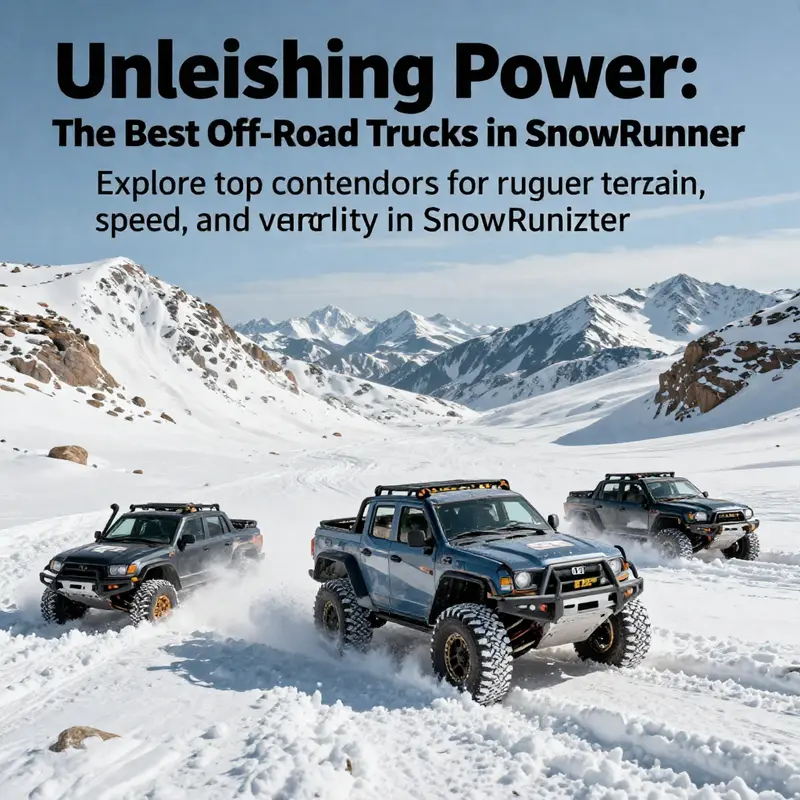
The thrill of conquering treacherous terrains in SnowRunner keeps off-road enthusiasts at the edge of their seats, but this challenge demands the right vehicle. In a world where mud, snow, and rocks become the course, choosing the ideal off-road truck can make the difference between success and disaster. This exploration dives into the top contenders, including the rugged M1063 HMMWV, the speedy K-2500 Buggy, and the versatile F-150 and Tundra, catering to varied playstyles. Through the lenses of adventure, utility, and racing thrill, you’ll discover how each vehicle brings unique strengths to the icy landscapes of SnowRunner, helping you navigate, thrill-seek, carry cargo, or race through the wilderness with confidence.
The Rugged Command Carrier: Why a Military-Grade Four-Wheel-Drive Dominates SnowRunner’s Snowbound Terrain
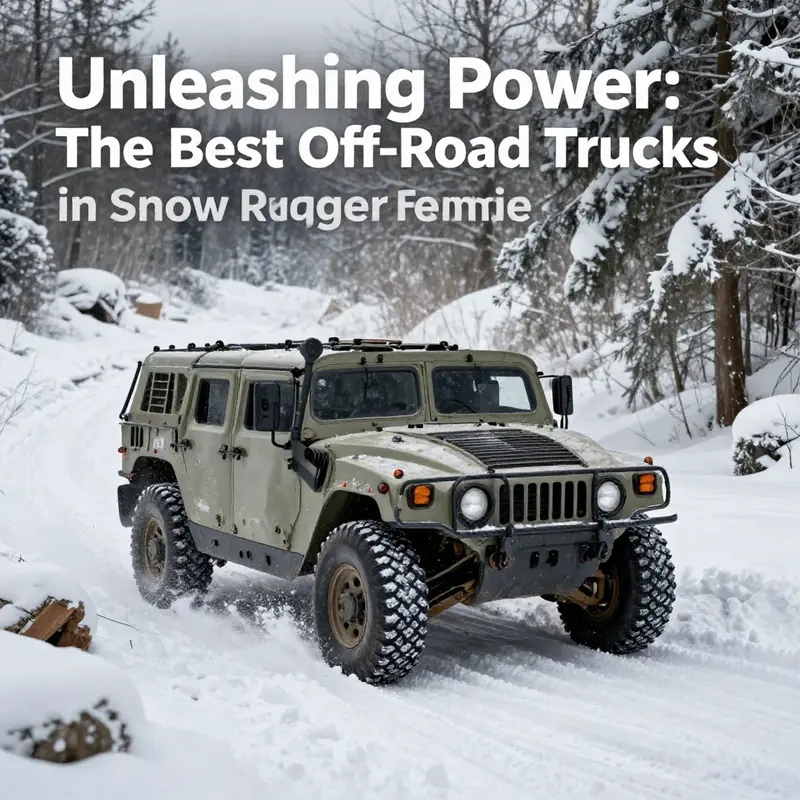
SnowRunner presents a world where weather, terrain, and gravity conspire to test a vehicle’s soul. The ice crackles, drifts loom, and the map’s rivers look glassy enough to fool the eye. In that space, one type of vehicle consistently rises to the occasion: the rugged, military-style cargo carrier built for endurance rather than speed. It is not a dream of perfection, nor a one-trick wonder; rather it embodies a philosophy of travel through harsh seasons, a philosophy that prizes traction, durability, and the quiet confidence of a drivetrain that can be trusted to keep turning when the world refuses to cooperate. In discussions among players and in practice on treacherous routes, this heavy-duty, all-terrain platform is frequently hailed as a benchmark. Its real-world design principles—reinforced structure, strong payload, and a drivetrain that keeps pushing forward under load—translate strikingly well into SnowRunner’s harsh, snow-choked maps, where the goal is to move, not merely to survive, and to move with intention rather than luck.
To understand why this class of vehicle becomes the default choice for many long-haul tasks, it helps to look beyond the cosmetics of a rugged exterior and toward the core engineering that makes it work. A true off-road cargo carrier is usually equipped with full-time four-wheel drive, a chassis designed to bear heavy loads, and suspension that can articulate across jagged surfaces without losing grip. In SnowRunner terms, that translates into consistent torque delivery, controlled wheel speed, and the ability to punch through a snowbank or a muddy bank without the chassis buckling or the tires turning into spinning discs. The balance of weight, torque, and traction is not just a matter of overcoming obstacles; it’s about maintaining momentum through composite terrains where one slip can cascade into a cascade of delays.
High ground clearance matters, too. In the kind of winter maps SnowRunner favors, ruts form quickly, and drifts stack against the undercarriage. A vehicle that can keep its belly high above the worst of the snow tends to lose fewer aluminum-thin moments to getting stuck. The approach and departure angles matter as much as outright raw horsepower because every ascent or descent—the steep grade down into a river, the cliff-like edge of a frozen bank—requires energy management, not just raw speed. This is where the heavy-duty platform earns its keep. Its chassis, designed to resist bending and fatigue under constant loads, gives the operator a margin of safety that is as much psychological as it is physical: you can push a little farther, knowing the frame and suspension can handle the abuse.
In practical terms, the vehicle’s drivetrain is tuned for a steady, surging response rather than a sudden, dramatic burst. The torque curve is sustained, enabling the tires to bite into hard-packed snow, grind through crust, and then lay tracks in a soft, mucky layer beneath. SnowRunner mirrors this behavior by rewarding players who respect grip and weight transfer. When you load the cargo bed with supplies, fuel, or machinery, you don’t suddenly become slower for the sake of it; you become more deliberate, using gravity and momentum to your advantage, letting the powertrain negotiate rough patches instead of forcing the engine to spin the wheels in frustration. The result is a vehicle that feels like it has read the map before you have and knows where to place its wheels with a surgeon’s precision.
The vehicle’s adaptability is what sets it apart in a game that routinely places you at the mercy of sudden weather shifts and shale-like ground under a thin veneer of ice. Its independent suspension offers enough give to maintain contact with uneven surfaces while keeping wheel travel under control. This translates to better traction on rugged grades and the ability to roll over obstacles that would topple a lesser machine. When you meet a long, narrow pass lined with frozen water obstacles, the cargo carrier remains true to course, allowing you to stay on a single line and avoid unnecessary side drift. That steadiness matters more than flashy speed, because SnowRunner is a chess game of inches: a few inches more clearance here, a fraction more torque there, and your route becomes navigable instead of impassable.
Of course, the vehicle is not a solitaire hero. SnowRunner rewards strategic thinking and convoy planning, and the heavy-duty platform plays best when it acts as the backbone of a small feature-length expedition rather than a lone scout. The most effective play often involves pairing this workhorse with faster, more agile teammates that can rapidly reposition, scout, or shuttle lighter loads across routes where time is of the essence. The combination is where the magic happens. You push a heavy load through stubborn snow and then send a nimble follower to slip through a shortcut, gather the needed spare parts, and return with a minimal downtime. In practice, this means the heavy carrier becomes the expedition’s anchor—reliable, steady, and capable of absorbing the brutal demands of your most ambitious routes.
The ingenuity of this approach lies in the interplay between payload, durability, and environmental realism. The cargo bed’s capacity matters not solely for the items you haul but as a factor in how the vehicle behaves on slippery surfaces. A heavier payload increases the vehicle’s momentum, which can help it power through particular obstacles, yet it also tempts fate by making wheel spin more likely when surfaces betray traction. The art, then, is to learn how to manage weight distribution—keeping the center of gravity low enough to prevent tipping on ice, but high enough to clear the worst ruts, and always anticipating how a full load changes how the tires bite into the snow. The result is a vehicle that asks for careful, deliberate driving rather than bravado, rewarding patience and planning with progress rather than peril.
In this light, the heavy-duty platform emerges as more than a tool—it stands for a philosophy of exploration. It embodies the idea that the most competent explorer is not the one who travels fastest but the one who travels farthest, with the fewest recoveries along the way. It invites you to view each map as a unique lattice of potential lines of travel, to map your route using landmarks rather than shortcuts, and to respect the terrain as a partner in your journey rather than an adversary to be outpaced. The uphill climb is not the end but a test of your understanding of torque, weight, and traction. The river crossing, with its glinting ice and unpredictable current, becomes an opportunity to apply the same principles you used to scale a snow-covered ridge. If you learn these lessons, the vehicle’s performance becomes not merely a metric of horsepower but a narrative of resilience—a story of how a well-built platform can endure, adapt, and deliver across a landscape that seems to resist every attempt at progress.
For those who prefer a broader toolkit, this platform also serves as a dependable platform to support diverse tasks. Its substantial payload capacity means you can bring more than just fuel; you can carry the tools, spare parts, and recovery gear that keep a convoy moving when the map tests your resolve. In SnowRunner, where a single failed attempt can strand a crew at a remote outpost, the value of reliability cannot be overstated. The ability to winch, tow, or reorient heavy loads without sacrificing traction makes this vehicle a practical choice for missions that require both muscle and cunning. It is not a flashy declaration of speed, but a consistent, durable answer to the problem of getting from point A to point B under the harshest conditions the game can conjure.
Comparatively, other vehicle types offer different kinds of advantages. Lightweight, agile machines excel on clear roads or newly frozen surfaces, letting you zip between job sites with surprising speed. They are superb for quick reconnaissance and rapid transport when the terrain is forgiving. Then there are the balanced, all-around pickups that blend towing power with cargo capacity and respectable endurance. They cover a broad swath of scenarios, providing reliability without demanding a specialist driving style. The choice, therefore, is not a matter of hunting for an ultimate, one-size-fits-all solution, but of matching the vehicle to the mission and to your preferred tempo of play. On one expedition you might rely on the heavy carrier to move the bulk of your gear, while on another you route all your activities through the lighter, quicker machine to keep a heavy schedule on track.
Real-world inspiration helps illuminate why this class of vehicle resonates with players. The core design priorities—durability, traction, payload capacity, and stable handling under load—are the same attributes that make any heavy-duty four-wheel-drive platform a reliable workhorse in extreme environments. In the game’s snow-drenched theatres, those principles translate into actionable advantages: you can resist drift on icy lanes, you can maintain forward momentum over crusty snow, and you can recover from missteps more readily because the drivetrain remains engaged and the chassis does not surrender its stiffness under pressure. The result is a vehicle that feels intimate with the terrain, as if it has learned the land’s moods and can respond with a measured, confident reply rather than a desperate, reactive throw of the throttle.
If you measure success in SnowRunner by how many destinations you can reach per session and how seamlessly you can orchestrate your limited fleet, this platform’s value becomes clear. It does not simply serve as a means of moving cargo; it acts as a catalyst for strategic thinking. You begin to design routes with redundancy in mind, choosing to reinforce certain passages with a heavier, more capable vehicle while reserving faster machines for time-sensitive tasks. You start to think in terms of energy budgets, balancing fuel use, engine heat, and the wear on axles and tires. You learn to anticipate how weather patterns shift your route quality from smooth to treacherous in a matter of minutes, and you craft contingencies that keep your mission from stalling when a single wheel gets stuck in a deep drift. In this sense, the heavy-duty cargo carrier becomes not only a vehicle but a teacher—showing you that success in SnowRunner depends on the disciplined integration of mechanical prowess and map-savvy strategy.
For players who crave additional context on vehicle maintenance and performance optimization, there is value in deeper, practical guides that walk through the mechanics behind heavy propulsion systems. See the linked resource on mastering diesel mechanics for a structured approach to understanding how torque, fuel systems, and drivetrain health interplay under demanding conditions. This guidance can translate directly into better performance in SnowRunner, where careful attention to engine health and power delivery often pays dividends in terms of grip and endurance on icy grades.
internal link: mastering-diesel-mechanics-your-step-by-step-path-to-success
External reference: The real-world principles behind these capabilities are echoed in official documentation that outlines how a rugged cargo carrier is built to endure rough environments, including high payload and fortified drivetrains. For readers seeking a broader technical grounding, see the Defense Technical Information Center’s overview of this family of platforms at https://www.dtic.mil.
Speed on the White: An Agile Off-Road Buggy Defines Traversal in SnowRunner
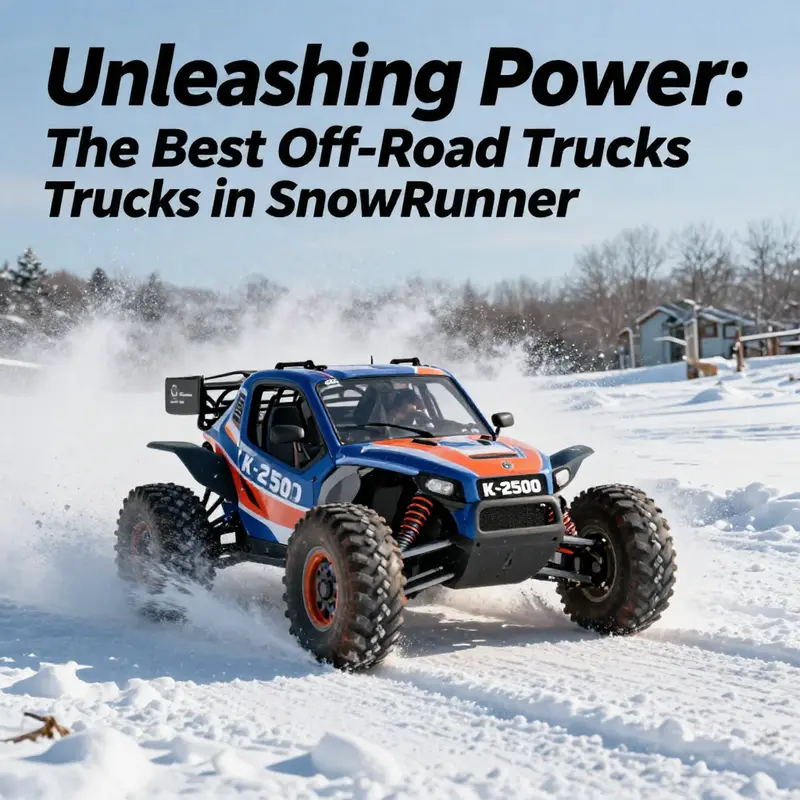
On snowy maps where wind bites and snow swirls, speed becomes a tool as much as a tactic. SnowRunner rewards how quickly a vehicle can adapt, not only how much mass it can push. Among the roster, the agile lightweight buggy stands out for those who prize momentum and precision over pure cargo capacity. Its design lets it cut through powder, thread tight lines, and recover from slips with minimal hesitation. Key strengths are light weight, responsive steering, and a drivetrain tuned to turn speed into traction rather than grinding through resistance. In practice, you learn to read the surface texture, modulate throttle, and pick lines that keep you out of deep drift.
The first pillar is weight. A lighter chassis reduces inertia, letting you react to a changing crest or hidden rut with immediacy. The second pillar is a suspension that flexes and cushions sharp irregularities, keeping tires in contact and preserving control. The third pillar is a drivetrain that converts quick inputs into swift forward progress, letting you sprint from a corner before a heavier truck can even begin to turn.
But speed has limits. The agile option shines when you scout routes, reach distant objectives with minimal payloads, or shuttle a small load where a heavy truck would stall. It is not a replacement for a workhorse, but a complementary asset that maximizes map tempo. Upgrades and tuning let you tailor throttle response, tire choices, and suspension to the map texture, turning a once risky line into a confident passage.
In team play, a fast scout can lead the way, testing lines before heavier assets commit. The best setup is not about a single vehicle but an ecosystem of assets that lets you adapt to weather, ice, and drift with a steady cadence. The wider lesson is that traversal in SnowRunner is a balance between speed, control, and resilience, sculpted by your line choice and your willingness to read the snow as it shifts beneath you.
Versatility on Snow: The All-Terrain Workhorses That Define SnowRunner’s Best Off-Road Trucks
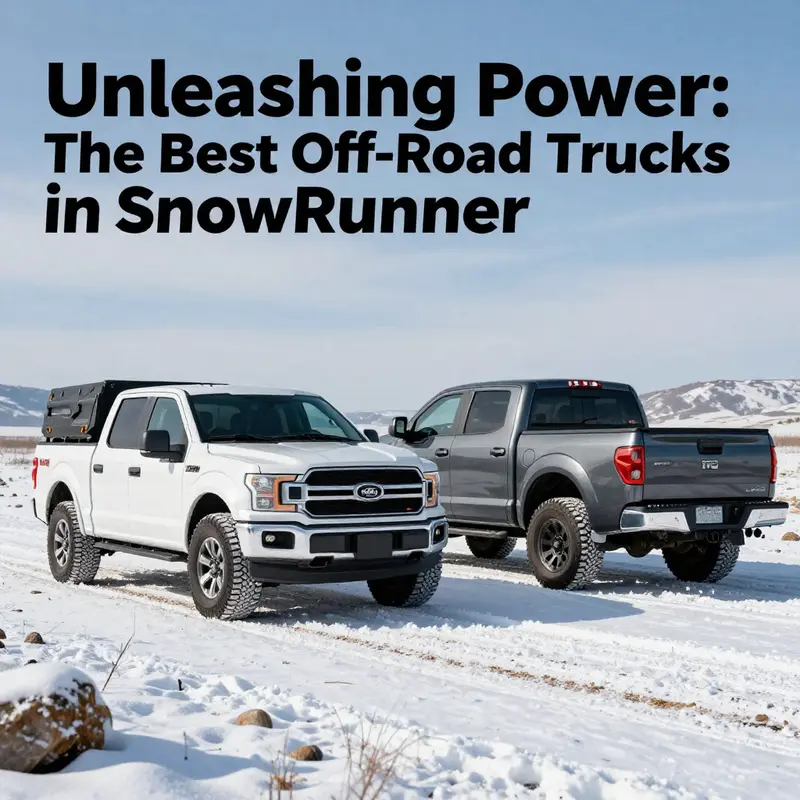
SnowRunner narrows the field to a simple truth: in the white void of deep snow, mud, and icy rivers, reliability and adaptability matter more than sheer speed. The game rewards trucks that can shoulder heavy workloads, claw through resistance, and morph their behavior to fit shifting map conditions. In that light, the two standout archetypes—the American full-size pickup renowned for balance and payload, and the rugged, torque-forward Japanese counterpart built for endurance—exemplify the axis around which versatile off-road play rotates. They are not about chasing the fastest time on a single stretch of road; they are about sustaining progress when the map grows hostile, when contracts pile up, and when you must survey a remote corner of the map to unlock a new route, a new contract, or a new thrill. What makes them compelling in SnowRunner is how their design philosophy translates into practical, repeatable success across a spectrum of terrains: deep powder that masks ruts, slick frozen slopes that threaten control, river crossings where only the right hardware and patience will prevail, and the long, punishing hauls that demand torque, chassis rigidity, and dependable tires.
Consider the quintessential American full-size pickup through the lens of SnowRunner’s demands. This class of vehicle emphasizes a straightforward, durable powertrain, substantial towing capacity, and a chassis setup that tolerates a mix of task loads—from moving heavy equipment to ferrying essential supplies through a hailstorm of seasonal obstacles. Its high ground clearance gives it a decisive lead in tight, rocky stretches where a lowered or undersized rig would struggle. The suspension architecture—designed for stable handling over rough terrain—translates into smoother climbs and more predictable descents, even when the surface beneath is glassy or bumpy with hidden ice. In practice, this means you can approach a steep hillside, a snowed-in track, or a mud-trapped corridor with confidence, knowing that the vehicle will absorb the shocks without losing line of sight to the trail ahead. The payoff is not speed for speed’s sake, but a steady, reliable cadence—the ability to pick up a heavy payload, navigate to a remote waypoint, and return with the same vehicle intact and ready for the next assignment.
Conversions matter just as much as raw power. In SnowRunner, the ability to tailor a truck to the job at hand becomes a decisive advantage. Windshielding off the wind, upgrading tires from off-road treads to more specialized winter compounds, or swapping to a reinforced chassis can tilt a routine mission into an achievable one. The versatile build can accept a heavy winch for stubborn pull-outs, a robust tow hitch for long hauls, and a set of studded or deep-tread tires that bite into snow with tenacity rather than slide helplessly. In such configurations, the truck evolves from a generalist into a precision tool—one that a player can calibrate for the environment they expect to encounter, rather than adapting a map to fit a single, unchanging vehicle. The result is a vehicle that remains serviceable across multiple tasks: it hauls, it strains under weight, it navigates, and it negotiates obstacles with a level of predictability that steady hands value over reckless speed.
The second archetype—often characterized by exceptional torque, a robust frame, and a utility-focused ethos—brings a different flavor to the table. This is the truck that feels at home wrestling long-distance contracts across frost-sheathed expanses. Its strength is not just a high top-end grunt but a sustained, low-end torque that keeps the wheels spinning when the going gets tough. A durable frame means resilience against the occasional misstep—slipping a tire into a rut or sliding into a shallow riverbed—without a dramatic loss of structural integrity. It is the vehicle you trust to keep rolling after hours of challenging work, not the one you swap out for something faster because you misjudged the terrain. With this kind of truck, the playstyle centers on endurance: the ability to walk a mission to its conclusion with a reliable partner, even when the map’s weather systems conspire to make every movement a careful calculation.
Together, these trucks form a duo that embraces SnowRunner’s core challenge: to move through a world that resists, not a world that yields. They encourage a mindset of preparation and adaptability. You learn to read the map’s textures—the way a snow crust holds in some places, the depth of softer patches in others, and where a winch or a log can become the difference between being stranded or moving forward. The interplay between payload capacity and traction becomes a guiding consideration. Increased cargo space is not merely about carrying more; it is about the capacity to keep a forward momentum that preserves mission flow. A heavy load demands careful tire choice and smarter throttle control. A lighter, more agile setup can sprint between job sites but needs to be used with an eye toward terrain changes and the potential need for towing or recoveries. The balance between these two extremes—the all-rounder’s stability and the torque-driven endurance—emerges as SnowRunner’s practical primer on what it means to choose a vehicle that can grow with your play style rather than constrain it.
From a gameplay perspective, the appeal of these trucks lies in their adaptability across the game’s diverse environments. SnowRunner is not a single terrain test; it is a mosaic of landscapes, each with its own physics quirks and resource demands. In snow-draped hills, you need a truck that can grip and climb, not one that bogs down under the weight of its own momentum. In icy riverbeds, you require a chassis that can flex and recover, a suspension that cushions the impact and keeps momentum from plummeting into a stall. And when contracts require you to haul heavy equipment or supply lines across long distances, the ability to maintain a steady pace without shouting mismatch between power and control becomes critical. The American full-size pickup’s versatility shines in the first scenario: it can climb and traverse with a balanced blend of torque, weight distribution, and traction, and it can adapt to snowscapes with tire upgrades that shed the risk of spinouts. The rugged, torque-forward truck excels in the second scenario: its muscle supports longer hauls and more demanding loads, and its frame endurance pays dividends when the road degenerates into a treacherous maze.
Yet, the real magic of SnowRunner’s best off-road trucks is how they respond to upgrades and tool options. The game rewards a thoughtful approach to tire selection, winch placement, and chassis reinforcement. A heavier-duty tire can transform a stubborn slope into a navigable grade, turning a potential stalemate into a controlled ascent. A well-placed winch opens lines that would otherwise be blocked by deep snow or ice, turning a dead-end map section into a viable passage. A reinforced chassis extends the truck’s life in the most punishing scenarios, turning a near-breakdown into a recoverable setback. These upgrades do more than improve numbers; they shape how players conceptualize their route planning and mission strategy. They shift the driver’s mindset from racing to problem-solving, from reaching a destination quickly to ensuring the trip is sustainable, repeatable, and in service of a larger map-wide progress.
The broader takeaway is that the best off-road trucks for SnowRunner hinge on utility and resilience as much as on raw speed or flash. The two archetypes described here illuminate how a player can tailor a single platform to a multitude of tasks without losing its core strengths. In practice, you gain a reliable partner that can be repurposed as maps evolve: you deploy the versatile American-style pickup when you need a sturdy all-rounder with strong payloads; you switch to the torque-forward, rugged frame when the slate grows heavy and the terrain requires brute force and steady traction. The result is a playing experience that feels coherent and responsive, a sense that the vehicle you chose is the right instrument for the map’s evolving demands rather than a static tool that merely exists in the background.
As players refine their fleets, SnowRunner rewards those who think in terms of adaptable ecosystems rather than single-task specialists. The most satisfying runs come from pairing a steady, all-purpose carrier with a second machine designed to shoulder the heavy lifting when the terrain or contract demands it. The synergy is straightforward: you save time by moving efficiently across cleared routes, yet you maintain capability for the moment a challenging river crossing or a snowbanked incline blocks your path. In this light, the chapter on versatility is not about declaring a single “best” truck for every scenario. It is about recognizing that two complementary profiles can cover a broader spectrum of conditions, enabling players to progress more reliably while still enjoying the thrill of exploration and discovery that defines SnowRunner. The game’s winter landscapes become less a test of brute speed and more a study in strategic mobility, where a well-maired plan and the right blend of power, weight, and traction keep the map’s edges within reach.
For players who want to glean more from these concepts, the conversation often returns to the same core ideas: power balanced with payload, durability aligned with mission frequency, and flexibility enhanced by thoughtful upgrades. When you can swap to a heavy winch mid-contract, or layer in a more aggressive tire compound for a particular snow-front, you gain agency. You gain the confidence to pursue longer, more ambitious routes across the map, confident that your vehicle is designed to deliver not just one victory, but a string of them across a single session. In a game built around challenging weather and unforgiving terrain, that confidence is as valuable as any mechanical advantage. It is the reason why these off-road trucks—one built for reliability and towing, the other for enduring torque and long hauls—remain at the heart of SnowRunner’s lauded setups. They embody a philosophy where versatility is the primary virtue and where utility shapes the journey as much as destination.
External reference: For a broader overview of the top choices in SnowRunner, you can consult GameSpot’s breakdown at https://www.gamespot.com/articles/snowrunner-best-trucks-f-150-tundra/1100-6527983/.
Rugged Choices in SnowRunner: How Playstyle and Vehicle Strength Define the Best Off-Road Truck
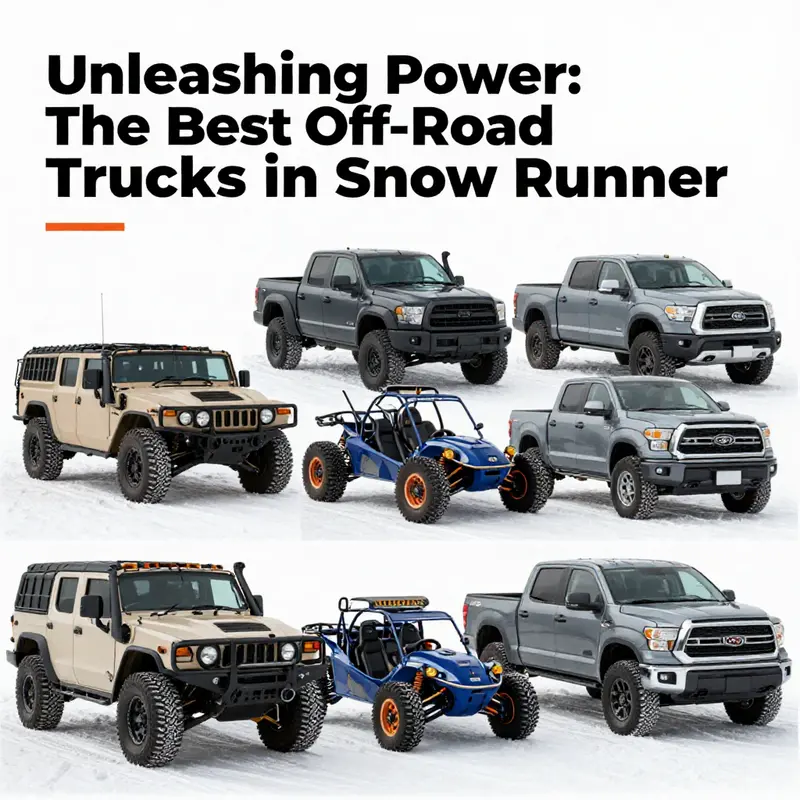
The question of which truck is best in SnowRunner is less a single verdict and more a conversation about how a player chooses to move through winter’s endless ice and snow. Snow, mud, and ice do not yield to speed alone; they reward the alignment between a driver’s approach and a vehicle’s built-in strengths. In this chapter, the conversation shifts from a hunt for one definitive champion to a thoughtful mapping of playstyle to archetype. If you crave pure, unrelenting off-road capability, a flagship system built to surge through the harshest terrain is your best bet. If you value speed and agility on clear stretches, a compact, nimble platform shines. If steadiness and reliability matter most for long missions, a rugged workhorse that can tote, tow, and weather the map is ideal. And for players who want a versatile, all-around solution, a balanced combination of power, durability, and utility will often outperform any single specialty in a wide range of tasks. These conclusions come from the detailed results gathered across the harsh, winter-drenched maps of SnowRunner, where the terrain itself is a force that must be learned, respected, and worked with rather than conquered by brute speed alone.
To begin with, consider the power-dominant, flagship-class machine. In any winter-forward environment, there is a vehicle designed to unleash a torrent of torque and power that can push through obstacles that would stall other machines. This is not a mere heavy-duty truck; it is a hyper-competent platform that blends an extreme powertrain with a high-strength chassis, substantial ground clearance, and advanced traction systems. When confronted with deep snow, icy rivers, or steep, mucky climbs, this class relies on leverage more than leverage alone. Its power translates into momentum, and momentum becomes the difference between getting stuck and clawing through. A robust ground clearance—about two hundred millimeters—lets it roll over rocks, drifts of snow, and the occasional fallen log without losing too much forward progress. The chassis is crafted from high-strength aluminum, light yet stiff enough to resist the flex that would sap handling in treacherous terrain. Differential locks, both front and rear, paired with electronic limited-slip systems, offer maximum traction when a wheel pair loses grip. In some configurations, rear-wheel steering with a crab mode provides a 360-degree turning ability in tight spaces, turning what would be a tedious, multi-point turn into a swift, wrist-saving maneuver. The payoff is monumental in the hardest tasks—ice, deep ruts, and mud that would trap standard trucks. The trade-off, as you would expect, is a heavier footprint and higher fuel consumption, along with increased maintenance demands. This is the kind of truck you turn to when speed across the toughest terrain is a matter of mission success.
The second archetype is the classic, proven off-road utility wagon. This is the archetype that has earned a reputation for reliability through not just one expedition but many. Ground clearance remains generous, and the drivetrain favors adaptive control over raw speed. A part-time four-wheel-drive system works in harmony with three locking differentials, providing a level of control that is almost tactile in implementation. The operator can manually lock the differentials to maximize grip in snow, mud, or rock, dialing in grip with a decisive, predictable feel that seasoned drivers trust. The vehicle’s durability comes from a rugged, body-on-frame design and a suspension tuned for impact rather than a soft ride. This is the steady hand in the storm: capable, forgiving, and capable of handling a broad spectrum of tasks. It tows well, carries sizeable cargo, and maintains steadier behavior on uneven snowfields or frozen river crossings. In practice, this means fewer surprises on long multi-map journeys and a lower cognitive load when navigating a series of encumbered objectives. For players who want to feel in control without chasing every ounce of speed, this archetype is a steadfast partner, turning complex maps into navigable routes rather than a gauntlet to be endured.
A third archetype maps more to the needs of travelers who prize all-weather reliability over extreme conditions. The all-weather crossover embodies a different slant on winter mobility. Its symmetrical, full-time all-wheel-drive system ensures consistent traction across varied surfaces, from ice to snow to patchy slush. The emphasis here is balance: comfort, visibility, and a steadier ride that reduces fatigue on longer missions. This kind of vehicle shines when the map requires long hauls between job sites or when the environment is not uniformly treacherous but still demanding. Its ground clearance is usually adequate for most seasonal challenges, though it may retreat slightly in the face of very deep powder or steep, crushing slopes. The payoff is predictability and a calmer cockpit—features that matter when you are piloting through a dim, wind-battered forest or lounging through a frozen valley to deliver essential supplies or move equipment. The softer ride and consistent traction can be the deciding factor for a playthrough that values endurance, precision, and a steady pace over outright raw power.
A fourth element in this conversation is the balanced, all-around pickup class. These trucks are the workhorses of the map—tough, dependable, and equipped to handle a broad spectrum of tasks with a single chassis. They combine strong towing capacity with generous cargo space and competent on- and off-road performance. The strength of this class lies in the way it handles the everyday demands of SnowRunner maps: hauling gear, deploying tools, and maneuvering through mixed terrain without needing to switch vehicles for each new challenge. They don’t always break records in any single dimension, but they consistently deliver reliable performance across a wide range of scenarios. For players who want a single vehicle to travel long distances, reach scattered objectives, and multitask between missions, this archetype offers the most practical versatility. The most satisfying playstyle with these trucks tends to involve mission flow: move from one objective to the next with a manageable balance of speed, traction, and cargo capacity, rather than pausing to recalibrate at every switch in terrain.
When weighing these archetypes, a number of practical considerations begin to shape the decision. The first is the simple math of terrain. Winter maps are not uniform; they swing between powdery snow that saps speed and glue-wet mud that clings to tires and makes every turn feel like a negotiation with the ground itself. Power is a significant advantage, but it is not the only advantage. Traction—the ability to transfer that power into forward motion through grippy wheels, locked differentials, and effective steering—can be the more decisive factor in many situations. For deep snow or narrow, winding passages among trees, a combination of high ground clearance, precise steering, and low speed control becomes essential. The second factor is reliability. In a game where the path to the objective may be long and the weather will not relent, a vehicle that can be depended upon to perform consistently across a spectrum of tasks is often worth more than one that excels only on a single stretch of terrain. Third, there is the logistical cost of operation: maintenance needs, fuel efficiency, and the time spent reconfiguring the vehicle to tackle new challenges. The class with the best balance of power and efficiency frequently becomes a personal favorite for multi-map campaigns, where the aim is to progress smoothly rather than to conquer any single obstacle with a single, perfect tool.
The psychology of choosing in SnowRunner also matters. A driver who relishes the thrill of conquering extreme conditions might find the flagship archetype irresistible—the moment when one vehicle’s torque and steering converge to carve a path through a wall of snow or ice. A player who enjoys the tactical feel of precise control might lean toward the classic, with its three locking differentials and a manual, deliberate rhythm to locking and unlocking traction. For those who prefer method and endurance, the all-weather crossover can minimize fatigue while still delivering capable performance across the map. And for players who want the most dependable daily driver, the balanced pickup offers a compelling blend of utility and resilience that stands up to a long day’s work on the map. The best vehicle, then, is less about a universal metric and more about the fit between the player’s instincts, mission design, and the map’s particular challenges.
As a practical guide, a player oriented toward purist off-road capability might look for a platform with a propulsion system capable of delivering high power in short bursts while maintaining traction through electronic safeguards. A player who thrives on speed across cleared roads or sleigh-ride stretches will naturally favor agility and light weight, along with a drivetrain tuned for quick accelerations and nimble handling. Someone who plans long expeditions through wind-whipped forests or across frozen plains may prioritize durability, cargo capacity, and a predictable, steady cadence of movement. Finally, the player who wants one vehicle to do it all—cover a long route, handle varied obstacles, and keep a steady hand on the wheel—will lean toward the all-around workhorse that can lean into both power and pragmatism in equal measure.
For readers who want to deepen their understanding of the mechanical underpinnings behind these choices, there is value in exploring the broader world of powertrains and maintenance practices. A resource that delves into diesel mechanics offers a practical, step-by-step lens on how these machines stay in motion, part by part, through harsh conditions. This guide, though not a SnowRunner manual, provides useful context for how large, torque-rich engines, heavy-duty gearboxes, and conditioning of four-wheel-drive systems can influence real-world performance and reliability. Mastering diesel mechanics: your step-by-step path to success is a handy companion for players who want to translate the game’s abstractions into a grounded understanding of vehicle dynamics and upkeep.
Ultimately, the best off-road truck in SnowRunner, within the framework of this chapter, remains a question of alignment. If your missions demand conquering the most punishing terrain, the flagship platform—heavy, powerful, and capable of targeted traction control—offers the strongest narrative and the most dramatic payoff. If you value a stable, time-tested ride that can handle a wide array of tasks with confidence, the rugged, three-differential workhorse stands out as a reliable workhorse. If wintery commutes across difficult maps call for steady footing and comfort, the all-weather crossover will keep you moving with less fatigue and more consistency. And if your aim is to press one vehicle into service across many maps and tasks, the balanced pickup embodies that versatile middle ground where power, cargo, and reliability meet in a single, cohesive package.
The beauty of SnowRunner is that it invites players to tailor their choice to the map they face and the way they want to play. The game rewards this adaptive mindset: choosing the right tool for the right problem, using traction aids and differential locks with intentionality, and accepting that a single vehicle can rarely be the best in every situation. When you approach the map with this mindset, the best off-road truck becomes not a static champion but a dynamic partner—one whose strengths respond to the terrain, the mission, and the player’s evolving preferences. As the snow piles deeper and the map grows more intricate, your affinity for a particular archetype will crystallize into a preferred way of proceeding, a preferred rhythm of driving, and a preferred balance of power, protection, and practicality. In this sense, SnowRunner teaches a quiet truth: the best truck is the one that makes your journey through winter not just possible but purposeful, turning every obstacle into a step toward your next objective.
External Reading: For broader winter driving insights beyond the game’s virtual terrain, an external resource on winter driving techniques can offer practical perspectives that inform in-game decisions as well. https://www.nationalgeographic.com/adventure/article/winter-driving-tips
Final thoughts
As you navigate the wintry roads of SnowRunner, each truck offers unique advantages depending on your approach. The M1063 HMMWV stands tall against the pounding elements, making it the go-to for rugged exploration. The K-2500 Buggy is unmatched for swift journeys across cleared paths, providing fun and speed, while the F-150 and Tundra serve as dependable workhorses, effortlessly adapting to various tasks. Ultimately, your choice comes down to playstyle—whether you seek to conquer snowy peaks, race against the clock, or tackle chores seamlessly. Equip yourself with the knowledge from this guide, and make an informed decision that matches your off-road ambitions.