
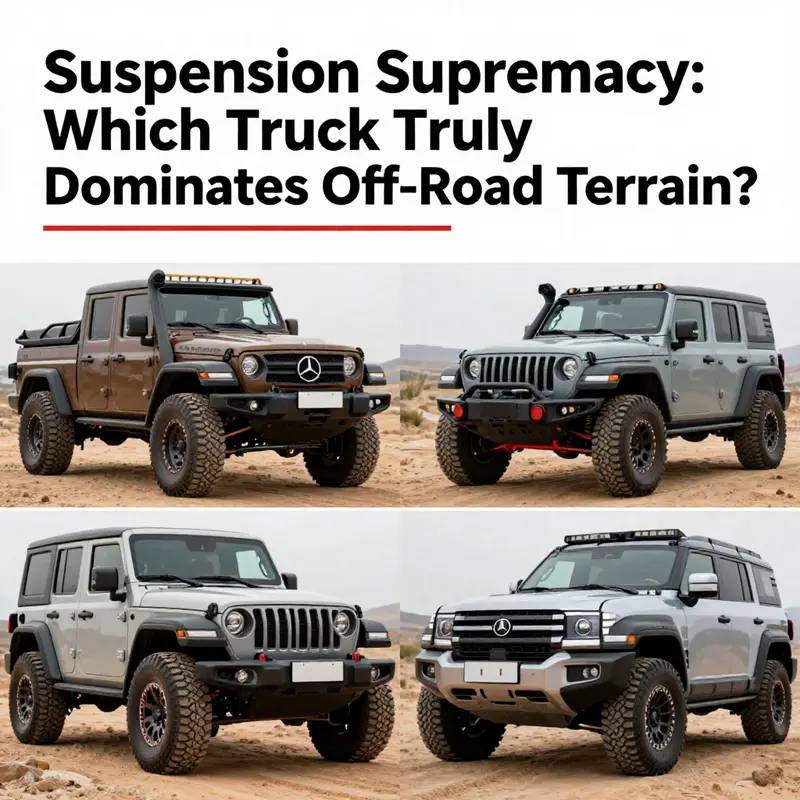
Off-road driving is not just a pastime; it’s a passion for adventure seekers, racing fans, and landowners alike. Each terrain—a mountain, a riverbed, or rugged farmland—demands a dedicated truck with a robust suspension system able to conquer its unique challenges. This exploration will delve into three exceptional vehicles known for their off-road challenges: the Mercedes-Benz LG1519, the Jeep Wrangler, and innovative hydraulic systems like those in contemporary trucks. Every chapter will dissect how these machines leverage their suspension systems to set themselves apart, shedding light on the pivotal role that suspension plays in the heart of off-roading. Buckle up as we traverse this thrilling terrain of truck engineering.
Chapter 1: Shared Suspensions, Unstoppable Traction — The Mercedes-Benz LG1519 and the Art of Off-Road Mastery
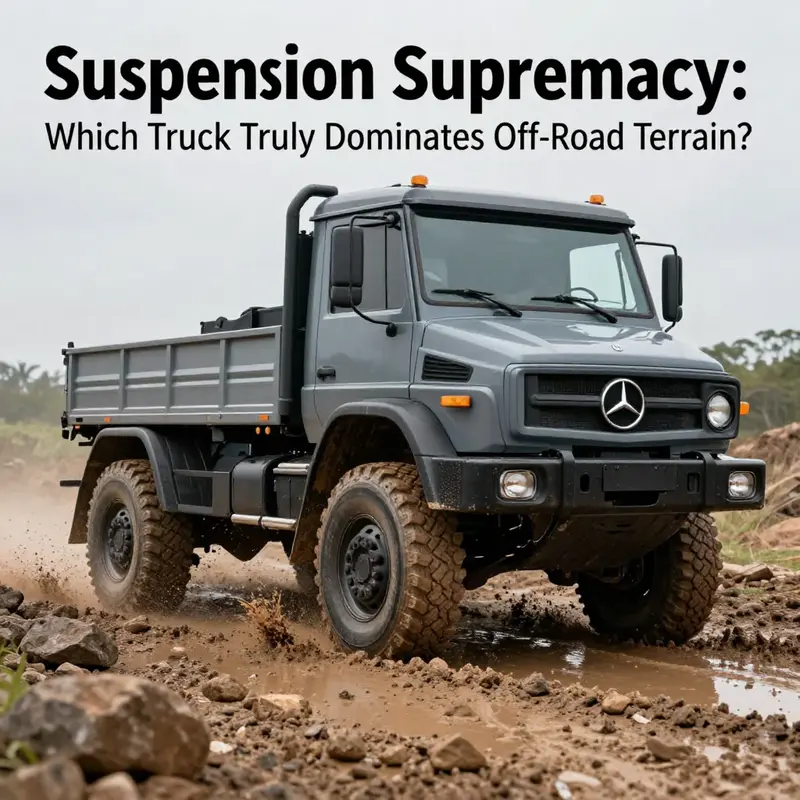
When the talk turns to off-road capability, people often fixate on horsepower, ground clearance, and the size of the tires. Yet the most decisive factor in conquering rugged terrain is the suspension—the quiet engine room of grip, stability, and control. In this chapter, we dive into a design that challenges conventional truck thinking: the Mercedes-Benz LG1519 6×6 and its remarkable dual-wheel, shared-axle suspension. This is not merely a clever mechanical trick. It is a holistic approach to how a heavy-duty vehicle distributes weight, manages terrain-induced shocks, and keeps every wheel in touch with the ground when the going gets brutal. The LG1519 embodies a philosophy that sees suspension as one system for distributing a massive payload across uneven surfaces, rather than as a set of discrete, independently bouncing components. The result is a platform that remains controllable, even when the earth itself seems to resist movement. What makes this setup so instructive is the way it borrows from tank technology and translates battlefield-tested principles into a mobility solution for extreme off-road tasks. The rear axle, with its four wheels sharing a single, robust leaf-spring suspension, wipes away a central paradox of off-road design: you want both stiffness to carry heavy loads and flexibility to absorb sharp impacts. The dual-wheel, shared-axle arrangement achieves just that. When a wheel encounters a rock, a rut, or a patch of mud, the axle flexes in concert across all four wheels. The energy of the obstacle is dispersed across the entire axle, reducing the odds of a single wheel losing ground contact. The result is a stable platform where traction is not a one-wheel story but a coordinated effort of the whole rear end. This is not an invitation to romanticize simplicity. It is a recognition that in the harshest environments, the simplest paths are often the most effective in practice. The LG1519’s suspension is a deliberate design choice for stability under load, not just a vehicle that can haul a heavy payload. The marriage of this shared suspension with a 6×6 drivetrain and three locking differentials creates a machine that can crawl, tilt, and recover with a quiet, predictable tenacity. In the field, stability grows from weight distribution. The shared axle distributes load more evenly, reducing the moment arm that lurches a vehicle into a roll when a wheel loses ground contact. That stability translates directly into traction. If one wheel perches on a sharp rock or sinks into a soft patch, the entire axle’s flex distribution allows others to compensate, maintaining grip where a conventional setup might falter. It is a rare system that handles both extreme payloads and demanding terrain with comparable ease. Consider the practical implications for military transport, disaster relief, or remote mining operations. A commander in rough terrain cannot afford a wheel that finds its own destiny and leaves the rest of the vehicle floundering. A single, shared suspension for the rear axle offers a unified response to obstacles, a unity of movement that preserves momentum and protects mission timing. The LG1519’s triple-differential setup—front differential, central differential, rear differential—further enhances controllability. Locking mechanisms allow a deliberate, predictable transfer of torque to wheels that can still find ground when others struggle. The combination of shared rear suspension and strategically placed differentials means the vehicle can navigate ridges, rock fields, and soft soils without the typical chaos that accompanies heavy off-road travel. It is not hyperbole to say that this design changes the physics of the trail. It alters load paths, shifts weight transfer dynamics, and redefines how a vehicle communicates with the surface beneath it. In practical terms, the LG1519 can carry substantial payloads across rough terrain without the instability that torques through a non-integrated four-wheel system. This is why the LG1519 stands out in the off-road engineering landscape. It is not merely a very capable truck; it is a system-level demonstration of how a well-integrated suspension can decouple payload demands from terrain demands. The result is a platform that remains predictable when the path ahead is anything but. The suspension is a foundation, but it is not an isolated feature. The LG1519’s strength is in how its suspension interacts with other key components—the 6×6 powertrain, the locking differentials, and the chassis’s geometry. The powertrain must deliver controllable torque to a system that is inherently conservative in its weight distribution. The three locking differentials are more than insurance against wheel slip; they are a control strategy that ensures that the work done by the suspension is not wasted on a wheel that has lost contact. A wheel that stays in contact is a wheel that can share the load, maintain traction, and continue the forward march. The end result is a vehicle that can perform in environments where a conventional truck would be overwhelmed. It is not just the mechanical elegance of the shared suspension that impresses, but the palpable effect of the combination when the vehicle is negotiating a pestilent landscape. The LG1519’s architecture demonstrates how a heavy-duty vehicle can push the boundaries of off-road mobility without sacrificing payload, reliability, or stability. It is a testament to the idea that propulsion and suspension are not isolated disciplines but a singular approach to mobility. The dance between traction and stability is choreographed by the suspension and guided by the driver’s intent and the vehicle’s sensors. Even with the sophistication of a modern, electronically managed drivetrain, the LG1519’s core advantage rests in a physical principle: distribute the load across a robust, shared system to maintain ground contact and control on the most challenging terrain. In that sense, the LG1519 is less a truck and more a instrument of terrain negotiation. Its suspension design invites a rethinking of what it means to be off-road capable. If you consider the landscape a dynamic opponent, then the shared rear suspension is a strategic discipline; it allows you to read the ground more consistently, respond with measured flexibility, and keep the forward momentum that defines mission success. For practitioners who must plan operations in deserts, tundras, or remote hill country, the LG1519 offers a blueprint: a suspension that embraces the terrain as a partner rather than a foe, that relocates the challenge from the wheel to the axle, and that yields a traction profile that is durable, predictable, and scalable to heavy payloads.
A single paragraph can miss the nuance of a design that takes inspiration from tank technology. But the LG1519 does more than borrow a concept. It translates a battlefield-grade solution into a civilian, or at least civilian-adjacent, heavy-duty application. The result is not a novelty but a practical, mission-critical apparatus. The shared-axle suspension embodies the principle that when the surface is unreliable, reliability itself must be engineered into the system. The LG1519 is a case study in how a vehicle’s load-bearing and suspension architecture can be harmonized to manage extreme conditions without compromising control, speed, or safety. As you compare it to other off-road suspensions—such as the Jeep Wrangler’s solid beam axle, which excels in articulation and durability, or the Ford Bronco’s HOSS 2.0 adaptive damping system and the BYD Yangwang U8’s four-wheel linkage with dynamic ground clearance—the LG1519 stands out for its radical approach to weight distribution and terrain conformity. Each of these systems has its own strengths, and each reflects a different philosophy about what an off-road suspension should do. The LG1519 answers a particular question with a bold design: how can a heavy, six-wheeled platform maintain traction and stability across the most punishing terrains with a payload that would overwhelm a lighter vehicle? The answer lies in shared load paths, in a robust leaf-spring geometry that permits large roading angles while preserving contact. It is a design born from the recognition that the rear axle is not simply a pair of wheels plus a spring; it is a living, reactive structure whose behavior shapes the vehicle’s entire interaction with the ground.
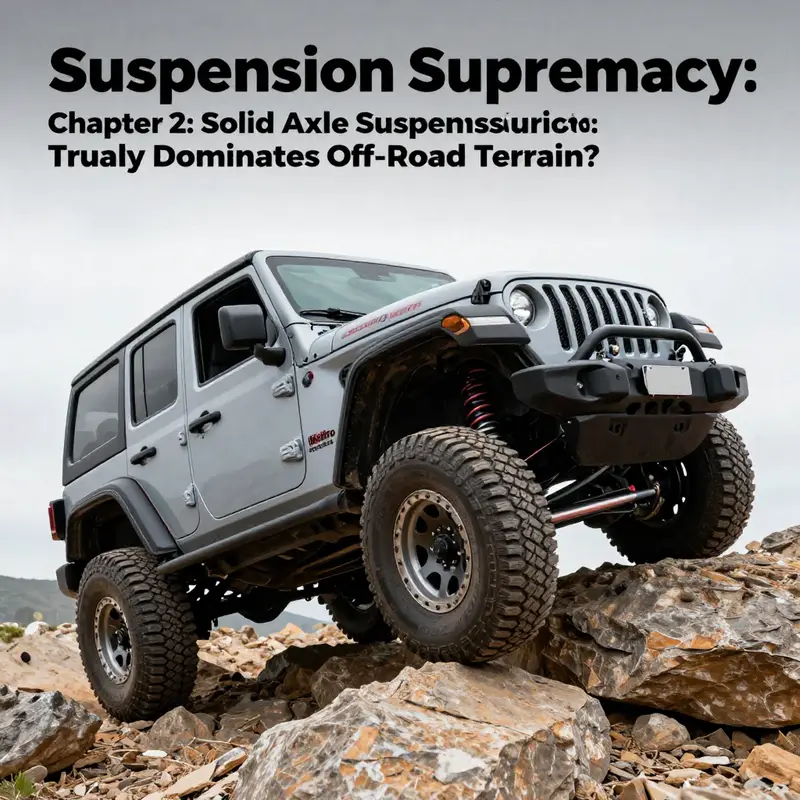
In considering this chapter as part of a broader inquiry—the search for the best suspension system for off-road driving—the LG1519 offers a lens through which to evaluate how far a suspension can be pushed when mission requirements demand both high payload capability and reliable traction. It also prompts a comparison with alternative architectures. The Jeep Wrangler’s solid-axle arrangement is celebrated for its rugged durability and superior articulation, enabling the wheels to independently negotiate obstacles while maintaining overall vehicle stability. This design is less about even weight distribution and more about keeping all four wheels powered and in contact with the ground as obstacles loom. It thrives in environments where rock crawling and mud weaving are daily tasks. The Bilstein HOSS 2.0 system, with its adaptive damping and nitrogen-charged shocks, represents a different end of the spectrum—an emphasis on damping control and ride stability at speed over complex terrain. It is a philosophy of intelligent reactiveness: detect the terrain, adjust the damper to optimize wheel control, and reduce body roll without sacrificing wheel travel. The Ford Bronco Wildtrak’s approach shows how a modern sport-utility platform can blend rugged mechanicals with refined, adjustable suspension to balance on- and off-road behavior across a broader envelope of use. Then there is BYD’s Cloud Platform-P suspension on the Yangwang U8, which embodies active hydraulic control and four-wheel linkage with a synchronized range of ground-clearance adjustments, reaching up to ±200 millimeters. This is a tech-forward, highly adaptive system that prioritizes cross-terrain capability and obstacle negotiation through dynamic geometry and precise control. In essence, the spectrum from shared-axle resilience to active hydraulic adaptation illustrates the breadth of off-road suspension engineering. Each design answers a distinct operational problem, and each has a different ideal use case. The Mercedes-Benz LG1519, with its shared rear suspension, offers a blueprint for stability under heavy payloads in challenging environments where maximum ground contact and predictable behavior under load are mission-critical. The emphasis is on distributing forces through a robust, unified structure rather than splitting them across independent, highly flexible components. The result is a system that can absorb large shocks, maintain traction across a wide range of terrains, and deliver controlled handling in situations that would torpedo a lighter, less purpose-built platform.
This discussion would be incomplete without acknowledging the role of other architectural choices in shaping off-road performance. A solid-beam axle, as celebrated in certain veteran off-road platforms, excels in durability and predictable articulation at low speeds. It is less forgiving than a sophisticated multi-link system on rough, fast traverses, but it has earned its reputation for reliability and straightforward maintenance. The adaptive damping architectures—such as Bilstein’s HOSS 2.0—initiate a dialogue between active control and passive robustness. They demonstrate that the modern off-road vehicle is as much about intelligent management of dynamic forces as about the raw mechanical capacity of a spring or a damper. The Yangwang U8’s cloud-enabled suspension shows the cutting edge of how electronics and hydraulics can converge to tailor a vehicle’s ground clearance, servoed by road conditions and driver intent. It invites consideration of how far suspension technology can go in a world where terrain is unpredictable and mission requirements are unforgiving. If we return to the core question of this chapter—what makes a suspension the best for off-road driving—the LG1519 invites a particular framework. It emphasizes stability under load, even weight distribution, and the reliability to perform in extreme environments where payload and terrain would otherwise collide. It is a reminder that the “best” suspension is not a single feature but an alignment of architecture, mission, and the driver’s ability to harness the vehicle’s capabilities. For readers who want to explore the deeper mechanics behind rugged diesel platforms, a practical resource is available via an in-depth guide: Mastering Diesel Mechanics: Your Step-by-Step Path to Success. This article can illuminate how mechanical discipline, maintenance, and understanding of suspensions complement one another in field operations.
In closing this examination of the LG1519 and its exceptional off-road suspension, the broader takeaway is not simply that a special suspension exists, but that there is a philosophy of suspension design best suited to specific mission profiles. If your priority is to carry heavy loads across the roughest trails while preserving control and preventing ground loss, a shared-axle approach may offer advantages that more common configurations cannot match. If your priority is pure articulation and modularity for steep obstacles at a lighter mass, a different architecture may serve you better. The off-road landscape is a catalog of problems; the suspended vehicle is the tool chosen to solve them. The Mercedes-Benz LG1519 demonstrates that innovation in suspension can translate directly into operational capability, turning a challenging terrain into a navigable route and turning the heavy payload into a manageable, controllable burden rather than an obstacle to progress. The chapter therefore invites a nuanced approach to selecting suspension systems: evaluate the terrain, payload, and mission duration; align them with the vehicle’s fundamental architecture; and then choose the suspension design that best translates capability into predictable performance. The LG1519’s dual-wheel, shared-axle concept is a reminder that in off-road engineering, sometimes the boldest, most unified approach yields the most reliable answers when the ground beneath you is anything but.
External resource for further reading on a closely related technology can be found here: Mercedes-Benz LG1519 Product Page.
null
null
Hydraulic Mastery: How Advanced Fluid-Control Suspensions Transform Off-Road Truck Performance
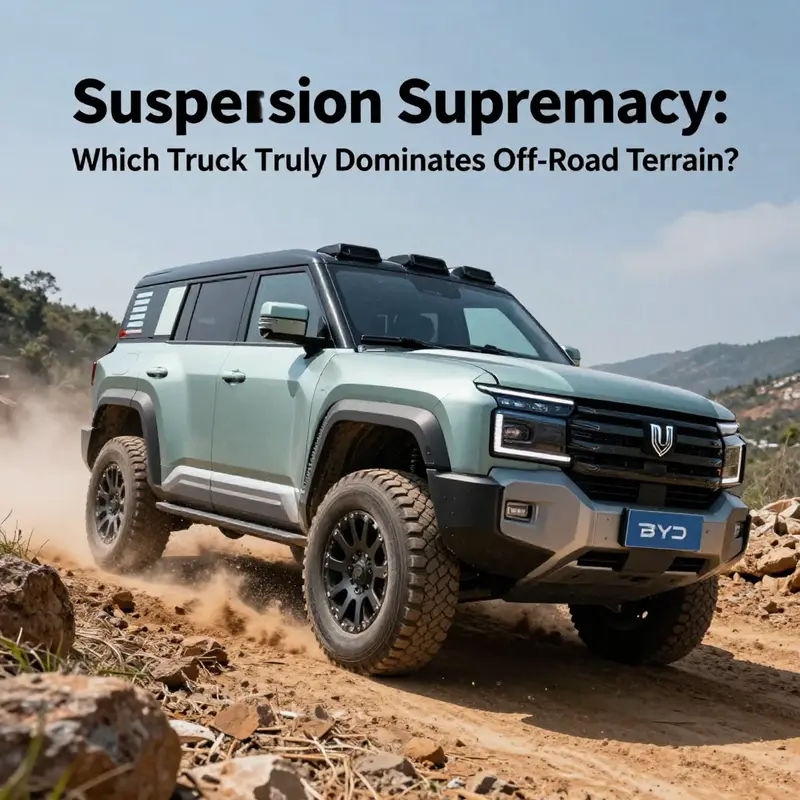
Modern off-road trucks increasingly rely on hydraulic suspension architectures to meet the extreme demands of rough terrain. These systems change how a vehicle negotiates obstacles, how it transfers loads, and how it keeps traction under unsteady conditions. Rather than a simple spring-and-shock arrangement, advanced hydraulic suspensions use controlled fluid flow to manage forces. They blend articulation, damping, and ride-height control into an integrated package. The result is a tangible improvement in stability, wheel contact, and chassis longevity when the truck is driven off-road.
At the core of a hydraulic suspension is an ability to move energy through fluid rather than through purely mechanical components. That energy transfer gives engineers a controllable medium. By shaping flow paths, sizing reservoirs, and calibrating valving, designers can tune responses that adapt to slow, large displacements and to fast, high-frequency impacts. These systems also allow for force isolation, which reduces unwanted stress on the frame and body. When a front wheel drops into a rut or climbs a rock, hydraulic control can prevent a sudden shock from propagating through the cab. This reduces driver fatigue and limits damage to cargo and fixtures.
One of the most important capabilities hydraulic suspensions bring is improved articulation while preserving damping control. Articulation—the ability of each wheel to follow the ground independently—matters most on uneven surfaces. Greater articulation keeps tires planted and optimizes traction. Traditional beam axles give excellent articulation through simple geometry, but they transmit more unsprung mass and stress. Independent suspensions reduce unsprung mass but can sacrifice travel and robustness. Hydraulic systems, however, can offer long travel and high articulation while maintaining controlled damping across the entire range. They do this by combining hydraulic links, accumulators, and variable orifice dampers. The suspension behaves compliantly when needed, and stiffly when required, without manual adjustment.
Designers use several hydraulic strategies. Passive hydraulic dampers rely on fixed valving and fluid dynamics. Semi-active systems vary damping through electronically controlled valves. Fully active systems use pumps and servovalves to inject or remove fluid energy actively. Each level brings trade-offs. Passive systems are robust and simple. Semi-active systems yield significant performance gains with moderate complexity. Active systems deliver the most control, but they also add weight, cost, and energy demands. The best choice depends on the truck’s mission. Vehicles destined for prolonged, remote operations often favor simpler, more reliable approaches. Units that serve specialized, extreme-duty roles may justify the complexity of fully active hydraulic control.
A key engineering advance that unlocks better hydraulic performance is sophisticated fluid modeling. Computational Fluid Dynamics, or CFD, allows engineers to simulate fluid behavior inside dampers and reservoirs. With CFD, designers can predict how fluid will pass through valves during rapid compression and rebound cycles. They can see where cavitation might occur and how heat will build up during extended use. Optimizing internal flow paths reduces inconsistent damping and helps maintain performance on long, harsh excursions. These insights are particularly valuable for heavy-duty applications, where repeated, high-energy impacts are routine. Rather than relying on trial-and-error prototypes, manufacturers can iterate virtually. The result is dampers that maintain predictable behavior across temperature ranges and duty cycles.
Hydraulic reservoirs and their external design also benefit from CFD-driven optimization. External reservoirs increase fluid volume and cooling capacity. They separate gas and fluid in a controlled manner, usually through a bladder or floating piston. CFD helps size and shape those reservoirs to enhance heat dissipation. Heat matters because hydraulic fluid changes viscosity as temperatures vary. Viscosity shifts alter valving characteristics and can create inconsistent damping. Managing thermal behavior preserves repeatable suspension dynamics. In extreme conditions—rocky climbs or long, rough descents—consistent damping keeps the chassis stable and predictable.
Active control techniques complement hydraulic tuning. Sensor arrays feed information about wheel position, body acceleration, steering input, and yaw rate to a control unit. The controller interprets this data and adjusts valve positions or pump outputs in real time. The result is a suspension that can stiffen for a high-speed desert run and soften instantly for a rocky descent. This dynamic behavior improves comfort and traction simultaneously. It also reduces the need for manual mode switching by the driver, allowing the system to respond faster than human reflexes. Algorithms prioritize conflicting goals—such as minimizing roll while maximizing wheel travel—based on the driving context. Adaptive strategies even allow for predictive adjustments, using navigation or camera inputs to precondition the suspension before an obstacle is encountered.
Hydraulic linkages that connect wheels through a four-corner system provide another level of capability. In a linked hydraulic network, movement at one wheel can influence pressure and stroke at another. This arrangement allows load redistribution without rigid mechanical ties. A front wheel that encounters a large bump can bleed fluid to the rear, stabilizing the chassis in a coordinated manner. Some architectures allow for independent height adjustment at each corner, enabling high and low ride-height modes. These systems improve obstacle negotiation by increasing ground clearance when needed and reducing center of gravity for on-road stability.
Ground clearance adjustability is a notable benefit for trucks operating across diverse terrain. Systems with significant, rapid height change allow vehicles to raise their belly for boulder fields and lower it for highway travel. The mechanical advantage is clear: more clearance reduces the risk of underbody impacts and allows for steeper approach and departure angles. Conversely, lowering the truck at speed improves aerodynamic performance and stability. Hydraulic platforms achieve this with precise control, often within millimeter-level accuracy. That precision allows for automated leveling, which helps maintain consistent headlight aim, bumper clearance, and towing geometry when the vehicle carries variable loads.
Another innovative configuration borrows concepts from tracked vehicles. In such designs, dual-wheel assemblies share a single suspension system across an axle segment. This approach spreads load across multiple contact patches while maintaining a single, coordinated damping response. On extremely uneven surfaces, the multi-wheel assembly reduces chassis moment loads and keeps traction at several points simultaneously. The shared hydraulic system ensures the assembly moves as a unit, which can prevent wheel hop and reduce stress on driveline components. This geometry is especially useful in applications where stability under heavy load and across irregular ground is prioritized.
Hydraulic suspension system reliability hinges on fluid cleanliness and component durability. Contaminants accelerate wear in valving and seals, which leads to unpredictable behavior and failures. Filtration and service intervals are therefore critical. Designers mitigate contamination by locating hydraulic reservoirs and filters in protected areas and by specifying service-friendly access. Seal technology and material selection also matter. Modern seals resist abrasion, swell, and thermal degradation. Together, these measures extend system life and reduce downtime for maintenance.
Durability extends to shock absorber internals as well. Nitrogen-charged and gas-pressurized designs help prevent aeration during rapid cycles. Aeration undermines damping by introducing compressible gas into fluid circuits. Keeping the hydraulic fluid properly pressurized and separated from gas reservoirs maintains consistent damping force. In addition, shock bodies often employ hard-anodized finishes, and piston rods use high-strength coatings. These treatments resist stone chips, abrasions, and corrosion encountered off-road.
Weight and energy consumption represent trade-offs that influence system selection. Hydraulic components, pumps, and reservoirs add mass. Active hydraulic systems require energy to run pumps and control actuators. On a weight-sensitive truck, designers must balance added capability against payload penalty and fuel efficiency. In some cases, the efficiency cost is offset by performance gains. For example, improved traction reduces wheel spin and can lower fuel consumption in certain off-road conditions. Additionally, intelligent control can temporarily isolate pumps when passive operation suffices. The net energy impact depends on duty cycle and terrain.
Integration with other vehicle systems amplifies the benefits of advanced hydraulics. Electronic traction control, stability management, and powertrain calibration all interact with suspension behavior. When these systems share data, the truck can make coordinated decisions. For instance, lowering gear ratios while the suspension softens helps a wheel climb a boulder without breaking traction. Conversely, raising damping while the vehicle reduces throttle can stabilize the chassis during high-speed cornering. Seamless integration requires a common software framework and robust communication channels. It also demands that engineers anticipate failure modes. Redundancies and safe-fallback behaviors ensure the truck remains controllable even if part of the hydraulic network stops responding.
Real-world deployments of advanced hydraulic suspensions reveal the contexts where they excel. In steep, rocky terrain, the ability to keep multiple tires planted determines forward momentum. In deep mud, dynamic damping prevents the truck from rocking free of traction. In prolonged cross-country travel, thermal stability in the hydraulic network avoids progressive performance loss. Military and heavy commercial applications often favor hydraulic systems because they combine load-bearing capability with tunable ride characteristics. For emergency response or utility tasks, hydraulic suspensions also improve equipment reliability when vehicles must traverse rough routes to reach a site.
Maintenance protocols for hydraulic suspensions differ from those of conventional systems. Regular fluid analysis, filter replacement, and seal inspections are vital. Preventative measures include scheduled reservoir flushing and contamination monitoring. Operators should also pay attention to software updates for semi-active and active controllers. Calibration changes or algorithm improvements can alter system performance significantly. In remote service environments, designers often provide simplified manual modes that allow the vehicle to operate safely with minimum hydraulic support. These modes trade some performance for increased reliability when maintenance support is unavailable.
Beyond performance and reliability, hydraulics influence vehicle design choices. Chassis architecture must account for the placement of pumps, accumulators, and reservoirs. Mounting points and protection plates shield components from debris. Fuel and cooling systems may require upgrades to handle new heat loads. Designers must also consider repairability in the field. Quick-disconnect fittings, modular valve blocks, and accessible sampling ports simplify diagnostics and part swaps. For fleets, ease of service translates directly into uptime and lifecycle cost advantages.
When evaluating what suspension best suits an off-road truck, consider mission profile first. Long-distance, mixed-terrain travel benefits from adaptable, thermally stable hydraulic dampers. Short, heavy-load operations that prioritize stability and high payload tolerance may prefer linked hydraulic setups that spread loads across multiple wheels. If simplicity and proven reliability are paramount, passive hydraulic solutions provide a robust compromise. For situations demanding the highest performance envelope, active hydraulic control gives unparalleled adjustability and ride management—at a higher cost and complexity.
Finally, the evolution of hydraulic suspension design follows a clear path. Improved simulation tools allow earlier optimization. Better materials and sealing technologies extend service intervals. Smarter controls reduce driver workload and enhance safety. As these trends continue, hydraulic suspensions will become lighter, more efficient, and more capable. They will close the gap between the robustness of traditional axle designs and the fine control of active independent systems. For anyone comparing off-road trucks, understanding hydraulic technology is essential. It reveals how modern suspension systems can deliver traction, control, and durability across the most demanding routes.
For those seeking deeper technical detail on how CFD modeling reshapes hydraulic damper design, the following study provides comprehensive analysis and results: https://link.springer.com/article/10.1007/s11665-024-10099-z
Additional reading on the intersection of heavy machinery and electrification can be useful for broader context on vehicle hydraulics and electrified powertrains. See this industry perspective on electric construction equipment developments for related insights: Volvo electric construction equipment revolution.
Final thoughts
In the realm of off-road driving, selecting the right truck could very well be the difference between a thrilling adventure and a frustrating setback. The Mercedes-Benz LG1519 stands out with tank-inspired durability and a unique dual-wheel suspension, perfect for tackling extreme conditions. Meanwhile, the Jeep Wrangler delivers unmatched articulation with its solid axle suspension, making deep ruts and steep climbs effortlessly manageable. Finally, advanced technologies like BYD’s Cloud Platform-P suspension signify a bold step forward, adapting dynamically to each challenge thrown at it. As you consider which truck embodies the pinnacle of off-road suspension systems, reflect on the terrain you most desire to conquer and know that there’s an ideal machine waiting to be unleashed.