

Taking your truck off-road is more than just a drive; it’s about embracing the thrill of adventure, testing your vehicle’s limits, and reveling in the raw beauty of nature. From rocky terrains in the United States to the sunburnt Outback of Australia, there’s a world full of challenges waiting for you and your truck. This comprehensive guide dives into the most exhilarating off-road locations around the globe, equipping you with the knowledge to gear up for your next adventure. Each chapter focuses on unique terrains, local insights, and tips to ensure a safe and unforgettable experience wherever you decide to go.
Trailbound Across America: Off-Road Destinations That Put Your Truck to the Test
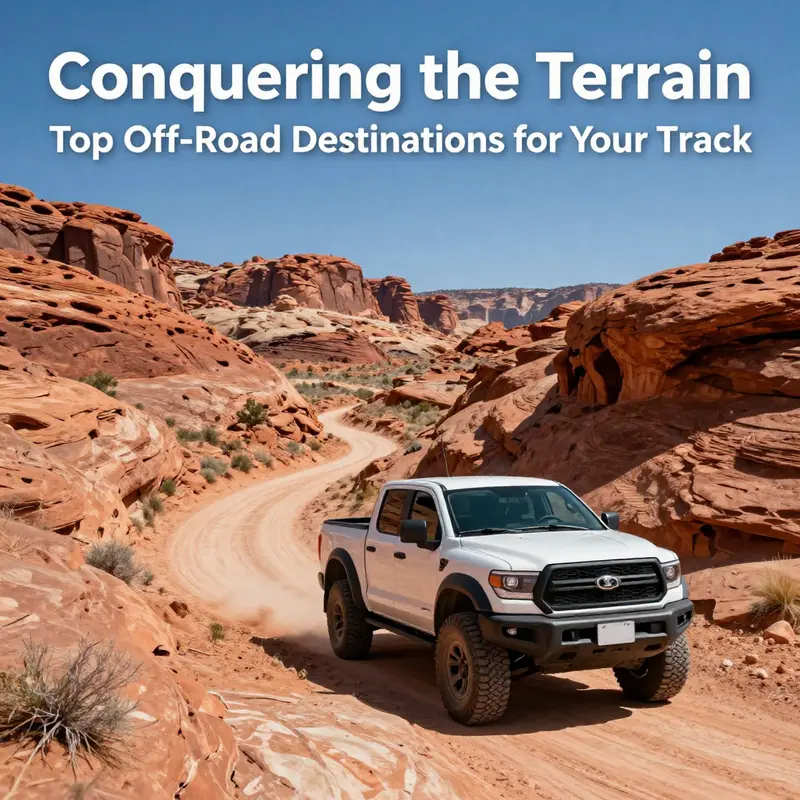
If you’re drawn to the feel of wind on your down-filled jacket, the rumble of a properly tuned engine, and the way a landscape seems to rise and fall with your tires, then a map of the United States becomes a living invitation to take your truck off the pavement. The country presents a spectrum of terrain that tests different parts of a vehicle and a driver’s senses—slickrock that skims the truck’s undercarriage, desert flats that demand steady throttle control and tire choice, forest roads where visibility and patience are the co-pilots, and alpine passes that punish hesitation with loose rock, switchbacks, and thin air. The question is not merely where to go, but how your truck and you can align with the trail’s rhythm, respecting the land while pushing into a zone that feels earned rather than gifted. The best destinations are less about bragging rights and more about the story you bring back—the memory of a line you picked through a boulder field, the sound of a cooling system easing after a long climb, the scent of pine and desert sage that lingers long after you fold the trail map and settle into camp for the night.
America’s off-road playgrounds range from high-altitude routes to expansive dune fields, each with its own lore and its own set of responsibilities. Imogene Pass in Colorado is a perfect example of a climb that feels more like a conversation with the mountains than a race against the clock. It threads its way through the Rocky Mountains to reach elevations well above three thousand meters, where the air thins, switchbacks tighten, and the scenery shifts as if a painter had dashed in a fresh palette of blues and greens just for this route. Vehicles need four-wheel drive and generous ground clearance because the grade can shove a driver into a spot where precision matters more than bravado. In late summer, the pass shines with alpine meadows, while in winter the scenery can become a white theater, with snow turning the road into a careful, measured challenge. For context on conditions and access, local agencies maintain updated trail information that is worth checking as the seasons turn.
A short drive south brings you to Johnson Valley, a vast expanse of desert rock, sand dunes, and washes that seem to go on forever. The desert offers a different language to learn: here, traction is a conversation between tire tread, air pressure, and the shifting surface. Johnson Valley has long been a hub for four-wheel-drive enthusiasts, with designated routes and multiple access points that give beginners a backbone of guidance and experienced drivers a playground for technique. The climate is relentless, the sun a constant, and the rewards come in the form of quiet horizons and the rare thrill of negotiating a line through a wash where rocks gather like a scattered set of teeth waiting to be navigated. The land is public, so obey the rules about staying on established tracks, and carry what you need for emergencies because cell service tends to retreat under the heat of the day and the monotone of distant ridges.
No chapter of off-road driving in the United States would feel complete without the Rubicon Trail, a Sierra Nevada legend that has tested vehicles for decades. Rubicon is more than a trail; it is a rite of passage for trucks that boast serious clearance and a willingness to accept the risk that comes with large obstacles and deep ruts. It asks for more than a high-performance engine; it asks for a setup that can handle the stress of big boulders, deep mud holes, and steep ascents that reward careful line selection and slow, deliberate progress. Vehicles that arrive on the Rubicon with the right gear and the right mindset tend to leave with a memory of a moment when momentum yielded to technique and patience proved itself to be the strongest tool on the trail. The official resources behind the Rubicon emphasize safety, preparation, and a respect for the landscape that keeps this trail a living legend rather than a reckless dare.
Crossing to Utah and the canyon country, Bryce Canyon’s environs offer a different kind of off-road experience. The park itself protects a set of striking red rock formations that seem to glow as light shifts across the hood of a truck. What matters here is not only the thrill of carving along dirt roads but the discipline to check park regulations and permits where required. You’ll find that some routes within and around Bryce Canyon are suited for adventurous drivers who want to glimpse into the backcountry without venturing far from the comforts of a well-prepared vehicle. It’s a reminder that the romance of exploration must stay tethered to a framework of rules designed to protect the delicate ecosystems that make these landscapes so compelling.
Arizona’s Saguaro National Park offers a contrasting desert ambiance near Tucson, where saguaro cacti punctuate the skyline and rocky washes thread through rugged rises. The opportunities here are not to be mistaken for a breakneck dash across a dune field; they are a chance to experience the Sonoran Desert’s quiet drama. Unpaved roads open up to remote corners of the park, where you can carry a sense of solitude and observe the flora and fauna that thrive in harsh conditions. It’s a reminder that off-roading at a respectful pace can reveal subtler forms of beauty—an ocotillo bouquet along the horizon, the sudden shadow of a hawk across a granite ledge, or the quiet chorus of wind through a stand of creosote. Again, the emphasis is on mindful travel, preparedness, and a readiness to turn back when the landscape asks it of you.
In Michigan’s Upper Peninsula, Silver Lake Dunes present a wildly different landscape: long, rolling dunes that meet the edge of a freshwater lake. The sensation of driving a capable truck through shifting sand feels almost prehistoric, as if the dunes themselves are a living lesson in momentum and traction management. This environment invites a degree of technique that can be learned in a circle of friends who have practiced tire pressure adjustments and dune entry and exit angles. The lake’s presence also reminds drivers to watch for soft edges and to respect the park rules that govern dune riding and camping. The rewards include a sense of scale—watching the shoreline recede as you carve a line into boot-soft sand—and memories of a sunset that paints the dunes in gold and orange while the water remains a quiet mirror behind you.
The grand spectacle of the American West continues with the backcountry corridors of Grand Canyon National Park. Some routes within the park are restricted, and others offer backcountry access for experienced off-roaders who prepare for challenging grades and the possibility of rugged conditions. The canyon’s immense perspective reframes risk; it teaches that vastness plus a careful plan can coexist with a moment of awe at a distant side canyon or a far-off vista that only a few headlights reach after dark. Before you head toward North Kaibab or any backcountry road, verify current road conditions, permit requirements, and the compatibility of your route with the season. The park’s management pages and ranger stations provide essential guidance that helps ensure that your adventure remains exhilarating without crossing into unsafe territory.
Colorado also offers Pikes Peak and surrounding forest routes, which blend forest service trails with nearby rugged terrain. This region invites the driver to consider altitude, weather shifts, and the delicate dance of keeping engines cool as temperatures drop and climb. The surrounding forests hide traction challenges and the potential for wildlife encounters, so a patient rhythm and careful tire choice become a driver’s best tools. The lesson here is that even near famous destinations, the road can demand a different skill set on a given day, and your truck must be ready to adapt—whether that means planning a longer approach to a climb, or stepping back when the slope stiffens and the rock becomes unpredictable.
The Black Hills of South Dakota present another texture of off-road exploration. Forest service roads thread around granite outcrops, through groves of pines, and along ridges that offer view after view after view. It’s a landscape that invites slow progress, a habit of scanning the terrain ahead, and a willingness to turn down a side road if the angle becomes too aggressive or the surface too loose. In this environment, a well-equipped vehicle—one with sturdy recovery gear and a reliable communication plan—helps a driver stay in control when the forest closes in and the path narrows. The experience rewards those who treat the land as a partner—one that gives you a story to tell at the end of the day if you remember to stop and listen to the wind and the quiet rustle of leaves.
Oklahoma’s Red River Gorge rounds out this national tapestry with towering sandstone cliffs and dense woodlands that form a different kind of labyrinth. It’s a reminder that off-road driving can be as much about steering through a narrow corridor as it is about mastering a desert dune or conquering a rock garden. The sandstone can present slippery moments, the trails may require precise line choice, and a driver who respects the environment will find the experience enormously rewarding. The Red River Gorge area creates a sense of discovery that resonates with any traveler who has sought out a path that’s both scenic and technically demanding, a reminder that the United States offers multiple geographies that reward patient, prepared driving.
As a reader moves from one landscape to another, the common thread remains clear: preparation is not a checkmark but a practice. Check local regulations before you head out, obtain any required permits, and respect protected areas and private property. Make your truck ready for the journey with a solid lift or sufficient ground clearance, appropriate tires, and a winch or recovery gear as a contingency rather than a display of bravado. Pack water, food, a first-aid kit, a map, a reliable communication device, and a basic repair kit. The goal is not to conquer a trail at all costs but to honor the stewardship that makes these places accessible to adventurous drivers. In practice, this means choosing routes that match your skill and your truck’s capabilities, stepping back when conditions demand, and praising the landscape with responsible travel rather than reckless bravura.
For readers who want to deepen their mechanical confidence before they head into harsher terrain, there is a path you can follow that translates well to remote outposts and backcountry roads. Mastering Diesel Mechanics: Your Step-by-Step Path to Success offers a structured approach to understanding the systems you rely on when the highway ends and the trail begins. It’s a way to translate caution into competence, so that you can enjoy the rugged beauty of the United States while knowing precisely what your truck can and cannot do under pressure. And as you gather the memory of a successful climb, a difficult traverse, or a silent sunrise after a long day on the trail, remember that the landscape is generous to those who prepare with respect and patience.
As you chart your next off-road itinerary, you’ll find the maps of these destinations interwoven with practical truths: the terrain dictates the pace, the climate dictates the gear, and the driver’s mindset determines whether the experience is memorable for the right reasons. The country’s diverse settings—from the high alpine passes of Colorado to the wind-swept dunes of Michigan, from the red-rock amphitheaters of Utah to the shadowed corridors of the Grand Canyon—invite you to read the land with humility and curiosity. If you’re new to off-roading, consider starting on trails with well-defined routes and gradually increasing difficulty as your comfort grows. If you’re more experienced, use these places to refine your line choices, tire pressures, and recovery plans. Either way, each drive becomes part of a larger conversation about how humans interact with a landscape that is both inviting and unpredictable.
External resource: https://rubicontrail.org
Canada Off-Roading: A Trucker’s Guide to Alberta Backcountry and Beyond
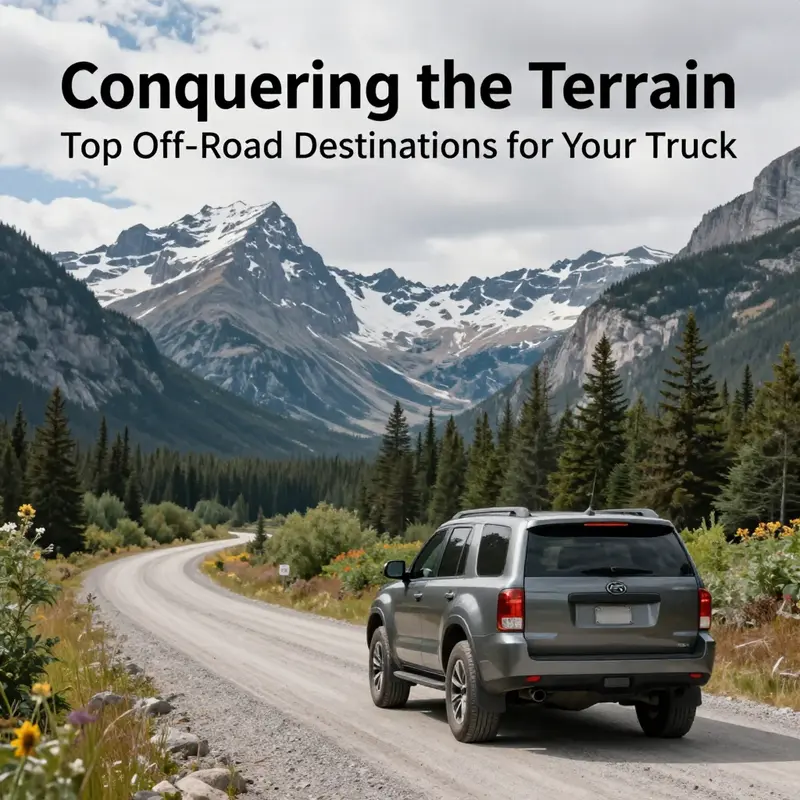
Canada’s vast wilderness isn’t a single destination; it’s a mosaic of landscapes that invite a sturdy truck to carve a path through pine forests, along wind-swept ridgelines, and across sun-baked plains. For the adventurous driver, the country offers a spectrum of off-road experiences that begin in Alberta’s shadowed foothills and extend toward the rugged edges of the prairies, the boreal stretches, and beyond. The appeal isn’t only the thrill of the approach; it’s the chance to slow down and read the land—the way the terrain changes under a boot-slogged tire, how rock layers reveal themselves on a switchback, and how weather can rewrite a route in a single afternoon. If you’re learning where to take your truck off road, Canada presents a thoughtful blend of challenges and rewards that reward preparation, respect for the land, and a willingness to adapt on the fly.*
Canada’s seasonal character shapes every trail, and Alberta is often the gateway for many off-road journeys. The province’s backcountry delivers a concentrated education in terrain: granite outcrops peering from beneath a mantle of lichen, scree that can spill under a vehicle’s weight on a steep descent, and forests that hide the roughness of a forgotten track. Among the most frequented routes is Tunnel Mountain Drive, a route that rewards pilots of four-wheel drive with sweeping views of the surrounding valley and a collage of obstacles that test line choice and momentum rather than brute speed. It’s a place where a driver learns how a vehicle’s approach angle, tire setup, and clearance interact with the stone-and-soil mixture that makes up the corridor you’re navigating. For many, this first exposure to real off-roading in Canada isn’t merely an afternoon ride; it’s a measure of how your truck performs when tasks shift from asphalt predictability to variable ground and uncertain traction.
Along with these viewing platforms and vantage points comes another classic Alberta experience—the more technical and longer Iron Horse Trail. It’s a corridor that invites a careful pace, encourages precise steering, and prompts a driver to align engine torque with the texture of the land. The trails around Banff National Park present a different flavor altogether. They’re not just about testing endurance; they’re about integrating the beauty of the landscape with responsible driving. The more rugged segments weave through rock-strewn approaches offering dramatic panoramas of alpine terrain. They demand that a driver respect the lines between public access and fragile ecosystems, and they reward prudence with a sense of accomplishment that only comes from moving through a landscape that has stood for millennia in the face of changing weather and human footfall. The contrast between the open, dusty corridors of the plains and the pinched, rocky curves of mountain passes creates a rhythm: a dance where speed is but a footnote to traction, balance, and the geometry of the vehicle you’ve chosen for exploration.
Guided experiences in Canada offer a bridge between ambition and safety. For first-time off-roaders and returning veterans alike, a guided opportunity introduces essential context—local knowledge about terrain, wildlife, and seasonal conditions—and an experienced guide who can tailor the pace to your skill level. These experiences emphasize the synergy between man, machine, and map. They provide more than a route; they deliver a framework for reading the land—how rock, clay, and sand respond under load, how moisture in the soil can transform a trail from firm to slippery, and how to recover gracefully if the trail you’ve chosen proves more challenging than anticipated. The guidance is practical: pre-trip briefings that cover safety protocols, gear checks, and the sequence of actions if something goes wrong. It’s also ecological: guides discuss local flora and fauna, the importance of staying on established tracks, and the reasons why certain seasons demand restraint to protect fragile habitats. The value of a guided option becomes clear as you learn to translate a map’s contour lines into real-world decisions—when to pick a safer alternative, when to pause and reassess the line, and how to maintain momentum without compromising control or safety.
Preparation remains the heartbeat of any Canadian off-road journey. Vehicle readiness is a conversation you have with your truck before you ever leave the driveway. Clearance matters because Canada’s backcountry is not uniform; it’s a patchwork of rock slabs, root-biered ruts, and occasionally abrupt drop-offs. You want ample clearance to avoid scraping undercarriage components and to maintain respect for the ground under your cutoff tires. Tire pressure becomes a dynamic tool, not a static setting. A slightly lower pressure broadens the footprint to increase surface area on soft soils, but you’ll need to find the balance that protects sidewalls on rocky segments while maintaining predictable steering response on uneven ground. The suspension system deserves scrutiny as well: if you’re hitting rough sections, you want dampers and springs that can absorb energy without transmitting every tremor to the cab. The aim is not to conquer every obstacle in a single pass but to maintain a consistent rhythm that keeps momentum up while preserving control and preventing damage.
Outside the mechanical heart of the journey, the soul of it rests in readiness. A vehicle is only one part of the equation; the other is the crew and the gear you carry. An emergency kit becomes a daily companion on backcountry runs. You need a reliable communication device since distant regions can strip away cellphone signal, and you should carry a robust navigation plan. A detailed map or GPS presence should be paired with a pre-dawn briefing with your travel party about rendezvous points and contingencies. A basic but crucial component is traction aids and recovery gear—snatch straps, a robust tow rope, a high-lift or floor jack, and a method to self-rescue should you encounter a wheel-bogging bog or a sudden washout. Environmental awareness is equally vital. Wildlife encounters, sudden weather shifts, and changing trail conditions can alter the best-laid plans. You learn to read the season’s handwriting on the landscape: spring runs high with wet, heavy soils that mobilize when you least expect it; autumn brings cooler air and slippery surfaces; winter scours the land with ice and snow, changing a straightforward path into a treacherous corridor. All of this demands a flexible mindset and a willingness to adjust plans based on real-time observations and shared local knowledge.
Regulations and trail conditions shape where you can roam. Canada’s public lands are a landscape of protected areas, seasonal closures, and variable access rules. In Alberta, the official channels—parks authorities and provincial resources—provide the latest guidance on where and when off-road driving is permitted. This is not merely a formality; it’s a discipline of stewardship. You respect designated routes, stay on established tracks, and adapt plans when conditions shift. Trail conditions can shift rapidly with weather, especially after a long winter or during spring thaws. It’s prudent to verify current conditions before you depart, recognizing that access may tighten as wildlife seasons begin or as environmental protections limit human footprint in sensitive zones. The broader lesson is simple: responsible off-roading is a practice of ongoing learning—about the terrain you’re traversing, about weather patterns, and about the communities and ecosystems that share this space with you. The more you learn, the more you can enjoy the route without compromising your safety or the land’s vitality.
As you plan, you’ll notice a recurring pattern: the best Canadian routes aren’t the ones that offer the most dramatic stunts but the ones that teach you to align vehicle, terrain, and weather with a conservation-minded approach. The practical method is to start with accessible routes that provide a variety of terrain while you grow comfortable with the vehicle’s behavior in different ground conditions, then gradually add more challenging sections as your confidence and your truck’s capabilities expand. It’s a calculus of risk and reward where the reward is the sense of place—mountain air, the hush of a forest track, and the memory of a far-off horizon seen through a windshield speckled with dust and sunlight.
For those who crave more than self-guided exploration, the option of a guided program becomes appealing. A well-structured tour can help you calibrate your own technique and understand the regional peculiarities of Alberta’s patches of wilderness. The experience translates into practical takeaways—how to pace a descent on a rocky grade, how to select lines that respect the land while preserving momentum, and how to communicate effectively with your guide and fellow participants to keep everyone safe and informed. You leave with more than a route; you leave with a mental map of how to approach each new section you encounter on future trips. It’s easy to underestimate how a well-chosen route, paired with thoughtful preparation and a respect for local conditions, multiplies the enjoyment you derive from off-roading. The land gives you the stage; your truck, your skill, and your planning provide the performance.
As you circle back to your local park or provincial recreation area, you’ll carry forward a philosophy of travel that blends curiosity with caution. You know that off-roading in Canada is as much about the relationship with the land as it is about the challenge of the terrain. And you understand that the right route—whether through Alberta’s backcountry or toward more distant corridors—begins with accurate planning, reliable gear, and a willingness to adapt when the road asks for it. If your aim is to cultivate a voyage that is thrilling but mindful, then the Canadian backcountry can become a classroom, with your truck as the student and the landscape the teacher. In this way, every expedition isn’t merely a drive but a dialogue, a chance to listen to the land and respond with skill, care, and an eye for the enduring values of responsible exploration.
For readers seeking actionable, land-specific information, Alberta Parks remains a trusted starting point for current trail details and safety requirements. Explore the official resources to verify trails, closures, and regulations before you head out. To deepen your knowledge on vehicle maintenance and mechanical readiness, a practical reference worth consulting is the diesel mechanics guide that covers the essentials you’ll need to keep a high-clearance vehicle in steady service through rugged Canadian terrain. Mastering Diesel Mechanics offers a grounded foundation to help you stay ahead of potential issues and to keep your truck dependable when the road becomes a remote teacher. For more practical route-planning and field-readiness, you can also review the broader ecosystem of mapping and trail resources that help you locate the right corridor for your skill level and your truck’s capabilities. In the end, your Canadian off-road journey is as much about the preparation you bring to the trail as the route you finally choose, and the satisfaction of moving through wildland with a truck that travels with you rather than against you.
External resource: Alberta Parks—https://www.albertaparks.ca
null
null
Trailbound Across Europe: A Driver’s Guide to Off-Roading Your Truck
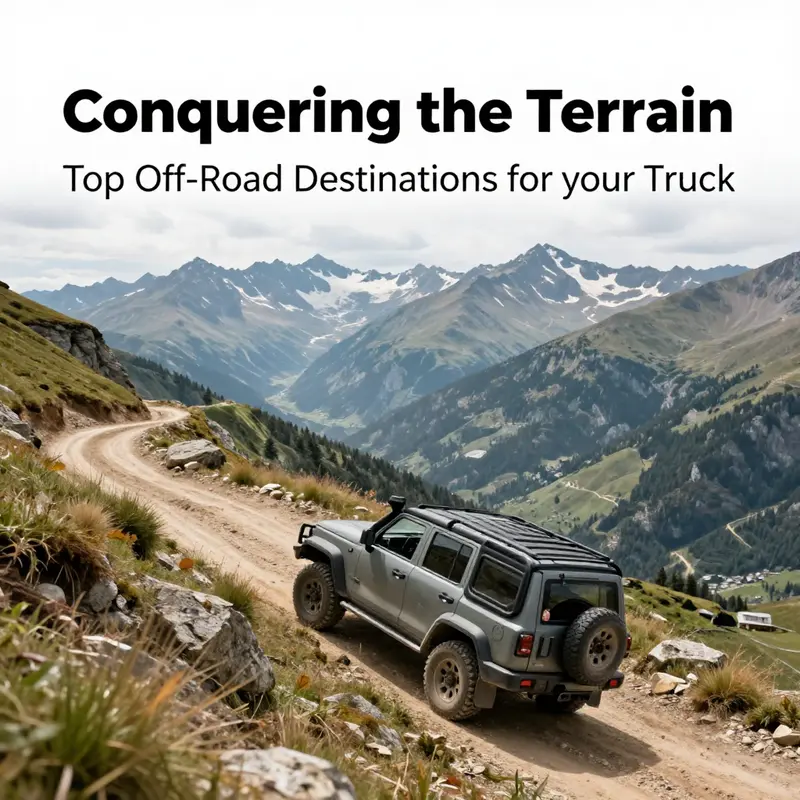
The lure of Europe’s varied terrains calls to a certain kind of driver—the one who wants the feel of a long gravel sweep turning into a rocky ascent, the moment when tires bite into dirt and the horizon suddenly widens. Off-roading here isn’t just about pushing a truck through mud; it’s about reading a continent’s diverse geographies and choosing routes that reward careful planning, solid driving, and respect for the land. In this chapter, the European landscape unfolds as a living map—Alps that demand precise line choice, forest trails that test traction and patience, and remote coastlines where weather can redraw a day’s plans in minutes. To venture responsibly, you need a blend of preparation, adaptable technique, and a clear understanding of local regulations. The point isn’t to conquer every trail, but to understand how to find the routes that suit your truck, your skill, and your sense of adventure.
Europe’s terrains present a spectrum of challenges. The Alpine ranges, shared by several countries, offer steep gradients and technical rock faces where steep ascents and descents reveal the limits of a vehicle’s approach angles and brake control. Beyond the Alps lie the Pyrenees, where narrow dirt roads cut through high passes and alternating alpine meadows with scree shoulders demand careful tire placement and constant surveillance of traction. In the north, dense Scandinavian forests cloak old logging roads in shade and mud, where drainage ditches and root systems create rhythm and risk in equal measure. The Iberian Peninsula adds another flavor, with limestone outcrops, sudden switchbacks, and coastal backroads where wind can push the truck toward the edge of an embankment. The west-to-east sweep across central Europe adds limestone quarries, gravel byways, and river crossings that often require a patient, methodical approach. These aren’t places you jaywalk into with confidence alone; they reward a disciplined plan and a truck that can handle the cadence of remote driving.
A core part of that preparation is recognizing what your vehicle can handle and what it cannot. A truck built for off-road use in these settings benefits from ample ground clearance to clear rocks and ruts, four-wheel drive to maintain traction on loose surfaces, and a suspension that can absorb the impact of rough tracks without rattling itself apart. Good tires with appropriate tread for mixed conditions—loose gravel, mud, and damp dirt—are essential, as are recovery points and a basic, sturdy set of tools that can handle common field issues like a stuck tire or a fender-bender. In the mountains, you’ll obtain traction through careful throttle control and a deliberate approach to line selection. The rule of thumb is simple: anticipate what lies ahead, maintain smooth inputs, and avoid sudden wheel spin that can carve a rut and invite a withdrawal from the trail. If you’re driving solo, having a plan to communicate with external help, a robust means of signaling in areas with poor cell coverage, and a reliable, regionally appropriate recovery kit can transform a risky situation into a manageable one.
Even with thorough trip planning, maintenance knowledge becomes a quiet backbone of European off-roading. A well-prepared driver understands the basics of engine and drivetrain health, especially if you’re venturing into more remote belts where assistance is hours away. Diesel-powered engines, common in sturdier trucks, benefit from a solid grounding in their unique maintenance needs: fuel systems in hilly terrain, proper cooling during long climbs, and a sense of when an overheating signal is more serious than a momentary spike. To reinforce this point and provide practical, in-depth guidance, consider building your knowledge with reliable, step-by-step instruction on diesel mechanics. It’s the kind of insight that’s as valuable on a remote highland pass as it is in a city street corner. mastering-diesel-mechanics-your-step-by-step-path-to-success offers a structured path to understanding, from diagnosing a rough idle to addressing an unexpected loss of power. The objective isn’t to become a mechanic in a hurry, but to recognize when something is off and to perform safe, controlled checks before continuing. This awareness reduces the risk of getting stranded in a region with few services and can help you stay within the bounds of responsible off-roading.
As you move through Europe’s environments, regulations and environmental stewardship become more prominent in the driver’s mind. Protected areas and nature reserves can impose restrictions on where you can drive, and these rules are often underpinned by solid environmental goals: preserving sensitive habitats, safeguarding wildlife corridors, and maintaining pristine catchment zones. Even on public lands that permit vehicle access, there can be seasonal restrictions or limitations during certain hours of the day. It’s essential to research ahead of time and to carry documentation that shows you’re traveling through permitted corridors. Insurance deserves special attention as well; many standard policies exclude off-road activity or require riders to observe certain safety practices. Knowing the boundaries before you depart saves you from legal headaches and unnecessary risk, and it helps you plan a route that respects both land managers and local communities.
Planning in Europe benefits from a blend of official maps and community wisdom. The continent offers a wealth of publicly accessible routes, but the best experiences often come from joining online communities that share first-hand knowledge about current conditions, permission requirements, and what to expect on specific trails. Digital tools can be your compass here. Trail-guiding platforms can reveal where a route starts, its elevation profile, and the level of technical demand. They also enable you to screen out overly difficult tracks that exceed your comfort or vehicle capabilities. Using these resources with a disciplined, safety-first mindset helps ensure that you select routes that match your skill level and your truck’s configuration while preserving the landscapes you’ve come to explore. The idea is to align your route with both your competence and your vehicle’s limits, rather than pushing beyond what you can safely manage.
In the planning phase, it’s worth examining the broader ecosystem of information that supports responsible off-roading. For instance, the European Outdoor Confederation provides guidelines and maps that can illuminate sustainable access across the continent and highlight conservation efforts that are key to enjoying off-road adventures without compromising sensitive habitats. Such resources help riders stay current on permitted routes and seasonal restrictions, which can shift with weather patterns and ecological concerns. When you combine official guidance with the local knowledge you pick up from regional forums and user groups, you end up with a more complete picture of where to go, how to get there, and how to move through a landscape with respect and care. If you’re curious about practical planning tools, many off-road enthusiasts rely on a mix of filterable trail maps and community reviews to gauge the difficulty of a route before you commit.
The practical steps of getting ready begin with a mindset: treat each day on a European trail as a conversation with the land. Before you head out, confirm the weather forecast and consider how rain can morph forest trails into slick, gnarly stretches that demand precise throttle control and tire management. In alpine areas, snow and ice can linger on high passes well into late spring or early summer; a cautious, staged approach to ascent and descent reduces risk. If you encounter a section that looks beyond your truck’s capability, the best decision is often to turn back rather than risk damage or a hazardous situation. You don’t need to attack every ridge; you need to respect your limits and the terrain’s generosity.
You’ll benefit from a simple, repeatable trip planning rhythm. Start with a clear route choice based on maps and current feedback from other drivers. Confirm whether you’ll cross any protected areas or wind through zones with special access rules. Then check the equipment you’ll rely on most: lights for dusk driving, a robust communication device in case coverage is spotty, a first-aid kit, a spare tire, and a compact air compressor for on-trail adjustments. It’s surprising how often a small tire inflator becomes a lifeline when you’re navigating loose gravel or soft, sticky soil that’s common on European byways. A well-rounded kit also includes recovery gear such as a winch or traction mats, depending on your plan’s risk assessment. Even if you don’t carry heavy recovery gear, a compact shovel and a sturdy high-lift jack can make the difference between a difficult delay and a smooth continuation.
In practice, you’ll find that the best experience emerges from a balance between independence and humility. Drive with a buddy when possible; a second vehicle acts as a safety net and a mobile link to the outside world if something goes wrong. When traveling solo, you’ll want to prearrange check-in timings and have a clear plan for seeking help. Communicate your expectations with someone back home who can track your progress and respond if you miss a scheduled update. Those steps are not signs of paranoia but demonstrations of respect for your own safety and for the people who care about you.
The routes you choose will be shaped by where you are and what you’re prepared to handle. If you’re starting near the Alps, you might favor a mixed route that includes forest tracks and some alpine gravel where the view rewards a patient approach. If you’re in the Pyrenees region, a longer, smoother pass with safer line choices can be a prudent start, gradually introducing sections that test your climbing and braking on loose dirt. In Scandinavia, the challenge often comes from damp, root-strewn floors and the understated grip of clay after rain—conditions that require smooth throttle input and careful steering without abrupt corrections. Across these landscapes, the joy of off-roading grows from the dance between the truck’s capability and the environment’s demands. You learn to read the terrain, coast through a rocky patch with momentum and patience, and then ease into a long, scenic descent that reveals the continent’s quiet, rugged beauty. Those moments carry with them a quiet lesson: responsible off-roading is as much about restraint as it is about ambition.
As you continue your European journeys, keep your future routes in mind while staying grounded in today’s realities. The continent’s public lands are generous but finite, and the etiquette you bring on the trail matters as much as your mechanical readiness. By leaning on established planning apps, by cross-referencing official guidelines, and by weaving in the practical knowledge gained from field-tested manuals and the on-trail experience of other drivers, you can craft a habit of exploring that respects both the land and the people who steward it. The day you learn to pair your truck’s strengths with the terrain’s demands is the day you become not just a passenger on a trail, but a thoughtful participant in Europe’s broader story of outdoor mobility.
To deepen your understanding of the mechanical side of keeping a heavy vehicle in motion on remote European tracks, consider the resource mentioned earlier. It provides a structured, approachable path to mastering diesel mechanics, a skill set that translates directly to field reliability and safer travel in rugged environments. mastering-diesel-mechanics-your-step-by-step-path-to-success
For readers who want a broader, governance-informed perspective on sustainable outdoor access across Europe, broader official guidelines and maps can be found at the European Outdoor Confederation. This resource helps illuminate permitted routes and conservation-focused practices that support responsible off-roading across the continent, ensuring that future generations can enjoy these landscapes as you do. See European Outdoor Confederation for further context and planning considerations.
Choosing the Right Trail for Your Truck: A Practical, Serene Approach to Off-Road Destination Selection
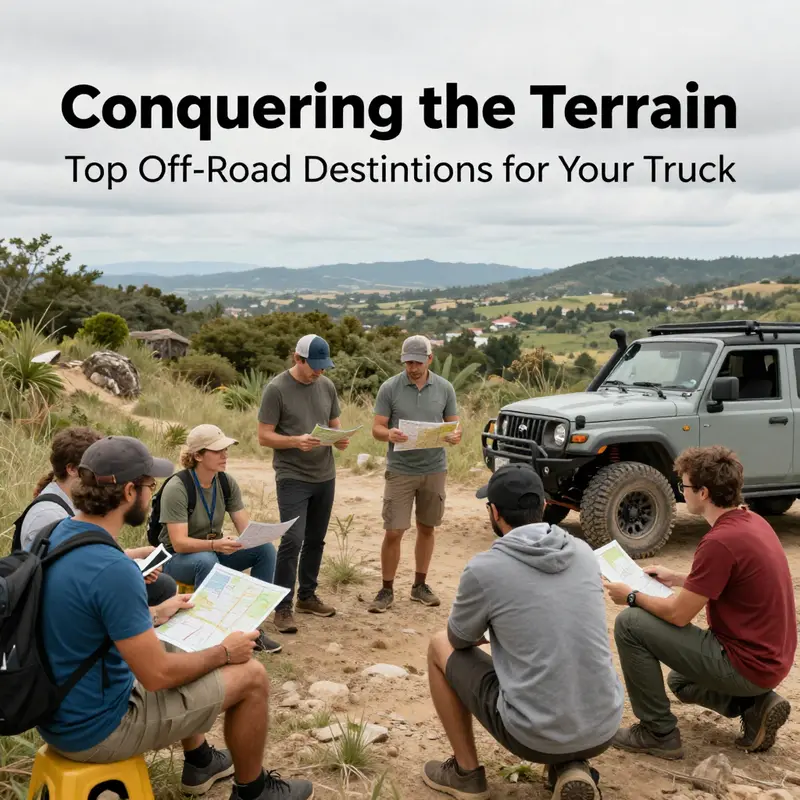
When a driver buys a pickup with the intention of exploring beyond pavement, the biggest decision isn’t which hill to conquer first. It’s choosing the right place to go. The ideal off‑road destination feels like a dialogue between machine and landscape—a place where terrain, weather, and the truck’s capabilities align to create a ride that teaches as much as it thrills. The goal is to match ambition with realism, to begin with a plan that respects limits while inviting curiosity. In practical terms, that means picking routes where ground is firm, traction is predictable, and there is room to maneuver without forcing an uncertain line. It means starting with a destination that offers a sense of achievement without overwhelming you or your vehicle. This approach reduces the risk of tire spin, body hangups, or a moment where momentum can turn into an unplanned recovery. A measured start, paired with clear expectations, turns a first trip into a learning experience instead of a setback.
Terrain becomes the compass that guides the day. You want surfaces that reward patient inputs more than heroic speed. Wide, flat, open spaces with firm ground give you grip and a way to measure your truck against the landscape. Slopes that require careful line choice, deep ruts that threaten traction, mud that clings to tires, or soft dunes that slide away from you are all valid playgrounds—but only if you’ve built the experience, equipment, and backups to handle them. The safest starting point resembles a graded road or a designated trail where the soil holds steady even after a few passes. The problem with extreme terrain isn’t just the risk of getting stuck; it’s the danger of misreading a line and finding yourself with limited options. Even seasoned drivers favor terrain with predictable traction and clear escape routes, where obstacles become a test of judgment rather than a crisis to manage. In short, the terrain sets the tone for the day, so choose wisely, and let the landscape teach you patience and precision.
Beyond the ground beneath the tires, your truck’s heart—tires, clearance, and suspension—defines how far you can responsibly travel into the wild. Tires are more than rubber; they’re the primary interface with traction. All‑terrain or mud‑terrain tires provide different blends of bite and self-cleaning capability, and choosing the right compound for the terrain you expect makes the difference between confident progress and constant fuss. Ground clearance matters because a low undercarriage meets rocks sooner than you’d plan. A stiffer, well‑tuned suspension helps you maintain stance over undulations, reduces the chance of bottoming out, and keeps the vehicle predictable through washouts and ruts. Weight distribution also plays a crucial role, especially if you carry gear or a trailer. A heavy load can alter handling on uneven ground, so consider how the payload shifts your center of gravity and how that changes steering feel and braking performance. If you’re building a kit or outfitting a truck for off‑road use, think about the sum of components—tires, suspension travel, ground clearance, and the rigidity of mounting points—because the combination will dictate the routes you can enjoy with confidence, not just the routes you can survive.
To plan well, you must pair the terrain and the truck with a careful itinerary and up‑to‑date conditions. Before you leave, map the area with tools that offer elevation profiles and real‑time reports on track status, weather, and potential hazards. Look for official or designated off‑road routes or parks that have established paths designed for vehicle traffic. Local regulations matter as much as the route itself; many public lands prohibit driving outside of defined areas or impose seasonal restrictions that change with weather and conservation needs. Weather is a constant variable in off‑road planning. Rain can transform a gravel road into a quagmire, wind can obscure visibility with dust, and temperature shifts can alter tire behavior and the firmness of a surface. Elevation changes deliver climbing demands and cooling needs; descents test braking and control. A thoughtful plan considers all these factors and leaves room for a contingency—an alternate trail or a planned return to a familiar pullout where you can reassess.
As you chart a course, keep your driving approach anchored in safety and awareness. Slow and steady is not just a saying; it’s a discipline that preserves momentum you can manage and the ability to recover if you misread a patch of slick mud or a hidden rock. Smooth throttle input and deliberate steering help maintain traction, and if your vehicle offers differential locking or traction aids, use them only when you sense slipping, not as a crutch for bad line choice. Stay focused on decisions ahead rather than fretting over what’s behind you. Remember that your pace is a choice, not a punishment; speed should never be the excuse for taking a risk you can’t undo. When you encounter obstacles, walk the line in your mind first and then test slowly with small, controlled movements. The goal is to keep wheels in contact with the surface and avoid sudden shifts that could unsettle the truck’s balance. In addition to the mechanical side, cultivate the mental rhythm of off‑roading: anticipate what lies beyond the next crest, read the ground as a living map, and adjust your plan as conditions evolve.
Safety and environmental stewardship are inseparable from the actual driving. You don’t own the landscape just because you’re driving through it. You’re borrowing a fragile ecosystem, and the most responsible choice is to stay on designated paths, to respect private property boundaries, and to minimize your footprint. Pack out what you bring in, and leave nothing but tire tracks and a refreshed sense of place. Be mindful of others on the trail—pedestrians, cyclists, livestock, and other drivers all deserve space and consideration. If you must navigate around someone, slow down, err on the side of caution, and communicate with a brief horn or a polite signal, depending on the context and local custom. Carry a compact but capable emergency kit, including a spare tire, jack, basic tools, a first‑aid kit, water, and food. A charged phone or satellite communicator, where available, ensures you can call for help if the situation exceeds your readiness. The best off‑road day ends with a sense of responsibility intact: you’ve challenged yourself and your vehicle but not the world around you.
Choosing where to take your truck is a balance between curiosity and conservation, between capability and humility. Start with a route that aligns with your current skill level and gradually expand as you build confidence and precision. If you’re newer to off‑roading, seek a beginner‑friendly path that offers gentle gradients, stable traction, and ample room to turn around or retreat if needed. For those with more trail experience, you can venture into terrain that rewards planning, careful line selection, and the occasional hands‑on mechanical check—without losing sight of the weather, the route’s regulations, and the surrounding environment. The study of terrain, the fit of your truck, and the discipline of your driving craft together create a sustainable cadence: you push your boundaries just enough to learn, never so far that you break the day’s momentum or the vehicle’s reliability.
To connect this practical approach with broader resources, consider consulting vehicle‑specific maintenance guidance as you plan trips. For a deeper dive into how your engine and drivetrain respond to rough terrain, you can explore detailed maintenance guidance here: mastering-diesel-mechanics-your-step-by-step-path-to-success. This kind of knowledge supports safer decisions on tougher trails and helps you understand how your truck behaves when challenged by uneven surfaces, heat, and load shifts. And when you’re ready to extend your planning with live trail information, turn to trusted mapping and trail databases that aggregate user reports and conditions. For real‑time trail conditions and route ideas, a dependable external resource can be valuable: https://www.alltrails.com.
Final thoughts
Whether you are a seasoned off-roader or a budding adventurer eager to explore, the right destination can make all the difference. From the iconic trails of Moab to the hidden paths in Canada, the world is rich with opportunities for exhilarating off-road experiences. Embrace the terrain and the unique landscapes each location has to offer. Always remember to respect the land and drive responsibly, ensuring that this thrilling hobby can continue to be enjoyed for years to come.