
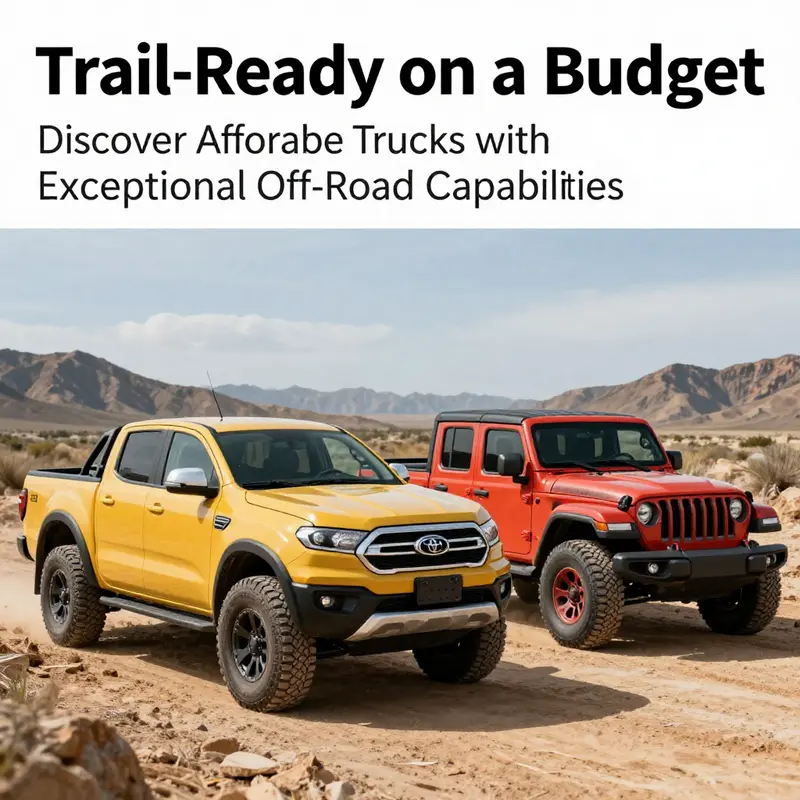
For adventurers and off-road enthusiasts, owning a capable truck enhances the thrill of tackling rugged terrains and exploring remote landscapes. However, the pursuit of off-road performance doesn’t have to come at an astronomical price. This guide explores budget-friendly trucks that provide robust off-road capabilities, making them ideal choices for outdoor enthusiasts and racers seeking reliable performance without straining their wallets. Within each chapter, we’ll delve into specific models—the 2024 Ford Ranger, the 2024 Toyota Tacoma TRD Pro, and the reliable used 2015–2019 Jeep Wrangler Unlimited—all curated to highlight features, advantages, and budget-friendliness. Additionally, we’ll draw on authoritative recommendations from Consumer Reports to bolster our insights, ensuring that adventurers can hit the trails with confidence, style, and durability.
Rugged Value on the Trail: How a Budget-Friendly Midsize Truck Delivers Real Off-Road Capability
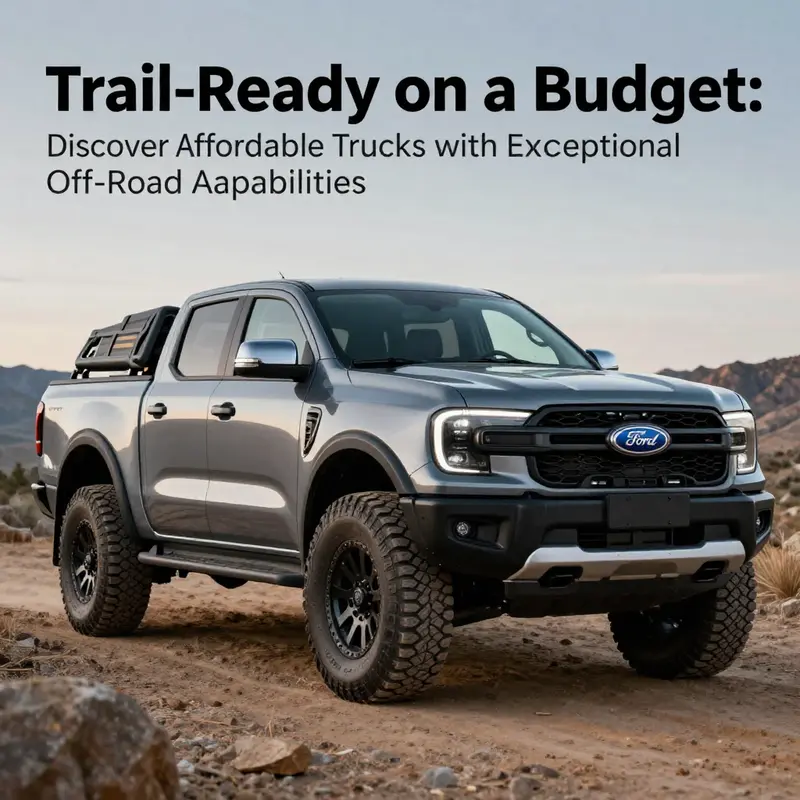
When a reader asks whether budget-friendly trucks can still offer genuine off-road capability, the answer lies in a careful look at numbers that matter on the trail, not just the sticker price. You want a truck that can take on rough terrain without punishing your budget, and you want reassurance that its underpinnings are built to endure. In this chapter, we focus on a model that has earned attention for balancing cost, durability, and trail readiness, while also examining the broader landscape of affordable options that can satisfy weekend explorers and practical daily drivers alike. The heart of this evaluation centers on a midsize pickup that has become a reference point for value-driven buyers: a vehicle engineered to blend everyday usability with credible off-road capability, and priced in a way that keeps haggling optional rather than essential. The story doesn’t stop with this single truck, however. It threads into a broader reality where established nameplates with long-running reputations for reliability offer compelling opportunities in trims that don’t require a lottery-winning budget to access off-road potential. In short, there is a spectrum of budget-friendly trucks that can deliver confidence when the road turns to gravel, mud, sand, or rocky terrain, and the core of this chapter unpacks what to look for, why certain decisions make sense, and how to weigh purchase options against your actual needs and planned adventures.
At the center of the discussion is a midsize pickup that has become a benchmark for value in this class. It is built on a global platform that emphasizes durability and capability, with engineering intent aimed squarely at rough roads and backcountry exploration rather than mere highway comfort. The four-wheel-drive system in this truck is not a mere badge; it is a thoughtfully integrated drivetrain with selectable drive modes that empower a driver to tailor performance to the terrain. Normal mode remains the friend of daily driving, conserving fuel and offering predictable handling on pavement. But when the surface shifts, the truck offers modes such as Mud/Ruts, Sand, Rock/Creek, and Tow/Haul, each dialing in throttle response, traction control, and shift characteristics to match the challenge. The practical benefit is not just a dry statistic; it is the driver’s confidence when facing a slick clay track after a night rain, a rutted gravel road that twists through unfamiliar countryside, or a coastline that demands careful throttle management over loose sand.
That confidence grows from a chassis that has been purpose-built to withstand the punishing demands of off-road testing. The truck’s frame design features robust rails and proven welds intended to resist the flex and fatigue of extreme terrain. Real-world validation matters, and in this case the vehicle underwent extensive evaluation that accumulated deep field knowledge over many kilometers driven in harsh environments. A rigorous testing regime, conducted on challenging proving grounds that resemble the most unforgiving backcountry routes, contributed to a level of assurance about durability that budget-conscious buyers crave. It isn’t just about how the truck behaves on a smooth road. It is about how the chassis holds up when the tires are churning through rough surfaces, when the air is thin over rocky ridges, and when the vehicle must haul gear and people with predictable stability. The result is a class of midsize trucks that deliver credible off-road ability without forcing a buyer into the top-tier trim dance that often arrives with premium prices.
Ground clearance is another critical attribute that quietly shapes the off-road experience. A generous amount of clearance prevents the undercarriage from meeting obstacles first and foremost, and it enhances approach and departure angles as the truck approaches a rocky ledge or a steep trail. Alongside clearance, the suspension architecture—designed to absorb bumps and maintain tire contact with uneven surfaces—helps sustain control when the trail throws a switchback or an abrupt washboard pattern at you. Coupled with a capable four-wheel-drive system, this combination translates into a machine that can handle the fundamentals of off-road travel without demanding a premium investment in aftermarket upgrades. It is not about conquering the most extreme rock-crawling routes; it is about maintaining steady progress on common backcountry trails and forest tracks where many buyers actually spend their time.
The practical features that accompany these capabilities are equally compelling. The truck’s rear bed, a critical space for gear, has been engineered with daily-use resilience in mind. A steel step integrated into the tailgate provides a durable, multi-cycle entry point for loading and unloading, a subtle but valuable feature for people who frequently climb in and out with muddy boots or heavy cargo. The tailgate itself is power-assisted and damped, reducing the effort required to raise or lower it, which matters when you are juggling equipment, cold weather gear, or a passenger who is helping unload. The rear bed liner uses a high-molecular-weight polyethylene compound that resists temperature extremes, allowing the liner to perform reliably from the depths of winter to the peak of summer’s heat. The material’s resilience matters when you place heavy, abrasive items in the bed, and it helps preserve the truck’s resale value by resisting scuffs and gouges that would otherwise require expensive repairs.
Versatility continues with cargo-management flexibility. Factory prepped anchor points—built to withstand repeated loading and unloading cycles—offer anchors for straps, cargo nets, and tie-downs that secure a wide range of loads. A 220V power outlet in or near the bed extends the truck’s utility beyond traditional cargo. Whether you are camping, tailgating, or field-working, that capability adds a practical layer of independence, allowing you to charge tools, operate a small appliance, or power lights without needing a portable generator. The tailgate itself doubles as a work surface when opened, turning the tailgate area into a functional workspace that simplifies tasks such as cutting, measuring, or organizing gear. All these features cumulatively reduce the friction of outdoor living and fieldwork, making the truck not just a vehicle but a flexible extension of the user’s lifestyle.
From a safety and technology standpoint, the package balances value with awareness. The truck includes an advanced safety suite that offers driver-assistance features such as lane-keeping assist, adaptive cruise control, and blind-spot monitoring. These systems alleviate fatigue and improve situational awareness on long highway drives and on less-than-perfect backroads. They are not a substitute for driver judgment, but they provide a level of confidence that is especially welcome for buyers who intend to use the vehicle for a mix of daily commuting and weekend exploration. The combination of proactive safety features and capable off-road hardware makes the vehicle a practical choice for buyers who want one truck to serve as both everyday transportation and a reliable partner for rougher terrain.
The cost angle is not incidental. The value proposition rests on delivering credible off-road performance at a price point that remains accessible to a broad group of buyers. This is not about chasing the most over-the-top gadgetry or the most aggressive styling; it is about practicality, reliability, and the confidence that comes with a vehicle whose engineering is tuned to perform when the pavement ends. The result is a compelling option for those who want to start exploring the backcountry without triggering sticker shock or the need to resort to a long financing strategy. In this context, the vehicle becomes a gateway to a lifestyle—the kind of vehicle that can be a daily driver during the week and a capable partner for weekend missions during the season’s peaks.
Beyond the limelight of the highlighted model, the broader landscape of budget-friendly off-road trucks includes other strong contenders that still deliver meaningful capability in lower trims or on used-market entries. A seasoned Tacoma in base trim, or near-base trims of some compact trucks, often carry the torch of reliability and high resale value. The Tacoma has earned a reputation for durability and a sturdy frame, attributes that tend to pay dividends when you plan to own the vehicle for many seasons and miles. While the most ambitious off-road packages can push the price upward, lower trims and older model years provide strong off-road potential with standard four-wheel drive and sufficient ground clearance, complemented by a proven drivetrain and a body-on-frame construction that is friendly to enthusiasts who value ruggedness over refined on-road manners. For buyers open to a used vehicle, a Jeep Wrangler Unlimited from a prior generation can offer exceptional off-road prowess, especially in the 4×4 configurations that prioritize traction and control on challenging trails. The Wrangler’s heritage, high ground clearance, and proven off-road architecture make it a compelling choice if you are patient in your search and ready to navigate the used market. A cautious buyer would still assess the vehicle’s overall condition, maintenance history, and potential battery or electronic concerns in the case of plug-in hybrid variants that may be present in some markets. The narrative here is not that any one model is universally superior but that there exists a viable spectrum of budget-friendly trucks that can deliver meaningful off-road capability for a wide range of adventures and budgets.
What this means for buyers is a practical framework for evaluating options. Start with the core off-road capabilities: four-wheel drive, ground clearance, approach and departure angles, and a suspension system that can absorb rough surfaces while maintaining tire contact. Then assess the drivetrain’s tunability: how well the selectable drive modes translate to real-world traction and throttle control, and whether the vehicle can remain composed as you adjust to different surfaces. Finally, weigh the practical features that add value in day-to-day life—the bed utility, the weather-ready materials, and the presence of safety systems that reduce risk on both paved and gravel roads. It is easy to default to the most capable vehicle, but the most satisfying choice for a budget buyer is often the one that balances off-road abilities with ownership costs, fuel economy, and ease of maintenance.
Among the broader considerations, the used-market option demands careful scrutiny. A late-model compact or midsize truck with a known off-road pedigree can provide a strong blend of capability and affordability. The Wrangler 4xe, for instance, becomes particularly appealing to those who want a plug-in hybrid approach to backcountry travel; while the upfront price can be higher, the ability to leverage electric torque on difficult terrain and to enjoy potential savings on fuel during urban trips may offset some of the initial cost. The Wrangler’s body-on-frame construction, high ground clearance, and standard off-road geometry contribute to a serious trail-ready profile, though it is essential to account for potential higher maintenance costs and the complexity of a hybrid system. Meanwhile, in the Toyota lineup, the Tacoma, even in its base configurations, has a reputation for reliability and strong resale value. The brand’s engineering philosophy emphasizes longevity and predictable performance, traits that matter when you are evaluating a vehicle as a long-term companion for both travel and rugged adventures.
In parallel with these model-specific considerations, it is helpful to anchor expectations to a broader, trusted source that evaluates affordability, off-road performance, and reliability across models. Consumer Reports has highlighted best trucks for off-roading in articles that weigh not only terrain-traversing ability but also the longer-term economics of ownership. This external evaluation helps buyers calibrate their expectations and reinforces that the most cost-effective choice can still deliver credible off-road competence when approached with a clear understanding of personal needs, maintenance realities, and planned usage. The guide emphasizes that budget-conscious buyers should prioritize proven drivetrains, durable frames, and realistic assessments of practical features that genuinely enhance the backcountry experience rather than chasing exotic add-ons that add little real-world value.
The end goal for a reader chasing budget-friendly off-road capability is simple in concept but nuanced in practice. It is about identifying a balance between capability and cost, choosing a vehicle that can take you onto forest trails, desert washes, and rocky fire roads without demanding a premium finance plan, and ensuring that the ownership experience remains reasonable in terms of maintenance, parts availability, and daily usability. The best option in your market may vary with incentives, local dealer deals, and the condition of the used market, but the throughline remains consistent: genuine off-road capability does not require top-tier pricing if you prioritize durability, a well-tuned suspension, and a drivetrain that has been proven on real-world trails.
In this sense, the path to finding budget-friendly off-road trucks resembles a careful hiking itinerary as opposed to a sprint for the summit. You start with a solid base—the frame, the four-wheel-drive system, and the endurance of the powertrain. You then layer in practical features that enhance day-to-day life, like bed utilities and safety technology, which transform a capable vehicle into a reliable partner for both weekday chores and weekend explorations. And you keep an eye on long-term value: resale potential, maintenance costs, and the ongoing reliability that turns a vehicle into more than just a purchase, but a dependable companion for many adventures to come. The result is a chapter in the larger story of budget-conscious, off-road capable trucks where value is not a compromise but a deliberate design principle. In the end, there are options that respect your budget while still delivering real off-road capability, and the 2024 midsize pickup discussed here serves as a compelling focal point for buyers who want to start their off-road journeys with confidence without breaking the bank.
External reference: https://www.consumerreports.org/cars/trucks/best-trucks-for-off-roading/
Budget-Friendly Off-Road Trucks: Real-World Value and the Tacoma TRD Pro
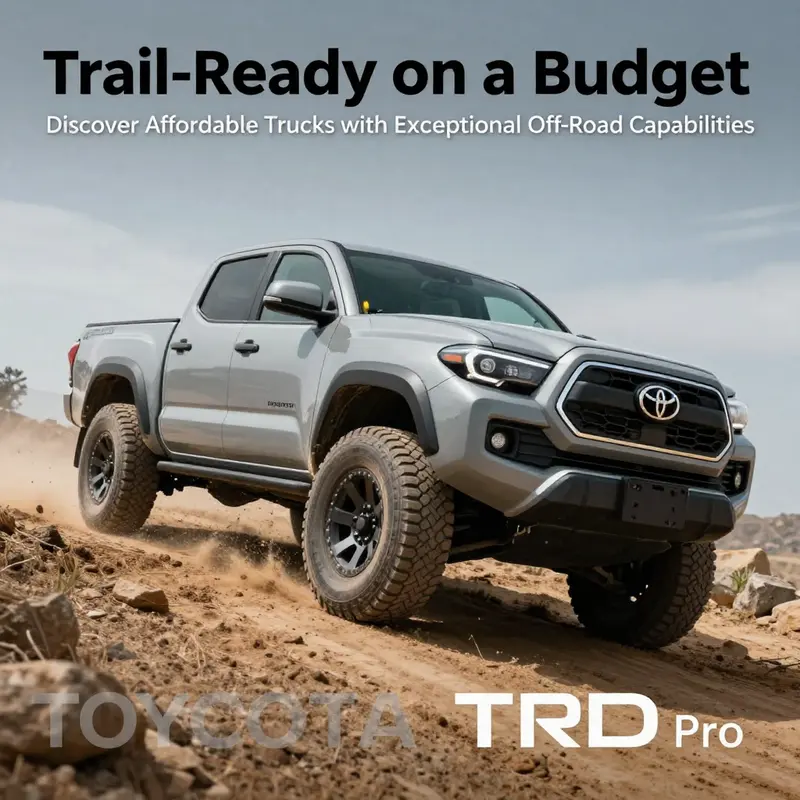
A concise exploration of how to choose off-road capability without paying for desert-runner pricing. Real value comes from a solid four-wheel-drive system, protective underbody hardware, capable tires, and durable chassis, not from a badge. The Tacoma TRD Pro is a benchmark of high-end capability, but many buyers can achieve credible off-road performance with budget-friendly new trims or solid used pickups. This chapter outlines practical criteria for evaluating budget-friendly options: drivetrain with low-range, adequate ground clearance, protective skid plates, reliable suspension, and a reasonable maintenance cost. It also discusses trade-offs, such as age or mileage when buying used, and the role of aftermarket support in tailoring a trail-ready package. By focusing on total cost of ownership and real-world terrain common to most adventures, you can enjoy meaningful off-road capability without overextending your wallet.
Trail-Ready on a Budget: The 2015–2019 Jeep Wrangler Unlimited Rubicon as a Smart Entry Point to Off-Road Capability
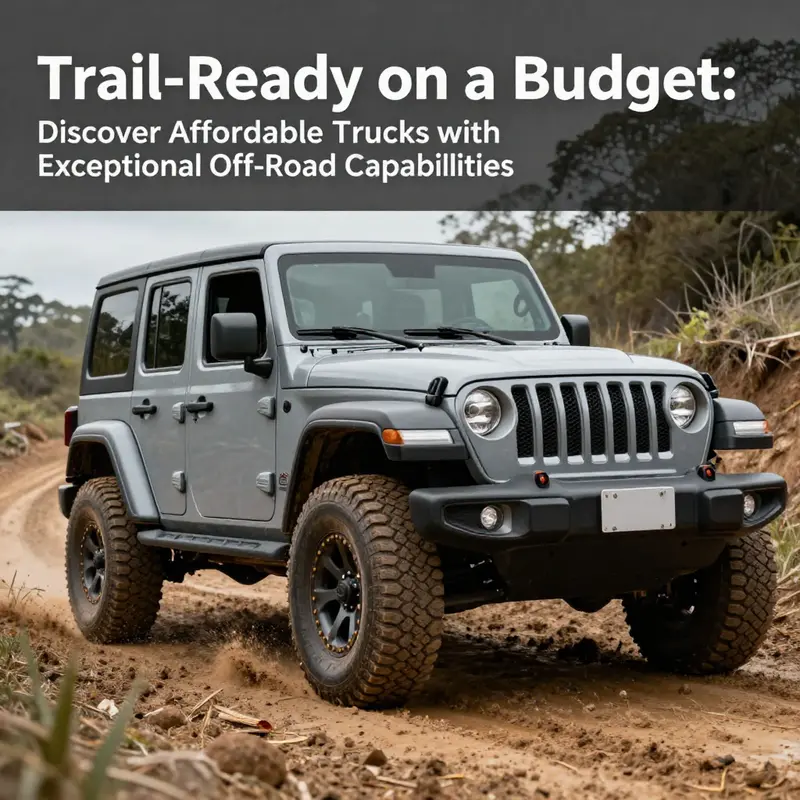
When people start exploring the idea of off-road capability on a budget, the Jeep Wrangler Unlimited Rubicon from the 2015–2019 era often rises to the top of the conversation. It isn’t just a vehicle; it’s a philosophy of rugged simplicity fused with proven off-road hardware. In the used-truck realm, this generation of Wrangler stands out because it delivers authentic trail prowess at a price point that makes serious exploration feel within reach again. The Rubicon isn’t the most comfortable daily driver in its class, nor is it the most polished, but it is one of the few options that can truly transform a mountain road into a playground and a desert wash into a proving ground. And for buyers who are watching every dollar, its value proposition becomes even more compelling when you consider what you get once you uncouple from the concept of pristine, showroom-new performance.
At the core of the Rubicon’s appeal is its factory-installed, purpose-built off-road engineering. The Rock-Trac 4×4 system is the centerpiece, pairing a 4:1 low-range gear ratio with a rugged transfer case that provides reliable crawling ability on rock faces and steep, loose terrain. This isn’t software-driven assist; it’s a true mechanical advantage that remains effective even when traction is scarce. The system, along with electro-mechanical locking differentials at both the front and rear axles, ensures maximum traction in the most challenging conditions. When the situation demands that one wheel bite is enough to move the other, the Rubicon’s locking diffs guarantee that power is directed where it’s most useful. It’s a set of capabilities more often associated with larger, more expensive rigs, but on the Rubicon they come standard, not as pricey add-ons.
The 3.6-liter Pentastar V6 engine under the hood is another piece of the Rubicon’s enduring appeal. Producing around 285 horsepower and a stout torque curve, it delivers enough headroom to keep the vehicle feeling confident on inclines and through rough, uneven terrain. In most years of this generation, it’s mated with an eight-speed automatic transmission whose ratios are well matched to the engine’s torque delivery. There are a few years when a six-speed manual was offered in some trims, but for most buyers, the automatic provides predictable, smooth shifts that help you focus on line choice and throttle control rather than gear selection. The engine’s reputation for durability and straightforward maintenance also works in favor of buyers looking for a long-term, budget-conscious ownership experience.
The Wrangler Unlimited’s underlying architecture—body-on-frame construction, solid axles, and a robust ladder-type frame—gives it a trail-ready resilience that many modern crossover-based off-roaders lack. It is a vehicle designed to absorb trail abuse while keeping components accessible enough for routine maintenance. That accessibility matters in the used market because it translates into easier, more affordable repairs and replacements when the need arises. Welded joints, tough mounts, and a simple, mechanical approach to four-wheel drive mean enthusiasts can address issues without chasing overly complex electronic gremlins. This combination of mechanical reliability and trail-ready capability makes the Rubicon a compelling case in the budget-off-roading category, especially when you compare the value it offers against a slate of newer, less capable, or more expensive rigs.
Price-wise, the used market for the 2015–2019 Wrangler Unlimited Rubicon typically sits well below the cost of newer Rubicons while still delivering a high threshhold of capability. It’s common to find well-kept examples in the mid-teens to low-$20,000s, depending on mileage, condition, and regional demand. For buyers who can accept the realities that come with owning an aging off-roader—such as potential rust around wheel wells or a few scuffs from trail duty—the Rubicon can be a gateway to serious off-road adventures without a heavy upfront financial commitment. The value proposition is easy to grasp: you’re buying into a platform that has earned a reputation for reliability and capability, then trading some modern luxuries for the satisfaction of a vehicle that truly climbs and crawls with purpose.
Of course, choosing any used vehicle demands a careful approach. In the Rubicon’s case, this means a photography-and-history-led inspection that verifies both cosmetic integrity and mechanical soundness. Rust is a genuine concern on older Wranglers, especially in open-frame configurations where road salt and moisture can accelerate corrosion in wheel wells, door sills, and undercarriage components. A qualified mechanic who understands Jeeps should inspect the frame, suspension mounts, and steering linkages for signs of fatigue or past impact. The interior can tell a story as well. The Rubicon’s removable doors and, often, a soft top, introduce wear patterns that differ from more conventional SUVs. Scratches, worn seals, or compromised top hardware can lead to water intrusion or wind noise that saps comfort on longer trips. Buyers should pay particular attention to the condition of the top seals, door hinges, and window tracks, as these can become costly fixes if neglected.
Maintenance history, too, plays a decisive role in the used market’s value. Jeeps of this era typically reward owners who stay on top of oil changes, fluid flushes, and timely repairs. The 3.6-liter engine, when properly cared for, is known for longevity, but the cost of ownership hinges on regular service and proactive component replacement as the vehicle ages. The eight-speed automatic, while generally robust, benefits from a documented service history that confirms the transmission has been serviced according to schedule. If a vehicle has evidence of abrupt driving cycles—lots of stop-and-go city duty without an occasional longer highway run—buyers should plan a closer look at the drivetrain’s health, especially the transfer case and axles, which bear the brunt of off-road use.
Beyond mechanicals, the Rubicon’s suspension system deserves a closer look. Bilstein shocks and heavy-duty components intended for off-road duty make the ride firmer than a typical street-focused SUV, but that firmness pays dividends on rock surfaces and uneven trails. When evaluating a used example, a test drive across varying surfaces—paved roads, rough gravel, and a small off-road section if possible—helps reveal how the suspension feels in action. Listen for clunks or squeaks around unsettled terrain, and pay attention to how the vehicle communicates through steering and throttle inputs as you navigate obstacles. A well-maintained Rubicon should feel composed rather than brittle, with suspension travel that remains controlled rather than harsh or uncontrolled.
The Rubicon’s equipment set comes with a clear philosophy: climb, crawl, and connect with the trail. The factory-mounted locking differentials and Rock-Trac system do most of the heavy lifting, but they also set expectations about how the vehicle behaves at the limit. It’s worth noting that while the Rubicon’s gear works brilliantly in low-speed crawling, it can require deliberate throttle management and line choice at higher speeds or on slippery, slick terrain. This is not a vehicle that hides in a corner while you watch a digital gauge; it rewards careful driver input and a willingness to learn the terrain you’re facing.
For buyers who want to understand the broader landscape of budget off-road options, the Rubicon’s value often sits in contrast to other compact pickups and compact SUVs that may offer four-wheel drive at lower prices but lack the Rubicon’s trail-centric hardware. The Rubicon’s Rock-Trac system and locking diffs are not common features in most budget-oriented off-road options, and that distinction helps explain why a used Rubicon can feel like a more capable purchase even when the sticker price is lower than that of a newer, less capable off-roader. It’s a reminder that capability is a function of design as much as the year it was produced, and in 2015–2019, the Rubicon was designed to deliver serious capability without requiring a six-figure investment later on.
As a budget-friendly doorway to genuine off-road adventure, the Wrangler Unlimited Rubicon also invites a broader conversation about what buyers want from a trail-ready vehicle. Some readers may crave modern conveniences—advanced driver-assistance features, refined ride quality, a quiet cabin—and these desires will push them toward newer models or different segments. But those who value trail confidence, ease of modification, and a platform with an established after-market ecosystem will find the 2015–2019 Rubicon to be a strong match. The vehicle’s core strengths—Rock-Trac 4×4 with 4:1 low range, front and rear electronic locking diffs, and a chassis built to withstand the punishments of rock crawling—create a compelling case for budget-minded buyers who want to break trail with purpose, not just with rhetoric.
In practice, the Rubicon’s value is enhanced when you approach purchasing as a process of discovery rather than a single snapshot. Look for a history that proves the vehicle has lived a life of balanced use—trail days interspersed with regular maintenance, not a fleet-dashed calendar of one-off adventures. This is the kind of vehicle that rewards an owner who treats it as a tool for exploration rather than a status symbol. It’s also the kind of vehicle that benefits from a modest investment in upgrades that can expand capability without transforming the car into a project car. Light, careful upgrades—such as tires tailored to the terrain you frequent, a modest removal of the soft top for summer play, or a mechanical check to ensure the Rock-Trac system and diffs remain responsive—can amplify the Rubicon’s already impressive off-road competence without erasing the budget-friendly nature that attracted you in the first place.
The broader article this chapter sits within continues to explore budget-truck options that give off-road capability without forcing a consumer to stretch finances beyond reasonable limits. In this context, the Jeep Wrangler Unlimited Rubicon of 2015–2019 offers a unique blend of authenticity, reliability, and trail-ready hardware that few competing used vehicles can match. It is not a one-size-fits-all answer; rather, it is a peerless option for readers who value legitimate off-road performance and a vehicle ecosystem that supports practical ownership. For those who want a platform with a storied off-road lineage, a generous aftermarket, and a price tag that respects the realities of a budget, the Rubicon in this era continues to be a persuasive choice.
If you’re actively researching listings, it helps to imagine the trail you want to conquer and then work backward from there. A well-preserved Rubicon in good condition can deliver the experience you expect on rock crossings and steep grades with a level of confidence that more modern, street-oriented SUVs struggle to emulate. The car’s lineage, its mechanical grit, and its proven track record in the field create a narrative that many buyers find compelling. In that sense, the 2015–2019 Wrangler Unlimited Rubicon isn’t just a used vehicle—it’s a pragmatic entry point into real off-road capability that respects a sensible budget while delivering the thrill of true trail performance. For anyone who wants to connect with the trail without extraneous expense, this is a compelling page in the ongoing story of budget-friendly off-road trucks that actually measure up when you point them at obstacles instead of at a showroom floor.
For readers who want to explore current listings and compare conditions, examples, and pricing across regions, a practical starting point is to browse a trusted marketplace that aggregates used Jeeps, ensuring you can gauge going prices, mileage ranges, and overall condition. As you evaluate trucks, bring a checklist that includes the body integrity, frame condition, drivetrain health, and a careful inspection of the top hardware and seals. The goal isn’t to find a flawless relic but to identify a well-maintained Rubicon that has been treated with respect and prepared to continue its trail-ready life with you.
External resource: For a direct look at available listings, you can browse Cars.com, which hosts numerous 2015–2019 Jeep Wrangler Unlimited Rubicons and can help you evaluate pricing, mileage, and regional availability. https://www.cars.com/vehicles/used-jeep-wrangler-unlimited-rubicon/
Rugged on a Budget: Finding Off-Road Cred in Affordable Trucks
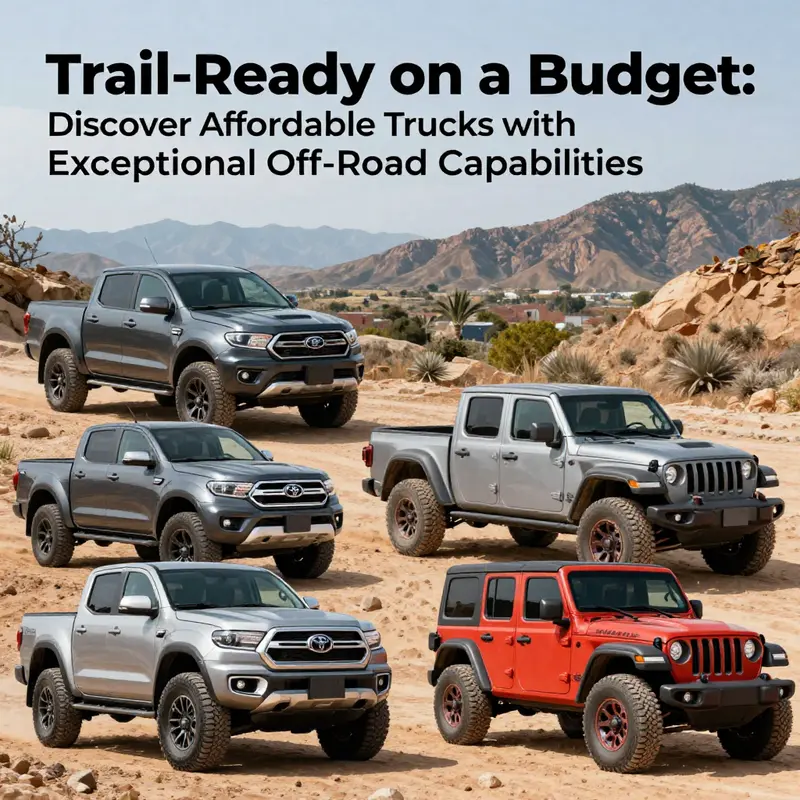
When people imagine an off-road capable truck, the mind often drifts toward saturated price tags, premium trims, and the sense that toughness must be bought rather than earned. Yet a growing segment of affordable pickups proves that rugged capability isn’t the sole province of top-tier models. In markets around the world, a handful of budget-friendly trucks deliver real off-road ability without demanding a fortune in exchange. This chapter follows that thread, weaving together durability, design choices, and real-world value to show how a practical buyer can blend adventure with financial sense.
At the heart of off-road prowess is a balance between design intent and execution. Affordability does not mean compromise on core capabilities; it means prioritizing the features that truly matter on rough terrain while avoiding bells and whistles that add cost without improving traction or durability. A successful budget-friendly off-roader tends to share a few guiding traits. First, a robust four-wheel-drive system is non-negotiable, but it can come in a few different flavors. Some trucks offer a true part-time four-wheel-drive setup with a transfer case that you can engage when the surface demands it. Others provide a full-time arrangement with selectable modes that optimize torque distribution for variable terrain. Either approach can be perfectly adequate for trails, provided the system is paired with a reliable transfer mechanism, a low-range option, and well-tuned stability control that doesn’t undercut traction when the going gets slick.
Second, ground clearance and approach/departure angles matter more than curb appeal in this segment. A generous ride height, a sturdy chassis, and thoughtful underbody protection allow a truck to clear obstacles without the driver’s heart rate spiking. Skid plates, durable bash plates, and reinforced suspension components aren’t glamorous, but they pay for themselves in the long run when rocky passes and gnarly ruts appear. Third, a sensible torque curve and a durable powertrain rotation can transform a budget truck from a road-going commuter into a trail-tested tool. Engines with a healthy low-end torque band paired with a confident transmission and a robust rear axle setup deliver the kind of predictable power delivery that keeps momentum on unforgiving trails.
These design choices echo what seasoned buyers look for in the real world. They also align with the verdicts of credible testing and review sources that weigh affordability alongside off-road capability and long-term reliability. A notable benchmark in this regard is Consumer Reports’ long-running evaluation of trucks for off-roading, which balances price, capability, and dependability. The takeaway from that body of work is not a single silver bullet; it is a pattern of value achievements. The best options in the budget category typically surface as a blend of strong chassis engineering, practical four-wheel-drive implementation, and a proven track record for keeping running costs manageable. The narrative isn’t simply about who can climb a rock garden, but about who can do so without turning everyday ownership into a second mortgage.
In the practical realm, buyers looking for budget off-road capability should ask themselves not only what they want to conquer on a weekend trail, but how the vehicle will wear over time when used as a daily driver and a light-duty workhorse. A capable four-wheel-drive system is essential for traversing muddy lanes, sand, or uneven gravel, but so is a suspension setup that can handle long stretches of rough pavement without transmitting every bump to the cabin. Some modern budget trucks lean on perimeter frames or ladder frames, with independent front suspension that favor comfort. Others rely on a sturdy solid front axle with a simpler, often more robust character. Each path has advantages: the former may feel more composed on-road and handle moderate terrain with composed stability, while the latter can soak up more abuse on gnarlier trails thanks to its straightforward geometry and easier field maintenance.
Alongside these hardware considerations, there is a practical conversation about packages and options. Higher-value packages frequently bundle skid plates, upgraded dampers, and hill-descent control or traction enhancements. The important point is not that every option is essential, but that the combination yields a credible off-road toolkit without inflating the sticker price. A thoughtful buyer can assemble a capable, economical setup by prioritizing four-wheel drive capability, increased ground clearance, protective hardware, and tires with an aggressive, yet sensible, tread pattern. Tires, after all, are the bridge between chassis capability and real-world performance. A capable all-terrain tire with balanced heat and wear characteristics can improve confidence and reduce the need for frequent tire changes across seasons.
Beyond tires and suspension, brake-proportioning and chassis rigidity influence how a vehicle behaves under load on challenging surfaces. Budget trucks that have earned a reputation for off-road reliability tend to feature reinforced frames or cross members, corrosion-resistant coatings, and predictable steering geometry. These elements aren’t flashy, but they are quiet workhorses that keep the vehicle responsive in changeable conditions. Buyers should also consider payload-to-tow ratings in light of their actual use. A truck that satisfies weekend trail ambitions but falls short on carrying capacity or towing needs can quickly become impractical for real-life jobs or extended trips. The most credible budget options, therefore, sit at a point where off-road competence and everyday practicality overlap.
A fair amount of this discussion circles back to reliability and ownership cost. The best budget picks combine repairability with low expected maintenance costs. That combination helps offset initial price gaps and reduces the long-term friction of owning a vehicle that sees rough terrain as part of its regular routine. The consumer voice, echoed in trusted outlets, underscores a practical truth: you don’t have to chase the highest peak to achieve meaningful off-road capability. You need a well-rounded package, a conservative budget for upkeep, and realistic expectations about what kind of terrain your adventures will involve most often.
The chapter’s focus on budget-friendly capability is not merely theoretical. Across markets, beginning-trim packages and older model years have become compelling bets for buyers who want to stay nimble without compromising adventure. In many places, a compact or midsize pickup that can be specified with four-wheel drive, decent clearance, and protective hardware can handle the majority of off-road tasks most enthusiasts face. This is not a call to discount premium engineering; it is a reminder that ruggedness is a function of design intent as much as price tag. A capable truck at a modest price can come from a company that has honed its platform for durability and serviceability, delivering a reliable aftercare network and a predictable maintenance cost profile.
On the used market, the story broadens further. Older generations of robust, body-on-frame platforms often show remarkable durability and can be found at a fraction of their original price. The appeal is twofold: the upfront cost is gentler, and many of these trucks are built to endure tough conditions with minimal complexity. The caveat is the usual: condition, mileage, and prior use. A thorough inspection is essential, and buyers should seek evidence of consistent maintenance, sound undercarriage components, and a healthy transmission and drivetrain. In this space, practical values emerge—vehicles with proven chassis geometry and transferable mechanical knowledge tend to age gracefully and retain usable resale value, which is a meaningful consideration for budget-conscious buyers who like to upgrade after a few seasons of adventure.
For readers contemplating the frontier of new, affordable options, the case for emerging-market models is nuanced. There are modern offerings from global brands that trade some on-road refinement for a broader price envelope and strong off-road bite. These options can be appealing, especially in regions where local service networks are strong and parts supply is reliable. The upside is a fresh warranty, modern electronics, and the promise of factory-backed support. The trade-off is that service networks and supply chains can differ from one country to another, so potential buyers should assess how easily they can sustain a vehicle that expects to see dirt roads, mud, and heat as part of its daily rhythm.
The value proposition that Consumer Reports helps illuminate turns on a simple calculus: affordability, capability, and reliability. In practice, that means seeking models that strike a disciplined balance rather than chasing every feature that sounds trail-ready. Buyers who walk this line tend to recognize a few essential signs: robust four-wheel-drive functionality with a proven track record, durable underbody protection, a suspension that can handle rough terrain without compromising daily comfort, and a drivetrain that is known for durability under real-world use. It is here that the category earns its credibility, not from a singular headline feature but from a coherent, repeatable performance package.
To illustrate how this translates into buying behavior, consider the journey of a shopper who wants weekend rock-crawling capability without sacrificing daily practicality. The shopper factors in a modest budget, checks for a solid frame and drivetrain, and looks for a package of protective hardware and practical tires. They understand that the most valuable edge is not the latest gadget but a drivetrain and suspension that work in concert with proven components to deliver traction, stability, and predictable control when the trail pitches or the surface changes unexpectedly. In other words, the off-road experience is as much about how a vehicle feels and responds as it is about raw horsepower or the ability to lock a differential. The result is a route to ownership that remains affordable over time while preserving the thrill of exploration.
For those who enjoy the nuance of reading about reliability and performance, a primer on the engineering fundamentals behind off-road capability can be illuminating. mastering-diesel-mechanics-your-step-by-step-path-to-success offers a practical lens on how robust powertrains contribute to long-term dependability in demanding environments. It helps demystify why a budget pickup with solid torque and a well-mated transmission can feel unexpectedly capable when the terrain turns tricky. The aim is not to mislead readers into assuming that any low-cost option will perform like a high-end trail machine, but to show that thoughtful packaging, tested components, and careful calibration can deliver credible capability at a fraction of the cost.
As the chapter winds toward its broader point, it becomes clear that the strongest budget-off-road stories are about smart choices rather than spectacular ones. A well-chosen entry in this space delivers a reliable four-wheel-drive experience, a chassis that can take the punishment of rough trails, and a maintenance profile that remains affordable across years of use. The most compelling options encourage owners to tailor their rigs to their specific adventure needs—whether that means upgrading tires, adding protective plates, or selecting a package that includes essential off-road aids—without forcing a premium price.
In closing, the case for budget-friendly off-road capable trucks rests on a simple premise: you don’t need to spend a fortune to pursue rugged exploration. The right blend of drivetrain, ground clearance, protection, and a sensible maintenance plan can yield a truck that climbs, crawls, and pulls its weight on weekend trips and beyond. This is not a tale of scarcity, but a story of practical abundance. The market offers a spectrum of new options and robust used choices that can fit a tight budget while still delivering meaningful adventure. The balance is achievable when buyers prioritize the fundamentals, assess their actual use, and lean into trusted guidance that values reliability and real-world capability as much as flash and bravado. If the goal is to see more trails than bills, the path is clear: seek a well-rounded, affordable platform, build on it with careful upgrades, and let the road less traveled become a rewarding, repeatable routine. And as the landscape of affordable capability evolves, the discipline of thoughtful selection will continue to separate the genuinely capable budget trucks from the crowd, ensuring that every mile of dirt is earned rather than bought.
External resources can offer additional context and validation. For readers seeking broader official insights into off-road capability and engineering design, a comprehensive resource from the manufacturer’s site provides a transparent look at how modern off-road packages are tuned and tested. https://www.ford.com/bronco/
Final thoughts
As the quest for budget-friendly trucks with off-road capabilities continues, the 2024 Ford Ranger, the 2024 Toyota Tacoma TRD Pro, and the used Jeep Wrangler Unlimited stand out as excellent contenders. Each vehicle provides a unique blend of reliability, performance, and rugged charm that can enhance any adventurer’s experience without financial strain. Equipped with these insights, you can confidently explore the best options available on the market, ensuring your off-road escapades are both thrilling and affordable.