

Building an off-road LEGO truck equipped with Power Functions is not just a creative endeavor; it’s about crafting a vehicle that embodies the spirit of adventure and exploration. With every LEGO piece, you can replicate the thrill of conquering rugged terrains, all while integrating cutting-edge functionality. This article will guide off-road enthusiasts through the entire process, starting from selecting the right model, sourcing essential components, constructing a durable chassis, integrating Power Functions for ultimate performance, and enhancing your truck with realistic features. Each chapter provides insights and step-by-step methodologies, ensuring your off-road LEGO truck is built for both performance and adventure.
Picking the Right Off‑Road Base: How to Start a Power‑Function LEGO Truck Build

Choosing the right base model sets the tone for a successful motorized off‑road LEGO truck. Your starting platform determines structural strength, suspension behavior, drivetrain layout, and the space available for motors and a battery pack. Think of the base as the truck’s frame in miniature: it must be rugged, accessible, and adaptable. Focus on a model or chassis that already has high ground clearance, oversized tires, and a modular internal layout. These traits reduce modification time and let you concentrate on integrating Power Functions components rather than rebuilding the core structure.
A sturdy Technic-style chassis is the most practical foundation. Look for a frame built from long liftarms and cross-bracing elements. A solid backbone beam or reinforced ladder frame absorbs torque from the motor and keeps the body from flexing. Flexing destroys gear meshes and leads to fragile steering connections. Prefer sets or custom chassis designs that use multiple pins per joint and wide attachment points for axles and differentials. This hardware gives you the room to mount a motor and gearbox without compromising the structure.
Suspension matters more than most builders expect. Off-road performance depends on wheel travel, articulation, and damping. Choose a base with either proven independent suspension or long-travel solid axles. Independent designs let each wheel respond to terrain independently. They provide better traction on uneven surfaces and allow the chassis to remain relatively flat. Solid axle setups offer durability and simpler gearing, and they often perform well under heavy loads. If the base has built-in shock towers or places to mount dampers, you’ll save time installing custom suspension. Also check for clearance around the suspension components to route wiring and fit the battery box sheltered within the frame.
Space for electronics is a recurring constraint. The battery box and receiver require a protected, accessible location. When evaluating a base, mentally reserve a compartment for the battery where it will not shift during motion. Centralized placement keeps weight balanced. If the model’s cabin or cargo bay is modular and removable, it can become the ideal electronics bay. Look for easy access panels or removable roofs. A base with several open cavities simplifies cable routing and allows you to tuck the battery away without creating a top‑heavy vehicle.
Drivetrain layout is a second priority. Decide early whether you want rear‑wheel drive, front‑wheel drive, 4WD, or even a 6×6 configuration. Bases with existing gear tunnels, axles, and differential housings are much easier to adapt. A model that already offers a longitudinal gearbox or a center driveshaft reduces the need for custom gear trains. If you plan a 4WD conversion, ensure the chassis provides room for an additional driveshaft and another differential or clutch. Also verify that the wheel hubs and axles can handle higher torque. Reinforced axle housings and larger pin joiners are signs of a drivetrain meant for harder use.
Wheel and tire fitment affects both aesthetics and functionality. Large, high‑grip tires improve traction and increase ground clearance. However, they add rotational inertia and require more torque from the motor. Choose a base whose wheel wells accommodate big tires without rubbing suspension parts. If the model allows for swap‑out rims and rubber tires, you’ll have the flexibility to try different setups during testing. Also inspect brake and hub geometry: wide hubs and sturdy wheel pins resist the sideways forces encountered during cornering and climbing.
Modularity and ease of modification save hours. A base with removable panels, clip points, and standardized connection patterns helps you swap components quickly. Avoid overly cramped or densely detailed models. While a highly finished body looks great, it can trap cables and make motor swaps difficult. A balanced starting model offers cosmetic appeal while exposing enough internal structure to work with Power Functions elements.
Consider power distribution and wiring pathways. You will need clean, protected cable runs from the battery box to motors and any lights or servos. Good bases have channel-like spaces or beam gaps for routing wires. Look for anchored points where you can clip or strap cables. If the base lacks these, plan to add cable holders or use beams to create channels. Secure wiring prevents interference with moving suspension or steering parts.
Think about scalability and future upgrades. Some bases are ideal for beginners but limit advanced mods. Others provide a robust framework that supports additional motors, steering servos, or lighting systems. If you want features like a winch, remote steering, or dual motors later, pick a base that has extra mounting points and room for a second battery box or add-on weight. A six‑wheel platform can be tempting for realism, but it raises complexity in power distribution and steering geometry. Start with a four‑wheel chassis unless you are comfortable engineering multiple drivetrain outputs.
Parts availability and compatibility matter. A base that uses common Technic elements gives you a head start. Rare or proprietary parts make repairs and upgrades tougher. Choose a model that relies on standard liftarms, pins, axles, and gears. That standardization makes it easier to swap in a medium or large motor, fit a gearbox, or add lights. Also check that the base’s gearing ratios are compatible with the motor you plan to use. Too high a ratio produces low top speed; too low results in weak hill‑climbing ability.
Finally, evaluate the learning curve. If this is your first Power Functions project, pick a base with straightforward mechanics. A chassis that already supplies basic steering and suspension lets you focus on wiring and motor integration. For experienced builders, a mechanically complex base offers more room for ingenuity and performance tuning. Either way, choose a platform that matches your skill level and goals.
For inspiration and to see how real vehicle design trends inform robust off‑road platforms, read the piece on trucks supporting charitable work and durable design: trucks-for-change: supporting Habitat for Humanity.
When you have narrowed your options, compare them against a checklist: chassis rigidity, suspension type, wheel fitment, space for electronics, drivetrain layout, modularity, and parts compatibility. This comparison will reveal the best candidate. Once selected, you can proceed with confidence to mount the battery box, choose a motor, and plan gear ratios that balance torque and speed. For further technical details and official part references, consult the manufacturer product page referenced here: https://www.lego.com/en-us/product/off-road-racing-truck-42164
Rugged Core: Wiring, Power, and Suspension for an Off-Road LEGO Truck
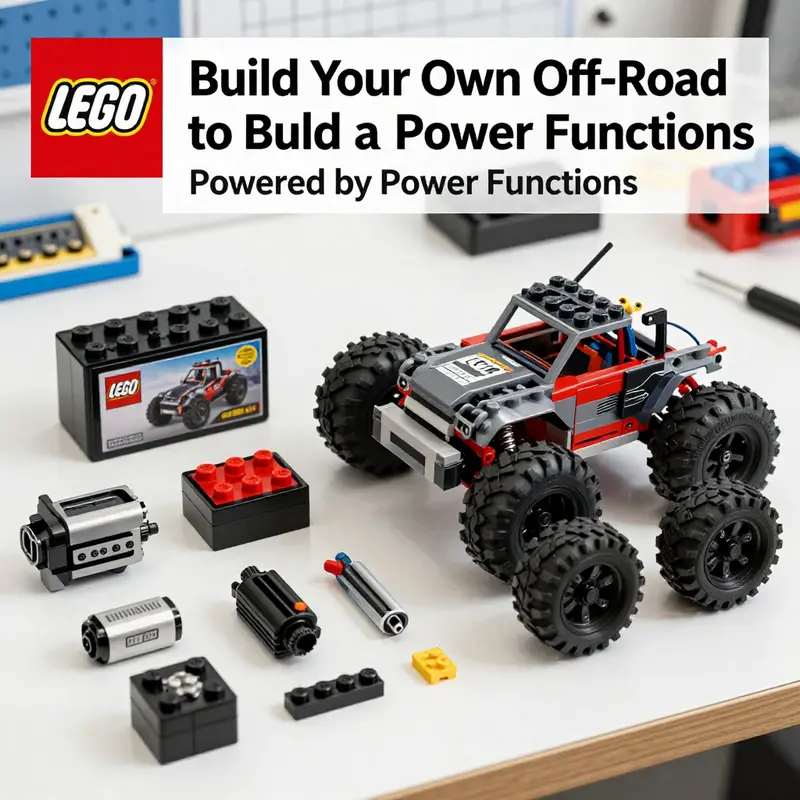
A true off road LEGO truck starts with more than a clever silhouette. It hinges on a rugged core where power, control, and a resilient frame meet in harmony. The layup is simple in concept but demanding in practice: a sturdy chassis that can bear load and absorb impacts, a purposeful power system that delivers steady torque, a suspension that keeps all four wheels in contact with uneven ground, and a clean, reliable wiring plan that keeps the whole thing predictable under stress. When these elements are aligned, the model becomes more than a display piece; it behaves like a small, motorized field vehicle that can handle grass, gravel, and sand with a steadier gait than a purely static build. In this chapter, the emphasis is on wiring, power, and suspension—the trio that defines the truck’s capability and its reliability on the trail inside a classroom park or a tabletop rally.
First comes the chassis and frame. A robust backbone built from Technic beams, plates, and cross-bracing is not cosmetic. The frame must distribute weight evenly so that the battery and motors do not create a forward or rearward lean that unsettles the truck when it scales a rock or climbs a culvert. A wide wheelbase helps with stability, but not at the expense of turning radius. The frame should allow for a modular approach: ample space in the center to mount the power module and, if the design calls for it, a second motor or a front axle drive. Bracing is not merely for strength; it reduces flex during acceleration and deceleration, which keeps gears from binding and wheels from toeing awkwardly through turns. The result is a chassis that feels tangible in hand and solid when the truck is on the carpeted “trail.”
Power, the second pillar, is about delivering torque where it counts and managing weight without complicating the setup. The source of energy is typically a compact battery module designed to sit securely in the cabin or cargo area. A balanced placement matters because shifting weight can alter the truck’s handling on rough terrain. The battery pack usually runs on a standard supply of cells and provides power to the drive system and any auxiliary features such as lights. A well-chosen power arrangement considers not only how much energy is stored, but how efficiently it is used. A few milliamps saved through thoughtful routing and light usage can extend the run time and reduce fatigue when you are chasing a smooth ride across a patch of lawn or a homemade obstacle course. The drive mechanism itself benefits from a high-torque motor capable of pushing the mass over small obstacles and through transitions from flat to uneven ground. In a typical setup, one motor drives the rear axle and, in a four wheel drive layout, a second motor contributes to the front end. Gear trains multiply the motor’s torque, translating it into real-world ability to grip and push without slippage on loose gravel or soft soil. The drivetrain should be designed for resilience: a direct, simple path from motor to axle reduces the risk of belt or chain failures and makes maintenance straightforward.
The third pillar, suspension, is where the truck earns its off-road stripes. Independent suspension is a favored approach because it allows each wheel to react to bumps without forcing the others to follow in lockstep. A classic double-beam or double-axle arrangement can be implemented with standard Technic pieces to produce a ride that keeps all tires in contact with the surface. Shock absorbers or dampers—whether built from LEGO components or improvised with elastic elements—control rebound and prevent the chassis from bouncing into oscillation. The travel of the suspension must be tuned to the tire size and the anticipated terrain; too stiff, and the truck will skip over small undulations; too soft, and the chassis dives on hill climbs. The goal is a controlled, predictable action where each wheel can independently respond to a rock, a rut, or a patch of gravel, while the rest of the vehicle maintains balance. It helps to prebuild sections of the suspension separately and then integrate them into the main chassis so you can test travel and binding before committing to a full assembly. Such modular testing saves time and helps you spot geometry issues that can cascade into poor handling on the real trail.
Wiring and connectors form the invisible but essential nervous system of the model. A clean layout reduces interference with moving parts and protects cables from wear and tear. The battery module should be mounted securely in a location that preserves center of gravity and allows easy access for swapping cells or charging. Cables should run along the chassis in sheltered channels or under the frame, secured with clips or ties to prevent snagging on suspension arms or wheel hubs. When cables cross through pathways, a careful arrangement minimizes bending and strain over time. Clear labeling of power lines helps during troubleshooting, especially if you decide to add lights or a remote control feature later. A simple, robust routing strategy keeps the truck reliable during repeated climbs and descents and simplifies future upgrades.
Optional control elements can elevate the driving experience without turning the project into a tangled mess. A minimal control unit that accepts a simple on-off or forward-reverse signal makes the vehicle approachable for beginners, while a more advanced setup with a remote receiver and handset opens the door to steering control and throttle modulation. The more components you add, the more important it becomes to balance weight, heat, and cable length. Even with a single motor, a well-planned control strategy can deliver smooth starts and stops that feel decisive rather than abrupt. Details like working headlights or a small winch add realism and can be integrated with a separate circuit if the power budget allows. A spare tire on a rack or a rugged-looking exhaust detail can be added without overloading the drivetrain, as long as these elements are light enough not to upset the drive-to-weight ratio.
In practical terms, the path from concept to execution benefits from reference guides that translate theory into hands-on steps. A concise visual tutorial demonstrates the construction of a motorized four-wheel-drive off-road car with independent suspension and a focus on practical assembly. It can be a valuable touchstone for beginners who want to see how the pieces fit together in real time while still leaving room for creative adaptation. For those who want to explore broader mechanical parallels, a related resource offers insights into precise mechanical building and iterative refinement. Mastering diesel mechanics: your step-by-step path to success provides a perspective on reliability, maintenance, and systematic testing that resonates with LEGO builds as well. As you plan the final touches, consider how these principles apply to the trunk of power and the tail of suspension, and let them guide your adjustments. Mastering Diesel Mechanics: Your Step-by-Step Path to Success.
With the core components in place, it is time to revisit the scope of a complete motorized off-road LEGO truck, not as a finished sculpture but as a working prototype capable of handling a variety of terrains. This approach invites experimentation: you may discover that a slightly different gear ratio yields better torque at the expense of top speed, or that increasing suspension travel improves grip at the cost of stability on level ground. The aim is to cultivate a balance—between weight and strength, between torque and endurance, between complexity and reliability. A well-thought-out design embraces iteration, allowing small adjustments to yield meaningful gains in control and traction. And while the model remains a toy, its behavior on a tabletop course can feel remarkably real when the core elements—the chassis, the power system, and the suspension—work in concert rather than at cross purposes.
If you want to expand beyond the essentials, consider exploring official Technic resources for compatible parts and advanced design ideas. These materials help you align your build with broader standards and ensure that future upgrades, light enhancements, or steering mechanisms remain plug-and-play rather than speculative tinkering. For a broader perspective on part families and compatibility, see the official Technic theme page: https://www.lego.com/en-us/themes/technic
Building a Rock-Solid Chassis and Suspension for Your Motorized Off-Road Brick Truck
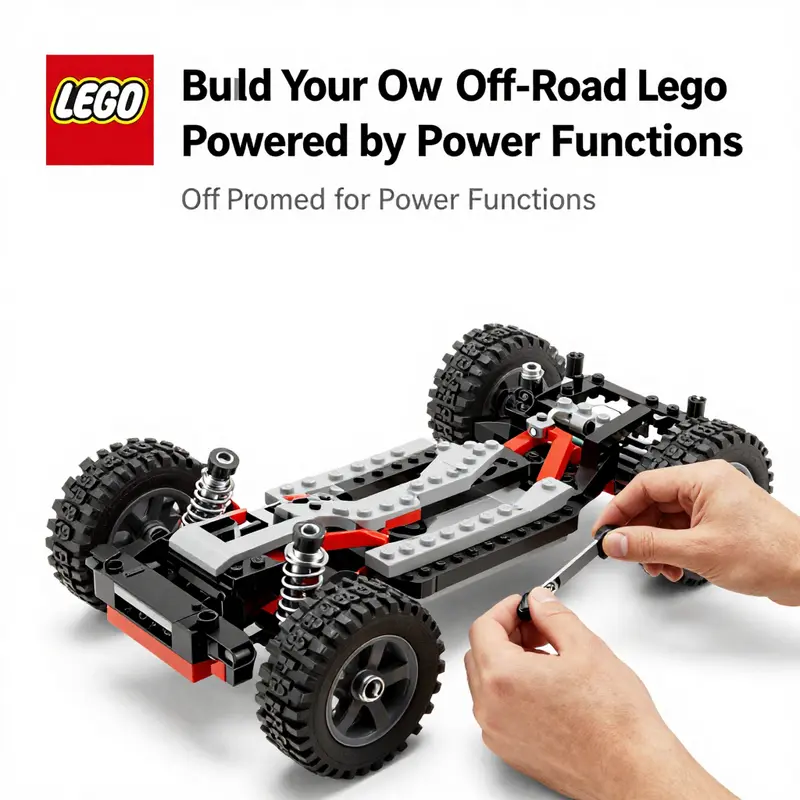
Designing the Frame and Suspension
A durable chassis is the backbone of any motorized off-road brick truck. Begin with a clear goal: a frame that resists twisting, supports motors and power supply, and gives the suspension reliable anchor points. Use long, sturdy beams and plates to form two parallel main rails. Tie those rails together with cross-bracing in several places so the frame behaves like a single unit. Triangular bracing is especially effective; a few well-placed triangles stop torsion far better than extra length of straight beams.
Layering plates is a practical way to increase stiffness without adding weak single points. Two thin plates offset and bound to the rails create a composite panel that resists bending. Wherever a motor, battery box, or gearbox will mount, reinforce the area with additional plates, vertical supports, and pins. Plan the positions for heavy components early so the chassis can distribute load evenly and keep the center of gravity low.
Mounting points must be robust. Use multiple pin connections rather than a single stud, and wherever possible spread loads across a beam or plate interface. If the drivetrain uses a gearbox, bolt the gearbox into a bay that is supported top and bottom. This prevents gear misalignment when the truck climbs or when the suspension compresses.
Suspension choices shape how the truck behaves off-road. Two practical families dominate motorized builds: independent suspension and solid-axle setups. Each has trade-offs for complexity, durability, and traction.
Independent suspension gives each wheel the freedom to follow terrain individually. This improves tire contact on uneven ground and smooths the ride. Achieve this with swinging arm assemblies or hinge-based setups that allow vertical wheel travel. Keep the geometry simple and symmetrical; identical left and right assemblies reduce tuning time. Use short wishbones or dual-beam swingarms attached to a solid subframe. Mount the shock element so it acts against the chassis rather than only against a fragile body panel.
Dampers are key. Purely elastic elements let the truck bounce after every bump. Add damping—either with rubber bands stretched to provide progressive resistance or with specialized shock elements if available—to control rebound. If you prefer simpler builds, rubber-band-based dampers are lightweight and easy to tune: increase band thickness for stiffer response and change the anchoring point to alter leverage.
Solid axles sacrifice some independent wheel articulation, but they give strength and predictable behavior under heavy loads. For heavy or multi-axle builds, a solid-axle arrangement distributes torque evenly across the wheels and simplifies drivetrain layout. A solid axle paired with a triangulated trailing arm can be surprisingly compliant. If you choose this path, locate the axle with links that prevent lateral movement while allowing vertical travel. Long links create smoother motion; shorter links increase responsiveness and transmit shock loads to the chassis.
Many successful off-road brick trucks use a hybrid approach: solid axles for load-carrying and driveline simplicity, and independent suspension at the steering axle for better front-end grip. Consider which wheels will carry the most torque and which need the finest articulation when deciding your mix.
Build the suspension mounts into the chassis rather than into removable bodywork. A common cause of failure is suspension anchored to decorative elements. Anchor points should be reinforced with plates and cross beams so they do not flex under load.
Integration with the motor and power system matters. Position the motor so its output shaft aligns cleanly with the drivetrain. A gear mesh that rides slightly loose will skip under load; one that’s too tight will strain the motor and the structure. Use intermediate gears or a short gearbox to translate motor rpm into usable wheel torque. If you plan multiple driven axles, use a single centrally mounted motor with a robust driveshaft and differential setup, or separate motors per axle with clear, protected cable routing.
Secure the power source low and centered. A heavy battery unit placed near the centerline and as low as the chassis allows dramatically improves stability. Create a locking bay so the power unit cannot shift during sudden maneuvers. If the design requires swapping batteries often, use a removable tray that slides into a reinforced pocket.
Cable management is part of structural planning. Route motor and power cables along the chassis members and secure them with clips or by tucking them under cross plates. Avoid routing cables where they rub moving parts or where suspension travel will pinch them. Tidy cable runs prevent intermittent power loss and reduce wear on connectors.
Protect moving components from debris. When running on loose surfaces, small stones and grit can wedge into gears. Add debris shields or cover plates around exposed gears and between wheels and chassis edges. These do not need to be load-bearing; lightweight plates attached to the frame will keep most contaminants out.
Testing on terrain is the fastest way to learn what the chassis needs. Try grass, packed dirt, and small gravel. Note whether the truck leans excessively when cornering or whether the suspension bottoms out over bumps. Adjust spring/damper stiffness, change link lengths, and reinforce any points that show fatigue. Small changes to leverage points or to the position where a damper connects to a wishbone often yield large improvements.
Fine-tune gear ratios if the truck struggles with inclines or stalls under load. Lower ratios increase torque at the wheels but reduce top speed. Higher ratios improve speed but demand more from the motor and the chassis. Watch for gear whine and heat; excessive noise or warm gearbox housings indicate misalignment or overload.
Finally, document your build choices. Sketch the chassis layout, note the length and orientation of key beams, and keep a short parts list for reinforcements and dampers. A little documentation saves time when you want to iterate.
For inspiration on compact active axle suspension and detailed step-by-step visuals, see this practical guide: https://www.bilibili.com/video/BV1Pv411c7tK/.
For a broader look at electrification trends in heavy equipment that can inspire robust design thinking, consider this article on electric construction innovations: volvo-electric-construction-equipment-revolution.
Power Through the Trail: Integrating a Modular Drive System for Off-Road LEGO Trucks

When you set out to build an off-road LEGO truck that can actually move under its own power, the chapter can feel less like a single construction project and more like a careful orchestration of weight, grip, and energy. The goal is not merely to attach a motor to a chassis, but to weave electronic propulsion into a resilient frame that can soak up rough terrain without shedding wheels or losing control. The best motorized builds start with a sturdy backbone: a chassis that resists twisting, a suspension that can respond to irregular ground, and a power system that delivers torque where it is needed most. To achieve this, you must think in three overlapping domains—structure, drivetrain, and control—and you must balance them as you would balance a payload on a hill climb. The challenge is not only to make the truck go, but to make it feel dependable in the field, whether you’re chasing a sand dune, a rocky ledge, or a patch of wet grass.
Structure is the quiet backbone of every successful motorized LEGO truck. A robust chassis built from larger Technic beams and plates provides a stable platform for all the moving parts. It’s essential to leave room for the power system and its connections, and to make sure the weight is distributed so the truck doesn’t topple on side slopes. Placing the power unit, the motor, and any battery storage in a balanced, low position helps maintain a predictable center of gravity. A well-secured battery box should sit within the truck’s cabin or cargo area, mounted with brackets that won’t shift during hard cornering or sudden deceleration. The idea is to minimize vibrations and prevent the weight from migrating under load. Cable management matters as much as the bold geometry of the chassis. Route cables along channels and secure them with clips, keeping them away from steering linkages and suspension pivots. The last thing you want is a loose loom snagging a moving part on a rocky trail.
Drivetrain design follows the logic of a real trail vehicle: torque where you need it, smooth power transfer, and a drivetrain layout that won’t fight its own flex. A compact motor or a pair of motors can drive the wheels through a simple gear train, with reductions chosen to multiply torque for climbs while still allowing acceptable top speed on level ground. You can opt for a front-drive, rear-drive, or four-wheel-drive arrangement, but four-wheel-drive is often the most forgiving on uneven surfaces. The key is to integrate a dependable drivetrain with the suspension so that each wheel can independently respond to ground irregularities. If you choose a four-wheel-drive approach, you’ll want a clean split in power delivery between axles, so the system can transmit thrust without binding when one wheel loses traction. The gears themselves should be protected from detritus; partition the drivetrain into clear, accessible sections, and shield exposed gears behind plates or panels that do not impede wheel articulation. When possible, add a simple approach to prevent back-driving the motor when the truck is coasting downhill; this improves control and reduces wear on the power system.
The suspension occupies a pivotal role in off-road performance, shaping how the truck negotiates bumps while maintaining drive power to the wheels. Independent suspension—where each wheel moves on its own spring or damper arrangement—helps preserve grip as the chassis tilts and rocks. A classic implementation uses a double-beam or double-axle configuration to keep wheels aligned with the terrain, while dampers—whether element-based or simple elastic bands—absorb impact. The aim is to strike a balance: enough stiffness to resist bottoming out on large obstacles, yet enough suppleness to keep tires in contact with the ground. The suspension does more than smooth the ride; it also influences traction. If the front end lifts under acceleration, traction on the rear wheels may improve, but overall control can suffer on a slope. Therefore, experimenting with damper placement, spring rates, and the relative stiffness of front and rear suspension becomes a practical part of tuning. Small weight adjustments, such as repositioning a battery or a lightweight ballast, can fine-tune how the truck sits on the ground and how it responds to steering inputs on uneven terrain.
Control is where the power system becomes a true partner to the driver’s ambitions. A modular remote or on-board control approach gives you the ability to start and stop the truck, modulate speed, and even steer with a degree of finesse. Steering requires its own concert of geometry and actuation. A dedicated steering linkage paired with a compact servo or geared actuator can translate wheel movement into precise directional change. When steering is integrated with the power system, you gain the ability to coordinate throttle with steering for more deliberate handling on loose surfaces. If you extend your build toward more advanced control, you can consider remote interfaces that let you switch between forward and reverse, or adjust steering sensitivity—enhancing the realism of the experience. The onboard circuits should be designed with careful separation of power and signal lines to minimize interference from motor noise, particularly when you’re testing on gravel or sand where vibrations are frequent and unpredictable.
Lighting and details can elevate the sense of realism without fundamentally altering performance. A few well-placed LEDs for headlights or rear markers give the truck presence at dawn, dusk, or under canopy shade. Bodywork contributes to the overall impression of capability—the cab, the roof rack, and the spare-tire mount all speak to travel-ready ruggedness. Even small touches like a winch mechanism, a distinct bumper, or robust detailing on the wheel housings help communicate the vehicle’s purpose and capability. If you decide to add a feature such as a mechanical winch or a simple remote-controlled tilt bed, ensure the added mass is accounted for in the balance of the chassis. Every additional accessory affects weight distribution, which in turn affects suspension performance and drive torque. Keep the focus on a cohesive silhouette that reinforces the truck’s off-road mission rather than overwhelming it with gadgets that undermine its structural integrity.
Testing becomes the decisive phase in translating design into performance. Start by running the truck on a range of surfaces—grass, gravel, sand, and a modest uneven surface—to observe how the suspension soaks up irregularities and how the drivetrain maintains grip through corners and over inclined sections. Watch for wheel slip, belt or cable clearance issues, and any tendency for the battery pack to shift under acceleration. If torque seems insufficient to climb an incline, revisit gear ratios and consider a deeper reduction or a slight repositioning of heavier components toward the vehicle’s rear to preserve front-end weight for steering stability. Conversely, if the truck feels too sluggish, you can experiment with a higher gear ratio or a lighter wheel setup, provided the grip remains sufficient. The balance is delicate: more torque is helpful, but only if it does not overwhelm the suspension or exhaust the battery too quickly. This iterative process of tuning—adjusting gear teeth, swapping springs, and repositioning weight—embeds a practical engineering mindset into the build, a mindset that echoes broader engineering principles about power and durability when applied to real-world off-road machines.
The larger frame of reference for these decisions rests on the same core ideas driving real-world mountain and trail trucks: power must be managed with restraint, and structure must be resilient enough to survive repeated, rough duty. Industry guidance on material choices and component design reinforces the notion that electronic subsystems should harmonize with the mechanical frame, rather than forcing the chassis to bear undue stress. In practice, this means selecting robust connection points, avoiding sharp bends in power lines, and ensuring that the battery and motor mounts are reinforced with rigid plates so the system remains stable through dynamic maneuvers. A well-integrated system will feel intuitive to operate, letting the driver focus on line choice and control rather than wrestling with gear grinding or unresponsive steering. The end result is a motorized LEGO truck that handles confidently in the field, with a convincing sense of mass, traction, and purpose that echoes the capabilities of its full-scale counterparts.
For a practical visual reference that complements these concepts, a widely used tutorial demonstrates a motorized off-road build with standard Technic elements and power components. If you want a concise, visual walkthrough on the power-enabled suspension and drive train, see Electric Fire Truck Charging Infrastructure.
External resource: https://www.lego.com/en-us/product/4×4-mercedes-benz-zetros-trial-truck-42129
Add Muscle and Smarts: Upgrading Features and Functionality on Your Off-Road LEGO Truck

Upgrading features and functionality: practical steps and design thinking
Once the basic motorized chassis rolls and the suspension responds to terrain, the next step is to make the truck smarter, tougher, and more useful. Upgrades should be chosen with purpose: increase traction, protect mechanisms, expand control options, and add believable accessories. Think like an engineer and a storyteller at once. Each modification must solve a real problem or unlock a new behavior without adding unnecessary complexity or fragile parts.
Start with control. Traditional plug-and-play motors work well, but modern app-driven control unlocks precision. Using an app-controlled hub lets you map throttle response, create custom driving modes, and change behavior on the fly. A conservative drive mode can limit wheel spin on loose surfaces. A rock-crawl mode can reduce top speed while boosting torque feel through programmed pulse-width settings. These changes are not cosmetic; they change how the truck interacts with obstacles. Programmed light effects can also signal modes—steady headlights for travel, pulsing amber for winching, and a slow flash for recovery mode.
Mobility begins at the contact patch. Large, soft rubber tires dramatically improve traction on dirt, gravel, and grass. If oversized tires are not an option, add rubber rings or tape to increase grip. Wheel choice affects gearing and motor load, so re-evaluate gear ratios after changing tire diameter. A single-stage gearbox that works at road tyre size may stall on larger wheels. Add a reduction stage or shift motor choice to preserve torque.
Suspension tuning is the most visible upgrade and the one that rewards careful iteration. A solid axle is robust but transmits shocks. Independent suspension lets each wheel adapt to bumps, keeping more rubber on the ground. Use longer axle arms to increase travel and softer springs or elastic dampers to absorb heavy impacts. Rubber bands make excellent adjustable dampers: start with a single band per corner and add or replace bands to change spring rate. Also consider limiting bump travel with small stoppers to avoid geometry collapse when the truck lands after a jump.
Weight distribution is often overlooked, yet it determines whether the truck climbs, tips, or noses over. Mount heavy components low and near the centerline. Place the battery box centrally, close to the chassis floor, and secure it so it cannot shift. If the truck consistently tips backwards on climbs, move mass forward; if it noses over down steep slopes, shift mass rearward. Small ballast blocks attached to the chassis with cross-axle pins can be removed or re-positioned for quick balance testing.
Protect the drivetrain. Gears and axles take abuse off-road. Enclose gear trains inside a reinforced housing of beams and plates. Use bushings and frictionless connectors where possible to prevent binding. If your motor is exposed to dirt, add a cover plate or a simple mudguard built from flexible panels. Reinforce high-load connection points with additional pins and plates to reduce flex. A slightly overbuilt chassis is preferable to a fragile, elegant one if it will see rough play.
Functional accessories add realism and utility. A motorized winch is both practical and theatrical. Design a small drum attached to a medium motor, route string through a pulley on the bumper, and include a manual clutch or slip mechanism to prevent the winch from stalling the drive motor. Use a separate motor or port for the winch control if your control hub supports multiple channels. Add LED lights for night runs. Mount forward-facing beams behind transparent bricks for headlights. Use a second controlled output to toggle lights independently from drive commands.
Cable management matters more than it seems. Power and signal cables should be routed along the chassis, clipped to beams, and kept clear of suspension linkages and gear trains. Use standard clips and beam holes to create tidy guides. Excess cable length should be coiled and secured, not left dangling. A neat wiring harness reduces accidental snags and keeps the truck reliable during aggressive maneuvers.
Steering upgrades expand how the truck behaves. A basic pivot is fine for slow crawling, but a servo-style mechanism controlled through the hub yields proportional steering and programmable deadband. Keep steering throws modest to avoid tipping during quick directional changes. Consider a reduced steering ratio for precise control and an extra return spring or rubber band to center the mechanism.
Modularity keeps experimentation sustainable. Make bays or compartments in the chassis to test new motors, batteries, or sensors. Use removable panels secured by friction pins to access internal components easily. When testing different setups, change only one variable at a time—track results, then iterate. This approach prevents wasted effort and makes it easier to dial in the right combination of tires, gearing, and suspension.
Testing and refinement are where designs are made resilient. Try the truck on several surfaces: packed dirt, gravel, short grass, and a small rock garden if available. Watch for wheel slip, axle binding, or body contact during full articulation. If the truck struggles to climb, reduce final gearing or increase motor torque. If it oscillates after bumps, soften or add damping. If the body flexes under load, add reinforcement beams at strategic nodes rather than blanket plating.
Finally, add small touches that make the build convincing and usable. Create storage clips for tools like a small tow hook or spare wheel. Incorporate a simple latch for the battery box so it stays secure but is still accessible. Fit a roof rack or roll cage to protect cab electronics. These additions do more than decorate; they protect internal parts and simplify maintenance.
As you apply these upgrades, consult build guides and manuals for recommended component placements and safe wiring practices. Official manuals and community blueprints show tried-and-tested ways to route cables, mount motors, and balance weight. For a broader look at heavy-equipment approaches that inspire scale realism, see this discussion of recent industry shifts in construction equipment: Volvo electric construction equipment revolution.
For specific component layouts and examples, review the official product page and instructions for a current off-road model. Official instructions reveal typical locations for battery housings, motor mounts, and suspension linkages, which you can adapt to your custom truck: https://www.lego.com/en-us/product/off-road-buggy-42124
Iterate deliberately, keep changes reversible, and prioritize protection and control. Upgrades should let the truck handle tougher terrain and offer satisfying, repeatable behavior. When each modification earns its place, the truck becomes a reliable, capable off-road machine that is a joy to drive and easy to maintain.
Final thoughts
Creating an off-road LEGO truck powered by Power Functions is a rewarding experience that merges creativity with mechanical knowledge. Each step of the process, from selecting the right base model to enhancing your build with functional features, contributes to a dynamic model that embodies adventure. This project not only nurtures your passion for off-roading but also equips you with hands-on engineering skills. Now it’s time to explore terrains with your custom LEGO creation and push the limits of what you can build.