
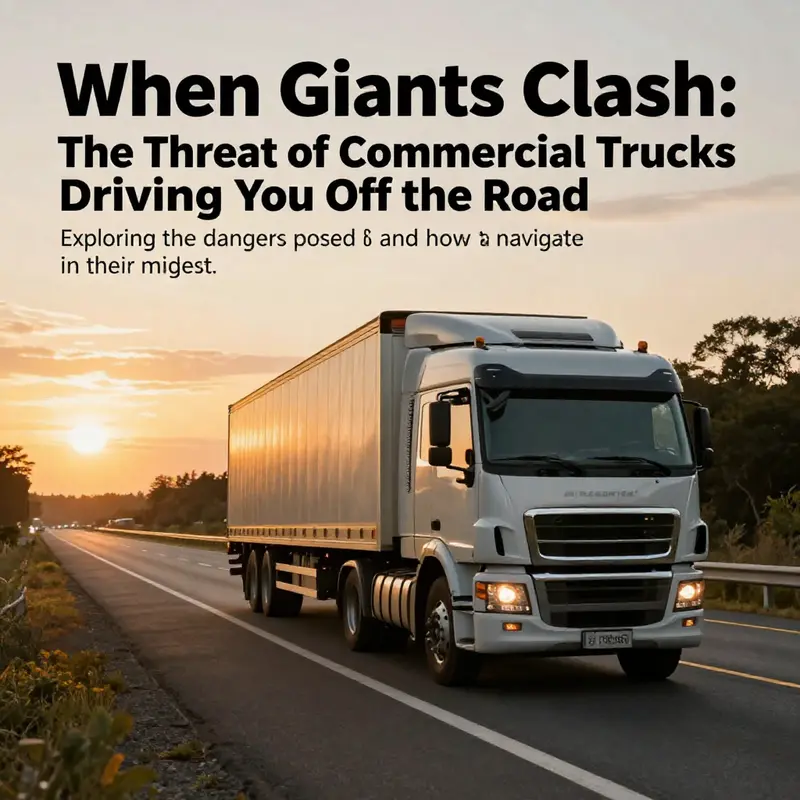
As off-road enthusiasts and adventurers, you thrive on the thrill of the journey, navigating terrains where others fear to tread. Yet, when your trails intersect with the highways dominated by commercial trucks, a different kind of adventure presents itself—one fraught with peril. While these transport giants play a crucial role in moving goods across the country, their sheer size and the risks associated with unsafe driving behaviors can turn a routine drive into a dangerous encounter. This article delves into the multifaceted world of commercial trucks and their potential impact on your travels. Chapter one examines the unsafe driving behaviors that can lead to road offenses and endanger smaller vehicles. In chapter two, we will investigate the physical risks associated with the immense size of these trucks and why maintaining safe distances is key. Finally, we’ll explore regulatory measures that seek to mitigate these risks, empowering you to navigate with confidence around these hulking giants. Buckle up as we journey through the nuances of road safety in a truck-filled world.
When Size Becomes Influence: How Unsafe Commercial Truck Driving Can Push Other Road Users Off Course
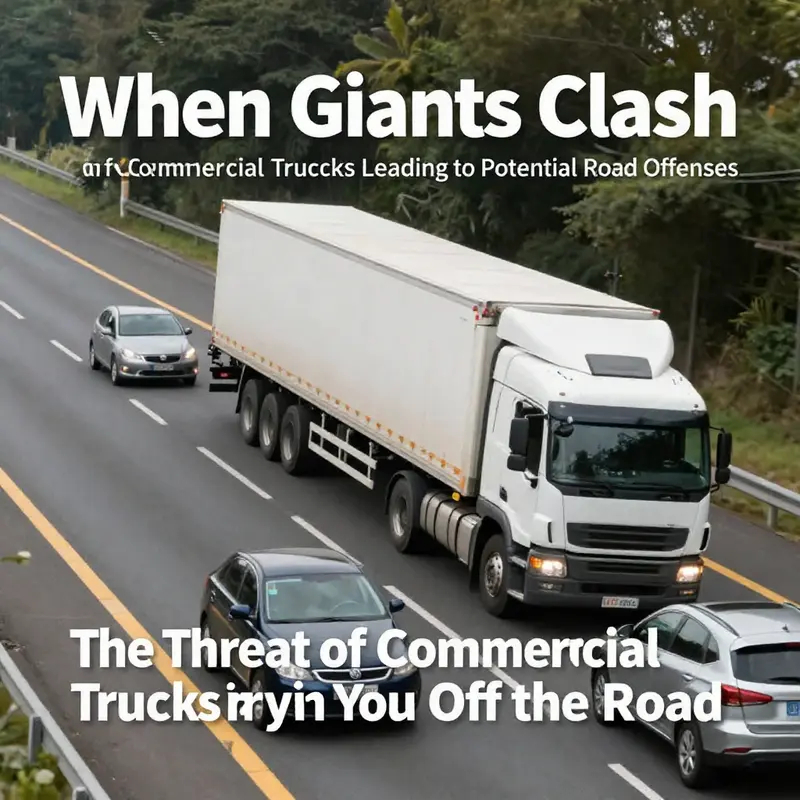
On busy highways, the presence of a commercial truck is more than a matter of scale. It is a dynamic in which physics, human behavior, and policy collide. The sheer mass and length of tractor-trailers mean that their momentum is formidable, their braking demands are steep, and their maneuverability is more limited than that of most passenger vehicles. In such a system, even small lapses in judgment or routine mistakes can propagate downstream with outsized consequences. The central question this chapter wrestles with is not only whether a truck can push a car or a pedestrian off the road, but how a combination of unsafe driving practices, structural limitations, and environmental factors create pathways to such outcomes. The answer is nuanced. A truck can contribute to a road departure, especially when a driver’s decisions collide with the road’s physics, other drivers’ expectations, and the safeguards designed to keep traffic flowing safely. Understanding those pathways requires more than listing dangerous acts; it requires tracing how those acts interact with the vehicle’s characteristics, the road environment, and the broader safety ecosystem that governs trucking operations today.
To begin, the unique physics of heavy trucks establishes the baseline risk. A large truck’s stopping distance is longer than that of most cars, even at moderate speeds. Weight, load distribution, tire condition, braking system health, and trailer dynamics all influence how quickly a heavy vehicle can decelerate, absorb a shock, or recover from a sudden lane change. The longer wheelbase and higher center of gravity amplify the likelihood that a truck’s trajectory, once altered, remains stubbornly resistant to rapid correction. This is not merely an academic point; it has practical consequences in everyday driving situations. When a passenger vehicle squeezes into a pocket of space between a truck and the next lane, a sudden swerve by the trucker—or by the car trying to merge ahead of the truck—can force the other vehicle to brake abruptly, swerve, or even leave the pavement to regain control. In these exchanges, the truck’s mass becomes a kind of environmental force, shaping the options available to nearby drivers in real time.
Beyond braking, the act of maintaining safe following distances emerges as a central constraint. Large trucks require generous spacing to navigate deceleration safely, to absorb the energy of a rear-end collision, and to avoid the so-called “pocket effect,” where the vehicle ahead slows and a vulnerable vehicle cannot readily react. The practice of tailgating, whether by a car trying to slip into a gap or by a truck attempting to reduce its own perceived risk by squeezing closer to a lead vehicle for better visibility, elevates the danger for everyone involved. In such situations, a slight misjudgment from the lead vehicle—an unanticipated brake, a miscalibrated signal, or a drifting wheel—can cascade into a loss of control for the trailing vehicle. With trucks, the margin for error narrows even further, because the consequences of a late braking or a misinterpreted signal can be far more severe.
Then comes the issue of maneuverability, not just speed. A truck’s wider turning radius, larger blind spots, and the physical space required to complete a lane change all interact with the behavior of other drivers. A lane change conducted without signaling, or one performed aggressively to claim a coveted lane, can leave a car squeezed against the truck’s flanks or forced into a path that runs toward the shoulder or off the road altogether. The absence of adequate signaling or the omission of a proper mirror check can hide the truck’s intended maneuver until it is too late for nearby drivers to respond safely. In such moments, the truck’s size effectively reduces the available reaction time for other road users, increasing the probability that a small vehicle or a pedestrian must execute a sudden, destabilizing adjustment—an adjustment that could precipitate a road departure.
The draft effect adds another layer of risk that is unique to large vehicles moving at highway speeds. When a heavy truck passes a vehicle in the adjacent lane, the wind shear and pressure differences can momentarily disrupt the lateral stability of the nearby vehicle. In some circumstances, a strong gust can nudge a lighter vehicle toward the edge of the pavement or into a compromised trajectory. The draft is not a constant force; it varies with wind speed, vehicle geometry, and the relative positions of the truck and the vehicle in proximity. While an experienced driver might anticipate a passing truck and compensate accordingly, gusts and wind-induced lateral forces are a kind of environmental friction that can surprise even careful drivers. The consequence, in the worst cases, is a trajectory that leads off the road or into a hard avoidance maneuver that places the vehicle outside the intended lane or the traveled path.
This physical backdrop intersects with driver behavior in a telling way. A growing body of research points to driver-related factors as a leading source of crashes involving commercial vehicles. A comprehensive systematic review identifies a wide range of influences on truck driver behavior, including demographic, vehicle, freight, spatial, temporal, road, and environmental factors. Crucially, psycho-social traits and personality factors contribute to risky practices such as speeding, distracted driving, and seatbelt noncompliance. The picture that emerges is not a single villain but a constellation of interacting risks, each capable of elevating the likelihood that a truck, in conjunction with other road users, contributes to losing control or forcing someone off the road. The emphasis on driver-related factors aligns with policy and practice aimed at curbing the most dangerous behaviors through training, education, and enforcement. It also underscores the need for robust monitoring and feedback systems that can identify early signs of risky patterns before they translate into harm on the highway.
The quantitative side of this story is both sobering and instructive. Digital tachograph records analyzed over an 11-month window reveal that potentially dangerous driving behaviors occur in a significant fraction of observed trips, ranging from roughly 14.7% to 34.17% of driving segments. This spectrum captures a broad set of behaviors, including excessive speeding, cell phone use while driving, and failure to wear seatbelts. Each category carries its own risk multiplier, but the shared feature is that these acts reflect a departure from the regulatory and safety norms designed to protect those on the road. The magnitude of these behaviors is not a statistical curiosity; it translates into higher crash risk and—when a crash occurs—greater potential for casualties given the involvement of heavy vehicles. These findings have practical implications for safety programs, route planning, and day-to-day supervision of drivers.
A parallel line of inquiry strengthens the causal interpretation. Analyses that link unsafe driving behaviors directly to casualty rates in heavy-duty truck accidents provide a compelling chain of evidence. When a driver exceeds speed limits, becomes distracted, or neglects seatbelt use, the probability of a serious outcome in the event of a mishap rises substantially. The message is not merely that bad driving exists, but that it has a measurable, harmful effect on the severity and likelihood of injuries and fatalities. This causal linkage supports a comprehensive strategy that includes enhanced safety education, tighter enforcement of rules, and the integration of advanced monitoring technologies to detect and deter risky practices in real time. It also speaks to the broader social contract around trucking: operators and drivers bear a duty to manage risk, not just for themselves, but for every person they share the road with.
The policy environment, meanwhile, emphasizes both prevention and accountability. The federal safety framework promotes safe following distances, discourages distractions, and requires proper vehicle maintenance to minimize the risk of mechanical failures that can trap a vehicle in a compromised path. Yet policy alone cannot close the gap between knowledge and practice. The data suggest that even with regulations in place, there remain substantial opportunities to prevent dangerous driving through proactive interventions. This is where technology and intelligent operations come into play. Machine learning models trained on vast streams of telematics data can identify risky driving patterns with high predictive accuracy. These models enable proactive interventions: dispatchers can alter routing to avoid traffic stressors, real-time feedback systems can alert drivers to on-road risks, and managers can tailor safety coaching to observed behaviors. In effect, the road system becomes a living safety ecosystem where information flows bidirectionally between the truck and those responsible for its operation, reducing the likelihood that unsafe behavior translates into a road departure.
From a practical standpoint, the integration of these ideas into everyday trucking operations hinges on how fleets use available data and how they respond to signals of risk. A single unsafe act—like a lane-change without signaling—may appear minor in isolation. But when that act is part of a pattern, or when it occurs in a context where wind gusts, traffic density, or near-curtain conditions of a road curb the margin for error, the potential for a dangerous interaction increases. The data-driven approach to safety emphasizes a shift from reactive enforcement to proactive prevention. It envisions a fleet that can anticipate risky episodes, re-route around them, and provide drivers with the support they need to maintain steady, deliberate driving—especially in high-stress environments such as urban arterials or congested bottlenecks where the opportunity for a mistake multiplies.
In practice, this shift manifests in several ways. First, there is a push toward stronger, more consistent safety education that couples theoretical knowledge with real-world monitoring. Training programs that incorporate feedback from telematics, video-based coaching, and risk simulations help drivers develop anticipatory skills—recognizing when a lane change could invite conflict, or when a following distance might not be enough to tolerate a sudden brake. Second, enforcement is being reimagined through data-driven discipline. Rather than purely punitive responses after an incident, fleets can use patterns detected by machine learning to target coaching and corrective action before a crash occurs. Third, investment in monitoring technologies—ranging from more precise speed governors to enhanced driver alertness systems and improved signage in tricky stretches—can reduce the probability that a single risky decision escalates into a road departure.
An often-overlooked facet of the discussion is how road design and traffic management intersect with truck dynamics. Road geometry, lane width, shoulder availability, and the presence of run-off areas influence how safely any vehicle can navigate near the edge of the pavement. When a truck travels at highway speed near the curb or in a narrow corridor, even modest deviations can lead to off-road excursions for neighboring vehicles. In this sense, the risk landscape is not solely driven by the actions of the truck driver; it is shaped by the synthesis of vehicle capabilities, human behavior, and the built environment. The chapter’s concern is not to apportion blame in a simplistic way but to illuminate the multi-layered risk pathways so that safety strategies can address both driver behavior and systemic factors.
The question of how to mitigate these risks loops back to the practical realities of trucking operations. For many fleets, the path forward rests on a combination of better data, smarter dispatch, and stronger safety culture. Dispatch software and fleet management systems—when deployed thoughtfully—can translate raw telematics into actionable insights. They provide a mechanism to monitor driver behavior, flag episodes of aggressive lane changes, speeding, or distraction, and deliver timely feedback to the driver. They also enable smarter routing choices that minimize exposure to high-risk scenarios, such as lanes with dense merging zones or stretches known for gusty crosswinds. The role of dispatch in safety is not merely administrative; it becomes a critical control point for preventing risky driving from translating into real-world harm. For readers seeking a practical bridge between theory and day-to-day operations, exploring how dispatch and fleet-management solutions can be leveraged to support safer driving represents a natural convergence of the chapter’s themes. A convenient starting point is to consider how a robust system of monitoring and feedback can be integrated into everyday operations, providing drivers with timely, specific, and constructive guidance rather than punitive pressure. See resources on dispatching software and fleet management for a practical framework that aligns with these safety goals: dispatch software and fleet management.
Ultimately, the data point to a clear, sobering conclusion: unsafe driving behaviors among commercial truck drivers are a meaningful contributor to road safety incidents and, when they occur, a reliable predictor of higher casualty rates in heavy-truck crashes. This is not a deterministic prophecy but a risk landscape that can be altered through deliberate action. The fact that vehicle mass and maneuverability matter does not absolve driver responsibility or regulatory duties; rather, it underscores why comprehensive safety strategies are essential. When truck operators invest in training, when traffic systems support safer interaction with heavy vehicles, and when technology enables timely, targeted interventions, the probability that a truck could force someone off the road decreases. Yet the possibility remains, precisely because the truck’s physical footprint and the road’s complexity create a context where risk cannot be entirely eliminated. The most effective responses acknowledge this reality and work systemically to reduce it, rather than rely on hopes of perfect compliance or luck on the highway.
The practical implications for policy, industry practice, and everyday driving are clear. Invest in data-driven safety programs that blend education, coaching, and accountability with real-time monitoring and feedback. Use route optimization and dispatching to steer drivers away from high-risk situations whenever possible. Equip fleets with technologies that support steady, deliberate driving and reduce the chance that a single error becomes a catastrophic event. And continuously evaluate the road environment itself—recognizing that road design, weather, and traffic dynamics will always influence how a truck interacts with other road users. In short, commercial trucks can contribute to driving someone off the road, but a coordinated approach that prioritizes prevention, continuous learning, and systemic safeguards can dramatically reduce the likelihood of such outcomes.
For readers who want a deeper empirical foundation to this discussion, the underlying research offers a solid bedrock. The study of potentially dangerous driving behaviors based on 11-month digital tachograph data and multilevel modeling underscores the breadth of risky practices and their connection to outcomes on the road. The findings illuminate the prevalence of speeding, distraction, and nonuse of seatbelts, and they demonstrate how predictive models can flag risk before it culminates in harm. This combination of descriptive and predictive evidence provides a compelling case for proactive management of truck safety through data-informed policy, training, and technology-enabled oversight. (External reference: https://www.sciencedirect.com/science/article/abs/pii/S0968090922002956)
When Size Meets Road: How Mass, Momentum, and Proximity Shape the Risk of Being Forced Off the Road by a Commercial Truck
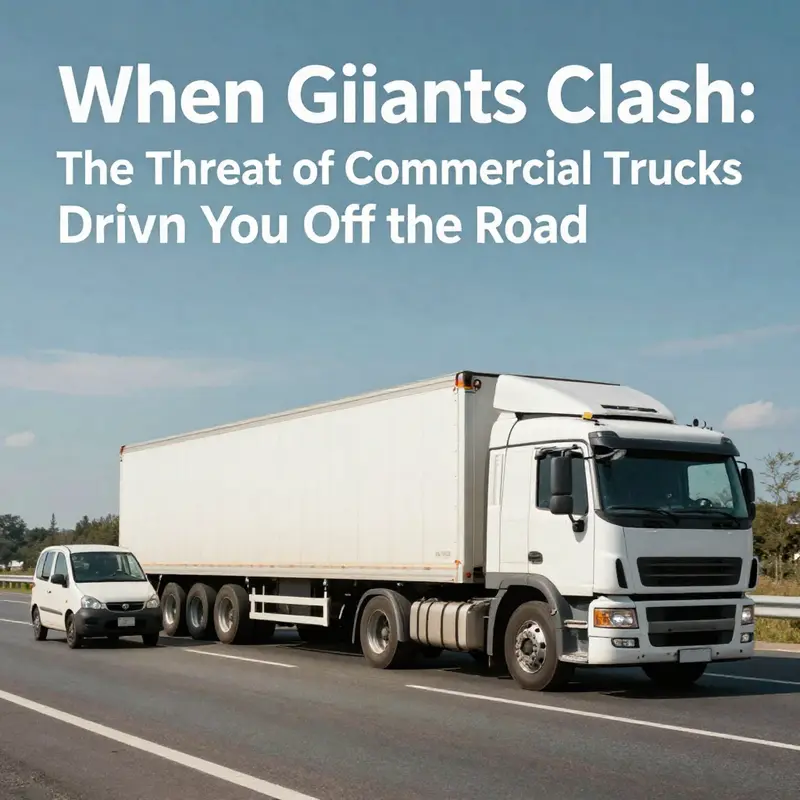
On busy highways and quieter arterials alike, the central question of whether a commercial truck can drive someone off the road is not a simple yes-or-no. It is a question that sits at the intersection of physics, human perception, and the lived realities of traffic flow. Large trucks carry a weight and a momentum that passenger vehicles do not. They command a footprint that changes how road space is allocated, how other drivers maneuver, and how quickly a moment can spiral into a loss of control. When a smaller vehicle sits alongside a truck, particularly during lane changes, merges, or the moments just before a truck begins to turn, the risk landscape shifts in ways that are often subtle in the moment but profound in consequence. The dynamics are not only about a single misstep by one driver but about how size, speed, perception, and regulation interact on a shared roadway.
From a physics standpoint, mass and momentum do not vanish at highway speeds. A fully laden tractor-trailer may exceed the weight of a typical car by several tons. Even at modest speeds, that mass translates into a greater potential to generate force in a collision or in a near-miss that forces another vehicle to brake abruptly, swerve, or leave its lane. This disparity in mass and momentum means that when a truck and a smaller vehicle share the same space, the truck’s impact energy is not simply a larger version of the same event; it operates under a different set of rules. The energy that must be managed during any contact is greater, and the consequences—deformation, intrusion, and the probability of a rollover or a complete loss of control—are amplified when the truck and the car are not perfectly aligned, when speed is not constant, or when visibility is compromised.
The size disparity is not merely a theoretical concern. The practical outcomes are evident in how small vehicles fare in incidents involving heavy trucks. In a crash, the larger mass can overwhelm the passenger vehicle’s safety systems or structural design, sometimes resulting in catastrophic outcomes for occupants. This is not to imply inevitability but to underscore that the baseline risk is elevated by the truck’s sheer scale. The stakes rise in situations that involve lane changes or turning maneuvers. A truck that swerves into a neighboring lane without signaling, or one that closes the distance too aggressively, creates a boundary condition in which a smaller vehicle has fewer margin for error. The truck’s larger turning radius and longer stopping distance combine with a blind spot that extends well beyond the vehicle’s visible footprint. The smaller vehicle may be forced to brake late, react late, or take evasive action that places it into another hazard, like a guardrail, a ditch, or a second vehicle.
A critical, often overlooked factor is the so-called no-zone around trucks. These blind spots extend along the sides and rear of the vehicle, and they are larger than those around most passenger cars. The truck’s driver cannot always see a car that enters these zones, and the smaller vehicle, in turn, may not perceive the truck’s intentions. This asymmetry in visibility increases the chance that a routine lane-change, executed with a routine check from the truck driver, becomes a moment of miscommunication. The dynamics are particularly perilous when the truck is passing a smaller vehicle or when two trucks share the road in close proximity. The smaller vehicle can find itself squeezed between a rapidly closing truck in front and a truck that remains within a no-go zone at the rear, leaving little room for corrective action.
Beyond the straight-line physics of mass and momentum lies another influence: wind and aerodynamic interaction. When a truck passes, the wake can generate gusts that momentarily push a nearby vehicle off its intended trajectory. The so-called draft effect is not merely a dramatic phrase; it has real consequences for control, especially for smaller or lighter vehicles, motorcycles, or vans that lack the stability margins of larger trucks. If the wind suddenly shifts as the truck moves past, the smaller vehicle can experience a brief but meaningful alteration in its path. On roads with crosswinds, highway ramps, or urban corridors with gusty corridors and high sideloads, the risk compounds. The draft effect, combined with a sudden lane-change or a misjudged distance, can push a vehicle toward the shoulder or into another lane’s traffic stream, increasing the likelihood of an off-road excursion or a more dangerous contact.
The data landscape supports these qualitative descriptions. The federal safety framework recognizes that certain maneuvers are inherently riskier when trucks are involved. Research from regulatory and safety bodies highlights that a disproportionate share of fatal crashes involving large trucks occurs during turning or lane-changing maneuvers. These findings emphasize that the hazard is not merely the presence of a heavy vehicle on the road but the interaction of that vehicle with others during some of the road’s most dynamic moments. The emphasis is on visibility, space management, and time to react—factors that become acutely challenging when trucks are in close proximity to smaller vehicles or motorcyclists. When a driver of a passenger vehicle finds themselves sandwiched between large trucks in the lane, the margin for error shrinks rapidly. The truck’s wider turning arc, the possibility of slide or yaw on wet pavement, and the larger blind spots all converge to increase the risk of a vehicle leaving its lane or being forced off the road.
Given these realities, mitigation is not simply about teaching drivers to avoid risky behavior in a vacuum. It is about creating a safer ecosystem in which the different shapes of vehicles on the road can coexist with reduced danger. Enhanced driver training is central to this effort. Truck operators benefit from targeted instruction on the spatial footprint of their vehicles, the sensitivity of their steering inputs, and the importance of signaling and gradual lane changes. Training that emphasizes the avoidance of aggressive maneuvers, the maintenance of safe following distances, and the recognition of a shared responsibility to keep space around large vehicles can reduce incidents where a smaller vehicle is driven off course. For smaller-vehicle drivers, education about no-zones, predictable maneuvers, and the importance of maintaining a steady speed and position relative to trucks helps build a safer traffic rhythm for everyone involved.
Technology grows increasingly important in translating training into real-world safety. Side guard bars, now deployed in many fleets and recommended by safety advocates, physically reduce the width of the truck’s vulnerable side area. Blind-spot monitoring systems, when properly calibrated, provide the truck driver with timely warnings about vehicles in the truck’s no-zones. Collision avoidance technologies, including automated emergency braking that can respond to a vehicle in danger of leaving its lane or entering the truck’s path, add a critical layer of protection when human reaction time may be insufficient. These technologies do not replace human judgment; they augment it. They help ensure that a minor misalignment or a misperceived gap does not escalate into a loss of control for another road user. The research signals that when these tools are widely adopted and properly maintained, the safety dividend is meaningful.
Regulation provides the scaffolding for safer operation in the real world. The FMCSA has underscored the need for maintaining safe following distances, avoiding distractions, and ensuring proper vehicle maintenance. These rules are not mere formalities; they are practical behavioral guardrails designed to reduce the probability of a truck forcing a smaller vehicle off the road. When a truck maintains a consistent, predictable path and avoids sudden lane changes or the appearance of aggressive driving, the risk to nearby cars and motorcyclists declines. Enforcement, auditing, and ongoing driver education help the regulation translate into everyday safety on busy corridors and during the long-haul drives that feed national supply chains.
Public education campaigns complement the regulatory and technological toolkit. These campaigns focus on how to minimize time spent in a truck’s blind spots, how to manage following distances, and how to anticipate the subtle cues that indicate a truck is preparing to merge or turn. For drivers of smaller vehicles, understanding that trucks require longer space to decelerate and wider arcs to steer can prevent dangerous reactions, such as abrupt braking or erratic lane changes, that themselves trigger a dangerous sequence. Safety messaging also reinforces the shared responsibility of all road users to anticipate, signal intentions clearly, and respect the space needed by large vehicles to maneuver safely.
Taken together, the safety picture is not about blaming trucks or passenger cars but about aligning practice, technology, and policy to reduce the risk of someone being driven off the road. The no-zone challenge is real, but it is addressable with a combination of training, standard operating procedures for fleets, and investment in vehicle technologies. The road is a shared space, and the aim is not to dull the dynamics of road travel but to ensure those dynamics stay within a margin that allows all users to recover if something unexpected arises. In examining the risk, it helps to look at concrete cases where lane changes or passing maneuvers unfold. The truck’s size and the proportion of space it requires are central to whether a nearby vehicle can safely adjust when a truck moves to another lane or accelerates out of a merge. The math of mass, momentum, and distance is not a mere abstract calculation; it is a lived reality for millions of road users every day.
For readers seeking a deeper, technically grounded perspective on how crash dynamics are evaluated and tested, there is a broader body of work that summarizes real-world outcomes and controlled test results. In particular, independent crash test results illustrate, in a controlled setting, how vehicle interactions can unfold and how protective systems respond under pressure. IIHS crash test results provide a lens into how different vehicle configurations interact with large vehicles during critical scenarios. While no single source can capture every road condition, these tests help translate the general principles into tangible expectations about risk and protection. The broader regulatory and safety literature, of course, should guide interpretation of such results and the design of safer roadways and fleets.
Ultimately, the goal is a safer equilibrium where trucks and smaller vehicles share the road with a minimized probability that someone is driven off the pavement. This requires ongoing attention to the three pillars of safety—human factors, technology, and policy—and a recognition that the interplay among them is what governs the real-world outcomes. It is not only about reducing the odds of a collision but about preserving the ability of drivers to recover whenever a moment of misjudgment occurs. The physics of mass and momentum sets the baseline risk, but it is human choices, engineered safeguards, and regulatory discipline that determine how often that baseline translates into harm. As traffic patterns evolve and fleets adopt more advanced safety tools, the path toward safer sharing of the roadway becomes clearer, even as the core risk remains a testament to the powerful asymmetry between a heavy truck and a smaller vehicle.
For a broader context, consult the NHTSA Truck Safety Report. This external resource provides a comprehensive, government-sourced perspective on truck safety, including how driver behavior, vehicle design, and road environment contribute to overall safety outcomes in commercial trucking landscapes: https://www.nhtsa.gov/vehicle-safety/facts-and-statistics/truck-safety.
Guardrails on the Highway: Regulatory Safeguards and Defensive Driving to Prevent Trucks from Forcing Others Off the Road
Heavy vehicles move with outsized consequence. A commercial truck’s mass and momentum can overwhelm a smaller vehicle or a pedestrian who misjudges a turn, a gap, or a wind gust. The possibility of a truck unintentionally driving someone off the road is not merely a theoretical risk; it is a corporate and regulatory challenge that demands a disciplined blend of rules, culture, and practiced skill. Large trucks require more space to stop, more room to maneuver, and a longer horizon for decision making. In close-quarters interaction with cars, motorcycles, or pedestrians, even small miscalculations can cascade into loss of control. Wind driven draft, the turbulence created when a vehicle of such size passes, can push lighter vehicles off course if the following distance collapses or if a driver is momentarily diverted by the effort to cope with the sudden disturbance. In this context, preventing a roadside deviation becomes a shared responsibility across drivers, fleet operators, regulators, and road users alike. The path to safer roads is not a single reform but a matrix of regulatory safeguards, disciplined maintenance, and a culture of defensive driving that treats safety as an operating principle, not a compliance checkpoint.
Regulatory measures provide the frame within which every other effort gains reliability. The Federal Motor Carrier Safety Administration (FMCSA) in the United States—along with similar agencies elsewhere—sets expectations that matter in every mile of a truck’s journey. Chief among these are driver hours of service, vehicle maintenance, and drug and alcohol testing. Hours of service rules are designed to protect against fatigue that degrades reaction time, judgment, and situational awareness. When a driver has exhausted the body’s natural rest cycles, the margin for error shrinks dramatically, and a routine lane change can become a moment of risk. The maintenance regime acts as a preventative shield, ensuring that critical systems such as brakes, tires, steering, and suspension are sound and capable of withstanding the unexpected demands of highway travel. Regular inspections—pre-trip, en route, and post-trip—are not merely rote procedures; they are the primary defense against mechanical failure that could otherwise create a hazard with an off-road consequence.
The drug and alcohol testing regime reinforces safety by screening for impairment that would erode the judgment required to anticipate hazards and execute controlled maneuvers. Taken together, these regulatory elements reduce the probability that unsafe behaviors will occur, or when they do occur, reduce their impact. The value of regulatory measures lies not only in the rules themselves but in how they are implemented: robust enforcement, transparent reporting, and a safety culture that treats compliance as a baseline, not a ceiling. Yet rules alone cannot cover every scenario on the road. Fatigue, mechanical quirks, and moments of inattention still happen. This is where best practices—often described as defensive driving—enter the picture as an active partner to regulation. Defensive driving is not a reaction to risk; it is a disciplined habit that anticipates risk, maintains breathing room, and communicates intent clearly with other road users.
Within the logic of regulation and practice lies a simple—yet powerful—principle: space is safety. The following-distance rule is not arbitrary; it is calibrated to accommodate the truck’s longer stopping distance and slower acceleration. In congested traffic, it translates into a wider buffer zone and a slower cadence that is easier for nearby drivers to predict. Signals matter. A truck’s turn signal, brake light, and even the speed at which the vehicle decelerates should be legible to those around it. The message must be unambiguous: I am changing lanes, or I am slowing down, or I am yielding. This clarity reduces the likelihood of abrupt evasive maneuvers by others, which could otherwise push a vehicle toward the shoulder or into a ditch.
Best practices in driving are the practical manifestation of the regulatory framework. Defensive driving begins with a heightened sense of anticipation. A truck’s weight and momentum create a larger envelope of danger if a decision is made too late. Anticipation means scanning the road ahead, checking the actions of nearby drivers, and recognizing patterns that precede a risky maneuver. For instance, a vehicle that repeatedly weaves or a vehicle with rapidly changing speeds is a signal to adjust your own behavior well before a conflict emerges. Defensive driving also means choosing your own actions with care. Sudden lane changes, abrupt lane pulls, or late braking are high-risk moves in heavy traffic. Instead, drivers should plan their trajectory, keep a steady pace in line with weather and road conditions, and communicate intent with consistent signaling. This reduces the chance that others will overreact to what they perceive as an unexpected move, a chain reaction that could culminate in a loss of lane control for a nearby vehicle.
Maintaining a safe following distance is a cornerstone of safe trucking practice, but it must be understood in the context of speed, wind, and road texture. On highways where trucks travel at high mass, following too closely leaves insufficient reaction time for a sudden object on the road, a brake-light slowdown by the vehicle ahead, or a gust that can cause a vehicle to drift. The distance should be measured in time, not feet: a few seconds of cushion provide an anchor for the driver to slow smoothly and to steer away from a hazard in a controlled fashion. This is particularly important in gusty conditions, where a passing truck can create a draft that unsettles a lighter vehicle. In such moments, a driver should avoid the temptation to accelerate through the disturbance or to close the gap in a panic; instead, they should maintain steady control and increase spacing where conditions demand.
The regulatory emphasis on vehicle maintenance is more than a checklist item. It is a recognition that a single tire with worn tread, a compromised brake line, or a misadjusted alignment can multiply risk. Maintenance schedules, driven by manufacturer recommendations and regulatory guidance, ensure that the system’s reliability matches the demands of the road. Brakes must respond predictably, steering must track true, tires must maintain grip in a variety of weather, and suspension must dampen road irregularities that could destabilize a vehicle at speed. A well-maintained truck is not a guarantee of safety, but it is a fundamental enabler of safe responses to the kinds of events that might otherwise force a nearby vehicle off the road. The maintenance discipline also supports the broader safety ecosystem by reducing the likelihood of mechanical failure that could be triggered by fatigue, heat, or wear—factors that are themselves weighed by hours-of-service rules.
In practice, the best way to translate regulatory rules into safer roads is through a culture that values safety as an operating principle. Fleet managers shape this culture by choosing drivers who demonstrate consistent adherence to safety norms, coaching them to apply defensive-driving insights in real-world traffic, and providing ongoing feedback grounded in data. The culture also extends to maintenance teams, who must coordinate with drivers to ensure that issues discovered in pre-trip or en-route checks are resolved promptly. A culture of safety recognizes that safety is not solely the driver’s responsibility but a shared obligation among the entire organization. It emphasizes the routine practice of slowing down during poor weather, reducing speed when visibility is compromised, and choosing detours that minimize exposure to high-risk situations.
In addition to formal regulations and internal culture, a practical understanding of road dynamics helps drivers translate rules into safer choices. For example, the wind force created by a passing truck can destabilize smaller vehicles, especially when they are following closely or are in a vulnerable position near the truck’s blind spots. Acknowledging this dynamic leads to concrete driving choices: avoid lingering in the lane directly adjacent to a large truck, give yourself more space when a truck is passing, and do not attempt to “make up” time by weaving around a truck at high speed. The consequences of misjudging such interactions can be severe, extending beyond a single vehicle to alter the trajectory of an entire traffic flow. The collective effect of regulatory discipline and best-practice driving is greater predictability on the road, which in turn reduces the odds that any vehicle ends up drifting off the pavement.
To link these ideas back to practical resources, the field has developed a suite of references and training materials that emphasize maintenance reliability and defensive driving as complementary pillars. A practical companion for readers who want to connect theory to hands-on practice is the maintenance-oriented guide Mastering Diesel Mechanics: Your Step-by-Step Path to Success. It offers insights into how mechanical reliability supports safety goals on the road and how small maintenance decisions can ripple into larger safety outcomes. Mastering Diesel Mechanics: Your Step-by-Step Path to Success provides a hands-on perspective that complements the regulatory and behavioral focus of this chapter.
Beyond internal practices, there is a broader public safety context that reinforces these lessons. Defensive driving techniques are widely recommended by national safety organizations and are supported by a growing body of research on how proactive, anticipatory driving reduces crash risk. The practical upshot is clear: when drivers and fleets align their operations with sound regulatory standards and concrete defensive-driving habits, the road becomes safer for everyone. This alignment reduces the likelihood that a misstep by a truck operator will translate into a fatal or injurious event for someone else on the road. The result is not merely fewer accidents but fewer near-misses and a road system that better tolerates the inevitable variability of human behavior and vehicle performance. For readers seeking a more formal primer on defensive driving techniques, consider the Defensive Driving Tips guidance from national safety authorities, which outlines core practices for staying alert, maintaining space, and communicating clearly on the road. External resource: https://www.nhtsa.gov/risky-driving/defensive-driving
In sum, mitigating the risk of a commercial truck driving someone off the road rests on three intertwined strands: robust regulatory safeguards, disciplined maintenance practices, and a culture of defensive driving that treats safety as an operating standard. Regulatory measures set the stage, but their benefit depends on how faithfully they are implemented and how consistently they are reinforced in daily driving. Best practices translate that framework into action—anticipating hazards, preserving space, signaling clearly, and adapting to changing weather and traffic conditions. The wind, the mass, and the momentum of trucks do not disappear with better rules; they become manageable through careful design, rigorous training, and an ongoing commitment to safety as a shared goal. Together, these elements create a highway environment in which commercial trucks can perform essential functions without compromising the safety of others on the road. The result is a safer transportation system where efficiency and safety are not mutually exclusive but mutually reinforcing, with every mile driven contributing to a safer future for all road users.
Final thoughts
Navigating alongside commercial trucks requires heightened awareness and an understanding of the risks involved. Unsafe driving behaviors, compounded by the significant size and weight of these vehicles, can create scenarios where smaller cars or adventurous off-road vehicles are perilously close to disaster. However, knowledge is power. By familiarizing yourself with the regulations in place and adopting best safety practices, you can significantly reduce your risk of being driven off the road. Stay vigilant, respect the power of these giants, and ensure your off-road escapades remain thrilling but safe. With these insights, you’re now better equipped to handle the highways and byways—no matter how large the trucks on your path.