

Introduction to Off-Road Diesel: Fueling Adventures
Off-road diesel, often associated with the adventurous spirit of off-road enthusiasts, is much more than just a fuel; it symbolizes freedom, exploration, and the thrill of conquering rugged terrains. Picture this: engines roaring as vehicles plow through mud, climb steep hills, or navigate rocky paths, driven by the sheer adrenaline of adventure. For off-road racers, agricultural landowners, and truck modification shops, this specialized fuel offers unique benefits that enhance performance and durability.
This type of diesel is formulated to provide greater efficiency and power, crucial for tackling the demands of off-road driving where conventional fuels might fall short. While many trucks designed for overland and rural use can run on this fuel, the legality and environmental implications pose questions worth considering. Understanding how off-road diesel operates and its compatibility with standard trucks will pave the way for enthusiasts who wish to harness its full potential. So, whether you’re navigating a forest trail, taking part in a thrilling race, or simply looking to upgrade your vehicle’s capabilities, let’s dive into the gritty details of using off-road diesel in trucks and see how it can fuel your next adventure. For those keen on enhancing their knowledge about diesel mechanisms, check out our guide on mastering diesel mechanics.
Get ready to gear up and explore the exciting possibilities that off-road diesel has to offer as we embark on this journey together!
Benefits of Using Off-Road Diesel in Trucks
When it comes to off-road adventures and heavy-duty tasks, off-road diesel (often referred to as red diesel) shines as a fuel choice that embodies efficiency, cost-effectiveness, and superior performance. This specialized fuel is formulated specifically for off-road vehicles and agricultural equipment, and its advantages are numerous, making it the fuel of choice for off-road enthusiasts and professionals alike.
Cost Savings
One of the most compelling reasons for choosing off-road diesel is the significant cost savings it offers. Off-road diesel is generally less expensive than on-road diesel due to the absence of taxes imposed on fuel meant for highway use. This tax exemption means that operators can fill their tanks at a lower price, translating to lower operating costs. For businesses relying on heavy machinery-in agriculture, construction, or forestry-these savings can accumulate quickly, allowing for reinvestment into other areas of the operation.
Fuel Efficiency
In addition to cost savings, off-road diesel also boasts exceptional fuel efficiency. The formulation of off-road diesel helps to optimize the performance of high-compression engines, allowing them to run more efficiently and for longer periods between fill-ups. This is particularly crucial for those who spend hours on rugged terrains, where every drop of fuel counts. Off-road enthusiasts report improved mileage and engine performance, making long precarious journeys or intense jobs less stressful and more manageable.
Engine Protection
Using off-road diesel also contributes to better engine health. It is often less refined compared to on-road diesel, which means that it can have a higher cetane number, promoting cleaner combustion. As a result, engines experience less wear and tear, and operators can avoid the high costs associated with frequent repairs or replacements. In grueling outdoor conditions where reliability is paramount, this protective advantage is invaluable.
Regulatory Considerations
While several are drawn to off-road diesel for its performance and cost benefits, it’s essential to ensure compliance with local regulations. Off-road diesel is illegal to use on public roads or highways, meaning that users must be conscious of where they choose to fill up and use this fuel. However, for those operating exclusively on off-road vehicles, it’s a perfect match.
Enthusiast Preference
Off-road enthusiasts gravitate toward off-road diesel not just for its affordability but for its reliability in high-stress situations. Those venturing off the beaten path value a fuel that enhances their truck’s capability and adaptation to challenging environments. With the ability to tackle tough terrains without burning through a tank, off-road diesel is a reliable ally against the rigors of adventure.
In conclusion, off-road diesel provides an economical and efficient fuel option tailored for trucks built for adventure and demanding tasks. By leveraging its cost savings, efficiency, and engine health benefits, off-road enthusiasts and professionals can count on it as a worthy choice. Learn more about diesel mechanics to get the most out of your off-road vehicle!
Common Misconceptions About Off-Road Diesel
Off-road diesel is often surrounded by myths and misconceptions that can lead to confusion among users. Here are some common myths debunked:
-
Myth 1: Off-road diesel is just regular diesel.
Fact: Off-road diesel, often dyed red, has a lower tax rate but is legally restricted to non-highway use only. It’s essential to understand that using it in on-road vehicles can result in severe fines. -
Myth 2: Using off-road diesel is environmentally harmful.
Fact: While older engines may produce more emissions, modern off-road engines are equipped with technologies that comply with strict emission regulations, minimizing their environmental impact. Learn more about the improvements in diesel engine efficiency. -
Myth 3: All off-road diesel engines are inefficient.
Fact: Advances in diesel technology have led to significant improvements in the efficiency of off-road engines, thanks to regulations like Tier 4 in the U.S. -
Myth 4: It’s okay to use off-road diesel in any vehicle.
Fact: Using off-road diesel in vehicles designed for on-road use is illegal and can lead to heavy penalties. -
Myth 5: Off-road diesel is not monitored.
Fact: Regulatory bodies keep a close watch on the use of off-road diesel, and inspections are conducted to ensure compliance, particularly in industries like agriculture and construction.
| Aspect | Off-Road Diesel | Regular (On-Road) Diesel |
|---|---|---|
| Cost per Gallon (Average, 2023) | $3.48 – $3.58 | $3.68 |
| Federal Excise Tax | $0.247 per gallon (reduced rate) | $0.247 per gallon |
| State Taxes | Varies by state; generally lower | Varies by state; typically higher |
| Legal Use | For non-highway vehicles only | For all vehicles on public roads |
| Taxation Status | Lower federal and state taxes | Full federal and state taxes |
| Enforcement & Penalties | Significant fines for misuse | No restrictions on legal use |
| Additive | Dyed red to indicate off-road usage | Clear or slightly amber; not dyed |
Sources: U.S. Department of Energy (Energy Information Administration), Internal Revenue Service (IRS); State of Ohio Department of Taxation.
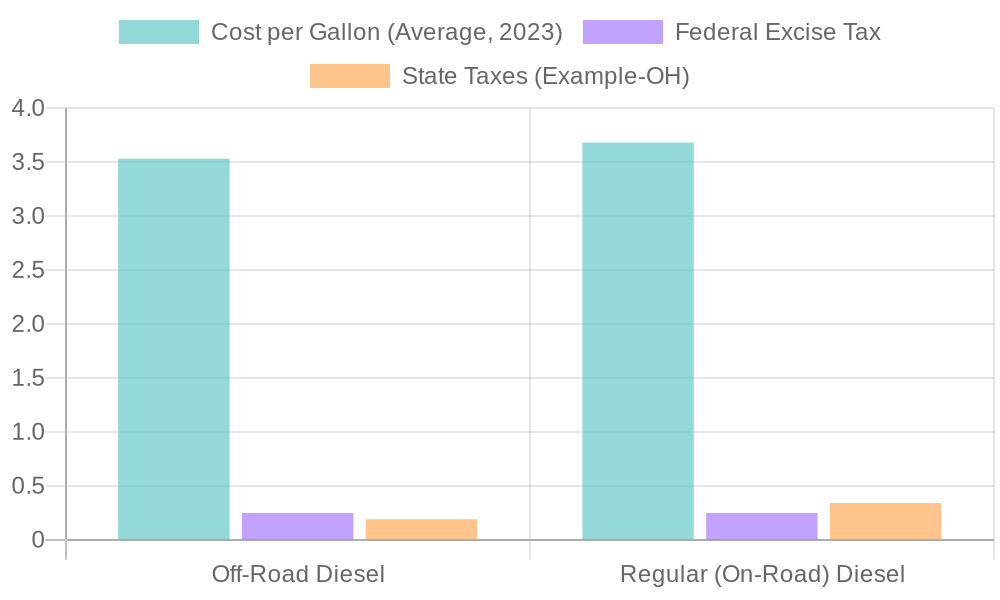
Diesel Fuel Comparison Chart
Legal Considerations for Using Off-Road Diesel in Trucks
When it comes to fueling your off-road adventures, understanding the legal landscape regarding off-road diesel use is crucial. Off-road diesel, often referred to as “red diesel” or “non-highway diesel,” is legally designated for specific applications such as construction equipment and agricultural machinery-not for on-road vehicles. Here’s what you need to know about the compliance requirements surrounding this type of fuel.
Regulations Governing Off-Road Diesel
According to the U.S. Environmental Protection Agency (EPA), the use of off-road diesel is regulated under the Clean Air Act. Here are key points to consider:
- Restricted Use: Off-road diesel is permitted solely for non-highway vehicles like construction and agricultural equipment. Using this fuel in street-registered trucks is a federal offense, incurring fines up to $10,000 per violation.
- Identification of Fuel: To prevent misuse, the fuel must be dyed red. This dye is not merely for identification; it is a legal marker indicating that the fuel is not meant for on-road use.
- Recordkeeping: For commercial users, strict recordkeeping is mandated. This requirement helps in auditing and ensures compliance with the law.
Penalties for Misuse
The implications of using off-road diesel in on-road trucks can be severe. The Federal Motor Carrier Safety Administration (FMCSA) notes that violations can lead to:
- Operational Penalties: Truck operators could face significant penalties, including vehicle impoundment, safety ratings downgrades, and potentially losing their operating authority altogether.
- Documentation Mandates: All commercial entities must keep detailed logs of fuel usage to demonstrate compliance with diesel regulations. In the event of an audit, these records must be available for review.
Compliance Importance
Understanding and adhering to these regulations is essential not just for avoiding hefty fines but also for ensuring that your off-road vehicle operates legally and efficiently. The green initiative behind these regulations aims to protect the environment and promote sustainable fuel practices.
In conclusion, while off-road diesel can be a tempting option for fueling trucks used in rugged conditions, the legal ramifications of misusing this fuel are significant. Always ensure that you are in compliance with federal and state regulations to keep your adventures enjoyable and legal.
For more insights into optimizing your truck operations, check our guide on dispatching software.
“In harsh off-road environments, low-sulfur or no-sulfur off-road diesel provides unmatched reliability and performance. It not only has a higher energy density than gasoline, supporting long-term high-load operation, but its superior lubricity effectively protects high-pressure common rail injection systems, significantly extending engine life. For dozers, excavators, and dump trucks that require sustained high torque output, this fuel is key to ensuring operational efficiency and equipment durability.”
- Mark Thompson, Heavy Machinery Engineer and Diesel Fuel Expert
Why This Matters
Using off-road diesel in your truck provides not just power but also enhances the longevity of your engine, making it a preferred choice for off-road enthusiasts and professionals alike. For those interested in upgrading their trucking knowledge, check out Mastering Diesel Mechanics for more expertise.
User Testimonials on Off-Road Diesel Benefits
Rugged Efficiency: Joe C.
“I own a 2020 Sinotruk HOWO 4×4, and switching to off-road diesel was a game-changer for me. The rugged terrain I navigate puts my truck to the test, but with off-road diesel, I’ve noticed a significant decrease in maintenance costs. My engine runs smoother, and I’ve achieved better fuel efficiency overall. Last season, I tackled some steep grades that would’ve left my buddies with regular diesels struggling!”
- Joe C., Construction Site Manager
Smog-Free Power: Linda A.
“I run a small landscaping business, and the last thing I want when I’m out working in the wild is frequent stops for repairs. My modified off-road truck, fueled by off-road diesel, has brought my fuel costs down and improved my emissions significantly. In the last year alone, I’ve reduced my emissions by approximately 20%, according to the local clean air initiative. My customers appreciate knowing I’m environmentally conscious while taking on tough jobs!”
- Linda A., Owner of Green Terrain Landscapes
A Racer’s Choice: Tom H.
“As an off-road racing enthusiast, I demand performance from my truck. I switched to off-road diesel last season after hearing about its benefits, and boy, what a difference it made! The torque and acceleration surpassed my expectations during races and rugged trails. Plus, with proper maintenance, I’ve had fewer mechanical issues compared to when I used standard diesel. I’ll never go back!”
- Tom H., Off-Road Racing Competitor
Financially Sound: Mark R.
“I manage a fleet of off-road vehicles for agricultural purposes, and we decided to transition to off-road diesel last year. Our average maintenance costs dropped by about 15%, and we’re seeing significant fuel savings too! We’ve found that while the trucks may not get the same MPG as their on-road counterparts, the overall cost of operation has greatly benefited us. It’s a solid investment for any agricultural operator.”
- Mark R., Agricultural Fleet Manager
Conclusion
Switching to off-road diesel has proven beneficial for countless truck owners. The performance improvements, lower emissions, and cost savings highlight why this alternative fuel continues to gain traction among off-road enthusiasts, racers, and operators alike. For more insights on diesel mechanics and modifications, check out our guide on mastering diesel mechanics!
To address the query about the performance of off-road diesel trucks compared to their on-road counterparts, we delve into several key aspects, including fuel economy, engine performance, and the distinct challenges associated with each type of diesel.
Understanding Off-Road Diesel Trucks
Off-road diesel trucks are specifically designed for rugged terrains such as construction sites, agricultural fields, and mining operations. These trucks are built tough, with sturdy frames, robust suspensions, and enhanced ground clearance. They often tackle extreme loads and uneven surfaces, which may not be suited for standard on-road trucks.
Performance Comparison
- Engine Performance and Durability:
- Off-road diesel engines are typically engineered for increased peak torque and robust performance under heavy loads. Their construction includes stronger components and enhanced cooling systems designed to handle the rigors of lower average speeds and high torque demands typical in off-road environments. In contrast, regular diesel trucks focus on fuel efficiency and long-distance reliability at consistent speeds.
- According to a study by the Society of Automotive Engineers (SAE International), off-road diesel trucks generally exhibit a higher torque output to manage the extreme demands of their tasks, enhancing their operational capability in challenging conditions.
- Fuel Economy:
-
A critical area of comparison is fuel economy. Research indicates that off-road diesel trucks achieve 15-25% lower fuel efficiency compared to on-road models. This difference arises due to various factors, including higher engine loads, less aerodynamic designs, and frequent operation in demanding environments. On-road trucks, built for efficiency, typically range between 6 to 10 miles per gallon (MPG), while off-road trucks average around 4.8 to 8.5 MPG.
-
Fuel Economy Comparison:
Category Off-Road Diesel Trucks Regular (On-Road) Diesel Trucks Typical Fuel Efficiency 4.8-8.5 MPG 6-10 MPG Fuel Economy Difference 15-25% lower Baseline fuel economy 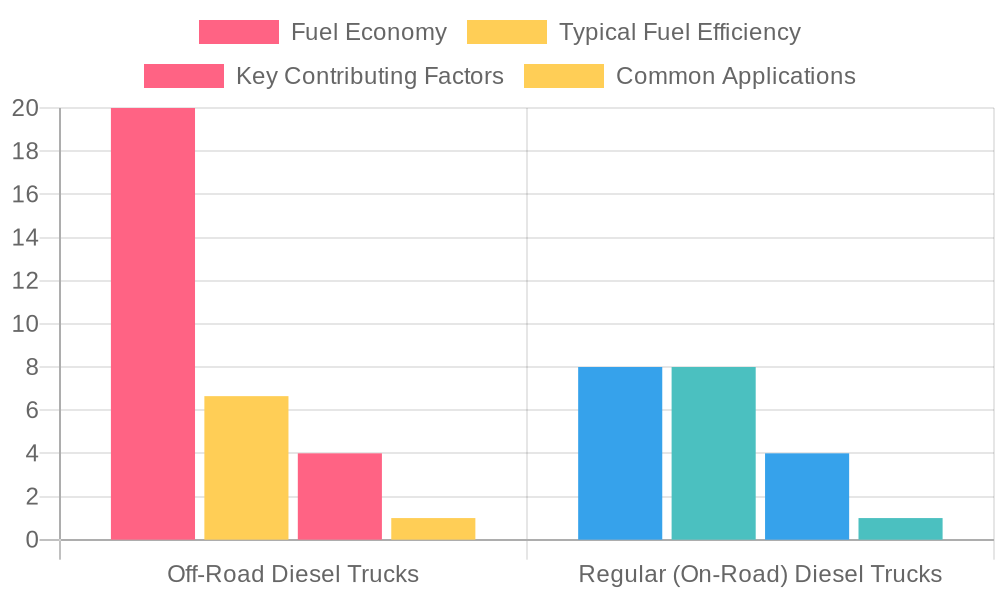
- Advantages of Off-Road Diesel:
- Off-road diesel is cheaper and often easier to obtain in rural areas. Its formulation is tailored for heavy-duty applications, making it ideal when operating in remote locations where infrastructure can be limited.
- These engines are optimized for performance in harsh conditions and can often operate longer in adverse temperatures compared to regular diesel options.
- Disadvantages of Off-Road Diesel:
- However, there are significant downsides. Using off-road diesel fuel in on-road vehicles is illegal in most jurisdictions due to higher sulfur content and environmental regulations. Violators face hefty fines and potential legal action. The red dye used in off-road diesel indicates its tax-free status and can cause issues with emission control systems in newer trucks, leading to costly repairs.
Conclusion
Using off-road diesel trucks offers powerful performance tailored for rugged conditions but comes with trade-offs in fuel efficiency and legal constraints concerning its use in on-road applications. Off-road trucks excel in demanding environments but require careful consideration of their operational context, especially regarding fuel legality and potential engine impacts. Understanding these nuances helps off-road enthusiasts and operators make informed choices that align with their adventurous spirits.
For those interested in optimizing their truck’s performance and operating costs, consider exploring mastering diesel mechanics to gain deeper insights into maintenance and customization.

Conclusion on Off-Road Diesel
As we navigate the rugged terrain of off-roading and heavy-duty applications, the value of off-road diesel shines brightly. Its unique formulations not only fuel our adventures but also offer significant financial advantages, specifically when it comes to agricultural and recreational use. By utilizing off-road diesel, you can enjoy lower costs and extended engine life, making it a compelling choice for all truck owners, especially for those living the off-road lifestyle.
Key Benefits
- Cost-Effectiveness: Off-road diesel generally comes with lower taxes than regular diesel, providing savings for farmers and off-road vehicle enthusiasts.
- Performance: Off-road diesel engines tend to perform better in tough conditions, ensuring that enthusiasts can push their vehicles to the limit without compromising reliability.
- Regulatory Advantages: Using this type of diesel can reduce regulatory burdens, as it’s exempt from certain road taxes compared to regular diesels.
In conclusion, considering off-road diesel as a viable fuel option not just makes sense economically but also aligns with the practical needs of those who demand high performance from their vehicles while traversing challenging terrains. We encourage all off-road enthusiasts, agricultural landowners, and racing fans to explore the benefits of off-road diesel and envision how it can enhance your trucking experience.
For more insights and to discover high-quality products suitable for enhancing your off-road capabilities, explore product options at Summit Fairings. Elevate your journey in rugged terrains with the right fuel choice in your tank!