
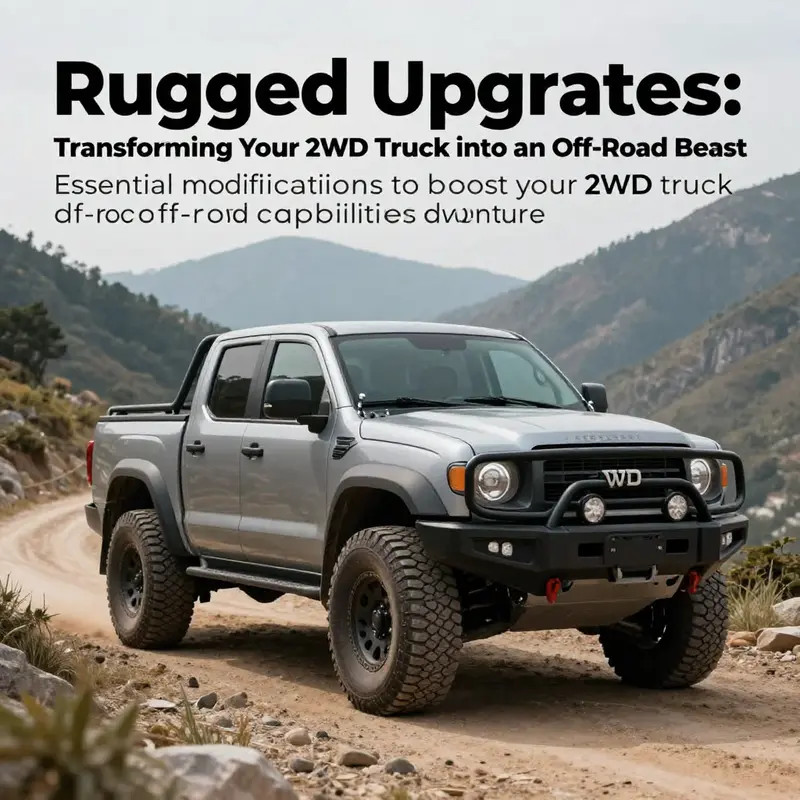
For trailblazers and off-road adventurers, the thrill of conquering rugged terrains has no limits. Many enthusiasts believe that only 4WD trucks can handle the diverse challenges of off-road driving. However, a well-equipped 2WD truck can rise to the occasion with the right modifications. In this guide, we will explore how to enhance your 2WD truck’s performance by focusing on tires, drivetrain efficiency, suspension upgrades, and essential accessories. Each chapter delves into practical steps that will optimize your vehicle, ensuring it can brave the toughest trails while providing you with a versatile and capable ride.
Tread, Traction, and Terrain: Choosing Tires for a Capable 2WD Off-Road Truck
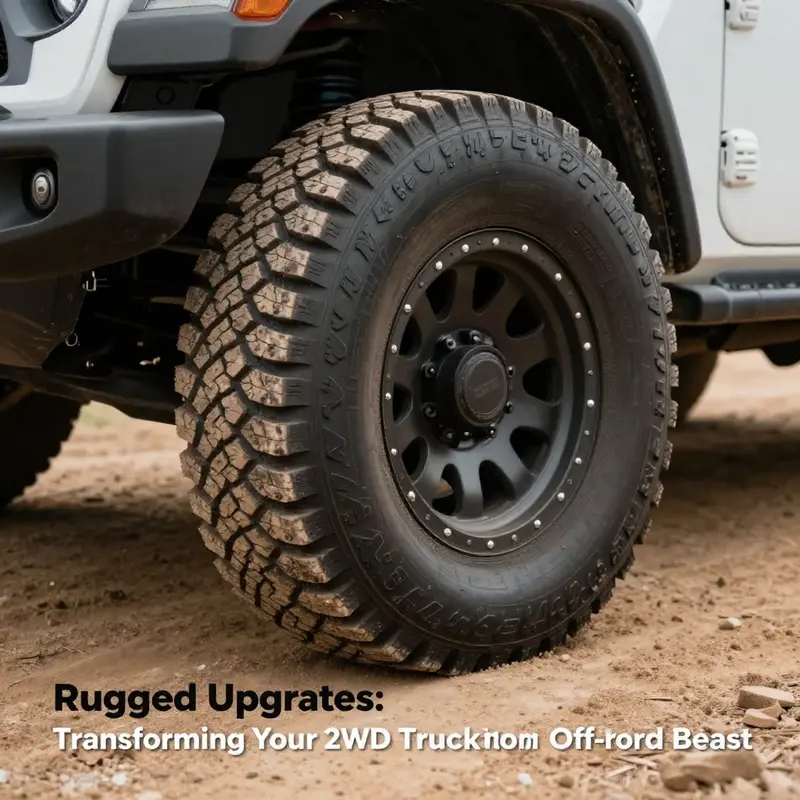
The tire is the first and most honest indicator of a two-wheel drive truck’s off-road potential. It is the interface between power and ground, between intention and motion. In a capable 2WD setup, you cannot compensate for poor traction with clever gearing or clever line choices alone; the tire must convert torque into grip across a spectrum of surfaces, from mud and sand to gravel and jagged rock. The decision you make about tires reverberates through every other upgrade you plan—from suspension to drivetrain refinements—and it shapes how often you actually reach your destination rather than just imagining it. So the tire choice deserves careful thought, framed by how you use the truck and the kinds of terrain you expect to meet on your journeys.
The most fundamental distinction you face is tread design. An aggressive all-terrain pattern sits in a middle ground, engineered to offer reliable bite on dirt and moderate trails while remaining reasonably quiet and predictable on paved roads. A more specialized mud-terrain design, by contrast, features deeper, more open voids and larger lugs that bite into soft, sticky surfaces and resist packing with mud. The payoff is obvious on sludge, clay, and slick banked surfaces where a tire must resist spinning and trap debris rather than smear it around the tread. But there is a caveat. Mud-terrain tires typically reveal their side of the trade in everyday use: more road noise, a modest drop in fuel efficiency, and a tendency for higher wear when run regularly on pavement. The all-terrain option, meanwhile, aims to strike a balance. It typically preserves smoother highway behavior and longer life while still delivering meaningful traction off the pavement.
Beyond the basic tread pattern, you should pay close attention to the sidewall strength. A reinforced or stiffer sidewall can be a lifesaver when the trail runs the truck over sharp rocks or when the tire must carry significant side loads from uneven ground. Strong sidewalls reduce the risk of punctures and gashes that could end a trip far from help, and they improve steering predictability as the tire deflects less under load. The same stiffness that protects the sidewall can translate into a stiffer ride, however, so the benefit comes with a comfort compromise. For a 2WD build meant to squeeze through tight trails or to log long miles with occasional off-road detours, a balance often arrives in the form of a robust sidewall that still allows a reasonable amount of give and compliance on rough terrain.
Sizing and load capacity are not mere technical details; they govern safety, handling, and how effectively the tire can carry the truck’s weight under edge-case conditions like heavy loading or towing. Tires that are too large can upset steering geometry, alter the speedometer reading, and create clearance problems with suspension components and the body. Tires that are undersized may not support heavy payloads or resist impact at speed on rough surfaces. The key is to mirror the tire size and load rating recommended by the vehicle manufacturer, and then consider a slightly broader footprint only if the rest of the chassis, including the suspension and wheel wells, can accommodate the change without rubbing or binding. When you do decide to alter tire size, you should also reassess alignment, braking performance, and the overall balance of the drivetrain. The presence of a rear differential upgrade, such as a limited-slip device, can make the most of the new contact patch only if the tire can actually grab the terrain; otherwise, you may simply magnify wheel spin instead of converting it into forward momentum.
In practical terms, your terrain portfolio should guide the tire you select. For drivers who spend most weekends on dirt roads, chalking up a few miles on dusty trails and seasonal mud runs, an all-terrain tire with a robust, self-cleaning tread helps maintain grip as the terrain evolves. The self-cleaning behavior is crucial because, as you press deeper into a trail, mud and debris quickly build up within the tread blocks. A tire that ejects the debris efficiently keeps the contact patch fresh and stable, which translates into more predictable steering and better throttle control. On rocky sections, the tire’s bite matters as much as its resilience. A tire with a stout shoulder pattern and generous biting edges will grip uneven rock faces and scale ledges more confidently, provided the sidewalls can resist cuts and punctures from sharp edges. When the surface slides toward looser conditions—sand or loose gravel—the tire must float rather than dig; here a slightly wider footprint can help distribute weight and prevent burying into the ground.
The choice between an all-terrain and a mud-terrain option is not merely about terrain; it also concerns how you want the truck to feel on everyday roads. If you intend to drive the truck daily, including long commutes or frequent highway use, the all-terrain route tends to offer the smoother ride, better tread life, and more consistent fuel economy. For many owners, this translates into a practical, versatile vehicle that remains capable when the trail appears on a weekend without demanding a dedicated spare vehicle in the garage. If, however, your adventures routinely take you into deep mud, unyielding sand, or rocky, technical trails, the mud-terrain choice becomes more compelling. You gain traction in the most demanding environments, and you accept the noise and fuel penalty as the cost of admission. Either path remains valid, but the decision must align with your typical use pattern, your tolerance for compromise on pavement, and the degree to which you want the truck to feel formidable at the first contact with a trail.
Fitment considerations extend beyond the tire itself to the vehicle’s geometry and the driver’s preferences. The truck’s suspension tuning, wheel offset, and overall stance influence how much grip you can extract from the ground. A taller ride height increases the chance of wheel contact with obstacles but also changes steering geometry and the risk of rubbing. A widened stance may improve stability and flotation on soft surfaces but requires careful attention to fender clearances and load-bearing capacity. In the balance of all these factors, tires can indeed be the hinge that determines liveability on pavement and fearless ascent on remote trails. That is why aligning tire choice with the rest of the build—particularly the drivetrain and suspension configuration—is a prudent path. A rear limited-slip differential, for instance, can significantly improve the translation of tire grip into forward motion, but the reinforcement comes only if the tires are capable of actually gripping the surface; otherwise, the LSD just reduces the probability of spinning a wheel uselessly.
The realities of maintenance and usage should also shape your decision. Tire pressures play a disproportionate role in off-road performance. When you venture off pavement, you will often lower the air pressure to increase the footprint and improve traction on soft surfaces. The goal is to maximize the ground contact area so the tire can push against the soil or sand rather than slip on it. However, the margin is narrow. Too-low pressure risks bead unseating, excessive heat buildup, or even structural damage on sharp rocks. The discipline of checking pressures before and after off-road sections, and the habit of carrying a portable compressor or a method to reinflate safely, makes a tangible difference in both tire longevity and performance. The tire’s construction—its casing design, ply count, and overall durability—also informs how far you can safely drop pressure and how well it will resist punctures and heel-toe wear through a long, gnarly trail.
From a longer-range perspective, the tire choice dovetails with both safety and capability. The right tire, paired with a properly chosen rear differential and a tuned suspension, creates a truck that is not simply able to visit off-road areas but is reliable enough to return home with something left in the tank and a story to tell. The focus should remain on credible testing and real-world feedback, recognizing that tire behavior can vary with temperature, load, and wear. When evaluating options, it helps to study reviews and field tests that report on traction, durability, and the all-important balance between on-road manners and off-road bite. The tire’s capability does not exist in isolation; it interacts with every other system, and the payoff comes when all elements are tuned to the same mission: to deliver controllable, predictable, and repeatable performance across a range of terrains with a two-wheel drive chassis.
For those looking to deepen their understanding, there are comprehensive analyses and side-by-side comparisons that illuminate how different tread patterns and compounds behave under real-world conditions. These resources can be a practical guide as you narrow your choices, test-fit tires on your vehicle, and observe how your truck handles when body weight shifts and the ground texture changes beneath you. The path to a truly capable 2WD off-road truck is not a single upgrade but a cohesive strategy that respects the terrain you plan to conquer, the load and towing demands you intend to meet, and the way you want your truck to feel when you reach a challenging spot and must climb, crawl, or moderate your speed to keep traction intact.
In sum, tire selection is where the promise of capability often becomes a practical, ride-worthy reality. It is where the two-wheel drive’s limitations are transformed into a defined set of conditions you can meet with the right contact patch, robust sidewalls, and an appropriate balance of tread design for your typical environments. This choice informs how you configure the rest of the truck, from the drivetrain to the suspension and protection components, and it ultimately shapes your confidence on the trail. When you line up the terrain you expect with the trade-offs you can tolerate on pavement, you begin a dialogue between traction and control that, in a capable 2WD build, is the true measure of off-road readiness. For a deeper dive into comparative tire performance and selection criteria, see the external resource linked below, which offers detailed testing, performance criteria, and practical takeaways for choosing tires suitable for trucks that venture off the beaten path: https://www.caranddriver.com/trucks/a39786145/best-off-road-tires-for-trucks/
Grip Without Four Wheels: Elevating a 2WD Off-Road Truck with Limited-Slip Differentials
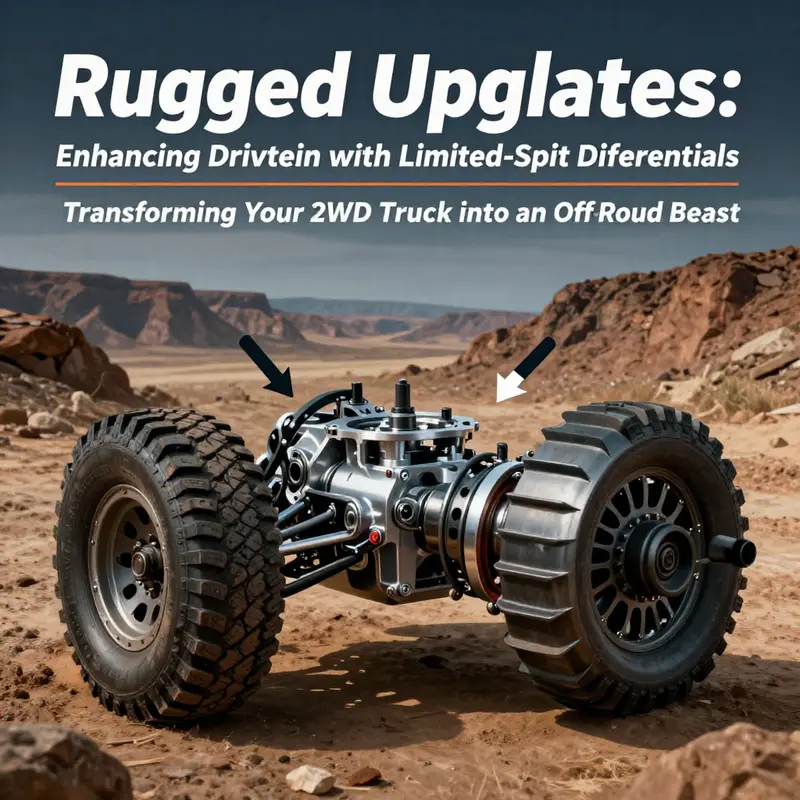
Traction is the currency of off-road travel, and in a capable two-wheel-drive pickup the right differential can turn limited pegs of grip into real forward momentum. This chapter centers on a practical truth: adding a rear limited-slip differential is one of the most efficient upgrades you can make to a 2WD setup. It doesn’t conjure the full breadth of four-wheel-drive capability, but it changes what a 2WD truck can do on loose, uneven surfaces. Instead of chasing horsepower alone or trying to force front tires to do the work they can’t, you rebalance the equation so power is shared through the rear axle in a smarter, more forgiving way. When one rear wheel breaks traction—on slick mud, soft sand, or jagged rocks—the limited-slip mechanism detects the disparity in wheel speed and redirects torque toward the wheel that still has grip. The result is less spinning, more forward motion, and a noticeable improvement in the vehicle’s ability to surge through challenges without getting bogged down in place. In practice, this enhancement works best when it is part of a holistic approach that also considers tire selection, suspension travel, and underbody protection. A well-matched combination of capable tires, a properly tuned suspension, and a rear LSD can make a 2WD pickup feel much closer to a light-duty 4WD in adverse conditions, while preserving the efficiency and urban usability that drew many buyers to 2WD in the first place.
Understanding the role of a rear LSD starts with recognizing how torque is distributed under load. An open differential—common in many stock axles—sends torque to the wheel with the least resistance. That sounds simple, but it creates a problem when one rear wheel sits on slick surface while the other has even a fraction more grip. The spinning wheel saps momentum, while the other wheel, if it sits with less torque, cannot contribute meaningfully to progress. A limited-slip unit uses a clutch pack, gears, or a viscous medium to limit that unwanted slip. When the system detects one side slipping, it chokes that wheel’s freedom just enough to push more torque across to the wheel with better grip. The mechanical arithmetic is straightforward, but the practical impact is substantial: steadier acceleration, more consistent cornering under power, and less time spent wrestling with rockered rear tires trying to regain traction.
From a development and durability standpoint, the LSD approach fits neatly with the realities of off-road work. In rugged applications—from forestry tasks to light mining support—the same principle guides the choice: maximize traction where you can, minimize energy wasted in wheel spin, and keep the system reliable under harsh conditions. The 2026 updates to LSD implementations emphasize smooth operation and quiet engagement, which matters in environments where abrupt torque changes can unsettle a vehicle’s balance. The practical upshot for a 2WD truck is that an LSD-equipped rear axle can behave much more like a natural extension of the driver’s input. The driver need not master heroic throttle control to keep momentum; instead, they can focus on line choice and pace, letting the differential’s torque-splitting do the heavy lifting through uncertain terrain.
The psychological impact is just as important as the mechanical one. Off-road driving is as much about confidence as it is about grip. When you know the rear end is helping you stay in control rather than reacting to an unpredictable wheel, your steering inputs can become more purposeful. You can approach obstacles from angles that distribute weight more evenly, you can select lines that minimize exposure to wheel spin, and you can maintain momentum through shallow ruts and uneven rock faces. That sense of predictability matters, especially when the truck is operating at the margins of its capability. The LSD provides a steadier baseline, but it does not replace the need for quality tires, adequate suspension travel, or careful driving technique. The dance between tires, suspension, and a rear LSD is a choreography where each element amplifies the others.
To integrate a rear LSD effectively, a few practical considerations matter. First, ensure the axle housing and carrier are compatible with the chosen differential unit. Compatibility affects installation complexity, sealing reliability, and long-term lubrication. Second, plan for gear oil changes at intervals appropriate for the differential type you select. Some mechanical clutches require different lubrication characteristics than a viscous LSD. Third, inspect the mounting points and the drive shaft alignment to avoid binding during articulation. A hill climb with uneven traction can stress the rear suspension and the differential housing if the components aren’t matched. These are not steps you improvise in the field; a qualified technician often performs the install to preserve bearing tolerances and to guarantee that the LSD engages smoothly with the rest of the drivetrain. The payoff, however, is a noticeably more composed vehicle on rough surfaces, especially when traction is scarce and momentum matters.
Beyond the mechanical fit, the LSD interacts with other upgrade paths. Tire choice remains foundational; a capable all-terrain or mud-terrain tire with a robust sidewall and tread pattern is essential. If the tires are skittering on loose substrates, even the most capable differential can be overwhelmed. Similarly, suspension tuning matters: adequate rear articulation allows both wheels to follow irregular surfaces more effectively, creating more consistent contact with the ground. A modest lift or sturdier shocks can increase ground clearance and give the tires time to find grip without excessive body roll, which complements the LSD’s torque-balancing behavior. Skid plates, protective armor, and a properly stowed recovery kit complete the picture, reducing the risk of damage and keeping the vehicle moving once you’re beyond the trailhead.
From a maintenance viewpoint, the LSD invites a routine that is not dramatically onerous but is crucial for reliability. The differential fluid should be checked and replaced at intervals recommended for the specific unit, especially after repeated off-road sessions in dusty or muddy conditions. Debris and water ingress can compromise clutch materials and add wear, so ensuring seals are intact and mounting hardware remains snug is part of a regular checks routine. A cautious break-in period after installation helps the friction materials bed in smoothly, reducing the chance of chatter or uneven engagement during the first miles of use. The goal is a quiet, predictable engagement pattern and a consistent degree of resistance during wheel slip, not sudden clutching that could unsettle the vehicle’s balance. With proper care, the rear LSD will deliver steady performance for many seasons, aligning with the durability expectations of a rugged 2WD workhorse.
In practice, the LSD’s benefits become most evident when you combine it with disciplined driving and thoughtful line selection. A two-wheel-drive truck, when equipped with a rear LSD, can gain traction through corners and transitions that would previously require a reset or a push. You can keep a higher cruising speed through sandy washouts, or maintain forward progress while crossing a bed of loose gravel where one tire would otherwise spin away. The LSD’s influence is most apparent on re-entrances to firmer ground after a momentary loss of grip, where the other wheel’s regained traction pulls the vehicle forward with more consistency than a single driven wheel could manage alone. This is where the combination of tire choice, suspension range, and a rear LSD creates a more forgiving and capable off-road platform without the footprint and fuel-cost penalties associated with a full four-wheel-drive system.
For readers who want to explore the broader maintenance philosophy behind drivetrain reliability, a deeper look into diesel and torque management can be enlightening. A resource like mastering-diesel-mechanics-your-step-by-step-path-to-success offers valuable context on how meticulous maintenance practices support power delivery and component longevity. While the focus here is on a front-of-mind differential upgrade, the underlying principle—anticipating wear, understanding how components interact, and keeping the system well-lubricated and within specification—applies across the drivetrain. The fusion of a rear LSD with careful maintenance creates a robust, resilient backbone for a 2WD build that can confidently venture beyond paved roads.
In sum, upgrading a 2WD off-road truck with a rear limited-slip differential represents a pragmatic path to elevating capability without sacrificing the virtues of efficiency and ease of use. It is not a substitute for four-wheel-drive systems, and it does not magically transform a 2WD into a rock-crawler. It does, however, change the game by providing continuous traction where it matters most—the rear axle—and by allowing the vehicle to maintain momentum through terrain that would otherwise stall it. When paired with high-quality tires, a forgiving suspension setup, and thoughtful protection and recovery gear, the LSD becomes a central pillar of a capable 2WD off-road platform. The result is a truck that can negotiate mud, sand, and uneven rock with steadier power, more confident handling, and better overall efficiency on the kind of mixed-terrain trips that define modern lightweight off-road adventures.
External reference: https://www.4x4world.com/limited-slip-differential-guide
Suspension Mastery for a Capable 2WD Off-Road Truck: Elevating Clearance, Articulation, and Control
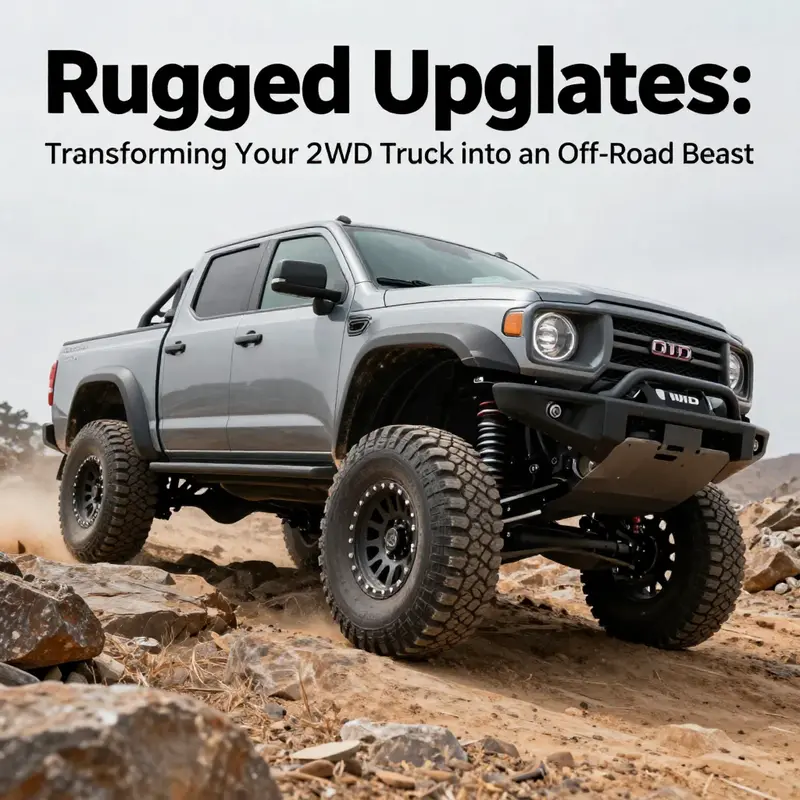
Suspension mastery is the quiet engine behind a truly capable 2WD off-road truck. It is not just about a higher ride height or a stiffer ride; it is about keeping tires in contact with the ground as the terrain shifts beneath you. A robust, well-considered suspension setup acts as the bridge between your truck and the trail, translating your steering input into controlled motion across rocks, mud, sand, and rutted tracks. When you high-grade the suspension, you unlock greater tire contact, better traction, and a safer, more predictable ride. This foundation, paired with quality tires and an effective rear differential upgrade, creates a machine that can handle obstacles with confidence rather than fear. In practice, the suspension you choose should be viewed as an investment in control, durability, and long-term reliability on remote backroads where repair options are limited and every mile counts.\n\nThe most immediate impact of an upgraded suspension is increased ride height. Extra ground clearance buys you time when you face rocks, logs, or sudden dips that would otherwise threaten the undercarriage. For a 2WD platform, the extra clearance is particularly consequential because there is no secondary driven axle to dig you out when one wheel loses traction. With more space between the punchy ground and vital components, you can approach obstacles with reduced risk of denting frame rails or puncturing exhausts and fuel lines. But height alone does not guarantee success; height must be paired with articulation. Articulation is the ability of each wheel to move independently through larger arcs so that when one wheel climbs over an obstacle, the others stay in contact with the ground. Upgraded components that allow greater wheel travel enable this continuity of contact, which translates into more consistent traction and smoother climbs. In turn, improved travel helps the suspension absorb impacts more gracefully, reducing jarring transfers to the chassis and maintaining steering feel on rough terrain.\n\nA capable suspension system also emphasizes durability and load handling. Off-road situations demand components that can withstand repeated flex, heat, and stress without fading or failing. Many aftermarket suspensions emphasize heavy-duty springs or coils, reinforced control arms, upgraded shocks, and robust bushings. The goal is not to over- stiffen the ride but to maintain predictable damping that matches the terrain. When dampers and springs are designed to work in concert, the truck can absorb bumps without losing control or bottoming out. This balance between stiffness and compliance is what prevents tire chatter and keeps wheel speeds stable as you navigate obstacles. Equally important is the ability to fine-tune the system. Options like adjustable dampers, different spring rates, and, in some configurations, coilover arrangements offer a level of control that allows the driver to tailor the ride height, stiffness, and travel to the mission at hand—whether you are crawling a rocky pass or cruising a muddy dip. For enthusiasts who regularly load the truck for trips or carry heavy camping gear, the customization is critical. It allows you to maintain performance across varying loads and terrain without compromising safety or control.\n\nThe benefits of upgrading extend beyond height and travel to the overall durability of the drivetrain. A robust suspension reduces the leverage that harsh terrain exerts on the chassis and drivetrain components. When the suspension remains within its designed range, components experience less sudden stress and fewer micro-movements that accelerate wear. Stronger control arms, heavier-duty springs, and higher-quality shocks resist flex and fatigue during long expeditions. This means longer intervals between major maintenance events and a lower probability of unexpected failures when miles from civilization. The result is a more reliable platform for self-recovery, as the suspension keeps tires planted and the tires planted keep you moving. In practical terms, the vehicle becomes more predictable in slow crawls where balance matters as much as torque. You feel the trail through the steering, and you can respond with precise, measured actions rather than erratic steering input caused by a wallowy or imprecise suspension.\n\nCustomizability is another compelling dimension of modern suspension upgrades. You can choose from a spectrum of configurations, including coilover systems that blend ride height control with damping precision, air suspension options that offer on-demand ride adjustments, and traditional leaf springs or multi-link setups that emphasize gradient stability and load management. Each path offers its own blend of ride quality, ground clearance, and articulation. Coilovers, for instance, let you dial in ride height and stiffness with a few turns of a wrench, while air suspension can provide dynamic height changes for adapting to different trail sections or for loading and towing scenarios. The choice depends on how you plan to use the truck. If you frequently switch between light-duty daily driving and rugged backcountry trails, a system that allows for swift height adjustments without sacrificing control can be a game changer.\n\nWhile the benefits are clear, suspension upgrades come with practical considerations that must be balanced against ambition. Cost is a primary driver. High-quality springs, dampers, control arms, and mounting hardware add up, and installation labor can be substantial if you are not performing the work yourself. Even if you opt for a simpler, bolt-in upgrade, you should budget for installation to ensure you retain proper alignment and bump-stop spacing. Maintenance is another factor. Upgraded systems frequently require more ongoing attention than stock setups. This can include periodic inspection of bushings and linkages, checking for air leaks in those with air assist, and monitoring shock seals for leaks under heavy use. Regular alignment checks are essential after any significant suspension change to preserve steering geometry and tire wear patterns. It is also worth noting that increased ride height can alter handling characteristics and, in extreme cases, approach and departure angles. This is not a reason to retreat from a lift, but a reminder that you must recalibrate your driving technique and, if necessary, adjust other systems to maintain safety and performance.\n\nA holistic approach to making a capable 2WD off-road truck requires recognizing how the suspension interplays with tires and the broader drivetrain. The right tires provide grip, but they cannot exploit the grip without a chassis that positions the tire correctly on uneven ground. Upgraded suspension keeps the tire in contact with the terrain longer, enabling more consistent traction and reducing the likelihood that a single slick or rock will cause a spin. The rear limited-slip differential, which is another pivotal upgrade for 2WD trucks, works best when the suspension maintains tire contact. LSD helps distribute power more evenly between the rear wheels when traction is uneven. If one wheel starts to slip, the other can receive more torque, allowing movement rather than getting stuck. When you combine a capable LSD with a suspension system that maintains tire contact and provides ample wheel travel, you gain a cohesive platform that can push through loose sand, deep ruts, or a rocky staircase with more confidence. Skid plates and recovery gear, including a properly rated winch and reliable lighting, complete the package by protecting critical undercarriage components and improving safety in remote locations. The resulting truck feels less tentative and more prepared for the unpredictability of the trail.\n\nThe path to an effective suspension upgrade also invites a disciplined approach to selection and execution. Consider your typical terrain and load. If you frequently grapple with rocky trails, you might prioritize higher spring rates and longer travel to keep tires engaged as you climb rather than pack more stiffness for high-speed desert runs. If you often combat deep mud, a system that maintains consistent damping through varied compressions becomes essential. It is wise to plan for alignment checks after installation and to budget for professional installation if the task exceeds your mechanical comfort. A thoughtful setup balances height, travel, and damping in a way that preserves daily usability while delivering enhanced capability off-road.\n\nIn sum, upgrading the suspension is not merely about lifting the truck; it is about restoring harmony between tires, chassis, and terrain. Height without travel is a trap, and travel without control is a risk. The combination of increased ride height, improved articulation, greater suspension travel, and the durability of heavy-duty components provides the base for a 2WD off-road truck to tackle challenging terrain with poise. When this foundation is paired with selective tire upgrades, a rear LSD, and protective and recovery gear, you gain a capable platform that remains predictable and controllable no matter how rough the trail becomes. This is what turns a stock pickup into a trail-tested partner, ready to chart new routes and to recover when the going gets tougher than expected. For those seeking deeper technical guidance on 2WD suspension upgrades, consult the broader body of work that covers the mechanics, alignment, and tuning principles behind these effective systems. External resource: https://www.offroad.com/2wd-truck-suspension-upgrades-guide
The Versatile Workhorse on Rough Ground: Essential Accessories that Turn a 2WD Off‑Road Truck into a Multifunctional Trail Tool
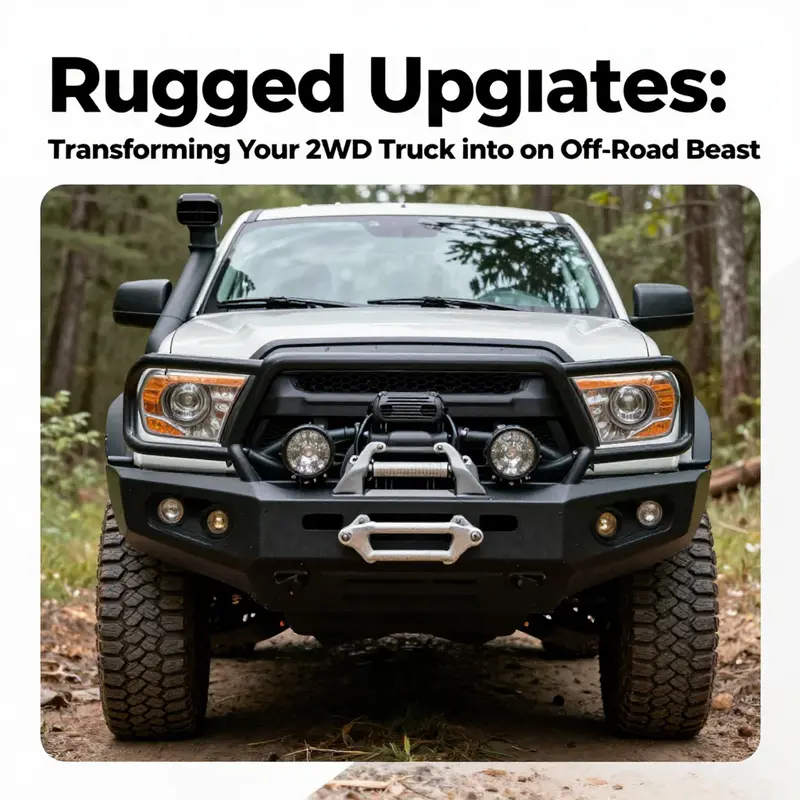
Turning a capable two-wheel-drive platform into a rugged off-road workhorse begins not with raw horsepower alone, but with the right set of capabilities. Traction, protection, and the flexibility to re-task the vehicle as terrain and task demand define a truly versatile machine. The approach here treats the truck as a modular platform, where each accessory adds a concrete virtue: grip on loose rock and mud, safer control in dusty or windy environments, and the capacity to carry out precise positioning or lifting in remote locations. The goal is not to create a single-purpose rock crawler but to craft a vehicle that can handle trail‑work, site support, and light industrial duties without switching vehicles. That mindset—to expand function without sacrificing reliability—frames the six essentials discussed here and weaves them into a coherent, practical build that stays faithful to the core idea of a capable 2WD off‑road truck.
At the heart of versatility is the cab itself. An adjustable cab is more than luxury; it is a practical necessity for operator comfort and control in demanding terrain. Rough ground disrupts posture, and fatigue compounds errors in steering, throttle, and brake modulation. A robust seating arrangement with adjustable cushions and lumbar support, coupled with a steering column and pedal position that can be dialed in for different operators or tasks, makes long days on rough tracks feasible. When you add the possibility of quick chin-up adjustments to your seating and controls, you enable a driver to maintain precision while performing tasks that demand steady hands and focused attention. The effect is subtle but profound: better control, reduced fatigue, and fewer slips when negotiating obstacles or aligning a load beneath a low clearance or on uneven ground.
High‑performance pneumatic tires form the second pillar of capability. Tires determine how firmly a truck grips the surface, how it behaves when transitioning from pavement to rock to mud, and how much shock is absorbed as the vehicle moves. The goal is to strike a balance between robustness and tractable width, since wider tires can improve flotation on loose surfaces but may alter steering effort and fuel economy. Pneumatic tires with deep tread patterns and reinforced sidewalls deliver reliable grip on mixed terrains, from gravel to wet clay. Proper tire choice also means adopting careful air‑pressure management. Running tires at the correct pressures helps maintain contact with irregular surfaces, reduces the risk of bead loss during side slopes, and makes wheel travel more predictable when negotiating ruts or ledges. In a 2WD layout, where power is not evenly distributed to both axles, the tire setup can be the difference between a spin and real progress. Modern, top‑tier tires also offer improved heat resistance and puncture protection, which matters when the truck is working near sharp rocks or glassy shale that can shear rubber under load.
A third key component is the duplex or triplex mast—an idea borrowed from material handling equipment that expands the truck’s capabilities beyond simple transport. A duplex or triplex mast provides increased lift height and flexibility for hoisting or positioning loads. The full free triplex option, in particular, grants greater clearance under a load, a feature that becomes invaluable when operating in cramped spaces or stacking items at height. While this addition adds weight and alters the vehicle’s center of gravity, the payoff comes in utility: you can lift, place, and move materials with a level of precision that would be difficult with a standard pickup bed or tailgate setup. In rugged environments, this converts the truck into a portable lifting tool, able to support field operations, temporary infrastructure builds, or stock transfers on uneven ground. The mast’s hydraulic system must be matched with careful weight and load planning, so you retain stability on slopes and during articulation. When properly integrated, this feature turns the 2WD platform into a capable support vehicle for a range of tasks, from local construction to disaster recovery where accessibility is limited and manpower is at a premium.
Equally important are side shifters, which enable precise horizontal adjustment of forks or other attachments without needing to reposition the entire vehicle. In tight or cluttered work zones, side shifters reduce the need for maneuvering space and improve accuracy when placing a pallet, drum, or a tool crate at a defined point. The ability to nudge a load sideways with fine control means less risk of striking nearby obstacles or unloading misalignment, which can save time and prevent damage to both cargo and the truck. This capability is especially valuable when you pair it with a well‑matched mast and sealed cab system, since it allows the operator to make minute corrections in relative position while staying protected from the elements.
Sealed cabs round out the package by protecting the operator from dust, debris, and harsh weather. In off‑road or remote environments, dust can infiltrate controls, reducing feel and reliability. A sealed cab creates a sanctuary where a driver can maintain focus on the task at hand—whether it’s steering through a sandy wash, negotiating a rocky pass, or carefully lowering a load in a windy, salt‑spray environment near the coast. Sealed cabs also support cleaner, more consistent control inputs, since switches, joysticks, and levers stay free of grit that would otherwise degrade performance over time. The result is a more resilient work platform, capable of sustained operation in climates and terrain that would otherwise wear down a conventional setup.
Beyond the core trio of cab adjustability, tires, mast, and cab sealing, optional attachments substantially broaden a 2WD off‑road truck’s repertoire. Rotating forks, clamps, or bucket adapters transform the vehicle from a conveyor of goods to a dynamic, multiuse platform. Attachments extend the truck’s usefulness into areas such as material handling, light construction, or utility service where access is constrained. The modularity means you can tailor the truck to a particular site or job while preserving the option to revert to a simpler configuration for daily driving or fuel‑efficient operation. The right attachments also help protect cargo by providing secure gripping, controlled release, and safer lift‑and‑place maneuvers—capabilities that become essential when you’re working in uneven terrain or with awkward loads.
All of these accessories live within a broader context of weight, balance, and safety. Upgrades such as a rear limited‑slip differential, while not the focus of this chapter, continue to be a practical complement for two‑wheel drive platforms. In loose or uneven conditions, even modest torque distribution improvements can reduce wheel spin and help the vehicle maintain momentum. If you are balancing the added mass of the mast or attachments, it is essential to reassess suspension travel and sway characteristics. A careful approach—often beginning with an assessment of payload capacity and CG shifts—ensures that the vehicle remains predictable and controllable, rather than becoming a liability on exposure to ruts, ledges, or steep grades. This is not just about performance; it is about reliability in environments where breakdowns can mean delayed work or stranded equipment.
The concept of versatility also carries a practical, human dimension. The modular approach to upgrading a 2WD off‑road truck mirrors the way many organizations seek adaptable tooling to support varied missions. The philosophy is to layer capabilities, not to overwhelm the base vehicle with features that never see use. When the cab, tires, mast, side shifters, and sealed environments align with the operator’s workflows, the truck becomes a mobile workshop—capable of lifting, positioning, and transporting materials in a single, robust platform. This integration reduces the need to depend on multiple specialized vehicles and lowers overall operating costs, while still delivering the rugged performance required to navigate remote sites, construction zones, or field operations.
In moments of application, the ideas above bring to life a practical, field‑tested workflow. A driver can descend a rough, rocky trail, then pivot to a worksite where pallets need to be staged beneath a scaffolding or a temporary shelter. The adjustable cab makes cruising and precise operations comfortable, even when the terrain throws up a jolt. The tires maintain traction when the surface shifts from compacted dirt to loose gravel, and the mast presents a controlled, high‑lift method for lifting a drum or crate to a higher platform without needing a separate forklift. A side shift lets the operator align this load with exact spots for staging or placement. A sealed cab ensures the operator remains productive even in dusty winds, a common constraint on desert trails or windy coastal regions. And when the job requires something beyond simple transport, the optional attachments make it possible to pick up, clamp, or bucket adaptively, turning the truck into a versatile tool for inventory, installation, or on‑site support tasks.
This integrated approach is not just hypothetical. It is a practical, repeatable path for builders and operators who want to get more utility out of a trusted two‑wheel‑drive platform. It also respects the need to stay lean and efficient. The accessories are selected not to add gimmicks but to deliver real, measurable improvements in capability, safety, and efficiency on varied terrains. The result is a vehicle that can tackle rocky upland trails, sandy washes, muddy tracks, and tight, obstacle‑filled sites with comparable confidence. In short, this is the essence of turning a 2WD off‑road truck into a true multitask tool for fieldwork, logistics, and light industrial tasks, without turning the vehicle into a bulky, single‑purpose machine.
For those exploring the broader, community‑minded side of vehicle adaptability, this mindset resonates with initiatives that repurpose equipment for impactful use in challenging contexts. It is about making equipment work harder and smarter so people on the ground can accomplish more with fewer resources. A good example is the broader ethos of shared equipment and mobility programs that link practical engineering with community service. Trucks for Change: Supporting Habitat for Humanity demonstrates how adaptable, well‑engineered vehicles can support critical projects in difficult environments, aligning technical capability with social impact.
As you plan a build around these six essentials, bear in mind that the ultimate measure of success lies in how well the setup integrates into your specific workflows. The adjustable cab should fit a diverse set of operators, the tires must match the surfaces you encounter most, the mast and side shifters need to synchronize with your lifting tasks, the sealed cab must keep the environment manageable, and the attachments should be selected to address actual on‑site demands. When these pieces come together, the 2WD off‑road truck transforms from a simple transport into a dependable, adaptable work platform capable of supporting a wide range of field operations, even in the most demanding conditions.
External resource for further context on industrial adaptations and rugged applications can be explored here: https://www.made-in-china.com/products/1629482488772.html
Final thoughts
Transforming a 2WD truck into a capable off-road machine requires strategic modifications that enhance performance and versatility. By investing in quality tires, incorporating a limited-slip differential, upgrading the suspension, and adding essential accessories, your vehicle can tackle diverse terrains with confidence. Whether you’re a weekend adventurer or a rural landowner, these enhancements will ensure you enjoy all the thrills of off-road driving without the limitations of a standard 2WD truck. Embrace the journey, and let your truck take you where others fear to tread.