
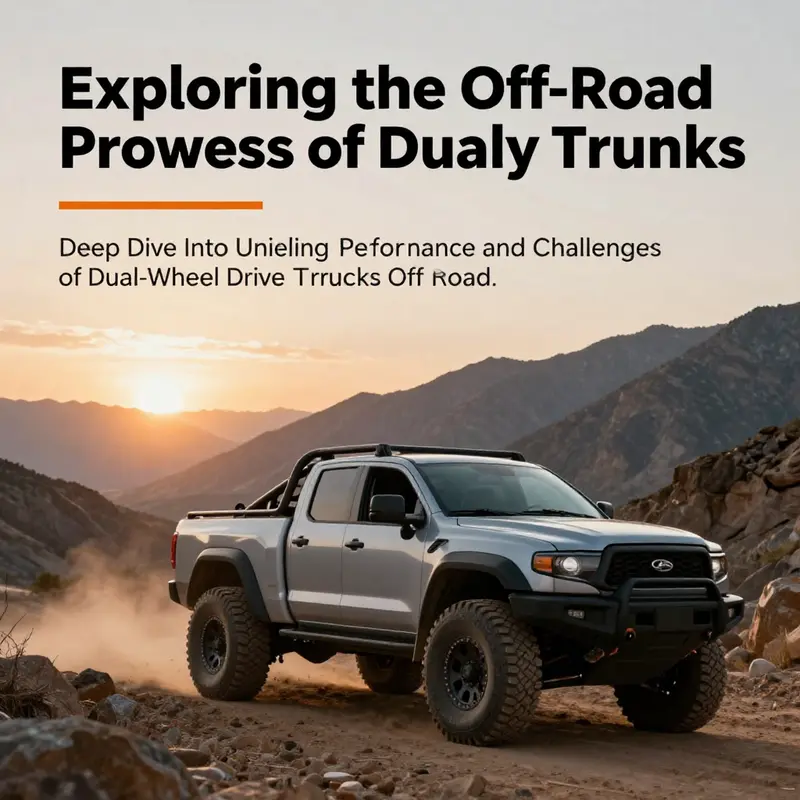
Dually trucks, renowned for their robust build and dual rear wheels, have captured the hearts of off-road enthusiasts and heavy-duty workers alike. These hefty workhorses promise exceptional off-road capabilities, compelling stability, and impressive load capacities, making them fine companions for the rugged terrains of construction sites and remote adventures. Yet, venturing off the beaten path with these colossal machines presents unique challenges. In the chapters that follow, we will delve into their exceptional off-road performance, explore the stability and traction advantages they offer in demanding scenarios, and scrutinize the trade-offs in agility that come with such formidable vehicles. Each section will collectively illustrate whether dually trucks truly rise to the occasion in the off-road realm.
Stability in the Rough: How Dually Trucks Redefine Off-Road Capability
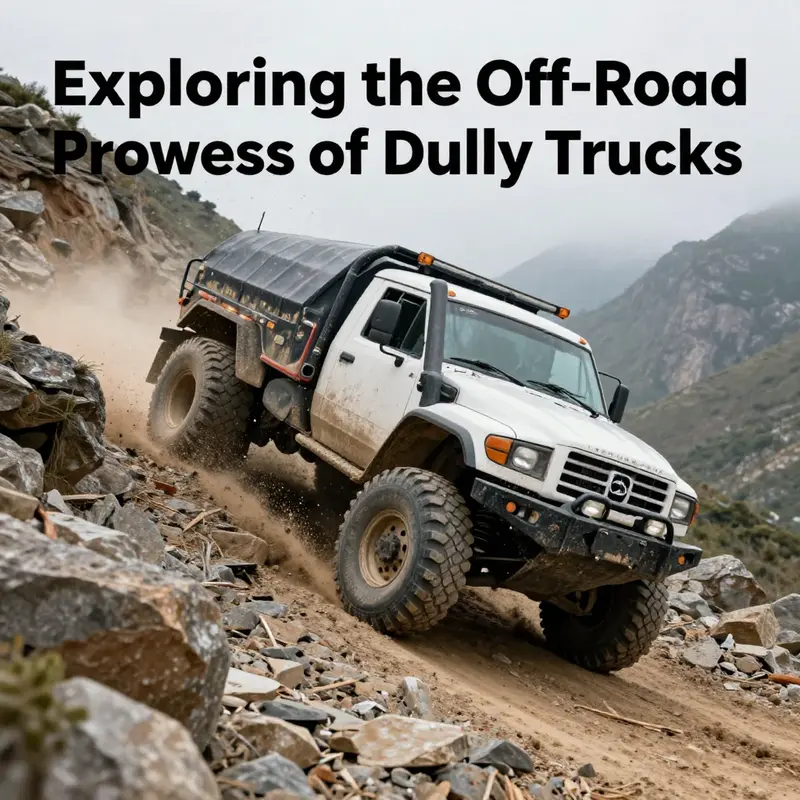
The rough ground beneath a heavy-duty tire can transform a routine workday into a test of grip, balance, and confidence. In those moments, the dual rear-wheel configuration of dually trucks isn’t merely a badge or a visual cue; it redefines how traction and stability behave in the real world of off-road work. When a fleet manager or a seasoned operator surveys a muddy construction site, a sandy corridor cut through exposed rock, or a rutted mountain grade, the dual rear wheels provide a living, breathing advantage: a broader weight distribution that keeps the truck planted, a larger contact patch that helps push through resistance, and an innate resistance to the kind of slippage that can trigger a costly, time-consuming delay. The extra rear pair, far from being a cosmetic flourish, translates into tangible performance gains in the most demanding environments where off-road capability matters most: low-speed, high-traction scenarios where stability and payload matter more than nimbleness. Yet this advantage is not universal. It exists within a carefully drawn line that balances traction and load-bearing power against agility and maneuverability in tight, technical terrain. To understand where dually trucks shine—and where they falter—we must trace how their design reshapes the physics of off-road work and why that matters to professionals who spend their days negotiating rough roads, remote job sites, and the long, slow climbs out of the mud.
At the core of a dually’s off-road strength is the simple truth of weight distribution and tire contact. When two rear wheels bear the load instead of one, the vehicle’s weight can be spread more evenly across a wider base. That wider base improves weight transfer toward soft, challenging surfaces such as mud or wet sand, reducing the likelihood that a single wheel will break traction and sink. On rocky surfaces, the increased contact area helps the tires bite through small irregularities rather than ride over them. The physical effect is cumulative: more grip, more predictable braking, more stable acceleration, and a greater margin for error when a driver faces a sudden change in grade or surface composition. In practical terms, the difference becomes obvious on job sites where the crew is hauling heavy equipment, tools, or materials across uneven ground or across slopes that would challenge a lighter, narrower pickup. The dual rear wheels do more than carry a payload; they help the payload stay where it should be—on the ground rather than perched precariously on the edge of a wheel rut or a rut-widening mud pit.
Traction, of course, is not only a matter of the number of contact patches but also of how those patches interact with the terrain underfoot. On loose surfaces—mud, sand, gravel—the extra wheel pairing reduces the chance of a single wheel becoming overwhelmed and spinning away from the surface. The system can more effectively transfer power to the ground, which matters when you’re towing equipment, traversing unpaved haul roads, or jockeying through a passage with variable surface cohesion. In many off-road conditions, that translates into what drivers describe as steadiness: the ability to move forward with controlled confidence instead of fighting wheel spin or twitchy steering. The result is a more reliable pace on terrain that would slow or halt a lighter vehicle. That reliability is especially valuable in commercial or industrial contexts where time is a resource, and the cost of delay is measured in both dollars and schedule risk.
Beyond the raw geometry of traction lies the more nuanced advantage of stability. The dual rear axle configuration broadens the vehicle’s footprint, which lowers the likelihood of tipping on shallow declines and side-slopes that are not exceptionally steep but can feel intimidating when carrying a heavy load. A wider track can dampen the wobble that occurs when a truck negotiates a rutted surface or a banked corner with a payload in the bed or a crane or other equipment perched behind the cab. This effect is not merely a sensation; it translates into more predictable steering responses at low speeds—a critical factor when operators must place a vehicle precisely where it needs to go, often in limited workspaces or on uneven grades. In practical terms, stability reduces the mental load on the driver. It allows the operator to concentrate on line choice, throttle control, and the effective use of wheel placement rather than fighting the vehicle’s tendency to lean or yaw on the approach to a stubborn obstacle. In the world of rugged industry, where hours of operation and safety go hand in hand, such predictability is not a luxury but a necessity.
Payload capability compounds these benefits. Dually trucks are engineered to haul heavy payloads with a level of reserve that lightweight off-road pickups may lack. A robust rear axle arrangement supports not just the weight of gear and passengers but the dynamic forces that surface when a truck moves slowly over broken terrain. The ability to carry and deploy heavy tools, spare parts, or industrial equipment directly from a remote site reduces the number of trips back to a staging area, which in turn conserves fuel, time, and labor costs. This is not a theoretical benefit; it is a practical advantage observed by operators whose daily routines require frequent mounting and dismounting of heavy loads in less-than-perfect conditions. The added payload capacity reinforces the sense that the vehicle is a partner on the job rather than a burden to manage, enabling teams to plan more efficient workflows where the truck’s dual wheels are part of a broader strategy for moving earth, rock, timber, or steel as the terrain dictates.
A striking feature of modern dually models is the integration of advanced off-road controls that adapt to terrain in real time. Systems such as multi-terrain drive modes and crawl control automate the process of selecting the right engine torque, wheel slip, braking, and transfer-case settings to maintain momentum with minimal driver intervention. The effect is twofold: first, it reduces the cognitive and physical workload on operators who must control a heavy vehicle in challenging ground conditions; second, it elevates the vehicle’s capability to manage transitions between surfaces—say, moving from gravel to slick clay—without abrupt loss of traction. The result is a smoothness of operation that can be crucial for preserving payload integrity, protecting surrounding equipment, and maintaining a steady work pace. These features, while increasingly common in top-tier models, represent the practical convergence of advanced engineering and the realities of off-road work, where terrain is rarely uniform and the job seldom waits for perfect conditions.
Of course, no discussion of off-road performance in dually trucks would be complete without addressing the trade-offs. The same dual rear wheels that confer traction and stability also contribute to a broader footprint and higher curb weight. The wider stance can reduce the truck’s ability to negotiate very tight turns or narrow trails that demand tight steering geometry. In environments where maneuverability through dense brush, steep pinches, or narrow rutted corridors is essential, a standard single-rear-axle pickup may outperform a dually in agility, even if the dually outperforms in raw traction and load handling. The extra weight and width also demand more careful route planning and road-maintenance considerations. The vehicle is less forgiving on rough or poorly maintained roads, and its higher operating cost—fuel consumption, component wear, and maintenance complexity—can tilt the economic balance in favor of lighter-duty off-roaders in certain applications. For operators who live on the edge between payload delivery and traverse through tight, technical sections, the decision requires a careful weighing of mission profile against vehicle geometry and powertrain configuration.
That said, the advantages most often center on operations that value stability and payload over nimble handling. In industrial settings such as rugged construction sites, remote mining corridors, or agricultural fields where equipment must be moved with capability and safety in mind, the dually configuration provides a robust platform that helps keep operations moving when the terrain is less than ideal. The chassis is reinforced to handle extended exposure to abuse and load, and high-strength steel alloys in wheel hubs and axles contribute to durability that matters when cycles are long and terrain is harsh. Automotive analysis and expert commentary underscore this point: the dual-axle design is built not just for heavy hauling but for enduring harsh conditions where standard pickups would waver. The practical upshot is straightforward. When a job requires the vehicle to stay grounded with heavy gear and remain steady on uneven ground at low speeds, the dually configuration tends to deliver a measurable, repeatable advantage that translates into fewer stuck moments, smoother recoveries, and more predictable work into the late hours of a shift.
Maintenance and lifecycle costs, however, are an essential part of the decision calculus. The more complex rear-axle system, additional tires, and the broader footprint introduce higher maintenance demands. Steering, suspension, differential components, and tires in a dual-rear-wheel layout require diligent inspection and more frequent attention, particularly in harsh environments where mud, gravel, and rocks accelerate wear. Yet as many operators will attest, the cost of maintenance is often offset by higher uptime and the ability to push through adverse conditions without turning back. The end-of-life value can also be favorable given the truck’s utility in demanding work environments, where the vehicles’ durability and payload endurance contribute to a favorable total cost of ownership over time. The message is practical: the dually’s life-cycle economics hinges on the specific duty cycle. A fleet that prioritizes consistent traction and heavy payloads on imperfect roadways may find the long-term economics favorable, while a fleet that operates primarily on narrow, technical trails might see less return on investment.
For those who manage fleets or perform rigorous fieldwork, the decision also hinges on proficiency and safety. The wider stance and heavier mass alter driving technique. Operators must adapt to longer stopping distances, altered turning radii, and different weight transfer characteristics when braking and accelerating on loose surfaces. Training and experience become decisive factors in extracting the full potential of a dually in off-road work. The better driver will leverage the truck’s stability and traction while maintaining situational awareness about the terrain and the surrounding environment. When combined with features like advanced differential lock systems and underbody protection, the result is a capable, dependable tool for challenging tasks where the terrain dictates a cautious, deliberate, but persistent approach. The chapter of off-road performance thus reads as a narrative of controlled power: traction in the toughest moments, stability when the grade begins to bite, and payload capacity enabling work to proceed without repeated trips back to the loading zone.
In sum, dually trucks offer a compelling value proposition for off-road professionals who deal with harsh surfaces and heavy payload requirements. They shine where low-speed, high-traction conditions dominate and where stability and load distribution matter more than sheer agility. They are not a universal solution for every off-road scenario—narrow trails and tight obstacles can reveal their width and weight as limitations. Yet the combination of dual rear wheels, a broad footprint, enhanced load-carrying capability, and sophisticated terrain-management features creates a distinctive capability set that aligns with the demands of rugged environments. When paired with the right maintenance discipline and an informed understanding of terrain and route planning, dually trucks can deliver reliable performance on unpaved haul roads and through the rough edges of industrial landscapes, earning their place as a practical, reliable workhorse for professionals who operate in demanding, low-speed, high-traction settings. For operators seeking deeper insights into maintenance and mechanical considerations, resources such as mastering-diesel-mechanics-your-step-by-step-path-to-success offer practical guidance for keeping these drivetrains and axles in top shape as they wrestle with the realities of tough terrain. And for a broader, external perspective on the off-road capabilities of dually trucks, industry coverage that analyzes the real-world performance across terrain types provides a comparative lens on how these vehicles perform once the trail turns rough and the goal becomes moving forward rather than simply turning around. External resource: Car and Driver’s explainer on dually trucks off-road capability explains the nuances of how these vehicles behave when the going gets tougher, reinforcing the idea that the dual rear-wheel format is a distinctive tool for a specific class of off-road work. https://www.caranddriver.com/trucks/features/a48795302/dually-trucks-off-road-capability-explained/
Stability, Traction, and Heavy-Duty Resolve: How Dually Trucks Excel in Real-World Off-Road Work
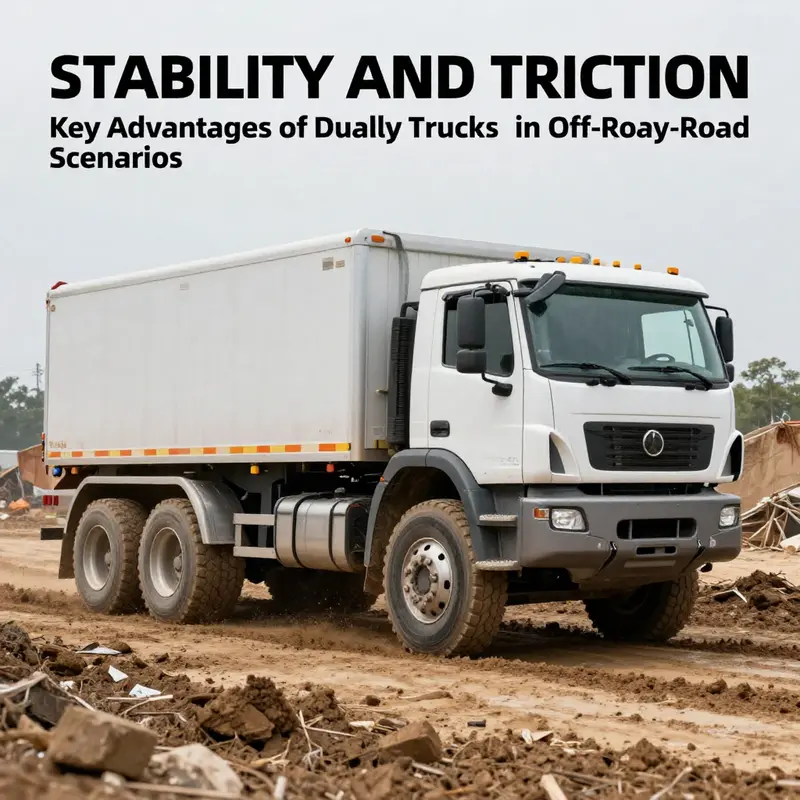
Traction is the heartbeat of off-road capability, and stability is its quiet, steadfast mentor. In the realm of off-road trucking, dual-axle or dually configurations center stability and traction as primary advantages, especially when the terrain tests the limits of grip and the payload demands more than a standard pickup can safely bear. This chapter weds the physics of weight transfer and tire contact with the practical realities of rough terrain, showing how a dual-rear-axle setup translates into real-world performance. The result is a vehicle that can haul, persist, and maneuver under load where other trucks falter, yet with tradeoffs that deserve careful consideration. In the larger arc of evaluating whether dualies are good off road, the answer hinges on the environment, the pace, and the mission. The story here is less about conquering every trail and more about enduring the harsh, low-speed, high-traction tasks that define heavy-duty off-road work. The stability and traction story begins with geometry and ends with confidence in the driver’s hands, because grip alone does not move a truck through mud or over rock; it is delivered to the wheels through a carefully engineered chassis and axle system that keeps the weight where it must be for traction to matter.
At the core of stability is weight distribution. When a vehicle carries a heavy load across uneven terrain, the distribution of weight across four contact patches becomes a decisive factor in whether the tires stay planted or slide away. The dual-axle rear arrangement changes the game by spreading the weight more evenly across more wheels and by enabling independent wheel rotation. Each rear wheel can respond to the terrain beneath it without being dragged by its neighbor. In practice, this means that a wheel sitting on a firmer patch of ground can receive more of the power that the driver intends to apply, while the wheel perched on a slick patch can slip less than it would in a single- or twin-axle setup. The result is improved forward drive under low-speed, high-traction conditions—precisely where off-road work often happens when moving a heavy load through a construction site, a remote mine road, or a mountain-access route.
Beadlock rims, commonly found on serious off-road duallies, exemplify how a specialized component supports stability. Low tire pressures increase the tire’s contact patch and thereby its grip on uneven surfaces like rock, sand, or loose gravel. But low pressures raise the risk of the bead unseating from the wheel rim, which can injure the tire and compromise the ride. Beadlocks secure the bead to the wheel, letting the operator run lower pressures without the fear of a tire unseating during a rock crawl or an abrupt descent off a rutted shelf. That capability matters most when durability and traction are both on the line. It also highlights a broader truth: off-road stability is not only about the tires squeezing more grip from the ground, but about preserving and transferring that grip reliably through the wheel, the axle, and the drivetrain when surface conditions change abruptly.
The independent wheel rotation offered by dual rear axles plays a pivotal role in traction management. Each wheel’s speed can diverge from its mate, enabling one tire to reclaim grip if the other encounters a slippery zone. In a muddy rut, one wheel might spin while the other still has traction; with independent rotation, the system can harness the tire that finds grip and minimize the loss of momentum. This is not just a matter of more grip in aggregate, but of more predictable, controllable grip at the point of contact. For crews that need to position heavy equipment or haul materials through a silt-filled trench, such predictability translates into fewer stalled moments and more consistent progress on a rough worksite.
Durability follows stability in the long run. Full-floating axle designs, common in heavy-duty dualies, place the vehicle’s weight on the axle housing rather than on the axle shafts themselves. This configuration distributes stress more evenly and reduces the likelihood that a single shaft failure will bring a mission to a halt. In environments where rock faces, potholes, and washboard roads are par for the course, the fault tolerance of a full-floating design becomes a critical reliability feature. When a truck is carrying a heavy payload across a rough grade, reliability isn’t merely a luxury; it’s the difference between meeting a deadline and losing a season. The durability of such a system is a quiet, underappreciated ally of off-road capability, enabling drivers to push a little further when the terrain grows steeper and more unforgiving.
The payload story is inseparable from stability and traction. In many off-road contexts, the ability to transport heavy materials or equipment through rough terrain is as important as the vehicle’s own propulsion. A higher load capacity means more productive trips per day and fewer trips back to a staging area to fetch another load. The dually configuration distributes that payload more effectively across four contact points with the ground, improving grip and reducing the stress concentrations that can gouge mud or wash out a pathway. The practical upshot is a vehicle that can carry the tools of the trade where they’re needed most, from a muddy access road to a rocky mining road, without surrendering traction because the weight is concentrated too narrowly. The synergy between weight distribution and tire contact is not magic; it is a designed interplay of axle geometry, tire choice, and chassis strength that makes dualies inherently capable in heavy-duty off-road tasks.
Of course, all this stability and traction comes with trade-offs. The most immediate is maneuverability. A wider stance and greater weight reduce agility on tight, technical trails. Steering can feel heavier, and the turning radius may be longer than that of a conventional pickup. In spaces where the driver must thread a needle through a narrow pass or squeeze between trees, a dually can feel bulky and less forgiving. The increased weight also influences acceleration, braking, and fuel efficiency on those off-road routes where speed matters less than control. A truck built for low-speed, high-traction work will shine when the surface offers grip and obstacles are manageable at a measured pace, but it won’t be a nimble rock crawler in the strict sense. That said, the kind of off-road mission that demands payload mobility, stability across a slope, and the ability to preserve momentum in challenging ground is exactly where the dually architecture earns its keep.
Filtering all these advantages through real-world conditions brings forward a clear distinction: dually trucks excel in heavy-duty, low-speed, high-traction environments—conditions where stability and load distribution are more valuable than tight cornering or rapid climbs. Think unpaved construction sites with heavy equipment, remote mining roads, or mountainous routes where the ground remains uneven after a storm. In such contexts, the extra set of rear wheels acts like a safety net, reducing the likelihood that a single, poorly placed wheel will lose contact and topple the truck into a ditch. The independent rear-wheel dynamics ensure that the grip available to each wheel is used to the truck’s maximum potential, which translates into better forward motion and fewer stalling incidents when the going gets rough. The qualitative payoff is not merely “more traction” in a vacuum but a coherent, predictable behavior when the grade changes, the surface dips, or the payload shifts with the weight of the cargo.
This chapter’s synthesis is grounded in the idea that stability and traction are not abstract categories; they are the practical interfaces through which the off-road driver interacts with the terrain. The dual-axle design provides a physical foundation for that interface, allowing the driver to apply power with confidence and to anticipate how the vehicle will respond on a given section of road or trail. The beadlock-enabled low-pressure strategy is the companion tool—the means by which that stability is preserved as the surface changes beneath the tires. The combination of independent wheel dynamics, robust weight distribution, and a drivetrain engineered to transfer power to the wheels that actually grip forms the core advantage of the dual-axle off-road platform. It is a configuration that supports a very particular class of off-road work—steady, heavy, and deliberate rather than quick, nimble, and canyon-deep in rock crawls. And in that space, the stability and traction story is not just convincing; it’s compelling enough to shift what off-road means for the people who rely on these trucks every day.
The practical implications of this stability and traction are reinforced by the ecosystem of advanced components that often accompany modern dualies. Advanced locking differentials, for example, can lock power between wheels on the same axle, ensuring that any wheel with grip receives drive torque. This becomes especially valuable when one rear wheel lands on a slick surface while its partner finds purchase elsewhere. Crawl-control systems, another feature more common on higher-end models, automate throttle input to maintain a deliberate, steady pace as the vehicle surmounts a particularly rough pass. Durable underbody protection protects fuel tanks, transfer cases, and driveline components from rocks, off-camber ruts, and sharp debris—protecting the stability system by reducing the risk of sudden mechanical failures mid-trail. Taken together, these elements form a robust toolkit for off-road stability, where the truck’s design and the driver’s skill align to maintain momentum rather than surrender it at the first sign of trouble.
The narrative here would be incomplete without acknowledging the role of the operator. Stability and traction do not function in a vacuum; they require a driver who understands load management, tire pressures, and the implications of weight shift on a terrain fracture. Even with beadlocks, independent wheel rotation, and full-floating axles, the best outcomes in off-road work emerge from disciplined, deliberate operation. The driver who respects the limitations of ground clearance, who curves through a mud bog with a measured throttle, and who reads the surface before choosing a line, will maximize the stability advantages that the dual-axle architecture affords. In that sense, the dually platform is a tool that expands capability, but it does not replace experience or judgment. The real power of stability and traction lies in the alignment of vehicle design with driver strategy, a synergy that turns potential into dependable performance across a spectrum of rugged environments.
As a closing reflection, the stability and traction advantages of dually trucks in off-road scenarios reveal a nuanced, mission-driven value proposition. They are not universal all-terrain machines; they are specialized workhorses optimized for carrying heavy payloads, maintaining control on loose or uneven ground, and performing reliably at low speeds where traction matters most. The broader article question—are dually trucks good off road—finds a robust affirmative answer when the terrain map emphasizes high load, low-speed progression, and the need for consistent grip over short bursts of speed or tight maneuvering. In those settings, the stability provided by two rear axles, the traction management enabled by independent wheel rotation, and the durability of a full-floating design converge to deliver a level of off-road capability that ordinary pickups struggle to match.
For readers seeking a deeper technical grounding in how these systems work in concert, a practical maintenance perspective can be invaluable. A detailed, field-tested overview of diesel propulsion and drivetrain reliability offers insights into how to maintain the stability and longevity of heavy-duty rigs under strenuous off-road use. See the guide titled Mastering Diesel Mechanics: Your Step-by-Step Path to Success for a thorough discussion of components, wear patterns, and preventative maintenance strategies that support reliable traction and stability under load. Mastering Diesel Mechanics: Your Step-by-Step Path to Success.
External resources provide additional context on how dual-axle, four-wheel-ground-contact configurations behave in extreme off-road conditions. For a broader review of performance in dual-axle differential setups under rugged conditions, consult external reporting on off-road performance in dual-axle configurations: https://www.offroad.com/2025/12/18/dual-axle-differential-trucks-off-road-performance/.
In sum, stability and traction are the bedrock advantages that validate the off-road potential of dually trucks in the right scenarios. They empower the vehicle to carry heavier loads while maintaining grip, to distribute weight so traction remains available where it is needed, and to survive the harsh indignities of rough surfaces with a reliability that smaller or lighter trucks may not sustain. The resulting capability is not about conquering every trail; it is about delivering steady, predictable performance when the ground is hostile, the payload heavy, and time a critical constraint. In those conditions, the dually’s stability and traction become not just features but defining strengths, shaping how manufacturers design trucks for real-world, off-road work—and guiding fleets and operators toward vehicles that can perform the mission with confidence and staying power.
Are Dually Trucks Good Off Road? A Nuanced Assessment of Traction, Width, and Payload
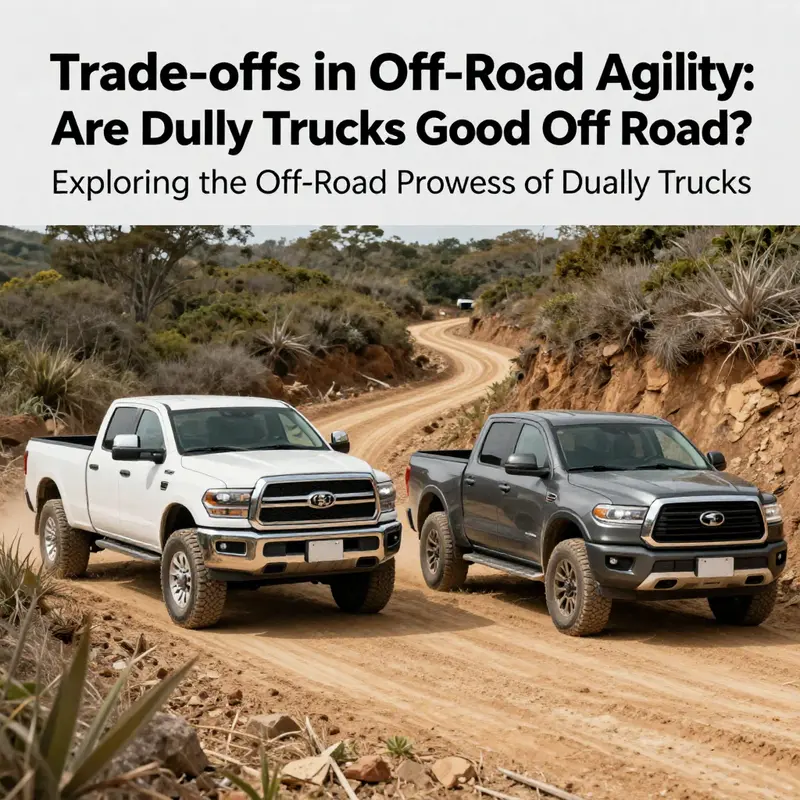
Off-road capability is not a single metric. A dually—truck with dual rear wheels—offers more traction and payload on forgiving surfaces, but width and weight can hinder nimbleness on tight, technical trails. In loose soils such as sand or soft mud, the dual rear tires can provide steadier momentum and better load stability when towing or carrying heavy equipment. But the wider stance can complicate passages with narrow corridors, trees, rocks, or steep switchbacks, and the extra mass increases stopping distances and reduces cornering agility. The traction advantage can be offset by ground pressure and terrain softness, and the increased track width can invite side-scrapes on narrow routes.
To counter these limitations, modern duallys rely on a suite of aids: locking differentials, crawl control, and robust underbody protection. These features improve traction, control, and component protection when the surface turns unruly. The choice of tires, tire pressure management, and suspension tuning also play a crucial role in whether the dual rear wheels translate into real-world capability.
The practical takeaway is context-dependent. Duallys excel in payload-heavy, straight-line traction scenarios where speed is less critical and stability under load matters most. They are less suited to highly technical, twisty backcountry routes that demand precise line control and rapid direction changes. The best approach for fleets or individual operators is often a mix: reserve dual-rear-wheel trucks for heavy-lift tasks on mixed or forgiving terrain, and pair them with lighter, more agile platforms for routes that require maneuverability and tight turns.
Route planning and appropriate gear are essential. Operators should match mission profiles to vehicle capability, optimize tire selection for the terrain, and use existing traction aids to mitigate the dually’s weaknesses on narrow or technical trails. In short, a dually can be good off-road—when the job, surface, and driver skill align with the vehicle’s strengths. On the most demanding single-track routes, a lighter, more agile platform may deliver superior performance.
Final thoughts
In conclusion, dually trucks offer a unique blend of off-road performance that excels in heavy-duty applications, thanks to their stability and enhanced traction. However, potential off-road enthusiasts must weigh the trade-offs in agility when considering these robust machines for more technical terrains. While duallys may not be the go-to choice for every off-road challenge, they shine in low-speed, high-traction scenarios where their strengths can be fully utilized. Ready to face the rough landscapes with confidence? Ensure you understand both their capabilities and limitations before embarking on your next adventure.