

In the rugged world of off-road driving, the choice between electric trucks and traditional gas-powered trucks is becoming increasingly critical. Electric trucks are rapidly establishing themselves as the go-to option for those seeking adventure beyond the beaten path. This article delves into their superior performance characteristics, from instant torque delivery to unparalleled weight distribution and lower maintenance needs. Each chapter will illuminate the compelling reasons why electric trucks are set to dominate off-road pursuits, helping adventurers, rural landowners, and modification shops appreciate their potential in the wild.
Instant Torque, Steady Grip: How Electric Trucks Redefine Off‑Road Performance Against Gas Rivals
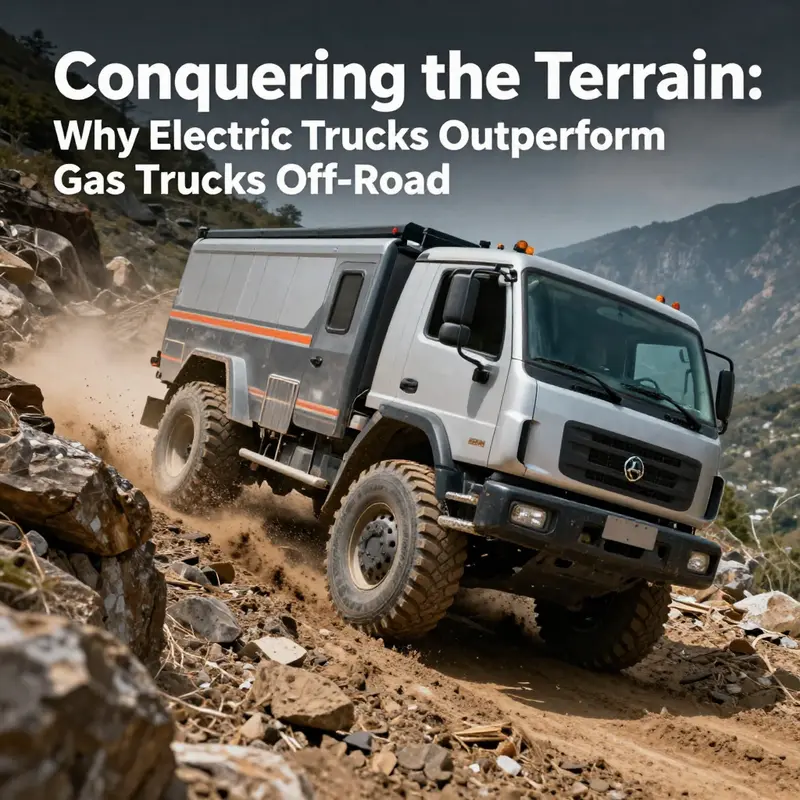
Electric trucks arrive in off‑road environments less as an eco‑badge and more as a performance shift engineered into the powertrain from the ground up. When the tires bite into a loose trail, the difference is not just in fuel type but in how power appears and how it is managed across every wheel. At the heart of this shift is the electric motor’s ability to deliver full torque from zero revolutions per minute. In practice, this means a driver can open the throttle and instantly feel a surge of pulling power that remains consistent as the terrain demands more grip, more traction, or more momentum to crest a rut or climb a grade. This is not about a louder engine or a louder exhaust; it is about a different physics and a different control philosophy. The torque is available immediately, and the drive‑by‑wire interfaces translate that raw potential into usable force at the wheels with astonishing immediacy. A significant body of research emphasizes this core advantage: electric drivetrains provide complete torque for driving performance right away, without the traditional torque ramp that characterizes internal combustion engines paired with mechanical transmissions. In off‑road settings, where a heartbeat can be a sudden change in slope, surface, or fatigue, that instant torque translates into smoother, more confident acceleration and the capacity to respond to changing grip conditions without blackouts of power or abrupt surges that can unsettle a vehicle and its operator.
Beyond the immediacy of torque, electric trucks offer a level of precision in power delivery that is hard to match with gas alternatives. The electric motor’s torque output can be modulated with exceptional speed and accuracy, enabling the driver to apply just the right amount of force at the right moment. The ability to tune torque on a wheel‑by‑wheel basis means traction control is not merely reactive but proactive. When a wheel begins to spin on slip‑prone surfaces such as wet shale, loose dirt, or gravelly ledges, the drive system can instantly rebalance torque across axles and even across individual wheels. In many modern electric configurations, there are multiple motors per axle or even per wheel, a design that makes true torque vectoring possible. The consequence is a vehicle that feels steadier, more controllable, and less prone to the unpredictable behavior that often plagues gas‑powered rivals when grip is scarce or rapidly changing. The driver experiences a sense that the chassis is listening, that the vehicle’s electronic brain is constantly recalibrating in real time to preserve forward motion rather than fighting against imperfect traction.
This capability is closely tied to a broader mechanical architecture that reduces the mechanical lag between driver input and wheel response. Gas trucks, even when equipped with advanced transmissions, must contend with engine response times, gearbox gear ratios, and the swinging pendulum of throttle and torque that can create a lag before meaningful acceleration occurs. Electric drivetrains bypass this cascade. The system’s software can apply just enough torque to each tire to maximize grip, keep the vehicle moving, and minimize wheel spin. When the terrain shifts from loose soil to slick rock, the control system can reallocate torque almost instantly to maintain stability. The difference is not merely about raw power; it is about the predictability of that power under conditions where grip is uncertain and the ground keeps changing beneath the tires.
A complementary advantage emerges from how electric propulsion tends to distribute weight and load across the vehicle. Battery packs are typically placed low in the chassis, which lowers the center of gravity for the whole machine. On uneven ground, this lower CG reduces the rollover risk that is a constant concern for off‑road operators. It also improves dynamic stability when the vehicle is traversing side slopes, stepping over rocks, or negotiating a sudden dip in the terrain. Lower gravity center and tightened weight distribution help the tires bite more effectively, particularly when combined with torque vectoring that can send more torque to the wheel that needs it most. This synergy—instant torque coupled with precise, adaptive distribution—transforms how the vehicle handles off‑camber corners and steep, uneven passages. In these moments, electric trucks feel more planted, less inclined to jerky movements, and more capable of maintaining momentum where a gas truck might stall or demand a drastic throttle or gear change to recover.
Another component of the torque story is how electric drivetrains enable sophisticated control of propulsion on a wheel‑level basis. The independent drive capability found in many electric setups allows a vehicle to modulate torque at each wheel rather than applying power to a shared differential. This level of control is the practical realization of torque vectoring, which can straighten a skid, widen a line through a turn, or compensate for a surface with heterogeneous grip. On a muddy track, for example, feeding just enough torque to a slipping wheel while reducing the drive to a wheel with better grip can maintain forward motion without resorting to aggressive wheel spin, a common coping mechanism in gas trucks that often leads to exacerbated slipping and longer recovery. This independent wheel torque, often referenced as per‑wheel or per‑axle control, is a feature that has evolved room by room in electric drivetrains, driven by the demands of off‑road performance and the push to extract maximum control from the available power.
The practical outcomes of this control philosophy go beyond feel and handling. Four‑wheel drive systems in electric trucks, when driven by electronically coordinated motors, provide a more effective platform for negotiating challenging terrain. The combination of precise torque control, low center of gravity, and distributed torque translates into better traction at critical moments—during the ascent of a rocky outcrop, through a muddy rut, or across a slick rock face. In such conditions, the vehicle is less likely to be locked into a single undesirable rotation or to rely on mechanical methods of grip that are slow to react. In a dynamic off‑road environment, where the ground can change in a few feet or a few meters, electronic torque management offers a decisive advantage: the ability to adapt instantly and continuously to the terrain, rather than waiting for a mechanical transmission to reconfigure or for driver timing to catch up with the vehicle’s needs.
The off‑road advantage is not simply a matter of more torque on the wheels; it is about how that torque is delivered and how the vehicle maintains control as power is applied. The same instant‑torque trait that makes electric trucks quick off the line contributes to their performance in moderate to steep grades, where a sudden spike in resistance could stall a gas engine if the throttle isn’t managed deftly. Electric drivetrains let the driver keep moving with steady, controlled acceleration even when the surface is unpredictable. The traction control systems—grounded in torque sensing, wheel speed monitoring, and real‑time feedback—operate continuously to prevent wheel spin, manage heat build‑up in driveline components, and maximize effective traction. The result is a vehicle that can maintain forward progress through conditions that would slow or halt many gas rivals.
As the off‑road mission grows more demanding in industrial contexts—mining sites, construction yards, and other rugged work environments—these characteristics take on a broader significance. The productivity calculus shifts from merely getting from point A to point B to sustaining a steady workflow under harsh conditions. A useful way to frame this is through a performance metric often cited in fleet and operations analyses: productivity can be defined as payload multiplied by average operating speed, divided by the power input. In practice, electric trucks’ high‑torque delivery and efficient power usage can yield higher productive throughput under the same or even reduced energy input, particularly when the route includes frequent climbs, descents, and varying slopes. This translates into fewer slowdowns and fewer interruptions, which are the lifeblood of a reliable industrial workflow on remote or hazardous sites. The capability to maintain momentum on grades, to cleanly finish a section of trail, or to extract a stuck vehicle with deliberate, controlled torque—all without needing to shift gears or coax a reluctant engine—adds a layer of reliability that is highly prized in mining and construction. In those settings, the advantages of instant torque, precise power delivery, and advanced wheel torque distribution do not merely improve performance; they improve the predictability of outcomes in conditions that are inherently variable and unforgiving.
In discussions of these capabilities, it is important to anchor the debate in the realities of the technology and the contexts in which it excels. Electric drivetrains are defined by their motors delivering the driving torque, with the powertrain architecture designed to exploit this torque in ways that gas engines cannot. The instantaneous nature of electric torque—combined with the potential for per‑wheel torque control and torque vectoring—creates a synergy with sophisticated electronic control systems that is uniquely suited to off‑road challenges. The drivers who operate in rough terrain, who must negotiate mud, rocks, and uneven surface features, often describe a sense of enhanced predictability and confidence compared with traditional gas trucks. The vehicle’s response feels more measured, more in harmony with the terrain, and more aligned with what the operator needs to accomplish, whether that is maintaining a steady pace across a loose surface or inching up a difficult ramp without triggering wheel spin or loss of momentum.
That said, the conversation cannot ignore the practical limits and ongoing evolution of these systems. Battery weight remains a factor in overall vehicle dynamics, and thermal management of high‑power electric drivetrains becomes increasingly critical as the duty cycle of off‑road work pushes systems into sustained heavy load and frequent braking. The low center of gravity and improved weight distribution do not eliminate these challenges; they help mitigate them and enable more predictable performance under demanding conditions. As manufacturers continue to refine pack layouts, cooling strategies, and energy management, electric off‑road trucks will continue to tighten the gap with traditional gas platforms and will, in some scenarios, come to surpass them in reliability, controllability, and efficiency.
The industrial sector has already begun to recognize these advantages beyond the glossy claims of road tests. In sectors like mining and heavy construction, where downtime is costly and terrain is relentlessly variable, the combination of robust torque, resilient traction, and reduced maintenance demands yields tangible benefits. Fewer moving parts mean fewer potential points of failure in dusty, wet, or shock‑prone environments, and the elimination of routine oil changes and exhaust maintenance translates into less downtime for servicing and more time on the job. The implication for site productivity is meaningful: electric off‑road platforms can help sustain output in environments where conventional powertrains might struggle to keep pace, especially when crews have to navigate constricted or harsh work areas where equipment needs to be both highly controllable and highly durable.
This evolution is reflected in the broader signals across the industry, including the way electric powertrains are being adopted into rugged, non‑urban contexts. The control systems, the motor architectures, and the packaging strategies—low placement of heavy packs, robust protection for harsh operating conditions, and integrated thermal management—coalesce into a system that not only performs but resists the wear and tear common to off‑road operation. In short, instant torque combined with sophisticated torque management makes electric trucks not just vehicles that can go off road, but tools that can operate with a level of stability and precision that is hard to replicate with traditional gas trucks. The result is a credible shift in how off‑road work is approached, planned, and executed, with energy considerations integrated into the core performance narrative rather than treated as a separate afterthought. The overarching implication for future off‑road fleets is clear: the torque and power delivery advantages of electric drivetrains will continue to redefine what is possible, particularly in environments where grip, momentum, and reliable control are the essential determinants of success.
The broader industrial conversation around electric off‑road performance is also shaped by case studies and industry analyses that point to a pragmatic path forward. These analyses highlight not only the powertrain advantages but also how the technology integrates into the workflows of rugged operations. The perception of electric trucks as merely campus or city solutions is giving way to a larger appreciation of their potential to handle the extremes of off‑road work with a combination of torque, balance, and efficiency that gas platforms struggle to match. This is not a simplistic comparison of peak horsepower or top speed; it is a consideration of how the vehicle behaves when the ground changes beneath it, how quickly it can adapt when the pilot encounters an unexpected obstacle, and how consistently it can perform across long shifts on challenging terrain. In this sense, electric off‑road performance is not a single metric but a composite of power delivery, traction management, energy efficiency, durability, and reliability—each dependent on how the drive system and its control software orchestrate the available torque across the vehicle’s geometry and its workload.
For readers who want to explore a broader view of electric drivetrains and their defining characteristics, reference materials on electric drivetrain architecture provide a foundational backdrop for understanding why the torque story matters so much. See the general overview of electric drivetrains for a concise technical framing Volvo electric construction equipment revolution for a sense of how heavy electric platforms are shaping sectors beyond consumer vehicles, including the rugged environments where off‑road performance translates into real productivity gains. The shift in heavy industries toward electrification is not isolated to a single vehicle type but reflects a coherent, systemic move toward drive systems that can deliver torque with precision, stability, and resilience in the face of grime, mud, and rough terrain. As the field evolves, the off‑road capabilities of electric trucks will continue to be tested and refined under the specific pressures of the environments where they are meant to excel.
External perspectives on electric drivetrains reinforce the central thesis that torque is the defining lever for performance. A broad survey of electric drivetrain topics emphasizes how electric motors supply full torque across the operating range, how power electronics enable rapid torque modulation, and how the architecture supports features like torque vectoring and wheel‑level control that improve traction and handling on difficult surfaces. These sources help illuminate why electric off‑road trucks can outperform gas trucks in conditions where grip is uncertain and momentum is precious, offering a more predictable, controllable, and ultimately productive driving experience. The material also underscores that the field is advancing rapidly, with ongoing research aimed at optimizing energy density, thermal management, and drive‑system durability to sustain the harsh demands of off‑road service.
In sum, the torque story in off‑road electric trucks is not a single benefit but a network of interlocking capabilities. Instant torque provides immediate propulsion when the terrain demands it. Precision delivery and torque vectoring deliver stable, controllable handling across varied surfaces. A low, well‑balanced center of gravity improves stability and grip on uneven ground. Reduced mechanical complexity lowers the likelihood of failure and simplifies maintenance in challenging environments. Together, these features enable electric trucks to perform in ways that gas trucks struggle to reproduce, particularly when the mission requires sustained traction, careful throttle management, and the ability to stay productive through a full shift on tough terrain. As technology matures and fleets gain more field experience, the off‑road case for electric powertrains will continue to be built on the foundation of torque—delivered when and where it is needed, with the precision and resilience that modern controls can provide.
Balancing Gravity on Rough Ground: Battery Weight, Center of Mass, and the Off‑Road Stability of Electric Versus Gas Trucks
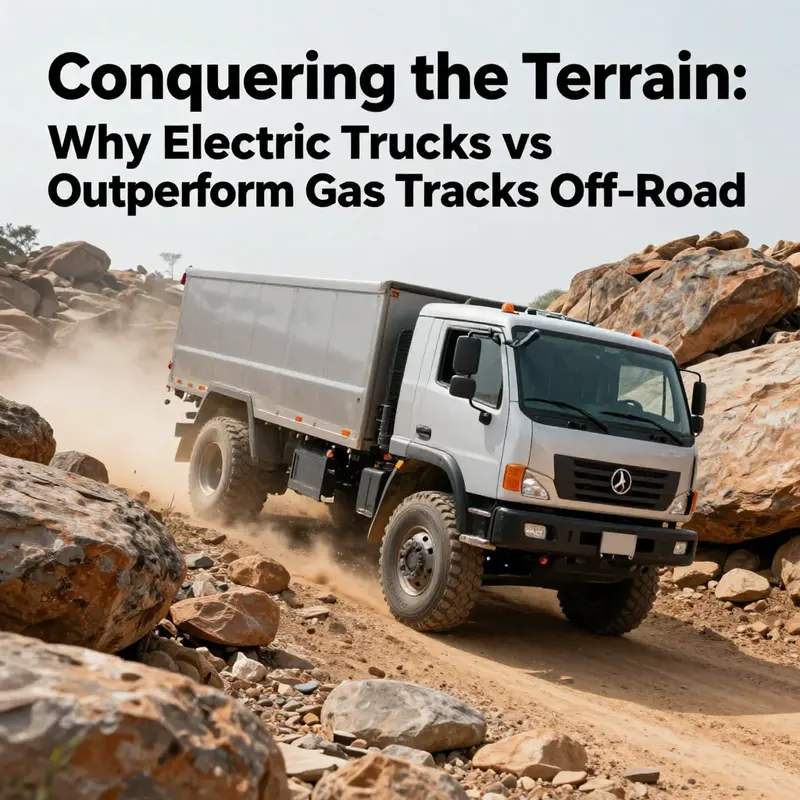
On a rocky, uneven descent, the way a truck carries its weight can determine whether you keep your line or slide into a rut. In off‑road settings, weight distribution is not a mere side note; it is a governing factor that shapes grip, steering feel, steering effort, and the risk of rollover under sudden lateral shifts. The emerging evidence from heavy vehicle research and real‑world deployments shows that electric trucks bring a different weight profile than gas trucks, a profile that can be a source of both stability advantages and new mechanical challenges. A 2025 study by K. Gkyrtis underscores a fundamental truth: electric trucks require much larger battery packs than light vehicles, and that added mass can push a vehicle to be heavier overall than a comparable diesel rig. This added weight is not a mere payload; it is often concentrated low in the chassis, thanks to underfloor battery placement. The result is a lower center of gravity that inherently improves lateral stability on uneven terrain. A lower center of mass helps resist roll when you traverse a diagonal rut, negotiate a washboard, or edge past a rock face. Yet the same mass, distributed as a substantial portion of it in the vehicle’s lower region, carries a price tag in another critical domain: unsprung weight. Heavier assemblies under the body—wheels, axles, suspension components—must move and respond to ground irregularities, which can reduce the suspension’s ability to keep tires in contact with the terrain during aggressive maneuvers. The consequence is a nuanced, double‑edged effect: improved roll stability and traction potential from a lower CG on one hand, and stiffer, more demanding suspension dynamics that can impair wheel control and ride quality on the other. These dynamics are not speculative. They arise from the very physics that govern heavy vehicles and are amplified by the unique layout of an electric powertrain, with its heavy, compact battery packs often placed low and across the vehicle’s underside. The tradeoffs are real, but they are not static. They reflect a design discipline that is rapidly evolving as engineers rethink where mass sits, how it travels through the chassis, and how to keep the tires biting in the most demanding off‑road conditions.
To understand how weight distribution translates into performance on rough ground, it helps to anchor the discussion in a few core principles. First, the center of gravity (CG) is not a single point on a blueprint; it is the net effect of every mass element relative to the vehicle’s geometry. In off‑road dynamics, CG height and lateral placement determine how readily a vehicle leans into a turn and how much weight shifts to the wheels with each bump or slope. Electric trucks, with a substantial underbody battery, typically shift mass closer to the floor. In ideal circumstances, this lowers the CG and broadens the base on which the vehicle stands when the terrain tilts away from the driver. The benefit is a reduced risk of sudden roll at the outer wheels when a corner is taken at a higher lean angle. The caveat is that the very mass that helps stability can also exacerbate inertia. When a wheel must be lifted by a large obstacle or slammed into a pothole, the heavier wheel assembly forces the suspension to work harder to keep the tire in contact with the soil. The energy stored in the mass translates into bigger, more persistent oscillations unless the suspension and damping are tuned to absorb the extra inertia. This is why the MDPI Energies study on weight distribution in heavy battery electric trucks is so pivotal. It shows that the benefits of a low CG are not universal and depend on how weight is distributed across the chassis and how the suspension is engineered to handle heavier components. The practical takeaway is that battery placement is not merely about packing capacity; it is an architectural decision that dictates how a vehicle behaves when the ground itself becomes the obstacle.
Second, the distribution of mass fore and aft affects traction management and steering behavior. In traditional gas trucks, the heavy engine and fuel tank tend to bias weight toward the front. That front‑heavy bias can help with steering feel on smooth pavement because the front tires carry substantial load, but on loose soil or wet rock, excessive front loading can reduce rear tire bite, hamper rear axle articulation, and increase the likelihood of understeer when attempting to pivot around a midline obstacle. Electric trucks flip this script in several consequential ways. The near‑neutral, or even rearward, weight distribution that can accompany a mid‑ship battery layout or multi‑module packs can place significant mass near the vehicle’s centerline. When the rear axle receives substantial, well‑weighted traction, it can improve wheel‑speed matching, enable better torque distribution across the axles, and enhance the ability of the drive system to steer the truck through low‑friction surfaces. Yet that same middle‑weight bias demands a thoughtful approach to chassis stiffness and axle geometry to avoid the pendulum effect that can magnify body roll on abrupt lateral shifts. The torque vectoring capabilities that many electric drivetrains offer—allocating torque independently to each wheel—become a critical tool here. They can compensate for uneven terrain by directing power where it is most needed, smoothing out abrupt weight transfers that would otherwise destabilize the vehicle. DNV’s 2021 analysis highlighted this capacity for “perfectly tuneable torque and power at each wheel,” a capability that becomes particularly valuable when the vehicle’s mass distribution is not a perfect match to the terrain. In practice, what this means is that the off‑road electric truck can keep pulling through a slope or a slick bend by delivering controlled, precise torque to individual corners, thereby maintaining traction without relying on a heavy mechanical interlock of gears and clutches on the rough surface. Such systems, when calibrated with the vehicle’s mass profile in mind, reduce the likelihood of wheel spin and reduce the chance that a front‑heavy bias will push the rear wheels toward a loss of grip during a climb or descent.
The third principle is the relationship between weight distribution, suspension, and ride dynamics on uneven ground. Heavier batteries push the unsprung weight higher or lower depending on how the chassis is configured. In many electric utility trucks designed for heavy jobs—sites, mines, or industrial facilities—the design philosophy includes reinforced frames and high‑travel suspensions tailored to accommodate heavier payloads and more extreme operating shifts. A robust suspension system can counteract the downsides of heavier mass by increasing wheel contact with the ground and by improving damping across a broader spectrum of terrain. Independent suspensions with larger travel can isolate the body from the roughness, while adaptive damper systems can adjust to varying loads, improving control when the truck is shipping a heavy payload across a rough surface or negotiating an obstacle that suddenly shifts the load distribution. The heavier, lower mass distribution makes these suspensions work differently than in lighter electric passenger vehicles or in gas trucks. They must manage greater inertia while still providing the precision to keep all four tires engaged and the vehicle stable during aggressive maneuvers. In other words, the stability advantage offered by a lower CG is realized only when the chassis, suspension geometry, and wheel–ground contact are all aligned with the vehicle’s mass distribution.
Another dimension of the discussion concerns how weight distribution interacts with braking, steering, and energy recovery. On grades and descents, regenerative braking in electric drivetrains can substantially reduce brake wear and improve control over long, steep descents. The interplay between heavier downforce at the axles due to battery mass and the energy return from braking must be managed to avoid instabilities in deceleration, especially on loose surfaces where sudden throttle changes can disrupt traction balance. The result is a need for sophisticated brake‑by‑wire or hydraulic systems that coordinate with the regenerative function, preserving stability without risking lockups or abrupt shifts in weight transfer. On rough terrain, where drivers frequently modulate throttle and braking to trace a line through an obstacle, having torque vectoring and regenerative braking operate in harmony becomes a keystone of maintaining predictable handling. The design challenge is not simply to line up components with idealized mathematics but to ensure that the control algorithms can respond to real‑world variation in weight distribution caused by payload shifts, battery thermal states, and the dynamic nature of off‑road surfaces.
The weight story also has implications for maintenance, durability, and uptime on job sites. Heavier electric trucks demand robust frames and suspension systems that can endure repeated exposure to dust, water, vibration, and shocks. The battery itself imposes constraints on how components are mounted, the routing of cables, and the protection for critical assemblies during rough handling. In this context, the team designing these vehicles must consider how mass distribution affects serviceability. If a battery pack shifts or sags under load, or if a high‑travel suspension component experiences fatigue, the vehicle’s stability characteristics can change in ways that diminish off‑road performance. That is not merely a theoretical concern. In industrial environments where uptime is critical and vehicles traverse uneven ground with heavy loads all shift times, any degradation in stability can translate into lost productivity, increased wear, and more frequent maintenance cycles. The practical implication is straightforward: optimizing weight distribution is inseparable from creating a vehicle architecture that supports long, uninterrupted operation under harsh conditions.
From a broader perspective, these dynamics also illuminate why manufacturers emphasize strategic battery layout and chassis design. Rather than treating the battery as a simple capacity metric, modern development teams pursue an integrated approach: choosing a configuration that reduces CG height, distributes mass in a way that stabilizes the vehicle during lateral excursions, minimizes unsprung weight, and still accommodates the necessary payload and service life. In many electric off‑road systems, this means rethinking traditional front‑engine, rear‑drive layouts and adopting cross‑coupled suspensions, distributed‑drive architectures, and modular battery arrangements that can be tailored to the task at hand. It also means designing with adaptability in mind. If a fleet operator needs more payload on some days and more range on others, the vehicle may need to adapt its mass distribution, suspension tuning, and traction control characteristics to preserve stability across a range of operating profiles. This is not sci‑fi; it is at the heart of what engineers refer to as “platform engineering” for heavy electric fleets. The MDPI Energies article mentioned earlier provides a rigorous lens on how weight distribution affects performance, emphasizing that the gains from lower CG and centralized mass are contingent on careful balance and the right suspension geometry.
In practical terms, the on‑the‑ground difference between electric and gas trucks on off‑road terrain often boils down to how mass is managed in conjunction with traction systems. A gas truck with a front‑heavy bias may feel predictable on a rocky road when the front tires bite and pull the vehicle forward, but it can lose rear traction more readily on loose dirt or mud if the provider of propulsion isn’t delivering balanced torque to every wheel. An electric truck, by contrast, can leverage its mass distribution to support both stability and maneuverability—provided the suspension, control systems, and battery layout are harmonized. If the weight is too far forward, the front tires can overwhelm the rear, increasing the risk of spin and reducing uphill traction. If the weight concentrates too much in the middle or toward the rear, the truck may be more prone to lift on steep inclines or to excessive pitch during jumps and drops. The balancing act is precise, and the engineers must calibrate every element of the drivetrain and chassis to the terrain. That is why even subtle differences in battery placement or axle geometry can lead to meaningful performance shifts in the field. It is also why, despite the advantages of instantaneous torque and precise power delivery, the off‑road capability of electric trucks remains a challenging frontier that requires thoughtful mass management and advanced suspension strategies to fully realize their potential.
For readers who seek a concrete sense of how weight distribution shapes off‑road behavior, consider how battery layout and chassis geometry influence the vehicle’s “stability envelope”—the combinations of speed, slope, and surface condition under which the vehicle remains controllable. A lower CG expands this envelope by reducing roll tendencies, but only if the suspension can keep the tires in continuous contact with the ground and the tires can sustain grip without spinning. When torque is distributed across wheels in real time, as offered by modern electric drivetrains, the stability envelope becomes more forgiving in the sense that the control system can correct for small misalignments of weight and load, but it also tightens if the weight distribution forces the vehicle to rely on traction levels that are inherently marginal for a given terrain. In such scenarios, operator technique matters as much as engineering. A skilled driver who understands where the center of mass lies, how load shifts during terrain transitions, and how the vehicle responds to torque vectoring can extract more performance from either propulsion system. The key takeaway from this evolving research is not a simple verdict of “electric is better” or “gas is better” but a richer understanding of how weight, control systems, suspension architecture, and terrain interact to produce stability and traction in off‑road conditions.
As the industry continues to iterate on battery technology, chassis framing, and suspension strategies, operators should anticipate a future where weight distribution is less a fixed constraint and more a tunable attribute. Modular battery packs, adaptive suspensions, and smarter torque control will enable electric off‑road trucks to tailor their stability characteristics to a given job site or trail condition. In practice, this means fleets could adjust suspension stiffness, alter torque distribution profiles, and even reconfigure ballast deployment to maintain an optimal CG as payload and terrain change. The potential payoff is meaningful: higher payload efficiency, more predictable handling across diverse sites, and longer uptime in demanding environments. Yet achieving these benefits requires an integrated design philosophy that treats mass distribution as a core performance parameter rather than a by‑product of battery sizing. The ongoing convergence of structural engineering, vehicle dynamics, and battery technology is what will ultimately determine how quickly and how completely electric trucks close the off‑road performance gap with their gas counterparts—and perhaps even surpass it in certain conditions.
For readers who want to explore related practical considerations and case studies, the discussion around charging infrastructure and its implications for off‑road duty cycles remains essential. The following resource offers a focused look at how charging strategies and on‑site infrastructure considerations intersect with vehicle availability and terrain‑driven performance on rugged work sites. electric-fire-truck-charging-infrastructure.
External resource: The Impact of Weight Distribution in Heavy Battery Electric Trucks. https://www.mdpi.com/2076-3478/13/4/1002
Between Simplicity and Stress: How Electric Off-Road Tractors Stand Up to Gas Counterparts When the Trail Gets Rough
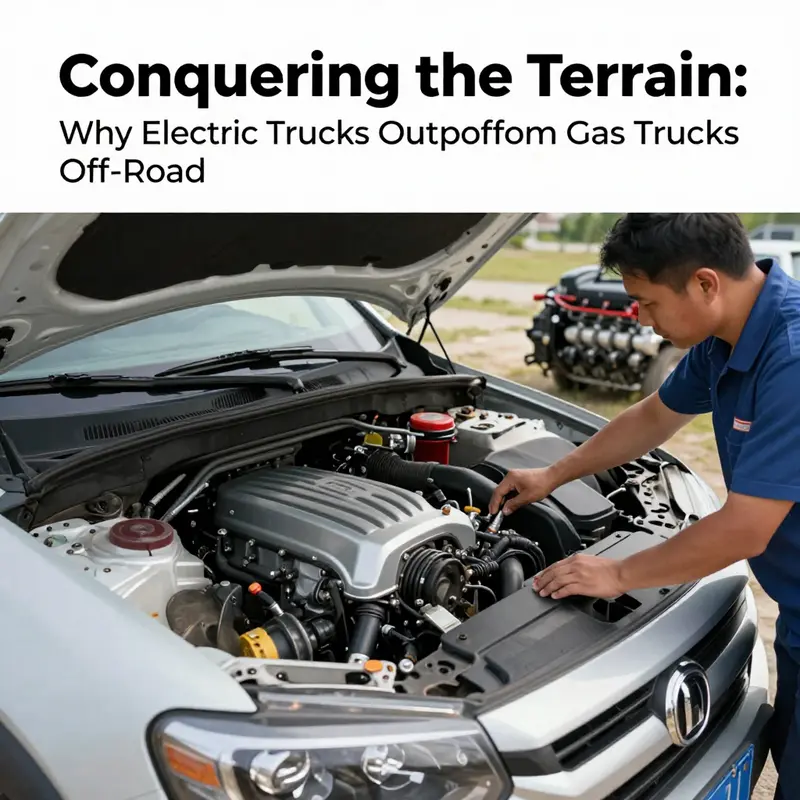
Off‑road performance is not merely a question of horsepower or torque figures. It is a test of systems—how a vehicle translates power into grip, how it manages heat and dust, and how its fundamental architecture holds up under the unpredictable demands of mud, rocks, and steep grades. In conversations about electric trucks versus gas trucks off-road, the central theme often returns to a single question: does shaving mechanical complexity translate into real durability, or does the vulnerability of battery packs and high‑voltage components offset those gains when the terrain grows truly unforgiving? The answer, as the current body of research suggests, is neither simplistic nor one‑sided. It is a nuanced balance that shifts with the type of terrain, the duration of effort, and the sophistication of the vehicle’s protective designs and battery management strategies. What follows weaves together the core threads of mechanical simplicity, maintenance demands, and the unique durability considerations that emerge when the trail stops pretending to be predictable.
A starting point is the fundamental mechanical contrast. Electric drivetrains scrap the conventional ICE stack: no internal combustion engine to rattle, no multiple gears to shift through, no exhaust system to corrode or clog, and no conventional transmission with its arrays of bearings and clutches. In practice this translates to fewer routine maintenance tasks and fewer potential failure points on any given mile of rugged travel. The absence of routine oil changes, oil filters, and cooling system rituals that are routine for many gas engines can reduce the maintenance footprint markedly. In the typical off‑road setting—where maintenance opportunities are sparse and time on the trail matters—this reduction is not merely a matter of cost. It is a reliability dividend. For operators who traverse long, remote routes or work in mining and construction environments where downtime costs more than the vehicle itself, the appeal of a drivetrain with fewer consumables and fewer fluids to monitor is immediate and tangible.
This simplification comes with an important caveat. The electric powertrain may be mechanically simpler, but it demands a new kind of resilience centered on the battery, the motor design, and the high‑voltage (HV) system. When you move from open desert or well‑graded dirt to a rock‑studded pass or a saturated, mulchy slope, the real stress is no longer a direct engine torque surge but the combined effect of sustained high current, heat buildup, and the possibility of moisture and debris infiltrating critical junctions. The battery pack, after all, is not just a power source; it is a set of tightly packed cells that must be cooled, cooled again, and protected from mechanical intrusion. The logic of protection extends beyond heat management into corruption resistance for the electronics and wiring harnesses that carry hundreds of volts through chassis channels to actuators, controllers, and sensors. In the most extreme off‑road scenarios, this is where durability testing truly begins—and where the research currently available becomes most nuanced.
From a maintenance perspective, the battery management system (BMS) sits at the center of durability discussions. A well‑designed BMS can optimize charging and cell balancing, ensuring that the pack remains within safe operating temperatures even as ambient conditions swing from sun‑baked heat to damp, muddy air. But the BMS is not a passive guardian. It actively modulates how power is drawn and dissipated, which means it is also a single point of failure that can demand specialized diagnostics and service. The 2025 assessments highlighted in the research literature emphasize that while overall maintenance costs may drop due to reduced fluid replacements and simpler mechanical averages, the need for specialized care rises. Technicians must understand high‑voltage safety, battery degradation indicators, thermal runaway risks, and the protective enclosures that shield sensitive electronics in muddy, wet, or dusty environments. In other words, the off‑road environment does not merely test components; it tests the ecosystem that surrounds them—the thermal management hardware, coatings and seals, and the skill set of the maintenance team. A vehicle that excels on paper can still stumble in the field if its battery cooling hardware is exposed to debris or if its ECUs and high‑voltage wiring lack rugged protection.
The literature also points to an important strategy for balancing durability with simplicity: architectural choices that favor low centers of gravity and even weight distribution. The placement of heavy battery packs is not just about maximizing passenger or cargo capacity; it is about stability on uneven ground. A low, broad weight footprint helps minimize rollover risk and improves traction, particularly on loose soil, wet clay, or shredded rock surfaces where the margins between maintaining grip and losing control are razor‑thin. In practice, this translates to better cornering behavior on tight off‑road turns and improved stability when crossing cambered grades. It also implies that the vehicle’s suspension can be tuned to optimize wheel contact with unpredictable terrain, rather than compensating for a tall, top‑heavy profile that would amplify body roll in a difficult descent. The result is a system that can translate the momentary torque available at zero RPM into a consistent, controlled push forward when every wheel must contribute to traction. This is not merely about raw grip; it is about predictability under load, which in off‑road contexts can be as valuable as outright peak performance.
Yet predictability comes with thermal and mechanical thresholds. When a ride demands prolonged high‑load operation—or a sequence of steep climbs followed by long, quivering descents—the battery system must manage heat without sacrificing performance. There are known tradeoffs: a larger battery pack can provide longer range and more reserve for grueling terrain, but it also carries more mass, more surface area to heat, and more stringent cooling requirements. The practical implication is that the durability story for electric off‑road platforms hinges on effective thermal design that can sustain sustained high current without overheating cells or compromising the pack’s integrity. In some cases, the research notes that certain electric models have shown limitations in “off‑road range” under continuous rugged use. What this signals is not a fatal flaw but a boundary condition: when you push an electric platform into terrain that demands continuous power for long intervals, battery endurance and thermal management become the limiting factors. This is the moment where ongoing development in cell chemistry, pack architecture, and cooling strategies becomes decisive for long‑haul reliability in harsh environments.
Alongside battery and thermal realities, the protective design of the vehicle itself emerges as a central durability factor. Off‑road environments subject vehicles to mud, water, rocks, and salt spray—all of which corrode metal and degrade electrical connections if the enclosure and seals are not robust. Electric trucks must shield high‑voltage harnesses, inverters, and motor controllers within IP‑rated enclosures, and they must do so without creating heat traps that could undermine performance. The mechanical hit of a rock strike or a rough landing on a wheel or control arm also calls for chassis protection in the form of reinforced skid plates, ruggedized control modules, and redundant sensors that can survive damp, sandy, or muddy conditions. In this sense, durability is a matter of intelligent layering: you do not merely build a powerful machine; you build a machine that can tolerate the mud and grit enough to perform reliably until it requires maintenance, rather than turning a field session into a tow home.
Against this backdrop, the maintenance discipline for electric off‑road trucks diverges from the gas truck playbook in meaningful ways, even as it shares some core automotive logic. For gas trucks, durability in rugged terrain often hinges on the resilience of an existing mechanical stack—engine blocks, transmissions, transfer cases, differentials, and exhaust systems. Each element has a defined service interval and a known failure spectrum, and the maintenance ecosystem has evolved around these predictable wear points. Electric trucks, by contrast, redirect attention from oil and filters to things like connector integrity, battery thermal solutions, and conditioning of power electronics. The maintenance cadence can become longer in between visits because the base wear items are fewer; there is less to service on a per‑mile basis when you consider the absence of transmission friction, exhaust corrosion, and regular oil changes. However, the intervals are not universally longer in rugged service. The battery system introduces a new risk calculus: when should cells be replaced? How should cooling be enhanced? What proactive checks ensure there is no creeping degradation that would reduce range available for a later trail segment? These questions require specialized training and often a different service network, one that can handle high voltage safety and battery diagnostics in addition to standard suspension and steering checks.
The real-world application of these maintenance patterns also depends on how the fleet or the individual operator uses the vehicle. A mining site, for example, may demand extended periods of continuous operation under heavy loads, with limited downtime. A construction yard might require frequent, short cycles with quick turnarounds and constant exposure to dust and moisture. In both cases, the dry language of maintenance cost savings gains texture when one studies field data: fewer oil changes and coolant flushes reduce the routine care load, yet the complexity of battery thermal systems and the need for robust protective enclosures raise the baseline for technician skill and test equipment. The net result is a maintenance equation that favors electric platforms in many common off‑road scenarios but demands a proportionate investment in specialized service capability to fulfill the durability promise in the long run. This is why some industry analyses emphasize not only the vehicle design but the surrounding ecosystem—training, tooling, remote diagnostics, and rapid access to replacement packs or modules—as critical components of overall durability and uptime.
One more layer of nuance concerns the broader industrial adoption of electric off‑road platforms. The advantages described—instant torque, low center of gravity, and simplified mechanical architecture—have found early traction in applications where reliability and uptime matter most. In mining, construction, and other rugged sectors, electric off‑road vehicles have demonstrated high productivity gains alongside meaningful reductions in environmental impact, while the maintenance envelope has shifted toward safeguarding the battery and power electronics. These sectors have long demanded vehicles that can operate around the clock with minimal maintenance windows. In those contexts, the case for electric powertrain simplicity becomes compelling: fewer moving parts mean fewer failures, less frequent servicing, and a clearer path to predictable maintenance budgets. Yet the durability story remains inseparable from the design choices that guard the battery and the electronics from field abuse. Battery protection, shock resistance, ingress protection, and thermal resilience are not add‑ons. They are the backbone of durable off‑road performance.
Thus, the overall assessment is nuanced: from the standpoint of mechanical complexity, electric off‑road trucks present a clear advantage over gas trucks due to fewer moving parts and less routine maintenance. In that sense, the maintenance and durability equation tilts in favor of electric platforms for many standard off‑road tasks, especially where reliability and uptime matter more than the absolute peak power. But durability in extreme off‑road environments also requires comprehensive protective design, robust thermal management, and a specialized maintenance ecosystem capable of diagnosing and repairing high‑voltage systems in harsh conditions. It is not enough to design a powerful electric truck; you must design an electric truck that can be repaired in the field and kept in a state where its battery and electronics remain within safe operating envelopes over a long service life. Put simply, mechanical simplicity helps. Robustness to field conditions helps even more. And when both are in place, the off‑road performance of electric trucks becomes less a paradox and more a practical advantage that augments the capabilities of operators who push their equipment to the ragged edge of the earth.
In this light, the maintenance and durability narrative does not stand in opposition to the broader performance story. Instead, it complements the earlier points about torque at zero RPM, stable weight distribution, and regenerative dynamics by showing how those design choices translate into real world field reliability. The instant torque that can get you moving on a slippery grade becomes more valuable when you know the drive system is resilient enough to deliver that torque consistently across hours of operation without requiring frequent, heavy maintenance. The low center of gravity that improves handling also translates into fewer shocks to the drivetrain and less likelihood of mechanical derailment on treacherous surfaces. And while regenerative braking reduces wear on conventional friction brakes, it also depends on a heat‑tolerant electronic and battery system that can absorb the energy without overheating. In other words, the durability story of electric off‑road trucks is not simply a repetition of maintenance advantages. It is a holistic narrative of durability through design quality, protective engineering, and an adaptive care ecosystem that recognizes the battery and power electronics as the critical backbone of field reliability.
Looking forward, the chapter’s core takeaway remains intuitive: electric off‑road platforms are not a blanket replacement for their gas counterparts in every scenario. They provide a compelling maintenance and reliability profile in many common off‑road conditions, particularly where uptime and energy efficiency matter as much as raw torque. Yet when the terrain amplifies the demands on battery endurance, heat management, and protective robustness, true durability hinges on innovations in battery technology, thermal pathways, and field‑ready service models. The path ahead is not a simple migration from gas to electric; it is a careful sculpting of vehicle architectures that can sustain high performance over long, punishing use with minimal downtime and predictable maintenance requirements. As the research points out, this is a developmental frontier that will continue to refine both the practical maintenance footprint and the long‑haul durability metrics for off‑road electric trucks.
For readers who want to see a broader, industry‑scale perspective on these durability themes, a recent exploration of electric construction and equipment demonstrates how a shift toward electric platforms reframes maintenance because of both the simplification of the powertrain and the need for hardened protection around battery systems. This larger industry narrative reinforces the central idea that mechanical simplicity is an enabler of durability in many off‑road contexts, while the battery‑centric challenges define the future durability frontier. To explore these ideas in a broader context, a relevant industry discussion on the evolution of electric construction equipment offers useful context and examples of the kind of protective engineering and system integration that can push electric off‑road durability from good to great: electric construction equipment revolution.
External resource: For a broader view of how off‑road electric traction and durability are evolving at the technology and policy interface, see the BBC technology analysis of electric trucks in off‑road scenarios, which highlights the maintenance advantages and the technical challenges of battery durability in rugged conditions. https://www.bbc.com/news/technology-68743159
Final thoughts
Electric trucks are not just a glimpse into the future of sustainable driving; they are already proving their mettle in off-road environments. With instant torque, impressive weight distribution, and simplified maintenance, these machines offer off-road enthusiasts an unparalleled driving experience. As this technology continues to evolve, the advantages will only deepen, making electric trucks the formidable contenders on trails and rugged terrains. Embrace the change and discover what electric trucks can achieve on your next adventure.