
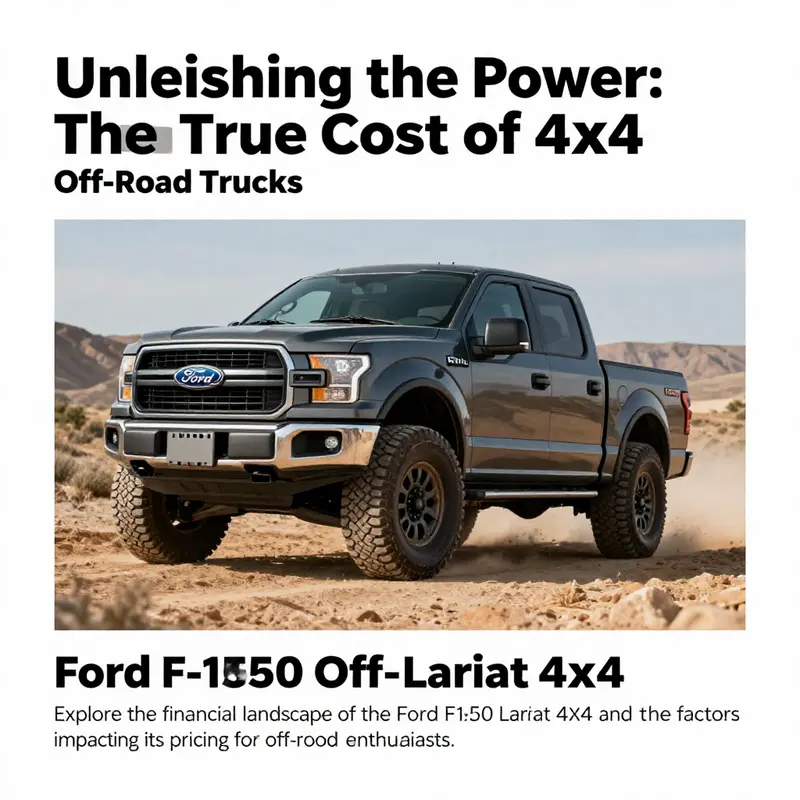
The Ford F-150 Lariat 4×4 Off-Road truck epitomizes the rugged spirit of adventure, merging power with off-roading capability. For off-road enthusiasts, adventurers, and landowners alike, understanding the comprehensive cost of this vehicle is crucial for making informed purchasing decisions. This exploration delves into the various facets influencing the cost—from base pricing to market factors, and long-term considerations to financing options. Each chapter provides insight into why the Ford F-150 Lariat stands as a formidable choice in the robust truck arena.
null
null
Riding the Price Wave: Market Forces Shaping the Cost of a Premium 4×4 Off-Road Pickup
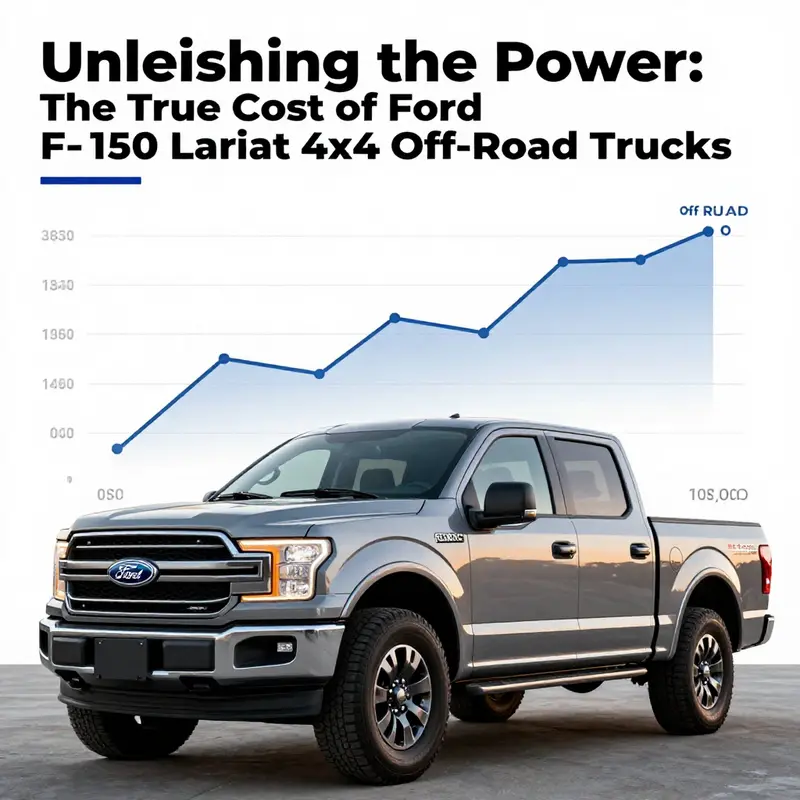
Price, in the world of full-size pickups that blend rugged off-road capability with upscale comfort, is not a fixed number. It is a moving target shaped by a constellation of market forces that interact in real time with production calendars, dealer strategies, and consumer appetite. As of early 2026, the pricing picture is clearest when you lay out the building blocks of a well-equipped, four-wheel-drive model that carries a luxury trim and a robust off-road package. The base price for this class typically starts in the mid-50s to high-50s, a figure that signals more than simple transportation—it signals a vehicle designed to blend daily practicality with weekend adventure. Add the Off-Road Package, which brings heavy-duty suspension, skid plates, all-terrain tires, and an electronic locking rear differential into the mix, and the sticker climbs by roughly three thousand to four thousand dollars. The math is straightforward, yet the implications ripple across the purchasing journey: a fully configured truck in this category can land between sixty thousand and seventy thousand dollars, and often beyond, depending on the configuration and options chosen. This range does not exist in a vacuum; it reflects a dynamic synthesis of supply, demand, and the broader cost environment that defines modern manufacturing and retail pricing.
To understand why these numbers move, it helps to look at the factors that most strongly steer price in the current era. First, supply chain constraints continue to shape the terrain. The production of critical components—semiconductors, specialized off-road hardware, and other high-demand parts—has faced persistent delays and multiple reshuffles in availability. When inventories tighten, dealers are pushed toward higher markups or tighter allocation of the most sought-after trims. This is not about a single brand or model; it’s a market-wide pattern that tends to amplify prices on configurations that buyers most crave, especially those with four-wheel drive and off-road capability. The effect can be subtle in one region and pronounced in another, depending on local supplier delays and regional stock levels.
Second, consumer demand for premium features and capability acts like a tidal force on price. The luxury interior, advanced multimedia systems, driver-assistance suites, and the added ruggedness of an off-road package create strong pull for buyers who want comfort alongside capability. When demand for these specific combinations peaks—as it often does in the spring and summer driving season—dealerships may respond with limited availability, or, in some cases, calculated markups. The result is an effective price lift that goes beyond the sticker price. It’s not just about wanting more; it’s about the scarcity of high-demand configurations in the showroom and the willingness of buyers to pay a premium for them.
Third, inflation and rising manufacturing costs cast a broad shadow over pricing across the automotive sector. Labor costs, the prices of raw materials such as steel and aluminum, and energy costs all feed into the final sticker. Even when an automaker maintains a steady base price, the bills for producing and delivering that truck creep upward with inflation. In those cycles, automakers may adjust not only the base price but also the cost of options, financing charges, and the overall cost of ownership. For buyers, this translates into a shifting threshold: the amount of money that makes sense to spend now versus the depreciation and running costs that accumulate over time.
Fourth, dealer incentives and regional variations add another layer of complexity. Some markets enjoy aggressive incentives, favorable financing terms, or seasonal promotions that bring the bottom line down. In other regions, especially places with high demand for capable work trucks or premium interiors, incentives may be more limited, leaving the advertised price closer to the sticker. Taxes, registration fees, and destination charges further complicate the total cost of ownership. The same configuration can ring up at different totals depending on where the vehicle is bought, what incentives apply, and how local taxes and fees are assessed. Buyers who compare quotes across dealerships and regions often find meaningful variance in the final numbers, underscoring the importance of a careful, line-by-line comparison rather than relying on a single sticker price.
In practical terms, these market forces translate into several actionable realities for anyone budgeting for a premium 4×4 off-road pickup. The starting figure around the mid-50s signals a baseline that accommodates a balance of capability and comfort. The Off-Road Package price adds a meaningful premium, reflecting the added hardware and firmware that enhance durability, traction, and protection in challenging terrain. The total price, hovering around sixty to seventy thousand dollars, represents the value proposition buyers weigh against alternatives within the same class, including other trims with different levels of luxury, technology, and off-road refinement.
Yet the story behind those numbers is not just about up-front cost. Financing considerations, warranty terms, maintenance expectations, and the residual value of a well-equipped pickup all slice into the total cost of ownership. A higher sticker price can be offset or amplified by financing rates that reflect the broader macroeconomic environment, lender appetite for heavy-truck loans, and the buyer’s credit profile. Insurance costs, fuel efficiency, and potential resale value also follow from the configuration chosen and the market’s reception to that particular setup. For buyers, the challenge is not merely to determine what price is asked today, but to forecast how the price might move before delivery, and how those movements interact with personal budget goals and loan terms.
From a strategic standpoint, the data points you use to weigh a purchase should include both the base price and the incremental cost of the Off-Road Package, but also the weight of options that truly add value to your plans. A premium audio system or an upgraded navigation interface, advanced driver-assistance features, or a high-end exterior color can nudge the total past the seventy-thousand-dollar mark. If your lifestyle centers on frequent highway commuting with occasional rock-crawl trips or back-road adventures, the extra capability and interior upgrades may well justify the premium. If, on the other hand, your involvement with off-road terrain is intermittent, you might favor leaner configurations that preserve budget for tires, gear, or other investments that extend the life and usefulness of the vehicle.
The price signals also carry practical implications for timing and negotiation. Buyers who monitor supply trends, regional incentives, and seasonal promotions can position themselves to capture favorable terms that mitigate the sticker impact. Conversely, when demand is hot and supply tight, the same market forces can push the effective cost upward, even if a dealership quotes a similar base price. In this context, a thoughtful shopping approach—comparing configurations, test-driving with a clear plan, and interrogating the terms of any promotions or financing offers—becomes essential to securing a deal that aligns with both practical needs and financial posture.
As a framework, the numbers provided in the pricing overview serve as a reliable starting point for planning. A base price in the low to mid-50s, plus a three to four thousand-dollar premium for the Off-Road Package, anchors expectations for the initial configuration. The envelope of the total price—from roughly sixty thousand to seventy thousand plus—captures the impact of popular options and the negotiation dynamics described above. For buyers who want a precise figure tailored to their locale and configuration, the most responsible step is to configure a build through an official vehicle configurator and to request a detailed, itemized quote that reflects current incentives, taxes, and destination charges.
In sum, the cost of a premium 4×4 off-road pickup is a reflection of multi-layered market dynamics rather than a fixed sticker. Supply chain health, consumer appetite for luxury and capability, macroeconomic price pressures, and dealer strategies all converge to shape the final price a buyer will bear. Understanding these forces equips buyers not only to estimate a realistic budget but also to engage more effectively with dealers, to spot opportunities for savings, and to time purchases in a way that aligns with both personal needs and market rhythms. When you walk into a showroom or log into a configurator, you’re not just choosing features; you’re navigating a price ecosystem that is as fluid as the terrain such a truck is built to conquer. For those who want to ground their planning in the most up-to-date pricing and configuration options, the official configurator remains the most reliable compass in a shifting landscape: https://www.ford.com/vehicles/f-150/configure/.
Beyond the Lariat: Navigating Costs and Capabilities in Off-Road Full-Size Pickups
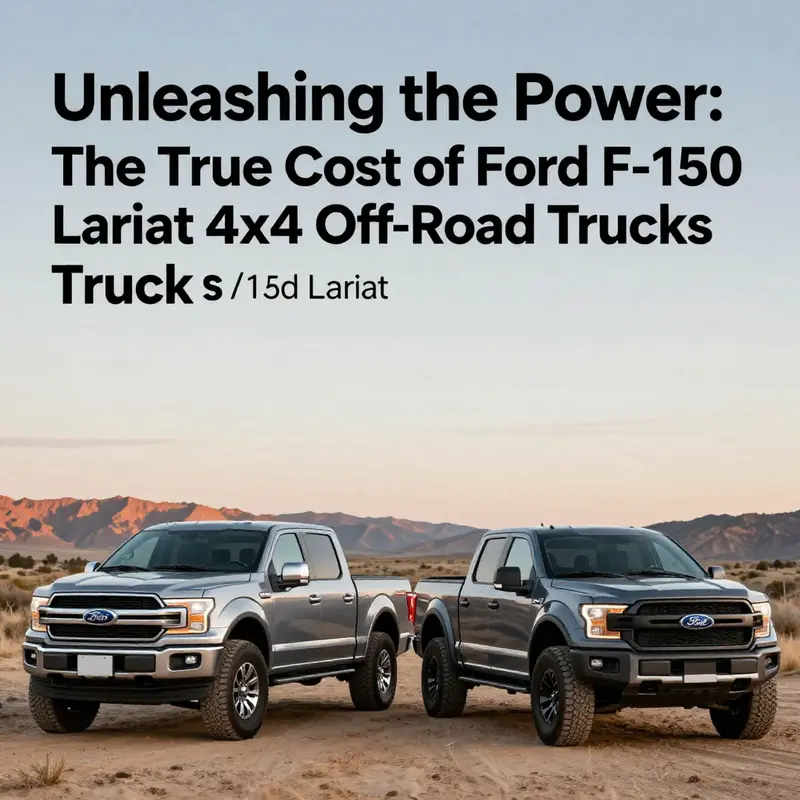
Pricing a modern full-size pickup with an off-road focus is never a single-number proposition. It is a careful mix of base platform, drivetrain choices, rugged equipment, luxury touches, and the fees that dealerships add on top of the sticker. The Ford Lariat 4×4 Off-Road combination sits in a particular pocket of that market. The base price for this kind of truck typically hovers in the mid-five-figure range, while the Off-Road package nudges the total into the low to mid six figures, depending on destination charges and the sequence of add-ons. In practical terms, even a modest configuration that leans into the off-road-ready hardware can push the sticker well into the high-50s, and when you bolt on premium audio, advanced driver-assistance features, towing enhancements, or distinctive paint and trim, the price can drift toward the upper fifty-nine to seventy thousand dollar zone. This reality underscores a broader truth: buyers aren’t just paying for a vehicle; they are buying a package of capability, comfort, and confidence that scales with how serious they are about venturing off pavement or towing demanding loads. The market responds to this tension with a spectrum of alternatives, each presenting a different balance of cost and capability that can be more or less appealing depending on the buyer’s priorities. While the Lariat Off-Road package continues to attract buyers who want a familiar, well-rounded chassis with a robust feature set, rival configurations in the same class offer competitive packages that can alter the math in meaningful ways for those who need more torque, more luxury, or more efficiency from a diesel powertrain.
A useful starting point for comparison is to look at how a typical competitor market package lines up in price and capability. One rival in the same class markets its off-road-oriented trim around the mid-to-high $50,000s, emphasizing heavy-duty suspension, all-terrain tires, skid plates, and an off-road-tuned drive mode. That package is often paired with a diesel powertrain option, a combination that can deliver both strong towing performance and improved fuel economy on longer work trips or adventurous journeys. For buyers who want the maximum torque at low speeds, the diesel option can be an important differentiator, even if it adds to the upfront cost. In practice, this means a slightly higher starting point than the most basic trims but with long-term savings on work-site fuel burn and the ability to handle rugged terrain with less strain on the engine and transmission. The real question becomes not just “How much?” but “What kind of off-road capability do I actually need, and how will that choice affect daily usability, resale value, and total ownership cost over several years?”
Another prominent competitor in this space tends to start near the upper end of the same range while highlighting a rugged aesthetic, larger wheels, and an upgraded suspension. The price point here is driven by a premium interior, advanced infotainment, and a stronger emphasis on on-road refinement. The result is a truck that feels more like a luxury pickup with off-road bravado, rather than a pure workhorse that can be pushed hard into terrain where every mile costs time and energy. This path appeals to buyers who prize interior comfort, quiet cruising, and a more polished ride, even if it means paying a premium that edges toward the mid-$60,000s or into the $70,000s when the most ambitious option lists are selected.
A third path, popular among traditionalists who value straight-ahead rugged capability, centers on a brand with a long-standing reputation for off-road competence. The price here tends to be a touch higher than the base Ford configuration but remains competitive with the upper-end options from the other marques. The appeal is a balance between capable off-road performance and a durable platform designed to handle demanding tasks, with a torque-rich engine lineup that rivals the diesel-equipped options of the market. It’s not unusual for this route to land in the $60,000s, with the higher end reserved for models that add premium interiors, advanced safety suites, and larger touchscreens.
Finally, there is the “premium but practical” approach. A luxury-trim alternative in this segment prioritizes ride quality, cabin refinement, and a large suite of safety and driver-assistance features. It places great emphasis on comfort during long drives and on-value perception for buyers who intend to drive the truck daily as a primary transportation tool with weekend excursions as a bonus. This path often lands in the mid-$60,000s, with the potential to top $70,000 when options pile up. For buyers who plan to do a lot of towing, or who want a built-in premium feel for business travel, that extra cost can confer tangible daily and long-term benefits that extend beyond raw off-road prowess.
What emerges from this landscape is not a single winner, but a set of value propositions shaped by individual priorities. If diesel torque and highway efficiency are top on the list, the diesel-enabled alternatives can offer compelling advantages—especially when paired with a heavy-duty suspension and a well-chosen tire setup. If the goal is a high-end, comfortable cabin that doesn’t trade away too much capability, the premium-trim route makes sense, particularly for owners who spend equal time on-road and off-road. If you want a lean and rugged machine that feels purpose-built for rough jobs, a more utilitarian off-road setup with fewer frills can deliver excellent value. And if your needs are balanced between occasional off-road use, strong towing, and city driving, a well-rounded package at a moderate price can often deliver the best total cost of ownership.
In guiding a buyer through these choices, the initial price tag is only the starting point. Location, incentives, and the configuration path you choose at the dealership can swing the final number by several thousand dollars. Destination charges, dealer preparation, and optional extended warranties or maintenance plans can add to the bottom line. Buyers should also consider resale value and maintenance costs over time. A vehicle that commands higher purchase prices might retain value better or incur maintenance costs that are offset by reliability and technology features. Conversely, lower upfront costs can become a disappointment if a vehicle lacks the features that matter most in the buyer’s usage pattern. The practical takeaway is simple: cost is a function of how much capability, comfort, and prestige you require, and how those elements align with your daily life and long-term ownership goals.
As buyers weigh these options, there is value in looking beyond the sticker to the broader ecosystem around these trucks. Dealerships typically offer configurators that reveal how much a given setup will cost after destination fees and available incentives. It is helpful to compare similar configurations side by side, focusing on the core differences in suspension tuning, tires, skid protection, and drive modes, as well as the availability of diesel power and the quality of the interior and technology stack. Those decisions often determine whether a given truck becomes a gateway to rugged capability or a refined daily driver that can still handle rough terrain when required. For readers who want to explore the social side of truck ownership and the role of fleets and dealerships in community projects, there is a relevant discussion on how trucks can contribute to broader causes. See Trucks for Change: Supporting Habitat for Humanity for a perspective on how the purchasing choice can align with philanthropic goals.https://dirtantrucks.com/trucks-for-change-supporting-habitat-for-humanity/
Ultimately, the question of cost in this market weighs heavily on the buyer’s tolerance for compromise. The best approach is to start with a clear list of must-haves and nice-to-haves, then methodically test how each option changes the total cost of ownership. If the diesel option is appealing for its torque and efficiency but adds to the initial price by several thousand dollars, prospective buyers should calculate projected fuel savings and resale value to determine whether the higher upfront cost pays off over the vehicle’s life. If luxury touches are non-negotiable, the incremental premium may be justified by a more comfortable cabin, quieter ride, and a more advanced suite of safety and driver-assistance technologies. In that case, it makes sense to quantify how much value those features add to your daily life and work routines, not just how they feel in a showroom.
For readers who want a broader, data-driven view that stitches together cost, capability, and real-world performance across the segment, a recent comparative analysis provides a concrete, side-by-side look at how these trucks stack up. It highlights pricing, feature parity, and performance trade-offs in a way that’s useful for making a final decision. External resource: https://www.caranddriver.com/truck-reviews/a42913/comparison-of-2025-ford-f-150-lariat-vs-chevy-silverado-1500-trail-boss-vs-ram-1500-rebel/
Beyond the Sticker Price: Navigating the Long-Term Costs of a Premium 4×4 Off-Road Pickup
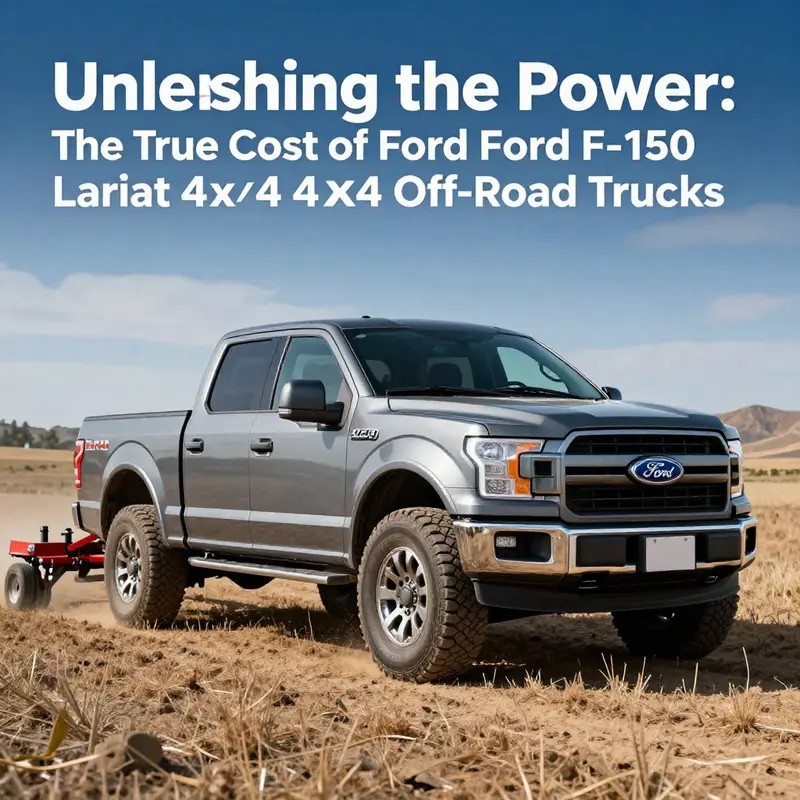
A high-trim, four-wheel-drive pickup built for off-road exploration promises comfort, capability, and a sense of control when the trail gets rough. Yet the true cost of ownership stretches far beyond the moment you sign the papers. In the long run, a comprehensive view includes not just the initial price but a cascade of ongoing expenses: fuel, maintenance, insurance, depreciation, and reliability. The purchase price is the gateway to a broader financial story, one that unfolds over years and miles. For buyers who crave both luxury and rugged performance, understanding these dynamics helps ensure that the dream of off-road freedom doesn’t become a budget shock once the first service interval rolls around. When we map out the financial arc of a premium 4×4 off-road pickup, we begin to see how the vehicle’s design, powertrain, and intended usage shape every layer of ownership costs, from routine fueling to unexpected repairs in harsher terrain.
Initial purchase price is the doorway to better spec and real capability, but the price tag at the dealership is only part of the picture. A high-trim model with four-wheel drive and the Off-Road Package carries a premium thanks to features like a refined interior, advanced driver-assistance systems, stronger suspension, and protective underbody components. Those premium features contribute meaningfully to the sticker price and, in turn, influence long-term ownership economics. When a buyer leans into the Off-Road Package, the base cost can jump by a few thousand dollars, and optional upgrades—premium audio, upgraded lighting, or a specialized exterior finish—can push the total well beyond the initial figure. The strategic takeaway is simple: the more you load into a truck built for rough terrain, the more the cash outlay grows upfront, which cascades into taxes, financing charges, and the overall cost of ownership.
Fuel costs, perhaps surprisingly, become a central long-term consideration for a capable off-road pickup. In the realm of four-wheel-drive trucks, engine choices and the accompanying torque delivery profoundly affect daily economy. A modern 3.5-liter V6 EcoBoost engine, commonly paired with such trucks, offers a blend of power for climbing, towing, and traversing challenging trails with a respectable level of efficiency. On paper, the combined efficiency often lands around the upper teens to low twenties miles per gallon, with the manual for city and highway use showing roughly 18 mpg in city driving and 23 mpg on the highway. Yet off-road use—whether crawling over rocks, navigating sandy trails, or hauling gear over rough surfaces—tends to lower that figure. In practical terms, a driver logging more off-road miles will face higher annual fuel costs than someone using the truck primarily for highway commutes and light duty. Over a typical year of mixed driving, even a modest difference in mpg can amount to a few hundred dollars in extra fuel, which compounds over several years. The math becomes more consequential when fuel prices rise or when the vehicle is occasionally used in heavy towing scenarios, both of which tilt the balance toward greater lifetime fuel expenditure. For those who plan long road trips or weekend adventures, this is not just a matter of average efficiency but a question of how often the truck sees the accelerator pedal jammed in earnest and how many miles accumulate on trails that demand extra torque and traction.
Maintenance costs enter the long-term equation with a similar logic: more capable hardware typically invites more frequent inspections and replacement cycles in harsh conditions. The F-series lineage, known for durability, generally holds up well in daily driving and light-duty use, but off-road variants endure higher exposure to rocks, mud, and vibrations that can stress suspension components, driveline wear, steering hardware, and tire tread. Routine maintenance—oil changes, fluid checks, brake service, and tire rotations—remains predictable in timing and cost, but the off-road environment adds layers of potential maintenance: heavier-duty suspension wear items, protective skid plates that may require occasional inspection, and more frequent tire replacement or repair due to rugged terrain. While the base maintenance cadence stays reasonable, enthusiasts who chase trails frequently can expect higher annual maintenance outlays compared with a non-off-road configuration. This is not a case of routine neglect; it is a matter of durability under more punishing conditions. In practice, some owners allocate a dedicated maintenance buffer to cover these contingencies, recognizing that longer trips and tougher trails translate into a higher likelihood of components needing attention.
Insurance costs rise with vehicle value, risk profile, and the breadth of safety features included in the configuration. A premium pickup with four-wheel drive and advanced protection systems commands higher premiums than more basic work-truck configurations. The combination of high purchase price, sizable replacement costs for body panels or drivetrain components after off-road adventures, and the potential for elevated repair costs can push annual premiums upward. Insurance is also sensitive to driver history and intended use; those who regularly tow heavy loads or participate in more aggressive driving on challenging terrain may see adjustments that reflect elevated risk. For buyers, the takeaway is clear: the affordability equation should factor not just the quoted premium but also how the vehicle will be used, where it will be parked, and the likelihood of exposure to situations that stress both the truck and its safety systems.
Depreciation tells a different part of the story. Trucks with strong demand for utility tend to retain value better, particularly in tradable segments like full-size pickups that serve as daily drivers, workhorses, or weekend adventurers. The premium trim and off-road capability can both bolster resale potential, provided the vehicle is kept in good condition and the mileage remains within reasonable bounds. Depreciation is not a straight line; it shifts with market demand, fuel prices, and broader economic conditions. In many cases, a well-maintained, feature-rich 4×4 can hold its value relatively well, especially if it remains free of major issues and if the owner preserves service records. However, the long arc of depreciation will still erase a portion of the initial premium paid for the Off-Road Package, so buyers should model resale expectations as part of their overall budget. The goal is to align the purchase with anticipated usage, ensuring that the vehicle’s value proposition remains compelling at trade-in time or when selling to a private party.
Reliability is the quiet force shaping long-term costs. Across the F-series lineage, ownership studies have consistently highlighted strong overall reliability, but the higher-trim, off-road-oriented configurations can present a slightly different reliability profile. Electronic systems, drivetrain components, and specialized suspension hardware may show marginally higher failure rates in high-spec variants, particularly when subjected to demanding off-road use. That caveat matters because repairs on a premium, purpose-built off-road truck can be more expensive than those on more basic work trucks. The takeaway for buyers is to balance the allure of premium features with a realistic expectation about potential electronic or drivetrain maintenance needs. Maintaining a rigorous service schedule, using recommended fluids, and addressing wear promptly can mitigate costs and help preserve long-term reliability. It’s wise to rely on credible data when budgeting—sources that aggregate owner experiences, technician feedback, and warranty data can illuminate expected maintenance costs over time.
To navigate these arrays of costs with confidence, many choose to quantify total ownership rather than focusing on sticker price alone. A practical approach blends a careful inventory of expected fuel usage, maintenance intervals, insurance quotes, and depreciation forecasts. When buyers run their numbers, they often discover that the long-term cost of ownership is tightly tied to how the vehicle is used and how well it is maintained. For a precise, configuration-specific projection, tools that calculate total cost of ownership become invaluable. One widely used resource compiles fuel, insurance, maintenance, and depreciation into a single forecast keyed to real-world usage and market changes. This kind of calculator can translate the nuanced differences between a base model and a fully loaded off-road configuration into a concrete dollar figure across years of ownership. In practice, plug in miles driven per year, local fuel prices, expected maintenance intervals, and planned tow and payload scenarios to see how the numbers shift with different setups and driving patterns. To explore a practical framework for this, consider the diesel mechanics guide as a deeper dive into how maintenance realities can vary with powertrain choice and terrain exposure. diesel mechanics guide.
Of course, the broader landscape for long-term ownership costs also hinges on market dynamics and personal finance choices. For buyers who prefer a conservative estimate, the plan should include a buffer for price fluctuations in fuel and parts, as well as a contingency for unexpected repairs. Financing terms, down payment, and duration can amplify or ease the annual carrying costs. A buyer who prioritizes off-road capability might justify a larger upfront payment if it translates into meaningful ownership advantages, such as higher resale value and greater utility on demanding terrain. Conversely, a more frugal approach may favor a leaner configuration and broader use-case considerations, balancing performance with predictable, lower long-term outlays. In either case, the discipline of comparing apples to apples—assessing identical tasks, mileage, and usage patterns—produces a clearer picture of which setup delivers the best value over the vehicle’s lifetime.
For readers seeking a concrete, calculator-driven framework to anchor their decision, trusted sources offer models that project fuel, insurance, maintenance, and depreciation across time. The goal is not to chase the lowest upfront price alone, but to understand how various configurations echo through ownership costs year after year. In the end, the right choice aligns personal needs with a sustainable financial plan. The result is a vehicle that delivers the right balance of capability, reliability, and total cost of ownership, so the thrill of off-road exploration remains enjoyable well beyond the first few thousand miles. If you’re curious about how changing your miles-a-year assumptions or fuel price scenarios could reshape the numbers, there are tools that tailor projections to your own configuration and driving habits. For an external reference that consolidates these factors into a single forecast, you can consult the Car and Driver Total Cost of Ownership calculator, which offers a structured way to translate your setup into a lifetime cost estimate: https://www.caranddriver.com/total-cost-of-ownership.
Financing the Dream: Navigating Financing, Incentives, and Total Cost for a Premium 4×4 Off-Road Pickup
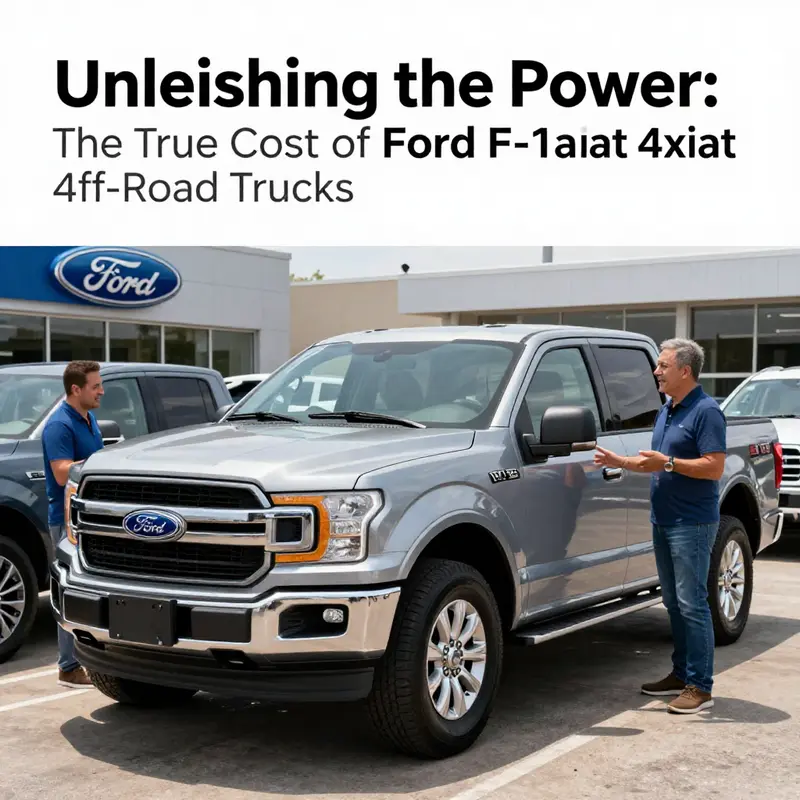
The journey to owning a premium, four-wheel-drive pickup with off-road capability begins long before the keys are handed over. The sticker price is only the first line item in a long ledger that includes destination charges, optional equipment, and the many ways a buyer can structure payment. When the base model sits in the mid-to-high fifty-thousand range, the Off-Road package—designed to tame rough terrain with a heavier suspension, skid plates, all-terrain tires, and an electronic locking rear differential—adds a meaningful bump. Add popular options like a premium sound system, advanced driver aids, upgraded towing gear, or a distinctive exterior color, and the total cost can creep toward the upper six figures in the right configuration. The precise amount varies year to year, region to region, and buyer to buyer, but the core math is clear: financing, incentives, and ownership costs can swing the final price by thousands, if not tens of thousands, over the life of the vehicle. For someone weighing the purchase, understanding these financial levers is as important as weighing horsepower and payload capacity.
Financing options offered through the automaker’s credit arm are typically the most straightforward path to ownership. Among the strongest levers available to qualified buyers are low annual percentage rates (APRs) and favorable lease terms that appear in promotional periods. In early 2026, those official programs commonly sit in a range from roughly 2.9% to 6.9% APR, with the exact figure dependent on creditworthiness, loan term length, and current promotions. A buyer who anticipates keeping the truck for more than a few years might favor a traditional loan with a longer term to lower monthly payments, while someone who enjoys driving a new model every few years could opt for a lease that aligns with fresh technology cycles and warranty coverage. Either route benefits from a solid credit profile, a well-planned down payment, and a realistic assessment of remaining financial commitments beyond the monthly installment.
Leasing, in particular, can offer predictable costs and regular upgrades. A lease typically requires a smaller upfront sum than a purchase and provides the option to walk away at the end of the term or to purchase the vehicle at a predetermined residual value. The economics hinge on factors like annual mileage limits, expected wear and tear, and the negotiated money factor. It is not unusual for buyers to combine a modest down payment with a negotiated cap cost to secure a monthly payment that fits a given budget. The caveat, of course, is that lease terms include mileage restrictions and potential charges for excess wear. For those who use the truck for work or long commutes, the math should include projected mileage, maintenance realities, and the likelihood of needing to replace tires—every element that affects the real cost of operation over the lease term.
Beyond the base financing and leasing options, dealers and manufacturers frequently run targeted promotions throughout the year. Cash-back offers, reduced down payments, or deferred payments can lower the effective purchase price or ease the path to ownership when cash flow is tight. These incentives are often time-limited and conditionally available, sometimes tied to specific trim levels or configurations that include the Off-Road package. For buyers who already own a Ford or other qualifying brand, loyalty bonuses may apply, creating an additional deduction from the sticker price or enabling a more favorable financing package. Separate programs for military personnel, first responders, and healthcare workers can further shorten the path to ownership, though eligibility varies by region and program year. The key is to check the exact terms and layer promotions strategically, rather than chasing a single discount that may expire before the paperwork is done.
A frequently overlooked element of the cost picture is the tax and regulatory environment. Federal and state-level tax credits or rebates tied to emissions or electric vehicle adoption do not apply to gas-powered configurations, including most premium four-by-four off-road pickups. Buyers should not assume EV incentives will offset the sticker price of a gasoline-powered model. Still, some jurisdictions offer incentives tied to fuel efficiency, urban air quality programs, or alternative-fuel applications that can indirectly affect ownership costs. Regional incentives can be small but meaningful when combined with manufacturer promotions and dealer-level discounts. To navigate this landscape, buyers should consult local tax authorities or a trusted financial advisor who can map out what, if any, incentives exist in their area and how they interact with the financing or lease structure chosen.
One practical way to maximize value is to approach the purchase as a two-part decision: configuration and payment. The configuration should reflect real needs—towing requirements, payload expectations, overland trips, and the specific terrain encountered in typical usage. The payment plan should reflect a realistic view of total ownership cost. In this regard, a careful estimate includes depreciation, insurance, maintenance, tires, fuel, and potential warranty coverage. Premium trims and the Off-Road package add capability and comfort, but they also push maintenance and tire costs higher if the vehicle is used aggressively off pavement. Buyers should weigh whether the added resale value, warranty protection, and perceived reliability justify the higher upfront price. A useful mindset is to treat the price of the vehicle as one line item and the total cost of ownership as a second. The latter helps prevent the temptation to overextend on features that do not translate into meaningful savings or productivity.
For buyers who think about fleet or work-use implications, there is another layer of consideration. Fleet managers and business owners often pursue financing strategies that optimize cash flow and asset depreciation across multiple vehicles. In these scenarios, the choice of payment method can be linked to operational budgeting, tax treatment, and end-of-life disposal planning. The decision to pursue a loan or a lease can hinge on how long the asset will remain economically viable in a fleet context, rather than personal preference alone. For those exploring broader vehicle-management strategies, there is value in examining how other parts of the fleet operate, including scheduling, maintenance cycles, and the integration of vehicle data into a central system. A practical waypoint on this journey is to explore available resources that discuss the intersection of financing, fleet management, and cost efficiency. For instance, some industry guidance highlights how modern fleet software can help optimize purchasing decisions and scheduling—topics that intersect with ownership costs in meaningful ways. See the discussion on advantages of fleet dispatching software for a broader view of how operational considerations can shape vehicle purchases and cost management.
To stay grounded in real numbers and ensure the most accurate quotes, buyers should use the official configurator and finance calculator tools offered by the automaker. These tools reflect current MSRP, available rebates, and personalized financing terms based on location and credit profile. While these online tools provide a solid starting point, nothing beats a straight talk with a local dealer who can tailor the numbers to a practical scenario—including trade-ins, destination charges, dealer fees, and the exact mix of packages and accessories desired. The configurator can also help buyers visualize how a given spread of options affects both the price and the monthly payments, which in turn informs a more disciplined negotiation and a more precise budget.
In the end, the path to ownership for a premium 4×4 off-road pickup hinges on three questions: What do I truly need the vehicle to do, how long will I keep it, and what is the most cost-effective way to pay for it given my credit and cash flow? A thoughtful answer arises from balancing the sticker price, the incentives that apply, and the overall cost of ownership. The Off-Road package adds capability that may translate into tangible work or recreation value, but it is not a guarantee of lower total cost. By layering promotions, loyalty or community-based discounts, and a careful financing plan, a buyer can turn a high upfront investment into a well-managed long-term asset. For authors or readers tracking cost narratives, the lesson is clear: the best financing strategy aligns with actual usage, anticipated tenure, and a disciplined approach to price discovery. If you want to further explore how these financial elements tie into broader fleet or operational decisions, consider the practical insights found in resources that discuss the advantages of fleet dispatching software.
External resource: For current MSRP, rebates, and personalized finance quotes, consult the manufacturer’s official configurator and financing information at https://www.ford.com/vehicles/f-150/.
Final thoughts
The Ford F-150 Lariat 4×4 Off-Road truck represents more than just a vehicle; it embodies the pursuit of adventure and capability. While understanding its associated costs—from the base price to optional packages and long-term financial implications—enables informed decision-making, trusting the overall value it can deliver is equally crucial. As you embark on your journey towards enhancing your off-road adventures, consider not only the immediate costs but also the long-term benefits this legendary truck can provide.