
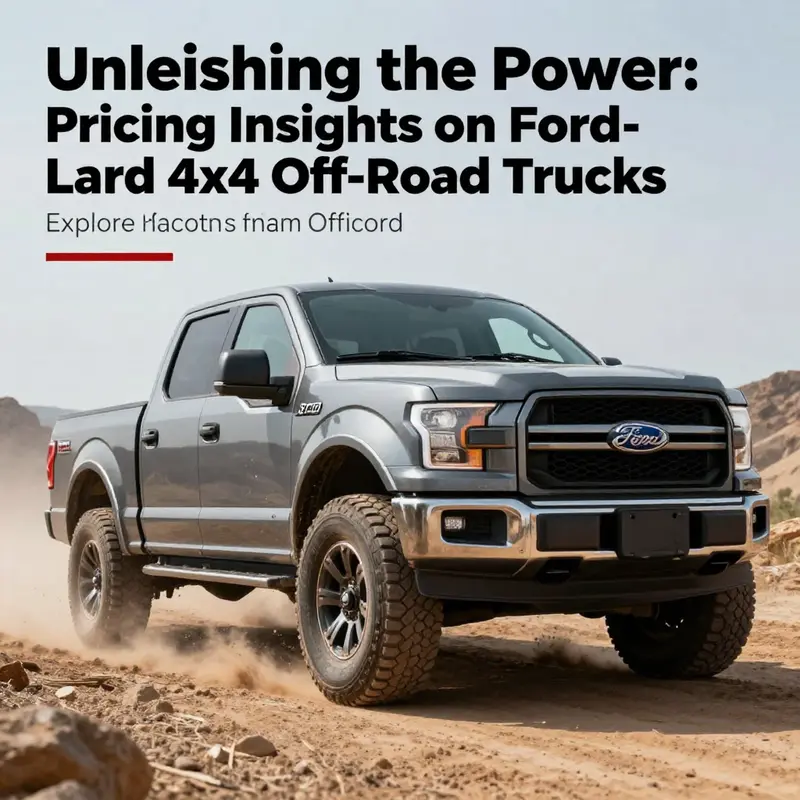
For off-road enthusiasts, the Ford F-150 Lariat 4×4 Off-Road truck stands as a symbol of rugged capability and adventure-ready design. The allure of this beast lies not only in its powerful performance but also in its price, which reflects a multitude of factors, from advanced features to market demand. This article delves into the specifics surrounding the costs associated with these trucks, examining how various elements influence pricing today, comparing market variations, and speculating on future trends that could impact your investment in off-road excellence. Buckle up as we navigate the financial landscape of Ford’s unrivaled off-road prowess.
Beyond the Sticker: Decoding the True Cost of a Ford F-150 Lariat 4×4 Off-Road
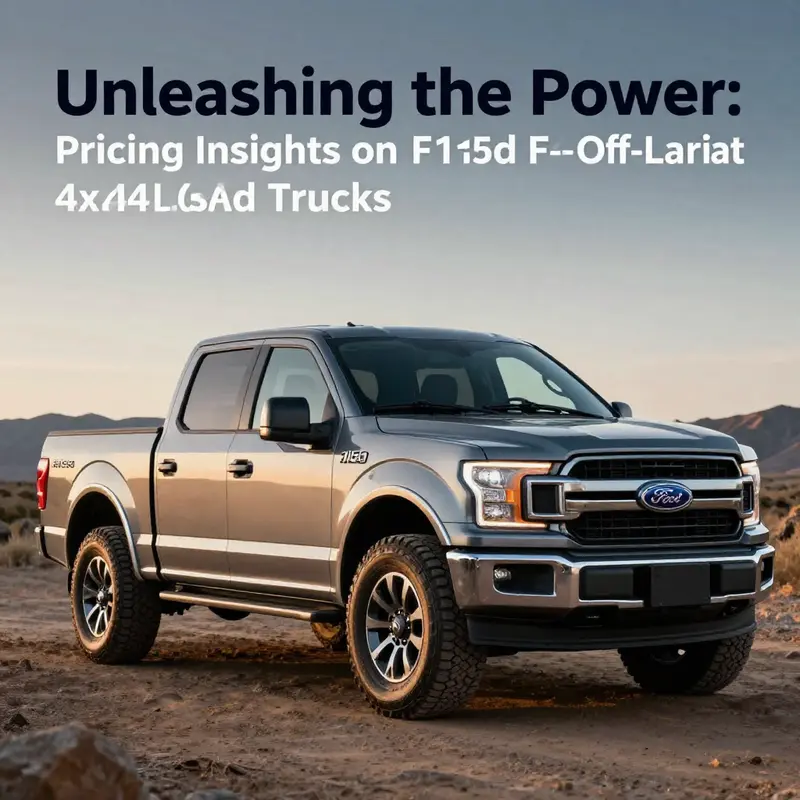
Prices on tough, capable trucks never tell the full story. For the Ford F-150 Lariat 4×4 Off-Road, the headline figure only hints at the real cost a buyer pays over the life of the vehicle. The sticker price is the tip of an iceberg that includes yearly model updates, the precise mix of features you choose, and the way a vehicle is tailored for off-road performance. In the case of the Lariat 4×4 Off-Road, that customization matters as much as the core power, payload, and rugged capability the truck is built to deliver. When people ask how much such a truck costs, they often want a single number they can memorize. The truth is more nuanced. The cost emerges from a constellation of decisions, each pushing the price up or down in small but meaningful ways. Understanding these factors helps a prospective buyer estimate a realistic budget, plan for future upgrades, and distinguish between a base configuration and the fully loaded machine that can conquer rocky trails and rough work sites alike.
Model year is the first lens through which price moves. Each new year typically brings a slate of refinements—new tech features, efficiency improvements, refreshed styling cues, and sometimes revised suspension geometry or drivetrain calibrations. Even when the fundamental platform remains the same, automakers sprinkle small upgrades that can add to the base price. For the consumer, that means a 2026 version, for which the official price details might not yet be published in every market, can look different from last year’s model purely due to the cost of those updated systems. The effect is not just cosmetic. A newer model year can provide better fuel economy, more standard driver-assistance technologies, and more polished interior materials, all of which carry price implications. Buyers who are tracking total ownership costs should weigh the long-term value of those improvements against the upfront premium they pay at the dealership.
Trim level is the second decider in the cost equation. The Lariat trim sits near the top of the F-150 family’s hierarchy, balancing luxury amenities with genuine work-ready capability. In the 4×4 Off-Road variant, the Lariat does more than add leather seating and premium interior finishes. It consolidates a sphere of features designed for comfort behind the wheel and durability off the beaten path. A higher trim level typically includes upgraded audio systems, navigation, enhanced climate control, premium seating materials, and a broader suite of standard safety and convenience tech. Each of these elements has a price tag attached, and when you compare the Lariat to lower trims, the incremental cost reflects not just the hardware but the perceived value of a more refined ownership experience. The decision to stay with or move beyond the Lariat’s baseline offerings is often framed against a backdrop of how crucial those interior touches feel during long drives or while navigating challenging terrain. In practical terms, this means that the same truck with the same chassis and drivetrain can land in a different price bucket depending on whether you opt for the Lariat’s premium package or a more stripped configuration.
Optional packages are the third pillar that can tilt the total cost. Among the add-ons for a 4×4 Off-Road configuration, the Off-Road Package stands out for its tangible impact on capability and durability. This package is not mere flash; it bundles a heavy-duty suspension tuned for rocky surfaces, skid plates to guard vital undercarriage components, and a rear locking differential that helps maintain traction in uneven conditions. From a cost perspective, these parts and their installation can push the bill higher by thousands of dollars, but the payoff is measurable in real-world off-road performance, improved worry-free capability, and, in some cases, resale value. In addition to the Off-Road Package, other optional groups—such as upgraded electronics, advanced driver-assistance systems, or enhanced audio and cabin materials—add layers of cost but also layers of perceived and practical value. The more you lean into these packages, the closer the final price moves toward a premium end of the spectrum. The decision calculus often centers on how often the truck will be used off pavement, how steep the trails are, and how much you value the comfort of a feature-rich interior after a long day on the job or on a weekend adventure.
Beyond packages, other features contribute to the sticker and the true cost of ownership. A premium audio system, a broader set of ADAS features, upgraded interior materials, and even cosmetic or protective options can nudge the price. Each choice carries its own marginal cost, and the sum of these choices can transform a well-equipped workhorse into a near-luxury on-wheels. It is also worth considering reliability and warranty coverage as cost factors, because a vehicle that benefits from strong warranty protection and durable components can reduce out-of-pocket expenses in the long run, even if the initial purchase price is higher. When evaluating the price of a Ford F-150 Lariat 4×4 Off-Road, buyers should factor in a potential premium for the assurance that comes with a higher-trim truck, as well as the potential savings from lower maintenance surprises and longer service life when driven in tough conditions.
For those entering the market with a used-truck mindset, the equation shifts in meaningful ways. A well-maintained, low-mileage used example often commands a higher price because reliability and reduced depreciation are valuable to buyers who want a vehicle they can count on without the immediate first-year depreciation typical of a new truck. Conversely, higher mileage or visible wear can dampen perceived value and compress the price ceiling. In the used-truck market, buyers must scrutinize service records, the condition of off-road components, and the state of suspension and drivetrain wear that might reveal heavy-duty use or neglect. The cost of ownership in the used market thus blends the sticker price with the history and ongoing maintenance needs, creating a longer-tail financial commitment that can outpace the cost of a brand-new vehicle if not approached with diligence. Regional differences in the used market also matter. Availability, demand patterns, and the local economy shape what a dealer or private seller can reasonably ask. A geography-driven price premium or discount can be subtle but meaningful, especially in areas where off-road culture drives higher demand for capable four-by-four trucks.
Another layer in the pricing conversation is the aggregate of taxes, fees, and documentation charges that appear at the point of sale. Local taxes vary widely and can be a sizable addition to the base price. Dealer fees, including preparation costs, destination charges, and regional incentives or market adjustments, can further alter the bottom line. Prospective buyers who want to minimize surprises should request a detailed, line-by-line quote that separates the vehicle price from these ancillary costs. The practice of shopping around with multiple dealers can reveal which shops are more transparent about these charges and whether any regional incentives—such as loyalty programs, military rebates, or seasonal promotions—are in effect. While incentives can temporarily reduce the out-of-pocket cost, buyers should also weigh the long-term implications of financing options, interest rates, and the total cost of credit over the life of the loan. The price, after all, is not only a function of the purchase price but also of the financing terms and ownership costs that accumulate over time.
The pricing snapshot for a new F-150 Lariat 4×4 Off-Road thus begins with a base price that typically starts around the mid-$50,000 range, with the exact figure shifting higher as you add features, packages, and premium interior treatments. The base figure is a useful reference point, but it is not the final number. The decision to bolt on an Off-Road Package, upgrade the interior, or select a more expansive tech package can very quickly push the total into a higher tier of pricing. Because each buyer’s needs are unique, the best approach is to model a configuration that aligns with expected usage and comfort preferences, then compare quotes across a few dealers to capture any regional pricing variations. As a practical step, buyers should build a careful feature list and then seek quotes that break out the price by category—from drivetrain and trim to options and fees. By doing so, the final outlay reveals itself clearly, and buyers can make an informed judgment about whether the added premium aligns with the utility and enjoyment they expect from the truck.
In addition to the numerical considerations, there is the qualitative aspect of value that often matters as much as price: the fit between the vehicle and the buyer’s lifestyle. For many, an F-150 Lariat 4×4 Off-Road is less about a single purchase and more about a long-term companion that can shoulder work, transport gear, and venture into remote areas. In this light, the decision to invest in the Off-Road Package or a higher trim feels less like a pure economic calculation and more like a choice about confidence and capability. If the vehicle is destined to be a daily workhorse, the premium for durability, advanced safety features, and a refined interior may pay dividends in terms of reduced downtime, increased comfort, and enhanced resale value. If, on the other hand, price sensitivity is paramount and the vehicle will see limited off-road duty, a more modest configuration could deliver a stronger return on investment while still delivering the essential 4×4 capability expected from this family of trucks.
For readers seeking a definitive pricing benchmark, the base price for a new F-150 Lariat 4×4 starts around $52,000, with the total cost increasing in line with the chosen options and packages. It is important to note that this figure represents a starting point rather than a final number, as the presence of the Off-Road Package, upgraded interiors, or advanced driver-assistance technologies can push the sticker price higher. The dynamic nature of pricing—the interplay of model year, regional demand, and dealer incentives—means that a buyer’s best bet is to consult the official Ford site and local dealers for the most up-to-date configurations and price quotes. The Ford F-150 line is known for its breadth of configurations, and the Lariat 4×4 Off-Road is a compelling blend of luxury and rugged capability. As buyers compare across trims and packages, they should keep the end-to-end ownership experience in view: how the truck will perform in off-road scenarios, how comfortable it will be on long highway hauls, and what the total ownership cost will look like over several years of use.
From a practical perspective, price estimation begins with a careful inventory of must-haves. If you expect to roam muddy trails, encounter uneven terrain, or drag payloads through rough conditions, the Off-Road Package and rugged suspension become not just aesthetic choices but core capabilities. If you prioritize quiet cabin ambiance, premium audio, heated and ventilated seats, and a more sophisticated infotainment experience, then the Lariat’s premium interior becomes a meaningful differentiator that justifies a higher entry price. The interaction between these priorities shapes a final price that captures both the tangible off-road performance and the intangible comfort of driving a well-appointed pickup. In this sense, the cost reflects a balance between the heartbeat of an off-road performer and the refined, quiet confidence of a modern crew-cab interior.
For readers who want to understand how pricing might shift in a broader market context, it can be insightful to consider the interplay between safety testing, vehicle design, and perceived value. While the chapter here focuses on price mechanics, industry conversations around safety and performance testing also influence consumer expectations and, ultimately, price positioning. For a broader look at how different automakers approach safety and test results, see the iihs crash test results tesla vs ford, which provides a comparative perspective on how consumer perceptions of safety can shape buying decisions. iihs crash test results tesla vs ford.
As the pricing conversation closes, it is helpful to anchor expectations with the most authoritative source for current configurations and sticker prices. The official pricing, availability, and options for the 2026 model year can be verified directly from the automaker’s own site, and local dealers can provide precise quotes that reflect regional incentives, taxes, and dealer-specific terms. In practice, buyers who start with a clear list of must-have features—such as four-wheel drive capability, a certain level of interior luxury, and a preferred set of driver-assistance technologies—will be better positioned to compare apples-to-apples and avoid sticker shock when the final numbers arrive at the dealership.
For those who want to dig deeper into the latest official configuration details and pricing, the official Ford F-150 page remains the best starting point: https://www.ford.com/trucks/f-150/.
Price Without Borders: Mapping the Cost of a Luxury Off-Road Full-Size Pickup Across Markets
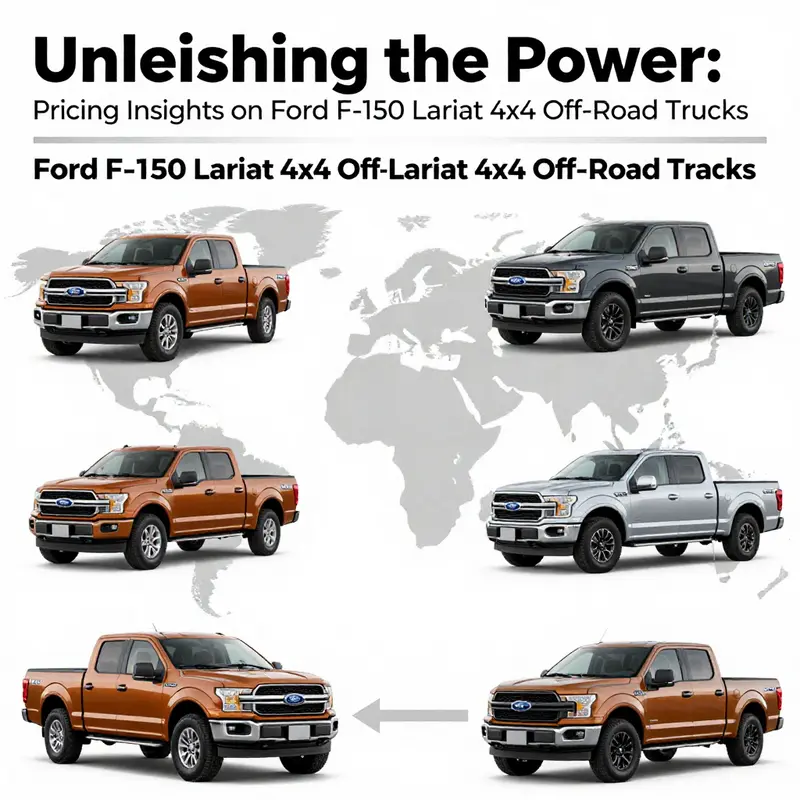
Pricing a flagship four-wheel-drive pickup with an off-road orientation is never a single number. It is a moving target driven by geography, policy, and what a buyer is willing to add or trim in the build. In 2026, the most informative way to understand what a buyer might pay is to view the price as a regional mosaic. The same chassis, same core drivetrain, and even the same luxury touches can land in dramatically different pockets of the world. A vehicle built for rugged terrains and long highway miles can be priced against everything from local taxes to freight charges, currency swings, and dealer incentives. This is not merely a sticker price; it is a reflection of how each market values utility, comfort, and the risk and reward of off-road capability. To unfold this mosaic, it helps to trace the price layers one by one, beginning where most enthusiasts begin their search: the United States market, where the modern luxury off-road pickup takes its most straightforward form on the showroom floor, followed by partner markets where the same configuration travels far from home and must contend with import costs and local regulations.
In the United States, the base sticker for a four-wheel-drive luxury off-road package sits in a relatively tight band for a full-size pickup. The range runs roughly from the low sixties to the mid-sixties in U.S. dollars, depending on the year and the precise feature set included in the build. This is the price a buyer sees before any promotions or rebates, before dealer adds-ons or regional incentives. The base figure is designed to reflect a blend of premium interior materials, cutting-edge technology, rugged suspension, and protective mechanical hardware such as skid protection. In this market, the sticker is only part of the story. Manufacturer incentives, loyalty offers, financing deals, and dealer-specific promotions compress the actual transaction price, sometimes by several thousand dollars. It is common for buyers to land a price that sits notably below the stated sticker when incentives align with the timing of a new model year or a clearance event.
The United States pricing narrative also hinges on a few subtle, sometimes overlooked, realities. First, there is the question of how trim and package choices translate into value. A buyer prioritizing luxury finishes, a more sophisticated multimedia experience, and enhanced off-road capability may gravitate toward a higher-equipped version within the same family. That choice pushes the price higher, but it also amplifies the value proposition if the buyer uses the truck for weekend adventures, retirement trips, or remote work sites. Second, the availability of dealer incentives varies by region and by model year. Some markets see more aggressive rebates tied to annual sales goals, while others rely on 0% financing or loyalty credits to move specific configurations. In many cases, the final out-the-door price ends up a few thousand dollars below the nominal sticker, which means that the true cost of ownership is shaped as much by incentives as by the base price.
Canada presents a markedly different price terrain for the same configuration. The sticker price tends to be higher, often landing in the CAD 78,000 to CAD 82,000 range. A few drivers explain the delta. Taxes in Canada operate at multiple levels, with federal and provincial components that accumulate quickly. Currency exchange adds a variable that shifts with market conditions, sometimes widening the gap between the U.S. price and the Canadian price from one quarter to the next. In addition, manufacturer incentives are typically more limited in Canada compared with the United States, which means buyers may rely more on the base price, taxes, and freight to the showroom. The result is a price picture that feels more premium, even when the configuration mirrors its U.S. counterpart. Those numbers matter for buyers who are weighing a domestic purchase against possible cross-border considerations or the prospect of importing a unit from the United States.
The U.S. and Canadian price dynamics are a reminder that the value proposition extends beyond the sticker. In Canada, the higher absolute price is not merely a function of exchange rates; it also reflects additional costs embedded in the supply chain, including duties and compliance with provincial regulations, as well as the broader tax environment that affects ownership costs over time. The consumer’s sense of value thus becomes a product of both immediate affordability and longer-term ownership economics. It is not unusual for a Canadian buyer to negotiate hard on a top-line package only to be reminded that the total cost, including taxes, duties, and freight, still sits at a premium compared to the United States, even when the spec line is the same across borders. The decision often hinges on personal preferences—whether the buyer values local service networks, faster delivery, or the convenience of support within their own country—and on the overall cost of ownership that includes fuel, maintenance, and insurance.
Beyond the Anglophone heartlands, the pricing conversation grows even more intricate. In markets such as the United Kingdom and Australia, the path to ownership involves another layer of complexity: the truck in question is not produced domestically, so the price tags reflect import dynamics. Import tariffs, logistics costs, and the need to adapt the vehicle to local regulatory regimes all push the price upward. In the United Kingdom, the price for a four-wheel-drive luxury off-road package can exceed substantial sums, and in Australia the figure can surpass the AUD 110,000 mark. The higher prices in these regions are not only about the base price but also about the costs of getting the vehicle to showroom floors in places where volumes are smaller and supply chains must accommodate longer lead times. Those factors combine to produce a premium that mirrors both the economic realities of importation and the premium consumers in these markets are often willing to pay for a vehicle that offers rugged capability with refined comfort.
What underpins this regional divergence in price is a practical mix of demand dynamics, regulatory obligations, and the mathematics of logistics. Local demand influences how aggressively a dealer can price a given configuration. In markets with robust demand, there is less need for aggressive incentives, and the net price can sit closer to the sticker. In markets with lower demand, dealers may lean on promotions to stimulate interest, with the hope of moving inventory before the next year’s model arrives. Taxes and duties, of course, can dramatically alter the bottom line. In countries that apply a high value-added tax or import duty to large vehicles, the sticker price may look comparable to other markets at first glance, yet the real cost to the buyer can be significantly higher once those charges are folded in. Currency movements further complicate the equation. A currency that strengthens against the factory’s home currency makes the local price appear more expensive, while a weaker currency can soften the price in the buyer’s local currency. The net effect is that price comparisons across borders require careful accounting, ideally with a calculator and a sense of how long a buyer plans to hold the vehicle.
The most critical takeaway is that the vehicle’s fundamental value—the blend of off-road utility, interior luxury, and daily usability—remains consistent across markets. The price may rise or fall with location, but the core appeal endures: a large, capable pickup that can handle rugged trails, snowy commutes, and long highway stretches with equal aplomb. Buyers who understand this balance often approach pricing with three questions in mind: What is the real out-the-door cost after all taxes and fees? How much do incentives affect the bottom line in my market? And what are the long-term ownership costs, including maintenance and insurance, given my usage pattern?
To delve deeper into the economics of ownership, one should consider the cost advantages and drawbacks of importing a U.S.-market configuration. On paper, importing can offer meaningful savings if the local price is inflated by taxes and duties or if the currency exchange makes the U.S. price look comparatively attractive. In practice, a buyer must navigate a labyrinth of compliance steps. Registration and title transfer, emissions compliance, and potential modifications to meet local road regulations can add both time and expense. Shipping, insurance, and port charges accumulate as well. In some cases, the final landed cost may end up closer to the local price than the sticker suggests, but there are scenarios where the math works in favor of the importer—especially when a strong U.S. market price is accompanied by favorable exchange rates and incentives that do not apply abroad.
For those who want a reliable sense of the current price palette, it is wise to consult direct sources. The official manufacturer site remains the most dependable reference for the base price and the exact feature set of the model year you are considering. In practice, buyers end up using the dealer network as a companion to that official baseline, comparing local stock, trim levels, and available incentives. The dynamic between the MSRP, the negotiated price, and the incentives is the real driver of the transaction. In markets with active dealer networks, a buyer can often secure a price that reflects a meaningful discount from the sticker, particularly if they are a loyal customer, a first-time buyer, or someone who completes the sale at the end of a promotion window. The interplay of these factors makes the price a moving target, not a fixed figure, and that is precisely why a shopper should approach the process with patience and a clear understanding of the local terms and conditions.
The broader lesson is that a price snapshot never tells the whole story. It captures a moment in a country’s regulatory calendar, currency cycles, and promotional cadence. It also hints at the underlying value of owning a vehicle built for tough terrain and extended comfort. Buyers who are curious about how much they would pay in their own market should map the path from sticker to sale. Start with the base configuration, then add the features that truly matter for the intended use. Check for incentives available at the point of sale and consider the overall cost of ownership over several years. And finally, when the numbers matter most, verify the exact numbers with a local dealer or the official site for the current model year.
As a practical note for readers planning to compare markets, it is helpful to remember the key cost levers: the base price, the tax and duty regime, the logistics costs tied to importation where applicable, the dealer incentives that vary by region, and the currency exchange environment. Each lever shifts the final price by a different magnitude and often in different directions over time. The net effect is a price map that is both dynamic and highly informative for a buyer who wants to maximize value. The price map becomes even more actionable when paired with a careful assessment of the intended use. If the plan includes frequent on-road miles and occasional weekends on rough trails, the value proposition of a well-appointed off-road capable pickup is strong enough to justify the premium in most markets. If the plan emphasizes occasional use and heavy depreciation concerns, the calculus shifts toward a leaner build and more aggressive price negotiation.
For readers who want to anchor their search with a concrete starting point, the most accurate guidance is to consult the official site and local dealers for the model year in question. The online configurator and dealer quotes provide the most up-to-date pricing, including available promotions and availability in your area. While this chapter has drawn on the ranges from various markets to illustrate the price landscape, the live numbers can differ by several thousand dollars from month to month and by region. In a world where supply chains, promotions, and currency markets are in motion, the safest approach is to observe the current snapshot in your local market, then widen the lens to consider cross-border options only if the potential savings clearly exceed the additional complexity and cost. The story of price across markets is not a single number; it is a dynamic narrative shaped by policy, market demand, and the choices a buyer makes when assembling the ideal vehicle for their journeys.
External reference: https://www.ford.com/vehicles/f-150/lariat-4×4-off-road
Forecasting the Ford F-150 Lariat 4×4 Off-Road Price: A Market-Driven View
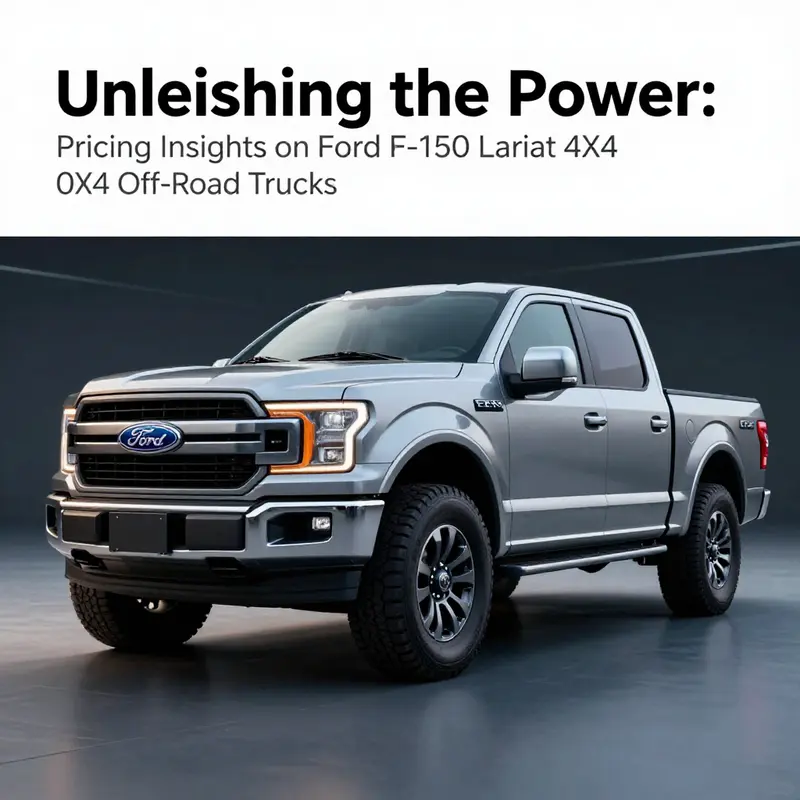
Pricing for the 2026 Ford F-150 Lariat 4×4 Off-Road is shaped by demand, materials costs, production complexity, and technology trends. The price is a moving target rather than a fixed sticker, influenced by regional demand, incentives, and dealer stock. This chapter outlines the main factors likely to influence near-term pricing and explains how to interpret price signals when comparing trims and competing trucks.
First, demand for capable full-size pickups remains robust, especially for off-road-ready configurations. The Lariat trim blends premium comfort with strong terrain capability, which tends to command a premium but also supports strong resale value and diversified dealer support. Price discipline varies by region, fleet mix, and local competition, so buyers should expect regional differences that reflect supply conditions and customer expectations.
Inflation and material costs are the second axis. Steel, aluminum, and advanced electronics have risen in price, and while some costs stabilize, the overall price tier may drift upward over time. Buyers should anticipate not only sticker changes but evolving ownership economics, including maintenance and resale considerations, as part of the total value proposition.
Production complexity adds another layer. Upgraded suspensions, locking differentials, and terrain-management features add manufacturing expense and supplier coordination, often translating into gradual price increases as capability grows. The pace is typically incremental rather than sudden.
Technology and software integrations are the fourth driver. Driver-assist systems, connectivity, and over-the-air updates contribute to value and cost; electrification trends could alter cost structures over the longer term, even if the exact trim in question remains non-electrified for now.
Finally, value proposition, scarcity, and ecosystem support influence pricing. Premium interiors and off-road capability coexist with dealer networks, access to certified accessories, and ongoing software updates. When configurations are in short supply, premiums may widen; abundant supply can moderate pricing.
In practice, buyers should consider total ownership costs in addition to the upfront price. Seasonal incentives, regional offers, and option packages all shape the final figure. The most reliable approach is to obtain current quotes from official sources or local dealers and compare them against projected ownership costs and anticipated usage.
For current pricing context, consult Ford’s official pages and local quotes, while recognizing that prices can vary by region and by inventory dynamics. This chapter aims to provide a framework for interpreting price signals rather than a single predicted number.
Final thoughts
As the allure of the Ford F-150 Lariat 4×4 Off-Road trucks continues to captivate enthusiasts and adventurers alike, understanding the factors influencing their pricing becomes essential. Through detailed analysis of market variations and prospective trends, potential buyers and industry insiders can prepare for future changes in the financial landscape of off-road trucks. Embracing this knowledge empowers you to make informed decisions, ensuring you optimize your journey into the wild. Remember, this iconic truck isn’t just a purchase; it’s an investment in your next great adventure.