
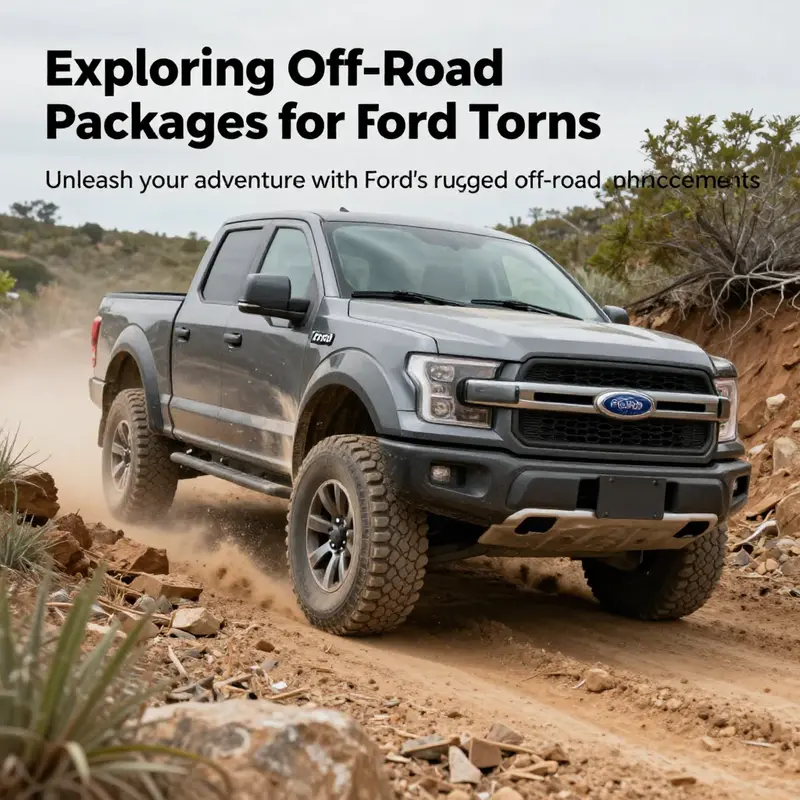
For off-road enthusiasts and adventurers, having a capable vehicle is paramount. Ford understands this need and offers a range of specialized off-road packages designed to amplify performance and durability in rugged terrains. From the versatile F-150 to the robust F-250, these packages make Ford trucks a formidable presence in off-road environments. In the following chapters, we’ll delve into the specifics of off-road packages available for the F-150 and F-250 models, explore the performance features that set these packages apart, and compare what various Ford trucks have to offer, ensuring you find the perfect fit for your off-road escapades.
Trail-Proofing the Road: Ford’s Off-Road Packages Expand Capability Without Compromise
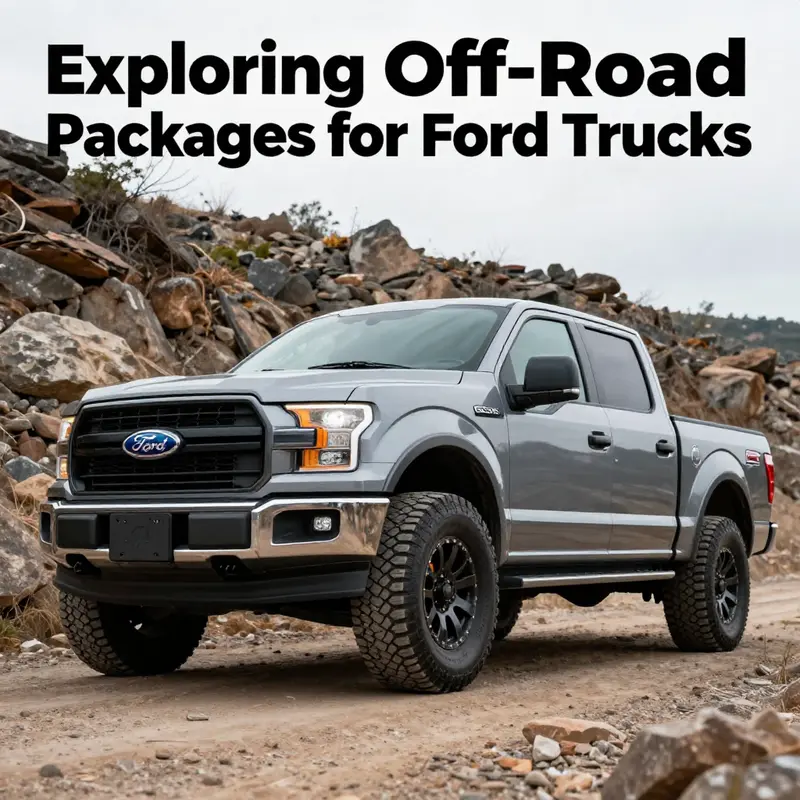
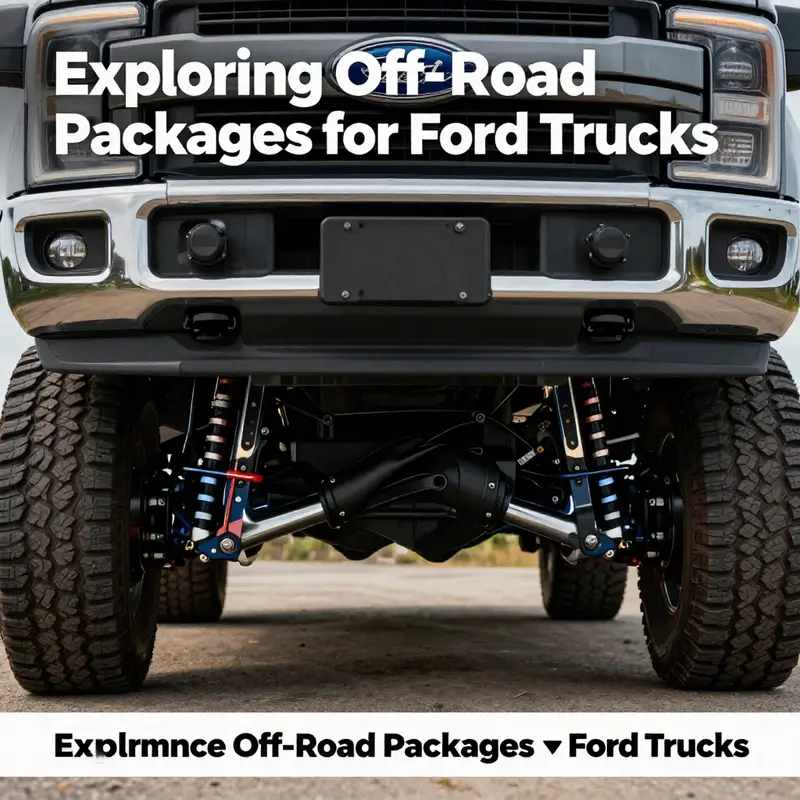
Across the modern Ford lineup, off-road packages are a clear statement of intent. They are not mere accessories tethered to a showroom floor; they are carefully engineered systems designed to transform a capable pickup into a vehicle that can handle the unexpected, the rugged, and the remote. When one considers the spectrum of terrain—from loose gravel to jagged rock, from steep dunes to muddy gullies—the appeal of a factory-backed off-road package becomes not just performance bragging rights but practical assurance. The core idea is simple, even if the mechanics behind it are intricate: give the truck the tools to manage traction, control, heat, and protection in ways that suit not only the terrain but the driver’s intent. The packages Ford has developed over the years reflect that philosophy. They bundle a cohesive set of components and calibrations so that the truck’s efficiency, payload, and everyday drivability remain balanced, even as the tires bite into something less forgiving than asphalt.\n\nA central pillar of these offerings is the suspension system. Off-road capability hinges on how a vehicle handles uneven ground, negotiates rocks, and maintains stability when the body is pitched or yawed by terrain. A robust off-road setup does more than raise ride height; it increases travel where it matters, smooths out the harshness of rough surfaces, and preserves a composed feel that translates into better driver confidence. In practice, this manifests as longer travel with specialized dampers and reinforced control arms. The goal is articulation without bottoming out, allowing the axle to maintain wheel contact with the ground as the other wheels traverse ridges and troughs. The result is not merely a softer ride but a more predictable, controllable one. The driver can place the vehicle with precision on unpredictable surfaces, and the tires respond with consistent grip as long as the surfaces provide it. In some setups, the dampers are tuned to offer a firmer compression for improved stability in dynamic off-road maneuvers, while still absorbing the irregularities of rough soil. The engineering intention is to preserve traction and steering feel, even when the world under the tires becomes uneven.\n\nEqually crucial are the axles and drive-system refinements that come with these packages. Heavy-duty axles, stronger you might say by design, increase the truck’s resilience to the shock and torque generated by off-road propulsion. The locking differential, which is a common feature in many of these packages, is more than a luxury; it is a functional asset on low-traction surfaces. When one wheel loses traction, the differential can equalize speeds and deliver torque to the wheel with better grip, helping the vehicle to pull through sand, mud, or rocky patches that would otherwise stall progress. This capability dramatically changes the driving experience in challenging conditions, turning difficult sections into manageable ones and reducing the decision point where a driver’s must abandon a trail. The lock is not a mere toy for enthusiasts; it is a practical tool that contributes to a more reliable approach to off-road work, whether that work is recreational exploration or remote work where getting there matters as much as getting back.\n\nProtection under the vehicle is another area where off-road packages focus. Skid plates and reinforced underbody shields do more than protect vital components from rocks. They provide a psychological safeguard, empowering drivers to navigate lower-clearance obstacles with the assurance that the exposed metal and sensitive systems are shielded from impact. Skid plates cover the engine, transmission, and fuel system in key locations, forming a protective barrier that can mean the difference between continuing a journey and a costly repair in the field. The emphasis on underbody protection speaks to a broader philosophy: when you venture into tougher terrain, you are not just increasing the risk of a puncture or a leak; you’re inducing a broader set of mechanical strains. By wrapping the most vulnerable zones in protective armor, the package reduces the likelihood of damage, enabling longer expeditions and more ambitious routes.\n\nTires are the visible, tangible link between the truck and the terrain. Off-road packages typically include all-terrain or more specialized off-road tires that balance grip, durability, and noise considerations for street use. The choice is not accidental. Tire design—tread pattern, rubber compound, sidewall strength—affects braking, steering, and power delivery on uneven surfaces. A tire that can shed mud quickly, scratch into a loose rock surface with confidence, and still deliver predictable steering on a highway is a tire engineered to support a broader mission: run out to the trail, explore, and then return home without sacrificing daily usability. The all-terrain tread often features reinforced sidewalls and aggressive lugs, with a compound that remains flexible in cooler temperatures yet resilient under load. The result is a tire that performs across a wider range of conditions, providing traction across dust, shale, sand, and wet clay while preserving a manageable level of road comfort.\n\nCooling systems, too, receive special attention. Off-road driving pushes engines and transmissions into demanding thermal environments. A robust cooling package helps prevent overheating when high engine torque, long climbs, or sustained slow-speed work raises temperatures. Additional radiators or auxiliary coolers, along with better routing of coolant lines and improved airflow management, ensure that the engine and critical components maintain safe operating temperatures. In practical terms, this means the truck can sustain prolonged climbs without the throttle being pulled back to avoid heat soak, and it guards against the reliability concerns that come with repeated high-load operation in rugged conditions. The driver experiences a more confident performance envelope, knowing that the truck can maintain forward momentum under pressure rather than curling into a stall when the temperature needle climbs.\n\nDriving modes form the connective tissue between hardware and how a vehicle behaves behind the wheel. An off-road package brings a set of modes tailored to different surface types and degrees of challenge. The modes adjust engine mapping, transmission calibration, traction control, throttle response, and even stability control thresholds. In some systems, the driver can select modes that optimize for soft sand, rocky terrain, or deep mud, while incorporating terrain-aware features like hill descent control and traction management that respond to changing grip levels as the vehicle navigates a trail. The essence of these modes is control: rather than hoping for a single one-size-fits-all setup, the chassis, powertrain, and drivetrain calibration work in concert to deliver predictable behavior across conditions. This predictability is essential when the line between a confident approach and a misstep is small, or when the driver’s objective mixes efficiency with capability.\n\nBeyond the mechanical specifics, the packaging approach reflects a broader design philosophy aimed at balancing capability with practicality. The most capable configurations offer a complete system, where each component supports the others. A higher ride height improves clearance but can affect aerodynamics and fuel economy; a locking differential improves traction but changes the torque distribution in a way that affects on-road handling. Auto calibrations choreograph these interactions so drivers can focus on the trail ahead rather than the settings behind the wheel. This balance matters because it acknowledges a reality that owners who venture off-road often live with: the vehicle must perform on the trail without being unduly compromised on daily commutes, job sites, or weekend errands. The packaging strategy therefore seeks to preserve the truck’s core strengths—towing and payload capacity, ride quality on regular roads, and long-haul comfort—while adding the decisive enhancements needed for off-road work and play.\n\nWithin this framework, the most extreme off-road configurations are engineered with purpose-built attributes designed for sustained, specialized use. They feature more than appendages; they extend the truck’s capability to a level where the vehicle can tackle challenging deserts, rocky canyons, or remote backcountry routes with a degree of reliability that is rare for a production pickup. These top-tier builds typically introduce reinforced chassis geometry, increased ground clearance, more sophisticated suspension systems, and upgraded protective features that collectively reduce the risk of damage and maximize the opportunity to traverse demanding landscapes. For drivers who routinely push beyond standard trail limits, such configurations translate into a practical advantage: the ability to commit to a route with greater confidence, knowing the truck’s architecture has been tuned to endure the stress of rough terrain and the heat of long climbs.\n\nYet not every off-road package is a leap into extreme capability. The accessible, more affordable options offer meaningful improvements for weekend explorers and workers who require a dependable instrument in variable conditions. These packages usually combine several core elements—4×4 drive, skid protection, a modestly upgraded suspension, added ground clearance, and all-terrain tires—into a cohesive package that opens up more opportunities without demanding a heavy compromise in daily usability. The value proposition is clear: for a relatively modest investment, a driver gains traction and protection in uncertain environments, a more controlled driving experience, and the assurance that the vehicle is optimized for off-road opportunities rather than a generic, one-size-fits-all setup. The range of options, from entry-level enhancements to high-performance engineering, makes the discussion relevant to a broad audience—from outdoor enthusiasts to professionals who rely on a truck to reach remote work sites.\n\nA practical part of choosing the right off-road package lies in aligning it with expected use cases and local conditions. A driver who spends weekends on forest trails and light-duty backcountry routes may be perfectly served by a package that emphasizes moderate suspension upgrades, skid protection, and a capable all-terrain tire. In contrast, someone who navigates sand dunes or rocky washes on a regular basis will benefit from a more aggressive setup, including enhanced axle strength, locking capabilities, and a suspension tuned for high-articulation and stability under load. The decision also hinges on how a user balances on-road comfort with off-road capability, and how much payload or towing the truck must handle. A more aggressive package can carry a higher performance price in ride rigidity and road noise, while a lighter package preserves comfort but may limit extreme off-road performance. The skill of choosing the right configuration lies in calibrating these trade-offs to the driver’s realities—terrain, climate, frequency of off-road use, and the kinds of jobs or adventures that define their journeys.\n\nThis approach to packaging reflects a long-standing industry trend: manufacturers seek to demystify off-road performance by integrating it into the factory option matrix rather than relegating it to third-party aftermarket work. The advantage is twofold. First, it ensures consistency and quality, since the parts and calibrations are designed and tested in concert with the vehicle’s chassis, body, and powertrain architectures. Second, it provides clarity for buyers, who can understand, at the point of purchase, how a given package will perform in predictable, real-world scenarios. The result is a more straightforward ownership experience, with fewer surprises and a clearer path to maintaining warranty protections while exploring challenging terrain. For many buyers, that clarity is as valuable as the extra ground clearance or the stronger axles, because it reduces risk and simplifies planning for trips that venture beyond paved roads.\n\nIn choosing any off-road option, it is important to consider how the package will affect the vehicle’s maintenance needs and serviceability. More aggressive components can lead to greater demands on cooling, lubrication, and chassis wear, and the possibility of more frequent inspections in off-road environments. It also means drivers should be prepared with appropriate tire choices for different seasons and conditions, understand how to monitor heat indicators on extended climbs, and know when to switch modes to protect drivetrain components under varying loads. An informed buyer will also consider how the package integrates with other equipment, such as recovery gear or additional lighting, which can further enhance safety and practicality on remote trails. While the core transmission of power and traction is essential, the full off-road experience is a broader system story that includes readiness, awareness, and a plan for dealing with the unknowns that define rugged travel.\n\nAvailability is a practical dimension that cannot be overlooked. The specific off-road package offerings vary by year and trim, and not every configuration is available everywhere at all times. Prospective buyers should check the official site or contact a local dealer to confirm what is offered for a given model year and region. The landscape of packages evolves with new technologies, supplier changes, and evolving regulatory requirements. Still, the consistent thread across the history of these options is commitment to enhancements that expand capability without undermining the truck’s essential purposes. For drivers who demand that their pickup be a capable partner on trails and job sites alike, these packages provide a credible path to achieve more without compromising safer daily operation.\n\nIn sum, Ford’s off-road packages serve a spectrum of needs. They range from practical, value-conscious options that add essential grip and protection to high-performance configurations tailored for extreme terrain. They build on a common language of strength, reliability, and thoughtful engineering, where suspension, axles, protection, tires, cooling, and driving modes work in harmony to deliver a holistic off-road experience. They recognise that off-road driving is as much about control and planning as it is about raw horsepower, and they address the realities of navigating unfamiliar ground with a system that remains comprehensible to the driver. For anyone curious about how a factory-backed off-road solution translates into concrete capabilities, the story is less about clever marketing and more about the measurable outcomes on the trail: better traction, improved protection, more predictable handling, and the confidence to take a road less traveled. Those outcomes are the practical definition of off-road packages—not as a novelty, but as a legitimate extension of the truck’s core utility into the environments that demand resilience, ingenuity, and a little courage on four wheels. For broader context on Ford’s off-road offerings and official specifications, see Ford’s official overview page: https://www.ford.com/trucks/f-150/overview/.
Rugged by Design: The Performance DNA of Ford Off-Road Packages
The off road packages that sit atop Ford trucks represent more than a collection of add ons. They are a deliberate convergence of hardware, software, and driving philosophy designed to empower a vehicle to meet the demands of unpaved trails, steep grades, and uncertain ground. When a driver steps into a rig equipped with these packages, they enter a world where capability is not an afterthought but a core attribute. The goal is not merely to survive rough terrain but to move with assurance, to glide over a washboard stretch, to clutch a rocky ascent with steady throttle, and to do so while preserving reliability for daily life. The engineering mindset behind these packages rests on three pillars that must work in unison: grip on varied surfaces, controlled power delivery, and protected underpinnings that keep the vehicle ready for the next miles and the next challenge. It is a design ethic that treats the truck as a versatile tool rather than a specialized machine, ensuring that the moment the pavement ends, the performance continues rather than falters.
Central to this philosophy is a heavy emphasis on the suspension system. Off road packages strengthen the chassis with reinforced shocks and springs that extend ground clearance and allow for greater wheel articulation. The point is not to ride higher for its own sake but to maintain tire contact with uneven ground and to keep the vehicle balanced when one wheel climbs over a rock while the others are still negotiating the soil beneath. This isn’t about a dramatic leap in height. It is about predictable progress over obstacles, a system that keeps the vehicle stable as the terrain shifts under it. When a road becomes a rutted trail, the suspension acts as a living shore up, absorbing impacts that would otherwise reverberate through the cabin and into the steering wheel. The result is not only improved ride quality but a tangible sense of control. The driver feels connected to the wheel, the throttle, and the horizon ahead, knowing the chassis can adapt without demanding sudden corrective inputs.
Equally essential are the locking differentials that these packages often incorporate. A locking differential is a device that ties the wheels on an axle together, ensuring that torque is distributed evenly to the wheel with the most grip. In practice, this capability becomes a decisive advantage when the terrain shifts from packed dirt to loose sand, or when a tire sits in a soft patch while another has firm contact. In rock or gravel, where one wheel might slip while another digs in, the locking mechanism prevents power from being wasted in spinning a wheel with little traction. The effect is not about raw horsepower alone; it is about making the power usable in challenging circumstances. The feeling is a sense of assurance as the vehicle chooses the path that resists slippage, even when the surface rhythm changes without warning. This mechanism is especially valuable when negotiating a narrow trail where the choice of line is dictated by grip rather than by engine speed alone. The driver can focus on steering and line selection while the drivetrain keeps the momentum steady through a variety of micro terrains.
Tires and wheels complete the trio of grip, a pairing that keeps traction consistent as the ground changes beneath the vehicle. The off road packages pair all terrain or mud terrain tires with reinforced, high strength alloy wheels that can absorb impacts from stones and roots without transferring every vibration into the steering column. The tire choice is a statement of intent: these are not highway tires that happen to be used off road; they are purpose built for resilience and grip across wide conditions. The tread patterns are engineered to shed mud and to bite into loose soil while maintaining a measured highway stability when the trail ends and pavement resumes. The wheels themselves are built to resist curb impacts, rock strikes, and the occasional smear of mud caked into the spokes after a long day on the back roads. The interplay between tire rubber, tread geometry, and wheel rigidity matters more in rugged environments than most drivers realize, because the grip a wheel can achieve under a driver’s request is as much about the wheel’s structural integrity as it is about the tire’s compound.
The four wheel drive system under the hood of an off road equipped Ford is more than a component of traction; it is a suite of intelligent controls that adapt to conditions in real time. The multiple terrain modes offer a range of parameter adjustments that alter how the transmission shifts, how the throttle responds, and how the braking system interacts with the drivetrain. For example, a surface that offers limited grip such as sand requires a different throttle curve than a rocky grade with abrupt changes in texture. In both cases, the system optimizes performance by selecting a mode that reduces slip, lengthens the torque delivery when power is needed most, and preserves momentum when necessary. The adaptive control often works in concert with the transfer case, allowing the driver to switch between 2WD and 4WD with or without a center differential lock depending on the surface. The driver feels a higher level of confidence because the vehicle’s core behavior—how it accelerates, how it shifts gears, and how it brakes—aligns with the terrain rather than fighting against it. This alignment is what turns an off road package from a static collection of features into a dynamic, responsive system that reads the road ahead and makes intelligent choices in milliseconds.
Skid plates are more than a shield; they are a practical safeguard for the parts that keep a truck moving. The protected undercarriage includes the engine, transmission, and fuel system, which are all at risk in rough terrain. The plates, often manufactured from high strength steel or aluminum, distribute impacts and chips across a broader surface, reducing the likelihood of punctures or dents that could compromise performance. The usefulness of skid plates extends beyond cautious driving; they enable more aggressive line choices on rocky trails by providing a predictable and resilient shield that reduces the mental load on the driver. The sense of reassurance this protection inspires is subtle but real: knowing that a missed rock or a sharp-edged obstacle won’t immediately derail the mission makes it easier to commit to a more deliberate, confident path.
Cooling systems in these packages are engineered to prevent overheating during sustained off road use. Engines on rugged trips work harder, and the cooling system must keep pace without requiring frequent pit stops for cooling or risk of thermal throttling. The upgrades can include larger radiators, more efficient fans, and optimized coolant routing to maintain stable temperatures even in slow, technical climbs where ventilation is limited. A well tuned cooling system doesn’t just prevent overheating; it preserves performance. The pedal feel remains steady, the shift points stay consistent, and the engine does not have to compensate for heat with reduced power. In the long haul, this reliability matters just as much as peak capability, turning difficult sections into manageable challenges rather than overwhelming ordeals.
Braking in tough conditions deserves attention as well. Off road packages often feature upgraded brake systems designed to resist fade and maintain stopping confidence when traversing steep descents or navigating mud and gravel. The response is tuned to offer more progressive feedback, enabling the driver to modulate speed precisely when traction is uncertain. Combined with electronic sway control and enhanced stability features, the brake system helps maintain a controlled, balanced feel through a sequence of undulations and obstacles. The goal is a coherent system where tires, suspension, drivetrain, and chassis communicate through a common language of grip and resistance, rather than a collection of disparate responses that require the driver to reconcile conflicting signals.
Another dimension of the performance DNA lies in the integration of electronic aids that enhance safety without removing the driver from the experience. Traction control is fine-tuned to respect the subtlety of off road surfaces, tightening or loosening its grip to match the terrain. The vehicle can modulate brake intervention to keep a wheel from spinning out of the ground, without snapping into a stability reaction that would upset a measured line. In this way, electronic systems supplement human decision making rather than dominate it. The result is a driving experience that feels both like a co-pilot and a protector, offering guidance while allowing the driver to execute the route they choose with confidence. The interplay of these systems—mechanical grip, coordinated differential action, tire choice, advanced modes, protective undercarriage, and intelligent traction and stability controls—produces a holistic capability that stands up to the most demanding backcountry journeys while preserving everyday usability.
The availability of these off road package features is not static. It varies by model year and trim level, reflecting the evolving needs of drivers and the realities of vehicle engineering. Potential buyers should consult official sources or a local dealership to confirm what is currently offered, as the exact combination of suspension tuning, differential options, tire packages, and electronic controls can shift over time. The aim is not to present a single universal kit but a family of configurations that adapt to different levels of ambition and different kinds of terrain. For a buyer considering a rugged build, this means weighing the benefits of a high end, performance tuned option against the practicality of a more modest, midrange configuration that still reflects the same engineering fundamentals: a robust undercarriage, intelligent traction, and a drivetrain that behaves predictably under load. The essence of the off road package is not extravagant hardware in isolation; it is the deliberate coordination of components that unlocks true capability when the asphalt ends.
From a maintenance and reliability perspective, the story remains grounded in repeatable, serviceable parts. Reinforced suspensions, sealed differentials, and skid plates do not just add capability; they impose a slightly different maintenance rhythm. Bearings, tie rods, and suspension components may experience different wear patterns in off road use, while undercarriage protection can alter accessibility for routine inspections. The practical upshot is a maintenance mindset that anticipates higher exposure to dirt, debris, and heat. A well planned service interval that accounts for the rugged environment helps ensure that the performance features deliver their intended benefits every time the road ends and the trail begins. Drivers who embrace the realities of off road driving will tell you that the reward is not only the thrill of conquering difficult terrain but the quiet confidence that the vehicle will be ready for the next challenge after the next bend in the trail.
The broader narrative of Ford off road packages is not about chasing extreme numbers or a single moment of victory on a trail. It is about a balanced design approach that emphasizes durable hardware, adaptive control systems, and protective features that preserve reliability. It is about ensuring that the truck is as at home on a forest service road as it is on a highway on-ramp. The result is a versatile tool that makes off road exploration more accessible and more predictable, transforming potential risk into navigable opportunity. As drivers learn to read the terrain and trust the interplay of suspension, traction devices, tires, and electronics, they begin to see the packages not as modifiers but as an integrated system whose parts reinforce one another. This holistic view is what distinguishes a true off road package from a list of stand-alone upgrades; it is the difference between improvisation under pressure and purposeful engineering that keeps momentum and morale high in the rough.
For readers who want a practical, maintenance oriented perspective on keeping such systems in peak condition, a deeper dive into engine and drivetrain care can be found in the resource on mastering diesel mechanics that walks through step by step how to approach high-stress components. The link provides a grounded look at how regular care, torque specs, and inspection routines apply to rugged hardware that faces off road duty time and again. mastering-diesel-mechanics-your-step-by-step-path-to-success
In sum, the performance features woven into Ford off road packages reflect a deliberate philosophy: equip the truck with components that endure, tune them to work together under diverse conditions, and shield the most vulnerable parts from the kind of abuse that trails can deliver. The result is a vehicle that remains dependable under load, capable when the going gets rough, and comfortable enough to remain the daily driver that most owners expect. It is a design that respects both the thrill of exploration and the responsibilities of long-term ownership, a blend of artistry and engineering that makes off road capability not a singular attribute but a lasting performance signature.
External resource: Ford’s official site for off road capable models provides a current snapshot of how the brand packages capability for serious terrain, reflecting the balance between innovation and reliability that underpins all these systems. https://www.ford.com/trucks/vehicles/f-150-raptor/
null
null
Final thoughts
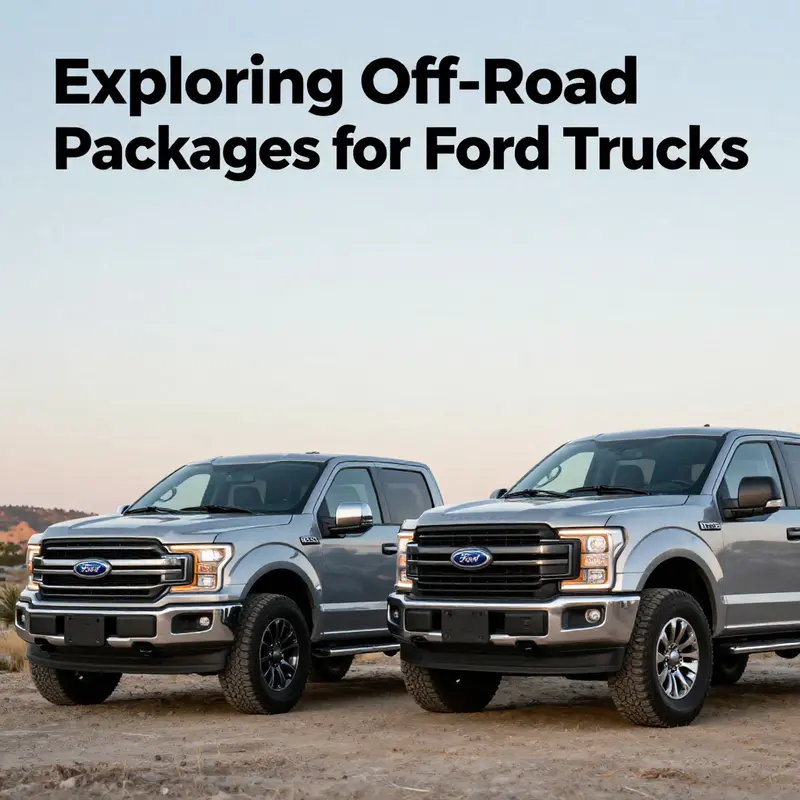
In the quest for off-road excellence, Ford trucks stand tall with their robust off-road packages tailored for true adventurers. The enhancements available for the F-150 and F-250 not only elevate your driving experience but also grant you the confidence to tackle the toughest terrains. As we’ve explored, understanding the specific features and differences among these packages will empower you to make a well-informed choice, ensuring that your off-road vehicle matches your adventurous spirit. Whether hitting the trails or handling agricultural tasks, Ford’s options promise to deliver unmatched performance and reliability.