
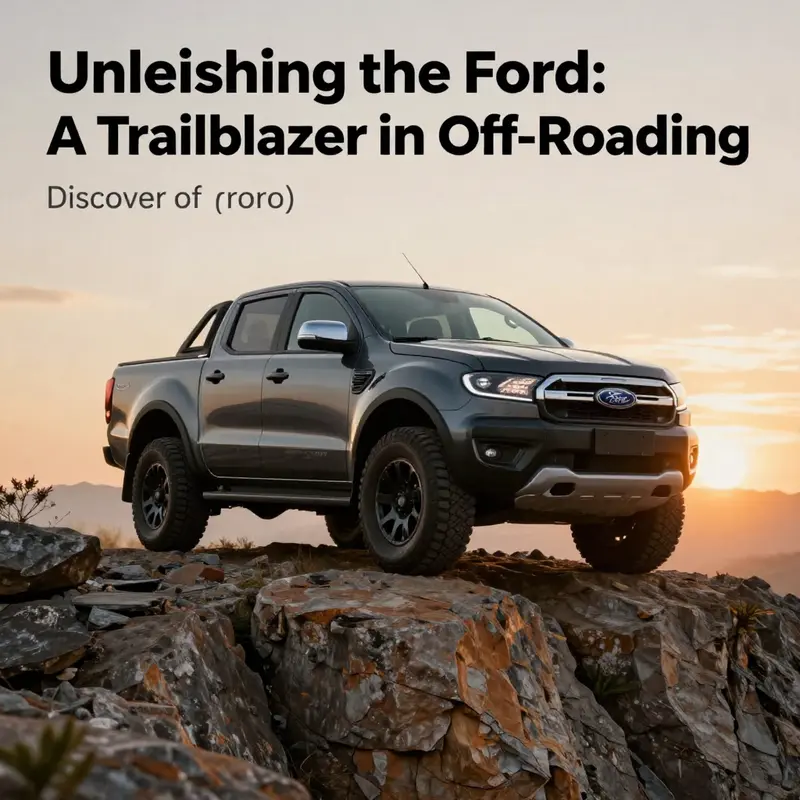
For those who embrace the thrill of off-roading, the right truck makes all the difference. Among various contenders in the truck market, the Ford Ranger stands out as a robust off-road machine built for the adventurers, racers, and landowners alike. This article explores the Ranger’s performance features, compares it to other off-road trucks, and delves into the array of modifications and accessories that can elevate its capabilities. Whether navigating rugged trails or hauling heavy equipment, understanding the Ford Ranger’s unique offerings is essential for anyone looking to enhance their off-road experience.
Rugged Power, Calculated Traction: Assessing a Modern Midsize Truck for Off-Road Adventure
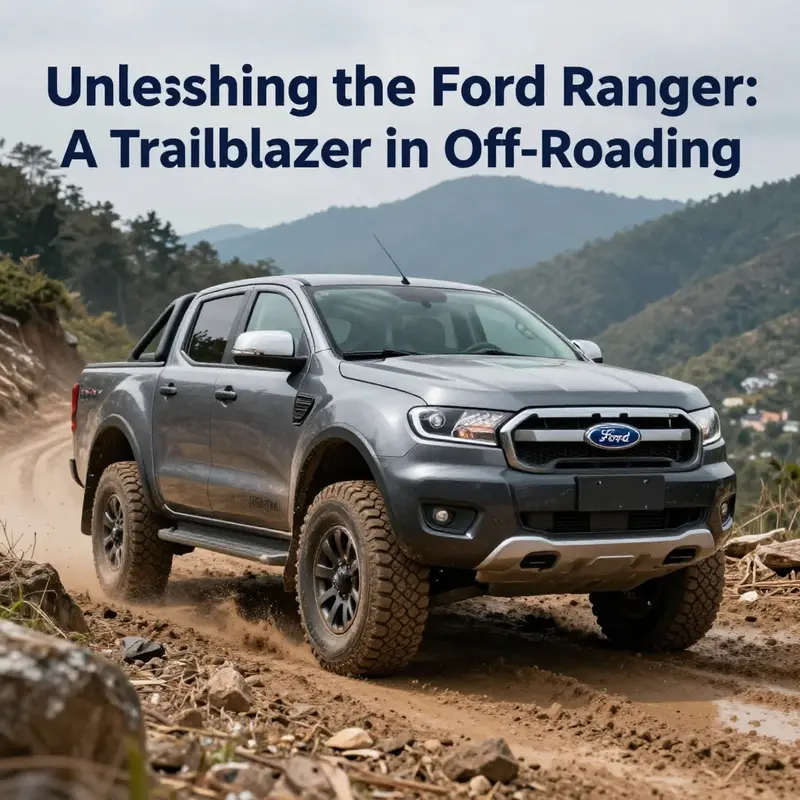
When a modern midsize pickup is pressed into off-road service, it earns a reputation not just for horsepower or torque, but for how that power translates into confidence on rough trails, wet rock faces, or sand-strewn washes. The question of whether a particular truck is a good off-road choice hinges on a blend of engineering, adaptable systems, and a philosophy of utility that favors practical capability over flashy numbers. In the latest designs, the chassis, drivetrain, and electronic controls are calibrated to work as a cohesive system. They are not merely a collection of parts, but a choreography that helps a driver pick a line, sense grip, and manage heat and fatigue over long days of travel. This kind of machine is built to be versatile: ready to crawl a rocky trail in the morning, carry tools to a remote worksite in the afternoon, and still be comfortable enough for a daily commute that never feels like a compromise.
At the heart of this capability is an engine that combines responsive torque with smooth, predictable delivery. A modern turbocharged four-cylinder layout provides a strong blend of low-end pull and high-end capability. The goal is not simply to chase peak horsepower, but to ensure that the driver has usable thrust at the moment of demand—whether that demand comes from a steep climb, a muddy off-camber, or a heavy load. In practice, that means a powerband that remains confident as the terrain changes and the speed fluctuates. The best off-road trucks feel willing to accelerate away from trouble rather than requiring the driver to chase revs and shift patterns. An engine with a broad, usable torque curve helps the vehicle maintain momentum over obstacles while still returning reasonable fuel efficiency in everyday driving. A 10-speed automatic transmission further smooths power delivery, allowing the engine to stay in its sweet spot as terrain and pace demand different torque cuts and holds.
The drivetrain that accompanies this power is the plant that translates it to traction. A sophisticated four-wheel-drive system with selectable drive modes stands as the cornerstone of practical off-road capability. The modes are designed to tailor throttle response, transmission shift strategy, and torque distribution to the character of the surface beneath the tires. Normal mode preserves everyday manners for on-road comfort. Mud or rut modes sharpen throttle response and typically bias torque toward the rear axle to help break free when the going is slick. Sand mode manages momentum and traction to prevent bog-down, while a rock setting tunes the system for slow, deliberate crawling over stony obstacles. Tow or haul configurations emphasize stability and controlled stability when carrying heavy payloads through uneven terrain. The benefit of these modes is not only in aspirational capability but in predictability; a driver can anticipate how the vehicle will behave when a tire loses grip and adjust quickly without surprises.
Ground clearance and geometry play equally critical roles. A robust platform sits high enough to clear rocks and ruts, yet remains approachable for daily use and for owners who commute far from paved roads. In practical terms, drivers gain the ability to clear a ridgeline or a rutted path with confidence, knowing that the undercarriage has enough air to avoid unnecessary contact. The suspension setup is designed to strike a balance between control on rough surfaces and comfort on asphalt. A well-tuned suspension helps the vehicle settle over irregularities rather than hopping or tramlining, minimizing fatigue on long, unforgiving trails. Ground clearance, combined with carefully shaped approach, breakover, and departure angles, determines how easily the vehicle can approach a crest or slide off a rock ledge without exposing the underside. The outcome is a more forgiving experience that encourages exploration rather than hesitation.
The frame and chassis are equally crucial to off-road resilience. A fully boxed frame built from high-strength steel contributes stiffness and durability, reducing torsional flex during sidehilling, negotiating rock faces, or navigating uneven surfaces. This rigidity translates into precise steering feedback and predictable behavior when the trail throws a sudden obstacle in the driver’s path. It also supports protective measures such as skid plates and reinforced protection for critical components. Think of the chassis as the backbone that keeps everything aligned when the vehicle is moving through rough terrain at speed or when weight is shifting as the truck climbs or descends. In combination with a strong frame, the suspension and steering geometry ensure that the vehicle’s steering wheel remains communicative and that tires maintain contact with the ground for as long as possible.
From the maker’s off-road oriented packages to the more modest equipment levels, there is a clear allocation of resources toward heat management, protection, and stability. An available off-road package typically shores up the truck with upgraded dampers, protective plates, and exterior cues that signal intent while delivering tangible advantages. The upgraded shocks handle the extra load from rough terrain and steep descents, while a skid plate protects the underbody from rocks and debris that would otherwise dent or puncture vital components. A heavy-duty cooling system is a practical addition for extended climbs or slow, deliberate crawling through heat-generating conditions. When a trail requires more than just pedal power—when it calls for sustained operation in taxing heat and load conditions—the cooling system helps keep engine temperature in a safe envelope, preserving both performance and longevity.
The human element remains central to off-road success. Driver-assistance technologies have evolved to work alongside mechanical grip rather than replacing it. Hill descent control, for instance, takes some of the burden when negotiating long, steep declines. It can be a lifeline on slippery grades, allowing the driver to focus on steering and line choice rather than modulating throttle and brake pressure in an environment that demands careful, continuous attention. Electronic locking differentials further augment traction by ensuring that power is distributed to the axle with the most grip. When a single wheel faces a surface with little traction, the locking differential helps the truck maintain momentum by equalizing torque across the wheels on that axle. Optional off-road features, including rear-locking differentials or specialized suspension tunes, offer additional levers for the dedicated explorer, though the most meaningful gains come from a system integrated with chassis stiffness, traction control, and the driver’s ability to read terrain and select the appropriate drive mode.
Angles matter just as much as raw power. Approach, breakover, and departure angles determine how a vehicle clears obstacles without scraping or getting hung up. A well-designed chassis with the right geometry can quietly save a trip by preventing hang-ups on a chunky rock or a steep rise. The better the angles, the more confidence a driver has to pick an aggressive line and trust the vehicle to follow it. This is not about fearless bravado; it is about a predictable, repeatable performance that translates to fewer trail side repairs and more time spent enjoying the journey. The combination of sturdy framing, able suspension, and tuned drive modes creates a vehicle that can handle those moments when the terrain tests both the tires and the driver’s nerve.
In practice, the reality of off-road capability also rests on the truck’s carrying and towing versatility. A practical off-road truck must haul gear, spare parts, recovery equipment, and perhaps even a camper or a small trailer. The drivetrain is built to deliver not just raw speed but reliable torque and consistent power at low speeds, when momentum matters most. The ability to maintain traction while pulling a heavy load up a grade or across a slick surface is as much a function of gearing, torque, and chassis stiffness as it is of tire choice. The right configuration keeps the vehicle planted, reduces wheel spin, and allows the driver to build confidence through experience rather than through sheer acceleration.
For those who use a midsize pickup for regular work or adventure, aftermarket support is a practical reality. Owners look to tailor their machines for more aggressive off-road work while preserving daily usability. Rear bumpers, spring lift spacers, and tire upgrades are common accessories that can enhance approach and departure angles, increase ground clearance, and improve grip on challenging surfaces. These components provide an incremental path toward more capable off-road performance without demanding a full suspension overhaul. They offer a way to tailor the vehicle to specific trails and climates, from muddy hauls to sandy dunes, while maintaining acceptable on-road manners. The beauty of this approach lies in its modularity: you can add, refine, and adjust as your trails evolve or as your needs shift, balancing capability with comfort and reliability.
Overlanders, contractors, and avid travelers often demand a mix of rugged capability and practical durability. The modern midsize pickup designed with off-road duty in mind can satisfy these demands by combining power, traction, chassis rigidity, and protective hardware with a flexible payload and towing configuration. It becomes a workhorse when needed and a capable adventure partner when the calendar opens to new locations. The practical takeaway for a potential buyer is not simply to tally the numbers in a brochure, but to profile how the truck will be used day to day. If the plan involves frequent trips over rough terrain, with occasional heavy loads or trailer towing, a system built around a strong frame, a capable 4WD system with multiple drive modes, and protective underbody features will deliver more consistent results than a focus on peak horsepower alone.
The broader point is that off-road capability is a holistic attribute. It emerges from the interaction of power, control, protection, and driver decision-making. The best off-road trucks invite trust: they respond promptly to throttle input, they maintain traction when grip is compromised, they protect vital components when the path demands a brutal test, and they reward patient, deliberate lines over impulsive, aggressive moves. In that sense, the maker’s approach to design is as important as the hardware itself. You want a vehicle that doesn’t require constant micro-management—one that keeps you in the flow of your journey, letting you focus on the route rather than the remedy.
Of course, no vehicle is perfect for every user. Some builders prioritize sportiness or on-road comfort, while others lean into utilitarian toughness with a higher emphasis on payload and durability. For an off-road enthusiast, the sweet spot lies where the powertrain remains tractable, the suspension stays composed over rough terrain, and the electronic aids cooperate with the driver rather than override their decisions. The best choices in this class respect that balance and provide a platform that can be adjusted to a wide range of environments without requiring constant aftermarket intervention. In practice, that balance translates to fewer compromises, more time on trail, and greater confidence when weather shifts and terrain changes. It is this combination of mechanical robustness, adaptive control, and thoughtful design that makes a midsize pickup a strong candidate for off-road use, even as the trail demands evolve from easy cross-country tracks to rugged backcountry routes.
For readers weighing their options, the takeaway is not a single feature or a single metric. It is the sum of how the vehicle behaves when the road ends and the trail begins. Is the drivetrain flexible enough to deliver steady torque at low speeds, is the chassis stiff enough to resist twisting under load, and are the protection and cooling systems designed to sustain longer treks in heat and altitude? Do the available modes, the descent control, and the locking differential feel intuitive, and do they align with your own approach to off-road driving? These questions refine the decision far more effectively than chasing a headline number. When the answer leans toward yes, the vehicle in question is likely to perform well in a broad range of off-road scenarios, from gnarly rocky passages to deep, rutted mud and soft sand. The result is more than mere capability; it is a reliable partner in exploration, capable of turning a daunting route into a memorable, rewarding journey rather than a logistical headache.
For those who want a grounded sense of the official baseline and a direct source of specifications, the maker provides a comprehensive overview of the midsize pickup’s capabilities and trims on their site. This reference is helpful for understanding how a given configuration stacks up in terms of engine output, drive system, ground clearance, frame design, and protective features. While the exact numbers and package names may vary by market and model year, the underlying principles described here apply broadly: a robust engine with ample low-end torque, a sophisticated four-wheel-drive system with terrain-aware modes, a rigid frame, protective underbody hardware, and driver aids that complement rather than replace human judgment. In the end, the most telling measure remains how the truck feels when you point it at a challenge and between you and the obstacle lies your choice of line, throttle input, and the confidence instilled by the vehicle’s architecture.
External resource: For additional official specifications, see the maker’s overview page at https://www.ford.com/trucks/ranger/overview/
Ranger at the Frontier: A Thorough Comparative Look at the Ford Ranger’s Off-Road Prowess Against Compact-Truck Rivals
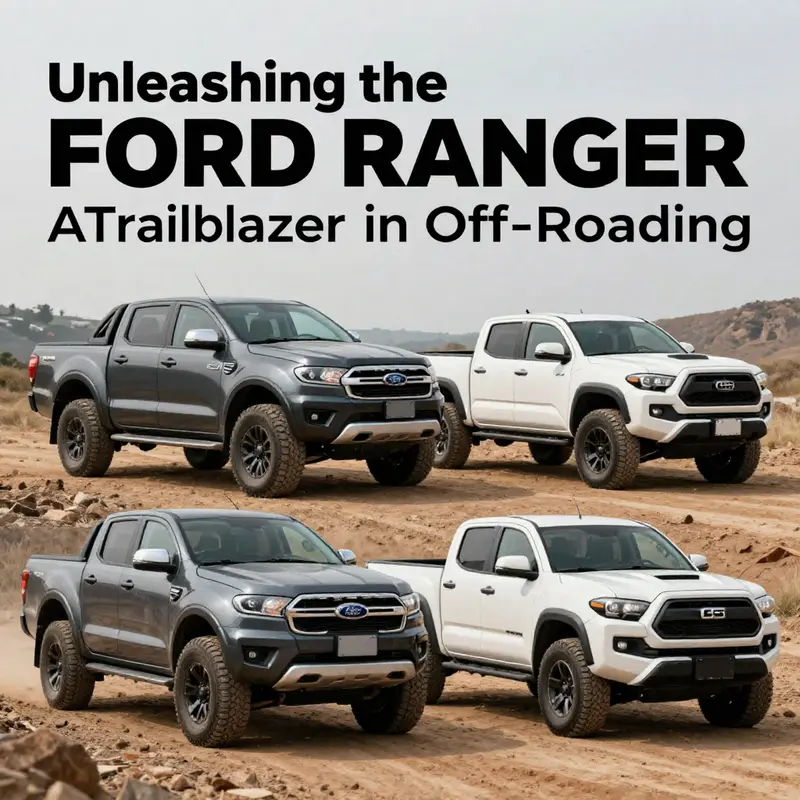
In the world of compact pickups, the Ford Ranger has carved a distinct place for itself as a truck that can blend practical daily usability with genuine off-road capability. The core question many enthusiasts ask—whether a Ranger is a good off-road truck—requires looking beyond glossy marketing and into how a vehicle behaves on the trail, how it resists the sting of rough terrain, and how easily a driver can tailor it to shifting conditions without sacrificing comfort on the highway. The Ranger’s reputation rests on a combination of rugged fundamentals and a modular design that invites purposeful upgrades. When you step back and compare it with its closest compact-truck rivals, the Ranger tends to stand out for a balance that not every competitor can claim: steady, confident low-end torque, a chassis built to endure, and a depth of capability that remains accessible to both weekend explorers and professionals who depend on a truck to work as hard as it plays. The result is a truck that feels ready for serious dirt while still feeling at home on urban streets, a combination that matters when you want an off-road machine you can live with every day.
Power delivery in off-road work matters as much as the cross-country crawl itself. The Ranger’s engine lineup emphasizes a solid, responsive feel that launches you into obstacles with enough torque to maintain momentum when lines get tight or the tires drop into ruts. In practice, this translates to a drivetrain that can pull through uneven terrain without chasing revs or hunting for a gear, a critical trait when you’re negotiating steep pitches or deeply rutted trails. The four-wheel-drive system, paired with a carefully tuned traction strategy, helps the truck place power where it’s most useful, maintaining grip as the surface shifts from clay to gravel to loose stone. This is the kind of behavior that keeps a driver calm and focused on the line ahead rather than chasing the truck’s responses. The result is a platform that, with the right setup, feels able to tackle a broad spread of trails without demanding extreme modifications to reach its full potential.
Beyond raw power, the Ranger’s chassis design and structural integrity are the quiet backbone of its off-road competence. A reinforced chassis contributes to a sense of rigidity that translates into confident handling on uneven ground. The suspension system, while fully capable in stock form, provides a solid foundation for trail work, offering predictable articulation and controlled body movement as you pick through rocks, roots, and broken sections of trail. The practical effect of this setup is a vehicle that remains composed even as you approach the limit of traction and the surface beneath you shifts unexpectedly. It’s this kind of predictable behavior that keeps a driver from second-guessing the vehicle, which in turn makes it easier to maintain momentum and conserve energy on longer or more aggressive routes. When you couple this steadiness with the Ranger’s approach and departure angles—areas that determine how easily a vehicle clears obstacles and how aggressively you can approach steep features—the truck reveals a trail-readiness that isn’t merely about raw ascent numbers but about real-world capability and reliability. It’s the type of credibility you notice when you’re trail-side and you’re deciding whether to press on or retreat to a safer line, and it matters most when you’re using the truck for overlanding, work, or mixed-purpose adventures.
The practicality of the Ranger for overlanders, contractors, or any driver who tows gear into remote work sites lies not only in its ability to climb but in how it handles payload and tow requirements without turning the cabin into a harsh, noisy cabin. A well-conceived balance between payload capacity and ride quality under load means the Ranger can carry heavy equipment, tents, or gear for a weekend excursion while still offering a comfortable daily drive. This balance is a selling point in a class where some trucks lean too heavily toward off-road bravado at the expense of daily usability, or conversely, where a vehicle is so road-biased that it leaves serious off-road capability on the shelf. The Ranger tends to land somewhere in the middle, delivering genuine off-road capability without demanding a sacrificial daily ride experience. The result is a vehicle you can rely on for work duties, family trips, or a spontaneous backcountry escape, without the nagging thought that you’ll regret the compromises on your first long trail day.
A key ingredient in the Ranger’s off-road adaptability is the ability to tune the vehicle’s performance to the terrain at hand. While the specific driving modes are often described as tailored for mud, sand, rock, or other challenging surfaces, the underlying principle is straightforward: the drivetrain, transmission logic, and throttle response are synchronized to keep the vehicle moving in a controlled, confident manner. This translates into less stress for the driver, greater predictability in traction-limited situations, and the potential to extract a surprising amount of capability from a truck that remains comfortable enough for daily use. The result is a truck that doesn’t require a pilgrimage to the aftermarket to become trail-worthy; it arrives ready to be sharpened with purposeful upgrades as the owner’s ambitions grow. Speaking to the broader ecosystem that supports the Ranger, there is a robust array of aftermarket options designed to enhance protection, clearance, and approach angles without forcing a complete suspension swap. In practice, a buyer can start with more practical, reversible modifications—such as a rear bumper that improves underbody protection and approach geometry, or lift spacers to gain ground clearance—while preserving a comfortable ride quality for everyday driving. This modular approach aligns with the needs of many users who want a truck that can evolve with the trails they choose to chase.
When we pivot from capability to reliability, the Ranger’s durability shines through in how it handles the challenges of real-world use. The reinforced chassis supports the truck’s rugged character, and the overall build quality inspires confidence whether you’re negotiating rocky single-track routes or simply navigating rough backroads after a long day at a work site. The Ranger’s durability isn’t solely about withstanding trail punishment; it’s also about keeping the vehicle’s essential systems intact under varying load and weather conditions. A truck that can endure repeated exposure to dirt, mud, and dust without compromising critical components tends to deliver long-term peace of mind for owners who rely on it for jobs, adventures, and family life alike. As a result, the Ranger earns its off-road credibility not only from initial performance but from sustained capability across a spectrum of environments and use cases. The practical takeaway for most buyers is simple: you won’t be forced into a constant cycle of repairs or upgrades to keep pace with your ambitions, and you won’t be left stranded by terrain that feels beyond the truck’s scope.
Despite the Ranger’s strengths, any fair assessment must consider how it stacks up against its compact-truck rivals. The Toyota Tacoma remains a benchmark for longstanding reliability and strong resale value, attributes that many buyers factor into the total ownership equation. The Tacoma’s proven off-road credentials are the kind of performance history that keeps it competitive in the used-truck market and in new-truck conversations alike. However, some drivers note that the Ranger brings more modern engine efficiency and a more contemporary, modular approach to capability, which can translate into better overall value for those who want a blend of ruggedness and modern conveniences without sacrificing capability. The Honda Ridgeline—often praised for on-road comfort and clever packaging—tends to carry a different kind of off-road footprint. Its off-road capability, while respectable, is generally regarded as more limited when the trail demands aggressive approach angles, deep ruts, or steep ascents, especially when compared to true body-on-frame rivals in the same segment. Then there’s the Chevrolet Colorado, which provides a variety of powertrain choices and a strong undercarriage that lends itself to certain kinds of versatility on the trail. The Colorado’s strengths can include more raw power or more flexible configurations, but the Ranger’s advantage often comes down to a balanced package: a rugged chassis, a more modern powertrain approach, and a thriving aftermarket ecosystem that makes it practical to tailor the vehicle to a wide range of off-road goals while keeping it versatile for everyday use. Yet even with these differences, the Ranger’s core identity remains unchanged: a compact pickup that does not shy away from challenging terrain yet remains a reliable, usable daily driver. This dual capability matters for buyers who want to invest in a vehicle that can handle the occasional extreme trail while still serving as a daily transport solution, a factor that frequently tips the scales in the Ranger’s favor for those who need a workhorse that can double as a weekend adventurer.
In the realm of suspension upgrades and customization, the Ranger’s modularity becomes a practical asset. For drivers who want more ground clearance or a touch more granite-like rough-terrain confidence, simple, reversible upgrades—such as taller spring spacers or carefully chosen protective components—can address specific shortcomings without a full suspension overhaul. The upside is that the truck remains within a legal and comfortable envelope for daily driving while enabling a tailored off-road stance for rougher trails. This approach underscores a core philosophy among enthusiasts: you don’t have to abandon everyday comfort to gain trail capability. Instead, you can evolve your Ranger in steps, starting with conservative, reversible changes and moving toward more extensive modifications as your confidence and ambitions grow. The aftermarket ecosystem’s breadth makes this approach feasible, offering paths for people who want to protect underbody surfaces, improve departure angles, or tune handling to match particular terrains. This adaptability is not a throwaway feature; it is a deliberate design choice that aligns with the way people actually drive and use their trucks in real life. The implication for buyers is clear: the Ranger is a platform that grows with you, not a fixed solution that confines you to a single use case.
To summarize, the Ford Ranger stands out in the compact-truck landscape by delivering a credible blend of on-road usability and off-road capability, augmented by a chassis that rewards practical upgrades rather than demanding a complete rethink of the platform. Its engine and transmission pairing provides a reliable foundation for trail work, while its road manners keep daily driving from becoming a chore. When contrasted with rivals, the Ranger consistently demonstrates an aptitude for trail navigation, an ability to carry meaningful payloads, and a design that invites owners to personalize their vehicle’s capability without erasing comfort or practicality. The result is a truck that earns its berth among capable off-roaders not through a single standout feature but through a well-rounded package: real-world traction, durable construction, a thoughtful approach to handling and stability on varied surfaces, and a flexible upgrade path that respects the realities of regular use and trail demands. For drivers who want a truck that can traverse rough terrain while remaining a sensible daily driver, the Ranger delivers a compelling proposition grounded in balance, durability, and the prospect of growth as the owner’s off-road dreams evolve. As you weigh choices in this segment, the Ranger’s merit becomes less about a one-line performance claim and more about how its capability threads through work, play, and exploration—consistently proving that a capable off-road truck can also be a trustworthy daily companion. If you want to explore broader perspectives on safety and vehicle testing related to Ford and its competitors, you can consult industry testing discussions like IIHS crash test results: Tesla vs Ford. IIHS crash test results: Tesla vs Ford. For official specifications and the full roster of off-road features, the manufacturer’s page offers the most complete reference, including terrain-management considerations and payload details: https://www.ford.com/trucks/ranger/.
Trail-Ready Through and Through: Modifications and Accessories That Elevate the Ford Ranger’s Off-Road Prowess
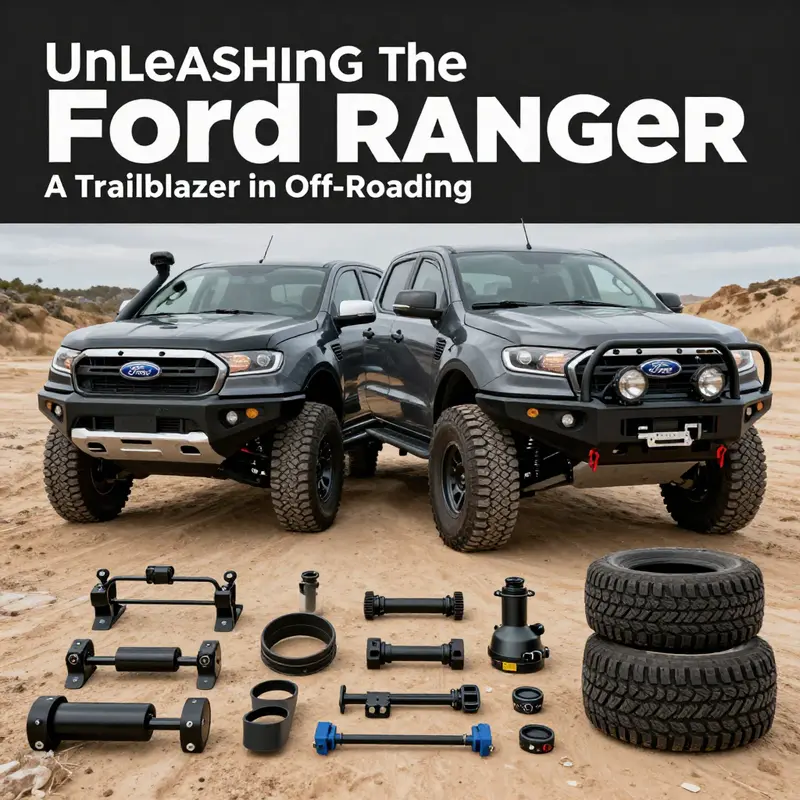
The Ford Ranger sits at a sweet spot for off-road enthusiasts: compact maneuverability, solid payload capacity, and a chassis that responds well to thoughtful upgrades. When you approach it as a platform rather than a finished solution, the Ranger reveals a pathway from stock capability to trail-ready reliability. The modifications and accessories that truly change the game aren’t about turning the truck into a showpiece; they’re about harmonizing weight, balance, traction, and protection so that every trail, dune, or mud rut becomes a test you can meet with confidence. In this sense, the Ranger’s strength isn’t just what it leaves the factory with, but how its design accommodates a deliberate build around the environments you actually drive in. You begin with a clean slate of intent: what terrain you want to tackle, whether you intend to tow or carry gear, and how you balance off-road performance with everyday practicality. From there, the road to a capable, dependable machine unfolds as a careful sequence of choices that respect the vehicle’s architecture and your budget.
The most impactful steps are those that respect weight distribution and protection. A high-quality, factory-backed option that emphasizes suspension tuning, chassis reinforcement, larger tires, and more robust brakes can transform how the Ranger behaves on rough surfaces. It’s not merely about bigger wheels or louder exhaust notes; it’s about a cohesive system where the suspension geometry, the tire footprint, the grip, and the braking control work together. The goal is to reduce unsprung weight where possible, increase ground clearance without compromising ride comfort, and ensure the drivetrain can handle the new demands of steeper climbs and more aggressive debris. Even without naming specific trim labels, you can picture a top-tier configuration that presents a reinforced, more capable chassis, upgraded dampers, and tires designed to bite into loose surfaces while maintaining predictable handling around rocks and ruts.
Older, performance-oriented editions of the Ranger from the early days of its off-road lineage showed a similar principle in action. In those contexts, a combination of a powerful overhead engine, stiffer dampers, a beefier rear differential, and protective armor created meaningful leaps in capability. The marriage of front and rear skid plates to defend the undercarriage, along with differential protection and a locked-type feel in low-traction situations, helped drivers maintain momentum when the trail demanded precision and restraint. Even with today’s more refined platform, those core ideas endure: protect critical components, manage leverage and grip, and tune the vehicle to respond to control inputs in a predictable way. When you plan modifications, the conversation often returns to three themes: protection, traction, and control. Each choice you make should support these objectives without turning the Ranger into a one-trick pony that sacrifices daily usability.
Protection, in particular, deserves to be treated as the foundation rather than a capstone. Skid plates are the obvious starting point, but the concept extends deeper. Full-length underbody protection guards vital lines and assemblies as you wade through shallows or roll through rocky sections. Rock sliders—those sturdy rock-scraping guards along the rocker panels—help prevent body damage during side impacts or unintended touches with boulders. A robust front bumper or bumper armor can keep the approach and departure angles at a practical level, so you aren’t forced to pull off the trail in search of a more forgiving line. The protective strategy isn’t just about enduring hits; it’s about preserving the vehicle’s geometry so that steering, braking, and suspension performance aren’t compromised after a few rough miles.
Traction is the next crucial pillar. The tire choice, wheel clearance, and suspension choreography must work in concert to convert grip into propulsion. Upgrading tires is rarely a simple one-for-one decision; you’re looking at a footprint that matches the terrain and a sidewall construction that tolerates punctures and flex. Larger tires can improve ground clearance and traction in soft surfaces, but they also demand careful attention to fender clearances and speedo accuracy, as well as potential alterations to gearing and stability control thresholds. A well-matched suspension upgrade can provide the necessary travel and damping to keep contact with the ground across rocks and ruts, while maintaining control in descent and ascent. In some setups, a limited-slip or electronic locking differential in low-traction environments complements the tire setup by distributing torque to where it’s most needed rather than where it isn’t. The aim is to reduce slip and to keep the wheels feeding the drivetrain with usable torque, not simply to crank up the loudness of the ride.
Control, finally, is about how the vehicle responds to driver input in demanding conditions. The best upgrades add predictability. A snorkel is one example that supports water fording and dust management by elevating the air intake. It’s not a magic wand for deep water crossings, but it does reduce risk when you’re fording streams or crossing deeply rutted sections where water and sediment would otherwise find their way into the intake. Protective armor on the lower sections of the vehicle helps maintain consistent steering feel if you brush through dense brush or drag against rock faces. Braking systems deserve consideration as well; larger or vented brakes paired with appropriate rotors and pads can provide more consistent stopping power on steep grades where heat soak can become a problem. You don’t upgrade to a performance brake system solely for the thrill; you upgrade to maintain consistent, controllable braking after repeated climbs and descents, which is essential on longer off-road expeditions.
Alongside these core categories, lighting and recovery gear round out the practical toolkit every off-road driver should consider. LED lighting, especially in auxiliary forms, enhances night visibility, which is not only about spotting distant hazards but about reading the trail surface clearly enough to choose the best line at modest speeds. A compact, reliable winch mounted to a reinforced bumper facilitates self-recovery, a crucial capability when assistance is not immediately available. Recovery gear—snatch straps, a recovery jack, traction mats, and a portable air compressor—enables you to extract yourself from situations you do not want to be in. These pieces of equipment are not ornaments; they are components of a strategy that prioritizes the driver’s safety and the vehicle’s endurance after an off-road excursion. They also influence your route planning, because you can select trails that align with your equipment and your skill set in a way that reduces risk while increasing the sense of achievement you get from the drive.
All of this comes with a simple but important caveat: maintain balance between capability and daily practicality. The more aggressive your upgrades, the more you invite weight changes, ride-comfort trade-offs, and potential warranty concerns. You may discover that a heavier front end or stiffer springs influence steering feel at highway speeds or alter the frequency with which you have to recalibrate alignment. The last thing you want is a truck that handles like a specialized tool on the trail but feels numb or unsettled on the daily commute. This is why most drivers approach modifications in stages, testing one or two upgrades at a time, then hitting the road and the trail to assess how each change interacts with the rest of the truck and with their own driving style. It’s not a race to install every part on a checklist; it’s a measured, iterative process that yields a ride that remains comfortable, predictable, and enjoyable no matter where the road takes you.
The Ranger’s modularity—its capacity to accept a broad range of components without requiring a complete rebuild—emerges as one of its strongest assets in this journey. You might begin with a solid protection package and a reliable, rugged set of tires. If later you decide to take on longer expeditions where deep water and demanding terrain are constants, you can add a snorkel and a more robust cooling solution, and you can revisit the suspension with a more advanced damper system. If you frequently tow and haul gear to remote job sites or event locations, you can adjust the balance again, choosing modifications that support weight distribution and braking performance under load. The flexibility means you don’t need to commit to a single vision of off-road capability. Instead, you develop a personal progression—first protection and traction, then control and recovery, then perhaps a deeper suspension upgrade—so your Ranger evolves in step with your ambitions and the environments you love to explore.
It’s important to anchor this process in a thoughtful plan that starts with safety and finishes with reliability. Before any bolt is tightened, you should map out your intended use: the types of trails, the annual mileage, the typical loads, and the climate. This planning reduces the risk of over-investing in components that may not be used to their full potential. It also helps you decide when a modification should be performed by a professional with the right tools and torque specifications. While some upgrades are straightforward bolt-ons, others demand precise alignment, careful wiring of recovery gear, or integration with the vehicle’s electronic control systems. In many cases, a staged approach paired with professional installation ensures that the vehicle’s electrical system, cooling, and braking are not inadvertently compromised. The goal is a truck that is capable when you need it and trustworthy enough to be driven every day without second-guessing.
If you’re looking to deepen your understanding of the mechanical foundation behind these upgrades, consider exploring hands-on resources that address the broader mechanics involved in upgrading a modern, multi-terrain platform. For readers who want to understand the mechanical side of upgrading, see mastering-diesel-mechanics-your-step-by-step-path-to-success. This resource provides a practical lens on how diesel-powered systems respond to conditioning and modification, offering a framework that’s helpful even when you’re working with petrol engines and complex powertrains. The point is not to replicate every detail but to cultivate a mindset: that upgrading is a disciplined exercise in balancing weight, torque, clearance, and leverage so that every upgrade yields a measurable, reliable improvement rather than a cosmetic flourish. The Ranger’s strength is that it invites this mindset, rewarding steady, thoughtful optimization rather than impulsive, one-off changes.
In the end, the value of modifications for the Ranger rests on the road you expect to travel and the trails you want to conquer. A well-considered set of upgrades can expand your range, improve your comfort, and elevate your confidence when the going gets tough. You’ll learn to recognize when additional protection is warranted, when tire choice must be tailored to the season, and when you should prioritize lighting and recovery gear for dusk or dawn excursions. The Ranger, in this sense, becomes more than a vehicle: it becomes a tool that mirrors your approach to exploration—one that respects the terrain and demands a measured, methodical philosophy of preparation. And because the Rangers’ chassis supports a broad array of configurations, you have the freedom to grow with your adventures, not out of them. The trail you choose is rarely the same twice, and the right combination of modifications will help you respond with steadiness and foresight, turning rugged terrain into a canvas for responsible exploration rather than a test of bravado.
For readers navigating this landscape, a practical bottom line emerges: begin with protection and traction, ensure you maintain daily usability, and expand your toolkit as your trails demand. Treat each upgrade as a test of how it interacts with the whole system, rather than a standalone performance claim. And remember that the most successful builds are those that stay balanced, predictable, and durable across the varied conditions you’re likely to encounter. The Ranger’s design supports that philosophy, enabling you to craft a vehicle that can traverse rough backroads during the workweek and handle weekend escapes into remote countryside with equal competence. It’s this adaptability, coupled with a strong aftermarket ecosystem and a robust sense of modifiable potential, that makes the Ford Ranger a serious candidate for anyone who wants a dependable off-road companion without sacrificing everyday practicality.
External resource: If you’d like to cross-check current official specifications and model positioning as you plan upgrades, consult the official Ranger page for reference and updates. https://www.ford.com/vehicles/ranger/
Final thoughts
In conclusion, the Ford Ranger emerges not only as a capable off-road truck but as a versatile vehicle that meets the needs of enthusiasts, adventurers, and landowners alike. Its robust performance, coupled with a myriad of aftermarket modifications, positions it firmly among the best in its class. The Ranger’s combination of reliability, strength, and customization makes it a top choice for anyone looking to conquer the wild. Make no mistake: the Ford Ranger is ready to take on whatever challenges your adventures may hold.