
For off-road enthusiasts and adventurers, the thrill of exploring rugged terrains and conquering technical challenges is unmatched. However, a key aspect of thriving in the Trucks Off Road game goes beyond the adrenaline rush—it’s about establishing sponsorships that can enhance your journey. By understanding how missions contribute to your reputation, emphasizing vehicle performance upgrades, and achieving critical career milestones, players can position themselves as prime candidates for lucrative sponsorship opportunities. This guide navigates through the essential strategies within each chapter, equipping you with the tools needed to attract sponsors and maximize your gameplay experience.
Rallying for Sponsorship: Mastering Missions, Challenges, and the Road to Brand Partnerships in an Off-Road Truck Simulator
Sponsorship in an off road truck sim does not arrive on the first finish banner or after a single victory. It grows from steady effort, a clear track record, and a narrative that makes an audience want to back you. In the game’s career mode, sponsorship is less about a single stroke of luck and more about a sustained arc: you build credibility by repeatedly hitting the targets those brands care about, and you present that credibility in a way that translates beyond the in game scoreboard. The fundamental premise is simple, but its execution requires patience and precision. Complete the missions and challenges, yes, but do so with an eye toward reliability, consistency, and visible growth. Each successful delivery, each precise time trial, and each terrain specific challenge tick a box on your growing sponsorship profile. When you string these boxes together, you produce a narrative of performance that is as compelling as any highlight reel. In this sense, the sponsorship mechanic mirrors real life: sponsors aren’t drawn to a single win; they are drawn to a story of dependable progress that aligns with their own brand values of reliability, performance, and endurance. As you progress through the career ladder, the game tends to reward you not just with currency or unlocks, but with opportunities—sponsor contracts, access to better equipment, and doors opened by reputation. The smarter you are about your choices, the more those opportunities multiply. In practical terms, your path begins with improving your truck right where it counts: the engine, suspension, tires, and the overall drivetrain where reliability and handling meet. You want a machine that digs through mud with confidence, climbs rocky inclines without slippage, and maintains steady leg pace on long stretches that demand both endurance and fuel efficiency. Upgrades in the sim are not cosmetic; they are investments you make to reduce risk, to shave seconds off a time trial, and to keep your vehicle in optimal shape during back to back missions. The sponsor menu in the game is not a simple list of offers. It is a living catalog of objectives tied to real world style expectations. Some contracts require you to complete a handful of events under tight time limits; others ask you to deliver cargo with a specific margin for error. Completing these objectives consistently earns you deals, with each deal carrying its own metrics for success. The process then becomes a delicate dance of performance and presentation. The better you perform, the more you are visible to those watching the circuit, both in game and through the community channels that extend beyond the screen. If you want to think like a sponsor, you must think about your career as a brand story evolving in real time. Clean records matter. It is tempting to push your limits in pursuit of a faster win, but sponsors value drivers who deliver results with minimal penalties. Crashes and penalties are not merely points on a scorecard; they are signal flags that say this driver is risky or inconsistent. A clean driving record signals predictability, which translates into ongoing value for a sponsor who needs dependable exposure and a consistent platform for their message. The game rewards that consistency in a way that feels natural: you unlock more prominent sponsorship opportunities as you demonstrate a track record that the game’s virtual sponsor evaluators can trust. The most effective path is to couple raw speed with careful risk management. Your objective is not only to win but to win with control. When the mission roster grows, you begin to see the pattern: the best drivers are those who navigate the same challenges with a steady rhythm, never sacrificing a delivery window, never skirting penalties, and never letting a flaw in the vehicle undermine the mission. This is how you lay a strong foundation for sponsorship deals that stick. As you pursue this path, it helps to keep a clear sense of long term goals. Sponsorships are a step toward bigger objectives: more consistent coverage, the ability to participate in higher level events, and a platform that can be leveraged for broader branding campaigns that fans follow closely. The value for sponsors, after all, rests not only in the moments when you triumph, but in the consistency of your presence across events, streams, and broadcast outcomes. In practice, sponsorship in this off road truck sim is thus a blend of on track performance and off track visibility. It is the interplay between what you do during a race and how you tell that story to audiences who care about trucks, terrain, speed, and risk management. The better you perform, the more your narrative becomes a beacon for brands seeking to align with a driver who embodies endurance and reliability. The game’s career progression often mirrors this dual track of achievement and storytelling. Your skill bar rises as you complete mission after mission, a visible metric of your growing expertise that sponsors can quantify. Your reputation expands as you demonstrate clean handling and a professional approach to every challenge, from mud bogs to cliffside ledges. And your visibility expands as you participate in events that draw watchers from across the virtual world, whether through in game streams, social streams, or community forums where fans dissect runs and praise the most polished performances. The more you invest in performance, the more you invest in your own brand. To build a sponsorship that endures, you need to attach your in game success to a coherent personal narrative. This means crafting a consistent image: a driver who never abandons a mission, who respects the time limits, and who treats equipment as a partner rather than a disposable tool. It also means investing in content outside the cockpit. In-game success benefits from real world strategies: sharing race recaps, posting insights on setup and tuning, and engaging with the community around the equipment you rely on. A sponsor wants to see a driver who can communicate a value proposition—why the sponsor’s equipment, or their brand, fits the story you are telling to your audience. Speaking to this, the content becomes more than a string of finishes; it becomes a channel for education and inspiration. It is here that the game’s sponsorship dynamic begins to feel less like a list of contracts and more like a pathway to a career in driving, media outreach, and brand collaboration. The effort to complete missions and challenges, then, becomes a multi dimensional exercise in credibility building. It is the backbone of recognition within the game world, an essential ingredient for attracting sponsors who are eager to support a driver with a proven track record and a compelling plan for brokering value. The idea is to align your in game difficulty curve with the sponsor’s desire for a consistent return on their investment. When a driver demonstrates reliability under pressure in the most demanding terrains, and couples that with a credible, professional online presence, the sponsor’s calculus becomes simple: this is a driver who will bring visibility, credibility, and endurance to the brand. Organized events play a crucial role in this. The same way real world champions grow through exposure on large stages, your in game career can be accelerated when you participate in events that carry prestige and reach. In such events, even the best teams are given a chance to showcase not only their speed but their strategic approach to racing, delivering, and surviving across challenging courses. The visibility culminates in a broader audience that follows the series, and sponsors are drawn to participants who can connect with that audience, speak to the brand’s values, and deliver consistent, compelling performances under the bright lights. In this sense, grouped events act as a proving ground for both skill and narrative. They reveal who you are when the stakes are highest and the cameras are rolling, and they provide a platform where a sponsor can imagine a longer term partnership that extends beyond a single season. It is not just about the vehicle you drive or the technique you employ; it is about the story you tell, the reliability you demonstrate, and the engagement you cultivate with fans and media. The narrative that emerges from completing missions, handling adversity, and cultivating an audience becomes a roadmap for sponsorship. You are not merely a driver racing for time; you are a brand ambassador whose career in the game mirrors the growth trajectory of an up and coming racing voice. The best drivers cultivate their own identity through content and community work, through thoughtful posts about setting up a vehicle for a variety of terrains, through tutorials and race reviews, and through consistent interaction with fans who root for their progress. This is where personal branding intersects with sponsorship in a meaningful, practical way. It is not just about selling a product; it is about inviting sponsors to participate in a story that fans care about. That story is built step by step as you meet the objectives in the sponsor section, as you maintain a clean record, and as you maintain a visible, credible presence in the broader community. A practical path for a player who wants sponsorship then becomes clear. Start by mastering the mission roster: perfect timing in deliveries, precise navigation through the roughest sections, and a track record of delivering cargo under constraints. Then, invest in your vehicle so it can perform at the highest level while keeping the risk of damage low. This dual emphasis on reliability and speed makes you attractive to sponsors who value consistent performance and the ability to amplify a brand message across streams and community events. Finally, attach your in game progress to a broader storytelling strategy. Use the community to share your learning, your setups, and your race day reflections. Show how your learning translates into more consistent results and how your on screen persona connects with fans. The more you can articulate the value you bring to a partnership, the more sponsorship contracts will feel like natural opportunities rather than chance occurrences. For a practical integration of these ideas, consider how real world campaigns leverage community engagement to deepen sponsor value. In the context of the game, this means aligning your on screen runs with content that educates and entertains. It means inviting viewers to learn from your setup decisions, to join you in discussing how to balance risk and speed, and to witness the discipline that keeps you on track under pressure. It also means seeking partnerships with organizations that reflect your values and the image you want to project. The in game sponsorship structure rewards your ability to demonstrate not just performance but a coherent personal brand and a visibility strategy that resonates with fans and viewers. As you follow this path, you may encounter opportunities to connect your in game journey with real world campaigns and causes. One such approach is to align with initiatives that emphasize community impact and volunteerism, amplifying your brand’s value beyond the screen. This is the kind of alignment that makes a sponsor feel part of a bigger story rather than merely a logo slapped on a vehicle. To illustrate how this works in practice within the game world, you can think of a scenario where a driver earns a sponsorship by performing consistently and telling a compelling story about preparation and learning, while simultaneously engaging with the community through education content, livestream Q&As, and constructive reviews of vehicle setups. That combination of performance and storytelling often proves irresistible to brands seeking a partner who can deliver both on track and on screen. In addition to the core in game steps, a driver who wants sponsorship should consider cross platform content integration and collaboration with other players. Cooperative streams or joint events help expand reach, and sponsors value a partner who can attract diverse audiences. The more robust your presence becomes, the more sponsors see you as a channel for sustained engagement—not just a one off event where the camera happens to catch a fast run. The pathway to sponsorship is thus a continuous loop: perform well, build your narrative, and expand your reach, then repeat. The cycle compounds over time, and with it your credibility grows. The chapters to come will elaborate on the practical mechanics of maintaining a sponsorship relationship, negotiating contracts, and leveraging brand partnerships to unlock new in game resources and opportunities. For now, the central takeaway is that completing missions and challenges is not just about ticking boxes; it is about building credibility, amplifying visibility, and shaping a story that sponsors want to be part of. It is about turning every mission into a stepping stone toward a durable partnership that helps you grow as a driver, a storyteller, and a brand ambassador. And while each player writes their own arc, the core elements stay the same: show up, perform, protect your record, tell your story, and connect with audiences that care about the grit, the speed, and the terrain. The more you live by that code inside the game, the more sponsorship becomes not a distant dream but a trackable, attainable reality. To connect the in game journey to a broader sense of purpose, consider the opportunity to align with causes that reflect the values your audience cherishes. Trucks for Change: Supporting Habitat for Humanity offers a practical model for how a driver can partner with a cause while pursuing performance excellence. This kind of alignment helps you demonstrate that sponsorship is not just a business relationship, but a shared mission that fans and brands can rally behind. In the broader landscape of off road racing and its media ecosystem, the importance of exposure cannot be overstated. Live streaming and broadcast coverage have become must have channels. When an event is broadcast with clear viewer reach and consistent coverage, sponsors see a larger audience touching their message. The shift toward digital reach means your performances are amplified, and sponsorship becomes a distribution of both real world gear and digital visibility. You win not only on the course but also in the spotlight of streams, clips, and fan discussions. This enhanced visibility makes sponsorship more attractive and more sustainable. As you move forward, remember that sponsorship is a relationship. It requires ongoing dialogue, mutual expectations, and a shared commitment to delivering value over time. The misalignment of goals will derail a partnership quickly, while a good alignment can elevate both the driver and the brand. The journey to sponsorship is never a one time event; it is a continuous story that you tell to fans, to potential sponsors, and to the broader community that follows off road racing in its many forms. It is a story told through your in game decisions, your upgrading choices, your race day focus, and your off screen presence. In the pages that follow, we will dive into more granular strategies for managing contracts, negotiating terms, and sustaining momentum across seasons. We will examine practical tips for presenting your case to sponsors, building a media kit, and mapping your in game accomplishments to a clear narrative suitable for branding partnerships. The aim is not to fabricate a persona but to reveal the authentic arc of a driver who earns sponsorship by pairing performance with careful storytelling and mindful audience engagement. The path outlined here is a blueprint for turning missions and challenges into meaningful sponsorship opportunities, not merely great finishes. The core truth remains consistent: the more robust your evidence of value—on track, in media, and in community— the stronger your case for backing from brands that want to align with a driver who embodies endurance, discipline, and engaging storytelling. External resource: China Truck Open: A Platform for Brand and Driver Growth — https://www.sohu.com/a/87654321_123456
From Upgrades to Endorsements: Earning Sponsorship on Trucks Off Road Through Performance Mastery
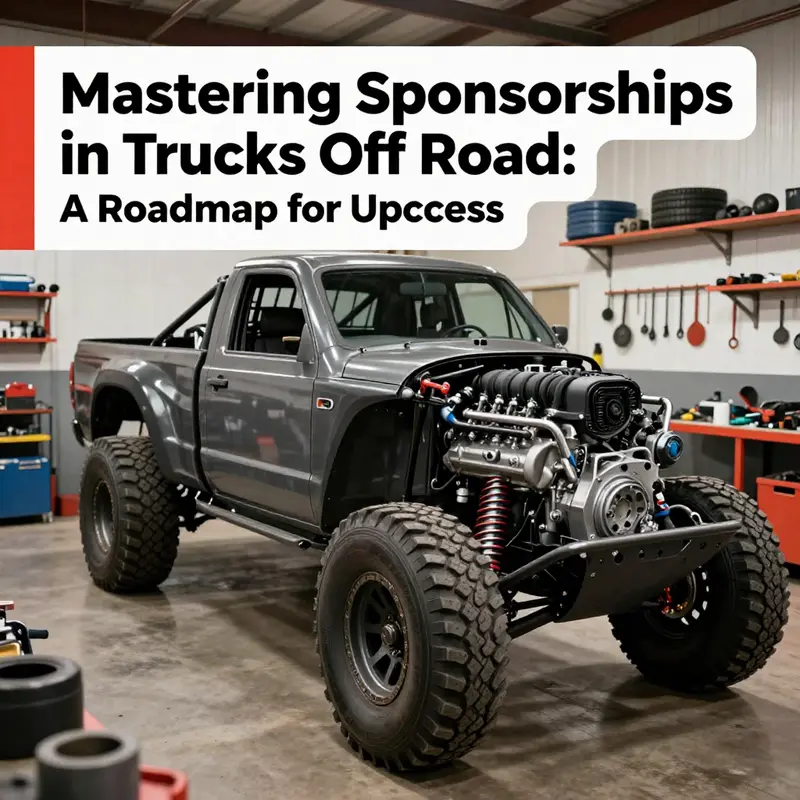
Sponsorship in Trucks Off Road isn’t a trophy you earn by luck or a single heroic run; it is a carefully built narrative of competence, consistency, and community presence that brands recognize and reward. In the game, sponsorships tend to emerge when you prove you’re a driver who can deliver steady results, push a vehicle beyond its assumed limits, and engage an audience that cares about the journey as much as the destination. The chapter you’re about to read threads together the mechanics of the game with the real-world mindset sponsors use to decide where to put their support. It’s not only about having the fastest lap times or the most polished edits; it’s about creating a story that brands can attach their credibility to and that players want to follow. The path from being a good driver to becoming a sponsored player involves a blend of strategic vehicle improvements, disciplined gameplay, and a public-facing narrative that demonstrates value beyond mere exposure. When you align all three—performance, consistency, and storytelling—you create a sponsorship proposition that is hard for sponsors to ignore, whether the game version you play differs slightly from the guides here or the updates shift some specifics of sponsorship menus.
The centerpiece of this journey is performance upgrades. Upgrades are more than cosmetic enhancements or quick wins; they are statements about your approach to the craft of off-road driving within the game’s physics and mission structure. A well-chosen upgrade path makes your truck demonstrably more capable in the environments the game throws at you: rutted track beds, sand dunes that threaten wheel spin, rocky crossings that demand precise wheel placement, and the tight margins of time-limited deliveries. The upgrades you pursue should be visible in the gameplay as well as in your recorded content. Think of a suspension upgrade as more than a smoother ride; it’s a tool that improves articulation, keeps tires in contact with uneven ground, and reduces the penalty time you would otherwise absorb during a rough section. A set of larger tires isn’t just about a bigger footprint; it expands the contact patch and the grip on slippery surfaces, which translates into more aggressive throttle control and a broader range of viable racing lines. Drivetrain enhancements, meanwhile, matter when traction control and torque delivery become the difference between a mission that completes on time and one that slips into overtime or a failed attempt. Engine tuning, when done with a careful eye to reliability, can yield better throttle response and mid-range torque, which are crucial for overcoming sudden rises in terrain or for matching pace with a rival convoy through a sequence of delivering cargo under tight deadlines.
For players seeking to cultivate sponsorship-grade content, the upgrade cycle must be methodical. Document the before-and-after states with short, digestible clips that highlight not just the new numbers on a screen, but the practical effects on the trail. A montage showing a suspension upgrade followed by a full trial on a rocky course—emphasizing reduced body roll, improved wheel travel, and cleaner line choices—creates a tangible narrative. This is the kind of content sponsors value: a clear correlation between a modification and a performance outcome. It makes the pitch to brands less abstract and more measurable. Even in a game, sponsors want to see that your decisions are deliberate and that they translate into a consistent, repeatable advantage. In addition to the on-track benefits, you should narrate the decision process. Explain why you chose a particular suspension configuration, why you increased tire size for the current terrain, or why you tuned the engine in a specific way for a mission with a strict time cap. The visible transformation paired with transparent reasoning communicates that you treat upgrades as a system, not a one-off trick.
The second pillar of sponsorship readiness is storytelling that travels beyond the game itself. A strong online presence does not merely showcase flashy videos; it curates a narrative arc that ties together the vehicle’s capabilities with your personal brand as a driver and creator. You’ll want a rhythm that suits each platform you use—short, high-energy clips for social feeds, longer, more technical breakdowns for deeper engagement, and occasional live sessions that invite real-time questions from viewers. The research points to a powerful trend: off-road travel and adventure content enjoys significantly above-average engagement compared with generic travel material. This audience gravitates toward stories of grit, problem-solving, and practical ingenuity—the same elements that make a great sponsorable driver in a virtual world. When you frame your upgrades within this storytelling arc, you give brands a reason to imagine their products in real-world contexts that mirror the game’s challenges. Your videos should clearly articulate how each upgrade improves performance in the specific scenarios you most often encounter in Missions or Career events. The better you translate in-game gains into real-world implications, the more compelling your channel becomes to potential partners who may sponsor content that blends entertainment with actionable insights.
To complement performance-focused content, you should build a professional online presence that reads as a coherent, brand-friendly platform rather than a hobby channel. Plan your content calendar to balance technical demonstrations with field testing, behind-the-scenes looks at the build process, and honest reviews of the steps involved in upgrading. In the context of sponsorship, consistency matters almost as much as quality. Sponsors want to know you’re reliable and that you’ll follow through on commitments. Your publishing cadence should be predictable enough that a brand can plan a campaign around your schedule, while also allowing you to respond promptly to in-game opportunities—such as sponsorships that require completing specific events within a timeframe. When you pair high production value with reliability, you establish a reputation that brands seek when mapping out longer-term partnerships.
The audience you cultivate—whether it’s the core community of drivers and builders or the broader fan base of off-road enthusiasts—needs to be characterized with care. Sponsors don’t merely want scale; they want impact. It’s not enough to have a large follower count if engagement is weak or if the audience doesn’t align with the sponsor’s target customer. You should quantify your reach with a concise media kit that includes demographics, platform analytics, and representative results from prior collaborations. A robust media kit translates your in-game success into a credible marketing case: it demonstrates not only how many people you can reach, but who they are, what they care about, and how they will respond to a sponsor’s message. A well-crafted kit also indicates your content themes and your ability to create sponsored assets—such as exclusive clips, tutorials, or challenge videos—that feature a partner’s product in a natural, storytelling context.
A critical, often underemphasized component of sponsorship readiness is alignment with brands that share your values and audience. The practical approach is to identify categories of brands that would logically intersect with your content—outdoor gear that supports exploration, automotive accessories that enhance off-road reliability, energy products for endurance and resilience, and tools and recovery gear that improve on-trail efficiency. Rather than chasing a laundry list of sponsors, you focus on a few partnership archetypes whose messaging resonates with your content. In your outreach, emphasize shared values rather than mere logistics. Explain how your channel reinforces a brand’s identity—whether it’s durability, innovation, or adventure—and how you plan to integrate the sponsor’s messaging into your story in a way that feels authentic to your audience. This is where the craft of outreach meets the art of branding: you aren’t selling ad space; you’re inviting a partner to be part of a narrative you’ve worked hard to establish.
The outreach itself benefits from a structured yet personal touch. When you craft proposals, tailor each one to reflect the sponsor’s likely priorities. A well-timed pitch may highlight how your content could amplify a product through exclusive placements, user-generated campaigns, or co-branded challenges that invite audience participation. For example, you might propose a “Tough Terrain Challenge” that centers around a sponsor’s recovery gear or tires, measure audience participation, and document outcomes with transparent metrics. Such an approach shifts the sponsorship from a one-off pay-and-post deal to a performance-oriented collaboration that can be sustained over time. It also signals to sponsors that you understand the value of content ecosystems: how a single piece of content interacts with a broader campaign and how data from engagement can inform future iterations.
The game’s own sponsorship mechanics often reflect this philosophy. In most versions, you’ll encounter a Sponsorship or Career menu where opportunities appear as goals—such as completing a set of events, delivering cargo under strict time limits, or achieving a milestone in a race or a series. The way you approach these tasks—consistently hitting targets, avoiding penalties, and maintaining a clean record—tells a lot about your reliability. Sponsors tend to favor drivers who demonstrate discipline, consistency, and a track record of finishing what they start. The interface may present a simple objective list, but your in-game behavior is what makes those goals feel earned rather than assigned. Your ability to interpret and meet those objectives without compromising the integrity of your build or your brand’s message matters more than a single high-scoring run. This is the paradox of sponsorship: it rewards your ability to perform reliably over time more than the occasional standout moment.
Community and networks play an outsized role in Sponsorship 2.0. Engaging in organized off-road events, rallies, or filming opportunities where brands and other creators gather creates fertile ground for discovery. The value of such environments isn’t just the potential deals that might arise there; it’s the chance to learn from peers, get feedback on your builds and content, and observe how others present themselves to sponsors. Even online communities offer a constructive ecosystem for sponsorship-oriented growth. The Truck Off Road Forum, for instance, is a hub where builders discuss performance upgrades, share build logs, and exchange experiences about sponsorship approaches. By engaging with communities in a sincere, helpful manner—answering questions, offering constructive critiques, and sharing useful content—you position yourself as a reliable member of the off-road community. When brands visit these spaces, they find drivers who come with a base of knowledge, a track record of collaboration, and a narrative ready for sponsorship alignment.
In a practical sense, the path to sponsorship becomes a mosaic of in-game achievement, content strategy, and community engagement. Your upgrade choices, recorded progress, and the way you contextualize those improvements for your audience are all part of a single story—the story of a driver who treats the game as a platform for demonstrating craft and sharing learning with others. The sponsorship process then becomes less about a single grant of permission and more about the ongoing relationship you cultivate with your audience and potential partners. It is a continuous loop: you upgrade, you test, you document, you share, you attract attention from a sponsor who sees your capacity to deliver value, and you then channel that support into more ambitious builds and more compelling content. Each stage reinforces the others. The better you get at one, the more convincingly the others follow.
For gamers who want to deepen the mechanical side of their builds, a deeper dive into diesel engine fundamentals can be found here. Mastering Diesel Mechanics: A Step-by-Step Path to Success. This resource, while external, mirrors the spirit of how precision and knowledge translate into performance on the virtual dunes and rock gardens. Reading such material helps you articulate a credible technical narrative for your audience and for the brands you approach. It isn’t about copying a single setup; it’s about understanding why certain configurations interact with specific terrains and mission constraints in ways that are repeatable and explainable to others. As you refine your own approach to upgrades and tuning, you’ll find that your content becomes more insightful and your sponsorship pitches more credible. The improved clarity around what you’re trying to achieve with each modification signals to brands that you have a thoughtful process rather than a collection of lucky decisions.
All of this—the upgrades, the content, the community involvement, and the disciplined approach to sponsorship—converges when you step into the sponsorship menu with a plan. You don’t merely select a deal; you demonstrate an ongoing capability to meet objectives and a track record of engaging an audience around technical and experiential themes. The sponsorship interface rewards drivers who treat partnerships as sustained campaigns rather than one-off posts. It rewards those who can turn a brand’s product story into a legitimate part of the driving story you tell each time you log into the game. A sponsor wants to see you consistently show up with a well-maintained truck, a plan for content, and a clear method for measuring impact. You build this by gating your progress with purposeful upgrades, by documenting and sharing the outcomes, and by cultivating relationships in relevant communities.
As you continue to map out your sponsorship strategy, keep in mind that the journey is iterative. Each sponsorship round teaches you new lessons about what your audience responds to, which formats perform best, and how to balance the demands of in-game objectives with the commitments of a brand collaboration. The more you learn, the more precise your upgrade choices become, and the more meaningful your content becomes. The goal is not merely to secure a sponsorship; it is to sustain a partnership that feels authentic to your audience and valuable to the sponsor. Sustained partnerships yield more opportunities: longer campaigns, deeper integrations with your builds, and the chance to work with multiple brands in complementary ways that enrich the overall narrative.
In conclusion, earning sponsorship on Trucks Off Road through performance mastery is a holistic project. It is about building a machine you can trust on rough terrain, but it is also about building a content ecosystem that communicates your expertise with honesty and craft. It is about identifying brands whose values align with your story and approaching them with proposals that reflect a deep understanding of what makes both your audience and your potential partner care. It is about leveraging community networks to learn, share, and grow, so that opportunities to sponsor become natural extensions of your ongoing journey rather than abrupt detours. And above all, it is about keeping the process fun and educational for your audience, because sponsorship works best when your passion for off-road driving shines through every frame you record, every line you write, and every conversation you take part in. External resources and community hubs can guide you, but the core engine remains your skill, your plan, and your ability to tell a cohesive, compelling story of performance that brands want to be part of.
External resource for further exploration: Truck Off Road Forum – Official Website: https://www.truckoffroad.com/
From Dirt to Deals: Sponsorship Milestones in Trucks Off Road
In Trucks Off Road, sponsorship rarely comes from a single moment. It is built from a series of milestones that demonstrate reliability, visibility, and value to partners. This chapter describes the core pillars that sponsorships care about. It explains how to plan a season, document results, and present a professional package that makes brands want to join your journey. You will learn to balance on track performance with content strategy, and to treat the sponsorship effort as a long term project rather than a one off event.\n\nThe foundation is the driving skill and vehicle readiness. Each mission, race, or delivery tests your ability to perform under pressure, stay consistent, and finish with a clean record. Sponsors look for proven reliability, not just speed. A driver who can finish races, deliver on schedules, and minimize setbacks creates trust that a partnership can survive a season.\n\nNext comes visibility. A clear narrative, a coherent brand, and an organized content plan make it possible for sponsors to understand what they are buying. Show how your streams, videos, and posts translate your on track results into audience reach. The right mix of performance clips, behind the scenes content, and educational material demonstrates value beyond a single video.\n\nFinally, professional presentation matters. A sponsorship plan with goals, an event calendar, and a transparent cost and benefit breakdown helps sponsors forecast return on investment. Include logo placements, product mentions, and interview opportunities. Align the outreach with enjoyable, authentic storytelling, not heavy selling.\n\nBy combining skill, storytelling, and organization, you build a credible case for ongoing support. Treat sponsorship as a collaboration, with clearly defined responsibilities, regular reporting, and a focus on mutual growth. This approach turns a good driver into a valued partner for brands that want to reach enthusiasts like you.
Final thoughts
Navigating the path to sponsorship in Trucks Off Road is akin to mastering the art of off-road driving itself. Each player must harness their skills by successfully completing a range of missions and challenges, enhancing their trucks’ capabilities through performance upgrades, and steadily climbing the career ladder to unlock new sponsorship opportunities. With dedication and strategic play, you’ll not only elevate your game but also attract the necessary attention from sponsors who seek skilled drivers that embody the exhilarating essence of off-road competition. Embrace the challenge, invest in your skills, and let sponsorship be your reward.