
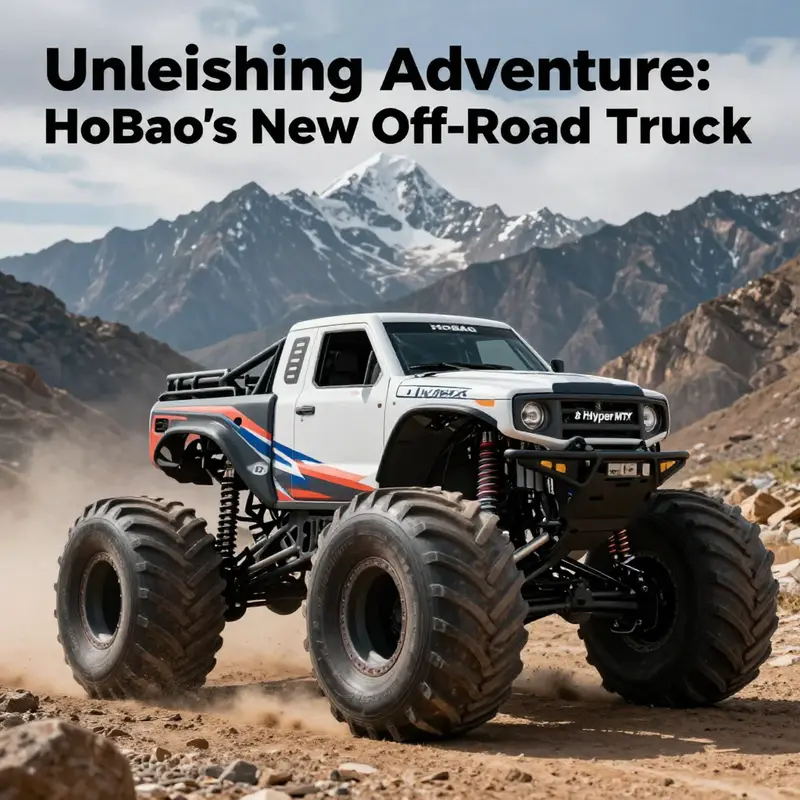
For off-road enthusiasts and adventurers, the thrill of conquering rugged terrains is a passion that defines their lifestyle. Amidst the growing interest in high-performance vehicles, the HoBao 1/8 Hyper MTX Monster Truck emerges as a standout model in the market. With its impressive specifications and versatile design, it promises to deliver an exhilarating driving experience tailored to both seasoned racers and recreational drivers. This article delves into the various aspects of this exciting vehicle, including its technical specifications, market presence, consumer reception, and future potentials. Join us as we dissect every component of HoBao’s latest offering, ensuring that you are well-informed about what this off-road monster brings to the table.
Chasing the Tease and the Reality of a 1/8-Scale RC Monster Truck
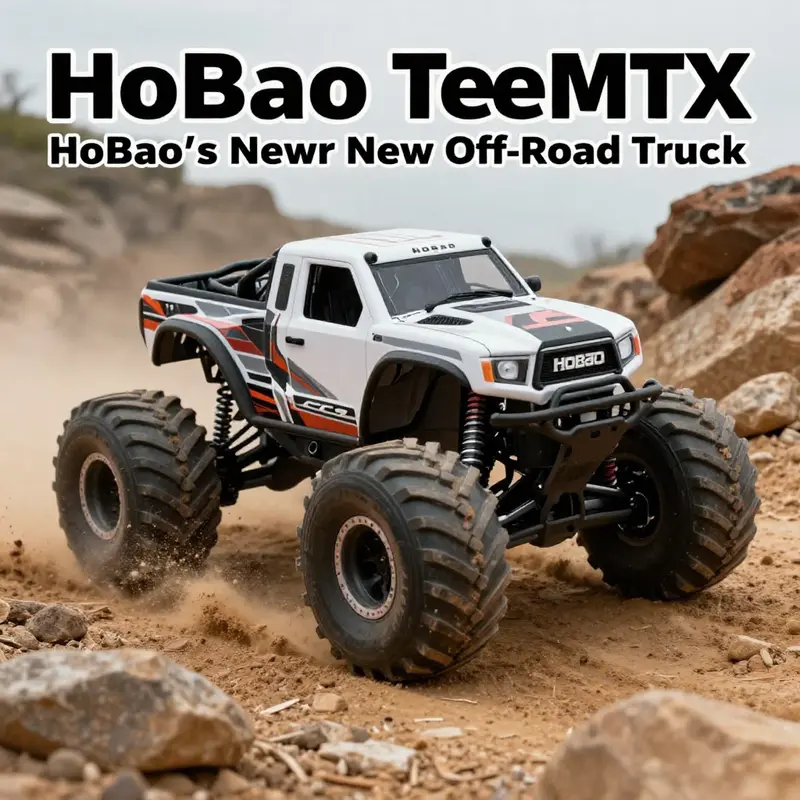
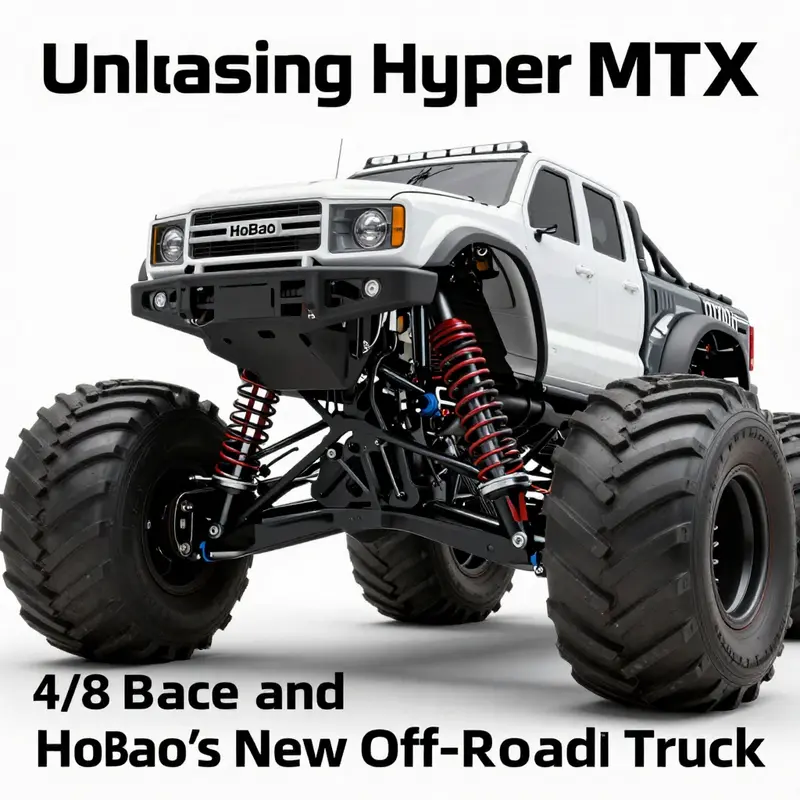
Rumors about a teased 1/8-scale off-road monster truck swirl through the RC world, but the only verifiable product on the market is a complete 1/8 scale four wheel drive kit. The kit features a reinforced chassis, front and rear shock tower braces, large monster tires, 17 mm hex wheels, a 36T spur gear in MOD 1, and a bold blue body. This chapter uses the documented kit to explore how speculation arises and why solid specifications matter. The chassis aims for rigidity, the braces help resist flex on landings, and the tire and wheel combination is designed for stable traction across dirt, gravel and pavement. The power system balances speed and torque for controlled handling. The kit is offered as a New status with two units listed as available, signaling a measured launch. While rumors may promise a tease, the reality remains a well engineered platform built for durability and upgrade potential. For readers, a reference link is provided to situate this kit within the broader RC and automotive tech landscape.
null
null
Reading the Teased Off-Road RC Truck: Signal, Silence, and the Gap Between Rumor and Availability
In the world of hobby RC, anticipation is a currency as loud as the clack of gears when a model powers up for the first time. Teasers, leaks, and whispered promises travel fast through forums and chat groups, often outpacing the slow, deliberate cadence of official announcements. The chapter you’re reading now sits at the intersection of rumor and reality, where the chatter about a teased off-road truck becomes a test case for how enthusiasts assess value, credibility, and timing. On the surface, the topic seems straightforward: a new, off-road capable vehicle teased by a well-known manufacturer. But the available evidence, when laid out with discipline, suggests a far more nuanced picture. The data in hand points to one grounded reality—the existence of a 1/8-scale, four-wheel-drive monster-truck kit that is advertised as new and available in a blue-bodied variant. Two units are listed for purchase, a small inventory that signals more about the current market’s appetite than about any imminent mass release. Beyond this, there is silence. No official launch window, no distribution map, no marketing blitz, and no multi-channel teaser campaign to extend the drama beyond a single product listing. In other words, what many readers might expect as a steady drumbeat of a forthcoming model is, at present, nothing more than a faint rumor, obfuscated by the gaps between a hobby company’s product rollout and the fevered expectations of its audience.
To understand how this situation evolved, it helps to orient the discussion around what the grounded data does reveal. The existing model, described in the materials as a 1/8-scale, four-wheel-drive off-road kit, comes with a set of details that matter to the informed buyer. It is sized for serious off-road performance, designed to take on rough terrain with a four-wheel-drive system that can distribute traction where it is most needed. It carries the familiar attributes of a monster-truck lineage: rugged tires suited for loose dirt and gravel, and structural reinforcement designed to resist impacts from jumps and obstacles that puncture the rhythm of a typical backyard trail run. The listing emphasizes a blue-bodied appearance, a visual cue that helps differentiate it on the shelf and in online catalogs. While the color and scale are important for customization and display, other specifics — such as wheel design, hex size, and bracing — offer a practical map of what the model can endure and how it will respond to tuning and maintenance.
The mention of 6-spoke grey wheels with a 17mm hex, alongside monster-truck tires and a front-and-rear shock-tower brace, gives an investment-minded reader a clear sense of the vehicle’s intended durability and performance envelope. These are not cosmetic details; they are signals about the chassis stiffness, the ease of upgrades, and the likelihood that the model will behave predictably in rugged conditions. Yet even with these concrete cues, the data stops short of declaring a broader strategy: there is no press release, no dealer rollout plan, and no confirming statements about future availability. Two units listed as new is not a herald of a mainstream launch. It reads more like a small, near-term inventory moment—an opportunity for collectors and hobbyists to acquire a fresh kit while supply lasts, rather than a beacon announcing a newly teased product that will soon flood hobby shops and online retailers.
This vacuum between available data and fan expectations offers a microcosm of how rumors propagate in niche markets. In a space where technical specs matter, the credibility of a teased model often hinges on a few core signals: a definitive public teaser from the company, a visible prototype in test photos, a verified distribution channel, and a timetable that can be tracked across multiple venues. Absent these elements, the chatter tends to fragment into educated guesses, fan-made renderings, and speculative timelines that can drift far from reality. The current situation surrounding the teased off-road truck illustrates that dynamic precisely. Enthusiasts may be enticed by the promise of something fresher, faster, or more capable, yet the practical truth remains: until the official channels confirm the product and its availability, the market’s signals are more about interest than immediate access.
From a consumer perspective, the absence of verifiable information has tangible implications. First, it reframes how a potential buyer approaches risk. If one reads the market as a hunt for a confirmed release, the absence of hard data suggests a moment to pause. The two new units in stock imply a temporary gap between the possibility of a new model and the reality of a ready-to-ship product. Second, it reframes the decision calculus around upgrades, maintenance, and compatibility. The grounded data about the current kit — its scale, drivetrain, wheel size, and reinforcing features — remains a reliable baseline for those who plan to assemble, tune, and drive an off-road RC machine right away. A tease, by contrast, invites the question of whether one should wait for a more ambitious platform or invest now in a proven platform that delivers a predictable, off-road-focused experience.
The narrative surrounding teased products is not merely a matter of timing. It also speaks to how the hobby market communicates value. Teasing a new off-road truck promises excitement, but it must be backed by clarity: when will it be available, through which channels, at what price point, and with what support from the manufacturer? Each of these questions has a direct bearing on whether buyers decide to pre-order, wait, or purchase an existing model and plan future upgrades. In this context, the current data set functions as a cautionary tale about letting hype outpace confirmation. It invites readers to favor patience over impulse, and to measure the appeal of the tease against the reliability of the present product lineup. For those who enjoy the ritual of unboxing and assembling a new kit, the immediacy of a listed item can be compelling. For others, the thrill of a rumored advance notice is quickly tempered by the practicalities of availability, service support, and long-term ownership.
Another layer of this discussion centers on how a single product listing—described as new with limited stock—fits into a broader ecosystem of tooling, spares, and community buzz. The presence of a blue-bodied variant in a 1/8 scale with four-wheel drive aligns with the common desires of hobbyists who crave scale realism, durability, and the potential for customization. The explicit mention of 6-spoke grey wheels with a 17mm hex hints at compatibility with a wide range of upgrade components and tires, a practical detail for those who plan to tailor steering response, traction, and ride height. The front and rear shock-tower braces likewise signal an emphasis on chassis rigidity, a critical factor when the vehicle is pushed over rough terrain or subjected to repeated jumps.
Yet the technical specifics alone cannot sustain a telegenic narrative about a teased model without the frame of an official release plan. The current documentation does not establish a market launch date, distribution footprint, or beyond-the-specs assurances such as after-sales support, warranty coverage, or replacement-part availability. For readers who track the interplay between product development and market reception, the absence of these elements makes it difficult to translate curiosity into a concrete buying decision. In the absence of credible signals, the prudent path is to observe and wait for more substantive information, rather than to anchor expectations on speculation alone. This approach preserves the integrity of ownership choices and reduces the risk of disappointment should a teased model fail to materialize in the near term.
The broader implications for collectors, hobby shops, and online communities are subtle but important. Market presence, in the sense of consistent availability and clear purchasing avenues, builds confidence. When a brand shows reliable cadence—announcing, shipping, and maintaining a channel for feedback—enthusiasts develop trust that their investments will be supported after the first run. In contrast, a single listing with limited stock and a lack of follow-up communications often fuels a different kind of engagement: a burst of curiosity that dissolves into rumor, followed by a wait that never quite yields a product in hand. The practical outcome is a landscape where some enthusiasts are content to pursue existing, well-supported platforms while others hold out for a new platform that may or may not arrive on schedule.
As readers contemplate the next moves, a useful lens is the relationship between advertised features and real-world performance. The combination of scale, drivetrain, wheel geometry, tire selection, and chassis bracing forms a coherent recipe for off-road capability. A teased model could logically be expected to build on this foundation, delivering incremental gains such as improved suspension tuning, more robust power delivery, and a chassis that tolerates higher speeds and rough terrain with less frame flex. However, predicting such improvements without official confirmation risks overestimating what a teaser can deliver. The best practice remains to ground expectations in the documented specifications of currently available kits, while keeping an eye on credible announcments that might shift the equation dramatically. In this light, the two new units’ existence becomes a concrete, testable data point: a current option exists for enthusiasts who prefer fresh, factory-sealed boxes and the immediate satisfaction of new tooling—without the ambiguity that accompanies a whispered promise of something more revolutionary.
For readers who want to connect the thread to broader, outside-the-RC world, it helps to reflect on how a tease—when credible—usually translates into real-world action. In many product categories, a tease becomes a foothold for a pre-order window, a limited-time run, or a staged rollout across distribution partners. In the hobbyist space, the dynamics are similar but the timeline is often compressed. The ecosystem of hobby shops, online retailers, and community-run forums can accelerate information flow, but it also amplifies misinterpretations. The current case illustrates how a cautious, evidence-based approach can cut through the noise. It invites readers to examine not just the allure of a rumored upgrade, but the reliability of the channel through which such upgrades reach the market, and the practical realities of ownership that follow.
Ultimately, the question of what the teased off-road RC truck will become remains unanswered within the present data set. What is clear is that verified information about availability and sales remains elusive. The available evidence centers on a currently listed product with specific, tangible characteristics and a limited inventory. It is enough to inform a decision about a purchase today, but not enough to confirm a broader strategic move by the brand in question. As the market watches for official signals, this moment serves as a reminder that in the hobby world, the line between rumor and reality is drawn by verifiable channels, transparent timelines, and consistent access to product. Until those elements align, the safest interpretation is to treat the teased project as a topic of anticipation rather than a guaranteed addition to the lineup.
Internal link note: for readers interested in a practical lens on how maintenance and reliability shape the hobby experience, a deeper dive into the discipline of mechanical upkeep can be found here: Mastering diesel mechanics: your step-by-step path to success.
Tease as Signal: Reading a Rumored Off-Road RC Truck in a Market Built on Hype
Beneath the flashing posts and glossy teaser graphics that flood RC forums and hobby retailers, a teased new off-road truck often promises something more than just faster gears or sharper grip. It promises a narrative arc: a brand, a release window, a leap in capability. Yet when the public record shows only a single 1/8-scale, four-wheel-drive monster truck in a blue body that’s explicitly marked as new and available in limited quantities, the chatter shifts from speculation about a future model to a study of the market’s appetite for novelty itself.
In the absence of verifiable details, the discussion broadens to consider how teaser campaigns function in this niche, what signals enthusiasts look for beyond shiny promises, and how a hobby ecosystem interprets risk, value, and timing.
The most concrete piece of information available is a 1/8-scale, four-wheel-drive monster truck with a blue body described as new and available in limited quantities. Those attributes—scale, drivetrain, and color—are anchors around which speculation orbits. They reveal a paradox: fans demand clear specs, but a teased model thrives on ambiguity. When public records do not corroborate a planned reveal, conversations map future hopes rather than confirmed plans.
This dynamic is pronounced in off-road RC communities, where teaser campaigns function as marketing rituals; fans weigh expected features, imagine track scenarios, and compare imagined specs against practical constraints like motor torque, gear ratios, and suspension durability. The gap between imagination and deliverable remains wide, and the absence of a briefing invites diverse interpretations: testing market receptivity, signaling delays, or scope changes that could affect value.
To interpret consumer reception without public data, monitor hobby forums and retailer pages for sentiment, early listings, and practical compatibility signals. Consider how a new badge, scarcity, or short lead times can create urgency that outpaces readiness. Finally, acknowledge that a lack of data is data: it signals either cautious development or a marketing choice to preserve flexibility, with implications for transparency and reliability.
Beyond the Tease: What the Next-Gen Off-Road RC Truck Could Signal for the Hobby’s Frontier
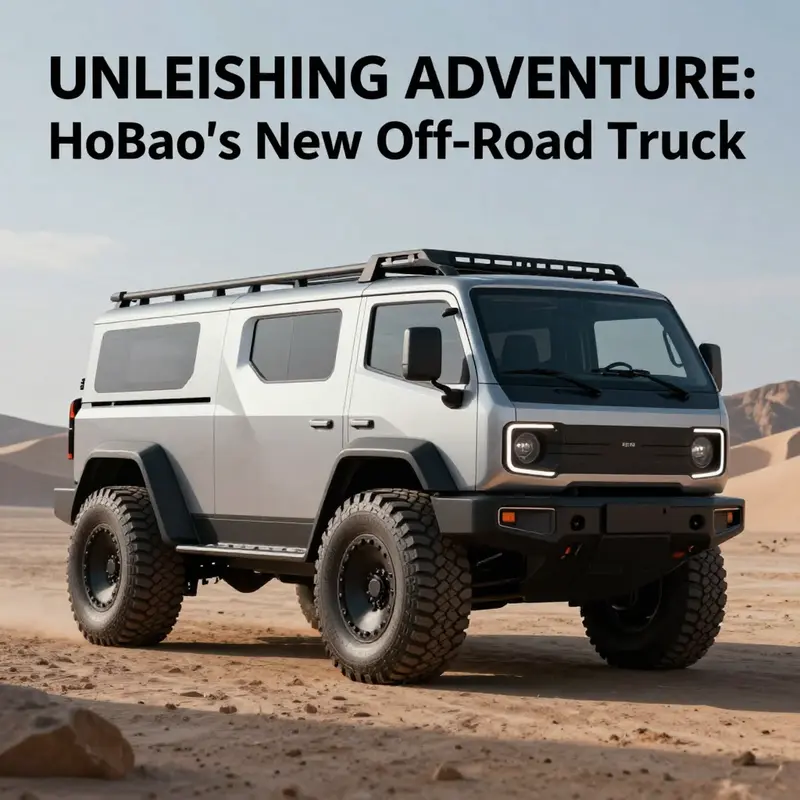
In the world of radio-controlled off-road machines, the next big announcement often arrives as a whisper before it becomes a roar. The current chatter centers on a teased, high-performance contender that would sit squarely in the 1/8-scale camp, powered by a four-wheel-drive system and designed to conquer the most demanding terrain imaginable. Even without naming the brand, the cues surrounding this forthcoming model evoke a familiar arc in the hobby: a chassis engineered for torque and control, components sized for punishment, and a silhouette meant to endure the kind of abuse that only real-world rocks, mud, and rough jumps can dish out. The anticipation isn’t simply about a bigger tire or a louder roar; it’s about a coordinated package that promises to translate raw power into predictable handling at the edge of what this scale can realistically deliver. The tease, in other words, is less a marketing gimmick and more a pledge to the kind of driving experience enthusiasts chase when they go beyond casual bashing and into the realm of precision, endurance, and measured performance on unforgiving ground.
Grounded by what can be discerned from the discourse surrounding the model, several design threads stand out as signals of a serious, purpose-built platform. The large 1/8-scale footprint immediately communicates intent: this is a platform that can absorb the energy of big jumps and rough terrain while still offering a controllable center of gravity. The four-wheel-drive configuration remains a cornerstone of off-road traction, especially when the surface underfoot shifts from gravel to loose soil or rock to slick mud. In practice, the 4WD setup helps distribute torque across the tires, allowing for better grip and more predictable steering when the front end begins to climb or when a corner digs into loose ground. The combination of scale and drive format suggests a vehicle built for aggressive outdoor runs, capable of pairing brute power with a mature, tuned suspension system rather than relying on brute force alone.
The geometry and wheel-package specifics that begin to surface in early buzz offer further clues about the intended character of this teased machine. A six-spoke monster wheel arrangement, rendered in a restrained grey, paired with a notably large wheel hex—approximately 17 millimeters—points to a focus on durability and wide, stable contact with terrain. It’s not merely about looking the part; a larger hex means stronger hub connections and a more robust interface between wheel and drive shaft. In practical terms, such choices favor resistance to stripping, better energy transfer, and improved reliability when edge-pounding landings or mid-air rotations stress the drivetrain. The tires, described as high-performance monster truck units, reinforce the sense that grip and damping are central to the design philosophy. This is a vehicle meant to be pushed to the limit yet kept within a controllable envelope, where traction, not mere traction alone, dictates how fast a line can be completed or a line can be re-routed mid-course when the track throws an unexpected obstacle.
Equally telling are the structural refinements hinted at in the tease. A newly integrated front and rear shock-tower brace signals a deliberate effort to elevate rigidity in the chassis. In a vehicle of this size and stiffness class, the shock towers are not merely mount points; they are critical to how suspensions resist deflection under load. A braced tower translates into more stable camber and toe behavior as the suspension cycles through compression and rebound. In practice, that stability translates to smoother cornering in high-speed runs and more consistent landings after jumps, even on uneven, rocky surfaces. New braces also help maintain alignment across a range of temperatures and stress conditions, which is essential for a vehicle that could be used in varied environments—from sun-baked desert courses to damp, muddy trails.
Taken together, these design cues illuminate a larger ambition. The teased model appears to be built not just for enthusiasts who crave a thrill but for professionals and serious hobbyists who expect repeatable, high-performance behavior in demanding settings. The durability-oriented choices—sturdy wheels, reinforced suspension hardware, and a chassis engineered for rigidity—signal a platform that can withstand the kind of punishment that accompanies long sessions behind a field or a backwoods track. In this sense, the teased off-road truck is as much about confidence as it is about capability. Confidence to take a wider line, to clear boulders with less fear of chassis flex, and to push throttle wider as a track unfolds in front of the driver. The brand behind the tease appears to be signaling that the bar for what a top-tier RC off-road machine should deliver is not just speed, but a coherent, repeatable experience that performs consistently across terrain and weather conditions.
From a market perspective, the implications are intriguing. A platform that emphasizes strength, precise control, and predictable behavior expands the baseline expectations for what a high-end RC monster truck can achieve. It raises the stakes for competitors to demonstrate how their own suspensions, materials, and tuning options translate into real-world performance. Moreover, the teased model potentially widens the audience beyond pure speed enthusiasts to include hobbyists who value rugged field reliability. If the chassis and suspension deliver as implied, this vehicle could appeal to those who adopt RC testing or field use in more rugged settings—whether for performance demonstrations, research and development in scale-vehicle applications, or simply as a faithful tool for weekend trail adventures. In a broader sense, a standout 1/8-scale, 4WD platform with reinforced torsion and a focus on grip and impact management nudges the whole category toward more deliberate engineering choices. It encourages a more thoughtful balance of power, weight distribution, and durability—qualities that can help the segment mature and attract new participants who were previously put off by fragility or inconsistent handling.
Maintenance and ongoing tuning are part of the story, too. A vehicle of this breadth demands a careful approach to setup, maintenance intervals, and component selection. The emphasis on robust bushings, reinforced chassis plates, and stiff yet tunable suspension highlights the ongoing interplay between raw performance and reliability. For builders and operators, this means more than replacing worn parts after a day on the rocks. It means understanding how every adjustment—camber, toe, spring rate, and shock oil viscosity—interacts with the frame to preserve steering response and traction under changing conditions. A platform designed with braces and strong wheel hubs invites a more deliberate, methodical approach to setup, rewarding patience and precision in equal measure. It’s not a marketing line but a practical translation of how real-world use shapes the way people tune and run their machines.
In this sense, the teased model also acts as a catalyst for how the hobby views future product development. It creates a benchmark that challenges the community to rethink what a high-end RC off-road vehicle can do when it combines scale, drive, and robustness with a focus on real-world trail dynamics. The potential ripple effects extend beyond the immediate product line: new algorithms for suspension tuning, more advanced materials for lighter yet stiffer chassis components, and a broader conversation about how to balance mass, power, and control for optimal performance on a wide range of surfaces. As the tease unfolds into concrete releases, observers will watch not only for horsepower and top speed but for the way a platform absorbs energy, preserves geometry under duress, and translates effort into controlled motion across difficult terrain.
For readers who want to explore the broader context of these mechanical principles as they relate to rugged RC platforms, one resource delves into the fundamentals of how powertrain, chassis, and suspension harmonize under load. It offers a practical perspective on how practitioners explore the limits of a heavy, torque-rich drivetrain while maintaining safety margins and predictable behavior. Mastering Diesel Mechanics: Your Step-by-Step Path to Success provides a grounded look at how robust mechanical interfaces enable reliable performance in demanding settings, a theme that resonates with the design intent glimpsed in the teased off-road project. Mastering Diesel Mechanics: Your Step-by-Step Path to Success.
For those who want a longer view on how the RC off-road scene evolves with new machinery, the tease serves as a reminder of how quickly possibilities expand when engineering choices align with user needs. The dynamic between a platform’s scale, its drive system, and the durability of its suspension becomes a narrative about how enthusiasts, technicians, and manufacturers collaborate to push the envelope. As more details emerge, watchers will be evaluating not just the speed or the raw torque, but the consistency of handling, the predictability of steering response, and the resilience of components under repeated stress. When a teaser points toward reinforced shock towers, welded-like rigidity in critical joints, and tire packages designed for peak grip, it signals a shift from merely chasing speed to engineering a coherent, repeatable, and dependable driving experience that can stand up to the toughest courses.
In the end, the teased off-road truck puts the hobby on notice: the bar for what constitutes a flagship RC platform is rising. Enthusiasts will watch closely for the way this model translates the promise of scale, durability, and traction into real-world performance. If the execution lives up to the initial signals, the vehicle could become a reference point for future generations of 1/8-scale, four-wheel-drive machines. It would not simply be another big truck; it would be a statement about how the best of today’s engineering can be transformed into tomorrow’s trail-ready capabilities. As the field awaits further details, the conversation continues—rooted in the fundamentals of grip, balance, and resilience, but aimed at a future where a single chassis can conquer a wider spectrum of terrain than ever before.
External resource: https://www.alibaba.com/product-detail/HoBao-1-8-Hyper-MTX-Monster-Truck-4WD_1601392575757.html?spm=a2700.1.wissu.1&src=1&source=1
Final thoughts
The HoBao 1/8 Hyper MTX Monster Truck stands as a testament to HoBao’s commitment to delivering exceptional off-road vehicles that meet the demands of enthusiasts and racers alike. With its robust build, advanced specifications, and favorable market reception, this model not only captivates buyers but also sets a benchmark for future innovations in the industry. As consumers express positive reviews and feedback, it is clear that HoBao has carved out a significant niche in the off-road domain. The anticipation surrounding potential new models suggests that HoBao is poised to expand its line-up, promising even more exhilarating options for adventurers and racers. Thus, whether you are one who seeks the thrill of racing or the need for a durable off-road companion, the Hyper MTX Monster Truck is undoubtedly a worthy consideration.