
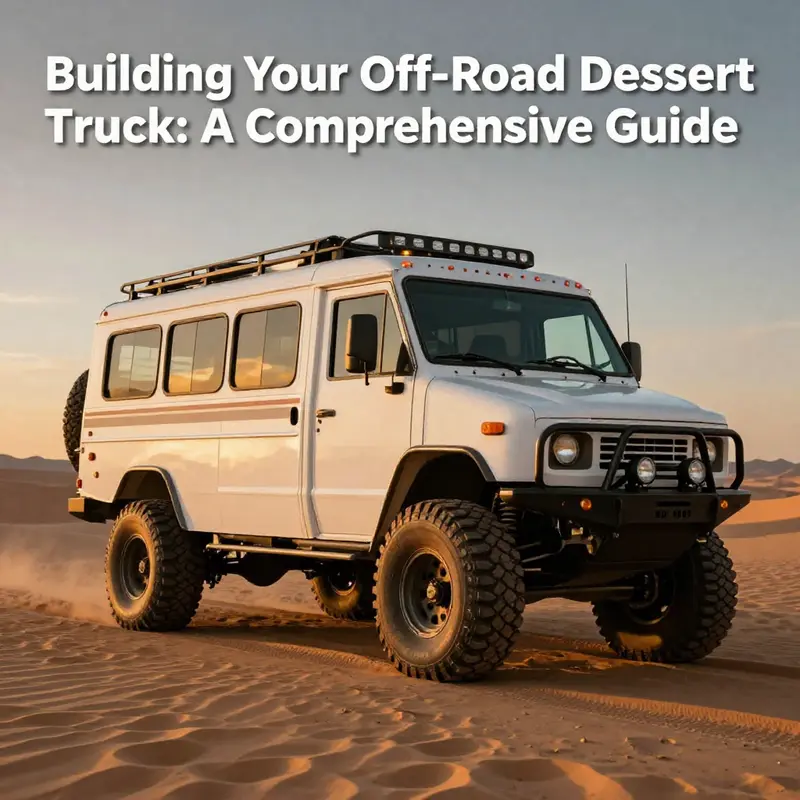
Crafting an off-road dessert truck is an exhilarating venture that tests your creativity, technical skills, and passion for adventure. By transforming a standard vehicle into a specialized rig capable of navigating the most hostile desert environments, you not only enhance its capabilities but also pave the way for epic explorations. This guide delves into the essential aspects of building an off-road dessert truck. From selecting the right base vehicle, upgrading suspension and tires, to boosting drivetrain power, each chapter offers insights and practical advice aimed at off-road enthusiasts, racers, and landowners. Gear up as we explore how to create a robust, reliable, and relentless machine for your desert escapades.
Foundations for the Desert Kitchen: Choosing the Right Base Vehicle for an Off‑Road Dessert Truck
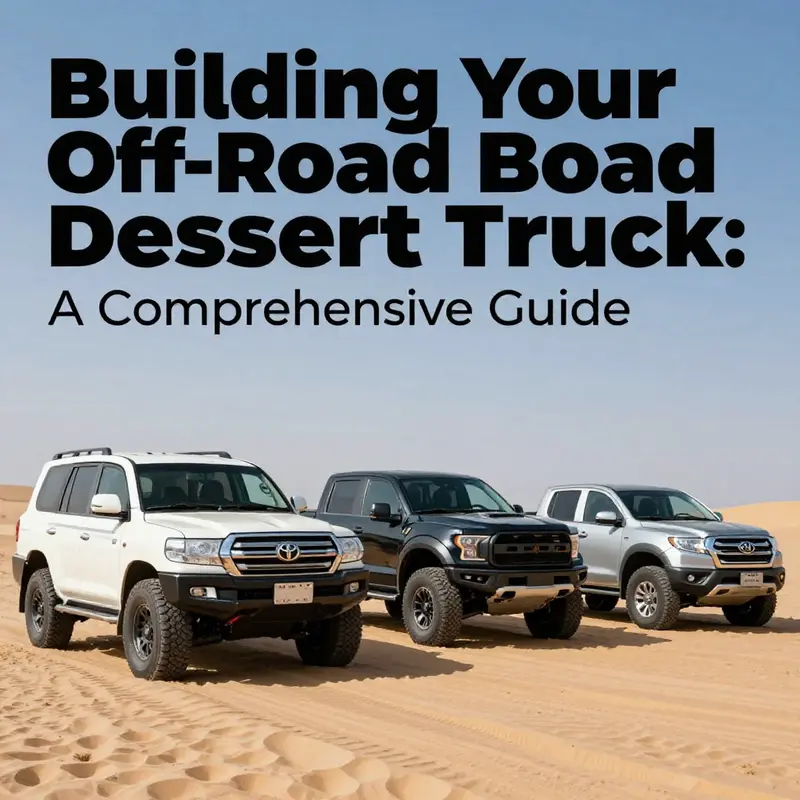
Selecting a base vehicle for an off‑road dessert truck is more than a matter of appetite and aesthetics; it is the hinge on which the entire concept turns. The right platform must balance rugged terrain capability with the stability and payload capacity needed to support a fully functional kitchen, refrigeration, and inventory, all while remaining efficient enough to haul gear to remote events and festivals. In practice, the decision hinges on a thoughtful synthesis of off‑road prowess, commercial utility, and long‑term reliability. The base you choose will dictate everything from how you carve through dunes to how you manage heat in the engine bay and how you organize the kitchen layout inside. The desert is a ruthless stage for a food truck, and the vehicle that carries your business there must be more than a flashy chassis; it must be a resilient workhorse that can be trusted to perform under load, in heat, and at speed.
A useful way to frame the choice is to weigh two broad categories that consistently appear in rugged, mobile food ventures: crawler‑style chassis and 4×4 pickup platforms designed for industrial use. Crawler trucks, by design, emphasize extreme ground clearance and formidable off‑road capability. They excel in deep sand, loose shell and gravel paths, and the kind of mud or dune crossings that would strand a lighter rig. Yet their strength comes with trade‑offs. They tend to carry a higher weight and can be less nimble on smooth, paved routes. In a desert catering context, where you may need to shuttle between remote camps and show venues, this translates into a vehicle that excels in the rough stretches but requires careful route planning and careful weight management to maintain fuel efficiency and tire wear budgets. A desert kitchen built on such a frame benefits from a chassis that can handle substantial add‑ons—cold storage, heavy duty mounting points, robust electrical conduits, and reinforced mounting for structural safety. It also benefits from a platform that can accept larger geometry changes without compromising handling at speed.
The alternative is a part‑time or full‑time 4×4 pickup tailored for industrial performance. Part‑time systems offer more efficient operation on paved roads; the driver can disengage 4WD to save fuel and reduce drivetrain wear when traversing highways, and engage it only when the terrain demands extra traction. This approach aligns well with a dessert truck that travels long distances between events but must perform reliably once the canvas walls are up and the grill is hot. A full‑time 4×4, with a center differential and permanent power to all wheels, provides continuous traction, making the vehicle more predictable in mixed conditions and during sudden weather shifts, such as unexpected rain in the desert or damp, sandy washouts. The costs are a modest hit to fuel economy and some drivetrain complexity, but the payoff is consistent handling and terrain confidence—qualities that translate directly into safer towing, steadier kitchen operation, and less time spent fiddling with traction in the middle of a service window.
When you weigh crawler versus 4×4 pickup, you aren’t only weighing terrain compatibility. You are also weighing how the vehicle’s frame interacts with a mobile kitchen’s inertia. A robust, reinforced chassis matters as soon as you begin mounting refrigeration units, cooking appliances, and a full inventory of ingredients. The load distribution must be predictable: heavy equipment stored low and centered to preserve a low center of gravity, with weight distributed toward the vehicle’s front and rear axles in a way that avoids overloading either the steering or the drive wheels. This is more than a matter of comfort; it is a safety and reliability issue. A base that tolerates consistent, predictable load without flexing or twisting under the stresses of uneven desert terrain makes the entire build easier to plan and execute. It reduces the risk of door misalignment, critical line fittings loosening, or heat from the engine compromising insulation in the kitchen area.
From a practical standpoint, the base vehicle should also provide a solid starting point for the kind of conversion that makes a desert dessert truck viable. That starts with a chassis that can bear substantial after‑market upgrades—an essential when you plan to attach heavy duty bumpers, a front winch system for self‑recovery, skid plates to protect the engine and fuel system, and a roof rack or mounted storage solution for tools, spare parts, and outboard power generation. A reinforced frame is equally important for supporting professional kitchen equipment, including upright refrigeration units and a robust electrical system capable of sustaining high‑demand appliances. The need for an extended payload is not merely about keeping inventory; it is about ensuring that the vehicle can handle the combined mass of the kitchen equipment and the crew, without compromising the handling or braking performance.
Powertrain choice also looms large in this decision. Desert environments reward engines with ample torque and reliable, predictable response across a broad rev range. The ideal base platform should be compatible with transmissions that can marry high torque output to smooth, reliable gearing. An 8‑speed or higher automatic transmission often provides the needed balance between off‑road control and fuel efficiency on longer routes. For diesel‑leaning configurations, scope for tuning or turbocharging to improve torque can be a game changer when you need to pull through soft sand while laden with a heavy kitchen. The critical philosophy here is to avoid straining the drivetrain with heavy loads or aggressive sealing against desert heat; instead, seek a system that can deliver steady, controllable power with ample cooling and robust lubrication under heavy use.
The chassis and frame are not exceptions to this rule. A base that already includes a strong towing package or reinforced cross‑members will simplify the install of a full kitchen and keeping that kitchen secure during transport. It also helps to ensure that vibration is controlled in the cabin and kitchen area, a detail not to be underestimated when you are cooking for hours at a stretch on rough roads. Inside the vehicle, a factor often overlooked is the way the base’s interior dimensions influence the kitchen design. Avoiding awkward gaps and ensuring that the work triangle—where raw ingredients, cooked meals, and finished products move in a tight loop—remains efficient is easier when you start from a space with generous width, a long wheelbase, and stable, flat floors. The more your base already resembles a practical, work‑ready platform, the easier and safer the conversion will be.
As you consider these factors, the importance of a coherent future trajectory becomes clear. The base vehicle you select should not only meet today’s needs but also accommodate tomorrow’s ambitions. If you plan to add a larger refrigeration system, a more expansive cooking line, or the capability to operate off‑grid for extended periods, you will want a platform with ample electrical capacity, accessible mounting points, and room for a robust power generation and storage solution. In other words, the perfect base is one that makes the dream scalable rather than one that feels like a financial and logistical squeeze the moment you reach the planning stage. The desert does not forgive second chances; a solid base buys you time, reduces risk, and frees you to focus on delivering a great, warm experience under harsh sun and in remote locations.
To bring these ideas into sharper relief without losing sight of practical constraints, it helps to think in terms of the work you intend to do and the routes you expect to travel. If a project commonly requires long hauls between events and the terrain is varied but often forgiving, a capable 4×4 pickup with a built‑in durability ethos can be the best compromise. If the mission is to test the limits of extreme off‑road performance in remote zones and to stage events in places completely devoid of infrastructure, a crawler‑style chassis offers a more robust platform for the most demanding scenarios. Either path demands a chassis that can endure the calculations of added weight, heat, and turbulence, and that can do so without undermining the vehicle’s reliability or your peace of mind when you are far from the nearest service bay.
To ground these considerations in a practical starting point, begin with a thorough assessment of payload capacity and wheelbase. The goal is a frame that can carry the kitchen and inventory safely, with room to install additional equipment and still meet local road rules for gross vehicle weight and dimensions. You will also want to ensure the base has proven endurance for long, hot days on desert roads and the ability to maintain stable temperatures in the engine bay during peak operating hours. The most resilient builds often begin with a tone of measured conservatism: choose a base with a robust safety margin for both weight and weather exposure, and then plan upgrades that reinforce that margin rather than erode it. If you keep the base in this mindset, you will find it easier to avoid common pitfalls, such as overloading the frame, underestimating the need for heat dissipation, or overlooking the need for reliable cooling during prolonged periods of operation.
For readers who want to connect theory with tested practice, it is helpful to integrate a knowledge anchor about drivetrain fundamentals and how they intersect with desert performance. A practical reference to deepen understanding of engine and transmission behavior in rugged service can be found in resources that describe mastering diesel mechanics and engine reliability. This is not about chasing a specific brand or component; it is about building a mental model of how torque, gearing, and heat management interact under load. The aim is to develop a baseline comfort with the idea that the base vehicle should be chosen not just for today’s service window but as a dependable partner for a growing, mobile culinary enterprise. By aligning the chassis with the kitchen’s evolving needs, you create a platform that serves as a dependable stage for your flavors, your staff, and your ambition—whether you are navigating a dune field at dawn or rolling onto a festival site with a crowd of eager tasters.
The final piece of the base decision is perhaps the most practical: the maintenance ecosystem. In remote desert locations, you will rely on a network of spare parts, simple tools, and skilled technicians who can service the vehicle with limited downtime. A base that shares common mechanical platforms with other commercial or industrial vehicles streamlines both maintenance and part replacement. In this sense, the perfect base for an off‑road dessert truck is not a fantasy vehicle; it is a pragmatic choice that balances capability, durability, and serviceability. It is a platform that you can build upon without needing specialized, one‑off components that would complicate repair logistics or inflate the total cost of ownership. The result is a vehicle that can travel farther, operate longer, and return in better condition to feed the crowds and keep the stories of desert nights alive.
For readers seeking a pathway into the mechanical details of the base‑vehicle decision, a grounded starting point is to explore drivetrain fundamentals and how they influence off‑road performance. A comprehensive guide such as Mastering Diesel Mechanics provides structured insight into how diesel engines and transmissions behave under load, with practical steps for diagnosing and tuning systems to sustain long service hours in challenging environments. This resource can help you translate high‑level chassis concepts into actionable engineering decisions as you plan your build.
As you finalize the base, keep the bigger picture in view: your base is not merely a vehicle; it is the stage for your culinary craft in some of the most demanding places on earth. The chassis, suspension, drivetrain, and load‑bearing structure you select will determine the feasibility of your kitchen layout, the reliability of your power system, and your capacity to serve hot meals under relentless sun and wind. When you approach the choice with a balanced perspective—recognizing the strengths and limits of crawler‑style frames and 4×4 pickups, aligning weight distribution with kitchen stability, and ensuring the maintenance and safety framework is robust—you set yourself up for a build that is not only capable but sustainable.
The road from concept to service is long but navigable, and the right base vehicle makes the rest of the journey clearer. With a solid foundation, the steps that follow—upgrading suspension, selecting tires, fortifying the body, and engineering the internal layout—become a sequence of deliberate, manageable decisions rather than a scramble to salvage a fragile platform. The desert will always test a vehicle, but with a carefully chosen chassis as your anchor, you give your dessert truck the best possible chance to thrive wherever the sand calls you.
External resource for further reading: Food Trucks Selection Guide for Off-Road Dessert Trucks.
Raising Ground, Mastering the Desert: The Art of Suspension and Clearance for an Off-Road Desert Truck
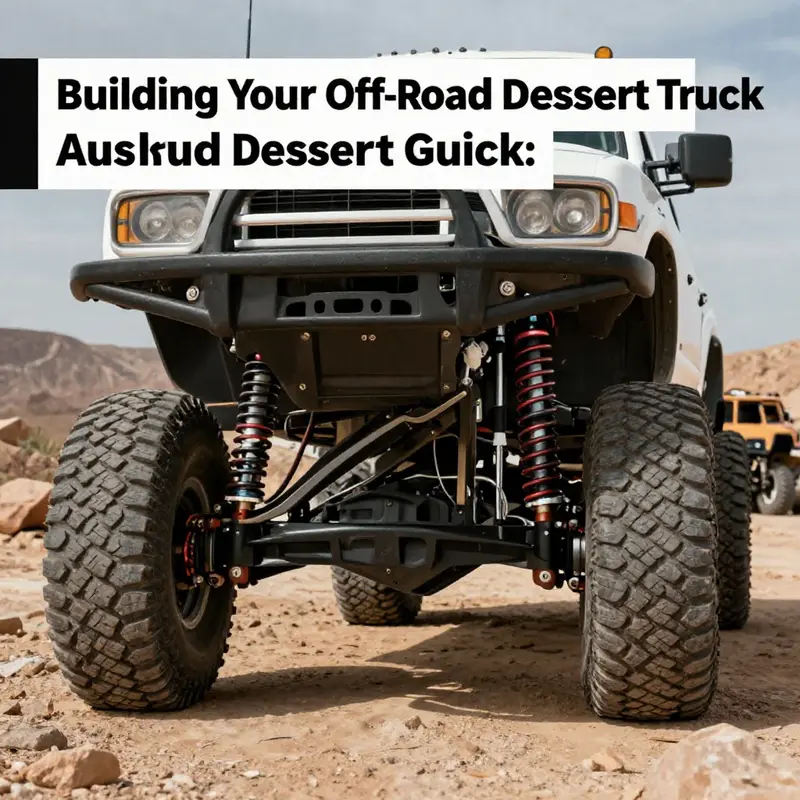
Ground clearance and suspension are not secondary choices in the making of an off-road desert truck; they are the core language through which a vehicle speaks to sand, rock, and heat. In the vast, shifting landscapes of the desert, where dunes rise like waves and the surface underfoot can betray even the most confident pilot, the ability to keep the chassis away from trouble while preserving control is what separates a capable explorer from a stuck machine. This chapter delves into how a builder can thoughtfully raise a truck’s body and tune its suspension so that every foot of travel translates into momentum rather than missed opportunities. The narrative rests on a simple premise: more clearance and better damping give you more predictable contact with the ground, which in turn makes steering, braking, and throttle response more reliable when the going gets loose and uncertain. But achieving that reliability is not a matter of slapping on the tallest tires or the stiffest springs. It requires a balanced approach that preserves geometry, protects vulnerable components, and respects the limits of human perception in a landscape where recovery can be a long and arduous process.
The first principle is to secure a solid base. Without a robust frame, any fancy suspension work will be wasted as the truck flexes and twists under load or when a wing of sand pushes against the tires. A strong platform—the kind found in large, purpose-built trucks and sturdy, full-size SUVs—ensures that the lift and the dampers have a dependable anchor. When the frame and chassis are up to the task, the subsequent upgrades can be designed to enhance capability rather than compensate for structural weakness. With that foundation, the lift becomes a precise instrument rather than a blunt instrument that makes the truck harder to drive. Lift height matters, but it is not the whole story. In desert work, a two- to four-inch increase is a common target, enough to clear larger obstacles and to allow the tires to articulate across uneven terrain, yet not so tall that the center of gravity climbs into a range where rollover risk becomes a daily concern. The geometry involved matters as much as the numbers. A well-configured lift preserves steering feel, maintains axle articulation, and avoids excessive anti-squat or bump steer that would degrade control at high speeds on rough surfaces.
Suspension upgrades for desert duty are less about simply adding height and more about enabling controlled movement. Long-travel dampers—whether gas-charged or nitrogen-filled—play a central role in this. They allow the axle to move through a greater arc when a wheel encounters a dune face or a rock ledge, while still resisting aggressive motions that would throw weight off the tires. The damping rate has to be tuned to work in concert with the spring rate. If the springs are too soft for the extra height, the truck will wallow and the tires will lose contact at critical moments. If the springs are too stiff, the ride will become punishing and the suspension will not absorb the smaller undulations that help maintain tire contact. The optimal setup uses springs strong enough to keep the vehicle level under load and dampers that can manage heat buildup and fade during extended runs. In desert environments, heat is a constant adversary; dampers must resist fade so that their resistance remains consistent from the first hour to the last.
The tire is the vehicle’s most immediate interface with the sand, and it compounds the impact of all suspension choices. Bigger, lower-pressure tires can dramatically improve flotation, let the tire skirt across the surface rather than dig in, and expand the contact patch to distribute load more evenly. The technique is simple in concept but exacting in practice: run larger tires while balancing the risk of rubbing, steering bind, or altered acceleration characteristics. Lower tire pressures increase float and traction in soft sand, but they also demand careful control of the bead seat and rim integrity. In harsh desert driving, bead-lock or bead-retention wheels provide additional security when the tire pressure is dropped for sand traversal. The combination of larger tires and appropriate wheel hardware gives the truck the ability to “float” over dunes rather than sink, enabling smoother climbs and more predictable decelerations when braking for a crest or a surprise fault line along a trail. A practical approach is to couple tire choice with a calibrated pressure strategy: higher pressures for hard-packed sections or rocky approaches, lower pressures for dunes, and quick adjustments on the fly with a portable air compressor.
Even with the most capable tires, powertrain and driveline harmonization is essential. Desert driving places considerable demand on torque delivery, especially when negotiating steep dunes, soft sand, or rutted passes where momentum and traction must be managed together. A powertrain tuned for desert duty emphasizes broad torque across the usable band, enabling the vehicle to respond to changes in terrain without needing to hunt for gears. The transmission should be matched to a drivetrain that can distribute power smoothly to the wheels with traction control that respects the dynamics of sand progression. In practice, this means a robust eight-speed or equivalent automatic transmission with well-controlled gear spacing and a transfer system that maintains traction across varied surfaces. The objective is seamless power delivery that keeps the vehicle moving without sudden surges that might unsettle the chassis.
But even the most capable drivetrain cannot compensate for chassis geometry that refuses to harmonize with the suspension. Upgrading the suspension asks for corresponding attention to control arms and linkages so that as the ride height increases, the steering geometry remains stable and predictable. Reduced bump steer is not a luxury; it is a safety and control issue. Proper alignment checks and, if needed, corrected camber and toe settings ensure tires stay aligned with the intended path. When the suspension cycles under load, the steering feel should remain actionable, with the driver able to place the front axle where the vehicle needs to go without chasing the steering wheel through every rut. This is why parts selection matters just as much as the lift height. Components must withstand the added leverage from the higher ride height and longer travel, and they must do so with predictable stiffness and damping across the temperature ranges typical of desert travel.
The chassis does not exist in isolation from protective measures. The desert keeps a blunt, unyielding ledger of encounters—rock cabins, baja-style debris, and the persistent sting of gravel kicked up by the wheels. Skid plates protect essential components such as the engine, transmission, and fuel system from underbody abuse when the truck is pushed to its limits on rocky tracks or through washouts. A reinforced front bumper with recovery points and a rear hitch expands the vehicle’s utility for extraction and field support. These protective measures are not mere add-ons; they are part of a coherent system that enables the suspension to operate with confidence. With robust protection, the suspension can articulate freely without fear that a high-speed contact with a rock will bend a component into a failure mode.
The environment also demands attention to the breathing of the engine. Dust and heat impose a double burden on intake systems. A snorkel and a higher-flow air intake, properly routed to reduce ingesting hot air from underbody routes, can sustain engine performance when the air is thick with dust or when water crossings raise the risk of hydro-locking. The objective is clean air delivery that remains consistent regardless of altitude, temperature, or dust density. This is where the integration of ancillary systems with the core suspension strategy becomes critical. The chassis may be stiffer and the ride taller, but the drivetrain must still receive air and fuel at predictable rates. In this sense, the desert truck becomes an ecosystem in which each modification complements the others rather than functioning as an isolated improvement.
The interdependence of these upgrades means that professional installation and careful testing are non-negotiable. It is not enough to bolt on a bigger tire and call it a day. Each component must be installed with proper torque, alignment, and secure mounting to withstand the echo of miles through the desert and the sudden jolt of a dune face. After installation, a staged testing process helps identify weak points and address them before they become safety concerns. Testing across different terrains—dirt tracks, gravel, rocky trails, and sandy washes—reveals how tire pressure, suspension damping, and steering geometry interact at speed and in recovery scenarios. The goal is to reach a point where the vehicle feels calm and planted at high speed, with the ability to adjust on the fly for changing sand conditions and shifting loads. Such testing also informs the driver’s technique, including throttle modulation, line choice, and weight transfer, all of which are essential when the desert demands a refined touch rather than brute force.
An often overlooked, but crucial, aspect of suspension and clearance is the psychology of control. A truck that can glide up a dune and settle gently on the other side, with the chassis staying level and predictable, gives the driver a sense of command. The driver becomes able to read the surface under the wheels and to adjust pressure, speed, and line with a confidence born from consistent sensation through the steering wheel and seat. This is not a luxury but a safety feature: when the truck feels steady, the driver can anticipate the path, react to a sudden shift in surface, and keep the momentum that desert travel often demands. And while the driver’s skill matters, so does the vehicle’s reliability. A well-configured suspension reduces the risk of unexpected suspension binding, wheel tuck, or loss of traction at critical moments—times when a split-second decision can prevent a stranded situation and a long, hot, and expensive recovery.
The chapter’s core idea—raising ground clearance and refining suspension—has practical implications for the broader project of building an off-road desert truck. It invites builders to think in systems: how a lift changes the geometry, how longer travel affects weight distribution, how tire choice interacts with the air and temperature of the desert, and how a protective shell can shield the moving parts that make the system work. It also invites readers to consult broader technical resources, such as a practical guide on diesel mechanics that can illuminate how powertrain and chassis work in concert. For readers curious about how powertrain fundamentals intersect with chassis work, see Mastering Diesel Mechanics: Your Step-by-Step Path to Success. This blend of theory and hands-on practice helps ensure that the desert truck remains a faithful companion on-month long expeditions rather than a fragile sculpture on a showroom floor.
In practice, the path to a well-rounded desert truck is iterative. Start with a credible base and a thoughtful lift that respects the vehicle’s weight and center of gravity. Pair this with tires that provide flotation and stability, and balance the suspension with damping that can survive heat while preserving control. Add protective measures and a reliable air intake system to sustain performance in dusty conditions. Finally, ensure the drivetrain and steering remain harmonized with the new geometry, so that the vehicle can respond with precision, not merely power. The desert rewards restraint and preparation as much as it rewards brute force. When the suspension, tires, and chassis work in unity, the truck becomes far more than a machine; it becomes a capable partner able to carve a path through the unknown, turning a daunting landscape into a navigable map of possibilities.
External resource: For a broader view on improving off-road performance in harsh environments, see the practical guide available at Pacific Motor.
Internal link: For readers seeking a deeper dive into how diesel mechanics can support chassis and powertrain integration, refer to Mastering Diesel Mechanics: Your Step-by-Step Path to Success.
null
null
Torque in the Dunes: Desert Powertrain and Drivetrain Upgrades
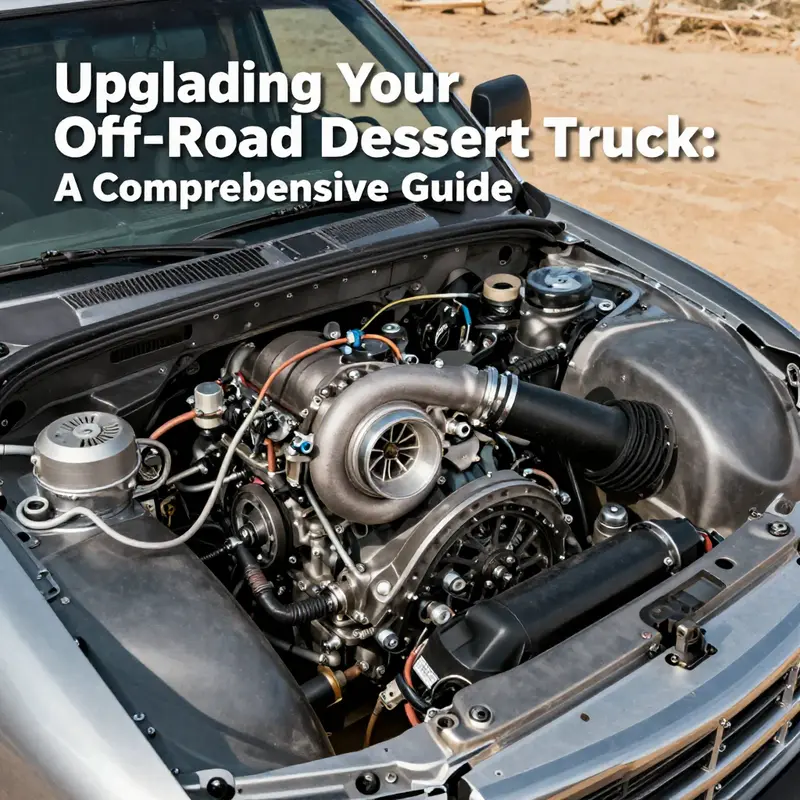
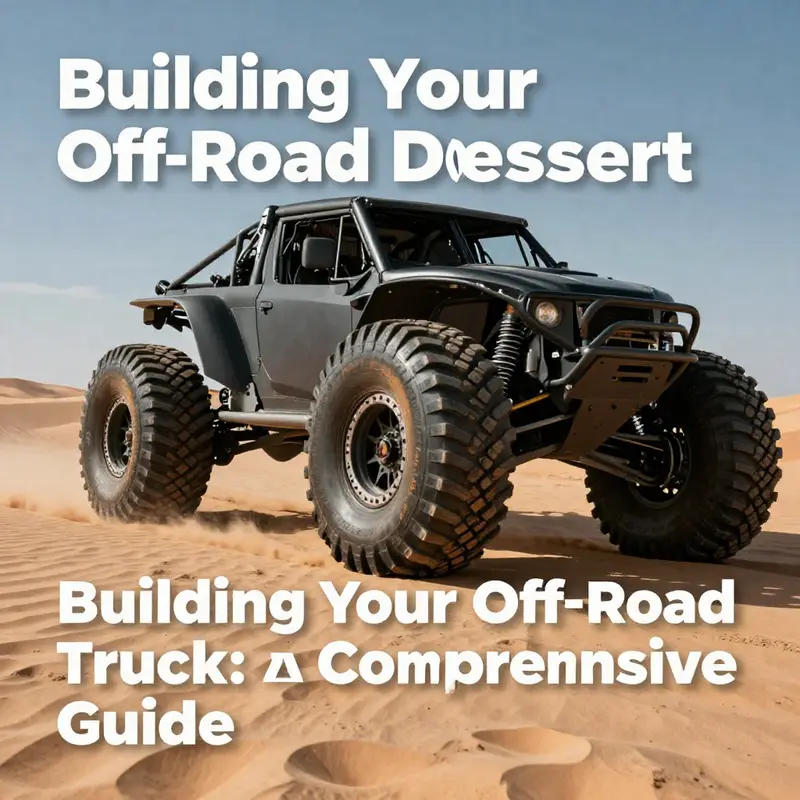
When you push an ordinary pickup or SUV into the heart of a desert, the limits of the original powertrain reveal themselves quickly. The sand thins the air, the heat climbs fast, and the tires must translate torque into forward motion while the chassis fights to stay planted. A desert truck is not merely lifted with bigger tires; it is a carefully choreographed system where the powertrain and driveline must breathe, shed heat, and deliver torque with precision across all four corners. The goal is robust, predictable response that survives long days in extreme temperatures, climbs that demand torque as much as speed, and repeated loading through dunes, rocky outcrops, and rough washboard. A well-planned upgrade sequence begins with philosophy and ends in testing that proves the philosophy under load and heat rather than in a cool workshop.
Powertrain upgrades begin with the engine’s breathing and how that breath translates into usable torque. Desert operation punishes engines that cannot sustain high output. To push power without overheating, forced induction—turbocharger or supercharger—is a primary path. This raises air density entering the cylinders, which, when matched with a thoughtfully tuned fuel system and responsive control, yields gains in both torque and peak power. The gains are about consistency under load, not just peak numbers. An elevated intake pressure with precise fuel delivery and ignition timing helps the engine maintain strong acceleration up dunes, across long sags, and during repeated climbs where air density drops. The objective is a broader, controllable torque curve that remains stable rather than spiking and fading.
Tuning becomes an exercise in control. Engine management software—ECU remap or external tuning module—allows shaping fuel delivery and timing so that boost remains in a safe band. The target air-fuel ratio in many desert apps lies roughly in the 11.5 to 13.5:1 range, a window that balances power with combustion stability under high load and changing conditions. Ignition timing must be stepped to avoid detonation in heavy load. The result is throttle response that feels immediate and linear, a prerequisite for predictable grip on dunes or rock obstacles.
Cooling is inseparable from power. A high-output engine runs hotter, and desert drives stress cooling systems. An enhanced strategy typically includes a larger intercooler for turbo setups, a robust oil cooler, and an upgraded radiator. Electric fans that respond to real-time temperatures help manage heat at idle or low speeds. If payloads increase or operation at altitude is common, a supplemental cooling circuit becomes necessary. The idea is to keep intake temperatures low, oil temperatures in check, and transmission and differential components within safe windows.
The fuel system matters too. Boosted engines need durable high-flow pumps, well-matched injectors, and attention to fuel lines and filters. The focal point is steady delivery under vibration and heat, especially when stalled in a dune trough or climbing a long sandy face. A well-designed fuel system reduces lean conditions that can lead to overheating and detonation. The intake system must handle increased flow without creating a choke point. A larger intake with robust filtration helps the engine breathe clean, cool air.
Driveline upgrades complete the picture by ensuring that the engine’s enhanced torque reaches the wheels. A differential system that can bias torque toward the wheel with grip is critical. A mechanical or electronically controlled locker helps when wheel slip threatens momentum or when pushing through sand crust or rock. Locking differentials dramatically improve traction by eliminating the usual one-wheel-spin scenario. Stronger axles and joints reduce the risk of failure in the middle of a desert run.
The transmission is not an afterthought. In a high-load desert environment, a factory transmission can become a chokepoint. Upgrading the clutch, choosing higher-friction materials, and adding a dedicated transmission oil cooler help preserve shift quality and gear longevity. Gear ratios should be reconsidered to match the new torque characteristics. A taller final drive can improve high-speed efficiency on flat sections, while a lower ratio provides more immediate power at crawl speeds typical of dune crossings.
The story of the powertrain and driveline is one of balance. Every upgrade changes demands on other parts, so a thoughtful, incremental approach is best. Start with breathing and control, reinforce cooling and fuel, then upgrade the driveline with attention to joints and differential options. Ensure the build stays legal and safe, and consult a qualified tuner to align with local regulations and intended use.
To keep the journey grounded, rely on testing in stages: on-road verification, dirt trials, dunes, and rock sections. This phased approach helps tune air-fuel balance, verify heat mitigation, and confirm torque delivery to all four corners. The desert truck upgrade framework published by reputable sources provides deeper data and cautions from real-world desert runs. For readers pursuing a diesel-focused path, a concise, experience-based guide on diesel power and reliability can offer practical steps and checks. Collectively, these resources reinforce a disciplined path to reliable desert performance.
Final thoughts
Creating an off-road dessert truck is more than a project; it’s a journey into a world of adventure. By carefully selecting your base vehicle, enhancing its suspension and tires, and boosting its powertrain, you construct a machine designed for overcoming the harshest terrains. This guide has equipped you with essential insights and strategies to embark on this exciting endeavor. Embrace the challenge, push your limits, and let your newly modified truck take you on unforgettable journeys across the desert.